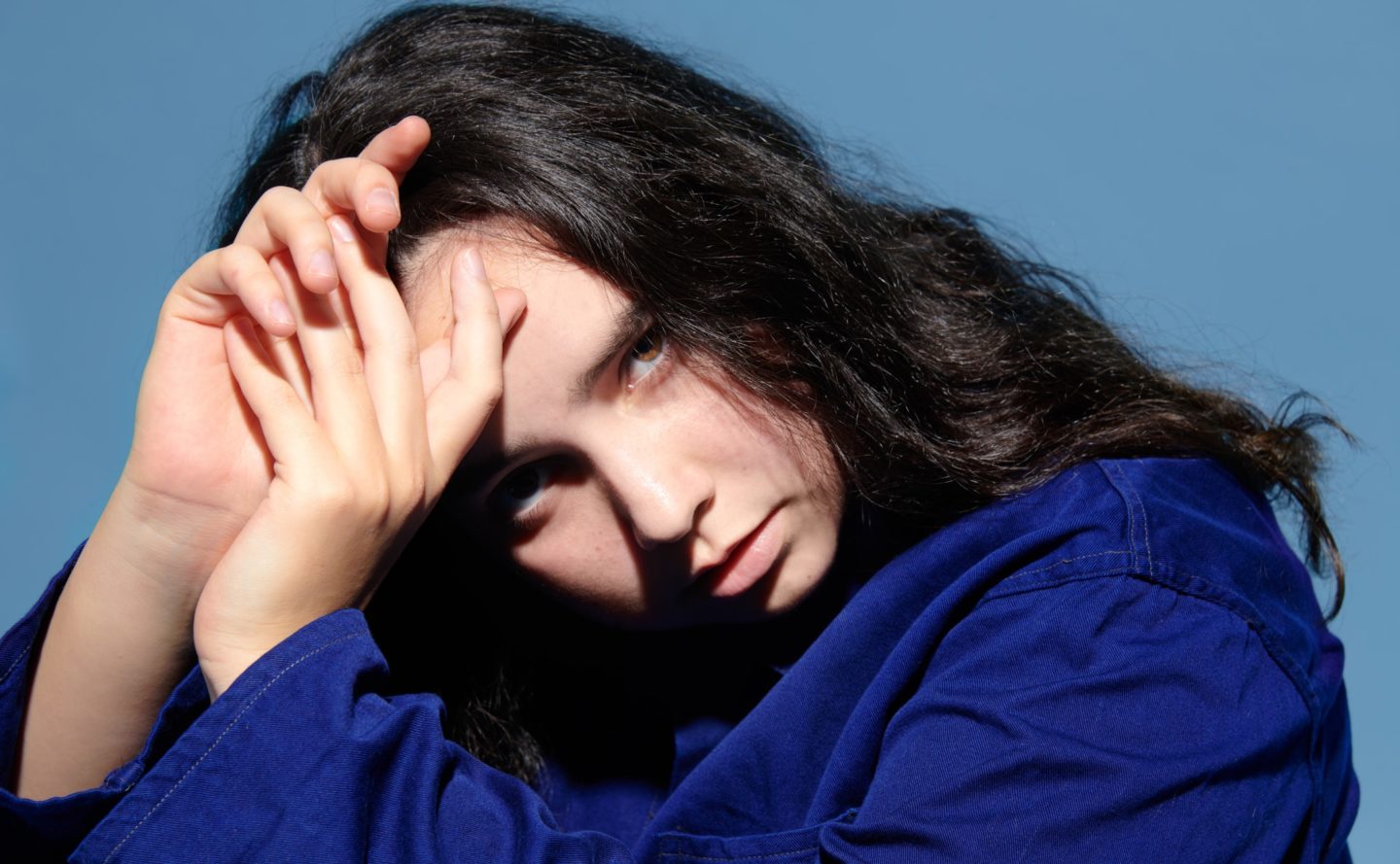
Wye Oak’s Jenn Wasner announces the second solo album under her alias Flock Of Dimes. A mature yet visceral songwriting experience about being on both the giving and receiving ends of heartbreak, ‘Head Of Roses’ is another demonstration of the talents of one of American indie-rock’s most consistently overlooked artists.
Flock of Dimes (aka Jenn Wasner) is sharing a new track titled “Price of Blue,” an unearthly new video filmed in black and white, co-directed by Wasner with Graham Tolbert. “Price of Blue” is a standout from Wasner’s second solo LP, “Head of Roses”, an album that showcases her ability to embrace new levels of vulnerability, honesty and openness, combined with the self-assuredness that comes with a decade-plus career as a songwriter, producer, multi-instrumentalist and prolific collaborator.
Of today’s release, Wasner says “This song is about trying, and failing, to connect. It’s about the ways in which, despite our best efforts, we misunderstand each other, and become so attached to stories that we’re unable to see the truth that’s right in front of us. And it’s about the invisible mark that another person can leave on your body, heart and mind long after their absence. It can be difficult to make sense of the memory of your experience when the reality on the surface is always shifting—when the story you’re telling, or the story you’ve been told, unravels, leaving you with a handful of pieces and no idea how they used to fit together.”
This song is about trying, and failing, to connect. It’s about the ways in which, despite our best efforts, we misunderstand each other, and become so attached to stories that we’re unable to see the truth that’s right in front of us. And it’s about the invisible mark that another person can leave on your body, heart and mind long after their absence.
It can be difficult to make sense of the memory of your experience when the reality on the surface is always shifting—when the story you’re telling, or the story you’ve been told, unravels, leaving you with a handful of pieces and no idea how they used to fit together. There is more to a lost love than the sum of these pieces, just as a person is so much more than merely a collection of their physical parts. In both cases there is some essence, some spark of spirit that animates us, and gives us the sense that we are approaching the divine. But there is also, always, the shadow. The parts we do not see. The parts we do not acknowledge, and, as a result cannot learn to love, cannot heal. I wanted to make a video that contained all of these things—the love, the shadow, and the mark—and that’s what we tried to do here.
Flock of Dimes’ “Head of Roses”, which features “Two,” and “Price of Blue,” along with “Hard Way,” and “One More Hour,” on April 2nd, 2021, and on LP April 30th, 2021. The album was produced by Nick Sanborn (Sylvan Esso) and Wasner at Betty’s in Chapel Hill, NC,
The album features appearances from guitarist Meg Duffy, Bon Iver’s Matt McCaughan, Wye Oak’s Andy Stack, and Landlady’s Adam Schatz. “Head of Roses” follows the release of Like So Much Desire, her acclaimed digital EP released June 2020 Head of Roses is now available for pre-order through Sub Pop.
‘Price of Blue’ by Flock of Dimes from the album Head of Roses (Release Date: April 2, 2021 on Sub pop Records,
Acid Dad first appeared in the New York scene at the onset of 2016. After spending the year self-releasing demos recorded at their studio in upstate New York, the band garnered local praise from the likes of Oh My Rockness, Consequence of Sound, BrooklynVegan, Stereogum and more. After releasing their debut EP “Let’s Plan a Robbery” way back in February 2016, followed by their first sold-out show at Baby’s All Right, Acid Dad embarked upon a two month tour of the United States. Fresh off their first tour, which included numerous SXSW performances as well as appearances on Daytrotter, Audiotree and Jam in the Van, the band started writing their debut LP.
At the outset of 2017, the band began recording what would become their first full length. Now part of the Greenway Records family, their Self-Titiled debut LP was released March 9th to rave reviews from the likes of The New York Times, Consequence of Sound and Brooklyn Vegan. The release of Acid Dad album was followed by a US tour which again included SXSW & sold out shows in New York, LA & San Francisco. On the tail of that success, the band crossed the Atlantic for their first European tour which included riotous shows in Amsterdam, London and Paris. Now back home in NYC, the band has transitioned into creation-mode. Acid Dad is hard at work on LP 2 with new singles slated for release and a Greenway Records full length expected soon after!
Here’s a brand new one from Brooklyn’sAcid Dad! Their new record “Take It From The Dead” will be a co-release between The Reverberation Appreciation Society and Greenway Records.
The first single “RC Driver” is out today and accompanied by a video that transports us to warmer times and reminds us to gas up the ol’ jet ski and go climb a waterfall. Stay tuned for more Acid Dad very soon,
“RC Driver” by · Acid Dad released through Greenway Records Released on: 2021-02-19
Francis of Delirium is the combination of 19-year-old Jana Bahrich and Chris Hewett, who hail from Vancouver, CA and Seattle respectively, but now are based in Luxembourg where they currently reside and make music. They’re preparing the release of their new EP “Wading” via Dalliance Recordings and have recently let go of it’s passionate lead single “Let It All Go.”
Part pummeling garage rock and art-rock anthem with some Art Brut-esque delivery, it blossoms into something else with the vocals converging into an acapella-like moment before diving into a 90s garage rock finish. You can feel the emotion pouring out of Bahrich at every moment in a convincing raw fashion.
Throughout 2020 Luxembourg-based, Canadian-American two-piece Francis of Delirium gave us plenty of musical reasons to get excited about them and their powerful Equality Song also made it into our list of the favourite tracks of the year. Despite her young age charismatic songwriter Jana Bahrich writes very mindful and musically profound tracks that shouldn’t shy away from some true classics of indie rock history. There’s this special lo-fi vibe that makes these songs as timeless as they are fresh. A first EP was released last year, a follow-up called “Wading” is set for a release on February 12th. We also asked Bahrich about her personal thoughts and hopes for the upcoming year and here’s what she had to say:
“You can expect my favourite music we’ve made to be out in the world next year, my favourite video I’ve made so far to be out and for us to be doing everything we can to be putting on our best shows yet. My hope is for the world to get to a point where it is safe enough for artists to play to a packed audience/for us to play to a packed audience so that I would be able to stage dive and not fall straight to the ground, that would be pretty cool. That’s my lofty goal for next year, a stage dive.”
Cool Ghouls – a band fledged in San Francisco on house shows, minimum wage jobs, BBQ’s in Golden Gate Park and the romance of a city’s psychedelic history turns 10 this year. What better a decennial celebration than the release of their fourth album, At George’s Zoo!
How did this San Francisco’s fab four arrive at George’s Zoo? The teenage friendship of complimentary spirits Pat McDonald (Guitar/Vox) and Pat Thomas (Bass/Vox) serves as square one. The Pat’s were munching on Eggo-waffle-sandwiches and downing warm Taaka in suburban Benicia years before McDonald would hear George Clinton address his fans as “Cool Ghouls”. The boys played their debut gig as Cool Ghouls at San Francisco’s legendary The Stud in 2011, but there’s no doubt the musical moment cementing the band’s trajectory was much earlier at the 18th birthday party for boy-wonder Ryan Wong (Guitar/Vox) – at the Wong household.
The Ghouls’ earliest days… McDonald’s hair hung luxuriously past his waist, Thomas dreamt of no longer having to crash on friends’ couches to call SF home and Wong looked forward to turning 21. Cool Ghouls’Cody Voorhees, thrashed wildly – but briefly – on the drums and Alex Fleshman (Drums), who still claims he’s not really “a drummer”, turned out to be a really good drummer.
Flash forward to today and everything is up in flames. No shows, parties or bars. Cool people are streaming out of SF. It’s been 2 years since the last time Cool Ghouls have even played.
Fortunately for us, the ghouls got an album in before it all went to shit, and they made it count. At George’s Zoo includes 15 of the 27 tunes they managed to eke out while simultaneously working through major life moves. It was a 5-month, all out, final sprint down the homestretch (to Ryan’s moving day) with affable engineer Robby Joseph, at his makeshift garage studio in the Outer Sunset (pictured on the cover). Instead of recording the entire album over a few consecutive days – like they’d done with Tim Cohen, Sonny Smith and Kelley Stoltz for the first three LPs – the band took it slow by working through a few songs each weekend after rehearsing them the week before.
These guys have a real commitment to elevating as songwriters, musicians and ensemble players. It’s always been for the music with Cool Ghouls and this long-awaited self-produced outing is a track by track display of the ground they’ve covered and heights they can achieve. Their vocals and trademark harmonies are front and center and out-of-control-good. Ryan’s guitar solos are incredible. The horns by Danny Brown (sax) and Andrew Stephens (trumpet) hit in all the right places. Maestro, Henry Baker (Pat Thomas Band / Tino Drima), plays keys throughout. There’s even a mesmerizing string section (“Land Song”) by sonic polyglot, Dylan Edrich.
This is a fully realized Cool Ghouls album. It paints a remarkable portrait of SF’s homegrown heroes and the many corners they’ve explored over the last decade. The song writing, harmony and playing are nothing if not solid. The lyrics are keen. Robby’s recording and mixing sound great start to finish and even better after mastering by Mikey Young. It’s a triumphant addition to their catalogue. Recommended for Stooges and Beach Boys fans alike. We at least know that 2021 has At George’s Zoo for us, a beautiful keepsake from the Before Times when we used to stand in living rooms together while bands played.
Available March 12th on LP / CD / Digital via Empty Cellar Records and Melodic Records worldwide.
After over a 15 year hiatus, the Imajinary Friends are back with a new collection of sizzling electric dreams from space that pulsate with a strange, sexy, far out groove (i.e. L’Outsider, with guest vocals and lyrics by Deborrah Morgan aka Moogy.) On their eponymously self-titled 3rd LP, the Imajinary Friends tweak the frequencies and really fry all the instrumentation that is both dizzying and danceable (i.e. The Dark Sparkle or Space Trash.) The Imajinary Friends continue to experiment with sounds and rhythm on tracks like 101 Kazoos and Frangipani. This record brings the rhythms of the 70’s Krautrock scene with the dark guitars of UK Post-Punk paired with buried vocals and slurred sounds of the 90’s shoegaze movement.
The Imajinary Friends are a somewhat mysterious collective. Ever changing and evolving. The core 3 are Tim Digulla (one half of Lounge/Exotica/Electronica duo Tipsy,) Ricky Maymi (current guiterrorist & founding member of The Brian Jonestown Massacre; he also played with Mellow Drunk, Spectrum, The Wild Swans and Steve Kilbey, among many others) and Travis Threlkel (also a founding member of BJM, now, founder & creative director at Obscura Digital) For these recordings, the Imajinary Friends enlisted the following to sing vocals on several tracks: The aforementioned, Australian/French-Belgian Singer-songwriter Moogy (L’Outsider); Stephen Lawrie of The Telescopes (Hate This Party); and Marleen Nilsson of Death And Vanilla (Baby’s Bathwater, What’s being said about The Imajinary Friends…
“San Francisco’s The Imajinary Friends, mercurial pranksters of soundscape and pop, continue to turn in the unexpected with their unique brand of original and uncompromising music.” — Pete Kember aka Sonic Boom
Real Estateare back with news of their upcoming EP “Half a Human”, and have released the title-track as the first taster. “Half a Human” marks the band’s first single of 2021, following last year’s The Main Thing album and their cover of Galaxie 500’s “Plastic Bird” that dropped in August 2020. Real Estate‘s “Half a Human” EP consists of six songs that were first conceived during The Main Thing album sessions, and finished remotely by the band during the pandemic.
Vocalist and guitarist Martin Courtney says, “Life keeps changing and additional responsibilities and stresses keep being added, but this band is still here. When I was writing a lot of these songs, I was feeling a little weird about being in a band. Like, ‘how is this still a thing?’ I was feeling silly about it and then coming around to it at the same time. This is what we’re good at and it’s what we love to do and want to keep doing. I don’t want to do anything else.”
“Half a Human” marks the band’s first single of 2021, following last year’s The Main Thing album,
Real Estate – “Half a Human” from ‘Half a Human EP,’ out 26th March on Domino Record Co.
As part of their recent augmented reality Quarantour, Real Estate brought their brand of indie rock to everyone’s favourite kitchen appliance.
“We’ve always wanted to play inside of your refrigerator,” the band said of the “Gone” performance via press release. “We unearthed this live in-studio performance of ‘Gone’ from way back in December, and our friends Callen were kind enough to make our dreams come true. We hope you enjoy this new video as much as we do!”
Real Estate – “Gone (Live Refrigerator Version)” from ‘The Main Thing,’ out now on Domino Recordings.
Over the last decade, Real Estate have crafted warm yet meticulous pop-minded music, specialising in soaring melodies that are sentimentally evocative and unmistakably their own. The Main Thing dives even further into the musical dichotomies they’re known for—lilting, bright guitar lines set against emotionally nuanced lyrics, complex arrangements conveyed breezily— and what emerges is a superlative collection of interrogative songs as full of depth, strangeness and contradictions as they are lifting hooks.
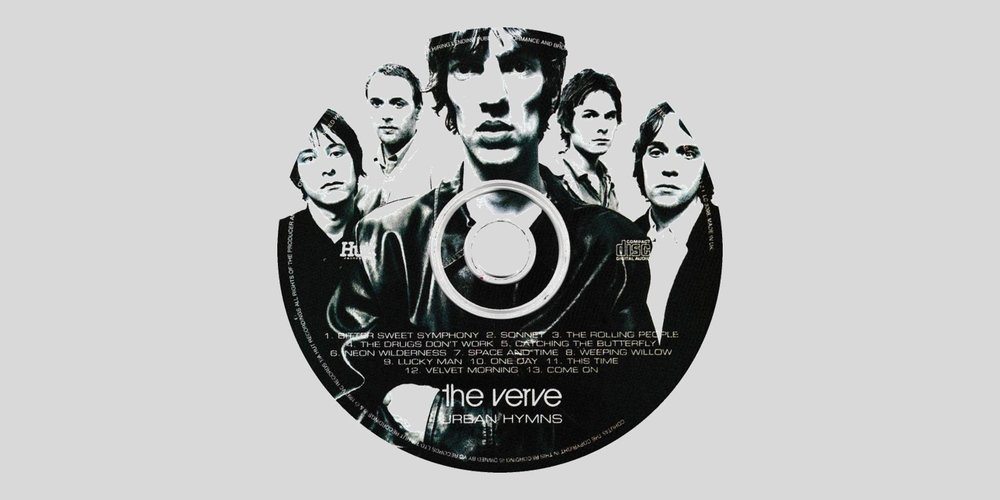
The Verve’s third studio album “Urban Hymns”, originally released September 29th, 1997. Mojo magazine’s recently published a revisionist assessment accompanying the album’s deluxe reissue’s, which curtly dismisses the album as “a flawed piece of wish fulfillment: Thus epic songs struggling to mend a broken heart.”
“I remember listening to “Urban Hymns” for the first time and I was completely enthralled with it,” I couldn’t stop listening to the album from beginning to end. It was pure brilliance. Each song could stand on its own and the album was flawless.
Although Urban Hymns represented my overdue introduction to The Verve’s songs, my education thankfully didn’t end there. The band’s excellent first two albums, 1993’s A Storm in Heaven and 1995’s A Northern Soul, the latter of which many still believe remains their greatest achievement on wax, both albums are remarkable in their own right.
Listening to all three albums also prompted me to seek out more information about the group’s genesis and career progression up to that point. Together with his schoolmates Simon Jones (bass guitar), Nick McCabe (lead guitar), and Peter Salisbury (drums), the Wigan, England born Richard Ashcroft formed The Verve in 1990 (guitarist/keyboardist Simon Tong joined the band in 1996 and remained until 1999). Three years later, the group released its critically acclaimed debut LP A Storm in Heaven, a hypnotic song suite defined by its sweeping arrangements awash in distortion, reverb, and vocal effects in abundance. Their follow-up effort, A Northern Soul, found the band balancing their more experimental proclivities with noticeably more accessible and melodic fare, including a trio of singles (“This is Music,” “On Your Own,” and “History”) that rank among the finest songs to emerge during the British Rock resurgence of the mid ‘90s.
Though the band briefly split a few months after A Northern Soul’s release, the fracture thankfully proved ephemeral and they soon returned to the studio to record once again. Initially propelled by the ubiquity of lead single “Bitter Sweet Symphony,” but also owing to the fact that the album as a whole is a masterpiece of exquisite musical vision and expertly executed songcraft, Urban Hymns became one of the biggest selling and most critically applauded British albums of all time upon its release.
Co-produced by the band with Youth and Chris Potter roughly splitting duties across its thirteen songs, Urban Hymns is defined by its ambitious, anthemic compositions that sound like the natural expansion from its two precursors. It’s immediately apparent, upon even cursory listens, that this was The Verve’s bold attempt to fulfill their self-imposed destiny, which envisaged them morphing into a band capable of crafting a truly timeless suite of songs. A fully realized album that lodged itself firmly within the depths of listeners’ hearts, minds and souls. And I’d say mission accomplished, gents.
Urban Hymns’ legacy is not without its blemishes and distractions, particularly when it comes to the infamous legal rigmarole surrounding “Bitter Sweet Symphony” and more recently articulated conflicts regarding acknowledgement of the album’s creative influences. But these antagonisms have not diminished the album’s enduring power and resonance, with respect to what ultimately matters most: the music.
Though the album’s creation was indeed a family affair with contributions from each of the group’s five members, a compelling case can be made that McCabe and Ashcroft were the central driving forces most instrumental in executing the band’s vision. McCabe’s adventurous, at times counter-intuitive guitar work is the sonic glue that holds each of the songs together and solidifies their sweeping grandeur. Meanwhile, the songs’ existential weariness and angst, coupled with their whimsical innocence and palpable romanticism, are the product of Ashcroft’s lyrical prowess. There are plenty of moments that gravitate toward the darker, more sobering dimensions of early adulthood, but Ashcroft’s boyish optimism and joie de vivre do shine through from time to time.
Though listeners have inevitably attempted to decode the true meanings behind Ashcroft’s sometimes elusive verses, it may simply be the case that he penned his lyrics so as not to be immediately or singularly interpreted. “I don’t think the listener needs to know anything more than the song,” he explained to MTV back in 1997. “Because we always abuse our listeners’ imaginations by giving them too much, and telling them too much. We’re making music, we’re not making cheeseburgers. So I’m not about to give it to them on a plate and say what exactly it’s about. I think that’s important. I hate it when you see lead singers taking all the mystery away.”
The universally familiar album opener and lead single “Bitter Sweet Symphony” is one of the easier songs to discern, as Ashcroft sings the praises of self-agency as the means of triumphing over the thankless, soul-sapping grind of the material world, with music offering much-needed respite (“I let the melody shine, let it cleanse my mind, I feel free now”). “As for ‘Bitter Sweet Symphony,’ all those legal wrangles still don’t take away the hours I put into it in the studio to create an incredible piece of pop art,” Ashcroft reflected to Vogue magazine earlier this year. And incredible it still most definitely is. Having said that, and perhaps because of its prevalence, it’s not among the five or six songs that instantly come to mind for me when I think of Urban Hymns after so many years.
The lower profile songs with the album, beginning with the other three official singles that were released from the LP. On the inspired “Sonnet,”Ashcroft unleashes his yearning for the purer incarnations of love, without the embellishments of false or forced sentimentality, through a mixture of despair and hope, with lines like, “Sinking faster than a boat without a hull / My lord / Dreaming about the day when I can see you there / My side / By my side.”
An introspective, sombre ode to the fleeting comfort of drug-induced escapism, the profoundly stirring “The Drugs Don’t Work” can be construed as an examination of Ashcroft’s feelings about his own drug use and/or perhaps a nod to his father, who died of a brain hemorrhage when Richard was eleven years old. “When I heard ‘The Drugs Don’t Work,’ I stood there with a lump in my throat,” The Verve’s former manager Jazz Summers recalled in 1998. “At times like those, you know why you’re in the music business.”
“Lucky Man” is a notably more uplifting anthem of redemption and self-satisfaction, with Ashcroft overcoming personal adversity to find balance and contentment in life: “Happiness / More or less / It’s just a change in me / Something in my liberty / Oh, my, my / Happiness / Coming and going / I watch you look at me / Watch my fever growing / I know just where I am.”
Though it’s challenging to distinguish highlights when the entire album unfurls as one grand highlight reel, a handful of non-single tracks are bona fide standouts. “Catching the Butterfly” is a stirring ode to summoning youthful innocence as a way to cope with the harsher realities of adult life (“So you’re born / And so you thought / The future ours / To keep and hold / a child within / Has healing ways / It sees me through / My darkest days”). With McCabe’s insistent guitar play galvanizing the steady percussion, “Space and Time” is a moving exploration of a relationship that has been sapped of its passion, with Ashcroft doing all that he can to salvage the connection to assuage his fear of being alone.
The longest track at seven minutes and seemingly the antithesis of the more accessible, radio-friendly fare on offer throughout the album, the sprawling jam “The Rolling People” harkens back to the more free-form sonic footprint the band established on A Storm in Heaven. As does the considerably shorter, largely instrumental “Neon Wilderness” and the dissonant, reverb-laden “Come On,” which features a brief Liam Gallagher cameo.
Elsewhere, “Weeping Willow” is a melodic dirge that finds Ashcroft exploring the symbiotic connection between depression and addiction, with references to suicidal tendencies captured in the song’s outro (“Weeping willow / The pills under my pillow / Weeping willow / The gun under your pillow”). With allusions to The Velvet Underground in the song’s title and lyrics, not to mention the Lee Hazelwood and Nancy Sinatra’s classic 1967 duet “Some Velvet Morning,” the subdued come-down of “Velvet Morning” is an introspective portrait of loneliness and despondency, feelings that come into sharper focus as the remnant effects of last night’s pills fade away as a new day dawns.
Most people seldom cite “This Time” as among their favourite tracks from the album, but it has always been an exhilarating, standout moment for me. The coalescence of its propulsive momentum, Ashcroft’s vocal echoes, and the overarching message of acknowledging past regrets and moving on with life the best you can has always resonated, particularly as conveyed through memorable refrains such as “No time for sad lament / A wasted life is bitter spent” and “Into a light I pass / Another dream, another trance / This time, this time / This time I’m gonna rise.”
I’ve spoken to people who’ve got nothing to do with the critical side of this business,” Ashcroft shared with MTV shortly after Urban Hymns’ arrival. “I’ve spoken to people in pubs, I’ve spoken to people on the street who weren’t even aware of who The Verve were six months ago. But something connected with them with “Bitter Sweet Symphony” and “The Drugs Don’t Work” that they can’t explain. Sometimes music touches you and you can’t deny it. So I’m not too interested in what the critics say. I’m interested in how the music can still have a power, and can still affect people and still move people.”
Controversies, conflicts and commercial achievements notwithstanding, The Verve’s “Urban Hymns” remains their creative pinnacle and continues to move people twenty years on. For better or for worse, all of The Verve’s and Richard Ashcroft’s music that has followed since 1997 has been measured against “Urban Hymns”, an unfair but inevitable consequence of the album’s ubiquity and acclaim. And while I embrace it as my personal favourite album of all time, I also appreciate that “Urban Hymns” is just one component—albeit a vital one—of the much broader narratives of the band members’ careers, which are still evolving in exciting and unexpected ways.
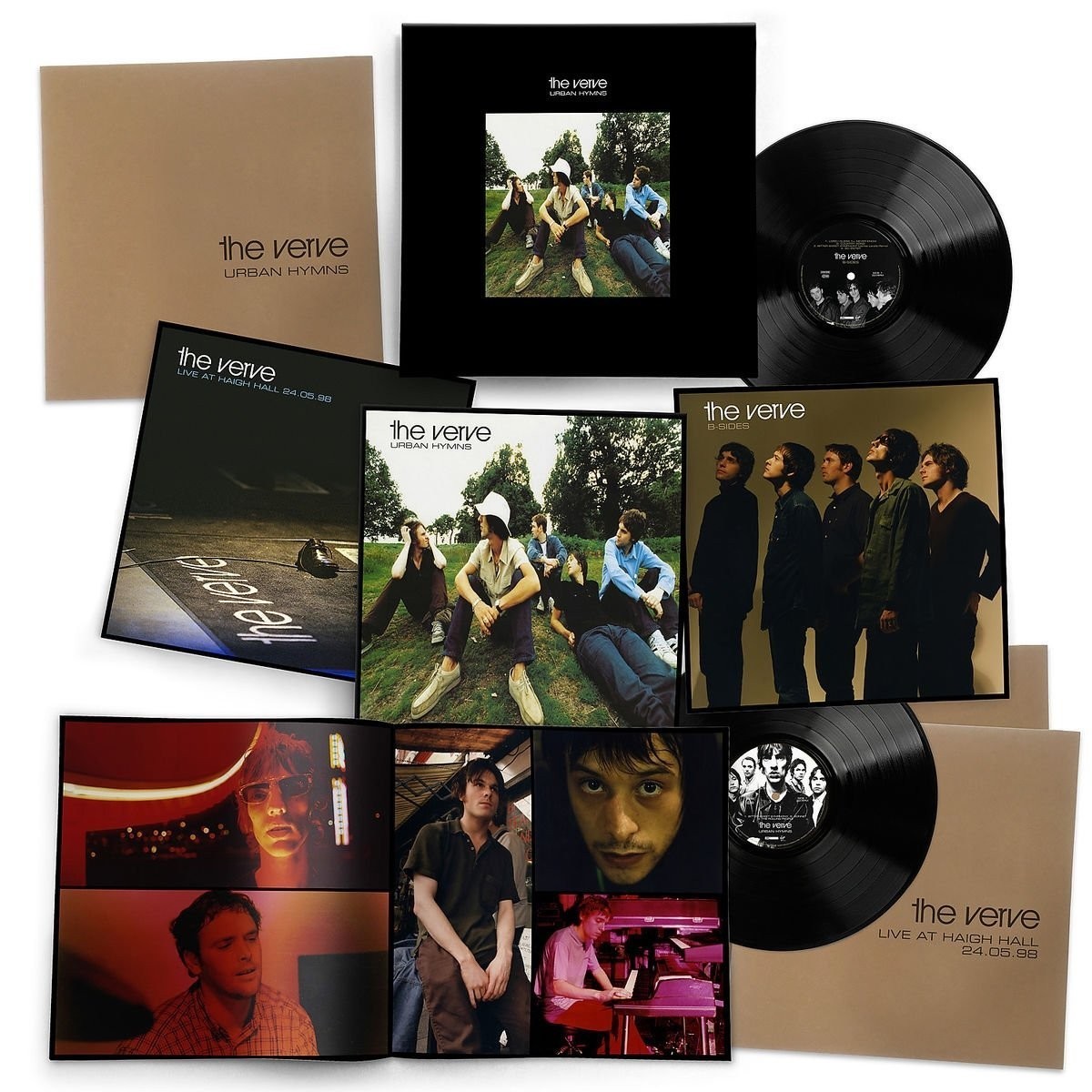
Expertly catching the mood of the late-‘90s upon its release in September 1997, The Verve’s third studio outing went on to become one of the all-time classic British albums. Eleven times platinum in the UK and with ten million copies sold worldwide to date, it also delivered four of the era’s most iconic singles – ‘Bitter Sweet Symphony’, ‘The Drugs Don’t Work’, ‘Lucky Man’ and ‘Sonnet’. Now, exactly twenty years on, comes this 3 double-LP box set version of ‘Urban Hymns’ containing a host of special features. Re-mastering was undertaken by original co-producer Chris Potter and the original album, spread over two vinyl discs, comes supplemented by a double album of B-sides and sessions, plus a further double set containing the previously unreleased concert at Haigh Hall. The box also comes with a 20-page booklet book including a selection of unseen photographs by Chris Floyd, who travelled with the band and was granted unprecedented backstage and offstage access. There is also a download card entitling the purchaser to all of the audio and the further music included on the 4CD Box Set edition.
The Verve’s third studio album “Urban Hymns”, originally released September 29th, 1997.
The organizers of the big three-day rock festival in Leeds and Reading in the UK announced today that the festival is going ahead this year!
Dates: 27th/29th August. You can read the great news on the festival’s Facebook page:
“Following the government’s recent announcement, we can’t wait to get back to the fields this summer. LET’S GO. Reading Festival is going to be BIGGER and BETTER than ever.”
With Atlas Vending, METZ – Alex Edkins (guitar & vocals), Hayden Menzies (drums) & Chris Slorach (bass) – not only continue to push their music into new territories of dynamics, crooked melodies, & sweat-drenched rhythms, they explore themes of growing up & maturing within a format typically suspended in youth. Atlas Vending delivers their most dynamic, dimensional, & compelling work yet. less
This 7″ is now being physically released for the first time via Three One G, limited to 1,000 copies, with one side of the vinyl being specially printed by The Black Moon Design, and featuring cover art by Jonathan Bauerle.
“Acid” is a song about having a fresh perspective, a newly widened outlook on the world and one’s life. Being shaken awake from a malaise and realizing there is no time for petty bullshit. Love what you love, love who you love! Embrace it and don’t wait.
Arriving at a time of considerable uncertainty in the world, Son Lux’s multi-album ‘Tomorrows’ is ambitious in scope and intent. Born of an active, intentional approach to shaping sound, the music reminds us of the necessity of questioning assumptions, and of sitting with the tension.
The music encompassed on Tomorrows provides an appropriate parallel for the sustained cacophony of the present moment, advancing a friction that reveals the strange in the familiar and the familiar in the strange. While this carefully crafted inversion acclimatizes the ear to tension, the steadily hardening exterior fractures at unlikely moments, revealing a strikingly visceral, emotional core. The process of creating Tomorrows is iterative in nature, with the lyrical content and music continually adapting and responding to one another and the shifting landscape of the moment.