So it’s probably no surprise that social activist and folk singer Billy Bragg has chosen to cover “Why We Build the Wall”, taking it out of its operatic context and turning it into something more. The cover has a brand new lyric video , The Anaïs Mitchell song “Why We Build the Wall”, despite being part of her 2010 ancient greek folk-opera Hadestown has turned out to be surprisingly prescient in today’s global political climate.
Finding a songwriting voice takes time and then there’s also the process of pinpointing the best way to send that voice hurtling through speakers. Palehound’s Ellen Kempner has long had the words: scathing and evocative, And with every live show, she’s finding surer and surer footing as the central focus in a band that marries rock muscle with her bedroom folk’s wiry vulnerability.
At an NPR Music showcase recorded live at New York City’s (Le) Poisson Rouge in the fall of 2015, Kempner opened with a quick confession “I’m really nervous” before channeling those nerves into her raw, powerful songs, accompanied by bassist Davood Khoshtinat and drummer Jesse Weiss. That rawness can take several forms, from the kiss-off brutality of “Molly” to the gnarled slow burn of “Seekonk” and “Dry Food,” the title track from Palehound’s excellent 2015 album.
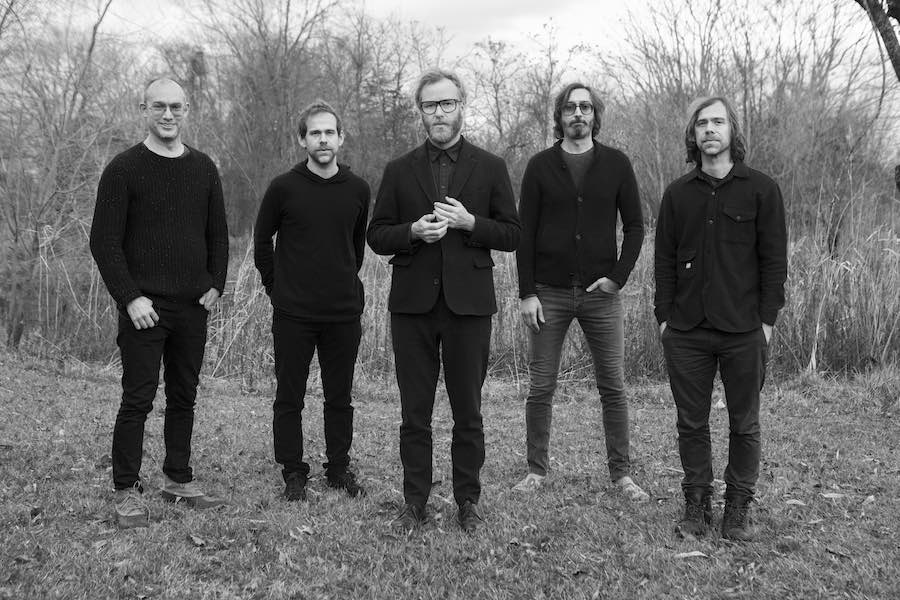
The National wanted to go home. For the past three-plus years, the band had been working in studios all over the world — in Los Angeles, Berlin, Paris, and upstate New York — on the long-awaited follow-up to its 2013 album Trouble Will Find Me, which firmly established the dour indie rock band as an internationally successful arena-rock outfit.
The quintet was wrapping up its second to last day at guitarist Aaron Dessner’s newly built home studio in Hudson, New York, when Matt Berninger, the band’s lead singer and lyricist, received a phone call.
On the other end was his wife Carin Besser, a literary editor who plays a large role in sculpting, editing, and occasionally contributing to her husband’s lyrics. Up to that point, the entire band had been feeling less than thrilled with the lyrics to one of its songs, whose chorus went something like this:
“Aaron takes his acid trip in Copenhagen/ Says he wants to stay that way/ But he can’t explain it any other way.”
Besser had a solution. She had found an early demo with a different set of lyrics Berninger had initially written, years earlier, and thought they might be a better fit. After the band had called it a day, Matt and Carin spent the evening texting tweaks to the old lyrics back and forth until they had rewritten the lyrics overnight.
The following morning, Matt, “red-eyed from no sleep and too much coffee and weed,” plugged his laptop into the studio speakers and started playing the alternate demo his wife had found on repeat as the band filtered into the studio to pack up gear and put a few final finishing touches on the record. The second time the song began to play through, Aaron stopped what he was doing and stood silently in front of the speakers, listening intently.
“Well, that sounds better than what we had,” Matt remembers Aaron saying to him. “I’m willing to chase this, if you really want to do it.”
“We do that sometimes,” says Berninger, recalling the eureka moment that resulted in the entirely revamped, current version of “The System Only Dreams In Total Darkness,” the lead single to the National’s latest album, Sleep Well Beast, “We flip the table over at the last minute, and if we don’t find anything when we flip the table over, then we know we’ve got the one.”
Over the past decade, the National has developed a reputation for being some of the most obsessive recording perfectionists in indie rock, a group that will record or mix a song in 80 different ways until they settle on something resembling consensus on a final product.
So when Scott Devendorf, the National’s bassist, recalls the moment when Matt and Aaron committed to reworking “The System Only Dreams” at the 24th hour, he remembers having one simple thought: “Okay, we’re going down that path again.”
For the past decade and a half, ever since releasing its self-titled debut album in 2001, the National has gradually developed one of the more fascinating collaborative songwriting methods for a band in any genre. Berninger writes lyrics to musical sketches made most often by guitarists Aaron and Bryce Dessner, with Scott and drummer Bryan Devendorf, who comprise the National’s rhythm section, later offering structural feedback and contributing additional instrumentation in the studio.
The National worked on its first several albums locally in Brooklyn, after the band moved to New York from their native Cincinnati in the late ’90s. But in the past five years, the group began to adjust how it made records after its members dispersed geographically, with Matt living in Los Angeles, Bryan back in Cincinnati, Scott in Long Island, Bryce in Paris, and Aaron splitting time between Copenhagen and upstate New York. As a result, much of Trouble Will Find Me was the product of several years of emailing song sketches, lyrics and instrumental parts back and forth.
The band’s newfound separation was one of the driving factors behind Aaron Dessner’s decision to build his new studio, a space where the band could once again convene to work for extended periods of time.
“That’s the big story of this record,” says Bryce Dessner, the guitarist and classically trained composer whose musical role tends to be pushing his bandmates towards left-field experimentation. “Finally having a place where we can all play together after all these years was really amazing for collaborating.”
Sleep Well Beast is the National’s seventh album and their first release in more than four years. In the period following their last album, the band devoted a good chunk of time toward Day Of The Dead, a three-disc tribute to the Grateful Dead organized by theNational and featuring artists that ranged from Lucinda Williams and Mumford & Sons to Courtney Barnett and Lucius.
“It definitely rubbed off,” says Scott, who thinks the group found themselves more willing to make less structured, more improvisational music after absorbing so much of the Dead’s influence.
Since their inception, the National have been defined by the push-and-pull creative dynamic between MattBerninger, a pop traditionalist who, as the group’s sole lyricist, gravitates toward recognizable melody and straight forward song structures, and the Dessner twins, progressive-minded multi-instruments who tend to favor the avant-garde.
That dynamic is more plainly on view than ever before on Sleep Well Beast, which contains strong dosages of both the most straightforward pop balladry and the most far-out experimentation the five-some has ever put on record.
Songs like “Carin At The Liquore Store” and “Dark Side Of The Gym” are straightforward pop numbers with hints of doo-wop and r&b, the latter a reference to Berninger’s hero Leonard Cohen’s 1977 tune “Memories.” Meanwhile, songs like “Walk It Back” and the title track are full of spoken word interludes, programmed drum beats, and complex rhythmic patterns.
“We allowed ourselves to try so many new things and take a lot of risks, but at the same time, if the song was special and obviously strong, we didn’t rule it out because it had something to do with our past,” says Aaron.
In the National, most songs begin with Aaron Dessner. He usually comes up with his initial ideas — typically some sort of “rhythmic or harmonic behavior” — by mindlessly tinkering around on guitar or piano.
Aaron, who composed the majority of the music for the band’s new album, goes into great technical detail when describing his group’s music, detailing a litany of harmonic patterns, rhythmic intervals, and chord inversions that comprise the National’s latest record. Aaron Dessner is an enthusiastic promoter of the National’s musical synthesis, eager to talk about the theory and process that defines the group’s creative dynamic; in our 30-plus minute chat, I ask him a mere total of five questions.
Over the years, the National’s internal studio arguments and laborious decision-making have become the stuff of indie rock legend. Bryce Dessner, for one, can still point to specific musical disagreements that happened nearly a decade ago. “Aaron resents me for writing ‘Lemonworld,’” he says, unprompted, at one point while calling from his home in Paris. “He thinks it’s not an interesting enough piece of music.”
Aaron recalls one particularly tense moment in Hudson. The group had been discussing the song “Sleep WellBeast,” an atypical musical sketch that Bryce and Aaron had become particularly invested in seeing to completion. But Berninger had been having a hard time connecting with the song, and at one point put forth a suggestion: “Why don’t we mute everything except for the drum loop, and we can write something else to it?”
Before Aaron went to sleep that night, he turned to his wife, and said, “I think we just destroyed the one song I’m most excited about.”
What happened next is typical of the National’s chaotic process: The band appeased Matt, using the drum loop to form the foundation of a new piano ballad, “No Guilty Party.” After writing that new song, Aaron, still trying to convince Matt of the musical possibilities of “Sleep Well Beast,” took the lyrics from “No Guilty Party” and inserted them into the “Sleep Well Beast” backing track. It worked: Matt slowly warmed up to the initial song sketch and began writing separate lyrics to that piece of music, which ended up serving as the record’s concluding moment (and the longest studio recording the National has ever put on record).
The resulting two songs, “Guilty Party” and “Sleep Well Beast,” are just the latest in a long line of examples of the National deploying its inherent creative tensions in its favor.
“We’re experimental and quite adventurous in our tastes and in what we do live and what we all do separately,” says Bryce. “Our records have tended to be a little more buttoned-up and … not conservative, but economical. If they’re adventurous it’s in more subtle ways, the way we would use an orchestra or the fact that we would make these weird hits out of all these sleepy songs.”
Those sleepy hits — be it 2007’s morose ode to disillusionment-turned-Obama-campaign song “Fake Empire,” 2010’s Great Recession-era lament “Bloodbuzz Ohio” or 2013’s anxious arena rock anthem “Sea Of Love” — have formed the backbone of the band’s songbook.
But on its latest, the National mostly abandons a core feature of its signature sound — the slow-building musical climax that’s been described as “crescendo rock” — for a more subtle approach. On Sleep Well Beast, the band allowed its sparse ballads to remain as such. And when the group did build exuberant musical landscapes, during the endings to “Walk It Back” or “I’ll Still Destroy You,” it composed entirely separate pieces of music and stitched them together.
“Where in the past we’ve been hammering this sort of anthemic thing,” says Bryce, “these ones have more information in them.”
Matt Berninger is surrounded by notebooks. He’s calling from his home in Los Angeles, where he’s lived since 2013, and at the moment, he’s sitting in a room where he stores all of his old writing journals.
Berninger used to depend on these notebooks: he’d constantly jot down lines and lyrics, fill them up with color-coded page markers, and write notes to himself in the margins.
“They stressed me out, all these notebooks, and staring at them gives me a bit of anxiety,” he says. “I don’t need to dig them up again. Those notebooks are dead bodies. Let them rest in peace.”
In recent years, Berninger has adopted an entirely new, unstructured approach to lyric writing. Nowadays, he doesn’t write unless he has music in front of him, and when he is writing, he now relies on a mix of improvisation and free-association. He’ll receive a demo from Aaron or Bryce, lie down on a recliner with some wine and weed, turn the music on, and begin singing the first thing that comes to his head.
“I find it much more exciting to just keep running forward through the woods, not worrying if I’m going in the right direction,” he says.
Berninger now uses one-page Word documents when he’s ready to begin gathering the countless revisions and rough takes he records — often directly into his laptop microphone — on GarageBand.
The lyrics on the Berninger’s newest batch of songs, however, are every bit as evocative in their specificity as anything he’s ever written. On “Carin At The Liquor Store,” Berninger, who’s always been at his sharpest when documenting upper-middle class malaise, paints an exquisite portrait of privileged summertime longing:
I see you in stations and on invitations
You’d fall into rivers with friends on the weekends
Innocent skies above
Carin at the liquor store
I can’t wait to see her
I’m walking around like I was one who found dead John Cheever
Over the span of his career, the essence of Berninger’s thematic focus as a songwriter has essentially remained the same. “Sometimes, I want to remind myself of ideas I’ve written, so I write them again in a different way,” he says. “Usually that idea is one of three things: I’m freaked out about the world, I want to be a good husband and dad and I’m trying but sometimes I’m a bit of an asshole, and I’m sorry. So it’s either: I’m scared, I’m sorry, or I love you. It’s one of those three things, almost always.”
With the National back in the studio together in Hudson without any immediate deadlines or time crunches, the band was able to experiment and create more freely, and more collaboratively, than they had in years.
Devendorf characterizes the band’s recording sessions as opportunities for each member of the band, “a five-headed monster,” as he puts it, to constantly give each other feedback and advice.
“There will be times when I think I’ve messed up a whole section on the drums and think it’s terrible, and Aaron will say, ‘That’s the best thing you’ve done on the whole record,’” says Bryan. “The band helps me see what’s working. Otherwise, I would just try to make things too complex.”
For their most recent sessions, Berninger introduced a few gags to help lighten the mood and foster directness. He instilled “Honesty Hour,” when the band would give unfiltered opinions about each other’s creative ideas. He also embroidered a knit cap with the word “Producer,” and whoever wore the literal “Producer’s Hat” would get to make production decisions at that moment. “Matt wore it a lot,” says Scott Devendorf. Indeed, Sleep Well Beast marks the first time Berninger receives an individual co-production credit on a National album.
Seven albums and 15-plus years into their career, the National are still finding ways to reinvent and fine-tune the way the band harnesses the talents of all of its individual members to write interesting songs and make lasting records.
“It’s kind of a cliché, but bands are all about the alchemy of individuals,” says Bryce Dessner. “There are fairly well-worn relationships that play out, and then we subtly challenge them. That’s part of keeping it interesting — we have to keep growing. How do you do that? Especially a band that becomes mildly successful, it’s easy to get overconfident. Part of it is that our self-deprecating personalities allow us to challenge ourselves. It’s like, ‘Actually, though, what we do is not that interesting, so let’s keep improving it.’”
Eric Pollard has an interesting musical career. played keyboards for Low, drumming for Retribution Gospel Choir and Sun Kil Moon and body and soul devoted to Actual Wolf, his country project. With an enviable back catalogue that covers the spectrum from home made demos to fully produced, crisp tracks, the music of Actual Wolf mixes classics like Merle Haggard, Johnny Paycheck, The Band and Red House Painters.
His music conveys that open country landscape with massive overcast skies, straight from America’s heart. Fading emotions, like freight trains howling away during the night, are spread all over Faded Days, his latest album. As the album gets a vinyl release on September 15th.
Bob Mould took a different path after the dissolution of post-punk legends Hüsker Dü, memorably releasing an acoustic-based solo debut in 1989’s Workbook followed by a return to volume with Black Sheets of Rain a year later. Then Nirvana arrived. He said he knew, right then, that guitar records were back. “Copper Blue” is the debut studio album by American alternative rock band Sugar. It was voted 1992 Album of the Year
All of the songs were written by guitarist/vocalist Bob Mould, who also co-produced with Lou Giordano. The song “The Slim” is about losing someone to AIDS. Musically, the band continues the thick punk guitar of Mould’s previous band, Hüsker Dü, while slowing the tempo and emphasizing melody even more.
Bob Mould quickly formed Sugar with bassist David Barbe and drummer Malcolm Travis, releasing CopperBlue on September. 4th, 1992. Several tracks were recorded for this album, but were not included. Mould decided to release them separately as an EP entitled “Beaster”.
“Music is such a circular thing. When Nevermind came out, that album changed the way people listen to music,” Mould told NPR in 2014. “A lot of the songs that I had been writing in 1991 led up to my next group, Sugar — and had it not been for Nevermind, I don’t know if Sugar’s Copper Blue would have stood a chance in ’92. But people were now receptive to this sound.”
Constructed in the same power trio image as Hüsker Dü, Sugar instead leaned more toward power pop – extending Mould’s underground legend into a new arena and into a new generation. What it wasn’t, Mould insisted at the time, was “alternative.”
This sunburst of hooky joy, however, followed a very dark period. Mould was coming off a failed personal relationship, and a failed professional one. A recent separation from his manager revealed that he’d signed away Mould’s publishing rights without permission. A split with Virgin Records followed, leaving Mould to toil through a rigorous – but financially necessary – nine-month solo tour in 1991.
As he averaged some 300 miles of driving a day, Mould had plenty of time to jump start his creative impulses. Something he once called a “lonely and inspiring” experience led to “plenty of time for reflection,” and then to these new songs.
Then came an appearance at an outdoor festival in Germany before some 7,000 people – all of whom, it seemed, where there to see Nirvana. On the verge of releasing their breakthrough Nevermind, Mould admitted that Nirvana “customarily trashed the joint.” Mould had the bad luck to follow them onstage.
“Pounding away on a 12-string acoustic by myself at an outdoor festival in the middle of the afternoon was no easy feat,” Mould said in 2011. “Nirvana destroys the stage, then it’s me carrying on like Richie Havens at Woodstock.”
Change was in the air, and Mould was deeply aware of it. You could, of course, draw a straight line from HüskerDü to Nirvana. The time for a return to the outsized energy, the riffy focus and even the format of Mould’s critically acclaimed but always commercially overlooked first band seemed to have finally arrived.
“The success of Nevermind re-tempered the ears of the listeners throughout the world,” Mould told NPR. “It was a heavy, punky record, but there was something about it that was so accessible that it opened up all these pathways for other musicians — myself included — to have our music heard.”
Sugar’s songs, once envisioned as solo performances, took on new life with the arrival of Barbe and Travis, and they immediately started feeling like a real band, Mould said. Sugar selected their name in the most off-the-cuff manner possible, while sitting inside a Waffle House at Athens, Ga. where they band spent some time working out their emerging sound in R.E.M.‘s practice space. “We got a big pot of coffee and banged out about 24 songs,” Travis said in 1992.
Mould was right; their timing was perfect. “Helpless” hit No. 5 on the modern rock charts; “A Good Idea” – which Mould has said was “an unconscious homage” to the Pixies’ “Debaser” – became a fan favorite, too. Free of so many lingering worries, tracks like “Hoover Dam” (a triumph of jangly optimism) simply came tumbling out.
“It was this dream song that just turned up as I was waking up one morning,” Mould said of “Hoover Dam” in a 2014 interview with Team Rock. “It came to me fully formed, and then it’s just all the baubles that make it that crazy baroque band thing. All that was pretty much in my head too, but you have to sit down and make these baubles shine. That’s the production stuff.”
Copper Blue did even better in the punk-loving U.K., reaching the Top 10. NME named it Album of the Year, even as “If I Can’t Change Your Mind” reached the Top 30 there. “What a fun ride that was. That was like 0 to 100 in about eight seconds,” Mould told Moehlis, adding that he was grateful that “I had 13 years of experience under my belt before the rocket got strapped to my ass.”
After all, pressure like that often leads rock stars down rocky paths, since “everybody wants everything all the time.” Instead, Mould got to enjoy the ride. “At this point in my life,” he said in his autobiography See a Little Light, “I was euphoric.”
Of course, plenty of people began to frame Sugar as a call back to his time with Hüsker Dü. There were, on the surface at least, some obvious similarities. For Mould, however, this represented a brand new start, and a most welcome one, even if he was returning to a tried-and-true trio set up.
“It’s a pretty comfortable spot for me,” Mould said in a 2014 interview. “It’s odd to say ‘comfortable,’ because it’s really a lot of work for me but musically it’s the best way, when I have two other people that I need to connect with. There’s a real clarity and a purpose to it because everybody knows how much they have to lift at all times. I like that interaction. It feels like jazz.
Their sets, like Bob Mould himself, focused on the here and now. “Hüsker Dü broke up,” he told the Los Angeles Times. “We had eight good years, and one bad one. Sugar doesn’t do any oldies.”
In July 24, 2012, the album was reissued by Merge Records as a 3-disc set containing the full album accompanied by B-sides (disc 1), the Beaster EP (disc 2), and a 1992 live performance at the Cabaret Metro (disc 3) Band members
Bob Mould – guitars, vocals, keyboards, percussion
When listening to The Psychedelic Furs it is inevitable that I recall Molly Ringwald and the movie that was made in the early 80’s, when I first heard Pretty in Pink, this was a time of lost love,
The purity of those songs still remains intact, the unique voice of Mr Butler, the characteristic sonority of the Furs was forever marked in many adolescents of that time, who today, like me, have become adults, but still carry with them that purity eternalized by the Furs .Thanks to all the bands present on this project.
We dedicate this project obviously to the eternal Furs.
All songs originally recorded by The Psychedelic Furs
Discography
1980 – The Psychedelic Furs
1981 – Talk Talk Talk
1982 – Forever Now
1984 – Mirror Moves
1987 – Midnight to Midnight
1989 – Book of Days
1991 – World Outside
After rejecting the Hall of Fame accolade twice in the past five years, members of The Clean have agreed to accept it at this year’s Silver Scrolls ceremony on September 28th.
“I think when we were asked it just didn’t feel right for us,” Robert Scott, the band’s bassist, “We feel we are outside the industry, and in the past we were shunned and dismissed, and it seems like by saying yes we would be forgiving the industry for that.
“Of course, with time they are proved wrong as our music has stood the test of time.
“It’s a strange thing dealing with other people’s perception of your music and what you stand for as a band.”
Inspired by obscure sixties garage and psychedelic bands, as well as the punk revolution of the 1970s, The Clean helped introduced New Zealand to what would later become known as ‘The Dunedin Sound’.
It was 1981 when a young Roger Shepherd was in the process of launching his new label, Flying Nun Records. He wanted to promote the many post-punk alternative bands that were springing up in his hometown of Christchurch, and further south – Dunedin.
Shepherd chose The Clean’s ‘Tally Ho’ as one of the two singles he released to the launch the label. It made it to No. 19 on the NZ singles chart, much to the delight of those involved. Not many people realised it at the time, but it was the start of something that would influence music and culture in NZ – and beyond – for decades to come.
The Clean helped cement The Dunedin Sound’s popularity – and Flying Nun’s finances – with their EP Boodle, Boodle, Boodle, also released in 1981. Surprisingly, it reached number four in the NZ charts and remained in the Top 20 for nearly six months. “To make Boodle and then it be so successful was just incredibly encouraging for everybody involved … like, ‘Hey, we’re on the right track here. Maybe we aren’t so crazy,’ DavidKilgour recalls.
The band’s members include guitarist Kilgour, his brother – drummer Hamish Kilgour, and bassist Robert Scott. Each has forged a life in music including multiple bands and projects including The Bats, The Great Unwashed, Bailter Space, The Heavy Eights and more.
But it was The Clean that made it onto US college radio in the 1980s; garnered an enduring fan base in Australia, the UK and Europe; and influenced generations of NZ musicians and fans. And they’re still touring successfully across the world today.
As a reminder of how great The Clean really is, and to get you in the mood, here’s some quality gear to binge on:
The story of Boodle Boodle Boodle (2012)
“By the time we got to do Boodle Boodle Boodle, The Clean … were such a wonderfully great live band. Most of those songs were done in one or two takes.” Boodle producer Doug Hood
A video tracing the history of The Clean’s iconic first EP. Featuring Hamish Kilgour, David Kilgour, Robert Scott, producer Doug Hood and former band member the late Peter Gutteridge:
Earlier this year Boodle Boodle Boodle was awarded the 2017 Independent Music New Zealand Classic Record Award. We spoke to David Kilgour about the record. “We only [play live] every three years, so that’s how we do it. We take the mickey out of each other, in a kind and caring way. You can have a laugh at someone’s expense, but to a certain degree, and then you cross a line and the expression changes, and you know you’ve gone too far.”
– Robert Scott
The Clean: selected discography
Boodle, Boodle, Boodle – 1981
Great Sounds Great, Good Sounds Good, So-so Sounds So-so, Bad Sounds Bad, Rotten Sounds Rotten – 1982
We hear far too little of Welsh indie-pop quartet Kidsmoke, though everything they do do is done with with care, attention and impeccable flair.
After last year’s ‘See The World’ they now return with another track taken from their ‘Save Your Sorrow’ EP, which came out in June.
Recorded at Orange Sound Recording Studio, Penmaenmawr with Russ Hayes (Catfish and the Bottlemen), ‘Seabirds’ is Kidsmoke’s most ambitious song to date – and not just in its 4 minutes and 25 seconds length. Lush, flowing melodies waft through layers of reverb and West Coast vibes, through which lyrics like “You cloud the sunset/It drags my heart down with it/Now I don’t feel at all/You are the tumbling rocks sent/To chase away this time spent” revolve.
“I think I was listening to a lot of War on Drugs’ ‘Lost In The Dream’ at the time,” says songwriter/bassist JamesStickels. “Not sure that carries into the final version. I wanted a chorus that opened up like Radiohead’s 1996 version of ‘Lift’.”
Beach Slang frontman James Alex has been busy reworking his band’s songs for an EP to be put out under the moniker Quiet Slang next month.
Listen to ‘Hot Tramps’, a new song he wrote “on the same day David Bowie died. I don’t know. I felt like making something was the best way to punch through it, to figure it out . I suppose, some of it’s about Bowie. Most of it’s about a girl. All of it’s about patching up the cracks. So, that’s the deal, you know? A few chords, some clumsy words and a title you swiped from a hero — it doesn’t fix it all, but it numbs the sting. Maybe that’s enough.”
The London-based band will release their fifth record ‘V’ on September 22nd . It follows on from 2014’s ‘Luminous’.
With their fifth album ‘V’ out on September 22nd, The Horrors have shared another track from the record, after end piece ‘Something To Remember Me By’ they dropped last month, and ‘Machine’ before that.
‘the song’ is the latest and where the band large it on psychgaze guitars and deep rhythms.