Spaced out rockers Wooden Shjips are back with the full length album V. True to their style, Wooden Shjips deliver with laid back jams with definite influences from Buffalo Springfield on their released song “Staring At The Sun” their their psychedelic twist. This seems to be the only limited release over at Thrill Jockey on opaque red vinyl.
Here is a little blurb about the release:
Wooden Shjips, long-time leaders of the contemporary psychedelic movement, expand their sound with V. The quartet of Omar Ahsanuddin, Dusty Jermier, Nash Whalen and Ripley Johnson augment their already rich sound with laid back, classic summer songs. The songs were written during the summer of 2017 by singer and guitarist Ripley Johnson as an antidote to the pervasive anxiety both political and natural. As Ripley tells it, “We had huge forest fires just outside of Portland and there was intense haze and layers of ash in the city. I was sitting on my porch every evening, watching ash fall down like snow, the sky looking like it was on fire. It was an apocalyptic feeling. Summer in Portland is usually really chill and beautiful, and we were working on a ‘summer record,’ but the outside world kept intruding on my headspace.” V., a graphic representation of the Peace sign, seemed apt to an album focused on the power of peace, beauty and resistance. The music is a balm against the noise and negativity.
Each song shimmers with a distinctly Wooden Shjips sound, a relaxed summer vibe. This was a conscious choice, an atmospheric goal that influenced nearly every detail: the tones, the delay types and reverbs used, as well as the synthesizer elements that color the songs. The basics were recorded by Jason Powers at Types Foundry Studio in Portland. The guitars and vocals were largely recorded in RipleyJohnson’s comfortable home studio. The album was mixed by Cooper Crain (Cave, Circuit Des Yeux) who the band has formed close bonds with on tour. The instructions were simple “We told Cooper to keep it really fat but to feel free to play around with the other elements, make a nice headphone mix with a lot of movement,” said Ripley, “I wanted it to be floaty because that’s kind of where my headspace was at the time.”
LP version packaged with full color artworked inner sleeve and free download card. A limited supply pressed on opaque red color vinyl and only available via Thrill Jockey mailorder or the band’s merch table.
Includes digital pre-order of V.. You get 7 tracks now (streaming via the free Bandcamp app and also available as a high-quality download in MP3, FLAC and more), plus the complete album the moment it’s released.
digital album releases May 25th, 2018
“Already Gone” is from Wooden Shjips new album ‘V.’ out on Thrill Jockey Records.
Album of the week has to go to Simply Saucer, one of my all time favourite records, a legendary proto-punk classic and a must for any fans of The Velvet Underground/The Stooges/Modern Lovers or weirdo Psych-punk. So chuffed that In The Red have reissued this with a bonus Live LP too. Gwenno returns for her second album in an unfathomable language (to me anyway), with ‘Le Kov’ sung entirely in Cornish, but retaining every bit of the interest that had her last LP playing constantly in the shop. All-round top producer and session musician JonathanWilson has a new full-length out, the latest since his 2103 stormer, Fanfare. It’s no surprise that he’s really not missed a trick on the production front, but the songs themselves are stunning, heartfelt and unmissable.
Soccer Mommy’s new one covering the jangly lo-fi end of the spectrum with aplomb, sounding like a grungy distillation of the 90’s with today’s saturated tape aesthetic, brilliantly varied but hugely satisfying. If this isn’t quite heavy enough for you, then you could do worse than the storming Moaning LP on Sub Pop, at points sounding like a bastard child of NY hardcore and melodic post-punk, but brought together with a wonderously heavy, but undeniably glossy aesthetic.
The impassioned, self-titled debut from Los Angeles-band Moaning produced by Alex Newport. Moaning is a band defined by its duality. The abrasive, post punk trio comprised of Sean Solomon, PascalStevenson, and Andrew MacKelvie, began nearly a decade after they met in L.A.’s DIY music scene. Their debut album comes born out of the member’s experiences with love and distress, creating a sound uniquely dark and sincere. Although the band is just breaking out of their infancy, Moaning’s sleek and cavernous tone emphasizes the turmoil of the era they were born into. One where the endless possibility for art and creation is met with the fear and doubt of an uncertain future. The trio began regularly frequenting DIY institutions like The Smell and Pehrspace, eventually selling out dozens of their own shows at both venues with their first few bands. Solomon recalls, after a brief hiatus from playing together, Moaning’s conception came when he sent Stevenson and MacKelvie the first demo for Don’t Go, setting the tone for the impulsive songwriting that would follow. The three fleshed out Solomon’s primitive recordings, adding in MacKelvie’s heavy syncopated drumming, and Stevenson’s melodic driving bass and synth parts, capturing each member’s personality in their sparse and fuzzed out tracks. Like many of their previous collaborative projects, Moaning forces pain up against pleasure, using the complexity of personal heartbreak to inform the band’s conflicted sound. The band eventually landed on the apt moniker Moaning, admiring the ambiguity the name held and hoping to reference both an intimate wail and an anguished scream.
Suuns are pleased to announced their new album, Felt, coming out March 2nd on Secretly Canadian. Singer/guitarist Ben Shemie says, “This record is definitely looser than our last one [2016’s Hold/Still]. It’s not as clinical. There’s more swagger.” You can hear this freedom flowing through the 11 tracks on Felt. It’s both a continuation and rebirth, the Montreal quartet returning to beloved local facility Breakglass Studios (where they cut their first two albums [Zeroes QC and Images Du Futur] with Jace Lasek of The Besnard Lakes) but this time recording themselves at their own pace, over five fertile sessions spanning several months. A simultaneous stretching out and honing in, mixed to audiophile perfection by St Vincent producer John Congleton (helmer of Hold/Still), who flew up especially from Dallas to deploy his award-winning skills in situ.
Complementing O’Neill are the ecstatic, Harmonia-meets-Game Boy patterns unleashed by electronics mastermind Max Henry. Eschewing presets, Henry devised fresh sounds for each song on Felt while also becoming a default musical director, orchestrating patches and oscillations. Quietly enthusing about “freaky post-techno” and Frank Ocean’s use of space, he’s among your more modest studio desk jockeys: “Yeah, I sat in the control room while the others played – hitting ‘record’ and ‘stop’. It also gave me the flexibility to move parts around and play with effects. I do have a sweet tooth for pop music.”
Titus Andronicus A Productive Cough
Since debuting in 2008, Titus Andronicus [hereafter +@] has been conditioning faithful listeners to expect only the unexpected. With A Productive Cough, +@ has executed the most shocking departure yet—but only if, as ever mercurial singer-songwriter Patrick Stickles insists, “you haven’t been paying attention.” In a move that may infuriate the black-denim-and-PBR set, A Productive Cough sets aside leadfooted punk anthems in favor of a subtler, more spacious approach that pushes Stickles’ soul-baring songwriting to the fore, creating an intimacy between artist and audience with which previous +@ efforts had only flirted. “[+@] records have always had their fair share of ballads,” Stickles explains, “but they were always buried amidst a lot of screaming. Now, they are the cornerstones. Punk rock is nice, but it is but one tool in the toolbox from which I pull to achieve my artistic purpose, and that purpose has always been communication and validation. This time, perhaps I can more effectively talk to the people if I am not so busy yelling at them.” The mission of A Productive Cough is apparent from the first bars of opening track “Number One (In New York).” As a tableau of piano and dulcet horns unfolds, Stickles unleashes a breathless and unceasing 64-bar verse with subject matter as sprawling as the kitchen-sink arrangement, which grows to include sparkling guitars, twinkling bells, and uplifting choral vocals as Stickles searches desperately for the strength to carry on through an increasingly violent and frightening world.
Darlingside – Extra Life
Extralife is the follow up to the band’s 2015 breakthrough, the highly praised Birds Say. Where Birds Say was steeped in childhood nostalgia and the loss of innocence, Extralife finds Darlingside looking to the future, mourning the loss of our world with an almost post-apocalyptic view. While the subject matter may seem bleak, Extralife is not without an underlying sense of hope and optimism. Extralife looks at hard truths ranging from societal issues, politics, environmental concerns and religious tensions as catalysts for where we may be headed. While the issues of today dominate every form of media and communication, Darlingside views it all from a different lens. The group looks past the now and predicts the life to which we could potentially be headed as a fictional narrative, but is it? How the group could address such a dark subject with such artistic beauty and grace is a testament to the distinctive nature of Darlingside.
Tracey Thorn – Record
Tracey Thorn’s first solo album of entirely original material for seven years.
Describing Queen, Tracey says: “It’s a great opener for the album – driven along by Ewan Pearson’s unashamedly glittering electro-pop production, drums and bass from Warpaint’s Stella and Jenny, it features me playing electric guitar for the first time in a while, and singing my heart out.”
As ever the personal has often been political in Tracey Thorn’s work. “Nine feminist bangers,” Tracey Thorn jokes when asked to describe ‘Record.’ If this album is in part about freedom and disenthrallment, new single ‘Queen’ is the opening broadside, all personal fire and desire. Her voice, self-assured and richly-textured, yet confessional and affecting, spits out the lyrics on ‘Record’ with a fresh compelling drive and remains one of the finest female pop voices of the last four decades.
”I think I’ve always written songs which chronicle the milestones of a woman’s life.” she says. “Different ages and stages, different realities, not often discussed in pop lyrics. If 2010’s Love and Its Opposite was my mid-life album – full of divorce and hormones – then ‘Record’ represents that sense of liberation that comes in the aftermath, from embarking on a whole new ‘no fucks given’ phase of life.”
On Record, the synth-driven tracks arrive and leave with a punchy sub-three-minute directness. “I wanted it to be a record you’d listen to in the daytime,” Tracey says. “On your headphones or on the move. Not necessarily in the evening, or in your bedroom.” For all its no-fuss pop brevity, the album rotates around Sister, a dubby nine-minute Compass Point-style disco jam where Tracey is joined again by Warpaint’s rhythm section and glorious backing vocals from Corinne Bailey Rae.
Across four decades Tracey’s songs and writing have offered up a clear-eyed woman’s view of the immediate world around her; from the acerbic teen love songs of her first early-eighties band Marine Girls, through sixteen years as one half of articulate multi-million-selling duo Everything But The Girl to her recent acclaimed memoirs and journalism.”
Lucy Dacus – Historian
Lucy Dacus is done thinking small. Two years after her 2016 debut, No Burden, won her unanimous acclaim as one of rock’s most promising new voices, Dacus returns on March 2 with Historian, a remarkably assured 10-track statement of intent. “This is the album I needed to make,” says Dacus, who views Historian as her definitive statement as a songwriter and musician. “Everything after this is a bonus.”
Dacus and her band recorded the album in Nashville last March, re-teaming with No Burden producer Collin Pastore, and mixed it a few months later with A-list studio wizard John Congleton. The sound they created, with substantial input from multi-instrumentalist and live guitarist Jacob Blizard, is far richer and fuller than the debut — an outward flowering of dynamic, living, breathing rock and roll. Dacus’ remarkable sense of melody and composition are the driving force throughout, giving Historian the immersive feel of an album made by an artist in full command of her powers.
The Men Drift
Drift is the seventh full-length by NYC rock polymaths The Men. The band’s last album, the self-released DevilMusic, was the sound of a band who had been through hell hitting reset and looking to their roots to rediscover themselves. On Drift, The Men return to their longtime label Sacred Bones Records and explore the openness that Devil Music helped them find.
The immediately evident result of that exploration is the experimental quality of much of the material on Drift. Songwriters Mark Perro and Nick Chiericozzi chase their muses down a few dozen thrilling rabbit-holes over the course of the album’s nine tracks. The songs on Drift veer in a number of directions, but notably, almost none of them feature a prominent electric guitar. The lone exception, “Killed Someone,” is a rowdy riff-rocker, worthy of the finest moments of the band’s now-classic Leave Home and Open Your Heart albums. The rest of the album drives down stranger highways. “Secret Light” is an improvisation based on an old piano riff of Perro’s. “MaybeI’m Crazy” is a synth-driven dancefloor stomper for long after last call. “Rose on Top of the World” and “WhenI Held You in My Arms” are paisley-hued, psyched-out jams with big, beating hearts.
The album was recorded to 2″ tape with Travis Harrison (Guided by Voices) at Serious Business Studios in Brooklyn. A whole pile of instruments was involved — synths, strings, sax, steel, harmonica, tape loops, on top of the usual guitar, bass, and drums. Unlike recent releases from The Men, there aren’t many overdubs on Drift — a reflection of the personalities of its makers becoming less frantic, Chiericozzi suggests. In fact, the band removed a lot of the additional parts they tried adding early on, giving the final product a bit of a ghostly feel. The songs on Drift took giant leaps and trips from their beginnings only to find the band returning to the first spark of creation.
Soccer Mommy – Clean
Following on from last years compilation “Collection”, Nashville based Sophie Allison aka Soccer Mommy now brings us her debut album proper. Produced by Gabe Wax (Deerhunter, War On Drugs, Beirut), the new album is a huge step up from her earlier bedroom recordings. The fuller sound works perfectly with Sophie’s finely crafted, bitter-sweet pop songs that have a world weary quality beyond her 20 years.
Jonathan Wilson Rare Birds
Jonathan Wilson had a busy 2017, producing Father John Misty’s grammy nominated Pure Comedy and touring arenas around the globe as a guitarist and vocalist for Pink Floyd legend Roger Waters (for whom he also contributed to the lauded Is This The Life We Really Want? album.) Wilson also saw widespread acclaim heaped on Karen Elson’s sophomore LP Double Roses, which he recorded with her in Los Angeles in 2016.
But it’s not looking like Wilson is going to get much of a rest in 2018 either, as he’ll be continuing on with the worldwide Waters tour and is set to release his own new solo album Rare Birds in the spring. The highly anticipated long player – which features backing vocals from Lana Del Rey, Josh Tillman, fellow Roger Waters bandmates Lucius and an extraordinary musical gift from otherworldly Brian Eno collaborator Laraaji – will be released through Bella Union worldwide.
Although much of the album is comprised lyrically of meditations on a failed relationship and its aftermath, Wilson insists that Rare Birds is not really a concept album. “It’s meant more as a healing affair, a rejuvenation, a reconciliation, for others, and for me. I wanted to balance personal narrative with the need I feel for calming healing music. I think we need journeys in sound, psychedelic gossamer-winged music that includes elements consciously and purposefully to incite hope, positivity, longing, reckless abandon and regret. It’s all in there.”
And, for this one, music critics will need to retire the comparisons to heritage rockers and Laurel Canyon troubadours as they’re hardly useful anymore. Wilson’s new sound takes a synthetic/acoustic, best-of-both-worlds analog/digital hybrid approach to achieve the complexity, sonic density and glossy hi-fi coating of Rare Birds. Heard for the first time on a Jonathan Wilson album are the sounds of synthesizers and drum machines.
The BreedersAll Nerve
All Nerve – the first new album from The Breeders in a decade – reunites band members Kim and Kelley Deal, Josephine Wiggs and Jim Macpherson, the line-up behind the iconic and platinum-selling record, Last Splash.
The quartet returned to the stage in 2013 to celebrate the album’s 20th anniversary and have been quietly working on new material since then.
Featuring singles ‘Wait in the Car’ and title track ‘All Nerve’, recording took place at Candyland, Dayton, Kentucky, with Mike Montgomery; Electrical Audio, Chicago, with Steve Albini and Greg Norman; and with Tom Rastikis at Fernwood Studios, Dayton, Ohio. Artwork was conceived by Chris Bigg, who has worked with The Breeders since their first album, Pod
Simply Saucer – Cyborgs Revisited
Simply Saucer’s Cyborgs Revisited is an explosive time capsule from one of the great Canadian cult rock ‘n’ roll groups. Formed in Hamilton, Ontario, these sci-fried proto-punks created a sound fusing Hawkwind, The Kinks, Pink Fairies, Syd Barrett-era Pink Floyd, and the omnipresent Velvet Underground. Originally recorded from 1974-1975, the album became a critically revered classic when it was finally unearthed in 1989 by Mole Records. Now, In The Red is proud to release the definitive, remastered double album edition featuring new liner notes by band biographer Jesse Locke, unseen images, and the complete live recordings available as a second album for the first time ever. As a means to escape his oppressive experiences while living in a practice space surrounded by biker gangs, singer and fretboard-shredding guitarist Edgar Breau wrote a set of songs filled with dystopian visions of the future, conjuring metalloid thugs, Eva Braun’s cyanide love affair, and “dancing the mutation.” With nimble-fingered bassist Kevin Christoff, clatterwauling drummer Neil DeMerchant, and electronic cosmonaut JohnPing Romany LaPlante (Breau’s foster brother and answer to Pere Ubu’s Allen Ravenstine), his lyrics were launched into a sonic supernova. Their first recording session took place in the basement of brothers Bob and future superstar producer Daniel Lanois and was initially intended as a demo. Naturally, interest was non-existent for the sneering six-song set. It’s shocking how anyone could have overlooked Bullet Proof Nothing, an undeniably catchy VU-swiping anthem for the used, abused, and confused. Shelving these sessions, the band ascended into the future with 15-year-old drummer Tony Cutaia. This set off a series of gigs before the band touched down on the roof of a local shopping center!
Last but Most Importantly, Patrick, Stu and Katy (or not Patrick, Stu and Katy, depending on how secretive they want to be) are now hither forth to be known as TALKING DRUMS, their record is out now and available in-stores! I’ll eat my hat if this one doesn’t fly off the shelf because it’s Amazing, and you need to hear it.
This weeks —– Simply Saucer – Cyborgs Revisited – In The Red Pye Corner Audio – Where Things Are Hollow – Lapsus Street Sects – Rat Jacket – Flenser Turbonegro – Rocknroll Machine – Burger Records Dwarves – Take Back The Night – Burger Records Hans Zimmer – True Romance OST – Enjoy The Ride Max Eastley/ Steve Bereford/ Paul Burwell & David Toop – Whirled Music – Black Truffle Dead Moon – Cracks In The System – Mississippi Records
The members of Chicago are prepping the release of a new box celebrating their long stage career — and although that set won’t arrive in stores until next month, fans can get a sneak peek at the contents with this exclusive premiere of a “25 or 6 to 4” live performance pulled from deep in the vaults.
The new Chicago box — titled VI Decades Live (This Is What We Do) — summarizes the band’s lengthy concert history with a five-disc overview that covers 1969-2014. The first two discs are devoted to the band’s headlining performance at the 1970 Isle of Wight festival; film footage from another complete set, originally broadcast on Germany’s Rockpalast concert series in 1977, takes up the VI Decades Live DVD. In between, the box offers an assortment of cuts from different eras, including the December. 8th, 1969, performance of “25 or 6 to 4” .
Due in stores April 6th VI Decades Live (This Is What We Do) arrives ahead of another busy touring year for Chicago. They’ll be on the road with a rejiggered lineup in 2018, having recently weathered the departures of drummer Tris Imboden — with the band since founder Danny Seraphine’s 1990 exit — and bassist Jeff Coffey, who stepped in after longtime Chicago vet Jason Scheff left in 2016.
With percussionist Walfredo Reyes Jr. moving over to drums, bassist Brett Simons rounding out the rhythm section and new tenor singer Neil Donell helping handle vocal duties, Chicago will embark on a co-headlining tour with REO Speedwagon this summer.
Having acquired the rights to Rory Gallagher‘s solo catalogue last year, Universal Music will reissue remastered versions of every album on CD and vinyl LP next month.
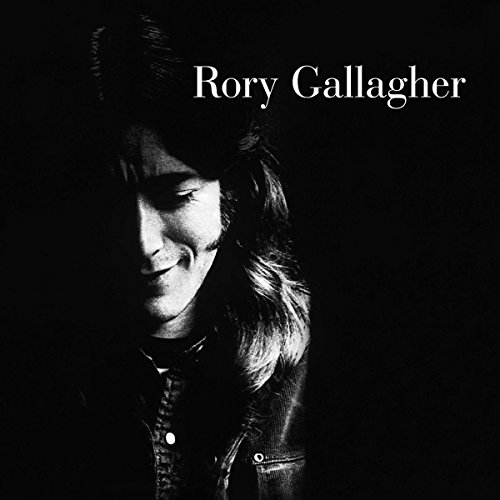
The influential Irish guitarist and singer-songwriter formed Taste in 1966, and after the band broke up at the end of that decade Gallagher would concentrate on his solo career, releasing his eponymous debut in 1971.
This is a massive reissue campaign with all the studio albums, the live releases and posthumous releases (like Notes From San Francisco and Wheels Within Wheels) reissued. Everything is available on CD and 180g vinyl, with the exception of BBC Sessions which is two-CD only (the Wheels Within Wheels vinyl pre-order is ‘coming soon’).
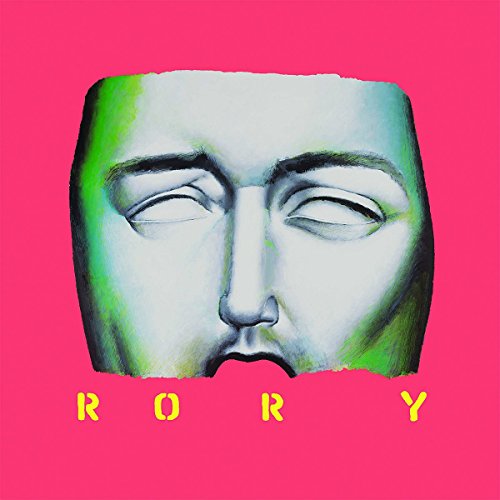
After releasing two critically acclaimed albums with his first band, Taste, and playing the Isle of Wight in 1970, Rory left the band to pursue a solo career. His eponymous debut solo album was released in 23rd May 1971. Gallagher auditioned some of the best musicians available at the time including Noel Redding and Mitch Mitchell the bassist and drummer for the Jimi Hendrix Experience. He decided on two Belfast musicians; drummer Wilgar Campbell, and bass guitarist Gerry McAvoy to be the core of his new power trio band. The album was recorded at Advision Studios. Standout tracks include “Laundromat”, “I Fall Apart” and “Sinner Boy”. On this album, as well as an on many albums to come, he’s accompanied by Gerry McAvoy (bass) and Wilgar Campbell (drums). Supported by these two, Gallagher invites the audience on a ride through his heart and soul, and it’s a enjoyable ride indeed. Right off the bat the album starts out great, with the fast and catchy riff on „Laundromat“ being one of the most memorable ones on the entire album, and Rory delivering as a vocal performer as well. „Laundromat“ gives the listener a very good outlook at the way Gallagher plays guitar.
Like his more famous peers Clapton and Page, he obviously drew heavy influence from black blues guitarists like Chuck Berry and B.B. King. And while he’s an outstanding technician on the guitar, his playstyle does not focus on crisp and clean play (unlike let’s say progressive rock ala David Gilmour or Steve Hackett), but instead it’s rather impulsive and heartfelt, which is a perfect fit, because bluesrock is all about delivering personal emotions. On his debut, Gallagher manages to do just that, through his often times wild, very emotive guitar playing. In more than one instance (“Sinner boy“ and “Can’t believe it’s You“ come to mind) you get the impression that Gallagher is just going crazy on his stratocaster without any restrain what so ever, but it always works.
This 2012 remaster used the original vinyl artwork and 1/4″ master tapes so that they look and sound exactly as Rory intended.
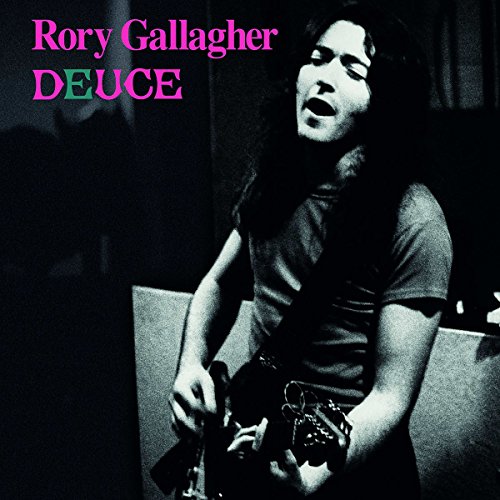
“Deuce” would make it Rory’s third fully self-penned album in a row, having written all of Taste’s second album “On The Boards” as well as the debut solo album “Rory Gallagher”. “Deuce” was released 28th November 1971 and recorded at Tangerine Studios in Dalston, East London, which had been built by the legendary British record producer Joe Meek. In contrast with his previous album, Rory Gallagher, where Gallagher tried for a precise, organised sound, Deuce was his first of many attempts to capture the energy of a live performance in the studio.
Gallagher’s sophomore album was released a short six months after his self-titled debut but shows an incredible amount of artistic growth and maturity. Featuring eleven original songs, with Deuce Gallagher wrote the blueprint that he would follow through much of the rest of the decade, mixing up rambunctious, guitar-driven blues-rock with scraps of acoustic country blues, intricate roots-rock, and heartfelt R&B. His guitar tone and phrasing is excellent throughout, and his songwriting skills were developing at an amazing pace.
While Deuce placed only one song – the rowdy “Crest Of A Wave” – into Gallagher’s canon, there’s literally not a bad track on the album.
“Live! In Europe” was Rory’s first official live album, and was recorded throughout Europe during February and March 1972. Released 14th May 1972. The album was Rory’s first major commercial success and provided his first solo top ten album. In the same year of 1972 he was Melody Maker’s Guitarist/Musician of the Year, winning out over Eric Clapton and Jimmy Page. “Live! In Europe” has served as a massive influence on budding musicians. U2’s Adam Clayton and The Edge both cite the album as the recording that made them want to pick up the guitar and play in a rock’n’roll band.
Released a mere year into the Irish blues guitarist’s fledgling solo career, Live! In Europe captures a young stallion prancing and preening across the stage, getting his legs beneath him and developing his dynamic live show on which a large part of his reputation is based. Long on interpretations of traditional and standard blues songs like “Messin’ With The Kid” and “Hoodoo Man,” and short on original material, Live! In Europe captures the reckless energy and youthful enthusiasm of the guitarist at the first stages of a career that would stretch across three decades.
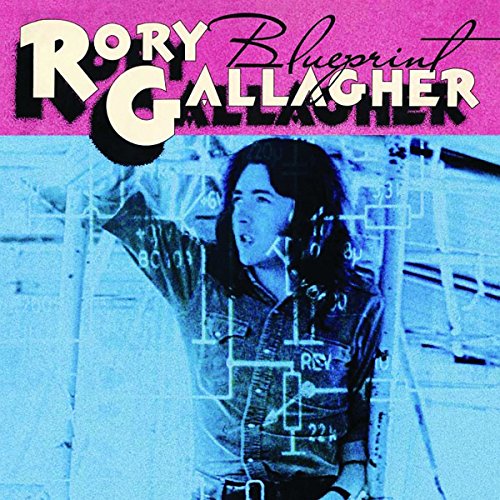
After six years working as a trio (guitar, bass, drums), Rory embellished his sound by adding keyboards into the band. The line-up of Rory Gallagher (vocals, guitars), Gerry McAvoy (bass), Lou Martin (keyboards) and RodDe’Ath (drums, percussion), remained together from 1973-78, and would record five albums. “Blueprint was the first”.
Gallagher’s pair of 1973 album releases would showcase the guitarist at the top of his form, and yielded a number of songs that would become fan favorites, performed by Gallagher for the next decade.
Blueprint was the first of the pair, and if it’s often overlooked in favor of the admittedly superior Tattoo, it’s a solid collection of material nonetheless, highlights including the raver “Walk On Hot Coals,” the sultry “Daughter Of The Everglades,” and the extended jam that was “Seventh Son Of The Seventh Son.” A lively cover of Big Bill Broonzy’s “Banker’s Blues” is another good ‘un, showcasing Gallagher’s acoustic blues skills.
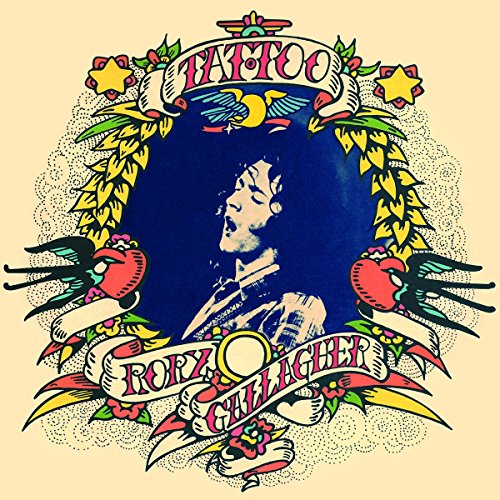
Tattoo is the forth studio album released by Rory Gallagher. It was released on 11th November 1973 and was recorded at Polydor Records studio. It demonstrated Gallagher’s eclectic range of musical influences starting with the blues and adding elements from jazz, folk, and country. Signature tracks include “Tattoo’d Lady”, “Cradle Rock” and “A Million Miles Away.
Tattoo represented an amazing accomplishment, as Gallagher found the inspiration to pen nine new tunes while touring heavily in support of his Blueprint album, released mere months earlier. The muse was obviously hitting the guitarist hard, as Tattoo includes some of the best, and most popular songs of the artist’s lengthy and prolific career, songs like “Tattoo’d Lady,” “A Million Miles Away,” and “Cradle Rock” staples of Gallagher live show for years, while tunes like the Delta-inspired folk-blues of “20/20 Vision” or the Chicago blues-styled “Who’s That Coming,” with some tasty slide guitar, display the other side of the guitarist’s musical ambition.
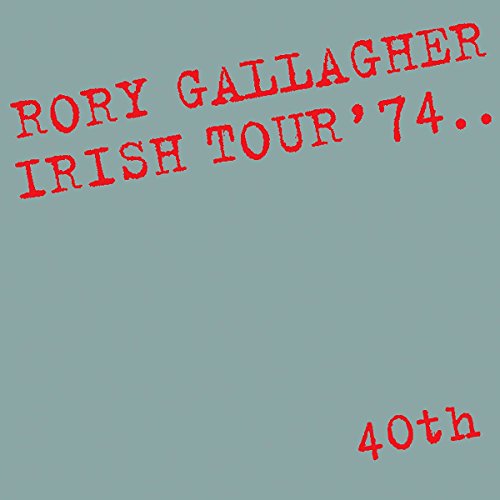
“Considered by blues rock guitarist, Joe Bonamassa, to be one of the most influential live albums of all time, “Irish Tour ’74” was recorded at Belfast Ulster Hall, Dublin Carlton Cinema and Cork City Hall during the height of ‘The Troubles’. Released 21st July 1974. Irish Tour ’74 has sold in excess of two million copies worldwide. Classic Rock Magazine hailed it as “easily among the best 10 live albums in the history of rock.” This 2012 remaster used the original vinyl artwork and 1/4″ tapes so that they look and sound exactly as Rory intended. The reissue CD liner notes capture the excitement of the Belfast concert; “Two thousand people were overjoyed as Gallagher – a native of Cork, Southern Ireland – took to the Ulster Hall just 24 hours after the city had witnessed its biggest bomb blast during a night of at least 10 explosions.”
Two years after the release of Live! In Europe, Gallagher returned home to Ireland for a series of nine shows that showcased a confident, seasoned veteran guitarist with a handful of studio recordings under his belt and an expanded musical palette that he applied to a larger catalog of songs. Irish Tour 1974 features musical highlights of the tour and serves as a companion to the documentary film of the same name shot by director Tony Palmer. The album offers an inspired mix of original songs like “Tattoo’d Lady,” “Walk On Hot Coals,” and “A Million Miles Away” as well as choice covers .
JB Hutto’s “Too Much Alcohol” and Muddy Waters’ “I Wonder Who,” standing as one of the best live blues-rock recordings of the era.
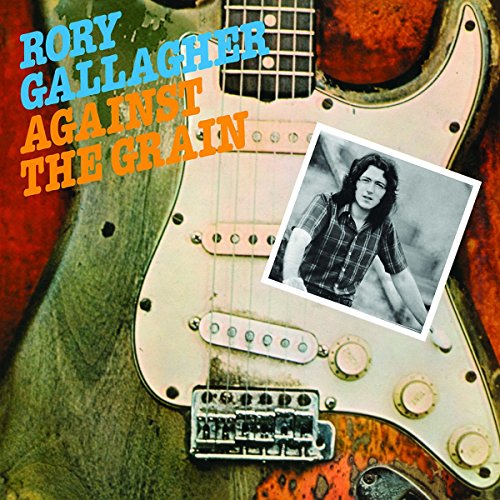
Against the Grain is the seventh album by Irish musician Rory Gallagher, Released 1st October 1975 and recorded at Wessex Studios, London. The album is mostly new songs written by Gallagher as well as some classic blues and R&B numbers. This 2012 remaster used the original vinyl artwork and 1/4″ master tapes so that they look and sound exactly as Rory intended. The reissue features original release album review written by Cameron Crowe for Rolling Stone.
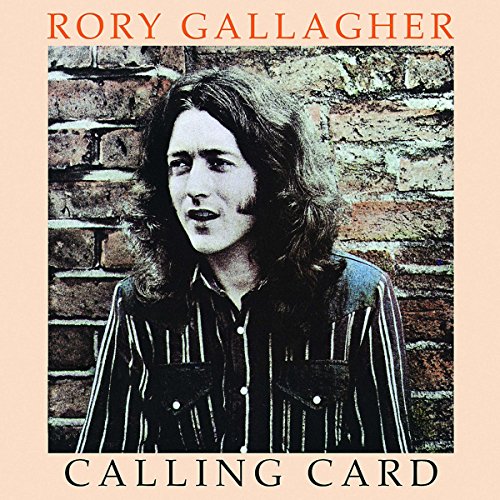
Calling Card is the eighth album by Irish singer/guitarist Rory Gallagher, Released on 24th October 1976 and recorded at Musicland Studios, Munich. Deep Purple/Rainbow bass guitarist Roger Glover co-produced with Gallagher: it was the first time that Gallagher worked with a “name” producer. This 2012 remaster used the original vinyl artwork and 1/4″ master tapes so that they look and sound exactly as Rory intended.
Produced with a steady hand by former Deep Purple bassist Roger Glover, Gallagher’s Calling Card found the guitarist stretching his sound out a bit beyond the confines of blues-rock to include soul, jazz, and even pop in what would prove to be one of his strongest sets of original material. While hook-laden rockers like “Country Mile” and the title track would become fan favorites on the live stage, melodic tracks like “Edged In Blue” and “I’ll Admit You’re Gone” display a different dimension to Gallagher’s talents.
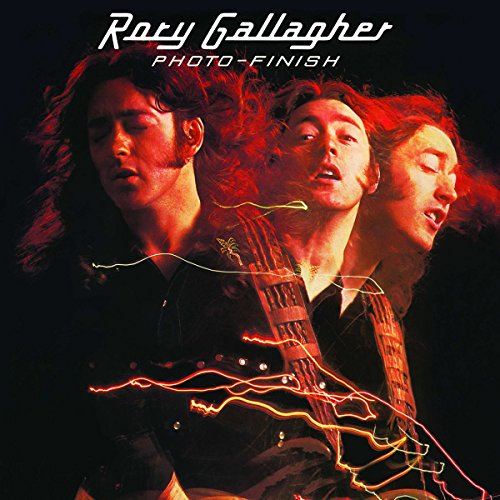
Photo-Finish is the ninth album by Irish musician Rory Gallagher, released 1st October 1978 and recorded at Dierks Studios, Cologne, Germany. Some of the songs on Photo-Finish were initially recorded on what was to be an earlier album in San Francisco but Gallagher was unhappy with the recordings. He fired the drummer and keyboardist from the current band and replaced only the drummer changing the band to a power trio as his original bands had been. The reissue features original release album review written by Cameron Crowe for Rolling Stone.
After the disastrous 1977 sessions that would (much) later result in the long-lost Notes From San Francisco album, Gallagher broke up his band of five years. Stripping down to a power trio, retaining only bassist Gerry McAvoy and adding drummer Ted McKenna, Gallagher re-recorded a handful of songs from the previous session for Photo-Finish, adding a few new tunes and pursuing a harder-edged blues-rock sound. While not the best album in the Gallagher milieu, Photo-Finish still includes hard-hitting fan favorites like “Shinkicker,” “Mississippi Sheiks,” and “Last Of The Independents” as well as overlooked gems like the twangy “Juke Box Annie.”
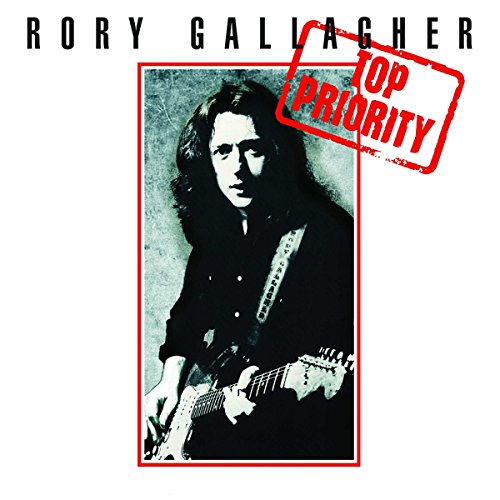
Top Priority is Rory Gallagher’s tenth album. This was released on 16th September 1979 and recorded at DierksStudios, Cologne, Germany. Like the previous album Photo-Finish, Top Priority is a return to hard rock. The acoustic and folk influences that were seen on albums such as Calling Card are replaced by more straight ahead powerful blues rock like fan favourites such as ‘Bad Penny’, ‘Philby’ and album opener ‘Follow Me’.
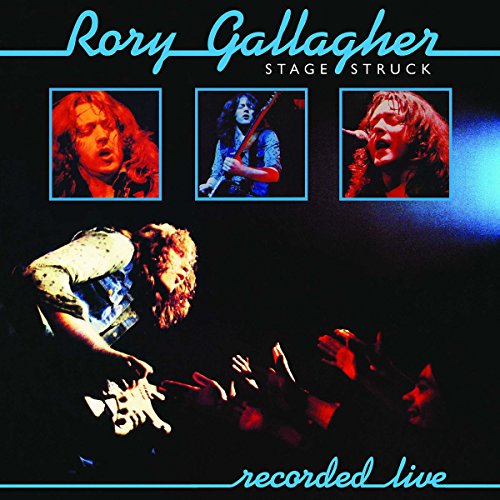
Stage Struck is the eleventh album and the third live album by Irish singer/guitarist Rory Gallagher. Recorded between November 1979–July 1980 and Released 2nd November 1980. The album documents Gallagher’s world tour in support of his 1979 album Top Priority. Accordingly, it features many songs from that album as well as hard-driving, almost metal, rock versions of songs from his ‘Calling Card’ and ‘Photo Finish albums, GlennTipton from Judas Priest “I was just stunned by his use of an old battered Stratocaster, a Vox AC-30 [amp], and a Rangemaster treble booster. The guitar had so much energy that I think he’s the guy, really, that made me pick up the guitar.” This 2012 remaster used the original vinyl artwork and 1/4″ tapes so that they look and sound exactly as Rory intended.
Culled from Gallagher’s 1979/1980 world tour, a tired song selection isn’t helped any by the guitarist’s lackluster performances. Lacking the immediacy and playfulness of the live set captured by Notes From San Francisco, Stage Struck displays little of Gallagher’s natural onstage charisma and energy. After a decade of constant touring, however, and the writing and recording of nine studio albums in as many years, it could be that the man was just dog tired rather than inspired.
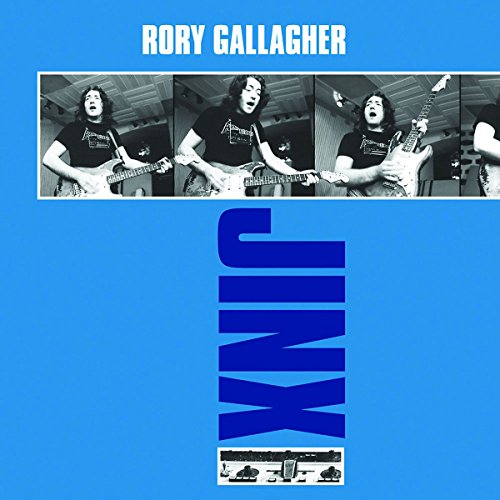
Jinx is the twelfth album and the ninth studio album by the Irish musician Rory Gallagher and was originally released in 1982. The reissue boasts a review of the album originally published in Melody Maker.
There isn’t a weak track on Jinx and at its best, it’s superb. In particular ‘Big Guns’, working off a stop-start riff which is within a stone’s throw of Clash territory, zaps you straight between the eyes.
In a direct line from ‘Philby’, though without the latter’s resonances on the question of identity, the song finds Rory working out his passion for crime thrillers. “It’s a long way from the pool hall/to the rackets and the petty crime/thought you were a tough one/but you’ve bitten off too much this time,” he admonishes before sketching in the dramatic detail, over a pumping rhythm that palpably delivers the sense of urgency laced with terror felt by the song’s hapless protagonist, his back against the wall: “Now you’re runnin’ scared/got no place to run/Caught between the law and the/Big Guns!”
Short, sharp and devastating, like a friendly visit from your local hit squad, ‘Big Guns’ leaves you in no fit condition to assess the damages inflicted by Gallagher’s magnum sharp-shooting and the merciless backup work of GerryMcAvoy on double-barrel shotgun and Brendan O’Neill on Armalite.
If ‘Big Gun’ is about trying to stay one step ahead of an inevitably bloody come-uppance, that same sense of Nemesis is internalised on ‘Bourbon’. In fact much of Gallagher’s material from ‘Goin’ To My Hometown’ to ‘Philby’ is concerned with transit and the feeling – more or less real in different instances but too often a sad illusion – of freedom it conveys. There’s no two ways about its implication in this account of the ravages suffered by a fading rock’n’roller, as he watches the arc of his optimism fall into impossible decline: “Drinkin’ down the bourbon like it was soda pop/trying to kill a feeling he knows will never stop/Head held high but his heart is on his knees…”
These highlights are closely followed by ‘Signals’, with its enticing melodic colourings and interesting guitar textures, shadings of the Edge-country in there somewhere; ‘Easy Come, Easy Go’, a slow minor blues on which Gallagher opts for a fat, mellow, lyrical tone similar to Peter Green’s on early Fleetwood Mac material and evokes a warm, still, healing sense of reassurance and calm in the face of a troubled world; ‘Jinx’ with its voodoo rhythms and mournful harp; ‘Double vision’, highlighted by a fat and succulent slide part; ‘The Devil Made Me Do it’, a frantic and humorous variation on the ‘Too Much Alcohol’ theme: “What did I do that was so bad/To go and get myself arrested/just in town to have some fun/and I end up in the trash can”, ‘Ride On Red, Ride On’, the one non-Gallagher original and a paean to the swashbuckling character of the rock’n’roader; and ‘Loose Talk’, another song of re-assurance and fortitude in which the Gallagher ethos is most aptly summed up: rejecting the lure to play the game the uptown way, he offers the consoling advice: “Play the game the way your heat says/Keep on pushin’, you’ll get there yet”.
It’s a mark of Gallagher’s authenticity that he has always played the game the way his heart says. And if that has led him into a narrow interpretation of his own sense of integrity, sometimes to the detriment of his career potential, then so be it. The net result is that there isn’t the remotest taint of pose or slumming it when he delivers an album of raw blood ‘n’ guts rock ’n’ roll ’n’ rhythm ’n’ blues like Jinx.
This is just one mark of its strength within the chosen Gallagher framework. Indeed a measure of its quality-count in the context of his fifteen-odd years’ worth of album-recording is the fact that there is very little on Jinx which will not amount to a real addiction to the Gallagher live canon.
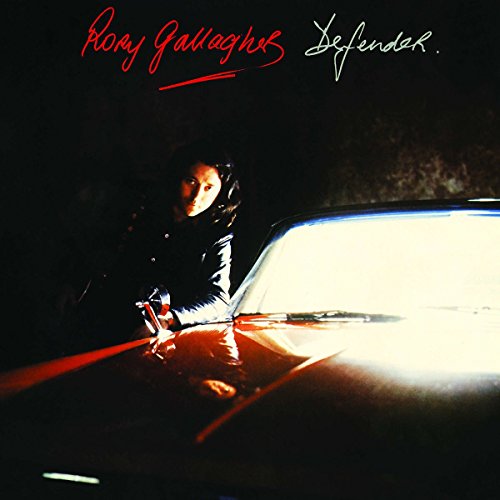
Defender is the thirteenth album and the tenth studio album by Irish musician Rory Gallagher. It was originally released on 1st July 1987 and was recorded at The Point, Olympic, West Three, Music Works and RedanStudios. Rory said of the album “The tone and mood of the new album is blues and angry, but there’s a couple of rockers, and a couple that don’t fit any category; but it is really a modern blues album.”
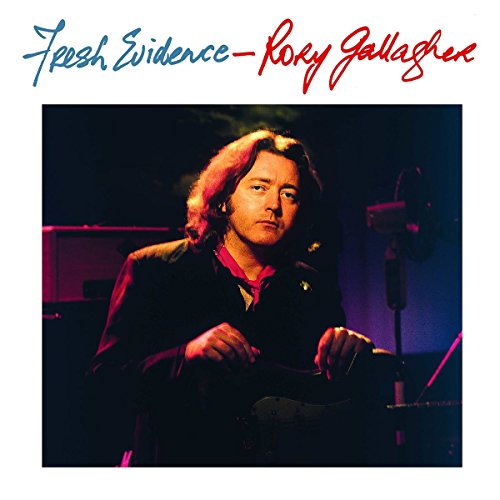
Fresh Evidence is Rory Gallagher’s eleventh and last studio album, his fourteenth album overall. The album was originally released on 1st May 1990 and was recorded at Maison Rouge, Redan Recorders, Music Station and Audio One. This 2012 remaster used the original vinyl artwork and 1/4″ tapes so that they look and sound exactly as Rory intended. “Perhaps the most important achievement of “Fresh Evidence” is in re-establishing Rory as something more than an electric guitar virtuoso. Here is the proof that the man is a master, someone with a supreme feel for the instrument and the song, whatever its mood”.
Gallagher’s last studio album is a mixed bag of blues styles and performances, the guitarist trying his hand at interpretations of zydeco, Chicago, and Delta blues, and jazz along with his typical dirty blues and British-styled blues-rock.
While not a bad album by any means – Fresh Evidence includes several inspired performances, including a cover of Delta blues legend Son House’s “Empire State Express” – it nonetheless doesn’t meet the lofty standards established by Gallagher during his incredible string of solid 1970s-era albums.
Wheels Within Wheels is a posthumous folk and blues acoustic album by Rory Gallagher. Featuring a range of acoustic styles including flamenco, skiffle and traditional Irish music, the album was compiled from lost recordings and outtakes by Gallagher’s brother. A number of notable musicians appeared on the album such as Bert Jansch, Martin Carthy, The Dubliners and Lonnie Donegan. The songs were recorded in various locations all over the world between 1974 and 1994. The album cover was painted by renowned artist David Oxtoby.
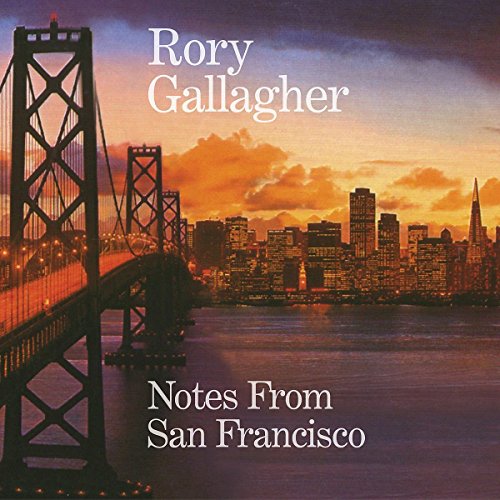
In November 1977, after completing a 6 month world tour, Rory Gallagher and his band flew straight from their last show in Japan to San Francisco to begin working on a new album, with famed American producer ElliotMazer (Neil Young – ‘Harvest’, Janis Joplin – ‘Cheap Thrills’, The Band – ‘The Last Waltz’). Mazer recalls that the sessions grew “tense”, as Gallagher wasn’t happy with the mixing process, describing them as “too complicated”, and by the end of January 1978 he shelved the whole record and broke up his band of the past 5 years. This lost album from 1977 was remixed and mastered in 2010 by Rory’s nephew who added a live album from 1978 at SanFrancisco’s The Old Waldorf, highlighting the sound Rory had been looking for. LP version will not feature the live content, this will only be for the CD.
This long-anticipated “lost” album, recorded by Gallagher and his four-piece band in San Francisco in 1977, was finally released in 2011 and proved to be well worth the wait. Featuring nine original songs, some of which would be re-recorded a year later for Photo-Finish, as well as a couple of “bonus tracks,” Notes From San Francisco shows the artist straining at the confines of the blues-rock form and trying to expand his sound. The two-disc set includes a rock solid live performance from 1979 that puts the album Stage Struck to shame.
These are straight album reissues, so no bonus tracks, but Universal “will be working closely with the RoryGallagher estate on new physical and streaming products.”
All of the reissues will be released on 16th March 2018.
The Beach Boys released three albums chock full of material from 1967!
1967 – Sunshine Tomorrow, 1967 – Sunshine Tomorrow 2: The Studio Sessions, and Live Sunshine – 1967 dive deep into a fascinating and frenetic chapter in The Beach Boys’ long, groundbreaking creative arc, exploring the band’s dynamic year through their recordings. The Beach Boys have personally overseen the creative process for the three collections, which are produced by Mark Linnet and Alan Boyd. Reviewer Jesse Jarnow praised 1967 – Sunshine Tomorrow as “remarkable,” saying, “These recordings make it possible to hear The Beach Boys simultaneously as the moody pop geniuses of Pet Sounds and the fresh-faced surf-rockin’ teens from Hawthorne, California.”
1967 – Sunshine Tomorrow features Linett and Boyd’s new, first-ever stereo mix of The Beach Boys’ 1967 Wild Honey album and all three collections throw open the legendary band’s vault to debut sought-after rarities, 50 years after they were put to tape. Previously unreleased highlights across the titles include The BeachBoys’ shelved “live” album, Lei’d in Hawaii, studio recordings from the Wild Honey and Smiley Smile album sessions, and standout concert recordings spanning 1967 to 1970. Wild Honey’s 2017 stereo mix is also available in a 180-gram vinyl 50th Anniversary Edition.
The Beach Boys’ final studio session for the shelved SMiLE album took place on May 18th, 1967, with Smiley Smile album sessions booked at Brian Wilson’s new home studio from June 3rd through the end of July. The band’s 12th and 13thstudio albums were released exactly three months apart to cap the year’s studio efforts: Smiley Smile on September 18th followed by Wild Honey on December 18th.
For the Smiley Smile sessions, “I wanted to have a home environment trip where we could record at my house,” recalls Brian Wilson in the liner notes for 1967 – Sunshine Tomorrow. “I wanted to try something different, something new. I produced Smiley Smile, but Mike inspired me. He said ‘Brian, let’s make a really good, easygoing album’. We had an engineer convert my den into a studio. We had my piano detuned to make it ring more.”
“Just prior to that, Brian had built up this production peak and then just completely reversed field, and (for Smiley Smile) did something so light and airy, and y’ know, easy,” explains Mike Love. “That was an underground album, I figure, for us. It was completely out of the mainstream of what was going on at that time, which was all hard rock, psychedelic music, and here we come with a song called ‘Wind Chimes.’ It just didn’t have anything to do with what was going on – and that was the idea.”
“Times were changing,” adds Al Jardine. “We were happy to put our musical skills to work. We didn’t have to look at the clock; there was virtually 24-hour availability to experiment.”
It was, at the time, an album of what might have been, but Smiley Smile is nonetheless a fascinating chapter in the story of the Beach Boys.
The early weeks of that year saw Brian Wilson experimenting with ever more sophisticated studio techniques in his quest to follow the groundbreaking Pet Soundsopus of 1966. The first working title for the new project was Dumb Angel, which later changed to the name that would become legendary among legions of fans as the great lost Beach Boys record, Smile.
The ambitious ideas and often eccentric methodology that Wilson explored with lyricist Van Dyke Parks, for what was envisaged as an even greater sonic tour de force than Pet Sounds, were often met with bemusement by Brian’s band members. Huge sections of what was recorded were subsequently abandoned, and became the subject of great conjecture among devotees for the next four decades.
In more recent years, Wilson let audiences into his creative process of the period, firstly with the 2004 live performances that became the Brian Wilson Presents Smilealbum, and then via Capitol’s The Smile Sessionsbox set, which set out to reassemble much of it in 2011.
But at the time, what remained of the work was gathered together on Smiley Smile. It was something of a curate’s egg of a disc, onto which Capitol placed the previous year’s masterwork ‘Good Vibrations’ and a tantalising glimpse of what might have been, in the epic ‘Heroes and Villains.’ The song charted in the summer and performed well, reaching No. 8 in the UK and No. 12 in the US.
British audiences, indeed, remained loyal to the Beach Boys through the year, also giving them an unlikely hit with the incongruously belated release of ‘Surfer Girl.’ Even as the Smile sessions were unravelling in May, the group (minus Brian) were delighting British audiences on an eight-date, two-shows-a-night tour.
Smiley Smileincluded several whimsical and sometimes downright peculiar material, such as ‘Vegetables’ and ‘She’s Goin’ Bald,’ but it was also home to Carl Wilson’s lovely vocal interpretation of a Parks lyric and his brother’s melody on ‘Wonderful.’ American audiences never fully embraced the album, which peaked there at No. 41; in the UK, it didn’t enter the chart until November, but spent four weeks in the top ten and peaked at No. 9. It was a positive end to a difficult year.
All three of the releases document the group’s pivotal post-Pet Sounds period – including sessions for Smiley Smile and Wild Honey, the two 1967 albums they recorded after shelving the famously ambitious SMiLE LP. 1967 – Sunshine Tomorrow 2: The Studio Sessions includes 29 studio session recordings, and Live Sunshine – 1967 features 109 live recordings, most of which are previously unreleased.
Highlights from the Studio Sessions set include an a cappella version of “Heroes and Villains,” the previously unreleased “Tune L” and outtake “Good News.” The live set includes recordings from Hawaii, Detroit, Washington D.C.; White Plains, New York; Pittsburgh and Boston.
The Beach Boys oversaw the creative process for all three collections, which Mark Linett and Alan Boyd co-produced. 1967 – Sunshine Tomorrow included Linett and Boyd’s first-ever stereo mix of Wild Honey; the previously unreleased “live” album Lei’d in Hawaii, studio recordings from the Wild Honey and Smiley Smile sessions and concert recordings spanning 1967 to 1970.
On August 25th and 26th, 1967, The Beach Boys (absent Bruce Johnston, but with Brian Wilson on organ for his first concert appearances with the band in more than two years) recorded two concerts and rehearsals in Honolulu for a prospective live album to be titled Lei’d In Hawaii, applying a new Smiley Smile-inspired aesthetic to the performances. Just over two weeks later, the band (with both Brian and Bruce participating) began re-recording the live set in-studio at Brian’s house and at Wally Heider Recording in Hollywood, after the Honolulu concert tapes were deemed unusable. Although completed and mixed, the final planned audio element of a canned concert audience was not added and the Lei’d In Hawaii project was cancelled. Those live, in-studio performances morphed into sessions for the Wild Honey album, primarily comprised of original Brian Wilson/Mike Love compositions.
Two days after wrapping the Wild Honey sessions on November 15th, 1967, Mike Love, Carl and Dennis Wilson, Al Jardine, and Bruce Johnston returned to the road for The Beach Boys’ Thanksgiving Tour, premiering several songs from the forthcoming album at their concerts.
Robert Plant was a guest on The Late Late Show with James Corden last night. He and his band The Sensational Space Shifters performed “New World,” from his latest album, Carry Fire; you can watch the performance below. Plant also joined Corden and his fellow guest, actress Camila Morrone, for a chat on stage; about a particular karaoke incident .
Plant and the band close out their winter US tour with a sold-out show at the Orpheum Theatre in Los Angeles tonight. They head next to Australia for shows at the Sydney Opera House, Byron Bay Bluesfest, and more, and to the UK and Europe for festivals this summer.
R.E.M. was as good as dead after 2004’s outta-gas “Around The Sun”, but while testing out new material for what turned out to be two comeback albums, the band played a five-night “rehearsal” in Dublin in 2007. Live At The Olympia whittles those shows down to 39 songs, including almost every track that would end up on 2008’s Accelerate (and a couple of solid ones that didn’t end up anywhere else). Coupled with those very new songs, they rollicked up some very old ones, injecting new life into songs that hadn’t appeared on set lists in many years, tripping through tracks from Reckoning and Fables Of The Reconstruction as if to draw a parallel between the classic band and the current one. From “Living Well Is The Best Revenge” straight through “Gardening At Night” (from the band’s very first EP), it’s a worthwhile history lesson on one of the 20th century’s greatest bands.
“The first time I heard the vocals for ‘Houston’ was the first day we played it in Dublin, which was kind of terrifying. I was kind of afraid that we would start it and Michael just wouldn’t sing it . . . you know, having never actually played it with the vocals before, and when I heard it I was like ‘Wow. That’s kind of amazing.’ I had no idea that that was coming lyrically and melodically.” – Peter Buck
“Houston” from the film This Is Not A Show, as available on R.E.M.’s Live At The Olympia, Dublin
“This is not a show”… Mike Mills, Dublin ‘07
R.E.M. Live At The Olympia was released on October 27th, 2009. The double live set featuring 39 songs, produced by Jacknife Lee, captures the band during their so-called “experiment in terror” as they “rehearsed” new songs and dug deep into their back catalogue for a live audience in Dublin, Ireland over the course of a five-night residency as Dublin’s venerable Olympia Theatre.
Brooklyn-based psych-rock band, Heaven, announce their sophomore album, All Love is Blue, due out on March 2nd, 2018 via Little Cloud Records. The 9-track LP is produced by the band, engineered by Albert DiFiore (Caveman, Sinkane, Beck) mixed by Al Carlson (Zola Jesus, Widowspeak).
Heaven is Matt Sumrow (vocals and guitar), Mikey Jones (drums) and Liz Lohse (keyboards and vocals). Sumrow and Jones created the band in the wake of touring and recording with artists such as Dean and Britta, Swervedriver, Ambulance LTD, The Comas, Snowden, The Big Sleep and others.
A romantic clash between your Dad’s long-lost favorite psych record and the soundtrack to a John Hughes film, Heaven ride a massive sonic wave in delivering their dear and dreamy tracks. In July of 2013, Heaven released their debut LP Telepathic Love on Goodnight Records. The live lineup came together on the touring of Telepathic Love with the addition of keyboardist Liz Lohse (X-Ray Eyeballs) and guitarist Eric Altesleben (Desert Stars), who have since become permanent members.
As 2018 sees the release of All Love Is Blue on Little Cloud Records, out of Portland, Oregon, subsequent tour dates for Heaven in support of the album will follow. Their new work is a quantum leap forward for the band, both artistically and sonically, making the protracted wait between albums a huge payoff.
Following on from last years compilation “Collection”, Nashville based Sophie Allison aka Soccer Mommy now brings us her debut album proper. Produced by Gabe Wax (Deerhunter, War On Drugs, Beirut), the new album is a huge step up from her earlier bedroom recordings. The fuller sound works perfectly with Sophie’s finely crafted, bitter-sweet pop songs that have a world weary quality beyond her 20 years. Whole record is stellar, new version of Last Girl makes me really happy. A contender for the best record so far in 2018,
Twenty-year-old Sophie Allison, cuts to the core on Soccer Mommy’s Clean, as if she’s already in hurry. Her flat delivery and lack of lyrical pretense lay bare moments of obsession and rejection in a frank, almost detached fashion. Her album takes its title from Taylor Swift’s freedom ballad, but there’s also a sense of the world-burning defiance borrowed from Liz Phair’s ’90s debut. “I don’t want to be your f****** dog,” she snarls in answer to decades of obliviousness. Clean betrays simmering anger, hurt and an ever-present humor and self-deprecation (not surprising for someone with a moniker this silly). The emotions are felt, but Allison revels in none of them. As if to say there’s a lot of life yet to live, she keeps a sense of the absurdity of it all. “She’ll steal your joy like a criminal,” Allison sings in admiration. “I wanna be that cool.”
We love the delicate-yet-fearless vibe of Soccer Mommy’s new songs “Cool,” “Still Clean,” and “Your Dog,” the latter of which she performed for us live in the Paste studio last month. The young Nashville songwriter’s debut full-length, Clean, finally drops today.
Released March 2nd, 2018 Sophie Allison – Guitar, vocals, bass Julian Powell – Lead guitar Nick Brown – Drums Gabe Wax – Piano, synth, mellotron, bass, guitar, drum programming, percussion
Zola Jesus signed to Sacred Bones Reords in 2008. In the seven years that followed, She has released eight albums together (three LPs, two EPs, two 7”s, a CD-R, and even a DVD). Discovered by her via Myspace, which was the common A&R vehicle of the early- to mid-Aughts. Nika is the sole member of Zola Jesus.
Sacred Bones is proud to present “The Spoils” from Zola Jesus. Hailing from the unsuspecting locale of Madison, WI, Zola Jesus—the alter ego of Nika Roza Danilova—occupy a sphere of sparse industrial rhythms, no-fi drones, and ethereal femme vocals. Those who have seen her handful of live shows, heard her WFMU set, or caught any of the acclaimed, sought after, and now mostly out of print releases on Die Stasi or TroublemanUnlimited already know. For those uninitiated The Spoils may be the most fully realized representation of her sound. Zola Jesus have two previous releases on Sared Bones, the Souer Sewer single and a limited CD of a live performance from WNYU. The CD contains the entire “Soeur Sewer” 7-inch as well as the three songs from the Die Stasi single.





 But at the time, what remained of the work was gathered together on Smiley Smile. It was something of a curate’s egg of a disc, onto which Capitol placed the previous year’s masterwork ‘Good Vibrations’ and a tantalising glimpse of what might have been, in the epic ‘Heroes and Villains.’ The song charted in the summer and performed well, reaching No. 8 in the UK and No. 12 in the US.


