You won’t find this special compilation LP by one of the UK’s most iconic bands in any store on 21st April. Except one. Humble Pie ‘On 79th Street’ will only be available from Pie & Vinyl. Obvious? Or are we bucking the trend of Record Store Day in the manner that Andrew Loog Oldham, legendary founder of Immediate Records and Rolling Stones manager might have done?
Or does this one-off LP celebrate the spirit of RSD more than any other release? Inspired by the beautiful pied-piperess Katherine who led us all to Pie & Vinyl and discoveries that linked her vibrant, musical town of Portsmouth & Southsea, an amazing record store and the timeless sounds of Humble Pie to dramatic events in Southsea over 40 years ago that culminated in a truly local effort to press the LP in Portsmouth and have it on sale in Southsea for Saturday 21 April. Says Immediate Records reissue producer Rob Caiger: “Wouldn’t it be great if by doing all of this, a new fan on Record Store Day discovers Humble Pie – in Pie & Vinyl – and feels the same excitement hearing ‘Natural Born Bugie’ as I did in my own local record shop Downtown Records many years ago. There’s no better place to hear new sounds (however old…) then in a record shop – and that’s just one reason why we should celebrate Record Store Day.”
One of the first supergroups, Humble Pie formed in 1969 and soon became one of the best-loved, hardest-rocking live acts of the 1970s. In Steve Marriott, the one-time Small Faces frontman, Pie had the best showman and biggest voice in the business. Peter Frampton, ‘Face Of ‘68’ with The Herd, had a new role – guitar hero. And with hard-hitting drummer Jerry Shirley and ex-Spooky Tooth bassist Greg Ridley, Humble Pie quickly developed into a sophisticated studio unit where tough riffs, rustic rock and bursts of blissed-out late psychedelia earned the band instant chart success and critical acclaim.
Supervised by Peter Frampton & Jerry Shirley, all songs have been newly remastered by Nick Robbins at Soundmastering and cut halfspeed by Matt Colton at Alchemy Studios. ‘79th Street Blues’ (take 7) was recorded at Olympic Studios on 3rd January 1970 and mixed by Rob Keyloch at Church Walk Studios exclusively for this LP and will not appear anywhere else.
Pressing the ‘secret’ Record Store Day 2018 release at Vinyl Presents Humble Pie – “On 79th Street”
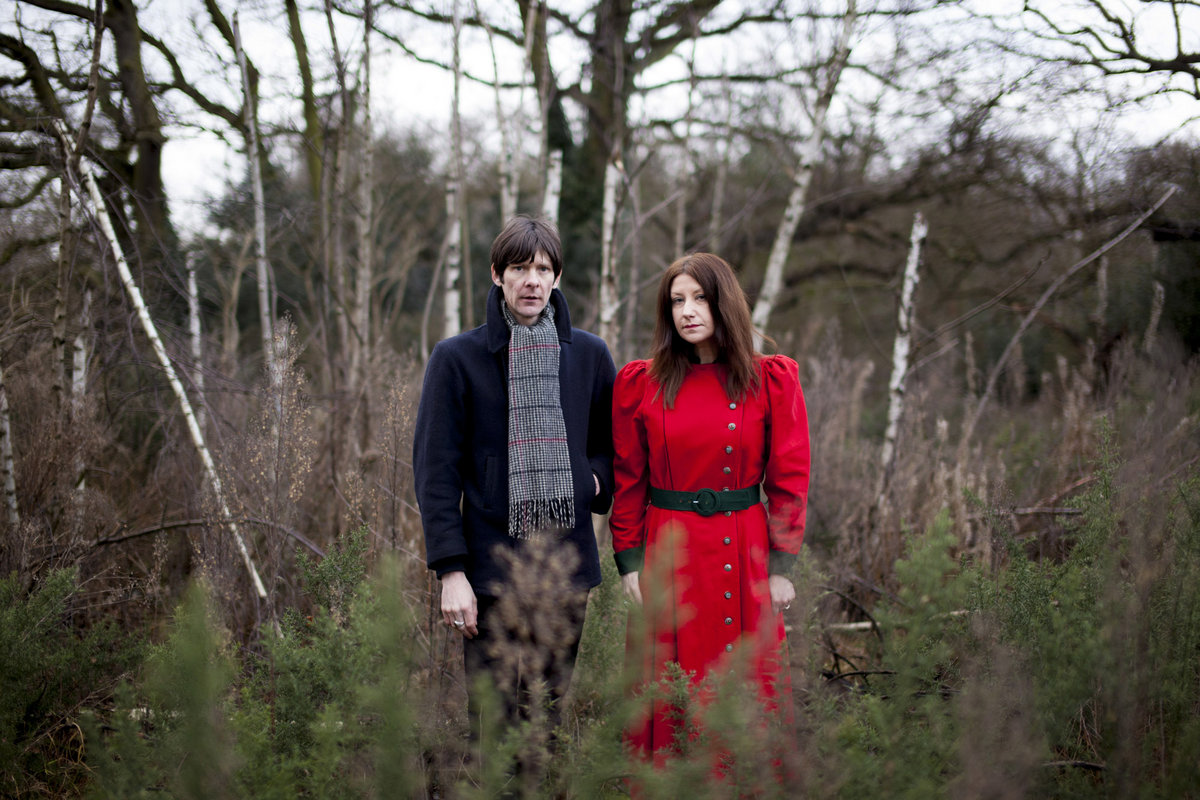
The Left Outsides are: Mark Nicholas and Alison Cotton, a husband and wife duo based in London, England whose atmospheric, hypnotic songs echo Nico’s icy European folk, pastoral psychedelia and chilly English fields at dawn.
“We’ve probably run out of superlatives with which to shower on wife/husband duo Alison Cotton (viola and voice) and Mark Nicholas (guitar and vocals) . Such is the siren-like allure of this their fifth album (their second on Cardinal Fuzz and which gets a US release courtesy of old ‘Scope mate Byron Coley’s Feeding Tube imprint), though, that we just can’t resist trying to do it something approaching justice without, hopefully, resorting to too many tired clichés of our own making……..It has a foot in the past and gives a nod to the present, while the LeftOutsides have their eye firmly fixed to the future. Nothing here outstays its welcome. Long may it, and they, run”.
“‘All That Remains’ is the fifth album by The Left Outsides and it is one of those albums which merits full album, in the correct order of songs headphone listening. The classic way, so to speak. Because that is what this albums encapsulates: ….. “All That Remains” is a classical folk album that is inspired by its creators and imprinted with their unmistakable musical trademark”
This Saturday, April 21st is Record Store Day, a day that brings us back to a time when the only way you could hear your favorite artist’s new song was by purchasing it on seven inches of vinyl from your local record shop. That’s exactly how Detroit indie-rocker, Stef Chura, wants us to celebrate the annual homage to vinyl culture. Chura, who released her striking debut album Messes in 2017, is pressing a thousand copies of a new 7″ that includes two songs that didn’t make it onto the LP. Both of the songs – “Degrees” and “Sour Honey” – were produced by Will Toledo of Car Seat Headrest and show Chura’s range in emotion, voice, and musicianship.
“Degrees” is a weighty, haunting rumination on mortality that shifts between delicate verses and a blazing refrain. Chura says that the song was originally a plucky folk song, but Toledo had the idea to take it in a Janis Joplin “Ball and Chain” direction, adding gritty layers of guitar that conjure up the image of towering flames.
Falling on the opposite end of the spectrum sonically, “Sour Honey” is a stripped-down solo affair that features Chura’s flickering, elastic vocals accompanied by Toledo on piano. The bare, vulnerable sound is an appropriate match for the song’s subject matter – insecurity and hyper self-awareness. “I wrote that song when I was working at a strip club in Detroit as a cocktail server,” says Chura. “It was about the visceral, super physical feeling of complete embarrassment and humiliation. I think I used to suffer from a lot of social anxiety and miscommunications, and it was just a very cat-fighty atmosphere.”
The 7″ is a Record Store Day exclusive, which means you’ll only be able to pick it up at your local record store. Chura will perform at Detroit’s Third Man Records in tandem with the release,
In 1984, Prince recorded a song called “Nothing Compares 2 U,” which, rather than release it himself, he sent to Paul “St. Paul” Peterson of The Family. The band, which Prince had assembled, recorded the track for Prince’s label, Paisley Park Records, and it appeared on their debut album. But the song remained a largely unheard B-side until Sinead O’Connor covered it in 1990—a version that remains the best known recording of the song.
Even though Prince played the song live occasionally, the studio version that he originally recorded has never been heard, that is. Prince’s estate, along with Warner Bros. Records, has released the original version of “Nothing Compares 2 U” written, arranged, performed, and produced by Prince.
It was recorded by Susan Rogers in 1984 at the Flying Cloud Drive Warehouse in Minnesota. As Rogers talks about the day Prince recorded the track:
One day, he went into a room with a notebook and, within an hour, emerged with the lyrics to Nothing Compares 2 U. Rogers, who witnessed many such bursts of creativity, remembers, “The song came out like a sneeze.” As usual, she rolled the tapes as Prince laid down instrument after instrument, mixing and overdubbing in the same session (Eric Leeds overdubbed the sax part three days later).
According to Rogers, Prince didn’t want to release the track under his own name, because it was about a domestic life that he’d never had.
“He wasn’t living with anyone, but he was a young man writing about domesticity,” Rogers says. “The line ‘all the flowers that you planted in my back yard went out and died’… it would have been Sandy who planted those flowers. ‘And I know that living with me baby is sometimes hard, but I’m willing to give it another try…’ There was no romantic relationship with Sandy. It’s not a pained ‘Help me, baby’ track. It’s: ‘You’re gone and I miss you,’ which is probably why he felt comfortable giving the song away to The Family. He released his material based on what he wanted us to know about him and, wonderful as it is, he didn’t want it to represent him.”
This original version will be released as two 7″ vinyl singles in picture disc and black vinyl formats.
Most importantly, though, if this is an indication of what’s to come out of the thousands of Prince recordings hidden inside the vaults of Paisley Park, then there’s a lot more good music on the way.
Following the success of The Matrix Part I for RSD 2017, the second part – The Doors’ Live At The Matrix: Let’s Feed Ice Cream To The Rats, San Francisco, CA – March 7th & 10th, 1967 will follow for RSD 2018. Originally recorded on March, 1967 in San Francisco. Newly mastered by Bruce Botnick, the historic engineer for The Doors, from recently discovered original master tapes.
Playing a sizable chunk of their first album and half of their follow up record (yet to be laid down in a studio), the rest of the set is upholstered with a few standards.
Just a few weeks on from the release of their debut, word about the band’s impending canonisation does not appear to have reached the handful of punters who turned up to Marty Balin’s nightclub in San Francisco, and who can be heard offering only the politest of applause between numbers.
Without the catalyst of audience reaction and in the face of such indifference, the sparks rarely fly and despite Manzarek’s assertion about the extent to which this meant the band could stretch out and experiment, we have a performance that only occasionally smoulders, never quite ever catching fire. In truth, ther’’s little evidence here of a group that matches essayist Joan Didion’s description of The Doors as “the Norman Mailers of the Top Forty, missionaries of apocalyptic sex.” Die-hard Morrisonologists will however be cheered by the inclusion of alternate words grasped from his poetic writings and scattered about in songs such as a pulsing cover of the old Them stomper, Gloria and their sinuous classic, The End.
With Kreiger’s blazing guitar solo on When The Music’s Over, and Manzarek’s faux-classical noodling, there’s a lot of potential waiting to be called upon. However, at The Matrix we’re in the company of a somewhat quaint and reserved bar band, prone to stretches of timorous research, rather than anyone dropping their trousers in the face of the establishment. That would all come later and with it, quite literally in the case of The Doors, the stuff of legend.
Following The Doors’ 2017 Record Store Day release Live at The Matrix, Part 2 will be released for Record Store Day 2018 on 180g, individually numbered vinyl. The historic shows were originally recorded in March, 1967 in San Francisco. from recently unearthed, first generation masters. Worldwide run of 13,000.
Formed in 2003 Arcade Fire have released four albums in ten years. In 2010 Rolling Stone named their debut offering “Funeral” the album of the decade. Platinum-selling sophomore album “Neon Bible” debuted at #2 in the UK & USA. 2010’s “The Suburbs” debuted at #1 in seven countries and is certified platinum in the UK & Ireland. 2013’s “Reflektor” reached Top spot on both the Billboard 200 & UK Official Chart & was accompanied by NBC special, HereComesTheNighttime, drawing 6 million viewers. Over the course of a 14 year career the band have won 2 BRIT awards, 10 Juno awards, 3 NME awards & a 2011 Grammy for album of the year. In short they are one of the world’s most successful & revered active bands.
Arcade Fire is a Canadian indie rock band, consisting of husband and wife Win Butler and Régine Chassagne, along with Win’s younger brother William Butler, Richard Reed Parry, Tim Kingsbury and Jeremy Gara. The band’s current touring line-up also includes former core member Sarah Neufeld, percussionist Tiwill Duprate and saxophonist Stuart Bogie. The band plays guitar, drums, bass guitar, piano, violin, viola, cello, double bass, xylophone, glockenspiel, keyboard, synthesizer, French Horn, accordion, harp, mandolin and hurdy-gurdy, and takes most of these instruments on tour; the multi-instrumentalist band members switch duties throughout shows.
Founded in 2000 by friends and classmates Win Butler and Josh Deu. the band came to prominence in 2004 with the release of their critically acclaimed debut album “Funeral” .
After a hiatus of almost four years on Thursday 1st June the band announced their return with the release of new single “Everythnig Now” & the launch of an album of the same name, scheduled for release on July 28th. In addition to premiering the track live on Radio the band also performed the song live for the first time at a surprise show in Barcelona on Thursdaynohjy, ahead of their headline slot at Primavera Sound. Everything Now was produced by Arcade Fire, Thomas Bangalter and Steve Mackey, with co-production by Markus Dravs.
Funeral (2004)
There are few records as aggressively warm-hearted asFuneral. Arcade Fire’s debut record, the work is one long, raw-edged adolescent howl: there’s little wonder why it lured so many lost and lonely teenagers under its spell. It just gets its audience; just understands every single one of their hopes and dreams and fascinations and fears.
It features lyrics to get tattooed across your skin, and melodies to be hummed for weeks, and in its bold sentimentality it might be one of the band’s most loveable records. After all, who can listen to a song like ‘Wake Up’ without feeling even a touch teary?
Many would rate this album higher, and I don’t blame them. It’s rare to hear a debut not only so sure of its own sound but so consistently good and with such variation in tone. Most would be lucky to have one full-blooded, full-flight pearls such as ‘Wake Up’, ‘Rebellion (Lies)’ or any of the ‘Neighbourhood…’ songs, let alone be so heavy with them as ‘Funeral’ is. It deftly delineated themes that still haunt the band to this day: the lost or vanishing innocence of “us kids”, the Cormac McCarthy-esque post-apocalyptic terror lurking beneath suburban cosiness, and of course, on Regine’s shimmeringly gorgeous moment in the spotlight, ‘Haiti’, the Carribbean island that furnishes inspiration on their latest work. An album to haunt, enchant and be clutched to the heart forever.
The Arcade Fire coalesced in Montreal, Quebec, and recorded their debut album ‘Funeral’ during one of that city’s arduous winters. It is a truly eccentric rock record: bizarre at turns and recognizable elsewhere, equally beautiful and harrowing, theatrical and sincere. At times, the album’s total disregard of formula and expectation is positively thrilling. it’s like a higher pitched David Byrne fronting Echo and the Bunnymen, the first two Roxy Music albums, Bjork and everything in between. This album will blow you away. a strikingly beautiful pop album that the haven’t bettered, and that is saying something.
It was only through Butler and Chassagne’s persistence that Arcade Fire did not die an early death. Wake Up, released in 2004, was written “in reaction to the band breaking up”, Butler said the same year. Perhaps this sense of finality fed into the deathly embrace of their debut album, Funeral, a record that helped turn these mismatched, nearly defunct musicians into one of the biggest groups in the world. Wake Up remains their calling card: grippingly charged with emotions and built to be sung back by tens of thousands. By dint of its success, it’s also responsible for many rotten pastiches – the Lumineers, Of Monsters and Men, Coldplay’s dress sense on Viva La Vida. But it’s authenticity remains. Instead of serving its purpose as a break-up song, it ended up being one that brings people together.
Funeral’s penultimate song is just shy of Wake Up in the spiritual, universally loved stakes. Nothing feels quite as cathartic as chanting the latter’s choruses in a muddy field like it might be your final gasp. The same applies to Rebellion (Lies), where cries of “Lies! Lies!” can border on aggressive. Particularly now, in an age of false pledges and fake news; perhaps the song will take greater prominence as it lives on. Both as an act of resistance and a window into childlike naivety, it’s a calling card for living life to its fullest potential, even in times of torment.
Despite The Suburbs’ vivid portrayal of forgotten towns – fleshed out by Spike Jonze in his short film Scenes from the Suburbs – nothing quite taps into the intimacy of life at home like Neighbourhood #1 (Tunnels). Over five minutes, a dramatic scene unfolds in which Butler plans his escape from a broken family. He wants to grow his hair, build tunnels in the snow and take a great leap from reality. This was most people’s introduction to Arcade Fire, and it perfectly encapsulates their skill for sending everyday tales skywards.
Arcade Fire EP
A strange thing to listen to now, this 2003 collection has to come in last place as a bit of intriguing juvenilia. Though you can hear it now as the work of a unique act finding their feet, it’s also recognisably in the Americana-tinged, beardy, ‘another bloody Canadian band’ bracket of 2005. Win even displays a Neil Youngish warble on ‘Vampires/Forest Fire’, although he’s also already pleading “Let’s live in the suburbs…”. For Regineophiles, her voice has never sounded as clear, strong and foregrounded on the spook-psychy ‘I’m Sleeping In A Submarine’ and ‘The Woodlands National Anthem’. Though charming, the EP never sounds like the band are quite hitting their stride, often too cluttered or too hurried, never hitting the arresting poise of ‘Funeral’. The difference is clear to see on this early version of ‘No Cars Go’; if anyone tells you they prefer this version to the ‘Neon Bible’ one,
Neon Bible (2007)
Last of the albums proper, yes, but nowhere near as much the black sheep of the family as most would make out. Listen to it now, and you can’t really remember why people ever saw it as a misstep; perhaps, But still; to find two car-related songs of such immensity as ‘No Cars Go’ and ‘Keep The Car Running’ (a Springsteen rip-off so convincing even the Boss bought it, performing it live with the band) on one album is remarkable. The murky, melodramatic magic of Black Mirror, the slightly heavy-handed grandeur of ‘Intervention’ with its churchy organ, the deliciously sexy blues hymn of ‘My Body Is A Cage’.
The Arcade Fire takes its sound to new and exciting places on its slavishly anticipated album, Neon Bible. The 11-track set was primarily recorded in a church outside the band’s Montreal homebase and features contributions from Final Fantasy’sOwen Pallett, Calexico’s Martin Wenk and Jacob Valenzuela and Wolf Parade’sHadjii Bakara. Named after cult author John Kennedy Toole’s first novel, Neon Bible is smart and subtle enough to present itself as a personal discovery for every listener. The highlights include the pipe organ-drenched Intervention, the wobby, slowly building opener Black Mirror and the ominous Black Wave / Bad Vibrations, which is initially sung by Regine Chassagne before Win Butler takes over halfway through. Additional highlights include the sweet, solemn ballad Ocean of Noise, the propulsive, major-key rockers Keep the Car Running and The Well and the Lighthouse and the hardscrabble (Antichrist Television Blues), where Butler’s passionate phrasing recalls the Bruce Springsteen of Born to Run. Perfection.
The Canadian group’s founding members are anything but ordinary: in Win Butler, they had a Texas-raised, goofy, 6ft 3in boarding-school kid who would later be dubbed a “Serbian basketball player” by Tina Fey. The other half of the husband-wife team was Régine Chassagne, a daughter of Haitian refugees, who fled to Montreal during the dictatorship of François Duvalier. These two are best known for being backed by a round-robin of cellists, violinists, multi-instrumentalists of all shapes and sizes. It didn’t start that way, however. The apocalyptic No Cars Go, a song from second album Neon Bible, began as a cut from their self-titled EP. The release was launched in March 2003 with a show at Montreal’s Casa del Popolo, defined by tensions boiling over into an onstage bust-up. At the time, they were the opposite of the life-affirming oddballs cherished today.
The Suburbs (2010)
For some, Funeral is the band’s unbeatable masterpiece, but time is going some way to reveal The Suburbs as the band’s true masterpiece. So lean and single-minded as to almost be Arcade Fire’s mission statement, the record doesn’t feature a single dud track – from the heartache of ‘Deep Blue’ to rockabilly of ‘Month Of May’, every song is a keeper.
And, best of all, the album perfectly tempers the emotional with the intellectual – it’s either a pure, uncomplicated gut punch, or a scathing critique of gentrification and the horrors of suburbia.
The Arcade Fire release their third full-length studio album, ‘the Suburbs’, the album comes out with 8 different sleeve images, all are selected at random using the same catalogue number. produced by the arcade fire and co-produced by Markus Dravs, ‘the Suburbs’ was written, arranged and recorded around montreal and new york over two years. speaking about the music on the album, will said that there were, “two poles of the album, maybe have a rock’n’roll thing, then more electronics. the album lies between these extremes.”
It’s a divisive track among fans, but Month of May deserves inclusion because it shows a different side to the howling, barbaric force they’re known for. Dumb, repetitive, structured, simple to a T, it’s a complete outlier on the Suburbs devise track – a rude interruption that sounds like a razor-toothed punk song compared with the rest of the record’s floaty, rural stretch. “First they built the road, then they build the town, that’s why we’re still driving around,” bounds Butler, delirious surrounded by all this drudgery. What might sound like a straightforward rock song is one of Arcade Fire’s most experimental, daring moves.
Fewer arguments here, I imagine; the grand, elegiac sprawl of their third took one of Win Butler’s pet topics – yep, lost innocence in a disorientating dystopian conflict – and made it into a full-blown concept on the likes of ‘Suburban War’ and ‘The Sprawl’. The glossy, smooth surfaces of ‘Rococo’, with its baroque twists, and ‘Modern Man’, with is melancholic Tom Pettyisms, stunned with their sophistication, while the likes of ‘Ready To Start’ or ‘Month Of May’ flashed their raw, wild heart. An album that will still be revealing new facets in the likes of the enigmatic ‘Deep Blue’ as it charms with the immediate loveability of the discopop ‘Sprawl II (Mountains Beyond Mountains)’ in decades to come.
Like any successful band, Arcade Fire have their critics; those who consider their disorderly racket to be a tired formula. Without question, Funeral saw them arriving at the right time. Indie rock was designed for the fringes until 2004, when Arcade Fire helped steer bigger audiences toward the work of Neutral Milk Hoteland Broken Social Scene.
Reflektor (2013)
Arcade Fire’s fourth album is by no means a universal choice as their best work. It’s not as smooth a listen as ‘TheSuburbs’, it’s awkward and eclectic and experimentally rough-edged, but for me, ‘Reflektor’’s peaks hit higher than the previous albums’. Whatever you think of bold stylistic leaps like the Clash-like, dub-heavy ‘Flasbulb Eyes’ and the taut funk of ‘Reflektor’ (and for me, the blending of the sonic palettes of two of my favourite things, Arcade Fire and LCD Soundsystem, couldn’t be more masterfully done) heartbreaking, glimmering tracks like ‘It’s Never Over (Oh, Eurydice)’, ‘Porno’ and ‘Afterlife’ had me playing them over and over, drop-jawed, while the thrashy, glammy ‘Joan Of Arc’ and the Smiths-like ‘You Already Know’ show that grandiose as they get, they’ve not lost their sense of fun. It seems they just keep getting better and better; let’s hope that pattern continues.
The album title track is Arcade Fire’s most starriest moment: a James Murphy-produced, seven-minute epic so good that guest vocalist David Bowie jokingly threatened to steal it. At festival performances last year, Butler looked to the sky when singing Bowie’s line: “Thought you were praying to the resurrector / Turns out it was just a reflector.” For all Reflektor’s funky strut and sheer scale, it focused in on a modern fear – technology’s grip. What was poignant in 2013 has only taken on more relevance over the last four years.
Throughout their rise, Arcade Fire have remained rooted to Haiti. Chassagne co-founded Kanpe, a not-for-profit helping rural Haitian families in poverty. And to this day, for every ticket sold at an Arcade Fire show, $1 goes towards Partners in Health, which helps poor and marginalised people. Funeral deals with death in many ways – from initial grief to how it affects those around us – and both Butler and Chassagne lost grandparents during its making. For Chassagne, the record’s most personal song is Haiti, which refers to the loved ones she lost in the Jérémie Vespers massacre of 1964. She sings: “Mes cousins jamais nés hantent les nuits de Duvalier,” which translates to, “My unborn cousins haunt Duvalier’s nights.” Vocals were recorded in her bathroom, because she found the song too personal to sing in the studio. Fifty seconds in, you can hear her hitting the stop button on a tape recorder. Despite its stamp on Funeral, the real sound of the country appears most strongly on the group’s most recent record, Reflektor. Here Comes the Night Time, with its street-parade cacophony, brings the spirit of Haiti to life.
Reflektor saw Arcade Fire grappling with the idea of entering a new decade as one of the world’s biggest bands. Without compromising their barmy, emotion-led founding spirit, they’d wound up as permanent headliners, arena giants. Were they left with no room to grow? The resulting record was as grandiose a statement as they could possibly make, but the group also scratched an itch to go back to basics. In the lead-up to Reflektor’s release, they played hushed, intimate gigs under a pseudonym (the Reflektors), hiding their true selves under giant papier-mache heads. Normal Person opens with Butler at a loss, chanting: “Do you like rock’n’roll music? / Cause I don’t know if I do,” over waves of broken feedback and sparse claps, the kind you’d find when Arcade Fire used to play to 20 people, not 20,000. From there, the song lifts from gloomy dive bars to the stadiums they belong in, sporting wild guitar solos and euphoric synths, once again proving these guys are a million miles from normal.
Reflektor’s technology-is-bad-maybe crusade was foreseen in Sprawl II (Mountains Beyond Mountains). A glistening, Blondie-like classic, it finds Chassagne trying to find like-minded souls in the dead end of copy’n’paste, commercialised towns. “Dead shopping malls rise like mountains beyond mountains,” she chants, referring to William Gibson’s theory that all cities will eventually merge into one blanket, urbanised “sprawl”. For all the doom and gloom, it remains one of Arcade Fire’s most light-footed, uplifting songs.
Everything Now (2017)
Everything Now is the 5th studio album from Arcade Fire. The thirteen track album features the lead single Everything Now and was produced by Arcade Fire, Thomas Bangalter and Steve Mackey, with co-production by Markus Dravs.
The Canadian art-rockers are bigger, bolder and more fearful of the future than ever on their colossal fifth album
Arcade Fire have spent a career making a virtue of their own pomposity. Since 2004 debut ‘Funeral’, they’ve been unafraid to wrestle with big ideas that most bands wouldn’t touch with a barge pole. If it sometimes appears as though they believe society’s ills can be solved, or at least diagnosed, through the medium of grandiose art-rock records, you nonetheless have to admire their conviction that music ought to represent something more than mere ‘content’. Thankfully, after the ambitious-but-uneven ‘Reflektor’ (2013), ‘Everything Now’ marks an emphatic return to those lofty standards.
“Every song that I’ve ever heard is playing at the same time, it’s absurd,” declares starry-eyed frontman Win Butler on the album’s title-track, which is certainly one way to describe its mash-up of ‘Dancing Queen’ and Talking Heads’ ‘Road to Nowhere’. Uplifting, incisive and sublime would be another.
On the flipside, the empty hedonism of ‘Signs of Life’ and the self-loathing, suicidal youths of ‘Creature Comfort’ – one of whom, Butler notes, “Came so close/ Filled up the bathtub and put on our first record,” – serve as a reminder of the cruel irony that in this age of total connectivity, we’ve somehow contrived to make ourselves more isolated and alone than ever. ‘Everything Now’ might occasionally marvel at how far we’ve come, but it’s tempered by notes of dread at where we’re going.
Aptly enough for a record about information overload, it’s also had the veritable kitchen sink thrown at it, employing myriad styles, multiple big-name producers and the sort of ingenious, overblown marketing campaign that’s become the norm for this band. On the two-hander of ‘Infinite Content’ and ‘Infinite_Content’, the same song is presented in contrasting styles – one as a knowing postmodern thrash, the other as a languid acoustic ramble – but ultimately it’s the album’s sense of humanity, not its innate clever-cleverness, that elevates it to something special. “If you can’t see the forest for the trees, just burn it all down,” urges Butler as the mournful synth-pop of closing track ‘We Don’t Deserve Love’ builds to its climax, no longer sermonising from his pulpit, but howling in empathy from the ether.
Also
The Reflektor Tapes DVD
The Reflektor Tapes is a visually stunning and hypnotic documentary about the making of Arcade Fire’s hugely successful 2013 studio album Reflektor by director Kahlil Joseph (who also directed Beyoncé’s Lemonade film). The film received its premiere at the 2015 Toronto International Film Festival. The documentary captures recording sessions, live performances and the band’s time in Haiti, a country with which they have a long-standing relationship. The second disc in the set features Arcade Fire’s full length live concert from Earl’s Court in London on 6th June 2014 during the Reflektor tour, which perfectly complements the documentary.
Bent Denim builds beautiful, narrative- driven songs by swapping tracks over email between their respective home bases of Nashville, New York, and New Orleans.
“Idiot” is the new track from Bent Denim and while it makes for a flat and grey three-minute space, over time it becomes something quietly but strikingly pretty; the tempered sound of listlessness articulated rather beautifully indeed.
Taken from the duo’s new album ‘Town and Country’. which is released on May 11th, the new track is almost hypnotically tender, and it’s no surprise to hear that it was informed by the idea of childhood and memories and the space such things leave behind. Slurred and suffocating, the whole thing plays out like some filmic half-dream sequence, where the weight of an afternoon sends us spiralling back to rarely visited recollections of youth, the distance between then-and-now leading to the kind of yearning nostalgia that can quickly put paid to the rest of the day.
Tenderly handled, and all the more alluring for the blurred gaps it’s happy to reveal, “Idiot” is a captivating next-step, and one that adds even greater intrigue to the forthcoming new record.
‘Back In Brooklyn’ is the third single from Lavender, the new album from Half Waif, out on Cascine Records. Following 2017’s form/a EP and reissue of her 2016 album Probable Depths, Half Waif returns with a new record, Lavender. The album is Half Waif’s most fully realized work to date: a stunning collection of innovative and evocative electronic pop. Limited edition LPs include a special photobook, featuring exclusive photographs and tear-out prints.
Nandi Rose Plunkett writes, records and performs under the name Half Waif. Nandi was the daughter of an Indian refugee mother and an American father of Irish/Swiss descent. Growing up she listened to everything from Joni Mitchell and Tori Amos, to Celtic songstress Loreena McKennitt and traditional Indian bhajans. Her output as Half Waif reflects these varying influences, resulting in a richly layered collage of blinking electronic soundscapes, echoes of Celtic melodies and the elegiac chord changes of 19th-century art music. This year, Half Waif has released her latest record Lavender, so named for Nandi’s grandmother Asha – a nod to the lavender she would pluck from her garden and boil in a pot on the stove.
Bruce Springsteen scored his first major pop chart hit in 1980 with “Hungry Heart.” Coming off that, it would have been reasonable to expect The Boss to strike while the iron was hot and write more ear candy so that his nationwide commercial success might match his critical acclaim and his live reputation. But Springsteen always had the long game in mind even as a young man, releasing an album in 1982 called Nebraskathat was almost defiantly anti-radio. It came down to the notion that the stories on that record, like the clash between duty and family at the heart of “Highway Patrolman,” were the ones he needed to tell to properly continue his career-long conversation with his fans.
In a 1998 interview with Double Take magazine, Springsteen explained where his head was at when he wrote and recorded the songs that would become Nebraska. “I think I’d come out of a period of my own writing where I’d been writing big, sometimes operatic, and occasionally rhetorical things,” he said. “I was interested in finding another way to write about those subjects, about people, another way to address what was going on around me and in the country – a more scaled-down, more personal, more restrained way of getting some of my ideas across.”
In terms of “Highway Patrolman,” that restraint is evident in the way that Springsteen doesn’t feel the need to fill in every little detail or burden the song with exposition. His narrator, police officer Joe Roberts, is clearly a man of few words, yet what’s roiling inside of him can be detected in Springsteen’s world-weary delivery. His basic problem: He is sworn to uphold the law in his little Michigan town of Perrineville, but, as he sums it up, “I got a brother named Franky and Franky ain’t no good.”
He then details how the scenario has played itself out over the years: Franky causes trouble, and Joe uses his position to sweep those problems under the rug. “But when it’s your brother sometimes you look the other way,” Springsteen sings, and it’s immediately clear where this stance of willful ignorance will lead. But Joe defends himself by telling nostalgic stories of happier times filled with drinking and singing; “Nothing feels better than blood on blood,” he explains. He defends his actions by falling back on family ties: “Man turns his back on his family well he just ain’t no good.”
Springsteen takes a verse to explain how the brothers came to be in this position, which is important because the themes of poverty and people forced into suffocating circumstances run rampant throughout Nebraska. Joe tells how he attempted to farm until he could no longer make ends meet. Meanwhile Frankie spends time in the Army at a time when the Vietnam War was ramping up, so we can only assume that his own personal problems were exacerbated by his stint in the conflict.
It all leads to the final verse, when Franky finally does the kind of damage that can’t be ignored. Joe Roberts hustles out to his vehicle and starts speeding through the streets in search of his brother. The juxtaposition in this section is fascinating, as the suspenseful, high-speed pursuit is contrasted by the staggering pace of the song. We are led to believe that Joe might finally confront his wayward brother, but Springsteen gives us a final twist: “Well I chased him through them county roads/ Till a sign said Canadian border five miles from here/ I pulled over to the side of the highway and watched his taillights disappear.”
The ambivalence of this ending is truly haunting. Franky might be getting away for now, but it seems a given that he is headed for a bad end without his brother around to clean up his messes. And for all of his good intentions, Joe is now left to wonder if he enabled Franky with his actions. “Highway Patrolman” is about impossible choices, a story song that teaches no lessons and leaves no morals. It’s also proof that in songwriting, less can be more, especially when you’ve got a master like Bruce Springsteen deciding what to include and what the listener can figure out for themselves.
Fucked Up Inside is the first live album ever issued by Spiritualized, it was originally released as a limited edition (1,000) mail order only LP in 1993. Recorded on tour in 1992 while supporting Spritualized’s debut release Lazer Guided Melodies this is the first album to document the power of the band live and has long been an out of print collector’s item since it’s initial release. Includes three songs from Lazer Guided Melodies, two from the future Spiritualized album Pure Phase, plus the Spacemen 3 favourite Walking With Jesus. The live recordings come from the Crest Theatre in San Diego and the Hollywood Palladium in L.A. on the nights of 19th and 21st November 1992 on the North American Rollercoaster tour with the Jesus and Mary Chain and Curve.
Yeah! Re-mastered by John Rivers at Woodbine Studios especially for vinyl release. This is a milky clear coloured heavyweight 180 gram vinyl LP in an embossed and hot foil finished sleeve. Spacemen 3 heads should also check out the ‘Taking Drugs To Make Music..’ coloured vinyl and the Spectrum Record Store Day other releases..
Spiritualized – 06 – Shine A Light (Clear Light/Clear Rush) [live]. From the 1993 live and now out of print album Fucked Up Inside. It was originally available only via mail order, now reissued for Record Store Day 2018.