Counting Crows  released their debut album, “August And Everything After” on this day in 1993. Born of the same decade that brought us plenty of soft, lyric-focused rock music from artists like Dave Matthews, Sister Hazel and Hootie & The Blowfish,When the prevailing guitar jingle of “Mr. Jones” cascaded over radio in the early ’90s, it was a sure sign that Counting Crowswere a musical force to be reckoned with. Their debut album, August and Everything After, burst at the seams with both dominant pop harmonies and rich, hearty ballads, all thanks to lead singer Adam Duritz. The lone guitar work of “Mr. Jones” coupled with the sweet, in-front pull of Duritz’s voice kicked off the album in full force.

The starkly beautiful and lonely sounding “Round Here” captured the band’s honest yet subtle talent for singing ballads, while “Omaha” is lyrically reminiscent of a Springsteen tune. The fusion of hauntingly smooth vocals with such instruments as the Hammond B-3 organ and the accordion pumped new life into the music scene, and their brisk sound catapulted them into stardom. On “Rain King,” the piano takes over as its aloof flair dances behind Duritzwith elegant crispness. The slower-paced “Raining in Baltimore” paints a perfectly gray picture and illustrates the band’s ease at conveying mood by eliminating the tempo. Most of the songs here engage in overly contagious hooks that won’t go away, making for a solid bunch of tunes. Containing the perfect portions of instrumental and vocal conglomeration, Counting Crows showed off their appealing sound to its full extent with their very first album.

August And Everything After reigns as something of a classic. Counting Crows went on to produce other hits—songs like the soundtrack staple “Accidentally In Love” from Shrek 2, and their cover of Joni Mitchell’s “Big Yellow Taxi”—but August And Everything After put them on the map with the always catchy (if kitschy) “Mr. Jones” and “Round Here,” a truly memorable lead-off track. Whether Counting Crows are high-brow or low-brow is still up for debate in the minds of many music fans, but rather than waste time debating their artistic validity, we’ll just leave some 1999 concert footage for you to watch below.

The album cover depicts handwritten lyrics to a song called “August and Everything After”, but the band decided against featuring the song on the album of the same name; it was not until over a decade later that it was played as part of one of their live concerts.

In 1999, another iteration of Woodstock Festival took shape in upstate New York. Counting Crows were there, and they performed several tracks from August And Everything After, including “Mr. Jones,” “Anna Begins” and “Round Here.” See them perform “Mr. Jones” below .

It’s been a quarter-century since Counting Crows debuted with August, but for their fans, Everything After has been pretty good, too. While you’re here, revisit our conversation with lead singer Adam Duritz from 2008. And, again, you can watch the band’s performance at Woodstock in 1999 below

Personnel:

  • Steve Bowman – drums, vocals
  • David Bryson – guitars, vocals
  • Adam Duritz – vocals, piano, harmonica
  • Charlie Gillingham – piano, Hammond B3, accordion, Chamberlin, vocals
  • Matt Malley – bass, guitar, vocals

ROSTAM – ” In A River “

Posted: September 14, 2018 in MUSIC
Tags: ,

Image may contain: text

Rostam Batmanglij is a man of his word: The Grammy-winning multi-instrumentalist who first came to fame as a member of Vampire Weekend recently teased the impending release of the first single from his forthcoming second solo album, and said single has indeed arrived. “In A River” is Rostam’s first new music since the September 2017 release of his acclaimed solo debut Half-Light, though the details of his follow-up album remain mostly under wraps. “In A River” opens only with bright mandolin chords and the idyllic intimacy evoked by Rostam’s vocals (“Slide into the cool mud / Underneath the pines / Somewhere to your right or left / Is my body you can find”), which are soon joined in the chorus by a thumping 808 beat. Like its eponymous body of water, the song slows and speeds at intervals, contracting and expanding its instrumental palette in a way that feels as unknowable as nature. The song’s core sentiment is as simple as its instrumentation is complex: “We are swimming / with no clothes on / in a river in the dark,” Rostam sings. “And I am holding / onto you, boy / in the faint light of the stars.”


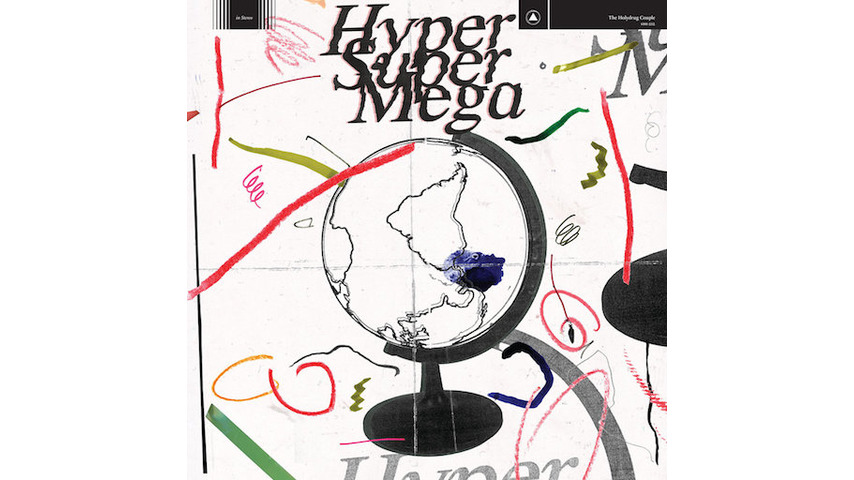
The Holydrug Couple: <i>Hyper Super Mega</i> Review

The new album by The Holydrug Couple, the decade-old music project of Chilean musicians Ives Sepúlveda Minho and Manuel Parra, addresses the constant distractions of the world, whether they be technological, cultural or economical. According to a press release, the band was wandering with a sense of haphazardness, so instead they turned the loud world that caused their mental burnout into their inspiration.

Songs like “Waterfalls” and “I’ll Only Say This” unite modern electro-pop with classic psych-pop and contain lyrics that point to a human race that’s often void of any meaningful connection. On “I’ll Only Say This,” lead vocalist Sepúlveda laments a world that’s addicted to technology (“Resting on a bed made of screens / Anywhere that you can find it”) and full of self-important people that think they know everything.

The harmonious pop vocals of the title track are reminiscent of Jagwar Ma’s Gabriel Winterfield, the twisting distortion and joyful, animated vocals of “Waterfalls” harken back to Primal Scream’s Screamadelica, while the lush psych of “Chevalier” has rumblings of Innerspeaker era Tame Impala. The album’s strongest chorus appears on “I’ll Only Say This,” which explodes with such beautiful, rhapsodic melodies and Sepúlveda’s detectable vocal conviction.

The record’s swirling layers of guitars, bass, vocals, percussion and synths are very dense, which works to both their advantage and disadvantage. The title track bursts with diverse, bright sounds, but “Ikebana Telephone Line” feels claustrophobic with its vocals overshadowed. As for the record’s instrumental interludes, “Lucifer’s Coat” charms with its clash of Medieval keys and electro beats, but the sci-fi flick vibe of “Western Shade” feels misplaced, as epic as it sounds.

The words that make up the album title point to both the album’s vibrancy and dark underbelly. On one hand, those flashy words reflect the album’s rapid paintball fire of colors and on the other hand, those words are indicative of the record’s lyrics that reflect an exhaustion from uber capitalism and unrelenting sensory overload.

They might have used a lot of bells and whistles to get the distorted, feverish electronic-psych sound of Hyper Super Mega, but they manage to retain and evoke so much humanity—and perhaps that’s this record’s greatest strength. They don’t use a wide palette of sounds and effects as a crutch—rather they use it as a vehicle for transcendence and as an high-spirited expression of society’s rife conundrums.

Image may contain: 1 person, text

In the short time since they released their acclaimed debut record, ‘Sore,’ Dilly Dally toured the world and took the press by storm, only to nearly collapse under the weight of their own success and call it quits forever. Rising from the ashes with more power and conviction than ever before, the Toronto rockers’ new album is, appropriately enough, titled ‘Heaven,’ and it’s a fierce, fiery ode to optimism, a distortion-soaked battle cry for hope and beauty in a world of darkness and doubt. Frontwoman Katie Monks describes the songs as coping mechanisms, and the collection does indeed form something of a survival kit for hard times, but even more than that, it’s a declaration of faith in the power of music and a burning reminder that we need not wait until the afterlife for things to get better.

 Recorded with producer Rob Schnapf (Elliott Smith, Beck), ‘Heaven’ highlights Dilly Dally’s rough edges in all their ragged glory, drawing every potent ounce of energy from the foursome’s swampy tones, raspy vocals, and volatile rhythm section. While the music is undeniably ferocious, there’s uplift woven into the fabric of every track. ‘Heaven’ opens with the dreamy “I Feel Free,” which begins as a floating, untethered soundscape before transforming into a soaring anthem for a world that’s ready to finally turn the page on all the darkness and disillusion the last few years have wrought.

The inexorable “Believe” insists on self-confidence, while the driving “Sober Motel” celebrates the lucidity a clear mind, and the lilting “Sorry Ur Mad” makes a case for releasing yourself from the prisons of anger and resentment. Escape is a frequent goal—from the bruising “Marijuana” to the epic queer tragedy of “Bad Biology”—but it ultimately solves very little, at least in any permanent way, and so the album carves out its own atheistic religion to get through the day, a faith that validates our pain as real but responds with a beaming light of hope (and maybe a little bit of weed).

Monks and guitarist Liz Ball originally formed the band in high school after bonding over a shared love for explosive, grungy rock and roll. By the time they recorded their debut, the pair had fleshed out the lineup with bassist Jimmy Tony and drummer Benjamin Reinhartz and hit a blistering stride that floored critics on both sides of the Atlantic. Rolling Stone hailed ‘Sore’ as a “blazing” breakout that “sounds like an unleashed id with a sick distortion pedal,” while Fader said it “hits that ever-elusive sweetspot between total recklessness and sly control,” and Pitchfork raved that the record “oozes with female desire” and offers up “a heavy swagger redolent of some of the best ever alt-rock.” In the UK, The Guardian praised the band’s “bludgeoning bass, gnarly guitars and red-raw vocals,” and The Line Of Best Fit dubbed it “a seminal first album.” The music earned Dilly Dally dates with Grouplove, METZ, and Fat White Family in addition to their first-ever international headline tour and festival appearances from Osheaga to Field Day.

“Doom” from Dilly Dally’s new album ‘Heaven’ out now!

We haven’t heard any music from Globelamp, the musical moniker of Elizabeth Le Fey, since her 2015 album The Orange Glow.  That album was an honest and impressive record, detailing Elizabeth’s abusive relationship and the complex fall out from it, involving court cases, restraining orders and a host of very public exchanges. This week marked the announcement of a third Globelamp record, “Romantic Cancer”, due for release on her new home Nefarious Industries, as well as the release of a new single, “Black Tar”.

While The Orange Glow bathed in technicolor psych-folk, Black Tar is instantly a more restrained affair. Elizabeth’s vocal is largely unadorned, left to all it’s idiosyncratic flair, accompanied by a just gentle acoustic guitar rhythm and an accordion, courtesy of James Felice, which adds a certain Parisian feel to proceedings.

http://

Discussing Romantic Cancer, Elizabeth has suggested it is a record about how we perceive relationships, how, “we start believing Love equals Pain. As though Love is a type of cancer that must be avoided at all costs”. As intriguing and challenging as ever, the return of Globelamp is an occasion to be celebrated.

All songs written by Elizabeth le Fey 

All guitars, keyboard, and tambourine played by Elizabeth le Fey
James Felice – Accordion on Blinded, Sorceress Of Your Soul, Black Tar, Look Out Mountain
Morgan Y. Evans – vocals on track Sha La Love, trombone on Look Out Mountain

This limited-edition deluxe Hiss Golden Messenger 4-LP box set includes remastered reissues of Bad Debt, Poor Moon, and Haw plus Virgo Fool, a bonus album of Hiss rarities available physically only with this collection.

Individually numbered in a one-time pressing of 2,200, the four-album set is housed in a beautiful cloth-wrapped slipcase with three-color foil detailing and includes an exclusive foldout poster. Each LP is pressed on black vinyl (with full download) and includes a two-sided insert with liner notes and full lyrics, all housed in a heavyweight jacket with a debossed cover.

http://

Released on November 2nd, Hiss Golden Messenger will release Devotion: Songs About Rivers and Spirits and Children, a limited-edition deluxe box set which includes remastered reissues of the classic Hiss albums Bad Debt, Poor Moon, and Haw as well as Virgo Fool, a rarities compilation that will only be available physically as part of this collection. Both the 4-CD and 4-LP sets are housed in a cloth-wrapped, foil-stamped slipcase and feature original iconographic artwork by Sam Smith, an exclusive foldout poster, full lyrics, and new liner notes by New Yorker writer Amanda Petrusich and MOJO editor John Mulvey. The vinyl set also includes a digital download of all tracks.

The 4-LP / 4-CD box set Devotion, Songs About Rivers and Spirits and Children is out November 2nd, 2018 on Merge Records.

BobDylan_hardrain76

Bob Dylan: Hard Rain US TV Broadcast Version – Full Video (May 23rd, 1976)

42 years ago today (9/13/76), Bob Dylan released his true to late 70’s form live album Hard Rain. The album was recorded during the second leg of the Rolling Thunder Revue and was partly recorded on May 23rd, 1976, during a concert at Hughes Stadium in Fort Collins, Colorado. The concert was also filmed and later broadcast by NBC as a one-hour television special in September. The Rolling Thunder tour is most distinguishable by the white face paint Dylan wore and that he chose to play a series of small venues with a revolving cast of musicians that included  Joan Baez, Ramblin’ Jack Elliott and Roger McGuinn. Watch Dylan perform “One More Cup of Coffee” from the Rolling Thunder Revue tour live in ’75.

In pouring rain, Bob Dylan plays the open air Hughes Stadium at Colorado State University in Fort Collins. He has elected to film this show to replace the aborted TV special from Clearwater. In the longest set of the tour, there are several highlights, not all appearing in the TV special. … Included in the TV special, although in a most peculiar order, are second encore “A Hard Rain’s a-Gonna Fall,” the entire Dylan/Baez set (“Blowin’ in the Wind,” “Railroad Boy,” “Deportees,” and “I Pity the Poor Immigrant”); three songs from the first set (“Maggie’s Farm,” “One Too Many Mornings,” and “Mozambique”); and three from the last set (two tremendously powerful readings of songs from Blood on the Tracks, “Idiot Wind” and “Shelter from the Storm” and a faded “Knockin’ on Heaven’s Door”). Despite the storm clouds raging, the crowd appears to be very enthusiastic, even singing “Happy Birthday” for Dylan before the second encore.
~Clinton Heylin (Bob Dylan: A Life in Stolen Moments Day by Day 1941-1995)
–
Hughes Stadium
Colorado State University
Fort Collins, Colorado
23 May 1976

  • Bob Dylan (guitar & vocal)
  • Scarlet Rivera (violin)
  • T-bone J. Henry Burnett (guitar & piano)
  • Steven Soles (guitar)
  • Mick Ronson (guitar)
  • Bobby Neuwirth (guitar & vocal)
  • Roger McGuinn (guitar & vocal)
  • David Mansfield (steel guitar, mandolin, violin & dobro)
  • Rob Stoner (bass)
  • Howie Wyeth (drums)
  • Gary Burke (percussion)
  • Joan Baez (shared vocal on 2-5)
  1. A Hard Rain’s A-Gonna Fall
  2. Blowin’ In The Wind (Duet with Joan Baez)
  3. Railroad Boy (Duet with Jaon Baez)
  4. Deportees (Plane Wreck At Los Gatos) (Duet wit Joan Baez)
  5. I Pity The Poor Immigrant (Duet with Joan Baez)
  6. Shelter From The Storm
  7. Maggie’s Farm
  8. One Too Many Mornings
  9. Mozambiqu
  10. Idiot Wind
  11. Knockin’ On Heaven’s Door (Edited)

Image may contain: one or more people

Foxing knew exactly what they were getting into by interpolating “Nearer My God to Thee” as the title of their third album, which was already tempting fate—there are few things that indie rock artists are less willing to publicly admit than the desire to make a classic album, but this is exactly the challenge producer Chris Walla placed before them and the one they go to every possible length to meet.The band’s previous albums, The Albatross and Dealer, were bookended by muted introductions and finales, hand-crafted keepsakes meant to be dog-eared and footnoted. Nearer My God is likewise a closed system bound with melodic and lyrical leitmotifs, but designed more like a multimedia extravaganza. About two minutes into the opener “Grand Paradise,” Murphy is “shock-collared at the gates of heaven” when the drums finally come in and it’s a legit drop for light shows they’ll never afford at festivals that have never considered booking them. Nearly an hour later, he cries, “Heaven won’t take me in” on the closing “Lambert,” a “Mr. November”-style victory lap where Murphy could walk into the crowd to be mobbed during the final surge. In between, “Five Cups” anchors Nearer My God with a nine-minute montage for Murphy’s dead friends.

They brought in a guy to play bagpipes. There are songs that swap out bass guitars for Volca sequencers, immaculately recorded drums for 8-bit synth triggers, guitars for string samples and Murphy’s clean vocals for mutated and pitch-shifted versions of itself.Foxing “Nearer My God” from the full length Nearer My God

There is a sense that, with Nearer My God, Foxing have made their masterpiece. — NPR

There is a sense that, with Nearer My God, Foxing have made their masterpiece. They almost didn’t. The title of the album alludes to impending — Pitchfork

Jimi Hendrix

The Jimi Hendrix Experience’s Electric Ladyland is being reissued with a massive 50th anniversary deluxe box set. Due on November. 9th, the album will be available as either a three-CD/Blu-ray set or a six-LP/Blu-ray set.

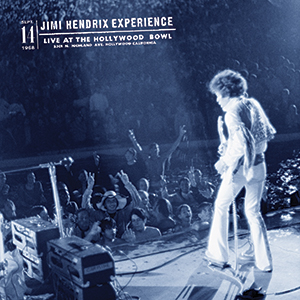
Both packages include the original double album, which has been newly remastered from the original analog tapes. The vinyl set features an all-analog direct-to-disc vinyl transfer. Among the set’s other highlights are Electric Ladyland: The Early Takes, which features demos and studio outtakes from the era; an expanded documentary on the making of Electric Ladyland; a book containing handwritten lyrics and unseen photos; Live at the Hollywood Bowl 14/9/68, a recently discovered two-track soundboard recording that’s part of Experience Hendrix’s Dagger Records official bootleg series; the feature-length documentary At Last … the Beginning: The Making of ‘Electric Ladyland’; and a new 5.1 surround sound mix of the album by original Hendrix engineer Eddie Kramer.

Hollywood Bowl Cover

Initially released on October. 16th, 1968, this was the third album by the Jimi Hendrix Experience, the first produced by Hendrix himself and the last studio effort to arrive during his lifetime. Signature tracks include “Voodoo Child (Slight Return),” “Crosstown Traffic” and his definitive cover of Bob Dylan’s “All Along the Watchtower.”

“Electric Ladyland is a complete work. He pushed the limit musically; it went in different directions,” Kramer says in the video preview below. “It’s a body of work that Jimi was in control of right from the beginning. This is the definitive album that Jimi created.”

This never-before-released 1968 performance at the Hollywood Bowl “captures the band and the mounting excitement that took place just weeks before the release of Electric Ladyland,” according to pre-release materials.

The late Linda Eastman (McCartney) took the updated cover art, which finds the Jimi Hendrix Experience and a group children at the statue of Alice in Wonderland in New York’s Central Park. This was actually Hendrix’s choice for the album cover image, though it was later relegated to the inside of the U.S. version. The U.K. edition infamously featured a gatefold photo of 19 naked women instead, a decision Hendrix never agreed with.

Jimi Hendrix / Electric Ladyland 50th anniversary super deluxe edition

This period found Hendrix expanding his musical sphere with a series of collaborators as his relationship with Experience bassist Noel Redding deteriorated. Jefferson Airplane’s Jack Casady played bass on “Voodoo Chile,” while Hendrix took over on many of the other tracks – including “All Along the Watchtower.” Other guest stars on Electric Ladyland include Steve Winwood, Chris Wood and Dave Mason of Traffic; Al Kooper; and Hendrix’s future Band of Gypsys bandmate Buddy Miles.

The volume of outtakes, Electric Ladyland: The Early Takes, contains audio pulled from reel-to-reel tapes Hendrix recorded himself on his personal Teac machine in March 1968 while staying at Manhattan’s Drake Hotel. These include early versions of “Voodoo Chile” and “Gypsy Eyes” as well as two songs that didn’t make the Ladyland finaltrack list – “Angel” and “My Friend”– and an early version of “… And the Gods Made Love” titled “At Last … the Beginning.”  “He did these incredibly quietly,” Kramer says with a laugh. “You can hear the atmosphere of the hotel room. He’s almost whispering. Why? He doesn’t want to wake up the neighbors. He’d go, ‘Here’s “Electric Ladyland”‘ and he’d whisper, ‘Have you ever been? … ‘ It’s so warm and so intimate, and all of a sudden you hear a phone ringing and that’s the front desk calling and you can just hear in his voice he’s getting really pissed off. It’s great.”

Previously unreleased versions of “Angel Caterina” and “Little Miss Strange” on The Early Takes also feature a guest appearance by Stephen Stills. Kramer’s new 5.1 surround-sound remix showcases uncompressed 24 bit/96 kz high resolution audio, a first for a Hendrix studio album.

chills

The Chills release their new album, Snow Bound, this weekend . It’s a heavier, darker record than 2016’s Silver Bullets (and maybe more than any in main man Martin Phillipps’ career). You can hear that on single “Complex,” which marries fuzzy power chords to thick synthesizers and Phillipps’ patented spiderweb wordplay. There are actual spiderwebs — and the arachnids who make them — in the “Complex” video too. Directed by Phoebe Lysbeth Kay Mackenzie, the gorgeously shot video brings Phillipps’ lyrics to dark life.

The Chills – Complex Taken from the album, ‘Snow Bound’