With the release of breakthrough albums “Masterpiece” and “Capacity”, Big Thief’s Adrianne Lenker has established hers as one of the most powerful voices in music.
Thanks to ongoing ascent of Big Thief, singer-songwriter Adrianne Lenker has become one of the most praised indie folk artists of the last five years.” while her output with Big Thief is what brought her music to the attention of most who hold her in such high regard, masterpiece is not the beginning of the story. “my first solo record i made was Hours Were the Birds,” Lenker explains. “I moved to New York and, starting from complete scratch, had nothing to show anybody that was representing what i did, other than stuff i made when i was 13. so, I decided I should record a solo album of my songs that i had been accumulating.”
in 2013 Lenker returned to her hometown of Minneapolis and entered terrarium studios with producer Rob Oesterlin, where she laid down ten songs on acoustic guitar. “it’s basically just like a live solo show,” Lenker describes, “but with an added twist.” she then enlisted nyc friend Andrew Sarlo to mix the album (he would later produce and mix Masterpiece and engineer, produce and mix capacity), and on January 24th, 2014 Hours Were the Birds was released into the world. drenched in beautiful imagery and intimate stories, it is the work of a woman on a journey, conquering new territory with bravery and honesty.
Adrianne Lenker – Disappear from the album Hours Were the Birds Saddle Creek Records
“Laying in the grass, we were dragging on loud/Got my hand in your hand and my head in the clouds.”
This is the scene, set with acoustic atmospherics and frontman Jade Lilitri’s familiar, layered, honey-sweet-but-burnt-around-the-edges vocals, that flickers to life at the start of Oso Oso’s new full-length, “Basking in the Glow”. The track, simply called “intro,” is just that: an intimate, humble, and hopeful prologue that prefaces a record radically committed to letting the light in—because Lilitri knows the darkness like the back of his hand.
The spacious opening proposition of “intro” gives way to “the view,” an electric, invigorating indie rock banger that showcases Lilitri’s slick, effortless melodic excellence and lyrical precision (“I’ll grow, we’ll see/There’s something good in me”). The title track follows, driving home the record’s thesis on a chorus like a roman candle cracking a mid-July night sky: “These days, it feels like all I know is this phase/I hope I’m basking in the glow of something bigger I don’t know.”
Oso Oso mastermind Jade Lilitri sings of digging for clarity but can’t see the light for the dirt beneath his fingernails. Basking In The Glow is an album with all the right answers — an album about how great it feels to have those answers — but with the understanding that knowledge doesn’t necessarily translate into action. As Lilitri sings it, there’s always another angle to question, whether a step forward is a step in the right direction at all. In the grand tradition of forebears like Taking Back Sunday, the Used, and Jimmy Eat World, he quells his doubts by affixing them to airlocked guitars and rocketship choruses, and then launching them into the sun.
Creedence Clearwater Revival released their second LP “Bayou Country” on January. 5th, 1969. The record was the first of three albums CCR would release in 1969.
In an early review, Rolling Stone thought that the album suffered from a major fault of inconsistency. “The good cuts are very good; but the bad ones just don’t make it,” it said. The review was positive on the title track “Born On The Bayou” ..with John Fogerty/Creedence Clearwater Revival,Tom Fogerty and Stu Cook ,Doug Clifford. Bayou Country wasn’t Creedence Clearwater Revival’s biggest album. Green River, released a few months later, became their first chart-topping record.) Bayou Country didn’t produce the most hit singles. (That was 1970’s Cosmo’s Factory, with three straight Top 5 songs.
Yet, this sophomore LP is perhaps CCR’s most important, if only because it represents the moment where JohnFogerty found his own voice. And in the most unlikely of places: the American South, far away from his California roots.
“All the really great records or people who made them somehow came from Memphis or Louisiana or somewhere along the Mississippi River,” Fogerty wrote in Bad Moon Rising. “I had a lifelong dream that I wanted to live there. I never even thought about the social pressures. To me, it just represented something earlier, before computers and machinery complicated everything, when things were calm and relaxed. And singers like Howlin’ Wolf and Muddy Waters gave me the feeling that they were right there, standing by the river. The South just seem to be where all the music that’s kicked everything off started from.”
This fascination stretched back to his earliest musical memories, and helped push “Proud Mary” – Fogerty’s first important song – to a best-ever No. 2 spot on the singles chart. The album opened with the delightfully swampy “Born on the Bayou,” traveled darkly by “Graveyard Train” paused for an amped-up cover of “Good Golly Miss Molly” (which Little Richard recorded in New Orleans) and concluded with the chicken-fried expanses of “Keep on Chooglin’.” Creedence Clearwater Revival surrounded Fogerty’s craggly yowl with a sharp combination of R&B, country and rockabilly courtesy of the late rhythm guitarist Tom Fogerty, bassist Stu Cook and drummer Doug Clifford.
Bayou Country felt of a piece, however, a gothic vision as complete as it was unexpected. And that vision was all Fogerty’s. “I know that the specific memories I would try to paint — that I would try to talk about, even in that song — are my own memories,” Fogerty told the New Yorker. “Those were things that, in one way or another, actually happened in my childhood. Quite a few of them, anyway. I was creating an atmosphere — even, almost a mythical world — that existed within that album.”
He never looked at it as appropriation, but rather as a cradle for his imagination. In fact, the first single Fogerty remembers hearing was a rootsy double-sided 45 given to him by his mother – “Oh! Susanna” and “Camptown Races,” written by Stephen Foster. Later, he “was fascinated to learn that even though he wrote all these songs about the South, Stephen Foster was from Pittsburgh!” Fogerty wrote in Bad Moon Rising. So, why couldn’t he?
“‘Oh! Susanna,’ I loved it then,” Fogerty noted told the New Yorker. “It’s one of my favorite songs. I think, perhaps, what my mom may have done accidentally was set me off in a direction we would now loosely call ‘Americana.'”
Just six months after their self-titled debut, Creedence Clearwater Revival seemed like an overnight sensation. But they had actually spent a decade polishing and shaping this sound under earlier band names like the Blue Velvets and the Golliwogs. Something had finally clicked, and songs started pouring out of Fogerty at such a furious pace that they were suddenly having arguments over which one should appear on CCR’s A-sides.
“I didn’t think ‘Proud Mary’ was that good, if you want to know the truth about it,” drummer Doug Clifford told Goldmine. “I just didn’t like it. I liked ‘Born on the Bayou.’ To this day, it’s still my favorite Creedence song. It’s nasty, and I was disappointed when [the single] got flipped.”
“Proud Mary” was the hookier, more mainstream song, and its detail-rich tale of a narrator who ditches it all for life on a riverboat clicked with a wider audience, opening the door for a string of hits. “It was John’s first real Tin Pan Alley kind of tune, with a beginning, middle and end,” Stu Cook told Louder Sound. “And the track has a very laid-back feel, very greasy. A really deep groove.”
The song’s sense of nostalgic abandon also provided a welcome distraction in a war-torn world. Written after Fogerty earned an honorable discharge from the Army, “Proud Mary” was a tone-setting moment for Bayou Country, and the first in a non-consecutive string of five CCR tracks that stopped just short of the No. 1 spot.
“Once I had written ‘Proud Mary,’ the heavens opened up,” Fogerty told Florida Weekly. “Right there that afternoon as I was writing that song, I knew that this was a great song. I knew this was what they used to call a standard. They probably call it a classic now. This was far above any song I had ever written in my life.”
Everything started moving very fast for Creedence Clearwater Revival, as they released two more albums by the end of 1969. One minute they were crowding into a Volkswagen bus for their shows; the next CCR were swooping in on a Lear jet. Funky bars had become huge venues and then Woodstock. This transformation didn’t suit everyone.
“We were a garage band from our inception, and we worked hard at our craft,” Cook said in the Louder Sound interview. “But I think we were at our best on a smaller stage, closer to an audience that was really paying attention. When you get on a stage that’s 40-feet wide, you kind of lose touch with each other. It’s harder to get the feeling across. It’s more of a spectacle.”
At the same time, Fogerty had now assumed a central role in every part of their output, and that was already fostering stubborn divisions. Perhaps unsurprisingly, Creedence Clearwater Revival soon began to break apart under the sudden stress.
“In making Bayou Country, we had a real confrontation,” Fogerty told Rolling Stone. “Everybody wanted to sing, write, make up their own arrangements, whatever, right? … I basically said, ‘This band is going to make the best record it can make, and that means I’m going to do things the way I want to do ’em.’ That sounds very egotistical, but that’s what happened – and the other three guys had to swallow and go, ‘Okay, yeah, that’s what we’ll do.’ For the next two years it worked great, and then at some point they didn’t want to swallow and say, ‘That’s nice’ anymore.”
This industrial noise punk duo are flanked by a group of people in Hazmat suits as they play (really loud) space anthems akin to Death From Above, The Chemical Brothers and Nine Inch Nails. Their live shows are like the soundtrack to the end of the world, offering a weirdly upbeat and eccentric experience that is a chaotic, but always enjoyable, assault on the eyes and ears.
“A no-holds-barred aural assault of Anarchic Electro Psych Punk Noise that is something like Death From Above and the Chemical Brothers’ bastard offspring”
Another Sky’s Catrin Vincent has the sort of voice – peculiar, powerful, androgynous – that’ll stop you in your tracks. It is perhaps the most striking thing about Another Sky, who also comprise drummer Max, bassist Naomi and guitarist Jack (they haven’t given their second names) – though there are plenty of other things too.
Take their single “Avalanche”, for example. Its condemnation of toxic masculinity, police brutality and violence against women, channelled through that arresting voice, is hugely affecting. Another Sky used to perform in total darkness, wishing to be anonymous. They don’t do that anymore. They’re ready to step into the light.
We’re releasing The Sky is a Blank Screen, a live album compiled from last year’s tours for “Jet Plane and Oxbow”.
The hour-plus album catches the excellent lineup of me, Emily Lee, Lucas Oswald, Sadie Powers, and Josh Halpern smashing our way through extended, sometimes off-the-rails versions of songs from JPOB in front of audiences in Seattle and London.
It also features other live performances not before an audience, including a spare, reworked “Radio Silence” broadcast on Austin’s KUTX, a demo of “Only Child” from my apartment, a cover of Bauhaus’ “Kick in the Eye” (recorded for the Onion’s AV Club on the same day as our cover of Bowie’s Lodger album), a reinvented “Rooks”, and “You As You Were” from Animal Joy.
Purchases of the complete album also include a bonus live cover of David Bowie’s “Scary Monsters (and Super Creeps)”, which seemed like a new national anthem at the end of 2016—a year that made Jet Plane‘s preoccupation with national myth-making seem uncomfortably prescient.
The Sky is a Blank Screen is available for streaming and download in a variety of formats (including WAV and FLAC); it was mixed by Lucas Oswald and mastered by Max Lorenzen in Austin.
We’ve also put together a limited-time bundle of all the SW-approved live albums, including:
– the live premiere of Rook,
– a seaside show in France from the Golden Archipelago tour,
– excerpts from the 3-hour Island Arc Live extravaganza, and
– the incandescent rock of the Jet Plane and Oxbow tour
In keeping with the themes of Jet Plane and Oxbow, 10% of the proceeds from both the record and the bundle will benefit the Equal Justice Initiative and Earthjustice. (The EJI works for reform of our overburdened, unfair and inhumane criminal justice system; Earthjustice works to protect our environment through legal action in the court.) Since the end of the Jet Plane and Oxbow tour, the live band’s been scattered to the winds, but we’ve all been busy with a wild variety of projects:
Lucas is releasing his second solo album, and recently toured in our pal Jesca Hoop’s band along with JPOB producer/engineer Danny Reisch. Emily has been doing freelance music supervision for film and TV (hire her!) when she’s not playing with metal bands and recording a new full-length with Snake Oil.
Sadie‘s been recording some very beautiful and eerie ambient music with her band Triptychs.
And Josh has been playing drums all day, every day with Marmalakes and a bewildering array of other bands in Austin and around the country. You can see him on tour with The Dan Ryan.
As for me,Josh Halpern I’ve been trying to finish my book, The Feathered People, by the end of the year.
For those of you who haven’t heard me blabbing about it, it’s a book that doesn’t have much to do with music; it’s a long, wild travel/natural history yarn about a set of bizarre South American birds of prey called caracaras, the people who live with them, and what they can tell us about the unlikely history of their continent and the evolution of a mind like ours on another branch of the tree of life.
All my field research is done at last—I wrapped it up with an epic trip to Chile earlier in the year, where I helped paleontologists find dinosaur bones and nearly froze looking for flamingos and caracaras in the high Andes. Only the typing is left, and I’ve still got about half the manuscript left to go.
But I also haven’t left music behind. There’s a really exciting opportunity coming up for SW (+ old and new friends and allies) next year that I can’t tell you about yet (!!); but it’ll flip your lid, especially if you enjoyed our Lodger project.
Also, I’ve just finished up a new full-length album that Sub Pop will be releasing next year. All I can say about that one right now is that it’s not a Shearwater album; but I worked on it with some very gifted collaborators for over a year, and I can’t wait to release it.
Lastly, I’m writing this letter from DC, which I’ve visited several times this year for some epic and inspiring protests—but this time I was here at the American Film Institute’s documentary festival AFIDOCS, where Shivani, a short film for which I wrote and performed the score along with Dan and Emily from Cross Record, was shown as an official selection.
Shivani tells the story of a very special three-year-old girl in southern India with an unusual talent, a captivating face, and a surprising family history. So there’s plenty going on—though of course I miss performing. When I’ve turned in my manuscript, I’ll be itching to get out and play again, and to start thinking about another SW album.
More soon. But in the meantime, all best to you and yours.
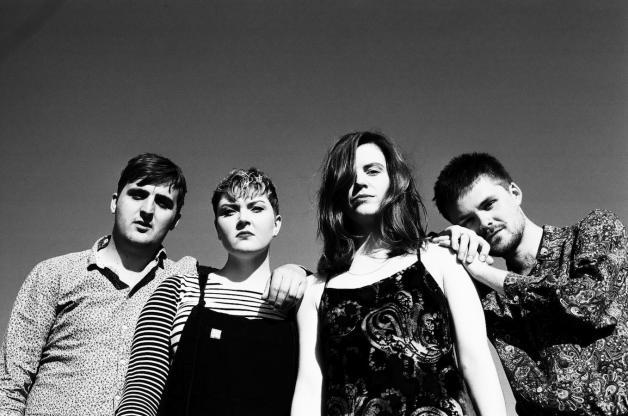
Ths Stockport five-piece who dabble in psychedelica-tinged glossy indie pop. 2019 is looking very nice – June sees them perform on the bill at Blossom’s massive Edgeley Park homecoming show and in July they’re playing Manchester’s Castlefield Bowl with The Wombats. Take a listen to their latest track, “Heavy“, featuring a video shot on their most recent tour
Fuzzy Sun’s brand new music video shot during their Winter Tour 2018. “Heavy” is the lead track taken from their most recent EP “Warm Evening / Cold Morning”
A journey through melodic pop is what’s to be expected from Stockport five-piece, Fuzzy Sun. The freshly formed line-up, fronted by the lulling vocals of Kyle Ross, sees a distinct and original take on chorus-heavy reveries. Daisy Valentines bold and melancholic synth, coupled with sweet and seductive harmonies is equally complemented by Lewis Jobson & Mitch Bancroft’s strong soothing groove through the rhythm section. Fuzzy Sun bring you contemporary pop, infused with psychedelia, dipped in naughties R’n’B nostalgia, with just a hint of disco flare.
Band Members
Kyle Ross – Vocals/Guitar
Daisy Valentine – Keys/Synth/Vocals
Lewis Jobson – Bass
Raffaele Pani – Guitar
Mitch Bancroft – Drums/BV’s
At a certain point, when talking about the modern “Emo Revival,” we should probably just drop the “Revival” part and call it what it is: a full-fledged, thriving movement. Some of the scene’s most defining and forward-thinking music has come out in the last couple years. And many emo records released in this past year have not only helped expand and evolve genre, but were among the best albums released in 2018. And no album from that bunch stood out more than the heart-wrenching “Get Well Soon” from Atlanta band World’s Greatest Dad. Anchored by the powerful presence of singer-guitarist Maddie Duncan, the band’s debut LP is a bulletproof set of emo and indie rock tracks, with endless catchy hooks and empathetic themes flowing throughout. On searing single “Laughing (While You’re Smiling),” Duncan’s expressive vocal delivery yields mass-singalong energy as she parses the emotional complexities of a relationship: “I’m trying to learn the difference between love and codependence,” she admits, before realizing “I need to start being honest with myself for me to start…” a line sure to hit those of us in therapy right where it hurts.
Nonetheless, this album nails every emotional beat, capturing moments of guarded optimism (soaring opener “New Recording 3”), poignant sadness (thoughtful ballad “Fireworks”) and numbing frustration (rollicking pop-punk jam “Healthy Living”). Furthermore, motifs of self-loathing, addiction and recovery fill out the rest of this ultimately heartwarming album. On Get Well Soon, World’s Greatest Dad deliver the year’s most honest and painfully relatable self-care pick-me-up.
Released May 11th, 2018
all songs written by Worlds Greatest Dad and perfected
by Ben Etter
Goth-poppers Pale Waves turned in a debut album that was honest, exciting and packed to the brim with shimmering indie-disco classics.
If you’re into sleek guitar pop, Manchester four-piece Pale Waves will be right up your alley, particularly if that’s a charmingly dark alley out of a Tim Burton movie. The distinctly ’80s goth look of frontwoman Heather Baron-Gracie is striking and their smooth, jangly guitars call to mind indie-pop bands of yesteryear as well as the glossy pop of today. Pale Waves released their debut album,My Mind Makes Noises, earlier this year via U.K. indie giant Dirty Hit, best known for The 1975 and Wolf Alice. The 1975’s Matty Healy and George Daniel also co-produced this album with Pale Waves’ drummer Ciara Doran and recording engineer Jonathan Gilmore. “One More Time” is indicative of their heartfelt soaring choruses that make dancing inevitable, “Noises” features a life-affirming guitar solo and “Eighteen” has those lyrics that will transport you inside the mind of an angsty teenager, regardless of your actual age.
Jessica Pratt has announced her third studio album, Quiet Signs, due out on February. 8th, 2019, via Mexican Summer. “On some level I considered an audience while making the last record,” said Pratt in a statement. “But my creative world was still very private then and I analyzed the process less. This was the first time I approached writing with the idea of a cohesive record in mind.” The album was produced by both Pratt and Al Carson, who, along with Matt McDermott, also performs on the record.
Jessica Pratt is not a loud performer. She does not have to be. In a club of a few hundred, even the bar staff are known to go quiet while she’s on stage. Her third album, Quiet Signs, feels like a distillation of this power. The album leads off with “Opening Night,” a nod to Gena Rowlands’ harrowing, brilliant performance in the John Cassavetes film of the same name. It’s also an emblem of where this spare, mysterious collection of songs falls in the course of Pratt’s career.
“On some level I considered an audience while making the last record (2015’s On Your Own Love Again),” she writes, “But my creative world was still very private then and I analyzed the process less. This was the first time I approached writing with the idea of a cohesive record in mind.”
After a collection of demos and early studio recordings (Jessica Pratt, Birth Records, 2012) earned her a small, dedicated audience, Pratt moved from San Francisco to Los Angeles and recorded her first intentional album in her bedroom in a matter of months. That album, On Your Own Love Again (Drag City, 2015), would bring her around the world many times, leading many to fall under the spell of Jessica Pratt the performer, the songwriter, the singer with the heavy-lidded voice that feels alien and familiar at the same time.
Her first album fully recorded in a professional studio setting, Quiet Signs finds Pratt’s songwriting and accompanying guitar work refined — more distinct and direct. Songs like “Fare Thee Well” and “Poly Blue” retain glimmers of OYOLA‘s hazy day afternoon spells, yet delicate flute, strings sustained by organ arrangements, and rehearsal room piano now gesture towards the lush chamber pop and longing of The Left Banke. On the album’s first single, “This Time Around,” Pratt hits on a profound, late-night clarity over just a couple of deep chords, evoking Caetano Veloso‘s casual seaside brilliance. And before the curtain drops on Quiet Signs, Pratt provides a show-stopping closer, “Aeroplane.”
In the world of Quiet Signs, the black of night usually represents fear, despair, resignation; finally at home descending towards the illuminated city, she sings over black leather drone and tambourine shuffle with a newfound resolve. Quiet Signs is the journey of an artist emerging from the darkened wings, growing comfortable as a solitary figure on a sprawling stage.
The album was written in Los Angeles and recorded at Gary’s Electric in Brooklyn, NY over 2017 and 2018. It was co-produced by Al Carlson. He plays flute, organ and piano on some songs. Matt McDermott also played piano and string synthesizer.
It will be released on Mexican Summer on February 8th, 2019.