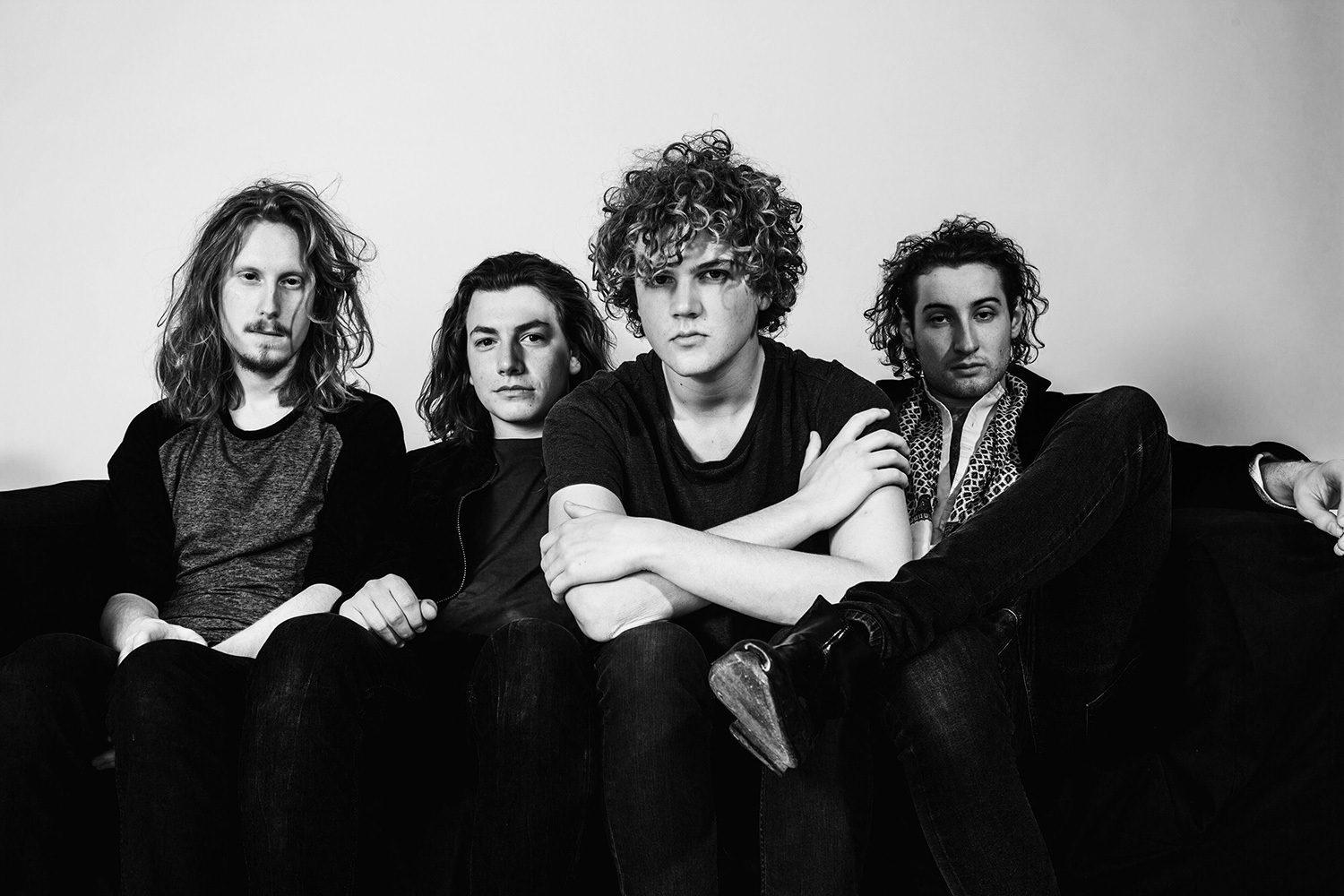
Fronted by the charismatic Theresa Jarvis, Brighton quartet Yonaka have been crafting dark, distorted, beats-heavy guitar rock for the past couple of years. 2018 saw them tour with Bring Me The Horizon, with their latest EP Creature being released this last November. Creature is out everywhere now! 4 tracks and we hope you love them. Let us know your favourite track and how it makes you feel, it’s about anxiety and the darkness that comes with love, it’s a story, it’s deep and it’s special it also has our take on The Zombies’ She’s Not There.
Band Members
Theresa Jarvis – Vocals
George Edwards – Guitar
Alex Crosby – Bass/Keys
Robert Mason – Drums
I’ll be honest, I loved Joan As Police Woman‘s first album (Real Life from 2006), liked the second one (2008’s To Survive) and then slightly lost track. 2011’s The Deep Field and 2014’s The Classic had their moments but ultimate didn’t really do it for me, while Benjamin Lazar Davis collaboration Let It Be Me was bought, filed but shamefully I ‘forgot’ to listen to it…
Cue the power of a good old fashioned ‘catchy’ song. While a pop chart hit is fairly much out of the question these days, for an artist like Joan As Police Woman, the quality of first single ‘Tell Me’ was more than apparent. Like much of the album, the song concerns communication. It’s a plea for articulation, expression and directness. Literally, ‘tell me what you want and I can try and give it to you.’ There’s something fantastic about the honesty of the sentiment, and the economy and relatively simplicity of the arrangement.
JAPW’sJoan Wasser has an incredible singing voice, but prefers understatement rather than over the top vocal gymnastics. ‘Tell Me’ is slinky delight and memorable enough that my kids were singing along to it when I ‘forced’ my playlists on them on holiday in the summer!
But one song does not a good album make and I think there’s two key things at play here that make the Damned Devotion such a success. Joan’s adventurousness, in terms of experimenting and ‘beat-making’ at her Brooklyn home has really paid off and at the same time she has just hit a rich vein of form and written and produced an incredibly intimate long-player full of moving and memorable songs. It’s a very pure album – it feels like musical and lyrical ideas have flowed straight from Wasser (with the help of trusted collaborators like Kindred Parker) right onto the grooves of the vinyl, unencumbered by a band working out arrangements in a traditional studio environment, where something excellent can inadvertently be shorn of its magic.
Opener ‘Wonderful’ is a delicate rose with electric piano, beats and lots of atmosphere. That song semi-segues into ‘Warning Bell’, where Joan muses about missing the tell-tale signs in a relationship and how she ‘never sees it coming’ into a pillow-soft arrangement.
There’s some exciting rhythms in a more funky middle section with ‘Steed (for Jean Genet)’ and in particular ‘The Silence’ which continues the album’s lyrical themes (“we have so much to say, why don’t we say it?”). One highlight here is the chanting middle eight, which ends with a blistering and satisfying distorted guitar solo.
‘Valid Jagger’ has beautiful melody that sucks you in and a lovely organ denouement, while ‘What Was It Like’ is a moving tribute to Joan’s Dad. ‘Talk About It Later’ is another funky number with an amusing lyric (“later as in 2020…”) and ‘Silly Me’ and ‘I Don’t Mind’ are the ‘come down’ tracks and complete the album.
This is one of those life-changing records. It is that good. Sit back and listen to all 12 tracks from start to finish and you’ll discover that Damned Devotion messes with your body. It gets under your skin, squeezes your heart and perhaps occasionally stirs the loins. It’s Joan As Police Woman’s best album
Having gained a reputation for their frantic live performances and epic guitar rock sound, Sea Girls have been plying their trade throughout 2018 and released their latest single All I Want To Hear You Say in September. They head out on a major headline tour at the end of February 2019 – but you can get a taste of their amazing live show with this exclusive clip, showcasing the band’s appearances with appearances at Truck, Citadel, All Points East and Leeds festivals across the summer.
This London four-piece spent their summer building a fanbase at festivals around the UK. While the music industry hasn’t been so kind to rock bands over the past few years, the tides (geddit) seem to be turning, and it’s about time we had some new blood on the scene. Sea Girls are offering listeners a fresh, uplifting and bold guitar-based sound that capture the spirit of youth.
As if she doesn’t have enough to be proud of from her work with post-rock outfit Red Sparowes, psych-metal band Marriages, and slowcore collective Nocturne, Emma Ruth Rundle also put out a delectably moody eight-song goth-folk collection this year. Heavy on reverb-drenched atmospherics, Rundle’s latest finds her accompanying her own hypnotically fluttering vocal confessionals with glistening clean-toned SGs, jangly Jazzmasters, and doomy 6-string washes that float atop a backdrop of drums that alternate between loudly and subtly thundering.
From the new album “On Dark Horses”, released September 14th, 2018 on Sargent House.
I think I’ve been suffering from PaulWeller fatigue in recent times. The ex-Jam and Style Council man has been knocking them out regularly for quite a while and although there’s been nothing really wrong with the likes of Saturns Pattern and A Kind Revolution, it feels like ages since I really loved one of his solo efforts (probably 2008’s 22 Dreams). But True Meanings has reversed that trend. It’s a beautiful record. I’m a sucker for that pastoral, folky vibe, but crucially, the songs are also very good. ‘Gravity’ and ‘Glide’ drip with acoustic regret while ‘Old Castles’ has a wonderful jazzy lilt. Best of all the mood and tone is consistent throughout and therefore this feels like a proper album, to sit back and enjoy.
The former Jam and Style Council man continues to rack up Top 10 albums at home in the UK. His music these days is more acoustic-based and rustic than it was, but his writing remains vital, and Bowie fans will want to hear Paul’s tribute to their man.
If the whole gender debate/subject matter puts you off, don’t let it. Like with Christine and the Queens such concepts and subject matter can rather get in the way of some great songs. This year for Anna Calvi and Christine and the Queens and on both occasions a interviewer hardly asked them about music at all, so pre-occupied were they about ‘gender journeys’, sexuality etc. (Calvi wasn’t impressed with the female journalist asking her about ‘big dick energy’!). Not that that these discussions aren’t interesting, but hey, I’m here for the songs, and luckily her latest album “Hunter” is full of great ones. ‘As A Man’ is a fine and strident opener and has some lovely guitar playing, while ‘Don’t Beat The Girl Out Of My Boy’ was the hooky number that got me interested in the first place. Calvi is a brilliant performer and the songs on ‘Hunter’ bristle with atmosphere, intimacy and menace, like something you might find on a David Lynch soundtrack. Thoroughly Recommended.
Anna Calvi – “As a Man” from Hunter, out now on Domino Record Co.
Lana Del Rey recently revealed that her new album Norman Fucking Rockwell is finished, and that she planned to put out a new song as early as next week. There has been two singles from it so far, “Mariners ApartmentComplex” and “Venice Bitch” (the latter being, hands down, one of 2018’s best songs), but we’ve not yet been given a release date. What we do know is that Del Rey produced it with pop super-producer Jack Antonoff, marking the first time they’ve worked together, and will feature a lot of electric guitar, as she recently told Zane Lowe in a Beats 1 interview.
The final U.S. stop on the Tunnel of Love tour is a powerful showcase for the album along with rare Springsteen originals and covers. Bolstering core Tunnel tracks are non-album gems “Be True,” “Seeds,” “Part Man, Part Monkey” and “Light of Day,” while Bruce taps his R&B, rock, blues and folk roots for covers of John Lee Hooker’s “Boom Boom,” The Sonics’ “Have Love, Will Travel,” Woody Guthrie’s “Vigilante Man,” Edwin Starr’s “War,” Jackie Wilson’s “Lonely Teardrops” and even a couple verses of Steppenwolf’s “Born To Be Wild.” Plus, a soundcheck bonus track cover of Ed Townsend’s “For Your Love
Thirty years after it rolled across America and Europe, we continue to view the Tunnel of Love Express Tour as a career inflection point, a period marked by heart-heavy shifts in Springsteen’s life even as the concerts were taking place. Professionally, key relationships were evolving, too, as it is well established that the decision to tour with the E Street Band in support of what was really a solo album was not a foregone conclusion.
Even as Bruce and the band took to the road in February ’88, conscious decisions were made to alter established E Street archetypes. Band members switched their usual spots on stage, swapping sides to presumably shake things up. There was a subtle yet telling change to the billing, too, as the long-standing “Bruce Springsteen and the E Street Band” moniker was altered to “Bruce Springsteen featuring the E Street Band.” The core setlist for the tour served as another point of departure from the familiar (more on that to come).
Why making those moves seemed so meaningful at the time we can only infer, but Springsteen’s desire to do things differently was undeniable.
Today, the personal and professional changes surrounding Springsteen at the time (and what was to follow on both fronts) are inextricably tied to the Tunnel era and remain something of a filter through which we view the tour. Less considered is what powerful fuel both provided to 1988 performances.
Whatever switching stage positions or altering the billing effected, make no mistake: this was a full E Street Band outing, and the E Street Band has never played with more self-assurance than they do on the Tunnel of Love tour. The addition of the horn section only boosted the horsepower of their already mighty engine.
While one cannot presume to know what Springsteen was going through that year, an armchair psychologist might suggest that however traumatic and draining such a period of emotional upheaval may be, it can also trigger a profound recognition of what it means to feel alive. As you listen to Madison Square Garden 1988, there is a strong sense of a performer truly living in the moment. Pair that with a band playing at its peak and an ambitious setlist, and you have the stuff of the extraordinary.
How in the moment? Listen to Springsteen’s vocals on the final verse and chorus of “Boom Boom,” which careen between shrieking falsetto and full-throated bluesman. His scintillating guitar solo starting at 5:02 of “Born in the U.S.A.” and carrying on for well over a minute soars with the clarion ring of pure emotional catharsis. On the Darkness and River tours, Bruce laid it all on the line every night to convert the masses. At MSG ‘88, the motivation feels far more personal. Just maybe, performing itself is what provides a path through what he calls later in the show, “the goddamn darkness.”
And then there’s that incredible setlist. The Tunnel tour is notable for featuring so many non-album tracks and cover songs. MSG boasts five Springsteen originals not featured on a studio album: “Be True” (the River b-side, also released on Tracks), “Seeds” (a Born in the U.S.A. outtake, officially released in a live version on Live/1975-85), “Part Man, Part Monkey” (a Tunnel outtake, re-recorded during Human Touch and released as a b-side in 1992 and on Tracks in 1998), “Light of Day” (covered by Joan Jett and Michael J. Fox in Paul Schrader’s film of the same name, but never released in studio form by Bruce himself) and “I’m a Coward.” Some may consider “I’m a Coward” a cover, and while it was clearly inspired by Geno Washington’s “Geno Is A Coward” (penned by Ronald Davis), Springsteen’s song bears little musical resemblance to the original and shares only a couple of lyrics (perhaps making it more akin to “Johnny Bye-Bye”). There are no known studio recordings of the song; “I’m a Coward” only exists in its Tunnel tour performances.
All five songs are in the baseline Tunnel setlist, which by Springsteen standards was relatively rigid, especially for the first couple of months of the tour. Things started to loosen up around the time of the five-night LA stand (from which the April 23, 1988 performance was previously released as part of the live download series). As the tour worked its way north up the coast and across the country on its last leg, a few new additions (notably “Have Love, Will Travel” and “Boom Boom”) stuck.
The setlist for the final U.S. show at Madison Square Garden strikes an enthralling balance between core Tunnel tour material, recent adds, and a couple of specials just for the Big Apple. In contrast to opening night of the tour in Worcester in February, there are 13 variations between the two shows.
To those five originals, MSG ‘88 adds seven cover songs: John Lee Hooker’s “Boom Boom,” Woody Guthrie’s“Vigilante Man,” Edwin Starr’s “War,” The Sonics’ “Have Love, Will Travel,” Arthur Conley’s “Sweet Soul Music,”Eddie Floyd’s “Raise Your Hand,” and Jackie Wilson’s “Lonely Teardrops.” Throw in two full verses and the chorus to Steppenwolf’s “Born to Be Wild” inside of “Light of Day,” and the count pushes to eight.
On top of that, Tunnel arrangements of “You Can Look (But You Better Not Touch)” and “Born to Run” are completely reimagined. “You Can Look” is performed in a rockabilly style similar to its earliest incarnation during the River sessions, while “Born to Run” is played solo acoustic, an affecting arrangement that survived all the way to Bruce on Broadway.
All told, nearly half the Tunnel setlist sits outside the core canon while also boldly eschewing such staples as “Badlands,” “Thunder Road” and “The Promised Land.” In fact, the only song that was a Tunnel tour regular from the stalwart Darkness on the Edge of Town is the pulsing, horn-driven version of “Adam Raised a Cain.” 1988 setlists were truly out of the ordinary, no more so than this night.
Madison Square Garden 1988 also features the first bonus track in the download series with the inclusion of “For Your Love,” recorded during the 5/23 soundcheck. The song was a modest hit for Ed Townsend in 1958. Springsteen’s interpretation moves the tune from earnest R&B ballad territory to something closer to light reggae. While that might seem like a stretch, on the Jersey Shore club scene just a year earlier, Springsteen sat in three times with reggae act Jah Love, and a bit of that vibe comes through here (and for that matter, in “Part Man, Part Monkey”).
“For Your Love,” like so many of the cover songs surveyed during the Tunnel tour, appears to be born from the kinship between Springsteen and the horn section. Led by Richie “La Bamba” Rosenberg, the five-piece Hornsof Love brought a shared musical knowledge that made them utterly simpatico with Bruce’s fondness for lost pop treasures. Even as early tour setlists went mostly unchanged, tour soundchecks often featured wide-ranging covers, and eventually some of the songs they were playing for themselves found their way into the set proper.
The Horns of Love are essential to covers like the barnstorming “Boom Boom” and the Northwest garage-rock nugget “Have Love, Will Travel,” but equally so to the unique Tunnel arrangements of songs like “Cover Me” (powerfully tagged with a few lines from the Rolling Stones’ “Gimme Shelter”), the pile-driving “Spare Parts,” and, most strikingly, the aforementioned “Adam Raised a Cain.” “Adam” had gone un-played since the Darkness tour before being vivified in its 1988 edition. As impressive as the song was every night of the tour, the tag of Muddy Waters’ “I’m a Man” here adds even more declarative grit.
The sonic signature of the Tunnel tour is distinct, too, and Jon Altschiller’s mix accurately pushes Bruce’s and Nils’ guitars forward in the overall wall of sound. But the heart and soul of this Express are the horn section and Clarence Clemons, who together add exceptional texture, punch, and irresistible melodic runs all night long. The Big Man is on his game, and his showcase work on “Be True” remains a tour highlight, reigniting one of Springsteen’s finest b-sides. His hype-man vocal responses during Bruce’s evangelical intro to “I’m a Coward” are another slice of pure joy in MSG ‘88.
Let’s also credit the E Street Band for their sympathetic backing on Tunnel of Love tracks, some of which stand along Springsteen’s best songwriting ever. They may have begun as solo creations, but the live versions of “Two Faces,” “Brilliant Disguise,” “One Step Up” and “Tougher Than the Rest” are splendid, and in some ways more fully realized than their studio counterparts. Kudos, too, for the band’s ability to switch gears seamlessly, tackling Guthrie’s bluesy “Vigilante Man” (featuring Nils Lofgren on pedal steel guitar), Steppenwolf’s hard-rocking “Born to Be Wild,” and Jackie Wilson’s soulful “Lonely Teardrops” with equal flair. Special shout-out to RoyBittan as well for his captivating piano introduction to “Spare Parts.”
The show goes into celebration mode after “Born to Run,” and even Jon Landau gets in on the fun, joining the band on guitar for the rest of the uplifting encore. The concert ends with “Lonely Teardrops,” one of only three performances ever. It’s a song about yearning and a fitting end to a performance that is equal parts heart-wrenching and exhilarating, two attributes befitting a ride through the Tunnel of Love.
Anyone who is a fan of the Uncle Meat period of Frank Zappa and The Mothers Of Invention will get a kick out of this one. It explains, in a little over 50 minutes why Zappa was so influential among the fledgling Progressive Rock community. Frank really never made music to dance to, even though some could argue that parts of FreakOut and Cruisin’ With Ruben And The Jets were finger-poppers, and the first number on this tape is a jumping improv, he mostly appealed directly to an audience who liked their music brainy and challenging. He was responsible for freeing up much of Rock’s inherent restrictions, and in doing so forged a new direction during a period of time where musicians and listeners were looking for a bit more substance and meaning.
And even though it became a very public joke that none of Frank’s music would ever make it on Top-40 radio, he achieved worldwide recognition without it. Popular Music was exploding in directions that hadn’t happened before the 1960s. By 1968 the revolution was in full bloom.
And when you consider this concert from Paris, five months after the great French Strike of May and the monumental changes that occurred during that time, it’s only fitting and natural that Frank Zappa and The Mothers Of Invention play to a sold out and enthusiastic audience at the Olympia.
Fortunately, this concert sounds great and completely belies its age (almost 50 years ago . . .seriously?). Further evidence that history doesn’t need to sound dim and distant in order to be profound. Unfortunately, it’s just the first half of the concert.
The Mothers Of Invention:
Frank Zappa—guitar and vocals
Don Preston—keyboards
Ian Underwood—keyboards and woodwinds
Bunk Gardner—woodwinds
Motorhead—baritone sax
Roy Estrada—bass and vocals
Jimmy Carl Black—drums and vocals
Art Tripp—drums and percussion
Recorded 26th October 1968, Olympia, Paris, France
Kaitlyn Aurelia Smith’s Tides was initially released on Western Vinyl in 2014, but it’s only now that it’s getting a physical release via Smith’s own Touchtheplants imprint. Her label is “dedicated to the joy of storytelling and exploring the spirit through music and visual arts.” And appropriately, the nine tracks that comprise the album were originally commissioned for use in the yoga classes that Smith’s mother teaches. Every piece on Tides was composed and performed on a Buchla Music Easel, a modular synthesizer that has been utilized by musicians as varied as Sarah Davachi, Donnacha Costello, and David Rosenboom. While she’s always made synth-based music, Smith doesn’t aim for the cosmic epics or thrilling art pop of her recent albums here. Instead, she conjures up lambent ambient soundscapes that are as serene as they are delicate.
Tides feels like it falls between the charmingly homespun pieces Smith released in 2012 and her more adventurous records from the past few years. While a few tracks contain wind chimes and birdsong, the album is otherwise built on the sounds of the Buchla synthesizer alone—there’s no guitar, piano, or vocals, let alone the playful mixing that gives some of Smith’s work its verve. She trusts in the instrument to be the source of all evocation, and this honing of her craft was presumably necessary before she could create the colorful synth work that characterizes her later albums.
While it offers a curious glimpse into a vital part of Smith’s career, Tides is also a remarkable album in its own right; each track introduces listeners to a discrete space, letting us rest within its rhythmic swirls. “Tides I,” “II,” and “III” are comforting in their playfulness, their high-pitched tones and wobbling melodies evoking childlike wonder. Others, like “Tides V” and “VIII,” provide monolithic, aqueous atmospheres for listeners to soak in. “Tides IX” is the most notably different, featuring a sustained synth note dissolving into an extended field recording. With that particular transition, Smith posits that the invigorating warmth of these songs can be found in nature itself. It can be said, then, that Tides revitalizes listeners who step inside its environment, opening their eyes to the world around them.