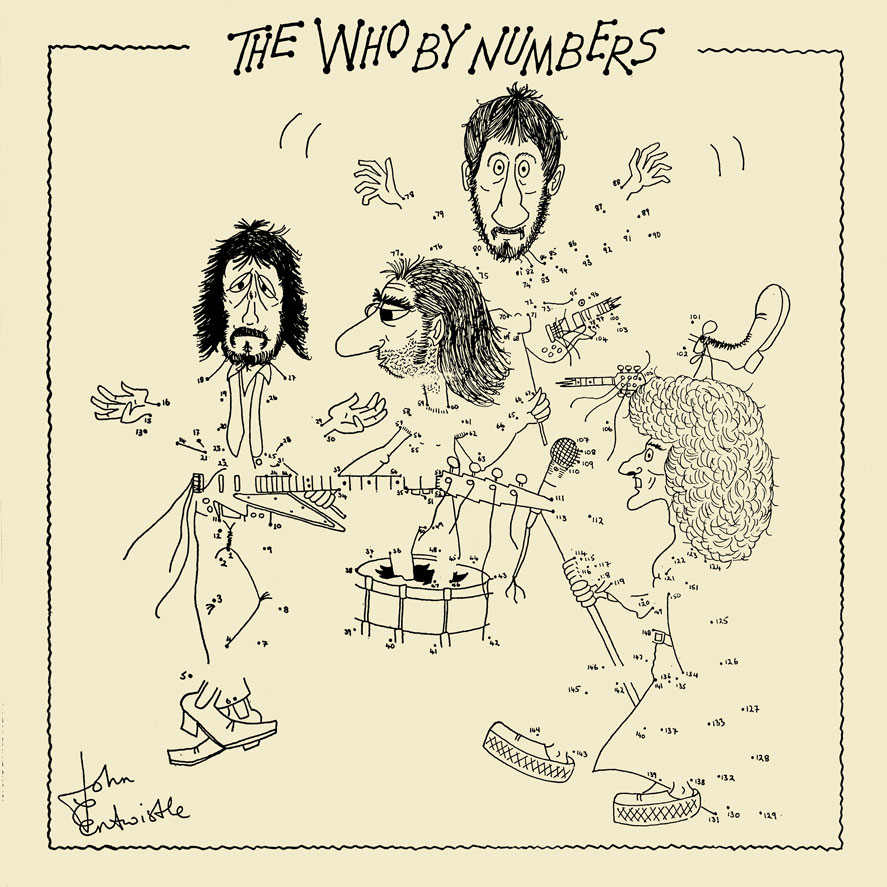
Released just over 45 years ago, The Who “By Numbers” has some of Pete Townshend’s most personal and saddest lyrics and is hence a passionate and emotional album with the help of Roger John and Keith. Their last classic album? maybe.

After releasing two of the greatest rock concept albums of all time in Tommy and Quadrophenia, the Who had nowhere to go but down, at least in terms of overweening ambition, anyway. The result released in 1975 The Who by Numbers, proved a critical and commercial triumph in the face of personal adversity.

At the time, the band were battling demons on two fronts. On one hand, they felt somewhat boxed in after setting the template for rock concept records. As singer Roger Daltrey complained, fans and critics expected the band’s albums to come with a certain amount of heft, to the point that they sometimes weren’t willing to give non-concept efforts their proper due. Grumbling that “nobody wanted to listen to what [else] we were doing” after Tommy came out, Daltrey argued  “Who’s Next” holds up much better, but nobody wanted to take it seriously because it was just nine songs.

Further complicating things was the band members’ increasingly critical view of where the Who stood — or should stand in a turbulent musical landscape that had grown to encompass styles that seemed to exist in contrast to the growing complexity and maturity of the band’s own work. For guitarist Pete Townshend, who wrote the bulk of the material, the question proved particularly vexing.

“Before the emergence of punk, the Who were the only band who actually sat round a table to decide ‘Should we go on or not?’ Would we be doing music a favour if we just f—ing stopped? We actually considered that,” Townshend told NME Magazine.

“Around the time of The Who by Numbers we used to have really quite heavy conversations about where music was going to go – particularly in this country – and whether we should be involved in it, and the problem with [drummer Keith Moon] living in America and living that Hollywood lifestyle and whether we should try and force him to come back to England … all those kind of things. Whether our music should change, whether we should let the Who tradition just bash on until it got really boring, whether we should try and force change by starting labels and working with other bands.”

As Who fans are well aware, the band opted to forge ahead with their seventh studio album, The Who by Numbers, which arrived in stores on October. 3rd, 1975 . It was nearly two years after Quadrophenia, and a relative eternity during the speedier release cycle that was the norm at the time. Realizing their rather chaotic state would make recording more of a slog than normal, they enlisted producer Glyn Johns to help wrangle the sessions into shape, and as the weeks dragged into months, Johns earned every penny of his paycheck even though the album’s aesthetics were less intricate and synthesizer-driven than the recordings that had preceded it.

“Glyn worked harder on The Who by Numbers than I’ve ever seen him. He had to, not because the tracks were weak or the music poor but because the group was so useless,” Townshend’s quoted as saying in Alan G. Parker and Steve Grantley’s The Who by Numbers. “We played cricket between takes or went to the pub. I personally had never done that before. I felt detached from my own songs, from the whole record. Recording the album seemed to take me nowhere. Roger was angry with the world at the time. Keith seemed as impetuous as ever, on the wagon one minute, off the next. [Bassist John Entwistle] was obviously gathering strength throughout the whole period; the great thing about it was he seemed to know we were going to need him more than ever before in the coming year.”

The end result, unsurprisingly, was a collection of moody, introspective, and fairly dark songs; although tracks like the opening cut “Slip Kid” and double entendre-laden “Squeeze Box” went down easy enough, The Who by Numbers is more strongly defined by self-critical Townshend compositions like “However Much I Booze” and “Dreaming from the Waist”; even the lighter-sounding “Blue, Red and Grey,” which found Townshend strumming a ukulele on top of a brass section overdubbed by Entwistle, was later described by Townshend in a Numbers reissue’s liner notes as “me wanting to kill myself.”

Between the subject matter and the rumors of band strife that pervaded the music press at the time, the popular opinion was that The Who by Numbers offered a sort of grim personal manifesto from Townshend as he approached middle age  and although he’s more or less confirmed that point of view a number of times over the years, he’s also cautioned that listeners shouldn’t try to read too much into the songs, insisting what he was really trying to do was put himself in his audience’s shoes.

“There are a couple of really politically incorrect lines on Quadrophenia, but I thought I could get away with it because I was writing for a character. But on By Numbers, everybody took everything really literally. I don’t know. It’s interesting,” Townshend . “I certainly didn’t feel a lack of friendship and I certainly didn’t feel suicidal. I think I may have been a bit angry occasionally. I think I need to go to the great journalistic psychiatrist and have it explained to me, why I was wrong and they were right.”

Perhaps more importantly, according to Townshend, Daltrey was actually more responsible for the overall theme of the album. “The songs are about being older, feeling lost, losing your way,” Townshend has said. “Changing fashions, being sentimental, looking at the sunrise. What’s that got to do with being a young man? You don’t start looking at the sunrise until you’re dying. But,” he added, “Roger picked those songs from my demos.”

The end result, pointed out Townshend, was an album of songs in which one artist interpreted the words of another  which were themselves interpretations of Townshend’s efforts to put music to what his audience was going through. “Roger’s an actor,” he argued. “I don’t think he realized that what he was doing all the time with my work was interpreting, acting and I couldn’t do that. I couldn’t be an actor and he could.”

Daltrey, for his part, still believes the album is more autobiographical than Townshend would perhaps like to admit. “Who by Numbers is very dark because Pete was going through some terrible agonies, but I didn’t realize this at the time,” he told Uncut. “We thought, if he wants space, we’ll give him some space – when what we should have done was been there saying, ‘You all right, Pete?’ But that’s just the way he was and still is. There’s a side to him that is like a stone wall and what he really wants you to do is knock down the f—ing wall and come through it, which takes a lot of effort all the time. I understand it now but I didn’t understand it then. So it led to this brooding, deep, introspective album. He was boozing a lot and I think he was having problems with his marriage, trying to balance that family life with rock’n’roll, ’cause they don’t balance. But I love that album.”

However you take the songs’ meaning, “The Who by Numbers” proved yet another hit for the Who, with “Squeeze Box” entering heavy rotation on both sides of the Atlantic while the album hit the Top 10 in the U.S. and U.K. on its way to RIAA certification for half a million in sales. And while Townshend may have sweated the songwriting during this period, other members of the band seemed perfectly content — including Entwistle, whose hand-drawn album art reflected the record’s scaled-down sensibilities.

“Squeeze Box” is a slang term for an accordion, but it is also slang for the vagina. The band just wanted to see if they could get away with singing about the joys of explicit sex.

In the liner notes to Pete Townshend’s compilation album Scoop, he wrote that he recorded the song for fun one day when he had bought himself an accordion. The accordion gave the song a polka-esque rhythm and the lyrics were “intended as a poorly aimed dirty joke.” Townshend had no thought of it ever becoming a hit.

The song is about an accordion (sort of), but there is hardly any of the instrument in the song. You can hear some in the section about 90 seconds in that goes, “squeeze me, come on and squeeze me,” but the subsequent instrumental section is mostly banjo. Pete Townshend played both instruments.

“The best we’ve done since the last one,” chuckled Entwistle when asked for his thoughts on The Who by Numbers in a 1976 interview with Sounds. “I like the cover. That’s pretty good.”
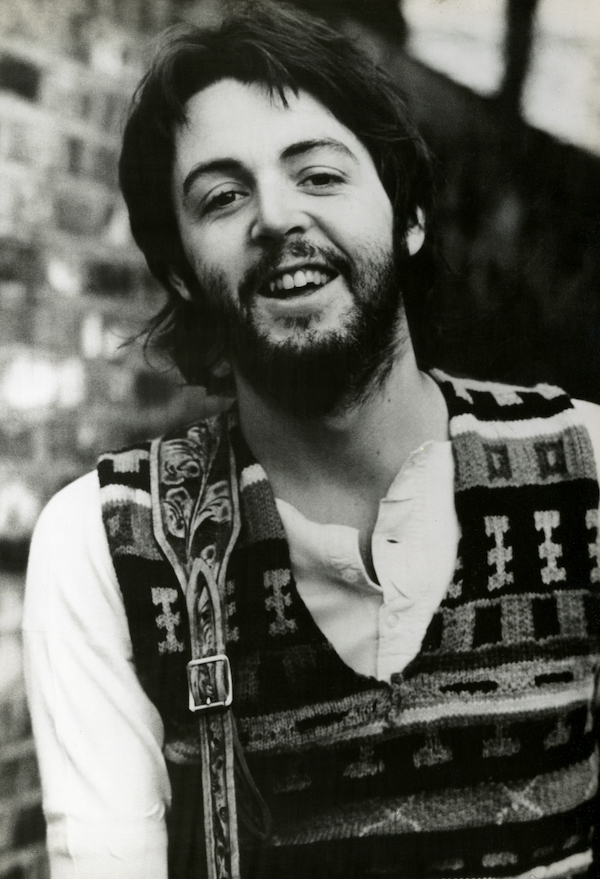
Photo of Paul in his London garden.

LIMITED EDITION 50th ANNIVERSARY HALF-SPEED-MASTERED VINYL RELEASED FOR RECORD STORE DAY 2020

In June, 2020 one of the greatest solo debuts in rock history, Paul McCartney’s McCartney, will receive a special 50th anniversary release in a limited edition half-speed mastered vinyl pressing for Record Store Day.

Originally released in April 1970, one month before The Beatles’ swansong ‘Let It Be’, McCartney  saw Paul getting back to basics. Writing every song and playing every instrument (with backing vocals from Linda McCartney), the eponymous album represented a creative rebirth, bursting with new ideas, experiments, playfulness and freedom. Sonically, McCartney’s bare-bones home recording aesthetic imbued the album with an authentic lo-fi spirit, a much sought after sound that continues to retain a contemporary edge 50 years on. In contrast to the professional difficulties that came with the demise of the world’s most iconic band,

Paul was personally enjoying the contentment of family life as a newly married father. In a Q&A released at the time, Paul described the theme and feel of the album as, “Home, family, love.”  This is obvious from the opening notes of Lovely Linda throughout the album, with tracks like ‘Every Night’ and ‘Man We Was Lonely’ musing on how much Paul’s life had improved—and nowhere more poignantly than on the tour de force ‘Maybe I’m Amazed’. Paul’s timeless tribute to Linda would be recognized as one of contemporary music’s great love songs, and remains a staple of Paul’s live set to this day, never failing to inspire tears of joy with its refrain of “Maybe I’m a man in the middle of something that he doesn’t really understand. Maybe I’m a man. Maybe you’re the only woman who can ever help me. Baby won’t you help me understand”.

Linda’s presence is also felt in the album’s iconic artwork: the front cover’s bowl of cherries photographed by her on holiday in Antigua, and the back cover’s portrait of Paul with daughter Mary as a baby, photographed on the family’s farm in Scotland where some of the album was also written. 50 years and counting, McCartney offers an incredible insight into the mind of one of the world’s greatest ever songwriters. The homespun spirit of the album and Paul’s taste for experimentation capture a unique moment in time: The very first steps of an unparalleled solo career that has seen Paul McCartney release decades worth of critically acclaimed commercial blockbuster albums including RAM, Band on the Run, Venus and Mars, Tug of War, Pipes of Peace, Flowers in the Dirt, Flaming Pie, Memory Almost Full, and most recently 2018’s-charting Egypt Station.

The 50th anniversary Record Store Day limited edition of McCartney was pressed from a master cut by Miles Showell at half speed using the original 1970 master tapes at Abbey Road Studios. It was made as a vinyl specific transfer in high resolution and without digital peak limiting for the best possible reproduction.

McCartney Tracklisting:

Side one:
The Lovely Linda
That Would Be Something
Valentine Day
Every Night
Hot as Sun/Glasses
Junk
Man We Was Lonely

Side two:
Oo You
Momma Miss America
Teddy Boy
Singalong Junk
Maybe I’m Amazed
Kreen-Akrore

The new film features extensive, never-before-seen footage of the legendary band’s “Let It Be” recording sessions along with the entire iconic rooftop concert, fully restored

The Walt Disney Studios has acquired the worldwide distribution rights to acclaimed filmmaker Peter Jackson’s previously announced Beatles documentary. The film will showcase the warmth, camaraderie and humor of the making of the legendary band’s studio album, “Let It Be,” and their final live concert as a group, the iconic rooftop performance on London’s Savile Row. “The Beatles: Get Back” will be released by The Walt Disney Studios in the United States and Canada on September 4th, 2020, with additional details and dates for the film’s global release to follow. The announcement was made earlier today by Robert A. Iger, Executive Chairman, The Walt Disney Company, at Disney’s annual meeting of shareholders.

“No band has had the kind of impact on the world that The Beatles have had, and ‘The Beatles: Get Back’ is a front-row seat to the inner workings of these genius creators at a seminal moment in music history, with spectacularly restored footage that looks like it was shot yesterday,” says Iger of the announcement. “I’m a huge fan myself, so I could not be happier that Disney is able to share Peter Jackson’s stunning documentary with global audiences in September.”

“The Beatles: Get Back,” presented by The Walt Disney Studios in association with Apple Corps Ltd. and WingNut Films Productions Ltd., is an exciting new collaboration between The Beatles, the most influential band of all time, and three-time Oscar®-winning filmmaker Peter Jackson (“The Lord of the Rings” trilogy). Compiled from over 55 hours of unseen footage, filmed by Michael Lindsay-Hogg in 1969, and 140 hours of mostly unheard audio recordings from the “Let It Be” album sessions, “The Beatles: Get Back” is directed by Jackson and produced by Jackson, Clare Olssen (“They Shall Not Grow Old”) and Jonathan Clyde, with Ken Kamins and Apple Corps’ Jeff Jones serving as executive producers. The music in the film will be mixed by Giles Martin and Sam Okell at Abbey Road Studios in London. With this pristine restoration behind it, “The Beatles: Get Back” will create a vivid, joyful and immersive experience for audiences.

Peter Jackson says, “Working on this project has been a joyous discovery. I’ve been privileged to be a fly on the wall while the greatest band of all time works, plays and creates masterpieces. I’m thrilled that Disney have stepped up as our distributor. There’s no one better to have our movie seen by the greatest number of people.”

Paul McCartney says, “I am really happy that Peter has delved into our archives to make a film that shows the truth about The Beatles recording together. The friendship and love between us comes over and reminds me of what a crazily beautiful time we had.”

Ringo Starr says, “I’m really looking forward to this film. Peter is great and it was so cool looking at all this footage. There was hours and hours of us just laughing and playing music, not at all like the version that came out. There was a lot of joy and I think Peter will show that. I think this version will be a lot more peace and loving, like we really were.”

“The Beatles: Get Back” is also being made with the enthusiastic support of Yoko Ono Lennon and Olivia Harrison.

Although the original “Let It Be” film, directed by Michael Lindsay-Hogg, and the accompanying album were filmed and recorded in January 1969, they were not released until May 1970, three weeks after The Beatles had officially broken up. The response to the film at the time by audiences and critics alike was strongly associated with that announcement. During the 15-month gap between the filming of “Let It Be” and its launch, The Beatles recorded and released their final studio album, “Abbey Road,” which came out in September 1969.

Shot on 16mm and blown up to 35mm, the 80-minute “Let It Be” movie was built around the three weeks of filming, including an edited version of the rooftop concert. The GRAMMY®-winning “Let It Be” album topped the charts in the U.S. and the U.K.

The new documentary brings to light much more of the band’s intimate recording sessions for “Let It Be” and their entire 42-minute performance on the rooftop of Apple’s Savile Row London office. While there is no shortage of material of The Beatles’ extensive touring earlier in their careers, “The Beatles: Get Back” features the only notable footage of the band at work in the studio, capturing John Lennon, Paul McCartney, George Harrison and Ringo Starr as they create their now-classic songs from scratch, laughing, bantering and playing to the camera.

Shot on January 30th, 1969, The Beatles’ surprise rooftop concert marked the band’s first live performance in over two years and their final live set together. The footage captures interactions between the band members, reactions from fans and employees from nearby businesses, and comical attempts to stop the concert by two young London policemen responding to noise complaints.

The fully restored version of the original “Let It Be” film will be made available at a later date.

Image may contain: 4 people

indie five-piece Plastic Mermaids have shared a poignant new acoustic take on ‘Milk’.

The Isle of Wight band are toasting the first anniversary of their debut album, and are currently prepping a new seven inch single. Opting to re-work two favourite cuts from the LP, Plastic Mermaids utilised a Tascam 388 for these sparse home-made sketches.

Out shortly, the single will be available digitally as well as on seven inch picture disc vinyl.

We’re able to share a beautifully stripped back version of ‘Milk’, while the visuals are drapped in light.

“Milk” (Acoustic) · Plastic Mermaids  on Sunday Best Recordings Released on: 2020-03-31

Image may contain: one or more people
Here are a couple tracks we recorded when we first formed as a band. When we recorded these, we hadn’t played a show yet, and we hadn’t even found a bass player. My grandma would pick me and Henri up from school every day and we’d practice and write songs in their garage. Once we got enough songs, we wanted to record them immediately. So we made some demos and sent them to Steven McDonald in hopes that he’d be interested in producing us. Steven played in the band Redd Kross and now plays with the Melvins, and we were huge fans so we were really nervous about if he would be down to record us or not. Turns out he was, and we got to record in his studio using Melvins gear. It was probably the greatest first experience we could have asked for. Since we hadn’t found Tim to be our bass player yet, Steven played bass on these tracks. In the end, we only released 2 of the songs for our first single with Rough Trade, and saved the rest for our first album. I’m so glad to finally release these versions of the songs, they fully encapsulate that magical feeling you get when you know you’ve created something so special. Something that only you could create and no one else.
released March 23rd, 2020

We couldn’t be more proud to share Deeper‘s sophomore album “Auto-Pain” out today on Fire Talk. Truly love these boys and hope you’ll take some time today to check out the record. The press has been all over it, if you want to dig in more read this excellent feature via Stereogum .

Auto-Pain represents the constant wave of depression felt by many in everyday life. Stemmed from Aldous Huxley’s ‘Brave New World’, Auto-Pain is a concept meant to be an inverse to soma, a pill in the book which makes everything numb. The idea of auto-pain is to epitomize the desire to return to a connection with thoughts and clarity, which comes at the expense of feeling everything simultaneously. The album artwork features the now-demolished Prentice Women’s Hospital in Chicago capturing the band’s rounded-off brutalism, and the album title appears in Urdu, a nod to drummer Shiraz Bhatti’s Pakistani heritage. The record was recorded and mixed by Chicago scene luminary Dave Vetraino (Lala Lala, Dehd) and mastered at Chicago Mastering by Greg Obis (Ne-Hi, Melkbelly).

A portion of the proceeds from Auto-Pain will be donated to Hope For The Day an organization that actively works to break the silence surrounding mental health

From Deeper’s Sophomore album “Auto-Pain” out March 27th on Fire Talk Records.

Montreal trio Braids are releasing a new album, “Shadow Offering”, on April 24th via Secret City, but this week they pushed it back to June 19 due to COVID-19. On Thursday they also shared another new song from it, the nine-minute “Snow Angel,” via a Kevan Funk-directed video for the intense track. It’s an epic song that takes on social and political issues that are all the more relevant in this current crisis. “Should I even have a child at all?/This world is full up,” questions singer Raphaelle Standell-Preston in the lyrics. “I want to be a mother/But I shouldn’t bring in another.” It takes on global warming and the role all of us play in destroying the planet. If you want to get lost in the madness of the current moment, this is the song to turn to.

Standell-Preston had this to say about the song in a press release: “‘Snow Angel’ was written in the immediate wake of the 2016 US election, as our collective conscience took a sharp inhale. It’s a diary entry of sorts—a snapshot of the mind grappling with our era’s endless barrage of content and destruction, continents away and close to home. *This* moment, with our world in the midst of a pandemic, is admittedly a new context. But I can’t help but sense the song speaks to feelings many of us are experiencing—uncertainty, angst, and a desperate desire to make sense of it all.

“For me, it was deeply therapeutic to write and sing this song; saying things out loud can help us to not feel so alone, can help validate our natural fears about the future of our world, and can bring to light some of the hard questions that many of us are asking ourselves. I believe that art can change our relationship to fear. We hope this song can offer you a moment of catharsis and relief, in the same way writing and performing it has for us.”

Shadow Offering includes “Eclipse (Ashley),” a new song Braids shared last December. When the album was announced the band shared another song from it, “Young Buck,” via a video for the track. Shadow Offering was produced by former Death Cab for Cutie guitarist/producer Chris Walla.

Summing up the album, Standell-Preston had this to say in a previous press release: “There’s more hopefulness in this record than anything else I’ve written. I think the songs are more human, more tangible, more honest.”

This is among my favourite song of 2020 here. “Snow Angel” by Braids is an outstanding masterpiece, not just due to the fact that it’s over nine minutes long (which marks a new record in my personal ‘song of the year’ history). The Canadian indie art rock band has been on my radar for a few years now but never fully clicked with me. But this song – wow. It already got this great driving notion at the beginning and leading lady Raphaelle Standell-Preston really carries the song. But about four minutes into the track she ignites a spoken-word-reflection on her life on this planet and it when I first heard that part I think I heavily teared up because that moment sums up all the feelings many people in my generation have these days on our planet, the corrupt political system, environmental apocalypse, depression, capitalism, media consumption, ultimately resulting in Standell-Preston asking whether she should actually bring a child into this world. You really feel the desperation in those moments before the track is off to a furious finale, only to break down again. This is triumphant musical story telling, a song that needs a moment but one that perfectly captures the overall feeling of 2020.

Braids’ new album “Shadow Offering”

Image may contain: 1 person, sky and outdoor

North London post-punkers Sorry released their debut album, 925, today via Domino . On Monday they shared one last pre-release song from it, “As the Sun Sets,” via a video for the track which anchors the centre of the album. The band’s Asha Lorenz directed the video.

925includes “Right Round the Clock,” a song they shared in October as well as “Rock ‘n’ Roll Star,” another new song they shared in November . When the album was announced Sorry shared another song from it, “More,” ,Then they shared another song from it, “Snakes,” via a video for the track that featured a giant…snake.

Sorry is led by childhood friends Asha Lorenz and Louis O’Bryen and the lineup is rounded out by Lincoln Barrett on drums and bassist Campbell Baum. Previously we also posted the band’s “Jealous Guy” (not the John Lennon cover), but isn’t featured on the debut album.

James Dring (Gorillaz, Jamie T, Nilüfer Yanya) co-produced 925with the band. Lorenz directed the “More” video alongside frequent collaborator Jasper Cable-Alexander.

When M.C. Taylor moved to North Carolina more than a dozen years ago now, Hiss Golden Messenger was his private enterprise, an outlet for the curious songs he composed quietly at his kitchen table in the country. But soon after Taylor and his budding family moved to a modest home nestled back from busy roads in the gentle Durham hills, he began building a network of local aces, all sympathetic to songs that documented his quest to be a better human being. Hiss Golden Messenger became and remain a community endeavor, an indelible part of North Carolina’s historic and contemporary musical fabric. The 15 songs of Forward, Children: A fundraiser for Durham Public Schools students are an instant illustration of that decade-long arc, a one-night snapshot of Hiss Golden Messenger’s metamorphosis from solitary songwriter fare to full-band jubilee.

Just days into 2020, the quintet—well-rested from a holiday respite after a busy 2019 that included some 60 shows across the United States and the release of the gripping Terms of Surrender—loaded into their home region’s legendary hub, Cat’s Cradle, for a two-night stand. For nearly 90 minutes, they smoke, sorting through the greatest hits of the Hiss Golden Messenger songbook with the intuition of a band that accepts these tunes as gospel but plays them with the verve of five folks delighted to be back on the same stage.

Lifted by trombone and organ, “Highland Grace” sounds here like a prayer for the salvation of love. Buttressed by bounding piano, “Saturday’s Song” feels like a relief anthem for these fraught times, a beaming reminder of celebration and communion. Drifting and then roaring, “When the Wall Comes Down” is an urgent reminder that catastrophe and humanity know no arbitrary borders, that we are all forever bound to one another. During “Jesus Shot Me in the Head,” they unravel into a cleansing 12-minute upheaval, the sound of self-doubt looking for the relief of resolution—and finding it, at last.

http://

The son of two teachers, Taylor taught for a spell at the University of North Carolina-Chapel Hill, arguably the nation’s first public university, after finishing his graduate degree there, joining one of the country’s proudest educational lineages. His wife, Abby, is now an ESL instructor in Durham, and his children, Elijah and Ione, are in the fifth and first grades there, respectively. In mid-March, due to the COVID-19 pandemic, Durham Public Schools closed like most others nationwide, at least through mid-May. The necessary move means that many children throughout the school system don’t know where they’ll get their next meal, a profound failure of our social safety network but a profound opportunity for our collective help. All profits from Forward, Children will benefit the Durham Public Schools Foundation. “It’s my duty as a dad of students and the spouse of a teacher,” Taylor says, “to give what I can.”

Forward, Children is not just the sound of a great band at work, which it surely is. And it is not just the sound of the community that helped create Hiss Golden Messenger coming together to hear what it’s made in a homecoming of hundreds. It is, all told, the sound of communion, blessedly preserved to tape for times like these, when we need any communion we can get.

released March 27th, 2020

See the source image

On this day (March. 28th) in 1967: Van Morrison recorded the track “Brown Eyed Girl” during a two-day session at A&R Studios in New York City; written by Van, it was one of eight songs recorded at the time for his new record label, Bang Records; produced by Bang founder Bert Berns in 22 takes, the finished version was different than what Van had envisioned; “The record came out different,” he later explained…”This fellow Bert, he made it the way he wanted it & I accepted the fact that he was producing it, so I just let him do it”…(this fab clip from 1973, likely more how Van heard it…). The song spent a total of sixteen weeks on the chart. It featured the Sweet Inspirations singing back-up vocals and is considered to be Van Morrison’s signature song. “Brown Eyed Girl” has remained a staple on classic rock radio, and has been covered by hundreds of bands over the decades.

Because of a contract he signed with Bang Records without legal advice, Morrison states that he has never received any royalties for writing or recording this song. Morrison vented frustration about this unjust contract in his sarcastic nonsense song “The Big Royalty Check”. Morrison has stated that “Brown Eyed Girl” is not among his favourite songs, remarking “it’s not one of my best. I mean I’ve got about 300 songs that I think are better.

After finishing his contract with “Decca Records” and the mid-1966 break-up of his band, Them , Morrison returned to Belfast seeking a new recording company. When he received a phone call from Bert Berns owner of Bang Records who had produced a number of recordings with Them, he flew to New York City and hastily signed a contract (which biographer Clinton Heylin says probably still gives him sleepless nights). During a two-day recording session starting 28th March 1967, he recorded eight songs intended to be used as four singles. The recording session took place at A & R Studios and “Brown Eyed Girl” was captured on the 22nd take on the first day. Of the musicians Berns had assembled, there were three guitarists Eric Gale Hugh McCracken and Al Gorgoni plus bassist Russ Savakus pianist Paul Griffin and drummer Gary Chester It was released as a single in mid-June 1967.

Originally titled “Brown-Skinned Girl”,Morrison changed it to “Brown Eyed Girl” when he recorded it. Morrison remarked on the title change: “That was just a mistake. It was a kind of Jamaican song. Calypso. It just slipped my mind [that] I changed the title. After we’d recorded it, I looked at the tape box and didn’t even notice that I’d changed the title. I looked at the box where I’d lain it down with my guitar and it said ‘Brown Eyed Girl’ on the tape box. It’s just one of those things that happen.

The song’s nostalgic lyrics about a former love were considered too suggestive at the time to be played on many radio stations. A radio-edit of the song was released which removed the lyrics “making love in the green grass”, replacing them with “laughin’ and a-runnin’, hey hey” from a previous verse. This edited version appears on some copies of the compilation album The Best of Van Morrison. However, the remastered album seems to have the bowdlerised lyrics in the packaging but the original “racy” lyrics on the disc.

“Brown Eyed Girl” joined an elite group of songs as it was honoured for having 10 million US radio air plays