NPR continued their at-home version of their Tiny Desk Concerts series this week with a special performance by Michael McDonald.
After five-time Grammy winner Michael McDonald finished “Matters Of The Heart,” the opening song in his Tiny Desk (home) concert, there was a brief pause. The bewilderment on his face was unmistakable. It’s a look I believe we all can relate to in this moment of uncertainty. He sat in his home studio, complete with an illustration of the Tiny Desk drawn by Mr. McDonald himself. That pause, usually reserved for the anticipated applause, was replaced by complete silence.
After offering his solo cut “Matters of the Heart,” McDonald dives into two Doobie Brothers classics, “Minute By Minute” and “What A Fool Believes.”
After 25 years, McDonald reunited with the Doobies in November 2019, announcing a full summer tour to celebrate the band’s 50th anniversary.
Damien Jurado recently announced details of his new album What’s New, Tomboy? which sees him stepping back into a more fleshed out sound with his voice and rhythm section at the fore. it is a collection of songs that exude the inviting warmth of a lone porch light gleaming amidst the disorienting darkness. His new song “Alice Hyatt” the sparse instrumental elements add a deeper poignancy to Jurado’s lyrics. The new song could be read as a dour one, eliciting a feeling of misinterpretation, missing something, or someone. That is until the last few moments before the final organ line chimes in and Damien cuts the melancholy by singing, “I was busy, being myself.”
Alice Hyatt is from the upcoming album What’s New, Tomboy?
On latest single Alice Hyatt, the sparse instrumental elements add a deeper poignancy to Jurado’s lyrics. The song could be read as a dour one, eliciting a feeling of misinterpretation, missing something, or someone. That is until the last few moments before the final organ line chimes in and he cuts the melancholy by singing “I was busy, being myself”.
Listen to it below, and also album opener, the beautiful Birds Tricked Into The Trees
The first single from ‘What’s New, Tomboy?’, out now from Mama Bird Recording Co.
We recorded this song, “Stop Pretending”, this week, as we were continuing to stay at home. The song was written using a collaboration exercise that we had given to our fans as an outlet to create and find connection in a time of duress & isolation (we called it the “Stay Home Stems” series) —and it ended up also working for us— this song was written, recorded, mixed and mastered in two days at our house, & this what we have to show for it.
If often write apocalyptic songs as way to enter a new world that juxtaposes despair with hope.. I hope it can bring a little bit of light in a dark season.
In 2011, Kevin Devine & The Goddamn Band recorded a cover of the entire Nirvana album, “Nevermind”. Assuming you’ve heard of that one, I’ll just let you know that this is the first vinyl pressing of it and it’s limited to 500 units on regular ol’ black vinyl. There’s a picture to the left (or above, if you’re on mobile).
From Kevin: “It’s basically impossible for me to talk about Nevermind objectively. I recognize its canonical place as a cultural artifact, and that there is nothing unique about being one of the tens of millions of people for whom that album was literally life-changing.That doesn’t make it any less true. I played it for my parents, and I play it for my daughter. It’s unquestionably the most important music I’ve ever heard.
It engaged and clarified murky looming interior early adolescent messinesses, introduced me to entire aesthetics and subcultures and sociopolitical sensibilities and non-traditional iterations of masculinity to which I am indebted to this day, encouraged me to write songs and yell and sing and play guitar and worry less about expertise and more about expression, and helped define whole friendships, installing in us a language we still speak fluently.
It made things seem possible. It was a magic trick, a ubiquity that felt like an insurrection, something that was everyone’s and yours, too. We recorded this because we wouldn’t have done any of what we’ve done – or even known each other – without this record.
It felt like a fitting tribute to its spirit to knock it out in a basement over a weekend. That’s how I learned it in the first place, 28 years ago.
releases on November 22nd, 2019. It’ll be on digital platforms that day. Records will start shipping immediately and if you buy from our webstore we’ll also email you a link to download the album immediately on that day.
San Francisco’s own It’s a Beautiful Day’s self-titled debut album in 1969 included its masterpiece “White Bird,” (written by David LaFlamme with his wife Linda) with the sublime vocal combination of LaFlamme and Pattie Santos. The song is emblematic of the era with it’s repeated refrain “White bird must fly/Or she will die.” Or as Jimi Hendrix sang: “Freedom, that’s what I want now/Freedom, that’s what I need now/Freedom to live/Freedom so I can give.” Or even earlier, Elvis put it very simply: “I want to be free/Like a bird in a tree.” It’s a Beautiful Day was active for seven years initially and enjoyed five hit albums, yet the band never attained the popularity of other San Francisco groups. Unfortunately it came under the management of Matthew Katz for the first few years who most people know hindered the career of Moby Grape. The band nearly made an appearance at Woodstock, but an unlucky flip of a coin to decide which of two groups got an invitation resulted in Santana making the trip instead. Nevertheless It’s a Beautiful Day is beloved in the Bay Area for “White Bird,” and their unique meld of many styles: Rock, Jazz, Classical, and Folk.
David and Linda wrote the song in Seattle, where they were living. Said David: “The song describes the picture Linda and I saw as we looked out this little window in this attic. We had a little Wurlitzer portable piano sitting right in the well of this window, and I’d sit and work on songs. When you hear lines like, ‘the leaves blow across the long black road to the darkened sky and its rage,’ it’s describing what I was seeing out the window. Where the ‘white bird’ thing came from: We were like caged birds in that attic. We had no money, no transportation, the weather was miserable. We were just barely getting by on a very small food allowance provided to us. It was quite an experience, but it was very creative in a way.”
David LaFlamme, was a former soloist with the Utah Symphony Orchestra, had previously been in the band Orkustra, and unusually, played a five-string violin. The other members were LindaLaFlamme (keyboards), Pattie Santos (vocals), Hal Wagenet (guitar), Mitchell Holman (bass) and Val Fuentes (drums). Although they were one of the earliest and most important San Francisco bands to emerge from 1967’s social phenomenon Summer of Love, the band never quite achieved the success of contemporaries such as Grateful Dead, Jefferson Airplane and Santana, with whom they had connections. The band created a unique blend of rock, jazz, folk, classical
Pattie Santos, the lead singer for It’s A Beautiful Day, died December 14th, 1989 in an automobile accident on Hwy. 128 in Mendocino County, California, White Bird? was the biggest hit from the groups first album, It’s A Beautiful Day, released in 1969. The album cover became famous. It depicted a bonneted girl in a long dress standing on a hill top and gazing into the blue sky with white clouds all around.
On their 2020 follow-up Celebrated By Strangers, the four-piece, led by singer, guitarist and producer Chris McCrory, are firing on all cylinders again, and ready to remind you that guitar solos still rule—if they’re as interesting and well-executed as these, that is. While their debut album delivered its fair share of peculiarities, Celebrated By Strangers is peppered with even more moments of unexpected zest.
It’s not very zeitgeisty for bands to unironically shred these days. It’s a welcome shakeup when bands revolt against the simplistic, reverb-drenched plucks that characterize much of the popular indie world—as long as they’re not swapping them for something much worse, like insufferable classic rock revivalism or the radio rock wasteland of “whoa-oh-oh’s,” embodied by bands like Imagine Dragons or Bastille. Glasgow’s Catholic Action are a case study in how to subvert those conventions, while simultaneously making something seemingly fresh. They stitch together pop, punk, indie, glam and garage rock, always with bold guitars at the center, but most crucially, there’s a contagious bounciness to their music. The four-piece band released their debut album, In Memory Of, back in 2017, and it was a frequently amusing, occasionally dark collection of hopped-up pop songs with knobby guitar tones. It was also one of those records that made you remember what it was like to actually hear irresistibly hummable basslines in guitar songs that are decidedly not funky indie-pop or stark post-punk.
On their 2020 follow-up “Celebrated By Strangers”, the four-piece led by singer, guitarist and producer Chris McCrory, are firing on all cylinders again, ready to remind you that guitar solos still rule—if they’re as interesting and well-executed as these, that is. While their debut album delivered its fair share of peculiarities, Celebrated By Strangers is peppered with even more moments of unexpected zest.
In March 2020, the music world mourned the loss of Psychic Ills founder, frontman, and songwriter Tres Warren. At the time of his death, Warren was overflowing with creativity, actively writing new songs, and excited about the next phase of the band. He was preparing to go into the studio alongside longtime collaborator Elizabeth Hart and their bandmates to record the sixth PsychicIlls full-length, which was supposed to be out this fall. While those songs were tragically not recorded, the band did record a pair of covers for a new 7″. “Never Learn Not to Love” and “Cease to Exist” are the first new Psychic Ills songs to be released since 2016’s Inner Journey Out, and while they no longer precede a new album as originally intended, they stand as a celebration of Tres Warren’s beautiful musical spirit.
Originally appearing on The Beach Boys’ 1969 album 20/20, credited to Dennis Wilson and with changes to the arrangement and lyrics, Never Learn Not To Love was written as Cease To Exist by a then unknown songwriter named Charles Manson. His version would eventually appear on his album Lie: The Love and Terror Cult, released in 1970, by which time he was already incarcerated for the events that he is most commonly known for today.
How a version of that song came to find its way onto The Beach Boys album is the stuff of legend, and Charles Manson’s disappointment with the lyrical and structural changes is well documented. The Beach Boys simultaneous adherence to and departure from the original has long been a point of fascination for people, but Psychic Ills frontman, Tres Warren, says it’s something less tangible that has kept him coming back to both songs through the years. “The soulfulness is what has always spoken to me in those songs. I gravitate towards that(soul) in music, and both of these songs have it in spades. I almost shed a tear every time I hear Dennis Wilson sing.”
Psychic Ills’ version of “Never Learn Not To Love” echoes the arrangement and feel of The Beach Boys recording, but the female gospel backing singers make it more reminiscent of a Phil Spector production than that of Brian Wilson. “We wanted to honor the originals, but we didn’t want to cover them note for note.” Warren says, adding “We wanted to bring them to where we are.” Which seems like an apt statement as Never Learn Not To Love is a dense electrified rock and roll song reminiscent of recent Psychic Ills songs like it.
On the flip side of the record, “Cease To Exist” couldn’t be sonically more different. Where Never Learn Not To Love has a fullness from an instrumentation and sound quality standpoint, Cease To Exist thrives off the intimacy of the performance and transparency of the documentation, bringing the singing and playing into full focus, in a similar manner to the Manson original. There’s no question that this was recorded in very few takes, and that by-the-seat-of-the-pants feeling is further reinforced by the unedited studio talkback left in at the beginning. “Ivi is it rolling?” Warren asks engineer Iván Díaz Mathé as he begins the song, the band naturally falling in behind him reminiscent of jazz players adhering to both their own cosmic cues and those of the collective whole.
“Never Learn Not To Love/Cease To Exist” is an interesting experiment, successful in both concept and execution, and a typically non-traditional way to announce that Psychic Ills, have a new record coming soon. They continue to be a journeyman band, in an era where few exist, and a band you can count on to continue to expand on what they do as they have with every record, but never at the expense of what makes them Psychic Ills…their feel. They’re still weary and wanting, still searching for something.
One of the world’s most commercially successful and acclaimed artist/bands in the history of popular music, Steve Miller was a mainstay of the San Francisco music scene that upended American culture in the late ‘60s. The Steve Miller Band released two LPs on Capitol Records in 1968: Children of the Future, and Sailor, which included “Living In The USA,” which became a staple on the new rock radio format. Next came Brave New World, the band’s third album including the hit “Space Cowboy,” and “My Dark Hour,” which Miller recorded in London with fellow label-mate, Paul McCartney, who is credited as Paul Ramon.
After the band’s next few albums, Your Saving Grace (1969), Rock Love (1971), Recall The Beginning (1972), and Number 5 (1970), Miller made some changes to the band, went to Los Angeles and produced his own record in 19 days. That album was The Joker. The title track became a Number One worldwide smash hit. Miller had crafted a brand of pure pop that was polished, exciting and irresistible that dominated radio in a way that few artists have ever managed. His next two albums, Fly Like an Eagle (1976) and Book of Dreams (1977), both went multiplatinum, and the hits they generated are among the most recognizable songs in pop music history. Hit followed hit in what seemed like an endless flow: “Take The Money And Run,” “Rock’n Me,”“Fly Like An Eagle,” “Jet Airliner,” “Jungle Love,” and “Swingtown,” to name a few. In 1978, Capitol released Greatest Hits 1974–78, which has sold more than 17 million copies worldwide. Miller’s had a worldwide hit with “Abracadabra,” the title track of his 1982 album and in 1986, a #1 Billboard Rock Album Track with “I Want To Make The World Turn Around.” To this day, his songs are instantly recognizable when they come on the radio. Their hooks are the very definition of indelible.
Steve Miller’s Ultimate Hits offering was the initial project that marked the start of a new Steve Miller Band licensing deal with Capitol Records/UMe and this continues with the Vinyl Box Set Volume 1 (1968-1976), a set that brings together the group’s first nine studio albums in a 9LP vinyl box.
It has been fifty years since the first two Capitol Records albums (Children of the Future and Sailor) were issued in 1968 and this new set features newly remastered audio (by Steve Miller and Kent Hertz)
As well as those two records, this new set features 1969’s Brave New World (which features Space Cowboy and the Macca-assisted My Dark Hour), Your Saving Grace(1969), Number 5 (1970), Rock Love (1971), Recall The Beginning… (1972), and The Joker (1973). The latter’s success paved the way for 1976’s Fly Like An Eagle and Book of Dreams from ’77.
Vinyl Box Set Volume 1 (1968-1976) will be released on May 2018. The albums are also available individually (not everything is listed, yet) and there are some limited coloured vinyl pressings available at certain retailers (the box is only black vinyl).
When Steve Miller signed a licensing deal with Capitol last year, it was stated that Capitol would have unlimited access to Miller’s personal archive of audio, video & memorabilia, and the contract seemed to get off to a good start with the 2-CD set “Ultimate Hits”, whose previously unreleased live and studio tracks seemed to be a preview of further archival projects
Some people call him the Space Cowboy. Some call him the Gangster of Love.
CHILDREN OF THE FUTURE
In February 1968, while in England, the band recorded their debut album, Children of the Future, at Olympic studios with Glyn Johns as engineer/producer. At this point the Steve Millerband is a democracy of sorts with Jim Peterman’s atmospheric keyboards underpinning Tim Davis’s drums and vocals and Lonnie Turner’s super funky bass guitar. The SMB took a psych rock blueprint and ran riot on the title track, ‘The Beauty of Time is That’s Snowing (Psychedelic B.B.)’ and the trippy ‘In My First Mind’. However their R&B roots also shine through on Scaggs’ moody ballad ‘Baby’s Calling’ Me Home’ and Buster Brown’s rolling ‘Fanny Mae’. As debuts go this is immaculate and fully deserves reappraisal. It’s a five star wonder.
Fans of “Jet Airliner,” “Take the Money and Run,” and “Fly Like an Eagle” wouldn’t recognize this incarnation of the Steve Miller Band. Five years before “The Joker” topped the charts and the group became one of the Seventies’ biggest hits machines, the Steve Miller Band was just another psychedelic band in San Francisco during the Summer of Love. On their debut album, Miller featured guitarist Boz Scaggs and keyboardist Jim Peterman. By 1969, those two were out of the group and Steve Miller Band adopted a much more pop-rock sound. Children of the Future showcased how infectious psychedelic rock could be in the hands of a real songwriter.
Steve Miller Band has, for a number of different reasons, done a superb job on their first album. It ranks with Moby Grape’s first album in terms of economy and with Sgt. Pepper in terms of taste… One would not characterize the record as being “far out” or revolutionary, but rather as being excellent. many of the songs had been written earlier when Miller was working as a janitor at a Texas music studio. “Baby’s Callin’ Me Home” was written by band member Boz Scaggs who later rose to considerable global fame in his own right.
SAILOR
The second album Sailor appeared in October 1968 successes included the single “Living in the USA.” may be even better. It’s certainly a regular entry in most discerning critics Best 100 Albums of all time lists. Sticking with Johns but moving to Burbank to record Miller now brings in a battery of synth effects on ‘Song for Our Ancestors’ – whale noises from the deep included – and also introduces one of his soon to become familiar alter egos in the shape of the irresistible ‘Gangster of Love’. The album is notable for other items like ‘Living in the USA’, which would eventually become a hit in its own right and Scaggs’ rock soul brother vocals on ‘Overdrive’ and ‘Dime-a-Dance Romance’. The albums Brave New World and Your Saving Grace did the trick again in 1969 while Number 5 (1970) took a side trip to Nashville to team the band with country luminaries Charlie McCoy and Buddy Spicher.
The band’s first album, Children of the Future, was somewhat disjointed. While it features some good tracks, it wasn’t until their second album, Sailor, that everything started to come together. “Quicksilver Girl” is a beautiful song with some haunting vocals and dreamlike guitars that weave in and out of each other in fine acidic fashion without ever being swallowed up by gimmicks of the era. Miller seems pretty conscious about keeping his feet on, or at least near, the ground.
Even though it never became a hit single, “Living in the U.S.A.” was all over FM radio back in the day and served as many fans’ introduction to Miller. It’s one of the many great tracks on the band’s 1968 sophomore album, Sailor, and features Miller on lead vocals with harmonies by band member Boz Scaggs, who would go on to bigger things as a solo artist around the same Miller finally broke through in the mainstream in the mid ’70s.
BRAVE NEW WORLD
Brave New World is the third album by Steve Miller Band, released in 1969. It is the band’s first album following the departure of founding members Boz Scaggs and Jim Peterman, with Ben Sidran replacing Peterman on keyboards.
featured the songs “Space Cowboy” and “My Dark Hour”. A certain “Paul Ramon” (alias Paul McCartney) played drums, bass and sang backing vocals. “Space Cowboy” uses the same primary guitar riff as the Beatles‘ song “Lady Madonna,” owing perhaps to McCartney’s involvement
By the time of their third album, 1969’s Brave New World, Miller and band were sharpening their focus and style. That’s no more evident than it is on “Space Cowboy,” one of the LP’s key tracks. Even though it wasn’t released as a single, it became a favorite on underground and FM radio. The song, co-written by Miller and keyboardist BenSidran, features distinct harmonies that would become a Miller trademark. He would later reference the song on his 1973 hit “The Joker.”
The title cut from 1969’s Brave New World is a psychedelic-shaded tour de force. “We’re traveling fast from our dream of the past to the brave new world where nothing will last that comes from the past,” Miller sings in the song’s opening verse. It features a fairly straightforward blues groove, but it’s vividly painted in technicolor. If you’re not familiar with Miller’s work before the familiar chart hits, this is a good place to start.
YOUR SAVING GRACE
Your Saving Grace is a much more earthy collection of tunes when compared to the band’s previous three long-players. While there are distinct psychedelic remnants of the Boz Scaggs (guitar/vocals) and Jim Peterman (keyboards) era, the addition of keyboardists Ben Sidran and Nicky Hopkins — which began on the Steve Miller Band’s previous effort, Brave New World — adds a jazzier facet to this second incarnation of the group. Harking back to the band’s blues roots, Your Saving Grace includes a couple of distinct blues originals — such as the up-tempo and gospel-doused “Don’t Let Nobody Turn You Around” and a somewhat uninspired arrangement of “Motherless Children,” which sounds more synchronous with the Sailor or Brave New World albums. The funky “Little Girl,” the elegantly pensive “Baby’s House,” and the title track — which is oddly programmed as the LP’s final cut — are among the highlights of this disc. Once again, the production is handled by Glyn Johns, whose contributions here are more subdued, yet no less noticeable. This is especially true of Miller’s crystalline slide guitar licks on Lonnie Turner‘s cryptically titled “The Last Wombat in Mecca.” The same upfront clean sound holds true on the laid-back and bluesy “Feel So Glad” — which is punctuated by some inspired and unmistakable ivory tickling by studio wunderkind Nicky Hopkins. Although the album is not as thoroughly solid as earlier efforts, Your Saving Grace and the follow-up, Number 5, are definite bridges between the early trippy montages prevalent on Children of the Future and the direction that Millerwould take on his much more successful mid-’70s discs.
NUMBER 5:
Number 5 is one of the Steve Miller Band’s strongest albums; “Jackson-Kent Blues” is the LP’s centerpiece. Clocking in at more than seven minutes, the song not only allows Miller and band to stretch out, but also to comment on the world around him. The lyrics deal with shootings of students at Kent State University and Jackson State College, which occurred within days of each other. Likewise, the song gives Miller an opportunity to sail away on lead guitar. Released at the end of 1970, it would be the last of Miller’s batch of classic early albums.
The Steve Miller Band released their first five albums over a two-and-a-half year span. That’s a heavy workload, especially when you mix in concerts and such. But the hectic schedule did little to hinder Miller’s creativity on Number 5. “Going to the Country” remains one of the highlights of the LP and features killer guitar work by Miller and ace harmonica playing by session pro Charlie McCoy, While nobody could ever mistake the Steve Miller Band for a country outfit, there was definitely a nod to Nashville that was evident on the band’s 1970 set Number 5. Lending their instrumental talents to the session were Music City stalwarts Charlie McCoy and Buddy Spicher. Also appearing on the same album was Bobby Thompson on the banjo. Though a departure, the sound of this track isn’t too removed from such sounds of the era as Pocoor theByrds. If you haven’t heard this Steve Miller Band song, check it out.
This is the last Steve Miller Band album to feature original drummer Tim Davis.
ROCK LOVE
In 1971, Miller broke his neck in a car accident. Capitol Records released the album Rock Love, featuring unreleased live performances and studio material. This is one of two Steve Miller Band albums not to be released on CD, the other being Recall the Beginning…A Journey from Eden. In 1972, the double album compilation Anthology was released around this time, containing 16 songs from the band’s first five albums.
Rock Love was the sixth album by The Steve Miller Band, released in 1971. All of Miller’s previous backing band had left following the recording of the previous album, save bassist Bobby Winkelman. They were replaced by members of Winkelman’s previous group, the psychedelic rock band Frumious Bandersnatch for this record, including Ross Valory (a future member of Journey) on bass, and Jack King on drums. Bobby Winkelman was in the band (having moved back to rhythm guitar) during the live recordings on the album’s first side, but is not credited on the album cover. David Denny, who later joined the band in 1976, is a guest guitarist.
The album consists of three blues-rock tracks recorded live, including lengthy jam-style “Love Shock” which lasts nearly 12 minutes and includes an extensive drum solo, and four studio tracks. The first song starts with the words “I’m going to play you some blues ‘cos I know you like that”, but some critics disagreed, criticising the album’s songs as “generic white-boy blueisms”.
RECALL THE BEGINNING…A JOURNEY FROM EDEN
If the former combines slick live electric blues with fiery poppy moments in the brilliantly speedy title cut and the lurching ‘Let Me Serve You’, the latter is an extended amalgamation of Miller soul, enigmatic lyrics, thoughtful arrangements and the best melodic breakdowns known to West Coast music. The evolution of the album on side two is assisted by Jim Keltner’s drumming and regular cohort Ben Sidran’s ability to fuse his keyboards to Miller’s languid singing and immaculate guitar prowess. Completely recommended.
THE JOKER
In 1973, Miller finally broke through in a big way. Steve Miller went to Los Angeles and produced his own record in 19 days. That album was The Joker. The title track became a Number One worldwide smash hit. Miller had crafted a brand of pure pop that was polished, exciting and irresistible that dominated radio, The title track became a huge single and was certified platinum, reaching over one million sales.
The style and personnel of the band had changed radically for The Joker , concentrating on straightforward rock and leaving the psychedelic side of the band behind. The live ‘Come On in My Kitchen’ and ‘Something to Believe In’ still sound like vintage Miller Band.
On his eighth album, The Joker, he would steer his band’s sound into a more focused pop-rock direction with few ties to his blues roots. The payoff was huge, giving Miller his first No.1 hit with the title track. The song’s lazy groove and distinctive wordplay — especially the “pompatus of love” line — caught listeners’ ears and have lived a long life in the lexicon of pop culture ever since.
So it’s hard to say if Miller really invented the word — one story has him misinterpreting the lyrics from a 1954 song by the Medallions or if it somehow drifted down to his ears from some long-lost snippet of obscure conversation by someone with the world’s weirdest vocabulary.
Kind of a lot of work to put into understanding a song about weed and chicks, but hey, that’s rock ‘n’ roll. Plus, “the splendor of love” sounds downright boring.
After a string of blues-influenced albums, 1973’s ‘The Joker’ took the band’s music and Miller’s songwriting in a more pop and rock direction, resulting in the biggest hits of his career. That rise to superstardom began with ‘The Joker,’ and it’s hard not to see why. With a guitar riff that’s as catchy as it is simple and the kind of lyrics that are instantly quotable, ‘The Joker’ is almost so stupid it’s brilliant, or maybe so brilliant it’s dumb.
Maybe what’s most compelling about ‘The Joker’ is the fact that even though the lyrics seem to make absolutely no sense, if you just listen hard a few more times, you’ll somehow unlock the secrets of Maurice, the space cowboy, and the pompetus of love.
FLY LIKE AN EAGLE
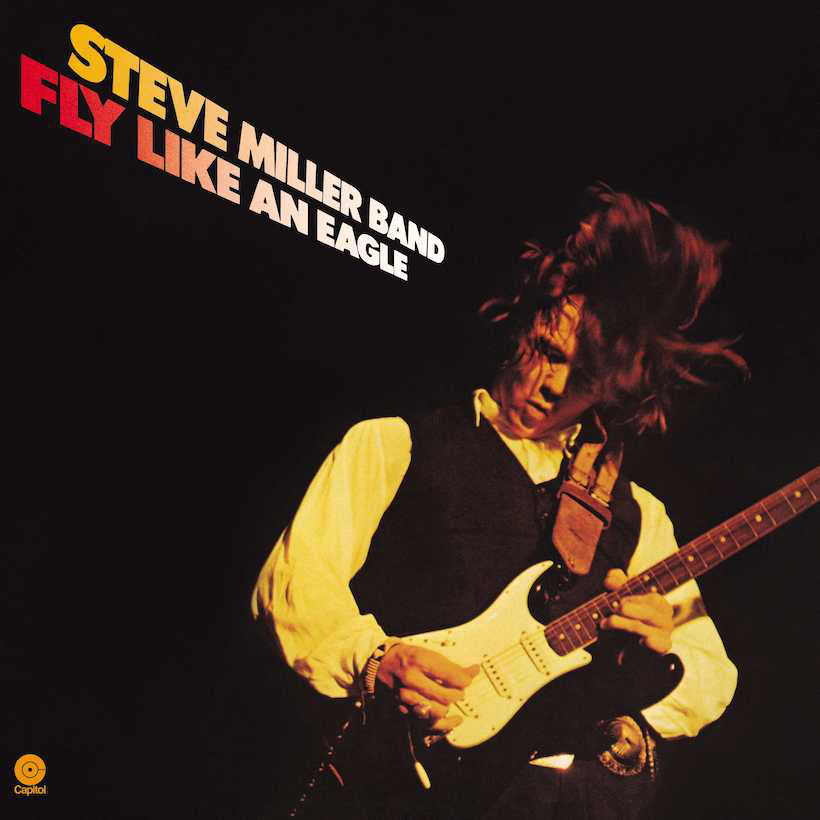
Nineteen-seventy-six was a key year for Miller. A month before the release of his breakout Fly Like an Eagle LP, “Take the Money and Run” landed as its first single. Miller attempted to borrow a page from American history with a ’70s take on Bonnie and Clyde, but with the lead characters in this 1974 single being named Billy Joe and Bobby Sue. FM radio wore out the album’s title track, but it was “Take the Money and Run” that caught fire in the Top 40, where it stalled just shy of the Top 10 that spring. It remains one of Miller’s all time best and biggest hits.
it was Three years later, the band returned with the album Fly Like an Eagle, Lonnie Turner retained from the previous album and got to work on more than two-dozen tracks in San Francisco in 1965, they divvied up the songs; half went to Fly Like An Eaglewhile most of the remaining tracks ended up on their follow-up album, 1977’s Book of Dreams. Three singles were released from the album: “Take the Money and Run” , “Fly Like an Eagle” and their second No. 1 success in America, “Rock’n Me”. Miller credits the guitar introduction to “Rock’n Me” as a tribute to the Free song, “All Right Now”.
At that time the band included drummer Gary Mallaber and Turner on bass, but the albums also featured contributions by harmonica player James Cotton, session guitarist Les Dudek and the Doobie Brothers’ John McFee. Eagle was singles-centric. Composed of a seemingly endless series of hit singles of differing styles, the album is a musical anthology of sorts, representing all of the music Steve Miller had ever known. From the blues to hippie-rock, country and R&B it could almost pass for a greatest hits album.
With a titular track that’s recognized at first rift, Fly Like An Eagle stands the test of time as the epitome of 70s classic rock. After its release in May 1976, the album blazed its way and introduced Steve Miller Band’s special brand of synth-driven spacey blues-rock that would spawn a string of hits and dominate the FM radio dial.
when it comes to an infectious melodies and radio-ready singles, ‘Take the Money and Run’ and the slick guitar boogie of ‘Rock ‘n’ Me’ take the cake. With its cinematic storyline and everyone’s favourite rhythmic device, energetic handclaps, ‘Take the Money and Run’ kept the album on the charts for nearly two years.
Even though the Steve Miller Band had dropped the “Blues” from their moniker, it didn’t mean they fully left it behind. Some of the songs that skate close to the band’s blues roots are ‘Sweet Maree’, thanks to harmonica stylings of Muddy Waters player James Cotton and ‘Mercury’ which traverses its way around the blues scale.
From slow dance numbers like the Sam Cooke cover, ‘Send Me’ to sitars on ‘Wild Mountain Honey’, the album is anything but predictable and even dabbles in bluegrass on ‘Dance, Dance, Dance’. Often overshadowed by the other hits on the album, ‘Serenade’ is a fan favourite and really is the underdog of the album. With its driving beat and dynamic key shifts . A fabulous set it’s even more vital as a remastered 30th Anniversary Edition with unreleased demos, a documentary and live DVD all in 5.1 Surround Sound.
It took the band eight years and nine albums before they finally hit the big leagues and reached a whole new level of fame.
Steve Miller had experimented with different genres throughout his career, but it wasn’t until he drew upon all of his past influences that his sound would coalesce into something greater. Steeped in the blues from his Chicago days, Steve Miller Band was always a blues band at heart that experimented with hippy psychedelia.
Steve Miller’s ’61 LP Special,
given to him by Leslie West, later painted by surfboard artist Bob Cantrell. Played in the 70s
Copperhead was a band organized by guitarist John Cipollina after he left Quicksilver Messenger Service in 1970. Cipollina, who had been a member of Quicksilver since its formation and whose lead guitar playing was its signature sound, had grown increasingly dissatisfied after the return of band founder Dino Valenti from a prison term, when the group grew larger and he found he had less space to play. He had also grown increasingly interested in playing sessions, which the band discouraged. The early days of Copperhead were casual, with the group consisting of a loose aggregation of people playing gigs with Cipollina. Eventually it coalesced into a quartet consisting of Cipolliana on lead guitar; Gary Philippet on vocals, second guitar, and organ; Jim McPherson on vocals, bass, and piano; and David Weber on drums. The group was initially signed to the Just Sunshine label run by Michael Lang, one of the organizers of Woodstock.
Cipollina had a unique guitar sound, mixing solid state and valve amplifiers as early as 1965. He is considered one of the fathers of the San Francisco psychedelic rock sound.
But in 1972 it was signed to a major-label record deal by Clive Davis at Columbia and recorded its debut album, Copperhead, released in the spring of 1973. Unfortunately, Davis was fired from Columbia shortly after the album’s release, an action that doomed any developing band that had been signed under his aegis. The album went nowhere, and when Columbia refused to release their second album, Copperhead folded. Cipollina went on to play in many different bands before dying in 1989.
Cipollina formed the band Copperhead with early Quicksilver member Jim Murray (musician) (who was soon to leave for Maui, Hawaii), former Stained Glass member Jim McPherson, drummer David Weber, Gary Phillipet (AKA Gary Phillips (keyboardist), later a member of Bay Area bands Earthquake and The Greg Kihn Band), and Pete Sears. Sears was shortly thereafter replaced by current Bonnie Raitt bassist James “Hutch” Hutchinson who played on the Copperhead LP and stayed with the band for its duration. Sears went on to play with the original Jefferson Starship and later Hot Tuna. During the 80s Cipollina performed with a number of configurations, including Fish & Chips, with Barry Melton, Thunder and Lightning, with Nick Gravenites, the Dinosaurs, and Problem Child. He was a founding member of Zero and its rhythm guitarist until his death. Most often these bands played club gigs, mostly in the San Francisco Bay Area, where Cipollina remained well-known to aficionados as among the great psychedelic guitarists. His style influenced many upcoming younger players, including Trey Anastasio of Phish.