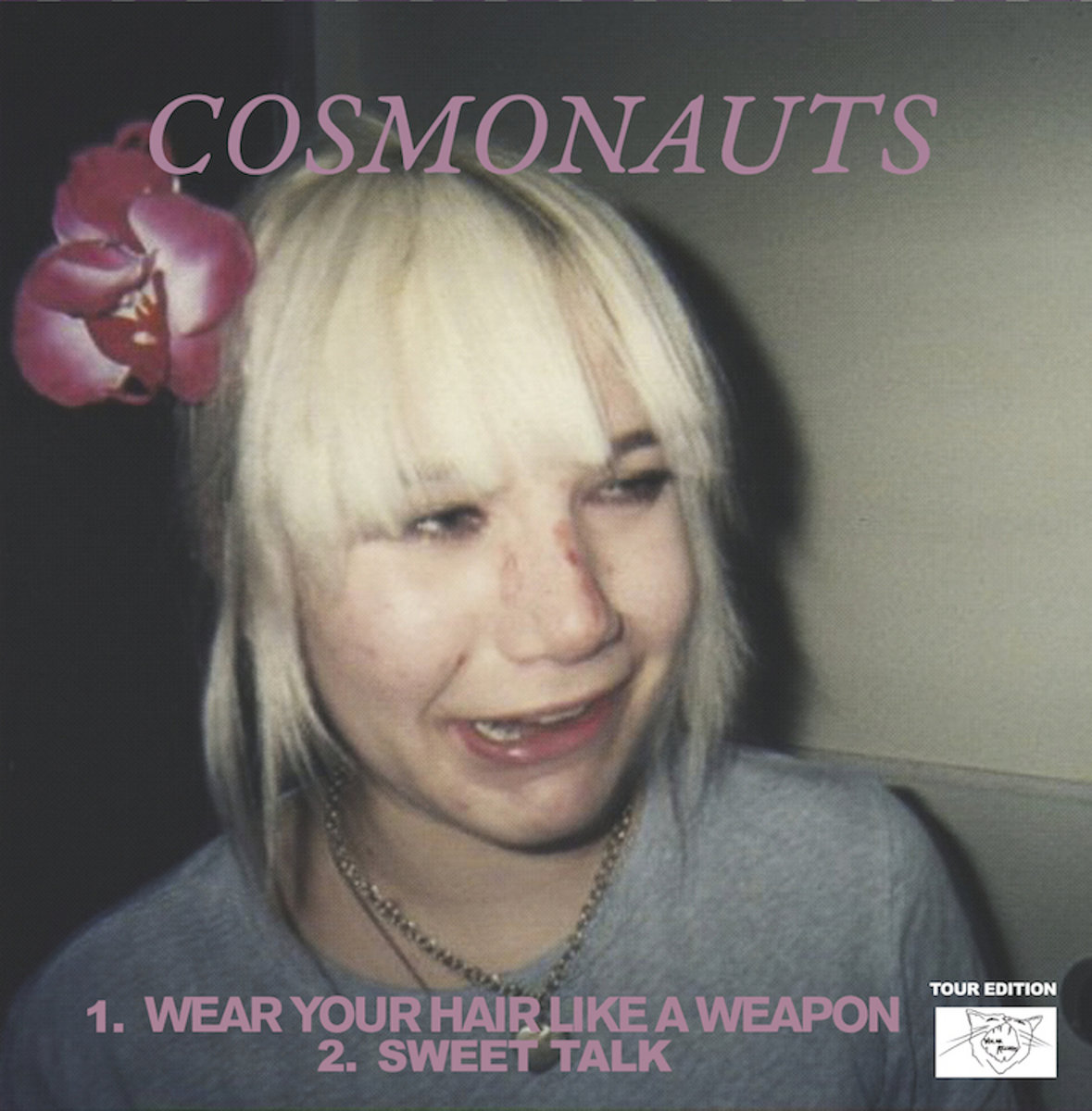
Recorded at The Cumberland Arms, Newcastle.
22-04-17
The Band:
Dan Willson – Guitar and Vocal
Malcolm Benzie – Electric Guitar and BVs
Fraser Hughes – Bass
Owen Williams – Drums
Pete Liddle – Keyboard and BVs
Released May 1st, 2020
Special love and thanks to: The band and our families, all friends and fans, Chris Trew at Prancy Dog for being a true believer, Chinny Reckon for the laffs, Ian, Peter and Joe for capturing us all lost in song that night. Always a pleasure, see you all farther along…
The ‘Cosmonauts’ are an alternative garage/psychedelic rock band from Orange County, California. If you mention Cosmonauts in most LA, nods of recognition will ensue, followed by a proud reference to someone’s friend doing a stint in the band, and several enthusiastic adolescent memories of shows gone by. A longstanding project of core members Alexander Ahmadi and Derek Cowart, Cosmonauts sit as one of the acts most strongly — and deservedly — associated with the boom of local label Burger Records. At 10 years, and countless shows in, Cosmonauts have solidified their status as both indie touchstone and hometown heroes, a source of cultural pride amongst suburban-bred kids who watched them make the scene.
It was apparent even then that Cosmonauts had a clear vision. They took their sound seriously, turning up their noses at effects pedals while simultaneously turning up their amps as far as they could go. They worshipped the drawn-out melodic drone of Spaceman 3 and The Jesus and Mary Chain, two bands whose influence was unabashedly apparent on the debut.
While Burger Records has grown to stand for, and sound like, any number of things, there’s always been more to Cosmonauts than lo-fi-surf and half-baked garage-pop. Razor-blade riffs and relentless walls of sound (see the audio assault of “Seven Sisters” and the fire-alarm guitars and self-destruction of the massive “Wicked City (Outer Space)”) shatter out the shambolic jangle of their psych-rock peers with power and intention. The punch-in-you-gut intensity comes courtesy of the duo’s mission to go back to basics.
Released June 11th, 2010.
All songs written and performed by Cosmonauts
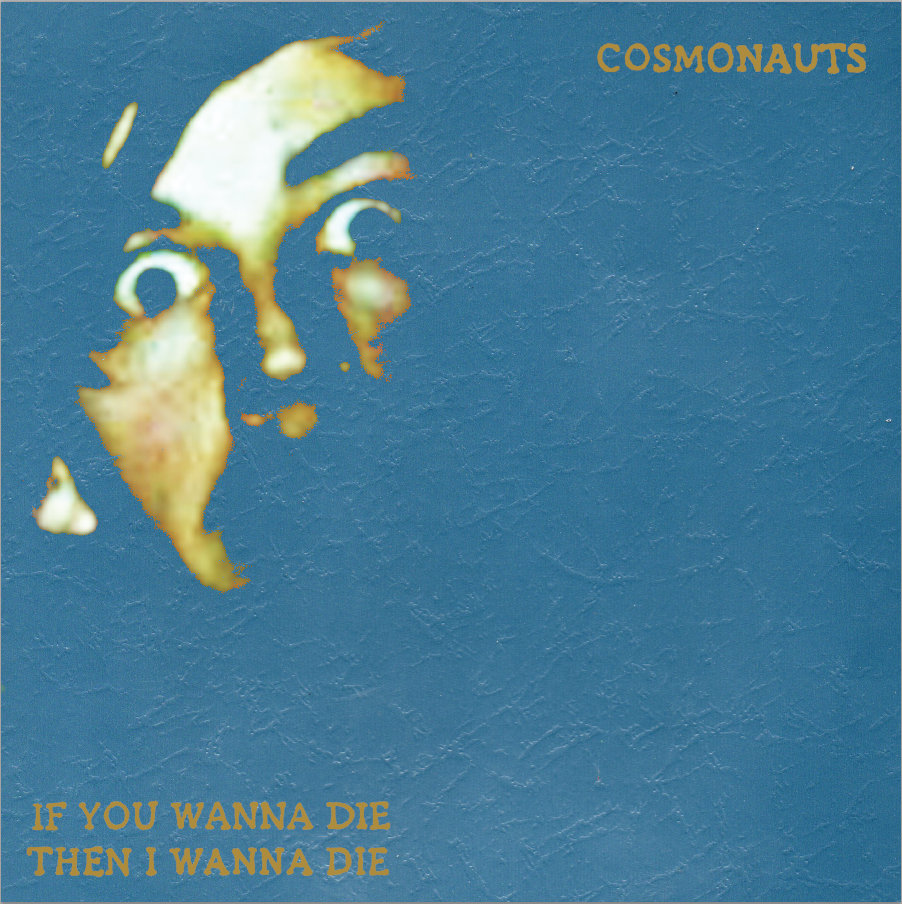
If You Wanna Die Then I Wanna Die 12″ LP
“If You Wanna Die Then I Wanna Die” Burger Records. ‘Motorcycle #1’ is by the amazing ‘Cosmonauts’. It was released in March 2012 as the b-side to the single ‘Emerald Green’. It is also the first track on the ‘Cosmonauts’ second album ‘If You Wanna Die I Wanna Die’. They don’t sound like this so much anymore, but every song on the record is a winner.
We should say that when ‘Motorcycle #1’ was first released there wasn’t a video so as it’s one of our favourite tracks of 2012 we just wanted to try and put something together for it so we edited the final scene from Ghost Rider II so, we hope its does some justice to what is such a cool tune.
“If You Wanna Die Then I Wanna Die” Burger Records The track ‘Motorcycle #1’ is by the amazing ‘Cosmonauts’. It was released in March 2012 as the b-side to the single to ‘Emerald Green’. It is also the first track on the ‘Cosmonauts’ second album ‘If You Wanna Die I Wanna Die’
All songs written & performed by Cosmonauts.
Recorded in August 2011 by Adam Ashe at Thee Men’s Warehouse in Anaheim, CA.
Persona Non Grata
“I was only 19 years old when Derek and I released the first Cosmonauts record,” explains Ahmadi, “So pretty much everything I’ve learned as an adult, I learned from being in the band.”
“Yeah, clearly we haven’t learned much,” Cowart adds, “I guess I’ve learned that hype and trends come and go, but great songs last forever, The dynamic between Cowart and Ahmadi has always been the foundation of Cosmonauts’ sound and the evolution of their musical partnership deepens with every new release. Though they’ve always sung in unison (but never harmony), they’ve increasingly started to employ call-and-response in their music, singing different things at the same time to each other and to the audience, balancing two opposing points of view within one song. While it’s tempting to divide Cosmonauts’ catalogue into “Alex songs” and “Derek songs,” the band doesn’t approach their songwriting in a bifurcated way.
California sun-soaked shoegaze songs about boredom, feeling out of place, and trying to work through weird relationships.
It’s an idea that’s toyed with throughout “Star 69”, the band’s fifth studio album and follow-up to 2016’s A-OK!. “Love my little bubble / love my little scene,” they sing over the drug-laden slide guitar and back beat of the Odelay-like opener “Crystal,” the sneer in the delivery hinting that the love may be double-edged. Then there’s the entirety of “Medio Litro,” an ode to conversations we’ve all had out on smoking patios at varying stages of that night’s bad decision-making. Lines like “We’ll go to the party / If we can find parking” and “Get another manager / and another publicist / Call me when you get this / Make it on the guest list” are delivered with the perfect detachment of a band that is well-acquainted with the game, and still has no intention of playing by the rules.
“It was really important that Star 69 was recorded as live as possible,” explains Ahmadi. “We needed to record the album in a more immediate and demanding environment. I think in the age of Ableton, the energy and urgency of a live band really can’t be overstated.”
Psych, punk, shoegaze, and always something else, the Cosmonauts sound is Spaceman 3, Brian Jonestown Massacre, Jesus and Mary Chain through a 75-and-sunny, strip-mall lens–it’s UK by way of So-Cal, the lucid lyrics and heat-shimmer guitars so indicative of the now-familiar sound they created.
Star 69 finds them at the height of those powers, the trip or two around the block injecting the album with a confidence and completeness that gives tossed-off lines like “I wish I was high or dead, or something” (the gorgeous and unexpected “Heart Of Texas”) a kind of hungover, squinty-eyed poetry. Everything from almost-love songs (“The Gold Line”) and odes to untimely death (“Suburban Hearts”) are given the usual yawn and stretch treatment–a deceptive casualness that underpins the level-up songwriting and intricate musicality of the band’s strongest effort yet.
Released September 6th, 2019
A-OK!
The band, for this album is made up of Ahmadi and Cowart plus bassist James Sanderson III and drummer Mark Marones, their fourth albumA-OK!. It’s their first LP in 3 years, and is perhaps the prettiest record Cosmonauts have ever made. The vocals are clearer, the beats dancier, the tones janglier, and there’s more diverse instrumentation than on records past (plus for one: they use pedals now). They have a preternatural ability to transpose their many musical influences into songs that capture the feel of an era rather than imitating an exact style. While the band is still, and probably always will be, very much indebted to ‘80s and ‘90s.
The songs on A-OK! show a natural progression from the leaner sound of 2013’s Persona Non Grata, fleshing out Cosmonauts’ talent for bending noise into irresistible pop. They’ve dialed down the noise and started favoring subtle atmospheric shifts and sweetly melodic sections, which balance out the darker elements that have always underpinned their sound. The vocals are less affectless than before, giving A-OK! a sonic depth that’s new for the band. The menacing creep of “Doom Generation” slowly ramps up the anxiety before plunging the listener into a well of reverberating guitar.
Cosmonauts – Short Wave Communication feat. Shannon Lay. On “Heavenspeak,” Cosmonauts punctuate an undulating dance rock groove with a wash of white noise. Though (lots and lots of) guitars are still the anchor of Cosmonauts’ sound, A-OK! has instrumental surprises aplenty: a synth burbling below swaths of reverb on “Shortwave Communication” (which also features honey sweet backing vocals courtesy of Shannon Lay of Los Angeles band Feels) or a Wurlitzer going toe-to-toe with the guitars on the buoyant “Good Lucky Blessing.”
“Party at Sunday,” the record’s first single, is a languid, longform lullaby with a placid guitar lead that’s as soothing as it is sad. The accompanying video, a flickering array of beautiful people moving through a softly-lit, pink-and-blue world with an extended shower make-out scene at the conclusion, has racked up 20,000 views on YouTube. In typical Cosmonauts fashion, despite its gorgeous imagery, the song itself is a complete bummer. The denouement: “I fell in love and I hated it.”.
Released August 19th, 2016 Cosmonauts – “A-OK!” from album, ‘A-OK!,’ out August 2016 on Burger Records.
The incredible Incredible String Band record is frankly amazing. It’s just very different. It’s fairly indescribable. The closest description would be a sort of folk, sometimes termed psychedelic folk: Whichever way you like to describe it, it polarises listeners – many love it, many hate it. It has enjoyed much reverence from musicians and critics. Paul McCartney, Dylan and John Peel were fans. McCartney selected the album as his favourite of 1968. Led Zeppelin were apparently heavily influenced by it, particularly around the time of producing their III album. It frequently features in “greatest albums of all time” lists. Yet many find it unlistenable.
“Plas man” on amazon describes it as “amateurs playing various instruments, and different tunes, all at the same time.” Another amazon customer was even less charitable describing it as “by far the worst album I ever bought. What the hell were they thinking or indeed smoking. Utter and complete garbage.”
In one amusing review they write: “What I find incredible about this group is that they were ever allowed in the studio in the first place. They have all the talent of third-rate buskers, the kind of street performers whose sound makes you dash to the opposite side of the street as you approach the spot from which their horrible noise emanates.” She goes on to damn the music as “the most repulsive music I have ever heard.”
To many western ears it sounds out of tune the singing is described as beyond any notes found on any scale known to humankind! Fantastic stuff. I don’t know about you but anything that elicits such extreme views has got to be worth a listen.
In the style of a good court room drama I’m pleased to take the role of the defending barrister putting the case for the defence of this album. I will present three pieces of evidence which I will show prove beyond reasonable doubt that The Hangman’s Beautiful Daughter is in fact an amazing record. In fact I can do this by an examination of the first three tracks only.
The opening song Koeeoaddi There There are enough ideas in this 5 minute piece for a whole career let alone a single album or song. The structure of the song, like a lot of Incredible String Band songs is all over the place but in my opinion it holds together and works. It’s actually a masterpiece!. The lyrics present a description of childhood to which many of us can relate, particularly the “shadowy fingers on the curtains at night”: There is also a mention of Mike Heron’s enigmatic girlfriend Licorice in a Dr. Seuss inspired verse: But me and Licorice saw the last of them one misty twisty day Across the mournful morning, moor motoring away, The girls in the band are an interesting case. They were Christina “Licorice” McKechnie and Rose Simpson. I’m not sure whether they were more important as musicians or girlfriends – certainly it appears they were the latter before the former. Licorice was partnered with Robin Williamson and left the band in 1972 after their romantic relationship ended. Rose was Mike Heron’s partner and allegedly was invited to join the band only because Licorice had been invited too. By all accounts there was a fair bit of rivalry between Williamson and Heron personally and professionally. The girls didn’t get on either! you know, In the middle of the night she (Rose) left Robin’s sleeping bag, crawled in with Mike, and stayed with him for the next three years. you know, the swinging sixties, and just look at that cover! Or was that Rose?.
The Minotaur Song which is an enjoyable call and response marching song. It features Richard Thompson and Judy Dyble from Fairport Convention. Roll up your sleeves and sing-a-long:
The thirteen minute epic A Very Cellular Song, a kind of circular suite that opens with a wavering organ riff and harpsichord refrain which ebbs and flows, and leaves and returns throughout. The lyrics are out of this world, literally:I have heard the last verse before as a yoga mantra. I had assumed this was a traditional mantra but apparently the mantra was lifted from this original ISB song.
Apparently the spiritual leader of Kundalini Yoga, Yogi Bhajan, once came into a room where a group of yoga students were singing the ISB song. Yogi asked them to keep it up, and from then on requested them to sing it after his classes. It quickly became a tradition that continues today at the end of every Kundalini Yoga class taught throughout the world.
When the Incredible String Band toured the States in the late 60s May the Long Time Sun was always the closing song at their gigs. They were invited to play Woodstock but didn’t make the edit for the original film. Originally scheduled to play the more acoustic Friday evening as one of the headliners they were bumped to the heavy rock Saturday due to the famous rain and didn’t go down so well. An opportunity lost.
The Woodstock setlist:
Invocation
The Letter
Gather Round
This Moment
Come With Me
When You Find Out Who You Are
Oddly there were no songs from “Hangman”.
listeners need to investigate, or reappraise, this most unusual and fascinating album. After Hangman the band fell within the clutches of Scientology and despite some decent later albums and continuing good sales (much of the proceeds they invested in the Church) they gradually lost their edge: Soon the new compositions began to lose their wild melodic beauty. In the studio, there were fewer moments of surprise and inspiration. Joe Boyd The band broke up in 1974, both leading members going on to take up solo careers with the occasional short lived reunion. The enigmatic Licorice, like one of her front teeth, sadly went missing in the late 80s, presumed dead.
To read more about the Incredible String Band, along with all the other artists Joe Boyd managed and produced in the late 60s – Fairport Convention, John Martyn, Nick Drake, early Pink Floyd etc. I highly recommend his brilliant and very readable White Bicycles memoir.
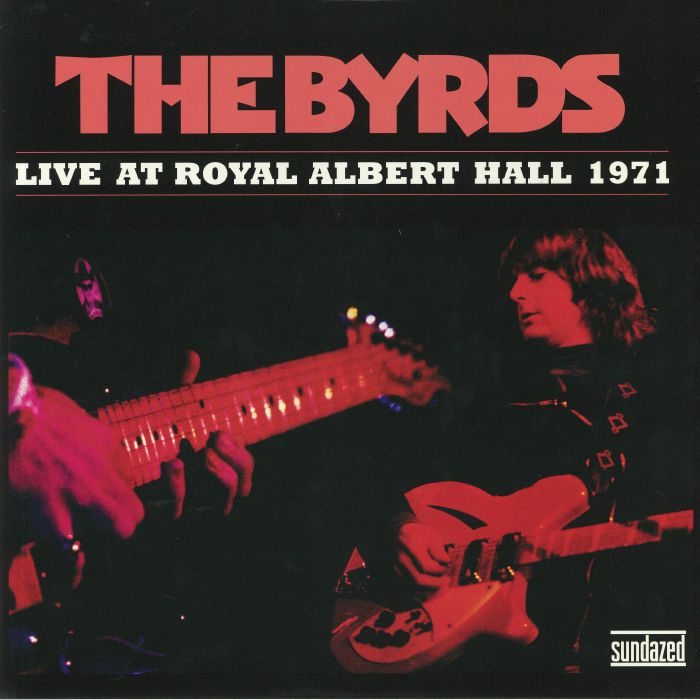
Roger McGuinn discovers a long-forgotten soundboard of the Byrds’ last true live line-up sitting in his garage, sharing the flashback to a time when the band was on its way down while virtuoso guitarist Clarence White was on his way up.
The Byrds weren’t just one of the greatest and most influential bands of all time, they were several of them. There was, of course, the original folk-rock version of the Byrds, which started the psychedelic version of the Byrds, which in turn begat the country-rock version of the Byrds, which in turn begat a hodgepodge of all those iterations before the group burned out once and for all. But each version of the Byrds likewise showcased what could generously be categorized a constant shifting line-up, with Roger McGuinn as the sole constant up through the band’s somewhat unsung end in 1973.
Yet McGuinn’s not the star of the line-up captured on “Live at the Royal Albert Hall 1971”, the masters of which the singer recently found sitting in his archives.
Rather, the focal point is former bluegrass prodigy turned rocker Clarence White, whose short-lived career ended around the same time The Byrds did, when he was struck and killed by a drunk driver while loading gear. White got his start in the Kentucky Colonels, crossing paths with The Byrds several times before McGuinn eventually invited him to join in 1968 as a permanent member. His virtuoso solos and interplay with McGuinn are what kept the band interesting, especially in its later years and particularly for a band never renown for its live prowess.
Albert Hall 1971 isn’t The Byrds‘ only live album– portions of 1970’s (Untitled) were recorded live, and 2000 saw the release of Live at the Fillmore – February 1969. By this point the band’s flame was growing dimmer, its focus diffuse, and you can hear the roots of the nascent jam-band movement as the songs’ melodies give way to relatively aimless noodling. Just listen to how Bob Dylan’s “My Back Pages” is given a rushed and busy reading en route to a rendition of Jimmy Reed’s “Baby, What You Want Me to Do” which recalls what the Grateful Dead (also frequently drawn to Reed) was up to on its parallel folk-rock route.
A few of the Byrds’ better known songs are well represented, but renditions of “So You Want to be a Rock ‘n’ Roll Star” and “Mr. Spacemen” are loose and hardly definitive. The setlist is also distractingly schizophrenic, veering from the likes of “Lover of the Bayou” to Dylan’s laid-back “You Ain’t Goin’ Nowhere” with little in the way of segue. Singing lead on a handful of songs, such as Jackson Browne’s “Jamaica, Say You Will”, White offers a vocal counterpart to McGuinn, but the harmonies from the band’s heyday are largely nowhere to be found. The a cappella “Amazing Grace” that closes the set is a far cry from the McGuinn, Gene Clark, David Crosby, and Chris Hillman frontline that helped make the band famous.
But then there’s the guitar. McGuinn and White tear it up on cuts like “Jesus Is Just Alright” and “Lover of the Bayou”. “There are so many songs we’d all like to hear, and there are so many songs we’d like to do for you, but there’s only a little bit of time,” apologizes McGuinn before someone requests “Nashville West“. “You want to play that one, Clarence?” he asks, before letting White off his leash. Even acoustic, the pair shines. The traditional “Black Mountain Rag/Soldier’s Joy” includes two of the disc’s best minutes, easing into a 12-string free “Mr. Tambourine Man”, Woody Guthrie’s “Pretty Boy Floyd”, and Leadbelly’s “Take a Whiff (On Me)”, tracks that showcase McGuinn and White sans clunky rhythm section.
Indeed, the two later lead a radically reworked “Eight Miles High” past the 18-minute mark, but that also includes a lengthy interlude featuring the plodding bassist Skip Battin and drummer Gene Parsons who, frankly, drag down the John Coltrane-inspired epic (the liners note the section was mostly inserted to give McGuinn and White a cigarette break). It’s partly their fault that Live at the Royal Albert Hall 1971 never quite reaches the heights McGuinn and White aim for, but it’s also clear, instrumental aptitude or not, that The Byrds had moved beyond the logical end of its creative road. Listening to this set, it’s easy to imagine the band deciding to tour forever, like the Dead did, existing for fleeting moments of ephemeral glory while memories of its better days faded away. But that was not to be, and in retrospect, with fine but hardly earth-shattering documents such as this one as proxy witness, pulling the plug was probably for the best.
Setlist:
Lover Of The Bayou (3:35)
You Ain’t Going Nowhere (2:44)
Truck Stop Girl (3:25)
My Back Pages (2:20)
Baby, What You Want Me To Do (3:40)
Jamaica, Say You Will (3:30)
Black Mountain Rag/Soldier’s Joy (2:04)
Mr Tambourine Man (3:33)
Pretty Boy Floyd (2:40)
Take A Whiff (On Me) (2:45)
Chestnut Mare (5:16)
Jesus Is Just Alright (3:16)
Eight Miles High (18:35)
So You Want To Be A Rock ‘N’ Roll Star (3:07)
Mr Spaceman (3:01)
I Trust (5:28)
Nashville West (2:39)
Roll Over Beethoven (3:02)
Amazing Grace (2:36)
Nothing but good news from the Haim camp this morning: with the sisters’ new album Women in Music Pt. III getting pushed from an April release to a “late summer” release back in March, the group said “fuck that” and slotted it for June 26th . Additionally, the news arrives the same day as their latest single and video from the LP, “I Know Alone,” which skews the record’s sound in the direction of electronic dance music.
Due to certain understandable limitations, the production value on the new video is significantly less than those of its predecessors, though the trio still keep the eyes engaged with synchronized moves presumably filmed in someone’s backyard post-lockdown. Jake Schreier fills in for Paul Thomas Anderson behind the camera, and HAIM cites Frances and the Lights as a collaborator on their choreography.
I know alone song and video out now. ps- the original plan was to release wimpiii later on this summer well fuck that we are gonna release it on june 26th, just in time for summer.
Released following Ian Curtis’ death, ‘Still’ proves that Joy Division’s outtakes and rarities stack up against most bands’ A-grade material. However, the band had recorded prolifically during their short life and they’d left enough rare and/or previously unreleased songs in the vault to warrant the collation of an impressive posthumous collection – 1981’s “Still”.
“Still” is a compilation album by the English band Joy Division, consisting of previously released and unreleased studio material and a live recording of Joy Division’s last concert, performed at Birmingham University 40 years ago on May, 2nd 1980, two weeks before the death of singer Ian Curtis. It was released on 8th October 1981 by Factory Records, and was intended to both combat the trade in bootlegs and give fans access to recordings that were not widely available at the time. The concert was recorded via the soundboard, which was released on the “Still” double LP that included all eleven songs from Joy Division’s set, despite “TwentyFour Hours” not being credited on the sleeve.
Joy Division debuted the track “Ceremony” during this concert, which is not even titled on the handwritten setlist, but instead just credited as “new song”.
Factory Records genuinely had no intention of rush-releasing “Still”, and their motives were honourable. The label absolutely believed they should give fans official access to Joy Division songs which weren’t widely available at the time – and they wanted to combat the trade in bootleg recordings which began circulating following Curtis’ death.
Accordingly, Factory put “Still” together as a double-album, with its first disc covering outtakes from the band’s seminal studio albums, “Unknown Pleasures” and “Closer”, plus a brace of then hard-to-source rarities. The second disc, meanwhile, contained a mixing-desk recording of Joy Division’s final gig, at Birmingham’s Aston University on 2nd May 1980, in its entirety.
“Still’s” studio disc ensured the album was worth the price of admission. The songs weren’t arranged chronologically, but some thought went into the sequencing, as the record kicked off in style with the brooding, soundtrack-esque “Unknown Pleasures” outtake Exercise One, followed by the urgent, anthemic Ice Age and the harsh, metallic “The Sound Of Music” – the hugely potent latter song a leftover from the band’s initial “Love Will Tear Us Apart” session in January 1980.
During the performance of “Decades!”Ian stumbled and had to be helped off stage while the rest of the band played on. He recovered enough to return for an encore performance of “Digital”.
There was much to cherish elsewhere, courtesy of Dead Souls, two further “Unknown Pleasures” outtakes – “Walked In Line” and “The Kill” – and the little-known “Something Must Break“. Though rarely performed live, the latter song (which was recorded during a session at Manchester’s Central Sound studio in July 1979) occupies an important space in Joy Division’s history.
“It was an interesting song for us, being the first time the band had used a synthesiser,” Peter Hook wrote in his memoir “Unknown Pleasures: Inside Joy Division”. “Martin [Hannett, producer] had used them on “Unknown Pleasures“, but the thing about us in Joy Division – especially me, Bernard [Sumner, guitarist] and Steve [Morris, drummer] – was that we were sponges, constantly learning off Martin. So you’d have this situation where on “Unknown Pleasures“, me and Bernard were moaning about using a synth, but then a couple of sessions down the line we were using it ourselves. Bernard embraced all that and on “Something Must Break“, he used a synth instead of guitar – there’s no guitar on the song at all.”
Here is a recounting of the concert Dave Haslam, remembers: “It was a dining room at a student hall of residence. 300 people there I reckon. I was ten rows from the front. It was a ramshackle affair, Ian left the stage at least once”. David Pryke was there: I went as an 18 year old student from the near by Aston University. Joy Division were known as the coolest band on the circuit but I was only familiar (so I thought) with the single “Transmission“.
A few memories – they were very very late! We hung around for a long time listening to ACR sound check. A mixed audience of students, punks and rockers. He Remembers ACR doing a cracking set (I think at the time I enjoyed this more, but it paled rather following the news later in the month). It wasn’t until I heard the first few chords of “Shadowplay”. The other track also played on the night and one of my faves was “New Dawn Fades” – Moby played this at a recent gig at Brixton Academy as homage to Ian Curtis.
The only other versions of “Ceremony” that Ian Curtis recorded are from the soundcheck on May 2nd, and from a studio session on 14th May 1980, four days before Curtis’ suicide. The album includes the only live performance by the group of the song “Ceremony”, which later became a New Order single. For reasons unknown, the recording abruptly begins just before the song’s first chorus, as opposed to at the actual beginning of the song; like all surviving Joy Division recordings of “Ceremony”, Ian Curtis’s vocals are barely audible, though in this instance the final chorus is unusually clear. Another song featured is a cover of the Velvet Underground’s“Sister Ray”, recorded at the Moonlight Club in London on 2nd April 1980.
Effectively closing the door on the band’s brief but brilliant career, “Still” remained the only Joy Division compilation of note until Factory issued “Substance” in 1988, and – as most contemporary appraisals suggest – it remains a necessary adjunct to Joy Division’s two widely acclaimed studio albums.
The Bobby Lees’ Drive,” a title track from their latest album, Skin Suit, out July 17 via Naturalsound, is about good mental health, something that’s so important right now.
“A couple of months ago, we were heading down to Austin, TXfor SXSW and playing shows along the way,” the band says. “By the time we got to Tulsa, Oklahoma, our nine SXSW shows had been cancelled because of the virus. So, we made the best of our time in Tulsa and shot a video with our friends, while keeping a safe distance.”
“This song is about needing to connect to other people in order to stay alive/feel alright,” says Sam. “Last winter. for a few months, I was pretty isolated and developed an obsession with wanting to smash my car into a telephone pole or put my head through a glass window. Basically wanting some kind of intense impact to turn my brain off.
“The song’s about that, and the idea of sharing/being open about where you’re at. I didn’t keep it to myself; I told a few people and talked about it instead of doing it, and the obsession thankfully went away. Now I can laugh about it.”
Their new record, Skin Suit, was produced by underground punk legend Jon Spencer of the Blues Explosion and will be released on Alive Naturalsound Records on July 17th, 2020. Skin Suit mixes classic, garage-punk hits with raw and emotive storytelling. In the past year, they’ve played with The Chats, Future Islands, Boss Hog, Daddy Long Legs, Shannon & The Clams, and Murphy’s Law.
“Drive” – off our new record Skin Suit being released on 5/8/20 by Alive Naturalsound Records.
Now over three days , over three months. RECORD STORE DAY IS SOCIAL DISTANCING!
2020 is different. So what we’re doing this year is going to be different too.
No one knows what kind of party we’ll all be in the mood for, or able to hold safely, at any time this year, in any part of the world. So we’re focusing this year not on the party aspect of Record Store Day, but on getting the great releases on the RSD 2020 List into your local record store, and then into your collection.
RSD DROPS! Three street dates when titles from The List will be available only at participating indie record stores. We’re working on getting the new version of The List — with new RSD Drops dates — all nice and pretty for you. Look for that on the Record Store Day site on June 1st.
This new plan of action is thought to be a compromise solution that takes into account various territories around the world and the different stages they may be at in terms of managing the pandemic situation.
This is clearly an incredibly challenging situation for labels, retailers and the industry in general and it remains to be seen how it will all work out. By definition, the event has been diluted, and while the end of August seems like a long way away, we have no idea at this stage what social distancing rules may remain in place, wherever we may be in the world. Also, if stock does indeed become available online more quickly, is that likely to be a deterrent to getting out there and queuing up at your local record shop?
The other thing to consider is whether the record labels are still willing to honour their original RSD intentions. They have been sitting on stock for quite a few weeks at the time of writing, and may not be delighted at being told that at least some of their releases can now only happen on 24th October, which is nearly seven months away. There will be a temptation, perhaps, to redesignate releases as non-RSD and get them out into the marketplace much earlier. They could still support the local record shop community by making the releases ‘indie-exclusive’.
Of course, let’s not forget that as well as these three days, there is also the ‘RSD Black Friday’ which apparently is still being planned and on schedule for 27th November. So that’s four Record Store Days in a row in America, which certainly seems like overkill.
Dedicated to all who have suffered from this 2020 pandemic.
A Legendary Return by the Master Steve Winwood... It has been long known that he has been into Hymnals as of late. This is a fantastic cover of a John M.C Crum Hymn from the 1920s. “Now The Green Blade Riseth” The composition brings hope in these dark times when we all need to cope together… A very Barleycorn feel, one can not stop and wonder what would have Master Wood added to it…
The track has been from Steve Winwood’s social media where there is a superb video recording of him playing and singing the composition.
The Picture is also from The Barn in the Cotswolds.
Hidden Volume presents The Resonars “Extended Play”, their 4 song Hi-Vo debut. After scores of releases on Burger, Get Hip and Trouble In Mind Records, the multi-talented Matt Rendon once again does it all on this quartet of garage/power pop gems. Mining that trademark “Who Meets Hollies” sound in glorious MONO, Rendon doesn’t disappoint. Whether it’s the glorious ringing guitars of “A Smile and a Promise” or the biting but incredibly catchy “Nobody Can Tell You What To Do” (our personal candidate for Song of Our Times), The Resonars make sure they won’t leave your brain any time soon.
Perhaps it’s a by-product of hailing from Arizona, but The Resonars (aka Matt Rendon), sound like pure sunshine. Taking cues from the Mersey Beat heydey, Rendon breathes fresh air into everything he touches. It’s mindboggling how consistently excellent The Resonars releases are, and his ear for melody and hooks has now approached near-legendary status.