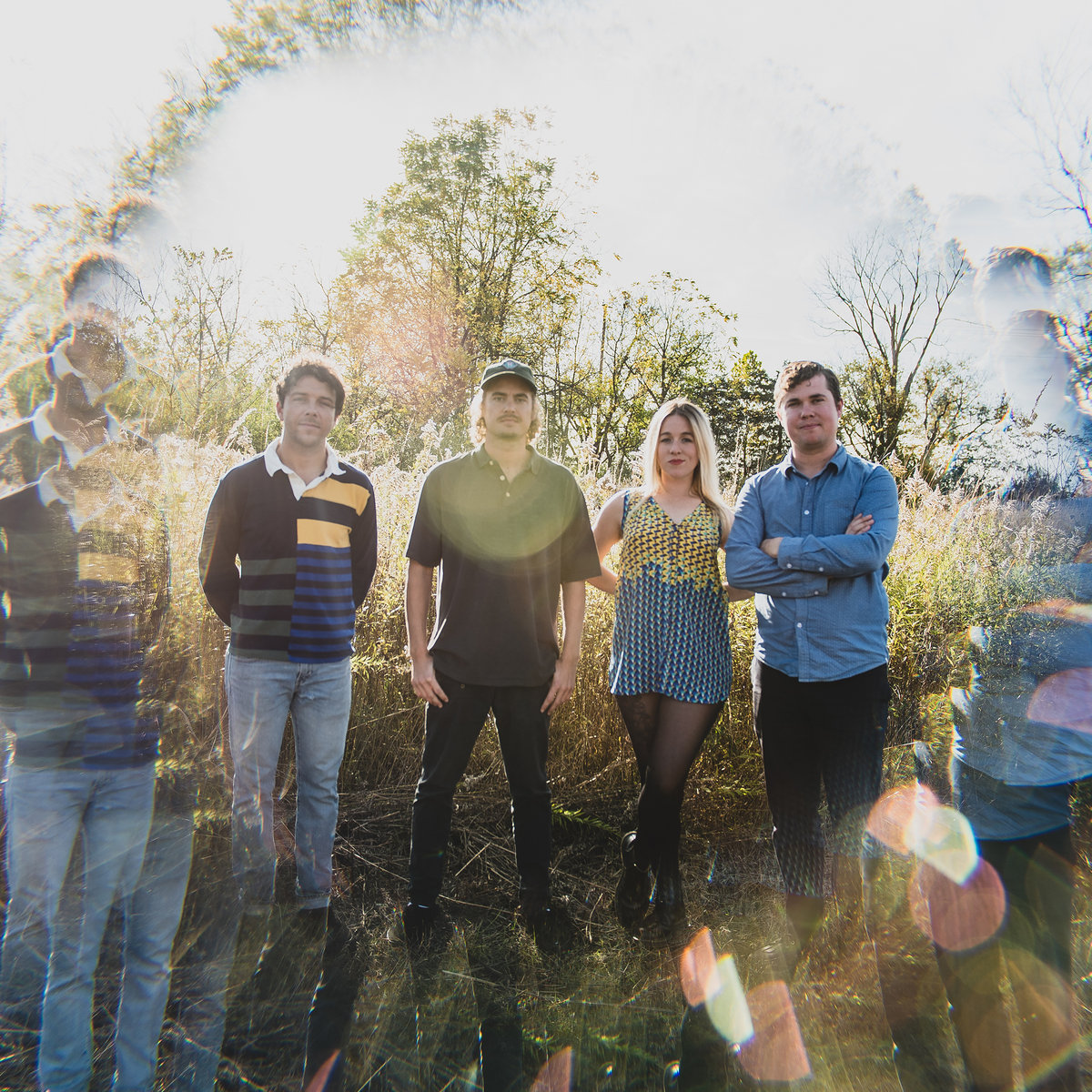
I’ve been thinking of life as one big roleplaying game,” Johanna Warren offers when asked why she chose to title her new album after a Dungeons & Dragons reference. “There’s chance, there’s choice, and there’s alignment—what forces in the universe do I choose to align myself with?”
Chaotic Good is Warren’s fifth full-length album and first for Wax Nine/Carpark Records. It represents a moment of rupture in the singer-songwriter’s career as she transitions away from the quiet, folk-adjacent work that defined her early solo albums with a bold statement piece that demonstrates the breadth of her ambition. Here, Warren flits between crushing admissions set to spare piano solos and muscular declarations of independence that have more in common with grunge acts of bygone years than anything we’ve heard from Warren in the past. “The last few years I’ve had an urge to change my name, or create some alter-ego,” she says. “But I’ve come to realize that ‘Johanna’ is already just a character. We think we know who we are based on what’s already happened, but we’re allowed to make new choices.” The oceanic, soothing single “Bed of Nails” illustrates that realization perfectly when Warren sings: “I tried a little bit too hard to be myself/It turned me into something else.”
Recording Chaotic Good was an exercise in self-reinvention. Warren decided to produce the album on her own, borrowing recording equipment from a friend to do much of the preliminary tracking alone in a garage. She enlisted a few key collaborators to fully enliven her vision, most notably former Sticklips bandmates Chris St. Hilaire and Jim Bertini. On the raucously resilient “Part of It,” Warren is joined by her musical brethren as she addresses a noncommittal narcissist and—a trademark of Warren’s work—the narrator’s complicity in her own suffering: “Don’t look at me like I’m the one holding you back/and I won’t look at you like you have something I lack.” Adding to the album’s dynamism is the fact that it took shape over the course of four years in studios across the United States while Warren was touring her most recent albums Gemini I and II. Warren uses words like “patchwork” and “scrapbook” to describe Chaotic Good; it is a collection of sonic snapshots that transport her to specific places in time with each listen.
“This album is about learning how to be with myself after a lifetime of codependent relationships,” Warren says. You can hear that especially well on “Twisted,” which finds her confronting a former lover, and ultimately, letting them go. “I’m a warrior, but I give up,” Warren howls, the surrounding production warping and distorting as her raw vocal crests to an acidic scream. Though her lyrics are resigned, her delivery is anything but. It is a moment of total abandon, when the multitudinous aspects of a personality coalesce to form something at once dazzling and monstrous. “Chaotic Good is a metamorphosis,” Warren says. “It’s my phoenix moment. Everything I’ve done before was just building the funeral pyre.”
In early 2003 a young Steve McBean was living in Vancouver and in the midst of a transition from his sorely overlooked rock band Jerk With A Bomb into an auspicious new chapter. JWAB was his umpteenth band in as many years woodshedding as both a front-man and a supporting musician in countless punk & hard core bands in the Canadian wilds starting in his teens and going through his twenties. JWAB was arguably the band in which he’d finally found his signature singing voice and started collaborating with drummer Joshua Wells and vocalist Amber Webber.
Around this time his friend Dan Bejar (Destroyer, New Pornographers) sent to Jagjaguwar a demo tape of new songs that Steve had been writing. He wasn’t sure if it they were JWAB songs or something new entirely. The songs were randy & ribald, with a primitive drum machine beat and a Bo Diddley guitar swagger. They were scintillating and taught us things that our parents were too scared to teach. These were the demos for the songs that would be re-recorded as the debut album by Pink Mountaintops, a sister project to the other McBean-fronted rock band that was being born at the same time — Black Mountain. This was an exciting time not only for McBean — who was bubbling with songs & ideas — but a turning point for Jagjaguwar, thrilled to sign two of its most significant projects simultaneously.
Bully and its frontwoman, Alicia Bognanno, have been getting Kurt Cobain comparisons since their 2015 debut, Feels Like. (It doesn’t hurt that she studied at the feet of Nirvana producer Steve Albini.) So hearing the Nashville band cover Nirvana is almost too obvious but, good God, is it glorious.
Their spin on 1989’s “About a Girl” strikes a perfect balance of raw and melodic, without ever sounding like the output of a cover band. Bognanno’s home-recorded production and instrumentation definitely capture the original’s energy: The guitars come in grunge-heavy before her voice slumps onto the scene, voice tearing on the high notes.
Still, it’s not just a skilled copy of a classic. She mixes in some experimental guitar squeals on the instrumental and a truly trippy solo that keeps the sound from going thoroughly Nineties. Plus, Bognanno differentiates herself from your average karaoke crooner with her stellar delivery. When she wails, “I’ll take advantage while/You hang me out to dry/But I can’t see you every night/Free” you almost forget that she was a kid when Cobain ripped through the track in 1993 for MTV’s Unplugged.
“I do” becomes a chanted mantra at the end of the song, before it ends abruptly, futuristic time-warp complete.
Normally during this time I’d be running around trying to promote the upcoming record and rehearsing to get ready to tour again but given the circumstances I’m trying to work with what I can do at home alone. I picked a couple sub pop songs to cover to release something in the meantime. I played everything on these songs (for better or worse haha) and tracked them in my living room. Gotta do what ya gotta to spice it up sometimes. Anywho more soon!!
Who doesn’t love cover songs? The aptly named ‘Covers’ album features Surfer Blood covering some wildly disparate artists like Outkast, Pavement, Cream, Mudhoney, Modern English, and of course Polaris (aka, the theme-song from The Adventures of Pete & Pete).
This one time pressing is limited to 1000 foil-numbered copies on amber vinyl with black splatter, and includes instant download of MP3 and WAV.
This release is not available via record stores. The only way to get your hands on this bad boy is to order from JNR, or catch the band on tour. “Good Enough” Mudhoney Cover by Surfer Blood off ‘Covers’ out on Joyful Noise Recordings.
A collection of covers we’ve recorded over the years. Limited Edition!
Rare Bird were an English prog-rock band, formed in 1969. They had more success in other European countries. They released five studio albums between 1969 and 1974. In the UK, they never charted with an album but charted with one single, the organ-based track “Sympathy”, which peaked at number 27. It sold one million copies globally.
The history of Rare Bird began when Graham Field placed an advertisement for a pianist in a musical periodical. He got thirty replies and formed a group called “Lunch”. He met Dave Kaffinetti in November 1968, and together they formulated the basic ideas for Rare Bird. In August 1969, they finally found the ideal rhythm section in Steve Gould, Chris Randall and Mark Ashton. Field and Kaffinetti had originally envisaged that the band would be a four-piece and were looking for a singer/bass player. Gould and Randall, who had both previously been members of the Pop-Psych band “Fruit Machine”, applied to the advert as vocals/guitar and bass respectively and were taken on. Lunch played a few gigs; one notable one was at the Tilbury Working Mens Club for the princely sum of five pounds. The band had no van and they managed to get amps, drums, guitars and Hammond organ into their cars. The gig was marred by Randall receiving a bad electric shock whilst on stage. It later turned out that the founders of the band were more interested in Steve Gould and convinced him to play bass. Randall was now high and dry and was kicked out of the band.
Two weeks later, they had signed management and agency contracts, and three weeks later, were in the studio recording their debut album. Before joining Lunch, Randall and Gould had previously written a song called “To the Memory of Two Brave Dogs”. Rare Bird included this song in their debut album, renaming it “Iceberg” but Randall received no credit on the L.P. Along with Van der Graaf Generator and The Nice, they were one of the very first bands that signed to Charisma Records, the record label that Tony Stratton-Smith had founded.
The eponymous debut album from Rare Bird. Released on the newly formed Charisma label in 1969, this commercial organ based progressive rock album spawned the worldwide hit ‘Sympathy’. Vocalist Steve Gould had previously been in Brit psych band Fruit Machine.
The Who’s incendiary live performance at the legendary 1967 Monterey International Pop Festival, available for the first time on vinyl LP: Red / White / Blue striped vinyl. Fancy old fashioned high-gloss tip-on style jacket. Printed inner sleeve. The Who’s set at the Monterey festival in 1967, including tales of psychological warfare with Jimi Hendrix, upsetting Ravi Shankar and more…On June 18th 1967, The Who brought what Rolling Stone magazine called their “pulverising music” to the Monterey International Pop Music Festival at the Monterey County fairground, California. As The Who had only just dented the US market, co-manager Chris Stamp agreed to the group playing for nothing. Stamp had recently permed his hair to look more like his hero Jimi Hendrix, discovered LSD and embraced what he called “love and communication… and all that shit.” But he was still compos mentis enough to know this was a good opportunity for The Who.
The Animals‘ frontman Eric Burdon, his Newcastle accent now softened by California or drugs or both, introduced The Who as “a group that will destroy you completely in more ways than one”. Behind him, the band crashed into Substitute followed by Summertime Blues. It was hard to imagine anything more removed from The Mamas And Papas’ passive California Dreaming or anything else played that weekend.
The other acts on the Monterey bill included Country Joe And The Fish, Jefferson Airplane and Scott McKenzie, whose hit San Francisco (Be Sure To Wear Flowers In Your Hair) was now an anthem for what critics were calling ‘the summer of love’. The stage was wide open for a loud, aggressive group from England.
The Who were due to play on Sunday evening and arrived the day before. Pete Townshend watched Otis Redding work his magic on Saturday night,
Among the festival’s organisers were John Phillips of the harmony group The Mamas And The Papas and The Beatles’ press officer Derek Taylor. The organisers had pledged the festival’s profits to charity, and asked the bands to perform for free. Most accepted, albeit grudgingly, except Indian composer and sitar player Ravi Shankar who pocketed $3,000 for his afternoon performance. The Who tore through Pictures Of Lily, A Quick One, While He’s Away, Happy Jack, and My Generation. Instead of peace, love and flowers, Pete Townshend hacking away at the stage with his guitar, like a lumberjack trying to dismember a log with a blunt axe. In the subsequent Monterey Pop movie, you can hear the gasps from the audience as stagehands rush on to salvage the broken equipment. Ravi Shankar watched the performance and was disgusted by “their lack of respect for their music and their instruments.”
If ever The Who had the opportunity to, as Townshend put it, “leave a wound” it was now. But they weren’t the only Track Records act on the bill. “The Who paid my fare home,” says Keith Altham, who covered the festival for New Musical Express, “but Jimi Hendrix had paid for my flight out.” To add to the frisson, The Who and fellow Track act Hendrix were both due to play on Sunday evening. By then, as many 80,000 people had passed through the gates into the fairground or congregated outside, hoping to see and hear something, anything. The festival had also attracted unprecedented media coverage, with over 1,000 journalists besieging Derek Taylor’s press tent.
“I wasn’t wearing a psychedelic shawl. It was a tablecloth I bought in Shepherd’s Bush.” Roger Daltrey
Backstage, the Grateful Dead’s sound engineer turned chemist, Owsley Stanley, was distributing free LSD trips and Rolling Stone Brian Jones was drifting around dressed like a Regency prince, but looking, as Keith Richards once said, “like a ghost about to leave a séance”. Roger Daltrey recalls Jones joining him, Janis Joplin, The Mamas And The Papas’ Mama Cass and Jimi Hendrix for a jam session in the dressing room under the stage.
“Jimi was playing Sgt. Pepper on his guitar,” said Daltrey. “But, and this was the amazing thing, he was playing all the parts. He would go from a bit of orchestration, to a vocal part, to a solo – the whole thing on one guitar.” The others stood and watched, accompanying Hendrix by beating out a rhythm on anything close to hand.
Others remember it differently. Pete Townshend recalled arguing with Hendrix about who would go on first, as neither wanted to follow the other. At one point Hendrix stood on a stool in front of Townshend to show off on the guitar, as if to say, “Don’t fuck with me, you little shit.” In the end, John Phillips suggested they toss a coin. Townshend won.
This is a Record Store Day 2020 item. It will be available to purchase from 8am 20th June.
Setlist:
Eric Burdon Introduction
Substitute
Summertime Blues
Pictures of Lily
A Quick One, While Hes Away
Happy Jack
My Generation
All songs written by Pete Townshend except Summertime Blues, written by Eddie Cochran and Jerry Capehart.
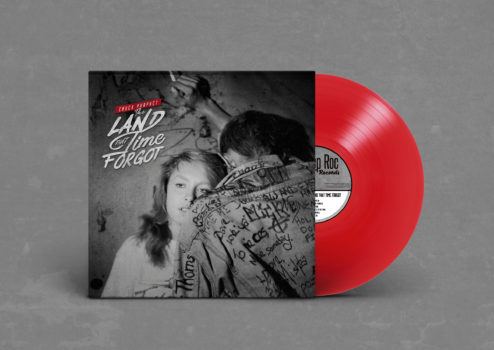
Sultry and smooth, yet sombre before we even start to think about what “Nixonland,” the newest single released from alternative folk artist Chuck Prophet, means on a thematic level, the music alone reignites our excitement for the forthcoming new album it’s featured on, The Land That Time Forgot.
Yet “Nixonland” does have a message to tell, or at least a picture to paint, and it’s brand new video, released yesterday, does that pretty well. The video, which you can watch below, mixes old photographs and video footage of Richard Nixon and company into comic book style graphics and animations, and altogether the piece conjures the gritty, moody atmosphere of Prohpet’s music, as well as the subject it sings. With it’s quiet, folky anger, “Nixonland” brings a vibe really reminiscent to a song like Lou Reed’s “Sword of Damocles.”
Prophet, a Bay Area native since his childhood, has time and again characterized the allure of San Francisco and its surrounding areas across the many albums he’s released throughout his career. Yet The Land That Time Forgot apparently comes as an album about San Fran while being away from San Fran—being that the singer-songwriter recently was forced to move out of his hometown for upstate NY, due to rising housing prices.
This ongoing issue of gentrification is what “Nixonland” decries in part, along with a world of other issues that the rest of the new album hits. The press release for the new song hints at this, saying: ‘“Prophet has described The Land That Time Forgot as a “21st Century Exorcism” from Silicon Valley to the White House.”
The Land That Time Forgot is set to be released on August 21st via Yep Roc Records.
Chuck Prophet Official and the gang land in Nottingham and Birmingham in January 2021 featuring the new album including this damn gem!
Most of the record’s dozen songs were co-written by Prophet and klipschutz, his longtime collaborator. Together, they recall the melancholy wonder of their native Bay Area, a land that, to the acclaimed songwriters, represents the hope and despair that makes rock ‘n’ roll so timeless, even if it’s now full of “robots with ironic haircuts.” It’s a darker, more present take on Americana and all its beautiful losers.
With this announce comes a new single, “Marathon,” which is mutant rock n’ roll at its finest … full of driving motorik bass, Everly Brothers-in-space guitars and vocal harmonies courtesy of Stephanie Finch. As the album reexamines the West Coast, the music video for “Marathon” channels the dance-a-thons of the Great Depression. To Prophet, these were the first reality TV shows, and they’re not too out of place in today’s gig economy. “There’s twisted psychology to the Depression-era dance marathons,” says Prophet. “And like Wrestling or the Kardashians, it’s all rigged. But we don’t want to believe it. The Marathons blurred the line between theatre and reality.”
“Marathon” is from Chuck Prophet’s new album, The Land That Time Forgot.
The Summer Tour of ’81 was a U.S. victory lap that marked Springsteen’s triumphant return from Europe. It began with the christening of the brand new Brendan Byrne Arena in East Rutherford, NJ. Recorded July 9th, Brendan Byrne 1981 was the final show of the six-night stand and catches Bruce and the E.Street band at a River Tour performance peak. The set list mixes riveting new songs and a summer Shore party including “Follow That Dream,” “Trapped,” “Johnny Bye Bye,” “The Ties That Bind,” “Sherry Darling” “Jersey Girl” the “Detroit Medley” featuring “Shake” and “Sock It To Me, Baby,” plus a guest appearance by Gary U.S. Bonds for the songs “This Little Girl” and “Jolé Blon.”
Imagine what it must have been like in New Jersey when it was announced that Bruce and the E Street Band would christen the newly constructed Brendan Byrne Arena in East Rutherford with a six-show stand to kick off their post-Europe victory lap.
Though only 32 dates in total, the Summer ’81 tour is one of the most celebrated in Springsteen’s long performance history. The epic-length sets of the previous winter had tightened up, giving the shows a sharper focus. The summer run also came after Springsteen’s first extended tour of Europe, an inflection point in his musical development that, with the introduction of three vital new songs to the set, brought with it the first indications of where his music might be going.
East Rutherford 7/9/81 is the final night of the Brendan Byrne run and a moment of culmination for Springsteen and the E Street Band. Their confidence and a new sense of purpose developed on the stages and streets of Europe drives this outstanding performance, and the audience is there to meet them. Even when Bruce assays new songs, the crowd sounds fully on board. Listen to the sympathetic clapping they add to “Follow That Dream”; the live archive version from London a month earlier has no audience participation at all.
The 7/9/81 show wastes no time getting to the meat of the matter, opening with “Thunder Road” into “Prove It All Night” and “The Ties That Bind.” Playing his sixth show in nine nights, Bruce’s voice needs a little warming up at the start, but his passion is already dialed in at 10. By “Darkness on the Edge of Town,” Bruce and the band lock into gold medal form, and the song spotlights Stevie Van Zandt’s critical vocal contributions in this era.
“Follow That Dream” is the first of the new songs, all three of which blur the line between cover song reinterpretations and originals. The Elvis Presley reinvention retains its stark, meditative arrangement debuted in Europe and closes on one of the most disquieting, chilling notes in the Springsteen catalouge.
“Follow That Dream” has an especially curious place in the canon in that it feels like an extremely significant song in Bruce’s evolution as a songwriter, despite having never had an official studio release (it was recorded for Born in the U.S.A. in 1983). It’s only been performed 15 times since the Bridge School Benefit in 1986, but it shows up in every decade, as recently as Australia 2017, the last E Street Tour to date. Is there a more meaningful unreleased song?
Carrying on, “Independence Day” revisits Springsteen’s father-son narrative, but this time with a new chapter recognizing the need to say the things that need to be said, now, while there’s still time. “Who’ll Stop the Rain” has never sounded bigger or bolder than this terrific rendition, and Jon Altschiller’s mix offers incredible instrument separation. The acoustic and electric guitar interplay is marvelous — and listen for the electric to kick in again, quite thrillingly, five seconds into “Two Hearts.” What a great version. The same can be said for “The Promised Land,” as heightened vocal phrasing brings the song to another level.
There’s an intriguing break in the mood as Bruce begins the harmonica intro to “This Land Is Your Land” only to be interrupted by the explosion of a firecracker (heard clearly in the right channel). Condemnation is immediate. “Whoever just threw that firecracker, you can do me a big fucking favor and don’t do it,” he says with total convinction. “Whoever you are, you are no friend of mine. This is a song about that respect; it’s about having respect for yourself, for the land that you live in.” Pure conviction powers Springsteen through the daunting take of “The River” that comes next as he attempts to reset following the firecracker, leading to one of the highlights of the night — if not the whole of the 1981 tour.
Word of this incredible new song “Trapped” . I had to hear it. Through the magic of mail order, I bought a bootleg LP called Prisoner of Rock and Roll that included “Trapped,” and I was gobsmacked. The simple start, the build, the intensity, the crescendo, then again and AGAIN, with the final release coming as Springsteen shouts “I’m Trapped” and the last note sustains. Mesmerizing and unlike any Springsteen song that had come before it.
“Trapped” is a cover (originally recorded by Jimmy Cliff), not an original. Cliff’s lyrics are basically intact, and fundamental melodic elements are there, too. But how Springsteen listened to this and developed the arrangement he performs in New Jersey is the alchemy of a musical genius. Hearing the song in this context—following the firecracker incident, “This Land Is Your Land” and a tentative “The River”—“Trapped” offers unmistakable catharsis.
Set one wraps with a high energy “Out in the Street” and full-tilt “Badlands,” rich with Van Zandt vocal accents, Roy Bittan piano, and plenty of Max Weinberg propulsion.
East Rutherford 7/9/81 is marked by its new songs, but it was also a summer Shore party as the second set makes clear. The festivities begin with “You Can Look (But You Better Not Touch),” replete with some interesting lyrical additions where our protagonist is “going downtown, gonna buy a gun.” Love the guitar mix on this one.
From there, bang bang into “Cadillac Ranch,” Bruce’s ultimate party song “Sherry Darling,” and “Hungry Heart” (with the audience taking the first verse capably) before we’re treated to a guest appearance. Gary U.S. Bonds, whose Springsteen-Van Zandt-produced album Dedication was released that April, duets with Bruce on the traditional “Jolé Blon” (which Springsteen introduced to his own sets in the UK), and Bonds takes the lead vocal on his hit single, the Springsteen original “This Little Girl.”
The third and final new song of the show, “Johnny Bye Bye” follows. Bruce offers a eulogistic rumination on Elvis Presley to introduce the song, which, like “Follow That Dream,” draws potency from its spare arrangement. It is a compassionate farewell to The King. Paired together, “Racing in the Street” extends the elegiac sentiment in a resplendent reading led by Bittan on piano.
Time to party. “Ramrod” low rides into an extra playful “Rosalita,” as Clarence Clemons set the scene with the opening lines from Lloyd Price’s “Stagger Lee”: “The night was clear, and the moon was yellow. And the leaves came tumblinggggggggg.” Band intros are on point, accented by tasty Stevie guitar licks throughout and concluding, of course, with The Big Man himself, who Bruce posits could be the next Governor of New Jersey. “Sounds like a good idea. Clarence Clemons Arena, I like that,” he says, referencing the new arena named for Governor Byrne. All of which leads to “Spotlight on the Big Man” and its brief vamp on “Sweet Soul Music.”
For the encore, the most Bruce Springsteen song Bruce didn’t write, “Jersey Girl.” This performance of the Tom Waits classic is the one that would be officially released as the b-side to “Cover Me” three years later, but I don’t recall that mix bringing Van Zandt’s guitar so charmingly to the fore. A superb “Jungleland” accompanies, with sublime soloing from Stevie and Clarence, along with a pacey “Born to Run” with Bruce soaring for “girl I’m just a scared and lonely rider.”
The New Jersey homecoming wraps with an extended “Detroit Medley” which takes several exciting detours as it careens along the turnpike. The first is “I Hear a Train,” then a rare romp through Mitch Ryder’s “Sock It To Me, Baby!” (written by Bob Crewe and Russell Brown), another scoop of Arthur Conley’s “Sweet Soul Music,” and finally a generous slice of Sam Cooke’s “Shake” in what might constitute the best “Detroit Medley” ever.
The phrase “giving the people their money’s worth” would be an apt description for the final night at Brendan Byrne Arena 39 years ago. Now, it is time to return the favor. All net proceeds from the sale of the East Rutherford 7/9/81 will be donated to the New Jersey Pandemic Relief Fund. Words Erik Flanagan.
Setlist:
Thunder Road, Prove It All Night, The Ties That Bind, Darkness on the Edge of Town, Follow That Dream, Independence Day, Who’ll Stop The Rain?, Two Hearts, The Promised Land, This Land is Your Land, The River, Trapped, Out in the Street, Badlands, You Can Look (But You Better Not Touch), Cadillac Ranch, Sherry Darling, Hungry Heart, Jolé Blon, This Little Girl, Johnny Bye-Bye, Racing in the Street, Ramrod, Rosalita (Come Out Tonight), Jersey Girl, Jungleland, Born to Run, Detroit Medley,
The Band:
Bruce Springsteen – Lead vocal, guitar, harmonica; Roy Bittan – Piano, synthesizer; Clarence Clemons – Tenor and baritone saxophones, percussion, backing vocal; Danny Federici – Organ, glockenspiel; Garry Tallent – Bass; Stevie Van Zandt – Electric and acoustic guitars, backing vocal; Max Weinberg – Drums
Additional Musicians: Gary U.S. Bonds co-lead vocal on “Jolé Blon,” lead vocal on “This Little Girl”
The Seeds rock band formed in Los Angeles, California in 1965. The group became known for psychedelic rock music and is considered a prototype for garage punk rock bands.
The Seeds were formed in 1965 when lead singer Sky Saxon had responded to an advertisement. Saxon, who had relocated to Los Angeles from Salt Lake City, Although Sky Saxon was usually credited as bass player, he did not play bass on any of the Seeds’ recordings. This was handled by session musicians, usually Harvey Sharpe. On stage, keyboardist Daryl Hooper would perform the bass parts via a separate bass keyboard, in the same manner as Ray Manzarek later did with The Doors.
The Seeds‘ first single, “Can’t Seem to Make You Mine”, was a regional hit in Southern California in 1965. The song was also played regularly on AM rock stations in northern California (and probably elsewhere), where it was well received by listeners, and eventually went on to become, and is considered today, a 60s cult classic song.
Sky Saxon sounds just as desperate on “Can’t Seem to Make You Mine” as he does on “Pushin’ Too Hard,” but the band must have sweated out whatever uppers they were on before slinking their way through this one. That subdued quality adds an element of darkness to a song that already straddles the line between unrequited love and stalker anthem.
The 1966 eponymous debut album by the mighty Seeds. The album contained their legendary garage punk anthem ‘Pushin’ Too Hard’ which cracked the U.S. top 40 and was featured on the groundbreaking Nuggets album which put 60s garage/psych back on the map in the early 70s. Musically uncomplicated with a flair for simple melodic hooks and dominated by Saxon’s unorthodox vocal delivery, their first two albums, The Seeds and A Web of Sound, are today considered classics of 1960s. There are so many issues of this album, sadly never released in Britain in the 60s, that it’s easier to just say you’re going to need upwards of £50 to find a decent 60s copy. An awesome album and totally essential.
The Seeds have been among the most frequently cited pre-punk influences by American punk musicians since the 1970s. Cover versions of various Seeds songs have been recorded by many bands.
it’s Hard to believe that Grace Barnett Wing was only four years younger than Elvis Presley! Yet she was one of the queens of the San Francisco Rock scene in the 1960s and 1970s. While Elvis was cranking out mediocre films, Slick was beginning to get noticed in a band called the Great Society with her then-husband Jerry Slick (drums), His brother Darby Slick (lead guitar), and David Miner (bass). It wasn’t long after the band made its debut at the Coffee Gallery in the City in October 1965 that Slick composed her signature song “White Rabbit.” about the effects of hallucinogenic drugs. The band’s popularity grew, and they recorded several tracks in late ’65 with Sylvester Stewart at the controls.
One single “Somebody to Love,” with Grace Slick on vocals, piano, and recorder was released. When Signe Anderson left the Jefferson Airplane to be with her daughter, Jack Casady invited Slick to join the band. The group’s musical focus shifted from folk-rock to a more psychedelic-oriented groove. and the landmark album “Surrealistic Pillow,”, was released in early 1967 and became an instant hit, landing at No3 on the Billboard Album Chart, with the singles “Someone to Love,’ and “White Rabbit,” also climbing to the Top 10 at the dawning of the Summer of Love. Suddenly the Airplane became one of the most popular bands in America, with Slick and the Airplane leading the charge for the psychedelic revolution that was in progress.
No less than George and Patti Harrison showed up in the Haight-Ashbury in August wondering what all the hoopla was about. Slick’s powerful vocals, political convictions, and outspokenness catapulted her to into prominence as a female Rock musician who was not afraid to speak her mind. On the Dick Cavett show in 1969, she dared to use a 12-letter word that George Carlin had proclaimed could not be said on television. Up against the wall indeed you ————! At the end of the 1960s after three more successful studio albums, a live album and a visit to Monterey and a trip to Woodstock, Jack Casady and Jorma Kaukonen departed the group. Slick responded by forming the Jefferson Starship with bandmate Paul Kantner, and others, recording: Bark,” (1971), “Long John Silver,” (1972), and a trio of solo albums: “Manhole,” (1974), “Dreams,” (1980), and “Welcome to the Wrecking Ball,” (1981). There was also an album “Sunfighter,” from 1981 with Paul Kantner.
The Jefferson Starship recorded eight albums, including the hugely successful “”Red Octopus,” which zoomed to #1 in 1975, and “Earth,” which went to #5 in 1978. Slick was the only original member of the now truncated band named Starship in the mid to late 80’s with the album “Knee Deep in the Hoopla,” (1985) Slick left the Starship in 1988. The last hurrah was the reunion of the Jefferson Airplane in 1989 including a well-received tour. Slick retired from the music business after the tour, citing that “All rock-and-rollers over 50 looked stupid and should retire.” After appearances with a revamped Kantner-led Jefferson Starship in 1995, and a Post 9/11 appearance, Grace Slick called it quits for good and began painting Although suffering some health issues in 2006, she has fully recovered. Her band the Jefferson Airplane was inducted into the Rock and Roll Hall of Fame in 1996 and was presented with a Grammy Lifetime Achievement Award in 2016. Grace Slick is fondly remembered by those 1960s baby boomers who watched her trajectory from the Great Society to the top of the heap with the Airplane and the Starship and watched her perform at Winterland, the Fillmore, the Avalon, and Fillmore West. Those were the golden days of Rock in San Francisco, and Grace was there to help ignite the spark.