

Beast of a lineup, this. It’s happening on my birthday & I always wanted to open for Jason Isbell – so it’ll be a nice start to a fresh trip around the sun. I hope to see you there! Thirty Tigers & Americana Music Association UK
Beast of a lineup, this. It’s happening on my birthday & I always wanted to open for Jason Isbell – so it’ll be a nice start to a fresh trip around the sun. I hope to see you there! Thirty Tigers & Americana Music Association UK

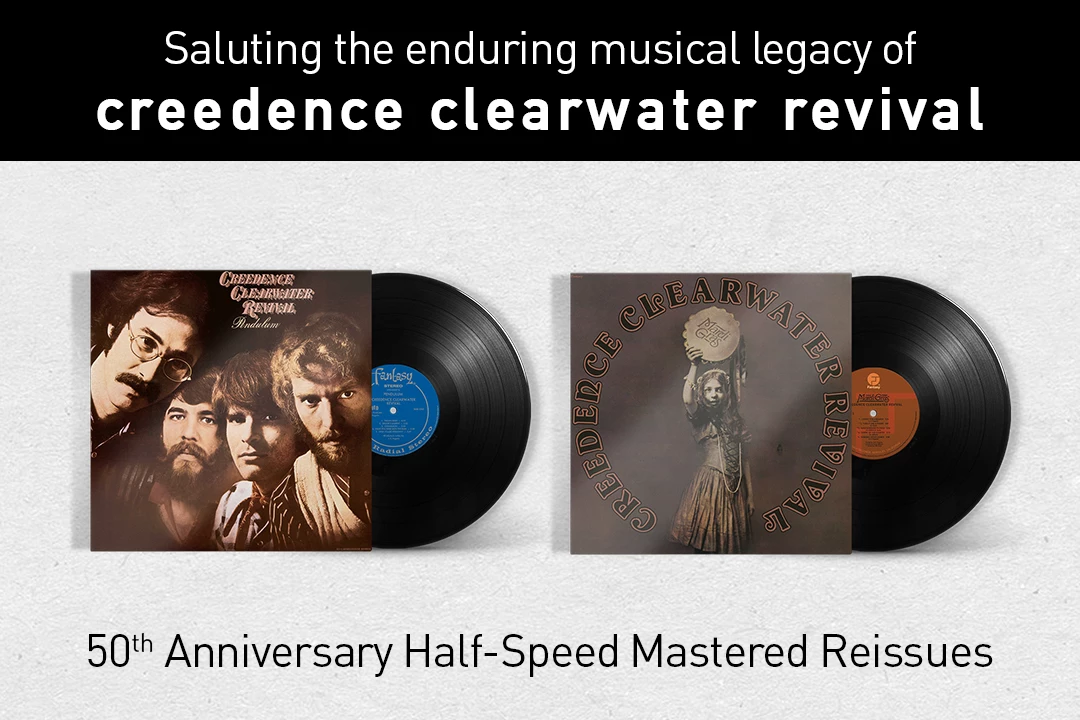
Craft Recordings continue their salute to the enduring musical legacy of Creedence Clearwater Revival with the official release of half speed mastered editions of the band’s two final albums: 1970’s Pendulum and 1972’s Mardi Gras.
Continuing the 50th anniversary celebration of America’s all-time greatest rock ‘n’ roll band, with the release of 180-gram, half-speed mastered editions of Creedence Clearwater Revival’s final two studio albums; 1970’s Pendulum and 1972’s Mardi Gras. Both LPs were mastered at Abbey Road Studios and come housed in beautifully crafted jackets replicating the albums’ original packaging.
Pendulum marked CCR’s second release of 1970—following Cosmo’s Factory—and was the group’s sole record to feature all original material. The album found the guitar-heavy group expanding their sonic palate—experimenting with new sounds (including the use of saxophones, vocal choirs, and keyboards) and even venturing into psychedelia. Pendulum spawned two global Top Ten hits: “Have You Ever Seen the Rain” and “Hey Tonight.”
CCR’s seventh and final studio album, Mardi Gras, followed the departure of founding member and rhythm guitarist Tom Fogerty. Highlights off the album include a cover of the rockabilly classic “Hello Mary Lou,” as well as the John Fogerty-penned rocker “Sweet Hitch-Hiker.” The poignant “Someday Never Comes,” meanwhile, marked the group’s final single.
Roughly half a century later, fans can enjoy a new vibrancy when they revisit these albums, thanks to the exacting process of half-speed mastering. Working from high-res transfers from the original analogue tapes, the half-speed mastering technique allows more time to cut a micro-precise groove, resulting in more accuracy with frequency extremes and dynamic contrasts. The result on the turntables is an exceptional level of sonic clarity and punch.
Both titles are available now via Craft Recordings.

50th anniversary pressing of the penultimate studio album from America’s greatest rock ‘n’ roll band; first released in 1970 at the peak of Creedence’s prolific career. Includes the hits “Have You Ever Seen The Rain,” “Hey Tonight” and more. The album was mastered at half-speed at Abbey Road Studios, benefiting from an exacting process that allows for an exceptional level of sonic clarity and punch. This 180-gram vinyl comes housed in a tip-on jacket replicating the original pressing packaging. During 1969 and 1970, CCR was dismissed by hipsters as a bubblegum pop band and the sniping had grown intolerable, at least to John Fogerty, who designed “Pendulum” as a rebuke to critics.
He spent time polishing the production, bringing in keyboards, horns, even a vocal choir. His songs became self-consciously serious and tighter, working with the aesthetic of the rock underground Pendulum was constructed as a proper album, contrasting dramatically with CCR’s previous records, all throwbacks to joyous early rock records where covers sat nicely next to hits and overlooked gems tucked away at the end of the second side. To some fans of classic CCR, this approach may feel a little odd since only “Have You Ever Seen the Rain” and maybe its B-side “Hey Tonight” sound undeniably like prime Creedence. But, given time, the album is a real grower, revealing many overlooked Fogerty gems. Yes, it isn’t transcendent like the albums they made from Bayou Country through Cosmo’s Factory, but most bands never even come close to that kind of hot streak. Instead, Pendulum finds a first-class songwriter and craftsman pushing himself and his band to try new sounds, styles, and textures. His ambition results in a stumble — “Rude Awakening 2” portentously teeters on the verge of prog-rock, something CCR just can’t pull off — but the rest of the record is excellent, with such great numbers as the bluesy groove “Pagan Baby” the soulful vamp “Chameleon” the moody “It’s Just a Thought,” and the raver “Molina” Most bands would kill for this to be their best stuff, and the fact that it’s tucked away on an album that even some fans forget illustrates what a tremendous band Creedence Clearwater Revival was.
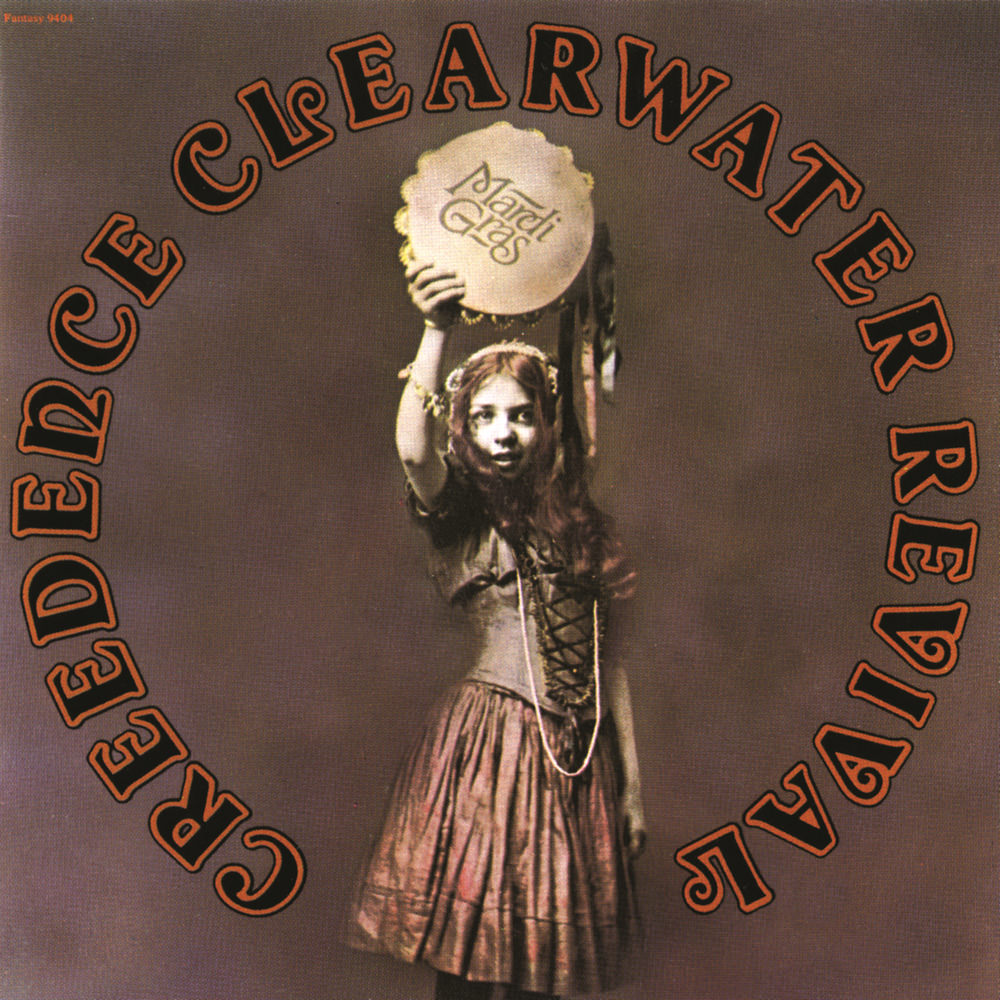
50th anniversary pressing of the final studio album from America’s greatest rock ‘n’ roll band; first released in 1972. Highlights include a cover of “Hello Mary Lou,” as well as the Fogerty-penned rocker “Sweet Hitch-Hiker”a Top Ten hit in the US, Australia, Canada, and across Europe. The poignant “Someday Never Comes,” marked the group’s final single. Mastered at half-speed at Abbey Road Studios, benefiting from an exacting process that allows for an exceptional level of sonic clarity and punch. This 180-gram vinyl comes housed in an embossed jacket replicating the original packaging. Pared down to a trio, Creedence Clearwater Revival had to find a new way of doing business, since already their sound had changed, so they split creative duties evenly. It wasn’t just that each member wrote songs they produced them, too.
Doug Clifford and Stu Cook claim John Fogerty needed time to creatively recharge, while Fogerty says he simply bowed to the duo’s relentless pressure for equal time. Both arguments make sense, but either way, the end result was the same: “Mardi Gras” was a mess. Not a disaster, which it was dismissed as upon its release, since there are a couple of bright moments. Typically, Fogerty is reliable, with the solid rocker “Sweet Hitch-Hiker” the country ramble “Lookin’ for a Reason” a good cover of Ricky Nelson’s “Hello Mary Lou,” and the pretty good ballad “Someday Never Comes” These don’t match the brilliance of previous CCR records, but they sparkle next to Clifford and Cook’s efforts.
That implies that their contributions are terrible, which they’re usually not they’re just pedestrian. Only “Sail Away” is difficult to listen to, due to Cook’s flat, overemphasized vocals, but he makes up for it with the solid rocker “Door to Door” and the Fogerty soundalike “Take It Like a Friend.” Clifford fares a little better since his voice is warmer and he wisely channels it into amiable country-rock, yet these are pretty average songs by two guys beginning to find their own song writing voice. If Clifford and Cook had started their own band (which they did after this album) it would be easier to be charitable, but when held up against Creedence’s other work, Mardi Gras withers. It’s an unpretty end to a great band.
Pendulum was the follow-up to the band’s chart-topping Cosmo’s Factory, and peaked at #5 on the Billboard 200. The accompanying Mardi Gras is CCR’s swan song, with it being the only album the band made without rhythm guitarist Tom Fogerty, who left the group in 1971
Orange Juice were a Scottish post-punk band founded in the Glasgow suburb of Bearsden as the Nu-Sonics in 1976. Edwyn Collins formed the Nu-Sonics (named after a cheap brand of guitar) with his school-mate Alan Duncan and was subsequently joined by James Kirk and Steven Daly, who left a band called The Machetes. The band became Orange Juice in 1979. The band released their first singles during 1980 and 1981 on the independent Postcard Records label founded by Alan Horne, along with fellow Scottish bands Josef K and Aztec Camera. These included ‘Blue Boy’ and ‘Simply Thrilled Honey’. Shortly afterwards this line-up signed to Polydor Records and recorded their first album, ‘You Can’t Hide Your Love Forever’.
Peel regularly played Orange Juice’s early singles on the Postcard label, which used the slogan “The Sound Of Young Scotland”. Peel’s introduction to the band came when he was accosted outside the BBC by Postcard boss Alan Horne, who brandished a copy of their debut 45, ‘Falling and Laughing’, and told the DJ: ”All those Manchester and Liverpool bands you play. It’s all a nice bore. You need to wise up, old man. Forget all that Bunnymen and Teardrop Explodes shit. This is the future. Get wise to it now or you’re going to look really stupid.
Peel confirmed the basic story a few days later, on 21st February 1980, when he gave airtime to the record for the first time. The DJ also saw Orange Juice live, at a John Peel Roadshow event with the Fall at Manchester Polytechnic at the start of November 1980. (John Peel: “On Monday night I met a couple of people from a band called Orange Juice who brought me a copy of their single and I played it and said I would play it on Wednesday’s programme, which I failed to do, so they probably thought, “Well, we won’t listen to him again, in which case they’ll have missed hearing the record, which is in tonight’s programme and is called ‘Falling And Laughing’.”)
Nevertheless, Orange Juice subsequently came to be seen as pioneers for a generation of indie-pop outfits played on Peel’s shows.
The complete session recorded by Orange Juice on 21st October 1980 for the John Peel show on BBC Radio 1 and broadcast on the 30th of that month.
Setlist:
1. Poor Old Soul (0:07)
2. You Old Eccentric You (2:38)
3. Falling and Laughing (4:55)
4. Lovesick (8:16)
The first track recorded for the first Peel Session Orange Juice recorded (21/10/1980) was a fierce take on ‘Falling and Laughing’, which some have called the definitive version of the song. This Peel Session was left out (unfortunately) out of the ‘Glasgow School’ compilation and originally appeared as the bonus tracks from the re-issue of ‘Ostrich Churchyard’.
The Band: Edwyn Collins (Guitar, Vocals) James Kirk (Guitar, Vocals) David Mcclymont (Bass, Backing Vocals) Steven Daly (Drums, Percussion, Backing Vocals)
The complete session recorded by Orange Juice on 3rd August 1981 for the John Peel show on BBC Radio 1 and broadcast on the 10th of that month. This recording is taken from the repeat on 6th October 1981.
Setlist:
1. Three Cheers From Our Side (0:43)
2. Holiday Hymn (3:51)
3. Dying Day (6:57)
4. Blokes On 45 (10:23)
On 25th March 1981, the DJ interviewed singer Edwin Collins at length during a week of BBC shows from Scotland. Peel appeared nonplussed that Collins was already looking to aim for higher production values and commercial success. In the same interview, the Orange Juice vocalist was also forthright in his criticisms of Peel’s shows, suggesting that they should include more vintage “classic” material for the musical education of listeners. In the event, the band soon signed for major label Polydor and largely dropped off Peel’s playlists. Both of their Peel sessions were recorded before the switch.
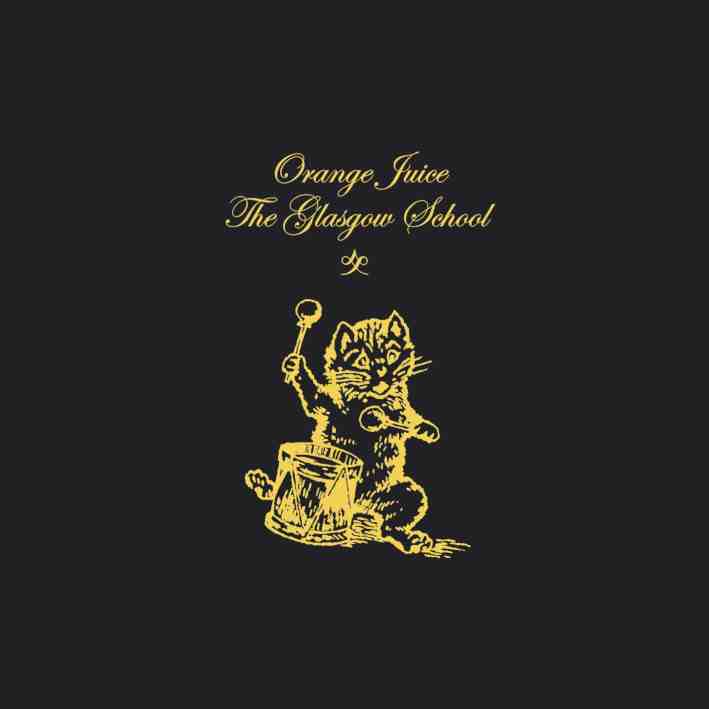
Even if you hate every note that Glasgow’s Orange Juice recorded in their early 1980s heyday, it would be almost impossible not to admire their guts. Scotland had caught on to punk late. When it did, audiences steadfastly clung to the troglodytic cartoon peddled by Sham 69 and Sid Vicious. Gigs were big on spitting and violence. There may have been more dangerous places to perform the songs collected on “The Glasgow School” – alternately sarcastic and romantic, invariably limp-wristed, and equipped with fruity lyrics about frolicking in the dew and doting on awfully pretty girls – but you couldn’t have reached them without joining the SAS.
Orange Juice fused new wave vibrancy with sun-dappled mid-1960s pop and disco. Under punk’s scorched-earth policy, the former was strictly verboten, but the latter constituted a flagrant incitement to public disorder. Orange Juice’s three albums, along with compilations of various shapes and sizes, have floated in and out of print throughout the years.
The four singles and unreleased debut album Orange Juice recorded for indie label Postcard in 1980 and 1981 still seem faintly miraculous. That is partly because of their remarkable musical content: there has never really been anything like it since, although not for want of trying. It is partly down to the subversive tang that clings to their greatest songs. The gleeful chant of “no more rock’n’roll for you!” on 1981’s Poor Old Soul sounds like a manifesto.
Instead, Orange Juice became, first, Britain’s hippest band, then bona fide pop stars – their big hit was 1983’s “Rip It Up” – and finally, an influence on everyone from the Smiths to Belle and Sebastian and Franz Ferdinand. The Glasgow School explains why. They were the first band to notice that the Velvet Underground’s agitated, trebly strumming bore a surprising correspondence to both the scratchy funk guitar of Chic’s peerless disco anthems and Northern Soul’s staccato chords. Both songs on their 1980 single “Blue Boy/Love Sick” sound breathlessly thrilled at this discovery: stomping Wigan Casino drums, funk basslines, piercing solos and jangling guitars all fighting for space. Even today, the excitement is infectious.
Orange Juice just couldn’t stop themselves writing gorgeous melodies. The starry-eyed swoon of Dying Day and the dizzy ebullience of Wan Light or Tender Object were strong enough to withstand the cheap studios and the band’s endearingly ramshackle musicianship. The unlikely mainstream success of Edwyn Collins’ “A Girl Like You,” the history of post-punk, or the birth of indie pop. “The Glasgow School”, released in 2005 by Domino Recordings, contains the band’s four singles for Postcard, the bulk of Ostrich Churchyard (a disc released in 1992, containing early versions of what would become 1982’s You Can’t Hide Your Love Forever), a Stars on 45-style version of “Simply Thrilled Honey,” and a crude cover of the Ramones’ “I Don’t Care.”

For a lot of people, the material here (dating no later than 1981) is where Orange Juice begins and ends. The band signed to Polydor soon after the latest song on this disc was recorded, and they promptly gave their sound a coat of shiny wax — so they helped invent indie pop, only to abandon it before their first album. Though the notion extends throughout Orange Juice’s discography, they were nothing if not fearless. What other way is there to describe lyrics like “I wore my fringe like Roger McGuinn’s/I was hoping to impress/So frightfully camp — you laughed,” or their wholly convincing (if occasionally gawky) way of bouncing the jangly folk-rock of the Byrds off the fat-bottomed disco drive of Chic, all the while creating an identity all their own? Both the singles and the Ostrich Churchyard takes are as crafty as they are crude, and if you can’t get past the amateurishness, there’s plenty of winsome attitude to win you over. This disc serves as proof that, along with Josef K, Associates, Altered Images, Simple Minds, Cocteau Twins, and the Scars, Orange Juice helped make Scotland a very productive resource during the post-punk/new wave era.
Weaker tunes would certainly have buckled beneath Edwyn Collins’ unique approach to vocals. A couple of months ago, the website where Grace Collins has courageously documented her husband’s recovery from a cerebral haemorrhage reported that he had been singing again, adding that “his tuning needs working on”. “Grace,” one fan gently replied, “his tuning always did need work.” In fact, you could spend all day throwing adjectives at Collins’ voice on The Glasgow School and still not come up with a satisfactory description. Occasionally, he sounded like a Caledonian Bryan Ferry attempting to croon while balancing marbles on his tongue and stifling a fit of the giggles. Usually he sounded more peculiar than that.
What should have been irritatingly affected is charming. This may have something to do with the words Collins sang. Displaying his famed capacity for candour and even-handedness, Morrissey has never conceded his debt, but he was definitely taking notes. Collins‘ lyrics are rich with the same jaded sarcasm, arcane language and rarefied romantic longing. Striking lines whizz past with startling regularity: “The fun begins as soon as you stop your whining”; “To put it in a nutshell, you’re a heartless mercenary”; “Sorry to moan but it’s what I do best”.
Inevitably, perception of The Glasgow School has been changed by Collins’ illness. For a brief and horrible moment, it looked as if an album intended to reaffirm Orange Juice’s place among the pantheon of truly great British bands might become a memorial for their former leader. Now, with Collins apparently improving, it feels like a particularly potent get well soon message. Pop music needs unique and innovative talent. As The Glasgow School proves, they come no more unique and innovative than this.


Ahead of her upcoming album, emerging Nashville indie rocker Katy Kirby has dropped the track “Juniper,” Working on her own debut album a few years ago was also a process of figuring things out. There were setbacks and fall-throughs that she described as “a series of painful failures” to see the songs through, true to their form.
“Over the years I had met a couple of people this has happened twice now who I’ve been excited about working with,” she said. “We’ve gotten started on songs, and they’ve stalled and then been left to decay in some sort of purgatory. I was young, and didn’t know what I was doing at the time, and didn’t know how to make that not happen. When I started trying to make this record I just had zero idea what I was doing. I would try to demo things myself, or do ‘producer-y’ work of visualizing and arranging a song in my head, imagining those textures sort of over the words and structure. And I had no idea how to do that.”
To overcome it, she turned to those close to her. “My partner at the time was incredible at helping me find ways to do that ways to teach myself how to do that, which I’m very grateful for. They actually co-produced the record,” she said.
While none of those involved had ever tackled a project of this scale, “Cool Dry Place”, set for release February 19th on Keeled Scales, was created by going through the motions: a labour of doing, and re-doing. “With people with you, or behind you, who you really trust and enjoy, it’s very fun the working out and scrapping process, rather than demoralizing,” she said. “So the series of painful failures were of the physical kind. Of those songs literally disappearing on me. But also genuinely just me, and us, sort of learning how to make a record.”
Perspective is prevalent and changing throughout Kirby’s tracks, in a subtle way. The earnest gut-wrenching exists symbiotically with an ironic callousness on tracks like “Traffic!”; its quirkily upbeat production brushes off and pokes fun at the aching beneath it. But outside of their sonic context, her words come as blows. “And I see you in the future / You look just the same but older / And I wave to you but I don’t slow my pace,” she sings on “Tap Twice.”
Now based in Nashville, the indie-rocker returned home to Texas mid-pandemic, like many whose work had run dry and were struggling with rent. She spent early lockdown making friends with unfamiliar records and genres, old and new.
“Something I’m often guilty of feeling is that I have homework to catch up on in terms of consuming art that I want to consume, in a good way. It allowed me to go down a few rabbit holes that I wouldn’t have otherwise,” she said. She cited M for Empathy by Lomelda as one of them, along with lap steel guitar instrumentals
“Cool Dry Place” is the debut full-length from Texas-bred, Nashville-based indie rocker, Katy Kirby

“The less I process something or the less I’ve sat with something, the more likely I am to write from a place of, or to make a song that sounds like “Traffic!” I think my initial impulse isn’t to take my sadness very seriously. I tend to get a little flippant with it. I’m not sure why that’s my go-to, but it is,” she offered. “Songs like ‘Portals’ and ‘Eyelids’ are technically the healthier version of me thinking about things that are upsetting or difficult.”
The presence of friends adds a genuine quality to the album tracks, making it feel like a record made together, if born alone. Earlier this year, Kirby solo-recorded five songs from the track list for Audiotree, most of which are full-band on the record.
“I really love some of those recordings because the majority were tracked live with all of us in a room,” she said, a happy accident that came about as they tried to track drums and rehearse at the same time. “There’s a couple of moments where it felt like A Band, rather than a solo project, which I loved.”
Katy Kirby is a buoyant post-folk songwriter whose elastic, pristine vocal delivery wraps around and within experimental song constructions. The Keeled Scales signee continues to hone her craft with each release; perfecting a divine blend of stylish song writing. Check out the performance by Katy Kirby “Live at Audiotree”
. Tracklist 1. 00:00 – Juniper 2. 03:02 – Portals 3. 06:02 – Traffic! 4. 09:36 – Tap Twice 5. 12:17 – Cool Dry Place
Recorded on October 26th, 2020 in Chicago, IL.
With both an upcoming album cycle and a vaccine roll-out looming, how does Kirby feel about the next phases of life, and the potential for a return to the old ones? “I love trying to charm the pants off of people at shows. I love people… but I think a lot of the wonderful things that have happened with this record, in producing it and releasing it networking doesn’t exist entirely right now. Except for talking at people on Twitter, there’s not really a way to network. And things have been fine! I’ll still be psyched to go to things, whenever things are a thing again. But I think the main shift that will remain in me is that I’ll leave things much sooner than I would otherwise, or whenever I want to leave. That’s the main pain point that I have defeated, personally,” she concludes.
For now, she’s spending the rest of the day in Alabama with Gizmo and her friends, smoking cigarettes and chasing down the nearby ocean
“Cool Dry Place” is the debut full-length from Texas-bred, Nashville-based indie rocker, Katy Kirby

Kindsight is a new act from the Copenhagen indie scene and the first act outside of Sweden to sign with Rama Lama Records (Melby, Chez Ali, Steve Buscemi’s Dreamy Eyes etc.). Last fall, the young quartet released their two very promising debut tracks ‘Who Are You’ and ‘ Terminal Daze’. Two warm, nostalgic and atmospheric indie pop songs that got them praise such as “your new favourite band”. Now, the slow-burner ‘How I Feel’ follows and expands the sound of this promising act.
Kindsight are Nina, Søren, Anders and Johannes and formed out of Nina and Sørens shared love for The Sugarcubes. According to the band, the two of them then recruited drummer Johannes to “drag him out of an unsettling obsession with jazz-music” and bass player Anders was chosen “only because of his looks and his ability to fit into small bags.”.
The quartet makes retro-tinged indie pop that is instantly appealing and addictive. Nina’s vocals crowns the atmospheric soundscape perfectly and makes Kindsight something that’s been missing in Scandinavia for a long time.
Kindsight on ‘How I Feel’: Nina was once gripped by an overwhelming need to tell the world how she felt. Everyone agreed that it seemed like a fair deal, as she is the lead-singer. A longing ballad with a hazy view was built to heed her demand. But as it turns out, Nina hasn’t got a clue how she feels.
How I Feel is out now on all platforms via Rama Lama Records.
Released January 15th, 2021

Babehoven are a band who featured on the site back in May last year, when they shared the single “Dissociative Tally”. That was originally penned as the first taste of an upcoming EP, “Yellow Has A Pretty Good Reputation”, a record that was subsequently delayed, and will finally see the light of day at the end of this month. The record is the follow-up to last year’s, “Demonstrating Visible Difference of Height”, both EPs being recorded in the band’s current home of Vermont.
Led by singer, songwriter and producer Maya Bon, Babehoven have gradually been growing a following as Maya wound her way between Portland and Los Angeles, honing her craft and using music as a way of, “externalizing my deepest, most vulnerable sense of self through song”. Discussing the inspiration behind Yellow Has A Pretty Good Reputation, Maya has described it as an exploration of, “dissociation, loss, and the quest for self-love”. Musically, this manifests in a certain warped quality, as the warm fuzz of tape-distortion adds a wobbly quality to both Maya’s lightly muffled vocals and the steady rhythmic quality of her guitar playing. Working with producer Ryan Albert, Maya seems to have created an insulated musical world, a place for us all to sit with our discomfort, and learn to come out the other side stronger and more sure of who we are. Keep this up and even yellow might have to bow down to Babehoven and their rapidly burgeoning reputation.
Releases June 19th, 2020

The song writing project of Diane Jean, Clever Girls have subsequently expanded into a four-piece band, based out of Burlington, Vermont. Signed to Egghunt Records, the band have recently announced details of their latest album, “Constellations”, the follow-up to their 2018 debut, Luck. With the album due in March, Clever Girls recently shared the first taste of the record, in the shape of new single, “Baby Blue“.
Like much of Constellations, Baby Blue actually predates the release of Luck, much of the album was written years back when front-person Diane first came-out as a gender-nonconforming person. The album tackles all the complex emotions that come with announcing that to the world, and learning to commit to your own happiness. Discussing Baby Blue, Diane has suggested the track has taken on a new meaning during the current pandemic, focusing in on the isolation Diane felt while stuck inside with only their trusty cat Hank for company, “it was exactly the type of experience that the song was born out of in the first place. The feeling of being isolated, and cut off from the world even when it was still turning“. Musically, Baby Blue has a lush, textural quality and the bristling, 1980’s inspired guitar line, and prominent bass sit in perfect contrast to Diane’s light, dextrous vocal delivery.
Ultimately for all the talk of isolation and loneliness, there’s a sense of euphoria running through the music of Clever Girls, a feeling of coming through the dark time and learning to find delight in the possibility of the light; less a record of feeling alone and more one of learning not to, this is the sound of a songwriter growing into their role and moving their music to a thrilling new place.
When Clever Girls began writing Constellations, it was early in 2018 and they had not yet finished recording what would become their first full length album, Luck. Constellations was primarily an album written between weeks of tour dates, at the height of exhaustion, and amidst self-discovery. Having just come out of the closet as a queer and gender-nonconforming person, one can find the album set in both front-person Diane Jean’s fantasies, as well as the intimate and impressionistic frontier of their every-day personal life. It is an album about a self-corrected second coming of age that was born in the corners of science fiction and projected onto the walls of Jean’s bedroom. Constellations speaks to Jean’s desire for both personal autonomy that they have not yet experienced, but further, the growth often gained in young adulthood that as a closeted queer person, was lost on them.
Songs written by Diane Jean and Clever Girls
Releases March 26th, 2021


Johanna Samuels broadens the definition of pop music. The melodically and lyrically focused singer-songwriter stands on the shoulders of the great musicians of the 1960’s and 70’s she manages to create a sound and sense of musical place that is completely her own. Although Johanna Samuels has been sharing her music with the world since back in 2016, there’s a certain buzz around her of late that suggests an artist very much on the up. Back in October, Johanna shared a new single, “High Tide for One”, the first offering from her upcoming Sam Evian-produced album, due this Spring as a co-release between up-and-coming UK label, Basin Rock and Mama Bird Recording Co. The album was recorded in the Castskill Mountains alongside a small band of musicians, and features guest vocals from a stunning array of female singers, including the likes of A.O. Gerber, Lomelda and Courtney Marie Andrews.
Born in New York, and named after a Bob Dylan song, Johanna’s path to music was never really in doubt. After re-locating to Los Angeles, Johanna has spent the best part of a decade honing her song writing craft and learning to find a way to balance her inherent way with a melody while crucially finding plenty to say. Thankfully, High Tide for One was a particularly exciting example of Johanna achieving exactly that. The track was written in response to watching Dr. Blasey Ford’s testimony against Supreme Court nominee Brett Kavanaugh, as Johanna recalls, “it felt a bit hopeless. I felt exhausted, and for a while, I didn’t have the strength to explain it or try to talk it through with anyone who wasn’t working to change it”. These feelings are set to a perhaps contrastingly lush backing, as warm Rhodes-piano and a gorgeous-meander of slide-guitar, the breeziness of the musical backing set against the steely quality of the vocal, as she sings, “last night I saw that man on TV, his tears tasted like silver bullets and supremacy“. It may only be a single track, yet there was plenty within it to suggest Johanna Samuels might just be one of 2021’s most important musical voices.
Released October 27th, 2020
2020 Mama Bird Recording Co.

An emerging new talent on the Glasgow music-scene, Lizzie Reid has previously caught the ear of the likes of 6Music, The Line Of Best Fit and The Great Escape festival. Signed to Seven Four Seven Six, home to the likes of Matt Maltese and Matilda Mann, Lizzie has recently announced the release of her debut EP, “Cubicle”, which will arrive next month.
Ahead of the EP’s release, Lizzie has already shared a number of tracks from “Cubicle” from the pensive introspection of “Always Lovely” to the beautiful break-up anthem, “Seamless”, with its gorgeous string-led crescendos. Last week Lizzie shared the latest offering, “Been Thinking About You”, adding a certain jazzy-flourish to her acoustic led compositions as she sings a tale of admiration for a friend who, “was such a support for me at a time I wasn’t feeling my best”.
Perhaps the most exciting thing about Lizzie Reid’s music is the progress it is already showing; with every new song, she seems to take us, as listeners, to somewhere different, the sign of an artist in charge of her own vision, and increasingly sounding like someone for whom acclaim is an inevitability.
Lizzie Reid under exclusive license to Seven Four Seven Six
Released on: 13th January 2021 Author: Elizabeth Reid-Boulter
Dedicated to all jangly indie/guitar/jangle-pop
Show a little faith there's magic in the night
Horror, Science Fiction, Comic Books and More
IN MEMORY EVERYTHING SEEMS TO HAPPEN TO MUSIC - Tennessee Williams
A Celebration of Thrillers, Noire and Black Comedy by Pamela Lowe Saldana
Join me as I listen to every single #1 single!
Two Guys In Search of Great Music
Hoping to make the world more beautiful
hear ye, hear ye!
Celebrating music craftsmanship
Favorite song lists, reviews, featured indie artists, and music commentary.
A Blog About Music, Vinyl, More Music and (Sometimes) Music...
Eclectic reviews of ambient, psychedelic, post-rock, folk and progressive rock ... etc.!
A transparent attempt to promote a writing career
Quality articles about the golden age of music
Slow molasses drip under a tipped-up crescent moon.
Click Header to Return Home
to Rock, Country, Blues & Jazz
A Glasgow view of Americana and related music and writings.
Rewind the Review
A stroll down memory lane through my music collection
the best music of yesterday today and the tomorrow, every era every genre
 The Fat Angel Sings