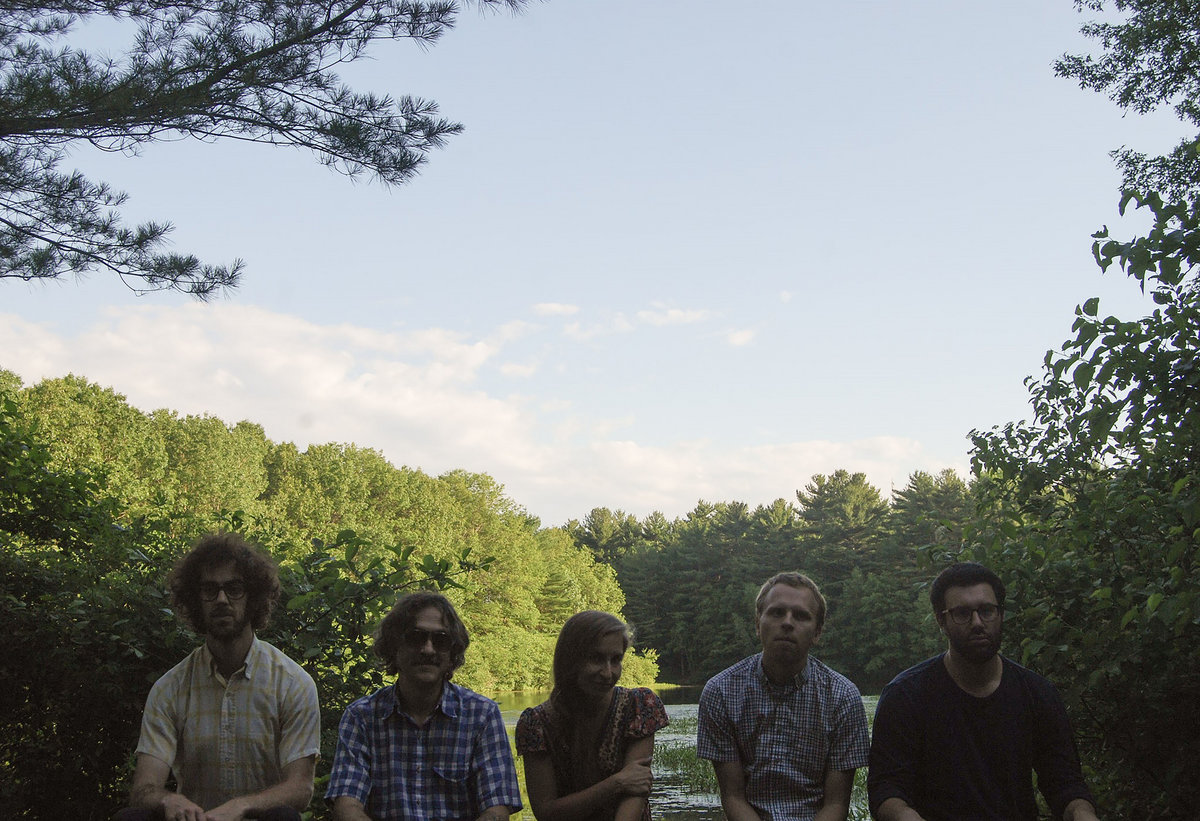
Founded in New Haven in 2016 Headroom is a project initiated and headed by guitarist Kryssi Battalene. With changing collaborators on her side the band is offering psychedelic and partially trippy songs with a proper noise factor due to some distorted guitars as a special trademark.
When it comes to grandiosity, Pete Townshend takes the cake. He’s always had huge ambitions, as his numerous concept albums—both with The Who(Tommy, Quadrophenia, the abandoned Lifehouse project, and on his own—demonstrate. And I suppose I always took it he had an ego as big as his ambitions. But what is one to make of his 1972 debut solo album, “Who Came First”, on which he turns things over on two of the LPs nine tracks to other people? And performs a third song he didn’t even write? Certainly that’s an act of humility, if not abject self-abasement.
And Who Came First isn’t particularly ambitious, either: he throws on a song that would later appear on The Who’s Odds and Sods, along with a prayer set to music for his spiritual guru Meher Baba, and so on. But there’s something becoming about Pete’s laid-back approach on Who Came First he’s not trying to conquer the world for once, just to be content in it. And the LP includes a cool bunch of tunes that you’re guaranteed to love, even if “Parvardigar” (his salute to Meher Baba) isn’t one of them.
Pete isn’t entirely without ego. While he admirably declined to fill the studio with a star-studded cast of ringers, he went too far in the other direction, recording almost the entire LP all by his lonesome. The great Small Faces/Faces bassist and singer Ronnie Lane makes a cameo, as do musical gadfly Billy Nicholls and percussionist Caleb Quaye, best known for his work with EltonJohn and Hall & Oates, and that’s it. Townshend even plays the drums, adequately if not inspired, and who knew? I wouldn’t be surprised to find out that he also took charge of mopping the studio WC.
Opener “Pure and Easy” is real pretty, lovely actually, but it doesn’t measure up to The Who version on Odds and Sods, with its powerhouse closing and great drumming by Keith Moon. But Pete’s take is still quite nice, and well worth a listen, for his guitar solo, his equally cool keyboards, and the song’s takeout, which features some nice drumming and Townshend repeating, “There once was a note, listen,” which may be cooler on The Who version, but still packs a punch here.
Next up is Ronnie Lane’s homespun “Evolution,” on which Townshend contributes guitar. It’s not one of Lane’s best songs, but the guitar work is stellar, and you can’t beat Lane’s great vocals (and the enthusiasm he demonstrates) with a stick. The two always worked well together, and I can’t help but think a duet would have been sweet.
Billy Nicholls’ “Forever’s No Time At All” follows, and opens with a funky beat, complete with Townshend’s drumming and handclaps. Nicholls sings in a high voice, the tune sounds like great AM radio, and no way would anyone anywhere identify this baby as a Townshend song. And no wonder, as he hardly lifts a finger. “Nothing Is Everything (Let’s See Action)” is a great tune that The Who would later release as a single.
It has great propulsion, and makes you want to dance, and Townshend’s impassioned vocals and nice guitar solo work their magic until the song’s midsection, when things slow down long enough for Pete to admit that he doesn’t know where he’s going, but that’s all right with him. Then he practically goes Beach Boys on your ass, before the song takes off again, Pete backing himself on vocals, singing “Nothing is” before following himself with an echoing “Everything.” Nice. Nicer even, in my opinion, than The Who’s piano-dominated version, although the vocals on the latter are more top of the pops.
“Content” was co-written by Townshend and Maud Kennedy (another Baba acolyte) and features some lovely piano and Townshend at his most tender and devout. A quiet song with great guitars and Townshend’s voice dissolving into an echo, it’s over before you know it, and while I don’t particularly like the content (I have a low threshold for spiritual claptrap) I’m happy if he’s happy, and I just do my best not to listen to the words.
Pete’s cover of Ray Baker’s country tune “There’s a Heartache Following Me” is divine, with its keyboard and guitars and Pete’s vocals sounding as delicate as cut glass. I love the instrumental interlude, and I’d love to know who joins him on the second half of the song, but the album credits are taking the Fifth. Pete’s choice of a country cover might seem odd, but he proved he could work in the idiom on collaboration with Ronnie Lane on “When the Rivers All Run Dry” on 1977’s Rough Mix. “Sheraton Gibson” is a natty up-tempo tune with Pete sitting in the Cleveland Sheraton playing his Gibson and wishing he was home, and he does some cool stuff on the synthesizer and if it’s not a great song it’s a damn good one.
“Time Is Passing” is a bouncy domestic idyll with a catchy melody and a great bridge, some very delicate keyboards, and nice lyrics, and it all builds to a climax in which he declares it’s only through his music that he’ll be free. Which brings us to the mawkish closer “Parvardigar,” a Baba Meher prayer set to music. It’s a nice enough tune, a bit on the repetitive side, and almost sucks me in when Pete gets all passionate about his God’s attributes. Then he sings, “Before you we cower” and I turn my ears off, because there’s nothing that irks me, a devout agnostic, like a vindictive God. I have to handle it to Pete, though; the song builds to several nice climaxes, and they come close (but not close enough) to reconcile me to what amounts to a sermon set to music.
Several subsequent versions have emerged with bonus tracks, but none of them move me. He performs a version of “The Seeker” that is decidedly inferior to The Who version, and as with “There’s a Heartache Following Me” I’d love to know who’s singing along with Townshend on the song. And the Who Came First version also demonstrates the supernatural talents of the late Keith Moon; without him, the song lacks whump and urgency, and who wants that?
Pete Townshend is one of the immortals—I’d grant him that status based on “Baba O’Riley” and “Won’t Get Fooled Again” alone—and it’s nice to hear him in a more relaxed mode. Well, sort of nice. I’ve always put him in the same category as Bob Dylan; to wit, they’re both artists who have done their best when they were discontented, scornful, lost, you name it. A happy PeteTownshend is a good thing for Pete Townshend, but not particularly for the rest of us. In the gutter looking at the stars; to use Oscar Wilde’s words, that’s where Townshend has always done his best work. He’s the seeker, and his contentment is, alas, our loss.
Formed in Buckinghamshire, the dreamy-pop quartet Bleach Lab have subsequently relocated to South London, where they’ve been squirrelled away working on the tracks that make up their debut EP, “A Calm Sense Of Surrounding”, out later in the Spring. After the break-out moment that was their last single, “Never Be”, which was something of a sensation with the online blogging community, this week the band have returned with a brand new single, “Old Ways”.
Discussing the inspiration behind Old Ways, vocalist Jenna Kyle has suggested it is about, “the angry side of the grieving process at the end of a relationship”, and how that anger is aimed both at the way the other person treated you, and, “towards oneself for still missing them regardless”. The band’s exploration of a relationship in collapse is set to a backing of lush, textural guitars and distant rumbling drums, a perfect back-drop to Jenna’s soaring vocal, reminiscent of the likes of Night Flowers or Winter Gardens. As the band note, anger is the first stage of grief; with the rest of the record they seek to explore the other stages, and while that might not be the easiest journey, it’s going to be intriguing to follow Bleach Lab every step of the way.
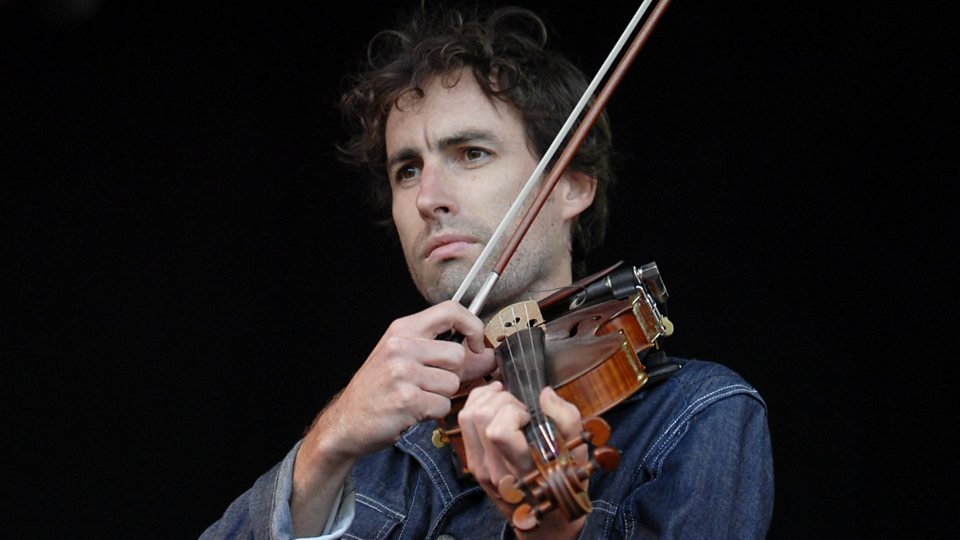
It’s been a joy to hear the music of Andrew Bird shift and change. Bird’s early music, from the late ’90s, was steeped in hot jazz and blues music from the early days of the phonograph, then later shifted to new technologies using loop pedals to layer voice, whistling and violin. His lyrics often have a calculated quality, filled with abundant wordplay and observations. Last year, Bird made one of his most personal albums, “Are You Serious”. So it felt appropriate that he would play some of his most personal work in this most intimate of settings, the Tiny Desk Concert. For this performance of three new songs, Bird came with a stripped-down acoustic band: just drums, upright bass and acoustic guitar, with Bird himself on violin. It functioned something like a hot jazz ensemble, with no effects pedals; just the songs, front and centre, sounding perfect.
When you watch the video for “Badlands” the first single from Cristina Vane’s forthcoming debut LP Nowhere Sounds Lovely, the first thing that catches your eye is the bottleneck on her finger. Like a young Bonnie Raitt, Vane sings from both her voice and her supple, bluesy guitar playing almost simultaneously–her sound as earthen as the South Dakota landscape with which she sings about on “Badlands.”
“This song was an exercise in trying to capture the energy of a place,” Vane says about the song. “Until this record, I seldom wrote about anything besides human emotion and relationships. My first cross-country tour lasted five months, and opened up my experiences to visions and sensations I had never seen or felt. Contemplating a place like the Badlands of South Dakota for the first time inspired me to write a song to do it justice.
“Out of the flat, wind-strewn setting of the prairie, the Badlands emanate and draw your attention to them immediately, much like the swallows that seemed drawn to my car as I drove through long stretches of the Dakotas (hence, ‘dead birds’),” she continued. “You are constantly seen, for there is nowhere to hide on the plains. The toughness of the weather and soil year around, paired with the menacing, jutting, mineral rocks are what give the Badlands their name, and they are what birthed this song.”
Yet Nowhere Sounds Lovely was recorded in Tennessee, where Vane and an A Team of studio pros–including bassist Dow Tomlin, Tommy Hannum on pedal steel and fiddle man Nate Leath among others–convened inside The Embassy in Leipers Fork with acclaimed producer Cactus Moser to create an album that chronicles her first cross-country trip in the United States.
I had hit a wall in Los Angeles trying to pursue music and decided it might be worth seeing if other people around the country respond to it, Having been born and raised in Europe, it was a way for me to get closer to understanding my American side as well as to reconnect with my musical purpose- to connect with and inspire people through performance. I recorded Nowhere Sounds Lovely pretty soon after ending the tour and deciding to move to Nashville, and I think it reflects elements I gleaned from my travels and discovering country and bluegrass music so late in my life.”
Nate Leath layed down some really impressive fiddle, and I would never have thought to include that on my previous records,” she proclaims. “Similarly, Tommy Hannum plays pedal steel and dobro on the record. ‘Dreaming of Utah’ and ‘Satisfied Souls’ are both waltzes which nod to the classic country style.
Born in Italy to a Sicilian-American father and a Guatemalan mother, Cristina Vane has always had a tenuous relationship with geography. She grew up between England, France and Italy, and was fluent in four languages by the time she moved to her fathers’ native United States for university at the age of 18. And when you listen to “Badlands” and watch its accompanying video.
Vocals, and guitar – Cristina Vane Percussion- Cactus Moser Bass – Dow Tomlin Pedal Steel- Tommy Hannum “Nowhere Sounds Lovely” comes out on April 2nd.
Samantha Westervelt and Olivia Saperstein left their previous band, The Pinks, because they were sick of being called “cute” and they wanted to scare people. So they formed Egg Drop Soup, vividly named after their own euphemism for menstruation, and set out to raise a bit of hell.
“We just knew that we wanted to do something a little harder than the sort of ‘60s, surf punk doo-wop thing,” Westervelt says. “It wasn’t really giving us an outlet for our rage the way that we wanted. I basically came up with the name one day when I was thinking about how I had eggs in my body and one drops out once a month. I texted [Saperstein], almost half joking. ‘You want to start a side project called Egg Drop Soup’ and she replied ‘Yeah, duh.’ It went from there. That was in 2017.”
The line-up originally included a dude – drummer Greg Settino. Now though, Bailey Chapman occupies the stool, and the chemistry is perfect. The issues that plagued their last band are in the past. “I was butting heads with another member of the group if I’m being honest,” says Westervelt. “It was an ego issue. She just had some trouble relinquishing control over certain things, struggled with sharing ideas, and all of that. I was also really sick of people telling me how cute we were and how cute our music was. Fuck that. I don’t want to be cute. I want to scare people, or make people think. Be the opposite of what someone assumes I’m going to be just by looking at me.”
“There wasn’t a lot of room in that band to play around,” adds Saperstein. “We had a lot to say and a lot of energy to get out. Playing guitar, I wanted to play in a heavier band. So it was a no-brainer for me.” It certainly is a heavier band. Egg Drop Soup isn’t pop-punk at all, but rather sludgy, swampy punk in the Clutch, Eyehategod sort of way. A few people, they say, are shocked when they see them play.
“I want everyone to be like, ‘What the hell was that?’,” says Saperstein. “I think we do that. People never expect us to sound like what we sound like and do what we do.” The sound, Westervelt says, has evolved during their three years of existence. It’s inevitable – she only started playing bass in 2016 and has gradually been writing songs more and more using that instrument rather than keys.
“As I’ve grown as a bassist, I think that my songriting personally has evolved a lot,” she says. “Olivia comes up with some of the most complex shit that I’ve ever heard. It just keeps growing. So I would say yes.” “I think it’s hard to track our evolution,” adds Saperstein. “Obviously, the pandemic, but also we’re releasing all the newer songs as far as when they were written. But I think we’ve 100 percent evolved as far as all of the music has gotten more complex, and heavier.”
Christmas Day saw the band drop their Eat Snacks and Bleed EP, and they’re super-happy with the way it turned out.
“I think even though some of the songs on there were recorded like two years ago when we were still very fresh, there’s definitely a storyline with the attitude and everything, and I just think those five songs go really well together,” says Westervelt. “It’s like a little journey through our minds.” The themes, they say, include standing up for yourself, not telling a person how to behave, living on your own terms, and calling out injustice. And naturally, the outgoing Trump administration was impossible to ignore.
“It’s interesting, because ‘Hard to Hold On’ specifically became more relevant even though it was written last year,” says Westervelt. “The pandemic hadn’t happened, but Trump had been in office and that was something that weighed the state of affairs that we experienced in our country for a while, not just because of him. I think that definitely informed our work a lot, because it’s just what we live every day. How can you not write from what you know and experience?”
Meanwhile, the recently released video for the song “Swamp Ass” has an ‘80s prom theme, inspired by a house they stayed in for Saperstein’s birthday.
“It hasn’t been updated since the ‘80s,” says Westervelt. “It just lends itself to that storyline. We were there with the director Augie Duke – she’s a close friend of ours – and she was just like, ‘Ohhhhh.’ She just saw it. That happens with us sometimes and it’s inexplicable, where we just know, whether it’s in the song writing or the creation of our videos – we’re always reading each other’s minds. It’s really cool.” The band members have been staying sane in lockdown by staying busy. Chapman actually joined the ranks during the pandemic.
“Not only have these ladies been working on recordings and music videos, but also getting me up to speed on all the songs,” the drummer says. “That was a huge undertaking that we did the first month of working together. We’ve literally been working towards the livestream, recordings, a music video, planning our next video, other issues – just staying really busy.”
“I would say that our twice week practice is something that I look forward to the most, partially because it’s the only thing to look forward to,” adds Westervelt. “But also just because it’s an outlet for everything that’s going on. I feel fortunate that we’re so close, not just as band members but as friends and people. Whatever we’re going through individually, we can commiserate in our practice space. It’s been a lifeline for the last nine or ten months. Time doesn’t really exist anymore.”
True enough. But they at least have a few plans penciled in for 2021. “We’re recording our next music video and we’re hoping to shoot that in January some time,” says Westervelt. “February is fine too, no rush. We’re also planning a livestream, or a pre-recorded livestream performance. Like an EP release party. A lot more goes into planning things now. If we want it to be anything other than the three of us participating, we have to be extra cautious and safe about it. We get COVID tested as frequently as we can. That’s a factor – making sure everyone is safe and doing things as cautiously as possible but not suck all the fun out of it at the same time.”
She says in conclusion, “I can’t even comprehend playing a show. It almost hurts too much, thinking about it.”
Egg Drop Soup’s Eat Snacks and Bleed EP is out now.
“Is it Any Wonder?” is a six-track EP by David Bowie that was released in early 2020. It is composed mostly of older Bowie songs that Bowie re-recorded during his “Earthling” (1997) recording sessions and Earthling Tour rehearsals in early 1997.
BABY UNIVERSAL ’97
‘Baby Universal’ was initially recorded by Tin Machine for Tin Machine II and was regularly performed on Bowie’s “Outside” Summer Festivals Tour in 1996. The version now being released as ’Baby Universal ’97’ was originally re-recorded for the Earthling album however it was ultimately removed from the final album master, but David was very fond of this version and before the track was dropped was quoted as saying, “I thought ‘Baby Universal’ was a really good song and I don’t think it got heard. I didn’t really want that to happen to it, so I put it on this album… I think this version is very good.”
FUN (CLOWNBOY MIX)
‘Fun (Clownboy Mix)’ started out life as a modern revamp of the Bowie classic ‘Fame’ to be performed under the name ‘Is It Any Wonder?’ during David’s ‘club set’ on the Earthling tour.
The basic backing and sequencer tracks were worked at the Factory in Dublin docklands during the pre-tour rehearsals in early 1997. A live version of ‘Fame’ (‘Is It Any Wonder?’) was recorded at the Amsterdam Paradiso on 10th June, 1997, was further worked on by Mark Plati and Reeves Gabrels at Looking Glass Studios in New York and mixed at Sony Music Studios in New York in February 1998. Referenced in interviews by Reeves as ‘Funhouse’, the song further developed lyrically and musically and, by the time Danny Saber created the Clownboy mix in May 1998, it was a completely new piece of work written by David and Reeves and featuring no elements of ‘Fame’. The Clownboy mix has previously only appeared on a BowieNet subscriber exclusive CD-ROM in 1998 and on Virgin Records in-house CDR’s along with four other Clownboy mix variants.
STAY ’97
‘Stay’ originally appeared on the ’Station To Station’ album in 1976 and was released as a single in the US in August of that year. The previously unreleased 1997 re-recording of ‘Stay’ began at The Factory in the Dublin Docklands during the pre-Earthling tour rehearsals while David, Mark Plati and Reeves Gabrels were preparing the backing/sequencer tracks before the rest of the band arrived, and the rehearsals started in earnest. David wanted to ‘update’ some of his live show staples so they would sit well sonically with the Outside/Earthling material. The recording was completed later, potentially for use as a ‘B-side’, and mixed at Right Track Recording Studios, New York in May/June 1997.
I CAN’T READ ’97
‘I Can’t Read’ originally appeared on Tin Machine’s eponymous debut album in 1989, and was a staple in the band’s live set. In the autumn of 1996, during the mixing stages for Earthling, David re-recorded the track – which, at one stage, appeared on a mastered version of the album. ‘I Can’t’ Read ‘97’, was David’s preferred solo version, it was ultimately cut from Earthling and replaced at the last minute with ‘The Last Thing You Should Do’.
NUTS
The unreleased semi instrumental ’Nut’s’ was jointly written by David, Reeves Gabrels and Mark Plati. It was recorded during the final Earthling sessions in November 1996, the same session during which ‘The Last Thing You Should Do’ was written and recorded. Both songs were being recorded as bonus tracks but then, at the last minute David swapped out ‘I Can’t Read’ with ‘The Last Thing You Should Do’. However, ’Nut’s has remained unreleased until now.
’THE MAN WHO SOLD THE WORLD’ (LIVE ENO MIX)
A live recording was taken by Bowie collaborator Brian Eno into Westside Studios in London on 30th October, 1995, and reshaped with some overdubs and mixing. Eno wrote about the mix in his diaries saying: “I added some backing vocals and a sonar blip and sculpted the piece a little so that there was more contour to it”. It was previously released as a double A-side on a green vinyl 7” single and as part of a CD single in various territories with the Outside version of ‘Strangers When We Meet’ in 1995, this version is based on the fairly radical trip-hop reworking of the song as performed on the Outside World Tour.
New Order might be touring without him, but that hasn’t stopped former NE/Joy Division bassist Peter Hook from getting on with his life and getting out on the road. Peter Hook & the Light is the band, and he performs material by both of those iconic and vital bands. Hook’s groups have always been ahead of the game, so a virtual show won’t phase him. The lawsuits are behind him, and Peter Hook has seen the Light.
As part of the recent Yamaha Guitars ‘Open House Online’ event, Peter Hook & The Light performed a socially distanced live version of Joy Division’s ‘Love Will Tear Us Apart’. Peter Hook is playing his brand new upcoming signature Yamaha BB bass in this video. For more information on this, go here: https://uk.yamaha.com/en/products/mus… His son Jack is playing a Yamaha BB734A, while David Potts is playing a Yamaha Revstar.
Peter Hook & The Light are: Peter Hook – Vocals/Bass David Potts – Vocals/Guitar Jack Bates – Bass Martin Rebelski – Keys Paul Kehoe – Drums
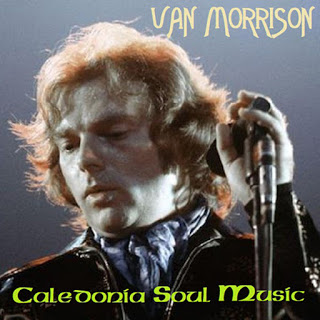
The Caledonia Soul Orchestra was the band created by Northern Irish singer-songwriter Van Morrison in 1973. The band was named after an eighteen-minute instrumental outtake on the His Band and the Street Choir album. Actually, Morrison could have released two more albums in 1973, because I’ve already posted an album he did of country standards recorded from 1971 to 1973, After the success of ”Astral Weeks” and “Moondance”, Van Morrison initially wanted his third album for Warner Bros, “His Band And The Street Choir”, to be a vocal album. “It was originally a concept to do an a cappella album. Street Choir was to be an a cappella group and I wanted these certain guys to form a group so I could cut a lot of a cappella with just maybe one guitar,” Morrison later told biographer Ritchie Yorke. “But it didn’t turn out; it all got weird.”
In the end, His Band And The Street Choir, released on 15th November 1970, contained plenty of sizzling brass sounds – with Morrison himself playing tenor saxophone on the tracks Crazy Face and Call Me Up in Dreamland – in an album full of funky, radio-friendly singles. Guitarist John Platania said that when they finally got down to recording the album at A&R Recording Studios, in New York City, in the spring and summer of 1970, Morrison “had designs on getting stuff played on radio”.
The album’s biggest hit single was the opening track, “Domino”, a potent mix of R&B and funk that is, in part, a tribute to Fats Domino. “Hey Mr DJ/I just want to hear some rhythm and blues music/On the radio” sings Morrison on a song that gained plenty of airplay, and which earned the Belfast-born musician a Top 10 hit in the US. The bass, drums and horns meld brilliantly on Domino and it quickly became a song Morrison would regularly perform live. On the single, he even starts one chorus by shouting words “Dig it!”
One of the key musicians on the album was drummer Dahaud Elias Shaar, who went on to become an essential member of Morrison’s Caledonia Soul Orchestra backing band. Shaar, who also sang backing vocals and played bass clarinet on His Band And The Street Choir, remembered “a positive vibe around that whole record”.
Few songs in Morrison’s career are as upbeat as Virgo Clowns, with its encouragement to “let your laughter fill the room”. The song was inspired by the memory of Morrison playing with his young daughter Shana. “We’ve become so serious, we get too heavy about what everything means,” Morrison told Melody Maker. “I was sitting one day feeling very heavy, and my daughter came up to me and started cracking up. And then I started cracking up when I realised it. I’m sitting here thinking that it’s all too serious and it’s not.”
Though “Give Me A Kiss” was a rather formulaic love song, the inventive “I’ll Be Your Lover Too” was sung with soulful intensity. You can hear Morrison ask “How’s that?” at the end of the tender love song. Crazy Face is about a man who pulls out a gun and announces, “I got it from Jesse James” – an appropriate song for Morrison, given that he had recently been nicknamed The Belfast Cowboy by The Band’s Robbie Robertson.
The splendidly infectious rocker I’ve Been Working was an out-take from Moondance, while Morrison sings some splendid falsetto on Gypsy Queen. When Jon Landau reviewed the album for Rolling Stone in February 1971 he was particularly impressed by “the powerful “Call Me Up in Dreamland”, which he described as “the singalong of the year”.
Landau also hailed the closing track, Street Choir, as one of the singer’s “two or three finest songs”. The plaintive chorus (“Why did you leave America?/Why did you let me down?”) was sung by The Street Choir, who comprised Shaar, Andy Robinson, Larry Goldsmith, Ellen Schroer (wife of the album’s saxophonist, Jack Schroer), Martha Velez (wife of trumpeter Keith Johnson) and Morrison’s then wife, Janet Planet.
Planet, who divorced Morrison a couple of years later, was living in Woodstock with the singer at the time the album was made, and she is the subject of the love song Sweet Jannie. Planet designed the His Band And The Street Choir album cover and wrote the original sleeve notes, on which she gushed: “This is the album that you must sing with, dance to, you must find a place for the songs somewhere in your life. They belong to you now, dear listener, especially for you.”
Morrison has sometimes expressed dissatisfaction over an album that he said he “cranked out”, but His Band And The Street Choir retains a real charm and features several Morrison classics, especially Domino and I’ve Been Working. One of the overlooked gems is the religious If I Ever Needed Someone, which features a stunning trio of backing singers. Morrison specially hired gospel stars Judy Clay and Jackie Verdell along with Emily “Cissy” Houston – the mother of Whitney Houston who, in her own right, won Grammys as a solo artist after having worked with Elvis Presley and Aretha Franklin – and they provided superb support for his heartfelt singing.
As for this album, the highlight has to be song from the session which was excluded on the album is this wonderful track “Caledonia Soul Music.” It’s seventeen minutes long and mostly instrumental.
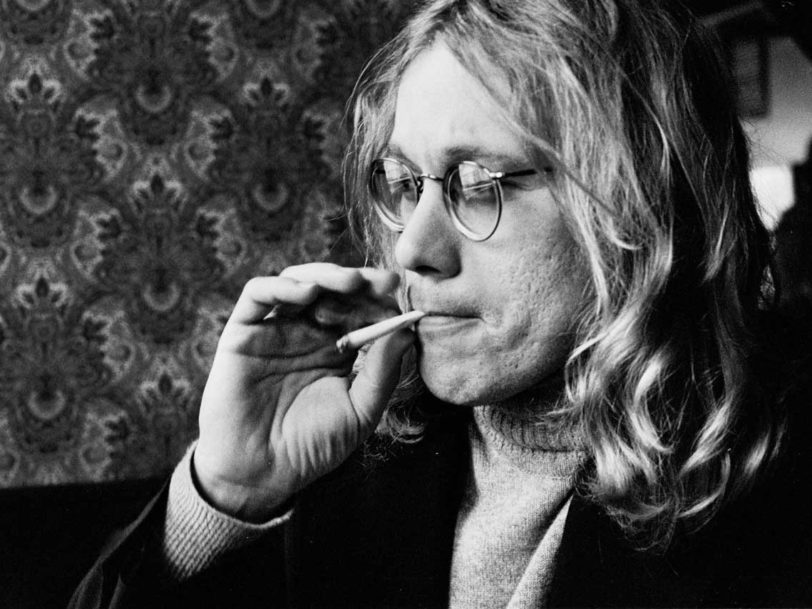
Warren Zevon (1947-2003) – 1970s – The excitable boy, Mr. bad Example himself, Warren Zevon, a songwriter with few equals who is best remembered for his 1978 hit “Werewolves of London,” But Zevon was so much more than his signature song. Beginning in 1976 with his debut album on Asylum Records, “Warren Zevon”, He captured the attention of Linda Ronstadt who recorded “Poor Poor Pitiful Me,” a Zevon penned tune which she turned into a Top 30 hit in 1978. Songs like “Mohammed’s Radio,” “Frank and Jesse James,” “I’ll Sleep When I’m Dead,” and “Hasten Down the Wind,” (also covered by Ronstadt), all on his debut album displayed Zevon’s penchant for history and a soft, sweet side. It was his second Asylum album “Excitable Boy,” (1978) that established Zevon as a writer of great wit, skill, and whimsy.
The disc was filled with Zevon gems: “Johnny Strikes Up the Band” “Roland the Headless Thompson Gunner” “Lawyers, Guns, and Money” and “Accidentally Like a Martyr” and had the added cachet of being produced by Zevon’s pal Jackson Browne. Although Zevon’s career didn’t have the upward trajectory of Browne’s, He was a cult favourite, knocking out crowd pleasers at his often unrestrained lives shows. With titles like “If You Won’t Leave Me I’ll Find Somebody Who Will” “Gorilla You’re a Desperado” and “Detox Mansion,” he endeared himself to his legion of followers. In the early 2000s, he was diagnosed with Mesothelioma, which cut his life and art short. But he began work on his final album “The Wind,” in early 2003, completing it in time to see it rise high into the Top 10 with songs like his cover of Bob Dylan’s “Knockin’ on Heaven’s Door,” and the heartbreaking “Keep Me in Your Heart,” Zevon was buoyed on the album by help from his friends including Bruce Springsteen on the barnburner “Disorder in the Court.” Jackson Browne, Don Henley, Joe Walsh, David Lindley, and Dwight Yoakam all lent their talents to the album as well. Zevon made appearances on the David Letterman show right up until the end when the talk show host and his friend turned over the entire hour to him. It was during this final appearance on Letterman on October 30th, 2002, that Zevon repeated his oft-quoted advice on dying: “Enjoy every sandwich,” Zevon’s acerbic wit, great sensitivity, and writing prowess will keep him in the hearts of those who loved his style for a long time to come.
Warren Zevon’s “Stand In The Fire”, recorded over a five-night period at the Roxy Theatre in West Hollywood in August 1980, is not only one of Zevon’s best albums, it is also one of the most affecting live albums of the decade.
After more than ten years of drink and drugs excesses, the newly-sober Zevon, then 33, was in a better place when it came to this run of summer gigs. He was in jocular form, joking that the concerts should be called “The Dog Ate The Part We Didn’t Like Tour”, and said he was happy to be back performing in Los Angeles, the city where he had grown up. Asked by Rolling Stone magazine how it felt to be on stage in front of an enthusiastic home crowd, Zevon replied, “Let’s just say that it was like rescuing the little boy who’d fallen through the ice. Rescuing him while the whole world was watching.”
Stand In The Fire, which was released by Asylum Records on 26th December 1980, carried the dedication “For Marty”, in tribute to Zevon’s friend, the film director Martin Scorsese. The album opened with the previously unreleased title track, which was immediately followed by “Jenny Needs A Shooter”, a song co-written with Zevon’s friend Bruce Springsteen.
Though Zevon was taking prescription painkillers and steroids for a strained nerve in his back, the singer-songwriter was remarkably full of energy for the gigs, in which he displayed his usual mordant wit. For the live version of On “Mohammed’s Radio”, Zevon altered the original lyrics from “You know the sheriff’s got his problems, too/He will surely take them out on you” to “Ayatollah’s got his problems, too/Even Jimmy Carter’s got the highway blues”, in a tongue-in-cheek reference to the Iran hostage crisis that was dominating the news at the time.
Despite being harvested from multiple performances, “Stand In The Fire” feels cohesive, which is partly down to the excellence and consistency of the terrific backing musicians, who were largely unknown at the time. The band, who called themselves Boulder, comprised Zevon on vocals, piano and 12-string guitar, Roberto Piñón on bass and backing vocals, Marty Stinger on drums, Zeke Zirngiebel on rhythm, lead, and slide guitar, Bob Harris on synthesiser and piano, and David Landau on lead guitar.
The shows were produced by Zevon and Greg Ladanyi. During the rocking performance of “Poor Poor Pitiful Me”, one of the stand-out songs from Zevon’s self-titled debut album, Zevon halts midway through the track and drags George Gruel, his then “road manager and best friend”, on stage to fire up the crowd. Gruel grabbed the microphone and gleefully announced, “Get up and dance, or I’ll kill ya. And I’ve got the means!”
Zevon’s version of his perennially popular “Werewolves Of London” is peppered with witty ad libs about the musicians Jackson Browne and James Taylor, and director Brian De Palma, whose violent film Dressed To Kill had been one of the most talked about releases that summer. Zevon also performed a slowed down version of “Lawyers, Guns And Money” along with high-energy versions of “Excitable Boy” and “The Sin”. He also growled his way through the autobiographical song “I’ll Sleep When I’m Dead”, before the album ended with a cover of Bo Diddley’s “A Gunslinger”, which had been a R&B hit in 1960 for an artist that Zevon admired deeply.
There were ten tracks on the original 1980 release of Stand In The Fire, but when Asylum/Rhino remastered the album in 2007, they added four additional songs: “Johnny Strikes Up The Band, Play It All Night Long, Frank And Jesse James” and “Hasten Down The Wind”.
On the final two tracks, Zevon played piano and first delivered a poignant, reflective version of a song about two cowboy legends before launching into one of his most affecting compositions about love, “Hasten Down The Wind”. Zevon first recorded the song in 1976.
Zevon’s version at the Roxy was preceded with a moving speech, in which he explained the song’s meaning to the audience. “This is a song that I’d like to play for you that I wrote a decade ago, just about. This is the song that came along and intervened between myself and starvation, thanks to Miss Ronstadt. In those days, you know, when I wrote this song, I was not a very happy fellow. I was poor and strung out and screwed up… and now I’m just screwed up. No, I’m very happy, thank you, thank you very much. Because everybody gotta change sometimes. Speaking as one who has abused privilege for a long time, I tell you, it’s great to be alive. Thank you.”
It was a fitting way to close a splendid live album that captures all that is great about Warren Zevon, who died at the age of 56 in 2003.







 The Fat Angel Sings