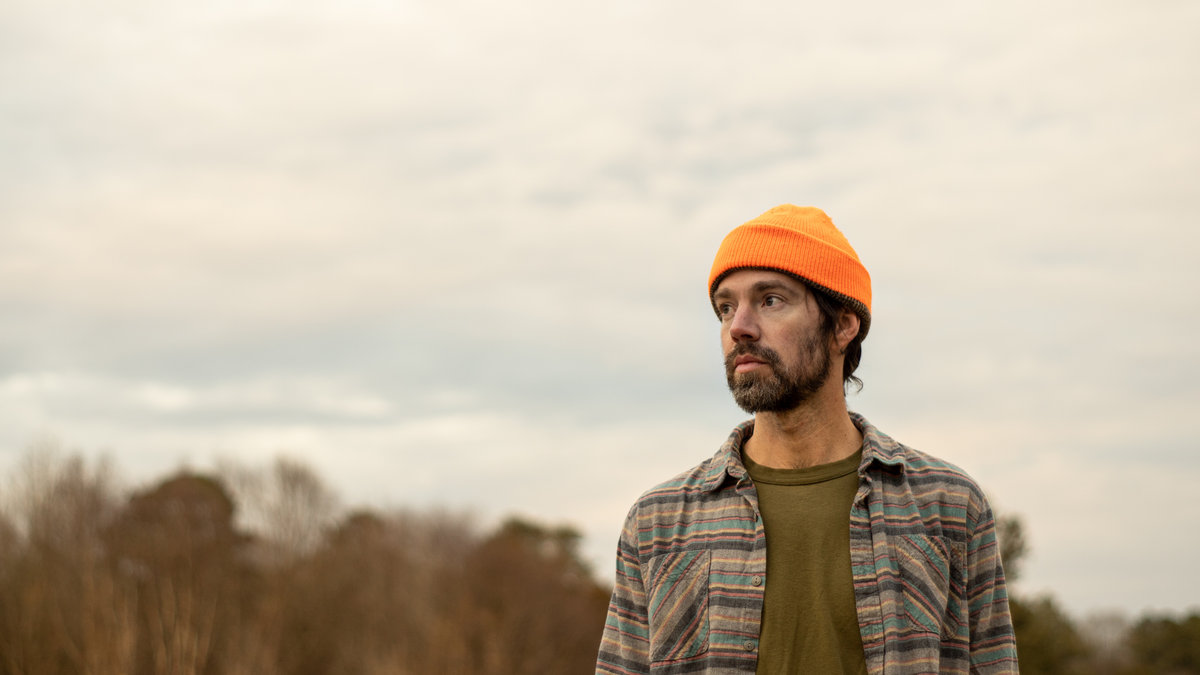
Bowerbirds a folk trio, now the recording project of North Carolina singer-songwriter Phil Moore has announced its first new album since 2012. It’s titled “becalmyounglovers” and it arrives April 30th via Psychic Hotline. The new full-length follows a pair of EPs that were released last year, 2020 Singles and Azaleas.Bowerbirds’ last album “The Clearing” marked the band’s final recording with Beth Tacular, Moore’s ex–romantic and artistic partner. The two had a child together prior to the band’s split, as Moore explained in a statement last year. The new album is about his processing of the end of that long-term relationship.
Here’s what they say about it: “Hi there. I’m pleased to share that the new Bowerbirds record (and first Bowerbirds album since 2012!) will be out on April 30th. We’re also doing a special limited run of the violet swirl vinyl, which will come with a signed poster of the cover artwork. The new single “Moon Phase” is out everywhere now, along with a music video I made.
I wrote and recorded becalmyounglovers in bits across six years, with help from a lot of friends, including Matt McCaughan, Alex Bingham, and Libby Rodenbough, with additional group vocals by Chessa Rich, Joseph Terrell, and Wood Robinson. Drums were recorded by Ari Picker at Goth Construction Studio, and the record was mixed and mastered by Zach Hansen at April Base out in Eau Claire, Wisconsin. I can’t wait for you to hear the whole thing. In the meantime, you can watch/listen/pre-order at the link in my bio.”
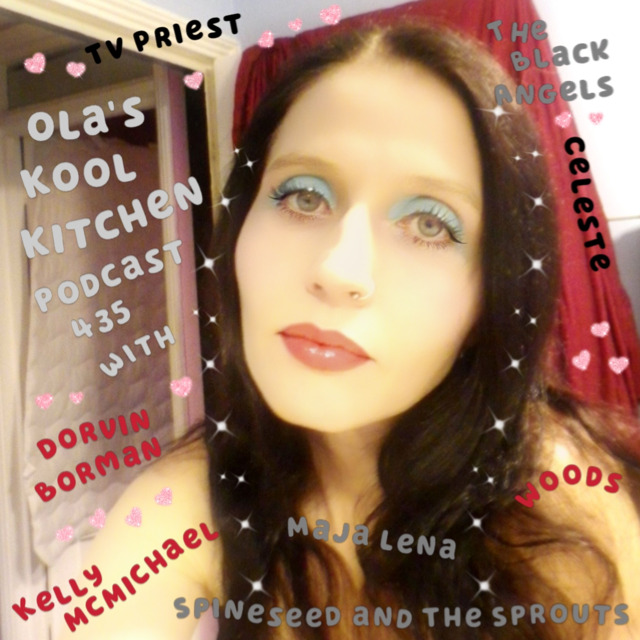
Ola’s Kool Kitchen is a show on KCLA 99.3 FM in Los Angeles, 107.5 andhow.FM, Maximum Threshold Radio, Rock Radio UK, Sword Radio UK, Jammerstream One, Kor Radio, Bombshell Radio, Pop Radio UK, Radio Wigwam, Rock XS Radio and Dirty Chai Radio you can hear more shows here www.mixcloud.com/olaskoolkitchen/
Show 435:
1. Sundial-Bad Drug 2. The Black Angels-Always Maybe 3. Dorvin Bowman-Pressure Valve 4. Nana Yamato-If 5. Pretty Terry-Lighthouse 6. Spineseed & the Sprouts-Gungas 7. TV Priest-Press Gang 8. Celeste – Stop This Flame 9. Kelly McMichael-Out the Window 10. The Fleur de Lyz – Circles-single-Immediate 11. The Wailers – Rude Boy-The Wailing Wailers-Studio One Records 12. Baby Huey – Hard Times-single-Curtom 13. Maja Lena-Birch-The Keeper- Chiverin Records 14. Woods-Where Do You Go When You Dream-Strange to Explain-Woodsist
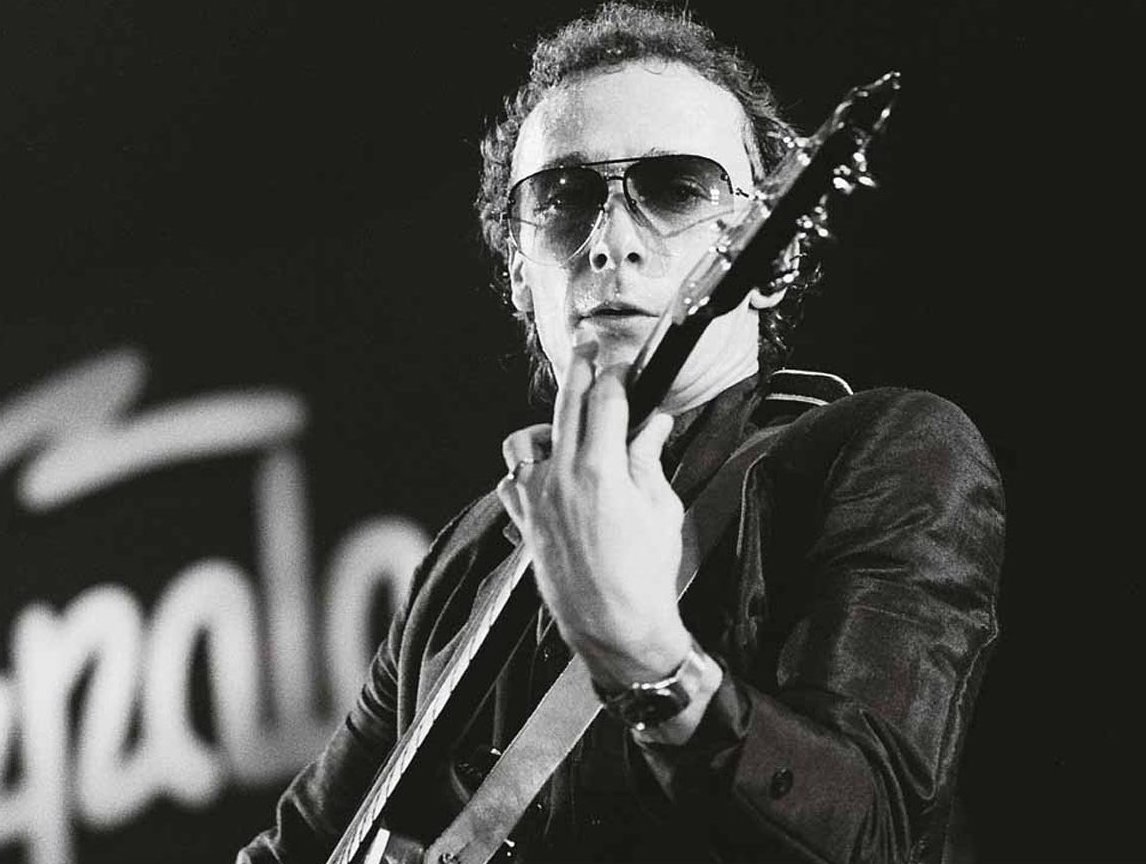
In 1978, after three excellent but commercially underperforming albums for the Mercury label, British rocker Graham Parker was fed up with being “the best kept secret in the west,” as the lyrics to his acerbic “fuck you” song “Mercury Poisoning” had it. “The company is crippling me/The worst trying to ruin the best/Their promotion’s so lame/They could never ever take it to the real ball game,” he sang. Parker, with the encouragement of his manager Dave Robinson, had no problem burning bridges behind him.
Already signed to Clive Davis’ Arista label in a deal Parker later said had “way too much money in it than was healthy,” he satisfied his Mercury commitment with the live double-album The Parkerilla and went into London’s seedy Lansdowne Studios to record his Arista debut with his usual five-piece band of co-conspirators, the Rumour.
Despite being pals, the Rumour had been unimpressed when Parker played them a slew of new songs he’d prepared while on the road, and openly mocked him.
Jack Nitzsche, who’d worked as Phil Spector’s right-hand man for years, and contributed to sessions by the Rolling Stones, Buffalo Springfield and the solo Neil Young, was brought in to produce on the strength of his work supervising Mink Deville’s first two albums. Parker later described his arrival: “Jack Nitzsche, gnome-like under a hooded sweatshirt, disgruntled at being torn away from an interesting tryst in Los Angeles, and utterly mystified as to who I was, what we were, why he was here in miserable London.”
The Rumour consisted of fugitives from three “pub-rock” groups of the mid-’70s, Brinsley Schwarz, Ducks Deluxe and Bontemps Roulez. Steve Goulding played drums, Andrew Bodnar bass, Bob Andrews keyboards, and Brinsley Schwarz and Martin Belmont were the guitarists. They were all experienced, confident musicians, and Nitzsche hated them immediately, feeling their playing was messy and their commitment to GP wobbly. “The band are terrible, they’re not serious about playing your songs,” Parker quotes him as saying. Parker replied, “I know they overplay the whole time. I’ve had three albums of it! Tell us what to do!” Parker said he needed the Rumour to play like they were in a studio, not on stage, and “get everything simple, like a heartbeat.”
It took a day or two for Nitzsche to take the reins in a come-to-Jesus meeting with the band. As Parker told New Musical Express’ Charles Shaar Murray just before the resulting album was released in late March 1979, “The next day, he came in and had a few beers and loosened up and got into being Jack Nitzsche the producer. He just said a few words that got it all going. ‘You’re being too clever. You gotta be dumb. Play the song the way you did when you were writing it in your bedroom.’”
Once they were clicking, it only took 11 days to complete the album, which doesn’t have a weak song or performance, and continues to be cited as Parker’s greatest achievement. Titled “Squeezing Out Sparks” after a lyric in the searing tale of abortion and regret “You Can’t Be Too Strong,” the album topped the Village Voice’s Pazz and Jop critics’ poll for 1979 and drew comparisons to the best of Bruce Springsteen and Elvis Costello. Lyrically sophisticated, full of alternating vitriol and tenderness, it still excites on all levels. “Squeezing Out Sparks” transcends the medium,” Parker told journalist Scott Hudson years later with characteristic humour. “I don’t think there’s anything as good as that by anybody anywhere. And I don’t even take credit for it. I don’t know what happened. I blacked out.”
“Discovering Japan” begins with a sort of fanfare, then settles into a potent rhythm over which Parker snarls his widescreen lyrics: “Her heart is nearly breaking, the earth is nearly quaking/The Tokyo taxi’s breaking, it’s screaming to a halt/And there’s nothing to hold onto when gravity betrays you/And every kiss enslaves you.” Nitzsche and his engineer Mark Howlett capture every contour of the sound, from ringing guitars to Goulding’s insistent drumming. On the whole of Squeezing Out Sparks there’s no horn section or extra instruments as on previous Parker albums, just focused small band arrangements, with virtually no soloing. Elvis Costello and the Attractions were using the same kind of no-frills policy at the time, with equally spectacular results, essentially combining a punk aesthetic with high-level musicianship. Graham Parker and the Rumour have a similar antsy, anxiety-filled sound, with a vocalist who can sneer with the best.
“Local Girls” has a Chuck Berry-meets-Stax chugging rhythm (yielding to reggae at one point), a catchy chorus with everyone shout-singing back-up, and a rising little melodic hook that moves from guitar to keyboard. “Nobody Hurts You” has a fast, very peppy stop-and-start rhythm that sounds like the template for Joe Jackson’s subsequent career. Belmont and Schwarz lay down some terrific, simple guitar lines. “Saturday Nite Is Dead” is like its twin, at a similarly bruising pace. There’s a bit of a mini-Yardbirds freakout midway, but like everything else here it’s concise, and the momentum doesn’t flag. Parker’s typically cranky lyrics punch out: “The ultraviolet light hurts me so/It used to be my friend/I used to know a good place to go/But now it’s nothing like it was then.”
“Passion Is No Ordinary Word” is a mid-tempo tune that has an especially spontaneous feel. Parker really bites into certain couplets: “When I pretend to touch you/You pretend to feel,” “The movie might be new/But it’s the same soundtrack.” The song has a truly great bridge section: “Everything’s a thrill and every girl’s a kill/And then it gets unreal and then you don’t feel anything.” Schwarz has too many great moments to count, many coloured by various effects pedals. The ending is chilling, as instruments drop out, the tempo wanes and Parker goes into a near whisper.
Another mid-tempo track, “Love Gets You Twisted,” fades in weirdly before the slamming, jagged rhythm takes over and Parker shouts the minimal lyrics, which obsessively revolve around the same message, that love is confusing: “Love gets you twisted inside out/I knew it existed, I had no doubt/When she’s in my arms/I get tangled up, it’s true/I can’t see the other point of view.”
“Protection” is mutant reggae, with Bob Andrews pulling out a series of Steve Nieve-like interjections on piano and Belmont/Schwarz doing a potent lead/rhythm dance. (According to the liner credits, Parker plays some rhythm guitar on the album, but there’s no telling where, so he might be in here too.) Like a few other tracks on the album, there’s an effective use of double-tracking Parker’s voice, allowing him to sing and react to himself, as if there’s just too much to say for one man.
“Waiting for The UFO’s” begins with a guitar riff that approximates a police or air-raid siren, and there’s a nifty snare-drum figure from the reliable Goulding. GP’s lyrics are among his most cynical: “People are not worth their life now, they are obsolete/We’re dying to be invaded and put the blame on something concrete.” There’s even an anti-love-song lurking in the lines “This new obsession is turning us alien too/Much more resounding my heart just stopped pounding for you.” The pronunciation of UFO as “U-fow” no doubt confounded some American listeners: it definitely helped the flow of the words to use the British diction.
“Don’t Get Excited” ends the album, with Andrews on a variety of keyboards (including electric piano and a cheesy-sounding garage-rock organ). The middle section builds into intense drama, with Schwarz’s lead guitar unleashed for one of the few breaks that might actually be considered a solo. The pounding repetition of “don’t get excited” with the lyrics and rhythm melded fades out and the LP’s over with a bang.
Up until now I’ve omitted mentioning the lone true ballad, the immensely moving “You Can’t Be Too Strong,” which lays unobtrusively in the track listing like a camouflaged bomb. It sports perhaps Parker’s best vocal ever, with a palpable pain showing as the protagonist asks a series of brutal questions to his lover, who’s just aborted his child: “Did they tear it out with talons of steel/And give you a shot, so that you wouldn’t feel?/And washed it away as if it wasn’t real?” Parker described “You Can’t Be Too Strong” to Murray: “Just acoustic guitar, piano and a bit of bass on it. Most of the songs were first takes after we got into playing it like I wrote it. I’m not disguising so much…I’m singing about what cuts you up and what doesn’t cut you up. The songs are more honest.”
Normally, Parker named his albums after song titles, although this time he toyed with calling it “The Basingstoke Canal” after a waterway connecting to the Thames River, about 30 miles from where he was born in the London area of Hackney (he originally thought he’d write a concept album about the London suburbs). But then he woke up one morning with “You Can’t Be Strong” going through his head: “I know it gets dark down by Luna Park/But everybody else is squeezing out a spark/That happened in the heat, somewhere in the dark.”
Squeezing Out Sparks made it to #40 on the Billboard album chart and #18 in the U.K., and sold respectably. “Local Girls” was released as a U.S. single but didn’t chart, although it and several other tracks found considerable airplay on the FM dial. Parker made three more albums for Arista before wandering from label to label for the next 40 years, including time at Elektra, RCA,Capitol, Bloodshot and Razor & Tie. In 1996 Arista reissued Squeezing Out Sparks on CD with the excellent promo-only Live Sparks appended, and in 2019 Parker re-recorded the whole album “solo acoustic” for its 40th anniversary, adding for old time’s sake “Mercury Poisoning,” still a fan favourite.
Parker has announced a new live album, Five Old Souls, recorded in 2018 with his backing band, The Goldtops, and the return of the Rumour Brass.
Johanna Samuels just announced “Excelsior!”, Here’s what they say about it: “Before making this record, I felt the furthest from myself that I ever had. There was a lot of cognitive dissonance–wanting to pursue my music while also feeling good about who I am as a person. This record is a lot of me identifying what I don’t want to be & recognizing the importance of listening to each other, understanding that a conversation doesn’t have to end because one person has to be right & the other wrong.
I made it during a very snowy winter with Sam Evian producing at his new cabin studio in the Catskill Mountains. We tracked live to tape, laughed a ton & ate amazing meals. I’ll never forget where I was at when we made it & I’ve learned so much since–through both beautiful realizations & some very painful, disappointing experiences. I’m grateful for all of it because I’ve never felt more like myself. I feel resolute in what I believe & in my musical relationships & friendships. I love the record we ended up making & the personal growth it paved the way for.
Ahead of much-anticipated full-length releases due later this year, friends and fellow Brooklyn musicians Nico Hedley and Benedict Kupstas (Field Guides) are releasing a limited edition split 7″, due out February 14 on Whatever’s Clever. (The first run of 100 copies come in Risographed sleeves designed by Kupstas.)
Nico Hedley is a singer-songwriter from New York City who has played in numerous bands over the last decade, including Drew Citron, Beverly, Ben Seretan Group, and Alpenglow. Field Guides—the Brooklyn-based collective fronted by Benedict Kupstas—have been described as “sprawling, dense, and mysterious” by Big Takeover. Their sophomore album, “This Is Just A Place” also released on Whatever’s Clever in 2019—was hailed as “one of the year’s most rewarding discoveries” by GoldFlakePaint. Hedley and Kupstas have been frequent collaborators over the years (they once toured together in a maroon conversion van with a temperamental engine and a Settlers of Catan bumper sticker).
“Worldly” and “The City Is A Painting” are taproots of connection in a time of continued lock-downs and social distance. Whisky-soaked voices and wistful lyricism reflect what it is to watch the world unfurl into new uncertainties. Recorded together on an 8-track tape machine in Hedley’s home studio, both songs carry the clear influence of Jason Molina (Songs: Ohia, Magnolia Electric Co.), sharing his raw and poignant approach to dynamic Americana songwriting. Hedley’s forlorn pedal steel provides a ghostly tapestry across the two sides.
The songs were mixed by the brilliant and idiosyncratic songwriter/producer, Katie Von Schleicher, who also played piano on Field Guides’ “The City Is A Painting.”
Hedley played all the instruments on “Worldly,” a melancholic slice of alt-country that sounds beamed in from some distant lonesome highway, imagining what could have been. “I’ll believe it when I see it coming ’round,” Hedley sings, bolstered by the sparse, home-spun arrangement. The dynamic 3/4 dirge rises and falls, the instruments reflecting the pathos of lines like “For our hearth is warmed with loving coals / but is stoked by only wanting.”
Nico Hedley produced & engineered both songs. He played all the instruments on “Worldly.” He also wrote that tune. He played drums, bass, and pedal steel—and sang—on “The City Is A Painting.”
Benedict Kupstas wrote “The City Is A Painting,” on which he sang and played guitars. He also did the art & design; this was printed at Eureka! in Kingston, NY, Sean Mullins played some tambourine on “The City Is A Painting.”
“The City Is A Painting” foregoes Field Guides’ usual lush orchestration for a more direct but no less stirring song situated at the twangier edge of the band’s oeuvre. The fuzz guitar solo calls to mind Destroyer circa Streethawk: A Seduction, while Kupstas’s earthy baritone is joined by Hedley’s harmonies for the buoyant chorus, melancholy yet hopeful: “I know all she’s got left to spend / is her time on me, so let’s pretend / that I’ve got all the time in the world…”
Considering this period’s forced isolation, a certain commitment to camaraderie runs through these recordings. The two songs appear as signals to each other, gestures reaching out in the dark. The split 7” is intended—as its release date suggests—to be a valentine, a love letter to the artists’ cherished community of peers and collaborators. A video for the songs feature collaged clips from many of those fellow artists. Kupstas had this to say about the video:
“Back in the beginning of this collective fever dream, Nico and I recorded some music and conceived of a split 7” as a love letter to our cherished community. Then, as a way to keep from slipping into the discombobulating muck of isolation, we asked some friends to send us clips to accompany our songs. If we’re being honest (and we’re lousy liars anyhow), we really just missed seeing our friends’ faces. I can’t begin to convey just how much these folks have buoyed me during this bizarre and often sombre period. I’m not sure how many music videos have been such overt acts of self-preservation, but this one is more than a mere palliative for these lonely times: it’s a quilted mirror, a goofy celebration of our community (and of community as a concept). I hope it brings you at least a small bit of the delight it brings me.”
For songwriting duo Joey Cobb and Katie Drew of White Flowers, one of the most exciting young bands in the UK right now, it was only on leaving London to return to their native Preston that the dark-hued dreampop of their debut album, “Day By Day”, began to crystalize.
“There’s something uniquely bleak about the North,” says Joey, speaking from the abandoned textile mill that White Flowers call home, “but in that bleakness there’s a certain beauty.”
The pair had left Preston for London to study at art college, and it was there that they first began to explore the nascent psych scene bubbling under in the few remaining arts-orientated spaces in the east of the city. It soon inspired them to begin work on music of their own. “We didn’t want to be a psych band,” explains Katie, “but discovering that music gave us both energy and focus. We’ve spent so many years developing these songs, because I think it was important we waited until White Flowers became its own defined thing.”
The pair found that by using equipment they barely understood, they produced their most innovative work. Beginning on GarageBand, they crafted loops that turned into songs, and by the time they’d worked out how to use it, they’d graduated to a drum machine. Now very much in control, and with a clear and determined focus, the pair began producing music that, whilst leaning into the North’s post-punk past, possessed a vision and depth informed by their own post-industrial Preston experiences. Creating all of their artwork, visuals and overall aesthetic, they began building a world that stretched beyond the music alone – in an unusual circular fashion, this auteurist-like approach became a way of translating their environment and experiences into a form of escapism from the very place that inspired them.
“We’ve always taken care to control every aspect of the White Flowers ‘world’, and because we’ve developed this over time, it feels to us like there’s a separate realm for White Flowers music to exist in,” observes Joey. “More than anything, the isolation that a place like Preston provides means that what we do is very much its own, separate thing”.
That ‘thing’ is the sound of the North at night; the unglamorous North, caught in the hinterlands that divide the main cities, a monochrome psychedelia formed in Preston and the imposing Lancashire hills that envelop them. As if always waiting there for them, in returning to their roots, White Flowers found themselves. Nonetheless, it was shortly before leaving London that another creative breakthrough occurred. While performing a small show as a support act, a fan in the audience, impressed by the wall of noise that would frequently extend for minutes at the end of tracks, suggested they work with a like-minded friend. Within weeks, the pair were recording at the Manchester studio of Jez Williams, erstwhile member of Doves.
Williams and Manchester immediately made sense, and it’s that industrial gothic that White Flowers were able to tap into as they built the album during on-off sessions across two years – sometimes leaving the studio for a couple of months to work on ideas, other times crafting the minutiae of details across all-night studio sessions. The access to flexible studio time was telling, and the band were able to develop an aesthetic that, whilst indebted to the various sounds that defined their youth, also leaned heavily into Kevin Shields’ droning wall of noise guitars, the palimpsestic hauntology of early Burial, and the ghost box sampleadelia of Boards of Canada.
“We like the more alien sounds” explains Joey, “where the focus is on creating atmosphere.” This is perhaps most obvious on the album title track, one of the more sonically enticing tracks on the record with its pulsing drone and Portishead-esque rhythm, or even ‘Night Drive’, a live favourite that the pair take pride in building into a monstrous wall of sound.
‘Daylight’ pushes forward with a prettiness matched by Katie’s oblique, near-glossolalia vocal. “We don’t like it when things are clean or overproduced” explains Katie, “and there’s something interesting in the instinctive nature of the first thing you sing, because you don’t really know what you’re singing until it comes out and it makes sense.” That psychographic-style process to writing informs a collection of songs that are at once both intuitive and fully-formed.
The oldest song on the record, ‘Help Me Help Myself’, bears witness to this approach. Perhaps their most direct and perfect ‘pop’ song to date, it suggests these songs were always there within, just waiting to be divined. “We’d just started using drum machines and there’s something of a naïve quality to it,” explains Katie, though its naivety has now been augmented by Jez Williams’ impossibly diaphanous production.
The constant upheaval of, well, everything has fed directly into Day By Day. “The songs on the album were written from when we were teenagers up to our early 20s, so it’s come of age in this weird apocalyptic time,” says Katie.
“Everything’s surrounded by uncertainty” notes Joey, “but it isn’t all doom and gloom, there are positives, rules are out the window and you can do what you want. There’s some hope in there.”
With ten Brown Acid records already released and no end to the series in sight, we figured the time was right to release the first ten records in a single, affordable batch. No colour is guaranteed, you might get a clear, two reds a black and a white or maybe they’ll all be purple. Who knows! It’s part of the game. Get on the Brown Acid train today, you won’t be disappointed.
First two releases by Riding Easy Records “Brown Acid” compilation series, “loads of Hendrix, Zepp, Stones, Sabbath, Skynard, worship included in these tunes, but it’s not just ‘Sounds Like’ material, there are a lot of great bands that for whatever reason never got the shine they deserved.” “We have enough tracks for 3 trips at the moment and the goal is to do 5.”
Screaming out of the gate, here’s the third volume of the critically acclaimed Brown Acid series! We curate these heavy compilations so the heads can hear the best songs they’ve never heard. As usual, this batch of tracks is off the rails. It’s an absolute tragedy that these cuts aren’t in heavy rotation on classic rock radio…yet. We continue down the wormhole of hard rock, heavy psych, and proto-metal here on The Third Trip with a set of tunes so obscure they can’t be seen without a third eye. Most of these tracks were recorded in shack-sized studios, privately pressed for promotional purposes, and tossed out like last night’s half empties only to later be discovered to be half-full, if not overflowing with greatness. The majority of these tracks are from the good ol’ US of A with two exceptions, Ash-labelmate New Zealanders, Chook, and the mighty Limeys, Factory. We won’t take full credit for it, but we’re sorry to say that these types of 45s have skyrocketed in value over the last little while and some of the records included in this volume have only changed hands a handful of times on the collector market. Although it’s a bummer for the pocketbook, we say “Hell Yeah!” it’s about time these rarities have become recognized as the priceless artifacts that they are. Unlike many labels doing compilations of rare dusties, we’ve actually gone to the trouble to contact the bands included here for permission to use their material. It was a long and arduous task to say the least, but it’s the way it should be done. And we paid ‘em! So sleep easy knowing that no one was ripped off in the making of this record. As they say, first is the worst, second is the best, third is the one with the hairy chest. So take a shot of whiskey, shotgun a beer, and put some fuzz in between your nipples with the hairiest Trip you’ve taken yet. You won’t be sorry you did.
If you thought we were getting close to the end of the Brown Acid series with our last Trip, you were dead wrong…we’re only just getting rolling. The well of privately released hard rock, heavy psych, and proto-metal 45s is deep and we are nowhere near tapped out. Most of these records were barely released and never properly distributed so they ain’t easy to find, but they’re out there if you’re willing to dig…and we aren’t afraid to get our hands dirty. Hard calluses have formed from handling the shovel and we’ve sifted through a lot of dirt, but we’ve dug up another ten tremendous records to share with all the heavy heads out there. This volume brings together eight insanely rare and skull-crushingly heavy 45s as well as two previously unreleased bangers. You may remember the Zekes’ jaw dropper “Box” from the First Trip. If you don’t, you better go back and refresh your memory, you stoner. That song rips! And so does this previously unheard recording we’ve legally obtained from the Beverly Hills Records vaults. “Comin Back” is the longest tune we’ve yet to include on this series and it’s a full-on rager! The only surviving copy of this recording came to us on the original 1/4” master tape from Hollywood’s long-defunct Demars & Duffy Music. We did our best to preserve the recording and we think you’ll appreciate the rawness. There have been numerous groups named Bad Axe over the years, but the one you hear here is the baddest. This five-piece fresh outta high school kicked out this jam (and a few others) in a Chicago studio in 1973 just for the hell of it. As a garage band, they were previously named The Burlington Express and they went on to be known as Bitch, but these dudes hit their stride as Bad Axe and “Coachman” is their crowning achievement. It went completely unreleased until 2014 when Permanent Records issued it and “Poor Man, Run” as a limited edition 45 with a killer picture sleeve. It’s long out-of-print and only obtainable now on Brown Acid. The rest of the records included on this volume vary in rarity, but at least two of them were virtually unknown until we discovered them. You’ll win the lottery before you find copies of all of the original 45s in even the best record stores. Many of the records included in this volume are owned only by the members of the bands and some of the band members don’t even have personal copies. Such a bummer. Anyhow, plug in, turn up, and freak out…this is what RocknRoll is all about.
And the hits just keep coming. For the Fifth lysergic journey, we’ve assembled 10 heavy slabs of obscure rock the likes of which have never been seen before… not in this form anyhow. And as usual, the tracks from these impossibly rare records have all been fully cleared through the artists themselves. We’ve gone to great lengths to get the best possible master sources, the worst case scenario being an original 45. ‘Cuz it ain’t worth doing unless you do it right. The legendary Captain Foam kicks off this Trip like an anvil to your skull with a rollicking stomper sounding like The Who with Matt Pike’s thunderous guitar tone. “No Reason” is a track we’ve been wanting to share with you boneheads since the start. Captain Foam (aka Richard Bertram) wasn’t easy to find, but lo and behold, our super sleuths located him and got his blessing to include the A-side of his sole single here for you. Good luck finding an original copy of the record. It’s rarer than raw beef. That’s just the tip of the iceberg. The other nine tracks continue the onslaught in typical Brown Acid form. You may be familiar with George Brigman’s psychedelic punk masterpiece “Jungle Rot”, but you don’t know Split until you’ve heard the charmingly disjointed bedroom-fi production of “Blowin’ Smoke”. Finch sounds way out of time (1968) and place (Milwaukee) on the grungeadelic anthem “Nothing In The Sun”. Cybernaut’s heavy prog — giving their Canadian cohorts Rush a run for their money — and Flasher’s “Icky Bicky” boogie prove beyond a shadow of a doubt that our neighbours to the north can rock with the best of ‘em. Meanwhile, Fargo’s hallucinogenic BBQ sauce soaked “Abaddon” and Mammoth’s fittingly beefy eponymous riff-monger continue the long line of heavies from the Lone Star State. Ohio based screamers Lance features members of Inside Experience, who you might recall from the Third Trip. Zebra’s gritty rendition of “Helter Skelter” is most likely the way Charles Manson heard the song in his head. And finally, the mysterious and previously unheard Thor appears here exclusively and for the first time ever with their unknown 45 track “Lick It”. Many thanks to our pal Mike Vegh for turning us on to this one. Speaking of turn ons, we love hearing about rare hard rock, heavy psych, and proto-metal records. So, if you know something we don’t, please drop us a line. If we’re able to track and include a record you hip us to, we’ll gladly give you props on a future volume. In the meantime, we’ll keep doing all the hard work ourselves and you can keep reaping the benefits… until we kill all your braincells.
If you’d told us when we started this epic journey that we’d have six volumes worth of licensed tracks released in just three years, we would’ve laughed in your face! Doing the Dark Lord’s work isn’t an easy job, but somebody’s gotta do it, so here we are with six Trips under our belt and more lined up. You heads just can’t get enough obscure hard rock, heavy psych, and proto-metal from the late-60s & 70s! And for that, we’re grateful for the opportunity to keep laying these slabs in your lap. This isn’t just a random mixtape we threw together off the Internet. We find the records, track the bands and transfer the tapes, so you don’t have to. The bands did their job back in the day by writing, recording and releasing this material, most times against all odds, and you’ve squandered your hard earned scratch on this record, so I guess the least we can do is continue to compile quality Rock’n’Roll cuts from the golden age of heaviness. This time around we have 10 deep cuts from across the continental US of A and one from our neighbors up North. This Trip kicks off with an outrageous number from Gold out of San Francisco circa 1970. The band used to open their sets with this over-the-top frantic jammer which is absolutely mind-blowing and also leads one to believe that the only band that could’ve held a candle to Gold back in the day would’ve been the mighty Blue Cheer.
Everybody’s favourite source for the hard stuff is back in business, with ten more lethal doses of rare hard rock, heavy psych and proto-metal! Hard to believe we’re eight Trips in and we haven’t lost any steam since the get-go. As usual, we’re laying the heaviness on you in the most legit way possible. These obscure tracks have all been licensed, the bands have been paid, and the sources are all analog. The quality of tracks seems increase along with the number of Trips and this cohesive collection comes outta the gate with both guns blazing!
The hard stuff saga continues with Brown Acid – The Eighth Trip! Yet again, we’ve searched high and low to bring you ten tracks of straight blue flame fire from the golden age of heaviness. As usual, these rare tracks have been carefully curated, analogically sourced, and fully licensed so you can listen guilt- free and save a lot of time and money tracking down the original copies.
This Trip comes straight at ya with an all out attack, quite literally. The residents of St. Clair Shores should consider themselves lucky to have been so close to the greatness of Attack! “School Daze” kicks out the jams Detroit-style, but has enough flair and style to have our main man Jimi rolling over in his grave. Another prime example of why Detroit is known as Rock City!
Speaking of rock, White Rock will knock your stank-ass socks off with their 1972 burner “Please Don’t Run Away”. This 45 was privately released by this Houston-based band that reportedly played shows with Josefus, Stone Axe, and Purple Sun. And it was basically unknown until it surfaced at the Austin Record Convention in 2018! The fact that there are still completely unknown records out there to be discovered never ceases to amaze us.
They don’t say “Don’t Mess With Texas” for nothin’! Riverside called Austin home way before anyone was worried about keeping it weird. This two-sider from 1974 rips from front to back. It’s also exclusively available here and is virtually unknown. Go ahead, try to look for it anywhere. Currently, there’s no proof anywhere online that it exists.
The forthcoming ninth edition of the popular compilation series featuring long-lost vintage 60s-70s proto-metal and stoner rock singles, Brown Acid: The Ninth Trip is set for release on Halloween 2019.
“So rare that diehard fuzz junkies say you’d have a better chance of winning the lottery than finding a physical 45 rpm single by one of the bands featured on their latest installment.” — Dangerous Minds “Will do for hard rock, proto-metal and heavy psych what Nuggets did for garage rock, and bring it to a wider audience of collectors and music fans.” — The Guardian
“Mining the surprising rich reserves of heavy rock and proto-metal from the ’60s and ’70s, these collections have been crucial to understanding the history of a subgenre of rock that had far deeper roots than most fans realize.” — Paste Magazine
The forthcoming ninth edition of the popular compilation series featuring long-lost vintage 60s-70s proto-metal and stoner rock singles, Brown Acid: The Ninth Trip is released on Halloween 2019.
The tenth edition -of the popular compilation series featuring long-lost vintage 60s-70s proto-metal and stoner rock singles, Brown Acid: The Tenth Trip is available now. As the celebrated series reaches landmark double-digits, there are no indications it will slow down in the near future. Here we are, arriving at the tenth edition of Brown Acid in just half as many years! As always, we packed in the highest highs of the dankest hard rock, heavy psych, and proto-metal tracks previously lost to the sands of time. As usual, all of these tracks were painstakingly licensed legitimately and the artists were paid. It’s hard to believe we’re already up to 10 volumes of this lysergic neanderthal wail, but the long-lost jams just keep-a-coming like Texas crude to fuel your rock’n’roll engine and melt your metal mind.
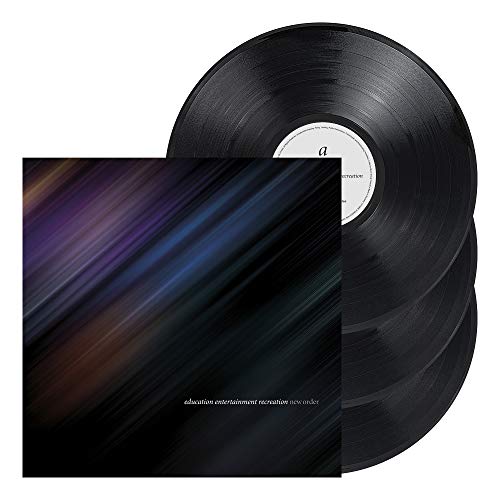
New Order have officially announced Education Entertainment Recreation, a new live album and concert film recorded during the band’s sole UK show of 2018, held at Alexandra Palace. The career-spanning performance is being released on 2xCD, 2xCD with Blu-Ray, 3xLP, and as a limited edition box set with the aforementioned physical formats plus a book and art prints. Education Entertainment Recreation arrives May 7th via Mute; below, find a previously released clip of “Sub-Culture” from the film release.
New Order released a new song called “Be a Rebel” last fall. A music video by Spanish director NYSU was revealed in December. Their last full-length studio album Music Complete arrived in 2015. Recorded live on 9th November 2018 (their only UK show of 2018), ‘education entertainment recreation’is a brand new live album from London’s Alexandra Palace. Sonically spectacular, spanning 2 hours 20 minutes, the show joyously mixed New Order classics, their latest acclaimed album ‘Music Complete’ and Joy Division’s finest.
Opening with ‘Singularity’ from ‘Music Complete’, they eased back in time to 1993’s ‘Regret’, to ‘Love Vigilantes’ from 1985’s ‘Low-Life’ to ‘Ultraviolence from 1983 debut ‘Power, Corruption and Lies’. Later, their power over the dance floor was proven by sublime performances in the manner of the celebrated extended 12 inch remixes they are synonymous with – on ‘True Faith’, ‘Blue Monday’ and ‘Temptation’ before a four song Joy Division mini set to end
A career spanning celebration, the band were on relentlessly sparkling form, blending eras and genres and redefining themselves as perhaps the most vital British band of recent decades. This spectacular live album is spread across various formats, a triple 180 gram edition, a 2CD edition or a 2CD + film on BluRay edition.
The Times *****: “the pristine power of the band….filled the sometimes unforgiving space of Alexandra Palace quite magnificently”
Clash: “a celebration of innovation, fabulous tunes and a career that has mined gold from tragedy”
New Order are: Bernard Sumner – lead vocals, guitar Stephen Morris – drums Gillian Gilbert – keyboards Phil Cunningham – guitars Tom Chapman – bass
Mamalarky spent two years working on their self-titled debut album (released last year via Fire Talk on November 20th). Raw and cerebral, the LP looks to a range of influences from their collective musical nerdiness. ”We might have a vocal melody that sounds like the lead steel guitar from Santo & Johnny, played over production that aims to be noisy and weird like Deerhoof or Sheer Mag, all the while steeped in the greats like Stevie Wonder or The Four Seasons,’ explains Livvy. The album itself was cobbled together in a mix of DIY ways: home recordings with Livvy’s roommate Joey Oaxaca (White Reaper, Mo Dotti), singles with Daniel McNeill (White Denim) and a “final wrapping-up” with engineer Jim Vollentine (Spoon, Skating Polly). The result is an album that’s as musically fun and explorative as it is catchy and sweet. Or as Mamalarky puts it “We want to provide an experience that’s exploratory and trippy, but far removed from the problematic and corny psych stereotypes carried out by all those 60s dude bands.”
“Any song on Mamalarky’s self-titled debut deserves to be a single.” – Vice
“Mamalarky are a band that emanates cool factor.” –
The harmony is beautiful and slightly strange. The drums are really strong, the vocalist is really skilled. The guitars and synths are really tasteful. Basically, the sound overall is really original, and really satisfying.
Mamalarky spent two years working on their self-titled debut album. Mamalarky debut album out October 14th on Fire Talk Records.
Due this April, London three-piece Flyte’s sophomore album is a labour of love – finely-crafted rootsy indie rock across ten timeless-sounding tracks. Made alongside collaborators Justin Raisen (Angel Olsen, Yves Tumor), Andrew Sarlo (Big Thief, Bon Iver) and engineer Ali Chant (Aldous Harding), the band’s extraordinary three-part harmonies span a rawer space than they covered in their 2017 debut album. It’s off-kilter, unpolished, music for music’s sake.
Flyte’s “I’ve Got A Girl” has been bouncing around my head non-stop ever since they released it and now we get a little video compliment to go along with the track that stars Tina Malone, star of the UK version of Shameless Feeling like a post-Halloween hangover, the video has a much different vibe than the one for “Losing You” and goes all in on a David Lynch eerie vibe that captures this sound that is very much Flyte, but a new form that we haven’t quite heard before.
watch the music video for “I’ve Got a Girl” below and stay tuned for a more Flyte related content coming very soon.
This Is Really Going To Hurt, on the 9th of April. This will be Flyte’s second album and features the previously released songs: Easy Tiger, Losing You, I’ve Got a Girl as well as the brand new, Under The Skin. This album beautifully weaves together complex and rich vocal arrangements and melodies, with lyrics steeped in literary imagery.
‘This is really going to Hurt’ follows up from their debut album The Loved Ones which was acclaimed by The Sunday Times as “The Best British debut album of the year” and is set to cement the band as refreshingly mature and exceptionally talented.
It’s hard to believe that it’s been nearly six years since I stumbled across the music of Flyte, one of the best bands out of the U.K., or anywhere, for that matter. While Covid has screwed up the release and touring plans for their looming second album, the band has still been slowly laying down the foundation by releasing a handful of new singles, such as the newly released “I’ve Got A Girl.” Late last month I had the pleasure of video chatting on Zoom with the band’s very own Will Taylor and Nick Hill. We spoke about the new track, how much of it really is about the departure of a founding member and friend, the evolution of their sound over the years, some hints of the new record, as well as what movies they’ve been watching. This is an interview I had wanted to do ever since I accidentally discovered their early single “Light Me Up” thanks to a brilliant working YouTube algorithm.





 The Fat Angel Sings