Three years in the making, and A.O. Gerber’s debut album, “Another Place to Need”, could not have come along at a better time. It’s a collection of songs that envelop and surround the listener, but there’s an ethereality at play that suggests a haunting or, even, haunted presence – dreams and fantasy over cold, hard immediacy.
For all the explosive news and fanfare this year brought us, it’s funny that much of our days were pushed into a more muted, understated version of existence. Expansive and warm-toned, Another Place To Need is an album that balances these two oppositional poles with a lot of grace and insight. “What is there left to do but fall into the labyrinth of my mind?” her honey voice asks on “Every Time,” and we just get to sit there and be lucky she let us fall with her for a bit. A.O. Gerber is a singer-songwriter based in Los Angeles, CA.
released May 22nd, 2020
Produced by A.O. Gerber and Madeline Kenney
The Band:
A.O. Gerber – bass, guitar, piano, synth, vocals, wurlitzer,Alex Oñate – drums and percussion Madison Megna – bass, guitar, synth GG – guitar, vocals Chris Pucher – guitar Madeline Kenney – bass, guitar, percussion, synth, vocals, wurlitzer Noah Weinman – trumpet Sasami Ashworth – french horn Haisem Khalfani – saxophone Marina Allen – vocals on “Strangers” Phil Hartunian – clarinet on “Full Bloom” Philippe Bronchtein – pedal steel on “In the Morning” Jacob Goldman – guitar, piano, synth, vocals on “All I’ve Known” Scott Brown – bass on “Every Time” and “Old Blue”
A.O. Gerber’s debut album ‘Another Place to Need’ out now on Hand In Hive/Copper Mouth Records
Punk/rock three piece fronted by charismatic frontwoman Becky Blomfield release their second album on the Music For Nations label. Milk Teeth returned this year with their second and final album, ‘Milk Teeth’. The eleven-track LP is a ripper. It is aggressive as it is uplifting and fresh as it is nostalgic with its 90’s alternative feel. The vocal stylings of lead singer Becky Blomfield hark back to the 90’s Riot Grrrl movement as does the song structure and overall guitar tones, which is no bad thing. We started recording our self titled album ‘Milk Teeth’ last year with Neil Kennedy at the Ranch. We hope you enjoy it as much as we do. Most of the songs started off on the piano including ‘Sharks’,
Unfortunately, Milk Teeth would be the band’s swan song as they announced in September that they were disbanding. After battling with the decision for over a year, the time has come for me to move on to a new part of my life – today marks the bittersweet end of Milk Teeth.
A huge thank you to anyone who has supported us and myself over the past 8 years and thank you for all the incredible memories, conversations and backing through both the good and bad.
I won’t ever forget where it all started – four kids from Stroud making the music they loved in college. We did more than
we’d have ever imagined possible and I will be forever proud of how much was achieved.
The Band: Bass, Vocal, Composer, Lyricist: Becky Blomfield Guitar, Composer, Lyricist: Em Foster Drums: Oli Holbrook
Released through Music For Nations Released self-titled record is released on the 27th of March 2020,
The self-produced debut album from indie-rock four-piece Slow Pulp—Emily Massey (vocals/guitar), Henry Stoehr (guitar), Alex Leeds (bass) and Teddy Mathews (drums)—may as well have been written and recorded in another lifetime. The Madison-bred, Chicago-based band began work on their first full-length last spring, and they redirected their efforts after Massey was diagnosed with Lyme’s disease and chronic Mono; her newfound focus on self-care dovetailed with Slow Pulp fine-tuning their approach to song writing, parallel processes each rooted in accountability and communication.
Vulnerable yet defiant, ‘Moveys’ is ten moving tracks that are guitar driven with a real anthemic quality. Included is the powerful single ‘Idaho’ which is Massey’s account of overcoming her health struggles and finding self-acceptance when being constantly rejected by others:
“The diagnosis validated a lot of what I was feeling. I got tools for how to take care of myself better. The way that I internalize trauma is I will hold it in and not process it for a very long time, but writing songs is the one place where I can’t hide from myself. It just comes out whether or not I want it to or if I’m ready for it to. Figuring out how to write together, as a band, was like me learning how to take care of myself and learning how to communicate better.”
All kinds of bad things prefaced the making of Slow Pulp’s debut album Moveys: frontwoman Emily Massey parents endured a car crash—and then a global pandemic unfolded. Yet the songs that were birthed from these circumstances reverberate with sonic serenity and clarity. Lead single “Idaho” depicts a band reflecting and moving from darkness toward light; Massey’s voice is weightless while she sings the line “I’m losing all the while.” This sprawling ballad fuses indie rock with folk, which a lot of the albums seems to do. “At It Again” leans into indie rock, electrified and spinning from the beginning, and sticks out among the abundance of tamer songs it’s a burst of unrestrained frustration, and it’s refreshing.
Slow Pulp were often been categorized as “shoegaze,” and Moveys exhibits the Chicago band showing off their abilities in other realms. “Falling Apart” proves that they can create gorgeous, slow tracks that resemble Hovvdy or Lomelda; “Movey” showcases their desire for idiosyncrasy with upbeat keyboard effects celebrating the ending of a sad record. It can’t quite be summed up into a single genre, but it can be summed up as an evocative collection of songs that convey the ups and downs of being human.
These new songs came together in earnest during the band’s fall 2019 tour alongside Alex G, but in March 2020, as they were finishing the album, Massey’s parents were injured in a serious car accident, requiring her to return home to Madison to care for them—soon after, the COVID-19 pandemic’s Stateside spread required her to stay there. The ensuing seven months of lockdown have distorted time almost beyond recognition. The band finished “Moveys” (its title, in part, a nod to the upheaval of its making) from afar, and it’s better than it has any right to be, a vividly realized debut with the bold, exploratory confidence of a mid-career release.
Many bands find it a struggle to gain attention and simply continue to exist in an environment that is so hostile to anyone other than acts with mainstream appeal and huge commercial backing. Indie rock quartet from Slow Pulp were facing these familiar problems the adjustments in Massey’s life led to a radical change in direction for the band and the sound of what has become their debut album ‘Moveys’.
Catch Slow Pulp playing UK shows during February 2021!
There are two ways of remembering the late Mick Ronson. One is as the immortal guitarist/pianist/arranger for David Bowie, before (or after) sprinkling magic across everyone from Ian Hunter to Bob Dylan, from Elton John to Ellen Foley, and so many more that there’s no room to list them.And the other is as the purveyor of two of the most amazing albums that the 1970s ever birthed, before he decided he really didn’t want to be the star of his own show, and got back to making other people sound astonishing. In 1970, Mick Ronson changed the career of David Bowie and went on to work with Lou Reed, Bob Dylan, John Mellencamp, Morrissey and more.
Although Ronson’s career was defined by his time with Bowie, there was a significant before and after. In the 1960s he played in various Hull groups, including The Mariners, who were advised by Rolling Stone Bill Wyman to change their name to the King Bees at around the time Bowie was also fronting a group called Davie Jones And The King Bees; and The Rats, whose main claim to fame was a 1967 single called The Rise And Fall Of Bernie Gripplestone.
Benny Marshall was The Rats’ lead singer and a close friend of Ronson. “Mick was the best guitarist in Hull, so when he left to head down south and join Bowie, I was pretty upset,” he says. “John Cambridge, our drummer, had played with Bowie on [the album] Space Oddity. He was the bloke who went back to Hull in January 1970 with the brief to find Ronson and bring him to London. He found Mick marking out the lines on the municipal football pitch.”
Cambridge did as instructed and the pair were introduced at the Marquee club, where Bowie was playing on February 3rd, 1970. Two days later Ronson had learned the riffs and song structures well enough to back Bowie, Cambridge and Tony Visconti for a John Peel Radio 1 show live in concert at the Paris Theatre in Lower Regent Street in London. They did 15 songs, including a new number, Width Of A Circle, and plenty of material from Bowie’s recently released self-titled second album. Reaction was positive. This was better than Bowie’s regular gig at the Three Tuns pub in Beckenham. Ronson moved into Bowie’s Haddon Hall apartment on Southend Road in Beckenham and became part of the family.
Having tired of the hippie collectivism, Bowie wanted to make a hard rock album. As Visconti said later: “We respected groups like Cream, but we didn’t have that in us. We needed someone to be [that] important element, and that somebody was Mick Ronson.” Everyone loved Ronson’s laconic Northern humour too, especially Bowie, whose father and mother came from Yorkshire and Lancashire respectively. He’d send Ronson up and get just as good back.
Before this auspicious occasion, bass player Rick Kemp had also scouted Ronno to play on fellow Yorkshireman Michael Chapman’s second album, Fully Qualified Survivor. “Michael said his producer Gus Dudgeon didn’t want him to play electric guitar,” says Kemp, “and asked me did I know anybody? I mentioned Ronson, which wasn’t a good career move for me, letting this little runt in. Gus told me to find him. I was driving a Morris 1000 with the wings flapping off and I spotted him working, mowing lawns. I put the question: ‘Do you want to play on an album?’ He replied: ‘What do you mean? One that’s in the shops for sale, like? And I get paid?’ I took him down to London, and within minutes of arriving he’d got the runs for glory.”
Tony Visconti insists that Ronson came to Trident Studio in September 1969, when the David Bowie album was being finalised: “Mick came to the mix of Wild-Eyed Boy From Freecloud, and was persuaded to play a little guitar line in the middle part and joined in the handclaps on the same section.”
In April, sessions began for The Man Who Sold The World. It was a brilliant album, but another commercial flop. It was so badly received that Bowie was convinced to ditch the band, and Ronson, Visconti, ex-Rat Woody Woodmansey and Marshall took the collective name Ronno and released a single, 4th Hour Of My Sleep/Powers Of Darkness, a freestyle rock-metal affair that showcases Ronno’s blistering Les Paul playing. It sank without trace, although Vertigo Records later included both sides on their Superheavy Vol 1 and 2 compilations.
Later on, Ronson’s crunching heavy metal attack, allied to arcane Wagnerian, dystopian, mind-fuck lyrics, was hailed as a masterpiece. Certainly Ronson’s contributions to Bowie tracks such as She Shook Me Cold, Running Gun Blues and the epic Width Of A Circle cemented his place, leading Bowie to call him, with a smug smile, “my Jeff Beck”.
Bowie’s 1970 album “The Man Who Sold The World” had not been a commercial breakthrough, but it added to Ronson’s confidence. Visconti and Ronson had masterminded the sound, dashing off arrangements in the Minstrel Gallery or the basement at Hedonism Hall while Bowie canoodled with Angie elsewhere, chucking out lyrical fragments in between romps. She Shook Me Cold, the dirtiest song he ever wrote, was directly about Mrs Bowie, but it was Ronson who provided the Jimi Hendrix-style intro and the power trio setting à la Cream. Later, Angie lamented the fact that Ronson didn’t receive the publishing he deserved: “In terms of kudos and feeling that one is valued, it would have been nice for Mick Ronson to have had publishing credits.”
Ronson had already written a mini-score for four recorders, used in the break in All The Madmen. It was a start. “I thought: ‘Well, if you can do that then so can I.’ I went out for dinner with Dana Gillespie, who had tracks that needed strings, and David said: ‘Oh, Mick’ll do that!’ I never had, but it was great. It was all done in your head and then straight to piano and guitar. David pushed me forward. That was his thing. He made stuff happen.”
Bowie was now heavily reliant on Ronson. On Hunky Dory the guitarist finally got his credit, as the arranger of Changes, Life On Mars?, Kooks, Quicksand and Biff Rose’s Fill Your Heart, virtually copied note for note. In retrospect many have noticed how similar the sound of Hunky Dory is to Michael Chapman’s Fully Qualified Survivor, including Chapman himself.
Ronson wasn’t fazed by his burgeoning role, giving the Royal College Of Music-trained Rick Wakeman instruction for the now iconic piano parts on Life On Mars?. On the Ziggy Stardust epic Five Years, his string section whipped up the hysteria. On Suffragette City, it was Ronno who came up with the funky, lurching ARP synthesiser sound that many mistake for saxophones. All those years studying piano and violin and listening to string quartets in Hull paid off.
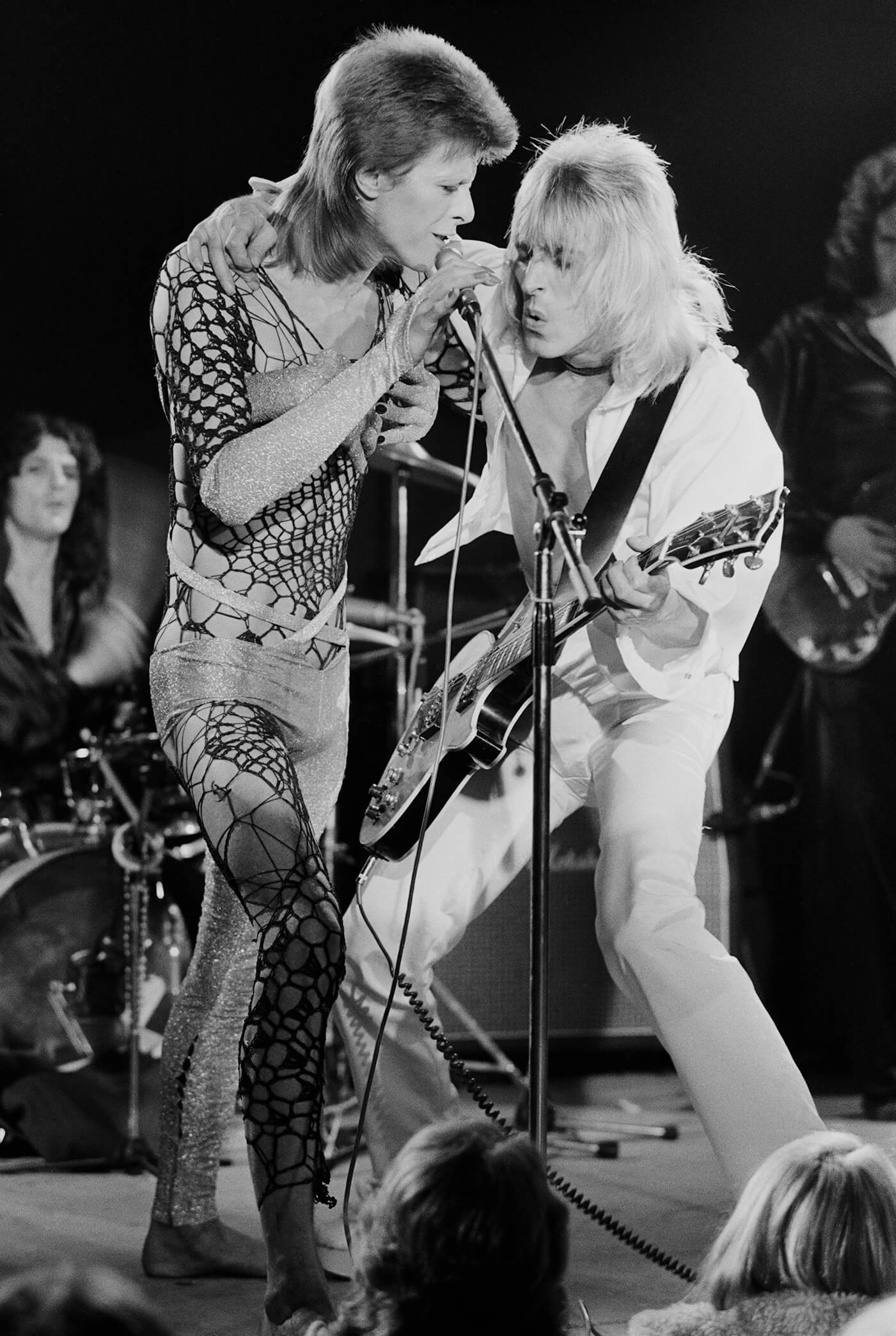
After the rise comes the fall. On October 20th,1973, Mick Ronson played with David Bowie on stage for the last time in that decade. Only 200 people saw the appearance in the flesh, shot for NBC’s The Midnight Special. Dubbed The 1980 Floor Show, it was a strange day. Bowie serenaded supposed transsexual Amanda Lear on Sorrow, and he and Marianne Faithfull duetted on Sonny & Cher’s I Got You Babe. Marianne was wearing a nun’s habit with the back cut out and no knickers, so everyone in the band could see the most sought-after arse of swinging London, although the audience couldn’t.
Bowie hated the end results: “shot abysmally”. This was the night Ziggy Stardust truly left the building, which may explain why a smiling Bowie ended each song with an affectionate pat on Ronson’s white satin-clad back. The two men wouldn’t appear on the same stage together again until 1983, when they reunited for a song at a show in Canada on Bowie’s Serious Moonlight tour. In 1970, Mick Ronson changed the musical fortunes of David Bowie, a struggling singer-songwriter with two novelty hits behind him. Together, and with their band the Spiders From Mars, they reinvented Bowie musically and created some of rock’s best-loved albums: Hunky Dory, The Rise And Fall Of Ziggy Stardust And The Spiders From Mars, Aladdin Sane. Afterwards, Ronson struggled to match that initial success,
If the Ziggy album was a Ronson tour de force, the follow-up, “Aladdin Sane”, was a mixed blessing for him. His contributions were immense, but so were those of recently arrived pianist Mike Garson, whom Ronson had auditioned, later advising him to “make yourself indispensable. That’s what David likes. Don’t just be a session man.”
His work on Lou Reed’s Transformer effectively rescued Reed’s career after his debut solo album had bombed. “It was a good experience for me,” said Ronno. “Lou’s guitar was always out of tune, so I’d kneel in front of him and tune it properly. He didn’t care, cos he was so laid-back.” And without his contribution, Transformer might never have got off the ground. “It came out pretty well,” Ronson said. “Though I didn’t know what the hell [Lou] was talking about half the time. He’d say stuff like: ‘Can you make it sound a bit more grey?’”
Fortunately the album was a roaring success. “Transformer” is easily my best-produced album,” Reed said. “That has a lot to do with Mick Ronson. His influence was stronger than David’s, but together, as a team, they’re terrific.”
In the summer of ’73, having finished his sessions for Bowie’s covers album “Pin Ups”, most of which he’d arranged as usual, Ronson returned to the Château d’Hérouville studios outside Paris and made his solo debut album, “Slaughter On 10th Avenue”. Bowie chipped in from a distance, gifting the songs Growing Up And I’m Fine, Pleasure Man/Hey Ma, Get Papa and a rough translation of Lucio Battisti’s ‘Io vorrei, non vorrei, ma se vuoi’, now christened Music Is Lethal. RCA weren’t overjoyed with what they heard, and the album’s release date was put back more than six months to 1974.
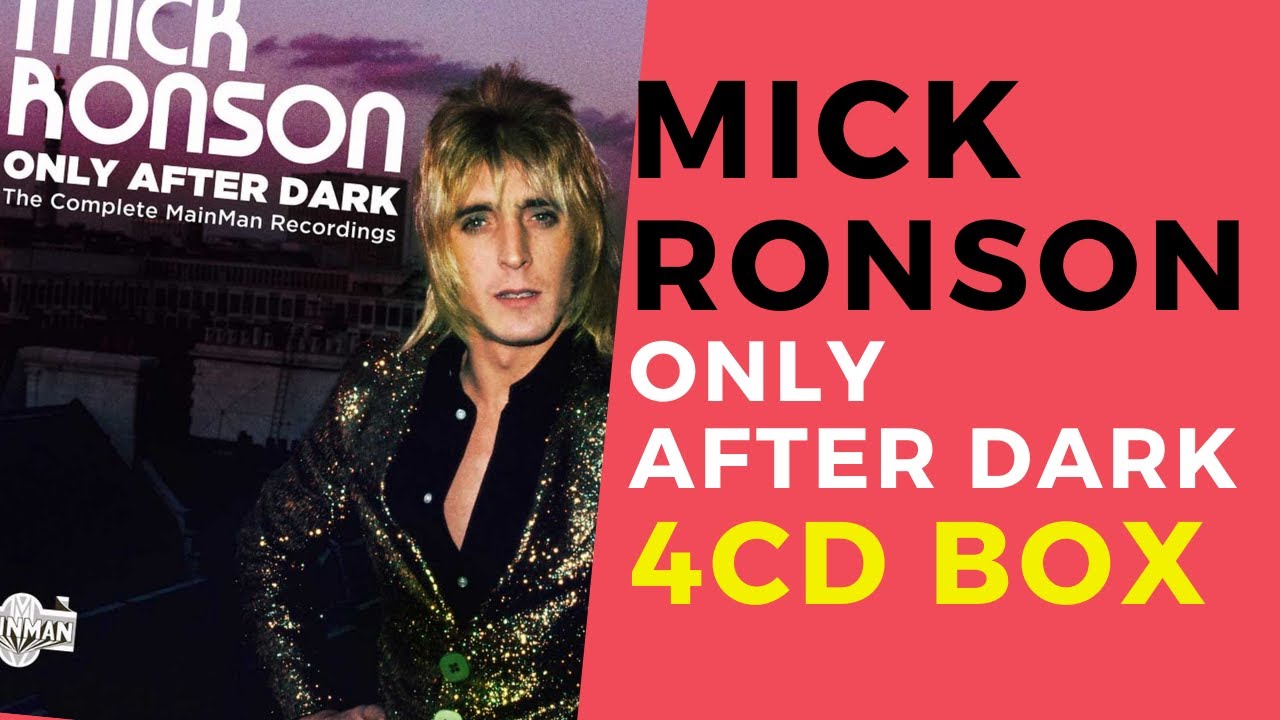
This box set focuses on the latter, rounding up 1974’s “Slaughter on 10th Avenue” and the following year’s “Play Don’t Worry”, and then adding two further discs of sessions, out-takes, and live tracks that trace Ronson through 1976… no longer interested in making a new LP, but curious what it might sound like. A lot of these have leaked out over sundry past collections, and once past the thrill of hearing that voice, that guitar. But the two albums that preceded these tapes, the two that were releasedin the wake of his departure from Bowie’s band, at a time when it seemed inevitable that Ronno would be rock’s next stellar superstar… they are a different matter entirely.
Slaughter was especially delicious, a combination of covers (Elvis, Annette Peacock, Richard Rodgers), Bowie originals (“Growing Up and I’m Fine” and the co-penned “Hey Ma, Get Papa”), and Ronson’s own work with former SRC frontman Scott Richardson, it stood – and still stands – as perhaps the ultimate statement on glam rock, a collection of songs that could journey from early rock to modern jazz, from dark Europa to vivid glitter, and make the whole lot hang together.
Other bands on the circuit were playing with each of these elements individually… listen to “Hey Ma,” and there’s the blueprint for what Cockney Rebel would do next. “Only After Dark” was scything rock, “Growing Up and I’m Fine” would have suited Roxy Music.
But the opening “Love Me Tender” and the closing “Slaughter” itself do more than bookend the party. They offer up their own interpretations of what music could be made to do, the first building slowly until the vocal breaks your heart; the last lifting you so high that nothing could bring you down after hearing it. And live, it was even more stirring.
In 1976, at the height of his cocaine addiction, Bowie had washed his hands of the good old days. “I gave them [his band the Spiders From Mars] more life than I intended,” he said. “And I was also getting honestly bored. There’s only so much you can do with that kind of band. I wanted no more to do with that loud thing. Hurt my ears. Wasn’t pleasing my mind too much either. Since then, poor Mick has completely missed his vocation. From his faulty solo career right on down. I’ve been disappointed. He could have been amazing. I just don’t know. Christ, I haven’t spoken properly with him in years.
Evidently Bowie’s cage was rattled by Ronson’s comment: “David needs someone around him to say: ‘Fuck off, you’re stupid.’ He needs one person who won’t bow to him.” Bowie’s reply was: “I’ve got God. Who’s Mick got?”. “There was certainly a time when David relied on Mick,” says singer Dana Gillespie, a fellow MainMan artist and mutual friend, “but he’d drop all communication with you. Mick was badly hurt when David never returned his phone calls.”
In fairness, Bowie became more charitable later. “Mick was the perfect foil for the Ziggy character,” he said. “He was very much a salt-of-the-earth type, the blunt northerner with a defiantly masculine personality, so what you got was the old-fashioned yin and yang thing. As a rock duo I thought we were as good as Mick and Keith.”
Within months Ronson was back in another band, joining Mott The Hoople for what would be their final single, Saturday Gigs. Ronson and frontman Ian Hunter had bonded back when Mick had knocked up a string arrangement for Mott’s Sea Diver, but the other Mott guys resented the arrival of this ‘rock star’ in their midst, with MainMan and RCA sending limos for their boy while Mott travelled together in a bus. Tired of the conflict, Hunter split the band.
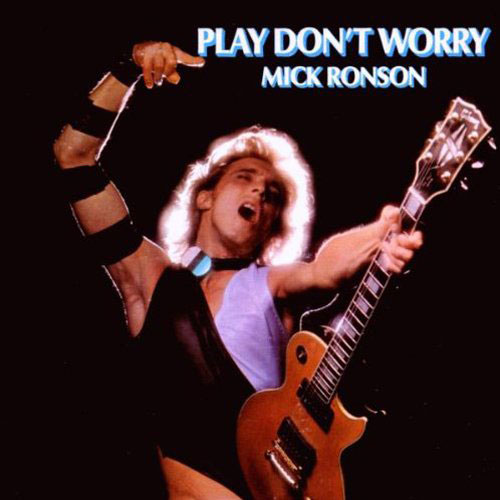
Ronson went back to his solo career. Bowie didn’t take part in follow-up album Play Don’t Worry either, but allowed Ronson to use the backing track from the cover of the Velvet Underground’s White Light White Heat considered for the American attempt at a Pin Ups album but soon discarded.
Play Don’t Worry was excellent in parts. Not a natural songwriter, Ronson did himself proud on the opening Billy Porter, his take on Claudio Baglioni’s ‘Io me ne Andrei’, translated into Empty Bed, and versions of two songs by Pure Prairie League, whose 1972 album Bustin’ Out featured his guitar and strings.
“Play Don’t Worry” was a more straightforward collection… the opening “Billy Porter” could have made it onto Slaughter without disturbing that album’s perfect equilibrium, but “Angel #9” looked back to Ronson’s work with the Pure Prairie League in the early Bowie days; “Girl Can’t Help It” was an excuse for him and Ian Hunter to go full-bore Little Richard on our ears; and “White Light White Heat” was an out-take from Bowie’s Pin Ups sessions, with Ronno’s vocal instead of the other guy’s.
It’s still a great album, hanging together with consummate ease, and hitting all the right spots – the solo that dominates “Angel #9” is one of his finest ever, and the self-penned title track shows whatcracking songwriter he was, just as“This Is For You” illustrates what a great, and expressive, voice he had.Still it’s a shame that one of the finest performances on the session, a gentle piano-led cover of another Annette Peacock number, “Seven Days,” only made it out as a b-side, but it’s also one of nine bonus tracks appended to the album, so that’s alright then. (Eight join Slaughter.)
Ronson returned to the studio with Bowie to create demos for future Diamond Dogs tracks 1984 and Dodo. His work wouldn’t appear on the finished album, a creepy, avant-garde affair, but his trademark guitar style did in the shape of Rebel Rebel, almost a Spiders From Mars pastiche riff, played now by Bowie, Ronno’s platinum-coated spectre was fading into the background.
After Bowie and Lou, where do you go? Ronson produced and played on Ian Hunter’s magnificent debut solo album, with that signature opening flash of epic genius, “Once Bitten Twice Shy”, and Hunter inspiring one of Ronson’s most fearsome solos by showing him a bad review for Play Don’t Worry before he went in to lay down a guitar part on The Truth, The Whole Truth, Nuthin’ But The Truth.
In 1975 Ronson moved to New York, rented a place on Hudson Street near the Meatpacking District and enjoyed the city with his best friend Hunter, who had provided safe haven via Mott The Hoople, Mott and the Hunter Ronson Band.
This is where they met Bob Dylan, who invited Ronson to join his band of gypsies, the Rolling Thunder Revue, after a meet engineered by Dylan’s main fixer, Bob Neuwirth. That evening began at the Bitter End on Bleecker Street. “We weren’t Dylan fans at all,” .“Mick thought he sounded like Yogi Bear. But Ian took us anyway. And Dylan played the Desire album and he was mesmerising, Ronno was soon back with Hunter, appearing on You’re Never Alone With A Schizophrenic and Welcome To The Club. With his solo career on hold, he became a full-time producer. He worked with Van Morrison, John Mellencamp and Roger McGuinn, and there was production work with artists as varied as David Cassidy, Slaughter And The Dogs and the Rich Kids.
Again, there’s nothing here that hasn’t seen the light of day before, but having them all in the same place is definitely a bonus, and there are some glorious inclusions, including a cover of Bowie’s “Soul Love” that Ronson retitles “Stone Love,” and decidedly NOT a cover of “Life on Mars,” which is the song he performed during his solo spot on the Rolling Thunder Revue.
A handful of tracks from a projected Ronson live album include another b-side, “Leave My Heart Alone,” which is also another Pure Prairie League track;there’s some jams and alternate versions, and even an interview recorded for Teen magazine in 1974, and given away free as a flexidisc.Oddly, and completely out of place, there are also two numbers recorded on the 1979 Hunter-Ronson tour, but both fit in perfectly… a tremendous version “Angel #9,” and the show’s traditional opening number, the Shadows’ “FBI.”
The accompanying booklet tells Ronson’s story well, and pulls some great images from the archive, and with his own seventies catalogue now neatly corralled, maybe we can start to dream about the other box set Ronson deserves, documenting his life as a sideman. Morrissey has the fondest memories. “Everyone who worked with Mick expresses devotional love for him, whereas people who worked with Bowie express admiration. Mick told me that he alone wrote the main guitar hooks for Starman, The Man Who Sold The World and others – not just hooks, really, but grand choruses in themselves.
Ronson played guitar on Your Arsenal but didn’t want a credit. “Again this was Mick’s unaffected Cinderella aspect, which I later saw in Jeff Beck when I worked with him on my Years Of Refusal album,” Morrissey recalls. “Jeff and Mick were identical in the way that they would quietly pick up their guitars without fanfare, and as they sat in the corner they’d plug into the desk and a tingling earthquake would erupt without any discourse. And they both made their guitars sound like grand pianos.”
In the late 1980s, Ronson’s health began to cause concern. He was diagnosed with liver cancer, something he neither made a secret of nor chose to acknowledge as a threat. Instead he threw himself into projects such as Morrissey’s Your Arsenal and Bowie’s Black Tie White Noise. He also kicked off a fine version of All The Young Dudes with Bowie and Hunter at the Freddie Mercury Tribute Concert at Wembley Stadium on Easter Monday, 1992, which was the last time his fans saw him on stage.
On Ronson’s posthumously released Heaven And Hull, he wrenched out some of his finest ever work, particularly on Dylan’s Like A Rolling Stone, with Bowie’s astounding vocal inspiring the guitarist to take the song to another planet. And he still had enough time to play on The Wildhearts’ My Baby Is A Headfuck, recorded weeks before his death on April 29th, 1993. He spent his last hours in the company of Hunter, Suzi and sister Maggi at Tony Defries’s house on Hasker Street in West London.
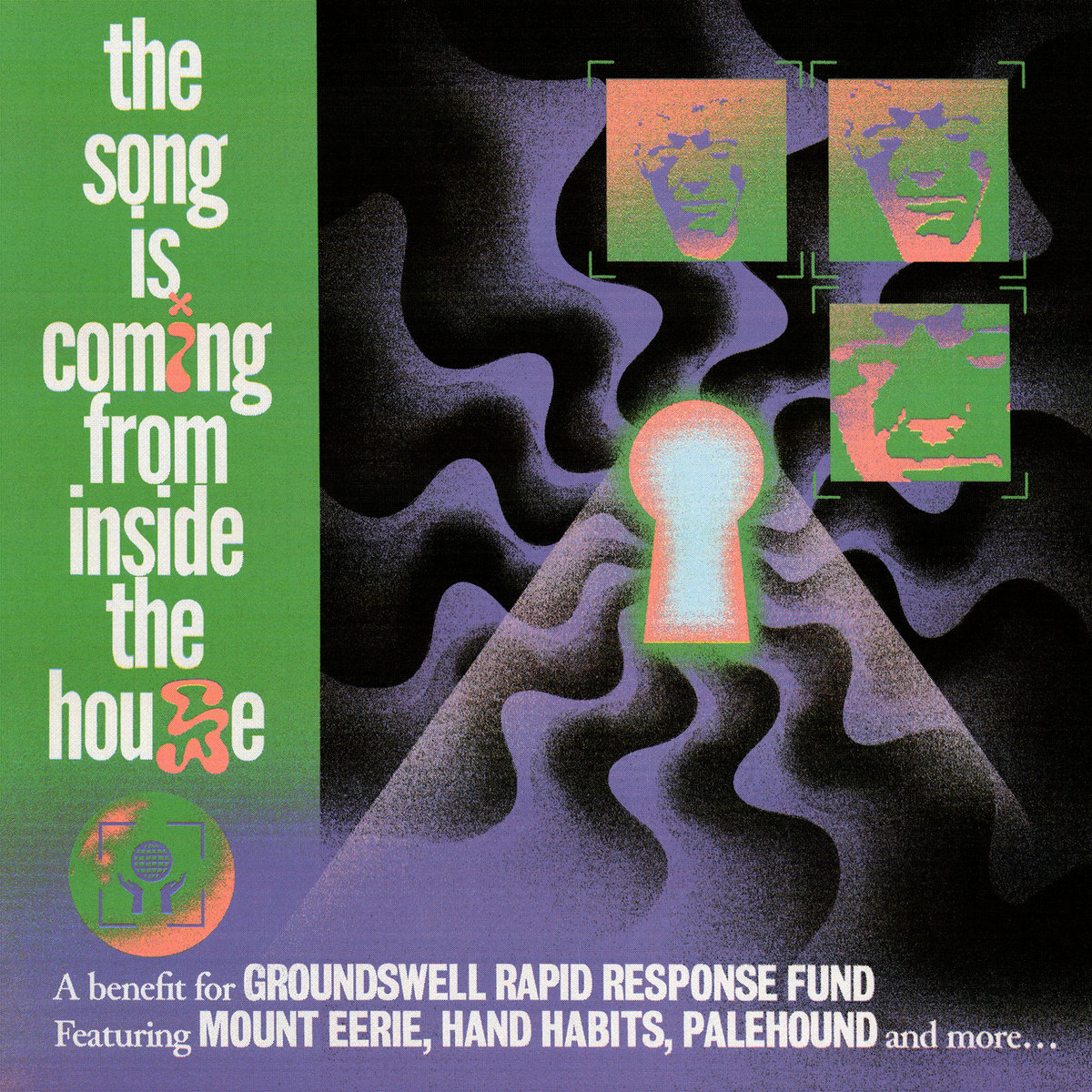
The Song is Coming From Inside the House is a 24-track COVID-19 charity compilation of B sides, demos, and unreleased songs from some of the country’s best underground acts. All proceeds will benefit Groundswell’s Rapid Response Fund, an organization working to address the deep problems and injustices that underlie our economy, political system and our communities.
The Groundswell Rapid Response Fund provides fast funding to grassroots organizations led by women of color, trans people of colour, and low-income women and trans people in critical, but unexpected, fights to protect and advance reproductive and social justice, including mutual aid societies, rent moratoriums, and digital organizing. You can read more here about how they are adapting their approach to meet the demands of the COVID-19 pandemic: groundswellfund.org/rapid-response-fund/#covidrapid
We are supporting Groundswell because this is a way for us to invest in organizations working to address some of the severe inequities in our society that this pandemic is highlighting. Victims of COVID-19 are disproportionately people of colour, and the crisis has already been used as an excuse by lawmakers to deny abortion access. We feel that issues like these have been unreported relative to the general media conversation surrounding COVID-19, and as a result they are likely to be underrepresented in charitable efforts.
Arlo McKinley has washed his songs in the blood of street soul, country, punk and gospel – and tattooed them onto theunderground. Filled with an honest weight and gritty-hope from rustbelt city life, McKinley rolled downriver to Memphis’ Sun Studio where Grammy Award-winning producer Matt Ross-Spang gathered a working man’s all-star band to record his Oh Boy Records debut,
Look, an album about Midwestern ennui delivered by a guy in his 30s was almost focus-grouped to appeal to me, a Midwesterner with ennui in his 30s, but Arlo McKinley’s Oh Boy Records debut belongs on this list for the greatness of its song writing, and the way that it captures the various stages of Midwestern Grief in all its forms. John Prine left us this year, but at least his label has artists who can fill the sizable gap in our lives.
Had Jody Prine not played his late father singer songwriter John Prine a couple of McKinley’s songs, there’s every chance 40-year-old Cincinnati singer songwriter Arlo McKinley would have given up on music entirely and still be delivering tuxedos. However, John was particularly taken with Bag Of Pills and, as a result, McKinley became the last artist Prine and his son signed to their label before the former’s death.
The solo debut (he previously released a 2014 live album as frontman with The Lonesome Sound) opens with the understated strum of We Were Alright, a number that starts out as an upbeat road song about driving with his girl and how “for the first time in a long time we were alright”, only to play the dream within a dream card as he wakes to realise they’ve broken up and tries to get back to the dream to be close to her again.
McKinley’s 10 original songs bleed truth from a heart scarred by wild nights and redeemed by Sunday morning confessions. “She’s Always Around,” “Suicidal Saturday Night,” “Bag of Pills” and “Ghost” are all carved out in the key of life.
Drums & Percussion: Ken Coomer Bass Guitar: Dave Smith Keys: Rick Steff Electric Guitar: Will Sexton Acoustic Guitars: Matt Ross-Spang Fiddle: Jessie Munson BGVS: Reba Russell Acoustic Guitar/Vocals: Arlo McKinley Released August 14th, 2020
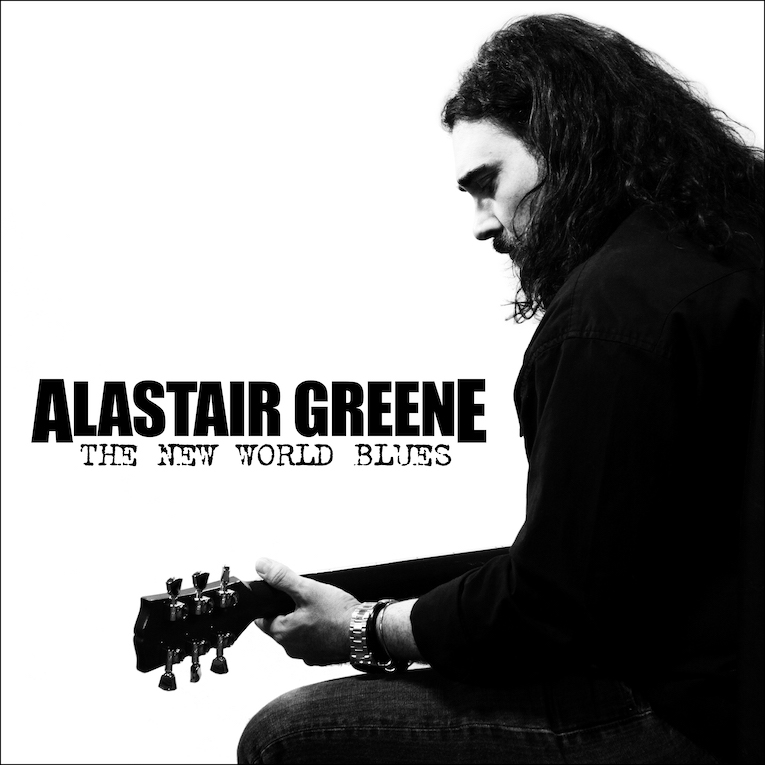
Blues/rocker Alastair Greene turns in a remarkable all-around performance on his new album “The New World Blues”. The platter released October 23rd, 2020 on Grammy-nominated blues guitar star Tab Benoit’s Whiskey Bayou Records and paints a vivid musical picture of Greene as a guitarist, songwriter, and vocalist. Greene trekked to Houma, Louisiana to record with Benoit, who produced these sessions, played drums, sang harmonies, and co-wrote some of the 11 new original tracks presented here. The vibe and material on The New World Blues are both focused on the sound of master musicians practicing their craft together with few distractions. “This is definitely the most stripped down blues-based album I’ve ever made,” says Greene, “The vast majority of this record is live in the studio with very few overdubs and many were first or second takes.”
Greene composed a diverse and soulful batch of songs forThe New World Blues that draw their strength from a deep well of rock, funk, and blues influences. He is a skilled, articulate songwriter with vocal and guitar talents to match. He comes by his rock style honestly, having done eight years of international touring on guitar and vocals with the Alan Parsons Project and major dates with Starship featuring Mickey Thomas. His blues work has landed him on tour with Sugar Rayford’s Blues-Music-Award-nominated band and in featured slots at the Big Blues Bender and the Legendary Rhythm & Blues Cruise. He tips his hat to rock players like Gary Moore and Peter Green on some cuts, deploys his sweet slide technique on others, drops funky grooves, and also captures the swampy feel of the Cajun world. Benoit and bass player Corey Duplechin come together to form a solid and authentic Louisiana rhythm section that does a superb job of supporting Greene through all his twists and turns and provides his songs with a proper backbone.
The record opens with the driving mid-tempo beat of “Living Today,” a steady-rocking track with a positive message and a lot of hot guitar work from Greene. His lyrics reflect the good and bad aspects of modern life and the difficulties inherent in living and loving in our current environment. Greene maintains a smooth vocal tone here, which works swimmingly with the song’s hypnotic feel. Next up is the gritty funk of “Lies And Fear.” It’s built on a heavier sort of riff and well-executed harmony vocals that glide right over the hip-shaking groove put down by Benoit and Duplechin. It’s powerful enough to get a crowd up and moving right away and Greene’s slashing lead guitar work takes it to an even higher place.
“Bayou Mile” is a chill, atmospheric song about coming home that lets Alastair show his mellow side. His slide playing here is ghostly and perfect for the track’s mood and his vocal take feels practically whispered. It’s a stellar moment that deserves some close, late-night listening time. “Back At The Poor House” is a rocked-up instrumental shuffle with funk overtones that’s full of ripping guitar laid over a mighty fine pocket. It’s a wonderfully kinetic track that gives Greene and the crew plenty of room to stretch and shine. Alastair’s tone is impeccably rich and complex, which will endear him to guitar fans everywhere, and he uses it to get the most out of every note.
Greene saves his title track, “The New World Blues,” for the record’s closing spot but rest assured that it’s worth listening all the way through to catch. He and the band absolutely burn this one down, with plenty of distorted slide guitar and rock and roll attitude for all. Listen to the whole album as an experience and you’ll finish with this big payoff as your reward. Alastair Greene blazes a big trail with his new record and continues his ascent to the top of the blues/rock game. He delivers an ideal balance of song writing, guitar, and vocals you can’t help but love. Get at this one straight away.
Since the band Modern Baseball announced their indefinite hiatus three years ago, Jake Ewald has committed fully to his Slaughter Beach, Dog project, releasing a handful of albums, including last year’s Safe And Also No Fear, He’s put out a whole new full-length called “At The Moonbase”, whose only advance warning was an advent calendar-style countdown on his social media accounts.
Despite being recorded in a year where it was hard to get together and make music, At The Moonbase is very much a fleshed-out effort, put together at home and at Ewald’s Philadelphia studio the Metal Shop. It’s filled with the sort of down-on-your-luck narratives that Ewald has populated his songs with over the years, twangy and comforting and filled with wry observations that cut to the bone. it’s always wonderful seeing Jake’s song writing improve and evolve over the years and it shows quite a bit on this record in particular. it’s much subtler of an album, might even be a grower to some, but i think it’s a great way to end the year
In the time since Modern Baseball went on hiatus, Jake Ewald turned Slaughter Beach, Dog from a solo project into a full-fledged band, and in 2019 SB,D released their best album yet, Safe and Also No Fear. With the pandemic keeping Jake at home more, he returned to Slaughter Beach, Dog’s roots, writing and recording a comparatively stripped-back new album, At The Moonbase, alone at home and at his East Kensington recording studio The Metal Shop. (He did end up getting some accompaniment, though, including sax by Wil Schade and vocals by Lucy Stone.) The album is out now, and it finds Jake’s unmistakable singing and song writing style in fine form.
Released December 24th, 2020
Produced by Jake Ewald at The Metal Shop in Philadelphia, PA and at home June – October 2020
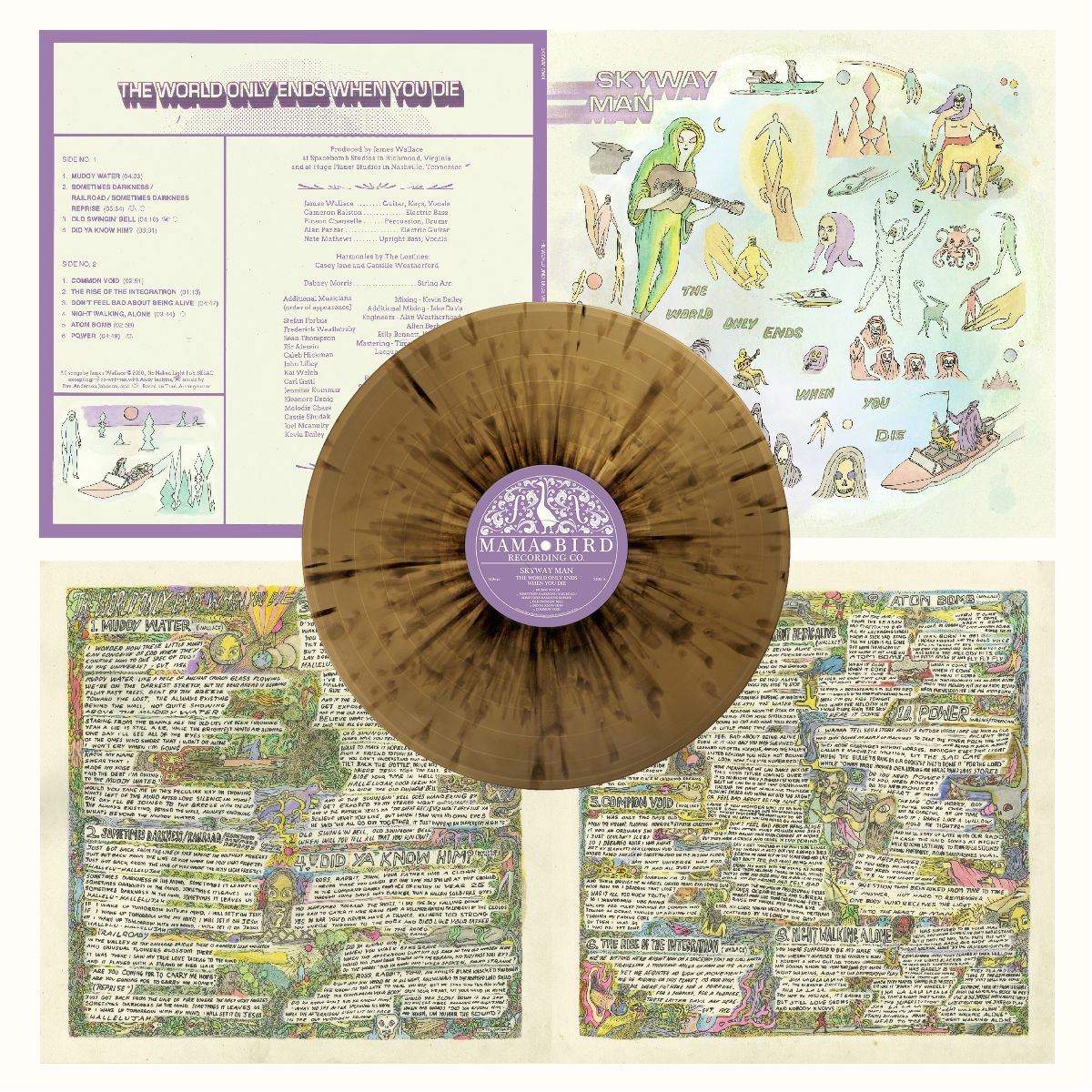
Despite its hefty title, James Wallace’s second album under the cosmic moniker Skyway Man positively blooms with vivacity. Wallace explores the very fabric of living through both ends of the telescope: Maybe it’s reminiscing on that singular feeling, way back when you were 18.
The sophomore long-player from cosmic country innovator James Wallace’s Skyway Man project, World Only Ends When You Die is a ramshackle road trip billed as a “psych-folk opera” that evokes a Muscle Shoals-backed Grateful Dead piloting a boogie van into the Greek underworld. A classic hero’s journey spurned by the twin existential crises of paternal death and a world being torn asunder by disease and competing political ideologies, the ten-track set is awash in metaphysical angst, yet positively ebullient in its response to it.
Recorded at Spacebomb in Wallace’s native Virginia with the studio’s house band and Big Easy vocal duo the Lostines, Skyway Man effusively combines elements of country, folk, blues, gospel, R&B, and indie rock, sometimes all at once — sonic touchstones include Randy Newman, Lee Hazlewood, Daniel Romano, Norman Greenbaum, Flaming Lips, and Dennis Wilson. Commencing with the slow-burning “Muddy Water,” Wallace knows that the road to enlightenment is fraught with danger (“Muddy water like a piece of ancient church glass flowing/We’re on the darkest stretch, but the bend ahead is glowing”), but he remains sanguine throughout the expedition. The radiant gospel-rock suite “Sometimes Darkness/Railroad/Sometimes Darkness Reprise” looks to Jesus for affirmation, while the airy “Rise of the Integratron” peers into the inky blue, pairing billowy Canterbury-style progressive rock with a snippet of a 1953 speech by UFOlogist George Van Tassel. It’s heady stuff, but Wallace and company imbue the proceedings with so much heart and soul — and considerable pop acumen — that the compulsion to hear and see where this sci-fi Canterbury Tales will go next never abates.
Written by James Wallace
The Musicians: James Wallace Guitars – Alan Parker Additional Guitars – Sean Thompson Drums/Percussion – Pinson Chanselle Upright Bass – Nate Mathews Electric Bass – Ric Alessio Piano/Keys – James Wallace Saxophone – Caleb Hickman Background Vocals – Casey Jane, Camille Weatherford
James Wallace’s new album as Skyway Man, The World Only Ends When You Die, is a cosmic and chooglin’ tour de force … he’s achieved something extraordinary here.” – UNCUT
“A psych-folk opera of spaced-out country and sci-fi gospel and blues, laced with mythology and nods to George Van Tassel, legendary ufologist … The new Skyway Man album is really incredible.” – AQUARIUM DRUNKARD
“This thing is something else, folks.” – NEW COMMUTE
The tenth and final chapter from Skyway Man’s ‘The World Only Ends When You Die’, out now from Mama Bird Recording Co. Released October 23rd, 2020
The bearded Nashville songwriter gets an assist from a pair of Tom Petty’s Heartbreakers on his first album in three years. Piano man Benmont Tench and guitarist Mike Campbell offer their respective services, with Campbell co-writing two tracks. Fans have already heard some of the songs live: the rollicking “Arkansas,” the smouldering “You Should Probably Leave,” and even the title track have all appeared in Stapleton set lists. As an album title, “Starting Over” can’t help but carry connotations of an artistic rebirth, but three or four albums into his solo stardom, Chris Stapleton is in no position to rip it up and start again.
Stapleton found his footing with 2015’s Traveller and he’s spent the years since digging deeper into his burnished groove, tying the binds between classic country, classic rock, and classic soul even tighter. A new beginning isn’t in the cards for a singer/songwriter who has styled himself as an old-fashioned troubadour, an outlaw with a heart of gold singing sweet love songs as often as he kicks up dust. He’s a traveller on a long road, not quite forging into undiscovered country as much as finding fresh routes through familiar terrain.
But it’s the brand-new “Watch You Burn,” written about the 2017 Las Vegas massacre, that will snap your head back: “Only a coward would pick up a gun and shoot up a crowd trying to have fun,” Stapleton growls. It’s a direct, damning statement from an artist who chooses his words ever so carefully. Working once again with producer Dave Cobb, Stapleton underscores his rootsy continuity not just with his own catalogue, but with his idols. He takes the time to salute the pioneers who came before him by covering two Guy Clark songs here (“Worry B Gone,” “Old Friends”), along with a deep John Fogerty solo cut that pairs quite nicely with the swampy choogle of the original “Devil Always Made Me Think Twice.” The biggest nod to the past arrives through a couple of key members of Heartbreakers joining the fold: Benmont Tench is on eight of the album’s 14 songs, while Mike Campbell co-wrote two of the record’s highlights, the funky vamp “Watch You Burn” and the rampaging “Arkansas.”
Starting Over has a cover that screams, “This is just an album, not a big achievement,” but that cover hides the maximal quality of the album; it’s a big, blown out, towering LP that makes room for songs about departed dogs, the Las Vegas Route 91 shooting, companionship, and the relative radness of the state of Arkansas. It’s Stapleton through and through; uncompromising and hard to define, it’s all buoyed by Stapleton’s mammoth of a voice. The former Heartbreakers are excellent foils for Stapleton and they also emphasize that he’s a bit like Petty in how he revives sounds of the past for the present and in how he turns out reliably sturdy albums. Stapleton could use a bit of Petty’s flair — there’s not a lot of humour here, nor are there any flirtations with modern sounds — but his straight-ahead style nevertheless satisfies on Starting Over.









 The Fat Angel Sings