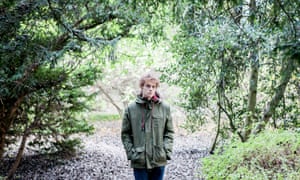
Los Angeles-born, Austin-based Molly Burch is a force to be reckoned with, albeit a subtle one. Her debut LP, “Please Be Mine”, was released in February and was not just among one of the year’s best albums by a newcomer, but one of the best period. The record is heartfelt, intricate and unconditionally romantic. As a trained jazz singer, Burch’s vintage vocal anchor the 10 songs, particularly on the standout track “Fool” and the title track, “Please Be Mine.” With dual talents for Laurel Canyon folk and Hit Parade pop of the ‘60s, she’s a breath of fresh air in comparison to much of today’s overly processed singer-songwriters. This year she opened for everyone from Lucy Dacus to Grizzly Bear, so keep her name (and her album) in your brain.
There’s an unofficial debate between Pile fans about whether they’re better as a live band or a record band. The Boston rock act excel at each, hence why the question is fun to ponder, but A Hairshirt of Purpose felt like an unexpected response to that question. Instead of leaning into the misaligned duelling guitar riffs and inimitable drums of the band’s past catalog, Pile tried their hand at segue songs and lush viola parts, giving the album a sense of cohesion that doesn’t try to mimic their live ricocheting. It’s an intense, emotion-spanning listen of a record, all carried by frontman Rick Maguire’s cryptic lyrics that, once again, teeter near the edge of insanity — which means outbursts of mania, like those on “Fingers” and “Hairshirt”, come with an even bigger payoff.
Kiran Leonard was born in Saddleworth, Greater Manchester in 1995, a fortnight after Oasis lost their famous chart battle with Blur. This is nicely symbolic because Leonard couldn’t be further removed from the cliched indie-lad template. His dad, a former folk singer, encouraged him to learn the mandolin when he was five. From there he graduated to the guitar, and at 10 years old he was devouring his older brother’s prog, noise and jazz records while recording his own music on the computer with a cracked copy of Ableton. “I didn’t really care about learning how to play other people’s songs,” he says. “I just preferred to fuck about. I used to record a lot of absolute shite… and never stopped.”
Leonard’s 2012 debut album Bowler Hat Soup – on which he played virtually everything himself – careened confidently from lush chamber pop to chewy prog via deranged music-hall stomps, placing its 16-year-old narrator on the Pyrenean ski slopes of Port Ainé or in the midst of an ancient battle. Yet Leonard now dismisses the lyrics of Bowler Hat Soup as “mostly bollocks”. Whereas heavier new album Grapefruit is only “half bollocks”, with entertaining salvoes of nonsense wordplay such as Ondör Gongor (named after a legendarily tall Mongolian man) nestling alongside the likes of Half-Ruined Already’s more unsettling exploration of the human psyche.
“That’s based on a Werner Herzog short film called Last Words,” he explains. “There’s an anecdote in the film about two people with leprosy: a man with no legs and a woman with no arms. So the man used to walk around on the woman’s back and together they formed a full-length avatar, and as a result entered a common-law marriage. It’s an example of co-dependence taken to extremes. So essentially the song is asking: Am I actually in love with this person or do I just want their limbs?”
Evidently there is a high level of intellectual curiosity at play here, so it may not be a surprise to learn that Leonard is in the second year of a degree course in Spanish and Portuguese at Wadham College, Oxford. He has been reluctant to talk about his academic life in interviews, but given we’re drinking in a 14th-century tavern in the shadow of the Bodleian Library, it’s a difficult topic to avoid. Mainly, Leonard is concerned that people might think he’s another posh-boy rocker in the Mumfords mould. “But Oxford’s not what people think it is. There are 22,000 students here and they didn’t all go to Eton.”
With his grungy jumper and blunt Lancastrian vowels, nobody is likely to mistake Leonard for a member of the Bullingdon Club. His music is clever and quixotic but it’s also governed by purist punk ethics. He doesn’t use effects pedals and has only recently taken to carrying a spare guitar with him to shows because he didn’t want to look flash. That doesn’t mean he lacks ambition; he compares his next album after Grapefruit to Pet Sounds and he’s already mapped out its narrative arc, even though he’s yet to write all the songs.
Leonard’s Manchester musical peers include the likes of Dutch Uncles and Everything Everything, who can be heard loudly praising his work at every opportunity. But pinning him down to one particular scene is difficult. The best comparison is with someone like Jim O’Rourke, whose refusal to play the game allows him to move between orchestral pop, post-rock and avant-garde spheres at will.
Kiran Leonard is just 20 years old, but if you were looking to paint him as a wide-eyed ingénue, you’ve already missed the boat: Such is his experience and tireless work ethic he’s already coming to resemble a veteran. A rangy young man from Oldham, Greater Manchester, Leonard picked up the mandolin aged five, and wrote his breakout 2013 song “Dear Lincoln” a manic piece of psychedelic pop, like Van Dyke Parks reincarnated in the body of a hyperactive English schoolboy when he was 14 years old. Leonard is an intellectual sponge drinking up an ocean of knowledge. His frame of reference encompasses playwright Samuel Beckett and the philosopher Friedrich Nietzsche, the mangled productions of Death Grips and the brainbox pop of Elephant 6, while “Pink Fruit” – the second song on this, his second LP – is a sprawling song suite with more twists and turns in its 16 minutes ,The crux of its peculiar lyric? An erotic encounter between a woman and a squid.
It’s a lot, right? Right. Grapefruit is by turns astounding, accomplished and difficult to digest, an album shouldering ambitions so big that you fear that at any point it might give way at the knees. Undoubtedly, Leonard is an autodidact of amazing talent and energy. At times his idiosyncratic performance style resembles Dirty Projectors’ see “Don’t Make Friends With Good People,” with those wandering, pointillist guitar lines, that voice that leaps boldly across octaves, as if participating in some tipsy parkour. Elsewhere, he recalls a fellow British outsider, Richard Dawson, whose take on the narrative folk tradition is both wild-eyed and whimsical. The lolloping, rusty groove of “Öndör Gongor” is a fractured song-story sketched in enigmatic strokes – a strapping maritime fantasy set “in the night of the shotgun,” in which sharks lurk as “a clatter of shins hit the dock” and a mysterious orb named Ethel waits, hungrily. The song ends with staccato blasts of guitar and a chanted shanty-like coda, although how all this relates to the subject of the song’s title – a giant who lived in early-20th century Mongolia – is left unaddressed.
Grapefruit is a gnarlier-sounding record than its predecessor, its lurching guitars and skittering, free percussion. It is at its most digestible, however, when Leonard plays it orchestral. “Caiaphas in Fetters” is a beautiful confection of strings and fluttering guitar that finds him posing questions to a lover: “Ask yourself/Do you feel as I feel?” “Half Ruined Already,” meanwhile, is a finger picked love song in which two participants – one legless, one armless – come together in one romantic whole. It was inspired by a Werner Herzog short about a couple who met in a leper’s colony, but succeeds in taking such grim subject matter and alchemizing it into warm sentiment. At the other end of the scale is the somewhat opaque “Exeter Services,” which flips between quizzical improv and skidding emo, all flail and gasp and rickety cathedrals of language built to collapse: “I’m in the Catskills! Total duality! All of Ophelia! Absolute anarchy!”
Grapefruit is 57 minutes long and feels packed to the rafters, as if Leonard is a hoarder of ideas and song fragments, unwilling or unable to let anything go. Take “Pink Fruit.” In its 16 minutes, it flits between noisy spazz-rock, folk shambling, woodwind interludes, short-wave radio tinkering and free percussion. I’d stop short of calling it confused – even when it’s getting wild, there’s enough recurring lyrical cues to suggest its maker is working to a detailed map. But he can be rather an impatient guide, and while the ground it covers is startling and often picturesque, Grapefruit is an album you feel led through, rather than being left to explore or inhabit. Perhaps in this regard, at least, Kiran Leonard still has things to learn.
One of three records in this list which came out via the ever-excellent Keeled Scales label, Twain’s ‘Rare Feeling’ musters just that; the kind of stupefying reaction that comes from hearing a voice so piercing and true you wonder how it exists in the underground, such is the exquisite magic it possesses.
A wilting, lilting country-rock record, Twain is the working project of one Mt. Davidson, a creator of terrifically moving songs, with a name like a mountain and a voice that could move them from their very foundations. A rare and genuine find; a gleaming nugget of gold in a barrel of silt.
Indie-folk outfit Twain delivers an intimate set of songs. Paired with his guitar, he will send chills down your spines with beautiful renditions of songs off of his sophomore album “Rare Feeling”. He purges feelings of loneliness and confusion. He seamlessly strings together pitch-perfect musicality and raw emotion, exuding warmth with a quiet intensity.
With effortlessly stunning guitar and vocal riffs, he explores profound concepts in songs such as “Hank & Georgia,” which he states, “is the metaphor for the conflict between the masculine and feminine that one feels internally.” When he sings, he takes his time and sustains notes that evaporate into a whirlpool of emotion.
An album inspired by mixtapes, early 00’s indie, punk, and a hint of fourth wave emo that creates huge waves of nostalgia for an idyllic time that probably never really existed, but you wished did. As a fan of early Shins and Death Cab, this is definitely my vibe. Clean but unfussy production, driving riffs and melodies, superb lyrics and vocals
The Yunahon Mixtape is a remarkably solid, ever-endearing chunk of meaty indie-rock songs and among the first great records released of 2017, It snuck out via Oso Oso’s Bandcamp page on January 13th. Such is its charm and longevity, however, that we’re still finding new things to love about it as the year pulls to a close. Heartfelt, fearless, nostalgic, and fun, the Yunahon Mixtape is the year’s quintessential record, a dizzying escape from this mess of a world with just enough to remind us what we’re always escaping from the normal.
Little Star have announced a brand new EP, “Even In Dreams” a new four-song set which is due for release on January 12th via Good CheerandHidden Bay Records. Though the aforementioned record was recorded and released as a trio, Little Star was initially the solo project of Daniel Byers and Even In Dreams is a return to that guise, though it features the first work of Byers’ to come from the studio rather than his own bedroom setup.
Unveiled this week, lead track ‘Providence’ is a hazy little pop song that immediately carries you in to the new chapter. All wilting guitars and fading vocals, the track makes for a hazy but gratifying escape from the world, the sound of a day slowly crawling to a close, the people we miss and pine for disappearing in to the night alongside the surrounding vista. There’s a hint of The Smiths in the despondency, a little dash of Deerhunter in the intricate details, but this also feels like a compelling new page for Little Star; a tender and eminently pretty piece of music that brilliantly sets them up for 2018.
43 years ago in December 1973, Frank Zappa played a series of legendary concerts at the famed Roxy Theatre on the Sunset Strip in Hollywood. Considered a high-water mark of his career, owing to the incredible, virtuosic performances of himself and his stellar band The Mothers, the five shows – across three nights – included a private invite-only performance/soundcheck/film shoot followed by back-to-back doubleheaders. A few days later, continuing this incredibly prolific week, Frank Zappa brought his band and camera crew to Ike Turner’s Bolic Sound in Inglewood for a filmed recording session. In typical Zappa fashion, he recorded it all.
Zappa Records presents The Roxy Performances. A 7-Disc Box Set that contains the MOTHERLODE of all things Roxy. All 4 public shows from December 9th & 10th 1973, remixed in 2016 and presented in their entirety for the first time. Also included is the sound check from December 8th and bonus content that features rehearsal nuggets and unreleased tracks along with highlights from the recording session at Bolic Studios that took place in conjunction with the filming dates. The box set that collects all four public shows from December 9th-10th, 1973, and the December 8th film shoot/soundcheck, each presented in their entirety for the first time, along with bonus content featuring rarities from a rehearsal, unreleased tracks and highlights from the Bolic Studios recording session. This complete collection, totaling nearly eight hours, documents the Roxy shows as they happened and presents brand new 2016 mixes by Craig Parker Adams from new 96K 24 Bit transfers of the multi-track masters. The set is rounded out with a 48-page booklet that includes photos from the performances, extensive liner notes by Vaultmeister Joe Travers, essays from Zappa family friend, Australian writer Jen Jewel Brown,and American singer/songwriter Dave Alvin, who give their firsthand recollections about the shows, and a selection of archival press reviews.
This is one of my favorite Frank Zappa line-ups ever. This box contains some of the best nights of music LosAngeles has ever seen with their ears at an historic venue,” says Ahmet Zappa, who co-produced the collection along with Travers, “Hold on to your hotdogs people. This box is the be-all-end-all. This is it. This is all of it. It’s time to get your rocks off for the Roxy.”
While portions of these concerts have been released in various formats over the years – first in 1974 on the album Roxy and Elsewhere, which mixed material from the shows with performances recorded in different locations months later, followed by 2014’s Roxy By Proxy, which featured Zappa’s 1987 digital mixes of tracks from various shows, and most recently the 2015 film Roxy The Movie and its accompanying soundtrack – the shows have never been released in their entirety until now.
The Roxy Performances capture Zappa and The Mothers in peak condition as they play to rowdy sold-out crowds in the intimate, just-opened venue in their hometown Los Angeles following the release of Over-Nite Sensation. The extraordinary band was one of Zappa’s best with keyboardist George Duke, bassist Tom Fowler, trombonist Bruce Fowler, tenor saxophonist and vocalist Napoleon Murphy Brock, percussionist Ruth Underwood and drummers Ralph Humphrey and Chester Thompson all flawlessly in lockstep as Zappa led them through his musically adventurous compositions filled with complicated time signatures and sudden tempo changes. As the Los Angeles Times remarked in their review, “The content of any show starring Frank Zappaand the Mothers of Invention is unpredictable. But the quality of the show is predictable. I have seen this satirical rock group many times and every show has been excellent. True to form, the group performed sensationally at the Roxy on Sunday night.” The (long-defunct) Los Angeles Herald-Examinerwas equally impressed: “This time around Zappa, the counter-culture’s John Cage, has assembled a remarkable group of musicians.Tim Fowler on bass, his brother Bruce on trombone, Ralph Humphrey on drums, and George Duke, whose keyboard skills almost upstaged the leader himself. Percussionist Ruth Underwood kept up with the band’s frenetic pace without missing a single swat of the gong, and she was incredible.”
The material expertly performed across the five shows consisted mostly of songs from 1969 and beyond and included a dizzying array of stylistic diverse tracks from Uncle Meat, Hot Rats, Waka/Jawaka and Over-Nite Sensation. The shows also include a number of live favorites like “Village Of The Sun,” “Pygmy Twylyte,”“Cheepnis,” “Penguin In Bondage,” “Echidna’s Arf (Of You),” and “Don’t You Ever Wash That Thing.” Many of these ended up on Roxy & Elsewhere.
Jen Jewel Brown and Dave Alvin give a glimpse at what it was like to be at these historic shows in their richly detailed essays in the liner notes that accompany the recordings. Alvin reflects about meeting Zappa on the Isle of Capri in 1982 while on tour with his band The Blasters and how Zappa’s eyes lit up when he told him he saw him at the Roxy. “You were at a Roxy show?,” he beamed. He goes on to write, “The Roxy Mothers were a grand combination of high art, low art, masterful technique and razor sharp humor with a touch of wild abandon.” In Brown’s reflection, “This is a cultural record and there’s some prime Zappanalia here. Frank had put the crippling disasters of December ’71 behind him and was plunged headlong into some of the most beautiful music and zestful, open-hearted engagement with life imaginable.”
Pip Hall might share youth, a label and a flare for the emotional , Pip’s offering, “James”, is a raw slice of emotional outpouring. This is never more obvious than on the stunning title track, Pip’s tribute to her late father, who died when she was young; is part beautiful homage to his memory, part honest recollection of her struggles to grow up without him around.
Musically, across the EP, Pip shows a wonderful dexterity, from the fluttering electronics and Fleetwood Mac-like melodies of Devil You Don’t, to the driving twangy guitars of Turn Over. Throughout they are all pinned together by Pip’s frankly stunning vocal, an instrument capable of effortlessly shifting from an impassioned howl to an intricate whisper. At barely sixteen, Pip Hall is a mercurial talent, a songwriter with unlimited potential, and already quite probably Preston’s most famous musical daughter. If James is an intriguing introduction, where she goes next might just be incredible try and catch her while you can.
“a gigantic talent…potentially massive” – The Line Of Best Fit
“Hall’s ability to write a brilliant pop hit is evident.” – Goldflakepaint
“It’s been haunting me all day. Sounding absolutely fantastic” – Radio X (John Kennedy)
“a palpable successor to the crown bestowed on Lorde after all.” – The Metro
“Revelatory songs wrapped in velvety synths and guitars” – Daily Mirror
“Stunningly penned tracks.” – Little Indie Blogs
“Wonderful” – Amazing Radio (Shell Zenner)
“Beautiful and engrossing.” – The Revue
“Graciously dark and lushly soulful” – Fame Magazine
“A star in the making.” – For The Rabbits
Tamara Lindeman was 31 years old when she recorded her latest album as the Weather Station, which is significant. “Thirty” is a song about surviving that milestone birthday, about the small moments that define that time of life: “You put your hand on the small of my back, I was surprised that you’d touch me like that.” The song builds speed and momentum, getting faster and faster with each new memory, much like life itself. And Lindeman stands in the middle of the storm, trying to make sense of one moment before the next moment hits. “That was that year, now here is another one.”
On astonishing artistic statement The Weather Station, Tamara Lindeman homes in on her rebellious core to express some of the finest musical sentiments Canada has conjured. A mood and scene-setter, Lindeman delves into the complexity of interpersonal relationships and, in particular, the tricks and treachery of soul mate communication. It’s not always easy, and neither is the Weather Station.
Often citing the writing of Steven Lambke, like he’s a mentor, Lindeman approaches language like a dancing partner but also like a foe. Often, as on the flurry of imagery that propels “Thirty” or “Kept it All to Myself,” she lets loose emotive lyrical torrents that haunt the listener.
Beyond her gift for phrasing and alluring voice, Lindeman also shows off an ear for arrangements and production here. The musicality is uniquely orchestral and sophisticated; the back-up vocalists are utilized with subtle strength. This is the Weather Station, ascending with the grace of a heron to full flight.
The Weather Station’s S/T album was released October 6th, 2017 on Paradise of Bachelors (worldwide), http://www.paradiseofbachelors.com/po… as The Weather Station, Tamara Lindeman reinvents, and more deeply roots, her extraordinary, acclaimed songcraft, framing her precisely detailed, exquisitely wrought prose-poem narratives in bolder and more cinematic musical settings. The result is her most sonically direct and emotionally candid statement to date, a work of profound urgency and artistic generosity.
The palpable freedom emanating from Tamara Lindeman’s fourth long-playing album as The Weather Station is unmistakable, and completely intentional. Stepping aside from a successful acting career, and taking the reigns in the recording studio, the Toronto-based singer/songwriter and multi-instrumentalist has crafted her most intrepid, stirring, and successful work to date. All it took was a load of gumption.
She cracks that the new album is her rock and roll record. There’s of course a grain of truth in every joke. “There was this excitement around what would happen if I blended my sensibility with that spirit,” she says. “That devil-may-care attitude.” By that she means that she had to actively work against most of her natural instincts in the studio—to be less careful, less cautious, and totally unselfconscious in her decision to stand up to male assertion. “I knew exactly what I wanted, and I just realized that it was actually better if I didn’t listen to anyone else,” she adds.
It’s an environmental reality most women have had to face. The overcoming of this quiet oppression, this subtle misogyny, becomes an unwanted career milestone—the product of a deep-rooted, male-centric ideology that remains a de facto force in creative and corporate settings. “Lord, Give Me the Confidence of a Mediocre White Man” is an oft-memed phrase for a reason.
Lindeman explains that she’s never worked with a female producer, and in her experience men in that role exude finality in their point of view, often ignoring the artist’s input altogether. As a self-proclaimed introvert and someone to whom leadership does not come naturally, she adds that she had to tap into her acting chops to construct a reality where her opinions of her own work negated outside input. She adds that men have a keen ability to make their opinion seem like the truth. “But in the end, that’s just one opinion, that’s how it sounds to you,” she says. “I just had to pretend to myself that my opinions were the Word of God.”
The new, self-titled album’s eleven songs unfold and build upon one another like chapters in a captivating memoir. They’re moving yet unsentimental, welcoming listeners aboard a passenger train between heart, brain, and larynx.
“I just had to pretend to myself that my opinions were the Word of God.”
“All these years I have followed you / It never occurred to you to follow me,” she sings on album opener “Free.” The song acts as a mission statement, the trailhead of a path through introspection and liberation, surrounded by swaying guitar, stringed breezes, and chirping piano. It’s familiar and yet deeply personal, merging universal truth and individual experience. It describes the making of the record, and the feeling throughout the end result. It’s a painful realization—and a battle cry.
Like any great book, the LP’s effortless quality comes from a mastery of craft. Each song has a stream-of-consciousness quality, but in fact endures rounds of re-imagining and revision. Lindeman begins with a germ, a seed of a song, and incubates it by recording different, largely spontaneous versions on the theme with just guitar and voice. She plays them back, transcribes them, and then fuses together her favorite parts for a finished song.
Album standout “Impossible” began with what became its apex: the line “I guess I got the hang of it, the impossible.” She knew immediately that the very loaded observation deserved a wider exploration. Despite the universality of the song’s crux, she sought a very personal narrative to surround it. An early version didn’t tap far enough into any specific place in time, and ended up on the cutting room floor. “It doesn’t feel right if I write a song that’s too vague,” she says. “All the lyricists I admire have moments where it’s universal and moments where it’s specific. There’s a perfect balance that I’m always striving for.”
Like any red-blooded Canadian, Lindeman cites Leonard Cohen as a lyrical hero, but with a caveat. “Bob Dylan is also the best,” she says. “Leonard is better in a lot of ways, and I think he’s the best, but you need Bob, too.” She also mentions Canadian compatriots of the contemporary music scene in the same breath. Artists like Jennifer Castle have inspired her own free-form approach to songcraft, which emphasizes lyrical narrative, rhythmic phrasing, and organic instrumentation over traditional verse-chorus formatting. It’s a signature mark of artists like Joni Mitchell and Mary Margaret O’Hara, and one increasingly present in the new age of singer/songwriters like Lindeman, who deftly manages to work a multitude of cohesive feelings, ideas, and actual words into her songs.
When asked about her approach to phrasing, her voice piques with excitement. “People don’t talk about phrasing, but it’s so key,” she explains. She adds that while she doesn’t have a deep knowledge of the canon, rap music has influenced the quality of her sung words. “You can’t help but notice the ingenuity pouring out of that genre right now,” she says. “What people are doing in rap is much more distinctive than what people are doing in folk music… Having rap permeate the culture has really affected me.”
For an album with a remarkable series of firsts, from self-producing to string arranging, The Weather Station spins like a classic work from a storied professional, steeped in equal parts confidence, grace, and duende—that intangible spirit of passion. And all this despite disapproving forces in the studio. “There were people around me who didn’t like the record,” Lindeman says. “I was like, ‘OK, I gotta see this through.’” The result is a triumph of character and expression. A singular vision swimming upstream in a sea of know-better.
If David Rawlings had an airplane, he’d “fly to Tennessee just for the day, and lay me down easy, just to wind my blues away.” You could substitute any state or place in that line, wherever you want to be at any particularly bad moment. It’s a beauty of a song about escaping, about leaving your woes on the ground as you go soaring through the air, and Rawlings sings and plays guitar like a man who has more than a few of those woes.
Over the past decade, ever since releasing the first album under his own name — 2009’s Friend Of A Friend – DavidRawlings has gradually emerged in his partnership with Gillian Welch as the duo’s primary vocal outlet. Though it often seems as though the only discernible difference between albums under Gillian Welch and David Rawlings is who happens to be singing lead, three of their past four albums have been released under Rawlings’ name. “Poor David’s Almanack” takes a more full-band approach toward Welch and Rawlings’ neo-traditionalist American roots music. Enlisting longtime collaborators like Willie Watson, Brittany Haas and Ketch Secor, Rawlings runs through a mix of light folk-rock, orchestrated country-soul, traditional country-gospel, and folksy low-country blues. When recording under the Rawlings name, Welch and Rawlings are freer to toy around musically and stray from the note-perfect craftsmanship of the acoustic duo format they tend to stick to when performing as Gillian Welch. Poor David’s Almanack, for instance, features plenty of electric guitar, full string sections, rollicking fiddle and ramshackle three-part harmonies. A large component of Rawlings and Welch’s musical/historical project with their David Rawlings’ releases is their repeated insistence that in traditional music, there’s no such thing as a novelty song. Like on past comical high-dramas like 2009’s “SweetTooth” and 2015’s “Candy,” new numbers like “Yup,” “Good God A Woman” and “Money Is The Meat In TheCoconut” are humorous, deadpan allegories that often tell deeper stories of lust, greed sex, and violence. What’s so profoundly American about these songs are the way they often deploy humorous metaphor and simple, child-like storytelling devices to convey deeper, darker truths. Other times, the songs are simply funny stories without a larger lesson. In this way, Dave Rawlings records exist as an important counterweight to the inherent gravitas and high stakes seriousness in Gillian Welch albums. An earlier version of this review listed Griffin and Taylor Goldsmith as producers of the album. The album was produced by David Rawlings and engineered by Ken Scott and Matt Andrews.
from his “Poor David’s Almanack” 2017. Acony Records