Archive for the ‘CLASSIC ALBUMS’ Category

1966: A Quick One

Recorded at IBC Studios, Pye Studios and Regent Sound, London in the autumn of 1966. Pete’s first rock opera contains six separate songs, ‘Her Man’s Gone’, ‘Crying Town’, ‘We Have A Remedy’, ‘Ivor The Engine Driver’, ‘Soon Be Home’, and ‘You Are Forgiven’. Along the way the unnamed heroine pines for her absent lover, selects Ivor as a substitute, regrets her folly when her man returns, confesses her indiscretion and is ultimately forgiven. John:”We wanted to put ‘cellos on the track but Kit Lambert said we couldn’t afford it. That’s why we sing ‘cello, cello, cello, cello,’…where we thought they should be.”

In 1966 The Who’s 2nd Album, A Quick One, marked a change in The Who’s recording approach, and although re-recording songs that had previously been cut with Shel Talmy and discovering stereo as everyone was at the time, the addition of the Mini Opera demonstrated the path the band would eventually be taking.

Songs:

00:00 “Batman” (Neal Hefti) 01:37 “Bucket T” (Dean Torrence, Roger Christian, Donald J. Altfeld) 03:49 “Barbara Ann” (Fred Fassert) 05:47 “Disguises” (Pete Townshend) 08:56 “Doctor, Doctor” (John Entwistle) 11:55 “I’ve Been Away” (Entwistle) 14:03 “In the City” (Entwistle, Moon) 16:23 “Happy Jack” (Townshend) 19:14 “Man With the Money” (Don Everly, Phil Everly) 21:59 “My Generation/Land of Hope and Glory” (Townshend/Edward Elgar)

  • Bass Guitar, Vocals – John Entwistle
  • Drums, Vocals – Keith Moon
  • Guitar, Vocals – Pete Townshend
  • Vocals – Roger Daltrey

THE WHO – “A quick one while he’s away” – 1969 – Live at the London Coliseum

Peter case on the way

Peter Case has always been a pioneer. Genre-tripping through punk with The Nerves (“Hanging On The Telephone”), new wave/power pop with The Plimsouls (“A Million Miles Away”) and Americana with his Grammy®-nominated, self-titled solo debut. It is a career that is still going strong over 40 years later on the strength of his exceptional songwriting..

With 18 previously unissued live performances from 1998 and 2000 originally broadcast on KPFK’s FolkScene. On The Way Downtown: Recorded Live On FolkScene is a snapshot from nearly twenty years ago when Case sat still long enough for the airwaves to catch up to him. This new album captures material from two live performances on the highly influential KPFK (Los Angeles) syndicated radio program in 1998 and 2000. The first half features material from his then, newly released Full Service, No Waiting—an album New York magazine called “stunning.” The latter half contains material from 2000’s Flying Saucer Blues, as well as songs from his earlier releases. Plus, some choice covers appear as well. Both intimate acoustic sets have remained unheard since their original broadcasts.

While he continues to receive accolades for his recorded work (including 2015’s HWY 62), there is a very good reason he continues to pack venues when he plays live. On The Way Downtown: Recorded Live On FolkScene gives the listener a chance to experience his incredible gift of songwriting and performance.

Both intimate acoustic sets have remained unheard since their original broadcasts.

Legacy Recordings Announces Eclectic Assortment Of Collectible 7″, 12″ Vinyl and Cassette Titles For Record Store Day 2018

Legacy Recordings, the catalog arm of Sony Music, has announced the titles its releasing for this year’s Record Store Day, which will take place on April 21st 2018.

A press release notes that it’s the most number of albums the label has issued in the 11 years that Record Store Day has taken place. Among this year’s offerings are limited-edition releases by such artists as AC/DC, Pink Floyd and Bruce Springsteen.

Pink Floyd are reissuing their debut, The Piper at the Gates of Dawn, on mono vinyl for the first time in 50 years. Bruce Springsteen will see his 1995 Greatest Hits compilation issued on individually numbered red vinyl, while AC/DC’s Back in Black will be sold on cassette. The document of the 1987 tour by Bob Dylan and the Grateful Dead, Dylan & the Dead, will be sold on red and blue tie-dye vinyl.

Legacy Recordings also revealed that the Allman Brothers Band’s Live at the Atlanta Pop Festival, July 3 & 5, 1970, one of their most famous concerts prior to their At Fillmore East breakthrough, will be available for the first time on vinyl, with four discs housed in a box set with eight pages of notes and photos. A similar treatment has been given to Jeff Buckley’s Live at Sin-é: Legacy Edition.

Johnny Cash’s legendary At Folsom Prison is coming out in a special five-LP collection that combines the entirety of both sets Cash performed that day, as well as performances by June Carter, Carl Perkins and the Statler Brothers. Included in the package is a 12″ single of rehearsals the band ran through at a Sacramento, Calif., hotel the night before the shows and an eight-page 12″ x 12″ booklet.

Live sets by Living Colour (Live at CBGB’s, 12.19.89), Rage Against the Machine (Democratic National Convention 2000), Elvis Presley (The King in the Ring — the acoustic sets of his 1968 comeback special), Soul Asylum (Live From Liberty Lunch, Austin, TX, December 3, 1992), Hot Tuna (Live at the New Orleans House) and Big Audio Dynamite II(On the Road Live ’92) will also receive their premiere vinyl release.

Legacy is also putting out a pair of 7″ singles for Record Store Day: Jimi Hendrix’s “Mannish Boy” b/w “Trash Man,” both of which come from April 1969 sessions, and a collaboration between Van Morrison and jazz organist Joey DeFrancesco on “Close Enough for Jazz” and “The Things I Used to Do.”

In addition, records by Eurythmics (the 1984 soundtrack), Kenny Loggins (purple vinyl of Return to Pooh Corner) and Uncle Tupelo (No Depression – Demos) will be released.

Allman brothers rsd clean

The Allman Brothers Band, Live At The Atlanta Pop Festival, July 3th & 5th, 1970 (4LP 12” vinyl – Individually Numbered – First Time on Vinyl)

The Allman Brothers Band was one of Georgia’s top live acts still looking for a national break when they were hired to open the three-day Atlanta International Pop Festival. The band’s Southern blues style, bolstered by jams that stretched to epic lengths, won over audiences—and two days later, after legends like Jimi Hendrix, Johnny Winter and B.B. King took the stage, the Allmans were invited back for a second set. Recorded nearly a year before At Fillmore East established them as one of America’s hottest bands, fans can now discover these landmark nights in Allman Brothers Band history with this individually numbered, limited edition box set, available on vinyl for the first time and packaged in an oversize slipcase with an eight-page booklet of photos and liner notes.

Big audio dynamite ii rsd clean

Big Audio Dynamite II, On The Road Live ’92 (12” Single – First Time on Vinyl)

The Clash’s Mick Jones resurrected Big Audio Dynamite with a new lineup in the early 1990s, releasing The Globe, the band’s best-selling album in America, in 1991. This five-track EP, available for the first time on vinyl, features performances from live dates in Chicago and New York—including a rendition of the band’s U.K. No. 1 single, “Rush.”

Jeff buckley live at sin e rsd clean

Jeff Buckley, Live At Sin-é: Legacy Edition (4LP 12” vinyl – Individually Numbered – First Time on Vinyl)

In a cramped club on the lower east side of Manhattan, armed with only an electric guitar, Jeff Buckley stunned audiences with his mysterious, emotionally uncompromising live sets, packed with eclectic covers and his own originals. The four-track Live At Sin-é EP, released in 1993, was his debut release for Columbia Records; here, it’s expanded as a numbered, limited edition in a deluxe hard shell slipcase housing four individually designed LP jackets and an eight-page, full-color booklet of photos and liner notes. Live versions of favorites like “Grace,” “Last Goodbye” and Leonard Cohen’s “Hallelujah” appear here on vinyl for the first time.

Johnny cash folsom prison rsd clean

Johnny Cash, At Folsom Prison: Legacy Edition (5LP 12” vinyl – Individually Numbered – First Time on Vinyl)

“Hello…I’m Johnny Cash.” With those four words, The Man in Black solidified his legend as outlaw country pioneer with two spirited sets recorded at Folsom State Prison in 1968 and released as At Folsom Prison, one of the most acclaimed live albums of all time. This special box set includes both full concerts available for the first time on vinyl, including performances by June Carter, Carl Perkins and The Statler Brothers. This numbered deluxe package, featuring individually designed LP jackets packaged in a deluxe hard shell slipcase with an eight-page, 12” x 12” booklet, also includes a bonus 12” single featuring previously unreleased audio of Cash and friends rehearsing at the El Rancho Motel in Sacramento, California, the night before the concerts took place.

Dylan and the dead rsd clean

Bob Dylan & The Grateful Dead, Dylan & The Dead (LP – Red and Blue Tie-Die Vinyl)

In 1987, two legends joined forces for an unforgettable tour. Now, Dylan & The Dead, featuring The Grateful Dead backing up Bob Dylan on seven of his classic songs, including “All Along The Watchtower,” “Knockin’ On Heaven’s Door” and “Gotta Serve Somebody,” is available on red and blue tie-dye vinyl for a trip unlike any other.

Jimi hendrix mannish boy rsd clean

Jimi Hendrix, Mannish Boy b/w Trash Man (7” Single)

Recorded at New York City’s Record Plant on April 22nd, 1969, this uptempo reworking of Muddy Waters’ “Mannish Boy” marks Jimi Hendrix’s first recording session with bassist Billy Cox and drummer Buddy Miles—the trio who became known as Band of Gypsys, whose work with Hendrix had a significant impact on his remarkable legacy. First released on Both Sides Of The Sky, a new studio album of rare and unissued Hendrix recordings, “Mannish Boy” is issued here as a 45 RPM single backed with “Trash Man,” an April 3, 1969 studio recording made by the original Jimi Hendrix Experience. “Trash Man” is drawn from Hear My Music, a Dagger Records “official bootleg” album not sold in stores and otherwise only available to fans via jimihendrix.com.

Van morrison joey rsd clean

Van Morrison & Joey DeFrancesco, Close Enough for Jazz b/w The Things I Used to Do (7” Single)

This limited edition 7” single is a collaboration between legendary vocalist Van Morrison and jazz organist Joey DeFrancesco, featuring a new version of Morrison’s “Close Enough for Jazz” and a stunning rendition of Guitar Slim’s “The Things I Used to Do.”

Pink floyd piper rsd clean

Pink Floyd, The Piper At The Gates Of Dawn (Mono) (LP)

The psychedelic debut album by Pink Floyd was their sole album completed with original vocalist/guitarist Syd Barrett and featured the early classic “Interstellar Overdrive.” The original mono version of Pink Floyd’s first LP, named one of Rolling Stone’s 500 Greatest Albums of All Time, is available on vinyl for the first time in more than 50 years.

Soul asylum rsd clean

Soul Asylum, Live From Liberty Lunch, Austin, TX, December 3, 1992 (2LP – Previously Unreleased – First Time on Vinyl)

Legacy Recordings’ Live From The Vaults series uncovers rare and unreleased concerts on vinyl, featuring classic bootleg-inspired jacket design with unique, artist-specific outer wraps (OBIs)! This never-before-heard set features Soul Asylum’s hard-driving performance at the legendary Austin venue Liberty Lunch, just months after the release of their breakthrough album Grave Dancers Union.

Bruce springsteen greatest hits rsd clean

Bruce Springsteen, Greatest Hits (2LP – Individually Numbered – Red Vinyl)

Originally released in 1995, Greatest Hits was the first collection of powerful hit singles from the first two decades of Bruce Springsteen’s career—and kicked off an exciting new chapter in his story with three brand-new songs recorded with The E Street Band after nearly a decade apart. Long unavailable on the vinyl format, this individually numbered 2LP set, pressed on red vinyl, is assembled from the brilliant remasters of Springsteen’s discography by Bob Ludwig.

Uncle tupelo no depression demo rsd clean

Uncle Tupelo, No Depression – Demos (LP – First Time on Vinyl)

Released in 1990, Uncle Tupelo’s debut album No Depression was a genuine milestone in American rock and roll, a striking fusion of traditional folk and country with post-punk innovation and hardcore ferocity. For the first time on vinyl, fans can hear Jeff Tweedy, Jay Farrar and Mike Heidorn’s legendary demo tape Not Forever, Just For Now, recorded in 1989, plus a demo of “No Depression” recorded a year prior.

For full details, visit Record Store Day’s website.

Image may contain: 1 person, standing, shoes and outdoor

Melbourne’s Zack Buchanan – singer, guitarist and songwriter – was questioning his musical path when he stumbled on a fresh direction. That led to a buzz new indie-rock project, The Outdoor Type – and now an international record deal.
In 2014 Zack serendipitously clicked on a blog about cult ’90s Australian bands – and had a flash of inspiration. “One of the artists was this Sydney band from the ’90s called Smudge – and the song that they had on that was The Outdoor Type,” he recalls. “That was the first time I heard that song. So I listened to that and I thought, this is so good – it’s exactly what I wanna sound like!”Zack felt disillusioned with the music he’d been cutting – “it was getting a bit weird and electronic”. But, on rediscovering classic Australian acts – Paul Kelly, The Go-Betweens, The Church  he began writing anew.

Finally I started to make the music that I actually enjoyed, as opposed to music that I thought would maybe get on the radio or something ridiculous like that,” Zack quips .Zack composed 2015’s eponymous The Outdoor Type EP in a backyard studio, laying down almost all the parts himself. It spawned the popular singles When The Sun Goes Down and Are You Happy. Both attracted Triple J airplay

http://

Yet it was the follow-up single, On My Mind, stomping urban folk, which went viral – eventually exceeding 100, 000 Spotify plays. Ever modest, Zack was surprised to receive a message through his personal Facebook from an enthusiastic A&R for North America’s independent powerhouse Nettwerk Records. “The song got added to a few blogs in the States and they happened to just find it somehow. The head of the label flew over to Australia and I had a meeting with him and then got signed – it was really weird… It kinda came out of the blue.” The Outdoor Type joins the Nettwerk roster alongside other Australian names such as Boy & Bear and Hermitude.

http://

The Outdoor Type is returning with a new single Rumination. Assisted by producer John Castle (Cub Sport, Vance Joy, Dustin Tebutt) and mixed by Steven Schram (San Cisco, Tigertown, Tiny Little Houses), Zack was determined to record live with his band, limiting any “studio trickery”. “I’ve been playing with a live band for a while now and I decided to get them all in – ’cause it’s just a much fuller sound when you’ve got a whole live band playing at the same time.” The lyrics of the new single Rumination suggest self-doubt, but its music is euphorically escapist. “Rumination was written in a period where I was beginning to become fed up with music – or, to be more specific, fed up with working in a call centre and being broke,” Zack says. “The song is about the nature of the modern, routine-driven, fast-paced, nine-to-five, mortgage ’til you die time that we live in. It’s a rejection of that – and, at the same time, a want to prove to yourself, or to others, that you are capable of all those things.” In the meantime, Zack has honed The Outdoor Type’s live show on the local circuit.

As the title suggests, this collection of live performances by Tom Petty & The Heartbreakers that have been broadcast on American TV over the years.  4 out of the 9 songs featured (i.e. Rainy Day Women # 12 & 35, License To Kill, Across The Borderline  and Mr Tambourine Man), this compilation is also a bit of a homage to Bob Dylan – who also leads the band on ‘Across The Borderline’.

Sadly missing on this (mostly 80’s recordings) compilation – no doubt for legal or copyright reasons – are the songs Tom Petty played at Live Aid (which, sadly, the UK audiences got to see very little of – thanks to the BBC needlessly returning to the studio in London for a recap midway through Tom’s set on stage in the US !). However, this set does feature some tracks from Farm Aid.

Live At the Coliseum Jacksonville 1987

From a gig at the Florida Coliseum in Jacksonville during summer of 1987, this dynamic show finds Tom Petty and the Heartbreakers (Mike Campbell on lead guitar, Benmont Tench on keyboards, Howie Epstein on bass and mandolin, and Stan Lynch on drums) on tour to promote the April 87 release “Let Me Up (Ive Had Enough”). This particular show however featured only one cut from the album, Runaway Train, notably omitting the records hit single Jammin Me, a song composed by Petty and Campbell with Bob Dylan. The band were in playful mood however and performed a total of five rousing cover versions and a number of old favourites to compliment the one new song. Petty would neither tour nor record with the Heartbreakers again for another four years, in the meantime he became a founding member of the supergroup The Travelling Wilburys following which he recorded and released his first solo album before reuniting with the group in 1991.

Live In Chicago Radio Broadcast 2003

A 1. Baby, Please Don’t Go 2. Handle With Care 3. I Won’t Back Down 4. Crawlin’ Back To You 5. Melinda 6. Born In Chicago B 1. Thirteen Days 2. Rollin’ In My Sweet Baby’s Arms 3. You Don’t Know How It Feels 4. I Got A Woman 5. I Done Somebody Wrong 6. Refugee

Broadcast Rarities

A 1. Free Fallin’ 2. Rainy Day Women 3. Staight Into Darkness 4. Refugee 5. License To Kill B 1. Even The Losers 2. Spike 3. Across The Borderline 4. Mr. Tambourine Man

a0435361797_10

Influenced by the early 2000’s bands like Snowing and Algernon Cadwallader, artists in the DIY scene have heavily relied on the genre’s math rock, indie, and punk roots to draw inspiration for new music. However, with the scene’s saturation of artists fueled by Midwestern emo stylization, it is easy for releases to blend in. However, I haven’t heard a record stand out as brightly and notably as Gulfer’s Dog Bless in a long while.

Hailing from Montreal, Gulfer‘s sophomore album is a testament to the complexity of life, covering everything from growing old, to the bouts of uncertainty that consume that we face throughout our turbulent lives. The album’s ooze of emotion-packed indie rock is so enticing and beautifully executed, with impactful lyrics being matched by energetic guitar riffs,  both of which purvey a feel of melancholy to shadow the album’s deeper significance. Structured into three segments, each composed of three tracks and divided by light musical interludes, the design of the record contributes to the album’s originality, as the presentation feels like you’re digging into chapters of the band’s songwriting process rather than being fed a stream-of-consciousness.

The first trio of tracks feels like the ultimate introduction to Gulfer’s style of music, as well as to the album as a whole. Kicking it off with the track “Secret Stuff”, the albums begins with Vincent Ford’s screaming vocals penetrating somber guitar riffs, which in turn are only to be met by a fury of impassioned drums. The song attacks in waves, fueling bursts of passion and discourse with pieces of therapeutic, emotional bliss. “I dislike the fact that I’m getting older everyday”, shouts Ford as he depicts a night of seclusion and basement song writing, veiled with intrinsic feelings of self-hatred and nihilism. The track as a whole depicts themes of conformity and social rigidity, which are painted in a more approachable fashion by the band’s demeanor.

“Secret Stuff” rolls right into “Doglife”, a track that loses none of the energy displayed in the former introduction, as it opens with familiar guitar riffs from the previous track before evolving into a beast of its own right. “Doglife” is one of the more cathartic tracks from Dog Bless, as it flows with a mellower tone and cyclical style that is focused on the power of Ford’s voice, as it dictates the flow of the song from start to finish. Displaying the missed opportunities and connections we can all relate to in our own experiences, Ford depicts taking a “dog’s life” amount of time to kindle a dear personal relationship, and continues in expressive detail about the impact that it has had on him.

Following the first musical interlude, we find the thrashing gang vocals and upbeat attitude of  “Baseball”, a song that Gold Flake Paint described perfectly as “choppy and contagious”. Producing images of dust-covered wedding gowns and tattered reels of 35mm film, “Baseball” feels like a flashback to a simpler time, peppered with memories of nostalgic refuges and bathed in lasting warmth. The whole track composes itself to produce a beautifully strewn together juxtaposition of fluttery math rock riffs and abrupt crashes of intricate sound, which together bridge the whole piece into a solid effort of force and passion.

Complimenting the former effort, “Be Father” follows with a similar sea of bellicose emotional ties. Opening with the same flickering guitar riffs that have been synonymous throughout the album, the track continues as an extremely upbeat tune. “Be Father” feels as though it could almost command movement from the listener, exuding an aura of excitement and vigor that touches can penetrate straight to the soul. The guitar itself drives the song, commanding utmost attention with raucous displays of authority over tempo and the track’s general mood. In the later half of the song, Ford’s vocals take hold of the listener, echoing repeating lines of prose as the song reaches and ultimate climax, only to again collide with quick guitar and heavy drums until the music cuts out and we are left feeling innate ecstasy course through every nerve of our being.

http://

Although some people consider emo music to be “done”, there is no doubt that Gulfer has come together to create a meaningful and memorable work. Implementing already-established styles of math rock guitar and hybridizing it with more distinctive indie undertones they have produced a sound that, though not comparable, still feels quite familiar. Combining said riffs with Vincent Ford’s emotional songwriting and impassioned vocals has drawn a figurative line in the sand, separating the Montreal outfit from a lot of modern music, and allowing their mastery of art to stand alone and bright in the landscape of a music-driven society.

SXSW Music Day 4 Highlights: Common Holly, Soccer Mommy, Ought, Porches

The Montreal band led by Brigitte Naggar is as bewitching live as they are on record. Naggar is flanked by a cello player and drummer, and her delivery is dauntless. The songs off her debut album, Playing House are flat out beautiful. Naggar is snarky yet charming at every turn and we’re excited for what comes next for her group, which they signed with Toronto’s Seal Mountain Records this week.

Montreal’s Common Holly is a new indie rock act that combined jagged guitars with smooth welcoming vocals to build a charming debut on her record Playing House in October of 2017. The release got a good bit of love from some cool media outlets, and was released digitally by Solitaire Recordings, but somehow I only discovered it recently, but entranced by a single listen.

But I’m not the only one who has been noticing. Common Holly have now announced that they’re signed to Seal Mountain Records, who released our Oso Oso’s yunahon mixtape last year. Seal Mountain will be pressing the record to vinyl for the first time.

Image may contain: 1 person, close-up

To mark the release of David Byrne’s eagerly awaited American Utopia album, here are the former Talking Heads front man’s variegated and all-too-sporadic canon of solo and collaborative albums.

America Utopia is David Byrne’s first solo album in 14 years, and only his ninth studio LP since the break-up of Talking Heads in the late 1980s. Of those nine, four have been co-headlined with other artists: Brian Eno, Fatboy Slim and St Vincent. The emphasis has been on quality rather than quantity.

But Byrne has not been sitting on his hands. Along with lecture tours, writing books and operating his own Luaka Bop and Todo Mundo labels, he has composed extensively for cinema and the stage. Byrne has, in fact, notched up more soundtracks than he has own-name projects, from big budget Hollywood productions such as Bernardo Bertolucci’s The Last Emperor through to scores for experimentalist ballet choreographers Twyla Tharp and Wim Vandekeybus. Some of his best soundtracks have, happily, been released on vinyl.

Born in Scotland in 1952, but resident in the US from 1960, David Byrne has been based in New York since 1974, where he co-formed Talking Heads a few years later. He has been at the cutting edge of the avant-music scene for four decades, an achievement equalled by only a handful of musicians, one of whom is Brian Eno.

Brian Eno/David Byrne – My Life In The Bush Of Ghosts
(Sire LP, 1981)

Byrne first worked with Brian Eno in 1978, on Talking Heads’s More Songs About Buildings And Food, which Eno produced. The collaboration continued on My Life In The Bush Of Ghosts, Byrne’s first album outside Talking Heads. The music is an art-rock extension of Eno’s groundbreaking 1980 collaboration with the beyond-jazz trumpeter Jon Hassell, Fourth World Vol. 1: Possible Musics, which wove together electronica, tape manipulation and found sounds with jazz, African, Asian and Middle Eastern roots musics. Ghosts is a high-water mark in both Byrne and Eno’s catalogues, with ‘The Jezebl Spirit’ becoming an unlikely Paradise Garage classic. Remarkably, the duo did not co-headline again until 2009’s Everything That Happens Will Happen Today.

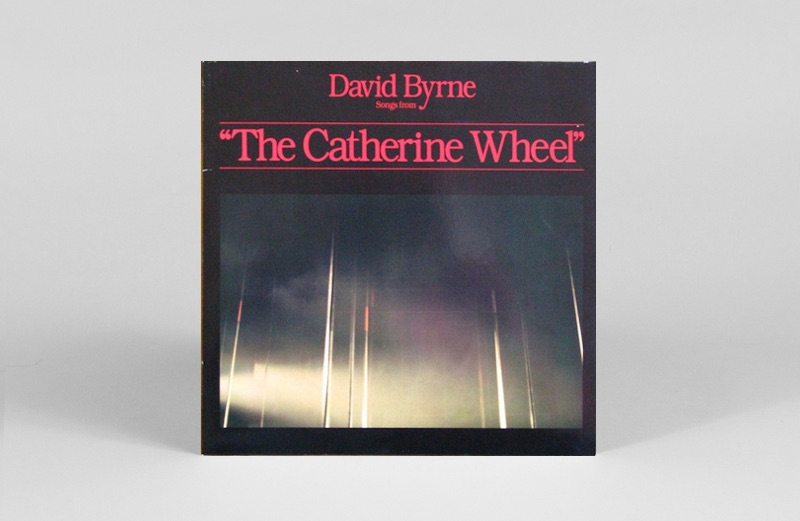
David Byrne  –  The Catherine Wheel
(Sire LP, 1981)

For a couple of years in the early 1980s, Byrne and the choreographer Twyla Tharp were an item. The Catherine Wheel, a patchwork of spacey electronica and earth-bound motor rhythms, is his score for Tharp’s Broadway-meets-ballet project of the same name, or to be precise, highlights from the score, which in theatrical performance runs for around 80 minutes. Like so much of Byrne’s stage and screen work, the music stands up well even when separated from the visuals. Alongside Byrne on vocals and guitars, contributing musicians include Brian Eno and Bernie Worrell on keyboards and synthesisers, drummer Yogi Horton and Talking Heads guitarist Jerry Harrison.

David Byrne  –  Music For The Knee Plays
(ECM LP, 1985)

Another of Byrne’s notable theatrical partnerships during the 1980s was with the iconoclastic playwright and director Robert Wilson. Music For The Knee Plays is Byrne’s part of the score for Wilson’s epic opera The Civil Wars, which also included sections by Philip Glass and Gavin Bryars. Byrne’s 19-piece collective line-up of musicians is made up almost entirely of jazz and funk horn players and his arrangements, which reference revivalist New Orleans’s outfits such as the Dirty Dozen Brass Band, effectively evoke the American Civil War-era which contextualises Wilson’s production.

David Byrne – Music For The Knee Plays Rei Momo
(Luaka Bop LP, 1989)

Byrne’s first solo outing after the break-up of Talking Heads is a heady cocktail of mambo, rumba, samba, cumbia, son and cha-cha-cha. The line-up is dominated by Cuban and Nuyorican musicians, including star stylists Celia Cruz, Willie Colón and Johnny Pacheco, augmented by Byrne and fellow vocalist Kirsty MacColl, whose husband, Steve Lillywhite, produced the album. Respectful of the traditions it celebrates without being in thrall to them, Rei Momo is a delight.

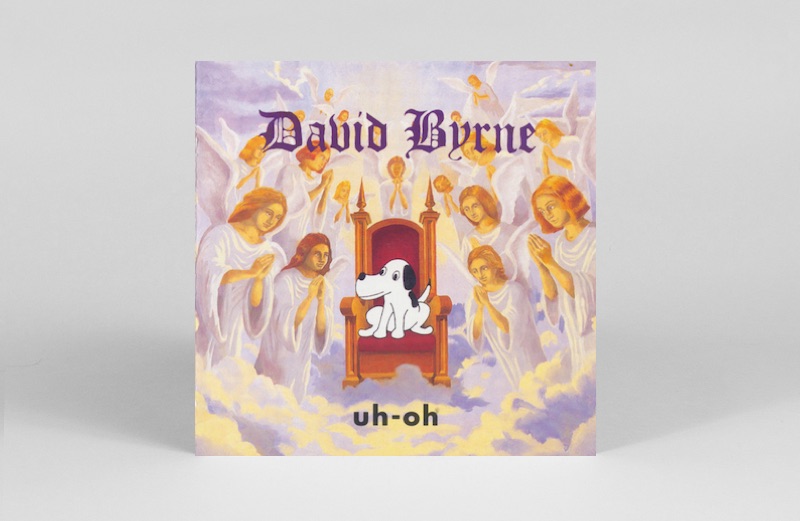
David Byrne  –  Uh-Oh
(Sire LP, 1992)

An engaging but often overlooked entry in Byrne’s canon, Uh-Oh is his post-Talking Heads flashback – poppy tunes, intricate but dance-friendly rhythms and splashes of Africana and Latin Americana. In 1992, after such daring experiments as My Life In The Bush Of Ghosts, The Catherine Wheel and Music For The Knee Plays, the album was widely perceived as unadventurous and anachronistic. With hindsight and the passage of years, its straight-talking charm is more apparent.

David Byrne –  Lead Us Not Into Temptation (Music From The Film Young Adam)
(Thrill Jockey LP, 2003)

Bleak but important, this is Byrne’s noir-soaked soundtrack for the film version of Young Adam, a 1954 novel about a murder on a Scottish river barge written by the minor Scottish Beat poet and major heroin user (and recruiting sergeant) Alexander Trocchi. Byrne’s arrangements for the string section, drawn from the Scottish Chamber Orchestra, add appropriately bleak textures, which are periodically lightened by Scottish folk musicians, hurdy-gurdy player Alasdair Roberts and accordionist John Somerville. Possibly Byrne’s best-realised film score to date.

David Byrne/Brian Eno  –  Everything That Happens Will Happen Today
(Todo Mundo LP, 2009)

Three decades after the historic collaboration that was My Life In The Bush Of Ghosts, Byrne and Eno reunite for another high-scoring shot from left-field. What kept them? Most of the composing and recording was done by email exchange between Byrne in New York and Eno in London, and the production sets in-the-tradition gospel vocals, written and sung by Byrne, against emotionally neutral, electronic backing tracks, mostly arranged and played by Eno. If that sounds a bit semi-detached, it all, as Byrne would probably not say, starts making sense as soon as you spin the record. Eno next crops up as co-producer of ‘Everybody’s Coming To My House’ on the upcoming American Utopia.

David Byrne & St Vincent  –  Love This Giant
(4AD LP, 2012)

And three decades after the brass-centric film score for Music For The Knee Plays, Byrne dips into that well again too, this time at the suggestion of singer-songwriter St. Vincent. Lyrically, the material is concerned with the idea of human transformation, as reflected in the prosthetically-enhanced cover photo. Love This Giant is an accomplished album, but one that is not quite greater than the sum of its parts. Byrne and Vincent’s respective takes on life and music, though delightfully quirky, are a little too similar to encourage each artist out of their comfort zones.

David Byrne  –  Live From Austin TX
(New West 2xLP, 2017)

Considering the many thousands of tour miles he has notched up over the years, there are relatively few live albums in Byrne’s catalogue – notable among them are Talking Heads’s Stop Making Sense from 1984 and a 2004 collaboration with Caetano Veloso, Live At Carnegie Hall (released in 2012 but not yet on vinyl). Live From Austin TX, recorded in 2001, goes some way towards plugging the gap, including as it does material from Talking Heads and Byrne’s solo catalogues. Made with an electric quartet augmented on most tracks by an acoustic string ensemble, it was well recorded by a local TV station.

American utopia

David Byrne’s new solo record, American Utopia, is released on Todomundo / Nonesuch Records. The album includes the track Everybody’s Coming To My House, co-written with Brian Eno, featuring contributions from TTY, Happa Isaiah Barr (Onyx Collective), Mercury Prize winner Sampha, and others. American Utopia fits hand-in-hand with Byrne’s vision for his series Reasons To Be Cheerful – an ongoing series curated by Byrne of hopeful writings, photos, music, and lectures – named for the song by the late Ian Dury. Over the last year, Byrne has been collecting stories, news, ideas, and other items that all either embody or identify examples of things that inspire optimism, such as a tech breakthrough, a musical act, a new idea in urban planning or transportation – something seen, heard, or tasted. Just as the album questions the current state of society while offering solace through song, the content of the series recognizes the darkness and complexity of today while showcasing alternatives to the despair that threatens us.

While David Byrne has collaborated on joint releases with Eno, Norman Cook (aka Fatboy Slim), and most recently St. Vincent over the past decade, American Utopia is Byrne’s first solo album since, 2004’s Grown Backwards, also on Nonesuch. American Utopia morphed during the writing and recording process, beginning with longtime collaborator Eno, and eventually growing to include collaboration with producer Rodaidh McDonald (The xx, King Krule, Sampha, Savages) alongside a diverse cast of creative contributors including Daniel Lopatin (aka Oneohtrix Point Never), Jam City, Thomas Bartlett (St. Vincent producer, aka Doveman), Jack Peñate, and others. The album was recorded in New York City at David’s home studio, Reservoir Studios, Oscilloscope, XL Studios, and Crowdspacer Studio and in London at Livingston Studio 1

On 1971’s There’s A Riot Goin On, Sly And The Family Stone filtered the creeping hangover of the ’60s into a murky, slurring monument of fugue-state funk. It was an album that reflected the twilight mood of its time: Woodstock optimism ossifying into Altamont dread, “free love” fading into porno reels inside 42nd St. grindhouses, stoned grooves edging into junkie paranoia (and dovetailing with Sly Stone’s own descent into addiction). In its muffled cries, There’s A Riot offered a bitter, brooding response to a world that seemed to be rapidly falling apart, one that recommended just barring the windows and getting good and numb.

In nicking the title for its newest record, released amid a similarly epochal American, Yo La Tengo posits its own There’s A Riot Going On as a similar Album For These Times. Though the long-running indie band has hesitated to say as much in interviews, the press materials refer to the free-floating “confusion and anxiety” in the air that inspired it, suggesting it’s an “expression of freedom and sanity” that similarly captures a nation teetering on the edge. But this isn’t a collection of protest anthems, nor is it even the kind of alarming, seismic stylistic shift Sly Stone pulled to announce his disillusionment with the soul-dream he’d started. It finds Yo La Tengo working in an especially hushed, candlelit mood, not too far off from the dusky lullabies of 2000’s And Then Nothing Turned Itself Inside Out. The album is not a reflection of anger so much as a meditative retreat from it—less agitprop than aromatherapy session.

Having followed Yo La Tengo for awhile . Their new album “There’s a riot going on”. These are dark times, in our heads as much as in the streets. It’s easy to lose contact with the ground, flying through endless banks of storm clouds day after day. Confusion and anxiety intrude into daily life and cause you to lose your compass. There are times that call for anthems, something to lift you out of your slump and put fire in your feet. And then there are times when what is indicated is a balm, a sound that will wrap around you and work out the knots in your neck. While there’s a riot going on, Yo La Tengo will remind you what it’s like to dream. The sound burbles and washes and flows and billows. If records were dedicated to the cardinal elements, this one would be water. There are shimmery hazes, spectral rumbles, a flash of backward masking, ghostly flamingos calling “shoo-bop shoo-bop.” You are there. And even if your mind is not unclouded–shaken, misdirected, out of words and out of time – you can still float, ride the waves of an ocean deeper than your worries, above the sound and above the Sound. For Yo La Tengo this is a slow-motion action painting, and Georgia Hubley, Ira Kaplan, and James McNew did it all themselves, in their rehearsal studio, with no outside engineer (John McEntire later did the mix). They did not rehearse or jam together beforehand; they turned on the recorder and let things coalesce. Songs came together over long stretches, sometimes as much as a year going by between parts. You’d never guess this, since the layers are finessed with such a liquid brush. You’d imagine most of the songs had sprung forth whole, since they will enter your head that way. Within two listens you will be powerless to resist the magnetic draw of Shades of Blue, will involuntarily hear She May, She Might on your internal jukebox first thing in the morning and Let’s Do It Wrong late at night. While there’s a riot going on you will feel capable of bobbing through like a cork. In 1971, when the nation appeared to be on the brink of violently coming apart, Sly and the Family Stone released There’s a Riot Goin’ On, an album of dark, brooding energy. Now, under similar circumstances, Yo La Tengo have issued a record with the same name but with a different force, an album that proposes an alternative to anger and despair. Their first proper full-length since 2013’s Fade, There’s a Riot Goin’ On is an expression of freedom and sanity and emotional expansion, a declaration of common humanity as liberating as it is soft-spoken.


Which is good! A few storming guitar squalls from Painful and Electr-O-Puraaside, Yo La Tengo has never been particularly aggressive, and certainly no one expects the mild-mannered Ira Kaplan or Georgia Hubley to start murmuring calls to march in the streets. Besides, we could all use some nice, chill music to draw the blinds and escape into right now. That said, the title and attendant marketing have forced a context of historical importance onto Riot that it can’t quite live up to; anyone expecting a bold, era-defining statement here will ultimately be let down by its softly spoken rumination on fear, hurt, and uncertainty, which could be applied equally to dramas political or romantic. Still, as with its namesake, the unease is there, palpable in the smaller sonic spaces, sensed more than shouted. We could all use more nuance these days, too.

The album’s impressive layering can be attributed to the band piecing Riot together entirely in the studio, rather than composing and rehearsing songs beforehand—cobbling it together from scraps of leftover recordings and adding parts one at a time, sometimes months in between. It’s similar to how the group has worked on film music, Kaplan has said, and indeed, there’s a real “imaginary soundtrack” feel to much of Riot, with long stretches of pure tone interspersed between the pop songs. (In “Shortwave,” a beat-less, glassily pretty drone that sits somewhere between Julianna Barwick and Stars Of The Lid, it even yields arguably Yo La Tengo’s first purely ambient track.) There’s also plenty of evidence it was mostly written on a computer: Shambling, snapped-to-grid drum loops, watery fluctuations, choral swells, field sound samples, and other digital tricks abound. Songs don’t end so much as dissolve, lingering just a hair longer than expected, which gives the whole thing a slightly haunted feel. Still, it hangs together organically, united by its sustained, melancholically dreamy mood.

Opener “You Are Here” begins with nearly six minutes of languorous, EBowed guitar hums over a motorik chug of sleigh bells, as immersive as slipping into a bubble bath. It fades into the breezy, ’60s-pop bounce of “Shades Of Blue,” where Hubley sings with peppy resilience about “painting my room to reflect my moods,” before Kaplan responds with “She May, She Might,” a melancholy sigh outside her window delivered over a psychedelic swirl of gently strummed guitars and back-masked flutters. On “For You Too,” Kaplan takes his shy-kid act a bolder step forward while backed by an insistent fuzz drone, shrugging that he’s “just some guy / With too much pride,” but suggesting he could still rise to the occasion: “Whenever there’s hurt and / When things are uncertain / Maybe I could be that guy / I’d like to try.” The theme of taking comfort in each other in times of doubt is one that Riot returns to frequently: In “Above The Sound,” a jumble of jazz bass and distant, off-kilter drum fills are washed over by hazes of slowly shifting feedback tones, while Kaplan and Hubley huskily harmonize, “What if we bear it with a grin / To take it on the chin.” Later, the ghostly “shoo-wop shoo-wop” refrain and odd liquid squelches of “Forever” create a similarly unnerving backdrop for Kaplan to croon, “Laugh away the bad times / Lie about what’s to come / The less said, the better / Let’s drink until we’re dumb.” And closer “Here You Are” concludes, “Most days, we circumvent / Tune out the world / Except our friends.” These songs project a defeatist, November 9 kind of sentiment that makes the whole Sly Stone nod a bit more plausible—and there’s also “Out Of The Pool,” whose blurry, refracted funk guitars and compressed feedback squalls beneath Kaplan’s surrealist, spoken-word mutters definitely feel like a distant spiritual cousin.

Admittedly, all that muted resignation gets a bit enervating at times. Kaplan and Hubley’s kitschy lounge-pop duet on “Let’s Do It Wrong”; the game-show bossa nova of “Esportes Casual”; and even the catchy, yet featherweight “Shades Of Blue” all toe the line between comfort music and elevator Muzak, their innocuousness only amplified by the conceit that this album is supposedly saying something. And it slouches into banality with a listless cover of Greenwich folkie Michael Hurley on “Polynesia #1,” which here resembles the island-vacation daydream of some tranquilized ’50s housewife—a fantasy of slipping away to paradise “at my leisure” that reads as less “expression of freedom” than self-indulgence. It’s in these moments that even the album’s quasi-political ambitions seem far-fetched; there’s a difference between offering bliss and blissful ignorance, after all.

But those are minor quibbles, ultimately. For the most part, There’s A Riot Going On succeeds in finding strength in the stillness. Two of its best tracks are also its quietest, with both “Ashes” and the stunning “What Chance Have I Got” surrounding Hubley with little more than minimal drum patterns and sparse atmospheres, her tender voice a calming, reassuring guide—in 2018, or another 30 years from now. As always, Yo La Tengo puts its faith in the power of music to pull us out of whatever hell we might be going through, here by warmly pulling us in.

Take or leave my opinion. If being a fan means the demonstration of passion and the willingness to forgive mistakes or mere competence, then I’m not one. But I love these songs.

  • Ira Kaplan – lead vocals, guitar, keyboard (1984–present)
  • Georgia Hubley – drums, lead and backing vocals, percussion, keyboard (1984–present)
  • James McNew – bass, guitar, percussion, keyboard, lead and backing vocals (1992–present)

No automatic alt text available.

Though the band hails from Los Angeles, they do not partake in any sort of witchcraft. Yet their ability to conjure a specific time and place through their sound does suggest a kind of magic. On their eponymous debut album, L.A. Witch’s reverb-drenched guitar jangle and sultry vocals conjure the analog sound of a collector’s prized 45 from some short-lived footnote cult band. The melodies forgo the bubblegum pop for a druggy haze that straddles the line between seedy glory and ominous balladry; the production can’t afford Phil Spector’s wall-of-sound, but the instruments’ simple beauty provides an economic grace that renders studio trickery unnecessary; the lyrics seem more descendent of Johnny Cash’s first-person morality tales than the vacuous empty gestures of pre-fab pop bands.

This isn’t music for the masses; it’s music for miscreants, burnouts, down-and-out dreamers, and obsessive historians. Album opener Kill My Baby Tonight is the perfect introduction to the band’s marriage of ‘60s girls-in-the-garage charm and David Lynch’s surreal exposés of Southern California’s underbelly. Sade Sanchez’s black velvet vocals disguise the malicious intent of this murder ballad, with the thumping pulse of bassist Irita Pai, the slow-burn build of drummer Ellie English, and Sanchez’s desert guitar twang helping beguile the listener into becoming a willing accomplice to the narrator’s crimes. Brian follows the opening track with a similarly graceful, if not somewhat ominous, slow-mo take on a well-worn jukebox 7”. It’s a vibe that permeates the entire album, from the early psychedelic hue of 13th Floor Elevators on tracks like You Love Nothing, through the motorik beat and fuzzed-out licks of Drive Your Car, to the grittier permutation of Mazzy Star’s sleepy beauty on Baby In Blue Jeans.

http://