Vive la Void, a new project from Sanae Yamada, co-founder and keyboardist of Moon Duo. The self-titled album comes out on May 4th. Yamada wrote and recorded Vive la Void over roughly a two-year period, during windows of downtime in Moon Duo’s substantial touring and recording schedule. The dense, shape-shifting atmospheres of the seven songs grew out of late-night basement experiments in the layering of synthesizer tracks, a process that also led to meditations on the changeable nature of memory and perception.
The result is an undulating blend of ethereal swirl, low end thrumming, and electric crackle, buoyed by Yamada’s understated but captivating vocal melodies and her striking lyrics. Released on the Sacred Bones Records .
By 1970, German singer Nico was best known for her roles as an Andy Warhol superstar and with The Velvet Underground carving out her own artistic legacy, having already dramatically transitioned from the folk pop of her 1967 solo debut, Chelsea Girl, toward 1969’s avant-garde The Marble Index. The follow-up Desertshore continues down the dark path cut by the Marble Index, with Nico drawling poetically over harmonium drones while accompanied by fellow Velvets alum John Cale. The album’s second track, “The Falconer,” stands out in Nico’s discography not just for her performance but for the striking lyrics and arrangement, morphing from tenebrous to luminous and back again. Upon release, little attention was given to Nico’s trilogy of records in this era and style (The Marble Index, Desertshore, and The End…), but their modern influence has proven immeasurable.
“Goin’ Back” (a.k.a. “Going Back“) is a song written by Gerry Goffin and Carole King in 1966. It describes the loss of innocence that comes with adulthood along with an attempt, on the part of the singer, to recapture that youthful innocence. The song has been recorded by many artists, including Dusty Springfield,The Byrds, Elkie Brooks, Deacon Blue, Marianne Faithfull, Bill Drummond (of The KLF), Nils Lofgren, Freddie Mercury (on a Larry Lurex single), The Move, The New Seekers, The Pretenders, Diana Ross, Richard Thompson, Phil Collins, and Bon Jovi as well as the versionfrom writer Carole King herself
Carole King hit it big with Tapestry in 1971, but her first solo effort, 1970’s “Writer”, didn’t make much of an impact. After years of writing songs for other people, and in the wake of her divorce from Gerry Goffin, King was ready to stake out her independence, which included reclaiming some of those songs as her own. “Goin’ Back” falls into that category: It had already been recorded by Dusty Springfield and The Byrds, but King, much like she would do the next year with “Will You Love Me Tomorrow,” dominates on her own version, a spirited ode to drawing from the past in order to step into the future: “Thinking young and growing older is no sin / And I can play the game of life to win.” Barely-there backing vocals from fellow troubadour James Taylor augment the song’s dreaminess, a show of support for King as she gains her “little bit of courage.” That surge carried King through to the No. 1 success of Tapestry, which would lead to a rediscovery of Writer that boosted it onto the charts a year later.
The Byrds recording of “Goin Back” taken from the album Notorious Byrd Brothers, released as a single on October 20th, 1967 but failed to chart in the United Kingdom. Musically, the track shares similarities with other songs on the album such as “Get To You” and “Natural Harmony”, through the use of baroque arrangements and instrumentation. The track also resembles a subtle country feel.
The band’s decision to record “Goin’ Back” led to tensions within the group, principally due to rhythm guitarist David Crosby’s lack of enthusiasm towards the song. Crosby considered “Goin’ Back” to be lightweight fluff, style of songwriting. He was therefore dismayed to find that his own song “Triad” was in direct competition with “Goin’ Back” for a place on The Notorious Byrd Brothers album. Ultimately, Crosby was fired from the band and “Goin’ Back” was included on the album and released as a single.
The Madcap Laughs, Syd Barrett’s first solo album, opens with this track, a deceptively spartan blues riff that bears no trace of the glittering psychedelia that colored Pink Floyd’s Barrett-led The Piper At The Gates of Dawn. Recorded in a single take by producer Malcolm Jones (who would never have it that easy again), “Terrapin” is so hushed that you can hear each scrape of Barrett’s pick against his acoustic guitar as an overdubbed electric languorously traces its melody line, both of them abruptly hanging here and there to throw the whole thing just slightly off-kilter. The lyrics start surprisingly straightforward for Barrett (“I really love you, yes I do”) but grow more densely surreal as “Terrapin” stretches on and on, with Barrett reinforcing the refrain “’Cause we’re the fishes and all we do / The move about is all we do” through undersea imagery and the song’s subtle, watery undulation. Barrett’s mental decline is one of rock’s great tragedies, and while his solo work is understandably uneven, tracks like “Terrapin” offer an accessible entry point to one of music’s most idiosyncratic minds.
Although Johnny Thunders legacy remains underground, there are no end of ‘Top 10..’ listed artists who name check the New York Doll / Heartbreaker as a major influence. His musical legacy has outstripped any empirical chart statistic. His most fertile and unparalled contributions were made in the 1970s, when his songs became a lifelong soundtrack for fans, and his emblematic guitar style bonded with his charisma and thrift couture to influence peers and generations thereafter. Between January and June 1978 Johnny enrolled producer Steve Lillywhite and recorded a wealth of material which contributed to his first solo album ‘So Alone’. To celebrate the 40th Anniversary of the album Johnny self proclaimed as the best album he ever made, Remarquable Records is releasing a special companion to add further insight to that creative period and showcase a bedevilled artist supported by an unrepeatable cast of friends and musicians which allowed Johnny more time and more control in the studio than he ever had in his truncated life. Consisting of previously unreleased studio recordings ‘So Alonesome’ is an essential sibling to ‘So Alone’. Featured msuicians include Steve Jones & Paul Cook (Sex Pistols); Peter Perrett & Mike Kellie (The Only Ones); Paul Gray & Steve Nicol (Eddie & The Hot Rods); Walter Lure & Billy Rath (Heartbreakers); Phil Lynott (Thin Lizzy); Steve Marriott (Small Faces/Humble Pie); John ‘Irish’ Earle (Thin Lizzy); Chris Wood (Traffic); Chrissie Hynde (Pretenders) & Patti Palladin (Snatch).
tracklist:
Pipeline (Alternate Mix); Dead Or Alive? (Alternate Mix); (Give Her A) Great Big Kiss (single version 2015 mix); Leave Me Alone (Hot Ones Version); So Alone (Heartbreakers Version); Daddy Rollin’ Stone (Thin Ones Version); London Boys (Alternate Mix); (She’s So) Untouchable (Early Version); Subway Train (Basic track – Early Versions); The Wizard (Full Length Version-2015 Mix)
Devo! As well as being quirky, retro-futuristic, geeky, new-wave heroes, could also write a mean and truly intelligent pop song. “Girl U Want” was the first released single from their 1980 album Freedom Of Choice, but these days it’s often overlooked because the follow up 7” was the band-defining classic, Whip It.
The synthesizer/guitar hooks on Girl U Want were widely believed to have been inspired by the jagged riffs on The Knack’s My Sharona, though co-writer Gerald Casale has denied this. Coincidental or not, it’s easy to hear the similarity.
What’s more important than where the tune came from is what it does, which is to convey that overpowering feeling of being young and in love with someone, but too chicken shit to tell them. The song saw Devo delivering an original twist on a well-worn theme and a classic piece of art-pop. And you have to say the lyrics on Girl U Wanthave held up a whole lot better than My Sharona’s “I always get it up, for the touch of the younger kind”.
In the music video, Devo performs for a group of young women in the style of a performance from The Ed Sullivan Show, with two robotic backup dancers, one male and one female. Further implying the televised nature of the performance, the color in the video is deliberately altered to make the red of the band’s energy dome headgear look almost purple. The band wears the silver naugahyde suits from the cover of Freedom of Choice, and mime the song with Moog Liberation synthesizers.
During the video, the camera focuses on the girls in the audience exaggeratedly enjoying the performance, including one girl who is visually implied to “wet” herself, which transitions to a scene of a General Boy controlling the backup dancers. At one point, Mark Mothersbaugh pulls aside the curtain behind the band to show an overweight man on a vibrating exercise machine, attempting to drink a milkshake to the ecstatic reaction of the audience. As the video ends, girls in the audience are shown holding signs with icons,
Soundgarden issued a cover of Girl U Want as an extra track on the Rusty Cage EP. Theirs is a sleazy, slowed down version. Unlikely as it seems, Robert Palmer also released an interpretation of Girl U Want as a single in 1994. It didn’t do too well. Plenty of other bands have covered it too, but Superchunk’s needle sharp cover for the 1992 compilation Freedom Of Choice is the best by a distance.
Em Burrows is one of music’s great collaborators, and loves a bit of irony, too. With 70s vibes from the vocals.
Embracing electronic rhythm elements and samples, WA-based pop singer-songwriter Em Burrows has delivered a compelling debut album. The Perth artist was channelling “obscure” Spanish soul bands from the ‘60s while writing most of the songs on Invisible Seams.
“I started writing bass lines really early in the songwriting process for this record actually because I loved how it gave the songs an identity and a feel straight away. “Then I’d carve out the chord structures from that and layer it with other sounds like synths and what not.” It’s a collection of songs that explore who humans make connections.
“It’s sort of me sifting through my life and working out why I attach meaning to some things and not to others and realising that some things may not have a specific purpose but they’re still part of the larger fabric of how we make meaning from life. It sounds deep but, really, they’re just pop songs.”
A mistress Jedi of the psychedelic movement, this track is as fine an example of 21st Century psychedelia you’ll find this side of, well, anywhere.
All songs written and arranged by Em Burrows. Chris Young played guitar, Jeremy Segal played bass, Marcus Davidson played drums, Jamie Canny played saxophone and Mark McAndrew played the MS20 on tracks 2 and 7. Em Burrows sang and played keys/synths.
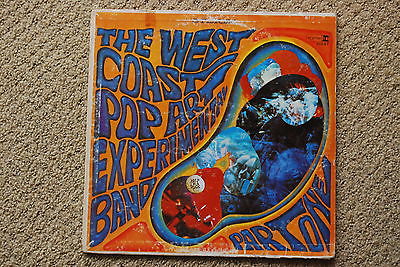
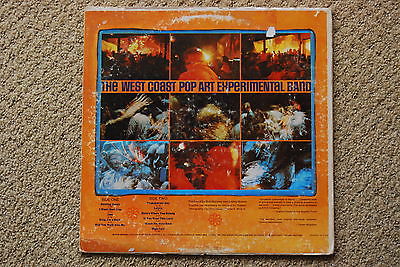
The West Coast Pop Art Experimental Band were an American psychedelic rock band formed in Los Angeles, California in 1965.Theirfirst album for Reprise was the best of the groups career, in large part because it was the most song-oriented. The group created music that possessed an eerie, and at times sinister, atmosphere, and contained material that was bluntly political, childlike, and bizarre. It was still plenty weird, almost to the point of stylistic schizophrenia, but when you got down to it, much of the record was comprised of fairly catchy songs in the neighborhood of two and three minutes long.
At times they sounded like reasonably normal, fairly talented Byrds-like folk-rockers with tracks like “Transparent Day,” P.F. Sloan “Here Where You Belong” and others, a Kinks-like garage band (“If You Want This Love” and at others, a fey Baroque pop outfit (the orchestrated “Will You Walk With Me”). There was an undercurrent of unsettling weirdness and even paranoia, though, in some cuts with otherwise pleasing tunes, like “Shifting Sands,” with its sizzling distorted guitars; “I Won t Hurt You,” with its heartbeat bass and disconnected vocals and “Leiyla,” where a standard teen garage rocker suddenly gets invaded by spoken dialog that seems to have been lifted from a vampire B-movie.
The cover of Frank Zappa’s “Help, I’m a Rock” flung them into freakier pastures, emulated convincingly on the group original “1906,” an apt soundtrack to a bummer acid trip with its constant spoken refrain, “I don’t feel well.”
Born in New York and raised in Montreal, Common Holly (AKA Brigitte Naggar) puts unpredictable compositional elements into a singer-songwriter/folk framework, packaged in textured, eclectic electro-acoustic production. Playing House contemplates the notion that it is conscious thought and deliberate action that defines and cements maturation from child to adult.
There’s a deceptive simplicity to the album’s sparse arrangements and an ephemeral hue to her voice – all of which add a haunting atmospheric quality to her melancholic, deliciously dark contemporary indie-folk songs. CommonHolly brings you to a cabin by the lakeside, a desert, and, of course, internalized emotions.
“I am the lizard slinking through the valley of regret.”
All songs and lyrics written by Brigitte Naggar
All songs performed by Brigitte Naggar & Devon Bate Additional Instrumentation:
Piano on ‘Lullaby’ played by Jean-Michel Blais
Drums on Track 1, 4 & 7 played by Kyle Hutchins
Guitar on ‘If After All’ played by Steven Whitely
Violin played by Amelia Castillo
Cello played by Laurence Gaudreau
Nestled in the middle of latest album Street Safari is “Lost in the Game,” a tongue-in-cheek, poppy dive that has Public Access TV lead John Eatherly lackadaisically singing “So what, who cares, goodbye” so often that you, too, will feel the same way. It’s a carefree, buoyant track driven by an understated bass line and surprise brass, a song fit for a dance hall in any of the last 4 decades
The official video for “Lost in the Game” off Street Safari.