On April 6th, 1968, The Who played the second night of their first ever run at the Fillmore East and left behind an incredible document of the band in their early prime, still full of the punk attitude that they would initially define while venturing off into more artistic and experimental territory. Both nights were recorded by Who manager KitLambert with the intention of releasing as the Who’s fourth album after Sell Out and before Tommy. Songs from the second night have been restored and mixed by Who sound engineer Bob Pridden (who was there in 1968). Remastered for optimum sound quality, this will enhance The Who’s reputation as the best live act of the time, regarded by fans as something of a ‘holy grail’ in live shows. Features stunning extended versions of My Generation, A Quick One…, Shakin’ All Over and many other Who classics. Features two ripping versions of Eddie Cochran numbers – SummertimeBlues and C’mon Everybody (the latter unavailable elsewhere), Fortune Teller played at these shows for the first time and unique live versions of Tattoo and Relax from ‘WhoSell Out’.
Every minute of this performance is fascinating and much of this material cannot be found, in better quality or at all, on any other Who recordings. This set captures the entire band fully engaged in their music. Although many songs were still short and concise during this stage of their career, the intensity level is undeniable. Opening the show with Eddie Cochran’s “Summertime Blues,” they immediately set a bar that most other bands could never even approach.
The previous year, Rolling Stones Mick Jagger and Keith Richards were arrested on drug charges under questionable circumstances, and were victimized by the U.K. courts. They were harshly sentenced in an attempt to make an example out of them, which immediately caused an uproar that shook London to the core. Following the ridiculous sentencing, The Who quickly recorded two of their more popular songs in support and vowed to record nothing but Stones songs until the two were released. Their second song of this set is the Stones’ cover of the AllenToussaint penned “Fortune Teller,” which they had just performed for the first time ever the previous night.
They continue with “I Can’t Explain,” one of the few songs American audiences were familiar with at the time, but with a new level of aggression that wasn’t apparent on that early single.
Next up is their current single at the time, “Happy Jack,” a tune that found them exploring new directions and beginning to experiment with dynamic changes.
Extremely rare live performances of “Relax” and “My Way” follow and continue to explore and expand on the boundaries within the band’s music. “Relax,” surprisingly, turns out to be one of the heavier numbers in this set and the band takes flight into some inspired jamming following the verses. (Unfortunately, the jam fades out and is incomplete.)
John Entwistle then steps up for his defining song, “Boris The Spider,” lending his dark sense of humor to the proceedings.
The band embarks on their most experimental composition yet, “A Quick One While He’s Away,” which is incomplete and begins in the middle of the song. This adventurous suite of songs, loosely tied together, is a hint at Townshend’s future aspirations that would eventually be realized in his first full-blown rock opera, Tommy. This is a fascinating performance for its entire eight minutes.
The Who close their set this night with another propulsive jam on “Shakin’ All Over,” again letting the music propel them through several pulverizing jams, including spontaneous flailing of riffs familiar from other songs. Again, the raw energy is astounding. This and the previous night’s performance must have gone a long way toward cementing their reputation in New York City. This should be required listening for anyone interested in that era of rock music and especially for anyone interested in The Who.
April 2018 – the 50th anniversary of these legendary unreleased recordings from the Fillmore East, New York City, Friday April 5th & Saturday April 6th, 1968.
Girls Names release their new album, Stains on Silence, on 15th June. The album is available on several different vinyl formats, with two different front covers:
black vinyl w/ cream cover
orange vinyl w/ black cover (indie stores only -300 copies)
ultral clear vinyl w/ black cover & poster (online only – 200 copies)
It stands to reason that many vital albums come critically close to never being made. The eight-track upshot of doubt, upheaval and financial strain, Stains on Silence by Girls Names is one such release.
Following 2015’s blitzing Arms Around a Vision, and the parting of drummer Gib Cassidy just over a year later, the Belfast band suddenly found themselves facing down a looming void. “There was a finished – and then aborted – mix of the album, which was shelved for six months,” reveals Girls Names frontman Cathal Cully. “We then took a break from all music and went back to full-time work. We chilled out from the stress of rushing the record and not being happy with it, as well as being skint with no impending touring on the cards and constantly having to worry about rent.”
The stumbling blocks that proved a strain became the album’s defining breakthrough. Recorded in various locations including Belfast’s Start Together Studio with Ben McAuley, Cully’s home and the band’s practice space, spontaneous creation, cut-up techniques and self-editing took centre-stage for the first time. “We started tearing the material apart and rebuilding, re-editing and re-recording different parts in my home in early Autumn last year,” says Cully. “When we got them to a place we were happier with we went back into Start Together Studio with Ben McAuley to finalise the mixes to what they are now.”
Where AAAV proved a brazen statement of intent, Stains on Silence bounds forth as its feature-length comedown. What could have seen the band buckle became an opportunity for approaching things tabula rasa. During its two-year transmutation, Cully, bassist Claire Miskimmin and guitarist Philip Quinn had a single aim for their fourth album: to make an old-fashioned record clocking in around 30 to 35 minutes in length that made the listener reach straight for repeat. From the Bang Bang bar-summoning swoon of opener ‘25’ and the submerged disco doom of ‘Haus Proud’ to the rapt, dub-leaning ‘Fragments of a Portrait’, Girls Names have excelled in their goal by forging an LP of synchronous nuance and defiance.
Marked by the presence of drum machines and programming throughout, these eight masterfully-woven tales are once again commandeered by founder Cully, whose words, understated yet defiant, mine purpose and meaning from the mire (“I want to bathe again, I want to swim again / In a pool of twisting bodies, blackened gold.” — ‘25’). But while Stains on Silence came critically close to never being made, having lived with it, reconfigured it, and guided its metamorphosis from flickers of inspiration and half-formed schemes, it’s both a statement of pure perseverance, and a head-on confrontation with ambivalence that couldn’t be more assured.
Tour dates June
15th – Blackbox, Belfast
19th – Moth Club, London
20th – Oporto, Leeds
21st – Old Hairdressers, Glasgow
22nd – Night People, Manchester
23rd – Whelans, Dublin
Primitive Desire is an 11-track collection of the first ever studio sessions by Girls Names, recorded in 2009 in Belfast. It compiles their debut EP originally released on Captured Tracks, the eight songs that originally featured on the long-out-of print You Should Know By Now mini-EP released on Tough Love, and a here-to-unreleased bonus track.
Primitive Desire is exactly as labeled and provides fans with a document of the band’s early years as a two-piece, fuelled by a distinct nervous energy and nascent dark edge that would manifest itself much more obviously on subsequent albums. Pressed on to limited edition green vinyl. 1000 copies in total. Artwork by Ryan O’Reilly.
Exclusively for Record Store Day Courtney Barnett releases a new track ‘City Looks Pretty’ + for a limited time only you’ll be able to hear album track ‘Sunday Roast’ only via this 12″! After the release of the critically acclaimed ‘Sometimes I Sit And Think, And Sometimes I Just Sit’ and the ‘Lotta Sea Lice’ collaboration with Kurt Vile, a life on the road and all of its quirks appears on track ‘City Looks Pretty’ while ‘Sunday Roast’ sees Courtney her most reflective & emphatic self in a beautiful down tempo moment. A release that perfectly captures the many facets of Courtney’s upcoming second album ‘Tell Me How You Really Feel’ released May 18th
Representing the softer side of indie rock, Canada’s Alvvays are set to bring their light, breezy vibe to the desert. In 2017 the band released Antisocialites, a deceptively anxious collection of warm, dreamy melodies and jangly guitars. It was one of our favorites of 2017. Toronto-based five-piece Alvvays combine their fuzzy, jangly indie pop with infectious, sugary melodies that recall the likes of Scottish outfit Teenage Fanclub and nod to the U.K. post-punk act the Dolly Mixture. Lead vocalist Molly Rankin — the daughter of John Morris Rankin from the popular Canadian folk family group the Rankin Family — was joined by childhood neighbor Kerri MacLellan on keyboards, and met guitarist Alec O’Hanley at a show as a teenager before they proceeded to write music together. Rankin self-released a solo EP in 2010 with the help of O’Hanley before bringing the rest of Alvvays together, with Brian Murphy (bass) and Phil MacIsaac (drums) joining the fold.
New song ‘Lord Luck’ taken from forthcoming E.P ‘Suggestive Listening’:
Ulrika Spacek have always been strong believers in a long play format when it comes to making records, but for this new release they decided it was time to explore the ‘extended play’ format. The Suggestive Listening EPwill be released on April 21st as part of this year’s Record Store Day.
The band started working on the new record in January 2017,“in that empty space when you’re waiting for your last record to come out”.Recording began at KEN, their shared house – a former art gallery so named because of a cryptic inscription found above the front door. Not just a studio and home, KEN is essentially the band’s hub, a space in which the surrounding ephemera of videos, artwork and even band photos are all created. After this, work for the EP moved to France where the band explored recording live for the first time and here the band worked with now-full-time member, Syd Kemp.
In an act of self-awareness, Ulrika Spacek chose to make something that killed the ‘three-part interweaving guitar’ characteristic that partly defined Modern English Decoration. The intention was to deconstruct the standard three guitar, bass and drums line-up used on the first two albums, aiming to strip back the overall sound whilst simultaneously bringing certain elements to the foreground. Very few guitar effects pedals are present on the record, and a different computer was deliberately used in order to steer away from the plug-ins employed on previous albums.
“Lyrically this release came out of a time of common late 20’s existentialism, a time of huge self doubt and questioning in many aspects of our lives”. In contrast to the generally veiled form of lyrical expression on the band’s first two records, Suggestive Listening displays an interest in ‘literalism’, “In a time where we were struggling to find clarity we wanted our music to express the opposite”. This is also reflected in the choice of artwork for the release, which not only bears the record’s lyrics, but also song lengths and the very definition of an E.P itself. Additionally, fans may note that there are two different coloured front covers, one pink, one blue, each limited to 500 copies.
This change in approach was foreshadowed around the release of Modern English Decoration, when they claimed that, “We won’t return to this sound again. Though as fanatical fans of music, we feel the beauty lies in how these different offshoots go on to inform our future records”. As such, Suggestive Listening, might be continued an evolution more than a wholesale shift in focus.
In preperation of its release, Oysterland, a night curated by Ulrika Spacek, will take place the night before at Doomed Gallery in London. The E.P will be played back-to-back in exhibit form, with the layers of instrumentation played on separate speakers. Audience members are invited to make their way around the gallery allowing a personal and unique listening experience. Speakers will be positioned inwards so that audience members can either walk through the musical layers of the E.P or position themselves in the middle of the room where all parts come together.
Released 21/04/18 via Tough Love Records as part of Record Store Day 2018. Available from all good record shops. Please note: there are two versions of the record sleeve, one blue, one pink, each limited to 500 copies.
‘Suggestive Listening’ will be played back-to-back in exhibit form the night before release at Doomed Gallery Dalston. Layers of instrumentation will be played on separate speakers. Audience members are invited to make their way around the gallery allowing a personal and unique listening experience
A1 No. 1 Hum
A2 Black Mould
B1 Freudian Slip
B2 Lord Luck
B3 Wave to Paulo, he’s not there
Also available digitally:
Bandcamp: https://goo.gl/BzReB4
Upcoming Live Dates:
25th April – Corsica Studios, London,
10th May – Psych over 9000, Gent, BE
11th May – Eden, Charleroi, BE
12th May – Le Beau Festival, Paris, FR
19th May – Kulturclub Schon Schön, Mainz, DE
20th May – Volksbühne Berlin, DE (with Cavern of Anti-Matter)
12/14 Oct – Desert Daze Festival, CA
In an NME interview prior to the release of Resistance Is Futile, Manic Street Preachers bassist/lyricist Nicky Wire invoked both David Bowie’s Station To Station and the Manics’ own hard-rock opus, Generation Terrorists, when discussing the record’s earworm lead single, “International Blue.” If anyone can live up to these lofty touchstones, however, it’s the veteran Welsh rockers. Resistance Is Futile, the band’s thirteenth studio album, distills the Manics’ pomp and melancholy into buoyant pop songs with biting electric guitars, sugary synths, and majestic strings.
As its name implies, “Liverpool Revisited” is an earnest Britpop throwback, while marbled ’70s-rock licks anchor the urgent “Broken Algorithms.” On the lighter side, “Hold Me Like A Heaven” blooms into a harmony-drenched song with candied pop aspirations, and the piano-spliced “Vivian” recalls Duran Duran’s crushed-velvet glam ballads. Resistance Is Futile, well, embodies its title.
The frothy, string-swept jangle-pop number “Dylan & Caitlin,” a duet with Welsh singer the Anchoress, was meant to evoke Elton John and Kiki Dee’s “Don’t Go Breaking My Heart.”
Taken from the new album, ‘Resistance Is Futile,‘ available now
In this powerful benefit compilation, a range of independent artists join forces to raise funds for the American Civil Liberties Union and its heroic mission to protect the rights of all people as we head into the second year of the Trump administration and its ongoing assault on the Constitution.
The album is available in a limited run of double LPs featuring all-new material from a gamut of artists across genre. This is a boon for fans of Merchandise, Palberta, Pop 1280, Profligate, and The Men, whose track “Shimmer and Shine” is a rootsy, Mick Taylor-era Stones celebration of pain. Living legend Alice Cohen graces this album’s proceedings as well, with “Hourglass” a pop track that could be a mega-hit in a less ugly world. There’s driving, urgent postpunk with Psychic Blood, Sediment Club, and Old Maybe on the roster. And the underground offers up quieter moments for this album, such as Kate Mohanty’s moving solo sax composition “Priorities” and Horoscope’s “Bri.” We go around the world to New Zealand with Joe Troutman (Trust Punks) and his new group Cheerleader and to the western United States with Dollar Band, a new group featuring Dylan Sharpe and Dan Swire of Gun Outfit. Their “Too Sensitive” features a ripping rhythm section and some of Sharpe’s best lyrics and guitar runs to date. These are just a few examples from this diverse compilation of 22 tracks.
The packaging of this record is also stellar and features artwork by Emma Kohlmann (front cover pictured above), Nick Van Woert (center labels), Sam Falls (inside gatefold design), and V. Manuscript (back cover).
Wharf Cat Records would like to thank the artists, manufacturers and engineers that donated their work, services and expertise to this project. This double LP would not have been possible without Brooklyn Phono, which donated the vinyl & pressing; A to Z Media, which donated the gatefold jackets; Carl Saff, who donated the mastering; Kutch 1 Studios/Look to Listen, which donated the recording time used by many of these artists; and Jason Vachula, who donated the layout and design.
It’s More than two years have passed since David Bowie departed us, but the steady flow of back-catalogue releases shows no sign of slowing. With another Record Store Day upon on and the release of three more Bowie collectables. At the time of his death suggested Bowie had left detailed plans for years worth of reissues, a number of which have already surfaced, including the Cracked Actor live album and the 13-LP set A New Career in a New Town.
This month, 45 years to the day since it was first released, comes a special silver vinyl edition of “Aladdin Sane”, as well as a repress of 1981’s “ChangesTwoBowie” compilation.
the Reissue of Aladdin Sane gives us an opportunity for another visit, in other words—along with these six other gems from DavidBowie’s ever-growing backlist of releases. All of which should be added to your collection.
David Bowie – Aladdin Sane
Though Bowie made Aladdin Sane during his first big burst of success, it is usually overshadowed by the mold-breaking The Rise and Fall of Ziggy Stardust and the Spiders from Mars and, to some extent, the more overtly theatrical Diamond Dogs which has experienced a major critical reevaluation in the years since its release. Bowie himself might take some of the blame for that, having somewhat glibly described Aladdin Sane at the time of its release as “Ziggy goes to America.” But while Ziggy remains an undeniable cornerstone in Bowie’s rise (and in the shaping of 20th-century rock music),
Aladdin Sane is no mere retread. In fact, one might argue that it is a more expansive refinement of its predecessor, setting two of his finest singles of the period—“The Jean Genie” and “Drive-In Saturday” alongside its wonderfully deranged, avant-garde title track, the biting “Cracked Actor” and one of the great album-closing ballads of his career, “Lady Grinning Soul”
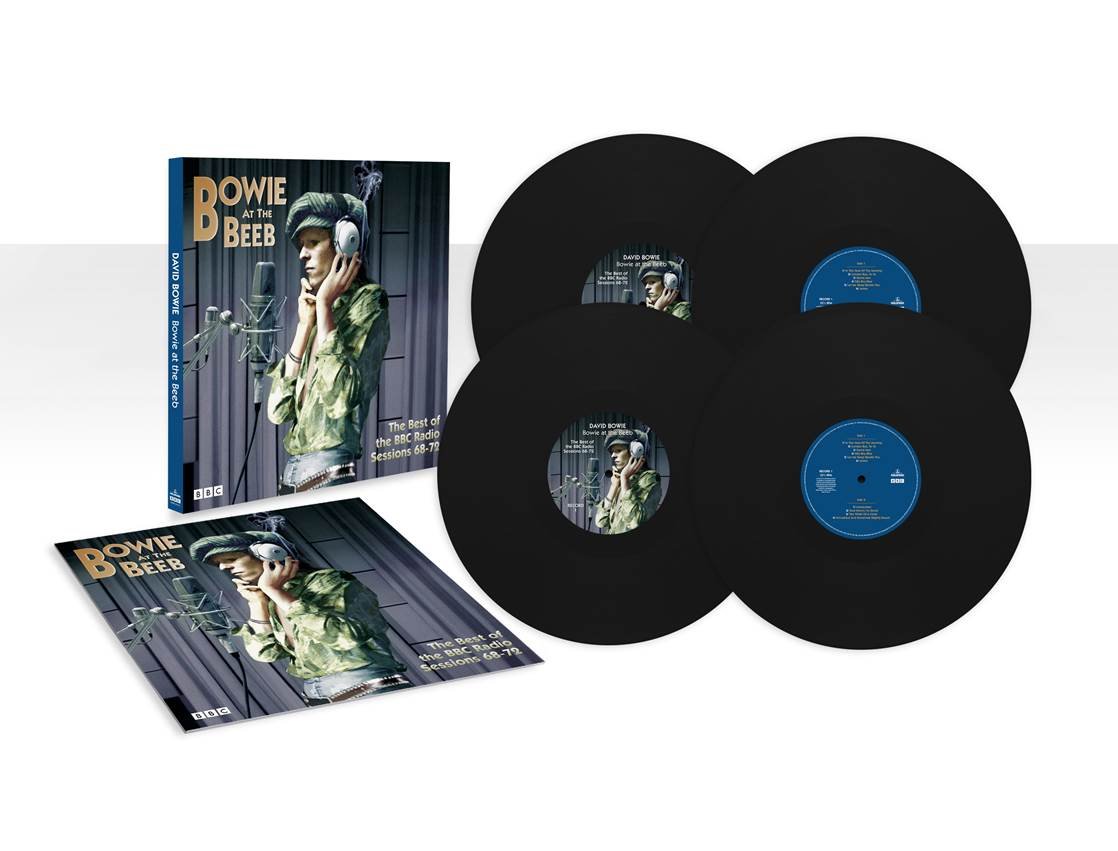
David Bowie – Bowie At The Beeb
Before he was David Bowie 1970s musical chameleon in chief—he was David Bowie, singer of whimsical psychedelic pop. Bowie would more or less disown 1967’s self-titled debut—“I didn’t know if I was Max Miller or Elvis Presley,” he later said with songs such as the dainty “Love You Till Tuesday” offering only vague hints at what was to come.
A more informative insight into early Bowie can be gleaned from this collection of BBC radio sessions, which run from his first appearance (alongside the Tony Visconti Orchestra) in 1968 to the height of Ziggy mania in 1972. The set provides a series of illuminating glimpses at his fast-growing gift for songcraft and stagecraft, with the string-drenched pop of 1968’s “Karma Man” gradually giving way to expansive prog-folk (“Cygnet Committee,” “The Width of a Circle”), early takes on Ziggy material (“Queen Bitch,” “Hang on to Yourself”), VelvetUnderground covers (“I’m Waiting for the Man,” “White Light/White Heat”), and more.
The initial CD edition from 2000 also included a bonus third disc that featured a live set recorded at the BBC Radio Theatre that same year, as well as a glaring error, with the same May 1972 recording of “Ziggy Stardust” appearing twice on disc 2 (since corrected for subsequent two-disc releases).
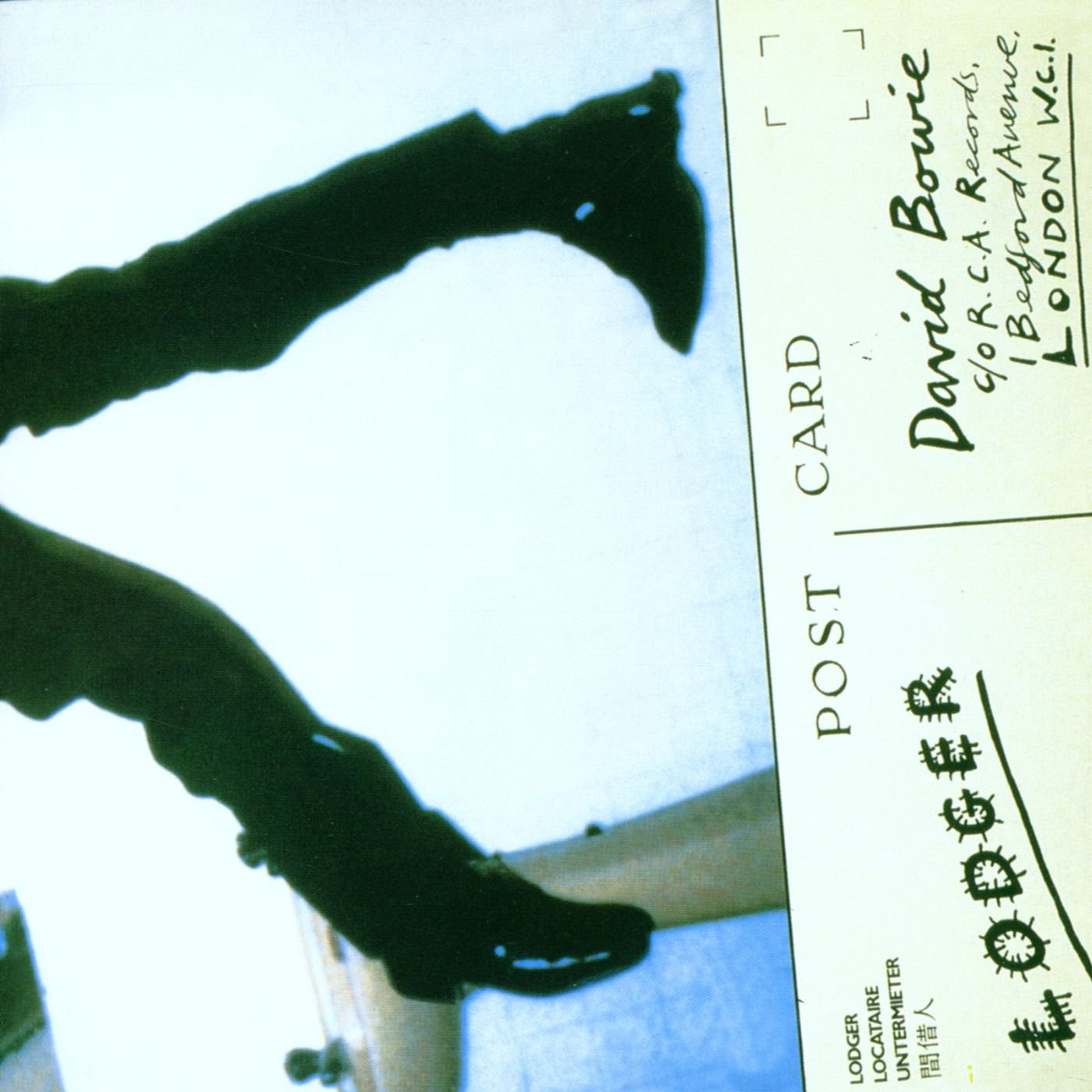
David Bowie – Lodger
The final entry in Bowie’s unparalleled run of ‘70s albums is also the least-loved of the lot, in no small part because of its unhelpful labeling as the third part in his so-called “Berlin Trilogy.” Though it was made with most of the same crew responsible for the one-two punch of “Low” and “Heroes” (producer Tony Visconti, creative foil Brian Eno, and a band framed around Carlos Alomar, Dennis Davis, and George Murray), it is less a continuation of those albums’ themes than a foreshadowing of Bowie’s beloved 1980 LP Scary Monsters (and Super Creeps).
Recorded and mixed in the not-very-German locations of Montreux, Switzerland, and New York City, New York, “Lodger” also ditched the structure of its supposed siblings (songs on side A, instrumentals on side B), instead spreading its avant-garde moments throughout. Opening with a deceptively conventional piano ballad, “Fantastic Voyage” it then explodes into life on the extraordinary “African Night Flight,” an urgent freeform piece that prefigures Eno’s “world music” experiments with David Byrne on My Life in the Bush of Ghosts. Further travels follow on “Red Sails” and the Turkish reggae (yes, Turkish reggae) of “Yassassin,” while “D.J.” and “Look Back in Anger” revel in the general rubbishness of modern life.
The album is notable, too, for its clever way with recycling: “Move On” is “All the Young Dudes” backward. “Fantastic Voyage” and “Boys Keep Swinging” share a chord progression but little else. And the closing “Red Money” is a reworking of “Sister Moonlight” a song Bowie wrote for Iggy Pop several years earlier.
Only a modest success by Bowie’s standards on its release in 1979, it has long since been due some form of critical rehabilitation. The 2017 boxed set A New Career in a New Town went some way toward doing so, foregrounding a brand new mix of the album by Tony Visconti, but it remains underrated.
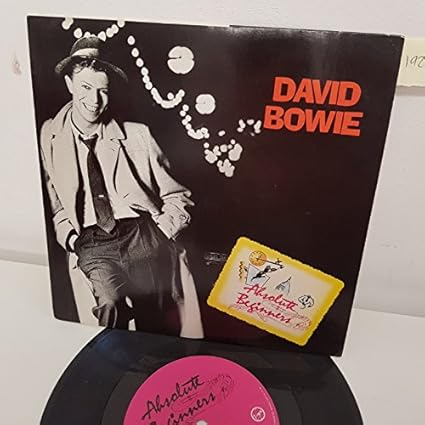
David Bowie – Absolute Beginners
Bowie began the ‘80s with one of his best albums Scary Monsters and the biggest hit of his career (Let’s Dance), but after that he lost his way, seemingly wrong-footed by the mainstream pop stardom he had sought and then so spectacularly achieved. Amid the two weakest albums of his career (1984’s half-baked Tonight and 1987’s unwisely titled Never Let Me Down, however, there were occasionally still signs that the old magic hadn’t left him yet. Tonight’s “Loving the Alien” is a stunning song in need of a better home, while “This Is Not America,” recorded for the soundtrack to the spy film Falcon and the Snowman, proved considerably more successful than a jazz-fusion collaboration with the Pat Metheny Group had any right to be.
Even better than either of those, though, is “Absolute Beginners,” a windswept ballad written for the film of the same name (in which Bowie also stars). Recorded in a single day with a pickup band that included keyboard wizard Rick Wakeman and Prefab Sprout drummer Neil Conti, it’s a grandstanding epic in the mold of “Rock ’N’ Roll Suicide” or “Wild Is the Wind” Bowie’s widescreen vocal offset perfectly by the warm horn section and Wakeman’s jazzy flourishes.
Not included on any of Bowie’s studio albums, “Absolute Beginners” is well worth seeking out, either on one of his many best-of albums or on its own standalone EP, which also features an extravagant eight-minute version (complete with bolero intro) and a surprising rendition, in Italian, of Domenico Modugno’s Eurovision-winning “Volare.”
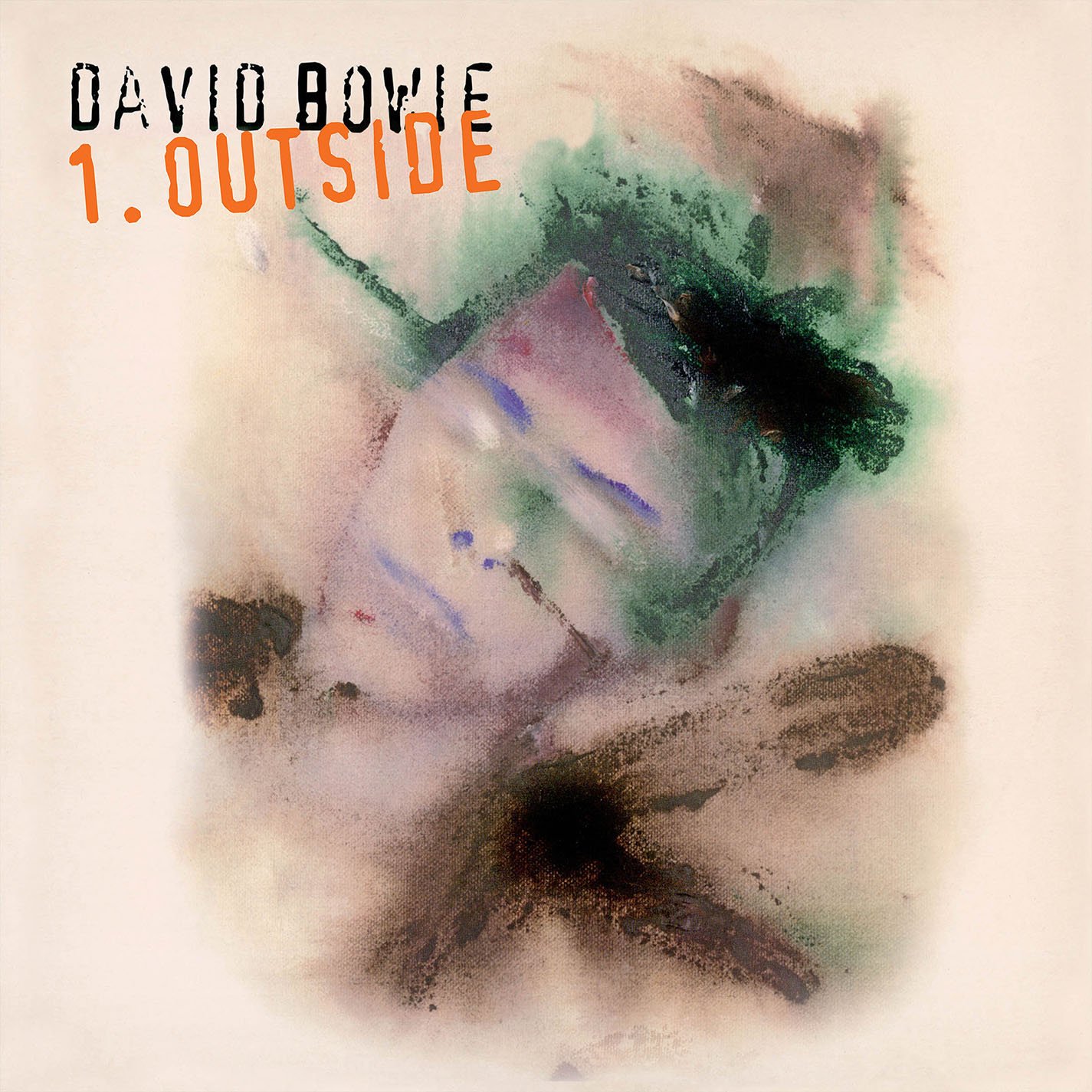
David Bowie – 1,Outside
After hitting a creative low in the mid-to-late ‘80s, then taking a questionable detour into hard rock with TinMachine, Bowie took some time to re-find his footing in the ‘90s, but by the time of 1. Outside—a dystopian concept album made in collaboration with his old mate Brian Eno, among others—he was well and truly back on form. “The Hearts Filthy Lesson” was his best single for a decade. “Hallo Spaceboy” is a suitably idiosyncratic update of the Major Tom myth. Tracks like “The Motel” (a grandly atmospheric piece evocative of latter-day ScottWalker and driven by the returning Mike Garson’s baroque styled piano) and the album-closing “Strangers When We Meet” are as good as any other art-rock of the day.
1. Outside might not be perfect—the inter-song segues have not aged well, and a third of the run time could comfortably be pruned from its over-generous 75-minutes—but it’s one of Bowie’s most ambitious works, and one that sits comfortably among his post-’70s highlights. Perhaps his premillennial tension was a little too far ahead of the curve—after a somewhat lukewarm response to this album, Bowie’s plans for a series of sequels soon faded, and he made the jungle-tinged Earthling instead.
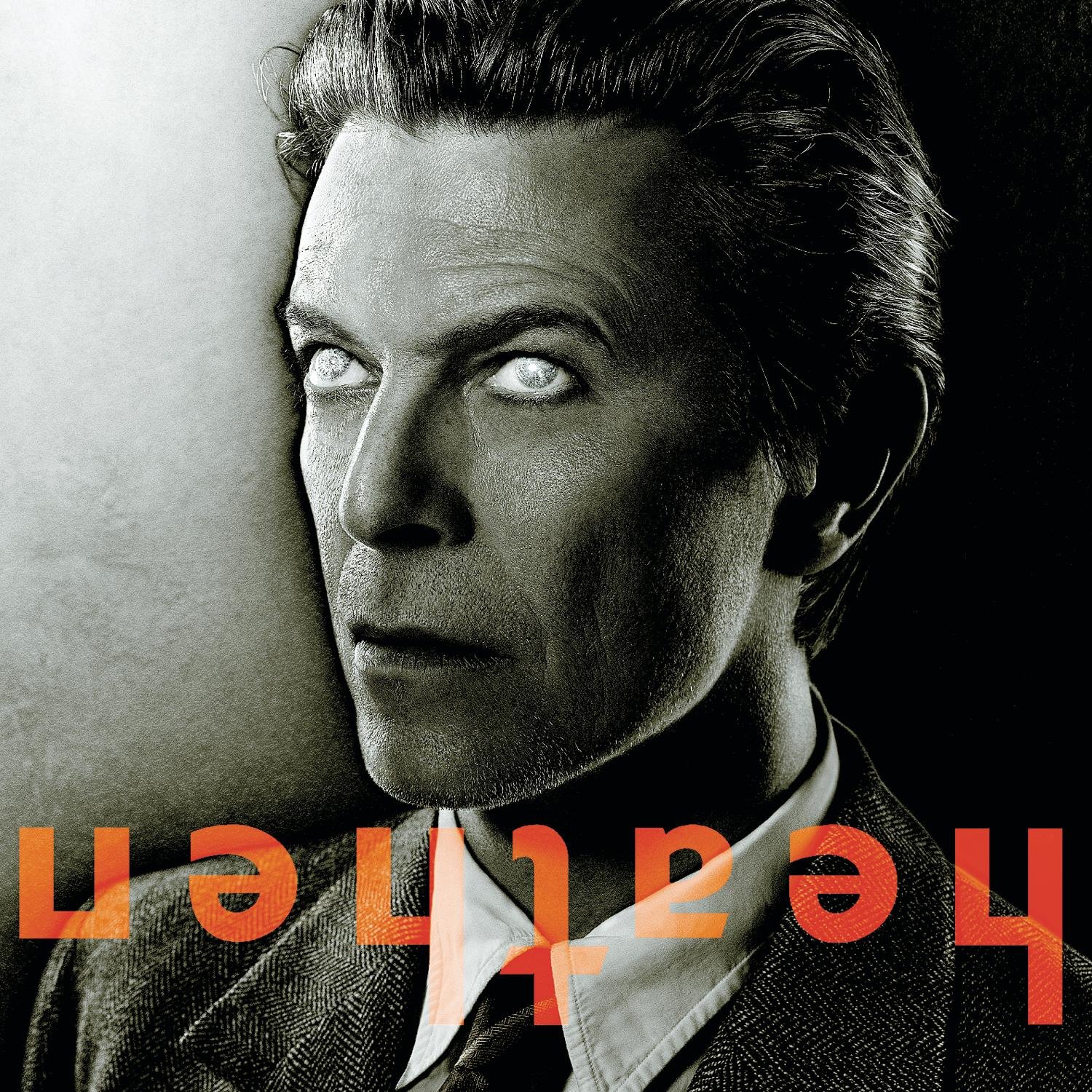
David Bowie – Heathen
For a long time, before Blackstar wowed and saddened in equal measure, Heathen felt like it might be the last great David Bowie album. Released in the aftermath of 9/11, and in some ways capturing the post-terror mood despite having largely been completed before the attacks on New York (Bowie’s then adopted home) and Washington D.C., it’s a work of maturity, morality, and mortality.
Death had long figured in Bowie’s work, but never before with the calm acceptance of Heathen’s opening track, “Sunday,” a mournful reflection on a world where “nothing remains” and the light is scarce. There’s a similarly meditative mood to “I Would Be Your Slave” and “5:15 The Angels Have Gone,” on which he declares, “I’m out here forever.” Elsewhere, among the lighter fare, “Slow Burn” is a kind of mini-“Heroes” with PeteTownshend on guitar, while “Slip Away” reunites Bowie with another old friend, the Stylophone pocket synthesizer. Slotting in neatly alongside Bowie’s own compositions are well-judged covers of Neil Young’s “I’ve Been Waiting for You” and the Pixies’ “Cactus,” in which the original’s mid-song shout-out is playfully updated to “D-A-V-I-D.”
If the response from some was once again muted, its creator was undeterred. “I’m pretty much a realist,” he said at the time. “The young have to kill the old. … That’s how life works.”
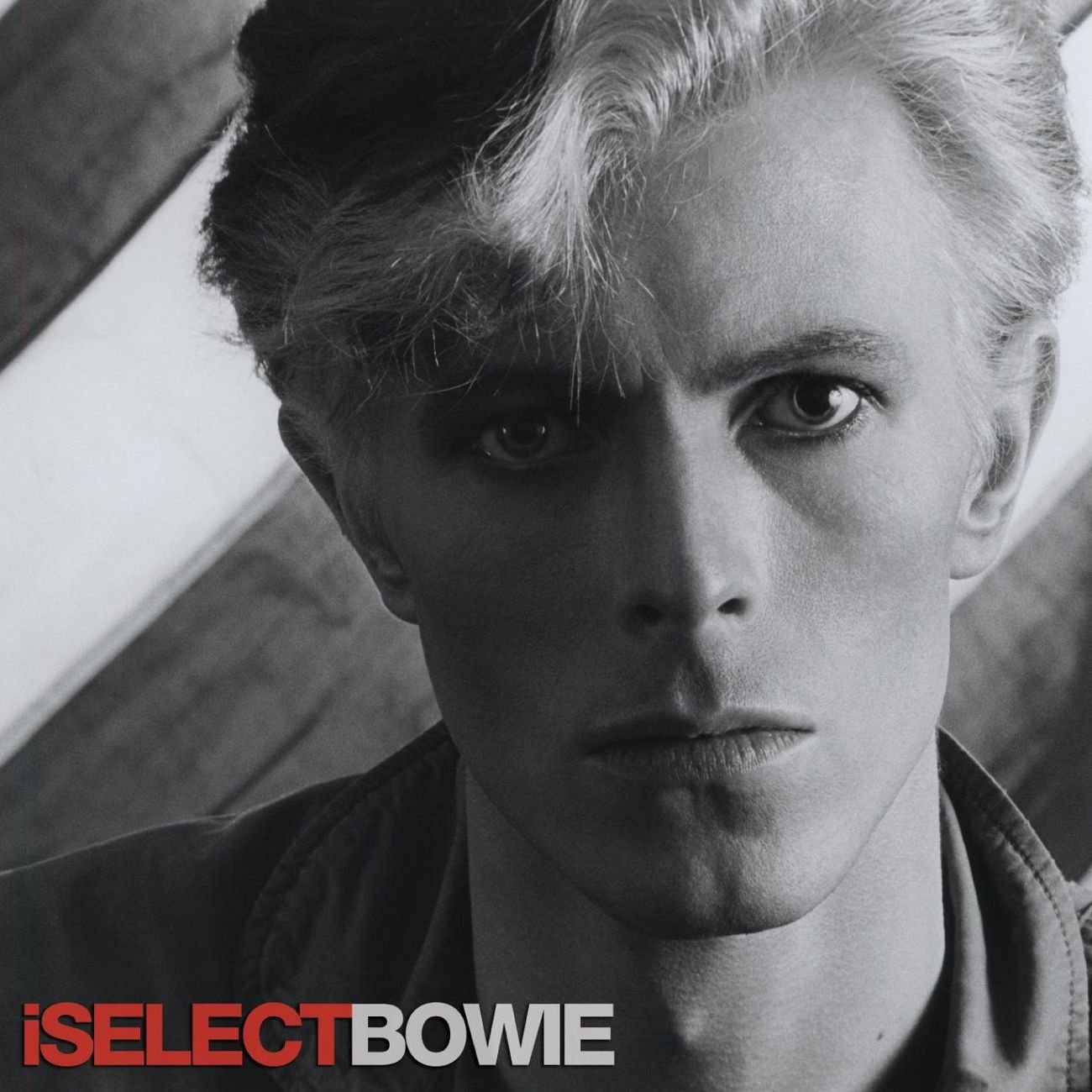
David Bowie – iSelect
Over the years, Bowie’s best bits have been compiled in so many different shapes and forms that they almost require a catalogue of their own. The best of the best-ofs, though, is this 12-track collection of Bowie’s own personal favorites from his extensive backlist. It was first released, incongruously, as a cover-mounted freebie alongside the June 29th, 2008, edition of the right-wing The Mail on Sunday newspaper, before being given a separate, rhetoric-free release later in the year.
Of the 12 songs Bowie chose to include, only “Life on Mars?” is an obvious pick. Among the rest are two tracks from Lodger, the Low outtake “Some Are,” and a newly remixed version of Never Let Me Down’s “Time Will Crawl.” In the illuminating song-by-song liner notes that accompany the album, Bowie described the latter as being among “a host of songs that I’ve recorded over the years that for one reason or another (clenched teeth) I’ve often wanted to re-record some time in the future.” If you’re looking for all the hits, in order, there are plenty of options to choose from, of which the most recent, 2016’s Legacy, is probably your best bet. As a guided tour by the man himself, however, iSelect cannot be beaten.
Vide Noir was written and recorded over the past two years at Lord Huron’s Los Angeles studio and informal clubhouse, Whispering Pines, and was mixed by Dave Fridmann (The Flaming Lips/MGMT). Singer, songwriter and producer Ben Schneider found inspiration wandering restlessly through his adopted home of L.A. at night. A true multi-media artist, Schneider has once again created an adorned world to inhabit within Vide Noir: the album is accompanied by a wealth of imagery, films and immersive experiences crafted to expand upon its narratives and themes.