Laura Jane Grace has shared “Apocalypse Now (& Later),” the debut single from her forthcoming album with her new band, Laura Jane Grace & The Devouring Mothers. The album, Bought to Rot, comes out November. 9th through Bloodshot Records.
“Apocalypse Now (& Later)” is a tender love song, in a sort of twisted way. “On top of the world, at the end of the world, with you,” Grace sings. It’s about “witnessing the end of the world with the person you care about the most,” as explained in a press release.
Bought to Rot will be Grace’s first non-Against Me! album since forming the band in 1997. “It felt really relieving to be like, ‘OK, this isn’t an Against Me! record, so I can say whatever the fuck I want!’” Grace told Rolling Stone. She says she was strongly influenced by Tom Petty’s landmark solo album Full Moon Fever when recording Bought to Rot. The 14-track album is about “Grace’s fractured relationship with her adopted hometown of Chicago, true friendship, complicated romance and reconciling everything in the end.”
The Devouring Mothers are made up of a pair of frequent Grace collaborators: Drummer Atom Willard and bassist Marc Jacob Hudson have both worked with Against Me!, Willard as drummer and Hudson as sound engineer.
Sydney rock trio Phantastic Ferniture released their self-titled debut album this summer via Polyvinyl Records and it’s so freaking good that you’ll be willing to forgive their crimes against the English language in their band name. Across the album’s nine tracks, the band excels with their danceable garage-pop and indie-rock, and frontwoman Julia Jacklin’s charismatic lead vocals will please fans of retro pop songs, modern rock and even the blues and folk crowds as the remnants of her past folk music endeavors still reverberate in her voice. On “Dark Corner Dance Floor,” Jacklin’s swaggering vocals call to mind a badass Western film, and her voice is hypnotizing enough to convince you to steal a muscle car for her and drive away victoriously into the desert sunset.
First rule of band names: make sure your name doesn’t contain the genre of music you play. The band’s colossal, eccentric pop/rock sound is undeniably psychedelic and it’s kind of cheesy to have the genre explicitly in the title. After giving them a pass for a corny, playfully ridiculous name, you can let yourself wander in their magical, sweeping soundscapes. Singles like “Social Candy” and “Marmalade March” invoke equal amounts of high-spirited fun and virtuoso musicianship. Listening to their music requires listeners to abandon their inhibitions and embark on whatever gleaming psych-pop joyride they offer. Their sound is accessible and melodious enough to appeal to pop/rock fans while their musical proficiency and wacky euphoria will also gel with diehard psych fans.
It’s official: critics love Rolling Blackouts Coastal Fever’s album Hope Downs. And they absolutely should—it’s one of the best guitar pop records of the year, strongly evoking both the literate pop of Australia’s the Go-Betweens and the intricate but rough-hewn rock that flourished in New Zealand in the 1980s. Rolling Blackouts Coastal Fever are part of a brilliant music scene in Melbourne, Australia, that exhumes those college radio sounds for the streaming times of today. They have a much higher profile in America than their fellow travelers, if only because they’ve benefited from the promotional support of a large label in the form of Sub Pop, but that doesn’t mean the other bands in their scene are any less worthy of notice today. In fact, Rolling Blackouts aren’t even the best of the current wave of amazing Australian and New Zealand rock bands.
The five members of Rolling Blackouts Coastal Fever have effectively just stepped off a plane. The band were on the road for over two months, sprinting through the festival circuits of America and Europe: Primavera Sound, the Great Escape, Coachella.
Now, they’re sitting bleary-eyed in a beer hall in Collingwood in their hometown of Melbourne. I’m speaking to each member one by one, which feels rather like speed-dating or maybe an inter-school sports round-robin. Vinyl copies of the band’s new album, Hope Downs.
The record sleeve shows a near-empty public swimming pool in the town of Gundagai: against an arid background, a slick of water is holding out against the heat. It’s a fitting image for an album that, after chewing through some hefty thoughts about a turbulent world, chooses to reach for optimism.
The band recorded Hope Downs a year ago, while holed up in a beautiful house near drummer Marcel Tussie’s hometown of Bellingen in northern NSW. As with Rolling Blackouts’ previous EP releases, the songs on Hope Downs have a wiry energy, propelled by the band’s three guitars and vocal melodies that are at once sweet and pinching.
Fran Keany, one of the bands vocalists and guitarists, was a drummer before he picked up guitar a few years ago. In Rolling Blackouts, he plays his acoustic with a percussive bent, adding to the drive of the songs. He says Hope Downs tells small stories about large, daunting themes.
A lot of the songs are about characters dealing with uncertainties. We only became conscious of it after we had finished writing. A lot of our songs involve characters, they’re fictionalised. Although on this album I think we’re far more personal than in our other songs — these ones are a bit closer to reality and ourselves.
The song ‘The Hammer’
is about fate. The “hammer” represents that — when the bell tolls, the death knell, y’know, when you die. The song is thinking about: “What have you done with the life that you’ve had?” It’s morbid in a way, but there is some optimism to it. A lot of the album is about that: being faced with the sheer enormity and uncertainties of the big, vast abyss, and trying to find some kind of certainty within that. But that only became apparent to us afterwards. It’s what we were all thinking about.
The album pushes forth Rolling Blackouts’ bright and sheeny guitar sound — the kind that is sometimes thought of as an Antipodean trademark and means that the band often gets pegged with Go-Betweens comparisons. Fran says the comparisons have weight: classic Australian guitar bands — as well as ideas about Australia as a place — loom large in their songwriting.
I think we all have wanted to make some something that’s particular to our place and time. There are a lot of bands from the UK and America that have a consciousness of where they’re from and when you listen to [their music] you’re sort of immediately transported to those places. It’s got this really galvanising feel to it — particularly UK bands.
So we’ve always wanted to do something like that with Australia. There have been a lot of great Australian bands that have done that, so we want to carry that tradition forward — sing about what’s around you, rather than sing about being in New York, or something. We don’t want to be too hammy or cliche about it, y’know, no green and gold type of Australia stuff, but we’ve wanted to have a particular Australian feel about it.
While it may not be immediately apparent amid the album’s musical buoyancy, many songs have a sharp political undertow, sparked by recent global shifts.
Up until recently there’s been no real desire to change things and break things much. It’s been a mediocre time. And now there’s been this jag against it more pronounced in the US and UK, but a little bit here. A restlessness that has shown itself in some weird political developments.
In a way it’s cool that things have been shaken up. Nothing should be set in stone. Nothing should be certain. Politicians need to get better at talking to the people that are not being looked after properly. The Weinsteins and the Cosbys … are getting their comeuppance and the corporate world is changing a lot. Everybody is thinking about all that stuff at the moment.
Tom Russo, another of the band’s guitarists and vocalists, was churning through similar thoughts when writing for this album particularly when he was on a holiday with his girlfriend, now wife, in Italy.
We went on tour and then had a trip to the Aeolian Islands off the coast of Sicily, where my dad’s from. I’d never been there before, but they’re these beautiful islands in the middle of the Mediterranean — surrounded by blue.
The song ‘Mainland’
came about because we were over there staying in a shack on the top of a hill and it was this kind of magical, enchanting time. We were away from everything civilisation. I was going in to town every day and reading the newspaper and having wine and good food, but at the same time looking at the paper and reading that the refugee crisis was happening literally 20 kilometres away. There was really horrible stuff happening.That song was me coming to terms with being in such a privileged position: being in love and on this island and having this amazing time, and then reflecting on the vagaries of fate meaning that other people, born in a different place and time, were having this life and death struggle. I guess it was me trying to make some sort of sense of it all.
He borrowed the song’s chord progression from the band’s bassist, his younger brother Joe. Throughout Hope Downs, the band’s three guitarists maintain their complementary but distinct styles. Tom says he favours a minimalistic approach.
I think of a melodic idea and I just try to hammer it in to the ground. Same with chords; I try to be as minimal as possible. I guess our styles kind of complement each other. Fran uses the guitar almost as a percussive instrument. He’s got really good rhythm. It’s used in conjunction with hi-hats and cymbals to tick through the beat.
I have this big heavy Gretsch. I’m not much of a technical player; I have a pretty heavy hand. I play leads and stuff, but I tend to do really simple kind of leads. I just keep banging on and on, kind of like Neil Young
really heavy one-note solos and stuff.I tend to like things that are clean and strong, whereas Joe White, the other lead guitarist, he’s probably technically a lot better than me and he can make things up off the top of his head and is probably a bit more wild and out there — a bit more nimble.
Rolling Blackouts maintain a steadfastly democratic songwriting process, perhaps aided by their long-time friendships and family ties.
We’ve all known each other for a long time. Fran and I went to school together and we’ve been best friends since year seven. Joe White is his cousin. And I’ve known Joe for a long time as well. We’ve written music together for ten years in various little, other bands all kinds of different versions of the same band in a way.
We all know what we like and we’re not precious about any of the songs. If someone comes up with an idea, we bring it to the group and we trust each other enough to develop it and everyone’s welcome to do something to it. I think that’s what makes our songs what they are — there’s all these different perspectives.
When it came time to record, the band were keen to escape the Melbourne winter. Drummer Marcel Tussie put the word out and found a spare house outside of his hometown of Bellingen. They temporarily relocated north, along with producer and engineer Liam Judson. Marcel says it was slightly challenging, but worth it.
It was a bit of a logistical — not a nightmare, but there was a lot more involved than just heading down to a studio in Brunswick for two weeks. We packed up the van with all of our equipment, drove for two days to get up there, organised for Liam who is from Sydney to be up there.
We had two weeks up there. We did probably 85 to 90 percent of it there and then did a couple of tracks in our studio back here and did some overdubs and vocal takes and bits and pieces.
The house is an interesting design it’s sort of built up into the trees. This particular room [where we recorded] is sort of separated from the main living space of the house in that it’s got a big long walkway that goes out in to one room. There were a lot books in there and a bed — we cleared it out and made it into our studio space. One of the walls of the house opens up completely, with a kind of pulley system, so we basically opened up the wall and looked out onto the rainforest and a creek.
I think at different points in the recording we all had our own individual moments of, “Holy fuck, where are we?” And I hadn’t been back there in 10 years, so it was really nice for me to go back there and be in that space, personally.
I remember Fran telling me about one moment when we were halfway through a take and he was feeling really good about it and then this kookaburra just came down and went flying right past in front he could have reached out and touched it — and he had this freak-out moment of “What’s going on?” So, I’m glad we did it there.
Marcel’s drumming is key to the propulsion of the songs on Hope Downs, but he says joining the band presented a stylistic learning curve.
I’d never really played in a rock band before this. I’d always sort of played in funk bands and Afro-beat bands and soul bands and more groove-based stuff, so it was a weird transition for me to be in a rock band. I didn’t really know what the fuck was going on — it was a weird adjustment.
I’d always listened to a lot of Midnight Oil growing up, so Rob Hirst is a huge influence. I started listening a lot more to him and his approach to getting the songs to drive when I started playing with these guys.
He describes the band’s writing process for the album as a typically “no-bullshit” affair.
It’s never tense. The focus has always been on what’s best for the song and really it’s quite remarkable how egos don’t even come close to getting involved in the way of writing the song or recording the song. Everyone’s really open and honest with each other — there’s no bullshit. If something needs to be changed, someone will say something and there’s never any arguments.
Joe White, the band’s other lead guitarist and vocalist, plays a “pawn shop Mustang”.
I used to have a Telecaster but it was stolen, from my car which I guess was my own fault. I had that for 10 years, and it was my favourite thing. I’m slowly working my to getting another one emotionally bringing myself back to playing a different Telecaster.
He agrees that throughout the band’s writing process, egos are set aside.
We have a collective consciousness when it comes to coming up with parts. I don’t really see myself as bringing my own personal style to it — we just try to make it a Rolling Blackouts song.
Joe’s guitar lines are the most intricate of each of the band’s guitarists. On many Hope Downs songs, his solos unfurl gleefully, such as on the album’s lead
‘Talking Straight’.
As well as focusing on melody, Joe says he’s also interested in an “ugly” kind of playing.
I mean we all try and pick out melodies. I’ve also played a lot of music with Cash Savage,
which has got a bit more of a bluesy, loose style. I’ve been enjoying bending notes and less pretty type of things. I’ve been trying to bring that in. Trying to make it a bit ugly for a little while and then bringing back the prettiness.
He says Rolling Blackouts have influences that may not be immediately apparent — based on the functionality of two lead guitars. The Sleepy Jackson comes in a fair bit. It’s kind of easy to bring in those eighties Australiana bands, but it comes from everywhere.
Televsion,the way they bring guitars together. And even Thin Lizzy or something — no that we try to sound like Thin Lizzy at all — but they’re just really good at using two guitars at once. We do that. We try not to let them get in the way of each other. You could go so far to say disco is an influence, in that we just use a straight beat a lot of the time and let the guitars work around that, rather than let the drums do too much.
The band’s bassist, Joe Russo, has fond memories of the album’s recording process. However, he says playing across a valley presented some unique challenges.
It’s an amazing part of the world; a good space to spend two weeks with everybody. The first couple of days we had this door of the room open. We were one storey up and playing to palm fronds that were waving in the breeze. Then, ’cause we were making so much noise in the valley, there was a ring around. It eventually got to the person who lived there, who was in Europe at the time, and they got in touch with Marcel and said, “Can you please keep it down?”
A famous neighbour made a subtle cameo throughout their stay. You know the movie Shine, with Geoffery Rush? The one based on [pianist] David Helfgott.
He lives next door and you could hear him at night playing Rachmaninoff and stuff while we were sitting by the fire. So it was a pretty beautiful place. We were super lucky to get up there.
After spending the past couple of years consistently touring, Rolling Blackouts have gained a reputation as a taut live act. Joe says the band wanted to capture as much of their on-stage energy as they could, so they tracked bass, drums and some guitar live. This comes through in the takes that made it to Hope Downs, which crack along at a manic pace.
We’re probably at the height of our game musically after doing a couple of EPs and just playing constantly. We seem to just be one organism at times. I think [the album] captures that energy. We did shitloads of takes of each thing and we picked the best one mostly because of the feel of it. So I think if we managed to capture that I guess it’s a very diffuse and hard thing to capture it’d be great.
Released in the summer of 1978 a year in which the charts were dominated by the disco pop of the Bee Gees, Boney M., and “You’re the One That I Want” Devo’s mold-breaking debut was already years in the making.
Devo formed initially not as musical group but as an idea ,the concept of the “de-evolution” of the human race—formulated by three art students at Kent State University in response to the fatal shooting of four anti-war protestors by National Guardsmen on May 4th, 1970 (events that also inspired the Crosby, Stills, Nash & Young song “Ohio”).
After making their live musical debut in 1973, by 1976 Devo had settled on a five-piece configuration comprised of two sets of brothers Jerry and Bob Casale, and Mark and Bob Mothersbaugh and drummer Alan Myers. (BobLewis, who worked with Jerry and Mark on their earliest “de-evolution” pamphlets and played in an embryonic version of the band, had stepped sideways into a short-lived management role.)
That year, true to their subsequent reputation for cross-media experimentation, they made their debut not with a record but with a short film. Directed by fellow Kent Stater Chuck Statler, The Truth About De-Evolution was part manifesto, part music video, interspersing surrealistic visuals with performances of “Secret Agent Man” (a Sloan/Barri song made famous by Johnny Rivers in the mid-sixties) and Devo’s own jerky “Jocko Homo.”
Statler’s film went on to win first prize at the 1977 Ann Arbor Film Festival in the same week that “Jocko Homo” also appeared as the B-side to the band’s first, self-released single, “Mongoloid.” With its call-and-response chorus of “Are we not men? We are Devo,” the song would become a mission statement of sorts for the band—a disorienting blur of tricky time-signature shifts and thought-provoking lyrics (inspired by the 1932 film Island of Lost Souls) hidden beneath a veneer of throwaway pop-punk whimsy.
Four decades later, of course, they’re legends — distinctly memorable and directly influential both in their performance-art-laced messaging and in the way they actually composed a pop-deconstructing milieu that fit somewhere between NEU! and the Ramones. Their uncanny nature of building indelible hooks in even their most avant-weirdo songs gave them a way in to impressionable listeners, their visual camp was the closest early MTV ever got to embracing a Fluxus-style art sensibility, and for a lot of outsiders they seemed like one of the few signs that maybe things didn’t have to keep on continuing the way they were.
Devo, preferring to keep their options open and corporate interference to a minimum, had not yet signed a long-term record contract, so Eno agreed to finance the record himself in return for a share of any future deal, even paying for their flights to Conny Plank’s studio in Cologne, Germany. (Bowie, keen to maintain his involvement in the record, would visit at weekends during breaks from shooting Just a Gigolo in Berlin.)
If the meeting of arty upstarts and art-rock legends sounded good on paper, the reality was not quite as Devo had anticipated. As Casale recently recalled “Here we were with this brutalist, industrial aesthetic and songs we’d lived with for up to three or four years, and [Eno is] suddenly adding harmonies and very pretty synth string sounds, and we’re like, ‘That’s not Devo. What’s he doing?’” As such, much of the subsequent mixing process involved turning down the faders on Eno’s contributions, although as Mark Mothersbaugh admitted in the same interview, “The stuff that stayed is really amazing.”
Forty years on, that remains the case, from the opening assault of “Uncontrollable Urge” and the band’s Dadaist cover of the Rolling Stones’ “Satisfaction” to the rising arpeggios and trans-European groove of “Gut Feeling” and the short, sharp shock of “(Slap Your Mammy).” Before it could be released into the world, however, the album remained in the can for six months while lawyers for Virgin and Warner Brothers jostled over the rights to it. Though the former had agreed to a worldwide deal with the group, executives at the latter label claimed that they, not Eno, had put up the funds for the sessions, and that as a result they should have it.
In the end, a compromise was agreed, with Virgin releasing the album in the UK and Europe and Warner issuing it in the U.S. and beyond. Though it was only modestly successful from a commercial standpoint, damned with faint praise by critics like Robert Christgau of the Village Voice, who concluded that, “in small doses,” it was “as good as novelty music ever gets,” the album would quickly become an important touchstone of the era.
Part of what makes Devo so important, of course, is that nobody else truly sounds like them. But while precise sonic analogues are few and few between, numerous acts from across a whole spectrum of music styles owe a debt to them, not least for the way they brought uncompromising ideas out into the light. “When we were new, we were shocking and so different—only we owned that aesthetic,” Jerry Casale noted in 2010. “Now a lot of bands cite as Devo as their influence.”
Rolling Stone wrote: “It’s a brittle, small masterpiece of Seventies pop irony, but its shriveling, ice-cold absurdism might not define the Seventies as much as jump the gun on the Eighties.” Released: 28th August 1978.
“hi! we are Ade, Amber, Ana and Carlotta and this is HINDS. Our first ever album is called Leave Me Alone but this is the deluxe edition. So you can listen to songs you might not know we had and demos recorded with a cellphone. about the demos, first of all, they are not demos. but we couldn’t find the correct way to call them. they never were thought to be shown to the world. while we are writing we record ourselves with our cellphones so we can listen to it again on the bus or wherever and we think new ideas and how to make the song better.
ALL OF THE DEMOS we’ve chose happened when the song was just born, so we are making up English (?) words, or hardly reading the notebook while trying to remember the chords and the structure.
but mysteriously, even thou all this shit, we love them. ’cause they take us exactly to the moment we wrote them. like a time machine. and we seriously hope this magic happens to you too and brings you to drink sangria at 1am sitting on a carpet with us”.
Jethro Tull released their first LP “This Was” in the US on February 3rd, 1969. The record was released in the UK in Oct. of 1968. The album was recorded at a cost of only £1200, and it is the only studio album by Tull to feature guitarist Mick Abrahams. The good reception of the album in the UK permitted the band to perform in the Marquee Club, where other successful British groups started their careers, such as the Rolling Stones and The Who.
“This Was” has the only Jethro Tull lead vocal not performed by Ian Anderson on a studio album, with Mick Abrahams providing the vocals on the track “Move on Alone”.
The song “Dharma for One”, a staple of Tull’s early concerts which usually incorporating an extended drum solo by Clive Bunker, was later covered by Ekseption, Pesky Gee! and The Ides of March.
The record received generally favourable reviews and sold well upon its release. New Musical Express wrote a positive review in 1968, saying that the album “sounds good and has a lot of humour about it”. About their style, the review said, “They play jazz really, in a soft, appealing way, and have a bit of fun on the side with tone patterns and singing”.
Funny, we never have thought of Jethro Tull as a jazz band….
Happy 53rd Birthday to “This Was”!!
Jethro Tull released their first LP “This Was” on the 3rd February 1969 in the USA. The record was released in the UK in Oct. of 1968. The album was recorded at a cost of only £1200, and it is the only studio album by JethroTull to feature guitarist Mick Abrahams. The good reception of the album in the UK permitted the band to perform in the Marquee Club, where other successful British groups started their careers, such as the Rolling Stones and The Who.
“This Was” has the only Jethro Tulllead vocal not performed by Ian Anderson on a studio album, with MickAbrahams providing the vocals on the track “Move on Alone”.
The song “Dharma for One”, a staple of Tull’s early concerts which usually incorporating an extended drum solo by Clive Bunker, was later covered by Ekseption, Pesky Gee! andThe Ides of March.
On “My Sunday Feeling,” the song opens with Mick’s guitar on one channel and Ian’s flute across the way on the opposite channel, in a call-and response pattern. When the vocals begin, we have Ian’s voice on one side, his flute on the other and Mick shoved into the background with the rest of the boys.
On the next track, “Some Day the Sun Won’t Shine For You,” Ian harmonizes with himself on opposite channels with no intention whatsoever of coming close to matching the melody note-for note. This is a good thing, because it’s a song with a front-porch blues feel and precision would have only spoiled it. I should note that the song bears more than a passing similarity to Big Bill Broonzy’s “Key to the Highway.” Broonzy’s original features a slightly faster tempo,The record received generally favorable reviews and sold well upon its release. New Musical Express wrote a positive review in 1968, saying that the album “sounds good and has a lot of humour about it”. About their style, the review said, “They play jazz really, in a soft, appealing way, and have a bit of fun on the side with tone patterns and singing”.
1968 debut album, This Was, will be reissued as a 3CD+DVD deluxe edition in November with stereo and surround mixes by Steven Wilson and rare recordings.
This 50th anniversary package includes the original album and bonus tracks remixed in stereo by Steven Wilson, live BBC sessions from 1968, the original mix of the album in both mono and stereo, a flat transfer of the US 1969 stereo mix and the original album and bonus tracks remixed by Steven Wilson in 4.1 DTS and AC3 Dolby Digital surround and 96/24 LPCM stereo (‘Love Story’ and ‘A Christmas Song’ are actually presented as 5.1 mixes).
The Jethro Tull reissues should be familiar by now, so this will be presented in the usual DVD-sized book package filled with an extensive history of the album, track-by-track annotations by Ian Anderson with rare and unseen photographs.
This Was: The 50th Anniversary Edition will be issued on 9th November 2018.
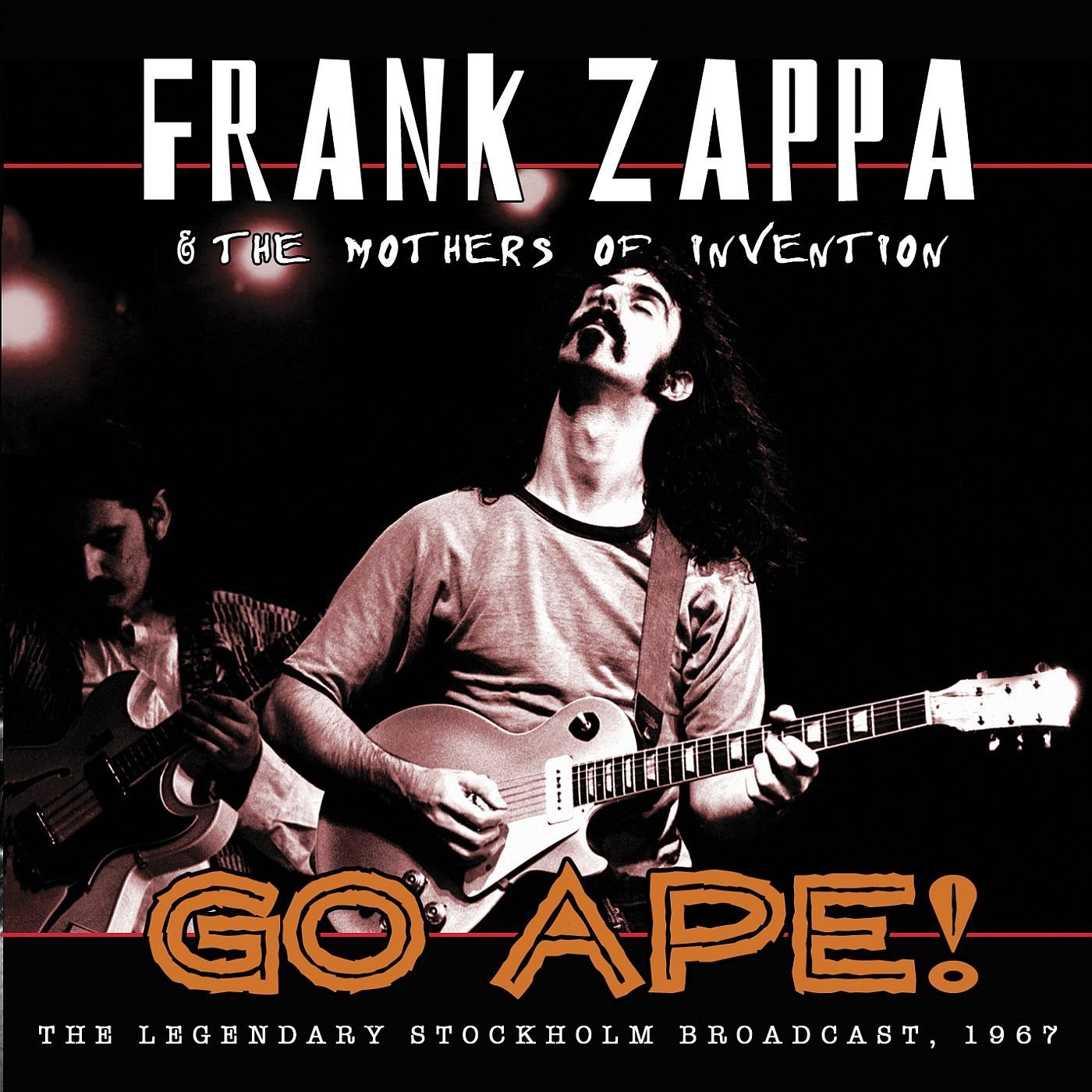
“Americans are ugly. This music is designed for them,” proclaimed Frank Zappa during the Mothers of Inventions first ever European show, their landmark concert at London s Royal Albert Hall. Yet although Zappa s work may have been designed as a critique of his homeland, he would discover that the Mothers output found its most loyal audience on distant shores. That legendary performance occurred on September 23rd, 1967, and seven days later the band were playing to another packed crowd at The Stockholm Concert Hall. This momentous event, broadcast nationally, is presented in its entirety and in superb quality on Go Ape!,
By the time of the performance Zappa and the first incarnation of the Mothers were at the height of their powers. Their extended residency at New York s Garrick Theatre between April and September, 1967, had given the band a chance to experiment with both their musical repertoire and their unpredictable onstage antics This combination of off-the-wall experimentation and musical dexterity is captured perfectly in the Stockholm performance. With a set-list that includes cover versions of rock and pop standards alongside snippets of Stravinsky and Tchaikovksy, the Mothers run through inimitable versions of Freak Out s You Didn t Try to Call Me and It Can t Happen Here and their classic B-Side Big Leg Emma . The centre-piece of the concert is a remarkable rendition of King Kong , a composition that Zappa would develop and hone for years.
Frank Zappa, live at the Konserthuset, Stockholm, Sweden this remarkable performance, broadcast from the Konserthuset in Stockholm, Sweden on national FM radio, “Big Leg Emma” (which had recently appeared as a 45 in Sweden), and an epic rendition of “King Kong” (in its first known live recording), as well as a couple of Elvis classics Blue Suede Shoes and Hound dog.
A section of it had previously appeared in orchestral form on Lumpy Gravy, and another version would eventually make up an entire side of the double LP Uncle Meat. The live rendition presented here is a unique 18 minute phenomenon, its first section highlighting the remarkable interplay between Bunk Gardener on clarinet, IanUnderwood on alto sax and Don Preston on keyboards, and its second section a Zappa-conducted explosion of improvised sound. For many, the first Mothers of Invention were the greatest group Zappa ever assembled. Go Ape! is a perfect example of what made them such a rare and remarkable beast.
Very interesting early show from the original Mothers. This set seems complete and the sound is top notch, and the performance of King Kong is a blinder! One to add to your collection for sure.
Joe Talbot, the frontman of the Bristol-based post-punk band Idles, isn’t interested in appointing himself a spokesperson of the people. The music that he and his band make a tense and explosive form of protest delivered with both absurdist humor and deeply personal vulnerability doesn’t exist to prop up political candidates. Which doesn’t mean that he’s not above taking the piss out of the political right; “The best way to scare a Tory is to read and get rich,” he chants on “Mother,” the standout single from the band’s debut album Brutalism.
For IDLES, the personal is very much political, and vice versa. The self-released Brutalism was a DIY success story, building up a cult fan-base through word of mouth and an accessible balance of aggressive music with wit and vulnerability. It’s an ass-kicker of a record, and one with its share of quotable one-liners—though some genuine grief lies at the heart of it. “Mother,” ostensibly a statement of feminism, was inspired by Talbot’s own mother, who died shortly before the album was released.
‘Great’ from ‘Joy as an Act of Resistance.’ out 31st August 2018 on Partisan Records.
Idles’ new album, Joy as an Act of Resistance., likewise catalyzes lived experiences into occasionally acerbic and often hilarious statements about the world around them. Talbot, guitarists Mark Bowen and Lee Kiernan, bassist Adam Devonshire, and drummer Jon Beavis sound like they’re having the time of their lives, even when taking bigots to task or opening up about heavier, more heartbreaking experiences. The album title itself is a good summary of what drives IDLES—they’re not moralizing, but helping to win people over to a more open-minded way of thinking through compassionate yet furious anthems, spiked with a potent dose of biting humor.
“I just have an interest in life,” Talbot says over the phone from the UK’s Bestival. “I love music and I love playing music, so I’m not going to not have fun doing it. Humour is a very inclusive vehicle to have a discussion about savage issues. I’m not trying to lecture people I’m trying to open dialogues.”
Joy as an Act of Resistance. is as good-natured and warm-hearted as heavy, aggressive music gets, its twelve tracksputting a clever and fun spin on topics ranging from toxic male behavior (“Samaritans”) to immigration (“Danny Nedelko”). And Talbot’s never afraid to let absurdity take over, as when he indulges in a bit of chest-puffery in “Colossus”—“I put homophobes in coffins…I’m like Evel Knievel, I break bones for my people”—or the parade of insults in “Never Fight a Man with a Perm”: “You look like a walking thyroid, you’re not a man you’re a gland, you’re one big neck with sausage hands.”
Just as with the making of Brutalism, however, the shadows of some much heavier life experiences hang heavy over Joy. Both Kiernan and Talbot have been open about their experiences with addiction, with Talbot himself having stopped drinking cold turkey at the beginning of 2018. And during the process of making the album, Talbot and his partner were preparing to be parents. Their daughter died during childbirth, and that anguish is echoed in the heartbreaking track “June”: “Baby shoes for sale / Never worn.”
In order to move forward as a band as well as to become the people that they wanted to be, Idles needed to address their own personal struggles, whether that meant therapy or acknowledging their own addictive behaviors.
IDLES are a political band, but their politics seem to boil down to some pretty simple principles: 1) Self-improvement and 2) advocating to make life better for individuals in order to make life better for everyone. Which would explain why they’re not interested in getting wrapped up in campaigning or endorsing candidates. As Talbot puts it, empathy and compassion are ideas that shouldn’t be taken advantage of by people in power.
Tony Molina’s, writes classic, accessible pop melodies, and drops them into fun-size songs often clocking in under the minute mark (almost always under two minutes), he also kicks around in local hardcore bands in the West Bay part of the San Francisco Bay Area and isn’t it weird that he does both maybe?.
West Bay native Tony Molina has been following a fascinating trajectory on his recent string of releases. Early entries like the “6 Songs EP” and “Dissed And Dismissed” LP combined the best bits of Weezer/Teenage Fanclub-style power-pop with Tony’s smart, touching songs, shredding guitar pyrotechnics and ironclad DIY HC roots. 2016’s “Confront The Truth” EP flipped the script in a big way, leaving the guitar crunch behind in favor of mostly acoustic arrangements that owe as much to “Horizontal”-era Bee Gees and the Fanclub’s mellower moments as they do to Georges Harrison and Martin. It’s a masterful record, packing more melodic flair and emotional truth into 11 minutes than most bands manage in an hour.
Now Tony is back with his brilliant, long-awaited album “Kill The Lights.” The ten songs on “Kill The Lights” continue in his evolution towards stripping the songs back to reveal each one’s emotional and melodic core. But where “Confront The Truth” was mostly acoustic, “Kill The Lights” adds back some full band arrangements to brilliant effect. Album opener “Nothing I Can Say” is a lovely 12-string pop tune that would sit snugly in The Byrds’ songbook – it’s that good. “Wrong Town” is gentle and subtly wrenching, recalling prime Elliott Smith in its simple truth. “Afraid To Go Outside” expands on some of the pastoral early Bee Gees/Kaleidoscope/Tomorrow flavor revealed on “Confront,” aided by some great organ lines. “Now That She’s Gone” features some gorgeous guitar finger-picking, while “Jasper’s Theme” is a rootsy mid-tempo groover that leans towards Gram-era Byrds.
Everywhere on “Kill The Lights” we hear Tony synthesizing his influences with great skill and intention; these classic folk and pop styles are being employed in the service of stellar songs and universal lyrical truths rather than just as aesthetic filigree. This is why beautiful, elegant songs like “When She Leaves” and “Before You Go” aren’t really so far from Molina’s punk roots — they reflect a dedication to craft combined with an intense commitment to self-expression that transcends simplistic genre boundaries. The sonic palette may be shifting, but the tunes are all Tony and we should all be grateful
Molina’s latest, Kill the Lights, is a cool step forward from his prior work, by the way, largely stripping back the loud guitars of his earlier solo releases in favor of ornate, almost chamber-pop-style arrangements. This isn’t an entirely new move—Molina’s old band Ovens wasn’t afraid of acoustic guitars and mellower arrangements—but he seems to enter the zone this time with more confidence than ever.
Meanwhile, he’s already at work on the next one, and he’s also probably starting another hardcore band as I write this (one of those bands, Healer, just also released a split 7″ with Dank Goblins on the Warthog Speak label this year). If you haven’t kept up with Molina over the last few years, though, don’t worry: Any music writer will be happy to pithily inform you that it won’t take long to get up to speed.