Archive for the ‘CLASSIC ALBUMS’ Category

The iconic rock band expand their ‘White Album‘ with 50th anniversary sets featuring new mixes and outtakes.  The album, which was the first to be released on the Beatles’ Apple label, was issued in stereo and mono in the U.K., but only stereo in the U.S.

The Beatles announced that they are releasing new versions of The Beatles (White Album) on November. 9th adding new 2018 mixes and a wealth of unreleased demos from the vaults to celebrate the original two-disc album’s 50th anniversary of release in November, 1968.

The mixes for the new packages were done by producer Giles Martin and mix engineer Sam Okell. Their announcement of their release follows the success of their 50th anniversary sets for Sgt. Pepper’s Lonely Hearts Club Band in 2017 .

The White Albumhad long been seen as the first glimpses of the Beatles as solo artists. Looking back on that time, Paul McCartney writes in the new set, “We had left Sgt. Pepper’s band to play in his sunny Elysian Fields and were now striding out in new directions without a map.” Adds producer Giles Martin, “In remixing The White Album, we’ve tried to bring you as close as possible to The Beatles in the studio. We’ve peeled back the layers of the ‘Glass Onion’ with the hope of immersing old and new listeners into one of the most diverse and inspiring albums ever made.”

The Beatles photographed in 1968.

The largest of the new releases, the seven-disc Super Deluxe set, will have unreleased songs, including three discs of “Sessions” outtake tracks with alternates of album tracks like “Revolution,” “Blackbird,” “Everybody’s Got Something To Hide Except for Me and My Monkey,” “While My Guitar Gently Weeps” and “Helter Skelter” (the longest, a spokesman said, is 12:49 and not the legendary 27-minute version) and some Beatles jams such as on the Elvis Presley hit “(You’re So Square) Baby I Don’t Care.” The Super Deluxe set will be housed in 164-page hardbound book with detailed track information, rare photos and copies of handwritten lyrics, recording sheets and print ads. It will also be numbered, as was the original LP.

In advance of the album, the Beatles also recorded a group of 27 acoustic-based demos at George Harrison’s house in Esher, Surrey, during the last week of May in 1968. Some of the demos were included on Anthology 3, but a complete set of these Esher Demos, including alternate versions of “Back in the U.S.S.R,” “Piggies,” “Rocky Raccoon,” and “Revolution” along with some songs that didn’t make the album, such as Lennon’s “What’s the New Mary Jane” and “Child of Nature,” and George Harrison’s “Circles” and “Not Guilty,” will be released for the first time in some configurations, answering a longtime wish from Beatles fans. The demos had been bootlegged in lesser quality for years.

There will be several versions of the new releases: Two 180-gram LPs with the 2018 stereo mix; three CDs or four LPs and digital audio with the 2018 stereo mix and the Esher demos; and a Super Deluxe set of seven discs with 6 CDs with two CDs of the new stereo mixes, three CDs of “Sessions” outtakes, a CD of the Esher Demos, and an audio Blu-ray with four mixes — hi-res PCM stereo, DTS-HD Master audio 5.1, Dolby True HD 5.1 and a direct transfer of the album’s original mono mix. That mix included several differences from the stereo version, among them a faster “Don’t Pass Me By,” different animal and bird sounds on “Piggies” and “Blackbird” respectively and an altered ending for “Helter Skelter.”


Here are 15 of the most revelatory moments:

1. “Revolution 1”
The legendary Take 18, a nearly 11-minute jam from the first day of the White Album sessions. The other Beatles were surprised to see someone new at John’s side: Yoko Ono, who became a constant presence in the studio. It begins as the version you know from the record: John’s flubbed guitar intro, engineer Geoff Emerick’s “take two,” John’s “okaaay.” But where the original fades out, this one is just getting started. The groove builds as John keeps chanting “all right, all right,” from a low moan to a high scream. Yoko joins the band to add distorted synth feedback, while Paul clangs on piano. She recites prose poetry, fragments of which that ended up in “Revolution 9”: “It’s like being naked…if you become naked.”

The story of this jam has been told many times, usually presented as a grim scene where Yoko barges in, sowing the seeds of discord—the beginning of the end. So it’s a surprise to hear how much fun they’re all having. It ends in a fit of laughter—she nervously asks, “That’s too much?” John tells her it sounds great and Paul agrees: “Yeah, it’s wild!”

2. “Sexy Sadie”
As the band warms up, George playfully sings a hook from Sgt. Pepper: “It’s getting better all the tiiiime!” John snorts. “Is it, right?” Take 3 is an acerbic version of “Sexy Sadie,” with Paul doodling on the organ. Yet despite the nasty wit, the band sounds totally in sync. When George asks, “How fast, John?,” he responds, “However you feel it.”

3. “Long, Long, Long”
George’s hushed hymn has always been underrated—partly because it’s mastered way too quiet. In the fantastic Take 44, “Long, Long, Long” comes alive as a duet between George and Ringo, with the drums crashing in dialogue with the whispery vocals. Giles Martin explains, “I suppose, as is documented here, George was Ringo’s best friend, as he says. That song is kind of the two of them.” George starts freestyling at the end: “Gathering, gesturing, glimmering, glittering, happening, hovering, humoring, hammering, laquering, lecturing, laboring, lumbering, mirroring…” It closes with the spooky death-rattle chord, originally the sound of a wine bottle vibrating on Paul’s amp. “It still gives you the fear when it comes.”

4. “Good Night”
Of all the alternate takes, “Good Night” is the one that will leave most listeners baffled why this wasn’t the version that made the album. Instead of lush strings, it has John’s finger-picking guitar and the whole group harmonizing on the “good night, sleep tight” chorus. It’s rare to hear all four singing together at this stage, and it’s breathtaking in its warmth. “I do prefer this version to the record,” Martin admits. (He won’t be the last to say this.)

John plays the same guitar pattern as “Dear Prudence” and “Julia.” That’s one of the distinctive sonic features of the White Album—the Beatles had their acoustic chops in peak condition, since there had been nothing else to do for kicks in Rishikesh. In India, their fellow pilgrim Donovan taught them the finger-picking style of London folkies like Davey Graham. “Donovan taught him this guitar part. John was like ‘great!,’ and then in classic Beatle style, went and wrote three songs using the same guitar part.”

The other “Good Night” takes are closer to the original’s cornball lullaby spirit. In one, Ringo croons over George Martin’s spare piano; in another, he does a spoken-word introduction. “Come on now, put all those toys away—it’s time to jump into bed. Go off into dreamland. Yes, Daddy will sing a song for you.” By the end, he quips, “Ringo’s gone a bit crazy.”

5. “Helter Skelter”
This Paul song inspired endless studio jams, lurching into proto-headbang noise—they started it the day after the Yellow Submarine premiere, so maybe they just craved the opposite extreme. This take is 13 minutes of primal thud—remarkably close to Black Sabbath, around the time Sabbath were still in Birmingham inventing their sound.

6. “Blackbird”
Paul plays around with the song—“Dark black, dark black, dark black night”—trying to nail the vibe. It isn’t there yet. He tells George Martin, “See, if we’re ever to reach it, I’ll be able to tell you when I’ve just done it. It just needs forgetting about it. It’s a decision which voice to use.” He thinks his way through the song, his then-girlfriend Francie audible in the background. “It’s all in his timing,” Martin says. “There’s two separate things, a great guitarist and a great singer—he’s managed to disconnect and put them back together. He’s trying to work out where they meet.”

7. “Dear Prudence”
Of all the Esher demos, “Dear Prudence” might be the one that best shows off their rowdy humor. John ends his childlike reverie by cracking up his bandmates, narrating the tale of Prudence Farrow that inspired the song. “A meditation course in Rishikesh, India,” he declares. “She was to go completely berserk under the care of the Maharishi Mahesh Yogi. Everybody around was very worried about the girl, because she was going insaaaane. So we sang to her.”

8. “While My Guitar Gently Weeps”
There’s an early acoustic demo, but Take 27, recorded over a month later, rocks harder than the album version—John on organ, Paul on piano, lead guitar from special guest Eric Clapton. (George invited his friend to come play, partly because he knew the others would behave themselves around Clapton.) The groove only falls part when George tries to hit a Smokey Robinson-style high note and totally flubs it. “It’s okay,” George says. “I tried to do a Smokey, and I just aren’t Smokey.”

9. “Hey Jude”
Recorded in the midst of the sessions, but planned for a one-off single, Paul’s ballad is still in raw shape, but even in this first take, it’s already designed as a 7-minute epic, with Paul singing the na-na-na outro himself. Another gem on this box: an early attempt at “Let It Be,” with Paul’s original lyric showing his explicit link to American R&B: “When I find myself in times of trouble / Brother Malcolm comes to me.”

10. “Child of Nature”
Another treasure from Esher. “Child of Nature” is a gentle ballad John wrote about the retreat to India: “On the road to Rishikesh / I was dreaming more or less.” He scrapped it for the album, but dug it back out a few years later, wrote new words, and turned it into one of his most famous solo tunes: “Jealous Guy.”

11. “JULIA”
One of John’s most intimate confessions—the only Beatle track where he’s performing all by himself. You can hear his nerves as he sits with his guitar and asks George Martin, in a jokey Scouse accent, “Is it better standing up, do you think? It’s very hard to sing this, you know.” The producer reassures him. “It’s a very hard song, John.” “‘Julia’ was one of my dad’s favorites,” Giles says. “When I began playing guitar in my teens, he told me to learn that one.”

12. “Can You Take Me Back?”
The snippet on Side Four that serves as an eerie transition into the abstract sound-collage chaos of “Revolution 9.” Paul toys with it for a couple of minutes, trying to flesh it out into a bit of country blues—“I ain’t happy here, my honey, are you happy here?”

13. “Ob-La-Di, Ob-La-Da”
Paul spent a week driving the band through this ditty, until John finally stormed out of the studio. He returned a few hours later, stoned out of his mind, then banged on the piano in a rage, coming up with the jingle-jangle intro that gets the riff going. This early version is pleasant but overly smooth—it shows why the song really did need that nasty edge. A perfect example of the Beatle collaborative spirit: John might loathe the song, Paul might resent John’s sabotage, but both care too deeply about the music not to get it right.

14. “Sour Milk Sea”
A great George highlight from the Esher tapes—“Sour Milk Sea” didn’t make the cut for the album, but he gave it to Liverpool pal Jackie Lomax who scored a one-shot hit with it. (It definitely deserved to rank ahead of “Piggies,” which remains the weakest track on any version of this album.) “Not Guilty” and “Circles” are other George demos that fell into limbo—“Not Guilty” sounds ready to go at Esher, yet in the studio, it was doomed to over a hundred fruitless takes.

15. “Happiness Is a Warm Gun”
A tricky experiment they learned together in the studio, with John toying with the structure and his mock doo-wop falsetto. “Is anybody finding it easier?” he asks. “It seems a little easier—it’s just no fun, but it’s easier.” George pipes in. “Easier and fun.” John replies, “Oh, all right, if you insist.” It’s a moment that sums up all the surprising discoveries on this White Album edition: a moment where the Beatles find themselves at the edge of the unknown, with no one to count on except each other. But that’s when they inspire each other to charge ahead and greet the brand new day.
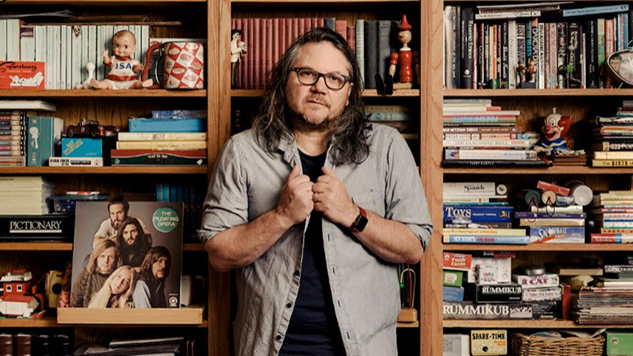
Jeff Tweedy Previews His First Proper Solo Album with Twang-Tinged Single "Some Birds"

Jeff Tweedy  has shared “Some Birds,” the first single off his forthcoming solo album Warm, due out November. 30th through dBpm Records. The record, recorded at Tweedy’s legendary Chicago studio The Loft, will be his first proper album of entirely new solo work, and will feature liner notes by the acclaimed author George Saunders.

“Some Birds” finds Tweedy up to his old Uncle Tupelo tricks once again. The rusted alt-country of No Depression has, throughout the years, alternately been Tweedy’s boon and bane some of Wilco’s best work occurred when he was running as far away from roots rock as he could. But when he’s on his own, that naturalistic style of songwriting feels, well, natural.

Like Wilco’s collaboration with Billy Bragg, or Tweedy’s own cover of Dylan’s “Simple Twist of Fate” off the I’m Not There soundtrack, “Some Birds” just feels right. His reedy voice seems to be made for lap-steel slides and clomping acoustic vamps. That’s not to say he’s gone all “beer, trucks and broken hearts,” though—he’s still got his deadpan wit and an eye for good imagery. “Some birds just sit / useless, like a fist,” he sings to start. “I lean on the wall / like a broom, confused / by the scope it all,” he adds later, his metaphors always dangling for a few moments, leaving you wondering just how a fist is useless, or how a broom can be confused. It’s comfortable but funny, lived-in but not tired.

According to Tweedy, “Some Birds” is “like a lot of songs on Warm, being a confrontation between self and shadow self simultaneously feeling I’m to blame and not to blame, present and gone, and utterly confused, but determined to hold someone accountable.”

Official video for “Some Birds,” the lead single off Jeff Tweedy’s solo album Warm.

Tweedy will be touring this fall in support of his new record. Check out the “Some Birds” video

Image result for images of vinyl records


Ourgirl

Our Girl – Stranger Today

Our Girl inhabit a space bigger than the first loves, sleepless nights and growing pains that define Stranger Today. Don’t miss this very special debut. For fans of The Big Moon, Lush and The Breeders

A4215691253 16

Oh Sees – Smote Reverser

Crack the coffers, Oh Sees have spawned another frothy album of head-destroying psych-epics to grok and rock out to. Notice the fresh dollop of organ and keyboard prowess courtesy of Memory Of A Cut Off Head–alum and noted key-stabber Tom Dolas, while the Paul Quattrone / Dan Rincon drum-corps polyrhythmic pulse continues to astound and pound in equal measure, buttressed by the nimble fingered bottom end of Sir Tim Hellman the Brave and the shred-heaven fret frying of John Dwyer, whilst Lady Brigid Dawson again graces the wax with her harmonic gifts. Aside from the familiar psych-scorch familiar to soggy pit denizens the world over, there’s a fresh heavy-prog vibe that fits like a worn-in jean jacket comfortably among hairpin metal turns and the familiar but no less horns-worthy guitar fireworks Dwyer’s made his calling card. Perhaps the most notable thing about Smote Destroyer is the artistic restlessness underpinning its flights of fancy. Dwyer refuses to repeat himself and for someone with such a hectic release schedule, that stretching of aesthetic borders and omnivorous appetite seems all the more superhuman!

Mitski

Mitski – Be The Cowboy

Hailed as the new vanguard of indie rock following the breakout success of 2016’s Puberty 2, Mitski returns with Be The Cowboy via Dead Oceans Records.

Mitski’s carefully crafted songs have often been portrayed as emotionally raw, overflowing confessionals from a fevered chosen girl, but in her fifth album, Mitski introduces a persona who has been teased before but never so fully present until now—a woman in control. “For this new record, I experimented in narrative and fiction,” comments Mitski. Though she hesitates to go so far as to say she created full-on characters, she reveals she had in mind “a very controlled icy repressed woman who is starting to unravel. Because women have so little power and showing emotion is seen as weakness, this ‘character’ clings to any amount of control she can get. Still, there is something very primordial in her that is trying to find a way to get out.”

Throughout the 14 songs, the music swerves from the cheerful to the plaintive. Mournful piano ballads lead into deceptively uptempo songs. “I had been on the road for a long time, which is so isolating, and had to run my own business at the same time. A lot of this record was me not having any feelings, being completely spent but then trying to rally myself and wake up and get back to Mitski.”

Mikey collins hoick

Mikey Collins – Hoick

Hoick is the solo album from Allo Darlin’drummer Mikey Collins, who combines his love of solid grooves and joyous harmonies to create a fun and sonically varied record. Mikey played most of the instruments and mixed the record himself, with some assistance from Laura Kovic (Tigercats) on vocals and fellow Allo Darlin’ member Paul Rains on lead guitar. The flicker of his previous band provided the building blocks of an upbeat, positive record, but Mikey wanted to add his own quirky, disco spin and sonic expansiveness. The aim to make a record that people stood a chance of being able to dance to. Mikey draws on influences as far flung as Dexy’s, Bruce Springsteen, Night Works, Matthew E White and Father John Misty. Mikey began working on the album while he was in Allo Darlin’. The last few years were a conveyor belt of change as he; got married, had a child, bought a house, moved from London to be by the Kent coast and opened a residential studio Big Jelly Studios (Girl Ray, Metronomy, Pete Doherty, Mt Wolf, Seamus Fogarty and Elva). In short, he grew up. The record journeys through these changes but has its roots firmly grounded in his new seaside habitat.

Slaves actsoffear love ps

Slaves – Acts Of Fear And Love

Slaves release their third album Acts of Fear and Love via Virgin EMI/AMF Records. The band’s third album reflects that fear and love may actually be the biggest motivators in the world at the moment. Working with previous collaborator, producer Jolyon Thomas (Royal Blood, U2) in Brussels, the band opened themselves up to a new sonic territory. Not concerning themselves with other people’s expectations of what a Slaves album should sound like the band have experimented with their style, without any boundaries; embracing pop song writing and tender moments alongside the more traditional hardcore riffs and scream-along choruses. Standouts include the joyous thrash of Bugs, the sprawling and tense title track and the Blur mixed with Weezer esque banger Chokehold.

Anno lp sleeve

Anna Meredith – Anno

Anna Meredith releases Anno, a boundary-pushing collaboration with the Scottish Ensemble, in which original pieces of work by the classical-electronic composer are intertwined with Vivaldi’s Four Seasons. Released via Moshi Moshi, the project began as an immersive 360 degree live experience but is now available on double vinyl and CD. After a recording process using the unusual ‘binaural recording head’ the project will also be available in an exclusive binaural recording – allowing the listener to experience the unique spatial aspects of the piece through headphones.

A0822150048 10

Follakzoid  – London Sessions with J Spaceman

It should come as no surprise to fans of the Chilean trio Follakzoid that upon meeting the legendary Jason Pierce AKA J. Spaceman (Spacemen 3, Spiritualized), they discovered they were kindred spirits. Follakzoid and Spaceman’s projects share a restless drive to explore the outer limits of music, as well as an uncanny ability to lock into a groove until it infiltrates the deepest recesses of the listener’s psyche. When Follakzoid met Spaceman backstage at a Wooden Shjips gig at London’s Electric Ballroom several years ago, they instantly became friends. For London Sessions, the Chileans and Spaceman joined forces for new, live-to-tape renditions of Electricand Earth, two highlights from Föllakzoid’s III. The recordings were made in a private studio in London while Follakzoid was on tour in Europe in June 2016, and Spaceman’s contributions breathe new life into the songs. “Jason added a very different harmonic atmosphere to the songs,” guitarist Domingo Garcia-Huidobro explained. “It somehow rearticulated the space and metric that already existed in a way the band never could. These new versions have a different edge.”

100000x100000 999

The Myrrors – Borderlands

If you see The Myrrors as the dust-caked disciples of a specific strain of desert-drone mysticism, theres little on Borderlands, their fourth full-length Myrrors album released in as many years, to dissuade you from that vision. Theres only confirmation an intoxicating combination of outlook and output that clarifies and crystallizes the bands many sonic strengths throughout the albums fantastically unfolding forty-plus minutes. From the beginning, with an appropriately Albert Ayler-ish blast of Awakening, to the epic 20-minute B-sidelong excursion, Note From the Underground, the beating heart of The Myrrors current statement. Borderlands will be extremely satisfying to otherworldly music seekers who find aural transcendence through the works of artists such as International Harvester, Taj Mahal Travellers, Trad Gras och Stenar, Kikagaku Moyo, Amon Duul, and Agitation Free, to name a few.

In Search Of The Lost Chord pack shot

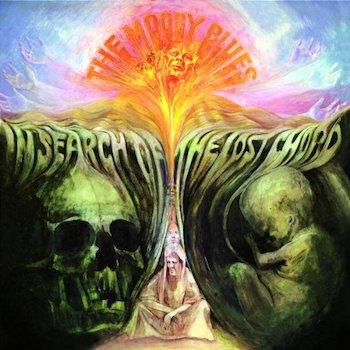
The classic third album by the Moody Blues, 1968’s In Search Of The Lost Chord originally Released date: 26th July 1968 ,will be released in a 50th anniversary deluxe edition on 2nd November. It will feature bonus and previously unissued material and alternate mixes of this key record in the group’s storied catalogue.

The deluxe edition will comprise a 3CD/2DVD box set with both the original and new stereo mixes of the album. Unreleased material includes a never-before-heard mono version of the Ray Thomas song ‘Legend Of A Mind,’ as well as a live session from influential Radio 1 DJ John Peel’s Top Gearshow and another from Afternoon Pop Show. Mono mixes of the related Deram A and B-sides are also included.

The first DVD in the package contains In Search of the Lost Chord  in 96kHz/24-bit 5.1 Surround, as a new stereo mix and the original stereo mix. The second, visual, DVD comprises BBC TV’s Colour Me Pop: In Search of the Lost Chord,broadcast on 14th September 1968, two months after the album’s release; Ce Soir On Danse: The Moody Blues,broadcast by ORTF French TV on 13 July that year, and Carte d’Or’ – ORTF French TV,from 29th October 1968. Both of the French broadcasts are previously unreleased.

In Search Of The Lost Chord


The set also includes a 76-page book with extensive sleeve notes by its compiler, Mark Powell, as well as a generous selection of rare photos and memorabilia images.

The album is also being released as a standard vinyl 180-gram facsimile of the  LP with the original packaging; D2C limited edition psychedelic coloured vinyl with original packaging, exclusively available from the uDiscover store; and as a single CD containing the new stereo mix plus bonus tracks.

In Search of the Lost Chord,based around the concept of the spiritual and philosophical concerns of the psychedelic era, is seen by many Moody Blues devotees as the group’s masterpiece. It featured the much-loved singles ‘Voices In The Sky,’ written by Justin Hayward, and ‘Ride My See-Saw,’ by fellow frontman John Lodge, among compositions by all five members of the band. The album reached No. 5 in the UK and No. 23 in the US.

The 50th Anniversary Deluxe Edition of In Search of the Lost Chord is released on 2 November. 

Image may contain: 5 people, people smiling, people sitting, shoes and indoor

Cloud Nothings have released “Leave Him Now,” the second single from their upcoming album Last Building Burning, out October 19th via Carpark Records. The track follows “The Echo of the World” and leans more toward the sunnier pop sound last year’s album release “Life Without Sound”, albeit with more angst and thrash. In the song, frontman Dylan Baldi begging a friend to leave an abusive relationship: “You gotta go right now/Or never at all.”

The band has also announced a fall North American tour starting in October;

http://

“Leave Him Now” is the latest song to be taken from the forthcoming Cloud Nothings album, Last Building Burning, which is due for release on the 19th October 2018 via Wichita Recordings and Carpark Records.

The KVB are gearing up to the release of their sixth album, entitled ‘Only Now Forever’, which will be released October 12th via Invada Records.

The band have now shared new single “On My Skin” which the band describe as “the most openly romantic track on our new album”. They go on to explain “It’s a song that deals with the glowing anticipation of new relationships and the uncertainty and optimism whilst falling in love. How people have a presence even when they are not present, and how memories can linger and infatuate your mind. Treading the lines between euphoria and melancholia, it also recognises that in these delicate beginnings, nothing can last forever.”

After intense touring their 2016 release ‘Of Desire’, The KVB returned to their home to further immerse themselves in sonic experimentation. The resulting Only Now Forever heralds the next chapter in the adopted-Berliners dark, electronic pop development. “On our new album we wanted to take everything we had learned in the studio recording our last album and apply it to self-producing this album,” explains the band. Recorded entirely in their Berlin apartment throughout 2017 the band decided they wanted to take a freer approach to writing and recording. “In the past, we had always tried to restrict ourselves productions wise, to what was possible to play live as a duo, but this time we wanted to expand our compositions and instrumentation, and let the atmosphere dictate the layers of sound.”

Offering poignant lyricism that explores modern anxieties that plague many, the duo manage to imbue feelings of empowerment, fighting such struggles with a deceivingly sanguine sound. This seamless juxtaposition is perhaps their best trait. “For us it is an album of contrasts: light yet dark, uplifting yet melancholic, romantic yet unsettling.”

http://

The ethereal cover ,mirrors dreamy songs such as ‘Live In Fiction’, ‘Cerulean’ and ‘Violet Noon’ – the latter a romantic ode to the apocalypse. In reaction to the anxieties of now, there are more aggressive moments on the album, such as the title track ‘Only Now Forever’ and the single ‘Above Us’, a driving defiance against modern life. Dark and seductive tracks like ‘Afterglow’ & ‘Into Life’ show the influence being in Berlin has had on making the album, a place that has been their home for the past four years.

The duo will take Only Now Forever on the road across the UK and Europe following the October release.


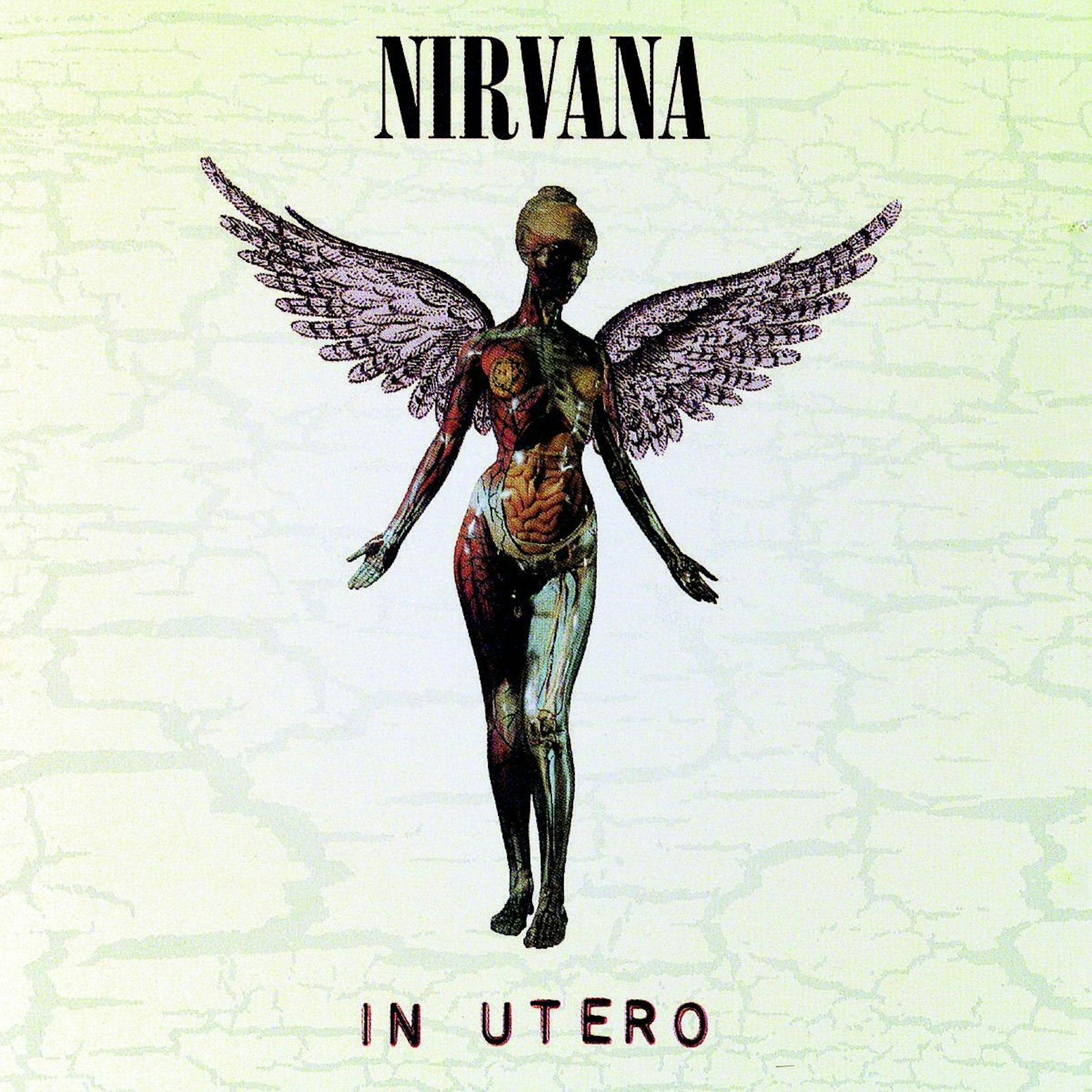
The album “Nevermind” turned Nirvana from unknowns to the biggest musical act in the world and positioned frontman Kurt Cobain as the face of grunge. Although a sensational album, it’s follow-up record “In Utero” that cemented Nirvana’s legacy. Unhappy with the over polished production of Nevermind and concerned with accusations of selling out, Cobain ditched producer Butch Vig for Steve Albini and set about recording an album capturing the harsh, punk influenced sound of their debut Bleach.

In a detailed four-page proposal to the band, Albini laid down his ground rules, the most shocking being his refusal to accept royalties. “I think paying a royalty to a producer or engineer is ethically indefensible. I would like to be paid like a plumber: I do the job and you pay me what it’s worth,” he wrote. “There’s no way I would ever take that much money. I wouldn’t be able to sleep.” He suggested Pachyderm Studios for its isolation in the woods, claiming that recording in a city would cause distractions. He also banned visits from Geffen Records staff members, whom he called “front office bullet heads.”

Albini believed in working fast without over-thinking, so the band cut the album in just two weeks. “If a record takes more than a week to make, somebody’s fucking up,” he wrote in the proposal. The speed at which they recorded, combined with the raw, visceral sound and minimal production, differed greatly from Nevermind, an album that was incredibly clean and streamlined.

In the February 1993, Nirvana made their way to the secluded Pachyderm Studios in Cannon Falls, Minnesota, to begin work on their third album. The last time they had stepped foot in a studio, they were a little known Seattle band that had just left Sub Pop for David Geffen’s DGC. Now, with a multiplatinum album that knocked Michael Jackson off the charts and turned them into one of the biggest rock bands on the planet, they were under immense pressure to follow it up.

“In Utero” achieved this in spades. Draining opener “Serve The Servants” (“Teenage angst has paid off well”), thrash influenced “Very Ape” and cascading hit single” Heart-Shaped Box” were raw sounding tracks exemplifying Cobain’s want of an abrasive sounding record. “Dumb” and the moving finale of “All Apologies” offered lighter moments amongst the chaos, and although Cobain claimed the lyrical content of the album impersonal, it’s hard not to draw parallels between In Utero’s themes and Cobain’s life at that time. It’s 41 minutes of raw, uncompromising rock that was unlike anything else in the pop landscape. Cobain, disenchanted by his overwhelming fame and the widespread media coverage of his personal life, was ready to vent.

Cobain’s bleak worldview was on full display. Many of the songs are best remembered for their gut-wrenching, stripped-back acoustic renditions on MTV Unplugged, but In Utero is treasured among hardcore fans as Nirvana in their purest form. The original title was “I Hate Myself and Want to Die”.
“Nothing more than a joke,” Cobain told Rolling Stone. The line, which first appeared in Cobain’s journals in mid-1992, became the working title for the follow-up to Nevermind. “I’m thought of as this pissy, complaining, freaked-out schizophrenic who wants to kill himself all the time. And I thought it was a funny title. But I knew the majority of people wouldn’t understand it.”. Fearing the title would result in the same legal trouble Judas Priest faced three years prior when two fans shot themselves, Krist Novoselic urged Cobain to rethink it. The other working title wasVerse, Chorus, Verse, but Cobain finally settled on In Utero, which he took from a poem of Courtney Love’s.

Nirvana

Cobain had one goal in mind: to bring the band back to their punk-rock roots. Their millions of new fans may have reveredNevermind, but Cobain thought it sounded “candy-ass” and way too commercial. So he recruited esteemed engineer Steve Albini (who had recorded Pixies, the Breeders, the Jesus Lizard and other Cobain faves) and headed for the woods in rural Minnesota

Cobain wrote “Rape Me” to dramatically condemn rape and emphasize his support for women, but the song sparked immediate controversy. “Over the last few years, people have had such a hard time understanding what our message is, what we’re trying to convey, that I just decided to be as bold as possible,” he told Rolling Stone. A huge supporter of the riot grrrl movement and a fan of bands with female members like the Breeders and the Raincoats, Cobain wanted In Utero to pave the way for more female artists. “Maybe it will inspire women to pick up guitars and start bands,” Cobain said in 1993. “Because it’s the only future in rock ‘n’ roll.”

Wal-Mart and Kmart refused to carry “In Utero” because of the song “Rape Me” and the graphic imagery on the back cover.
Cobain agreed to change the title of “Rape Me” to “Waif Me,” while the back cover was softened to comply with the demands. “When I was a kid, I could only go to Wal-Mart,” he told his manager Danny Goldberg. “I want the kids to be able to get this record.” 

Understandably, “Rape Me” caused other issues for the band, most notably at the 1992 MTV Video Music Awards when network executives told the band that if they played the song they’d immediately cut to commercial. Feeling challenged, Cobain played a bit of the song when they walked out and then went directly into a blazing rendition of “Lithium.” 

All three members received credit on “Scentless Apprentice,” an extreme rarity for the group since Cobain normally wrote the songs himself. The raging “Scentless Apprentice,” inspired by Patrick Süskind’s 1985 novel Perfume, is the only track on the studio album co-written by Cobain, Novoselic and Grohl. (On Nevermind, they shared credit on “Smells Like Teen Spirit” and its B side “Aneurysm.”) “Scentless Apprentice” was recorded in just one take. “Nobody said, ‘We should do it again,’” Grohl said “Because that was the fucking take.”

Cobain wrote out a detailed vision for the “Heart-Shaped Box” video with William Burroughs as the star. “William and I sitting across from one another at a table (black and white),” he wrote. “Lots of blinding sun from the windows behind us holding hands staring into each other’s eyes.”

By the time he approached Burroughs, he had decided to cast him as an elderly Jesus, even offering to conceal his identity. “I realize that stories in the press regarding my drug use may make you think that this request comes from a desire to parallel our lives,” he wrote in a letter. “Let me assure you that this is not the case.” Though Burroughs declined the offer, Cobain finally got to meet his beat hero at his home in Kansas that fall. 

After Cobain met Courtney Love in 1990, Love gave Dave Grohl a heart-shaped box to give to Cobain. She filled it with items that matched Cobain’s taste — a porcelain doll, dried roses and other tokens — and sprayed some of her perfume on it. As Cobain and Love’s romance blossomed, the item became a symbol of their love. It was also the one item in their home they had in common.


“Pennyroyal Tea” was one of Nirvana’s first songs to showcase the soft-loud-soft formula they became famous for. It was first written and recorded on a four-track with Dave Grohl in Cobain’s house in Olympia, Washington. It went through several permutations before its release on In Utero, including instrumental takes recorded by Jack Endino in 1992. “Pennyroyal Tea” and “Smells Like Teen Spirit” were debuted live the same night, at the O.K. Hotel in Seattle in 1991. “Pennyroyal Tea” was slated to be the third single for In Utero,but was cancelled after Cobain’s suicide in 1994.
After Cobain’s death, the label decided to recall copies of the single, which had a B side of “I Hate Myself and Want to Die,” and destroy them. But copies had already been sent overseas and somewhere between 200 and 400 of them reached the fan community.

Houdini

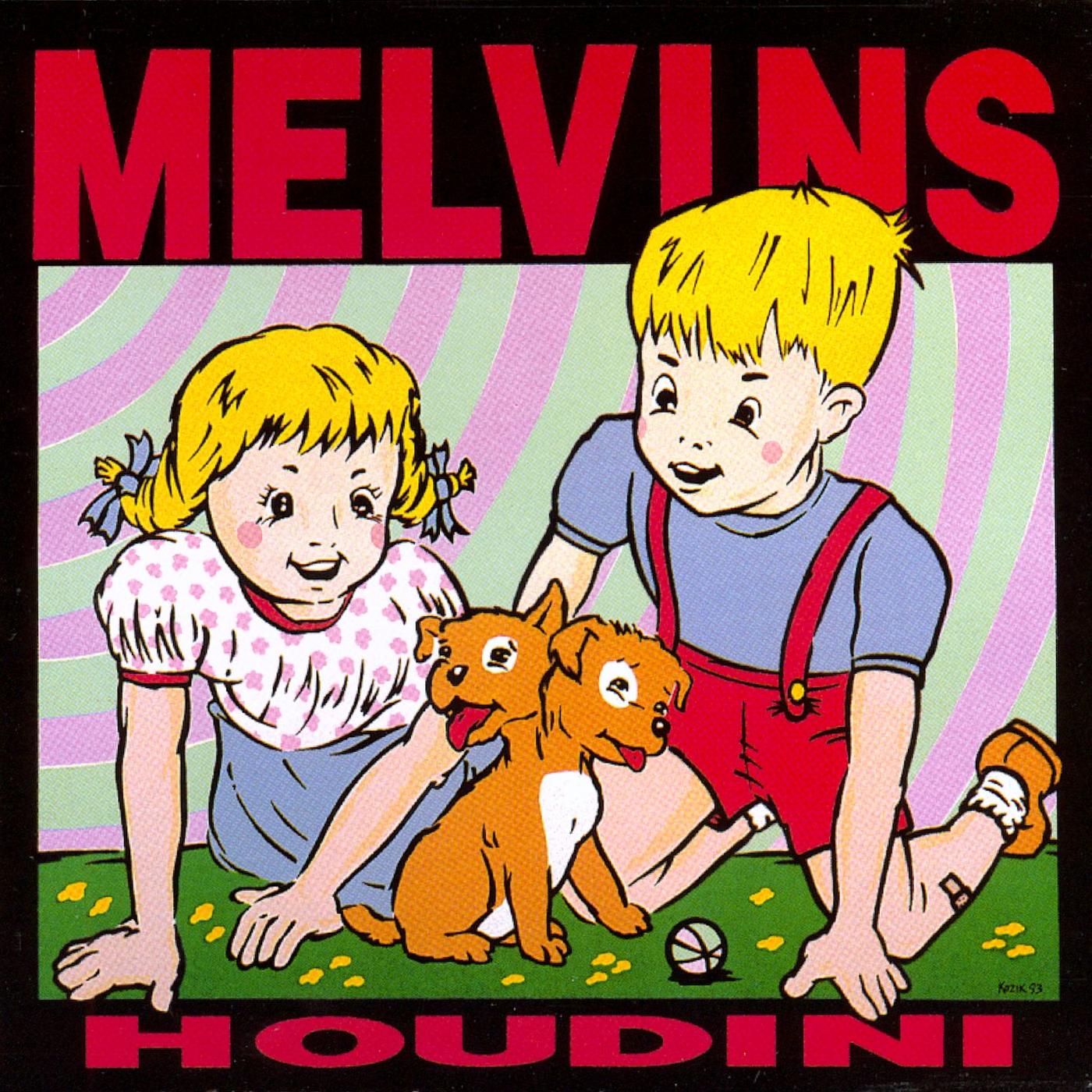
The Melvins had been playing for years before the word “grunge” came into fashion to describe the intense, sludgy alternative rock they helped pioneer, so it’s only fair that when Nirvana hit, the band got offered a major label deal. Released 25 years ago today, HOUDINI, the first Melvins album for Atlantic and their fifth overall, was partially produced by longtime fan Kurt Cobain, who also contributes a bit of guitar to “Sky Pup.” These dozen originals (plus a version of Kiss’ “Going Blind”) are loud, heavy and lumbering, and the massive riffs and weird twists of “Honey Bucket,” “Lizzy” and “Hooch” are still overpowering. Featuring iconic Frank Kozik cover art, HOUDINI is the Melvins‘ most successful album to date, and an ideal introduction to the work of King Buzzo and company.

“Houdini2  is the fifth album by Melvins, which was released in 1993 through Atlantic Records.

Track List : 01 Hooch – 0:00 02 Night Goat – 2:50 03 Lizzy – 7:31 04 Going Blind – 12:15 05 Honey Bucket – 16:48 06 Hag Me – 19:48 07 Set Me Straight – 26:56 08 Sky Pup – 29:22 09 Joan of Arc – 33:12 10 Teet – 36:49 11 Copache – 39:41 12 Pearl Bomb – 41:48 13 Spread Eagle Beagle – 44:34 All rights reserved to The Melvins and Atlantic Records.

“Thunder Follows The Light” contemplates the ongoing destruction of the outer world and how it shapes the storms of our inner ones. There are meditations on the environment, collective struggle, death, rebirth, reasons to believe it’s worth the fight.
For nearly a decade, Jordan Lee has crafted pop experiments blending orchestral instrumentation and ambient electronic sounds. “Thunder Follows the Light” is a testament to the power of music as a space for collective processing and emotional response. Like his other releases, it is a highly collaborative document. Its sprawling chamber folk features many returning collaborators—violinist Jake Falby, guitarist Mike Clifford, percussionist Dillon Zahner—as well as first-time players—vocalist Johanne Swanson (of Yohuna), drummer Felix Walworth (of Told Slant), saxophonist Gabriel Birnbaum (of Wilder Maker). Jordan can honestly do no wrong. He is absolutely growing and maturing musically before our very ears, and I for one am honored to be a part of it. Finishing an album is such a huge endeavor that I always feel like it leaves a permanent mark on me. I’m glad for what this process has taught me and am excited to live in this little universe for a while and play these songs around the world!

Lee’s aggressive pursuit of art-making for himself is empathetic and outward-facing, looking both to the past and the future with warmth and hopefulness. “Peace is more than just a season coming ‘round again,” he sings on two different songs—and the emphasis seems intentional: suggesting that harmony of the mind and the heart do not just transpire but must be worked for, growing from deep-rooted foundations. In the world that birthed Thunder Follows the Light, it feels like medicine.
Released September 21st, 2018
Written by Jordan Lee 
With writing contributions from
Mike Clifford, Jake Falby, and Dillon Zahner 

‘Come To Pass’ appears on the album ‘Thunder Follows The Light’ out 21 September 2018 through Transgressive Records

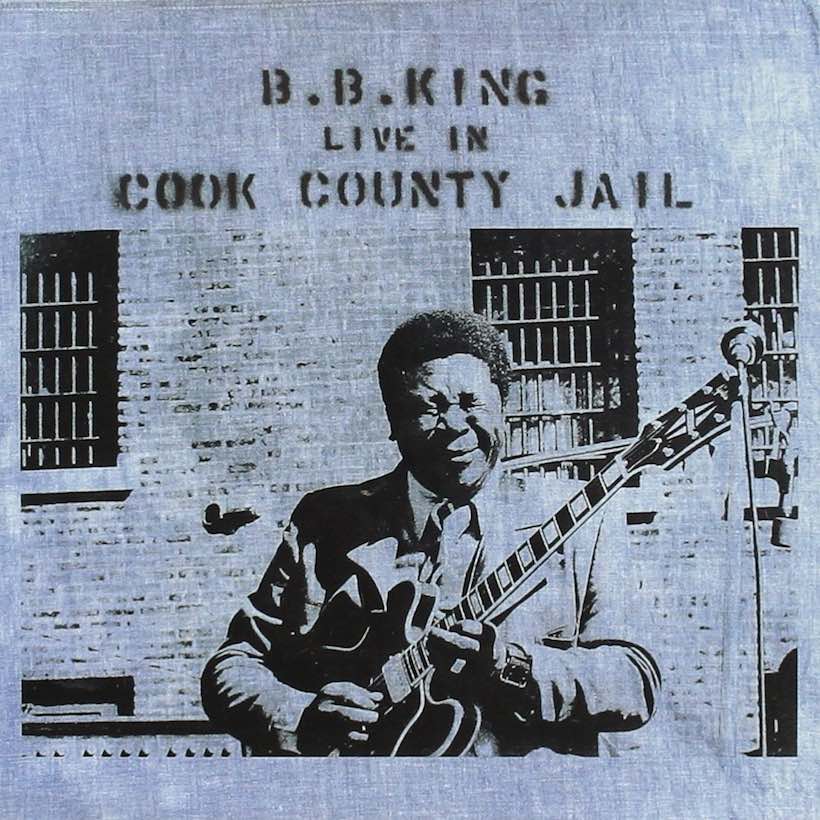
It’s inevitable that this album will be compared to 1965’s Live at the Regal, by the same blues giant and hailed as one of the greatest live albums of all time. And yet Live in Cook County Jail, recorded on 10th September 1970, is an unusual concept, as few artists had followed Johnny Cash’s pioneering example of recording in a prison. In 1968 Cash had recorded in Folsom Prison, which was followed a year later with Cash playing at San Quentin.

There was no greater ambassador for the blues than B.B. King. Unashamedly anchored in the past, B.B. draws deeply upon the familiarity of his audience with classic songs. As testified by countless other live recordings, King uses his skilled banter with the crowd to steer the Cook County Jail repertoire on to timeless favourites, asking their permission to take such a liberty. As if it’s an apology, he explains that it’s a treat for him and the band to revisit old material that they rarely get to play. Well, no excuse necessary. It’s always a treat to hear him playing them, and the versions here are as great as ever. Slightly heavier, with the funkier, driving bass-line of modernity, and the fuller, maturer tone of his faithful Lucille.

There are superb performances of ‘Every Day I Have the Blues,’ ‘How Blue Can You Get?’ and a wonderfully impassioned reading of ‘Worry, Worry.’ ‘How Blue Can You Get? is the great bemoaning of an unfair relationship that B.B. camps up hilariously, building it to a fantastic, forceful crescendo, never failing to excite the crowd on “I gave you seven children, and now you want to give them back!”

He first recorded the song as ‘Downhearted’ for his 1963 album Blues In My Heart, but it goes back to at least the 1950 recording by Chubby Kemp and the Ellingtonians. Although, more likely, it was the version a little later by Louis Jordan and his Orchestra that made its impact on B.B., who from very early on, was one of Jordan’s biggest fans.

B.B. is in such great voice at Cook County Jail, pitching as high as he can go, and following unbelievably beautiful lyrical lines on Lucille. He sustains a soaring, hair-raising note in ‘How Blue Can You Get’ that’s so fine it likely claimed a few scalps on the night.

There’s plenty of old favourites, kicking off ‘3 O’Clock Blues’ that he introduces as “the first tune that made people know about B.B. King” — literally, the first track on his debut album, Singing the Blues. A little more patter and, with the most extraordinary, scintillating, metallic, exquisite discordancy, B.B. segues into ‘Darlin’ You Know I Love You’, his hit single from 1952 and only his second to chart. In fact, it hit the No. 1 spot and remained in the charts for a total of 18 weeks. But, what the hell was that surreal chord he hit going into it this time?

The crowd-pleasing, mid-paced ‘Sweet Sixteen,’ which made Billboard’s No. 2 spot in 1960, rounds off this sentimental section. It’s a tune that King wrote with Joe “Josea,” actually one of the Bihari brothers who had first recorded him in the early ‘50s.

Something else had happened in the years between Live at the Regal and this album. For the first time B.B. recorded ‘The Thrill Is Gone’ in June 1969 as a closing cut to the album Completely Well. The album version is a slow rocking 12-bar blues underpinned by lush, swelling strings. People loved it, sending it to No. 3 on the R&B chart and No.15 in the Billboard Hot 100.

The concert version is a little livelier, horns taking the place of strings, and a choppy end section. It’s a fantastic change of direction in the live set towards funky soul, before B.B. does something quite audacious: he addresses his prison audience, ingratiates himself, and then ends the show with the slow ballad, ‘Please Accept My Love,’ performing some exceptional vocal acrobatics.

The band then play B.B. out with an upbeat, anthemic instrumental to rapturous applause. Drummer Sonny Freeman had been with B.B. the longest, since 1960’s B.B. King Wails. So he and his boss were the only ones who had also been at the Regal. Comparative newcomers were trumpeter John Browning, saxophonists Louis Hubert and Booker Walker and pianist Ron Levy, previously with Albert King until 1968.

Live in County Jail made the top of the Billboard R&B albums chart for three weeks running in April of that year, and No. 25 on the Billboard LP chart. Live at the Regal had been a great mid-’60s live set, powerful, and foretelling of the arrival of rock. Live in Cook County Jail was also forward-looking, already using a heavier sound that would culminate in mid-’70s funk. But, both were also retrospective, drawing on some of B.B.’s oldest material. In this light, they make an excellent pair of albums. Essentially inseparable, and insuperably essential.