Near the end of Reagan’s first term, the Western Massachusetts Hardcore scene coughed up an insanely shaped chunk called Dinosaur. Comprised of WMHC vets, the trio was a miasmic tornado of guitar noise, bad attitude and near-subliminal pop-based-shape-shifting. Through their existence, Dinosaur (amended to Dinosaur Jr. for legal reasons) defined a very specific, very aggressive set of oblique song-based responses to what was going on. Their one constant was the scalp-fryingly loud guitar and deeply buried vocals of J Mascis.
A couple of years before they ended their reign, J cut a solo album called Martin + Me. Recorded live and acoustic, the record allowed the bones of J’s songs to be totally visible for the first time. Fans were surprised to hear how melodically elegant these compositions were, even if J still seemed interested in swallowing some of the words that most folks would have sung. Since then, through the reformation of the original Dinosaur Jr lineup in 2005, J has recorded solo albums now and then. And those album, Sings + Chant for AMMA (2005), Several Shades of Why (2011) and Tied to a Star (2014) had all delivered incredible sets of songs presented with a minimum of bombast and a surfeit of cool.
Like its predecessors, Elastic Days was recorded at J’s own Bisquiteen studio. Mascis does almost all his own stunts, although Ken Miauri (who also appeared on Tied to a Star) plays keyboards and there are a few guest vocal spots. These include old mates Pall Jenkins (Black Heart Procession), and Mark Mulcahy (Miracle Legion, etc.), as well as the newly added voice of Zoë Randell (Luluc) among others. But the show is mostly J’s .
He laughs when I tell him I’m surprised by how melodic his vocals seem to have gotten. Asked if that was intentional, he says, “No. I took some singing lessons and do vocal warm-ups now, but that was mostly just to keep from blowing out my vocal cords when Dino started touring again. The biggest difference with this record might have to do with the drums. I’d just got a new drum set I was really excited about. I don’t have too many drum outlets at the moment, so I played a lot more drums than I’d originally planned. I just kept playing. [laughs] I’d play the acoustic guitar parts then head right to the drums.”
There is plenty of drumming on the dozen songs on Elastic Days. But for those expecting the hallucinatory overload of Dinosaur Jr’s live attack, the gentleness of the approach here will draw easy comparisons to Neil Young’s binary approach to working solo versus working with Crazy Horse. This is a lazy man’s shorthand, but it still rings true.
Elastic Days brims with great moments. Epic hooks that snare you in surprisingly subtle ways, guitar textures that slide against each other like old lovers, and structures that range from a neo-power-ballad (“Web So Dense”) to jazzily-canted West Coasty post-psych (“Give It Off”) to a track that subliminally recalls the keyboard approach of Scott Thurston-era Stooges (“Drop Me”). The album plays out with a combination of holism and variety that is certain to set many brains ablaze.
J says he’ll be taking this album on the road later in the year. He’ll be playing by himself, but unlike other solo tours he says he’ll be standing up this time. “I used to just sit down and build a little fort around myself – amps, music stands, drinks stands, all that stuff. But I just realized it sounds better if the amps are higher up because I’m so used to playing with stacks. So I’ll stand this time.” I ask if it’s not pretty weird to stand alone on a big stage. “Yeah,” he says. “But it’s weird sitting down too.” Ha. Good point. One needs to be elastic.
Wolf Alice were honored with the 2018 Mercury Music Prize on Thursday for their sophomore album, “Visions of a Life”. The reward is given every year to the best album in the United Kingdom by a British or Irish act, and includes a £25,000 prize. Noel Gallagher, Arctic Monkeys and Lily Allen were also nominated. They also beat bookies’ favorite Nadine Shah, who was tipped to win with her album Holiday Destination, which recounts her experiences as a second-generation immigrant.
“The first label meeting we ever had, we walked into a room, and the geezer said, ‘You don’t look like a band at all. What are you? What are you supposed to be? All your songs sound different. You don’t look like each other,'” bassist Theo Ellis said at the ceremony at London’s Hammersmith Apollo.
“We never really figured it out, but here we are,” he continued. The band’s debut album, My Love Is Cool, was nominated for the Mercury Prize in 2015.
The Joy Formidable returns in with AAARTH, The Welsh rock trio return with yet another huge step forward, in the shape of fourth album AAARTH. It’s a punch in the gut compared to their previous releases focusing more on fuzz guitar and less on pleasing melodies, even though the melodies are complex and diverse.
Propelled by their restlessness and curiosity, the band continue to sit at the forefront of inventive and aggressive guitar music, taking what can be done with the instrument to new levels with each album. AAARTH marks a transformative, near-psychedelic rebirth that channels long-held anger, soundtracking a chaotic global period of injustice and division, setting it against a deeply poignant backdrop of personal experiences and healing. Although the album came into being as the band travelled the globe and recorded in their mobile recording studio, the music intertwines the whispering hills of Wales with the otherworldly rainbow canyons of the Utah / Arizona border. It’s an intense, melodic and commanding piece of work.
“Go Loving’ is one of my top two tracks on this collection due to it’s unblinking, clenched teeth psychotic approach and uber-cool fuzzed up guitar sound that is like a chainsaw.
Welsh alternative trio The Joy Formidable are set to release their fourth studio album next week, AAARTH. The band stopped by the Paste Studio to perform four tracks
”The Wrong Side,” “Dance of the Lotus,” “Little Blimp” and “The Better Me.”
AAARTH’s cover artwork is by Fernando Chamarelli, a very talented painter, illustrator and muralist from Brazil. We were so drawn to the piece , it’s colour & dimension, the way you see a different symbol & layer every time you look.
Brighton, U.K., quartet Black Honey started releasing demos as early as 2015 and now they’re finally ready to bare their souls in the form of their debut record. The first time I saw Black Honey perform live, it was more than three years ago. It has been an excruciating wait for their debut album to be released with every single dropped a temptress of a track building up the desire and excitement for this moment. Friday 21st September was when it finally reached the ears of the world
The band’s cinematic pop/rock was born for a ballsy Tarantino or Spaghetti Western flick due to frontwoman Izzy Bee Phillips’ glossy, saucy pop vocals and lead guitarist Chris Ostler’s sleazy outlaw riffs. While tracks like “Dig” and “Hello Today” fall into this surreal, dreamy rock sound, the band’s most recent offerings, “Midnight” and “Bad Friends,” depict their venture into disco and hi-fi ’80s pop . It was a perfect piece of promotion to choose to go with Midnight as the big release before the album as that sound of pop and dirty rock is the motif of the album. For those who like a reference point, I will say for you to imagine Katy Perry fronting Black Rebel Motorcycle Club. This is indie/alternative club sex music that has something for everybody.
Either way, their tantalizing, velvety new record’s entrancing sassiness will kick you down with a shiny silver boot and its inherent pop sweetness will give you a redemptive kiss on the cheek.
Black Honey, the debut album released 21st September:
Savoy Brown has never had a song on the pop charts and none of their albums have ever inched above the top thirty anywhere in the world. Yet, for aficionados of British blues, they hold a unique place. Between 1967 and 1974, Savoy Brown released nearly a dozen notable albums that took a holistic approach to the blues, snaking through an ever-evolving mix of boogie, R&B, jazz, and psychedelic rock.
The story of how those albums came to be contains a drama rife with personality clashes, exacerbated by a pitched resistance to the slickness of pop stardom. Over the years, the band switched line-ups as often as Imelda Marcos changed shoes. Yet their music achieved a consistent quality that deserves a rehearing by anybody who appreciates blues with a hard rocking edge.
Since they began, more than 60 musicians have played in the band. Simmonds has fronted the group as a trio since 2012 with bassist Pat DeSalvo and drummer Garnet Grimm. Formed in London in 1965. They became a fixture on the burgeoning blues-rock scene in the UK in the second half of the decade. Savoy Brown never achieved the record success in their own country that was enjoyed by such proponents of the genre as Fleetwood Mac or John Mayall; indeed their UK chart life consisted of precisely one week at No. 50 for 1970’s Decca album Looking In.
In advance of a new studio project, Savoy Brown recently released Still Live After 50 Years, Vol. 2,which follows 2015’s first volume. It marks the 50th anniversary of their debut album on Decca, Shake Down, which showcased their blues pedigree with covers of B.B. King, John Lee Hooker and Willie Dixon.
Kim Simmonds was Savoy Brown’s stalwart leader, and sole consistent member—rates as one of the most emotive and flexible guitar heroes Britain has ever produced. His love of the blues began after he heard the American pioneers featured in his brother’s record collection. “It was the honesty of the music that attracted me,” the guitarist said. “There was none of the nonsense of pop. It’s simple music, yet at the same time there’s great art in it.”
Simmonds and Savoy Brown never achieved the stardom of their contemporaries, maintaining an underground status and establishing their reputation with energized live performances that continue to the present day. Like a phoenix, Simmonds always rose from the ashes of critical band member departures and forged ahead, creating engaging blues oriented rock music with a long list of talented musicians. Following their initial success in the mid-1960s, as a traditional blues band featuring the dynamic Chris Youlden on vocals, Youlden departed and the band began heading in a more hard rock/boogie band direction, releasing several memorable albums.
Shake Down (September 1967)
Kim Simmonds formed his baby step version of Savoy Brown in 1965, when he was just 18. Their initial line-up featured six players, including harmonica player John O’Leary, and singer Bryce Portius, perhaps the first black musician to be part of a British rock band. The latter hire reflected Simmonds‘ upbringing in a racially mixed area of South London. In their early gigs, Savoy played the same clubs as Fleetwood Mac, opened for Cream at some of that group’s earliest shows and even served as John Lee Hooker’s band on a full U.K. tour. Their growing reputation as a live act got them a deal with Decca Records. But by the time they cut their first album, , they had already replaced two of their initial players and added a second guitarist: Martin Stone. The band’s debut album , ‘Shake Down’, released in September of ’67, featured production from Mike Vernon, blues-rock’s ultimate go-to guy for his work with John Mayall, Fleetwood Mac, and later, Ten Years After.
Cover versions of classic blues songs ate up their debut, with the exception of one cut written by Stone. From the album’s first song, the focus fell on Simmonds‘ shivering tone and limber leads. Yet only one track gave him room to stretch out, a final 6 minute take on the traditional blues “Shakedown”.
Getting to the Point (July 1968)
The band’s tentative first-steps necessitated a strong rethink before Simmonds cut album No. 2. Four of the band’s six members got pink slipped, leaving only their leader and pianist Bob Hall. (For a blink-and-you-missed-it moment, Savoy had at its drummer Bill Bruford, who went on to great success with Yes). The band’s more defining hires turned out to be second guitarist “Lonesome” Dave Peverette, a friend of Simmonds‘ from childhood, and frontman Chris Youlden. Though he owns one of rock’s burliest, and most emotive voices, Youlden lacked the look of a showman. So the band’s manager (Simmonds‘ brother Harry) created an image for him, outfitting the frontman with a distinct bowler hat and a monocle. The unit’s debut release Getting To The Point , was released in July of ’68, bold-faced their reboot with eight original pieces. The slow blues Flood In Houston, , offered a nice showcase for Youlden’s inventive vocals, as well as Simmond’s intuitive guitar. But a cover track Of Willie Dixons You Need Love , has intrigued historians most. Youlden’s cry of “deep down inside, woman, you need love,” later struck some listeners as a precursor to Robert Plant’s famous use of those lines in “Whole Lotta Love” , released one year later. Simmonds believes some of his licks also had an influence on that track. “We did dates with The Yardbirds when Jimmy Page was in the band,” Simmonds said. “I wouldn’t doubt that he heard some of that material.”
Blue Matter (May 1969)
Blue Matter was the bands third album and shows off British Blues at it’s finest and includes the stunning ‘Train To Nowhere’ This track, which leads off the band’s third album Blue Matter (their first album of 1969), rumbles along to thumping beat, with Simmonds’ guitar picking up steam along the way, driving the song home to its train whistle-punctuated finish.. Savoy Brown greatly widened their melodic reach on 1969’s “Blue Matter” . The key track, Train To Nowhere, threaded four muted trombones behind Simmonds’ valiant solo, while the vocal from Youlden nailed the existential pull of the lyric.
The band devoted half of the album to live tracks were recorded on December 6th, 1968, at the now defunct City of Leicester College of Education because the band was scheduled to tour the US and needed additional tracks to complete the album in time for the tour. The booking at the college represented their only chance to record the extra tracks in a live venue before embarking on the tour. An offer to perform the concert free of charge was accepted by Chris Green, the college Social Secretary, who had made the original booking, and the concert was duly recorded, a number of the live tracks being added to the album. which Youlden missed due to a bad case of tonsillitis. His loss gave the band two gains: Guitarist Peverette got to show off his own skills as a vocalist, and the musicians got to stretch out on tracks that lasted up to nine minutes. The concert format re-emphasized Savoy’s forte as a live band. Subsequently, the group began to concentrate on touring, particularly in the U.S., where they headlined the Fillmore East and West several times.
This is one of the concert recordings found on the half studio/half live Blue Matter album. Savoy Brown here takes this Muddy Waters tune on a wild nine-minute adventure, which is highlighted by Simmonds’ massive and monumental guitar solo that commands the middle of the song. You can see why they were known for their live performances.
Very heavy blues for the time. David Anstey’s cover fits perfectly with the music. Some of Kim’s best, most ferocious guitar playing. Black Cat Bone’s “Barbed Wire Sandwich” had the same feel. Guitarist Rod Price, from Black Cat Bones, would later go on to play in Foghat, made up of ex Savoy Brown members.
A Step Further (September 1969)
A Step Further was released later that year, and introduced bassist Tony Stevens replacing Jobe. They developed a loyal core following in the United States, due to songs such as “I’m Tired,” a driving, melodic song from the album.
Youlden more than compensated for his absence on the live part of ‘Blue Matter’ by dominating the writing on the first side one of the band’s next album “A Step Further”, released in late ’69. He proved a striking songwriter, even on the instrumental track Waiting In The Bamboo Groove, which was fired by a charging horn section.
Filling up the entire second side of Savoy Brown’s fourth album, this mammoth live number clocks in at over 22 minutes. As the band boogies along, they detour into “I Feel So Good,” “Whole Lotta Shakin’,” “Little Queenie,” “Purple Haze,” and “Hernando’s Hideaway.” The guys impressively never lose their way due to the tremendous guitar-work of Simmonds and Lonesome Dave Peverett and the entertaining showmanship of frontman Chris Youden.
Chris Youlden was at that time one of the best vocalist’s I’d ever heard. With the wonderful guitars of Peverett and Simmonds. SAVOY BROWN in the sixties were one of the best English. My favourite song of this record is ‘ Life’s One Act Play ‘. INCREDIBLE FEELING.
This funky little workout, hailing from Savoy Brown’s second album of 1969, reached No. 74 on the Billboard Hot 100. Kicking off dramatically with a blast of horns, it weaves in some Jimi Hendrix and Yardbirds influences while showcasing Simmonds’ nimble fretwork and singer Youden’s soulful vocals.
Raw Sienna (April 1970)
The band made an even greater leap on their fifth album “Raw Sienna”, , resulting in what some see as their studio masterpiece. Released in March of 1970, ‘Raw Sienna’ seemed to provide a U.K. answer to the jazz-rock trend exploding out of America in bands like Blood Sweat & Tears and Chicago. In fact, Simmonds took his inspiration from Ray Charles, Little Milton and the classic recordings of Blue Note. The full-bodied horn section, used throughout, added muscle to the best compositions of Youlden and Simmonds‘ careers. Youlden wrote six songs, including the heartfelt “I’m Crying” and the sexy “Stay While The Night Is long” while Simmonds contributed the emotive “That Same Feelin”, along with the album’s most animated track, Master Hare . A jazz-rock instrumental, “Hare” suggested a caffeinated version of a Dave Brubeck classic. Regardless, the album underperformed on the charts,
For another blow, Youlden announced right after finishing recording that he was finished with the group as well. “He wanted to go in a more singer-songwriter direction, and I wanted to go more towards the guitar,” Simmonds said. Personal problems also contributed to the split. “We didn’t get along too well,” the band leader said.
Savoy Brown packs a big punch into this early ‘70s FM mini-hit that only pushes just past the two-minute mark. Propelled by Tony Stevens’ bass, the band hits a Santana-like Latin-blues groove that is elevated by Simmonds’ smooth and (for him) short for him guitar solo.
Looking In (October 1970)
Lonesome Dave Peverett took over from Chris Youlden on vocals who had recently left the band on this 1970 album. One of their best we reckon!
Luckily, the band had Peverette in their back pocket as a vocalist. More, Simmonds had already written material he knew was among his strongest for a potential follow-up work. Released just seven months after ‘Raw Sienna’, in October of 1970, the album “Looking In” not only revealed a new lead singer but a whole new sound. With its tighter, four man line-up, Savoy Brown set its sights on hard rock, giving the music more punch and weight. After opening with a gorgeous solo guitar piece from Simmonds, the band launched into “Poor Girl”, a titanic rocker that honed the new tone. Peverette, a formerly shy singer, presented a newly assertive vocal style, while Simmonds kept the songwriting level high with the slinky “Money Can’t Save Your Soul” and the jazz-tinged title track. The latter boasted dueling guitars from Simmonds and Peverette that wouldn’t be out of place in the Allman Brothers catalouge . Together, it gave the band the highest chart score of its career, cracking the American Top 40 for the first, and only time.
Street Corner Talking (September 1971)
You’d think that success would encourage Simmonds to stick with the formula. But, in an exceptionally gutsy move, he challenged the other players to explore something dramatically different for their follow-up. “I wanted to go for a tighter, R&B sound.” he said. The one thing about Savoy Brown they were an always evolving band, each album different from the last, each album consisted of a ever changing line up. I have no favourite , they seem to jam longer on the tracks on this album,
This album caught nearly everyone by surprise and brought Savoy Brown their first international hit and much greater exposure than ever before. Tracks from this album like “Tell Mama,” “Street Comer Talking,” and the band’s take on the Motown classic, “I Can’t Get Next To You,” all received extensive FM radio exposure. The album went platinum and the band found themselves playing before wildly enthusiastic audiences in America and Europe.
When the rest of the band proved ill equipped, or unwilling, to make that change, he fired all of them. The three—Peverette, bassist Tone Stevens and drummer Earle took some ideas Simmonds had blueprinted and used them to form a new group, Foghat. By buffing up the sound, and simplifying their approach, Foghat became a huge act in the U.S. Their willingness to standardize Savoy’s style, offers a key explanation for why they, rather than Simmonds’ group, achieved sustained stardom. Simmonds insists he “was very happy for them. And we remained great friends. I still get a thrill when I hear “Slow Ride” on the Nike commercial,” he said.
“All I Can Do” This song isn’t the old Etta James tune, although it shares the same line “All I can do is cry.” On this Savoy Brown original, the guys show off their mellower side and, at nearly 11 minutes, gives everyone – guitarist Simmonds, singer Walker, keyboardist Paul Raymond, bassist Andy Silvester and drummer Dave Bidwell – a chance to shine.
A shake-up in a fellow blues band helped the resourceful Simmonds rebound from the three man loss. As it happened, Stan Webb, czar of the Brit blues at Chicken Shack, had just jettisoned three members of his band. Recognizing an opportunity, Simmonds hired every one of them. The new line-up jelled remarkably well, especially with the addition of singer Dave Walker, whose deep voice had some of the throaty command of Youlden. The unit’s debut, “Street Corner Talking”, released in September of ’71, made good on Simmonds‘ goal to bring steely R&B to the blues, evident in a convincing cover of Motowns Temptations I Can’t get Next To You” The Temptations’ . The song received wide play on FM rock stations as did a catchy original, Tell Mama . Both cuts showcased a slicker, more streamlined production sound.
Hellbound Train (February 1972)
The groove on ‘Street Corner’ proved deep enough to inspire a strong restatement on its follow-up, “Hellbound Train” , released just five months later. The album found a highlight in the nine minute title cut, which remains a part of Savoy Brown’s set to this day. The mix of R&B, boogie and blues hit a trifecta with the next album ‘Lion’s Share’, released late in ’72. But, like all shades of Savoy Brown, this was another incarnation that wasn’t built to last.
By the end of that year, frontman Walker bolted to join the equally peripatetic Fleetwood Mac. His replacement, Jackie Lynton, proved a pale substitute, something the group tried to camouflage by surrounding him with scores of female backup singers on his sole album with them, ‘Jack The Toad’. After Lynton left, Simmonds made another ballsy move by hooking up with peer Stan Webb for a double-guitar assault of an album, ‘Boogie Brothers’ in 1974. After that, Simmonds himself took over the singing, though he never considered himself a top vocalist. Savoy Brown’s audience began to taper at that point, a trend which didn’t dissuade Simmonds from continuing to lead some version of his brand through all the decades since. Along the way, he has released scores of albums and toured regularly.
In the 50 years since Savoy Brown released their debut, they’ve run through over 60 (!) musicians, with Simmonds serving as their sole through line. “I can be a difficult person,” the band leader admitted. “And I don’t want to stand still. Once I’ve climbed a mountain, I want to climb another. If a band weren’t willing to do that, I would get another band.”
The subsequent roller-coaster ride hasn’t deterred Simmonds. For the band’s fiftieth anniversary this fall, Simmonds will release yet another new Savoy Brown album and tour to back it. “I have a strong motivation to continue,’ he said. “A famous poet once said “the deed can never be done without need.’ There’s something in me that’s gotta come out. Through all of it—the band’s changes, the music, and the fifty years the one tie-in is my guitar playing. That’s what keeps it all going.”
Fleet Foxes have announced a special limited-edition collection to mark the 10th anniversary of their debut album, entitled First Collection 2006 – 2009, to be released by Nonesuch in Europe and Sub Pop for the rest of the world on November 9th, 2018. The package features content spanning the early days of Fleet Foxes’ career, including the self-titled full-length debut album on 12” vinyl, as well as the Sun Giant EP on 10” vinyl and the first vinyl releases of both the very limited-edition, previously only self-released The Fleet Foxes EP on 10” and B-sides & Rarities on 10”. In addition to its musical offerings, the release will feature a 32-page booklet including show flyers, lyrics, and artwork from the period. The special edition will also be released on CD and on all digital platforms.
Fleet Foxes’ debut album made a tremendous impact on the international musical scene, topping numerous “best of” lists, including Rolling Stone’s 100 Best Albums of the 2000’s and Pitchfork’s 50 Best Albums of 2008, and earned the band Uncut’s inaugural Music Award Prize. Fleet Foxes is certified Gold in North America and Platinum in both the UK and Australia.
4CD – Limited Edition 4CD Set and Booklet.
4LP – Limited Four Disc Vinyl Set (One 140 Gram LP, plus three 10” discs), with 32-page book.
Some will naturally think that this is simply a reaction to 2016’s Rolling Stones’ Blue and Lonesome where the English band covered many of their favorite Chicago blues songs. Yet, this project, Chicago Plays the Stones, was envisioned before that album was released. It was inspired by the Chicago residency of the Rolling Stones’ 54-year-spanning, world-touring exhibit Exhibitionism.
The new, multi-artist Rolling Stones tribute album Chicago Plays The Stoneswas released yesterday . Among its delights are contributions by Keith Richards — who shares guitar features with Jimmy Burns on the latter’s update of ‘Beast Of Burden’ — and Mick Jagger, who you can hear on harmonica and call-and-response vocals with the Stones’ old friend Buddy Guy, as he remakes ‘Doo Doo Doo Doo Doo (Heartbreaker)’ from 1973’s Goats Head Soup album.
Track – 03 from “Chicago Plays The Stones” 12 all-new recordings of iconic Rolling Stones songs, re-imagined in the Chicago blues style and played by today’s greatest Chicago blues artists.
The Stones first met Buddy Guy in 1964 when the American bluesman was recording ‘My Time After Awhile’ at Chess Studios in Chicago. As Guy is quoted by Rolling Stone: “Muddy Waters and Willie Dixon walked straight in my studio while I was singing with a bunch of white guys, who lined up against the wall, I got pissed off: ‘Who in the hell are these guys?’ I had never seen a white man with hair that long and high-heeled boots before.”
That inauspicious start prefaced a notable friendship, confirmed when the Stones invited Guy to open for them as they toured Europe in 1970, just as they had championed his fellow blues giant B.B. King. Further live guest appearances followed for Guy, who duetted with Jagger on the 2006 version of ‘Champagne & Reefer’ featured in Martin Scorsese’s concert film Shine A Lightand the accompanying album in 2008. ‘Doo Doo Doo Doo Doo (Heartbreaker)’ marks the pair’s first studio pairing.
Billy Branch “Sympathy For The Devil” (2017) [Rolling Stones Cover] – From the 2017 Raisin’Music Records release “Chicago Plays The Stones.” Twelve all-new recordings of iconic Rolling Stones songs, re-imagined in the Chicago blues style and played by today’s greatest Chicago blues artists.
Among other local blues musicians featured on Chicago Plays The Bluesare Ronnie Baker Brooks, who covers ‘(I Can’t Get No) Satisfaction’; Billy Branch, who reads ‘Sympathy For The Devil’; and Carlos Johnson, who tackles the more recent Stones song ‘Out Of Control.’
The album is a collaboration between Grammy-nominated producer Larry Skoller’s Raisin’ Music Records and Chicago Blues Experience, which is due to open in the city in 2019. Artists featured on the album will play selected US dates in October and November.
What a week. Released a song that I started the lyrics to in 2013 and turned 34. I remember when I was 27 and A&R at a major label told me it was great that I looked so young because they could pitch me as 23. I would never participate in contributing to that unsubscribe from this culture that puts these crazy expectations on people and especially women to achieve at a young age! Many artists learn that their best work comes from experience, which requires time.
Complete with supporting horns, the track takes on a slightly gospel vibe, while still maintaining that catchy pop rhythm and sound that has you putting down your drink at a bar to Google “what song is this?”. In the track’s music video, the curly-haired songstress contemplates slipping into old habits when it comes to love; an all too relatable feeling. Wandering about a grey-landscaped city, as a listener you are right there alongside her, reminiscing about or realizing that you are stuck in that old cage of habits.
The track follows the already released song “Over” off of the upcoming album. Having already toured and worked with artists such as Bon Iver and Sylvan Esso, Doe Paoro will hit the road again this fall after the release of Soft Power.
by Doe Paoro from the album ‘Soft Power,’ available October 19th
Oh Mercy is the 26th studio album by American singer-songwriter Bob Dylan, released in September 1989 by Columbia Records. Produced by Daniel Lanois, it was hailed by critics as a triumph for Dylan, after a string of weaker-reviewed albums. When Dylan went recording Oh Mercy, his career was at a low-point after two poorly received albums (Knocked Out Loaded and Down In The Groove), and the feeling he lost his spark, according to his own memoir Chronicles Volume One. Bob himself thought he lost his voice back in 1987.
Oh Mercy gave Dylan his best chart showing in years. Standout tracks: ‘Where Teardrops Fall’, ‘Ring Them Bells’, ‘Most of the Time’, ‘What Was It You Wanted?’ Tracks recorded but not selected: ‘Dignity’ and ‘Series of Dreams’.
One of Dylan’s most ambitious compositions, “Series of Dreams” is given a tumultuous production from DanielLanois. The lyrics are fairly straightforward, giving a literal description of the turmoil encountered by the narrator during a “Series of Dreams.” However, the descriptions quickly unfold into a set of highly evocative verses.
“Series of Dreams” was his pick for the opening track, but ultimately, the final decision was Dylan’s. Music critic Tim Riley would echo these sentiments, writing that “‘Series of Dreams’ should have been the working title song to Oh Mercy, not a leftover pendant.”
Another outtake, “Dignity“, was one of the first songs written for Oh Mercy. Dylan viewed “Dignity” as a strong contender for the album, and an extensive amount of work was done on it. However, Dylan was dissatisfied with the recorded results, resulting in his decision to omit it.
The two most celebrated outtakes fromOh Mercy’s sessions, Dylan would not only perform “Dignity” and “Series of Dreams” live, he would eventually release them. “Series of Dreams” was the final track on The Bootleg Series Volumes 1–3 (Rare & Unreleased) 1961–1991, and it was later included on 1994’s Bob Dylan’s Greatest Hits Volume 3. “Dignity” was performed live during a 1994 appearance on MTV Unplugged, and the same performance was later issued on the accompanying album. A remixed version of “Dignity” featuring new overdubs was released on Bob Dylan’s Greatest Hits Volume 3, while the original Lanois production would not see release until the soundtrack album of the television show, Touched by an Angel.
Two more outtakes, “Born In Time” and “God Knows“, were set aside and later re-written and re-recorded for Dylan’s next album, Under the Red Sky. Versions of both songs from the Oh Mercy sessions were also included on The Bootleg Series Vol. 8: Tell Tale Signs. “The Oh Mercy outtake of ‘Born In Time’ was one of those Dylan performances that so surrendered itself to the moment that to decry the lyrical slips would be to mock sincerity itself”, wrote an enamored Heylin.
The songs were haunting, the songwriting excellent and it proved Dylan wasn’t done yet and relaunched his career. It thusly culminated with the success of his turn of the millenium albums, Time Out Of Mind, Love & Theft, and Modern Times. However, although Oh Mercy is a great album, some outtakes are better than the songs who made the cut. This is also the last albums where you can find several outtakes from the sessions only on bootlegs as for now. The sound is crisp, the performances intense, and Lanois production, although echoey, truly matches the songs.
Oh Mercy can perhaps best be thought of as a collaboration between Dylan and producer Daniel Lanois. Lanois, who most recently produced the Neville Brothers’ extraordinary album Yellow Moon, hooked Dylan up with members of the Nevilles’ band — guitarist Brian Stoltz, bassist Tony Hall, drummer Willie Green and percussionist Cyril Neville — and fashioned evocative, atmospheric soundscapes that elicit every nuance of meaning from Dylan’s songs while never overwhelming them. Dylan’s lyric style on Oh Mercy — a plain-spoken directness with rich folkloric and Biblical shadings — finds an ideal setting in the dark, open textures of Lanois’s sonic weave.
The album opens with “Political World”, a song that Dylan described in Chronicles Volume One as a “catalog of troubles…almost an update on ‘With God on Our Side.'” A cranky tirade against the modern world, it begins with the verse, “We live in a political world/Love don’t have any place/We live in a time where men commit crime/And crime don’t have a face”, which leaves one to argue, which age does this not apply to?.
In regard to “Everything Is Broken”, Dylan wrote, “Danny didn’t have to swamp it up too much, it was already swamped up pretty good when it came to him. Critics usually didn’t like a song like this coming out of me because it didn’t seem to be autobiographical. Maybe not, “Everything Is Broken,” is a rollicking catalog of psychic dislocation but the stuff I write does come from an autobiographical place.” A propulsive, riff-driven number, it was the first single issued from Oh Mercy
“Ring Them Bells” is one of the more celebrated tracks on Oh Mercy, and also where Lanois’s production is at its most subtle and restrained. The song features some spiritual overtones, invoking St. Peter, St. Catherine and a “Sweet Martha” who may or may not be the biblical Martha. It opens with the verse, “Ring them bells ye heathen/From the city that dreams/Ring them bells from the sanctuaries/’Cross the valleys and streams.”
“Ring Them Bells” may be the only song on the album that was released with its live vocals intact.
“One of my favorites is ‘Man in the Long Black Coat,’ which was written in the studio, and recorded in one take”, recalls Lanois. Praised by author Clinton Heylin as a “powerful reinterpretation of The Daemon Lover motif”, “Man in the Long Black Coat” also contains some prominent use of apocalyptic imagery, evoking a place where the “water is high” and “tree trunks uprooted”. In his own assessment of “Man in the Long Black Coat”, Dylan wrote that “in some kind of weird way, I thought of it as my ‘I Walk the Line,’ a song I’d always considered to be up there at the top, one of the most mysterious and revolutionary of all time, a song that makes an attack on your most vulnerable spots, sharp words from a master”.
The second half of Oh Mercy is notable for its sustained moodiness and resignation, often in relation to romantic dissolution. This is immediately apparent on the atmospheric “Most of the Time”, which features the richest production on the album. the narrator in “Most of the Time” sings of an estranged lover whom the narrator can’t quite shake from his memories. The song addresses an irreconcilable, personal relationship, and this theme would continue through “What Good Am I?”, a frank look at the narrator’s moral worth, and “What Was It You Wanted”.
Though he is still uncertain of its origins, in his autobiography Dylan does write that “Disease of Conceit” may have been inspired by the defrocking of Jimmy Swaggart. Lou Reed selected this song as one of his ‘picks of 1989’.
The album closes with “Shooting Star”.
While recovering from a hand injury in December 1987, Dylan wrote “Political World”, his first new song in a long time. According to his autobiography, the lyrics for “Political World” came to him spontaneously and were easy to write; though no melody was composed, he came up with 20 verses.
The onset of inspiration did not stop there. Days later (during the first week of 1988), he wrote verses for a second song, “What Good Am I?”, over the course of one evening. The next day, he wrote another called “Dignity”. Unlike his previous two songs, “Dignity” was written with the rhythm, tempo, and melody all in Dylan’s head. Completed over the course of an afternoon and evening, Dylan composed the song after hearing of Pete Maravich‘s death.
Over the next month or so, Dylan composed many more songs (20 by his estimate), including “Everything Is Broken”, “Disease of Conceit”, and “What Was It You Wanted?” Melodies were written for only a few of them. In the meantime, Dylan’s injured hand was healing well; he was encouraged by his doctor to play guitar again. Dylan began playing concerts again soon after his recovery.
Clinton Heylin reports, while promoting The Traveling Wilburys in the fall of 1988, George Harrison discussed some of Dylan’s upcoming work. “Harrison enthused about Dylan’s new songs…informing a skeptical world that the experience of recording the Wilburys had given him the urge to write again.”
Bono, lead singer of U2, paid Dylan a visit at his home. When he asked Dylan if he had written any new songs, Dylan showed him the ones stored in his drawer. Bono urged him to record the songs, but Dylan was reluctant. Dylan said, “Bono…suggested that Daniel [Lanois] could really record them right. Daniel came to see me when we were playing in New Orleans last year and…we hit it off. He had an understanding of what my music was all about. It’s very hard to find a producer that can play…and [still] knows how to record with modern facilities. For me, that was lacking (in) the past.”
“Most of them [the songs on “Oh Mercy” are stream-of-consciousness songs, the kind that come to you in the middle of the night, when you just want to go back to bed. The harder you try to do something, the more it evades you. These weren’t like that.”
~Bob Dylan (to Edna Gundersen, 21 September 1989)
While it would be unfair to compare ‘Oh Mercy’ to Dylan’s Sixties recordings, it sits well alongside his impressive body of work. Heylin countered this remark, arguing that the Oh Mercy sessions had the songs to compete with Dylan’s most celebrated work. A few of these songs were not issued on the album, but they soon found their way into private circulation where they acquired a strong reputation among critics and collectors.
~Clinton Heylin (Behind The Shades)
In 1989, Bob Dylan released Oh Mercy, his twenty-sixth studio album. Watch the official music video of “Most of the Time” now.
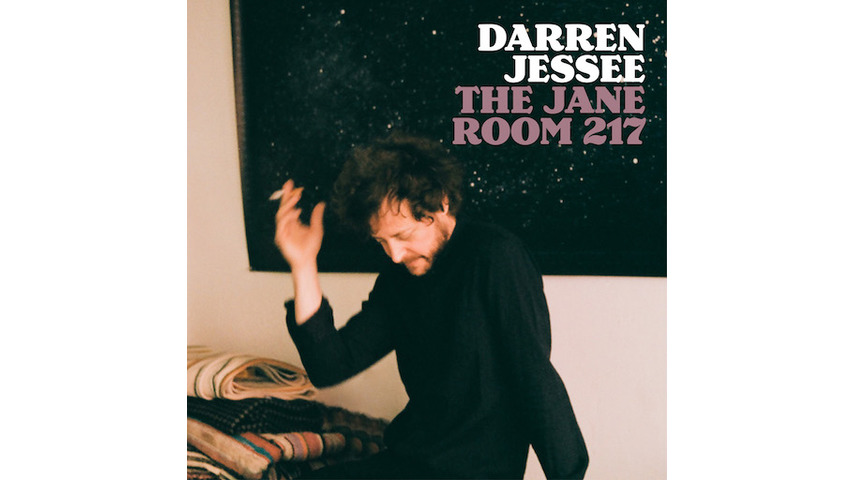
The solo debut from Ben Folds Five drummer Darren Jessee seems like it could get snapped in two if handled too roughly or blown halfway around the world if hit by a strong gust of wind. The 47-year-old musician plays and sings with the delicacy of a glass figurine or a thin sheet of rice paper. A far cry from the maximalist pop of his band HotelLights and the bombast of BFF. As it becomes more clear that Jessee is singing, primarily, about love and heartbreak, the weight of The Jane, Room 217 becomes almost too much to bear. He often directs those messages to some unnamed person in his life dealing with an emotional trauma, giving listeners a glimpse of the details but more often using his platform as singer-songwriter to urge them forward. The last two songs on the album, in particular, are like salves placed on the burned spirit of someone emerge from the wreckage of a relationship. Jessee allows us space to let the tears flow and not avoid the darkness. “Let the healing begin,” he sings, with hushed fortitude on “Go On Baby Break Down.” It’s good advice made all the more poignant by the soft musical cushion it is laid upon.
But as with the work of fellow heart on sleeve troubadours like Cat Power and Elliott Smith, it’s precisely that gentleness that gives Jessee’s work so much power. The appropriate response to the nine, mostly acoustic songs on this collection is to lean in close and search out every last detail. All the better to hear the quaver in his voice, the squeak of his guitar strings and a healthy amount of room noise (Jessee recorded the bulk of the album alone in his New York apartment). There’s a voyeuristic quality to it all, as if eavesdropping on the sessions. So much so that when the overdubbed mini orchestra swells into the mix, it’s almost startling, like being caught with your ear pressed against the wall.