Bob Mould recently released the song “What Do You Want Me To Do” from his new full-length album Sunshine Rock (out February 8th) and shared a first-ever behind-the-scenes look at his time in the studio. Never before has Mould allowed a camera crew to affect the creative process; now he shares these moments with the public as the Sunshine Rock Studio Session, which debuted with the new single. Read more about the track and the session at Rolling Stone.
Mould has also revealed that Screaming Females, Criminal Hygiene, and Will Johnson of Centro-matic have been added as support, along with the previously announced Titus Andronicus, for select dates on his upcoming tour spanning North America and Europe, which starts on Valentine’s Day.
From the album Sunshine Rock, out February 8th, 2019 on Merge Records.
Tim Presley’sWhite Fence has materialized: two years on from his solo missive, The Wink, the sense that something has cratered and someone has walked away, somehow alive, is heavy in the air. With I Have to Feed Larry’s Hawk, Tim Presley meets White Fence, and together, they move on.
The surface ofI Have To Feed Larry’s Hawkmay appear to the naked eye as an uncluttered expanse, but it’s hardly placid. In fact, the simple-sounding arrangements found throughout the record are garnished with unusual details which tend to grow gracefully odd and ghostly as they progress. It’s title track has an eerie, dreamlike quality, rolling through uncharted soul territory painting a certain vulnerability with Tim‘s unpredictable brush. The accompanying video for “I Have To Feed Larry’s Hawk” unnerves like a soothingly familiar alien encounter, seen through a lens, darkly. Directed by Ashley Goodalland painstakingly matching the surrealistic magnetism that so often encapsulates Tim’s songwriting, “I Have To Feed Larry’s Hawk” is a fitting introduction to this new album you should preorder now. Drink up the hypnagogic syrup and bask in the warm glow of Tim Presley’s White Fence!
Title song from Tim Presley’s White Fence’s 2LP/CS/CD “I Have to Feed Larry’s Hawk,” out January 25, 2019 on Drag City Records.
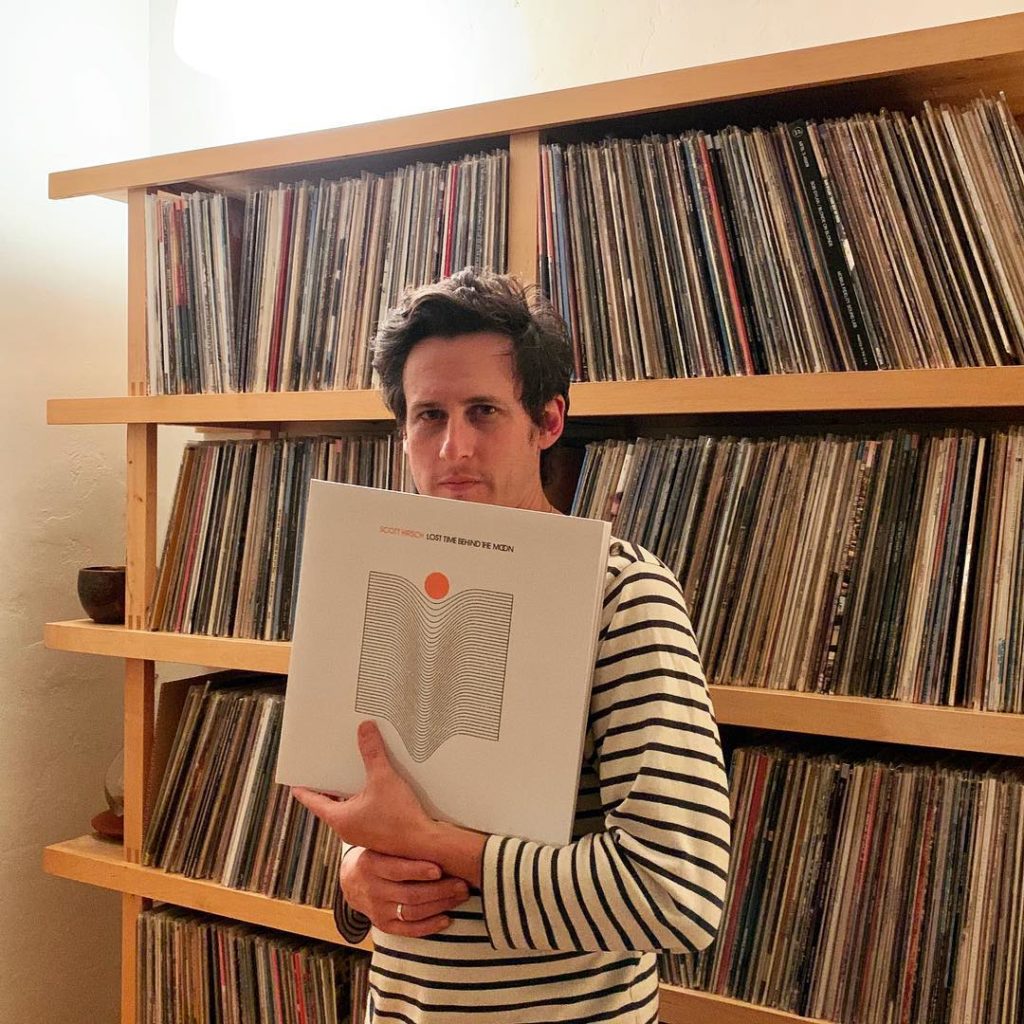
Much of Scott Hirsch’s musical attention over the past decade has been dedicated to the folk-rock ensemble Hiss Golden Messenger. He’s performed on, engineered, and produced several of the band’s records. As a solo artist, Hirsch brings some of the headier sensibilities of the earliest half of the Hiss Golden Messenger catalog into full bloom. His second standalone effort, Lost Time Behind the Moon, offers a fresh batch of songs that kick back to classic country, tempered with a satisfying dose of psychedelia.
The album’s anxious opening salvos—wriggling, warped guitar and a sparse drum-machine beat, followed by a warm blast of old-soul horns—offer immediate insights into its unwieldy style. Hirsch develops these jittery arrangements as extensions of the album’s overarching themes of love, comfort-seeking, and (as suggested by the title) the passage of time. “Nothing But Time,” for example, finds Hirsch ruminating on the past with familiar remember-when fondness, without becoming too beholden to the good or the bad: “She’s in my head too much now / Not too much in my dreams / And all these tales we’ve spun / They fell apart at the seams.”
The relaxed pace that Hirsch maintains across Lost Time Behind the Moon is a steadying force; Hirsch seems to approach his troubles with clear-headed thoughtfulness rather than scattered panic. Waves of pedal steel and pools of reverberating guitar lend a complementary sense of fluidity to the entire record, abetted by Hirsch’s cosmic lyricism on the lithe instrumental numbers “A Pair of Nines” and “Pink Moment.” By most accounts, reckoning with all the years we’ve lost, wasted—or even just passed without incident—is like fingering some existential hair-trigger. Hirsch’s record, by contrast, provides a comforting reminder of the inverse argument: it’s simply a matter of time.
Personnel:
Mike Coykendall: Drums, Harmonica and additional recording, Orpheo McCord: Drums, Mikael Jorgensen: Keys, William Tyler: Elec Guitar Karl Hunter: Saxophone, Jesse Siebenberg: Pedal Steel, Jimmy Calire: Organ, Lauren Barth: Vocals, Jade Hendrix: Vocals, Yair Evnine: Cello
It;s been a triumphant year for the Irish-quartet Pillow Queens ending recently with a sold-out homecoming show at Dublin’s musical-institution, Whelan’s. It was just rewards for what has been an incredible year for the band. It was a year that began rather wonderfully back in March, with the release of their second EP, State Of The State, a record that offers the perfect soundtrack to a lazy summer. The poppy riffs and delightfully intertwined vocal harmonies conjure images of those sunny days spent out in countryside retreats. However, dig a little deeper and there is an undertone of pain, anxiety and paranoia.
Following up the delightfully infectious debut ‘Calm Girls’ EP, This Irish all-girl indie collective Pillow Queens continue to tackle the most difficult of subjects with a wry, knowing smile. ‘State of The State’ delves into the frustrations of modern life and trying to battle against the system that has left us that little bit poorer. Those frustrations are bore out through this 4-track EP. On opener ‘Puppets’ vocalist Sarah Corcoran confronts the stress induced through striving to be a success. Working long hours just to make the slightest change to daily life but the constant knockbacks that ultimately chip away at a person’s mental state (“dead on my feet and down on my luck”).
Through the guise of these upbeat melodies and sunny harmonies it allows Pillow Queens to confront these issues in an altogether different manner. ‘Cuckoo’ takes the role of a rowing couple who are struggling to find an answer for “is this worth it anymore?” as Corcoran serenades a chorus to her figurative beau in the eye-rolling “I’m no better than you and I’m a cuckoo”.
Lead single ‘Favourite’ tries to make sense of managing those unmistakable highs while closer ‘Ragin’ offers an ode to simply letting things go and allowing grudges melt away. ‘State of The State’ is a beautifully crafted EP that offers heartfelt realism in every beat. State Of The State is a record of wonderful contrasts, the perfect harmonies and glistening production juxtaposing with the darkness of their lyrical content, as they tackle themes of mental health, sexuality and the ups and downs that life throws at us all. The state of the state was something crossing many people’s minds on both sides of the Irish sea this year, and few people documented their anger better than Pillow Queens.
‘This Must Mean Something Awful’ is the latest release from Edinburgh-based songwriter Leo Bargery; once more under the guise of Mt. Doubt. This latest, short collection of songs was written and recorded in the Edinburgh flat shared by Bargery and Mt. Doubt collaborator, J. Callaghan, who both produced and performed on TMMSA.
Despite the EP’s bedroom aesthetic, the DIY airiness and lo-fi sound lend themselves to the raw and exposed nature of Bargery’s songwriting here, cementing this latest offering as their most assured to date.
Lyrically the EP treads a familiarly bleak path, whether Bargery is running away to the Adriatic coast with fantasies of becoming Henry Miller or ruminating on relationships over bowls of miso soup the songs are deeply personal and expressive. Starting life at the beginning of 2015, Mt. Doubt is the project of Edinburgh-based musician Leo Bargery. Releases have gained praise from The Herald, The National, and many blog. Tipped as one of Vic Galloway’s ’25 Scottish Artists to Watch
Crake is the project of singer/songwriter Rowan Sandle who sings of ‘flora, fauna and the tough stuff’, backed up byestablished veterans of the Leeds indie scene (members from Mi Mye, The Spills and Fig by Four). ‘By the Slime Mould’ was Crake’s debut EP
All songs written by Rowan Sandle.
Performed by Rowan Sandle (guitar, vocals), Sarah Statham (bass guitar, backing vocals), Rob Slater (drums, backing vocals), Emily Ingham (keys, brass, backing vocals).
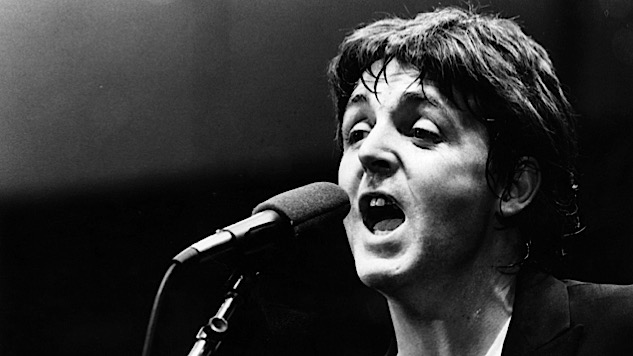
Perhaps the best known and most celebrated post-Beatle Paul McCartney album was his 1973 album with his band the Wings. Band on the Run was released 45 years ago today and it featured the famous title track and their hit single “Jet.” It was also McCartney’s last album on The Beatles-founded Apple Records label.
McCartney went into the studio with just his wife Linda and Denny Laine. In addition to playing bass, Keen to record outside the United Kingdom, McCartney had asked EMI to send him a list of all their international recording studios. He selected Lagos in Nigeria and was taken with the idea of recording in Africa. McCartney also played drums, percussion and most of the lead guitar parts himself. On arriving, it was discovered that the studio was below standard, and conditions in Nigeria were tense and difficult; the McCartneys were robbed at knifepoint, during which a bag containing unfinished song lyrics and demo tapes was taken.
McCartney played with his band Wings for a decade, releasing seven studio albums and a triple live album. By far, their most successful work was their third LP Band on the Run, and after a mixed reception from their first two albums, this record really was the blockbuster record that McCartney fans were hoping for.
On the fourth of July in 1990, McCartney performed a career-spanning set in the nation’s capital in support of his latest solo album Flowers in the Dirt. He performed “Band on the Run” in addition to solo songs and Beatle megahits and deep cuts. The setlist included “Hey Jude,” “Let It Be” and “Eleanor Rigby,” plus new tracks like “Put It There” and “My Brave Face,” the song he co-wrote with Elvis Costello. That night, McCartney played guitar, piano and bass and he was joined by his then-wife Linda McCartney (vocals, keyboards), Robbie McIntosh (guitar, vocals), Hamish Stuart (bass, guitar, vocals), Chris Whitten (drums) and Paul Wickens (keyboards).
The Beatles’ concerts were usually met with an unfortunate combination of lackluster P.A. systems and a horde of screaming fans, often resulting in poor audio quality. However, this 1990 McCartney recording is a much more hi-fidelity document of his greatness and celebrated back catalogue.
It remains McCartney’s most successful album and the most celebrated of his post-Beatles works.
These acclaimed Canadians return with an ambitious, allusive third album that achieves a new sonic clarity, depth, and range to match the effortless melodies and extraordinary writing. It’s the band’s most transparent and personal set of songs to date, in which singer Nigel Chapman interrogates social, psychological, and spiritual milieus for clues about the elusive nature of knowledge.
In one inconceivably complex cosmos, whenever a creature was faced with several possible courses of action, it took them all, thereby creating many distinct temporal dimensions and distinct histories of the cosmos. Since in every evolutionary sequence of the cosmos there were very many creatures, and each was constantly faced with many possible courses, and the combination of all their courses were innumerable, an infinity of distinct universes exfoliated from every moment of every temporal sequence in this cosmos.
“Brimming with passion & protest. Immediately familiar, yet bracingly distinct… one the most intriguingly idiosyncratic lyricists this side of Dan Bejar.” – Pitchfork
“One of the best rock bands in business today.” – The FADER
“One of the most fascinating songwriters we have today.” – Newsweek
“Purveyors of beatific, sun-drenched roadtrip tunes. Nigel Chapman is owner of one of the most beautiful voices I’ve heard in years.” – NME
“Unvarnished diarizing in lean, art-pop songs.” – Uncut
“Concise, understated alt-rock with cryptic, literate lyrics for Go-Betweens/Bill Callahan fans.” – MOJO
For their 40th Anniversary, we’ll re-issue our first two albums, Another Music In A Different Kitchen & Love Bites, viaDomino Recording Company on January 25th, 2019.Both Lovingly re-mastered, with newly curated booklets featuring a Jon Savage penned essay & unseen images.
Like many bands first albums, “Another Music In A Different Kitchen” collected material written by the group – in particular Pete Shelley and Steve Diggle – that had been amassed during the previous years, going back to 1974 and 1975. According to Tony McGartland in his Buzzcocks: The Complete History, the songs were sequenced in the order that they were written. The play through seems to bear this out: the album begins in fast protest punk and ends in the seven minute, definitely non punk length Krautrock of ‘Moving Away From The Pulsebeat.’
Most of Shelley’s songs on the first side concern the vicissitudes of romance, but the opener Fast Cars name drops US campaigner Ralph Nader in an ecological diatribe: “They’re so depressing going ’round and ’round/Ooh, they make me dizzy, oh fast cars they run me down.” ‘No Reply’, ‘You Tear Me Up’, ‘Get On Our Own’ and ‘Love Battery’ are sharp, short (all under two and a half minutes), speedy disquisitions on the tortures of interpersonal communication, love and lust played with a perfect balance between pace, abrasion and melody.
Side closer ‘Sixteen’ is something else. It’s longer and contains an avant-garde breakdown around two minutes in, recorded with each group member isolated and unable to hear each other. “It started off as a false ending,” Shelley told me in 1977: “All sloppy, and then it carries on longer so that people are thinking, “Oh I’ve just clapped but they’re not thinking — what’s up?” and then it comes back in again.” It was, as John Maher added, “A remnant of our chaos days.”
Would Shelley like to be sixteen again? “In some ways yes, in some ways no. The words go: “And I wish I was sixteen again/Then things would be such fun/All the things I’d do would be the same/But they’re much more fun/ Than when you’re twenty one.” Things like going for a drink — now the novelty’s worn off but the enjoyment’s still there. There’s no difference between doing something when you’re 16 and 22, except there is a difference if you’re doing it for the first time.”
Perhaps the most remarkable thing about the song is its rapid fire, venomous ending:
“And I hate modern music/Disco boogie and pop/They go on and on and on and on and on/HOW I WISH THEY WOULD STOP!” Never has a truer sentence been written about the true impetus behind Punk: not just boredom with progressive rock or dinosaur sixties acts but an intense disgust with mainstream pop music, which in 1976, the year of number one singles by Elton and Kiki, Abba, the Brotherhood of Man, Adge Cutler & the Wurzels, seemed not to have anything to do with teenage life and certainly nothing to do with excitement or the true teenage news.
The five songs on side two reflected the group moving away from simple love tropes into something more complex: as Shelley sang on ‘I Don’t Mind’, “Reality’s a dream.” Unlike the increasing militarism and violent posturing of the Clash, Buzzcocks aimed to explore male sensitivity and frailty (‘This pathetic clown’) – which in pop terms was still new, exactly what punk had set out to be. They began to use love songs as a conduit through which they could talk about other things: the nature of human relationships in a capitalistic society, the nature of reality itself.
Onstage Buzzcocks did not present as macho. Sometimes they’d try a group uniform, like the Mondrian shirts of early 1977, but mostly they just dressed as themselves: Diggle and Maher in various permutations of Mod wear, Paddy Garvey in leather jacket and skinny tie, and Shelley in a bewildering variety of styles. “It’s no good me wearing anything like that (bondage pants),” Shelley told me; “I’m just not the fashionable shape.” “You put those clothes on and you become a different character,” Diggle added: “I don’t feel myself, I feel like somebody else.”
‘Fiction Romance’ continues the themes of ‘I Don’t Mind’: male frailty, the commodification of emotions, the difference between reality and fantasy. Steve Diggle’s powerful ‘Autonomy’ spells out the true theme behind Punk: self determination. “It’s a discussion between two sides of your personality,” he told me; “It’s about discipline in yourself, like when you say you’d like to do something and you haven’t got control, you’re not autonomous. Like giving up smoking, which I’m trying to do now and it’s very difficult. I haven’t got control of myself.”
Shelley’s pell-mell ‘I Need’ tackles the capitalist perplex head on: “I used to only want but now I need/To get by with what I got but now I need.” After a fine bass led instrumental break, Shelley lays it out again: “I need sex/I need love/I need drink/I need drugs/I need food/I need cash/I need you to love me back.” ‘Moving Away From The Pulsebeat’ continues the breakneck pace: lasting at least three times the standard punk rock single, it features some stinging psychedelic solos and some rapid fire classic break beats from John Maher.
There’s a pause, then the riff of ‘Boredom’ returns: back to the beginning. Another Music in a Different Kitchen is a perfect circle: thirty five and a half minutes of tuneful, exciting and thoughtful music that stretched the boundaries of guitar pop music at the same time as it delivered on the group’s promise. It was a critical and a commercial success, reaching the UK album top twenty in March 1978 and staying there for nearly three months. But Buzzcocks had no time to rest on their laurels.
Behind the chocolate box cover, Love Bites is an album of paradoxes if not clashing opposites: real/imaginary, past/future, love/lust, connection/alienation, commerciality/experimentation. It’s to the group’s credit that they walk the high wire with ease: the attack is less punk, more measured and on occasion psychedelic, as befits the perceptual and philosophical nature of Shelley’s lyrics. The glossy pop star photo on the sleeve is matched by stranger photo realist portraits on the inner, by Robin Utracik of the Worst: Shelley in particular looks dishevelled, having just vomited when the source photo was taken.
Love Bites hit its moment. The reviews were good, and so were sales: it reached number 13 in the album charts, Buzzcocks’ best showing. They immediately went out on their fourth tour, Beating Hearts – supported by Subway Sect – which was marked in this year of Sham 69 by skinhead violence and stage invasions, definitely not what Buzzcocks were about. The fifth single of that year had already been recorded: ‘Promises’ and ‘Lipstick’, the latter of which used the same riff as Magazine’s debut ‘Shot by Both Sides’. Buzzcocks had reached their commercial peak, but Pete Shelley was deeply troubled.
Late 1978 was a harsh place, with competing styles and fads and the relentless pressure of rapid fire novelty that punk had set up. The pace was killing and on top of that the impetus of 1976 punk had faded. Shelley also felt that the original sense of community had gone: “Once we were in the music industry, people had become more diversified, there was nothing really to pull people together again.” More importantly, the constant touring was driving him mad: “It was a bit unnerving. When we did the Love Bites tour I was convinced by Richard not to leave the band. It was all getting too much for me.”
More superb psychedelic groove rock from Unknown Mortal Orchestra. Sex & Food explores compositional variety and evolving style; from songs that swing and smack to those that simmer and sooth.
Ever since they burst on the scene with blog-favourite ‘Ffunny FFriends’,Unknown Mortal Orchestra have wilfully proved themselves ready to wrong-foot all of us at each turn. Led by New Zealand’s Ruban Nielson, they followed up on that buzzy single with a fully-formed, self-titled debut in 2011 that proved the hype was well placed. Next, ‘II‘, saw them dabble with a mainstream sound while keeping their sound firmly rooted in their scuzzy origins, and 2015’s ‘Multi-Love’ was a glorious psychedelic romp through Prince-tinged pop. It seemed only natural for them to continue boogie-ing towards the dancefloor and build on ‘Multi-Love”s dancier elements.
On their fourth album, ‘Sex & Food’, you’ll be relieved to know that they’re thrown themselves into another bold new direction for a set of fuzzy, funky and fun set of songs that’ll be rattling around your head all summer long. Most notably, on the comforting ‘Honeybee’, Nielson croons a groovy ode to his daughter amid stellar production: “Careful like an orchid / love survives forever / age of paranoia / don’t be such a modern stranger / oh angel.” It may well be the best song they’ve ever done – crafting a tune that’s tender in the right places and a mightily fun summer jam in all the others.
While that song is as soothing a pair of fresh sheets, ‘Sex & Food’ features some of their trickiest and devilishly heavy work to date elsewhere. ‘Major League Chemicals’ squeals and squirms like Jimi Hendrix conquering Woodstock, and ‘American Guilt’ is a riff-heavy delight, as highly charged as anything by T-Rex or Black Sabbath. ‘Chronos Feasts On His Children’, meanwhile, conjures up images as grizzly as Francisco Goya’s 19th century painting of the ancient figure doing just that – “Chronos feasts on his children / like turning mango flesh.” This album is as lurid and unmissable as the title suggests.
‘Sex & Food’ comes with a handful of missteps, like the forgettable ‘Not In Love Were Just High’ and ‘This Doomsday’ in the album’s final third. But by and large, it sees UMO pushing their sound impressively, bending the rule book as crudely as they can before the spine breaks.