The Hold Steady have finally announced their long-awaited new album “Thrashing Thru The Passion”, which will be released on August 16th via Frenchkiss Records.
New York City based, The Hold Steady is fronted by singer/lyricist Craig Finn. The first single “Denver Haircut” immediately hits that ever-so-familiar The Hold Steady sound that has made us fall in love with them in the first place. Being their first new album in five years, this is the first album the current incarnation of the band that features both guitarist Steve Selvidge with returning keyboardist Franz Nicolay. The keys paired with that extra layer of guitar makes all the difference and the band sounds like they never ever left but also totally reinvigorated.
“Denver Haircut” is the first song taken from the upcoming album Thrashing Thru The Passion out on Frenchkiss Records,
We discovered the Frankie and The Witch Fingers at the Psych Fest in 2018 and they blew our brains out. They recently toured and left a good feeling with the presentation of their latest album ” ZAM “, a one-hour cucumber that combines many influences ranging from King Gizzard and The Lizard Wizard to Psychedelic Porn Crumpets , but with that Californian drop of a first-timer Ty Segall or the always effective Thee Oh Sees .
The quartet formed by Dylan Sizemore (voice and guitar), Shaughnessy Starr (drums), Josh Menashe (guitar) and Alex Bulli (bass) combine all this and more, wrapping your skull with songs that drag you to an ambiguous feeling of psychodelia and intergalactic dance in equal parts. Their band recently released their fifth album..
The main attraction of Frankie and the Witch Fingers is their explosive performance. With their rowdy and visceral approach to live shows, each member brings their own devilry to induce an experience of bacchanal proportions.
Using absurd lyrical imagery—soaked in hallucination, paranoia, and lust—the band’s M.O. strikes into dark yet playful territory. This sense of radical duality is astir at every turn, in every time signature change. Airy vocal harmonies over heavily serrated riffs. Low-key shamanic roots under vivid high-strangeness. Rambling stretches and punctuated licks. Cutting heads and kissing lips. All this revealing a stereophonic schizophrenia that has flowed throughout their body of work: an ebb & flow of flowery-poppy horror. The band’s latest incarnation is primed to break new sonic ground, edging into the funky and preternatural. Just when you think the trip couldn’t get any weirder, Frankie and the Witch Fingers cranks up the dial, shatters the mundane, and
summons new visions.
A new PUP video is always an event. Over the past six years we’ve seen the Toronto punks impaled, demolished, and nearly killed; covered, 8-bitted, and animated and today, we get a stylish crossover of their two preferred genres.
The new clip for “Sibling Rivalry” blends the body horror imagery and cartoon aesthetic of previous videos to riff on the anxieties of travel, with exaggerated safety brochures and warning signage to complement Stef Babcock’s furious lyricism inspired by a camping trip gone awry.
Additionally, the video offers autobiographical insight into the essential track from one of thebest albums of the year (so far), contextualizing the lyrics as stemming from an actual series of camping trips Babcock has taken with his sister. Things end a little sweeter than they began when the video concludes with a dedication to the band’s siblings, before a brief stills montage of PUP on tour together.
Things end a little sweeter than they began when the video concludes with a dedication to the band’s siblings, before a brief stills montage of PUP on tour together.
Long before the epic anthems, platinum albums and sold-out concert tours — before the boas, guillotines and outrageous urban legends, Alice Cooper merely was a peculiar unknown band, peddling a peculiar debut record. That LP was released 50 years ago this week on Frank Zappa’sStraight Records label. American rock band Alice Cooper, released on June 25th, 1969 . At this time, the name “Alice Cooper” referred to the band and not its lead singer Vincent Furnier, although he was also known as Alice Cooper. The album has a psychedelic flavour to it; the group had yet to develop the more concise hard rock sound that they would become famous for. Most of the tracks feature unusual time signatures and arrangements, jarring syncopation, expressive dynamics, sound effects, and an eclectic range of music influences. A few songs, such as “Levity Ball”, show the influence of Syd Barrett-era Pink Floyd, with whom the band hung out during the British group’s U.S. tour. Alice Cooper guitarist Glen Buxton stated he could listen to Barrett’s guitar playing for hours on end.
Formed during the mid-‘60s in Phoenix, Arizona, the Spiders later would change their name to Nazz. By 1968, the struggling combo now known as Alice Cooper, was residing in southern California, fighting for survival on the L.A. club scene, developing a reputation for being a “weird” band — a distinction that soon got them noticed by Zappa, as well as by their legendary manager, Shep Gordon.
From a distance, Alice Cooper’s musically meandering, psychedelic-sounding debut bared little resemblance to the rock-ribbed arena style that would define the band’s iconic latter work. However, upon examining the record’s 13 “tea leaves” a bit closer, the future could certainly be seen.
Despite the listed production team — Ian Underwood, Herb Cohen and Frank Zappa, manager Shep Gordon has stated that “Pretties for You” actually had no producer — and it shows. Gordon maintains further that the album merely was a hodgepodge of incomplete compositions recorded during the band’s in-studio rehearsal.
A commercial failure, Pretties for You barely grazed the bottom rung of the Billboard Top 200 — reaching only a disappointing #193. Additionally, none of the tracks ever have been performed by the band in concert since the release of their 1971 breakout album, Love It to Death.
The record opens with “Titanic Overture” a haunting, orchestrated, minute-long snippet that sinks abruptly and basically leads nowhere. Another brief interlude, “10 Minutes Before the Worm” is clunky and trippy. Possessing no real structure to speak of, it does provide a brief splash of melody, just before falling apart randomly. The coolest thing about “10 Minutes” is that it offers the first glimpse of the gloriously skitzo signature style of drummer Neal Smith — the musical force who would arguably deserve the MVP award on subsequent Cooper records.
Pretties for You soon erupts into a splendid dysfunctional fiesta in which several of the tracks often sound like songs. A stylistic collision between The Piper at the Gates of Dawn and Idlewild South, “Swing Low, Sweet Cheerio” is an authentic, harmonica-driven classic rock stand-out. Other noteworthy numbers include the occasionally melodic, lo-fi live track “Levity Ball” and “Apple Bush” — a near-radio-friendly tune nailed to the floor by bassist Dennis Dunaway and accented by lead vocalist Alice Cooper’s legit harmonica work. While less than hooky, “Fields of Regret” bursts with ear-splitting urgency, courtesy of guitarists Glen Buxton and Michael Bruce. Combined with Cooper’s oft eerie vocal, “Fields” lights a path showing where the band would travel musically in the not so distant future.
Of the record’s super-highlights, “Living” is an irresistibly buzzy delight, while the lead-off single, “Reflected” serves an adequate demo for what would become, “Elected,” the monster Top 40 hit from the band’s 1973 album, Billion Dollar Babies. And although it certainly is catchy, “Changing Arranging” woulda, coulda, shoulda delivered even more, had celebrated producer Bob Ezrin arrived on the A.C. scene two records earlier.
The artwork for this album is a painting by Edward Beardsley. It was originally hanging on the wall of the living room in Frank Zappa’s house, and his wife Gail Zappa stated that it was later stolen from them.
In sum, Pretties for You is as “weird” now as when it first was released, half a century ago. And while it may not be the preferred “go-to” record that most Cooper fans pop in the deck, but it remains a much-loved and well-respected work among the band’s most fervent followers.
“Pretties for You” Track Listing:
Side One
01. Titanic Overture (1:12)
02. 10 Minutes Before the Worm (1:39)
03. Swing Low, Sweet Cheerio (5:42)
04. Today Mueller (1:48)
05. Living (3:12)
06. Fields of Regret (5:44)
Side Two
01. No Longer Umpire (2:02)
02. Levity Ball (4:39)
03. B.B. on Mars (1:17)
04. Reflected (3:17)
05. Apple Bush (3:08)
06. Earwigs to Eternity (1:19)
07. Changing Arranging (3:03)
With their sublime second album, Palace have pulled off a rare pop trick. Songs steeped in darkness emerge in to light, from bleak situations spring fresh starts. Bathed in the band’s atmospheric alt-rock, the future feels brighter and more optimistic. “Life After” is both an album about loss and a manual to moving on. “I’m writing this song, to help you breathe again,” sings Leo Wyndham on the opening title track, a shimmering ode to survival. By the epic, seven minute-plus closer Heaven Up There, the theme of Life After is obvious.
“Hope,” says Leo. “Hope and positivity – seeing the light at the end of a long tunnel. It’s about going through tough times and coming out the other side.”
Palace didn’t start their second album with any plans in place. Buoyed by the reception of their debut, 2016’s So Long Forever, and near two years of sold-out shows and festival slots that won them fans worldwide, the London-based trio of former Dorset school friends had a new-found confidence that they were keen to capture on record.
Our sole aim was to write better songs “Some songs have an all-enveloping wall of guitars, others are stripped right down. It was about finding the right mood for each song, not settling on one sound.”
Some of the songs had been written on the road, referencing both relationships that had broken down and new bonds that had been forged. Others took shape in the studio and captured events that were taking place in the trio’s lives, often only realised in retrospect.
“A lot of the songs suddenly made sense later down the line,” says Leo. “With a couple, I wrote the lyrics, then they came true. Back home, we were all making new connections and having conversations that filtered in to the songs. I was going through a tough time and writing became my coping mechanism. It became a way of really helping me by giving me an outlet.”
Stef Chura’s Saddle Creek Records debut is resonating with several sites in our following. On this standout release, the Detroit musician wields “leg-cutting words, a six-string axe, and burnt electric production from Car Seat Headrest’s Will Toledo that twists rusty riffed bombast through flaming red hoops.”
Michigan’s Stef Chura is a formidable triple threat: She is a intense singer, A bracing guitarist, and a revelatory songwriter. You can hear Karen O of the Yeah Yeah Yeahs in her side-eyed snarl, Cat Power’s coiled intimacy in her quieter moments, Jack White and PJ Harvey in her modernist take on primitive instrumental violence and Nineties guitar-twisters like Silkworm, Pavement and Modest Mouse in the way her songs can often mutate and stretch beyond where you expect them to end up. But chalking up Chura to the sum of any sonic signposts doesn’t nearly do her second album justice. In every chirp, croak and holler, in every athletically mangled solo, she’s discovering her own voice, finding her own way to rewrite her world, and fool it too.
“Angie, are you tough enuh-uff/To let it go?” asks Mary Timony over her sugared electric guitar churn at the outset of Ex Hex’s latest, immortalizing a new rock’n’roll Angie with as much performative heartache and swagger as Jagger did, maybe more.
Ex Hex’s second album is about garage-rock thrust at its core, like prime Rolling Stones and their own debut Rips. Like that LP, it draws a through-line from the Shangri-Las to Blondie to Sleater-Kinney to, well, Ex-Hex. This time, though, pop-metal production shine adds a new meta-textual layer, conjuring visions of the CBGB Class of ‘76 upscaled to the arena rock of ’86, thanks in part to furniture maker-turned indie-rock production swami Jonah Takagi. It’s nothing but guitars, bass, and drums, but the sound is huge, bulked up with vocal reverb, choice pedals and amps.
Ex Hex have released the bizarrely glam new video for the track “Rainbow Shiner” from their latest album It’s Real, is out now via Merge Records.
The video’s animator, cult cartoonist M. Wartella, says of the project in a statement, “As artists, often our destructive tendencies come from the same place in our heads that creativity comes from, and that is what we aimed to capture in this psychedelic trip clip. Well, that and to rock your socks off! For real!!!”
From the album It’s Real, out now on Merge Records.
When a Black Midi song blares, it’s like an impossible mountain climb—as soon as you find a ledge to grasp, it’s an electrifying triumph, but once you’ve gripped it, it crumbles off and you’re left hanging above a frightening abyss. With Black Midi, it’s all about the pursuit. You’re on a mission to find a more bewildering moment than the last. Their unconventional time signatures, breakneck guitars, propulsive grooves, Geordie Greep’s eccentric vocals and Morgan Simpson’s exceptionally agile drumming results in these devious, indeterminate rock squalls that make them so enamoring. Following a much-hyped run at this year’s South By Southwest, Black Midi are unleashing their debut album, “Schlagenheim”, via Rough Trade Records on June 21st. It’s misshapen, unpredictable, and at times murky, other times freakishly precise. It’s an experimental rock carousel with both a charming craftiness and menacing grandiosity. When Black Midi were on tour in Paris. they spoke about the band’s songwriting process with Geordie Greep, their slippery sound and the polarizing reactions to their music.
It may be hard to write about, but Schlagenheim is a record you feel more so than anything else. Case in point: First track “953” features one of the hardest hitting lead guitar riffs in recent memory, an opening salvo that makes you want to drop everything. Within mere seconds of hitting play on their debut album, Geordie Greep and Matt Kwasniewski-Kelvin make their case as two of our most inventive contemporary guitarists, all while you try your hardest to keep time with a beat that will still elude you after 10 listens. There’s a high barrier to entry for Schlagenheim, a record by a band who refuses to meet you halfway. Pedantic and pretentious all the way through, Schlagenheim showcases why black midi are generationally great instrumentalists despite our inability to follow what they’re doing and why. Schlagenheim is like Captain Beefheart’s Trout Mask Replica in this way—it doesn’t always sound aurally pleasing, and it’s often tough to keep up, but it rewards those who try. By the end of “Ducter’s” anarchic pandemonium, you won’t know what hit you, but you’ll find yourself quickly returning to “953” for another go around of an album that showcases some of the most talented musicians around, coalescing behind an experimental, genre-less and extremely noisy sound to exceptional results. Schlagenheim is beyond weird. Schlagenheim is a legitimate one of a kind record. Schlagenheim is a masterpiece.
Super fancy David Bowie ‘The Mercury Demos’ box is out this Friday! Replica of the original tape box, 2 contract sheets, a print and 1 LP featuring a bunch of previously unreleased recordings!.
As part of the ongoing celebrations marking 50 years since David Bowie’s first hit, Space Oddity, and following the recentSpying Through A Keyholeand Clareville Grove Demos collections, The “Mercury” Demos are 10 early Bowie recordings captured live in one take to a Revox reel to reel tape machine in David’s flat in spring 1969, with accompaniment from John ‘Hutch’ Hutchinson on guitar and vocals.
The version of Space Oddity from the Demos, originally released with edits on the Sound and Vision boxset, is presented here in its true context for the first time. The other nine recordings on the album are all previously unreleased. In addition to Bowie originals, the session also includes the Roger Bunn composition Life Is A Circus(which features in an earlier demo version on the Clareville Grove Demos set) and the Lesley Duncan composition Love Song later recorded by Elton John for his Tumbleweed Connection album. David’s own Conversation Piece is announced as ‘a new song’ and Janine features a short nineteen second section sung to the melody of The Beatles’ Hey Jude.
The ‘’Mercury” Demos set comes in a replica of the original tape box and will feature 1 LP, a print, two photo contact sheets and sleeve notes by Mark Adams. The labels of the LP feature the same EMIDISC acetate styling as Spying Through A Keyhole and Clareville Grove Demos with the song titles in David’s own handwriting.
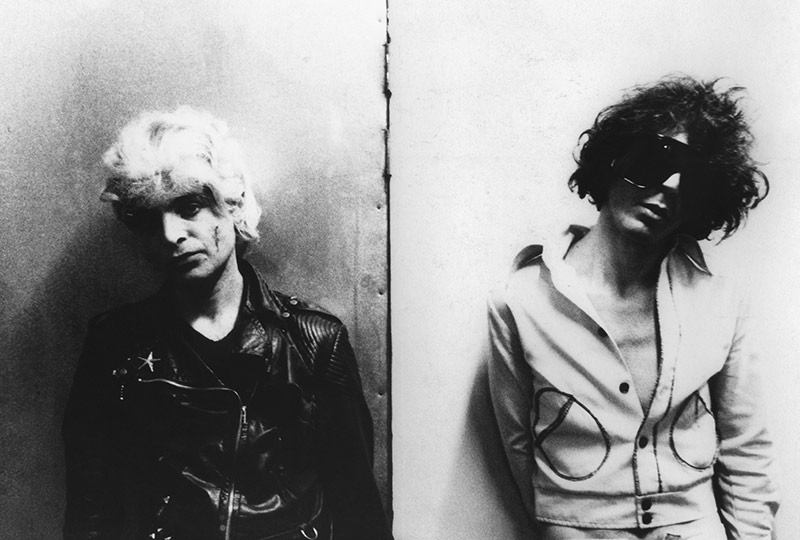
Debut album by electronic pioneers Suicide reissued on limited red vinyl, Comprised of Alan Vega on vocals and Martin Rev on electronics, the duo formed in the early ’70s, before coming to fame later in the decade as part of legendary NYC club CBGB’s punk scene.
Originally released in December 1977, their debut album was “described as the rock and roll version of Martin Scorsese’s neo-noir New York thriller Taxi Driver,” Suicide’s enduringly influential debut album, Suicide. A door opener for the guitar-less synthesizer bands of the 1980s and the electronic dance music of the 1990s, the disc continues to fascinate and inspire. Singer and lyricist Alan Vega and keyboard player Martin Rev formed Suicide in New York’s amphetamine-addled Lower East Side in 1970, a time and place they nailed in early songs such as ‘Methedrine Mary,’ ‘Speed Queen’ and ‘Junkie Jesus.’
The emblematic ‘Frankie Teardrop’ is a harrowing, 10-minute portrait of desperation in which Vega relates – or, rather, emotes – the blood-stained story of a young factory worker who is driven to madness and murder by poverty. Most of the album inhabits similarly grim territory, although ‘Cheree,’ a love declaration to a dominatrix, has a pretty tune. John Lydon memorably called the track “’Je T’Aime’ with tape hiss.”
In some ways, Suicide were a latter day incarnation of Lou Reed’s Velvet Underground, psychogeographers of the same edgy New York locales and chroniclers of the lives of outcasts, outsiders and unfortunates. Suicide was followed a string of consistently inventive studio albums, ending with American Supreme in 2002, and Vega and Rev continued to perform together until shortly before Vega’s death in 2016.
Co-produced by Ramones producer Craig Leon and Red Star Records founder Marty Thau, Suicide packs a payload equivalent to a dozen Greek tragedies rolled into one, with Vega periodically blending eruptions of Diamanda Galas-like screams and wails with the frantic rockabilly of mid-1950s Gene Vincent, his all-time hero.
Originally released in December 1977, all seven tracks have been remastered for this new reissue on red vinyl, with an accompanying 12″ print.
Suicide’s 1977 self-titled debut LP is being reissued on vinyl, this July via Mute/BMG.