Sofia Verbilla has always been good at telling stories in the songs she makes as Harmony Woods. On her 2017 debut Nothing Special and its 2019 follow-up Make Yourself At Home, the Best New Band honoree occupied narratives that let her navigate thorny situations from a distance, like on her pair of “Best Laid Plans” songs that depicted two characters who know a relationship has failed but are unwilling to meet its inevitable end.
Her third album, “Graceful Rage” which is being released this week is a good deal more personal, or at least it seems that Verbilla is finally ready to let down the shield of Harmony Woods, a name-like moniker that allows for some distance from what she’s singing about. From its very first track, Graceful Rage is withering and direct. “I’m tired of being led to believe things aren’t what they seem when they’re standing right in front of me,”
Philadelphia’s Harmony Woods surprise-released a new album, “Graceful Rage”, on Friday. Produced by Bartees Strange, the newest LP follows 2019’s Make Yourself at Home. Power courses through Harmony Woods’ latest creation, an album that songwriter Sofia Verbilla describes in a statement as “a record about confronting the emotional rubble that this trauma leaves in its wake.” “Graceful Rage” the band’s third LP basks in the sheer magnitude of letting revelations and recoveries blossom on their own terms.
Verbilla lyrically explores the great disappointment of having a personal idol fall from grace in your mind’s eye, and the rush of emotions that follows. Standout tracks include the haunting and raw ballad “Easy” which opens with chamber choir-esque layered vocalizations from Verbilla. The impassioned pop-punk of “God’s Gift to Women” is particularly scathing, with notable one-liners like “You’re not the person the world person the world pretend you are” and “I watch the skeletons fall / this is your wrecking ball.” Potent and gripping, Graceful Rage is an apt name for a record that so masterfully turns Verbilla’s bitterness into a work of art.
She frequently pulls from the geography of Philadelphia, in Rittenhouse Square with its cringing pigeons or the Fishtown row homes she walks by while trying not to fall apart. She likens public perception and her own relationships to cities, seemingly impenetrable fortresses until they come crumbling down. “Your city’s not as bright as you think/ Demons hidden inside all the buildings,” she sings on “God’s Gift To Women,” a song directed at that features some venomous put-downs like: “Keep writing those records about how you know best/ Like you’re a walking fucking copy of Infinite Jest.”
Produced by Bartees Strange, the songs alternate between sounding like billowing thunderclouds and the calm after a rainstorm. Verbilla’s voice has never sounded better and neither have the backdrops she surrounds herself with, filled with searing guitars and bashing drums.
All songs written by Sofia Verbilla Vocals/Guitar/Piano – Sofia Verbilla Bass – Josh Cyr Drums – David Juro Additional Guitar – Bartees Strange
Cello – Kate Rears Horns – Brian Turnmire Lap Steel – Graham Richman
New Zealand’s Yumi Zouma continue to make beautiful, gentle indie-pop worth swooning over on album number three “Truth Or Consequences”.
Their dreamy aesthetic remains intact, but there’s a heightened sense of confidence in the group’s songwriting and the way these songs are presented that makes it stand out from their past work. Truth or Consequences stems from sessions in Los Angeles, London, and Christchurch, where Yumi Zouma actively took a collegial approach, often working note-by-note, to ensure the foundations of the album reflected a sense of togetherness.
n the early 2010s, the members of Yumi Zouma spent time together on a New Zealand street that gave its name to their first single, “The Brae.” After the 2011 Christchurch earthquake destroyed that street and much of the city, its members took off for other parts of the globe and soon began writing their first songs over email.
As a result, the band was born, and distance became a recurring theme in Yumi Zouma’s work. This makes sense given the far-flung cities the group of musicians currently call home: New York City for Burgess, London for Ryder, Wellington for Campion, and Simpson remaining in their native Christchurch. Of course, distance can also manifest metaphorically, and it’s in these figurative chasms that Truth or Consequences, Yumi Zouma’s third album and first for Polyvinyl, finds its narrative: romantic and platonic heartbreak, real and imagined emotional distance, disillusionment, and being out of reach. There are no answers, there’s very seldom closure, but there is an undeniable release that comes from saying the truth, if only to oneself.
“In the age we’re living in, there’s an emphasis on making things clear cut” says Burgess about the album’s title. “But in life and in art, nothing is ever that definitive. The truth is usually in the grey zones, and I think that’s so much of what we were trying to explore and understand on this album.”
Whilst exploring these realms, Yumi Zouma deliberately pursued a deeper sense of collaboration in order to craft a record that reflects the bond between them. Produced by the band and mixed by engineer Jake Aron (Solange, Grizzly Bear, Snail Mail), Truth or Consequences stems from sessions in Los Angeles, London, and Christchurch, where the band actively took a collegial approach, often working note-by-note, to ensure the foundations of the album reflected a sense of togetherness.
“We wanted to make the song writing process as egalitarian as possible. Completely sharing the process helped us feel like we were capturing a purer sense of atmosphere,” says Ryder.
Much like how the first moments of a new year can usher in a wave of emotions, the first notes of Truth or Consequences wash over the listener with the contemplative yet rapturous opener “Lonely After,” in which Simpson softly sings “I was embarrassed when I knew who I was, so wild and zealous and overly down for the cause.” As Burgess recalls, it’s about “that pit in your stomach when you start to question your own identity,” who wrote the first lines of the song one lonely New Year’s Eve, during the nebulous beginnings of a budding relationship.
Lead single “Right Track / Wrong Man” exhibits a Balearic tempo and bass-heavy energy that belies its underlying tension. Simpson reveals, “At the time I was living with a boyfriend who was quite lovely, but there wasn’t that passion or excitement that you imagine for yourself when you’re young. That song is about accepting that something’s not working, and deciding to just be on your own for a while.” Album centerpiece “Cool For A Second” coalesces the motif of isolation and its ensuing fallout into a letter to a past connection: Whilst on “Truer Than Ever,” the band draws inspiration from the classics to radiate a brazen spirit of perseverance. “I love the duality in a lot of disco songs, where they’re incredibly upbeat, but there’s real frustration in the lyrics – sort of like, ‘Nothing’s going the way I want, but I’ve got to deal with it any way I can,’” Simpson says.
Throughout, Simpson’s voice gives weight to whispers of impressionistic poetry, shielding hard truths with soft tones, while Burgess’ vocals reveal a rarified dimension of raw and lucid romanticism. With this being the first Yumi Zouma album to feature live drums, courtesy of Campion, Truth or Consequences is a testament to the success of the band’s approach – a unified body of melody that mines the spaces in between.
It’s a gorgeous record whose depth has only grown richer as we’ve been able to spend more time with it. As we begin to enter spring it feels only right to revisit this hopeful, loving album made by long-distance friends. I hope you put it on and take a long walk out in the sunshine.
The quaint, atmospheric synthpop of ‘Southwark’ is hugely charming, the upbeat-but-gentle rollick of ‘Cool For A Second‘ has one of the best choruses the band has conjured up yet and there’s an immediacy to ‘Right Track / Wrong Man’ that makes it immediately endearing.
Some might say there’s a vintage feel to Yumi Zouma’s brand of synth-heavy indie-pop, but it’s more of a timeless feel. These songs shimmer now and will no doubt age beautifully.
“Are We Not Men? A: We Are Devo!” is the debut studio album by the American new wave band Devo. It was originally released in August 1978, on the labels Warner Bros. and Virgin. Produced by Brian Eno, the album was recorded between October 1977 and February 1978, primarily in Cologne, Germany,
The album received somewhat mixed reviews from critics and peaked at No. 12 on the UK Albums Chart and No. 78 on the U.S. Billboard chart. Recent reviews of the album have been more uniformly positive and the album has charted on several retrospective “best of” lists from publications including Rolling Stone, Pitchfork Media and Spin.
On May 6th, 2009, Devo performed the album live in its entirety for the first time as part of the Don’t Look Back concert series curated by All Tomorrow’s Parties. On September 16, 2009, Warner Bros. and Devo announced a re-release of Q: Are We Not Men? and Freedom of Choice, with a tour performing both albums
In 1977, David Bowie and Iggy Pop received a tape of Devo demo songs from the wife of Michael Aylward, guitarist in another Akron, Ohio band, Tin Huey. Both Pop and Bowie, as well as Brian Eno and Robert Fripp, expressed interest in producing Devo’s first release. At Devo’s New York debut show in 1977, Bowie proclaimed that “this is the band of the future, I’m going to produce them in Tokyo this winter.” Eventually, Eno was chosen to produce the album at Conny Plank’s studio located near Cologne, Germany. Bowie was busy with filming Just a Gigolo but helped Eno produce the record during weekends. Two tracks, “Come Back Jonee” and “Shrivel-Up”, were recorded at Different Fur in San Francisco, California; proprietor Patrick Gleeson co-engineered the album. All tracks were mixed at Plank’s studio. Since Devo was without a record deal, Eno paid for the flights and studio cost for the band, confident that the band would be signed to a record contract. In return for his work on the album, Eno asked for a share of any subsequent deals.
The recording sessions were a source of frustration for Eno and Devo. Eno found the band unwilling to experiment or deviate from their early demonstrations of recorded songs. Devo later admitted that “we were overtly resistant to Eno’s ideas. He made up synth parts and really cool sounds for almost every part of the album, but we used them on three or four songs.” A majority of the tracks were later remixed by David Bowie; excluding “Space Junk”, and “Shrivel Up”, which had Eno’s production still intact.
After 16 years of eligibility, Devo snagged their first Rock & Roll Hall of Fame nomination in 2018.
It’s a long time coming, say fans. “It took this long for Devo to be nominated simply because their highest charting song, “Whip It,” only got to No. 14, and the history of this process holds that a band gets in either, and mostly, because of popular, commercial success or singular artistic influence,” notes David Giffels, co-author of the band biography Are We Not Men? We Are Devo!
“Critics had a hard time figuring Devo out initially, and they were constantly subverting both the commercial and critical systems. So, they sort of undermined the usual expectation of a rock band in terms of its route through the Rock Hall sausage machine.”
Gerald V. Casale and Mark Mothersbaugh were art students moonlighting in the music world while attended Kent State University. They were there on May 4th, 1970, when the National Guard shot and killed four college students and injured nine others during a protest. De-evolution was happening before their eyes.
The band’s line-up solidified by 1976 when Casale and Mothersbaugh were joined by their respective brothers, both named Bob, and drummer Alan Myers. From there, they slowly infiltrated the mainstream, influencing generations of artists along the way.
They Made One of Rock’s Best Debut Albums, David Bowie famously announced during a 1977 gig at Max’s Kansas City that he was going to produce Devo’s debut album, and that helped secure the band a major-label record deal. Brian Eno ended up working on most of that LP, 1978’s Q: Are We Not Men? A: We Are Devo!, which almost immediately found fans, as well as many critics, with its herky-jerky interpretation of the Rolling Stones’ “(I Can’t Get No) Satisfaction.” The album’s other tracks showed that there was much more to them. “Jocko Homo” and “Uncontrollable Urge” revealed punk roots, while other tracks showed off their experimental nature.
Devo were not Just a Band but an Art Project, A photo of golfer Chi Chi Rodriguez was used for the early “Be Stiff” single as a comment on commercialism. They made a short film all about their theory of de-evolution. And they they were one of the first American bands to embrace video as a new medium. “They pioneered the use of video, predating MTV, and created a new kind of art — the music video — within the rock ‘n’ roll genre at a time when very few new frontiers were left,” says Giffels. “Devo owned the art of video, uniquely and with complete authority.”
They Were Sincere About That De-Evolution Theory, Mark Mothersbaugh and Gerald Casale believed that modern society hit its peak and was making a downward slide in the form of de-evolution — that mankind was regressing biologically and as a society. This increased conformity among the masses led to the group’s famous yellow hazmat stage outfits, stiff organized movements and songs that embraced and mocked cultural norms. “Let’s be honest, is there any question that de-evolution is real?” Casale asks UCR. “Did you think we were joking?”
They Managed to Push Their Way Into the Mainstream, Even though their debut album was certified gold, 1980’s Freedom of Choice was even bigger, selling more than a million copies, thanks, in part, to the hit single “Whip It.” Over the years, they’ve released studio LPs, live records, compilations, EPs, singles and a soundtrack, and are one of the most easily recognized bands from the era. They have some high-profile fans, including Neil Young, who included the band in his 1982 movie Human Highway. And Mark Mothersbaugh and Gerald Casale have worked on, separately and together, music used in commercials, TV shows and movies, including Pee-wee’s Playhouse, a Diet Coke ad and several of director Wes Anderson’s acclaimed films.
Their Influence Is Super-Huge, Devo’s famous fans and early champions include David Bowie, Brian Eno and Neil Young, but their influence since then has included bands like Nirvana, Pearl Jam and Arcade Fire, all of whom have covered the group onstage or on record. Their robotic rhythms can be heard in countless punk, New Wave, college rock and indie-rock artists throughout the decades. “If you were going to identify a band from the New Wave genre, which certainly deserves a presence in the hall, Devo defined the sound and the look in a quintessential way, and with more artistic and cultural depth, in my opinion, than any other candidate,” says Giffels.
Few albums have announced a band as sufficiently as Q: Are We Not Men? A: We Are Devo. The record says everything you need to know about the band Devo, and while in 2021 the prospect may feel a little passe, in the late seventies, the mere concept of Devo was revolutionary. For that reason alone, the band go a long way to define the very nature of post-punk music.
Not necessarily the band’s best album, Are We Not Men? is certainly their seminal moment in musical history. It was this album that allowed a generation of music lovers to cock their head sideways and attack rock music with a brand new view. Devo are undoubted pioneers of the post-punk genre and kept the keen spirit of experimentation at the forefront of everything they did.
Devo
Mark Mothersbaugh – lead and background vocals; keyboards; guitar
Gerald Casale – lead and background vocals; bass guitar; keyboards
Bob Mothersbaugh – lead guitar; backing vocals
Bob Casale – rhythm guitar; keyboards; backing vocals
Jenny Owen Youngs grew up in the forests of northern New Jersey and now lives in coastal Maine, where she spends much of her time writing with and for other artists, making podcasts, and working on her next record. Her songs have appeared in Bojack Horseman, Weeds, Suburgatory, Switched at Birth, and elsewhere. If you need her, she’s probably in Skyrim right now. The indie singer-songwriter Jenny Owen Youngs last fall when she covered Katy Perry’s “Teenage Dream” in the lead-up to her Night Shift EP and Blink-182’s “Dammit” for a compilation featuring 27 covers of Blink-182’s “Dammit.” Since then she’s launched a new band called L.A. Exes, and today she’s back with a new solo EP.
Echo Mountain features a smattering of original singles plus a demo and a remix. It sets a mood throughout, soft and meditative and warm, suggesting Youngs is still going strong a decade and a half into her career. The only previously unreleased track on the EP is “Dungeons And Dragons,” which Youngs says “is about using a role playing game as an early escapism tool. It’s also about the fear of turning into the worst parts of the people who raise you.” Hear that one and the rest of Echo Mountain.
Even if you don’t know Black Pumas by name, you’ve probably heard “Colors,” the Austin band’s now nearly ubiquitous hit single. “My friends call me and tell me all the time, ‘I can’t get away from you, dude. I can’t even go grocery shopping,’” says singer Eric Burton with a laugh.
Burton wrote the song on his uncle’s rooftop overlooking Alamogordo, New Mexico, years before he ever recorded it. The dynamic frontman went on to busk on street corners up and down the West Coast before ultimately landing in Austin and hooking up with bandmate Adrian Quesada to form Black Pumas in 2017.
Recorded direct to acetate – all live, no overdubs – “Capitol Cuts – Live from Studio A” captures a powerful moment in time. After months of cancelled shows, Black Pumas went to Los Angeles this past fall and laid down eight explosive tracks at the famed Capitol Studio A. The recording brims with pent-up energy, nearly bursting through the grooves on the expansive and mind-blowing seven-minute rendition of “Colors.” After landing a Grammy nomination for Best New Artist last year, the duo gained even wider exposure with their performance during the inauguration festivities in January, and at this year’s Grammys on March 14th, they’re up for three more nominations—including record of the year and album of the year.
While “Colors” has put the duo on the map, their inventive takes on such numbers as Tracy Chapman’s “Fast Car” or the Beatles’ “Eleanor Rigby” have offered new fans an alternate introduction to the band’s unique sound. Burton’s vocals feel at once familiar and futuristic: He says he was influenced from an early age by greats like Nat King Cole and Frank Sinatra, but you’re just as likely to hear trippy sound effects and distortion as you are soaring high notes. And Quesada’s dexterity on the guitar lends an almost jam-band-like feel to many of the tracks, which beg for a live audience—even if, right now, the pair has had to settle for livestreams and late-night appearances.
A few weeks later the song would receive a Grammy nomination for Record of the Year.
Pre-order the limited edition ‘Morning Sun’ vinyl from the ATO shop, out everywhere physically June 4!
If you’re in need of some wise words and a healing space, look no further than Esther Rose, How Many Times, out on Father/Daughter Records later this month, is a gorgeous post-breakup album that maturely leans more into growth than into the temptations of bitter revenge. “You kinda only get your heart smashed wide open once. It’s just that bad once,” Esther said, calling from New Mexico. “And then everything after that is how you recover and how you cope and how you learn.”
Esther Rose was in perpetual motion when she wrote “How Many Times”. In the span of two years, she moved three times, navigated the end of a relationship, and began touring more than ever. The New Orleans-based singer-songwriter used that momentum while she penned her third studio album. That’s why, as the album title’s nod to the cyclical nature of life implies, there’s a rush that accompanies How Many Times as if you’re experiencing an awakening, too.
Rose expands her alt-country sound into a blossoming world of folk pop and tender harmonies. A collection of complete takes recorded live to tape with rich instrumentation, soul-tugging hooks, and resonating vocal melodies, How Many Times carries you into the room in which it was made. There to help realize this was co-producer Ross Farbe of synthpop band Video Age, who Rose also credits for bringing a stereo pop glow to these new songs.
Available to buy on CD, clear LP and a very special Dinked Edition (selling out fast!), How Many Times is an album which looks outside of country music, sitting quite comfortably next to contemporaries like The Weather Station and Cassandra Jenkins as well as Joni Mitchell, Neil Young (American Stars and Bars era) and Esther’s beloved Hank Williams.
We’re delighted to let you know that Esther Rose’s new album How Many Times is out now.
“These songs feel lived-in” – BrooklynVegan
“Rose exudes confidence and she’s unafraid to get self-referential” – Rolling Stone
The third studio album from New Orleans-based folk pop singer-songwriter Esther Rose, we have “How Many Times” here on transparent teal vinyl.
Eight years after Stone’s last solo record, Sixty Summers arrives as a powerful rebirth for one of Australia’s most prolific artists. Emerging from the wildernesses of folk and indie-rock, with “Sixty Summers”Stone dives headfirst into the cosmopolitan, hedonistic world of late-night, moonlit pop. The stunning album brings us the grit and glitter of the city, with all its attendant joys, dangers, romances and risks.
It is Stone at her truest, brightest self, a revered icon finally sharing her long, secret love affair with this vibrant and complex genre. Recorded sporadically over five years from 2015 to 2019, Sixty Summers was shaped profoundly by Stone’s key collaborators on the album: Thomas Bartlett, aka Doveman, and Annie Clark, the Grammy-winning singer, songwriter and producer known as St. Vincent. Bartlett and Clark were the symbiotic pair Stone needed to realise her first pop vision.
A wizard of production and song writing, Bartlett helped coax Sixty Summers’ independent, elemental spirit from Stone, writing and recording over 50 demos with her at his studio in New York. Itself a thoroughfare for indie rock luminaries, some of whom, such as The National’s Matt Berninger and Bryce Dessner, ended up on the album, Bartlett’s studio was perfect fertile ground for Stone’s growth.
Julia Stone’s forthcoming album ‘Sixty Summers’, released 30th April:
Last month, Ryley Walker announced a new album, “Course In Fable”, his first proper full-length album since 2018’s Deafman Glance, though there have been quite a few excursions from Walker since that. Its lead single “Rang Dizzy” and today Walker has shared a new track from the album called “Axis Bent.” It has squiggly guitars and a roiling rhythm and Walker’s wondering poetry: “When I wrote the song would breathe/ It was the best I’d ever had/ Jammed up on axis bent/ It was the sidestep of relief.”
Releases April 2nd, 2021
Ryley Walker- Guitar/Vocals Andrew Scott Young – Bass/Piano Bill MacKay – Guitar/Piano Ryan Jewell – Drums/Percussion John McEntire – Engineer/Mixing/Synth/Keys/Vibraphone Douglas Jenkins – String Arrangements/Cello Nancy Ives – Cello
It’s nearly a decade since William Doyle handed a CD-R demo to the Quietus co-founder John Doran at a gig, who loved it so much he set up a label to release Doyle’s debut EP (as East India Youth). Doyle’s debut album, “Total Strife Forever”, followed in 2014, as did a nomination for the Mercury Music Prize. A year later, he was signed to XL, touring the world and about to release his second album – all by the age of 25.After self-releasing four ambient and instrumental albums, Doyle’s third full-length record – and the first under his own name – Your Wilderness Revisited arrived to ecstatic reviews in 2019:
Line of Best Fit described it as “a dazzlingly beautiful triumph of intention” and Metro declared it an album not only of the year, but “of the century”. Just over a year later, as he turns 30, Doyle is back with “Great Spans of Muddy Time”. Born from accident but driven forward by instinct, “Great Spans” was built from the remnants of a catastrophic hard-drive failure. With his work saved only to cassette tape, Doyle was forced to accept the recordings as they were – a sharp departure from his process on Your Wilderness Revisited, which took four long years to craft toward perfection. “Instead of feeling a loss that I could no longer craft these pieces into flawless ‘Works of Art’, I felt intensely liberated that they had been set free from my ceaseless tinkering,” Doyle says.“ The album this turned out to be – and that I’ve wanted to make for ages – is a kind of Englishman-gone-mad, scrambling around the verdancy of the country’s pastures looking for some sense,” says Doyle. “It has its seeds in Robert Wyatt, early Eno, Robyn Hitchcock, and Syd Barrett.” Doyle credits Bowie’s ever-influential Berlin trilogy, but also highlights a much less expected muse: Monty Don, presenter of the BBC programme Gardener’s World, Doyle’s lockdown addiction.
“I became obsessed with Monty Don. I like his manner and there’s something about him I relate to. He once described periods of depression in his life as consisting of ‘nothing but great spans of muddy time’. When I read that quote I knew it would be the title of this record,” Doyle says. “Something about the sludgy mulch of the album’s darker moments, and its feel of perpetual autumnal evening, seemed to fit so well with those words. I would also be lying if I said it didn’t chime with my mental health experiences as well.” Lead single “And Everything Changed (But I Feel Alright)” is representative of the album as a whole: eclectic and unpredictable, but also playful and properly danceable. On top of the gently pulsing electronics, soothing harmonies and glowing melodies, there’s a ripping guitar solo that ricochets around the song like a pinball. “I wanted to get back into the craft of writing individual songs rather than being concerned with overarching concepts,”
Doyle says. Elsewhere there’s the synth pop strut of “Nothing At All”, pulsating static on “Semi-Bionic”, incandescent synths and enveloping soundscapes in “Who Cares”, and the ambient glitch groove of “New Uncertainties”.
Great Spans of Muddy Time is a beautiful ode to the power of accident, instinct and intuition. The result, however, is far from an anomaly: this celebration of the imperfect album is one that required years of honed craft and dedicated focus to achieve, “For the first time in my career, the distance between what I hear and what the listener hears is paper-thin,” Doyle says. “Perhaps therein reveals a deeper truth that the perfectionist brain can often dissolve.”
Taken from the album, “Great Spans of Muddy Time”, out 19th March ’21 on Tough Love Records.
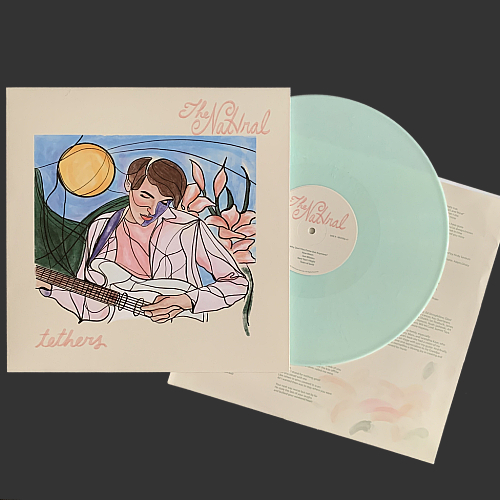
Former Pains of Being Pure at Heart leader Kip Berman will release the album “Tethers”, his solo debut as The Natural, on April 2nd via Kanine Records. Warm and driven by Hammond organ, Kip says, “It’s a song about how you don’t always want what’s for the best– and neither do I.”
As the frontman of The Pains of Being Pure at Heart, Kip Berman wrote songs about the thrills and ills of young adult life with the care and concern of a cool older sibling. The long-standing New York City indie-pop group disbanded soon after releasing their final record, The Echo of Pleasure (2017), and Berman found himself at a creative crossroads. He wanted to keep making music, but the themes and sounds he was interested in had shifted; it felt time for a course correction.
Enter Tethers, Berman’s first solo record as The Natvral, which finds him coming to terms with the changes in his own life by observing those transformations in the people he’s known – a self-portrait in relief. In the time between making his last record with his former band, Berman’s life and location have shifted dramatically, as he welcomed a daughter, then a son, and moved from Brooklyn to Princeton. With his new identity as a parent came a crucial shift in how he approached music. Gone were the months in a cramped tour van and late nights rehearsing with his band in a windowless warehouse space. In its place were amorphous, suburban afternoons playing whimsical songs to two young children, while writing music for himself after their bedtime.
But in this time away from the life of a touring artist, Berman discovered an unvarnished, broken folk rock sound– a marked departure from his previous work. The Natvral, the solo project that sprung up in the final years of Berman’s dearly departed Pains Of Being Pure At Heart, has thus far shared two singles from official debut album Tethers: “Why Don’t You Come Out Anymore?” and “New Moon.” Today he adds a third advance track.
As explained in promo materials for the album, “Sun Blisters” is about the freedom that comes with embracing your fate as a fuckup, and how that counterbalances with the emotional consequences of living in the margins. “In the end maybe I was wrong/ Laughing where only tears belong,” Berman sings. “But love to you’s just a pretty song/ And I’m a sour note.” It surges along with the energy of a Blonde On Blonde classic — not to raise your expectations too high, but think of something like “One Of Us Must Know (Sooner Or Later).” It’s strengthening the case that Berman can write great songs in just about any historical rock milieu you throw at him.
Berman says of “Sun Blisters”: “It’s a song about how you don’t always want what’s for the best– and neither do I.” Stereogum says “I’m loving these Dylan-inspired bangers from Kip Berman!”









 The Fat Angel Sings