Ode To Joy. Featuring 11 new songs written and produced by Tweedy and recorded by Wilco at The Loft (Chicago, IL) in January 2019, Tweedy and Glenn Kotche were the launching pad from which most of the songs on Ode To Joy materialized – Kotche’s percussion propels the music forward while Tweedy’s measured words flesh out the cleared paths. As a result, the album is comprised of “really big, big folk songs, these monolithic, brutal structures that these delicate feelings are hung on,” notes Tweedy. Across the entire album, drums pound and plod with a steady one – two pulse, meant to mimic the movement of marching – a powerful act utilized on both sides of the authoritarian wall. There’s also a sense of comfort that comes with the rhythmic marching sound.
The album largely does away with conventional rock and folk song structures; instead, it embraces spare, impressionistic arrangements—often led by booming, elemental percussion—to create one of the moodiest and most haunting records in Wilco’s catalog, more movingly understated than the experimental Yankee Hotel Foxtrot, and darker than the uptempo Americana of Sky Blue Sky. “For this record, we tried to intuit rock music pretending we hadn’t heard any…we’d tell each other what we wanted to hear,” Tweedy says. And while he is quick to acknowledge that the band didn’t exactly “reinvent rock music,” it does sound, to a certain degree, like they reinvented Wilco. As Ode to Joy makes clear, from the tense and restrained opening track “Bright Leaves”—which hangs glimmering sonic textures on thumping drums like ornaments on a Christmas tree—all the way through “An Empty Corner,” the mysterious heart-wrenching waltz that closes the album, Wilco have built nothing less than a world unto itself;
“Ode to Joy” – Wilco’s 11th studio album – will be released October. 4th, 2019 via dBpm Records. The album features 11 new songs written and produced by Jeff Tweedy and recorded by Wilco at The Loft (Chicago, IL) in January 2019. “Everyone Hides” is the second single from the forthcoming release.
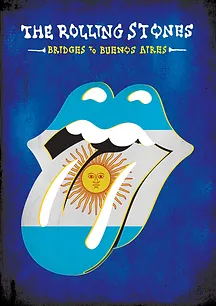
“Bridges To Buenos Aires” is the latest concert film release from The Rolling Stones’ archive. The full-length show from their five night sell-out residency at the River Plate Stadium in Argentina’s capital city has been restored in full, and features a very special guest appearance from Bob Dylan.
Filmed on April 5th 1998, by this point, the band had played to over two million people on the first two legs of the tour in North America and Japan. Amongst many highlights in this show, special guest Bob Dylan joins the band onstage at River Plate for a unique performance of his classic ‘Like A Rolling Stone’. The band only played a further two dates in South America on the triumphant, year long Bridges To Babylon tour, before they headed back to North America, and Europe.
Filmed on April 5th 1998, by this point, the band had played to over two million people on the first two legs of the tour in North America and Japan. Amongst many highlights in this show, special guest Bob Dylan joins the band onstage at River Plate for a unique performance of his classic ‘Like A Rolling Stone’. The band only played a further two dates in South America on the triumphant, year long Bridges To Babylon tour, before they headed back to North America, and Europe.
A new trailer for Bridges to Buenos Aires features a few snippets of Dylan’s appearance, while it also teases renditions of “Jumpin’ Jack Flash,” “Flip the Switch” and “You Can’t Always Get What You Want.”
Bridges to Buenos Aires is to be released as a two CD set with either a DVD or Blu-ray. It will also be issued on digital video, digital audio and a limited edition translucent blue, 180 gram triple vinyl LP. The concert film was restored from the original master tapes, while the audio was remixed and remastered from the live multitrack recordings.
The band only played a further two dates in South America on the triumphant, year long Bridges To Babylon tour, before they headed back to North America, and Europe.
Moving a satisfying line between shimmering jangle pop and robust shoegaze, DIIV are to release their third full-length album “Deceiver”. The band crafts the soundtrack to personal resurrection under the heavy weight of metallic catharsis upheld by robust guitars and vocal tension that almost snaps, but never quite… the same could be said of the journey these four musicians underwent to get to their third full-length. out of lies, fractured friendships, and broken promises, clarity would be found. fans of Ride, Real estate and Ultimate Painting will love it!
Rebirth takes place when everything falls apart. DIIV—Zachary Cole Smith [lead vocals, guitar], Andrew Bailey [guitar], Colin Caulfield [vocals, bass], and Ben Newman [drums]—craft the soundtrack to personal resurrection under the heavy weight of metallic catharsis upheld by robust guitars and vocal tension that almost snaps, but never quite…
The same could be said of the journey these four musicians underwent to get to their third full-length album, Deceiver. Out of lies, fractured friendships, and broken promises, clarity would be found.
“I’ve known everyone in the band for ten years plus separately and together as DIIV for at least the past five years,” says Cole. “On Deceiver, I’m talking about working for the relationships in my life, repairing them, and accepting responsibility for the places I’ve failed them. I had to re-approach the band. It wasn’t restarting from a clean slate, but it was a new beginning. It took time—as it did with everybody else in my life—but we all grew together and learned how to communicate and collaborate.”
A whirlwind brought DIIV there.
Amidst turmoil, the group delivered the critical and fan favorite Is the Is Are in 2016 following 2012’s Oshin. Praise came from The Guardian, Spin, and more. NME ranked it in the Top 10 among the “Albums of the Year.”Pitchfork’s audience voted Is the Is Are one of the “Top 50 Albums of 2016” as the outlet dubbed it, “gorgeous.”
In the aftermath of Cole’s personal struggles, he “finally accepted what it means to go through treatment and committed,” emerging with a renewed focus and perspective. Getting back together with the band in Los Angeles would result in a series of firsts. This would be the first time DIIV conceived a record as a band with Colin bringing in demos, writing alongside Cole, and the entire band arranging every tune.
“Cole and I approached writing vocal melodies the same way the band approached the instrumentals,” says Colin. “We threw ideas at the wall for months on end, slowly making sense of everything. It was a constant conversation about the parts we liked best versus which of them served the album best.”
Another first, DIIV lived with the songs on the road. During a 2018 tour with Deafheaven, they performed eight untitled brand-new compositions as the bulk of the set. The tunes also progressed as the players did.
“We went from playing these songs in the rehearsal space to performing them live at shows, figuring them out in real-time in front of hundreds of people, and approaching them from a broader range of reference points,” he goes on. “We’d never done that before. We got to internalize how everything worked on stage. We did all of the trimming before we went to the studio. It was an exercise in simplifying what makes a song. We really learned how to listen, write, and work as a band.”
The vibe got heavier under influences ranging from Unwound and Elliot Smith to True Widow and Neurosis. They also enlisted producer Sonny Diperri [My Bloody Valentine, Nine Inch Nails, Protomartyr]. his presence dramatically expanded the sonic palette, making it richer and fuller than ever before. It marks a major step forward for DIIV.
“He brought a lot of common sense and discipline to our process,” adds Cole. “We’d been touring these songs and playing them for a while, so he was able to encourage us to make decisions and own them.”
The first single “Skin Game” charges forward with frenetic drums, layered vocals and clean, driven guitars that ricochet off each other.
“I’d say it’s an imaginary dialogue between two characters, which could either be myself or people I know,” he says. “I spent six months in several different rehab facilities at the beginning of 2017. I was living with other addicts. Being a recovering addict myself, there are a lot of questions like, ‘Who are we? What is this disease?’Our last record was about recovery in general, but I truthfully didn’t buy in. I decided to live in my disease instead. ‘Skin Game’ looks at where the pain comes from. I’m looking at the personal, physical, emotional, and broader political experiences feeding into the cycle of addiction for millions of us.”
A trudging groove and wailing guitar punctuate a lulling apology on the magnetically melancholic “Taker.” According to Cole, it’s “about taking responsibility for your lies, their consequences, and the entire experience.” Meanwhile, the ominous bass line and crawling beat of “Blankenship” devolve into schizophrenic string bends as the vitriolic lyrics. Offering a dynamic denouement, the seven-minute “Acheron” flows through a hulking beat guided under gusts of lyrical fretwork and a distorted heavy apotheosis.
Even after the final strains of distortion ring out on Deceiver, these four musicians will continue to evolve. “We’re still going,” Cole leaves off. “Hopefully we’ll be doing this for a long time.”
Ultimately, DIIV’s rebirth is a hard-earned and well-deserved new beginning.
Official video for “Blankenship,” the third single from DIIV’s new album Deceiver, out October 4th,
Special Edition LP is pressed on tricolor vinyl in an edition of 2000 copies. It includes an inverse Obi Strip as well as a 12″ x 24″ double-sided poster. It will ship on or slightly before the album’s October 4th release date.
Gena Rose Bruce‘s debut album “Can’t Make You Love Me” is out worldwide now on Dot Dash Recordings.
Can’t Make You Love Me showcases Bruce’s unmistakable brand of smokey rock; smouldering vocal performances, pulsing rhythms, echoes of Mazzy Star and Lynchian undertones. It’s is an intoxicating ride through love, lust, surrender and revival
Gena Rose Bruce comes from Melbourne songstress. ‘The Way You Make Love’ is all soft and subtle psych-rock, with guitar riffs reminiscent of Brian Jonestown Massacre and vocals harking back to Mazzy Star. We’re into it.
Gena Rose Bruce’s debut album Can’t Make You Love Me is an intoxicating ride through love, lust, surrender and revival. It’s a distinct and dynamic debut from a young artist with a clear vision. Bruce’s vocals drive this album; a stirring force amidst the pulsing rhythms. A vibrant youthfulness and deep maturity underpins her writing, allowing songs to swing effortlessly between earnest introspection and cool detachment with utter sincerity. With it’s infectious melodies and biting lyricism, Can’t Make You Love Me is as playful as it is confessional. Instantly timeless and unmistakably contemporary.
The album has received widespread praise nationally and abroad, including 4+ star reviews and Album of the Week / Feature Album on NPR (USA), The Age, Herald Sun, The Sydney Morning Herald and Brisbane Times. Available now worldwide through Dot Dash Recordings.
“Her voice just sends me…David Lynch made that third season of Twin Peaks a year too soon, cause she should’ve been playing in that bar.” – NPR Best New Music All Songs Considered (Can’t Make You Love Me)
Face it, the last ten years or so have been a Blur – so much shit going down, good and bad – and a lot of music too. It doesn’t look like its gonna get any easier for Anybody to get their bearing, so Ty Segall and Sea Note have gotten together a special box to help you reorient your head.
This one’s for the freak, the fan, the head. Pig Man Lives is a stack of raw germs that were blown up in the world as Ty Segall releases over this last golden decade or so – specifically, the demos that bred Manipulator, Freedom’s Goblin, Emotional Mugger, Twins, Ty Segall, Slaughterhouse and Sleeper. Each finished record had its own unique aim and intention, but when you hear tracks from 2007 next to tracks from 2015, then 2012 cutting in after 2017, the splatter allows you to experience the continuum of a whole body of work exploding over and over again, in a burst of freedom that accompanies an initial song sketch.
You’re bound to feel different after you’ve spent any kind of quality time with The Pig Man: non-linear reorientation, taking you back and forward over the course of eight sides and 48 songs, there’s even a few that haven’t seen the light of day before! For some of these songs, further evolution brought even more out of them. And some are perfect this way, with rough edges and little details you’re not gonna believe you’ve lived without.
As sure as Pig Man Lives, you won’t have to anymore. Out 11/1,
Experience Hendrix L.L.C. and Legacy Recordings, a division of Sony Music Entertainment, are proud to release Songs For Groovy Children: The Fillmore East Concerts by Jimi Hendrix, on CD and digital November 22nd, with a vinyl release to follow on December 13th. This collection assembles all four historic debut concerts by the legendary guitarist in their original performance sequence. The 5 CD or 8 vinyl set boasts over two dozen tracks that have either never before been released commercially or have been newly pressed and newly remixed. Those who pre-order the digital version will instantly receive the previously unreleased track “Message To Love,” from the second New Year’s Eve performance on the collection.
Over the course of four extraordinary years, Jimi Hendrix placed his indelible stamp upon popular music with breathtaking velocity. Measured alongside his triumphs at Monterey Pop and Woodstock, Hendrix’s legendary Fillmore East concerts illustrated a critical turning point in a radiant career filled with indefinite possibilities.
The revolutionary impact Jimi Hendrix, Billy Cox and Buddy Miles had upon the boundaries and definitions of rock, R&B, and funk can be traced to four concerts over the course of two captivating evenings. These performances were first celebrated by Band of Gypsys, which featured six songs from the two January 1st, 1970 concerts, including “Machine Gun,” the album’s dramatic centerpiece. Issued in April 1970, Band of Gypsys challenged and surprised the wide following of Jimi Hendrix with its extended arrangements and vibrant mix of rock and soul.
In June of 1969, at the height of their fame, The Jimi Hendrix Experience, closed a musical chapter. Before the shockwaves could settle, Hendrix assembled a new, expanded ensemble to perform at Woodstock in August. A new chapter was opened as Hendrix introduced Gypsy Sun and Rainbows. The large ensemble included Jimi’s longtime friend Billy Cox, on bass, whom he had befriended when both were serving with the 101st Airborne Division in Ft. Campbell, Kentucky in 1962. This Woodstock lineup was short-lived; from its ashes a new trio emerged in October that Hendrix dubbed Band of Gypsys, consisting of Hendrix, Cox and Electric Flag drummer Buddy Miles, who would also contribute occasional lead vocals. Hendrix was inspired by his collaboration with Cox and Miles and this creative renewal drove the development of promising new material such as “Power Of Soul,”“Burning Desire” and the extraordinary “Machine Gun.”
Their debut live performances were a series of four concerts at the Fillmore East in Manhattan – two on New Year’s Eve 1969 and two on New Year’s Day 1970, each of which were professionally recorded. Hendrix had sold out Madison Square Garden just nine months prior, but the Fillmore East was chosen as the setting for a live recording. Long before his fame, Hendrix had signed what he thought was a release for appearing as a studio musician in October 1965. Unfortunately, the one page artist agreement drafted by PPX Industries bound his services for a period of three years. Unwilling to live hands tied, Hendrix agreed to a 1968 legal settlement whereby Capitol Records would be granted the distribution rights for his next album. By the autumn of 1969, Capitol and PPX were pushing hard for the album delivery and Hendrix decided to give them a live album.
However stressful this legal obligation had been for the guitarist, the end result proved to be an artistic triumph. True to his unpredictability, Hendrix opened his four-show stint with a masterful, eleven song set that did not feature a single song he had commercially released. Exciting new songs such as “Izabella,” “Ezy Ryder” and “Burning Desire” thrilled the sold-out house. Hendrix would pepper the remaining three shows with supercharged reworkings of favorites such as “Stone Free,” “Purple Haze,” and “Fire” but these were presented alongside such devastating, newly developed fare as “Machine Gun.” In his review of the second New Year’s Eve concert, Down Beat critic Chris Albertson wrote, “That ability of his to utilize fully the technical possibilities of his instrument, combined with his fertile musical imagination, makes him an outstanding performer.”
By the end of January 1970, the band was history, but the blend of funk, rock and soul pioneered by the trio became history, making a profound impact on popular music in its wake. Notable devotees include funk pioneers Parliament–Funkadelic, Curtis Mayfield, the Isley Brothers (with whom Hendrix himself had at one time played) and Bootsy Collins, extending all the way forward to hip-hop. Countless artists cite the record as a cornerstone in their appreciation of Jimi Hendrix ’s remarkable abilities.
The original 1970 Band of Gypsys album was edited and sequenced from songs performed during the two Fillmore sets on January 1st, 1970. Subsequent collections mined more material from each of the performances with significant chunks of these phenomenal recordings from those nights sitting unreleased for almost half a century. Newly mixed and restored in sequence without edits, fans can finally hear Hendrix, Cox and Miles blast through their genre-defying sets that included freshly written songs like “Earth Blues” and “Stepping Stone,” as well as Experience favorites inclusive of “Foxey Lady,” “Voodoo Child (Slight Return),” “Wild Thing,” “Hey Joe” and “Purple Haze.” Additionally, exciting new versions of Howard Tate’s “Stop,” “Steal Away,” by Jimmy Hughes and a searing “Bleeding Heart” by Elmore James highlighted the command that the trio had over blues & R&B music.
The lavish package is filled with unseen photos from talent such as Fillmore East house photographer Amalie Rothschild, Jan Blom (whose iconic, color saturated images provided the original artwork for 1970’s Band of Gypsys) as well as Marshall Amplifier representative Marc Franklin, who had full access to the group in their dressing room backstage. The booklet features remembrances from bassist Billy Cox and liner notes by author/journalist/filmmaker Nelson George. Songs For Groovy Children was produced by Janie Hendrix, EddieKramer and John McDermott – the trio that has overseen every project for Experience Hendrix since 1995. The box set was mastered by Grammy-winning engineer Bernie Grundman.
Kicking off today at the Paramount Theatre in Jimi’s hometown of Seattle, WA is the fall leg of the Experience Hendrix Tour, the acclaimed multi-artist celebration of Jimi Hendrix’s musical genius. The trek winds its way down the west coast into Oregon, California, Nevada, and then heading eastward into Arizona, Colorado, Oklahoma and Texas, culminating in San Antonio Oct. 22. Participants include blues legend Buddy Guy, best-selling instrumental rock guitarist Joe Satriani,Taj Mahal, Dweezil Zappa, Jonny Lang, Eric Johnson and Billy Cox. His has, arguably, the longest lasting musical relationship with Jimi Hendrix, spanning their time in the U.S. Army, performance in Nashville-based soul combos and with Band of Gypsys, and continuing with the Tribute Concert Tours in honor of the legacy of Jimi Hendrix to the present day.
Out today, a dynamic cover of Buffalo Springfield’s iconic song, “Go and Say Goodbye,” originally on the group’s debut album and on the flip side of the “Nowadays Clancy Can’t Even Sing” single in 1966. This new edgy country-rock cover is from the Ohio group, Red Wanting Blue. The song features the group’s labelmate, Poco co-founder, Rusty Young, who guests on the song in addition to various Blue Élan artists including Car Astor, Amy Wilcox, PhilSolem of The Rembrandts, and Gina Sicilia among others.
Rusty Young, along with former Buffalo Springfield member Richie Furay singing lead, covered this tune in 1972 on Poco’s fifth album, A Good Feelin’ to Know. It was Poco’s version that Red Wanting Blue connected with.
Lead singer, Scott Terry said, “Getting the chance to collaborate with Poco’s Rusty Young was a really special moment for us as a band. It’s a beautiful thing to get to share in an experience with an artist that you’ve looked up to and been inspired by. Our drummer Dean grew up listening to Poco with his Dad and so he brought their album A Good Feelin’ To Know on the road with us. Once he pressed play, we all received a fast education in Poco. Everybody was hooked! I have a lot of memories from those tours that are tied to that album. Poco had become a large part of our band’s tour soundtrack. ‘Go and Say Goodbye’ got played on repeat I don’t know how many times. Then we found ourselves getting the chance to be in a North Hollywood studio with Rusty Young re-recording that song with him. It was a little mind-blowing. We are so grateful that we all were able to share that experience with Rusty. I love the new version of the song and I hope we made him proud.”
Rusty Young , “It was so much fun to play with the guys in Red Wanting Blue on a Buffalo Springfield song that’s a classic. I’m sure was recorded before most of them were born. I love those guys! Great songs live on!”
Band Members
Scott Terry – vocals, tenor guitar, ukulele
Mark McCullough – bass, chapman stick, vocals
Greg Rahm – guitar, keyboards, vocals
Eric Hall – guitar, lap steel, vocals
Dean Anshutz – drums & percussion
“There are no problems in the studio—there are only a million solutions,” says Local Natives’ Taylor Rice. The singer-songwriter is recounting crucial words of wisdom from producer/ engineer Shawn Everett, the acclaimed sonic guru who shepherded the indie-rock band through the left-field experiments that spawned their fourth LP, Violet Street.
The album, with its lush arrangements and signature three-part vocal harmonies, isn’t exactly a departure: The seductive, Fleetwood Mac-like grooves of “Café Amarillo” and heart-crushing, string-heavy balladry of “Vogue” could have fit snugly on 2013’s Hummingbird. But intimate listens reveal sparks of madness: the bizarre radio sample and ghostly vocal loops that haunt “Tap Dancer” the creaky percussion tracks and abrupt burst of noise in “Shy” and how the drums on “Megaton Mile” gradually decelerate to form the main groove of the atmospheric “Someday Now”.
“As musicians, sometimes you get into this logic puzzle, and you feel like you need to put everything together in this beautiful and wonderful way,” Rice says. “But our energy throughout [Violet Street] was staying connected to the idea that music is this magical thing that emerges more or less spontaneously. There are really no rules at all—and there’s a million ways a song can come together and finish.”
Local Natives planted the first seeds of Violet Street, shortly after their tour supporting Sunlit Youth. Exhausted from the road and ready to unwind at home, the quintet—Rice, fellow singer-songwriters Kelcey Ayer and Ryan Hahn, bassist Nik Ewing and drummer Matt Frazier received an offer to play a wedding in Mexico.
“It was a really intriguing offer, but it was like, ‘No, we have to focus. We’re really excited to be home and writing,’” Rice says. “Then they were like, ‘What if we give you a free month at our compound for a writing session?’ It was such a crazy offer, and we were like, ‘OK, that would make it make sense.’ We played the wedding and came back later and were there for a month. We were in this hut on the beach on the West Coast of Mexico. We were set up in the jungle on the edge of the ocean.”
They formulated most of their new songs in that month-long retreat, accumulating a collective pile of iPhone recordings. “That’s where we started the writing and got the vibe going for the record,” Rice says. “The biggest difference from before is that we didn’t do any generic pre-production. We can be methodical going into the studio [The National’s] Aaron Dessner was the first to help us crack out of it a bit [when he produced] Hummingbird. Yet, we took it to its most extreme for this album.
That’s also where the madness began. Everett briefly worked with Local Natives as an engineer on Sunlit Youth, leading the band to experiment by recording outside and on the studio roof. And in December, during a test run to lay down some initial ideas at his LA warehouse-studio, he proved just how weird he was willing to get in search of an original idea.
“We had these voice memos from Mexico, and we went in and were like, ‘Here’s ‘Megaton Mile,’ which is this song about the apocalypse, but it has this upbeat vibe like Talking Heads meets The Clash,” Rice says. Picking up on that thread, Everett decided to channel the Talking Heads’ approach on their 1980 track “Once in a Lifetime,” recording eight-bar loops that the band would then “perform” by pushing up the faders in real-time. Rice admits they were a bit skeptical. But the warped ideas kept producing quality results.
High on the thrill of the tape-loop madness, the band decided to trick out “Megaton Mile” even further by recording the percussive clank of glass Coke bottles, each filled up to achieve the appropriate pitch. “Then Shawn was like, ‘We should just use these drums for the next song [the much slower ‘Someday Now’],’” Ayer says. “And we were like, ‘What are you talking about?’” The producer then calculated how the percussion should be pitched to account for the difference in BPM and key between the two songs, splitting the difference between a music theory test and science project.
At this point, after being blown away by the results of their tinkering, Local Natives knew they’d found the perfect studio shaman to join them down Violet Street. “We all huddled together as a band and went, ‘OK, we have to lock him in as an engineer/ mixer/producer,’” Rice says. “He was game and wanted to do the whole record.”
From there, every day in the studio was built on that sense of childlike exploration. Everett’s bag of tricks included using the randomness of Brian Eno’s “Oblique Strategies” (cards labeled with cryptic suggestions aimed to guide musicians in a new direction), messing around with tape machines and samplers, and performing songs in dozens of styles to see which fit best. (The twitchy, anthemic “Gulf Shores” also existed in a more meditative, piano-heavy version, along with what Ayer calls a “jungle-y, insane, Animal Collective-y version.”)
In this special presentation of The Ringer Room, beloved L.A. band Local Natives perform three tracks from their latest record, ‘Violet Street’ and an old fan favorite from their debut album, ‘Gorilla Manor.’ In this stripped-down setup, these songs take on a new feel, highlighting the band’s signature vocal harmonies and heartfelt songwriting.
Set List: “When Am I Gonna Lose You” 0:07 “Café Amarillo” 4:02 “Megaton Mile” 7:45 “Wide Eyes” 11:17
Rice likes to playfully brag that he was the first band member onboard for that wild ride, with Ayer straggling behind. “I was the first in the band to jump on the Shawn rollercoaster,” he says. “I like razzing Kelcey about it now because he was the one dragging his feet, like, ‘I don’t know—we should just record it in a normal way.
“He’s right,” Ayer admits, fake-threatening his bandmate with a fight. “Shawn is so brilliant, but he has all these tangential ideas, . There were a bunch of times early on where I was like, ‘This is awesome,’ but he wanted to go further. I’d be like, ‘I don’t want to fuck with this thing we just did that’s so rad.’ I’d just want to work on a song in a normal way, and he never wanted to do that. Earlier on, we were pitching the songs, and he’s like, ‘We should record everyone’s instruments into the sampler, and everyone will play different samplers into the tape machine.’ I’m like, ‘Ugh, let us just play it!’ But whenever I’d get frustrated, everyone would be like, ‘No, no, let’s just try it.’ It ended up taking me a little longer but, after like four or five instances of doing that—and the end product being undeniably amazing.
Everett’s exploratory approach befitted a band desperate to record as a unit, to veer away from the fractured process that birthed Sunlit Youth.
“There’s an interesting cause and effect constantly happening,” Ayer says. “After Hummingbird, everyone was ready to feel really happy and fun again, so we wanted to lean poppier and a bit brighter. There were a lot of people in different rooms, producing songs and bringing them to the band. But we did that, and we were ready to be more of a band again. There was some sort of pendulum swing back [with Violet Street]. First and foremost, we just wanted to play together again.”
“There was a pendulum swing,” Rice confirms. “And we did have all these conversations before, even when starting to write the record, of, ‘Guys, let’s return to something that’s all five of us in a room performing off of each other, all the musicians in one space.’ That’s a big opposite of Sunlit Youth, where we wanted to be completely free of that. The other part of it was just pure luck that we were working with an absolute mastermind, genius producer.”
Both Rice and Ayer estimate that over 90 percent of their far-out experiments wound up on the album, but one notable exception is “Munich I,” a sprawling, eight-minute instrumental jam that was too unwieldy to crack the LP’s compact tracklist. In order to facilitate new ideas for the song, Everett pulled up the Radiooooo app, which generates random music after users select a country, decade and mood.
“We set up live in the room, playing off each other,” Rice says. We’d listen to the song for like 30 seconds to get the vibe then play for five minutes. We had the sweetest jam ever we couldn’t even believe it was us. It’s this incredibly ambitious project we were so in love with, but we just couldn’t make it work. It’s still alive somewhere in the back of our minds.”
“He’s a workaholic doing 14-hour days every day,” Rice says. “We forced him to go on vacation during the record. I booked his flight and accommodations in Greece. A lot of producers are like, ‘Here’s my huge bag of tricks,’ but Shawn always wants to try something he’s never done—possibly something nobody’s ever done.” Crucially, Local Natives weren’t just screwing around without a plan. They were armed with the hookiest, most poignant songs in their catalouge including “When Am I Gonna Lose You,” a number Rice wrote for his future wife in the early stages of their relationship.
“It’s probably the one I was most lost in the deep, epic journey of,” Rice says. “I think I drove the other bandmates a little nuts, but Shawn went with me. We explored 40 versions of the song before we hit the final one. Originally it was a slow, sad, very weepy acoustic song. A dark LA Fleetwood Mac vibe was one of the guideposts we had aesthetically. I thought it would be this slow ballad, and it turned into a driving groover on day one.
“Lyrically, it [came from the idea of ] having this incredible thing in your life that feels too good to be true,” he adds. “It’s a pretty sad name and idea for a love song, but it’s the idea that fate is going to intervene or I’m gonna mess it up. The whole thing takes place in Big Sur, and I heard the final mix of it driving up the 1 on [the Pacific Coast Highway] to Big Sur with my wife, whom I married in August of 2018. We heard it together for the first time, and that’s where the story in the song had begun. That was a really surreal, insane moment.”
Violet Streetis the polar opposite of Sunlit Youth’s gleaming, stadium-friendly tunes it’s grimier, darker and, like the recording process itself, full of fascinating detours. As Ayer reflects, it’s closer to the type of music they’ve always envisioned making.
The debut album of Wives! The Queens, NY four-piece is the latest fit into a long lineage of New York’s gritty, melodic-meets-punk.
Wives as a band came together by happenstance — a random realization amidst friends busy with other musical projects. Jay met Adam Sachs, Wives’ drummer, while interning at a New York recording studio where Adam worked as an assistant. The two became fast friends, their constant hanging out growing to include guitarist Andrew Bailey (DIIV) and bassist Gabe Wax, who’d eventually be replaced by another friend, Alex Crawford. All were embedded in New York’s DIY music scene through their respective projects, with years of playing house shows and booking their own tours under their belts. It wasn’t until a random day of extra studio time booked for another project that the four of them actually played together.
So Removed is grungy dark-wave, tethered to daily anxiety without resorting to cynicism. The noisy dissonance of Sonic Youth, the edgy hooks of early Pixies, and the clever, cerebral sneering of The Fall simmer as touchstones within the album, sharp and prodding at the details, pulsing with urgency. So Removed plunges into the void of unknown, a tangle of contemporary dread and optimism, mapping the gray areas of alienation.
Our new track ‘Hit Me Up’ is out now! check out our videos and newly announced tour dates!
‘Hit Me Up’ was written form the point of view of a New Yorker who can’t let go. His everyday reality does not jibe with what is going on in his head, and he’s holding onto a past that never existed in the first place.
Some are in search of modernity and clear virgin territories, others are content to follow the pack; others still decide to take the history of rock where the Pixies have left, a little as if you returned to the scene of your first gallon thirty after and nothing had moved. The kids of Wives, a quartet made in New York City poised to become the new darling of Queens, are part of this glorious category. Just one month after unveiling their first single, Waving Past Nirvana , their debut album is due out anytime soon.
With “The 20 Teens,” Queens, NY-based quartet Wives take a stab at writing a timely ode to the present. In an interview with frontman Jay Beach admits, “I heard a song by A Flock of Seagulls. My friend turned to me and said “why don’t they just call this song ‘the 19 eighties’, cuz when I listen to it that’s all I can think of.” I laughed and said I would write a song called ‘The 20 Teens’.”
“The 20 Teens” marks the band’s third single this year, a taste of their debut full-length So Removed which will be October 4th via City Slang Records.
Wives may have been the grittiest group encountered at NON-COMM this year, but “Workin'” shows off a different side to this Queens-based, grunge four-piece. With their rumbling guitars and singer-guitarist Jay Beach’s languid vocals, Wives weaves together a thick, bassy carpet of sound in this cut. A good old guitar chugging in a strident back and forth, a rhythmic part backwards I’m Waiting for My Man , schizophrenic words chanted in a nonchalant morgue, Workin ‘ is a little hymn that should make you stamp impatience until you know more (we’ll tell you soon) about the bright future of this bunch of dirty kids too good to be true.
They tell us: “‘Workin” was a poem written while having a nervous breakdown in a 3rd floor walk up in Brooklyn, NY. My inward turmoil became the outward predicament of all of us workin’ stiffs. The ground actually did turn over and the floorboards were shifted. It must have been a manifestation of something going on inside my brain, and all the visions were coming at me in stop motion waves. The band played this track in one take and it was so good that we had to keep it and adjust the vocals slightly to fit the contours, which is how the chorus came about. The chorus being more or less the macro view of what was going in inside of my micro consciousness. From the personal out into the universal, but only because of that great guitar line!”
The track is the sound of four men in a room, doing exactly what the song title suggests: ‘Workin”. The track grinds and grooves along in waves of squalling guitar and unwearying percussion, dragging your tired mind through the rest of your work day and out into the sunshine of freedom. Even when surrounded by chaos and stress, as described in the above quote, they haul themselves through it, finding musical and emotional strength in one another and reproducing it as the alt-rock juggernaut that is ‘Workin”.
Since forming as teenagers in 2006, The Menzingers have shown their strength as rough-and-tumble storytellers,turning out songs equally rooted in frenetic energy and lifelike detail. On their new album Hello Exile, the Philadelphia-based punk band take their lyrical narrative to a whole new level and share their reflections on moments from the past and present:high-school hellraising, troubled relationships, aging and alcohol and political ennui. And while their songs often reveal certain painful truths,Hello Exile ultimately maintains the irrepressible spirit that’s always defined the band.
The Menzingers’ Greg Barnett turned 31 this year, but his fans don’t need to be told that. On just about every record the Philadelphia band has released over the last 12 years, the singer and guitarist has alluded to how old he is and how he feels about it.
The band’s first four albums saw the four-piece navigating youth with reckless abandon: driving drunk, living in rodent-infested apartments, stomaching romantic failures, getting high on shift breaks at shitty jobs, partying way too much, and struggling to pay rent. But the band’s most recent album, 2017’s After the Party, opened with “Tellin’ Lies,” a song that had Barnett staring down the big 3-0, sobering up, and pondering, “Where are we gonna go now that our twenties are over?”
“My dad made fun of me when he first heard that song,” says Barnett. “He was like, ‘What are you talking about, man? Your thirties are the best decade of your entire life! In your twenties, you have no idea what’s going on. You and all your friends are broke, you’re constantly trying to figure things out, it’s a train wreck. But in your thirties, you start to understand yourself and understand others. You find your career path and things start to make sense.’ And I was like, you know what? You’re right. Why did I put it in my head that it’s all doom and gloom? It really shifted my mindset.”
Then again, Barnett’s father never played in a punk band. Time moves faster in music than in the real world. One day you’re the new kids on the scene and the next you feel aged out of it. When Barnett started The Menzingers as a quasi-ska project with three high school friends Tom May, Eric Keen, and Joe Godino in Scranton, he was a baby-faced teenager who got teased by older, more established bands.
“When we first started touring, all of us were always the young ones. We played a couple shows with NOFX and they just made fun of how little we were. And touring with Against Me!, too, we were always that young band,” says Barnett. “I always think about how we got to play The Lawrence Arms’ ten-year anniversary show in 2008. That was a really big show for us at the time — a sold-out show at The Metro, a historic club. I think I was 19 or 20, and I remember Brendan [Kelly] and Neil [Hennessy] and Chris [McCaughan], they were like my age now, and they had to constantly remind me of what a little baby I was. I was like, ‘What are you talking about? I’m an adult here!’”
But after over a decade of heavy touring and grinding it out, sharing stages with Philadelphia’s next crop of young bands like Modern Baseball, Barnett woke up one day to realize that The Menzingers aren’t punk’s little babies anymore. Now, five albums into their career, they’re on the verge of easing into a new role as the genre’s elder statesmen. Their new record, Hello Exile out October 4th via Epitaph Records embraces that, and kicks off with them already looking ahead at what comes next with the lyric: “How do I steer my early thirties, before I shipwreck, before I’m 40?”
“That line was me thinking I wanted to write a political song but asking: What else am I going to do about that?” says Barnett. “You need to do things besides just saying it. I want to make sure I start off a new decade by making sure I’m fighting the right fight and I’m on the right team and I’m helping the causes I believe in. How do I make sure I don’t let an entire decade go by without helping any type of social change that I believe in?”
It’s a thought Barnett wouldn’t have had the foresight to consider on the band’s early records, which were largely marked by the mistakes of adolescence. But now he’s contemplating how to mature gracefully and, as he’s been discovering, so are his fans.
“Our fanbase has grown with us this entire time. When we first started out, everybody was 17, 18, 19. The fans we get now, it tends to be people who are relatively close to our age group,” he says. “A lot of fans come up and say that it’s special to have a band that they’ve been able to follow as they’ve grown up — a lot of similar life challenges and similar questions and things they’re facing.”
Most fans hopped on the Menzingers train around their breakout album, 2012’s On The Impossible Past, a masterpiece of mid-twenties misadventures. The album is a young person’s idea of what it means to feel old. It’s when Barnett started noticing more Menzingers tattoos and when fans started telling him that his music has helped them transition into adulthood. He’s heard from more than a few people that the album’s love ballad “Gates” has been used as a wedding song.
“We make jokes sometimes that we just need to become a wedding band because the amount of emails we get about playing people’s weddings is insane,” Barnett laughs. “It’s so flattering, the idea that this is the biggest moment in a couple’s life, and they want us to be a part of it. That’s really incredible. A lot of people have connected with these songs in ways we had never even dreamed of.”
Hello Exile, The Menzingers’ greatest statement on adulthood to date, ends with a reflection on how far they’ve come since their scrappy Scranton beginnings. Its closing track, “Farewell Youth,” is, as the title suggests, something of a eulogy for the carefree nights of their impossible past. “Farewell, youth, I’m afraid I hardly got to know you / I was always hanging out with the older kids,” Barnett sings.
“I was a person who grew up really fast,” Barnett says of the track. “I was 13, hanging out with the seniors, going to shows, and they were giving me records. I remember being an 18-year-old on tour, having to wait outside the club because I was under 21. I had to wait until I had to play, and then be kicked out of the club again. We toured a lot like that, and it did feel like youth went very fast in that way. I always rushing to be older, always rushing to change.”
Looking at the road ahead, it’s hard to know whose footsteps The Menzingers should follow. All of the bands they’ve looked up to and cite as influences have faced problems of their own. Their Turnpike brethren in The Gaslight Anthem went on indefinite hiatus after their fifth album. Against Me! still endure, but have gone through their share of member changes over the years. The Menzingers have maintained the same lineup since the band’s inception, and have never gone more than three years without releasing a new album.
The Menzingers Are:
Eric Keen – Bass
Greg Barnett – Vocals, Guitar
Joe Godino – Drums, Percussion
Tom May – Vocals, Guitar