Blues pianist Eddie Boyd’s “7936 South Rhodes” was recorded in London in January 1968 with three members of the early line-up of Fleetwood Mac: Peter Green (guitar), John McVie (bass), and Mick Fleetwood (drums). It’s a tantalizing setting for Boyd’s straight up Chicago piano Blues, going heavier on the slow-to-mid-tempo numbers than the high-spirited ones.
Boyd was born either on Stovall’s Plantation, near Clarksdale, Mississippi, He learned to play the guitar and the piano. His piano playing was influenced by the styles of Roosevelt Sykes and Leroy Carr. An automobile accident in 1957 in which he was injured put his career on hold for a while Boyd toured Europe with Buddy Guy’s band in 1965 as part of the American Folk Blues Festival.
He later toured and recorded with Fleetwood Mac and John Mayall and the Bluesbreakers. Tired of the racial discrimination he experienced in the United States, he first moved to Belgium where he recorded with Dutch Blues band Cuby & The Blizzards. Boyd died in 1994 in Helsinki, Finland, just a few months before Eric Clapton released the chart-topping blues album, From The Cradle that included Boyd’s “Five Long Years” and “Third Degree”.
On June 25th, 2019, The New York Times Magazine listed Eddie Boyd among hundreds of artists whose recorded material was reportedly destroyed in the 2008 Universal fire.
Recorded in London in January 1968 with three members of the early lineup of Fleetwood Mac (the one that played blues, not pop/rock):Peter Green (Guitar), John McVie (bass), and Mick Fleetwood (drums). It’s an adequate setting for Boyd’s straight Chicago piano blues, going heavier on the slow-to-mid-tempo numbers than the high-spirited ones, though is a far more sympathetic accompanist than the rhythm section.
Some people simply should never, ever trip. Syd Barrett, the former singer/guitarist/central songwriter for Pink Floyd, was one of those people. The van Gogh of early rock music, Barrett cut off his mind to spite his face, still swallowing acid by the handful even as his increasingly deranged behavior dislocated him from his bandmates and, for that matter, everybody else back on planet Earth. Tragically, most of his genius escaped recording, though it did beam directly into the illuminated skulls of the Britpop vanguard, frugging stoned and immaculate at London underground clubs like the UFO where Barrett worked out early Floyd’s deathless outer-space-blues-Hobbit-hole-folk-trot.
By the time Floyd’s debut The Piper At The Gates of Dawn came out in August of 1967, Swingin’ London had gone mad–bathed in strobing mod Technicolor, drunk on the Day-Glo ambrosia of psychedelia and frugging to the blare of maximum R&B. Rock ‘n’ roll was reaching critical mass, outgrowing the three-chord friction of horny teen angst and expanding into the realm of art. Pop stars, the newly minted aristocracy of turned-on English youth, were now expected to be poets and seers, and the race was on to find strange new sounds to telegraph this strange new state of mind.
My initial hopes for “Saucerful of Secrets” were fairly low. I was thinking we’d play some pub gigs, but it spiralled slightly out of control. The other sad thing is that it wasn’t really my inspiration—it was [guitarist] Lee Harris who came up with the idea and thought that it was time that I went back to work.
So he suggested it to [touring Pink Floyd bassist] Guy Pratt and the band formed around me. There were no auditions. It was just like-minded people getting together, which is exactly how so many bands formed in the ‘60s. The Rolling Stones didn’t hold auditions; they were just people who liked the same music.
By the spring of 1968 he’d been fired by his own band. There were a couple of hard-to-listen-to but unforgettable solo records, painstakingly pieced together by his former bandmates from the intermittent moments of lucidity and focus they could get out of Barrett by that point.The Madcap Laughs and Barrett still sound as haunted and frayed as the man who mused aloud in his last song for Pink Floyd, “I’m wondering who could be writing this song.” After that he retired to his mother’s basement in Cambridge, more or less, never to be heard from again. He passed away in 2006, but his legend still looms large in the alterna-verse where he is regarded as the patron saint of rock’s psychedelic martyrs.
The Floyd, of course, carried on. David Gilmour was brought into replace Syd on guitar and vocals, and everyone pitched in on songwriting. By Dark Side Of The Moon, Roger Waters would become the band’s central songwriter/conceptualist and de facto leader, and Floyd would become the AOR FM colossus we’ve come to think of them as today. But in the six years betweenPiper and Dark Side, the band spent six albums — Saucerful Of Secrets, Ummagumma, More, Obscured By The Clouds, Meddle and Atom Heart Mother — groping in the dark for their sound and vision. And while those albums have their share of pointlessly overlong psychedelic dicking around, they also yielded some of Floyd’s greatest, albeit lesser known, songs: “Fearless,” “Set The Controls For The Heart Of The Sun,” “The Nile Song,” “Cirrus Minor,” “One Of These Days,” and “Echoes” to name but a few. All of this and more — much, much more — is comprehensively curated on the 2016 box set The Early Years 1965-1972, which spans 29 hours over the course of 10 volumes (plus a bonus disc!).
It is this period, along with a generous number of Piper At The Gates Of Dawn tracks, that Floyd drummer Nick Mason is re-animating with his newish band Nick Mason’s Saucerful Of Secrets.
From the start, I said, “Let’s try one or two days in a rehearsal studio and see how we feel about it.” After about 10-12 days, I thought, “Right, we’ll go out and perform.” In America, especially—where so much of our audience only discovered us with Dark Side— all the music before that is almost unheard of. So the great thing about the early music is that it gives us the opportunity to be a little bit freer with it. The problem with playing “Comfortably Numb” is that the fans want to hear the guitar part played exactly as David [Gilmour] played it.
With this material, we don’t have to worry about every precise detail, which gives it a freshness. There is a lot of improvisation. When we made our first album [1967’s The Piper at the Gates of Dawn], we spent a lot of time shortening the numbers to a reasonable vinyl length. “Interstellar Overdrive” is about nine minutes on the album, but when we played it at UFO Club, it would be 20-23 minutes. Now, we can extend it or shorten it. We are going for the spirit; the expectation is not to follow [the songs] slavishly.
[Pink Floyd] played some of these songs very rarely. We probably played these songs to promote them but, particularly if it was a single, once we couldn’t actually sell that single, we lost interest in it, and it would get sort of pushed to one side. Then, fairly shortly after that, we had Meddle and Dark Side and there was a sense of moving on a bit. Things got shelved that could have been developed but, in their own right, were not that interesting.
[In terms of Roger Waters’ emergence as Pink Floyd’s primary songwriter], it wasn’t that it was gradual, but there was so much going on with Syd [Barrett] leaving. It was a very odd transitory crossover, where David was miming to Syd’s songs when we were doing TV shows and stuff. There is a clear difference between Piper, where Roger had written “Take Up Thy Stethoscope and Walk”—which I don’t think is a great song—and one album later where he’s doing “Set the Controls for the Heart of the Sun,” which is a great song. But there was no pinch-me moment, where there was that transition. The transition was slightly curious. What actually happened was that Syd’s presence, even though he wasn’t there, probably lasted for another three or four months before there was a sense of David being a fully integrated member.
The Peter Green/Fleetwood Mac story is fascinating to me— there’s that element in Pink Floyd, where you lose people and there’s someone there that sort of steps in. Genesis went through same thing. I’m the one they can’t fire. [Laughs.]
Basically, our aim is to explore any music that we made prior to Dark Side of the Moon. Once you hit that, you’re into some other territory. So far, we’ve probably only played 15 percent of the material that is out there. Some of it is not that interesting, but there’s certainly lots of material that we intend to add to the repertoire before we go out again.
Before [Pink Floyd toured in the United States], we’d heard a lot about America. We’d heard about the light shows and psychedelia and all the rest of it, but we had no idea what the actual music was. These names sounded exotic. But, the interesting thing is that Big Brother & The Holding Company was really an R&B band. For many years, we thought the 1910 Fruitgum Company was going to be a wild band, when actually they were pop. And Country Joe & the Fish were almost a country/western thing.
We actually met Zappa on our first American tour— he was a huge influence on everyone. Later on, when he was in Europe, he played with us at The Actuel Rock Festival. He was one of the great rock icons and philosophers. I say he was very influential partly because of the Mothers’ very high musical standards—just in terms of being radical, but also being extremely expert.
Now, when I look at the younger [psychedelic bands], I think, are we now the equivalent of Lightnin’ Hopkins and Howlin’ Wolf? In the 1960s, all the bands were picking up on the old R&B artists—taking that and making it modern.
There was a slight sense of alarm that I either had to do completely new music, which requires a different sort of band and months in a recording studio, or I had to play the greatest hits of Pink Floyd, in which case you almost become a tribute band.
I don’t think there was a formal decision [for Pink Floyd to stop touring], but what happened was that, between ‘87 and ‘94, we did an awful lot of touring, and they were long tours. And we reached a point—particularly with David—where he did not really want to go out for another year. The problem is that, with big tours, you tend to have to go out on quite lengthy runs to justify your expenses. I like touring, but not to the point where all home life disappears—and, by the time you get home, your wife’s left you and your children have left home. But things have changed. Touring was so linked to album releases, and now studio albums have become less a part of the mainstream music business. With streaming, pirating and everything else, the real activity is now in the live realm.
Another driving force for this was when we did the Victoria and Albert Museum exhibition in London. I spent quite a lot of time working on [Pink Floyd’s] history and finding material for that. I really enjoyed doing that but, at the end of it, you feel like a monument because it’s all about the past and history and so on. And there was a bit missing—playing the music. I got to the point where I thought, “I would love to bang on the drums again rather than simply talking about it.”
With Pink Floyd, there is a shortage of material that shows where we were at any specific moment. It’s a regret for all of us. The only great piece of Pink Floyd playing on film, up until about the last couple of tours, was Live at Pompeii, which I’m very fond of. It was a great snapshot of where we were at the time. With Saucerful of Secrets, every show was just getting a little bit better. [The show we filmed for the new release Nick Mason’s Saucerful Of Secrets Live at The Roundhouse] was at the end of the British leg of the tour. The Roundhouse was also a great venue [to film at] because it is somewhere that I’ve worked since the dawn of time. Pink Floyd played there in October of 1966—before we had a record deal, before we had a manager or anything like that. So I have very fond memories of The Roundhouse. It felt like a home game. The setlist was basically what we had been playing. We added a few songs to it and it became a film about where we are now.
We all feel that we picked the right night, by luck. As far as we’re concerned, that’s probably the best show we’ve done. And hopefully, when we go out again, we will improve on it. But it was a good marker of where we are now.
I told both David and Roger that I would love for either of them—or both of them—to come play with us some night. And Roger was in New York, so we talked about him playing with us at the Beacon a few days before the show. And then he managed to leave his phone in a cab, so I didn’t hear anything from him for two days. I assumed he’d gone cold on it. Then on the day of the show, he said, “OK, I’ll come along.” So we really didn’t have a proper plan. We knew which song he would do but we hadn’t thought it through properly, which made it a lot more exciting because none of us knew whether he was going to remember the words to the song he was going to sing. He was great—he absolutely, inevitably, just picked it up and ran with it.
I don’t think that David and Roger are game to do anything together anytime soon. But, I would love Roger to come back and do something else with us, and I would be very happy to go and do something with him. Neither of us wants to be in each other’s band, though. We want to do things our own way—maybe just get together for bits and pieces. I don’t think we’re about to reform a band to go and do anything.
[In addition to playing music, I also race cars and those passions] complement each other. They are opposites. Music requires other people to make it work; when you’re in a race-car, you’re on your own. You need both prospects in your life.
I’m so happy to announce my new single, “It Must Be Someone Else’s Fault.” This is a song rooted in taking ownership of our own story and pain. I wrote this in Washington state one spring afternoon, and the message was something I’d tried to put to song for a long time. The video embodies the power of sisterhood, and our ancestral trauma through the power of movement. Through these movements, I hope to embody the strength of our lineage, and overcome this old pain. Featuring: Emmylou Casale, Catharine Drew-Wilkinson, Jennifer Casale, Sonia Allen, Claire Harlin, Marlee Grace.
“It Must Be Someone Else’s Fault” by Courtney Marie Andrews
Here is a video for my song “Wild Time” that was shot on 16mm pre-Pandemic, then edited together during isolation. Felt like the right time to let this video out into the world, seeing as we’re all getting saddled down by some pretty grim realities. This song is about yearning for wildness and Mother Nature in a time of chaos. It’s for sensitive people who worry about the fate of humanity and feel powerless to do anything about it.
I’ve spent a lot of time thinking apocalyptic thoughts and realizing that won’t get you anywhere. What if the world has always been ending? What if the sprawl of our cities are just as wild as the forests? What if climate change and the destruction of our natural habitat is a reflection of the nature within us, however sublimely horrifying and hard to understand? We’re animals, we play out a very precarious drama of life, and we grasp for what’s left of the protective womb – but maybe the notion that we’re somehow separated from her is an illusion. Maybe it is, truly, a wild time to be alive. Maybe getting in touch with that as a culture and society would avert the worst case scenarios of ecological crisis and existential dread.
If you’ve gotten this far, wow, thank you for actually taking the time to read this. In other news, as you may have assumed, I am cancelling all of my headline shows for 2020, but I’m beginning to work on my next album that will come out in 2021- a different time, when hopefully we can see each other face to face once again.
Weyes Blood “Wild Time” from Titanic Rising (Released April 5th, 2019)
Brooklyn songwriter Katie Lau has used the time to add the finishing touches to her new album “When You Found Forever”, her first project to be released in five years under the Painted Zeros name. It’s an uncompromising journey into a person stricken with a battle of the psyche, overcoming a tumultuous relationship with alcohol and breaking free from the clutches of an old love (see “”). Lau is fearless in showing the pains of addiction mixed with the beautiful colour palette that returns once its been abandoned. On her latest single that we’re thrilled to premiere, “I Will Try” Lau takes the various shades that make up ourselves to create an anthem endowed with a restored affirmation in her identity and making the best of the future.
A beacon of hope soars high as Lau’s ever so graceful guitar tugs at your heart strings, championed by an endearing drum pattern guiding her along the path. Swells of emotion pour out as the track weaves its way across glistening lyrics emboldened by Lau’s honesty, “When it comes, I’m still here / The dark dissolves, to stay another year”. As Lau details, “I wrote this song channeling the feeling of gratitude I have for what really feels like getting a second chance at life thanks to getting sober, and getting on the other side of a difficult time onto a path of emotional/mental health in general. Now, every day I wake, I’m just trying to do the right thing/live an honest, useful life, and trying to help others however I can. When I was still drinking and using, life had become so dark and miserable, and now, being in recovery for three years, my life has changed beyond recognition; it’s better than I ever could have imagined it could be.”
Classic-sounding post-rock energy fuses with gently-communicated truths then blazes on “I Will Try” the powerful, pristine new single from Katie Lau’s Painted Zeros The track is taken from the “When You Found Forever” LP that she releases this Friday, May 29th. You can order digital and vinyl versions of it from and it’s available from her Bandcamp page as well.
Releases May 29th, 2020
Written, performed, engineered, and mixed by Katie Lau
Drums played by Jared Kaner on tracks 3 & 8
Bass played by Jim Hill on tracks 3 & 8
From jamming in a basement in a London record store to bagging the biggest recording deal in the history of popular music, Led Zeppelin’s rise to super-stardom took only a few short months. The band that would come to redefine hard rock music and influence generations of future rockers is here captured in all its thundering sonic glory as it embarked on a tour of Scandinavia in the spring of 1969. Led Zeppelin perform ‘How Many More Times’ on Danish TV channel Danmarks Radio on March 17th, 1969.
The 1969 tour of the United Kingdom and Scandinavia was a concert tour of the United Kingdom and Scandinavia by the English rock band. The tour commenced on 1st March and concluded on 17th April 1969. During this tour, Led Zeppelin made a number of live television appearances, including one date in Denmark on 17th March, and a session at BBC TV studios on March 21st and a session at Staines on March 25th, the last for the filming of the Supershow. Some of these early filmed sessions were later released on the Led Zeppelin DVD (2003). They were part of manager Peter Grant’s early strategy to build public awareness of the group. However, his dissatisfaction with the medium (particularly its inferior audio quality), would soon lead him to make the band unavailable for television again
Performed live at Stockholm’s Konserthuset on 14th March, broadcast by Sveriges Radio and Copenhagen’s Gladaxe on 17th March, broadcast by TV-BYEN, these gigs are an early taste of the virtuoso rock performances that would break stadium attendance records across the globe and change the genre forever.
Two incredible performances, live from Stockholm and Copenhagen, 1969
Includes the entire Sveriges radio and TV-BYEN broadcasts
Digitally remastered for greatly enhanced sound quality
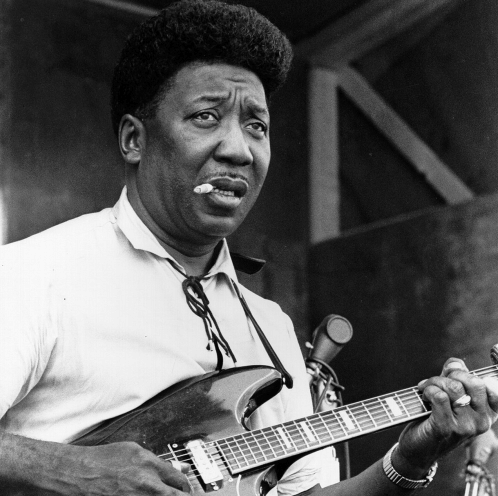
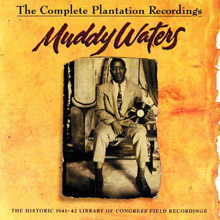
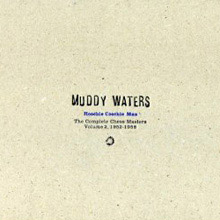
Muddy Waters was arguably the greatest and most famous bluesmen who migrated from Mississippi north to Chicago bent on a making a name for himself. It was a long, hard road out of the Mississippi Delta and almost unimaginable for Waters to go from picking cotton on Stovall’s Plantation in Mississippi to the Library of Congress recordings made by Alan Lomax of Waters on the farm in 1941. But from there he went on to the pinnacle of success in Chicago as the premier post-War blues master. Muddy Waters transcended all obstacles in reaching his goal, becoming the reigning Chess king in Chicago for nearly 25 years.
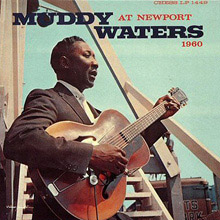
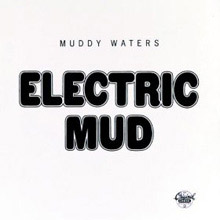
After moving to Chicago in 1943 and making a few sides for Columbia Records, Waters first recorded for the Chess brothers’ Aristocrat label in 1947, and by 1953 had hit his stride with one of the great Blues songwriters, Willie Dixon, providing the hits, and his seminal band with Little Walter Jacobs on harmonica, Jimmy Rogers on guitar, Elgin Evans on drums and Otis Spann on piano providing the groove. In 1960, Waters recorded the Blues classic “Muddy Waters at Newport,” “Folk Singer,” in 1964, the dreaded “Electric Mud,” in 1968, and the all-star “Fathers and Sons,” set in 1969. Waters reigned until Chess closed shop in the 1970s but got a second life with Johnny Winter later in the decade with four Blue Sky albums produced by the Beaumont Blaster. Grammy Award winners were “Hard Again,” (1977), and “I’m Ready,” (1978) and “King Bee,” (1981), all studio albums, and the acclaimed live set “Muddy “Mississippi” Waters.” which was released in 1979. The Rolling Stones came under his sway, recording many of his songs, and Rolling Stone magazine paid homage to both the Stones and Waters in the title of its publication. Waters was the template, setting the table for other Windy City Bluesmen that came in his wake such as Buddy Guy. He was the Hoochie Coochie Man – one of the greatest of the post-war Blues masters.
Muddy Waters was bandleader, songwriter, guitarist, singer, song interpreter and the prime mover of the Chicago electric Blues scene, Muddy from the Mississippi Delta, like almost all the great electric bluesman of the post-war era. He was also a good man, who helped many younger or struggling musicians as they later bore witness. But whatever else he was, he will forever be the once and future King of the Chicago Blues. “No I ain’t no millionaire, but I had a lot of managers that became millionaires.” Muddy Waters got his nickname from his grandmother, because he was always playing in a nearby creek as a child. It is a name that resonates way beyond the confines of the Blues. As the man who claimed that “The Blues had a baby and they named it rock ‘n’ roll,” he certainly had a point and his reputation among young white boy wannabe blues musicians was second to none. It was from a track on his 1958 album, from whicha young British band took their name in 1962… and they went on to become, “The Greatest Rock and Roll Band in the World”.
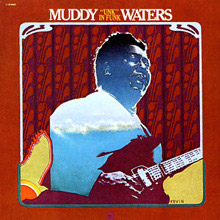
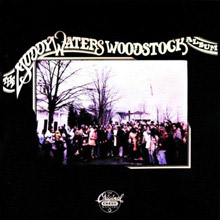
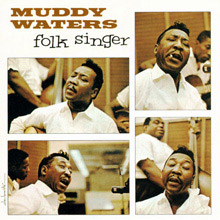
Muddy Waters Folk Singer shows the depth of Muddy’s talent, his understanding of the Blues and his brilliance in playing them in whatever form he wanted. It is fair to say that without the album Muddy Waters Live at Newport 1960, no self-respecting white Blues band would dare not play at least half the numbers Muddy performed. The success of rock bands helped many a Bluesman’s career, both in the USA and as international acts; Muddy was no exception and in fact his recording career benefitted more than most. Albums including The Muddy Waters Woodstock Album and Unk in Funk offer a real insight into the thirty year recording career of the real legends of the Blues.
When he was about three years old McKinley Morganfield’s Mother died so he was sent to the Stovall farm to stay with his grandmother. After he grew up he began working on the plantation, while at the same time teaching himself the harmonica and later the guitar. He began playing in juke joints, at parties and dances in and around the Clarksdale area from about 1935 onwards.
When in the mid summer 1941 Alan Lomax recorded Muddy at Stovall’s for the Library of Congress; Muddy sang “Country Blues” and “Burr Clover Country Blues”. According to Howard Stovall whose family still own the farm. “He was the burr clover man, which was a cover crop to put nitrogen back in the soil. It’s drudge work, you hand rake it up and put it in bags and then spread the burrs around to improve next year’s crop. I had the honour of that job one summer, apparently Muddy felt about it the same way I did, only he was able to express it more eloquently.”
In 1943 Muddy moved north and like many before him, took the train to Chicago’s Illinois Central Station; initially finding work in a paper factory. Muddy began playing for tips on Maxwell Street soon after arriving in the city; Big Bill Broonzy helped the country boy break into the urban scene. He started working in clubs, playing with Eddie Boyd, as well as backing Sonny Boy Williamson No.1 at the Plantation Club. A switch from acoustic to electric guitar in 1944 galvanised Muddy’s career. He continued to play traditional Delta bottleneck, but the electric guitar transformed his sound and helped to “invent” post-war Chicago Blues. His 1946 recordings for Columbia with the doyen of Chicago Blues, Lester Melrose, went unreleased. It was not until the following year that Muddy would be heard playing on record, in the role of backing guitarist to Sunnyland Slim.
Waters and bass player Big Crawford recorded two other songs on the day he worked with Slim, but Leonard Chess was unimpressed and so they went unreleased. However, the following year Muddy and Crawford were back and cut ‘I Can’t Be Satisfied’ and ‘Feel Like Going Home’, which Leonard Chess released on the Checker label. The former was a reworking of ‘I Be’s Troubled’, a song Muddy recorded for Lomax in 1941 and often played live. ‘Feel Like Going Home’ was a reworking of Son House’s ‘Walking Blues’. Muddy had huge respect for House and this is another song Muddy must have sang many times before this recording. The record sold out in less than a day, going on to make No.11 on the R&B charts in September 1948; years later Muddy recalled that he even had trouble buying a copy. Chess was anxious not to upset a winning formula and despite the fact that Muddy had his own band he continued to record Muddy as a duo or with Leroy Foster on guitar.
By the late 1940s his band included Leroy Foster on guitar or drums, Big Crawford on bass, Jimmy Rogers on guitar and harmonica and not long afterwards Little Walter Jacobs was added as the featured harmonica player. Muddy was only in his early 30s but he became the patriarch of the Chicago blues scene. With the pick of the city’s musicians in the 1950s, it was more a question of who didn’t play in Muddy Waters Band than who did. The Muddy Waters Blues Band was recording as an entity by 1951, the epitome of the hard-edged, driving electric Blues band of Chicago, a cornerstone of what we call rock music today.
In 1951 ‘Louisiana Blues’ became the second in his run of sixteen chart hits, which included classics like, ‘I’m Your Hoochie Coochie Man’, ‘Just Make Love to Me’, ‘Mannish Boy’ and ‘Forty Days and Nights’. The man born in Rolling Fork, Mississippi also cut ‘Rollin’ and Tumblin”, ‘Rollin’ Stone’ and ‘They Call Me Muddy Waters’, in which he sings “I’m the most bluest man in this whole Chicago town”… few would disagree. Any and every one of these recordings captures the very essence of 1950s Chicago Blues.
In 1959 Muddy released Muddy Sings Big Bill, a tribute album to his former mentor who had died a year earlier. Muddy considered Big Bill to be “the Daddy of the Country Blues singers”, so when he first moved to the city it must have been amazing for the younger man to find such a star taking an interest in him. It also shows the similarity in style between the two singers. On the album Muddy is accompanied by his band of the moment, James Cotton on harp, Pat Hare on guitar and the brilliant Otis Spann on piano they perform ‘Just a Dream’, a perfect testimony to both men, while Muddy makes the song his own, Big Bill comes shining through.
‘I Feel So Good’ from the album exemplifies Muddy’s approach, brilliant interpretation and vocal delivery that is underpinned by tight ensemble playing. Otis Spann on piano, James Cotton’s harmonica and Pat Hare’s guitar are nothing but perfect. The following year at the Newport Festival Muddy performed the song, predominantly to a white audience, and it was captured for his album Muddy Waters at Newport; one of the great live albums and a favourite of many blues’ fans. As the band powers through the song the crowd can be heard responding to their brilliance with spontaneous shouts. Not that this one song was any different from many that Muddy performed, he affected everything he did with style and class.
Throughout the 1950s and early 1960s Muddy’s band was the city’s premier recording outfit, a veritable academy of the Blues. Among those who played with Muddy were guitarists Jimmy Rogers, Luther Tucker, and Earl Hooker; harmonica players Junior Wells, Big Walter Horton and James Cotton, Willie Dixon on bass; pianists Memphis Slim, Otis Spann, and Pinetop Perkins along with drummer Fred Below. Another was Buddy Guy who played on Muddy’s essential 1964 album, Muddy Waters “Folk Singer”. He was another musician who had a lot to thank Muddy for…
“My mother had a stroke and I left Baton Rouge, Louisiana September 25th 1957 and I went to Chicago. I actually was looking for just a regular job to help my mum, but I ran into a bad situation. I couldn’t get work, nobody would hire me. I played on the street first, one day this man grabbed me by the hand and walked me in this club. It was Otis playing, the guy told Otis to call me up and I played ‘Things I Used to Do’, and someone called Muddy on the phone. I was pretty hungry ‘cos it was the third day without food. Muddy came in and just smacked me and said wait a minute, I heard about you, they done call me and got me out the bed. He said you hungry, I said you Muddy Waters, I’m not hungry, I’m full, I met you.”
Muddy like many of his contemporaries toured Britain in the 1960s as part of the American Folk Blues Festivals; his reception was better than when he had previously visited Britain at the invitation of Chris Barber in 1958, the jazz trombonist. Many people in the jazz fraternity, who were the keepers of the blues flame in 50s Britain decided it was a travesty for Muddy to play with amplification. Somehow these blues zealots decided that the only pure blues was acoustic thank goodness ideas changed. In May 1964 Otis Spann cut a single at Decca studios in London with producer Mike Vernon. On ‘Pretty Girls Everywhere’ and ‘Stirs Me Up’ Otis was accompanied by Muddy Waters on rhythm guitar and Eric Clapton on lead. Some years later Eric recalled “they were both very friendly, and they had beautiful shiny silk suits, with big trousers!”
As the Blues languished somewhat in the late 60s, then so did Muddy’s career. In the 1970s he toured constantly and by 1977 he had signed with CBS Records. Collaborating with Johnny Winter, Muddy’s career took an upturn with the release of the album Hard Again in 1977, winning him a Grammy. A second album, I’m Ready, was followed by a tour of the U.S. including a performance at the White House for President Jimmy Carter.
Muddy worked live with Johnny Winter in the early 80s before succumbing to a heart attack in his sleep aged sixty-eight in 1983. Muddy’s influence as well as the respect that he commanded among the Rock community was acknowledged when he was inducted into the Rock & Roll Hall of Fame in 1987.
On this day (May 26th) in 1982: Los Angeles psych/garage rock revival band The Salvation Army released their self-titled, debut album on influential indie label, Frontier Records; (Since Reissued on Burger Records) after the charitable organization objected, they changed their name to The Three O’Clock and became one of the leading lights of the city’s burgeoning ‘Paisley Underground’ neo-psych scene…
In March 1981, South Bay, CA, teenager Michael Quercio formed theSalvation Army a punky, psych-influenced garage band that took most of its stylistic and musical cues from Lenny Kaye’s Nuggets anthology. Before the year was out, the Salvation Army had a single out on the Minutemen’s New Alliance label, a new guitarist (Greggory Louis Gutierrez), and a batch of new songs to demo.
After this demo was played on Rodney Bingenheimer’s massively influential Rodney on the ROQ radio show, signed the Salvation Army to Frontier Records and released the trio’s self-titled debut in May 1982.
The philanthropic organization took umbrage over the name and the Salvation Army politely changed their name to the meaningless but suitably psychedelic the Three O’Clock The band replaced drummer Troy Howell with ex-Quick drummer Danny Benair added keyboardist Michael Mariano, and transformed themselves into the leading lights of the paisley underground, a phrase invented apparently by Quercio that’s dogged him ever since. Fancher Records reissued the Salvation Army album under the clever name Befour Three O’Clock after the group misguidedly left Frontier for IRS, and in 1992, collected the full album, that pivotal five-song demo, and all four songs recorded during the sessions for the New Alliance single for a comprehensive collection of every Salvation Army studio recording.
As such, “Happen Happened” (named for the trippy A-side of that single, which appears in two versions) is a priceless document of the early days of the L.A. psych-pop revival scene. Fans of the Three O’Clock’s much glossier music might be surprised by the punky speed and noisy guitars, but the simple two- and three-chord songs are bracing and surprisingly melodic, and flashes of Quercio’s skewed lyrical bent are already visible in songs like “While We Were in Your Room Talking to Your Wall.” Six songs are repeated, though there are only notable differences in a couple of cases and invariably the album versions are superior to the demos. Regardless, this is both a definitive historical collection and a great piece of early-’80s post-new wave punk-pop.
a.k.a. The Three O’clock, power pop / paisley underground
from Los Angeles, California… 1992 “Happen Happened” CD Reissue of 1982 “Salvation Army” Album, plus 9 bonus tracks [Frontier Records, 01866 34639 2]
Sonic Youth are continuing to upload items to their Bandcamp archive and today it’s the live record “Hold That Tiger” which was recorded in 1987 and released in 1991. Here’s the backstory from drummer Steve Shelley:
Originally released as a semi-official bootleg LP in 1991 by friend and music writer, Byron Coley, on his Goofin’ imprint (we would eventually hijack the Goofin’ moniker for our own band-run label a few years later). The recording was nearly 60-minutes in length, so to prevent manufacturing a cost-prohibitive double lp, the master was slightly sped-up to fit the entire concert (us blasting through a finely-tuned set of songs from Sister, EVOL and a nightly encore tribute to the Ramones), on one single lp. Cramming the grooves of the vinyl in such a way resulted in “Hold That Tiger” playing at a lower volume on the stereo, thus the “one hour long – don’t have a cow! – crank it up’ sticker affixed to the front of the original lp cover. A few years later in 1998, “Hold That Tiger” was remastered for CD re-issue. The audio quality was improved from the lower fidelity lp but unfortunately the slightly sped-up performance was not corrected – until today. We are pleased to make available the best-sounding version of Hold That Tiger – SY performing full-on in 1987 – via Sonic Youth Archive on bandcamp.
“Hold That Tiger” — now at its proper speed and volume — below.
Sonic Youth Archive is a home to live SY recordings and unreleased, self-released or stray SY recordings.
In other news: Kim Gordon is appearing on the debut album by LXB (the duo of The Cure’s Lol Tolhurst and Siouxsie/Creatures drummer Budgie); Thurston Moore has been expanding his Bandcamp archives, too, as has Lee Ranaldo.
Half Waif is singer-songwriter Nandi Rose. Her new album The Caretaker, her first for ANTI-Records, is named for a fictional character, “someone who has been entrusted with taking care of this estate, taking care of the land, and she’s not doing a very good job,” Rose said. “The weeds are growing everywhere, and she’s not taking care of herself.” Check out Half Waif’s “Halogen 2” video. The last album was so much about protecting myself – facing the night, bearing teeth and howling, shutting down an apocalypse, all so I could contain my world and build a fragrant shelter. I asked to be buried in the mother’s arms. But then I read Braiding Sweetgrass by Robin Wall Kimmerer, and I felt it change my life. My shelter was here all along, in the embrace of the weeping pine and the scalloped leaves who wave to me in the wind. I have never felt so at home. And now it is time to be a mother and a caretaker, to nourish myself by opening my heart to others, to all people – human, plant, animal, everything endowed with the spark of life and the will to survive.
Growing up means better understanding what you need. For me, right now, that’s a sweet summer of being a nobody, humble before the fierce kindness of these trees.
With a new album that was scheduled out on March 27th, I had lined up a New York release show and a subsequent North American headline tour—shows that had been in the works since last fall. This is my first record since signing with a new label, ANTI-Records, and I’d been banking on these headline shows (my first in over a year and biggest to date) to help build momentum around the release. Instead I spent an afternoon last week deleting all the events from my Google calendar one by one, feeling something crumble with every click. Disappointment made visual: this won’t happen, and this, and this. Entire blocks of colors disappeared, leaving behind a blank gray grid. What was worse was breaking the news to my band members and touring crew, knowing they were counting on these shows for income. Of course it wasn’t anything I could control, but it’s still devastating to know that the domino effect of this dismantling machine means we all fall down.
“Clouds Rest” by Half Waif from the album ‘The Caretaker,’ available now




:format(jpeg):mode_rgb():quality(90)/discogs-images/R-3305313-1324930917.jpeg.jpg)
:format(jpeg):mode_rgb():quality(90)/discogs-images/R-3305313-1402728708-3717.jpeg.jpg)
:format(jpeg):mode_rgb():quality(90)/discogs-images/R-3305313-1402728716-6253.jpeg.jpg)