Featuring Brent DeBoer of the Dandy Warhols (US) and boasting Aussie indie rock queen and Grammy nominee Courtney Barnett as a former member, Immigrant Union are a local band with international rock royalty heritage. With their unique Australian-American psychedelic/folk/country sound, they have supported Noel Gallagher and Black Rebel Motorcycle Club and toured their own headline shows, creating unforgettable moments at boutique festivals, occasional BBQs and the odd house party across Australia. The band’s yet to be released third album,” Judas”, was recorded in Melbourne and mixed in Portland, Oregon, combining their signature Americana elements with brilliant rad rock.
“Judas” will be released mid June 2020 on Cheersquad Records & Tapes; digitally, on CD and on vinyl. There will be a very limited coloured gatefold sleeve 9 track vinyl edition for the first 100 pre-orders. Because of the length of the album only 9 tracks will be included on the vinyl. However, you will receive all 11 tracks via your free digital download. The two bonus tracks are English Paradise and Awake.Releases June 19th, 2020
Bob Harrow and Brent DeBoer available on Cheersquad Records & Tapes.
Since announcing her third full-length record “New Truth”, Jenny O. (full name Jennifer Anne Ognibene) has shared a new song every two weeks. Now she has shared the album’s fourth single “Even If I Tried.” New Truth is due out June 19th via Mama Bird Recording Co. On the new song Ognibene delivers an upbeat and sunny melody about breaking free from the toxic people in your life. She rejoices in discovering she is better off without the “dead inside” accomplice: “But good news!/No one has to talk to you/The world keeps turning/And you, you fade away.”
In a press release Ognibene shared her inspiration behind the new track: “Everyone knows somebody who is always a critic and just won’t listen. Often those with the strongest opinions have the most uninspired lives. People exist this way for years, decades, generations. Fortunately, you can ditch them for supportive friends and a life of curiosity and fun.”
Prior to “Even If I Tried,”Ognibene released the track “What About That Day,” a cathartic daydream featuring Ognibene’s gentle timbre and surrounding ethereal harmonies. She also recently shared this note relating to her forthcoming album:
“Hey, Here’s my new album, it’s called “New Truth”. New Truth is coming to terms with my deaf ear. It’s any new accepted reality. It’s the hilarious way I wore my hair for a week before cutting it away from my face. The songs are as personal as ever—continued misadventures of an introvert in Hollywood. I think it’s relatable—heartache and epiphany—I hope people like it?
I’m singing lower sometimes, I always assumed I’d move back into my lower register, I finally have. Hard to get power that way, but I don’t sound like a little kid. I’ll have to practice singing them a lot, and it will be trickier to pull off live. I recorded this album with Kevin Ratterman, who is so fast, so patient, willing to try anything, and so much fun. It was important to me to have a good time while making it, and we did. I played all the guitars on this record. I wanted to channel the freedom of the Home and Work EPs, but recorded way better. I took solos! I played bass, except Rachel Goodrich did the funkier two songs because her time is better than mine. The past couple albums were tracked live to tape with a rhythm section, so someone would quickly learn something great and close to my demo but not exactly. I wanted to play bass this time.
Kevin set up his nice microphone at my place so I could do all my vocals alone while he was making another record. It’s the best way—much faster and more free to experiment by myself. Building harmonies on a whole album with an engineer can get frustrating, communicating between each take.
Here we are, arriving at the tenth edition of Brown Acid in just half as many years! As always, we packed in the highest highs of the dankest hard rock, heavy psych, and proto-metal tracks previously lost to the sands of time. Like we’ve done throughout this series, all of these tracks were painstakingly licensed legitimately and the artists were paid. It’s hard to believe we’re already up to 10 volumes of this lysergic Neanderthal wail, but the long-lost jams just keep-a-coming like Texas crude to fuel your rock ’n’ roll engine and melt your metal mind.
This Trip kicks off with the Hammer of the Gods howl of “Plastic Thunder” by Bitter Creek. The Atlanta, GA quintet’s lone single from 1970 on Mark IV Records is rated #6 of the Top 50 Heaviest Songs Before Black Sabbath by GuitarWorld Magazine. You can hear why in the ominous riff and larynx-ravaging chorus that merges the deepest of Deep Purple sludge with The Who’s rollicking psychedelia.
Not much is known about The Brood’s 1969 bluesy paean to dirtbag weed consumption “The Roach” on the It’s A Lemon imprint, except that it’s a big, growling rocker with a crazed in-the-round blowout of wailing guitar solos, screeching organ blasts, wildly overlapping vocals and drum rolls for days. Nova Scotia, Canada sextet Brothers and One’s double-entendre laden single “Hard On Me” certainly pushes the boundaries of what would be acceptable at the time (especially amongst their ever-polite Canadian brethren.) Their lone full length was released in 1970 on short-lived Audat label, the group featuring two sets of brothers (hence the name) recorded the album while all members were between age 13-18-years-old. This glam-influenced single was privately released on the band’s own label nearly 4 years later. Louisville, KY quartet Conception’s excellent revision of Blue Cheer’s “Babylon” (1969, Perfection Records) adds heavy phaser effect on the guitar and a more driving rhythm to make the song entirely their own. Lead guitar and high harmony vocals by Charlie Day (not to be confused with the Sunny Philadelphian actor) are assertive and commanding as he implores listeners onward to hallucinagenic nirvana.
Not exactly a typically psychedelic band name for the era, but First State Bank’s “Mr. Sun” (1970, Music Mill) pays hearty dividends of boogie bustle. The Central Texas band led by guitarist/vocalist Randy Nunnally released only 3 singles in its career from 1970-1976. For those keeping score at home, their song “Before You Leave” was featured on The Third Trip back in 2016. “Mr. Sun” is the heavy B-Side to “Coming Home To You.”
Clearly inspired by Jimi Hendrix, Tucson quartet Frozen Sun topped the local charts in 1969 with this barnstorming rocker “Electric Soul” (Capt. Zoomer Records.) The song is replete with guitarist/vocalist (with big Hendrix hair) Ron Ryan’s spoken interlude, “Well have you been electrically stoned? You know, living in the danger zone?” We say yes. Ralph Williams and the Wright Brothers took flight with “Never Again” on Hour Glass Records in 1972, and apparently never landed after this 45 with “Dark Street” on the A-side. The serpentine riff and sexually-charged backing vocal grunts drive this archetypal tale of a young man’s chemical odyssey… or, should we say, trip?.
Sounds Synonymous pretty much epitomized heavy fuzz from Michigan with their 1969 single “Tension” on the Wall Productions label. The Hendrix “Fire” meets Arthur Brown’s “Fire” track lunges and lurches with glee throughout its 3-minutes and change of unbridled crunch. Tabernash’s “Head Collect” (1972) is the suburban Denver quartet’s only release following the name change from The Contents Are and a move from Davenport, IA. This more stately psych-rock chune features Byrds-like harmonies, twangy reverse-looped guitar soloing and Keith Moon-esque drumming that should’ve made it a chart-topper, but we all know there’s no justice in rock’n’roll. The Tenth Trip closes, appropriately, with the “War Pigs” reminiscent fuzz of New Orleans quartet The Rubber Memory’s 1970 tune “All Together.” The band self-released only 110 copies of their lone album, making it an incredibly sought-after rarity for decades. Alongside a limited edition reissue in 2000, the group reformed for a one-off show before quickly bouncing back into our collective cosmic consciousness.
Hear First State Bank’s “Mr. Sun”
The forthcoming tenth edition Episode #10! — of the popular compilation series featuring long-lost vintage 60s-70s proto-metal and stoner rock singles, Brown Acid: The Tenth Trip will be available, fittingly, on April 20th, 2020. As the celebrated series reaches landmark double-digits, there are no indications it will slow down in the near future.
We are living in unprecedented times, but this pandemic can’t stop the Brown Acid train! If you’ve kept up to date with all the latest BA releases, you might need a place to put them,
“Having released 10 editions of the Brown Acid series in just half as many years, we’re still only at the tip of the iceberg of brilliant long-lost, rare, and unreleased hard rock, heavy psych, and proto-metal tracks from the 60s-70s. With each new edition, we unearth even more incredible bangers that somehow eluded popularity up until now. For every classic rock mainstay like Black Sabbath and Grand Funk Railroad, there’s hundreds of great bands who, for a variety of reasons, were previously lost to the sands of time.
They were different times between 1968-1979. The gatekeepers had a much tighter grip on which bands got airplay, whose records were available in shops and what sounds were considered palatable to nightclub audiences. Many of these bands barely made it out of the garage, self-releasing 45s as demo tracks for record executives or to beg club owners for a gig. Others have had fleeting brushes with fame, while a few recordings here have spent the past half-Century gathering dust in a closet before being discovered by Brown Acid archivists.
Couple those challenges with the rockcritstocracy’s enduring disdain for hard rock, and the exhaustively thorough archives of legendary compilation series like Nuggets, Pebbles and their ilk having virtually ignored this kind of lysergic Neanderthal wail while exhausting the mines of early garage rock and proto-punk. So, while certain types of unsung heroes have gotten their due, before Brown Acid, only the most extremely dedicated and passionate record collectors had the stamina and prowess to hunt down long forgotten pre-metal wonders in dusty record bins — often hoarding them in private collections, or selling at ridiculous collector’s prices.
Of course, the Internet music revolution has made it possible to find extremely rare music with great ease. But even with such vast archives to draw from, few have organized such a nonstop barrage of heavy-hitting greats in the format they were meant to be heard: on vinyl. If you’re holding this box in your own collection, clearly you’re hooked on this mind-melting series dubbed Heavy Rock From The Underground Comedown.
This long, strange Trip began in the Fall of 2015 with the inaugural edition launching raging hellfire from Raw Meat, Zekes, Zebra and more. The Second Trip followed a little over half a year later on 4/20/16, showcasing later repeat offenders Ash and Spiny Normen among other crushing tunes. From that point on, new installments have been released like clockwork on 4/20 and Halloween every year. The tunes range from Sabbath plod to Hendrix squall, MC5 bluster to psychedelic heavy prog and everything in between that one might’ve heard blasting out of a tricked out van in the era.
Lance Barresi, co-owner of L.A.-cum-Chicago retailer Permanent Records and co-creator of Brown Acid has shown incredible persistence in tracking down a stellar collection of rarities that continues to grow and open up new avenues of discovery. Partnered with Daniel Hall of Riding Easy Records, the two have assembled an ever-growing library of songs that’s hard to believe have remained unheard for so long. As we’ve done throughout this series, all of the tracks were painstakingly licensed legitimately and the artists were paid. Because it’s the right thing to do.
While this box set nicely bookends the first 10 volumes, the Brown Acid trip will continue on, hopefully for at least another 10 volumes in order to amass the greatest collection of dank, subterranean, wild-eyed and hairy rock’n’roll in the world. For now, sit back, crack a cold one and dig in to over 100 tracks of mind blowing cosmic crunch.” – RidingEasy
Songs for Supper is a collective of friends and musicians who have come together to use their music and social platforms to help and support those who are in desperate need around the UK. Fueled by the COVID-19 outbreak, they have formed a compilation album featuring unreleased demos written during quarantine to raise funds for food banks across the UK with all proceeds going to the Trussell Trust, Will Taylor from the band Flyte comments: A song written in quarantine available for your listening pleasure on the Songs for Supper charity album. It’s just a voice memo/demo so it’s raw as hell. You can hear the birds outside the window. It feels appropriate for mental health day as it came from a real low point emotionally a few weeks back. Whoever has been finding it hard to cope during this isolated time, all I can say is you’re not alone. Darkness can be our friend, it can teach us everything. Be kind to yourself, love yourself, forgive yourself
In 1971 and a song comes on the radio called “I’m Eighteen” The DJ didn’t announce who performed it, but what does that matter? All that does is the pull of the chords—that cool, ascending guitar line that leads to a slamming riff I can’t get out of my head. Everything about the song is instantly great—the punch of the beat, the crunch of the guitar, the cry of the lead and a voice that screams, with generational resonance, “I’m Eighteen and I LIKE IT!!!”
When the DJ back-announces the artist as Alice Cooper, I think, ‘that’s strange. It didn’t sound like a girl.” Either way, I Have to have that album. So, I find the vinyl, and barely look at the cover before running home to play it. Turns out, every song on the album is as great, if not better than “I’m Eighteen.” But I still don’t know who, or what, Alice is.
Alice was the first guy to daub his face in witchy make-up, his band the first to brazenly dress in women’s clothes. The Alice Cooper Band’s first fistful of albums laid the groundwork for every sleazy gang of gutter level guitar slingers to come along since, from The Sex Pistols to Guns N’ Roses and beyond, and Alice himself has managed to successfully make the leap from underground rock’n’roll freak show to mainstream pop-culture hero, embracing everything from hard-core horror movies to hard-core Christianity along the way.
In a perfect world, everyone would have discovered Alice Cooper this way—First, as a band who play great music; second, as a guy with a girl’s name. Of course, in 1971, when you have a front-man who calls himself Alice, distorts his face with monstrous make-up, dances around with a boa constrictor, and sings about mental patients and dead babies, it’s pretty hard for that not to overwhelm the conversation. And, so it has for the last fifty years. But Alice Cooper was much more than a clever front-person with a killer sense of PR. It was a band of musicians blessed with genuine range and skill. In fact, those “other guys” in the group—lead guitarist Glen Buxton, bassist Dennis Dunaway, drummer Neal Smith and, especially, rhythm guitarist Michael Bruce who wrote nearly all of the songs Alice sang, and played them in a way no other band could. They had a patented style, a tight, coiled take on garage-rock that proved crucial to the later creation of punk. At the same time, they could play, and write, pieces with theatrical flair, referencing everything from Broadway show-tunes to Looney Tunes. More, they had humour. The songs that Bruce, Buxton, Dunaway and Smith wrote translated into sound what Alice created with his lyrics and persona, moving seamlessly between slamming rock ‘n roll and moments of cinematic scope.
In their recordings, all four musicians stood out, not just the star guitarists but the primal drum patterns of Neal Smith and the uncommonly melodic bass lines of Dennis Dunaway. In all, the Alice Cooper band released seven albums, sandwiched between 1969 and 1975, four of which stand with the classics. The two that fall furthest from that mark, their first tries, had their own appeal, if one defined more by daring than focus.
Pretties For You
In fact, it’s hard to think of a more chaotic debut than Alice Cooper’s 1969 release, ‘Pretties for You” Then again, one reason they got to record it in the first place was their crazy spirit. Frank Zappa discovered the band playing in a club in L.A. in a performance judged by the audience to be so appalling, nearly everyone in the crowd ran for the exits within the first ten minutes. For a life-long contrarian like Zappa, that was a definite plus. Any band extreme enough to horrify so many people, so fast, had to have something going for them. So, he signed them to his label, Bizarre, and, essentially, let them have their way in the studio—so long as they did it fast and cheap. The songs on ‘Pretties’ sounded like the kind the Beatles might have recorded had they dropped ten tabs of acid before they wrote them. They’re full of Fab Four-style harmonies, but skewed by cracked harmonies, perverse time changes and rampaging solos. To achieve those harmonies, Alice used a smoother voice than the one fans later loved. Bruce even got to sing lead on a track. The album offered just one strong melody, “Reflected” and, clearly the band knew it because four years later, they recycled it for their hit “Elected” Much of the rest seemed improvised, which, if nothing else, gave the musicians the chance to show off their chops.
Easy Action
Their follow-up, ‘Easy Action” issued in 1970, harnessed those skills to some degree by offering shorter songs, though not necessarily more melodically sure ones. The music also found Alice beginning to sing in the snarling style that would become his signature. For a visual record of the band’s sound in this era, check out the classic 1970 film Diary of A Mad Housewife. In it, the band perform at a wild party scene. Oddly, they chose to play a stabbing cover of a song that wasn’t theirs but, instead, belonged to Steppenwolf—”Ride with Me” though, soon enough it devolved into a freak-out jam, echoing the anarchic closing track on ‘Easy Action’ titled “Lay Down and Die, Goodbye”.
This was the first album where they looked like the skinny, drug-damaged, long-haired reptiles we would come to know and love/loathe,
Love It To Death
Given such excesses, no one could have predicted the ruthless precision that would make their third album, ‘Love It to Death” a hit. Not that the transition happened easily. It took a move to a new city and the wrangling of a visionary producer to pull it off. In 1969, when Alice Cooper got their contract with Bizarre, they were based in a place entirely hostile to them: L.A. In reaction, the group relocated to Cooper’s birthplace, Detroit, a down-and-dirty city far more in tune with their hard rocking sensibility. There, they absorbed the sounds that helped define that town’s rock scene, found in the proto-punk attack of MC5 and the Stooges. Their bracing styles both encouraged, and mirrored, Alice Cooper’s attraction to the most ferocious brand of guitar rock.
The Alice Cooper Band’s first post-garbage psychedelia album remains one of their most iconic, from the spider eyes gatefold and the slithery death-glam band pose on the cover, to the creepy voodoo zombie metal of Black Juju and the harrowing, timeless goth-glam dirge of The Ballad Of Dwight Frye (oh yeah, Alice invented goth, too). The album also put them on the rock’n’roll map with I’m Eighteen (which was a fib even in ’71) and established the snaky, perverse and surprisingly accomplished hard rock sound that would send the band into arenas around the world for the next half-decade. Inarguably classic downer rock, despite a couple of final stabs at hippy-trippy psyche.
The other piece of the puzzle fell into place via their manager Shep Gordon. He tried to correct the band’s excesses by connecting them with as focused a producer as possible: Jack Richardson, who oversaw the catchy hits of the Guess Who. Though Richardson found both the group’s sound and image repugnant, his 19-year-old assistant Bob Ezrin recognized a hidden brilliance. With his tough-love guidance, Alice Cooper wound up shaping music that was, in some ways, the inverse of what they’d recorded before. Everything that had been untamed became tight: What meandered was now honed, while the band’s sense of melody moved from undefined to undeniable. Better, every player found a way to hook the listener. On bass, Dunaway created lines as purposeful as a great axe break; Even the drum patterns pulled you in.
The two songs that surrounded “I’m Eighteen” on the album—“Caught in a Dream and “Long Way to Go” featured some of the hottest guitar parts of early ’70s. Both were written by Bruce, who played his coiled riffs off Buxton’s terse leads, underscored by Ezrin’s rollicking piano. It was, at once, raging rock and perfect pop. In “Is It My Body” Dunaway’s bass provided a rumbling counter-rhythm to the crunching guitar, while “Hallowed Be My Name” penned by Smith, contrasted a sacred organ with Buxton’s profane cries. For “Second Coming” written by Cooper, the band finally found a way to harness their Beatlemania, creating a song John Lennon himself might have penned. Not that they entirely banished their arty side. The nine-minute “Black Juju” written by Dunaway, refigured Pink Floyd’s “Set the Controls for the Heart of the Sun as a voodoo curse, while, in “Ballad of DwightFry” Bruce created the perfect creepy-crawly music to fit a lyrical scenario straight out of Hammer Film Studios”.
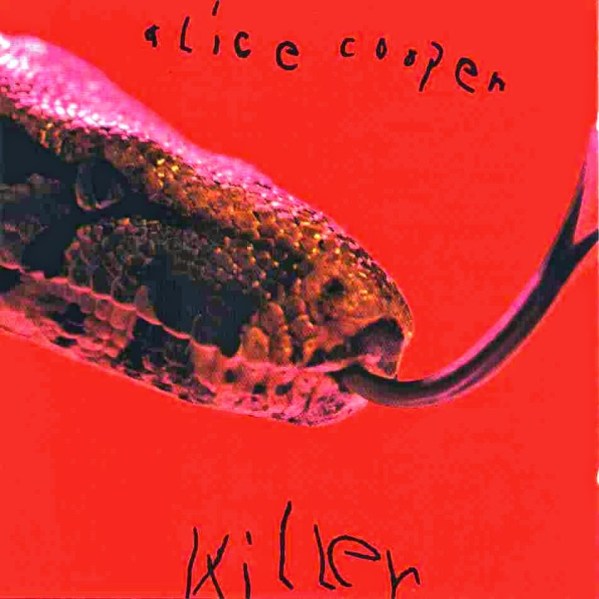
Killer
Together, it made for an instant classic—no easy feat to repeat. Yet, somehow, the band’s 1971 chaser, ‘Killer” not only matched ‘Death’, it exceeded it. Again, the band toggled between mean little rockers and elaborate theatrical pieces. While the singles “Under My Wheels” and “Be My Lover” both relied on standard-issue glitter riffs—the latter even ripping off “Sweet Jane they augmented them with smart twists. “Under My Wheels” opened with a frantic guitar outburst from Buxton that was as exciting as the song’s melody, while Smith followed with drum break of equal distinction.
In “Lover,” penned by Bruce, the band augmented the riff they lifted from Velvet Underground with an original chorus, an irresistible braid of guitars, as well as a campy finale in which Cooper served up his best Mae West impression. Still, the biggest stretch, was the eight-minute “Halo of Flies” which found these garage rockers pulling off a legit prog-rock epic, complete with multiple time signature changes, grand flourishes, and intricate musicianship, all while sounding tight as a drum.
For gut- level shock rock thrills, nothing before or since can match the raw death trip power of Killer. From the enclosed 1972 calendar of Alice twisting gorily from a rope, to the astonishingly bleak doom epic “Halo Of Flies”, to a mind scrambling stab at gallows-black humour called Dead Babies, “Killers” is arguably the first and most vital punk rock album; a still-menacing slice of primo American ugly at the dawn of the feel-bad decade. “Killers” also ends with the jarring, mean-spirited jab of a whining electric drill noise that can throw you into panic if you’re not prepared for it. So maybe Alice invented industrial music too. Somebody ask Throbbing Gristle.
School’s Out
Improbably, the band upped its ante yet again with their 1972 release ‘School’s Out” A concept album inspired by the angst of teen life, ‘School’s Out’ was both more theatrical and more focused than anything they’d release to that point. It found them interpolating original music with bits of West Side Story, as well as pieces penned by Disney writer Mack David and soundtrack czar Elmer Bernstein. Two years earlier, the band previewed their love of West Side Story by titling their second album ‘Easy Action’. This time, they referenced the musical in “Gutter Cat vs. the Jets ,” penned by Buxton and Dunaway. Their take gave the bass a lead role, buttressed by the glam panache of the guitars, before quoting the classic creations of Leonard Bernstein-Stephen Sondheim directly.
In “Street Fight ” Dunaway’s bass offered its own rumble, while, for “Blue Turk” Bruce wrote a swaggering jazz rave-up, elaborated by a swinging trombone solo from guest Wayne Andre. Even some classical influences turned up, in the gorgeous piano piece Ezrin wrote, “My Stars” all culminating in a “Grande Finale that underscored the musical ambition that lay below the band’s swagger.
A sort of drug-addled, dirtbag reworking of West Side Story, School’s Out is a trippy teenage rampage that mood-swings wildly from the grubby hard rock of the timeless bratty title track, to the head-stomping Public Animal #9 (surely the genesis of every self-destructo punk-pose, from Sid Vicious to GG Allin) and the slinky Luney Tune, to the acid-head, high-school-production-gone-wrong Broadway schmaltz that rounds off the album. It’s completely schizophrenic and, frankly, half-baked, yet it retains a sense of timeless killer cool that transcends the gloppy jazz-hands bullshit between the rock’n’roll parts. After all, when you’re a Jet you’re a Jet all the way.
Billion Dollar Babies
Remarkably, less than eight months after ‘School’s Out’ charged up to No. 2 on the charts, the band came back with ‘Billion Dollar Babies” which got to No. 1. Another concept album, ‘Babies’ both satirized, and celebrated, our collective taste for outrage—the very qualities that helped make this band stars in the first place. In today’s reality show era, the album’s embrace of base desires seems more relevant than ever. Hit single No More Mister Nice Guy, a relatively straight (by Alice standards) FM rock nugget, propelled “Billion Dollar Babies” into the charts and turned these slimy Detroit cobras into the least likely rock superstars of 1973. They responded to the accolades and attention with an endless tour filled with drugs, booze, blood, snakes, backstage in-fighting, and enough money for a lifetime’s worth of trouble. Meanwhile, the album, while more polished than previous records, spewed up plenty of pop-infused crunchers like “Elected” and the classic “Generation Landslide”, as well as “Sick Things”, one of the most alarmingly weird rock’n’roll songs ever written.
Its single, “Elected”—about a charismatic, but demented, guy who runs for office—seems downright visionary. “Elected” doubled as the most pop-friendly song the band ever recorded, a leap equaled by “No More Mr. Nice Guy” whose bouncy tune was penned by Bruce. For a left curve, the album opened with a cover of a song previously recorded by Judy Collins (“Hello Hooray”) chased by a hip-shaking glam-rocker, “Raped and Freezin’ that, in its last, mad minute, somehow turned into a Latin dance song. The band’s theatrical side returned in a cinematic, six-minute ode to hellish dentistry “Unfinished Sweet” topped by a salute to necrophilia “I Love the Dead” that could have come from the score of a David Lean epic.
Muscle Of Love
Though clearly the band was riding a creative high, trouble brewed in their ranks. Buxton’s long-term drinking had gotten so out of control, he had to be treated for pancreatitis, rendering him useless for much of the recording. Instead guest Steve Hunter played of the guitar solos, designed to mimic Buxton’s wiry style. The wear and tear on the band became even more apparent on what turned out to be their final album, ‘Muscle of Love”
This time, Buxton didn’t even make a cameo appearance, though management gave him a credit in the liner notes to keep the image of the band intact. In fact, guest Dick Wagner performed his parts. Also, Ezrin wasn’t at the dials, but, instead, Jack Douglas. Worse, the material wasn’t up to snuff. Even so, the band managed to serve up a few gems. The title song had the old metal thunder, while Smith contributed one of the most stirring melodies in the band’s history in “Teenage Lament ’74” A ravishing ballad, the song’s lyrics captured the inner turmoil of a kid who tries to fit in by dolling himself up in glitter garb only to feel shame over the ridiculousness of the look and the conformity it implies. Considering the boost that glam gave the band’s career, it took genuine guts to write a tale like this. Regardless, neither this song, not any other on the album, became a hit, so the group drifted apart, making way for what turned out to be Alice Cooper’s solo career. For his new band, Cooper hired the two guitarists who subbed for Buxton on the original group’s last few albums (Wagner and Hunter).
Meanwhile, the three other functioning members—Bruce, Dunaway and Smith—struggled to rally by rebranding themselves as Billion Dollar Babies, an assemblage that released one album in 1977, titled ‘Battle Axe’. Unfortunately, it lacked the old punch. So did a solo album released by Bruce, titled ‘In My Own Way Any hope for a full reunion of the classic line-up ended in 1997, when Buxton died of pneumonia. More than a decade later, all of the original members were inducted into the Rock & Roll Hall of Fame—an important gesture. It offered as least some acknowledgement that what made Alice Cooper a legend wasn’t the image created by one man but the music made by five.
The last and least of the original band’s incredible 70’s run, this is still a pretty solid album, albeit one that trades in a lot of the spit, fire, and venom of their last few albums for a stab at 70’s AOR radio accessibility. The glammy Teenage Lament ’74 is really the only enduring hit, and if anything, the record is mostly remembered for its bulky cardboard box packaging. Still, if you like FM rock and cheeky odes to masturbation, there’s plenty to like about this one.
Throughout his long and storied career there have been lean times, mean times, times of oddball D-list celebrity status and times when a man just wants to play golf and talk about Jesus. And through it all Alice Cooper has remained one of the most consistently entertaining and iconic figures in rock’n’roll. And that’s why we love him To death.
“What’s New, Tomboy?” could be considered Damien Jurado’s finest collection of music to date, with songs exuding the inviting warmth of a lone porch light gleaming amidst the disorienting darkness. Though more stripped and grounded in their execution, songs like “Sandra”, “Ochoa” and “Alice Hyatt” are generous and candid in their vocabulary, eschewing the sometimes abstruse imagery of Jurado’s previous releases. “There is no hiding on these tracks.” Though What’s New, Tomboy? is the first Damien Jurado record that ends with a question mark, he has never sounded more assured and content in giving up his ghosts: “I’m only living sentences // That were long before I got here.”
Sometimes a synth-pop song’s only purpose is to make you feel alive on the dance floor, and that’s fine. You can still feel a deep emotional connection as you latch onto its pulse and forget your worries. But the kind of life-affirming synth-pop that makes you cry—think giants like Robyn or LCD Soundsystem—are the artists that will ruin your life (in the best possible way). New York City’sNation of Language have been releasing singles since 2016, and their lead singer and songwriter Ian Devaney recently collaborated with Strokes drummer Fab Moretti on a project called machinegum for an album last year. It was obvious, even several years ago, that Devaney was an unusually consistent songwriter—every song was capable of making you pull over your car for a quick sob or triumphantly stick your head out of the sunroof with outstretched arms. His ’80s-indebted electro-pop meshed beautifully with the dance-punk sounds of the city’s yesteryear, and his songs had an emotional immediacy that was un-rivalled. Now, having finally unveiled their debut full-length, which contains some of those incredible early singles, it feels like Nation of Language have more of a right to claim the “soaring synth-pop” mantle than anyone else right now.
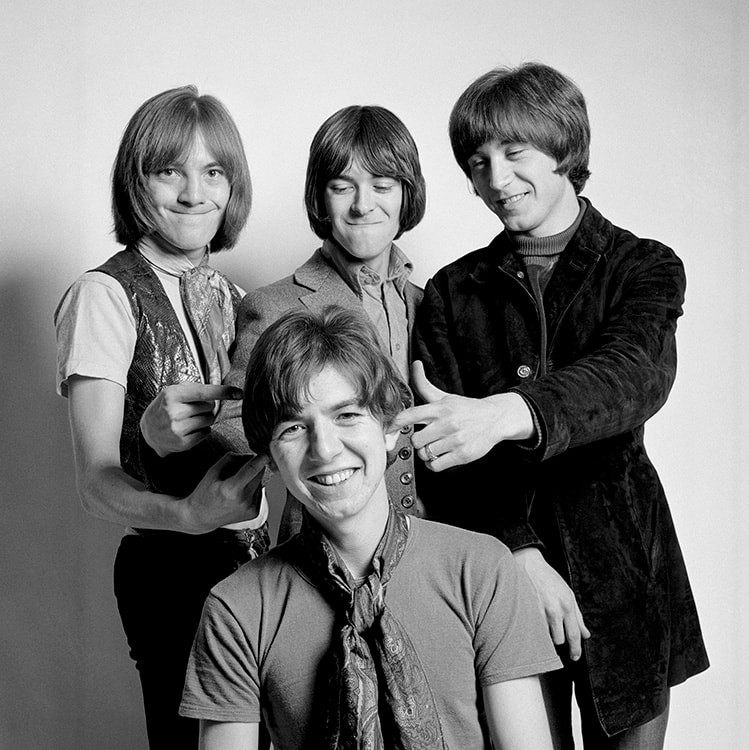
Released this day May 24th, 1968: TheSmall Faces third and final studio album “Ogden’s Nutgone Flake!” Watch this one time only Small Faces theatrical performance of this amazing concept album on the BBC’s Colour Me Pop . Songs featured: “Song of a Baker”, “Happiness Stan”, “Rollin’ Over”, “The Hungry Intruder”, “The Journey”, “Mad John” and “Happydaystoytown”, narrated by ringmaster Stanley Unwin!.
Ogdens’ Nut Gone Flake is the third (and final) studio album and the first concept album by English rock band Small Faces their Ogdens’LP peaked at number one on the UK Album Charts on June 29th, where it remained for a total of six weeks. Ogdens’ Nut Gone Flake only reached No. 159 in the US.
Widely regarded as a classic album, and featured an innovative round cover, the first of its kind, designed to resemble an antique tobacco tin. The title and the design of the distinctive packaging was a parody of Ogden’s Nut-brown Flake, a brand of tobacco that was produced in Liverpool from 1899 on wards by Thomas Ogden.
The two-act concept album consisted of six original songs on side one and a whimsical psychedelic fairy tale on side two relating the adventures of “Happiness Stan” and his need to find out where the moon went when it waned. It was narrated by Stanley Unwin, after original plans to have Spike Milligan narrate the album went awry when he turned them down.
Critics were enthusiastic, and the album sold well, but the band were confronted by the practical problem that they had created a studio masterpiece which was virtually impossible to recreate on the road.
Because of the album’s complexities, it was never performed live. It was performed as a whole once on the BBC’s television programme “Colour Me Pop” on Friday 21st June 1968.
Although the band mimed to the studio recordings, their microphones were left on to capture ad libs.
The Small Faces on the UK TV Program ‘Colour Me Pop’ in 1968.
Set List: 01. Song Of A Baker 02. Happiness Stan 03. Rollin’ Over 04. The Hungry Intruder 05. The Journey 06. Mad John 07. Happydaystoytown From 1968.
The Small Faces set is a mix of live performance, studio material and video. The centrepiece is the performance of songs from Ogden’s Nutgone Flake, complete with appearance from Stanley Unwin.
Emily Keener has marked her 2020 return with unbridled honesty, intimate reflection, and a hauntingly poignant indie folk sound. It’s a winning combination for the 21-year-old Cleveland-based singer/songwriter, and one that makes her sophomore solo record a tremendous success: A stirring coming-of-age soundtrack to life and love, isolation and connection, “I Do Not Have to Be Good” hails Emily Keener’s rise as a vulnerable lyricist and a breathtaking songwriter.
I Do Not Have to Be Good by Emily Keener was independently released Friday, May 22nd , 2020. An ambitious project four years in the making, Emily Keener’s new album is a sophomore triumph: She was a former Voice Season 10 competitor but please let that not put you off, Keener’s music takes a refreshingly clear, thoughtful approach to significant coming-of-age questions of intimacy and purpose, sex and identity, connection and living with intent. Her songs are haunting like those of Phoebe Bridgers, and equally moving; there is no question that this young up-and-comer is going places.
In premiering the album’s lead single “Do You Love Me Lately?” critics praised Keener for crafting “a raw indie folk song exploring vulnerability and insecurity,” calling it “heart-wrenchingly beautiful in its grace and overwhelming honesty.” The singer’s depiction of grief and anguish through delicate vocals and expressive, nuanced melodies also earned her a spot on which further highlighted how the track covers so much more than the descriptions of breakup or love’s loss would suggest: “The song is about finding oneself in a haze of uncertainty and self-doubt; it’s about learning to let go of expectations, and learning to be vulnerable; about diving headfirst into our fears, and dwelling in the darker spaces of our psyche.”
While certainly buoyed by the inimitable beauty of its lead single, I Do Not Have to Be Good is a wondrous, enchanting journey in and of itself. The album expands the breadth of Keener’s art and artistry through juxtaposed moments of serenity and turmoil, characterized as much through sonic highs and lows as by moments of emotional tranquility and intensity. The haunting opening track “Nap” released earlier this May as a third single, sets the record’s tone perfectly with its evocative depth, percussive resonance, and achingly stripped, raw arrangement:
Thus begins Keener’s complete unveiling: a true odyssey into the mind’s eye, “I Do Not Have to Be Good” brings us closer to the artist than ever before through diary-like entries spelled out in song after heart-aching song. Whether it’s the touching interplay of guitar and piano subverting her second single “Boats” or the emotionally resonant heart-on-sleeve performance in Keener’s record elevates real life – those special, little moments of understanding, longing, love, belonging, and so on. It’s a testament not only to her growth as an artist, but also to her handle on the magic of our shared human experience.
Spiritual, immersive, and unabashedly true: This album could be a soundtrack to our darkest days, as well as our lighter ones. It’s a beautiful listening experience through and through, and one that feels fresh and inviting every time we listen. Emily Keener has tapped into greatness on her sophomore effort; here’s to hoping we hear much more of this artist-to-watch in the years to come. peek inside Emily Keener’s “I Do Not Have to Be Good” as the artist goes track-by-track through the music and lyrics of this her sophomore album!.
Nap
I wrote Nap in my late-teens as I was starting to navigate adulthood. It’s about the desire to become enmeshed with someone when the world feels too overwhelming to process alone. In the midst of the chaos of 2020, I relate to it even more. I hear my past self differentiating between what was familiar and what I actually believed to be true. Dan Fernandez plays a dynamic percussion part that echoes in the distance, along with layers of spectral vocals I created with Lexicon effects processors. Dalton Brand wove together the ethereal effects that make the track feel like it’s inhaling and exhaling. “I would take a nap with you/Over anything that god could do/You’re not going to bed without me/Not going anywhere without me” The lyrics are informed by the deep confusion and discomfort I felt as I let go of the religious certainty that was my foundation in childhood. Life felt like too much to handle. I wanted to hole up and sleep forever. That feeling has dissipated over time, but it comes and goes in waves still. My hope is that the song can be a reminder of common humanity; the struggles and coping mechanisms we share.
Do You Love Me Lately?
We had to record three or four different versions of this one before it felt right, and I guess that’s fitting for a song that’s about questioning yourself romantically. It’s set in the hollow space where openness isn’t reciprocated, movement isn’t mirrored; you’re waiting around for someone to figure out whether they care for you or not. The meaning has morphed over time for me, but the story started off as a fantasy about an unavailable dreamgirl. “Look at me, I’m taking it badly/Nose to my knees, I’m wondering madly/You say you didn’t love me then/But do you love me lately?” The chorus is a plea to this spectre I had imagined so much with, and I wanted it to sound raw and sheepish and insecure; a cry for reassurance within an uncertain dynamic. It touches on what we truly desire from our partners, the things that we project onto others unconsciously, and the types of love we idealize.
I Know (feat. Cathalyn)
This song is a reflection on feeling a reciprocal ‘knowing’ with someone. The kind of connection that transforms simple shared experiences into a loving space that you’re both fully present in. A pining is woven in with small intimacies like blankets and morning coffee. There’s this assertion throughout the song– ”I know, I know, I know” — and the lyrics eventually reduce to nothing more than short, sure phrases. When you’re apart from someone you really care for, it’s almost like you have to be extra adamant to ground it all in reality. “We belong, we belong, we do/You know my soul and my soul knows you.” I was lucky enough to be joined by my friend Cathalyn (of The Katy) on this track. She lent lovely melodies that color the ending with warm, anthemic energy.
I Don’t Know Anything
This song is about self-betrayal and the micro-interactions that cause a person to distrust themselves over time. When I listen to it, I hear my past self writing from an insular world; a cocoon, safe and separate. “I feel years behind the people/In the places I go/So much I could say, so much I should know.” I felt like a stranger to my peers, almost like there was an out-of-print book about existing that everyone else had read but I’d missed out on somehow. No one had to say “wow, you don’t know anything” outright. That was just a given to me, a core belief I held. Within the haze, though, there were some guiding lights that brought me back to myself. I’m striving to trust my own perception and intuition, and maybe know one or two more things eventually.
Boats
I wrote this one after sailing Lake Erie on a summer night under the stars. It was my first and only time on a sailboat, so it’s nice to have a musical snapshot of it. Everything was calm and there weren’t any other boats or people in sight. I felt very present and at peace, no thoughts running through my head other than to notice how beautiful it all was. I wanted to make something simple to reflect that serenity. There’s a bittersweet aspect to it, a recognition that every experience comes to an end. “I’ll start building a boat/Late into every night/To sail us both away from the passing of time” I sing it to appreciate the loves in my life and the moments I get lucky enough to end up in every now and again.
Static
Static was recorded live in-studio with Curtis Leonard. We were both playing acoustics, and doing full take after full take. The energy of the performance we chose is really special to me and it’s exactly what I hoped it could be. The song observes the decline of a relationship and the fundamental differences that have worn it down over time. Even things as simple as disagreements about what music to listen to can speak to resentments that have built up as a result of unconscious patterns and unrealized desires. “What were we doing on that couch?/No one in that room was gonna figure anybody out.” I associate Static with a loss of connection. A transmission that’s been blocked, communication between two entities that has devolved into something unrecognizable. In essence, the song is about sifting through that convolution to find a solid truth to hold. The chorus is a flashback to my childhood. A house nestled in thick forest, a dinner bell on the side, we’re facing the barn, a song’s playing somewhere. “Clear as a bell on a cabin wall/Calling me home when the sun goes down and the chorus falls” We listened to a lot of country music when I was little. I felt inexplicable comfort and satisfaction when the chorus would arrive, when the singer finally got to the hook they’d been setting up the whole time. The song could be ridiculous or heartbreaking, and it would still feel like a great relief to me. A high, even. It’s what made me want to write music. “I don’t need your 3 AM commiserations/Cause there’s a hook for every lonely minute/On this radio station” I look for closure and familiarity in songs when there is little to be found elsewhere. In uncertain times, I still find myself listening for the hook.
Mary, I Love Her
I wrote this song as a tribute to Mary Oliver, a couple of weeks after she passed away. Her poetry made a deep impression on me, and always seemed to pop up in my life when I needed it most. The first line (“I do not have to be good”) is also the album title, and it is a response to Mary’s poem ‘Wild Geese’ which reads:
You do not have to be good
You do not have to walk on your knees
for a hundred miles through the desert repenting.
You only have to let the soft animal of your body
love what it loves.
I’ve always found these lines to be deeply affirming. Having spent years mired in self-doubt and perfectionism, the idea of presenting as anything other than good and perfect was alien to me. But this poem in particular got through to me time and again. It helped shape me into a more compassionate person, toward myself and others. I thank Mary for her direct, heart-opening truth.
Elbow
This takes me back to the attic apartment; its rain-speckled windows framing rows of slate gray roofs and patches of light gray Cleveland sky. The tone of the song itself is gray, and the lyrics describe what it feels like to hide from myself in my own body, in my own home. I’d begun to notice how suppressing certain emotions had affected my sense of self over time. “Never been worse/Never been better/Sleepwalking in the strangest weather” It’s true that when we push things down, they just show up in other ways. I started having vivid, disturbing dreams. I was keeping my mouth closed because I had no idea what it might say. Eli Hanley plays the erratic piano part, an lilting undercurrent of chaos. When I wrote the song, I was afraid of myself and I wanted to retreat from everything. The emotional qualities remind me of fog, and the shapes of things concealed in fog.
Comfort
I didn’t write Comfort in a motel room, but I think the song lives in one. The recording itself is rough and smoke stained, and it feels like paper that’s slowly singeing. I remember sitting at the console alone, working on vocal arrangements all night. Layers and layers of Echoplex, rough transmission. The lyrics describe a breaking point; the moment I realized that the role I was playing with someone had been causing me pain. “I can be your comfort or your blinding light/Tell me how you want me to leave you tonight” Leaving felt like too big of a thing to do alone, so I found myself waiting and asking–consciously and unconsciously–for them to help me move on. But that defeats the purpose, doesn’t it? Separating from someone reminds me: I’m stuck with myself. I have to walk my own path, do hard things, shift my own patterns. It’s not easy to accept that. When people disentangle from each other, the pain feels elemental. The sense of safety and comfort you built together is no longer there. It’s bewildering. I found myself questioning reality, wondering what the hell had happened, what context I must have missed that might explain my situation to me. “They burned like angels together/They thought that playing house could make a home/Oh, is this how the story goes?/All my waking hours are blurry pictures/And I’m falling asleep to static on the radio” I lost parts of myself through entanglement with another. It’s like when you forget to clasp the ends of necklaces, and all the chains become a messy knot. Trying to force it apart feels dangerous; what if something snaps? Studying the chains to see where they lead is frustrating, they all form one entity at this point and nothing makes sense to the eye. Disentanglement happens somewhere between the two points. It’s gently tugging on strands to see what gives and what doesn’t, and keeping your eyes open to notice patterns and signs that you’re moving in the right direction. I’ll probably go my whole life seeking comfort and looking for home in people and in things, like most everyone. But hopefully that won’t drive my choices every day. Maybe only sometimes.
I Do Not Have to Be Good by Emily Keener was independently released Friday, May 22nd , 2020