Chicago trio Dehd will return with their new album “Flower of Devotion”, due out July 17th via Fire Talk. They previously shared lead single “Longer” and have followed that up today with the second single “Flood.” The track’s release comes with a new music video directed by the band’s very own Emily Kempf and Andrew Miller.
“I want nothing more than to be a loner,” Emily Kempf sings early on Flower of Devotion, It’s a startling admission coming from a songwriter who, just a year ago on Dehd’s critically acclaimed Water, wrote eloquently about the joys and pains more than anything, the necessity of love, compassion, and companionship. But then, “admission” isn’t really the right word here, given the stridency of Kempf’s tone. A flood is powerful, uncontrollable, devastating. Water can nourish or destroy.”
The record ups the ante on Dehd’s sound & filters in just enough polish to bring out the shining and melancholy undertones in Jason Balla and Emily Kempf’s songwriting, even as it captures them at their most strident. Balla’s guitar lines at times flirt with ticklish cosmic country, while at others they reflect the dark marble sounds of Broadcast. Kempf, meanwhile, establishes herself as a singer of incredible expressive range, pinching into a high lonesome wail, letting loose a chirping “ooh!,” pushing her voice below its breaking point and letting it swing down there. When she and Balla bounce descending counter-melodies off one another over McGrady’s one-two thumps.
What makes Flower of Devotion so impressive is how its creation seems to have strengthened its creators, both as individuals and as a unit, even as they’ve stared down their own limitations. It’s also striking just how much fun they seem to be having in the process. “It’s okay to be light hearted in the face of despair,” Kempf says. “Flood” is a meditative and atmospheric indie rock offering that carries a great deal of emotional weight and the video perfectly captures this emotive quality visually.
Flower Of Devotion by DEHD out May 22nd on Fire Talk
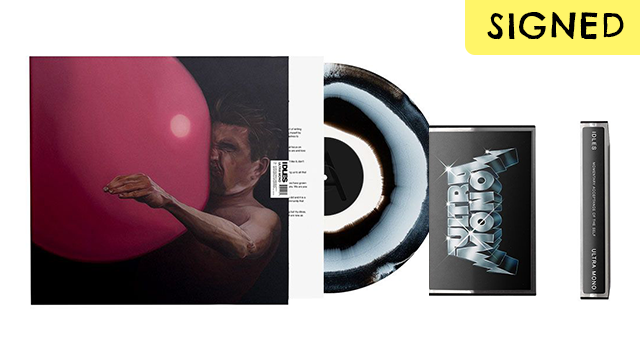
IDLES return with their highly anticipated third album – Ultra Mono. Sonically constructed to capture the feeling of a hip-hop record (including production contribution from Kenny Beats), the album doubles down on the vitriolic sneer and blunt social commentary of their past work.
“Ultra Mono” is the acceptance of now and I and you. We are not the same but behold something together that is true: the moment. I can not control anything but my ideas, my actions and my emotions, I can not control yours. In allowing our art to be momentary, we give ourselves and you the opportunity to perceive who we all are now as truth. It is an engine of all that we can’t control: our race, our age, our class and our past in the form of what we control absolutely – our music, our now.
Joy is still an act of resistance. No more apologies. We will work hard and work honestly. Ultra Mono is joy’s engine and it goes. Well that’s a bit of good news eh? Joe Talbot & his band of merry men are once again back to put the world to rights. ‘Ultra Mono’ is their first album since the brain meltingly good ‘Joy As An Act of Resistance’ – we’re a little bit excited. There are 2 gorgeous versions too – the vortex swirl will look lush spinning on your turntable but we’re particularly taken by the look of the deluxe version with the ‘ultra mono’ catalogue – it looks like it’s going to be rather lovely.
Act fast enough and you can snag a limited print too – an abstract take on the album cover, perfect for framing. far be it for us to tell you what to do, but we’d advise you get your orders in sharpish for the vortex and deluxe editions even if you miss the print – the last two had tasty limited fancy versions that went very fast.
We hope that you feel a sense of strength and purpose from listening to Ultra Mono. It is meant to fill you with the violence love and the rhythm of now. You are now. You are all. All is love.” – Joe Talbot
IDLES – “Ultra Mono” Out September 25th Partisan Records.
On May 1st, 2020 Surfer Blood were due to release “Carefree Theatre”, their fifth studio album, and a return to their first label Kanine Records. Written and recorded in South Florida, its the first record the band has released since John Paul Pitts, the singer and main songwriter moved back to the state. It’s an album not as much looking back as coming full-circle.
The Carefree Theatre in West Palm Beach, FL was the only venue in town for most of the band’s childhood; it’s where kids would go for everything from touring punk bands to community theater productions. It was the kind of experience that would expose a twenty-one year old songwriter to a world outside of Florida, inspire him to start a band, and tour the country.
It was a leap of faith the band took in 2010 with the release of Astro Coast, the band’s celebrated debut. Surfer Blood’s rise was remarkable, from rehearsing in a Florida storage container to mainstage at Coachella and touring with the Pixies. Then after an all-too-commonplace major label disaster, the band rebounded quietly, putting out two adventurous albums and consistently touring the world for over a decade. It’s the kind of resilience and hard-work that that’s admirable in our disposable age, and it looks like the band’s output won’t be slowing down anytime soon: ten years, four full-length records, and a few lineup changes later, the band has re-centered itself with its tightest and most focused songs in years.
Surfer Blood reschedules their album release and tour dates. Carefree Theatre is now out July 17th on Kanine Records and their North American tour dates kick off the following week and continue into Feb. 2021. In the midst of the band’s self quarantine, they’ve started a series of home movies. We’re premiering the first edition for the album’s recent single “Karen” that Flood Magazine called “as much an earworm as anything we’ve come to expect from the group over the years…“
“Karen” is from the upcoming album “Carefree Theatre” out May 1, 2020 on Kanine Records.
Though taken from the sessions for their record, “Joy as an Act of Resistance”, this song from Idles feels distant from the more hopeful messages of the band’s acclaimed 2018 record. After ramping up with chugging, distorted bass lines, frontman Joe Talbot declares in his signature gravelly tones, “Forgive my crippled head / Our revolution’s dead.” Despite the power and fury dripping from every word, the song feels like the aural equivalent of a tiger pacing around the trapping pit in which it’s fallen.
“Mercedes Marxist” is out as 7-inch backed by “I Dream Guillotine” . Ahead of their sold-out US tour Idles“Mercedes Marxist” – pulled from the sessions for their latest LP ‘Joy as an Act of Resistance.’ Frontman Joe Talbot says: “‘Mercedes Marxist’ was a strange beast for us, after ‘Rottweiler,’ it was the first song we wrote for ‘Joy as an Act of Resistance.’ I was pissed off at what I was and where I was: I was sofa surfing on the weekends and spending the weeks looking after my mum. My life balance was way off and this song reflects just how useless I felt. It was me at my worst and without any buoyancy it became catharsis. It was the last splurge from Brutalism so we omitted it. I like it now.”
With all the crazy stuff going on in the world right now, it feels kinda weird having to make this announcement. We weren’t even sure if we’d be able to. This photo was taken the first time we saw each other in 3 months because of quarantine. But the show must and will go on again someday, and we hope this will resonate with you during these strange times. Can’t wait to share the Album2‘Play With Fire’ coming August 21st, 2020 on Suicide Squeeze Records.
When asked about the meaning of the new album’s title Play With Fire, front woman Sade Sanchez said “Don’t fear mistakes or the future. Take a chance. Say and do what you really feel, even if nobody agrees with your ideas. These are feelings that have stopped me in the past. I want to inspire others to be freethinkers even if it causes a little burn.” The fight against intellectual colonialism wages on, and Sade, Irita and Ellie of Los Angeles psych garage trio L.A. Witch are ready to do some damage. Their 2017 debut pulsed with dark, surfy undertones while maintaining a raw punky crunch in their guitar tones and vocal snarls, a surefire smash if you dug bands like Death Valley Girls, Dum Dum Girls and La Luz.
Their sophomore effort comes out mid-August and you can listen to their brand new single below. Suicide Squeeze has two coloured vinyl variants to choose from, a multi-coloured splatter version limited to 500 copies and a translucent yellow colourway limited to 1000. Smash that ‘buy’ button to get to the goods
As made clear already by widely-spread preview track “Kill It In The Morning” and first single “Sick,” The Twilight Sad’s third full-length, No One Can Ever Know, marks a sonic shift for the band. Freshly inspired by a listening diet of Cabaret Voltaire, Can, Liars, Magazine, Autechre, and Public Image Limited, the band turn to a dark, synth-heavy sound for No One Can Ever Know; the resulting LP shares thematic and sonic space with the most innovative offerings from Depeche Mode, The Cure, or even Nine Inch Nails. “We wanted to be a lot more spontaneous, get outside our comfort zone – not to fall back into repeating what we’ve done previously,” explains guitarist Andy MacFarlane. “So we moved to London for a month to record at The Pool and got Andrew Weatherall involved to bounce ideas off and to generally reassure us of the direction we were already progressing in – toward a sparser sound, with a colder, slightly militant feel.”
Under the guidance of Weatherall the band experimented with vintage analogue synths – borrowed from producer Ben Hillier – to work on the core sounds they wanted, finding further inspiration in the distinctive production style of innovators like Factory Records’ Martin Hannett and Cluster‘s Conny Plank.
In recent weeks, musicians have come up with an impressive variety of ways to keep their fans amused during lockdown. There have been online listening parties and Q&As, free guitar lessons via Instagram, live performances beamed direct from bedrooms, DJ sets and kitchen discos. But no artist has risen to the task of keeping their audience occupied quite like Bob Dylan. A crowdpleaser only in sofar as the crowd he attracts would be pleased whatever he did – a significant proportion of his latter-day audience are so partisan you get the feeling they’d be sent into paroxysms of ecstasy if he stood on stage with a comb and paper for two hours, he simply released three new songs. An artist who’s quite literally said nothing new for the last eight years (his last three albums have been comprised entirely of covers from the Great American Songbook, the rest of his release schedule made up of archival recordings).
The first, “Murder Most Foul”, went on for 17 minutes and sounded unlike anything he had previously recorded, a recitation set to a haze of piano, violin and lightly struck drums. The second, “I Contain Multitudes”, was significantly shorter and more conventional – a delicate, percussion-free ballad – but still contained enough lyrical heft to provoke news stories: within a week of its release, the British press was triumphantly reporting that someone had cracked the mention of the Irish village of Ballinalee in its first verse, tapping a Harvard professor to attest that it was a reference to the work of a blind 18th-century poet called Antoine Ó Raifteirí. The third, “False Prophet”, was a ferocious blues song, the latest in a series of adaptations of other artists’ material that stretches back to the dawn of Dylan’s career: this time a 1954 B-side by Billy “The Kid” Emerson, an obscure R&B singer-songwriter once signed to Sun Records. In the lyrics, meanwhile, the search for the Holy Grail jostled for space with characters from old rock’n’roll songs – Ricky Nelson’s Mary Lou, Jimmy Wages’ Miss Pearl – recast in the role that Virgil played in Dante’s Inferno: “fleet-footed guides from the underworld”. Clearly, the task of unpicking everything that was going on in the lyrics would keep Dylanologists indoors long after lockdown ended.
Perhaps more importantly, they were the kind of Dylan songs that brooked very little argument about their quality, the kind of Dylan song you could play to a Dylan agnostic as testament to his continued greatness. This is a category of material that’s been a little thinner on the ground on his latest albums than their more hysterical reviews would suggest: for all the hosannahs thrown in its direction, it was entirely possible to listen to 2012’s Tempest and be alternately thrilled by the furious power of Pay in Blood and faintly mortified by Roll on John, a Lennon tribute that strung Beatles lyrics together in a way that would make Noel Gallagher blush.
Happily, the standard set by the three tracks that heralded its arrival is kept up all the way through Rough and Rowdy Ways. The musical abstraction of Murder Most Foul turns out to be a feint: tellingly it occupies a separate disc to the rest of the album when the whole thing could easily have fitted on one CD. The rest almost exclusively deals in music that hails from the era before Dylan showed up and changed everything: with the possible exception of the lambent penultimate track, Key West (Philosopher Pirate), which carries a faint hint of The Basement Tapes about its sound – albeit with an accordion filling the space Garth Hudson’s organ would have done – everything else feels directly rooted in the 50s or earlier.
There’s a lot of rhythm and blues, while I’ve Made Up My Mind to Give Myself to You sets its utterly beautiful descending melody to a sound that carries traces of both small-hours doo-wop and pre-rock’n’roll pop. The musical inspiration behind Goodbye Jimmy Reed is obvious from its title, but by the third verse, Dylan doesn’t seem to be talking about the titular bluesman so much as himself when forced to face down the various expectations that audiences have attached to him virtually from the moment he first appeared: “They threw everything at me, everything in the book … they had no pity, they wouldn’t lend a hand, I can’t sing a song I don’t understand.”
These are musical areas in which Dylan has worked for years. What sets Rough and Rowdy Ways apart from Tempest or 2006’s Modern Times is the sheer consistency of the songwriting; there’s nothing here that sounds like dashed-off filler, nothing that doesn’t hit home. Dylan nuts have a great line in telling you how hilarious lyrics that seem capable of raising at best a wry smile are – “Freddie or not, here I come”, “I’m not dead yet, my bell still rings” etc – but My Own Version, in which the protagonist turns Frankenstein and builds himself a lover out of bits of corpses, is packed with genuinely funny lines amid the references to Shakespeare, Homer’s Iliad, Bo Diddley and Martin Scorsese, as well as a curious interlude during which Freud and Marx are depicted as “enemies of mankind” burning in hell: “All through the summers into January, I’ve been visiting morgues and monasteries … if I do it right and put the head on straight, I’ll be saved by the creature that I create.”
This is obviously humour of a dark hue: if Tempest’s prevalent mood was one of murderous fury, then here it’s brooding menace and imminent doom. It’s there in the music – the weird tension in Crossing the Rubicon’s muted R&B shuffle and the way the backing on Black Rider keeps lapsing into ominous silence. You lose count of the lyrical references to judgment day and Armageddon, of the mysterious characters that keep cropping up with malevolence on their minds: “I can feel the bones beneath my skin and they’re trembling with rage, I’ll make your wife a widow, you’ll never see middle age,” he sings on Crossing the Rubicon. Of course, grouchily informing the world that everything is turning to shit has been one of Dylan’s prevalent songwriting modes for a quarter of a century – it’s the thread that binds Not Dark Yet, Things Have Changed, Ain’t Talkin’ and Early Roman Kings, among others – but this time the message seems to have shifted slightly: if you think everything has turned to shit now, Rough and Rowdy Ways keeps insisting, just you wait.
This isn’t perhaps the most comforting communique to issue in the middle of a global pandemic, but then the man behind it has seldom dealt in soothing reassurance. And besides, it doesn’t matter. For all its bleakness, Rough and Rowdy Ways might well be Bob Dylan’s most consistently brilliant set of songs in years: the die-hards can spend months unravelling the knottier lyrics, but you don’t need a PhD in Dylanology to appreciate its singular quality and power.
Rough and Rowdy Ways is released on Columbia on 19th June.
I can’t believe it’s been 22 whole years since my self-titled debut album was released into the world!, I see my upcoming album “Unfollow The Rules” as the bookend of sorts to this record. “Unfollow The Rules” was even recorded in some of the same studios as my first album. My new single & music video are out now “You Ain’t Big” is poking fun not only at myself but also the music industry in general. It is straight to the crux of the matter, in terms of being an American Artist in particular.
“You Aint Big” The video uses vintage footage to reflect the classic sound of American country music of the 40’s and 50’s. The opposing images in the video serve to show how different life was for black and white Americans in the 1950’s as it has sadly remained. I think it rings appropriate for this time and professes a certain truth to today. “I originally wrote the song “You Ain’t Big” about the strange fact that in the music business worldwide until recently (our estimation has fallen considerably) no matter how well you’ve done anywhere else, if you couldn’t make it in the heartland of the US you weren’t really considered a true star. Think Little Richard, Elvis, the Beatles and Julio Iglesias. However, in releasing this song now which references states such as Alabama, North Carolina, Kansas (where I have had the pleasure of playing shows) and even New York and California, all troubled places during this tremendously turbulent time nationwide, the term “You Ain’t Big” has taken on additional meanings. The song at heart is apolitical. Its vintage sound harkens back to the classical American country music sound of the 40s and 50s and with the help of opposing images in the video of how different life was for white people compared to black people in the 1950’s, as it has sadly remained, I think it rings appropriate for this time and professes a certain truth.” – Rufus Wainwright
Unfollow The Rules album is right around the corner and there is so much more on the way.
’Damsel In Distress’ is an homage to Joni Mitchell in some ways,” says Wainwright, “particularly the structure. My husband and I now live in Laurel Canyon. I wasn’t that familiar with Joni’s music but Jörn became obsessed and took me on a journey into her music. We ended up hanging out with her and I get now why she’s one of the greats. So it’s part Laurel Canyon, part a song about a personal relationship that I’m trying to come to terms with, but mostly my Mitchell virginity being broken.”
Start the countdown! My new album “Unfollow The Rules” is out in exactly one month! The wait is almost over and I can’t wait to share this full body of work with you.
Rufus Wainwright under exclusive license to BMG Rights Management,Blake Mills appears courtesy of New Deal Records / Verve Records
Recorded at Sound City, United Recording, Mama Froom’s Studio
There should be a law requiring Hinds to release all of their future albums during the summer season in perpetuity. Grant that their latest, The Prettiest Curse, dropped in June out of sober respect for the COVID-19 pandemic, which forced a reschedule from its original April 3rd date. Also grant that the tone baked into every Hinds record, from 2016’s Leave Me Alone to 2018’s I Don’t Run, pairs perfectly with warm, sunny days spent driving on beachside highways with the windows rolled down, even when they’re singing about loneliness, breakups and the never ending quest for hugs and cuddles.
Hinds has everything to be mainstream success – great musicians, write great tunes and are four good-looking women living life to its fullest. Twenty years ago, this album would have been played non-stop on the radio and Riding Solo would have been the song of the summer. The ruination of American radio might want up depriving the masses of their good vibes but their loss is our gain.
Hinds has managed to lean into some pop styling while still keeping contact with that fuzzy garage sound that made us all fans. The album release getting delayed by two months might make me love more than I would have in April as it is the perfect album for driving around with the windows down and providing a 40 minute escape from the world around us.
In addition to Riding Solo, some of my other favorites are Just Like Kids (Miau) – a funny and biting tune about getting unsolicited advice on their tunes (as if they need it). Come Back and Love Me , an acoustic track and change of pace that leans into their Spanish heritage. While Hinds might have tweaked their somewhat, they remain the perfect to listen to and see live when you’re looking for a good time.
Three times is the charm and Hinds certainly have not disappointed with their third full record ‘The Prettiest Curse’ which continues their run of blissfully sunny indie pop. Afraid that they were risking being type casted or too predictable, the Spanish troubadours initially shyed away from the bright feel that has already served them so well. But you can never have too much of a good thing and the girls have decided to embrace their core sound and develop it further as explained by their singer and guitarist Carlotta Cosials;
“We’ve been very good at doing pop melodies, since forever but we’ve been banning ourselves from doing them. Now suddenly because we met so many producers writers and having sessions with them, we realised that those pop melodies and styles we have been banning have nothing wrong in them and were cool too.”
Effervescence is a key ingredient in all their music, but The Prettiest Curse’s bubbliness is more pronounced, the froth that shapes the band’s rising to the surface in a slightly broader coating. It’s not unusual for musicians to try updating their sound with outside influences and unexpected genres,
The Prettiest Curse. Hinds—Carlotta Cosials, Ana Perrote, Amber Grimbergen, and Ade Martin—have a strong grip on their musical identity, and they’re not keen on a makeover.
Make sure you grab yourself a copy of Hinds’ ‘The Prettiest Curse’ right now – available on CD, Light Blue Vinyl plus 12 x 12 Signed Art Print + FlexiDisc and an incredible Bundle with a T-shirt chucked in!
Pinegrove’s new album begins with a breath and ends with a shimmering exhalation. In between is “Marigold”, an urgent, multivalent meditation—and an expanded take on the blend of alt-country, indie rock and cerebral humanism that’s inspired the band’s ardent fan community. Marigold marks their Rough Trade Records debut, offering what songwriter Evan Stephens Hall calls a “heart-first” perspective. Those familiar with Pinegrove will recognize signature elements of the band’s sound: literary yet conversational lyrics, geometrically interlocking guitars, the dynamic shifting shadows of rhythm and structure. Marigold is the first true collection of Pinegrove songs that addresses (or doesn’t) the events that have unfolded since lead singer Evan Stephens Hall’s admission of sexual coercion in late 2017 via a Facebook post. Marigold also follows Skylight’s tendencies to aim for a softer, more delicate, more intimate sound than anything on Cardinal.
But this effort marks the most spacious, bold, and well defined iteration of the project yet Formed in 2010 by childhood friends Evan and drummer Zack Levine, Pinegrove have released three previous albums —Everything So Far (2015), Cardinal (2016), and Skylight (2018) —to massive critical acclaim, garnering them a widespread and devoted listenership. They’ve described their sound as variously as introspective party music, or energetic music in the folk tradition; in any case they have combined catharsis and inventive structures with irrepressible melodies, resonant lyrics and emotive twang. Gone are the cathartic, fist-pumping moments from “Cadmium,” the louder, capital-R Rock aesthetics from “Then Again” or the bruising solos à la “Aphasia.” Hall & co. respond with a more refined batch of songs on Marigold. It seems Hallrealized yelps and screams don’t necessarily attract the most attention; he now recognizes that by being even more vulnerable than ever before, he’s capable of producing his finest song writing yet.
That’s particularly obvious on “The Alarmist,” as Hall nearly whispers the final line of the first verse: “I whisper to myself / Then I’m spinning it half around / Like an echo / A faraway sound / Saying, ‘be good to me.’” Though the first stanza makes it seem like this is a song about the breakdown of a relationship and Hall’s inability to communicate effectively, that raw “be good to me” refrain feels wholly personal, directed towards himself and no one else. For the public to forgive him for his past misdeeds (if it ever will), he needs to forgive himself first to find a way forward.
Marigold finds the band expanding into the latter, spreading out over varying tempos and swelling pedal steel. But in surprising moments, the album can suddenly unfold into the band’s heaviest, most unbound offerings yet—a cavalier disregard of genre in favour of something honest and unique.
what’s up everyone! today we’re excited to announce some shows – a handful of dates in the UK, two hands full of dates in june in the US! later this year.
Pinegrove’s new album ‘Marigold’, Released January 17th, 2020 on Rough Trade Records.