Some psychedelic albums reach a hypnotic end cheaply. But “Shadow Talk”, the second album from Chicago experimental five-piece Cafe Racer, reaches heady emotional and sonic heights, not by leaning on overused effects or sprinkling meaningless, abstract imagery, but by expecting more out of a song and its lyrics. Shadow Talk is all about finesse and dynamics—melodies cascade with subtlety and spark with a euphoric glow. They’re also masters of grooves both meditative and invigorating, and they experiment with foreground and background sounds in mind-numbing ways. It’s an extremely calming album until it isn’t—the guitar and synth fury on “Faces” is life-affirming, the guitar solo in “Exile” is painfully emotive and its subsequent outro track creates blistering, ambient havoc. It’s a moody, empathetic album, bolstered by repetition and the palpable scenes they create, whether that’s an imagined, heavenly gorge or the melancholy urban landscapes you traverse every day
Band Members
Michael, Adam, Andrew, Rob, Elise
“Faces” performed by Cafe Racer Starring: Michael Santana, Alyssa Gyorkos, and Haley Dennis Shadow Talk out on May 8th, 2020 on Born Yesterday Records
Half Waif Nandi Rose is on her own again, and three songs into her forthcoming album “The Caretaker”, the singer, songwriter and producer declares her fearlessness: “Baby don’t worry about me, I don’t worry about you.” Here, on “Ordinary Talk,” Rose meditates on the heaviness of ordinary moments, the constellation of tears and chores and self-doubt and small talk that comprise being a person, accompanied by her most cinematic, pulsing arrangements to date. It’s an apt introduction to The Caretaker, an ax-lbum that negotiates the space between working alone and with others, between isolation and connection. The result is her boldest work yet. Over the course of eleven songs, Rose creates the lush world of a humid summer night, dreaming of and reaching for a season in which she is her “best self.”
Nandi Rose’s music has expanded from bucolic soundscapes into icier portraits. On 2014’s Kotekan and 2016’s Probable Depths, Rose’s strings, pianos and powerful mezzo-soprano provided an appropriately plaintive background for her ruminations on distance and personal growth. For 2017’s boxy form/a EP and 2018’s grief-stricken Lavender, she embraced synths that resembled icicles falling onto a patio and shattering—an element previously scattered, but not placed front and center, throughout her work—in service of songs as thoughtfully composed as they were towering and immediate. Rose’s Lavender follow-up The Caretaker is smaller in scale.
The album often resembles a reversion to her sparser early work and away from the cavernous jolts of her more recent output. As Rose embraces her craft’s most hermit-like aspects, she consolidates her long time fascinations with change and disconnectedness into grim portraits of whom she becomes when she doesn’t maintain her closest relationships and properly tend to (the ever-marketable art of) self-care. Understandably, The Caretaker’s stories are often not pretty sights, even if the music always is. On “Blinking Light,” a synth-pop ballad that flows like a gentle stream, Rose describes circling the drain and leaving texts unread, and though the image of a neglectful Rose is bleak, the song’s slow glide toward her belting away her agony is equally somber and invigorating. Throughout “In August,” she looks back despondently on the fallout of a once-strong companionship: “I have lost your friendship / What does that say about me?” As pillowy synths burst into a mournful geyser of sound, the track takes on a rejuvenating air.
From Eric D. Johnson:
This recording is cut down from a much larger show, a rare “evening with Fruit Bats”—no opener, two sets—that ran a little over two hours. Which was really long for me. How does Phish pull it off every night?
Revolution Hall is one of my favourite venues. It’s a nice theater with comfy seats, which is plush but also leads to people sitting down. I mean, a seated audience is kinda classy in a lot of ways, but I’m always looking for that extra rush of energy as the songs ramp up. At one point, you can hear me (gently) implore folks to stand up (!!). But as it was a long evening—and it being Portland, the beer selection was dank and flowing—naturally the audience got rowdier (and on their feet) as the night progressed, which you can clearly hear in the later points of this recording.
This was the last night of a short tour of the Pacific Northwest in January 2019, so in it you hear some of the earliest live versions of songs off of “Gold Past Life” which didn’t come out until a few months later. It also includes the only live version of “The Banishment Song” ever, plus a couple of rarely played cuts off of Spelled in Bones.
The band line-up was really special here, an expanded 7-piece lineup that included my stellar frequent co-conspirators Josh Mease (guitar), David Dawda (bass), Josh Adams (drums), and Frank LoCrasto (keys), plus extra special sauce provided by the members of the great Pure Bathing Culture: Sarah Versprille, taking the harmony vocals to a heavenly level (and playing Mellotron), and Daniel Hindman, giving the whole show a delicious gauzy Fender Strat flavor. I’m really happy that our excellent front-of-house engineer Aly Carlisle-Steinberg thought to hit record that evening.
Not content with performing one of Glastonbury 2019’s standout, most poignant sets, or being nominated for a Mercury Prize, or picking up BBC6 Music Recommends’ Album of the Year for 2018’s ‘Joy As An Act Of Resistance’, IDLES are striking while the iron’s hot with a follow-up.
Album No 3 is being readied for release right now, with the group announcing on Instagram “Album 3 back in September, before confirming to Zane Lowe that it’s been produced by Nick Launay (Grinderman, Nick Cave), Adam “Atom” Greenspan and Kenny Beats. The latter said: “Idles are the best band in the whole world. This is all I wanna work on. I love what they’re doing.”
Idles have announced that their highly anticipated third album is entitled “Ultra Mono” and will be released on September 25th via Partisan Records. Along with the announcement comes the release of the new single “Grounds,” as well as its music video. It follows the previously released “Mr Motivator”.Ultra Mono was recorded in Paris and produced by Nick Launay and Adam ‘Atom’ Greenspan, along with additional programming by Kenny Beats, with the album sonically constructed to capture the feeling of a hip-hop record. The album also features guest vocals from Jehnny Beth (Savages), and additional guest contributions from Warren Ellis (Nick Cave and the Bad Seeds), David Yow, and Jamie Cullum.
“Grounds” features a more electronic element at play that marches alongside the more familiar hard-hitting rock elements that only they can produce in quite this fashion. The electronic element changes things up enough but feels like the next logical evolution for the band.
IDLES’ Joe Talbot says of “Grounds”: “We wanted to write a song that embodied self-belief, and gave us self-belief – a counter-punch to all the doubt we build up from all the noise we so easily let in. We wanted to make the sound of our own hearts’ marching band, armed with a jack hammer and a smile. We wanted to make the sound of our engine starting. So we did. Thank you.”
One of the last true guitar heroes, Stevie Ray Vaughan reinvigorated the blues for a new generation of players with his phenomenal style.
Back in 1983, Bowie’s “Let’s Dance” single hit the airwaves. Stinging, badass blues-guitar licks leapt out of the mix, demanding to be heard. Against the slick contemporary backdrop of the Nile Rodgers-masterminded production, the sounds were fresh and exhilarating, yet seemed to come from another time altogether. Eric Clapton recalled that when he heard the song on the radio: “I stopped my car and said, ‘I have to know who this guitar player is today. Not tomorrow, but today.’” Stevie Ray Vaughan had made a lasting first impression. Over the seven years between his debut and his tragic death in a helicopter crash on 27th August 1990, he was prolific, creating four studio albums with his band Double Trouble, a collaborative album with his brother Jimmie and a rich archive of live and studio recordings and film, guest appearances and more.
30 years on, his effect on the course of guitar has been profound and enduring: most recently, Alan Paul and Andy Aledort’s book “Texas Flood” has uncovered fresh and comprehensive insight into his life and music and is a must-read for fans. Here, in tribute to SRV’s legacy, are 20 guitar highlights from his too-brief but extraordinary career.
Testify
Testify was originally an Isley Brothers gospel track featuring pre-Experience Jimi Hendrix underpinning the brothers’ unchained vocals with tasteful R&B guitar. Stevie Ray’s version on his 1983 debut “Texas Flood” channelled its irrepressible, taut energy through his six strings, first bringing his mastery of Hendrix’s inventive chord work to the fore before launching into the Jimi trickbag with untamed ferocity in the instrumental’s progressively more intense solos. As with the whole of his debut album, his varied use of effects and cycling through the pickup selector switch to vary his tone is instinctive. Testify is one of the few tunes on Texas Flood that isn’t a complete ‘live’ take. SRV broke a string during this recording; rather than lose what they had, the band seamlessly dropped back in together instead. Stevie Ray Vaughan and Double Trouble recorded their celebrated debut Texas Flood in just three days. Or so goes the legend. There’s actually far more to it.
The album, which arrived on June 13th, 1983, was actually completed in just two days. They spent the first day setting up the equipment – but not because they thought they were about to record what became a double-platinum, genre-reviving blues classic. Vaughan wrote or co-wrote six of those 10 tracks, including the Top 20 Billboard rock-chart hit “Pride and Joy,” and the remarkably inventive instrumentals “Rude Mood” and “Lenny.” Choice covers like Howlin’ Wolf’s “Tell Me,” the Isleys’ “Testify” and Buddy Guy’s “Mary Had a Little Lamb” rounded things out.
Superstition
Though the band were plagued by Steve Ray and Tommy Shannon’s substance abuse during the period when 1986’s Live Alive was comped together from four separate concerts, this muscular cover of the Stevie Wonder classic papers over the cracks in some style. A showcase for what keys player Reese Wynans brought to the band when he joined in 1985, Stevie hits his guitar so hard throughout he almost hammers the strings out of tune. And the solo, when it comes, is a blinding fireworks display – from the piercing opening notes through to the climactic build that closes the song is a minute-and-a-half of Stevie at his greasy, funky, supercharged best.
Superstition had been in SRV’s repertoire since he was a 19-year-old in Austin band The Nightcrawlers With Marc Benno, which he joined in 1973.
Pipeline
The brothers Vaughan fulfilled their longstanding dream of recording an album together (1990’s Nile Rodgers-produced Family Style), and their paths often crossed as they forged their careers. On occasions when their bands shared the bill, they took the opportunity to perform a guitar party piece where both would play a duet on a double-necked guitar – a custom-made instrument created by Robin Guitars.
Three minutes or so into this clip, the brothers launch into classic surf instrumental Pipeline: they perform the tune with eerie synchronicity, Jimmie with his arms round his brother’s shoulders, their hands perfectly mirroring each other. The overall effect is pretty unsettling, as though some strange, quad-limbed genetic experiment has taken to the stage, but it’s a touching moment of brotherly bonding, too.
SRV traded licks with King Of The Surf Guitar, Dick Dale, on a version of Pipeline used in the 1987 movie Back To The Beach.
Life By The Drop
Stevie Ray on a 12-string surely shouldn’t work, you’d have thought… But watching back SRV’s appearance on MTV Unplugged in 1990 and witnessing him tear through Rude Mood on a Guild JF65-12 shows he could transplant his electric-guitar style note-for-note into the acoustic realm. “Life By The Drop”, written by Stevie’s friend and writing partner Doyle Bramhall together with his wife Barbara Logan, was recorded during the “In Step” sessions in the unadulterated and confessional 12-string-and-voice form eventually heard on the posthumous “The Sky Is Crying” collection. A technically simple song from the guitar viewpoint, it nonetheless reveals SRV in a rare musical context closer to the ancient source of his electric blues.
Barbara Logan says the song’s lyrical themes are about Doyle Bramhall watching his friend attain success.
Say What!
Ever wondered what two wah pedals sound like at the same time? Here’s your answer. During the protracted sessions for third studio album “Soul II Soul” at the Dallas Sound Lab studio in 1985, Stevie Ray distracted himself with the experiment, coming up with the fearsomely modulated tone that metamorphoses throughout this visceral workout.
Clearly enjoying the unexpected sounds he was summoning and leaning into the near-infinite sustain coming from his wall of amps, Stevie alternates waves of his by-now familiar lightning-fast licks with lingering vibrato-arm phrasing, following the tone into unprecedented areas and having a great time doing it.
One of SRV’s two wahs on this track had once belonged to Jimi Hendrix; Jimmie Vaughan had traded it with Hendrix’s roadie in 1968.
Mary Had A Little Lamb
Before he became his friend, Buddy Guy was one of SRV’s heroes and on this cover of Guy’s 1967 nursery-rhyme adaptation, SRV plays his homage reasonably straight, keeping the opening riff, the bell-toned solos and the stop-start format but replacing Guy’s inimitable tortured vocal with a gentler delivery.
In among the histrionics elsewhere on “Texas Flood”, this song’s restraint and laid-back feel illustrates how much depth there was to Stevie Ray’s musicality: when he chose not to rely on flurries of notes and volume, he could effortlessly turn to clean tones, sax-like phrasing, silence and space and varying the timings of his lead lines instead, to make his point just as effectively.
Double Trouble drummer Chris Layton told Alan Paul and Andy Aledort that Mary Had A Little Lamb was one of his personal favourites: “Because it’s so tight. The way we all hit that one note together after Stevie says ‘tiskit’ always sounded so cool.”
Tightrope
His near-death experiences with addiction were fresh in his mind when SRV embarked on the recording of “In Step” in 1988, his first studio record since Soul II Soul three years earlier. Facing the environment substance-free for virtually the first time was understandably intimidating and SRV spent hours coaxing the right sounds from his temperamental amps.
When he did come to record, though, the Double Trouble sound had become more expansive and slicker as a result. In Step has many moments of spectacular clarity, and the sinuous solo sections on Tightrope (unusually both backed by rhythm guitar and mixing major and minor) are a perfect example of the laser focus of a cleaner, leaner SRV in action.
SRV’s “In Step” amp arsenal was named the ‘Wall Of Doom’ and consisted of selections of eight or 10 amps from a total of 32 he brought with him.
Tin Pan Alley (AKA Roughest Place In Town)
Recording for Double Trouble’s sophomore album, “Couldn’t Stand The Weather”, took place in New York’s Power Station studios over 19 days in January 1984, with the legendary JohnHammond as executive producer. On the first day, producer/engineer Richard Mullen asked the band to run through some sounds, so they struck into this 50s slow blues.
Throughout the nine- minute take that ensued, SRV put in a faultless, emotionally charged performance, varying dynamics and conjuring up a series of endlessly inventive jazz-inflected guitar forays as though soundtracking a vivid film noir playing in his imagination. The take was a keeper.
For Tin Pan Alley…, SRV is thought to have used ‘Charley’, a white custom S-type guitar with three lipstick pickups that was created for him by Dallas guitar-shop owner Charley Wirz.
Cold Shot
Mike Kindred, the pianist in SRV’s early band Triple Threat Revue, co-wrote this song, which appeared on Double Trouble’s second album, “Couldn’t Stand The Weather”. Stevie Ray used a Fender Vibratone cabinet to create the menacing strut of its riff and the organ-like tone enables him to subtly incline his playing approach towards the bass-and-chord style of blues organ players, while still retaining the expressive scrapes and bends unique to the guitar.
Taking advantage of the song’s moody minor key, he uses double stops and dissonant two-string harmony licks throughout for emphasis; for any player interested in learning the ins and outs of his style, Cold Shot is a perfect starting point.
Unbelievably, the recording on the album is the first time the band had played the song through from beginning to end.
Crossfire
Stevie Ray Vaughan And Double Trouble’s only single to reach the top spot on the US Billboard Mainstream Rock Charts, Crossfire was a team effort, written by Double Trouble, Bill Carter, and Ruth Ellsworth and featuring judicious horn stabs from the Texacali Horns. Built around the lope of Tommy Shannon’s spacious bassline, it’s a stylistically unique song in the Stevie Ray catalogue and the perfect canvas for him to not only reveal his talent for stinging Q&A-style guitar fills inbetween the vocals, but for his amazing solo construction to shine through.
It’s one of the best showcases of his ability to rinse infinite variety out of the minor pentatonic scale by varying his timing around the song’s accents, repeating bends and blending double-stops and single-note licks. And the tone is killer, too.
Albert King appeared at the studio on several occasions during the recording of “In Step”.
Scuttle Buttin’
Playing along to records in his bedroom until they either wore down or were snapped in half by his irate dad made SRV an imaginative interpreter of classic instrumentals. Scuttle Buttin’ is to Lonnie Mack’s Chicken Pickin’ what Rude Mood is to Lightnin’ Hopkins’ Hopkins’ Sky Hop – a fleet-fingered reinterpretation intensified by the Stevie Ray filter, but still retaining the spirit of the original.
At 1:52, it’s over before it begins, but if – like so many SRV fans before you – you’re determined to learn to play it, then expect to spend some quality time perfecting the intro lick alone.
On later tours, SRV created a medley of “Scuttle Buttin’” and “Say What!”
Little Wing
Hendrix’s inspired original recording has always seemed almost spitefully abbreviated by its fade out. “No, wait! Come back…” SRV’s intimate, extended instrumental version, released on posthumous album “The Sky Is Crying”, goes a long way towards making amends.
It also provides a fascinating way to compare how Hendrix and SRV approached the guitar: the overlaps and departures in the interpretation of the unaccompanied intro, the note choices, the territory each takes the solo into, the way they navigate around the changes and more make a mockery of the idea that SRV was just a counterfeit copy of his idol. Jimmie Vaughan told Dan Forte in the album’s sleeve notes: “More than anything I can think of, this one shows all of Stevie’s different influences on one song… It gets real tender, and then it gets real tough. It’s hard for me to listen to it, because it feels like he’s right in the room with you.”
SRV won a posthumous Grammy Award for this song in 1992 after it appeared on “The Sky Is Crying”.
Couldn’t Stand The Weather
The title track from Double Trouble’s second album is an oddly uncharacteristic song that doesn’t really have a parallel anywhere else in the SRV canon. It hurls together a number of disparate elements – a descending chord progression in the intro, a faltering unison bass-and-guitar riff, a Nile Rodgers-esque funk-guitar workout and droning single-chord verses – into what could be a mess in less skilled hands.
But it stands up magnificently, thanks to the presence of Jimmie Vaughan holing things together with rhythm guitar and Stevie outdoing himself with the solo sections, which combine fierce vibrato, some of his finest Albert King-derived bends and a selection of contrasting effects-slathered tones.
SRV used the Roland Dimension D chorus unit to add phasing to the song’s solos.
Let’s Dance
Thanks to Bowie witnessing Double Trouble’s performance at the Montreux Jazz Festival in 1982, SRV earned himself an almighty career break – and was faced with a Sliding Doors moment – before he had a deal for his debut record. But he still had to go and deliver the goods. There can’t have been many more pressurised situations in music history than being an unsigned guitarist turning up at a top studio to add solos to an album by a household-name rock star, in an alien musical style… with Nile Rodgers in the control room.
Apparently, though, a Strat, a lead, a Super Reverb amp and otherworldly talent are enough sometimes, and the results speak for themselves. SRV leant into his Albert King mode and skilfully adapted to the drama and space in the arrangements to send seismic shockwaves through the guitar world.
Nile Rodgers produced SRV’s final studio work, the Family Style album, and delivered a eulogy at Stevie Ray’s funeral.
Pride And Joy
Double Trouble’s first single was an early SRV composition that spread the Texas blues-shuffle sound far and wide; from its attention-grabbing intro lick onwards, it’s a joyous celebration of good-time R&B and a virtuoso guitar performance. Stevie’s rhythm-and-lead style intersperses the walking bassline with scooped muted strings and rock ’n’ roll guitar embellishments in the verses, conjuring the sound of several guitar tracks in unison. From then on, each of its solo sections ups the ante as SRV darts around the neck at lightning pace, imitating slide-guitar riffs, making hay from ringing open strings and putting runs of ascending double-stops together before casually breaking out into perfectly timed flashes of lead guitar. Mighty.
As well as Jackson Browne’s Dumble amp, Pride And Joy features a Roland SDD-320 Dimension D chorus.
Rude Mood
Based loosely on Lightnin’ Hopkins’ Hopkins’ Sky Hop from 1954, the year SRV was born, Rude Mood is an instrumental juggernaut that’s equal parts technical dexterity and incredible stamina. Stevie was influenced in his macho attitude to string gauges by his brother and until his later career, often used monster 0.013–0.058-gauge sets on his Strat, which was modified with bigger frets and detuned a half step. Rude Mood shows the extent of his commitment – this was a man who would perform his own skin grafts with Super Glue – and how faultless his coordination and execution was, throwing in chicken pickin’, supercharged rock ’n’ roll licks, chord-melody excursions, Freddie King-isms and more into a brutal, metronomic tour de force.
Rude Mood was nominated for Best Rock Instrumental Performance at the Michael Jackson-dominated 1984 Grammy Awards, losing out to Sting’s Fire And Brimstone – that old classic.
Lenny
Texas Flood was an impressively slick and fiery assault on the senses and sensibilities of guitar players at the time, but one listen to the languid, dreamy instrumental that closes the record confirmed something else – that there were clearly hidden depths to Stevie Ray’s style waiting to be explored.
Splicing together majestic sixth and Maj13 chords with Hendrix-by-way-of-Mayfield double-stops, aquatic whammy-bar shimmers, piercing harmonics and a lot more besides, this was a far cry from the in-your-face set that preceded it. The 1983 concert version on Live At El Mocambo where SRV sits on the side of the stage at the end of the gig, cigarette burning down as he channels incredible music through his maple-neck 1965 ‘Lenny’ Strat, is a timeless moment in SRV lore.
At Eric Clapton’s 2004 Crossroads Guitar Auction, SRV’s $300 ‘Lenny’ Stratocaster was sold to Guitar Center for $623,500.
Texas Flood
This classic slow blues, unfurling like the dark rolling clouds depicted in its lyrics, became an early calling card for SRV. It’s a relatively close retread of Joe Scott and Larry Davis’ 1958 original, down to Fenton Robinson’s opening guitar hook and Davis’ sorrowful delivery, but in typical Stevie style, the intensity is ramped up by extra guitar solos and his impassioned vocal.
If string vibrato is the fingerprint of the blues guitar player, then Texas Flood is among the best places to hear SRV’s – it’s every bit as distinctive here as BB King’s. As he repeats the phrasing of the song’s main refrain, time after time, he introduces something new on every pass: pinched bends, whammy bar, descending turnarounds, picked chord inversions, held notes, diving dissonances, sudden unexpected octave changes… nothing is off limits, everything is authentic.
The title track was the only song used from the first day of the Texas Flood album sessions. The entire rest of the album was recorded over the following two days.
Voodoo Child (Slight Return)
Covering Hendrix note-for-note is a hiding to nothing, especially when it comes to one of his most magical, sacrosanct creations. Compared side-by-side, Stevie Ray’s version of Hendrix’s demonic jam swaps some of the psychedelic wah-and-vibrato noisemongery in favour of a slightly more mannered and musically focused take, at least on record – live, the Texan often went completely out there with “Voodoo Child (Slight Return)”, employing his full repertoire of Jimi-esque showmanship and wanton guitar abuse in the process. While the execution might have been slightly different, the spirit, intent and energy are all redlining, on what is surely the best Hendrix cover of all time.
Once again, the seven-minute take you hear on “Couldn’t Stand The Weather” was recorded live, with no overdubs.
Riviera Paradise
Controversial though it may be, no matter how much of a fan of SRV you are, it’s still possible to dismiss “Riviera Paradise” as expertly played musak. Yet to many others, it’s perhaps the ultimate expression of his soul as a guitar player. Its mythical status is also due in part to it being the closing track on the final Double Trouble album, easily interpreted as a cathartic outpouring of emotion after Stevie Ray had finally overcome his tribulations.
Whatever you think about all that, what’s not in doubt is the ethereal quality of the guitar playing. At one point, after some brushed Wes-esque octaves, he scrapes his pick across the strings behind the nut, using the vibrato arm to give the notes a cadence as they fall in a distracted way, as though he’s almost forgotten he’s playing. After this, he launches into an astonishing outpouring of notes that only he could pull off, raking the strings, fingers blurring, seemingly consumed by the moment. SRV’s playing was often likened to a pure channel that music flowed through, and this specific run in “Riviera Paradise” is one such example.
Similar to how Riders On The Storm was the last song recorded by all four Doors, but still pointed tantalisingly to new musical possibilities, “Riviera Paradise” revealed a glimpse of yet another dimension to the extraordinary guitar playing of Stevie Ray Vaughan. The band managed to finish the song seconds before the tape ran out on the “Riviera Paradise” recording.
On May 4th, 1989, legendary Texas blues guitarist Stevie Ray Vaughan kicked off the final tour of his short and celebrated career. It was an 18-month affair that almost never happened.
For most of his adult life, Vaughan battled dual addictions to hard drugs and alcohol. A little more than two years before the start of his last tour, the guitarist and his band were in Europe playing in support of his third album, “Soul to Soul”. After a show in Ludwigshafen, Germany, Vaughan’s hard-living ways caught up with him and he had to be hospitalized for a case of severe of dehydration.
A few days later he was hospitalized again in London for severe internal bleeding. The rest of the tour was immediately canceled and once he was reasonably healthy, Vaughan flew back to America and to enter a drug rehabilitation center.
In a 1988 interview Guitar World, Vaughan related about how the disease of addiction had taken full control of his life. “I would wake up and guzzle something, just to get rid of the pain I was feeling,” Vaughan remembered. “Whiskey, beer, vodka, whatever was handy. It got to the point where if I’d try to say ‘hi’ to somebody, I would just fall apart, crying and everything. It was like … solid doom.”
When he finally made the decision to get clean, he was genuinely surprised by what he discovered, not only about the prescribed program, but also about himself. In a widely circulated speech Vaughan gave to an Alcoholics Anonymous group, he said, “I didn’t expect to find out in treatment that that was one of the coolest places I’d ever been. That’s what I found out, you know. It wasn’t what I thought it was gonna to be at all. I went through the regular stuff, you know … ‘What if they find out I’m in here … who’s ‘they’ … you know. And I don’t wanna be here and all that stuff, but once I started paying attention to what was going on in treatment — to the recovery — it’s been something that I’ve really wanted ever since.”
For the rest of his life, sobriety was something Vaughan took just as seriously as he had his music. It was something he continued to work on, something he was intensely proud of and something he wished to share with the world. In fact, he titled his next record In Step as a tip of the cap to his new-found healthy lifestyle.
Vaughan finished up the recording of his fourth studio album in March 1989 and hit the road just two months later. It was one of the most expansive tours of his life, comprising three legs and 147 shows across the United States and Canada. For 34 of the dates, Vaughan brought on another guitar virtuoso,Jeff Beck as a co-headliner in a collaboration that later won an award from Pollstar for Most Creative Tour Package.
Speaking with Guitar World again in 1989, Vaughan related the struggles he dealt with in learning to play music while sober for the first time in his life. “I thought that the hardest thing would be, ‘Oh God, now I’m straight – can I play?’ he said. “But that had nothing to do with it. The hardest part is trying to keep things in perspective. I found out that the biggest problem that I had was self-centeredness and ego. That’s what my addiction seems to boil down to. To keep that part of myself under control while everybody is telling you how great you are is quite a task.”
The tour came to a tragic, unplanned end on Aug. 27th, 1990, when, after a star-studded show at Alpine Valley Music Theater in East Troy, Wis., Vaughan was killed in a helicopter crash.
Imploding the Mirage is out today via Island Records. Imploding the Mirage is The Killers’ sixth studio album, following 2017’s Wonderful Wonderful, and features artists such as WeyesBlood, Adam Granduciel of War On Drugs and Lucius. Recorded in Los Angeles, Las Vegas and Park City, “Imploding the Mirage” also includes previously released singles “Fire in Bone” and “Caution,” which topped both the Alternative and Radio charts. It’s been a long road to the Killers’ Imploding the Mirage, with the title getting revealed in November 2019 and the release date being pushed from May until now due to the pandemic. It’s the first Killers album without founding guitarist Dave Keuning, but it does feature production from Shawn Everett and Foxygen’s Jonathan Rado, as well as contributions from Fleetwood Mac’s Lindsey Buckingham, Weyes Blood, the War on Drugs’ Adam Granduciel, k.d. lang, Blake Mills, and Lucius.
With their May postponed new album ‘Imploding the Mirage’ is finally released today (August 21st), The Killers got in a little promo last night (August 20th) when they appeared as the musical guests on The Late Show with Stephen Colbert.
Watch them perform ‘Blowback’ from the record below.
Taken from their forthcoming sixth album, “Imploding The Mirage”, the Vegas natives performed their recent single on the Ellen DeGeneres show via a live stream from their studio. The studio version featured former Fleetwood Mac guitarist Lindsey Buckingham on guitar, and his solo is omitted from the live version performed here. Still, it’s an uplifting performance full of keys, synths and great 12-strings.
It’s only been a few days since The Killers released their luscious, soaring record, Imploding The Mirage, but the band are already cooking up new material for a new album that may see the light of day next year. In a lengthy feature with NME, the band revealed that they’ve already recorded a brand new album, which they intend to drop in 2021.
“You know when people just say that? Every time someone makes a record they say that they have 50 songs and they’re going to release another record. We really are,” explains frontman Brandon Flowers. “We’re going to release another one in about 10 months. We’ve already gone back into the studio with [producer Jonathon] Rado and Shawn [Everett, producer]. We did a week in Northern California.”
Flowers acknowledged that the lack of touring brought upon by the coronavirus pandemic has left him with “a lot of time on my hands.” Though he’s stressed that the forthcoming record won’t be a quar-album. “I’m not writing a quarantine album or anything like that,” he explained. “You kind of just start hitting your stride when you’re finishing a record. You’re writing lyrics, you’re mixing everything, you’re in it – then you go on tour. It’s interesting to not be going on tour and having any of that stuff taking up my brain. I just went right back to the piano.
“I was already exercising my song writing muscles so a lot of it came very quickly. Something powerful happened when I shut off the part of my brain that runs towards the grind and just started running towards the creative part of my brain.”
Fans can rejoice in the knowledge that the next record will certainly arrive before the bands rescheduled stadium shows, “Oh yeah, there will be another album. I’m excited. It might be better than this one.”
The arrival of Muzz’s self-titled debut LP has been similarly low key, only for its captivating blend of melancholic indie-rock to immediately betray the long game behind its creation.
A meeting of New York minds Interpol vocalist and guitarist Paul Banks, polymath producer Josh Kaufman and drummer Matt Barrick, late of Jonathan Fire Eater and the Walkmen – Muzz have been tooling around for half a decade at this point. Appropriately, their first album together has a lived-in quality, with its intricacies brought to life by the relaxed chemistry of the performances. “In the studio there’s so much leeway,” Kaufman says. “All you’re trying to do is express a moment in music.”
Kaufman and Banks have been friends since they were teenagers attending the same Spanish high school, later reconnecting after moving to New York in separate instalments. Barrick crossed their paths as a key cog in the city’s early 2000s indie-rock machine, eventually playing in Banks + Steelz (Banks’s project with Wu-Tang Clan supremo RZA) and sitting in on Kaufman’s sessions with Craig Finn for the Hold Steady frontman’s 2017 solo LP We All Want The Same Things.
Muzz began to coalesce in 2015 as embryonic arrangements were fleshed out jam-style, but it would take time for the trio to perceive themselves as a band who did conventional things like release records. “I think it was just the fact that we were feeling like there was something there to offer people beyond these sort of intimate conversations between the three of us,” Kaufman says of the decision to break into the open.
Muzz, compounds the immediately recognizable vocals of Interpol frontman Paul Banks and the similarly familiar drumming of The Walkmen’s Matt Barrick, with the additional contribution of guitarist Josh Kaufman from contemporary folk newcomers Bonny Light Horseman. The result is a surprisingly comfortable pastiche of the three artists’ distinct sounds, compounding the uneasiness of Interpol, the playfulness of The Walkmen, and the tranquil twang of BLH.
After spending sections of 2019 working on Finn’s I Need A New War and the riotous guitar blowout of the Hold Steady’s Thrashing Thru The Passion, Muzz offered Kaufman the chance to test his mettle as a composer and performer while also marshalling the troops from the control room. Rather than viewing them as competing disciplines, though, he prefers to zoom out and see them as complementary roles.
“I don’t know that I see a distinction,” he says. “I feel like when you put a bunch of musicians in a room, you’re kinda dealing with a co-production no matter what. If I’m producing a record, and that’s my job, then I’ll do my best to shepherd it, and to give my two cents, and try to advise.
“But, really, I’m just trying to sound good with everyone, sorta walking the walk a little bit. Like, ‘Maybe if I do my best to bring what I love to this, then that’s going to come out in the people around me too, and we’ll end up with something that’s better than the sum of its parts.’ That’s where I’m coming from. When I go in to work with Muzz, or with anyone else, I’m walking in the same way.”
Here, Kaufman was tasked with facilitating the band’s open-hearted approach to collaboration. As a multi-instrumentalist he went from sitting at a blown out upright piano to laying down large swathes of the record’s guitars, while Banks and Barrick also embraced the lack of defined roles. “I don’t think anyone’s afraid of playing anything,” Kaufman says. “Sometimes we’re in a room together and we’re switching. Paul will hop on drums, Matt will hop on guitar, and I’ll play bass. Maybe I’ll sit at the piano, Paul will play guitar, and Matt will play drums.
“You don’t have to have the command over the breadth of the instrument that you would if you were sitting down to be a soloist. I think that’s been really helpful, and there’s not a lot of ego. Everybody’s open to one another’s creative strengths in the moment, however those might alter depending on what we’re working on. It’s always composition-dependent, right? You can get the most technically amazing musician to come and play something and you can be incredibly unmoved by it. I think that looking for the most moving contributions is usually the barometer.”
Muzz strikes gold in its combination of rich melody and desolate grandeur, landing somewhere between the gloom-pop of arch storyteller Bill Callahan and the National’s widescreen emotional inquisitions, the mechanics of which Kaufman knows better than most after collaborating with the Dessner brothers and Scott Devendorf as producer of Grateful Dead legend Bob Weir’s 2016 LP Blue Mountain.
“I think that’s the natural democracy of the three of us,” Kaufman observes. “We all lean in that direction, but it took a little while to find out that we lean that way. It’s funny, you sit in a room and you play something loud and rocking and you’re like, ‘Oh my gosh, that’s so much fun.’ And it is so much fun to have those releases. But then you go into the control room and listen to it back and go, ‘Man, I don’t know if I want to listen to this, though.’ There was a lot of back and forth about whether we were making music that we wanted to listen to. I think that was a big X on the map.”
The album takes a textural approach to its guitars, weaving delicate lead lines and warm ringing chords throughout songs that benefit from swelling strings and the washes of brass that have become something of a Kaufman go-to. “I think all three of us are passionate about the guitar,” he says. “Matt and I are really into older guitars, and more oddball models. I think that it was another voice.
“There are a few songs that we wrote as guitar parts, like Bad Feeling. That was a guitar [line] first and then Paul wrote to that, and Trinidad was a guitar part that Paul had, but for the most part on these songs the guitar was a voice. There’s a few songs where it’s like a strummy thing, but the foundation isn’t always guitar. It just helps with the mood of everything.”
Kaufman’s description of the guitar as a voice is apt but it also raises an issue for a band such as Muzz, who openly toy with the dreaded ‘supergroup’ tag. Banks’s bandmates are operating in tandem with one of indie-rock’s most recognisable and oft-imitated vocalists, adding an extra layer of consideration lest their guitar work stray too close to Interpol territory. “Maybe I have the advantage of understanding intellectually that it’s iconic to people, but then emotionally I’m just connected to my friend,” Kaufman observes.
“I’m sensitive to it, but I’m not afraid of it. We would build a kind of sonic world of tones that we really loved and then put a guitar line on top. Paul would write his vocal melody to that as harmony parts, or as a doubled part. A good example of that is the song Evergreen, where there’s this weird slide guitar that had been living for a couple of years. Paul had been saying he wanted to do something with it. One day we’re in the studio and he added the vocal to it in such a cool way. I had imagined muting that guitar, but he really liked it there as something to sing to. When I say that the guitar functions as a voice in this music, that’s kind of a way that Paul and I can sing together.”
In the studio, Kaufman ran the guitars through a relatively organic setup. He generated the record’s reverb and tremolo effects through a handful of Fender amps – chiefly Princeton and Deluxe models – and daisy chained channels on the console in pursuit of the correct amount of comforting fuzz. They leaned hard on the Guilds in their respective collections – Banks’s jumbo acoustic in open tuning, Kaufman’s Starfire IV and an S-90 fitted with a Bigsby – alongside a 60s-era Gibson 12 string, plus a handful of Telecasters, Silvertones and Danelectros.
“I also have a Strat that I like to play DI,” Kaufman adds. “It’s an old ’71 that I put Lollar pickups in. Man, they are so beautiful. The first time I got them in they were quieter than the stock pickups, and I was a little miffed. But, oh no. When I A/B’d them against older recordings I was like, ‘These are so beautiful.’ You just have to turn up the amp a little bit more and you get all this air.”
Actually, Kaufman devoting time to a new set of pickups and finding buried treasure mirrors Muzz’s slow-burn journey nicely. “Developing the sound of the band over five years or so, to use the parlance of right now ‘in quarantine’, it feels good to finally come out with it,” he says. “Unfortunately, we’re coming out into a vacuum. But I do think there are some benefits to that. People really need music right now, and maybe they are spending time more closely with it. I think there’s a light there.”
The recording of Muzz, the group’s first album together, was a few years in the making, and who better than the group’s three members to walk us through the twelve songs’ inceptions? which dropped on June 5th via Matador Records—and read on for the songwriters’ insight.
1. “Bad Feeling”
Paul: Josh and Matt wrote and recorded this song (without horns) one afternoon when I had left the studio in Woodstock to drive back to NYC. They emailed it to me with the rest of the music we had worked on together in that session. It spoke to me immediately. I felt it was like a song for your pocket. Like Will Oldham’s “I Send My Love to You.” It sounded like a sigh.
I waited until I felt inspired to write the lyrics. That happened at the beach after I visited with a surf bro—an American named Joey—who lives in Central America with his wife and child, and who at that time was preparing to move completely off the grid—deep into the wild—to run a remote surf lodge. And he was ecstatic about it. The opening lyrics and the chorus are directly inspired by Joey, in honor of the monumentality of his hope.
2. “Evergreen”
Josh: “Evergreen” was built around a slide guitar instrumental that I had written and recorded years before we started actively Muzz-ing. It was a tune that Matt and Paul both dug and we had a blast layering onto the recordings I had in the archive. Love the Flutes by Stuart Bogie on this and the sweetness of Annie Nero and Cassandra Jenkin’s chorus harmonies. I had always imagined just muting the melody line and letting Paul construct something new there, but when I heard him sing to the slide melody it really unlocked the whole jam. Amazing rolling groove by Matt here as well…kinda love that it just goes for a while at the end. I am literally singing into the pickups of one of my old guitars for those little background patterns.
3. “Red Western Sky”
Paul: “Red Western” was written and recorded up in Woodstock at The IsOkOn. Fairly early on. We improvised the beginning as part of a jam, and then Josh sat down at the piano and fleshed out the chorus progression, and then I wrote vocals all in the same day. I remember sitting in the control room listening to Matt lay his beat down, and feeling an upswell of excitement—a sudden sense that the song was destined to be dope. Later we added horns, which were such a great addition on this track.
The song had a dusty mood of Americana to my ear, musically. So when I sat down to write vocals I just immediately saw myself as a character on a highway in Nevada—going west with the sunset as a guide. Spirit quest, Jim Morrisson shit. That’s what informed the lyrics. I think there’s some Cormac McCarthy influence as well.
4. “Patchouli”
Josh: This song got me thinking about our band’s ability to spontaneously compose songs together. It’s the first of a few that were concocted through a vibey jam resulting in a tune. I remember this one moving very quickly. I was strumming Paul’s Guild in some alt tuning that I now forget, Paul improvised that guitar arpeggio, and Matt moved the whole groove along with his breezy shaker tom-tom, kick pattern. After that we added an old Crumar which has those sweeping brass filters on it, bass, and a couple other textures, and Paul wrote his vocal line and lyrics to that… “Hey mom, I made it so your light burns / Hey mom, I’ve changed.” Nice one, PB!
5. “Everything Like It Used to Be”
Josh:“Everything Like It Used to Be” is another jam that is based off one of my older demos. In the original version I had all of these strange samples of people sighing on the backbeats going into the choruses. Paul liked those, but after hearing his voice on the track we decided to remove some of those (as he likes to call them) “ice-y modern details” in place of a more classic track—strings by Rob Moose are always really special, and he really built on the emotion here. Matt and I re-cut the rhythm track in the same room to get a sweet and blurry bleed between the instruments. As with a lot of art, while it moves through time, it takes on new meaning. That occured unpredictably fast here with the line, “I want everything like it used to be,” which started to feel like a relatable lifeline at the onset of the current health crisis.
6. “Broken Tambourine”
Josh: Funnily enough, Paul was asleep when Matt and I cracked open “Broken Tambourine.” It was recorded early spring up in Woodstock, NY—hence the babybird songs built into the piano track. Dan Goodwin (our renaissance man engineer/co-producer) brilliantly set up and tracked Matt and I writing this song while we had the porch door open, so it’s a piano, drums, Catskills nature “live-off the floor” kinda sound. PB walked in as we were finishing and loved the feeling of the track, he made a few suggestions and then got to work on the vocal immediately. This track also deals pretty directly with isolation and feels particularly connected to the pandemic moment we’re all going through.
7. “Knuckleduster”
Matt:Josh and I recorded the basics for this song at my practice space in Philly in 2015, a couple years before we would get together with Paul and really start working on the Muzz album. We tried rerecording it a few times, but the original demo had an energy that was hard to beat so we ended up building on that. The vocals for this one were the last thing we recorded for the record, so this one is full circle.
8. “Chubby Checker”
Paul: This was a piano riff I was playing around with in the studio, and Josh said, “Let’s record that!” So we jammed it out with Josh on keyboards, me on piano, and Matt on drums. And we recorded to one mic. Then Josh layered the guitar parts and bass on top. His first bassline reminded Matt of Chubby Checker—hence the name. But we scrapped that bass take anyway and got the current one instead. We kept the nonsense working title because we like a little nonsense here and there.
The piece has a unique atmosphere and tone for the record. But it reminds me of Can for some reason, and that makes me happy. The song lived as an instrumental for, like, a year. The only part I wrote at the time we recorded was “Back on your feet how you planned it.” Then at the last minute I finished the words—maybe the last day of recording. One of my favorite tracks.
9. “How Many Days”
Matt: This was one of the earliest songs to come together for the record. During a Banks and Steelz soundcheck in Phoenix, I was messing around and playing this beat—and Paul started playing a chord progression from a song he had already demoed. There was just one thing missing: a ripping Josh guitar solo.
10. “Summer Love”
Matt: A deep cut but one of my favorites. This one started from one of Josh’s demos. Great fluting by Stuart Bogie. I was trying to mimic the sound of an old Rhythm Ace drum machine with real drums and percussion. I like how this one is relaxed and just rides out on that main vibe and vocal line. Was really fun hearing all of Paul’s vocal ideas on this one.
1. “All Is Dead to Me”
Matt: Most of the album we recorded upstate at the IsOkOn with D. James Goodwin, but this one was done at Silent Partner, a studio Paul and I started in Philly. Josh was on tour and we went to the studio the day after his show. He went straight to the Hammond organ and made good use of the built-in reverb, while I wailed on a strange-sounding cymbal covered in duct tape. When he was gone I got to sneak in a couple guitar licks, but later he put me in my place with a ripping guitar solo. Love the brass on this one by The Westerlies.
12.“Trinidad”
Paul: This track was just a guitar sketch and lyric that I had laying around. We tried to build the song into something longer and more complex structurally, but ultimately settled on the original minimal form. I tracked the guitar and the vocal at the same time, so the recording sounds and feels really live, I think. Then Josh layered guitar and bass; Matt played to it; and then The Westerlies played horns and voila, that’s how the song came to be. Josh says the song is “funereal,” which influenced how he wanted the horns to sound: a little durgey, a little somber. I think it works nicely.
Muzz’s self-titled debut is out now on Matador Records.
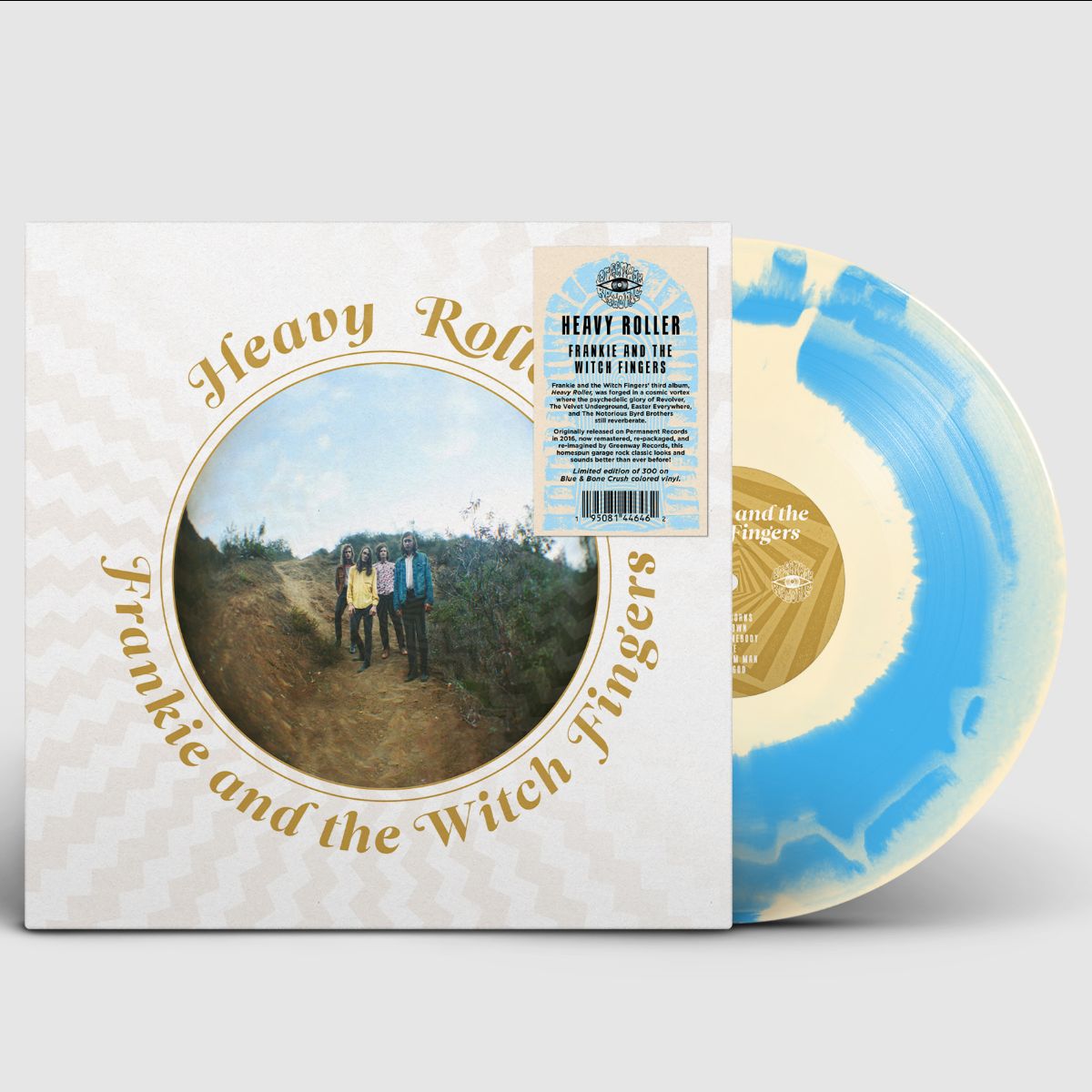
You know them by now. Dylan Sizemore, Shaughnessy Starr, Josh Menashe and Nikki Pickle make up the highly-praised L.A. garage psychedelicists Frankie and the Witch Fingers. Well known for their explosive live performances, the band has grown their fanbase exponentially with every new album. Combining insta-catchy hooks with muddy garage guitar tones while stirring in absurdist lyric treatments on top, encountering a Witch Fingers tune is not unlike slipping into a hefty acid-soaked hallucination. Both are wild and unpredictable, but you can bet they’ll guide you safely to the Garden of Eden with minimal wear and tear.
Frankie and the Witch Fingers are a swift kick in the ass for garage psych. Their hooks are sharper, the production isn’t vintage for the sake of vintage, and the recorded material captures the energy of the band’s eccentric live performances perfectly. That’s exactly what they do on Heavy Roller” – (Consequence of Sound).
For the first time via Greenway Records, the record is newly re-mastered and re-packaged with brand new art, the jacket features a UV-Gloss treatment like we’ve never seen before & comes with a full color inner sleeve. Totally re-imagined, Frankie’s fuzzy dream looks and sounds better than ever!
The first 100 orders come with a brand new & exclusive Heavy Roller iron on patch FREE! Don’t snooze!
Initially released in 2016 on Permanent Records to a quick sellout, Greenway Records has remastered, repackaged and officially respawned Heavy Roller into 2020 to fight back the foggy haze of civil unrest and cabin fever isolation with some tried-and-true out-of-body psychedelic fun and excitement.
After two decades of successfully pursuing simple truths in popular music, Matt Pond has recently begun to take on projectsthat stretch beyond the conventional trajectory of independent rock and roll. Other projects explore artist relationships over mediums and miles, where the aural meets the visual and beyond (-ond -ond -ond).
Adam Schlesinger was a prodigious and prolific songwriter, producer and multi-instrumentalist. He died on April 1 at the age of 52 as the result of complications from COVID-19. Not only was Schlesinger in multiple beloved bands—including the power-pop-leaning Fountains of Wayne and sophisticated electro-pop act Ivy—but he also collaborated on songs for movie soundtracks and the TV show Crazy Ex-Girlfriend.
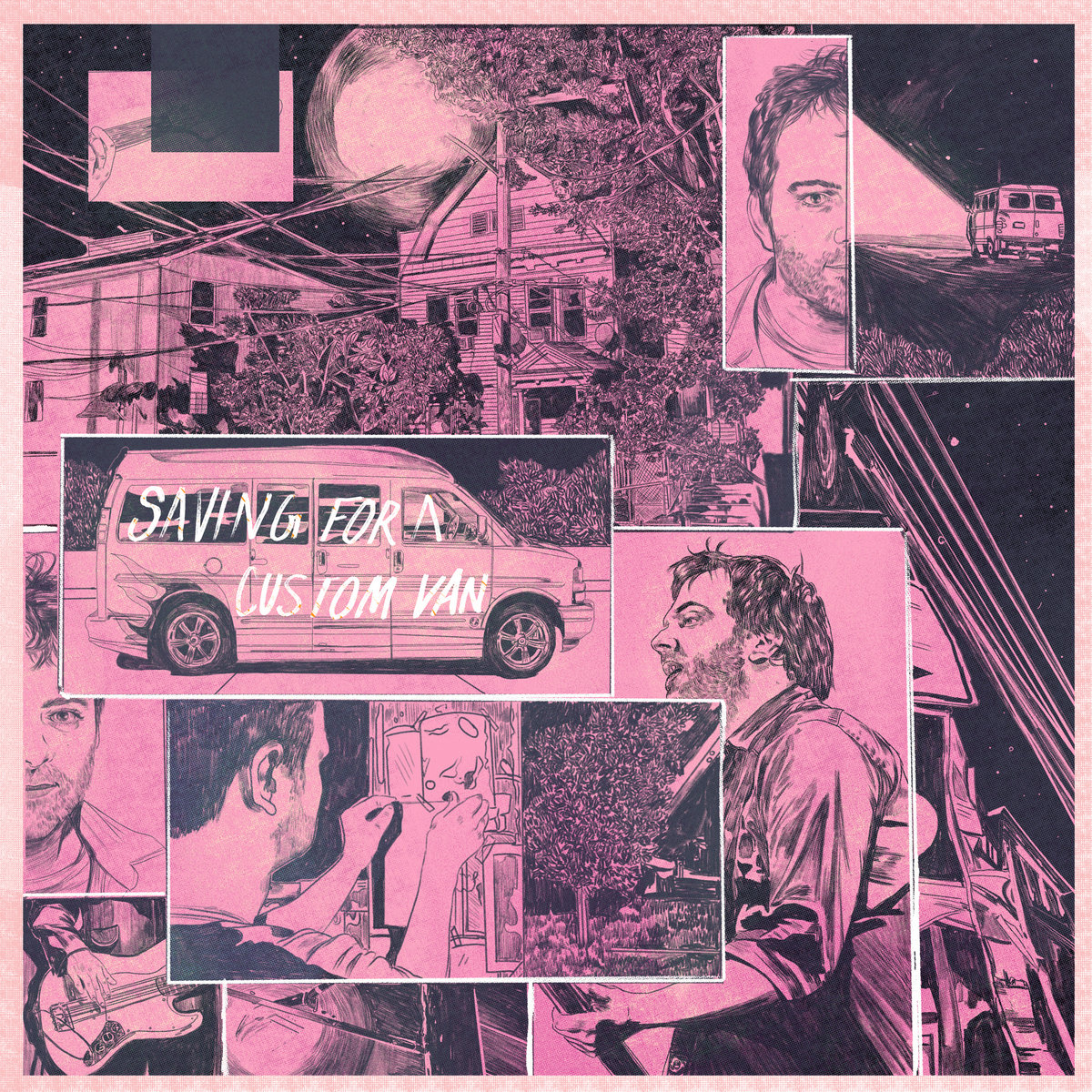
A wide array of artists touched by Schlesinger’s life pay tribute to the many musical projects of which he was a part via the Bandcamp-exclusive benefit compilation, Saving for a Custom Van. The 31-song collection features collaborators, tourmates, friends, and fans putting their own spin on songs spanning his entire career. Saving for a Custom Van, which takes its title from a lyric in Fountains of Wayne’s “Utopia Parkway,” is co-curated and co-released by Father/Daughter Records and Wax Nine.
One-hundred percent of Saving for a Custom Van proceeds will be donated to MusiCares’ COVID-19 Relief Fund, which is dedicated to helping music industry and community members affected by the COVID-19 pandemic.