Archive for the ‘CLASSIC ALBUMS’ Category


Image may contain: 4 people, people sitting and shoes

Uxbridge rising indie pop band Bloxx have just announced their long awaited debut titled Lie Out Loud will be released on August 14th via Chess Club Records. Lie Out Loud follows on from previous singles Coming Up Short and Go Out With You, both of which will be featured on the debut albumSpeaking about the title track, frontwoman Fee Booth commented:

‘Lie Out Loud’ feels like a big moment for us, it’s a bit angsty and was actually the last song we wrote for our record, whilst we recorded the record, so it nearly didn’t even happen! I remember being so wildly annoyed that day because I was sitting around doing nothing and I just remember myself and Jenn Decilveo (our producer) shouting lyrics at each other and arguing over whether or not ‘lie out loud’ made any sense. It definitely does.

DIY praised female fronted, 4 piece, alt rock / indie pop band, Bloxx are known to fuse grungy undertones with classic indie-influenced melodies to create their unique, yet comfortably familiar sound which is most evident within their live shows. Bloxx are Ophelia – guitar and vocals, Taz – lead guitar and backing vocals, Mozwin – drums, and Paul – bass.

our debut album ‘Lie Out Loud’

Bay Area and Los Angeles based indie/post-punk supergroup Spice have unveiled their second single “All My Best Shit,” along with its video which serves as a stylized series of cinematic and interconnected vignettes, for which a picture of a young boy, a paper Harlequin mask, a Cramps t-shirt, and more take the spotlight.

The song is an alternative rock California daydream,  treads the hazy lines between Fugazi to The Jesus and the Mary Chain, and The Horrors, with a driving sonic energy that warms the blood like the summer air. Formed in 2018 and based across California, each members’ roots are in the North Bay of San Francisco. Comprised of Ross Farrar (vocals) and Jake Casarotti (drums), both of Ceremony, along with Cody Sullivan (bass), Ian Simpson (guitar), and Victoria Skudlarek (violin), Spice’s sound pulls from the sense of melody and drive inherent to Bay Area pedigree, peppered with modernity and awash with an anthemic haze. The hook is in the connection as much as melody, with each song building its inner narrative and exploration of affliction.

Ultimately, “All My Best Shit,” is a track which that examines pain through an introspective lens.  The end result sounds unconstrained or uninhibited, despite lyrics about being bound to one’s own inner angst. The second single “All My Best Shit,” is from SPICE’s upcoming debut album on Dais Records, out July 17th, 2020.

As a collective thought, Spice’s Self-Titled debut album offers a deliberate isolation of pain as interpreted through different vehicles. Less than 30-minutes in length, the record diverts from a singular mood, tempo, or delivery, instead focusing on orchestrating emotional drain as single impulses—fast, slow, driving, simple, and layered—that coalesce in their machinations. At its core, Spice’s Self-Titled album is wired together by brawny and brittle guitars, lock-groove rhythms, and vocals announce each moment and mood.

Traversing guitar-driven indie-pop and call-to-action impulse, Spice balances their urgency by interspersing violin melodies and layers, creating depth without oversaturating the heart of each song. Building complexity with laser focus, Spice shares the authoritative drive of Jawbreaker, J Church, The Horrors, and Fugazi, set in their own world of unrest. The treatment of each song is a statement that informs the whole – anecdotes that can bleed slowly or swirl quickly. In a sense, the Self-Titled album itself is an entire song, with each track becoming the verses, choruses, and interludes that narrate its intent. Ending with the final track they workshopped for the album titled “I Don’t Wanna Die in New York,” the album ends with a punch before winding back into meditation.

http://

Honed over late nights at Panda Studios in Fremont, California with producer Sam Pura (Basement, The Story So Far, Self Defense Family), Spice spent hours tweaking it until it became a little world formed by what they refer to as “the power of groupthink.” Sprinkled with field recordings—audio snapshots from the member’s every-day-lives—the record offers an intimate twist that builds on its theme of a single thread that connects everything with continuity, making it a single organism with as many depths as questions.

Spice is Ceremony’s Ross Farrar (vocals), Sabertooth Zombie’s Cody Sullivan (bass), Ceremony’s Jake Casarotti (drums), Creative Adult’s Ian Simpson (guitar) and Victoria Skudlarek (violin).

Released July 17th, 2020

Following the success of the Rock Machine albums CBS came up with a trio of new samplers during 1970 and 1971.  First up in March 1970 was Fill Your Head With Rock.  Priced at 29s/11d (£1.50) and boldly subtitled “The Sound of the Seventies” it broke new ground by extending the format to a double album for the first time.  Resplendent on the cover, bare-chested with long hair flying, was a colourised image of Jerry Goodman, violinist with Chicago jazz rockers the Flock (but soon to join the Mahavishnu Orchestra).  The iconic photograph was the same one used on the back cover of the Flock’s self-titled CBS debut album, except much larger and in colour. “The Sound of the Seventies” tag was used to advertise many CBS LPs during 1970.

Compiler David Howells stated that while the earlier Rock Machine samplers were aimed at promoting specific full-price releases, this record was part of a major push to establish CBS as “the top label in contemporary music” in the UK.  Of the 23 tracks, 16 came from US artists, six were by UK acts and one (Amory Kane) was by an American living and recording in Britain with UK musicians.  There was nothing from Bob Dylan this time, but several artists, including Spirit, the Byrds, Leonard Cohen, Al Stewart, Taj Mahal, Blood Sweat & Tears and Laura Nyro had appeared on the earlier Rock Machine LPs.  New arrivals such as folk rock hopefuls Trees and prog debutants Black Widow and Skin Alley got a chance to rub shoulders with the big names. Fill Your Head With Rock reached #19 in the Melody Maker LP charts in March 1970 and early copies included an eight-page booklet insert.

With its striking image of a pre-fame Arnold Schwarzenegger in full “Mr. Universe” pose taking up the entire gatefold sleeve (which opened vertically), Rockbuster surely has one of the most recognisable covers of all the CBS samplers.  Stylistically, though, the gaudy artwork left much to be desired and, Arnie notwithstanding, the frightful red and yellow striped design could have come straight from the fevered imagination of K-Tel or Ronco.  But perhaps that was the intention.
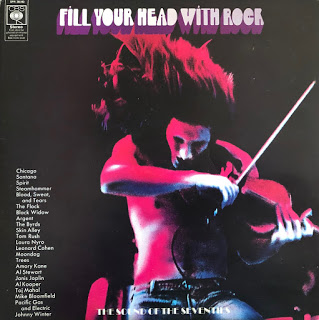
FILL YOUR HEAD WITH ROCK (CBS SPR 39/40) 1970

ROCKBUSTER (CBS PR48/49) 1970

Overseen by David Howells again, the Rockbuster double set saw the return of Bob Dylan with “Days of 49”, a track from the unloved (by the critics, if not the fans) Self Portrait album.  Elsewhere, the Byrds, Argent, Spirit, Trees, Black Widow, BS&T, Johnny Winter and Al Kooper were again represented.  New this time out were cuts by Miles Davis (continuing his foray into the jazz rock fusion world), Soft Machine, Gary Farr, Robert Wyatt and (fresh from his appearance on Zappa’s Hot Rats album) Shuggie Otis.  Of the 26 tracks on the double album, the US/UK split was 17/9 this time.

The final CBS sampler from this period was Together, released in April 1971.  Although just a single LP, early UK copies were pressed on blue vinyl (a big deal back then) with an eight-page newspaper insert.  The usual suspects, including Laura Nyro, Spirit, Byrds, Trees, Argent and Johnny Winter were joined this time by Poco, Janis Joplin and the Chambers Brothers.  Mainland European pressings of Together substituted the Soft Machine track with one by Norwegian band Titanic who scored a big hit late in 1971 with the Santana influenced instrumental “Sultana”.

TOGETHER (CBS SPR 52) 1971

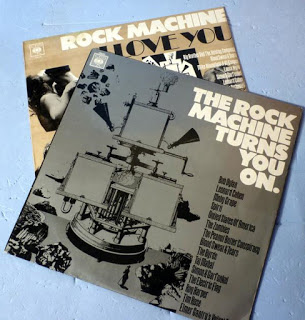
But it was CBS who really popularised the sampler format in Britain with their Rock Machine albums.  Initiated in January 1968 by Columbia Records’ US president Clive Davis but compiled and overseen in the UK by CBS art director and sleeve designer David Howells, The Rock Machine Turns You On is often cited as the first true UK budget priced rock sampler.

Offering unparalleled value for money at a shade under 15 shillings (75p), at a time when a full-price album retailed at £2 or more, The Rock Machine Turns You On and the follow-up, Rock Machine I Love You proved irresistible to a generation of record buyers, selling well enough to enter the mainstream charts and going on to move an estimated 150,000 copies each.

Glaser designed the iconic poster which originally came with the 1967 US version of Bob Dylan’s Greatest Hits LP and also the sleeve of Paul Simon’s 1973 album There Goes Rhymin’ Simon.  He even created his own typeface font called “Baby Teeth”.  First seen on the Dylan poster mentioned above, in 1973 the font was adopted as the main Columbia/CBS label typeface and used until the late 1990s.

CBS: PART 1 – The ROCK MACHINE

Both Rock Machine LPs featured the same painfully hip sleeve notes which read: The Rock Machine is a Machine with Soul The Rock Machine isn’t a grind-you-up.  It’s a wind-you-up.  The sound is driving.  The sound is searching.  The sound is music.  It’s your bag. So it’s ours. It’s the Super Stars.  And the Poets.  It’s the innovators and the Underground.  It’s the Loners and the Lovers.  And it’s more.  Much more…David Howells was involved with several other CBS releases, including the 1970 samplers Fill Your Head With Rock and Rockbuster (yes, the one with Arnold Schwarzenegger on the cover, see below) before helping to launch the Gull label, a subsidiary of Decca, which he ran from 1974 to 1982.  Howells was then appointed managing director of Pete Waterman’s PWL Records, the label which gave us Kylie Minogue and Jason Donovan.  It was a very long way from the Peanut Butter Conspiracy.
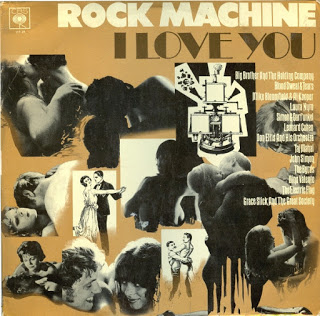
ROCK MACHINE I LOVE YOU (CBS S/PR 26) 1968

In 1989 there was an attempt to transfer both Rock Machine LPs to CD but this ran into problems right away.  Long-expired licensing rights meant the track listing was reduced from 30 songs to just 20 and the CD looked very different to the original albums.  Gone was Bob Dylan, Roy Harper, the Zombies, Elmer Gantry’s Velvet Opera and Simon & Garfunkel.  One of the two Byrds’ tracks was also dropped.  In their place were a pair of cuts by electric violin exponents the Flock and It’s A Beautiful Day, both of which fell slightly outside the time frame of the original 1968 LPs (although “Tired of Waiting” by the Flock later appeared on another CBS sampler, Fill Your Head With Rock in 1970.

In 1967 CBS launched the Direction label to issue mainly* American soul and R&B records in the UK and a sampler titled Soul Direction appeared in 1968.  Stretching the piscine sole/soul pun to absolute breaking point, a flatfish of some description was pictured on the cover.  Despite releasing some great music, Direction didn’t flourish, and CBS closed the label in 1970.

*There was a degree of cross pollination between labels, as US bluesman Taj Mahal and UK psych outfit Elmer Gantry’s Velvet Opera were both signed to Direction in the UK, yet their tracks appeared on the CBS Rock Machine albums.
HARVEST – LIFE’s A PICNIC

In the early 70s few record companies immersed themselves in the nascent underground rock movement more comprehensively than the Harvest label.  Formed in 1969 by EMI to compete with other major players in the prog rock scene such as Vertigo, Deram and Chris Blackwell’s independent Island label, Harvest was one of those rare companies where virtually every release in their catalogue was worthy of attention.  In its first year alone the label gave us records by Deep Purple, Pink Floyd, Kevin Ayers, Edgar Broughton Band and Shirley & Dolly Collins, with albums by Roy Harper, The Move and ELO not far behind.  It really was a case of “All Killer, No Filler”.

But the main drawcard was the otherwise unavailable Pink Floyd track “Embryo”.  Recorded in November 1968, the studio outtake appeared nowhere else until 1983 when it was included on Floyd’s Works oddities compilation.  Picnic sold well, especially for a double album, reaching #14 in the Melody Maker album charts in July 1970.

A second sampler The Harvest Bag arrived in November 1971.  Employing a tortuous visual pun on the “budget price album” theme, the cover photo showed what was presumably intended to be the Chancellor of the Exchequer standing outside number 11 Downing Street holding aloft his ceremonial briefcase, or “bag” (complete with Harvest logo) containing, we assumed, the, ahem, Budget.  Despite some solid contributions from Roy Harper, the Grease Band, ELO, Edgar Broughton Band and others, The Harvest Bag flew under the radar and is now largely forgotten.

Other excellent Harvest samplers, including Harvest Sweeties (1971) and A Good Harvest (1973), appeared in mainland Europe, but they were not released in the UK.

PICNIC – A BREATH OF FRESH AIR (Harvest SHSS 1/2) 1970

Retailing at 29s/11d (a shade under £1.50) the first Harvest sampler album, Picnic – A Breath Of Fresh Air, arrived in May 1970.  Clad in a distinctive Hipgnosis designed sleeve, the 19-track double album featured a wildly diverse mix of folk, rock, blues, prog and assorted obscurities by the likes of Quatermass, Bakerloo, Forest, Third Ear Band, Pete Brown & Piblokto and Syd Barrett.

But the main drawcard was the otherwise unavailable Pink Floyd track “Embryo”.  Recorded in November 1968, the studio outtake appeared nowhere else until 1983 when it was included on Floyd’s Works oddities compilation.  Picnic sold well, especially for a double album, reaching #14 in the Melody Maker album charts in July 1970.

The Picnic – A Breath Of Fresh Air name reappeared in 2007 on a triple CD sub-titled A Harvest Records Anthology 1969–1974.  But while the title and artwork were similar, the CD shared only three tracks with the 1970 vinyl release (Pink Floyd, Panama Limited and Quatermass).
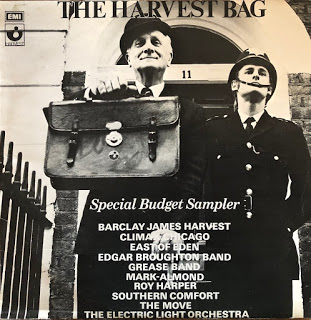
THE HARVEST BAG (Harvest SHSS3) 1971
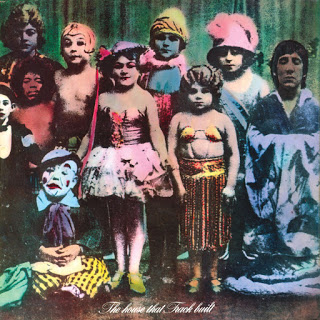
THE HOUSE THAT TRACK BUILT (Track 613016) 1969

Track – The Revolution’s Here

Formed in 1966 by Kit Lambert and Chris Stamp, Track Records is probably best known as the UK home of Jimi Hendrix and the Who.  But the label had other less illustrious signings such as John’s Children (featuring Marc Bolan), Golden Earring, The Crazy World of Arthur Brown, Marsha Hunt and Pete Townshend protégés Thunderclap Newman.

Track was late to the sampler market, but they soon made up for lost time, releasing around 20 budget compilations and reissues between 1969 and 1973.  First up in September 1969 was the excellent The House That Track Built offering genuinely rare tracks by Fairport Convention, The Who, John’s Children and Thunderclap Newman alongside more obvious fare from Hendrix and Arthur Brown.  The jewel in the crown was undoubtedly an unreleased studio version of The Who’s “Young Man Blues”, as recorded during the Tommy sessions.  It’s a different take to the other studio version added to the expanded Odds and Sods compilation in 1998 and hard to find elsewhere.

The laminated gatefold sleeve was designed by David King who also worked on The Who Sell Out and Jimi’s Axis: Bold As Love sleeves, as well as the infamous Electric Ladyland UK “nude” cover and The Crazy World Of Arthur Brown.  In the 70s King designed posters and logos for the Anti-Nazi League, the Anti-Apartheid Movement and Rock Against Racism.  An art historian with a special interest in Leon Trotsky, part of his huge collection of 250,000 Soviet graphics and photographs is housed in the Tate Modern, London.

But the most well-known Track samplers are undoubtedly the Backtrack series.  Comprising 14 volumes in total, they were all released during 1970, the first batch appearing in May of that year, with the rest following in November.  No record company today would dare release an LP showing a little kid smoking a fat joint on the cover.  But the first six Backtrack volumes did exactly that.  The picture was retained for the second batch in the series, albeit greatly reduced in size and relegated to a corner of the sleeve.

The Backtrack series was part of Polydor’s budget price “99” series, introduced in 1970 and used across the entire family of labels (including Atlantic releases before 1972, see below).  Most releases carried the “99” logo in the top left corner of the sleeves denoting the 99p price, a year ahead of decimalisation in 1971.

The Backtrack albums were superseded in 1973 by Allsorts, a series of four budget samplers individually titled Aniseed, Peppermint, Coconut and Liquorice.  The name comes from Liquorice Allsorts, a type of confectionery first produced in Sheffield by George Bassett & Co Ltd around 1900.

The first three LPs were general rock compilations while Liquorice Allsorts was devoted specifically to R&B/Soul artists, just as Backtrack 6 had been.  Curiously, alongside the familiar Track artists on Aniseed, Peppermint and Coconut Allsorts were three cuts each by Joe Cocker, the Move and Procol Harum.  All three artists were signed to David Platz’s Essex Music and had recorded for the recently defunct Regal Zonophone label before transferring to Fly Records around 1971, which in turn became the Cube label.  Presumably, the nine Essex Music tracks were part of a one-off licencing agreement just for the Track Allsorts samplers.

The track titles were embossed in braille on the back cover of each LP, an innovation Track also used on the Who’s 1974 Odds & Sods album sleeve.  This became a trend for a while, with braille messages appearing on Stevie Wonder’s Talking Book (1972) and Paul McCartney’s Red Rose Speedway (1973).

TRACK ALLSORTS SAMPLERS (1973)

2409 205 – Various Artists – Aniseed Allsorts
2409 206 – Various Artists – Peppermint Allsorts
2409 207 – Various Artists – Coconut Allsorts
2409 208 – Various Artists – Liquorice Allsorts

MARMALADE 100° PROOF (Marmalade 643314) 1969

Marmalade – The Sound That Spreads

Created in 1966 by former Rolling Stones and Yardbirds manager Giorgio Gomelsky, the independent Marmalade label lasted only a couple of years before folding in 1969, leaving behind just 14 LPs and around 20 singles.  Despite (or perhaps due to) a wildly eclectic artist roster which included Blossom Toes, Chris Barber, Sonny Boy Williamson and John McLaughlin, sales were disappointing and only one single, “This Wheel’s on Fire” by Julie Driscoll, Brian Auger & The Trinity entered the UK charts, reaching #5 in late 1967.

Released in 1969, Marmalade 100° Proof (wittily subtitled A Taste Of Marmalade – The Sound That Spreads) was the only UK sampler LP on the label (although at least one other title appeared in Europe).  All the label’s big names were represented, plus rare tracks by French guitarist Robert Lelievre [billed as “Le Lievre (The Hare)”] and future 10cc members Graham Gouldman and Kevin Godley.

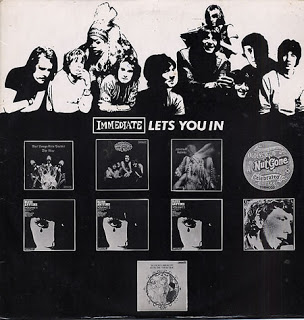
IMMEDIATE LETS YOU IN

Immediate Lets You In was issued as a CD in 1999 on the Sequel label.  The track listing was unchanged but the card sleeve was upgraded from black & white to colour.

The following year Immediate tried again with Happy To Be A Part Of The Industry Of Human Happiness.  Once again, the Small Faces were the main drawcard alongside a pair of album cuts from Steve Marriott’s new band Humble Pie, then in their early psych/acoustic rock incarnation with Peter Frampton.  Fleetwood Mac’s big hit single (and their only Immediate release) “Man Of The World” was included together with another hard to find Mayall/Clapton track “On Top Of The World”.  In Germany a sampler titled Immediate Lets You In Vol.2 appeared in 1969.  Although not identical, the track listing was very similar to Happy To Be A Part Of The Industry Of Human Happiness.

The title Happy To Be A Part Of The Industry Of Human Happiness became the official Immediate slogan and appeared on the generic company sleeves of their late 60s singles.  It was all for nothing, however, as the label went out of business in 1970.  The Immediate catalogue has since passed though many hands, including NEMS, Sanctuary and Charley Records, who currently own the label logo.  In 2000 Happy To Be A Part Of The Industry Of Human Happiness was the sub-title of The Immediate Singles Collection, a six CD box set containing the A & B sides of every single released on the label – 162 tracks in all.

Immediate released several other late 60s compilation albums, including the four volume Blues Anytime series and Anthology Of British Blues Volumes 1 & 2, but they don’t qualify as sampler albums.

IMMEDIATE – The INDUSTRY OF HUMAN HAPPINESS

The success of the CBS LPs didn’t go unnoticed and before 1968 was out, other record companies were rushing their own sampler LPs onto the market.  One of the first was from Andrew Loog Oldham’s Immediate label.

Other than the Small Faces, Chris Farlowe and the Nice, Immediate didn’t have too many big names on the artist roster and their first sampler Immediate Lets You In suffered accordingly.  But the rare John Mayall & the Bluesbreakers’ single “Telephone Blues” featuring Eric Clapton was a worthy inclusion.

ALL GOOD CLEAN FUN (United Artists UDX 201/2) 1971

Many of the artists who had appeared on the Liberty label found themselves shunted sideways onto United Artists and some turned up on the 1971 double LP All Good Clean Fun.  Arriving in an intricate textured “envelope” cover with custom inner sleeves and a 12-page booklet, this was one of the most elaborate samplers to date.  The complex design construction proved problematic when buyers tried filing the album at home, however.  Inevitably, the three fragile flaps which held the “envelope” sleeve together fouled the albums around it, causing all kinds of collateral damage and it’s rare to find a copy of All Good Clean Fun today without some evidence of this.  But the basic idea was good and the design mightily impressive.

The front cover shows a cartoon illustration of three Victorian figures seated in what looks like a railway carriage.  The young lad in the middle closely resembles Lord Snooty from The Beano comic and, as if to pinpoint the demographic the compilers were aiming for with this sampler, the boy is holding a copy of the notorious underground magazine Oz, while the older men look on.  Fun fact: The copy of Oz shown on the sleeve is the genuine issue #33 with a cover date of February/March 1971.  Articles listed on the front of that issue include “Farmer’s Daughter Rapes Hog – Exclusive interview”, “Angry Brigade’s Bible” and “The Anarchist’s Cookbook”.  The cover of issue #33 used an illustration by Australian artist Norman Lindsay.

Containing 23 tracks by 20 artists, the double LP featured an interesting mix of established names (Canned Heat, Groundhogs, If, Eric Burdon & War, Nitty Gritty Dirt Band) and newer bands including Man, Hawkwind, Amon Duul II, Brinsley Schwartz and B.B.Blunder.  Three bands (Canned Heat, Nitty Gritty Dirt Band and Morning) were represented by two tracks each.

To promote the album Man, Help Yourself and Gypsy embarked on “The All Good Clean Fun Tour” of Switzerland.  This gave rise to the song “All Good Clean Fun” on Man’s 1971 fourth album Do You Like It Here Now, Are You Settling In?

In 2004 a cumbersomely-titled 39 track triple CD All Good Clean Fun – A Journey through the Underground of Liberty/United Artists Records 1967–1975 was released.  Although the cover artwork was remarkably similar, the CD featured fewer than half the tracks included on the original 1971 double LP.
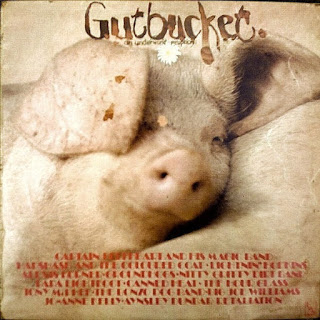
GUTBUCKET (AN UNDERWORLD ERUPTION) (Liberty LBX3) 1969
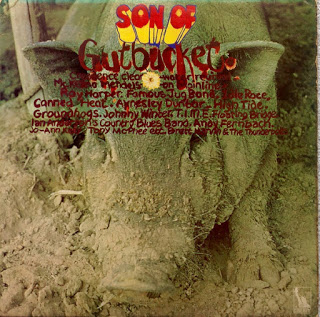
SON OF GUTBUCKET (Liberty LBX 4) 1969

Formed in 1955 as a pop/easy listening/film music label, Liberty records almost went out of business in the mid-60s before the UK arm was aggressively re-launched in 1967.  Liberty then began to assemble an impressive roster of diverse rock/blues talent before finally crashing and burning in 1971, with most artists being transferred to the United Artists parent label.

But it was great fun while it lasted, and in 1969 Liberty issued a pair of much-loved sampler albums.  The first of these, Gutbucket (An Underworld Eruption), has achieved legendary status with an eclectic mix of blues, psychedelia, and underground rock.  Here was Captain Beefheart, the Bonzo Dog Band, Canned Heat and the Groundhogs rubbing shoulders with Lightnin’ Hopkins, Alexis Korner, Hapshash & the Coloured Coat, and the Aynsley Dunbar Retaliation.

A German pressing of Gutbucket was released with only 10 tracks (instead of 14) and a different back cover.  In fact, only seven tracks correspond with the UK version, as a different Canned Heat song was used (“Catfish Blues” replaced “Pony Blues”) and tracks by German bands the Motherhood and the Petards were substituted elsewhere.

Later in 1969 came Son Of Gutbucket.  Once again Canned Heat, the Groundhogs and Aynsley Dunbar were featured, along with Roy Harper, T.I.M.E, Johnny Winter, Creedence Clearwater Revival and Jeff Lynne’s band Idle Race. 

Both albums were reissued in 1994 on the EMI CD Gutbucket (An Underworld Eruption), but minus six of the original 31 tracks.  Gone were cuts by Roy Harper, CCR, Famous Jug Band, Ian Anderson’s Country Blues Band and two by the Aynsley Dunbar Retaliation.

A “gutbucket” was an improvised bass made by attaching a broom handle to a metal washtub.  It was similar to the tea chest bass which was popular during the UK skiffle craze of the 50s.  The word was later used to describe any music of a raw, bluesy nature.

Warp Records reissue. Originally released in 2006, “The Future Crayon” is a collection of Broadcast’s early rarities, B-sides, compilation tracks, and other hard to find material. For Broadcast completists, this release is a must. Our vintage Lab review from the original release: After toiling in Warpscurity for the better part of the late 90s / early 00s, Broadcast have had a quick come-up in the past few years, ever since the Pitchfork massive started catching on. It stands to reason that they’d wanna capitalize on their newfound fanbase with this collection, which features almost 20 tracks, all of which are hard-to-find or just plain out-of-print.

Broadcast were formed in Birmingham in 1995 by Trish Keenan (vocals, keyboards, guitar) and James Cargill (bass). Their musical style blends elements of 1960s American psychedelia with experimental electronica, incorporating samples from various sources, Keenan (formerly of folk duo Hayward Winters) and Cargill met in the mid 1990s at the Sensateria psychedelic club, and formed Pan Am Flight Bag in 1995, renamed Broadcast after several concerts. The band’s first release in 1996, was the 7″ single “Accidentals” (issued on Wurlitzer Jukebox Records), which was written based around a sample from Joseph Losey’s 1967 film Accident. The same year, they released The Book Lovers EP (issued in November by Duophonic Records). In 1996, the band recorded a Peel Session. for BBC Radio.

Warp released a compilation album, Work and Non Work, in June 1997, compiling the EP and two singles. The 1999 Broadcast track “You Can Fall” was included on the soundtrack album for the film Morvern Callar.

You get the entire Extended Play, Extended Play #2andPendulum EPs, plus a handful of B-sides and compilation appearances spanning from 1998 to 2003. Highlights include “Illumination,” “Chord Simple,” the hazy and beautifully psychedelic “Where Youth and Laughter Go” and “Locusts.” Not necessarily a collection for the Broadcast neophyte, but everyone will find something to like here. 18 tracks; 69 minutes.

  • official reissue of Future Crayon, a collection of Broadcast rarities and B-sides
  • originally released in 2006

Trish Keenan died on 14th January 2011 at the age of 42, following complications with pneumonia, which she suffered from after earlier contracting H1N1. Cargill, the sole remaining member, said in a 2011 interview with Under the Radar that a new Broadcast album was in the works, featuring vocals recorded by Keenan shortly before her death. He later said: “Trish left a lot of tapes, four-tracks and stuff, and I’ve been going through those. It’s difficult, and I’m connected to it at the same time. It’s wonderful, but I’m also feeling a sense of loss. The next thing I release with Trish on it will be more like a monument and a tribute to her rather than this obsessive thing I used to have about making albums.” As of 2020, however, the album has still not been released.

Band Members
Trish Keenan
James Cargill

“Tender Buttons” was new terrain for Birmingham band Broadcast. The group had been known for taking the lithe psych-pop of the ’60s and smearing it with feedback, muscular percussion, and crunchy synths on their landmark albums The Noise Made by People and Haha Sound. But in 2005, the group shaved down to a duo, comprising only of frontwoman Trish Keenan and bassist James Cargill. As a duo, Keenan and Cargill translated their signature thorniness into something captivating.

I’ve been listening to this album a lot. It always seems to get referenced, It’s just a very easy album to like. I wouldn’t call it life changing, but I’d give it a solid rating on the “No one understands my haunted, fragmented beauty” playlist. Allow me to first say that I have a soft spot for girls who sing over lo-fi indie arrangements, and Broadcast up this ante by throwing in blips and fuzz, psyche and shoegazer . “Tender Buttons” is defined by simple arrangements, airy female vocals, and rudimentary song-writing. But it’s exactly that seemingly fumbling, faux-artless delivery that lingers. The closest group I can liken them to is either Department of Eagles or Young Marble Giants, but there’s also the pop sheen of the Zombies and the Let’s Stay In Bed Forever quality of My Bloody Valentine. Tracks like “I Found The F, Black Cat, Tender Buttons, America’s Boy” and “Goodbye Girls” may entice you, and I’m calling “Tears In The Typing Pool” as my favourite, but the album really stands on its cohesiveness, which requires a beginning-to-end listening. Just an understated gem.

  • official reissue of Broadcast’s third studio album
  • originally released in 2005

This is the music video for the title track of Broadcast’s 2005 album, “Tender Buttons”. It was originally a short film entitled “Horse Territory”.


The Wytches announce their third album “Three Mile Ditch”. The album features the recently released single “Cowboy” which marked their return after four years away and to celebrate the announcement they share new single “A Love You’ll Never Know”. The track is accompanied by a music video by Mark Breed and he explains,

“The music video format was a long process. Making the set was incredibly fun with Kristian crafting most of the miniatures. I then had to film the green screen band performance within the set before recording the edited version onto my VHS camera. Finally I shot the finished edit inside the view finder.” The album recorded with Luke Oldfield at Tile House Studios will be released on their own label Cable Code Records on Friday 2nd October.

“This is the first thing that I’ve ever been proud of for longer than a week,” says The Wytches frontman Kristian Bell of the band’s latest album Three Mile Ditch. This sense of vigour and enthusiasm coming from Bell about the band’s third album is matched by its contents. The album is an explosive collection of 10 tracks that weaves seamlessly between gut-wobbling monster riffs, swampy rock, slick surf, and finely tuned songcraft. It’s also the result of a band coming back from the brink of collapse.

The band’s early trajectory was a steep and speedy one as they quickly established themselves as one of the country’s most exciting and pulverising new bands. Major festival slots stacked up at places such as Glastonbury, SXSW, Reading and Leeds, and British Summertime with the Strokes. As did the tours across the US with METZ, traversing Europe with Fat White Family and Death Grips. They garnered support from BBC 6 Music, DIY, MOJO, NME and more. However, when the ascent to the stratosphere is moving at such a speed, there’s a risk of burning out and imploding, and the band came close to this.

They were on the rocks for a while, unsure of themselves and if the band should – or even could – go on. “I had it in my head that this kind of thing only really happens once and to try it again might be a big waste of time,” Bell reflects. However, despite the difficulties, the powerful pull of the band was too great to ignore.

“We had an album’s worth of songs that was some of our best material. The mission became to complete a Wytches album rather than get The Wytches back on the touring circuit. This album helped us make the decision to try it again.”

Whilst the album is bursting at the seams with hard rock screamers, with hooks and riffs so infectious they burrow deep into the brain, there’s also other more nuanced elements at play. Bell’s love of classic songwriting from Bob Dylan to Elliott Smith via Big Star’s Alex Chilton can be heard reverberating throughout the record; the result is a blend between his honed and subtle knack for songcraft and crunchy, eruptive bursts of noise.

A leaving member left them feeling they couldn’t face introducing a new drummer and teaching them all the new songs so they simply pounced on their momentum and took on that role themselves, sharing drumming duties. Joining the two, was a familiar face in Mark Breed. “It was the first time Mark was present for most of the recording sessions. Mark was our original bassist before we moved to Brighton. He decided to stay in Peterborough to focus on his own work and a few years later re-joined us on guitar and keyboard. He added a lot of depth to the song arrangements. Also, I think when he saw things were starting to fall apart, he stepped in to help bring back the band dynamic we were missing.”

For Bell, the band has never felt more vital or alive and that’s come with a degree of confidence and assuredness when looking to the future. “Early on a few negative comments would be enough for me to disassociate from my own work. But you grow up and you mature. I never felt like I could stand behind what I was doing all that much but with this album I really can.”

The Wytches. Out via Cable Code Records.

Cristina Vane is a songstress and slide guitarist based in Nashville and specializing in blues, country blues, folk, and rock. Her background in Europe allowed for a unique formation of flavours in her musical inspirations, and this eclectic nature carries through into her work. “Old Played New” is a tribute to the delta blues artists that have shaped my sound, including Son House, Skip James, Charley Patton and others. With 5 cover songs from various artists and one original on the track list, it is also my first solo guitar record. I am so happy with how Brook Sutton captured these live takes at The Studio here in Nashville, and so happy to share it with you.
I have gleaned so much as an artist and a person from the music that these talented folks made. Blues music is rooted in the African American experience and now more than ever, it is important to highlight once again how much black culture has contributed to our society, especially in the field of music. I hope to honor the memory of these artists and pay tribute to the cultural debt I owe them at large, coming in from a different background and partaking in this music.

http://

Slide guitarist and singer-songwriter Cristina Vane has known the lighter and darker sides of Venice. SoCal’s sunshine noir ripples through her music- a blend of folk and blues, angst and elation. [..] Since becoming enchanted by the blues, she’s developed an almost encyclopedic knowledge of the musical genre, expertly rattling off idols like Skip James, Mississippi John Hurt, and Blind Willie Johnson.

Slum of Legs are a feminist noise-pop DIY band. We write songs about ghosts, architecture, gender, loneliness, good hair and many other important topics. We are Alex, Emily, Kate, Maria, Michelle and Tamsin. Long-awaited eponymous ‘queer feminist noise pop’ debut album from the Brighton-based Slum of Legs, a self-described ‘giant pop-psych, punk monster with twelve legs’. In their own words, “a manifesto for compassion and defiance in a confusing, unrestful world.”, gender, loneliness, good hair and many other important topics. 

Slum of Legs are a queer, feminist noise-pop DIY band. We are Alex, Emily, Kate, Maria, Mich and Tamsin. We write songs about ghosts, architecture, gender, loneliness and hair envy. You can dance to all of them. Sometimes we sound like The Shaggs, Slant 6 and La Dusseldorf playing at an impromptu party in space.

One of our songs is a live séance. We’ve performed on a Norwegian mountain and in many, many basements. We like pylons and onstage pile-ons. We’re interested in modernist architecture, art & literature.

http://

We use collage & cut-up in our artwork and this also reflects the fractured nature of our songs and how the 6 of us, who all bring completely different influences to the band, have been stuck into a blender with the controls jammed. We are a giant pop-psych, punk monster with twelve legs. Our songs are melodic and dissonant, anthemic and experimental. The Fall meets The Raincoats in this noisy, bloody minded, defiant, lo-fi collage art-punk. Absolutely brilliant, up there as Album of the Year 2020 with Torres & Porridge Radio.

Our debut album ‘Slum of Legs’ is a manifesto for compassion and defiance in a confusing, unrestful world. As Slum of Legs are currently scattered across continents, we couldn’t film a video all together, so synth player EK put together this little homemade vid out of photos and gifs, featuring ‘Benetint & Malevolence’ from our forthcoming self-titled LP.

Released March 13th, 2020

The Band are:
Tamsin – vocals, backing vocals, drums, shouts
Mich – drums, vocals, backing vocals, guitar, shouts
Maria – violin, vocals, backing vocals, guitar, percussion, glockenspiel, field recordings, shouts
Kate – guitar, backing vocals, drums, shouts
Emily – synths, samples, monotron, piano, glockenspiel, noise, shouts
Alex – bass guitar, shouts

Lyrics by Tamsin Chapman except: 5 – lyrics by Tamsin Chapman and Michelle Steele; 8 – lyrics by Michelle Steele; 10 – lyrics by Maria Marzaioli
All songs by Slum of Legs

Image may contain: 1 person

One of Australia’s best band’s Cub Sport have released their fourth album. Sitting at 13-tracks long, “Like Nirvana” is a beautiful and deeply honest trip through the mind of singer-songwriter-producer Tim Nelson. Navigating topics like gender, personal discovery and ultimately evolution, the alt-pop group from Brisbane the record which is a collection of soft, dreamy pop songs. Originally slated for a May release, Like Nirvana was pushed back due to the COVID pandemic, but the wait was worth it.

Tim Nelson tals about the group’s new LP, Like Nirvana”, is an uplifting release that doesn’t shy away from the shadows, “it embraces both the light and dark with warmth.”

In Confessions there’s a line ‘the truth is I’m looking for myself and I can’t see it in anybody’. And I couldn’t, but now I can. It sounds a little cliché but this album has helped me find and love myself more deeply. I listen to this album and I can see, hear, feel ‘me.’ It’s the gentle and powerful energy of the introvert empath who, for some reason, is drawn to the light, even though they’re scared of it sometimes and feel more at home in the shadows. It’s the acknowledgement of lingering trauma, an embracing of the journey, rather than a need to see and understand the destination.

The track Nirvana is kind of the title track. It embodies some of the most important lessons I’ve learned over the last year. ‘Free myself from ego’s chains, free my body from my mind, leave the painful parts behind.’ It’s about learning my own worth outside of other peoples’ perception of me. In western society, we’re largely taught that our value is tied to the material things we have, how we appear to others, our career progress, what the world tells us about ourselves. I wanted to strip all of that away and form my own self not built by others. It’s by no means easy to do, but being aware of when your actions are motivated by ego/fear rather than love can be a strong guiding force.

In the second verse of 18 there’s a line ‘sorry, didn’t wanna make this sad, guess I wrote this all to try and heal from that, to let me feel all that’. I always wanted this album to be uplifting. I think in my mind I had this idea that to be uplifting it had to sound ‘happy’ but I couldn’t write any happy-sounding songs that I was excited about, but rather these cinematic, all-encompassing laments. I had to write this album as part of my healing process, I had to let myself feel everything and experience and live all of the emotions that were weighing on me. And I feel like that’s what has made Like Nirvana such an uplifting record in its completion; it doesn’t shy away from the shadows, it embraces both the light and dark with warmth and I hope it sets other people free in ways that it’s done for me.

The closing song on the album is Grand Canyon. I wrote this song for someone very dear to me. I wanted them to see them the way that I see them. ‘You’re a mountain, baby, Grand Canyon, you hold all the power if you believe it then you can, yeah. Too much of an angel to be held down, your battles, too much of an angel to be held down.’ It’s anthemic and soaring, pure power and warmth. It ended up becoming a reminder to me of my own power when I needed encouragement. I feel like this song was brought to me for the purpose of inspiring and empowering people who need it. And that goes beyond this song alone, I feel like that’s largely why Like Nirvana the album came to me.

Like Nirvana becomes a landmark moment in Australian pop, contextualising Nelson’s life and art on a universal scale. “Forget the limits that we learned / The light is coming, it’s our turn / You’re a mountain baby, Grand Canyon / You hold all the power,” Nelson sings on Grand Canyon, joined by bandmates united as a choir.

“It really feels heavenly,” Nelson says. “That’s kind of what making this album has felt like for me: finding a more peaceful place; getting to know myself better; acknowledging my whole self, even the parts that are hard to acknowledge sometimes.”

Nelson’s emotional purge continues on ‘My Dear (Can I Tell You My Greatest Fear)’, where his voice and soul are laid bare over spectral guitar fuzz and feather-light instrumentation. ‘I Feel Like I Am Changin’’picks up where ‘Sometimes’ left off on ‘Cub Sport’, with Nelson, back in Brisbane after a period of relentless touring, experiencing a newfound appreciation for home. ‘Be Your Man’ is an ’80s power ballad complete with dramatic Phil Collins-style drums while ‘Be Your Angel’ pays homage to Savage Garden’s ‘Truly Madly Deeply’. Like Nirvana” is an emotional voyage of self-discovery that celebrates the joys of life. This album captures some of Tim Nelson’s most vulnerable moments. Elegantly understated and, for the most part, supremely chill, Cub Sport have stripped back the synth-pop hooks to create mellow clouds of sound intended to provide a little comfort and succour.

Four albums in. It’s evident in their staggering creative, aesthetic, and personal evolution, particularly over the past couple of years. Described by Nelson as more of a holistic release from Cub Sport in contrast to their largely linearearly records, This is a glistening, tightly-woven exploration of religious reckoning, oppressive structures of masculinity, and feelings of inadequacy. Dovetailing with a shift in Nelson’s gender expression they now identify as ‘free’, and use both neutral and male pronouns the record is impressionistic and abstract, pushing aside the brightly coloured realism of 2019’s self-titled record in favour of gauzy lucid dreams. Nelson’s embrace of raw emotion has pushed them and their bandmates, to create a record more fiercely emotive than ever.
Band Members
Tim Nelson, Zoe Davis , Sam Netterfield and Dan Puusaari

Cub Sport’s fourth album Like Nirvana, out July 24th

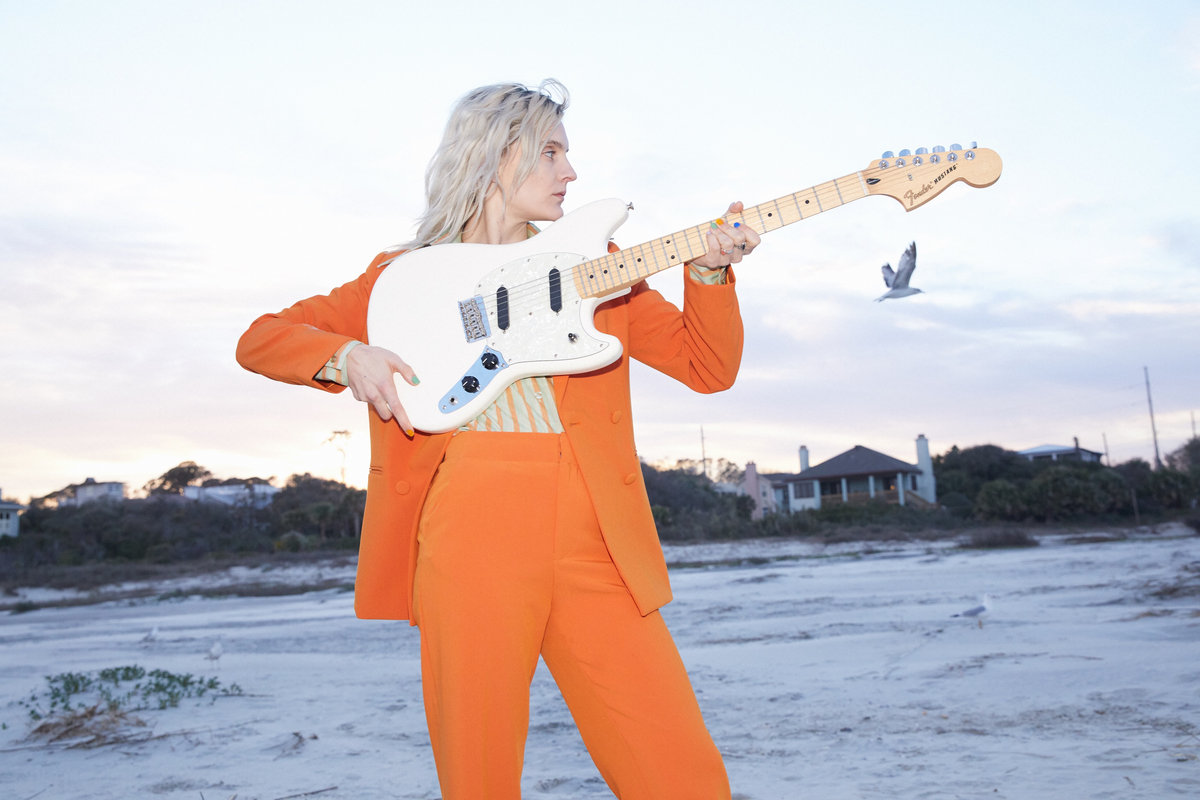
With her bold and bracing new album, “Bad Vacation”, Liza Anne hasn’t just shaped her liberation, she’s completely reinvented it. The record is defiant and thoughtful, showcasing a remarkable confidence as it tackles destructive habits and finds Liza at her most self aware yet. “I was writing what I needed to hear,” Liza explains. “I was writing what I needed to feel. I was quite literally writing a stronger, more empowered version of myself into existence.”

The songs here represent an audacious sonic leap forward for Liza and her band, mixing accomplished full-throttled art rock anthems with playful new wave jams and power pop earworms. Produced by Micah Tawlks Kyle Ryan and co-produced by Liza and Justin Meldal-Johnsen, arrangements are poised and fierce to match, fuelled by muscular guitar hooks, retro synthesizers, and wry, incisive and insightful lyrics.

http://

Bad Vacation marks a remarkable development in her sound and vocal performance – a collection that calls to mind everything from St. Vincent and Sleater-Kinney to Kate Bush and Talking Heads.

Released July 24th, 2020