Secretly Canadian today share ‘The Mission’s End’, a new track from an upcoming Jason Molina record called “Eight Gates”, out 7th August 2020. The album is the last collection of solo recordings Molina made before he passed away from complications related to alcoholism in 2013.
In 2007 Jason Molina moved from the Midwest to London. Separated from his bandmates and friends, and never one for idleness, Molina explored his new home with fervour. He’d pick up on arcane trivia about London’s rich history, and if the historical factoids weren’t available — or weren’t quite to his liking — Molina was quite comfortable conjuring his own history.
When he learned of the London Wall’s seven gates, Molina went ahead and called it eight, carving out a gate just for himself. The eighth gate was Molina’s way into London, a gate only passable in the mind.
Fast-forward to 2008, Molina set off on an experimental solo tour through Europe. While in Northern Italy, Molina claimed to have been bitten by a rare, poisonous spider. A debilitating bout of illness ensued. “I was in the hospital here in London,” Molina wrote in a letter. “Saw six doctors and a Dr. House-type guy. They are all mystified by it, but I am allowed to be at home, where I am taking a dozen scary Hantavirus type pills a day that are all to supposedly help — but they make me feel like shit.” There is no record of a single doctor visit, not any prescription record for these medications. It is entirely plausible there was no spider and that whatever was keeping him indoors during this time was entirely self-induced. While at home, he of course wrote songs.
Molina also claimed that during this time, he fed several bright green parrots that would gather in his yard and made short, crude field recordings of them with his trusty four-track. Only once Molina was officially on the mend and re-exploring the streets of London would he learn that those parrots had their own fabled tale. Back in the 60s, Jimi Hendrix — in a moment of psychedelic clarity — released his pair of lime green ring-necked parakeets from their cage, setting them free into the London sky. Now, their descendants are spotted regularly around certain parts of the city. Or so we’re told.
Recorded in London around the time of the supposed spider bite and Jimi’s supposed parakeets, some of the songs on Eight Gates (“Whispered Away,” “Thistle Blue”) are fully-realized — dark, moody textures that call to mind his earlier work on The Lioness. Knowing what we know about those parakeets and their peppered presence on the recordings, one can’t help but think of that colourful tree of birds on Talk Talk’s classic Laughing Stock, certainly a spiritual guide for much of the set. Other songs (“She Says,” “The Crossroads and The Emptiness”) lay in a more unfinished states, acoustic takes that call to mind Molina’s Let Me Go Let Me Go Let Me Go, and still tethered to Molina’s humorous studio banter. You remember how young Molina was, and how weighty this art was for such a young man.
On the closer, “The Crossroads and The Emptiness,” Molina snaps at the engineer before tearing into a song in which he sings of his birthday (30th December), a palm reading and the great emptiness with which he always wrestled. It is a perfect closer and, in many ways, the eighth gate incarnate: mythical, passable only in the mind, built for himself and partway imaginary but shared, thankfully, with us.
Sam Moss is a songwriter and instrumentalist based in New England. His 2018 album ‘Neon’ was acclaimed by NPR and The Boston Globe. Since 2014 he has been on the road playing hundreds of little shows around the country, and occasionally opening for folks like Joan Shelley, Diane Cluck, and Doug Paisley.
Moss plays violin on a recent duo album with guitarist Rob Noyes (‘Rob Noyes & Sam Moss’) and can occasionally be seen accompanying singer-songwriters like Kris Delmhorst and Jackson Emmer. He also carves spoons.
“Marvelous, resonating, magnetic stillness.” – Boston Globe “This fingerpicking guitar virtuoso characterizes the folk spirit in its finest sense.
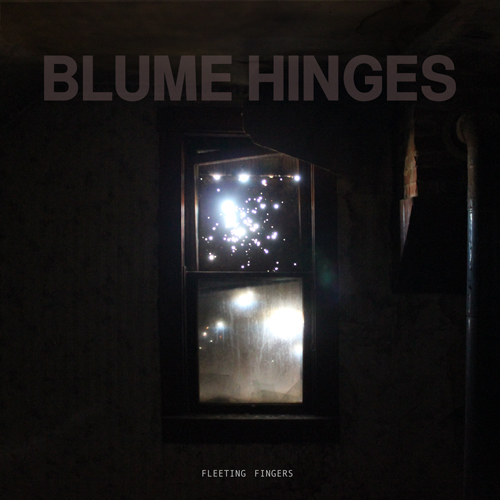
The new single by Blume Hinges, “Fleeting Fingers”, is out now – from their forthcoming album “Build Your Castle Inside of a Mountain”. The moniker of Canadian (Saskatoon) musician and songwriter Aaron England, for Blume Hinges’ latest track Aaron is joined by Claire Cuny (of Reliant Tom) on background vocals, Chicago and Nashville based musician Van Isaacson on violin, and musician and producer Scott Simon Haus on bass and keys. A stylistic departure from his previous album and single, “Fleeting Fingers” encapsulates the new sound of Blume Hinges upcoming album with its more mid-tempo, rolling and melodic style with expanded instrumentation.
Regarding the meaning and themes of the track Aaron states, “The song is a resolve to loneliness – a call for a solitary existence. I have suffered from a long history of social anxiety and this and the voice in your head that tells you to just stay home when people ask you out. The title “Fleeting Fingers” is a reference to this… the chance brush of hands with a stranger that gives you a false sense of connection. Its that brief but intense rush of emotions that stem from a short-lived encounter with another human being, that ironically in the aftermath makes you feel even more isolated because you were not able to create a real connection.”
Canadian (Saskatoon) based singer/songwriter Aaron Egeland has been writing and recording original, hook-driven, melodic material that draws heavily from alt rock, noise rock and grunge and pop with some experimental leanings, influenced by an eclectic array of artists. Back in 2016, Egeland began a long-distance collaboration with Chicago-based engineer, producer and multi-instrumentalist Scott Simon to flesh out and fully realize the material he had written – under the moniker Blume Hinges.
“Aaron Egeland creates twinkling, thoughtful, introspective indie rock that recalls the greats without sounding like a carbon copy”
The Ex Hex to Fugazi’s Helium, you can tell Ian MacKaye’s new trio with wife Amy Farina (they were both formerly the Evens) and Fugazi’s Joe Lally is the most fun he’s had in years, with the simplest and most succinct tunes of possibly his career — dare you to not hear flickers of Grease’s “Summer Nights” in “Hard to Explain.” On their just-released self-titled debut, Farina’s pounding drums and Lally’s crawling bass are given roomfuls of atmosphere to walk around in; rarely has a power trio been perfectly content to not fill the audio space. The parity is refreshing, too: “Say Yes” and “Too Many Husbands” are almost entirely Farina’s show and absolutely the funkiest things MacKaye’s ever been part of. A best-case scenario for an artistic democracy in miniature.
The most Fugazi thing on Coriky is “Inauguration Day,” which begins, “Forecast calls for an execution,” if you thought Mr. Straight Edge lost any of his political bite.
MacKaye is best known for being the frontman of the influential hardcore punk and alternative rock bands Minor Threat, Embrace, Fugazi, and The Evens. He is a founder and owner of Dischord Records. understated chorus vocals, Lallys amazing bass sound, and just the perfect amount of MacKaye guitar, to make this track an exceptional opener!.
With the shut down of distributors and record stores still in place across the country and world, Dischord has decided to postpone the release date of the Coriky record until late May. We realize that there are many people who have been waiting for the records they ordered and we very much appreciate their patience. The decision to further postpone the record was made in solidarity with the shuttered shops and distributors and with the hope that the independent music network will survive.
This is uncharted territory, but we’re doing our best to look out for all concerned and hopeful that we can all get to the other side of this together.
Coriky is a band from Washington, D.C. Amy Farina plays drums. Joe Lally plays bass. Ian MacKaye plays guitar. All sing. Formed in 2015, Coriky did not play their first show until 2018. They have recorded one album.
Released June 12th, 2020
The Band:
Amy Farina: Drums, Vocals Joe Lally: Bass, Vocals Ian MacKaye: Guitar, Vocals
Anything and everything can happen in a Voidz song. Acoustic blues, heavy metal, deep prog, funk, pop, the 8-bit Freon-chill a bank of synthesizers creates — sometimes individually, sometimes en masse. This three-guitar sextet firmed and led by Strokes frontman Julian Casablancas pursue this alchemy with true heart and enthusiasm, a go-for-broke gusto that makes 2014’s Tyranny, 2018’s Virtue, and a handful of 2019 one-off cuts a stoner’s sonic amusement park. Here, Casablancas has free rein to indulge his whims beyond the sleek, robotic rock-populism the Strokes are constitutionally mandated to champion. His accompanying sentiments — a mélange of Trustafarian contrarianism, personal philosophy, and passive-aggressive winks allegedly targeting different Strokes — complement a musical aesthetic inclined to melodic overload. This excess sidles to tender, epic life on the 11-minute “Human Sadness” and informs “Wink,” a roiling, cutting synth-pop bop that threatens to transform into reggae or an alternate 90210 theme. Theirs are consummate “older brother” records, arriving a couple of decades too late.
The syncopated, Pacific Coast haze of 2018’s “Permanent High School,” complete with plastic falsetto.
Blossoms have today confirmed the physical release date for their upcoming “In Isolation/Live From The Plaza Theatre, Stockport” double album as being Friday 23rd October 2020.
The In Isolation side of the double album features a collection of tracks recorded by the band over the last few months in isolation, including re-worked takes on their own songs and a number of cover versions. ‘You’re Gorgeous (In Isolation)’ – Tom’s Babybird cover, The ‘In Isolation’ part of the release features all of the tracks we recorded in isolation over the last few months including versions of ‘Please Don’t’ with The Courteeners’ Liam Fray, ‘Dreaming Of You’ with The Coral’s James Skelly and our Tame Impala cover ‘The Less I Know The Better’ with Miles Kane.
The album also features some very special guests including Courteeners’ Liam Fray on a version of please don’t, the Coral’s James Skelly on a version of dreaming of you and Miles Kane on their Tame Impala cover The Less I Know The Better. Live at the Plaza Theatre, Stockport, features a full live set from the band’s ‘Foolish Loving Spaces’ album launch show on 11th February at Stockport Plaza. to date the tracks released so far from in isolation have been streamed over 1.4 million times and tracks from Live From The Plaza Theatre, Stockport have been streamed over 350,000 times.
‘Charlemagne – Live From The Plaza Theatre, Stockport’ as taken from the full live album available to stream & download now at the link below. Physical copies of the album will be released later in the year.
Six disc boxset that includes everything recorded by psychedelic band July, including their first album in both stereo and mono versions, a compilation of demos from before their debut entitled The Second Of July and the reconvened group’s previously unissued recordings in the 21st century…how a psychedelic flop turned to gold over a 30 year gestation period…
In the swinging late 1960s the notion that July, who lasted less than a couple of years in their original incarnation, would be the subject of a 6 disc collection 40 years later on would have been laughable at best. They were shunned when their album was cruelly dismissed in 1968, just as the psychedelic surge began to falter. A diffuse reception in the music press, with one critic even calling it the worst album ever and a waste of vinyl, didn’t help one bit. With that, July were yesterday’s news almost as soon as they arrived.
The record didn’t bother the charts and after a gimmicky non-album single Hello, Who’s There? they ceased operations. But the band and LP would not die, with the latter gradually, but crucially, clawing its way to acclaim in retrospect as a vinyl “buried treasure” over the passing of the years. In response to this backdated respect and in some pretty unlikely circumstances, 40 years later, July reformed. In the 21st century they recorded and gigged to a very favourable response, with the songs from that derided debut being rapturously received by those present.
The crucial pairing of Tom Newman and Peter Cook first came together in a band called the Dreamers. Like a lot of musically minded youngsters in the UK in the early 60s, they were in the thrall of the Shadows, but as the decade continued they were naturally drawn towards the beat sound. They changed the name of the group to the Tomcats and were joined in this initial version of the band by the rhythm section of Alan James and Chris Jackson (this exact configuration would crop up again in 2009 as the reformed July). Unfortunately this line-up split in 1965 with Cook dropping out. But an amended version of the band, one that featured members of Ealing rival band Second Thoughts Tony Duhig and John Field, had a great deal of success in Spain as Los Tomcats.
Newman reconnected with Cook at the dawn of the psychedelic area, as the Tomcats returned to the UK. The influence of the Beatles and goings on at the UFO Club on Tottenham Court Road loomed large in their compositions. Adding Cook to the existing Tomcats line-up, the band began to rehearse this new material the Newman/Cook team had assembled. The Tomcats were signed by Spencer Davis’ management agency and this lead to a deal with Major Minor, an Irish record company label distributed through the larger Decca organisation. Around the time of the album, the band was retitled the band July to move away from the now dated beat music connotations of the Tomcats name. Cook was manoeuvred out from the LP sessions by Field, if the sleeve note is accurate. His songs were still used and he appears to have only remained as part of the band as a sort of Brian Wilson-style song-smith figure.
The self-titled debut album, in mono and stereo takes, take up the first two discs of this set. I have to say the mono version edges it for me, it appears just that bit sharper. Any way you hear this record though, it’s still a classic of the UK psychedelic era, pristinely assembled and charmingly naive. July starts off with two excellent offerings in My Clown and Dandelion Seeds, which were also issued together as the two sides of the first July single. They may take a fair bit from the Beatles and Syd Barrett in terms influence at times, but the overall effect is marvellous. There’s a solid beat base to the latter which give their more outré ideas the ideal jumping off point. This is something that must have been honed to perfection in the slog of the Tomcats years.
The acoustic undercurrent to Hallo To Me adds a smart undertone to a Pink Floyd-alike tune and both You Missed It All and The Way possess some prime freaky guitar work and are delightfully trippy. To Be Free also takes on the then-fashionable Eastern sitar/drones, but incorporates them into a very accessible pop context. July never lost sight of the need for a cracking melody, as on Chris Jackson’s up-tempo and rocky Crying Is For Writers. The spritely Friendly Man has some great racing bongos and A Bird Lived ends the long player in a very cool, stop start way.
The first disc, the mono take, adds the single versions of My Clown, Dandelion Seeds and The Way, plus that non album single Hello, Who’s There?, which takes the Small Faces’ more “Cor Blimey” efforts as a starting point. As a rule July the album is beautifully arranged, but the “forced stereo” version that Epic made for America met with band disapproval and instead a “newly-enhanced” stereo mix is the one included here as disc two.
Styles changed so quickly in the 1960s, so that something that was cool and cutting edge six months prior would quickly become hopeless outdated. By 1968 UK psychedelia it its purest form was spent and July paid the price with the album disappearing without making a mark. The band were forced to come up with hit single material which resulted in the so-so Hello Who’s There? single. When that suffered exactly the same fate as the LP and My Clown, July came to a halt. James left, but the trio of Cook, Newman and Jackson formed a new group under the Tomcats name, playing live in the early 1970s.
After the new Tomcats foundered Tom Newman carved out a highly successful career as a producer, helming a diverse selection of records from Hatfield And The North’s debut album to Cast Of Thousands by the Adverts. His most fruitful collaboration though was with Michael Oldfield, for who he produced the smash hit Tubular Bells LP. Concurrently to his production work he also conducted his own solo career, issuing a number of LPs from 1975 to 2015.
Whilst this was happening, the July legend was beginning to gather steam. Critical re-appraisal put their album firmly up there with the best of the original psychedelic scene and psych crate diggers rattled around the record fairs and second-hand shops, hoping to net a mint copy now worth a small fortune. Naturally enough, collectors were also interested if there was any further July material apart from the album itself. In the mid-90s Tom Newman discovered some demo tapes the Tomcats/July had cut just prior to the debut LP. Small modifications were added and, cashing in on this upswing of interest, the album The Second Of July was released in 1995. This makes up the third disc of this set.
This selection gives us some “unissued at the time” tracks, plus simpler versions of the album material. The Stamping Machine has some sharp and acidic guitar blasts and the streamlined version here of A Bird Lived is very agreeable too. It’s more in a more straight-ahead, 60s pop/rock mode which really helps it swing. Among the non-LP tracks Look At Her is a lovely light piece of folk pop sike and I See a highly-phased, fast paced gem. The Girl In The Cafe again mines Pink Floyd’s more pop elements to good effect and the yelled vocal/heavy guitar of You See Me, I See You form a formidable combo. There’s a nice solitary feel to on the strum of Move On Sweet Flower and an early but very cool cut of Hallo To Me ends this set nicely.
After the building momentum of the original July album and The Second Of July, the line-up of Newman, Cook, Jackson and James reunited in in 2009. Looking to do something more than just play their old material, they duly set down a new album. Though it’s not necessarily a bad recording I can certainly see why Temporal Anomaly, disc four of this set, has remained unissued. Completed as a prospective Tomcats project, this record overall comes over more in a standard pop/rock sound.
They do manage on a few occasions the kind of light trippy touch of the July album, perhaps best on the more measured and reflective Magical Days and Don’t Let Me Down. But elsewhere an average rock/pop sound dominates, with a bit too much sub-metal guitar soloing and riffage taking away from otherwise decent songs. Approaching cutting a new record 40 years on must have been a daunting proposition, but the sad fact about Temporal Anomaly is that it too often sounds ordinary, dragging their feet on ground where July in their 60s pomp flew. Apparently James and Jackson thought so too and Temporal Anomaly remained in can. Definitely one for the completists really, which is why it is presented here I suppose.
Many of the songs from Temporal Anomaly were re-cut for July’s official comeback record Resurrection. They were good offerings, so deserved another go at getting them right. Whilst there’s still a little bit too much of unnecessary guitar showing-off along the way, this LP gets much closer to being a convincing update of July’s original sound. Set opener Dreams prospers here with more subtle guitar work and I Like It is given a much more beneficial treatment than the bluesy setting of the version on TA. The circular chug of Can I Go Back Again pleases and King Bee manages to scoop their blues and psych roots together into a wonderful breadth of noise. The song Regeneration might be a little more rock again, but supplies a nice upbeat ending to what is a good album.
The final disc here brings us right up to date with a brand spanking new double album length July recording The Wight Album (recorded at Newman’s new studio on the IOW). This one is also being released separately on double vinyl. The pressure of following up those 60s recordings now enshrined in legend lifted, they sound far more relaxed and at ease, revealing a fully refreshed July for 2020. This is a work of depth, imagination and talent. For instance, the song Sophie is simply heart-breaking, the wavering vocal and psychedelic whirls adding joy to a poignant lyric. July embellish their tunes with little touches here and there, like the modern dance beats on The Devil Inside (which seems to have a little of the theme to Get Carter! about it) and It’s A Fine Line, plus synth washes on the odd Disco Klingon and the catchy chant of We Are The Masters. But neither undermine the attempt to put the record firmly in the same context as their debut LP all those years ago. The July spirit of the 1960s remains intact, re-energised and fortified by years of bitter experience. As if to prove the point early July song The Game is a real beaut, being recorded for the very first time after Newman vaguely remembered it during the sessions.
The Wight Album ends with a rollicking three song finish, which rivals their 60s pomp. Home would make a fine single, samples of whistles and playground noise, the band glisten and a beautiful crushed voice sings – this is a truly wonderful, multi-layered epic. Next comes Once When We Was Free, a piano driven piece of rock not unlike their original inspiration the Fabs’ later efforts and Right Place, Wrong Time’s wry lyrics play against the July legend well – this has almost a new wave sound and provides a very good conclusion to the set. The Wight Album is full of invention, good tunes and knowing words – an excellent recording for a band now over 50 years into their career.
July The Complete Recordings provides everything one would need if starting from scratch. Six CDs might seem like a lot for a band who only made a slight mark in 1968, but the mono and stereo versions of the July album are different takes of a landmark record and 2013’s Regeneration has its moments. The Wight Album is excellent and The Second Of July gives one a decent look behind the scenes at the pre-July outfit. As usual we get the band’s impressions and their history in the booklet included and the whole thing is contained in a clamshell box.
I know that some would carp at shelling out for a 6CD set for a 60s psych band who only had one LP released at the time (one that most psych buffs will probably already own) and yes, this set is one to weigh up. However the unreleased LPs Wight Album is a real goodie and Regeneration is at least worth having, so if you haven’t got The Second Of July compilation it probably is worth a go. There’s a lot of great, overlooked music here – July were certainly the real thing, UK Psychedelia at its very apex.
Nothing about Dogleg’s exhilarating debut “Melee” makes any goddamn sense. It’s just four guys from Michigan hammering the same post-hardcore or emo riffs we’ve all heard for 20 years. The album, named after the Super Smash Bros. game and peppered with further Nintendo nods, was self-produced and modestly recorded at the house of frontman Alex Stoitsiadis, who started Dogleg as a solo project in his parents’ basement. Yet somehow, these dignitaries of the University of Michigan frat party scene have carved a stone-cold classic — a stupefying encapsulation of all its predecessors’ aggression without an ounce of melodic sacrifice. From the opening chug of “Kawasaki Backflip,” Melee is a 35-minute waterslide plunge into chaos; all speed freak guitars, incendiary drums, and Stoitsiadis’s best Stink-era Paul Westerberg impression. It’s proof that bombast should be a little bit ugly. The subsequent tour would’ve made Dogleg one of 2020’s most thrilling new live rock acts.
The vicious, ascendant guitar breaks in “Fox,” which deserve some serious Riff of the Year consideration in a surprisingly competitive time. Dogleg “Fox” from the full length album Melee.
To fully understand the energy of frontwoman Eva Hendricks and Charly Bliss, you gotta see them live. I learned that when the Brooklyn four-piece totally smashed the stage the first time I saw them. Not sure why I was surprised, but any doubts I might’ve had about Charly Bliss were effectively squashed. Hendricks is a dynamic instrumentalist and her distinctive high-pitched voice stands delightfully front and centre on a range of harmonies. This is a killer indie power-pop band.
Indie rock quartet Charly Bliss have an otherworldly knack at rendering certain playful images just as sinister: “cardboard cereal,” a bleeding snow cone, a mouth red with Gatorade. 2017’s Guppy established the band as masters of this subversion. Their crunching guitars and Eva Hendricks’ sweet, pointed vocals sliding through increasingly pop arrangements are the vehicle for a creeping dark that filters through each track’s observations of the mundane humour and horror of human affection. 2019’s stellar Young Enough polished its predecessor’s frayed, glittering edges for a slow burn of synthesizers and sharpened focal points; that cleaner sound also made room for a deeper emotional reservoir. Both are examples of kinetic and potential energy refined to an art.
“We’re young enough / To believe it should hurt this much.” They’re old enough to recognize it.
It’s going to be clear to you and everyone else at the party that the Me First and the Gimme Gimmes discography could more than suffice for a day full of blowing up stuff. But in case you’re looking for some more recent bratty punk and some original songs, Pup’s newest album, 2016’s The Dream is Over, can freshen up your punk rock playlist.
The Toronto four-piece makes it look effortless as they turn songs about wanting to kill your buddies into shout-along anthems. The album title comes from a phrase the lead singer Stefan Babcock’s doctor used after Babcock actually shredded his vocal cords. So on a holiday when accidentally killing your friends is a real possibility and screaming is a must if you want to be heard, this record seems appropriate.
PUP’s ability to channel anxiety, depression, and generalized misanthropy into pummeling pop-punk hooks is an endlessly renewable resource. The band is also a good enough live act to justify the fact that half their lyrics seem to be about the exhaustion of touring. In 2019, the Canadian quartet followed up 2016 breakthrough The Dream Is Over with the equally great — and equally antisocial — Morbid Stuff. It helps that lead singer Stefan Babcock is one of punk’s great chroniclers of malcontent, even, and especially when he leans on self-deprecation: “Half the crap I say is just things I’ve stolen from the bathroom walls of shitty venues across America,” he snarls in “Full Blown Meltdown.”







 The Fat Angel Sings