Montreal’s No Joy release new album “Motherhood” next week via Joyful Noise / Hand Drawn Dracula, and here’s a track that features frontwoman Jasamine White-Gluz’s sister, Alissa, who plays in deathcore supergroup Arch Enemy. “I’ve never collaborated musically with my sister before,” says Jasamine. “When we were kids we would sing and play music together but as we’ve both become adults and touring musicians we’ve never had a chance to work together. This is the heaviest song on this record so it felt fitting to have her on there. There is something special about her being on this album, specifically because it’s an exploration of family and motherhood.” It’s definitely heavy, but also has space for No Joy’s ethereal side, too.
“Four,” which No Joy frontperson and principal songwriter Jasamine White-Gluz called in a statement “perhaps my favourite No Joy song ever written,” has a colourful sonic palette, starting with a buildup of shoegaze fuzz that melts into a spell of trip-hop instrumentals before jolting into a thrash metal closer. No Joy shared a music video for the new single, following visual artist Ashley Diabo at her home. The aim of the video, White-Gluz said, is “to appreciate Ashley at home, hoping to inspire all to embrace the love and inspiration of their home the way Ashley reminds us every day.”
Jasamine White-Gluz is back with No Joy’s first album in five years. The Canadian outfit arrived in 2010 with their debut Ghost Blonde, and have been releasing feedback-cloaked shoegaze with mystifying beats ever since. Their new LP Motherhood is the most ambitious thing they’ve ever done, but White-Gluz’s ear for immersive soundscapes remains. Here, No Joy expand into the realms of pummeling metal (“Dream Rats”), groovy trip-hop (“Four”), pulsing electro-pop (“Ageless”) and skying dance-rock (“Birthmark”), and it’s a heady, wispy ride. Sometimes throwing in everything but the kitchen sink works out.
“Four” by No Joy off the album ‘Motherhood’ out on Joyful Noise Recordings (world) & Hand drawn Dracula in Canada.
Ben Seretan’s yearning delivery and earthy melodies are a little alt-country, but the songs are covered in an atmospheric indie rock haze (think Yo La Tengo or Broken Social Scene), and sometimes things can really come crashing down in a louder alternative rock kind of way (not unlike, say, early Manchester Orchestra). Ben also explores his personal relationship with Christianity throughout the album, and gospel is at least somewhat of a reference point here too. The song that auto-plays on Bandcamp is the seven and a half minute centerpiece “Am I Doing Right By You,” which is probably the obvious standout, but the whole album is great.
“Am I Doing Right By You,” the record’s seven minute centerpiece. Seretan’s vocals are wry and dry. “I could feel you pulling away from me / when I try to pray “ echoes the album titles thesis. “Am I doing right by you? Oh, my God!” is repeated many times before the track builds and bursts out into madness, showcasing Seretan’s collection of stellar collaborators. For lover’s of Stephen Malkmus, Lambchop and the like, Youth Pastoral is a litmus test for a brand of indie that is starting to pulse in the dark.
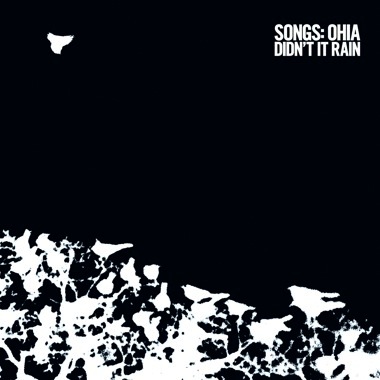
“Didn’t It Rain” is Jason Molina’s first perfect record. Recorded live in a single room, with no overdubs and musicians creating their parts on the fly, the overall approach to the recording was nothing new for Molina. But something in the air and execution of “Didn’t It Rain” clearly sets it apart from his existing body of work. His albums had always been full of space, but never had Molina sculpted the space as masterfully as he does on “Didn’t It Rain“.
We expected to hear hardcore. Instead, there were the faint strums of an acoustic guitar, followed by plaintive singing. Songs: Ohia’sJason Molina doesn’t sing until 25 seconds into “Didn’t It Rain”, and if you’re fidgeting like we were, you could mistake his voice for the record’s first sound.
“This isn’t our record.” “Yeah, no shit.” “It sounds like Neil Young or something.”
“Didn’t It Rain” balances the most soulful songs in Molina’s early catalog with an extraordinarily lonely and spacious atmosphere. The album may have been recorded in Philadelphia, but since it’s laden with references to industry, the Midwest, and the Great Lakes, it’s a Chicago record through and through; the songs feel made to echo down the city’s lonely, beige corridors. It’s an ominous album, and its tension comes from the way it quietly delivers heaviness. The second song, “Steve Albini’s Blues,” is an incantation, heavy metal dripping from a water tower, and it opens with the lyrics, “On the bridge out of Hammond/ See them brake lights burning.”
Molina liked to work fast, recording songs in just a couple of takes and refusing overdubs. This spontaneity turns “Didn’t It Rain” into a shifting, living thing as Molina’s collaborators learn the music on their feet. Jim Krewson’s high lonesome wail streaks to the surface of “Steve Albini’s Blues,” Jennie Benford’s mandolin adds a sad side-to-side swing, and Mike Brenner’s homemade, cello-esque “lap bass” gives highlights “Ring The Bell” and “Cross The Road, Molina” a sweeping undertow. Carrying it all is Molina’s voice, in its best form yet, plainspoken and mournful, desperate and resigned.
While the follow-up to “Didn’t It Rain”,Jason Molina’s 2003 masterpiece “The Magnolia Electric Co”., bears the Songs: Ohia name, Molina insisted that “Rain” was the last Ohia album, and it’s easy to hear why. “Didn’t It Rain” marks the beginning of a transition, where Molina started using American roots music to focus his previously oblique songs, pushing the blues, country, and old-school rhythm and blues that had always flowed through them to the front. With a big, rotating cast of players, “The Magnolia Electric Co”. is a full-band record in the mould of Crazy Horse or the Band, and it positioned Molina within the growing indie Americana scene that he had presaged. To go with this transition, he changed the band name to the Magnolia Electric Co.
After spending the whole album warily assessing his surroundings, “Blue Chicago Moon” is a final ascent, closing the book with the sense that something new and better is on the horizon.
“It’s kinda good, though.”
Jason Molina was born in Lorain, Ohio in 1973 and grew up in a trailer near Lake Erie. Starting in the mid-1990s, Molina and his guitar were Songs: Ohia, a project that blended gothic Americana with High Fidelity-ready indie subgenres like slowcore and post-rock. Later, he was solo artist Jason Molina and the leader of the sprawling roots-rock ensemble Magnolia Electric Co., making music that followed his own mythology until his death in 2013. “Didn’t It Rain“, released 20 years is the culmination of his early career, the era when his songs slotted perfectly between Will Oldham and Karate on a mix CD from that corduroy-wearing older dude at your coffee shop job.
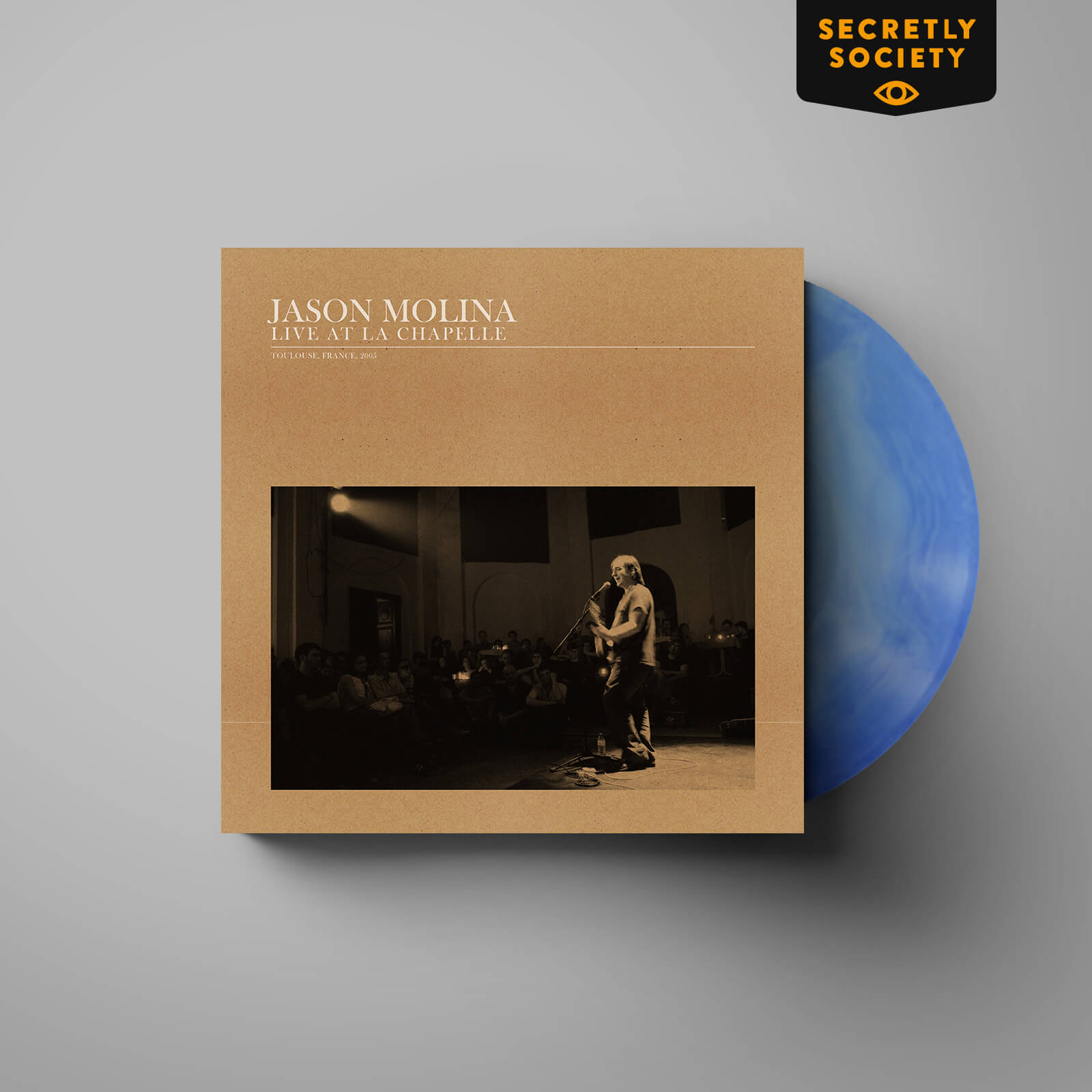
January 2020 Secretly Society release on blue dream splash vinyl.
On a rare day off during Magnolia Electric Co.’s 2005 European tour, a pair of fans in the south of France convinced Jason Molina to abandon the promise of leisure to play a show in an old church in Toulouse. Now, fifteen years later, the result is making its way into the world for the first time via “Live at La Chapelle”, an 11-track album of Molina’s performance at the former church squatted and converted into a hub for the arts.
Recorded with just a static microphone and a minidisc on June 7th, 2005, in front of a reverent crowd of 200, Live at La Chapelle is aglow with the hushed murmurs and whispers of an engrossed audience, of Molina’s stripped-back performance reverberating to the rafters. The neighbours’ penchant for calling the police with noise complaints meant acoustic shows only, so Molina split the difference and came with his electric guitar, choirboy voice, and Magnolia Electric Co. member Michael Kapinus’ occasionally guesting on trumpet.
The sparse record finally made its way Secretly Canadian in 2014, and six years later, as part of the process of unearthing work from the extensive Molina archive, Live at La Chapelle will finally be widely heard.
Here, Molina remarks some of his canonical work as well as the more obscure, deeper cuts in the special environment of La Chapelle. Nowhere better to hear a solo performance of Jason Molina’s catalogue than in a house of worship, a cavernous structure with ceilings nearly high enough to contain the impossible reach a holy, lonesome voice, Recorded with just a static microphone and a minidisc on June 7th, 2005, in front of a reverent crowd of 200, Live at La Chapelle is aglow with the hushed murmurs and whispers of an engrossed audience, of Molina’s stripped-back performance reverberating to the rafters.
Here, Molina remarks some of his canonical work as well as the more obscure, deeper cuts in the special environment of La Chapelle. Nowhere better to hear a solo performance of Jason Molina’s catalogue than in a house of worship, a cavernous structure with ceilings nearly high enough to contain the impossible reach a holy, lonesome voice.
Track Listings: East St. Louis Blues Trouble In Mind 31 Seasons in the Minor Leagues Carmelita Montgomery Hold on Magnolia In the Human World Bowery Nashville Moon Leave the City I’ve Been Riding With the Ghost
Secretly Canadian is proud to present the Sojourner boxset. It is the accumulated work of thirteen musicians, five locations, four recording engineers, three filmmakers, two designers and one songwriter, including enough material for three full lengths, one EP and one DVD. The boxset includes 4 CDs a DVD, a poster, postcards and a medallion.
The four CDs that are included in the boxset are from four distinct recording sessions that Magnolia Electric Co recorded following the release of their debut studio album What Comes After The Blues. The session known as Nashville Moon was recorded by Steve Albini at his Electrical Audio studios in Chicago, Illinois. The session known as Sun Sessions was recorded at the legendary Sun Studios in Memphis, Tennessee. The session known as Black Ram was recorded by David Lowery at his Sound Of Music studios in Richmond, Virginia and features an entirely different cast of characters including Lowery, Rick Alverson, Andrew Bird, Molly Blackbird, Miguel Urbiztondo and Alan Weatherhead. The session known as Shohola was recorded by Jason Molina alone, with a guitar and microphone. The Road Becomes What You Leave is a film produced by Todd Chandler and Tim Sutton. It follows the band as they tour across the prairie provinces of Canada and shows the loneliness and isolation one can feel even when traveling in a pack.
Together, these make for the most ambitious and robust Magnolia Electric Co release to date.
12 years ago today Magnolia Electric Co. released the incredible ‘Sojourner’ boxset.
An ambitious and beautifully curated collection released in a wooden box, ‘Sojourner’ was the accumulated work of thirteen musicians, five locations, four recording engineers, three filmmakers, two designers and one songwriter, including enough material for three full lengths, one EP and one DVD. The boxset included 4 CDs a DVD, a celestial map, postcards and a medallion.
Ben Swanson, Secretly Canadian:
Sojourner was born out of one of the most prolific periods of Jason’s career. He’d constantly be setting up new sessions, or sending us new records – not recordings, but fully conceived records – out of the blue. He even sent one cryptically as a demo and then got upset when we didn’t find it amongst the pile of other demos (that record eventually became the Molina & Johnson record). It was extremely exciting but admittedly a bit stressful from the label perspective. We were sensitive to the Prince dynamic with Warner; of not being able to keep up and do justice to the work. Jason was also – actually not unlike Prince now that I think about it – in the midst of this transformative period away from the old Songs: Ohia moniker and material into a new, more expansive name, Magnolia Electric Co (at the time, he had the idea of a multi-headed beast. Several different “Electric Co.”s coexisting). We desperately wanted to keep pace with Jason but could never catch up. Eventually we landed on the idea of leaning in to the situation and suggested we put all this material together in a box. At first it was purely a practical innovation to reset the clock, but eventually came to find the opportunity to showcase Jason’s range. My memory is he loved the concept out of the gate and immediately began dreaming of a box stuffed with music, a Ouija board, a constellation map and a chicken bone. Tokens from his universe. In hindsight, Sojourner ended up as the most complete representation of Jason’s expansive world that rewards repeat listens. At some point we’ll have to put it out on vinyl. Maybe there will be room for the chicken bone.
Richard Hell and the Voidoids“Blank Generation” (1977) anthemic track, Led by former Television bassist Richard Hell (Lester), the Voidoids were an interesting take on punk rock. Sounding like a more aggressive version of Captain Beefheart’s Magic Band, they played high energy songs with exuberant vocals by Hell. Not a good singer or bassist by conventional standards, he was still able to communicate emotion, albeit through a nihilistic viewpoint. The songs have interesting arrangements, and don’t sound like other punk bands. The band consisting of Richard Hell – Bass, vocals, Ivan Julian – Rhythm guitar, Robert Quine – Lead guitar, Marc Bell – Drums.
Richard Hell is all over this story, passing through Television and the Heartbreakers before arriving at the Voidoids. He mastered the art of thrift store finery, pairing numb, nihilistic cool with spiked hair and safety-pin piercings. “Blank Generation,” caught here at CBGB in 1978 features a future Ramone Marky (still Marc Bell) behind the drums.
A short clip from the movie Blank Generation made in (1980), featuring Richard Helland the Voidoids playing the theme song Blank Generation at the legendary punk club CBGB. Directed by Ulli Lommel, produced by Andy Warhol. The band were formed in New York City in 1976 and fronted by Richard Hell, who had been a former member of the Neon Boys, Television and the Heartbreakers.
Richard Meyers moved to New York City after dropping out of high school in 1966, aspiring to become a poet. There he hoped he would be able start a career as a poet and immerse himself in the rich art community of the city. In his career as a poet he managed to get some of his works published in places like Rolling Stone and the New Directions’ Annuals. He also started his own
publishing imprints, Genesis: Grasp and then later Dot Books. He had little success as a poet, his imprints ultimately couldn’t be sustained and he ultimately cooled on his poetic aspirations.
He and his best friend from high school, Along with Tom Miller, founded the rock band the Neon Boys Their first group was it was a short lived group that produced only two
four-track studio recordings which became Television in 1973. The pair adopted stage names; Miller called himself Verlaine after Paul Verlaine, a French poet he admired, and Meyers became Richard Hell because, as he has said, it described his condition. Television received a good deal of hype in the New York music scene, with good write-ups in the Soho Weekly News, by Patti Smith, who was then sometimes working as a rock journalist, among others. Television was the first group on the New York scene to play at the Bowery club CBGB, which quickly became the epicenter of the emerging punk rock. There is both audio and video of the band while Hell remained, but nothing was officially released.
The group was the first rock band to play the club CBGB, which soon became a breeding ground for the early punk rock scene in New York. Hell had an energetic stage presence and wore torn clothing held together with safety pins and his hair spiked, which was to be influential in punk fashion in 1975, after a failed management deal with the New York Dolls, impresario Malcolm McLaren brought these ideas back with him to England and eventually incorporated them into the Sex Pistols’ image.
Disputes with Verlaine led to Hell’s departure from Television in 1975, and he co-founded the Heartbreakers with New York Dolls guitarist Johnny Thunders and Jerry Nolan They were a super-group of sorts on the New York scene. Expectations for the new group were high and initial performances were met with criticism. In the group Hell faced many of the same issues of songwriting and singing that he had withTelevision, and the heroin problems of Hell, Thunders, and Nolan were mutually destructive. Hell eventually quit the Heartbreakers after a year, again before the group got into the studio to record an album. Live material featuring Hell exists, but was not officially released until years later.
Hell did not last long with this band, and he began recruiting members for a new band. For guitarists, Hell found Robert Quine and Ivan Julian—Quine had worked in a bookstore with Hell, and Julian responded to an advertisement in The Village Voice. They lifted drummer Marc Bell, later Marky Ramone, from Wayne County. The band was named “the Voidoids” after a novel Hell had been writing.[
Musically, Hell drew inspiration from acts such as Bob Dylan, the Rolling Stones, the Beatles, protopunk band the Stooges and fellow New Yorker group the Velvet Underground, a group with a reputation for heroin-fuelled rock and roll with poetic lyrics. Quine’s admiration of the Velvet Underground led him to make hours’ worth of bootleg recordings of the band in the late 1960s.[citation needed] Hell also drew from and covered garage rock bands such as the Seeds and the Count Five that were found on the Nuggets compilation of 1972.[7] The Voidoids’ music was also characterized as art punk.#
Hell had written the song “Blank Generation” while still in Television; he had played it regularly with the band since at least 1975, and later with the Heartbreakers. The Voidoids released a 7″ Blank Generation EP in 1976 on Ork Records[ including “Blank Generation”, “Another World” and “You Gotta Lose”. The cover featured a black-and-white cover photo taken by Hell’s former girlfriend Roberta Bayley, depicting a bare-chested Hell with an open jeans zipper. It was an underground hit, and the band signed to Sire Records for its album debut.
The Voidoids original lineup. Marc Bell (aka Marky Ramone), Ivan Julian, Robert Quine (later in the Lou Reed band), and Richard Hell (previously in the Heartbreakers and Television).
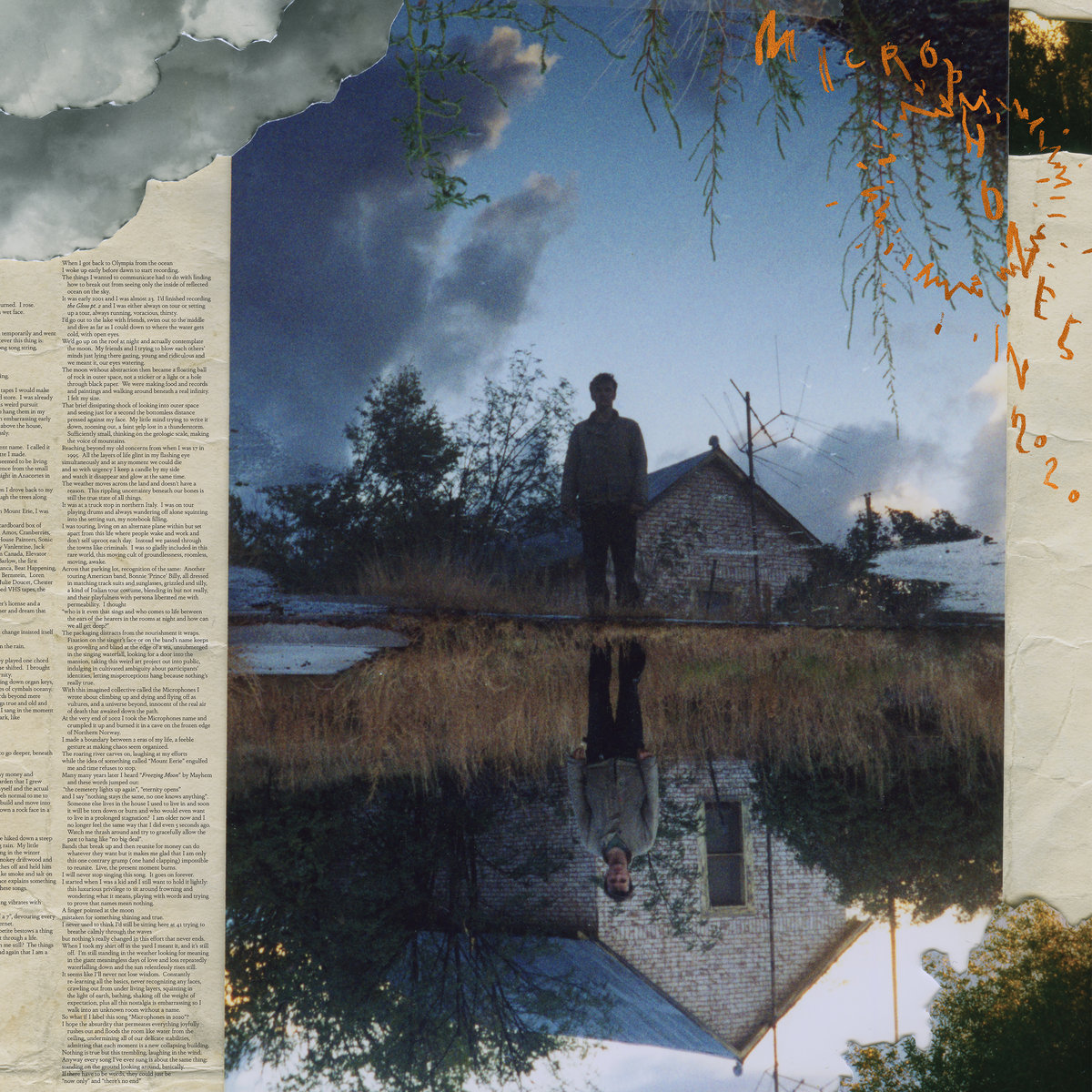
This is the double vinyl version of the new song/album by the Microphones. Excellent and fancy manufacturing of all components. Comes with a big poster. Foil stamping. The usual exquisite quality.
Phil Elverum releases the first new music under his long-hibernating moniker, the Microphones, in 17 years. The new album is titled “Microphones in 2020″ and is out today via his own label, P.W. Elverum & Sun. This new album follows The Microphone’s previous record, 2003’s Mount Eerie. Elverum has toured and released music under the name Mount Eerie since 2003, but he briefly revived the Microphones moniker for a show at What the Heck Fest in his hometown of Anacortes, Washington last year. The album consists entirely of a 44-minute-long track. “We all crash through life prodded and diverted by our memories,” Elverum says. “There is a way through to disentanglement. Burn your old notebooks and jump through the smoke. Use the ashes to make a new thing.
The Microphones in 2020. Phil Elverum (who retired the moniker in 2003 and has gone by Mount Eerie ever since) brought back the name he used for such classic albums as The Glow Pt. 2 for the first time in 17 years, and the result is a one-song, 44-minute album where he muses on the very idea of being “The Microphones.” “There is too much focus on the title of a thing,” Phil told us in a new interview. “Ideally, we can just make stuff without a title for it and without an identity for it. Things can just rest on their own merit, but that’s too idealistic [laughs] and impossible.”
Released Aug. 7th, 2020
as a 2xLP by P.W. Elverum & Sun
Folk trio and a capella angels Mountain Man—aka Sylvan Esso’s Amelia Meath, Daughter of Swords’ Alexandra Sauser-Monnig and Molly Sarlé have released a new live album called “Lookat Me Don’t Look at Me” recorded in November of 2018 at Saint Mark’s Cathedral in Seattle. It contains songs from their 2018 studio album Magic Ship, as well as covers of Fiona Apple’s “Hot Knife” and Michael Hurley’s “Blue Mountain,” which you can hear below.
The Look at Me Don’t Look at Me Tour was our first tour together in 10 years – it was a wild and magical ride and we are excited to share a live recording from a show we played at a beautiful verbed out church in Seattle! One of our favourite things in life is singing together to a bunch of people in a room. We hope this recording brings you some of the joy you may have been missing until the next time we can all be together.
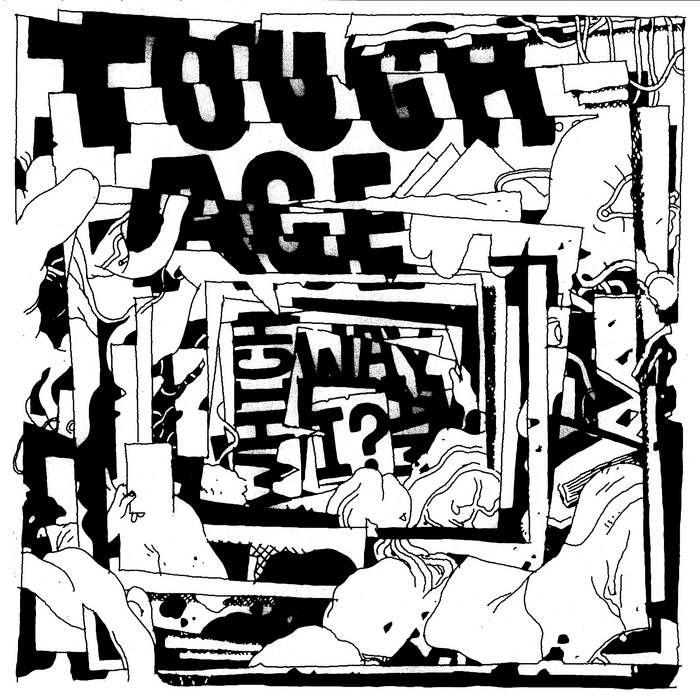
Toronto indie-punk trio Tough Age have shared their new album “Which Way Am I?” ,via Mint Records, following singles “My Life’s a Joke & I’m Throwing it Away,” and “Repose.”Which Way Am I? is the follow-up to 2017’s Shame. Taking cues from Flying Nun indie-pop and speedy ’80s punk, “My Life’s a Joke & I’m Throwing it Away” is the sound of melancholy whiplash. It’s part happy-go-lucky breeziness and part painful self-destruction, and either way, it’ll get you all riled up.
Like most of their crate-digging contemporaries, the new record explores all kinds of new directions, experimenting in different areas of post-punk while implicitly nodding to the pocket-sized punk of Dirtnap Records .
The first single the group is called “Repose,” and while it is one of the record’s sleepier cuts, it’s by no means tame. Clark takes on vocals for this song—as she does with many of tracks—before the five-minute track gives way to a sprawling John Dwyer–like guitar odyssey. “‘Repose’ is me trying to write a song about peaceful things after all of my misery songs on the previous record and 7″,” she shares. “I had mixed success in achieving my goal. I always write the melody first and then I decide what I want the song to be about, and then I write the words (sometimes words slip in during the melody part and then I have to write around them). To me, ‘Repose’ sounded like a calm and solitary night, so everything in that song happens at night.”
“I wrote the music for ‘Repose’ one morning when I should have already left for work,” Samson adds. “It came very quickly (but not quickly enough to avoid being late), but didn’t feel like something I could write a melody for. We practiced the song without Penny singing, so the first time we heard her vocals were live in the studio as she recorded them, and Jesse and I both were stunned. It felt like a real left turn for Penny, and I think shows the depths of talent she sort of just tucks away and dishes out when she feels you’ve earned a piece of it.”
Tough Age – “My Life’s a Joke & I’m Throwing it Away” From the album ‘Which Way Am I?’ out on Mint Records released on August 7th, 2020
Born in the Philippines and raised in London, Bea Kristi began recording music as Beabadoobee in 2017. At just 20 years old, Beabadoobee has built her huge, dedicated Gen-Z fan base with her flawless output of confessional bedroom grunge pop songs and DIY aesthetic. Fake It Flowers is her debut album wear she wears her heart on her sleeve backed by music that has a strong grunge and slacker feel. It’s instant, joyous and absolutely golden.
Bea Kristi, the 19-year-old singer/songwriter behind Beabadoobee, signed with Dirty Hit (the label giant behind The 1975, Wolf Alice and others) two years ago and has been climbing the ranks ever since. Through her early singles and recent EPs (2018’s Patched Up and 2019’s Loveworm and Space Cadet), Beabadoobee has perfected her tender acoustic pop, floaty dream pop and distorted indie rock. Also a self-described ’90s obsessive, she’s won over hordes of Gen Z listeners, landed an opening slot for Clairo in the U.S. and became a BBC Sound of 2020 finalist.
Following the release of the single “Care” in July, London-based artist beabadoobee has shared another track from Fake It Flowers, her forthcoming album set for release on October. 16th via Dirty Hit. The single, titled “Sorry,” recalls the disintegration of a close friendship as Bea owns up to her own mistakes. “It’s the idea of dismissing something because it felt too close to home and a personal reminder to never take for granted what that person could have had,” she says.
Known for her soft, lo-fi folk sound, London’s Beabadoobee, first emerged online with her sweetly attenuated 2017 viral single “Coffee.” Only 17 at the time, she signed with the Dirty Hit label, which issued her second EP, Patched Up, in 2018.
Born in London to Filipino parents, She first became interested in music around age seven, and grew up listening to a mix of OPM (Filipino traditional and modern original music compositions and ’80s pop/rock. By her teens she had discovered indie rock and was listening to artists like Kimya Dawson, Karen O & Yeah Yeah Yeahs, (Sandy) Alex G, and Florist, as well as the Beatles and Chet Baker. In 2017, at age 17, she received her first guitar and quickly taught herself how to play by watching tutorial videos online. That same year, she recorded her song “Coffee” in a friend’s bedroom, and uploaded it online. A mellow ditty inspired by her relationship with her then-boyfriend, the song went viral, with its video getting over 300,000 views, and gaining even more hits on streaming services. The labels took notice, and Bea issued her debut EP Lice on Columbia before signing with the independent Dirty Hit (home to the 1975, Pale Waves, and Wolf Alice). In 2018, she issued a second EP, Patched Up. Another EP, Loveworm, arrived in April 2019, followed several months later by the single “She Plays Bass.” .








 The Fat Angel Sings