Archive for the ‘CLASSIC ALBUMS’ Category

Image may contain: text that says 'loma DON'T SHY AWAY'

LOMA is Emily Cross, Dan Duszynski and Jonathan Meiburg. We met on tour and made a secret pact to start a band together. Then we made an eerie and beautiful album way out in the country in Texas. Then, we made another. Don’t Shy Away comes out 10/23/20.

There was never meant to be a second Loma record. The collaboration between Cross Record’s Emily Cross, Dan Duszynski, and Shearwater’s Jonathan Meiburg released their challenging and brilliant debut album back in 2018, which topped our list of our the year’s best albums, and drew near universal acclaim. The gruelling tour that followed culminated at Sub Pop’s SPF 30 Festival and ended with Emily leaping from the stage, and heading straight for the sea. That was originally meant to be that – no more records, no more Loma. As Emily recalls, “it was the biggest audience we’d ever had. We thought, why not stop here?”. As you can probably guess from the fact you’re reading this, that wasn’t quite how the story ended. Courtesy of Brian Eno loving their music, the members pursuing their own projects, and a return to Texas, Loma were inspired to keep going, and the result is Don’t Shy Away, the band’s second album, out in October through Sub Pop.

Ahead of the release, this week Loma have shared “Ocotillo”, the first single to be lifted from “Don’t Shy Away”. Lifting its name from a cactus-like plant native to the deserts around the border of Mexico and the USA, the band were inspired by the somewhat precocious nature of the plant.

Band Members
Emily Cross, Jonathan Meiburg, Dan Duszynski

“Ocotillo” by Loma from their album “Don’t Shy Away” Release Date: 23rd October 2020 on Sub Pop Records.

Image may contain: one or more people, people sitting, horse, text and outdoor

First 200 lps are hand numbered, first come, first served.

Though their music has often been tied to the traditions of americana and american roots music, holy motors were formed in Tallinn, Estonia in 2013, when founding member Lauri Raus (songwriter and one of the band’s three guitarists) recruited Eliann Tulve, who was just 16 at the time, to join the band as songwriter and lead vocalist. With Tulve’s gorgeously foreboding vocals serving as a ballast for the guitar section’s “infinity-pool-style shimmer” the band quickly became as un-ignorable as they were inscrutable, rising from the ranks of eager supporting act (for low, at SXSW) to sought after headliner (at NYC underground-meets-above-ground mainstay berlin) in just a matter of days during their first unofficial tour of the us in 2018.

That same year marked the release of their critically acclaimed debut LP, slow sundown, on New York City’s equally enigmatic Wharf Cat Records, an album that garnered praise and airplay not just in the band’s native Estonia (where it won Tallinn’s music week award and a nomination for debut album of the year by the Estoniain music awards), but also via a battery of publications west of the baltic, including stereogum (album of the week), bandcamp (album of the day), and the uk’s diy mag . All this momentum went so far as to capture the attention of one of the band’s very own idols, Anton Newcombe of the Brian Jonestown Massacre, who approached them after seeing a live performance in Berlin and would go on to produce a handful of tracks for the band in 2019 as well as join them for their set at Switzerland’s festival nox orae during a summer itinerary dotted with european music festivals.

But rather than being blunted and worn down by the tumultuous forces of success, Holy Motors’ incongruence has instead grown all the more prevalent and endearing. They remain musicians from an ex-soviet country producing music that has been described as “cowboy dream-pop with a dark side,”, “shoegaze that sounds like the old west” , and like “a twang-filled soundtrack to… Cowboy melancholy”. The resulting mystique is an inalienable part of the band’s dna, stemming from the shared infatuation with the American west that the members developed waiting out Estonia’s long, grim winters with the warm company of American western films (Badlands and Paris, Texas amongst their favourites) and their instruments. What began as an innocent fascination evolved into a sincere embodiment of that dreamy, melancholy cowboy aura, both in their music and persona as a band.

Now, at 22 years old, Eliann Tulve resembles Mazzy Star’s Hope Sandoval, reincarnated as an Estonian cowgirl. She is enigmatic as ever but stands more firmly alongside co-songwriter Lauri Raus, the solidification of their roles perhaps accounting for the more hopeful turn their song writing has taken of late. Their new album “Horse”, which is due out on Wharf Cat Records on October 16th, finds the band acknowledging the Americana and rockabilly strands of their musical dna without sacrificing any of the otherworldly mystique that keeps them from neatly conforming to the shoegaze and dreampop labels often applied to their music.

From the album’s opening moments, songs like “Country Church,” with its major key and classic rhythm and blues guitarline, and “Midnight Cowboy,” which sounds like a lost Buddy Holly 45 played at 33 rpm, make it clear that Horse — even if it may not accomplish the impossible task of demystifying this band of ex-soviet cowboys — will at least show you that there’s more to them than the near-impenetrable darkness of their work to date may suggest. Although tracks like “Trouble” and “Endless Night” gravitate toward the ethereal production and existential subject matter of prior releases, repeat listens reveal complex compositions and an empathy that is central to this eight-song album.

As a whole, Horse stands as a warmer, more human counterpoint to 2018’s celestial slow sundown, and showcases Holy Motors as a hypnotic force that draws listeners in and leaves them wanting more. This effect, paired with their ability to write lyrics and music that resonate with a deeply relatable feeling of isolation, has resulted in an album built to connect with people from devoted shoegaze and western psychedelia fanatics to dreamer cowboys, driving through wide open country roads under the stars.

“Endless Night” is from the album ‘Horse’ out on 10/16.

Image may contain: one or more people, people on stage, people playing musical instruments and concert

Chicago’s Slow Pulp make an excellent early name for themselves this afternoon with their latest single ‘Falling Apart’. Now in their third year, the outfit are gearing up for the release of their debut album Moveys”.

Fresh and cooling to the brain and body during one of the hottest weeks of the year, ‘Falling Apart’ abounds with soft touch guitars and the vaguest hint of violin.
It’s all pulled together by the relaxing vocal of Emily Massey: The wellworn calm that emanates from the tune is remarkable considering that in the past two years, Massey has struggled with Lyme’s disease and chronic Mono, then dealt with her parents being in a severe car crash – all in the global landscape of a pandemic.

“It became easier to stay numb, and create a facade that I was doing ok, than it was to release any type of healthy emotion for a long time. Luckily I did allow myself to have a full on breakdown induced by a stubbed toe and confusion over taxes, sometimes it’s the littlest things that finally get you” she said.

“Why don’t you go back to falling apart? You were so good at that,” Emily Massey of the Chicago-based band Slow Pulp sings. (The group will release its debut album, “Moveys,” on October. 9th.) The atmosphere around her — lush acoustic guitar, lightly brushed percussion and the lulling violin of frequent Alex G collaborator Molly Gemer

“Falling Apart” is taken from ‘Moveys’ – out Oct 09 on Winspear:

Image may contain: ‎text that says '‎slow pulp moveys slowpulp moveys $ا out out oct 09‎'‎

Sun Racket

“Sun Racket’ is the brand new album from legendary Boston trio Throwing Muses, consisting of Kristin Hersh, David Narcizo and Bernard Georges.

The follow up to 2013’s ‘Purgatory/Paradise’ is an outpouring of modal guitars, reverbed shapes, echoey drums and driving bass set behind Kristin Hersh’s well-thumbed notebook of storylines. a ten-song opus of suitably wrought tales set against a wall of sound that’s at once calm and ethereal before building into glorious cacophonous crescendos. when Throwing Muses wrote their last album, they were shattered. Pieces were coming and going, elements repeating and charging the whole. “it sounded beautiful jumping around like that”. two-minute songs reappearing as twisted instrumentals or another song’s bridge.

They mimicked the effect live which kept them on their toes. whatever was happening was already over in other words. “Sun Racket’ is the opposite. it refused to do anything but sit still. it says, “sit here and deal”. “all it asked of us was to comingle two completely disparate sonic vocabularies: one heavy noise, the other delicate music box. turns out we didn’t have to do much. “Sun Racket’ knew what it was doing and pushed us aside, which is always best. after thirty years of playing together, we trust each other implicitly but we trust the music more” – Kristin Hersh and so, they continue. business unusual. “a ground-breaking band who changed the face of alternative music rather than follow the rule book.” Mxdwn “pioneers of the 80s/early 90s college rock sound” pitchfork “one of America’s finest guitar bands”..

Taken from the new album ‘Sun Racket’, out on Fire Records 4th September 2020.

Oceanator aka Brooklyn-based singer/songwriter/guitarist Elise Okusami, is releasing her debut album, “Things I Never Said”, on August 28th via her own Plastic Miracles label. She has shared a new song from it, “Heartbeat,” which is about the anxiety that comes from having a crush on someone.

Okusami had this to say about “Heartbeat” in a press release: “This song is loosely about having a crush, and both the grounding feeling and the anxiety that feeling brings. We recorded it all together like a live performance, and then I went back and added the lead guitars and the vocals. Guitar and vocals by me, bass Eva Lawitts (they), drums Aaron Silberstein (he).

Things I Never Said includes “A Crack in the World,”. Then we loved the album’s next single, the more synth-poppy “I Would Find You,”.
Things I Never Said was originally due to come out on Tiny Engines, but then that label pretty much imploded after it was revealed that it was having difficulty making royalty payments to its artists, so Okusami is putting out the album on her own label instead. Although the British label Big Scary Monsters has just announced that they have signed Oceanator and will be releasing the album in the UK.

http://

Releases August 28th, 2020

All songs written by Elise Okusami

Dublin’s indie-rock band Pillow Queens have released another track from their upcoming album, “In Waiting”. Their new single Holy Show explores feelings of remorse when reflecting on past situations.

On the track, the band share: “‘Holy Show’ is a song that relays the feeling of regret and insecurity about past words spoken and actions taken, even when they’re ultimately meaningless. The song tries to articulate the heavy burden of being the only person who is concerned about the minute details of how you present yourself to the world.”

Pillow Queens continue their collaboration with director Kate Dolan, who previously directed Handsome Wife and Gay Girls. Of the project, Dolan shared: “Myself and the girls are all queer so when they asked me to direct something for ‘Holy Show’ we all felt it was time that we made a video that had some positive queer representation. There are often depictions of queer women in the media that really upset me. We are often observed through a male gaze by male directors. They are often hyper sexualised. We wanted to create something that really captured the joyful intimacy between queer women through a female gaze.”

With their Australian fanbase growing with each release, the bands debut album is set for release worldwide on September 25th. After four years of perfecting their craft and creating music, the album is a representation of the band members lives. The record is set to be an exploration of love, particularly self-love and queer-love. However, to do so, the record will also explore family, spirituality and politics.

The band formed in 2016 and released their debut EP, Calm Girls. The release captured the attention of Steve Lamacq who called the four piece “deceptively infectious, with sharp hooks and sharp nails”. Since then, they released their follow up EP, State of the State, and have played festivals across Europe.

In Waiting is out September 25th.

See the source image

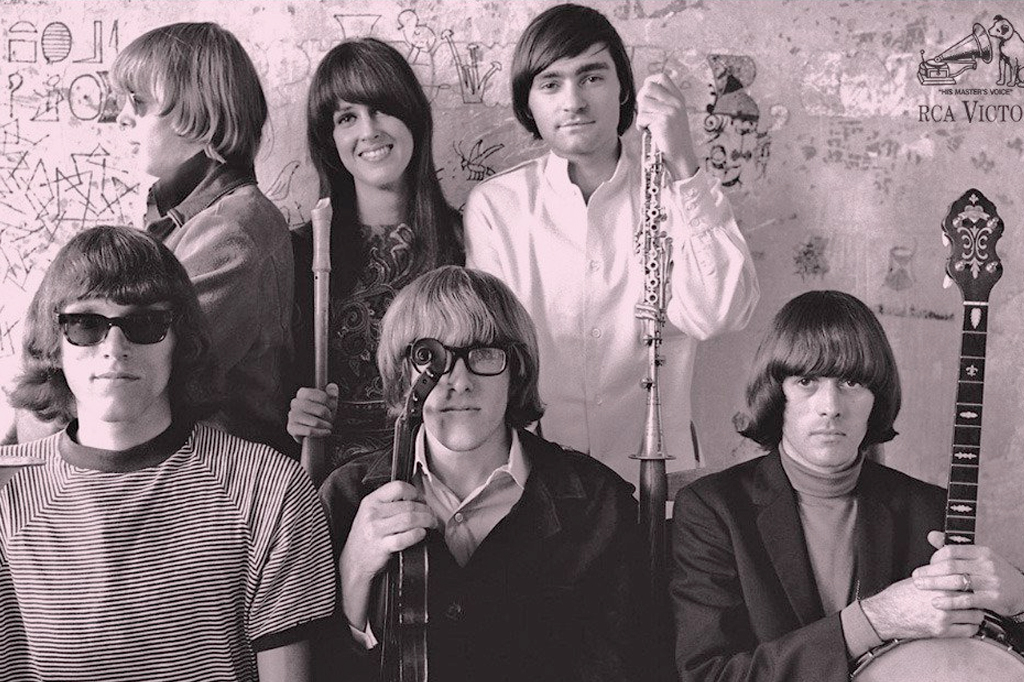
There are three versions of the Jefferson Airplane’s debut LP, each with a dedicated mono and stereo mix. The “first” (and rarest) version is the 12-track uncensored version, which was originally released on August 15th, 1966. This version was quickly recalled and the track “Runnin’ Round This World” deleted off side 1 due to the line “the nights I’ve spent with you have been fantastic trips”. Very few of these original copies have survived, and they usually sell for an awful lot of money.

Jefferson Airplane “Takes Off” is the debut studio album by the American rock band Jefferson Airplane, released in August 1966 as RCA Victor LSP-3584 (stereo) and LPM-3584 (mono). The personnel differs from the later “classic” line up: Signe Toly Anderson was iniatally the female vocalist and Skip Spence played drums. But both soon left the group—Spence in May 1966, Anderson in October and were replaced by Spencer Dryden and Grace Slick, respectively.

RCA executives found some of the lyrics too sexually suggestive. They had the band change the lyrics in “Let Me In” from “I gotta get in, you know where” to “You shut your door, now it ain’t fair”, and “Don’t tell me you want money” to “Don’t tell me it’s so funny”. In “Run Around” they had the end of the line “Blinded by colours come flashing from flowers that sway as you lay under me” altered to “…that sway as you stay here by me”. With “Runnin’ ‘Round This World” the executives insisted that “trips” in the line “The nights I’ve spent with you have been fantastic trips” referred to taking LSD, though the band insisted it was merely common slang. Even replacing the word “trips” with a guitar arpeggio did not placate RCA’s concerns with the line’s sexual connotations and refused its inclusion on the album, and the recording remained unreleased for the next eight years.

The “second” version to appear of this album happens to be exactly the same as the first version minus “Runnin’ Round This World”. However, these copies were also soon recalled, and two tracks replaced for the “Third”, final, and most commonly found version of the LP. The two tracks “Let Me In” (with lines “Oh let me in, I wanna be there/I gotta get in you know where” and “Don’t tell me you want money”) and “Run Around” (having “… that sway as you lay under me”) were re-recorded with censored lyrics.

The ”first” US pressing of the debut by Jefferson Airplane has three versions, released in both mono and stereo, the first two of which are extremely rare: 
1) Six tracks on side A, the sixth being ”Runnin’ Round This World”. This contains the original versions of both ”Let Me In” (with the lyric ”Don’t tell me you want money”) and ”Run Around” (with the lyric ”That sway as you lay under me”). The backcover has no caption ”RE” in the top right hand corner.

2) Five tracks on side A, ”Runnin’ Round This World” is deleted. Still, the original versions of ”Let Me In” and ”Run Around” are included. The backcover does have the ”RE” caption.

3) Five tracks on side A. The re-recorded versions of ”Let Me In” and ”Run Around” are included with the offensive lyrics altered. Backcover identical to 2).

This second version has also become somewhat uncommon, and is discernible from the third version only by the etched matrix numbers or by listening to the record itself. Only the “third version” has been fully reissued on CD in both mixes, although a couple mediocre-sounding vinyl-sourced tracks appeared on the most recent remaster.

This transfer is from one of the 2nd version LPs (-12S / -3S) . I definitely prefer this original version, if for no other reason than it is clearly what the band intended to be released before they were censored by RCA Victor.

The album’s release drew little press attention at a time when mainstream newspapers did not normally cover rock releases and the rock press was yet in its infancy. Crawdaddy! magazine highlighted the album on the cover of its January 1967 issue, which included a three-page review by the magazine’s assistant editor, Tim Jurgens, who called the album “faulted” yet “the most important album of American rock” of 1966.

The Band:
Marty Balin – vocals, rhythm guitar
Signe Toly Anderson – vocals, percussion
Jorma Kaukonen – lead guitar
Paul Kantner – rhythm guitar, vocals
Jack Casady – bass guitar
Skip Spence – drums
Spencer Dryden – drums (on “Go to Her,” alternate version of “And I Like It,” and alternate version of “Chauffeur Blues”)

Many bands suffer from the second album slump” after having a successful debut. It’s common because while you often have years to write, revise, and road test songs that end up on the first record, the hustle to do a follow up without the luxury of being able to revise and road test the new tunes can lead to something less-than-stellar. It can be a humbling experience, or it can break a band. For The Pretenders, it seemed like it was neither when Pretenders II came out in 1981, but it certainly ended up breaking the band about a year later.

From the band’s formation in 1978, to the debut of their self-titled album in 1980, The Pretenders had time to both refine their sound with addition of James Honeyman-Scott on guitar and (then boyfriend) Pete Farndon on bass. Drummer Martin Chambers didn’t join the group until the band’s original drummer, Gerry Mcilduff, was replaced after releasing “Stop Your Sobbing” in 1979. Lead singer-songwriter and rhythm guitar player Chrissie Hynde’s songs captured a kind of punk, sexually liberated, and sometime feminist view that was lacking in the new wave of rock music at the time. Oh, and it didn’t hurt that The Pretender’s sound — while rooted in rock — spanned the range of rock, post-punk, and pop in 12 tightly written songs.

Coming out of the proverbial gate with such a strong debut plus the rigors of touring meant there was very little time to write songs for their follow-up. Drummer Martin Chambers noted as much in a 1983 with Trouser Press magazine: “Our first LP was very special. The second album was more difficult, because Chrissie had no time to write. She has to be relaxed to write, and we were on the road all the time.” Even with all that pressure on Hynde to write a hit follow-up, Chambers noted, “I’m quite happy with it (Pretenders II). I listen to the first and second albums with equal enjoyment.”

The band certainly changed by 1981. They not only had a successful debut, but they released an EP with two great songs (“Message of Love” and “Talk of the Town”) in March of ‘81 that also included two outtakes from the first record (“Cuban Slide” and “Porcelain”) and a blistering live version of “Precious.” The EP (titled Extended Play) seemed to be a teaser for all the great things to come in the second full album. Alas, Pretenders II at times succumbed to the dreaded  Slump when it was released five months after the EP in August 1981.

As to why Pretenders II didn’t match the debut, much of it has to do with the fact that “Message of Love” and “Talk of the Town” were released months before, and including them on the full album felt more than a bit like filler. Had the band not released the EP, and included “Cuban Slide” and “Porcelain” on the full record, the reaction to Pretenders II would have been very different. Indeed, if those four studio songs had been sequenced into the album’s tracklist in a tasteful way, critics would have been falling all over themselves with praise for the record. It’s not like Pretenders II is a stiff, it’s just that the songs don’t quite pop like they did on the first record –excluding “Message of Love” and “Talk of the Town” of course.

The Adultress” does indeed rock with a lot of confidence, but the message of the song seems more about guilt and loneliness than Hynde’s previous view of sexuality. “Bad Boys Get Spanked” seems forced — like Hynde is trying to be sexually controversial with the lyrics. However, musically, both songs are really fantastic. The band is playing with a lot of confidence and Honeyman-Scott’s guitar work has a heaviness that signals a shift toward the rock side of things. Pete Farndon’s bass work and Martin Chambers’s drumming on “Bad Boys…” propels the song forward in a way that allows Honeyman-Scott to add some tasteful colour on the guitar. And while lyrically the song doesn’t shock as it intended, no one can doubt the sheer ferocity of Hynde’s scream at the end.

“Message of Love” is noted for 1.) being a big hit for the band. 2.) being mostly a band composition. When Chambers and Farndon were interviewed on MTV in 1981, both noted that Hynde came into the studio with some sketches of a song. And although the band rarely did this, they devoted two hours of studio time to take the sketch and make it into “Messsage of Love” that’s rooted in a trade-off of A and G chords between Hynde and Honeyman-Scott. Lyrically, it’s a bit thin, but Hynde really elevates the song by her unique phrasing that kind of shuns a defined melody in favour of a talkative approach in the verses. Still, it’s an interesting enough composition that stands out for its unconventional approach to the song’s structure. There’s no lead break, but rather a kind three chord bridge in the pre-chorus that leads into “Me and you, every night, every day.”

“I Go To Sleep” is a Ray Davies song that’s been covered over 25 times. Hynde is clearly a musician whose 1960s musical influences inform her own, and this cover by Davies — whom she would have a long term relationship that produced Hynde’s first daughter, Natalie — certainly continues her love of his work. The band’s execution seems mostly by the numbers, with the addition of a french horn for extra colouring. It’s the next song, “Birds of Paradise” that’s one of those deep tracks in the group’s catalogue that appears very autobiographical — even though Hynde rarely divulges the inspiration that informs her lyrics. “Talk of the Town” is kind of the other half of “Birds of Paradise.” The former is a reflection of early love and wanting to reconnect with an old boyfriend — even though they never do. The latter is about being infatuated (maybe even in love) and making those feelings known in public — and then kind of regretting it as the rumour mill makes her object of love the talk of the town in the end.

If this were the LP version of Pretenders II, “Talk of the Town” would be the end of side one. Side two begins with a song Hynde wrote with Honeyman-Scott. “Pack It Up” explores a side of love that’s never pleasant:  the break up. But it’s a break up with a rather unsavoury character whose Porsche, ugly trousers, “insipid record collection,” video center and “the usual pornography makes him, in John McEnroe’s famous phase, “the pits of the world.”

“Waste Not Want Not” and “Jealous Dogs” are okay songs, but they kind of drag the album down. It would have been better if these were b-sides for the singles “Day After Day” or “Louie Louie” — while “Cuban Slide” and “Porcelain” were slotted into the album. Doing so would have added more variety to the second side in terms of song styles and minimized the sound alike factor. And really, it’s the last two songs on the record where things start getting interesting again. “The English Roses” is a pretty sad song in, well, a parade of them. But this one has a chorus that begins with “This is a story” and ends either with the fruit cut from the vine before its time and left to rot, or with a girl “Looking for someone to hold.” Again, Chrissie Hynde isn’t the kind of songwriter who likes to talk about the autobiographical roots of her lyrics, but it’s not difficult to read into “The English Roses” as the story of Hynde being disappointed by relationships that failed to bloom (“A thousand broken dates”), or is the girl whose “wish made on a star” brought her to the courtyard.

Her feelings about relationships are reflected in the names she assigns her main characters. It’s not difficult to see that the English Rose, The Adultress, and most every other song on the record are allusions to lousy relationships Hynde has had. What has she learned from them? Well, besides heartbreak feeling like the crack of whip, there’s more than a whiff of romanticism and longing lurking in the lyrics. And that romanticism (as in idealizing the past) comes out full throttle in the album closer, “Louie Louie.” Louie seems to be the last in a string of men who “made his mark” on Hynde’s “tender heart.” The aquiline way he moves, the smell of his shirts, “The Jamaican moon”…yeah, she had it bad for this cat. Musically, “Louie Louie” does not suffer from lack of energy. It’s a wonderful album closer with its upbeat tempo, tasteful horn section, and Hynde’s vocal delivery that comes together in a song that looks at the past in a more loving than wistful way.

Overall, Pretenders II does suffer a bit but it doesn’t entirely fail in its endeavors as a follow up to the band’s debut. Though the lyrics were rushed, and the band sometimes sounds less inventive in the middle part of the album, all four members played with greater level of accomplishment and confidence than they previously had. Part of that was undoubtedly the amount of touring they were doing. The other part was that they were good players who just got better over time. Alas, this was the last record to feature Hynde, Honeyman-Scott, Chambers, and Farndon. On June, 14th 1982, Pete Farndon was fired from the band due in large part to his drug addiction. Two days later James Honeyman-Scott died from cocaine-induced heart failure. Farndon would die on April 14th, 1983 from a heroin-related drowning. Or as Hynde tells it in a 1984 interview with Rolling Stone, “The guy blew it,” says Chrissie. “He shot up a speedball and drowned in the bath.”

The band would continue with Chambers — in and out of the band in its various incarnations from then on. However, it’s clear while there were good records by The Pretenders that came after the first two, Hynde and her rotating group of players were never able to capture what Honeyman-Scott and Farndon brought to the table that made The Pretenders one of the more exciting bands to emerge out of the British post-punk scene of the early ‘80s.

an image of Gregory Uhlmann

Singer-songwriter and guitarist Gregory Uhlmann, a member of Perfume Genius, Fell Runner and the genre-bending improvising trio Typical Sisters, has in the past found loveliness in dark places. His acclaimed solo album of 2016, Odd Job (Dog Legs Music), blended “lush, hypnotic, minimalist chamber-pop with compelling, introspective folk melancholy,” per the Big Takeover. The Chicago Reader had equally high praise for Uhlmann’s “tender singer-songwriter album,” a collection of “beautiful melodies with somber, baroque arrangements.”
For Uhlmann, Odd Job came from a place of yearning and longing—an expression of a young songwriter looking back, often in sadness or regret or angst. But his new project, Neighborhood Watch, while also rich in melodic and textural allure, comes from a place of contentment. Consider it a meditation on domestic bliss experienced in early adulthood, an expression of the sweetness, good humour and fond reflections Uhlmann is compelled toward at this happy place in his life. “Neighborhood Watch” is a cozy portrait of grains of sand, cats, ants, getting colds, letting loose, feeling shy, watching movies, and being in love,” the songwriter says.

It’s also, somewhat ironically, a brilliant team effort involving several of Uhlmann’s favorite musicians and most trusted collaborators: Josh Johnson, keys; Anna Butterss, bass; Tim Carr, drums and voice; Matt Carroll, percussion; Lauren Baba, violin and viola; and April Guthrie on cello. Consistent with the majority of Uhlmann’s work, the songs on Neighborhood Watch match consummate musicianship and thoughtful songcraft with an innate gift for melody, and that lyricism is channelled through Uhlmann’s unique singing voice—soft and balmy yet also direct and affecting. Ultimately, the results summon up a number of touchstones in smart, studio-conscious orchestral pop, psychedelic folk and indie-rock: Think of Van Dyke Parks, the Zombies, Cate le Bon, and Bill Callahan.

In the end, however, it is Uhlmann’s life and sound reflected intimately in this music. “Bed” finds the songwriter reconciling his single, independent life with a newer version of himself who desires to settle down. “Benny” is a character study of sorts, and an opportunity for Uhlmann to vicariously throw caution to the wind. Jump-cutting from discordant, brazen sonics to gorgeous strings and supple melody, “Cool Breeze” is lyrically a curio about L.A.’s unforgiving summer heat; “Neighborhood Watch,” based in part on a fellow resident of Uhlmann’s Echo Park, is similarly droll. “DNA” delves into the idea of being in love but having uncertain goals, while “Spice Girls”—title courtesy of Butterss—ruminates on the challenges of falling in love and learning to give of yourself. “Hourglass” finds inspiration in the verse of the late poet W.S. Merwin. Uhlmann enlists vocal help from Meg Duffy (Hand Habits) on “Santa Fe,” a charming reverie in which the songwriter warmly ponders the spring-break trips he took to visit his grandparents. “Coupon” is another poetic travelogue of sorts, this time about a family sojourn to New York.

http://

Raised in Chicago and currently based in L.A., Uhlmann earned a BFA in jazz-guitar studies from the California Institute of the Arts in 2014, also studying composition and various world musics. He has since pursued engaging work in a variety of musical and creative disciplines. Uhlmann’s c.v. includes music for chamber ensembles; scores for dance, film, television and online media, including credits for Vogue, Netflix and the Moth podcast; an ongoing cross-disciplinary collaboration with the poet David Baker; and performances and recordings with many, many remarkable bands and musicians. In 2016, he and Tim Carr (Haim/The Americans) cofounded the production company Dog Legs Music. Prior to Neighborhood Watch, Uhlmann’s most recent release was Hungry Ghost, by the trio Typical Sisters. “This is improvisation-driven music, right at the corner of jazz and post-rock, but there are none of the showy, full-band mis-directions that have become so typical of jazz today,” the New York Times wrote of the album. The paper later called the music “group exploration with little flexing or hurry, electric guitar melodies that sound like open promises.”

But Neighborhood Watch is Uhlmann’s most definitive—and private, and fulfilled—effort yet. “This album reflects where I’m at in my life. It feels more grown up, but still contains a certain level of uncertainty and searching. I think I’ll always be looking for answers, but I’m more comfortable with the idea that there are not always clear cut solutions and that’s ok,” he says.

Released July 24th, 2020
Band Members:
Gregory Uhlmann – compositions, arrangements, production, guitars, vocals, keyboards, percussion
Tim Carr – drums, percussion, vocals
Anna Butterss – bass, vocals
Josh Johnson – keyboards
Elizabeth Baba – violin, viola
April Guthrie – cello
Matt Carroll – percussion
Meg Duffy – vocals (on Sante Fe)

See the source image

David Crosby’s now classic debut solo album “If I Could Only Remember My Name” featured members of CSN&Y, Grateful Dead, Jefferson Airplane and Santana on the illustrious guest list. If I Could Only Remember My Name was regarded as one of the best sounding albums of the early 70s but this is some of the coolest Crosby you’ll ever hear.

What is Perro Sessions? : The Planet Earth Rock and Roll Orchestra is a nickname given to artists who recorded together in the early 1970s. They were predominantly members of Jefferson Airplane, the Grateful Dead, Quicksilver Messenger Service, and Crosby, Stills and Nash. Their first album recorded together was “Blows Against the Empire”, when they were known as Jefferson Starship. The name changed to Planet Earth Rock and Roll Orchestra for the next album, David Crosby’s If I Could Only Remember My Name.

During the sessions for Crosby’s album at Wally Heider Studios, the musicians of each band were invited to the sessions and rehearsed hours of material, and everything was recorded. Material played during these recorded sessions in 1971 was used for Crosby’s album (the “Perro Chorus” is credited on the song, “What Are Their Names”) and several other solo albums after Crosby’s . The name Jefferson Starship was later used for Paul Kantner and Grace Slick’s new band formed in 1974. Paul Kantner recorded a solo album in 1983 as a tribute to this time, Planet Earth Rock and Roll Orchestra.

The material on the Perro tapes was very interesting, but had nothing to do with CSNY. There were 4 reels of 2 track mixes made in 1971 during the sessions (obviously there is more that has never been mixed). The tapes were put into storage in Nash’s vault. Paul called Nash in 1992 and requested DATs of those tapes. This was the first time they had been outside of the CSNY organization. They were copied at A&M Post Production audio and my personal DAT was made at that time. The roots of Perro go back a lot further than 1971. 1 guess it had its inception in the early years of the ’60s (prior to the Airplane, the Byrds et al) when Kantner, Crosby and Freiberg used to hang out, play music, get high and rap together around Venice Beach. That was the initial bond, the start of it all.

The “PERRO Chorus” is credited on Crosby’s song, “What Are Their Names” and several other solo albums after Crosby’s. The name Jefferson Starship was later used for Paul Kantner and Grace Slick’s new band formed in 1974. Paul Kantner recorded a solo album in 1983 as a tribute to this time, Planet Earth Rock and Roll Orchestra.

Later, when they were in bands of their own, there were occasional points of interaction – like Garcia sitting in on the ‘Surrealistic Pillow’ sessions, like Crosby giving “Triad” to the Airplane when he couldn’t get the Byrds to record it, like Kantner, Crosby and Stills writing “Wooden Ships”.

Then, as the ’60s drew to a close, two sets of circumstances combined to bring the Planet Earth Rock And Roll Dream a whole lot nearer. One was the opening of Wally Heider’s studio in San Francisco – because now the local SF musicians (Airplane, Quicksilver, Dead) had a place on their doorstep where they could record. This gave item freedom from the corporate studios to record and produce as they saw fit, to come and go more as they pleased and to invite the musical neighbourhood in if they chose. (It hadn’t been so easy when they were holed up at RCA’s or Warner’s studios in Hollywood.) The other catalyst was the state of flux that a lot of bands were falling into by 1969/1970, for Crosby had left the Byrds, the Airplane was a less cohesive force with Dryden out and Hot Tuna splitting off, and Dino Valenti’s arrival had unsettled QMS.

Things had come pretty much full circle by the end of the decade. Kantner was again hanging out with Crosby (quite often on the latter’s yacht) and with David Freiberg – and, when Paul came to assemble musicians to record ‘Blows Against The Empire’, it wasn’t just to his Airplane cohorts that he turned but also to Crosby and Garcia and even Graham Nash – who’d just bought a house in Frisco and ended up producing the whole second side of the ‘Blows…’ album at Heider’s studio. ‘Blows…” was the first album by that collection of musicians whom Paul liked to term the Planet Earth Rock And Roll Orchestra.

The fact that he billed the album as being by Jefferson Starship shouldn’t mislead anyone. Kantner, Crosby, Slick, Freiberg, Nash, Garcia, Kaukonen, Lesh, Casady, Kreutzmann, Hart – these people were the Planet Earth Rock And Roll Orchestra, supporting each other on key projects.

Blows Against The Empire

As Grace recalls, “These sessions were like ‘Uh, do you wanna play guitar on this one?’ ‘No, man, I have to go to the bathroom.’ ‘Okay, David, you wanna play?’ ‘Sure’. Whoever felt like doing something did it. Parts interchanged, people interchanged.”

Graham Nash says “They asked me my opinion and I just jumped right in. Grace, Paul, David – they let me do whatever I heard. I was searching for this kind of environment when I came to America and when I was mixing in the studio our imaginations were running rampant. We were creating virtual kingdoms with music.”
The second such PERRO project was David Crosby’s debut solo album, ‘If I Could Only Remember My Name’, which features all of the above-mentioned Planet Earthers plus the likes of Joni Mitchell, Neil Young, Greg Rolie and Mike Shrieve from the band Santana.

They come from sessions at Wally Heider’s San Francisco studios in 1971. Crosby had sailed his boat up to Sausalito harbour. Nash was resident in the Haight. Kantner and Slick had moved out to Bolinas and the Dead were in Mill Valley but they would all head for Wally’s of an evening to work on PERRO songs. Some of these things ended up on Crosby’s solo, a couple on Garcia’s solo, one on Grace’s album, one on Paul’s 1983 ‘Planet Earth...’ album – and some have never seen the light of day, in which case we’ve had to guess at what they might be title.

“Walkin’ In The Mountains” (1′ 47n): A Crosby composition featuring typically attractive chordings, but little in the way of finished lyrics. “All the words we got so far are just ideas of places we’d like to go,- he tells Garcia at the start of this…

> “I went walkin’ out last summer> Tryin’ to find a breath of air.> I went walkin’ in the mountains> A friend had told me I’d find you there”

comprises just about all the words he has, but the feel is so airy and open you can almost smell that mountain air. The sequence makes a surprise reappearance later in the tape, as an intro to version four of ‘The Mountain Song’.

Barncard: Two of the versions are actually the same performance, the second remixed a little better.

Is It Really Monday?” (4′ 55″): Crosby again, and this one begins with his acoustic guitar and the composer scat-singing the abstruse melody. When the lyrics arrive, he asks:

> “Is it really Monday? > I must have been here before. > Is it really Monday? > I think the walls begin to speak.”

The tempo is very slow, in a country blues vein and Garcia adds some restrained picking. The lugubrious bass sounds like that of Phil Lesh.

“Under Anesthesia” (5′ 14″): The timing includes a false start of about 45 seconds, after which Crosby calls a halt and announces ‘No, that’s not it. Started too slow, it’s outta time and I didn’t get the right words!” When he does, it’s another hugely impressive song, the lyrical angle of which is to bemoan the inertia of the common man – who is portrayed as stupefied by beer and TV. At the conclusion, Crosby launches into a brief sequence on guitar and comments ‘I thought I’d try something original…if I write another song in E Minor, man, I’m gonna get fired!’

*This song is actually called “You Sit There”

“Loser” (8′ 41″): The timing includes several restarts and Jerry explaining – and indeed demonstrating – the chord progression to his colleagues, who could well be Crosby, Lesh and Papa John*. There’s certainly a violin in here and it works especially well, counterpointing the three guitars most effectively. *Papa John never hung out in PERRO sessions. Possibily David Freiberg on viola.

It’s obviously an early run through the song as Jerry doesn’t have much more than the first verse written. The second crack has more audible vocals, but Garcia still resorts to “da da das” from the second verse on. The bridge is there, at least intact musically, even if the only line Jerry seems sure about is the closing “Don’t let that deal go down” The genesis of a great song.

If I Could Only Remember My Name

“Over Jordan” (3′ 30″): Another Crosby song, replete with a beautiful structure, but short on completed lyrics. It begins with David’s rippling acoustic guitar which is soon joined by that of Garcia for some impressive picking.

> “I’m only going over Jordan, > Just a-goin” to my home”

sings Crosby, but after a couple of minutes he declares that he’s forgotten the changes, so restarts the performance at the bridge. This is a delightful half-song which the composer should really have completed and recorded at some stage. *Also called “Wayfaring Stranger”

“The Mountain Song – 1″ (5′ 11″): This is the first of several attempts at what would eventually become a slice of classic Airmachine. However, at this stage, the only fragment of the song they had to work with was the line “Gonna make the mountains be my home” and the chord-sequence that supported it, so it’s quite amazing that from such a meager base Kantner, Slick, Crosby and Garcia (possibly with Casady and Hart) are able to conjure 23 minutes of undulating beauty. There’s a banjo featured prominently, plus two acoustic guitars and Grace’s distinctive piano. The banjo is Paul K.& the touches are so accomplished, it’s Kantner on the five- string with Garcia and Crosby on guitars. Surprisingly, there’s no trace of Paul’s vocal – though the other three take care of that handsomely enough.

Early on, it’s Jerry singing the line in orthodox fashion, while Grace embellishes with some improvised lyrics around the theme. Then Crosby takes Grace’s place and scats around Jerry’s vocal for a while. As you’d expect, the playing is loose and slightly tentative on this first version, but no less affecting for all that.

“The Mountain Song – 2″ (5′ 17″): Grace is back providing an improvised descant to Jerry’s straight vocal at the start here, and she’s singing about the sky and the river as he eulogizes the mountains. After a minute or so, Crosby introduces his scat and Grace leaves the chorus to concentrate on her keyboards. Her vocal chords are re-engaged towards the close.

“The Mountain Song – 3″ (3′ 44″): This version begins with Jerry and David singing the line and Grace gliding around them. Briefly, Crosby supersedes her in this role but soon the two of them are improvising around the structure as Jerry perseveres in the middle. At the end of this effort, Paul is heard to remark “It sounds like everybody’s going in and out of time” to which Crosby responds “No, no, no, it’s all working – and it works perfectly.” The listener is strongly inclined to agree with him.

“The Mountain Song – 4″ (8′ 20″): As you’ll see, this is the longest version and undoubtedly the most satisfying of the four. This is where Crosby’s embryonic “Walkin’ In The Mountains” suddenly reemerges and he goes through the verse and various chord sequences as an introduction to “The Mountain Song,” to which it bridges seamlessly and beautifully. It’s a remarkable segue which makes the listener keenly aware of how the song could have developed in a very different direction had Crosby stayed to contribute throughout its evolution. Speculation aside, what we do have is a return to the familiar pattern of banjo, guitars, bass, piano and percussion. Crosby reverts to his scatted counterpoint before it slips into a stunning instrumental section. Herein, the music weaves a genuinely hypnotic spell as it rolls effortlessly along the bed of Paul’s banjo and Grace’s piano, with Garcia picking exquisitely. After several minutes of this, the vocal pattern is re-introduced, now in a more restrained vein against instrumentation which has become subdued, with Grace and the Crosby gently dancing around Jerry to the finale of a wonderful excursion.

A definite high point on this portion of the tape Mountains v. 4 reaches its apex (a phenomenal passage in it’s own right), when the band led by Jerry starts coaxing out a proto version of  Loser and a brief reprise of Deal including a pause to recapitulate the chords.  Then there is a cold cut in the tape and Jerry plainly recounts the chord progression: C-Em-Am-G-Am.  At which point they go into Deal proper.

“Wild Turkey” (4′ 20″)(AKA “Leather Winged Bat”): An interesting improvisation with Jorma and Jack at the controls, this may or may not be an early styling of what became the dynamic duo’s “Bark” instrumental. It certainly starts off that way, with Kaukonen roaring out some aggressive electric noise and Casady on a familiar rumble. But soon it settles into something much gentler, employing a more reflective chord progression. Jorma’s playing rises and falls in a fairly relaxed manner – until the finale, when he stirs it back towards the “Turkey” structure with some more  combative lead guitar. It could well be that Jack and Jorma decided the split-mood approach didn’t work and restructured the number as the wholly aggressive strut we encountered on ‘Bark’. Whatever, it’s a nicely balanced piece and a pleasure to hear.

“Jorma & Jerry’s Jam – 1″ (14′ 22″): If the previous outing was a pleasure, this jam is a sensation! As readers will be aware, there’s little recorded evidence of Kaukonen and. Garcia essaying their remarkable skills together, so this is a rare chance to hear the fruits of one such collaboration. Backed up by the supple bass of Jack Casady plus solid percussion (Mickey Hart?), this is a quarter-hour of incisive and responsive musicianship – intuitively structured and beautifully realized. Jorma leads it off on electric guitar, his playing funky and rich in wah-wah, whilst Jerry complements it with a more subdued style. Casady is well mixed and excellent, but it’s Jorma’s sprawling mass of notes which take center stage in this section; hot, handy and winding all over the soundscape in unfettered rampage. Having played a disciplined supporting role for the first half of the jam – his accomplished touches providing the perfect foil to Jorma’s aggression – Jerry assumes control for the second phase. Initially calm after the Kaukonen storm, this movement gradually builds over several minutes into a fabulous jam, delightfully evolved and transfixing the listener as it develops. Jerry’s playing gets less lyrical, more earthy, until it is stylistically much closer to his partner’s earlier contribution. Naturally, Jorma then resumes the lead and steers the ensemble to a nicely judged conclusion. It would be perfectly reasonable to hail this example of superlative sparring as San Francisco jamming at its very finest.

“The Wall Song -1″ (6′ 00″): After a waggish intro from the composer, we’re into a captivating version of a Crosby song which appeared in 1972 on the LP ‘Graham Nash David Crosby.’ On that take, the duo were backed by Garcia, Lesh and Kreutzmann and there’s no reason to suppose that the same trio isn’t in support here. The real distinction between the released version and this is the absence of Nash – though this is more than ably compensated for by the double-tracking of Crosby’s wonderful voice, which provides an imaginative and memorable harmony. But there’s a bonus. Just when listeners familiar with the 1972 record expect the track to finish, there’s a lovely instrumental excursion with Garcia in winning form, shuffling percussion from Bill and a gentle ripple from Lesh. Really, this is so good it eclipses the official release by some distance – and should clearly have been included in the CS&N box of 1991.

“The Wall Song – 2″ (4′ 27″): Again, David is doubly tracked, but this time there’s only his own acoustic guitar in support, and the performance is generally a little lazier than before.

“Eep Hour” (4′ 44″): A very dissimilar reading from the one which appeared on ‘Garcia’ and which had keyboard and pedal steel dominating the sound. This is just the acoustic guitars and bass and has a very Spanish ambiance. Presuming that Jerry isn’t multi-tracked and playing everything himself – as he did on his album – we might take the other participants to be Lesh and either Kantner or Crosby. *Jack Casady plays bass on EEP HOUR

At the close, there’s a whoop of triumph from somebody and what sounds like Kantner’s voice saying ‘everybody just have a little break from their guitar strings!’

“Shuffle” (2′ 20″): Two guitars (one electric), bass and drums glide effortlessly down a four-chord structure for a couple of minutes. The drums shuffle effectively but nothing much happens and the piece sounds more like an intro to something more substantial than an entity in itself.

“Jorma & Jerry’s Jam – 2″ (14′ 29″): This has a slightly longer introduction than its earlier incarnation (i.e. it starts a few seconds before) but is otherwise identical to the first version.

These tapes are a fabulous find, showing as they do the formative stages of some classic songs and hinting at others, notably by Crosby, that could have been among the best things he never recorded.

Personal: David Crosby — guitars, vocals Laura Allan – autoharp, vocal Jack Casady – bass David Freiberg – vocal Jerry Garcia — guitars, pedal steel guitar, vocal Mickey Hart — drums Paul Kantner – vocal Jorma Kaukonen – guitar Bill Kreutzmann — drums, tambourine Phil Lesh — bass, vocal Joni Mitchell – vocals Graham Nash — guitar, vocals Gregg Rolie – piano Michael Shrieve – drums Grace Slick – vocal Neil Young — guitars, bass, vibraphone, congas, vocals