The Thompsons were without a record contract in 1980, when Gerry Rafferty offered to finance an album for them with his “Baker Street” producer Hugh Murphy. The sessions yielded 10 tracks – and Richard later rejected them all. Eighteen months later, though, he and Linda re-recorded six of the 10 songs with producer Joe Boyd as “Shoot Out The Lights”. Rafferty’s Folly, then, offers an alternative version of what became the couple’s final album.
It’s more polished, with more instrumentation – keyboards, Moogs, accordion, simulated strings – compared to the stark Shoot Out The Lights. Other surprises include “Wall Of Death” and “Don’t Renege On Our Love” with Linda on vocals, as well as a beautiful version of Sandy Denny’s “I’m A Dreamer” (later included on Linda’s 1986 comp, Dreams Fly Away).
Both Thompsons have since relaxed their attitude to the Rafferty sessions – Linda has admitted she prefers some of her vocals here. But it wasn’t bundled in with last year’s deluxe edition of Shoot Out…, and for now, it exists only in boot form, including this and Before Joe Could Pull The Trigger, which throws in demos from ’80-’82.
Tracklist:
Don’t Renege On Our Love, Back Street Slide , Walking On A Wire , The Wrong Heartbeat , Shoot Out The Lights , For Shame Of Doing Wrong, I’m A Dreamer Written By – Sandy Denny , Modern Woman , Just The Motion , Wall Of Death , Lucky In Life , How Many Times Do You Have To Fall? , Pour Will & The Jolly Hangman , Wall Of Death , Sword Dance / Young Black Cow , I Want To See The Bright Lights Tonight .
Bass – Dave Pegg
Drums – Dave Mattacks
Fiddle – Dave Swarbrick
Guitar – Simon Nicol
Guitar, Vocals – Richard Thompson
Producer – Gerry Rafferty
Vocals – Linda Thompson
Sound quality: Excellent See also: One Brave Henry, live folk club gigs from 1973
Recorded September/October 1980, Chipping Norton Studios
“I didn’t care for the sound he got on tape or the performance much either,” said Tom Verlaine, dismissing Brian Eno’s attempt to record the quintessential New York loft act’s first LP. Five tracks were recorded at Good Vibrations studio before Verlaine pulled the plug on a putative Island album and his schoolmate, bassist and musical co-conspirator Richard Hell. “Double Exposure” shows why; Verlaine, second guitarist Richard Lloyd and drummer Billy Ficca are moving towards the chiselled arches of 1977’s Marquee Moon, while Hell plunks agriculturally behind them. Told before the session that none of his songs (“Blank Generation” included) would be recorded, Hell knew the end was nigh when Verlaine told him to stop jumping around on stage. (“He didn’t want people to be distracted,” Hell later recalled.)
In late 1973 the trio formed, calling themselves Television and soon recruiting Richard Lloyd as a second guitarist. They persuaded CBGB’s owner Hilly Kristal to give the band a regular gig at his club which had just opened on the Bowery in New York. Television was the first rock group to perform at the club, which was to become, along with Max’sKansas City, the center of the burgeoning punk scene. The members of Television reportedly constructed the first stage at CBGB’s, where they quickly established a significant cult following.
“Double Exposure’s” never-to-be-released title track and a live version of the 13th Floor Elevators’ “Fire Engine” show the jazzbo-garage vision that Television abandoned along with Hell; early versions of “Venus” and “Prove It” signpost their future as Quicksilver Messenger Service but with better hair.
This is two demo recording sessions from Television years 1974 & 1975. The bands highly acclaimed debut album ‘Marquee Moon’ was released in 1977 (Elektra Records) and was very successful in Europe however failed to enter the Billboard 200 in the USA. Both sessions were included on the bootleg ‘Double Exposure’ which surfaced in Italy (No Label No. DE-92-SC), and was first released in 1992. The original bootleg included three live tracks from CBGB’s in 1975, that are missing from this version.
The Television 1974 demos were recorded at Good Vibrations Studios in NYC with Richard Hell on bass, and produced by Brian Eno and Richard Williams of Island Records.
The August 1975 demos were recorded with Fred Smith on bass and were part of the session for Terry Ork of Ork Records which produced Television’s first single “Little Johnny Jewel” (Ork, 1975, included on expanded re-issue of Marquee Moon).
It is fascinating listening to the early versions of these songs that eventually appeared on ‘Marquee Moon’. Each session and versions are distinctly different the second having a ‘harder edge’ to them and closer to the final released editions.
The Flaming Lips performed “Will You Return/When You Come Down,” with an assist from artist/musician/Willie Nelson’s son, J. Micah Nelson, on “Jimmy Kimmel Live” Monday, April 26th.
As Jimmy Kimmel noted, the performance was taped at the first venue the Flaming Lips ever played, the Blue Note in the band’s hometown of Oklahoma City. Set up in front of hanging plastic shields (perhaps partly for Covid-19 safety reasons, although they did add a shimmering looking-glass feel to the visuals), the Flaming Lips moved effortlessly through the swooning psychedelic cut, with Nelson perfectly recreating the guitar solo he played on the recorded version of the tune.
“Will You Return/When You Come Down” appears on the Flaming Lips’ most recent album, “American Head”, which was released last September. The band recently performed the album in its entirety at a special space bubble show in Oklahoma City on April 20th. The Lipsbegan playing space bubble shows last year, taking a classic element of Coyne’s stage show — the big bubble he used to roll over crowds — and bringing them into the audience as a way to keep people safe while playing live during the pandemic.
Desperate Journalist have developed a keen following as they have grown into cult status, and now the London post punk quartet drop “Fault” which is the first single from their upcoming LP “Maximum Sorrow” and is released via Fierce Panada Records on July 2nd .
“The lyrics for ‘Fault’ were initially written quite intuitively and informed by what sounded good mouthwise with the kind of melody I thought the song needed—quite sonorous, Jim Kerr-y vowels. As I edited it into something which actually made sense, it naturally turned into a memory-screed about a terrible flat I once lived in and how the place itself seemed to reflect all the misery going on in my life at the time. I quite like the idea of a song sounding so big and dark and kinetic but with lyrics set mostly in quite a small space where nothing really happens except for unexpressed turbulent emotion.”
“Structurally it’s unusual for us in that it a) doesn’t have many guitars on it and b) has a shifting hook/chorus which doesn’t happen at the times you’d necessarily expect. It was more of a textural exercise to record too which was really enjoyable and interesting—there are two drumkits on the recording and also synth undercurrents to make it extra propulsive and intense.” – Jo Bevan
Desperate Journalist will be promoting their eagerly awaited new record with an unmissable show at Lafayette in London, “Fault’ is the first single taken from the LP ‘Maximum Sorrow!’, out on 2nd July 2021 on Fierce Panda Records
Following on from the release of Nottingham based metalcore band Palm Reader’s fourth album Sleepless, comes new single “False Thirst” which is their anthem for those overcoming adversity; “This song is about the normality behind life’s difficulties. We all find it hard in some respect. So, considering the thought of all our collective hardships, ‘should it be easy?’ That was the question I found myself asking whilst writing and it really helped me, even before it was answered, to gain some perspective. Realising you’re not alone in your troubles can really help to relieve the pressure we put on ourselves and reduce the stress surrounding those moments. In short, life is really fucking hard sometimes, but it goes on and it gets better.”
What an album… this is just an emotional roller-coaster. A distinctive thematic work, divided really in two halves. The first is harder and more direct in its intensity. But the astounding second half, beginning with the instrumental “Islay”, is a twisted slow burn. The lyrics more obscure and hidden; the pace slowing down with off-kilter rhythms building into a pulsing and massive (w)hole.
Taken from the album ‘Sleepless’, available to order on LP/CD/DD now:
Iggy’s art balances primitivism and smart popcraft (no pun intended), and avant-gardists have frequently been drawn to his unique fervour. The Stooges effectively ended the ’60s with their sullen, minimalistic self-titled debut, produced by the Velvet Underground’s John Cale; they launched the ’70s with the follow-up, the life-altering “Fun House”, produced by Don Gallucci of garage-rock one-hit wonders the Kingsmen (“Louie Louie”). Sadly, neither album sold very well, and it was up to fan and friend David Bowie to attempt CPR on Iggy’s career with 1973’s “Raw Power” the first of many such interventions. By the following year, the Stooges were fully dead, and Iggy Pop was about to vanish down a rabbit hole of heroin addiction.
In 1977, though, Bowie stepped into the breach again. Eager to retreat from the unmanageable success of his own Ziggy Stardust and Thin White Duke personae, he dragged Pop to Berlin, where he produced Iggy’s first two solo albums: “The Idiot” and “Lust For Life”, released in March and September of that year, respectively. Bowie even played keyboards on the subsequent tour, documented on one of the most half-assed live albums of all time, “TV Eye: Live 1977”.
Iggy spent the first half of the ’80s attempting to strike out on his own with the “New Values”, “Soldier” and “Party” albums, only the first of which was any kind of triumph; the others combined self-pastiche with poorly chosen covers (“Sea Of Love,” “Time Won’t Let Me”). His 1982 release, “Zombie Birdhouse”, was a weird, arty collaboration with Blondie’s Chris Stein and Clem Burke that would be his final statement for four years. In the interim, he survived thanks to royalties from Bowie, who covered “China Girl” (from The Idiot) on 1983’s Let’s Dance, and “Tonight,” “Neighborhood Threat” and “Don’t Look Down” on 1984’s “Tonight,” while co-writing two more songs, “Tumble And Twirl” and “Dancing With The Big Boys,” with him. Two years later, in 1986, Bowie produced Blah-Blah-Blah, Iggy’s attempt at a gleaming ’80s rock album. (It’s better than you think.) The commercial moves continued with 1988’s metallic, Bill Laswell-produced Instinct and 1990’s Don Was-helmed Brick By Brick, on which Iggy strove for Boomer-rock respectability, complete with a backing band of LA studio pros and guest spots by Slash, Duff McKagan, and the B-52s’ Kate Pierson.
The ’90s were tough on Iggy. His albums didn’t sell (and didn’t really deserve to), though he was still a breath taking live act. But in 2003, seemingly out of nowhere, he reunited with the Stooges, 30 years after their ignominious demise. Their live shows were, if possible, even more insane than they’d been during the group’s original lifetime. Of course, he blew it by taking them into the studio for 2007’s misbegotten The Weirdness and 2013’s almost entirely overlooked Ready to Die, but those first reunion shows were life-changing for those who were there.
He kept his solo career going at the same time, of course, releasing records ranging from the introspective and secretly great “Avenue B” to the nü-metal-ish “Beat ‘Em Up” and the jazzy “Préliminaires”. And the album, Post Pop Depression, a collaboration with Josh Homme. He is 68, after all.
The Weirdness (2007)
When Iggy and the Asheton brothers (guitarist Ron, drummer Scott) reunited in 2003, the rock world basically shat itself. During their original lifespan, the Stooges had been regarded as morons who couldn’t play their instruments or write a song; both the self-titled debut and Fun House had made exactly zero impact on the charts or in the public consciousness, and Raw Power, even with David Bowie’s production help, had been a noisy mess. But in the intervening 30 years, Iggy had transformed himself from rock ‘n’ roll savage to underground rock star, with genuine hits, TV and movie appearances, and a sterling reputation as an unstoppable live force. In the process, the Stooges’ albums had become holy grails, seen as carving out the territory that would later become punk rock. But nobody had expected a reunion, never mind the full-force blast packed by their early shows, with punk stalwart Mike Watt taking over the bass position, and saxophonist Steve Mackay back, too. When it was announced that they were recording a new album, with Steve Albini behind the boards, expectations were high.
And when The Weirdness appeared, those expectations were dashed and then some. If this was just another mediocre late-period Iggy album, it could be shrugged off. He certainly seems to have shrugged when asked to contribute lyrics, as they’re some of the laziest and dumbest he’s ever written, and we’re talking about a guy who sang “Well last year I was 21/ I didn’t have a lot of fun/ And now I’m gonna be 22/ I say oh my and a boo-hoo” on the Stooges’ debut and somehow made it work. But here he’s singing, in a voice more cracked and out of tune than on any album since 1982’s Zombie Birdhouse, about going to the ATM. About needing to talk to Dr. Phil. About how his girlfriend left him for “a Mexican guy.” It’s hard to even pick a worst song from this thing; “Free & Freaky,” “My Idea Of Fun,” and “Greedy Awful People” are all worthy/worthless contenders. But the tone is set early — the first track on the record is called “Trollin’” (though Iggy appears to mean it in the fisherman sense, not the internet sense). The Ashetons aren’t to blame, by the way; their playing is solid, and Ron’s riffs have plenty of punch (though Albini’s booming drum mix doesn’t serve Scott very well; his attack demands a clarity that’s not present here). Sadly, the only song that even approaches salvageability here is the next-to-last track on the CD, “Passing Cloud,” which lets Steve Mackay wail for a while over an almost Fun House-esque groove. But even that is totally inessential, and best just ignored.
Après (2012)
For the second time in his career (the first being the 1975 demos that became Kill City), Iggy found himself unable to convince a label to buy what he was selling. As its title might imply, Après is a semi-sequel to 2009’s Préliminaires, a lite collection of jazz standards and covers, many of them sung in French. It includes versions of Edith Piaf’s “La Vie En Rose,” Serge Gainsbourg’s “La Javanaise,” Cole Porter’s “What Is This Thing Called Love?,” Frank Sinatra’s “Only the Lonely,” Fred Neil’s “Everybody’s Talkin’” (from the movie Midnight Cowboy), and perhaps most surprisingly, Yoko Ono’s “I’m Going Away Smiling.” It’s also extremely short — 10 tracks in less than 29 minutes. And his long time label, Virgin/EMI, was totally uninterested in releasing it, so after a few embittered interviews, he put it out himself, selling it online.
Has Iggy earned the right, after more than 40 years as a performer, to make any damn record he pleases? Yeah, probably. But there’s not that much to recommend Après to 90 percent of music listeners. The version of “Everybody’s Talkin’” is kind of cool, as he adopts a country-ish drawl, and “I’m Going Away Smiling” is a really pretty song that he sings very well. But the French numbers sound like he’s reciting the lyrics phonetically off cue cards he can’t quite read, and there’s not a song here that anyone will hear with brand-new ears based on Iggy’s interpretation of it. Strictly for completists.
Skull Ring (2003)
After the meditative Avenue B and the nü-metal Beat ‘Em Up, Iggy (or somebody at Virgin Records) decided it was time to reclaim his punk-rock throne by linking up with some folks who kinda sorta embodied punk at the time, like Green Day, Sum 41 and…Peaches? Oh, and he reunited with the Asheton brothers for four tracks. Morbid curiosity about those is probably what’s gonna get your average person to listen to Skull Ring, and while they’re better than the absolute tripe on 2007’s The Weirdness, they’re also nowhere near the quality of anything on the original trilogy of Stooges albums. “Skull Ring” at least has a decent chorus, but Iggy sounds like a particularly out-of-breath Alice Cooper on “Loser,” album opener “Little Electric Chair” is fast but forgettable, and features “Whoo!” background vocals, which no Stooges song should ever do. The best one, the one that comes closest to honouring the band’s legacy, is “Dead Rock Star,” which starts out moody and psychedelic before becoming chugging art-punk, with Iggy doing his Goth-crooner thing on top. It’s sort of cool that the Ashetons could — and were willing to stretch in this way; it says a lot for them as musicians, as though Fun House weren’t proof enough of their brilliance. But no matter who’s playing them, these songs are ultimately forgettable. (The track with Sum 41, which is sort of arena-metal meets hardcore, was the single, which tells you a lot about the quality of the Stooges material.)
Honestly, though, the two collaborations with Green Day are the best stuff here, particularly “Private Hell.” Hearing Iggy go trad-punk is amusing, as if he’d made a rockabilly album. The two tracks with Peaches are surprising and also somewhat interesting, in an industrial rap-noise sort of way, though the lyrics are an absolute embarrassment. In fairness, it was encouraging to see Iggy try to counter the overt nostalgia move of reuniting with the Stooges by collaborating with present-day punk and punk-adjacent acts. Still, this one’s pretty far from essential, or even good.
Beat ‘Em Up (2001)
Iggy’s first album of the 21st century is a cartoon, from its lurid cover art (a girl in a bikini with a revolver protruding from the crotch and pointing directly at the listener) to the massive, chugging metal riffs that underpin the songs. It’s his only album to feature dual lead guitars — Whitey Kirst, who worked with him for over a decade, and Pete Marshall, formerly of Glenn Danzig’s early ’80s band Samhain (he can be heard on Unholy Passion and November Coming Fire). The bass is handled by Lloyd “Mooseman” Roberts, formerly of Ice-T’s thrash act Body Count, and Whitey Kirst’s brother Alex, formerly of grunge also-rans the Nymphs, is on drums.
Beat ‘Em Up is easily Iggy’s heaviest record, leaving the next contender, 1988’s explicitly metal-oriented Instinct, in the dust. Indeed, “Go For The Throat” and the title track adopt the cadence of the crudest rap-metal, and “The Jerk” is built around a funk-metal riff (and a lyrical message) that recalls the Rollins Band, while the opening “Mask” was written after Iggy met some members of Slipknot. But there are also tracks like “Death Is Certain” that return to the sound of Raw Power (albeit with much better production), and some real weird ones like “Savior,” which is about Jesus, and “Football,” which is Iggy imagining himself as a football. Yes, really. The biggest problem, other than the forehead-slapping dumbness of a lot of the lyrics, is the sheer relentless length of the thing — 15 (16 if you count the hidden “Sterility”) tracks in 72 minutes, many of which, particularly in the album’s back half, are totally nonessential, verging on pointless. If you listen to “It’s All Shit” or “V.I.P.” all the way through, and have any desire to hear either of them a second time, there’s something wrong with your brain.
Brick By Brick (1990)
Seemingly never brought down by the idea of mortality or musical stagnation, Iggy Pop was still at the top of his game when the nineties reared its ugly head over the horizon. With Brick By Brick, Iggy proved he could still throw a few fists or two when faced with a fearsome foe.
Seriously, Brick By Brick commits the ultimate sin, where Iggy Pop music is concerned: It’s dull. The arrangements are dominated by strummed acoustic guitars that are louder than the distorted electric guitars on all but two or three tracks. It features two duets: one with Kate Pierson of the B-52’s on “Candy” (which was a big hit on MTV) and with John Hiatt, maybe the ultimate boring-guy-who-Boomer-rock-critics-liked-a-lot, on Hiatt’s song “Something Wild.” Slash and Duff of Guns N’ Roses pop up on a song called (seriously) “My Baby Wants To Rock And Roll,” and are barely noticeable. There are a few decent lyrics, and the gang background vocals on “The Undefeated” are reminiscent of “Success,” from Lust For Life, albeit with about 10 percent of that song’s anarchic hilarity. Iggy was trying to be taken seriously on Brick By Brick, and for the most part, it worked. Rolling Stone gave it four stars.
Zombie Birdhouse (1982)
After leaving Arista, Iggy was left in need of a label once again. Enter Chris Stein of Blondie, who agreed to produce him, and release the results on Animal (his short-lived Chrysalis sub-label that also issued the Gun Club’s “Miami” and “The Las Vegas Story”, James White & The Blacks’ “Sax Maniac”, and the soundtrack to the hip-hop documentary Wild Style). Though short-lived (it folded in 1984, after Stein was struck down with a serious skin disease), Animal released at least two cult-level classics Stein also played bass on Zombie Birdhouse, with his Blondie bandmate Clem Burke on drums; guitarist Robert Duprey was Iggy’s primary song writing partner for the album.
Zombie Birdhouse is not a great record. It has a few songs worth saving from the fire: “Run Like A Villain,” which kicks off the album, has a cool drum machine beat, including primitive synth handclaps, and a grinding guitar riff that suits his baritone roar well. “Ordinary Bummer,” the last track on the first side, is a tender ballad with some very pretty piano and a space-dub bass line; Duprey’s guitar sears the air in the background. The album’s second half launches with “Eat or Be Eaten,” which has a pulsing energy, and Iggy’s lyrics (“Eat or be eaten/ Beat or be beaten”) are intermittently funny. But pretty much everything else is forgettable, even the weirdo experiments like “Watching The News” (Iggy rambles aimlessly over a burbling electronic track reminiscent of something Remain In Light-era Talking Heads would have tossed and started over). That track has exactly one redemptive moment — Iggy’s Burroughs-ian line, “The President today announced that he’s pushing all the buttons in a giggling fit.” Frankly, Iggy’s vocals, which frequently go totally out of tune (if there was ever a tune to begin with), are the album’s biggest weak point. A more disciplined performance from the nominal leader would have made this a much better record.
Instinct (1988)
In the second half of the ’80s, Bill Laswell, then best known for making hip-hop, jazz, and world music albums (he produced Herbie Hancock’s “Rockit”), suddenly decided to dabble in hard rock and heavy metal. He worked with White Zombie, Motörhead, the Ramones, Swans, and Iggy, and in each case the results were mixed, at best. (White Zombie and Swans have basically disowned the albums they made with Laswell; Motörhead’s Orgasmatron contains its immortal title track, but has relatively little else to recommend it.)
Instinct was a second collaboration between Iggy and former Sex Pistols guitarist Steve Jones, who’d co-written three songs on 1986’s Blah-Blah-Blah. With the ’80s pop sheen of that album scrubbed away in favour of a trashy hard rock sound (the guitars sound like they’re blaring from a solid state practice amp), the primitive riffs and thudding drums — programmed at least half the time — weigh the music down, and Iggy’s snarling delivery doesn’t do much to elevate it. The album opens with its two singles, “Cold Metal” and “High On You,” which are also the two best songs on it. After that, it’s a parade of relative mediocrity, with “Easy Rider” and “Power & Freedom” probably the low points (though the line “I’ll take my tom tom and go,” from “Tom Tom,” puts that song in contention, too). In a way, Iggy’s decision to work with Bill Laswell could be compared to the Cult’s decision to work with Rick Rubin for Electric, also released in 1988, but one of those albums is a classic slab of modern-day hard rock, and the other is “Instinct”.
Metallic K.O. (1976)
The Stooges broke up in 1971. In 1973, Iggy Pop and James Williamson flew to England to make Raw Power, hiring Ron and Scott Asheton as their rhythm section and christening the band Iggy And The Stooges. A coup d’etat like that was bound to be bad for band morale, and by the following year, Iggy And The Stooges were no more. Their final gig was a violent train wreck at Detroit’s Michigan Palace on February 9th, 1974, a show mostly defined by extremely hostile verbal and physical exchanges between Iggy and a biker gang in attendance, who pelted the stage and the group with eggs and whatever else was around as they attempted to stagger through their set.
Metallic K.O. is an extremely poorly recorded bootleg that nevertheless has a, well, “raw power” that few live albums can match. Part of that comes from its being, in rock critic Lester Bangs’ words, “the only rock album I know where you can actually hear hurled beer bottles breaking against guitar strings.” There have been several versions released over the years, the “best” one being Metallic 2xK.O., which features the complete recordings of two shows — the February 9th final implosion, and a previous and almost as rage-filled encounter from October 1973. The songs are performed with maximum rage by the band, and Iggy is a capering terror throughout, constantly baiting the audience with exhortations to throw more of whatever they’ve got (“I don’t care if you throw all the ice in the world. You’re paying five bucks and I’m making 10,000, baby, so screw ya…You pricks can throw every goddamned thing in the world, and your girlfriend will still love me”). The last song the Stooges would ever play, until 2003 that is, is on this album — a raucous, out-of-tune stomp through “Louie Louie.”
TV Eye: 1977 Live (1978)
This album was Iggy’s way of getting out of his contract with RCA records. The story goes that they gave him $90,000 for a live album, and he grabbed soundboard tapes from four 1977 shows (three from the Idiot tour and one from the Lust For Life tour), spent about $5000 adjusting — not “fixing” — them in a Berlin studio, and split the rest with DavidBowie. The album contains eight tracks and runs 36 minutes, and although it’s pulled straight from the board, it sounds like it was recorded on a single microphone stuffed into one of those old bucket-of-sand ashtrays in the lobby of the venue. The loudest elements, most of the time, are Hunt Sales’ drums and Iggy’s vocals, in that order, with the keyboards (played either by David Bowie or Scott Thurston), guitars (Ricky Gardiner or Stacey Heydon), and Tony Sales’ bass all murked together into a thick, chewy wad. Still, it has energy — particularly on the opening “TV Eye,” “I Got A Right,” and “Lust For Life” — and wit (Iggy sings “Nightclubbing” in German over a massive, militaristic beat) and if it’s not exactly a worthy companion to the two studio albums that came before it, its sonic perversity and sheer ugliness make it worth at least one listen.
1970: The Complete Fun House Sessions (1999)
If you’re a serious Iggy fan, at some point you have to reckon with this lunatic object. A seven-CD box, it’s exactly what its title claims: Every note of music recorded at the sessions for 1970’s Fun House. See, the album was recorded in a proudly labor-intensive way, with the entire band bashing through take after take of each song until they got a keeper. That means 28 takes of “Loose,” 15 takes of “T.V. Eye,” 14 takes of “Down On The Street.” Also, versions of two songs that didn’t make the album — “Slidin’ The Blues” and “Lost In The Future.” In between, you get band members goofing off, making fun of each other, imitating a Detroit-area wrestling promoter, etc.
Musically, it’s…well, they definitely picked the best takes of each track for the album, but sometimes the margin between “final version” and “next-best version” is razor thin. It’s also interesting because you can hear Iggy’s lyrics, particularly for the songs “1970” and “Loose,” take shape from take to take. And if you really hate your neighbours, just crank up Disc Two (the one where they play “Loose” 19 times in a row).
If you need this in your life, you already know it. There’s one on my shelf
American Caesar (1993)
American Caesar is long. Seventy-five minutes long, including the CD bonus track “Girls of N.Y.” (Originally, it ended with the bizarre seven-minute monologue “Caesar,” in which Iggy inhabits the title character, going on about those crazy Christians and periodically shouting, “Throw them to the lions!” with a cackle.) Its cover is adorned with a mock sticker reading “Parental Warning: This Is An Iggy Pop Record,” like he’s GG Allin or something. And it is superficially more of an Iggy record louder, cruder, weirder than the slick, “mature” Brick By Brick, released three years earlier. That album had no room for a lyric like “She’s got methedrine but I want marijuana,” which comes from the first song here, “Wild America.”
American Caesar’s songs are mostly one-riff wonders; when he shouts “Bridge!” in the middle of “Sickness,” it’s mildly shocking to realize the song actually has one. Some of them are aggressive and rockin’, like “Plastic & Concrete” or the cranked-up version of “Louie Louie” (with new lyrics referencing Dostoyevsky); others are soft and gentle, like “Mixin’ The Colors,” the simmering “Jealousy” (which could easily have been retitled “Class Rage”), and “Beside You,” a semi-sequel to “Candy” with Lisa Germano handling the female vocals. Despite its length and the heavy presence of acoustic guitars, though, it never quite becomes boring. Iggy seems to have once again struck a balance between stupid and clever, to paraphrase This Is Spinal Tap, and the band of nobodies he’s got behind him are sonic kindred spirits, deploying exactly the right amount of crunch and clatter to suit the frontman’s mercurial moods. This isn’t Peak Iggy, but it’s definitely Peak ’90s Iggy.
Party (1981)
Iggy’s third and final album for Arista Records is the weakest of the three, but you can’t say he didn’t go out swinging. His song writing and creative partner this time out was Patti Smith’s guitarist Ivan Kral, and the songs have a mainstream-ish punch, even bringing in the Uptown Horns on several tracks.
The best songs on Party “Pleasure,” the weirdo poetry-spew “Eggs On Plate,” “Sincerity,” “Houston Is Hot Tonight,” and particularly “Bang Bang” could easily have been hits. “Bang Bang,” in fact, was handed over to famed producer Tommy Boyce (who’d worked with the Monkees) to mix, in the hopes that it would chart. Its surging strings, throbbing bass line, booming drums, reverbed-out vocals and punchy garage-rock organ line (plus a couple of crazy Chuck Berry-esque guitar solos) all blend together perfectly, making it one of Iggy’s most brilliant songs. Unfortunately, Party also includes lame covers with unconvincing vocal performances (“Sea Of Love,” “Time Won’t Let Me”), and chintzy attempts at ska (“Happy Man”) and hard rock (“Pumpin’ For Jill”). It’s way too much of a jumble to really stick up for, the glories of “Bang Bang” aside.
Ready To Die (2013)
Ron Asheton died in 2009, and the Stooges reunion seemed to have died with him. But then Iggy pulled a stunt absolutely no one would have expected; he got James Williamson to come back to rock ‘n’ roll. Williamson, who’d played on Raw Power and the 1975 demos that became Kill City, and helped out with New Values and Soldier, had left the performing side of the music industry to become an electrical engineer and spent the ’80s and ’90s working in Silicon Valley, later joining Sony and helping codify industry standards for the Blu-Ray disc, among other products. But in 2009, he took early retirement, and became a Stooge once more.
Ready To Die is much, much better than the previous Stooges album, The Weirdness. Iggy and Williamson aside, the line up is Scott Asheton on drums, Mike Watt on bass, and Steve Mackay on saxophone. Various guests, including keyboardist Scott Thurston and violinist/backing vocalist Petra Haden, pop up on one track or another, but for the most part it’s a fierce, rockin’ slab. Williamson produced it, and the first thing a listener’s likely to notice is that his guitar sound has lost none of its broken-glass-shoved-in-your-ear ferocity in the 40 years between Raw Power and this album. “Gun,” in particular, could be a lost track from the Raw Power sessions musically, anyway.
But Williamson’s ambitions extend beyond recreating proto-punk’s past. He apparently still had the dream of making a Rolling Stones-like mainstream rock record with Iggy, like he’d tried to do on Kill City, so Ready To Die also includes a strutting, funky title track, and a couple of acoustic ballads that sound inspired by “Wild Horses.” Of course, as with pretty much every Iggy Pop project post-Brick By Brick, the lyrics are the weak point; he’s back in social-commentary mode, rather than “the adventures of Iggy” mode, which is good, but the fevered poetry of his 1970s work is long behind him.
Naughty Little Doggie (1996)
For the follow-up to American Caesar, Iggy retained the same core band: guitarist Eric Schermerhorn, bassist Hal Cragin, and drummer Larry Mullins. The music is harder and heavier than the previous album, practically metal, with screaming lead guitars, big riffs, and that ringing snare sound every rock band had in the mid ’90s. The production, by Thom Wilson, who’d done the Offspring’s big albums a few years earlier, gives the music plenty of power with just enough roughness to remind you that Iggy Pop was once a threatening weirdo, even if here he’s yowling gibberish when he’s not making dumb, crude jokes (there’s a song called “Pussy Walk” on this album that basically consists of Iggy inhabiting a leering character that would make Brian Johnson of AC/DC ask, “Have you considered a more subtle approach?”).
The biggest problem with Naughty Little Doggie is one that started, effectively, with Brick By Brick: the shifting of Iggy’s lyrical perspective from first-person insight to first-person narration in character as “Iggy Pop.” Even on tracks like “Turn Blue” from Lust For Life, where he stops the song to say, “Jesus? This is Iggy,” there was always a sincerity to his madness. On these 1990s albums, though, he seemed to be pandering, giving people what they wanted and writing songs that were “the adventures of Iggy” rather than the thoughts of a relatable human person wandering through the world. Fortunately, there are some songs here with real meaning, particularly the album-closing “Look Away,” a sad but clear-eyed tribute to former New York Dolls guitarist and legendary junkie Johnny Thunders, and his former girlfriend, LA groupie Sable Starr. So while Naughty Little Doggie may be forgettable, it’s not offensively bad.
Post Pop Depression (2016)
Iggy Pop has always had a canny ability in picking the right artists to work with at the right time and, on 2016’s Post Pop Depression, Iggy, alongside Josh Homme created one of his finest albums. He and Homme had sparked the idea of a possible collaboration after exchanging lyrical ideas and, with the key introduction of Arctic Monkeys’ Matt Helders, the album was solid gold.
The band is a strong one: with Josh Homme on guitar, bass, keyboards and percussion, as needed; Dean Fertita of Queens Of The Stone Age and the Dead Weather on guitar and keyboards; and Matt Helders of the Arctic Monkeys on drums. The nine songs are all midtempo to slow — the riffs all sound like variations on the mournful “Dum Dum Boys,” from The Idiot. But if there’s little rage left in Iggy at this point, he’s not morose, either; he’s introspective and thoughtful throughout. Helders maintains rock-solid grooves that blend blues and post-punk art-rock, atop which Fertita’s and Homme’s guitars are like ocean waves, repeating simple structures again and again as Iggy bobs on top, singing in his low, fatalistic voice about women named Gardenia and memories of Germany and his desire to move to Paraguay.
Post Pop Depression isn’t some magical artistic rebirth. Iggy’s in good voice, but the songs are too of-a-piece (except for “Vulture,” which has a Spaghetti Western guitar sound that’s unexpected) and his weird side rarely pokes through. It’s a bunch of guys whose own work was likely heavily influenced by him treating him like an elder statesman. And it’s pleasant enough while it’s playing, and produced extremely well, but there’s a hollowness at its centre that reveals itself over multiple listens, and finally can’t be ignored. One song with the goofiness of “Girls” (from New Values) or the air-humping mania of “Loose” (from the Stooges’ Fun House) would have gone a long way.
Préliminaires (2009)
At the time of its release, Préliminaires easily grabbed the title of “weirdest Iggy Pop album.” Inspired by French novelist Michel Houellebecq’s The Possibility Of An Island, it’s a jazzy, quiet record that he performs almost entirely at the lower, more crooning end of his range; both the arrangements and his performances sound more like Leonard Cohen or, at times, Tom Waits than anything he’s ever done before. It includes versions of Antonio Carlos Jobim’s bossa nova song “How Insensitive” and the jazz standard “Autumn Leaves” (performed in the original French as “Les Feuilles Mortes,” with Iggy sounding like he learned the words phonetically). Another track, “King Of The Dogs,” which borrows bits of its melody from “King Of The Zulus” (written by Louis Armstrong’s wife Lil), could have been pulled from a Disney movie about a pack of stray dogs who band together and go on an adventure. There’s more trumpet, trombone and clarinet than electric guitar on Préliminaires. There’s even a track where Iggy reads a section from the Houellebecq novel, over a subtle electronic backing. But ultimately what’s most interesting about Préliminaires is how well it works. This is a really cool experiment from a guy who’s always been smarter than most people assume.
Avenue B (1999)
Iggy’s last album of the 1990s was also one of his strangest, and most emotionally resonant. Avenue B, for which he reunited with Don Was, who’d produced his critically acclaimed and commercially successful Brick By Brick, is far away from the crunching hard rock that had marked his output for years. On most tracks, Iggy strums an acoustic guitar and croons softly. Bassist Hal Cragin and drummer Larry Mullins, who played on 1993’s American Caesar and 1996’s Naughty Little Doggie, are still around, though guitarist Eric Schermerhorn has been replaced by Whitey Kirst. But on three tracks, he’s backed by the organ trio Medeski, Martin & Wood, and on three others, he plays keyboards himself, accompanied by violinist David Mansfield. Those latter three are short spoken-word interludes, in which Iggy tells a story of getting old and breaking up with a younger girlfriend to whom he can’t relate, but realizing in her absence that the fault was his, not hers.
Avenue B isn’t totally anti-rock, though. Three tracks, “Corruption,” “Español,” and a cover of Johnny Kidd And The Pirates’ ’50s rock ‘n’ roll classic “Shakin’ All Over,” feature loud electric guitars. The first is a bluesy strut, the second a garage-rock stomp with Iggy himself on guitar, with MMW behind him, and lyrics in Spanish(!). Meanwhile, the Kidd cover, slowed-down and psychedelic, actually comes close to recapturing the power of the Stooges in their prime. Ultimately, for all its patchwork feel and shifting moods, Avenue B is one of Iggy’s most interesting records; it feels personal in a way his music hadn’t since the early ’80s.
Soldier (1980)
Iggy kicked off the 1980s still on Arista Records, and if his second album for the label was a disappointment, it was only because of the heights he’d scaled on 1979’s New Values. “Soldier” seems like a slightly more light hearted record on first listen, but in fact it’s one of his darkest, most sardonic albums, close kin to Alice Cooper’s Special Forces, ZipperCatches Skin and DaDa, the first of which came out the following year.
Musically, Soldier starts off in perky, garage-pop territory, with the circus organ and handclaps of “Loco Mosquito.” Indeed, for more than half the album, there’s no lead guitar at all. On the disc’s second half, it shows up from time to time, but it’s a dialled-down snarl, sounding like it’s coming through a bad phone connection. Other tracks feature horns, female background vocalists offering snarky commentary, and other surprises.
Of the album’s 11 tracks, probably five are keepers, and some of them are mini-classics: “Knockin’ ‘Em Down (In The City)” is a snarky, Cooper-style ripper; “Mr. Dynamite” is a weird, almost jazzy performance piece; “Dog Food” is two minutes of hilarity, like Iggy parodying the punk rock that came after him; and “I Snub You” is artfully sneering. But the album’s one moment of genuine glory is “I Need More.” A swaggering manifesto with a killer chorus, it’s Iggy taking on American materialism and disillusionment and wearing it like a custom-tailored suit. Again, Soldier isn’t half as good as New Values, but its high points are a blast.
The Idiot (1977)
Iggy’s official debut as a solo outfit would come in 1977 and see the mercurial frontman in fine form. Working alongside his confidant Bowie, Iggy created one of his greatest albums. As well as being imbued with the kind of sparkled pop hit Bowie ate for breakfast on a regular occasion, the album still sounds authentically Iggy in every single note of every single song. As well as the glimmering pop surface the album had a seedy underbelly where songs like ‘Nightclubbing’ and ‘Funtime’ come out to play.
Iggy’s voice is vampiric and low, his disturbingly insomniac delivery virtually inventing Goth. Every song here sounds like it was recorded at 4 A.M., the band members only managing to remember their parts by playing them at half speed. The production is wildly inconsistent. The first few songs (“Sister Midnight,” “Funtime,” “Nightclubbing”) have a bottom-heavy thump and even something of a groove, while “Baby” is a romantic ballad that almost sways. The last song on the first side, though, “China Girl,” is virtually unrecognizable as the massive pop hit it would become when Bowie covered it in 1983. Here, it sounds like a primitive demo, the mix foggy and subdued and dominated by weird chugging guitars that seem underpowered, never quite getting the song’s energy level high enough.
There’s one really good song on The Idiot’s second side: “Dum Dum Boys,” a tribute to/elegy for the Stooges that begins with a poignant spoken rundown of what happened to them. Iggy says, “What happened to Zeke [Zettner, bassist]? He’s dead on a jones, man. How about Dave [Alexander, bassist]? OD’d on alcohol. Oh, what’s Rock [Scott “RockAction” Asheton, drummer] doing? Oh, he’s living with his mother. What about James [Williamson, guitar]? He’s gone straight.” The song itself is slow and sad, with Iggy confessing that without the Stooges, he “can’t seem to speak the language” and ending with, “The walls close in and I need some noise.” Thanks to David Bowie’s rubber stamp, The Idiot was embraced by many critics and portrayed as revealing Iggy as the artist he’d been all along, but it’s really more of a weird one-off than a representation of where he’d go in the years to come.
Kill City (1977)
The tracks on Kill City were originally recorded in 1975, when everyone but guitarist James Williamson seemed to have left Iggy behind. The singer was actually living in a psychiatric hospital, trying to get clean, and left on weekends to record the vocals for what were, at the time, demo tapes. No label would touch them, though, until 1977, when Iggy’s profile was higher thanks to the David Bowie-produced, critically acclaimed Lust For Life and The Idiot. Then, LA-based Bomp Records gave Williamson money to overdub and generally clean up the material. It still didn’t sound great, though not until 2010, when he and Pop went back and remastered the original tapes. Nowadays, “Kill City” sounds like what it should have sounded like all along. Basically, it’s a document of Iggy’s attempt to go commercial in the ’70s.
Some of these songs are Stooges leftovers, never officially recorded by that band (“Johanna,” “I Got Nothin’”). The latter has a screaming punk energy; the former, though, has an almost Alice Cooper-esque sense of drama. And the new songs — the title track, “Beyond The Law,” “Sell Your Love” and “No Sense Of Crime” in particular — are really strong, with Iggy in desperate but powerful voice and the arrangements, which include piano, saxophone and background vocals, driving the material home in a way that simultaneously recalls the Rolling Stones’ Exile On Main Street and prefigures Tom Petty And The Heartbreakers. The band includes Tony and Hunt Sales on bass and drums, who would later back Iggy live and on Lust For Life, and Scott Thurston, a latter-day Stooge (and now a member of the Heartbreakers), on keyboards. This is a pretty amazing record, largely overlooked because of the circumstances and timing of its original release. But the remaster proves its importance to Iggy’s catalogue and career arc.
Blah-Blah-Blah (1986)
Four years after the dismal Zombie Birdhouse, Iggy’s career was in need of resuscitation again. Fortunately, he was back in David Bowie’s orbit. Bowie had covered “China Girl” on 1983’s Let’s Dance, and the follow-up, 1984’s Tonight, was practically a full-on Bowie-Pop collaboration, including versions of “Don’t Look Down” from New Values and “Tonight” and “Neighborhood Threat” from Lust For Life, as well as two brand-new, co-written songs, “Dancing With The Big Boys” and “Tumble And Twirl.” Bowie decided to return the favour by co-producing Blah-Blah-Blah and co-writing five of its nine songs with Iggy.
Blah-Blah-Blah is a nakedly commercial ’80s rock album, despite the presence of former Sex Pistols guitarist Steve Jones, who co-wrote three tracks, including the single “Cry For Love.” It’s slathered in synths, the drums are more programmed than not, and Iggy’s vocals are coming from the lowest end of his range, sounding positively vampiric at times. But the songs are actually really good, and it’s not that hard to get past the initially dated-seeming production, especially not now that similar retro sounds have taken over the world of indie music. This is an album that’s overdue for reassessment and celebration.
The Stooges (1969)
The Stooges were barely a band when they made their first album. Though Iggy had been in a few groups before, he had a vision for something more like proto-industrial, audience-baiting theater than a rock band. (This is based purely on testimony from eyewitnesses; no pre-1969 recordings, live or studio, have ever emerged.) The musicians backing him — guitarist Ron Asheton, bassist Dave Alexander, and drummer Scott Asheton were perfectly suited to the task, grinding out slow, feedback-laced, garage rock riffs that could easily transform into extended, trance-inducing improvisations. When Elektra signed them, they only had five songs, and the label rejected the sprawling, jammy versions they recorded as being unsuitable for commercial release, so they wrote three more in a day and that was the album. John Cale of the Velvet Underground produced the record, and his fondness for drones is all over the place, most notably on the 10-minute “We Will Fall” but just as present on tracks like “I Wanna Be Your Dog” and “No Fun.”
The album kicks off with “1969,” which pairs a simple tribal beat with an equally primitive nearly mindless riff. Cale plants Ron Asheton’s guitar, and the overdubbed leads, in the far left and right corners of the mix, with Iggy and the bass and drums hovering in the middle. This makes it easy to hear just how important the interplay of Scott Asheton and Dave Alexander was, and how thick a groove they could set up. That’s followed by “I Wanna Be Your Dog,” one of the great perverse love songs of all time it picks up where Elvis Presley’s “(Let Me Be Your) Teddy Bear” left off (“Put a chain around my neck/ And lead me anywhere”) and runs straight into the darkest corners of sexual obsession. Seven of the album’s eight tracks operate in this throbbing, psychedelic-but-bummed out mode (Iggy’s vocals are a near monotone, until he starts screaming hoarsely at climactic moments). The exception is the 10-minute “We Will Fall,” an almost liturgical (in that it’s just as boring as church) drone piece that was surprisingly the band’s idea, not Cale’s.
It’s also worth noting that Cale’s original mixes subdued the Stooges quite a bit, making them sound like cavemen recording demos. It was only after the label rejected the album, and Iggy and Elektra head Jac Holzman remixed it, that the band was ready to make their debut with a disc that perfectly bridges the gap between sullen teenage hostility and arty rock fervour.
Raw Power (1973)
By 1973, things were already getting tough for Iggy. After the commercial failure of 1970’s brilliant Fun House, the Stooges began to splinter; bassist Dave Alexander was fired for being a drunk, but the heroin that Iggy, Scott Asheton, and new guitarist James Williamson were all using was apparently A-OK. Filling out the line-up with no-names (bassists Zeke Zettner and Jimmy Recca, guitarist Bill Cheatham), the band staggered through whatever gigs they could get, playing faster, more aggressive material that they’d never track in a studio, because nobody would give them money. By the summer of 1971, the Stooges were officially no more.
Enter David Bowie. Bowie’s star was ascendant in 1972, and he used his influence to support artists he admired: Iggy, and Lou Reed. He produced Reed’s breakthrough, Transformer, and followed that by flying Iggy and Williamson to London to make Raw Power, which was supposed to be a Pop solo album, but when a suitable English rhythm section couldn’t be found, the Asheton brothers (with Ron demoted from guitar to bass) were brought back on board, and Iggyand the Stooges were formed.
Raw Power is a fast, noisy, ugly album. The production is a bleeding, staticky mess, with guitars jumping in and out of the mix almost at random, particularly on the album-opening “Search and Destroy.” Williamson’s guitar leads, which have a Chuck Berry-esque rawness, and Iggy’s vocals (frequently distorted themselves) are by far the loudest elements at all times; the Ashetons are mixed together into a thudding blob of low-end. They’re mostly good songs, with some of Iggy’s best lyrics, particularly on the ballads “Gimme Danger” and “I Need Somebody,” but they’re extremely ill-served by the production. Raw Power is an album that jumps right in your face from its first eardrum-sawing chord, and will probably leave you with a headache. But when you need a dose of pure rock adrenaline, there are few that can beat it.
New Values (1979)
For 1979 effortNew Values, Iggy Pop teamed up with former Stooges partner-in-crime, the esteemed James Williamson, who produced and played on the LP. Released in the aftermath of the punk explosion, Iggy showed the youngsters how it’s done. ‘Girls’, ‘I’m Bored’ and ‘Five Foot One’ are as much ‘of the era’ as they are timeless, while the title track, with its circular guitar riff, ranks among Pop’s finest.
The first seven tracks on New Values“Tell Me A Story,” “New Values,” “Girls,” “I’m Bored,” “Don’t Look Down,” “The Endless Sea,” and “Five Foot One” — are damn close to perfect, blasting through your brain like diamond bullets of punk-pop genius. The lyrics are sharp and funny, too; Iggy says he’s “healthy as a horse/ but everything is spinnin’”; talks about girls (“They’re all over this world/ Some have beautiful shapes/ I wanna live to be 98″); indulges a love of puns (“I’m the chairman of the bored”); and mourns a life of capitalist oppression (“Oh baby, what a place to be/ In the service of the bourgeoisie”).
Not everything here is as great as that long opening stretch, though. The ballads, “How Do You Fix A Broken Part” and “Angel,” are weak and gooey, and “Curiosity” is jumpy filler. But it’s “African Man” that comes closest to sinking the whole album. Despite being built on a slinky Afrobeat groove that predates Brian Eno’s collaborations with Talking Heads, the lyrics are seriously cringe-inducing — “I eat a monkey for breakfast/ I eat a snake for lunch…I hate the white man.” At one point, Iggy actually grunts like an ape. It’s bad news. But that misstep aside, New Values is a great album that belongs next to Lust For Lifeas one of Iggy’s career peaks.
Lust For Life (1977)
Incredibly, the title track from this album, now easily Iggy Pop’s best-known song (from movies, commercials, etc.), was not released as a single in 1977. What track did Iggy and RCA pick to promote Lust For Life? The goofy singalong “Success,” of course, which closes the album’s first side with Iggy and band singing, “I’m gonna do the twist/ I’m gonna hop like a frog/ I’m gonna go out in the street and do whatever I want/ Oh shit.” Yeah, plenty of hit potential there.
The songs are almost all great. The title track in particular is an immortal classic, as much for its massive drumbeat and layers of piano and guitar, all hammering out that simple Morse Code-like riff, as for Iggy’s wild braggadocio (“I’m worth a million in prizes”). But “Sixteen,” “Some Weird Sin,” and “The Passenger” all show him graduating to a level of songwriting he’d never previously achieved, and even the simpler tracks like “Tonight” and “Fall in Love with Me” work. Lust For Life is an easy candidate for “if you’re only gonna listen to one Iggy Pop album…” status.
Fun House (1970)
“Fun House” isn’t just Iggy Pop’s best album, it’s one of the greatest rock albums ever made. It builds on the strengths of the Stooges’ self-titled 1969 debut, packing its 40-minute running time with five rockers, one ominous ballad, and one indescribable free-rock freakout, all produced with muscle and impact by Don Gallucci, former organist for the Kingsmen (yes, the band whose indecipherable rendition of “Louie Louie” actually prompted the FBI to investigate whether the record was obscene).
The first side of Fun House swaggers out of the gate; “Down On The Street” is propelled by a strutting hard rock riff over which Iggy’s vocals, much more impassioned than on the debut, conjure atmosphere more than concrete imagery. “Loose” picks up the pace, ripping along at an almost punk-rock tempo, and seems to be about sex (the chorus “I’ll stick it deep inside…’cause I’m loose!” is a big giveaway). “TV Eye” opens with a full-throated scream and blazes from first power chord to final drum blast (and quick reprise of its crushing riff). Then things settle down with “Dirt,” a seven-minute, crawling dirge that prefigures Alice Cooper’s “I’m Eighteen” in both tempo and general don’t-get-too-close vibe.
The second side is where the album gets truly nuts, though. The first track, “1970,” is another “Loose”-style ripper, so you almost know what to expect, but then at the three-minute mark, after Iggy’s screamed “I feel alright” (the tune’s original title) about 80 times in a row, in comes…a saxophone? Yes, Steve Mackay is Fun House’s secret weapon, held in abeyance until needed, and holy fuck, does he make an entrance. He starts out in gutsy R&B mode, honking and howling, but by the time the song ends, he’s screeching and squealing like Pharoah Sanders, ripping it up free jazz style as the band crashes and bangs behind him. On the title track, he’s there right from the beginning — Mackay and psychedelic thug guitarist Ron Asheton are duelling lead voices, cranking up the riff over Dave Anderson’s throbbing bass line and drummer Scott Asheton’s primal, unstoppable beat, going at each other with such force that Iggy is literally reduced to cajoling them, “Lemme in,” as though they’ve forgotten he’s even there. And on the album-closing “L.A. Blues,” well, he might as well not be there, as it’s a free jazz/noise-rock instrumental, with Iggy shouting a few indecipherable phrases into a red-hot, distorted microphone as feedback, saxophone skronk, and random percussion barrages basically invent (and outdo) Sonic Youth and all of No Wave in just under five minutes. With Fun House, the Stooges inspired literally thousands of bands in the 45 years since its release, none of whom have equalled its power.
Brand new indie rock band Bachelor, the duo project by Jay Som’s Melina Duterte and Palehound’s Ellen Kempner, have given us another preview of their upcoming debut LP Doomin’ Sun with the release of the song ‘Sick of Spiraling’.
“Sick of Spiraling is one of the last songs we wrote and recorded together in Topanga,” the duo say in a press release. “Both of us initially tried to play drums on the song but the groove wasn’t right so we enlisted help from James Krivchenia. He came over for a day and drummed on a few songs on the record, he really brought this song to life with his unique style. Ellen had the riff in her voice memos for a while and had originally imagined it as a slow kinda melancholic song. Once we got together and listened back to the riff we heard it a whole new way as an upbeat driving song. After that Ellen wrote lyrics inspired by driving on tour and the rush and anxiety of being completely untethered and unprotected on the open road.”
The palpable sense of menace is established with the opening lines “Walking alone at night/Clutching a cheap gas station knife/But the danger is in the car/Who couldn’t see me, it was too dark”. The near-death hit and run becomes a metaphor for the anxieties of a relationship where the mutual leaning on someone else leaves both parties scared out of their collective minds. This meditation on codependency comes courtesy of a laid back alt-rocker with a guitar line I swear I’ve heard in an episode of Spongebob. The second I heard it, a synapse fired in my brain that hadn’t been fired for at least a decade.
The band’s previous single’s, ‘Stay in the Car’, as well as their song ‘Anything At All’, along with their newest release. Bachelor is going on our first tour this year IF touring happens (hopefully) supporting Lucy Dacus.
Check out the official audio for ‘Sick of Spiraling’Doomin’ Sun will be released on May 28th
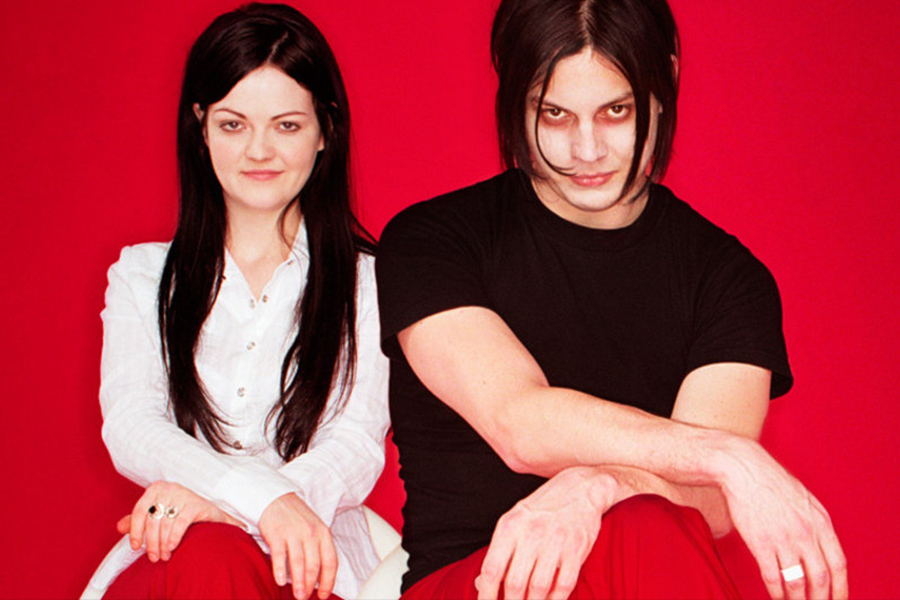
To celebrate the 20th anniversary of the release of White Blood Cells, Third Man Records is privileged to release “White Blood Cells XX”, the companion to The White Stripes’ universally acknowledged 2001 album. Disc one contains 13 tracks previously unreleased demos, outtakes, alternate takes and unheard work-in-progress nuggets. Disc two is a previously unreleased live recording from Headliner’s in Louisville, Kentucky on September. 6th, 2001.”
For a band widely defined by its self-imposed rules, the strictures employed on “White Blood Cells” (while seemingly overlooked by the general public) are largely responsible for its breakthrough nature. No blues, no guitar solos, no guest musicians, no cover songs, no bass. Think about that and let it sink in. All of these elements are used extensively across just about every other studio recording across the Stripes entire career. But as an attempt to deviate from the profile of “De Stijl” the previous year, these guidelines would help carve out this work of incredible stature. To celebrate the 20th anniversary of the release of White Blood Cells, Third Man Records is privileged to release White Blood Cells XX, the companion to the White Stripes’ universally acknowledged 2001 album.
On July 3rd, 2001, the White Stripes released “White Blood Cells“, the album which would launch them to mainstream worldwide success.
The duo had spent their early years developing a passionate fanbase in their hometown of Detroit. Rousing performances at the local clubs had helped the White Stripes develop a reputation. Their self-titled 1999 debut album was a raw, unfiltered rush of frantic blues rock. Its follow-up, 2000’s De Stijl, found the group further forming their sound.
“There’s definitely a childishness in it,” Jack explained in 2000, while trying to describe his band’s style. “From Meg’s standpoint, the drumming is real primitive and I really love that. My voice, I think, sometimes sounds like a little kid. You see that approach in a lot of great bands, [for example] Iggy Pop throwing tantrums on stage. Everybody’s still that same person they were when they were young — at least they still want to be. They still want to have that freedom.”
Tours alongside Pavement and Sleater-Kinney took the White Stripes beyond the Motor City. Music fans and media alike were suddenly taking notice. As hype surrounding the band continued to grow, they retreated to Memphis to record a third album. To say that the sessions were a whirlwind would be an understatement.
“There were probably only three real days of recording,” Jack revealed “We really rushed the whole album, to get that feel to it, a real tense thing coming out of it.”
Engineer Stuart Sikes said that “we just set up and they started going. Jack knew what he wanted. Meg didn’t really think they should be recording: She thought the songs were too new. Jack pretty much knows what he wants, has a really good idea what he’s going for.”
Material for White Blood Cells was culled from a variety of sources. Some tracks were brand new, while others were leftovers from Jack’s previous band, 2 Star Tabernacle. “It was cool because a lot of things had been sitting around for a long time, stuff I had written on piano that had been just sitting around not doing anything,” said Jack “And it was good to put them all together at once, put them all in the same box and see what happened.”
Jack warned Sikes “more than once not to make it sound too good,”. “Basically he wanted it as raw as possible, but better than if it was recorded in somebody’s living room. He steered me that way, and I ran with it.”
The LP title and artwork would be reflective of the White Stripes’ ascent to fame. “The name, White Blood Cells, for the album, is this idea of bacteria coming at us – or just foreign things coming at us, or media, or attention on the band,” “It just seems to us that there are so many bands from the same time or before we started that were playing and are still playing that didn’t get this kind of attention that we’re getting. Is the attention good or bad?”
The results were met with critical acclaim: Uncut magazine compared the band to Zeppelin, while Pitchfork said the White Stripes “summon the Holy Spirit and channel it through 16 perfectly concise songs.” The New York Times argued that the band “made rock rock again by returning to its origins as a simple, primitive sound full of unfettered zeal.”
White Blood Cells was initially released on the indie label Sympathy for the Record Industry, but demand soon exceeded the company’s limits. Major labels came calling, including V2 Records.
“This was the type of band that I found completely fascinating musically and conceptually,” Andy Gershon, president of V2,. “When you look at it — the whole “brother-and-sister” thing, dressed in red and white, really raw — I figured this will never get on the radio. But I didn’t care about getting hits.”
Gershon’s instinct to sign the band was wise. However, his assumption that they wouldn’t have hits would be way off base.
The lead single “Fell in Love With a Girl” quickly became an alternative-radio mainstay, while its groundbreaking video – made with Lego blocks and directed by future Academy Award winner Micheal Gondry – earned heavy rotation on MTV.
Further gems included the fuzzed-out garage rocker “Dead Leaves and the Dirty Ground,” twangy “Hotel Yorba,” and the sweetly nostalgic “We’re Going to Be Friends.”
White Blood Cells would eventually sell more than a million copies in the U.S. Multiple outlets named it among the best albums of 2001 and (later) the top albums of the 2000s. The White Stripes performing “I’m Finding It Harder To Be A Gentleman” live at The Gold Dollar in Detroit, MI on June 7th, 2001. Listen to the original studio recording now in HD and the live version of “I’m Finding It Harder To Be A Gentleman” on the 20th Anniversary deluxe digital release of White Blood Cells
Through the excitement, media fanfare and being hailed rock’s latest savior, Jack stayed even keeled.
“In the end, it doesn’t really matter,” he said in 2003, “because I always think, in 20 years’ time, the only thing that’s going to be left is our records and photos. If we’re doing something meaningful with those, that’s what will live forever – so that’s what’s really important.”
The first single taken from Teleman’s new album “Brilliant Sanity”, due for release on 8th April. Teleman are an English indie pop band formed in London in 2011. The group consists of Thomas Sanders (vocals, guitar), Pete Cattermoul (bass) and Hiro Amamiya (drums). Teleman’s second album, Brilliant Sanity, was released in April 2016. Two singles were released from it previously: “Fall in Time” and “Düsseldorf”.
The band are on tour throughout April & May in the UK & Europe, including a headline show at London’s KOKO on 14th April.
Düsseldorf is taken from Teleman’s new album “Brilliant Sanity” (released 8th April on Moshi Moshi Records).
The band is back with ‘She Makes a Great Parade’, the first single from their upcoming album ‘Good Goddamn’. Sisters of Your Sunshine Vapor‘s new album ‘Good Goddamn’ is a poignant reminder of the truly bizarre times we are living in.It explores the belief that one can be thrilled that they are physically alive but emotionally they are entirely astray in the world.
Detroit, Michigan — The tension left behind by Sean Morrow’s agonizing screams of “Good Goddamn” can be felt through the entire album. The COVID-19 locked down halted early progress on recording and the band was forced to work on new approaches to writing and collaboration.The result led to the band’s most poignant and melodic record of their career.The uncertainty of this time seeps into every track, setting up an emotional rollercoaster that can be introspective and sublime at times, and anxious and psychotic at others.
The album’s first song “She Makes a Great Parade,” sets the stage with a hypnotic synth that floats you down a stream of consciousness that you never want to leave.The groovy bassline and catchy melody, that conjure memories of 70’s era Wings, anchor you while the swirling synths float you into a much-needed blissful escape from the world.
The song is a poignant reminder of the truly bizarre times we are living in. It explores the belief that one can be thrilled that they are physically alive but emotionally they are astray in the world. The hypnotic synths and groovy bassline float you down a stream of consciousness you never want to leave. While the catchy melody conjures memories of early 70’s era Wings.
The well-crafted sound that is very much Sisters of Your Sunshine Vapor’s own is the perfect soundscape for an emotionally manic story that continues through the entirety of the record.
“It’s Good to be Alive” comes crashing in to bring you quickly back to reality.The pounding drums and fuzzy guitars (in the vein of the Stooges) only add to the tension that reoccurs multiple times throughout the rest of the record. Effortlessly the band somehow swings from pounding fuzz into a laid-back soothing grove with the lyrics “It’s good to be alive” echoing in your ears.These stark and unconventional changes are as natural to the band as their use of trippy effects and memorable melodies.The well-crafted sound that is very much Sisters of Your Sunshine Vapor’s own is the perfect soundscape for an emotionally manic story that continues through the entirety of the record.
Though from Detroit, Sisters of Your Sunshine Vapor’s reach is long. They have built a solid fan base in Europe over multiple tours.
‘Good Goddamn’ drops June 4th on Little Cloud Records (US) / The Acid Test Recordings (UK)


:format(jpeg):mode_rgb():quality(90)/discogs-images/R-5625490-1398318489-9356.jpeg.jpg)
:format(jpeg):mode_rgb():quality(90)/discogs-images/R-5625490-1398318546-7371.jpeg.jpg)
:format(jpeg):mode_rgb():quality(90)/discogs-images/R-5625490-1398318536-7339.jpeg.jpg)
:format(jpeg):mode_rgb():quality(90)/discogs-images/R-2083395-1411977414-3817.jpeg.jpg)


:format(jpeg):mode_rgb():quality(40)/discogs-images/R-4848018-1377378235-6577.jpeg.jpg)



 The Fat Angel Sings