Archive for the ‘CLASSIC ALBUMS’ Category

There’s nothing like a near-fatal car accident for resetting a person’s perspective. Two years ago, not long after the release of Mipso’s fourth album, Edges Run, three members of the indie-Americana quartet—vocalist and guitarist Joseph Terrell, vocalist and fiddle player Libby Rodenbough, and touring drummer Yan Westerlund—got in a car accident that left Terrell bloodied on the asphalt. Their new record Mipso puts Terrell front and centre for the most part but accords more space to Rodenbough, mandolinist Jacob Sharp, and bassist Wood Robinson, the chief players in the North Carolina four-piece.

Even when they’re on lead, they share the spotlight with their peers, which means that harmony takes on the fullest meaning of the word over the course of the album. Terrell, Rodenbough, Sharp and Robinson sing in accordance with each other, sure, but they’re also singing about their collective shock and grief at having come so close to suffering losses, whether from breaking up or losing their lives.

Jacob: “Hourglass” is about shedding the imposed expectations of life we all carry and what it means to arrive at a destination you had convinced yourself you needed to go and find the same emptiness you were surrounded by on the journey to get there. More about getting off a treadmill than finishing a race. On this album I hoped we would collaborate and write together in a different way than we had previously. This song represents that process and accomplishment so well. I had a verse and a howl and knew I needed help stitching it all together. Libby had a chorus, Joseph quickly found a second verse, and Wood and Yan settled into a groove that brought it to a sonic territory we hadn’t been together before. And it all gave more meaning to the nuggets of the song than I knew it to have on my own. Joseph: I love when two totally separate ideas fit together unexpectedly. Not like puzzle pieces, which were made for each other, but in the way two ingredients create a new flavour.

Sometimes one person’s song is just one taste, and it needs someone else’s idea to gain some context, to allow some tension between the two of them, to pose a question. Libby: This song began as an experiment, combining an orphan verse Jacob had written and an orphan chorus I had kicking around. The verse was about the frantic feeling of always trying to beat the clock; the chorus was about realizing the things you were once striving for don’t exist anymore, or maybe they never did. It occurred to us that these two somewhat converse kinds of unease often go together: our anxiety about running out of time morphs into an anxiety about “the times.” Both our sections of song lent themselves to an uptempo pop groove, which felt appropriate for the kind of electric paranoia in the lyrics, though it was somewhat unfamiliar territory for the band. Wood and Yan fell into that groove very naturally, and the rest of the band fell in behind them.


This week, Kevin Morby has shared the title track from his forthcoming album “Sundowner”, due out on October. 16th via Dead Oceans Records. “When I first moved back home to Kansas after having lived on both coasts for over a decade, I found myself – for the first time – dreading the sun going down,” Morby said. “This was a foreign feeling for me. In both Los Angeles and New York, I resisted the day light and thrived in the night – something I have sung about many times, most notably on my album “City Music”. But suddenly there I was, isolated in the Midwest in late autumn – the days growing increasingly shorter – chasing the sun as best I could.”

After five solo albums, Kansas City singer/songwriter Kevin Morby hasn’t missed a beat, and his sixth entry Sundowner continues that hot streak. Sundowner is perhaps less ambitious than his 2019 double album and spiritual escapade Oh My God, but any time Morby invites you on a lowly, dusty folk rock journey, you better get moving because it’s always worth it. If you’ve had the pleasure of becoming acquainted with Morby’s vocal, melodic and guitar quirks, you’ll find many of those here, along with his breath-taking intimacy and thoughtful pastoral tales.

No question about it, this is Kevin Morby’s best album to date. Formless, playful slacker rock as absurd as the year. Songs, like sunsets, are fleeting, and it’s only due to a willingness and desire to catch them that you ever, if even only for a moment, grab a hold of one. When writing “Sundowner”, Kevin Morby was lucky to have had the Tascam 424 there to help capture both. Sundowner is his attempt to put the Middle American twilight – it’s beauty profound, though not always immediate – into sound. It is a depiction of isolation. Of the past. Of an uncertain future. Of provisions. Of an omen. Of a dead deer. Of an icon. Of a Los Angeles themed hotel in rural Kansas. Of billowing campfires, a mermaid and a highway lined in rabbit fur. It is a depiction of the nervous feeling that comes with the sky’s proud announcement that another day will be soon coming to a close as the pink light recedes and the street lamps and house lights suddenly click on.

As the songs kept coming I cleared out the crowded shed that was sitting dormant in my backyard and built a makeshift studio before adding drums, lead guitar and piano to complete the demos. Each day I would teach myself basic recording techniques, watching the channels illuminate and pulse as if the machine were breathing, and then emerge in the evenings as the sun was getting low: – around 5:30 in the winter, when the Kansan sunsets look icy and distant, like a pink ember inside of a display case, and 9 o’clock in the summer, when the sunsets are warm and abstract.

“Sundowner” the new song by Kevin Morby off ‘Sundowner’, out October 16th on Dead Oceans Records.

As the follow up to Jeremy Ivey’s 2019’s debut, the much acclaimed “The Dream and the Dreamer”, his new album Waiting Out the Storm takes a topical turn with songs that allude to the malaise that’s seeping the nation in the wake of our current political maelstrom, a concurrence of natural disasters, the Covid pandemic, and the growing resolve of the Black Lives Matter movement and the racism found in its stead.

It’s not a preachy record by any means, but it does stir some sentiments and speak to those issues and concerns that have forced Americans to wake up and take notice, no matter which side of the divide they happen to be on. “Yeah, it was actually written before my first album was released, but these kind of things have been making headlines for a while,” Ivey suggests when asked about the origins of his stirring new songs. “Racism, violence and greed have been the backbone of civilization for some time.” Ivey adds that he’s injected his own insights into this material, suggesting that he’s been more than a mere outside observer. “Yes, I’ve lived inside each one of these stories,” he affirms somewhat obliquely. “I’ve seen Walt Disney, Al Capone and Oprah hanging out with Warhol.

I’ve seen the queen of doom wringing her hands and holy meat walking down the street. I’ve seen the shattered windows of clinics and prostitutes in steel-toed boots too. It’s all truth.” Given that Ivey seems resigned to a more pessimistic perspective, suffice it to say he views things from a decidedly bleak point of view. “Our country has lost every bit of morals and dignity, but maybe our country never had that in the first place,” he insists. “We need to wake up and start treating each other the way that we want to be treated, because if that doesn’t happen, you think this pandemic is bad? There will be a great judgment on this world and everyone in it if we don’t take this kind of thing seriously. When one person kills another person, and it’s known publicly, and no one is tried or punished for it, the end is near. Things could get much worse.”

http://

I can’t say enough great things about this album and this man. These songs are a very realistic view of our world. The pictures Jeremy paints are both sad and hopeful. He truly is a word smith for our times… I can’t wait for all the great things yet to come his way. Recorded with his group The Extraterrestrials, and produced by his wife Margo Price and with  contributions from members of her backing band, the album is, he says, was the result of the pair’s ability to work well together and remain, as he describes it, “relaxed and focused.

The Band: Jeremy Ivey – guitar, vocals, harmonica, piano, synth The Extraterrestrials are: Evan Donohue – guitar, vocals Coley Hinson – bass, vocals Alex Munoz – guitar, lap steel Josh Minyard – drums, percussion Special guests: Margo Price – vocals, percussion Dillion Napier – drums, percussion Micah Hulscher – organ, piano, synth, electric piano Dexter Green – vocals and additional arrangement on Movies.

Released October 16th Production – Margo Price Co-production – Jeremy Ivey and The Extraterrestrials

Deep Sea Diver is Jessica Dobson, Peter Mansen, Garrett Gue & Elliot Jackson. Emotions abound; inarticulable. We understand fully that we are releasing an album at a time when a lot of people are experiencing economic hardship. So many people have lost their jobs, can’t pay rent, and are not in a place to buy anything other than what is essential for living. This album, so far, sounds very personal and reflective. Lots of intricate sounds and meticulous effort was put into the sound!
Dobson, who was signed to Atlantic Records at 19-years-old, has experienced just about every high and low when it comes to the music business in the years since. And in an era when bands, venues, tours and everything else are experiencing atrophy, Deep Sea Diver is fairing – knock on wood – pretty well. In some ways, better than ever. Ever since their solo single release in April to their new LP out on the famed ATO record label, things have oddly, paradoxically fallen into place for the band.

The new 10-track album has been finished for a year. But it can take a while for a record to find the right placement. With ATO, Deep Sea Diver has found that home. “Impossible Weight” is stellar. Each track sticks out, impresses. “Eyes Are Red (Don’t Be Afraid)” feels like a rush of energy after running a race through New York City. “Shattering the Hourglass” inspires, saying forget the construct of time. “Wishing” pulls at the heart. And “Impossible Weight,” which features Sharon Van Etten, is a blistering eruption of rock. The LP pops with tight rhythms, bright guitars and Dobson’s clearest, crispest vocal performance to date.

“Everything has always been backwards for Deep Sea Diver,” Dobson says. “It’s been an uphill battle. Self-releasing records is really hard and we’ve done that so many times. But with quarantine, we took the approach of saying ‘screw the music business.’”

http://

Jessica Dobson, frontwoman and principle songwriter for the Seattle-based band, Deep Sea Diver, was adopted. While this is indeed a very personal bit of information it is also pertinent to the story of the band’s new LP. Any work of art takes a lifetime to create. While, in truth, from first note to final mix, a song may take, say, a year or two, the work is, in actuality, a culmination of a person’s entire existence. It wasn’t until recently that Dobson met her birth mother, which was both monumental and fascinating for the expert musician. The encounter is one of several recent marvelous moments for Dobson and her percolating, neon-electric-sounding group, which is set to release its latest LP, Impossible Weight .

Released October 16th, 2020.

The latest full-length from Cordovas, Destiny Hotel is a work of wild poetry and wide-eyed abandon, set to a glorious collision of folk and country and groove-heavy rock-and-roll. In a major creative milestone for the Tennessee-based band – vocalist/bassist Joe Firstman, keyboardist Sevans Henderson, guitarists Lucca Soria and Toby Weaver – the album harnesses the freewheeling energy of their live show more fully than ever, all while lifting their song-writing to a whole new level of sophistication. The result is a batch of songs that ruminate and rhapsodize with equal intensity, inviting endless celebration on the way to transcendence.

Recorded in Los Angeles and produced by Rick Parker (Lord Huron, Beck, Black Rebel Motorcycle Club), Destiny Hotel expands on the harmony-soaked roots rock of Cordovas’ ATO Records debut That Santa Fe Channel, a 2018 release that earned abundant praise from outlets like Rolling Stone and NPR Music.

Destiny Hotel out now on LP/CD/digital formats via ATO Records.

See the source image

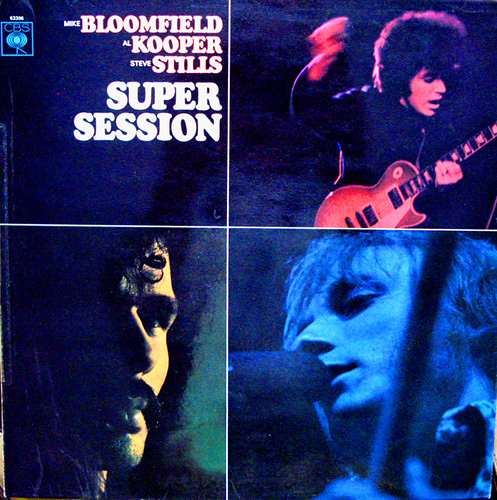
From the “Supersession,” album in 1968 comes arguably Mike Bloomfield’s finest moment in his legendary career. The jam will send a jolt to your synapses, as Bloomfield’s inspired, fluid playing from the intro is so assured and soulful, it will make a true believer of you. With Al Kooper on organ, Harvey Brooks on bass, Barry Goldberg on electric piano, and Eddie Hoh on drums, “Albert’s Shuffle, the groups homage to Albert King, does the band and the Blues legend proud. It is an enduring masterpiece. Bloomfield’s playing with the Butterfield Blues Band on their first two albums is astonishing. He was one of the greatest players of all time. Sadly I don’t believe he received the recognition he deserved and it is us of a certain age who recall his inimitable skill. “Super Session” – the musically adventurous mid-1968 collaboration between the unlikely triumvirate of multi-instrumentalist Al Kooper, Chicago-blues ace Michael Bloomfield and Buffalo Springfield guitar player Stephen Stills – is cited as a different type of milestone: the capturing of itinerant rock musicians coming together briefly for a one-off jam, in the same way as jazz musicians had previously done. It can lay claim, almost by accident, to being the impetus for a whole branch of rock’s family tree.

The project was masterminded by well-travelled multi-instrumentalist Al Kooper, and Super Session was at least partially borne out of Kooper’s frustration that no producer had been able to properly showcase the formidable talents of his friend, blues guitarist Mike Bloomfield.Kooper and Bloomfield led parallel musical lives, both eventually playing in brass-driven bands; the former in Blood, Sweat & Tears, the latter in The Electric Flag. Both had recently left these acts at the time of Super Session; Stephen Stills, who joins the story later, was in the process of leaving Buffalo Springfield. Kooper, had taken a job as an A&R man at Columbia,

“Albert’s Shuffle” written by Al Kooper and Mike Bloomfield  is from the classic Columbia album, Super Session, recorded in May 1968 by guitarist Michael Bloomfield, multi-instrumentalist Al Kooper, keyboardist Barry Goldberg, and bassist Harvey Brooks.  This version is from the Sony CD reissue and features the original track before the horns were added on the final mix.

“Super Session” (1968) was conceived by Al Kooper and features the work of guitarists Mike Bloomfield and Stephen Stills(originally printed on the sleeve as Steve Stills). Kooper and Bloomfield had previously worked together on the sessions for the ground-breaking classic Highway 61 Revisited by Bob Dylan. The success of this record opened the door for the “supergroup” concept of the late 1960s and 1970s.

Kooper recalled in his book Backstage Passes And Backstabbing Bastards: “[Bloomfield] commenced to play some of the most incredible guitar I’d ever heard… And he was just warming up! I was in over my head. I embarrassedly unplugged, packed up, went into the control room, and sat there pretending to be a reporter from Sing Out! magazine.” Kooper still seized his chance to be part of the recording, by playing the Hammond – the first time in his life he’d ever sat behind the instrument. The pair were in also in Dylan’s band for his electrified 1965 Newport Folk Festival set.

The album’s title – thought up after it was recorded – is almost a misnomer, since its two star guitarists didn’t actually play together during it. Instead, Side One is the result of a nine-hour Kooper-Bloomfield session; Side Two features Kooper-Stills, with both sessions backed by Electric Flag members Barry Goldberg on keys and Harvey Brooks on bass, plus consummately talented session drummer ‘Fast’ Eddie Hoh – horns and Kooper’s extra guitar parts were overdubbed later.

yo la tengo

Yo La Tengo have already given their loyal fans a beautiful vinyl reissue of 1995’s Electr-O-Pura and a new album of ambient quar-core instrumentals (We Have Amnesia Sometimes) this year. If that’s not enough, they have this EP on the way, featuring low-key covers of the Byrds’ “Wasn’t Born to Follow,” Bob Dylan’s “It Takes a Lot to Laugh, It Takes a Train to Cry,” and the Flying Machine’s Sixties pop hit “Smile a Little Smile for Me,” plus a few others. The songs were selected by the Japanese painter Yoshitomo Nara — another artist who’s fond of working subtle variations on a repeated theme — as part of a Los Angeles County Museum of Art retrospective of his work, and now the charming results will be available for wider listening.

On October. 9th, Yo La Tengo will release Sleepless Night a new EP featuring a slew of covers, as well as a stand-alone single – “Bleeding” The project arrives after Yo La Tengo originally collaborated with Japanese artist Yoshitomo Nara.

Explained YLT’s Ira Kaplan via press release: “We met Yoshitomo Nara in 2003, would see him at his art shows and our concerts…To make the catalogue of his 2020 exhibit at LACMA more personal, the idea came up to include an LP of some of Nara’s favourite songs as part of a deluxe edition. We were asked to provide one side of the LP (and that one track be a new composition), with the other side being another six songs selected by Nara, in their original versions. Here are the six songs we contributed to the LACMA record, chosen in collaboration with Nara.”

Yo La Tengo back with a new EP titled Sleepless Night, which follows their instrumental collection that dropped a few weeks ago. The EP is out now via Matador Records, and it features six tracks: five covers and one new original song titled “Bleeding.” The covers include songs by The Byrds, Bob Dylan, The Delmore Brothers, Ronnie Lane and The Flying Machine. Sleepless Night was originally released as part of artist Yoshitomo Nara’s retrospective exhibition at the LACMA. Nara also helped choose the EP’s tracklist, and made the cover art.

Don’t say they never did anything for you, lovers of mellow indie-psych drones.

Release date: October 9th, ‘Sleepless Night’ is the new EP from Yo La Tengo, out October 9th on Matador Records.

A modern classic with a timeless sound! Filled with hooks and great lyrics the result is a 17 track beast of superb song-writing!, The shopping malls have closed down, the dressing rooms are filled with ghosts, and the carousel is covered in cobwebs. “Nobody Lives Here Anymore”, the latest and greatest from Max Clarke as Cut Worms, is the haunted reverie of an American landscape in-and-out of Clarke’s mind. Recorded between May and November 2019 in Memphis, Tennessee, the album is a snow globe of the mid-twentieth-century’s popular music filled with chiming guitars, honky-tonk pianos, and Telstar organs.

A constant creator – be it his Cut Worms alter-ego or his day-job illustration work (designing brand logos and beer labels with madhouse technicolour pictures) – writing and making records has always been Max’s driving force. So after an extensive eighteen-months of touring in support of 2017’s Alien Sunset and 2018’s Hollow Ground, he set about sifting through the fragment pieces and sketches of tunes he’d accumulated, along with a jet-stream of new compositions, mining his life-long devotion to the lost American songbook for inspiration. By the time he flew to Memphis to work with producer Matt Ross-Spang at Sam Phillips Studio, he’d stockpiled more than thirty new songs.

http://

A loss of innocence lingers through this 80-minute opus as Clarke attempts to harbour love and meaning inside a world that sold itself out. He explores the wistfulness of the past in search of answers for tomorrow. And while his grand anthems overflow with timeless pop charm, his ability to dig deeper than lollipops and holding hands sets his work apart from the days of 45s and Top of the Pops.

Released October 9th, 2020

Neil Young isn’t releasing his 10-disc collection Archives Volume 2: 1972-1976 until November 22nd, but paid subscribers of The Neil Young Archives website now have access to the previously unreleased song “Come Along and Say You Will.” The tune was recorded at Young’s Broken Arrow Ranch on December 15th, 1972 with drummer Kenny Buttrey, bassist Tim Drummond, and pedal steel guitarist Ben Keith.

Young’s group of musicians were known as The Stray Gators, and also played with on the faultless Harvest in 1972 and the Time Fades Away record from 1973.

‘Come Along and Say You Will’ begins with the pounding lyric “come along and say you will / be the one to change the meaning / of the writing on the wall.” Young later goes on to sing, “I’ll never understand / why walk around a sinner / with a nail through your hand.”

They were weeks away from launching an extensive North American tour where Young would debut several new songs that ultimately wound up on the 1973 live album “Time Fades Away”. “Come Along and Say You Will” didn’t make the cut for Time Fades Away, but it was played at least 11 times during the first month of the tour and live tapes have circulated for years. Nobody has ever heard the studio version prior to this. It’s one of many unheard songs that will appear on Archives Volume 2.

The package begins with material the Stray Gators cut in late 1972 and continues through the Time Fades Away tour, the Tonight’s the Night sessions and tour, the On the Beach and Zuma sessions, and songs he wrote for the Stills-Young Band LP before wrapping up with his 1976 world tour with Crazy Horse.

On November 6th, Young is releasing the live album and movie “Return to Greendale”. Also in the pipeline is a 50th-anniversary edition of After the Gold Rush, official bootlegs taped during a 1970 show at Carnegie Hall and a 1974 gig at the Bottom Line, a 1990 Crazy Horse club gig he’s calling Way Down in the Rust Bucket, and a 2019 European show with Crazy Horse he’s dubbed Noise and Flowers.

Exact dates for most of these releases have yet to be announced, but he hopes they will come at some point in 2021. Young hasn’t played to a live audience since Farm Aid on September 21st, 2019. Earlier this year, he announced plans to bring Crazy Horse to North American arenas. The pandemic forced him to indefinitely delay those plans and he’s largely been holed up at the Colorado home he shares with wife and actress Daryl Hannah. She’s filmed a series of Fireside Sessions acoustic shows on her iPad that show Young playing a series of tunes from throughout his career. The last one was released on July 1st and focused on political songs. It was later released as an EP titled The Times.

After swapping hemispheres, Australian outfit Death Bells have found a new home in Los Angeles, emerging with a new album of fervent guitar-driven rock, stripped of gloom and punching through with a new sense of positivity. “New Signs of Life”, their debut for Dais Records, finds Death Bells using a DIY pedigree to plunder the conventions of “rock music” with a saxophone along for the mission. Rather than leaping genres or formats, New Signs of Life is refined and nuanced—a methodology built on process, craft, and perspective.

Following their 2017 debut, Standing at the Edge of the World, and follow-up single “Echoes,” Death Bells left their hometown of Sydney for the United States. Energized by impulse, extensive touring and exploration led to the formation of an ambitious six-piece band that eventually coalesced as a collaboration between founding members Will Canning and Remy Veselis. With Canning and Veselis becoming the engine, Death Bells began to employ several underground mainstay musicians to complete their live presentation, including Cortland Gibson (Dock Hellis), Colin Knight (Object of Affection), and on occasion Brian Vega (Fearing).

Revitalized and centered, Death Bells released the single “Around the Bend” in 2019, before workshopping material that would eventually comprise their second full-length effort. As much as Standing at the Edge of the World was an energized disclosure informed by fresh naiveté, New Signs of Life harnesses those initial sparks, cloaking the threads of Death Bells with authority, allowing each of the nine tracks which embody New Signs of Life to become lush streamlined vehicles.

The eponymous lead single is a grandiose statement, influenced by the theme song of HBO’s classic television program Six Feet Under. The lyrics are a shopping list of personal neuroses charged with wry optimism, dressed with jagged guitars, brass, and percussion providing a deliberate pace for Death Bell’s new chapter. As method gives way to melody, New Signs of Life exudes an urgent hope laced with drive and verve.

http://

The first track for New Signs of Life, “Heavenly Bodies,” signals Death Bells’ point-blank delivery of a laconic truth: “We all vanish, anyway.” Sombre and cool, it eases into hushed staccato hypnosis while still finding the tenets of guitar-driven rock. ”A Different Kind of Happy” and “Alison” push the edge of convention, speaking to the power of love in a world gone mad. A nod to their homeland and new city’s surf heritage, “Shot Down (Falling)” pivots playful to a sun-soaked beach strum, layered with shimmer before the horizon fades. As a new statement of purpose, New Signs of Life subverts the band’s moniker, offering breath during suffocation; optimism in chaos with sound over sinking.

released September 25th, 2020