Archive for the ‘CLASSIC ALBUMS’ Category

Depending on your definition of “supergroup,” Adulkt Life are either a handpicked ensemble of some of the U.K.’s most fondly recalled punk acts—spanning the culty riot grrrl of Huggy Bear to the overcast take on West Coast American garage rock of Male Bonding—or just another collection of nobodies who stumbled into each other’s lives at a record store. Either way, Book of Curses sounds as complex as its individual band members’ back stories, fusing the influences of grunge, post-punk, and post-hardcore icons like Flipper, Wipers, and Nation of Ulysses with modern sensibilities.

With their debut record out today, Chris Rowley—co-vocalist for Huggy Bear coming off a quarter-century musical hiatus—gave us an enlightening and frequently cryptic breakdown of each of the record’s tracks, touching upon moral decency, “hopelessfullness,” and raising kids in a world that struggles with such concepts. Reading Rowley’s scattered thoughts on the project, that silent “K” in the band’s name starts to make a little more sense.

1. “Country Pride”

Simply put, it’s an escape song, it’s the embodiment of too much casual racism and sexism and the need to stop accepting it as part of your day-to-days’ poisons that’s not going to kill you necessarily but… We should all get a sense of humor, right?

It’s a reverse-engineered anthem with all the jingoistic bits and flag-waving burned and buried—our protagonists aren’t ideally suited in a perfect world, but as we said, it’s a messed up one, so tradeoffs in car parks and behind supermarkets better count for something!?

2. “JNR Showtime”

Maybe we’re becoming too mistrustful or cynical about decency and morals and goodness in the world!? The little things that used to give us hope and make us want to love our neighbors—working for a children’s charity for a good few years we’ve heard and seen some stories you would not want in your head…and having children myself you can’t help but become more repelled and vigilante in your thinking however wrong this is to admit. The scumminess of wrongness turned out to be shown for what it is. Cowards and liars should be scared. Always hurts to play this dark rager out, but that’s what you do with poison, innit? Suck then spit!

3. “Whistle/Country”

John’s guitar part translated to the drums and bass so quickly it unlocked a feeling in the room as we practiced it. It’s a plea for authenticity, whatever that means, a song about illusions or cutting through bullshit. Who knows, it’s a series of images linked to what it says in the lyrics—old guys round fires, wanting to be real/looking from a slightly (?) younger point at experience and rich lives lived. But who decides what that is, and if things are tough like they have been for us at points? Is anything better? But this is optimistic, a stone skimmer for the lost generations…

4. “Taking Hits”

This is the Adulkt Life (please don’t worry about pronouncing the “K”) “battle anthem.” We needed to write a song that lifted us up, and the KO’d and arisen scream for deliverance got us there. We were and are a lot of the time about boxing—fights, failures, movies, writing—and this became our backdrop, complete losers (as the idealistic and too sensitive can be) finding a glint or glimmer of something to believe in again! We’ve traded the Joyce Carol Oates book around us a good few rounds, so this is a thanks to no one and for nothing.

5. “Flipper”

I used to love the weird second Flipper album Gone Fishing and really didn’t understand it in the context of what I was listening to at the time, and it’s haunted me a bit with my probable misreadings.

Anyway, John wrote a guitar part that was akin to how I thought the Flipper record was. So it had the subterranean feel and we knew it was going to be a sodium light noir journey of a track, episodic and about revenge, making do, looking after family but risking it all because of your postcode or what yer famz do. The clapping coda is the triumph in the murk if you like…and so we had to name it “Flipper” in homage.

6. “Stevie K”

Kevin’s bass tearing into this idea with Sonny rocking after him set the touch paper for a cyclone of a track that John sabotages beautifully from a chronological sense with feedback lacunas. It’s meant to be a mod anthem, but who cares about the mods anymore anyway?

So it’s a cool song for Steve Kroner from Nation of Ulysses, a band that we loved and that was ruined for regular life by (they were/are just “too much”) and wanted to cast Kroner as a catcher-in-the-rye type figure, literally beyond good and evil…ice-cream under the pier as bottles fly.

7. “Room Context”

One of the first Adulkt Life songs that sort of arrived fully formed—a paranoia anthem casting spells and occulting damage against those who would trespass against us. The album was originally called “Deliver Us From Evil” for a host of reasons we won’t go into. “Room Context” is against power structures and authority charlatanism. It’s for misfits and outcasts, it reminds me a bit of, like, a record biz version of the De Palma movie The Fury, but I’ll get over that in a week or two. Being an older band, I felt not just like we’d be tarred with an ageist brush maybe, but there were whole swathes of audiences/fans who were not allowed or were shunned from feeling part of something. We don’t hate “the kids,” but we definitely don’t get them anymore.

8. “Move”

In the context of feeling separated from activism or rebellion or underground action, because of age or class or gender roles, I tried to write a Wipers song for the disenfranchised using the Kelly Reichardt film Night Moves as the inspirational germ for the narrative. I say all this loosely, but we’re all big film fans and lovers of cinema discourse in Adulkt Life, and that film/filmmaker is “the bomb” as they say—and aptly—here. To move forward we have to get rid of guilt impulses and relationships to past failures or success/require new dialogue. The changes in this are always hard to play if you’ve seen us play the two times so far we have. You’ll know what I’m talking about.

9. “Clean (But Itchy)”

This was Sonny’s defining moment in the young Adulkt Life story. His epic movement of boulders and rock face to scrape and bash this wild styler into shape. John was conducting hot lab sources and Sonny went after him with little concern for his well being. Maybe you can hear this? It’s a lovers’ quarrel played out large—the worst curses, the can’t-take-it-back moments, the no apologies stuff all rolled into one, but perversely it all sounds weirdly sexy, too. Who would’ve thought?

10. “New Curfew”

This ends the Adulkt Life record Book of Curses. Everyone—well, the three people that’ve heard it—think it’s strangely prophetic, and that we were ahead of a curve with prophesying this one, out of the sound dust and word play. Who would’ve wanted to predict where we are now, for goodness sakes, so this is an urban/suburban paean to disappointment, fear, hopelessfullness. In the face of age and responsibilities—the law, your belief/our belief in it, or turning away from it—at a certain point we/you will be replaced and our energies and counter intuitions gone. When you have children of your own or are around kids, you’ll know. They are the future, whether you like it or not. It’s a parents’ prayer in the smoke and petrol. 

Adulkt Life’s debut LP Book Of Curses available November 11th.

Making for quite the meta experiment, the fictional cult leader from BC filmmaker Panos Cosmatos ‘ Mandy, Jeremiah Sand, is getting set to release an album this month called “Left It Down”. To give you a better idea what the leader of the Children of the New Dawn has in store for us, he’s now given us a video for the record’s “Golden Desert.”

In 1974, Jeremiah Sand and his nascent cult The Children Of The New Dawn decamp LA for the Shasta Mountain region and Redding, CA. They set up shop, begin printing leaflets, hold gatherings and start growing their ranks through recruitment. Jeremiah and the Children are not necessarily an odd addition to Redding in 1974. Since the 1930s, psychonauts and spiritual seekers have been drawn to this area in Northern California under the shadow of the dormant volcanic cone of Shasta. By 1974, urban California hippies worn down by direct political engagement with state security forces have started drifting North and the towns along the border with Oregon state are filled with ad-hoc spiritual organizations, commune builders and lost souls. Jeremiah and the Children fit right in. A few years prior to assembling his flock, Sand had self produced and released an album of psych-folk that was unremarkable in almost every way, save for the unrelenting vanity and egoism on display in the lyrics.

This early album is one of the only existing documents of Sand. The commercial failure of the album became the catalyst for Sand to leave Southern California and settle in a place where his “truth” would be “received by pure and open hearts”. By mid 1974, the Children have grown in rank and Jeremiah becomes obsessed with recording “his masterpiece”…a musical message to the world, communicating a “Truth” that only he has been given spiritual access to. This project becomes the central focus of the Children. His lieutenant Brother Swann overhears that there is a small recording studio just North of the city. He arrives one day at the reception with a large gym bag full of cash and instructs the owner to cancel all sessions on the books. The studio will now focus on one thing and one thing only: helping Jeremiah realize his vision. Tents and rough structures appear on the surrounding property as the Children make the studio and its grounds their new home. They hold recruitment meetings where Jeremiah evangelizes in between endless recording sessions. The owner and his staff begin to feel as though they’re being held hostage but the money is good and the Children keep paying. Overpaying. This goes on for years. New members drift into the sessions. A disgraced professor from the Electro Acoustic Music program at Evergreen state arrives with a full Buchla system he’s “liberated” from the university, Jeremiah is entranced by it and for a few weeks the only sounds coming from the studio are blasts of atonal, corroded noise underpinned by ominous chanting. The mood changes. The town begins to turn against the Children. A few people have gone missing. Some teenagers. A studio engineer. By the Spring of 1977, the entire session has broken down into hallucinogen and cocaine fuelled chaos. Bad vibrations. One night in early March, after a particularly grueling mixing session, the producer and owner of the studio is startled awake by an extremely agitated looking Brother Swann. Swann is sweating and wild eyed, casually holding a gun, explaining to the producer that “plans have changed” and that Jeremiah has “heard a calling and a Great Summons”. They are leaving. All of them. That night. Swann directs the producer to put the existing reels in a lock box along with a short 16mm film, lyrics, album art and scribbled notes. Swann tells the producer Jeremiah will be back to finish his masterpiece. It all goes in the box and it’s not to be opened until the Children return. They never do.

In 2018, wildfires rip through Redding, CA and burns it to the ground. Over a thousand of homes are incinerated. One rough structure north of the city is partially saved. There’s a massive concrete basement filled with smoke and water damaged recording equipment and in the back…a lockbox.

No one knows who originally took the tapes out of the charred ruin of the studio but in a few months, a very strange album is making the rounds in the more esoteric circles of the underground. A long and confusing chain of custody ensues. A lost artifact of the transitional period between the late 60s and late 70s. A flawed and malignant sounding unfinished thing, clearly the product of a psychotically inflated ego and hubris. The album is by turns: amateurish, haunting, deranged, ridiculous and (for those attuned to these things) filled with crackling negative psychic energies. So much so that Light In The Attic flat out refuses to reissue it. Eventually, it lands in Calebs lap and Sacred Bones decides to restore the audio and give it a general release all in the name of preserving a historical document of a very weird place and a very weird time. 

2020 Jeremiah Sand under Exclusive License to Sacred Bones

released October 30th, 2020

 White Fence’s “For the Recently Found Innocent” . After many years spent wringing all the warped psychedelic magic he could out of a four-track recorder, bedroom-style, White Fence’s Tim Presley moved his operation one step closer to the real world for his 2014 album, For the Recently Found Innocent. It was recorded in Ty Segall’s garage studio, Segall and live bandmember Nick Murray provided drums, and the record was mixed in a real studio. The big question before hearing a single track has to be something like “Does this mean curtains for the wonderfully oddball psych pop Presley has been churning out like a mad lo-fi scientist?” The short and definitive answer is no. The Presley and Segall team is in no rush to “fix” up the sound; at best it is mid-fi, and it retains all the intimate charm of previous records. Maybe it’s a little bit cleaner and easier to imagine hearing on the radio, but beyond that there’s not much change. Well, the occasional country-rock pastiches on the record (“Afraid of What It’s Worth” and “Hard Water”) are a bit different, but still psychedelic in a way Beachwood Sparks wish they could be.

Once you get beyond the trappings of recording styles and collaborators, the music is what’s left and this album is just as packed with gems as any White Fence album. Swirling, trippy rockers like “Wolf Gets Red Faced” and “Anger! Who Keeps You Under?” sit nicely next to relaxed pop songs like the very Donovan-like “Sandra (When the Earth Dies)” and the acoustic folk-rocker “Goodbye Law,” and hard psych blowouts “Paranoid Bait” and “Arrow Man” clear away the cobwebs. There’s even a track, the incredibly hooky “Like That,” that sounds like you could slot it into the middle of the Who’s Sell Out album and no one would think it odd. So basically, it’s another weird, great White Fence album, only the bass is a little clearer, the drums a bit louder, and there’s less tape hiss.

Only die-hard four-track fanatics could complain about that. Wide fends the big river of anglo-American pop music. Hits to the skies! Ears to the mind! A classique of LA underworld sunshine sounds and visions. For The Recently Found Innocent is the sixth studio album by American musician Tim Presley, who goes under the name White Fence. It was released in July 2014 under Drag City Records.

Trad-arr opportunists with freeform tendencies, Trees’ in-concert freakouts often left their cut-crystal-voiced singer Celia Humphris at a loose end. “I used to ‘wiggle’, or dance on the spot, during the long breaks,” she remembers in the sleeve notes to this 4CD anthology of the band’s brief career. “But when we played at Wellington College Boys’ School, one of the masters asked me to stop wiggling as it was ‘upsetting’ the boys. That was when I started to lie down on stage instead.” It was a novel way of shifting the focus to her bandmates, but one fraught with pitfalls: one live extemporisation on the traditional “Streets Of Derry” proved so enthralling that Humphris actually fell asleep.

Enthusiastic – often to a fault – Trees blundered excitably into the new Anglo-weirdy terrain cleared by Fairport Convention’s Liege & Lief, an album that fused a profound knowledge of traditional English folk song with an appreciation for the newly electrified roots sounds of The Byrds, Buffalo Springfield and The Band. Trees, by contrast, were all instinct; they had a cursory flick through the Child Ballads, turned everything up to 11 and exploded into the moment. Founded after guitarists David Costa and Barry Clarke met in 1969, Trees accumulated members quickly; bassist and songwriter Bias Boshell was Clarke’s housemate; drummer Unwin Brown was a Bedales school chum of Boshell’sHumphris was the sister of one of Costa’s workmates. A drama student who had studied opera, she didn’t know much about folk music, but with a piercing voice that could pass as Sandy Denny-ish, she made the grade anyway. By the end of that summer, Trees had a two-album contract with CBS.

Evidently recorded before most of it was written, their debut album The Garden Of Jane Delawney feels like a musical blind date, Trees getting to know each other in real time, and not always getting on. Humphris’ consumptive keen and Clarke’s strident guitar trip over each other as they battle for centre stage on opener “Nothing Special”, while Costa and Clarke deliver competing guitar solos on the trad-arr “Lady Margaret” with Brown absent-mindedly auditioning for Traffic somewhere in the background.

The lyrics to the séance-like title track came to Boshell during his school days, its ‘nothing is real’ sentiment (“The ground you walk upon might as well not be there”) and Genesis-like evocation of toxic Victoriana earning cover versions from Françoise Hardy and ’80s goth softies All About Eve. However, the tinkling harpsichords and sparing accompaniment are atypical of a band that – at this stage – didn’t really do restraint. Their kiss-off “Snail’s Lament” rustles up a collegiate getting-it-together-in-the-country vibe (“Everybody’s got to build a house,” sings Humphris, finding the bottom end of her register) but still fades out with every member trying to snatch the last word.

The Garden Of Jane Delawney was released in April 1970, but Trees were back in the studio to record the follow-up within five months, the intervening time seemingly spent listening to Steeleye Span’s debut album Hark! The Village Wait (released that June) and – at least occasionally – to each other. Having jostled for position a little inelegantly over the course of the first record, Trees benefited from a Bedford-van boot camp, gigging giving them a better command of group dynamics. All Phil Manzanera acid flash on the first album, Clarke’s contributions take on a more measured, Quicksilver Messenger Service tone, his guitar flickering around the edges of songs rather than screaming into centre stage. Humphris also finds a new range, and if she cannot do traditional warhorses like “Polly On The Shore” and “Geordie” with the same conviction as a Shirley Collins or an Anne Briggs, she no longer sounds like she is just impersonating a folk singer

Her two-layered vocal helps make “Murdoch” by far the best of Trees’ self-written songs. Boshell reckons his tale of a mysterious awful up in the mountains came to him in a dream. With a subtle, insistent guitar and keyboard refrain, it’s certainly a piece that burrows into the subconscious, Trees discovering the passage behind the cupboard that leads from After Bathing At Baxter’s-era Jefferson Airplane into Stevie Nicks-age Fleetwood Mac.

However, if their compositions are tighter (opener “Soldiers Three” is a stylish fake medieval round), Trees still yearned to stretch out; their take on Cyril Tawney’s “Sally Free And Easy” bursts its banks to become a 10-minute guitar sprawl, but it’s a mark of their new-found unity that Costa and Clarke queue up in an orderly fashion to decorate “Streets Of Derry”, another spectacular journey from rustic inner space to the wild West Coast.

Thanks in part to its creepy Hipgnosis sleeve, genre perverts tend to rate On The Shore as Trees’ defining statement, but it doesn’t always wear its sophistication lightly; Tolpuddle Martyrs tribute “While The Iron Is Hot” sounds a bit Les Misérables in hindsight, while the inelegantly countrified “Little Sadie” still draws winces from band members five decades on.

Contemporaries, meanwhile, seldom discussed whether On The Shore was a better record than The Garden Of Jane Delawney, CBS unable to drum up much interest in either. Never given another opportunity to record their own songs, Trees soldiered on and off until finally expiring in 1973. Costa stayed in the business as an art director while Boshell found success with the Kiki Dee Band, writing their 1974 hit “I’ve Got The Music In Me” before joining latter-day line-ups of the Moody Blues and Barclay James Harvest. Humphris, for her part, was a big hit on the underground, voicing pre-recorded announcements on the Northern Line.

However, if the individual Trees had more tangible successes later in life, their juvenilia is compelling still. Like the equally ill-starred Mighty Baby, Trees absent-mindedly fashioned a fusion of folk-rock and San Francisco psychedelia. Unsure of whether to be Fairport Convention or the Grateful Dead, they contrived to be both at once: earthy, adventurous, loud. Their more excessive moments may have tested Humphris’ patience, but this is music that makes sense in large, languid doses. Lie back. Think of England. Enjoy.

Extras: 7/10. A hitherto unheard demo of “Streets Of Derry” (with a rather abrupt ending) represents a nice bonus, along with live recordings from Costa and Boshell’s 2018 return to the stage as the On The Shore Band. Other ‘rarities’ are more familiar, though the otherwise unreleased “Forest Fire” – seemingly salvaged from a home recording of a 1970 BBC session – and the more whimsical 1969 demo “Little Black Cloud” are significant additions to Trees’ small canon. Another lost song, “Black Widow”, stems from a brief reunion in the 2000s.

What a record! Every track a noisy gem!,  That raw guitar vibrating my soul like a sonic drone strike into my aural cavity. Since cropping up on the East Coast DIY circuit in 2009, amassing the sort of fervent cult fanbase that gets tattoos in their honour, Ovlov have had to break up a number of times in order to keep it together. Their most recent disintegration, in March 2015, seemed to suggest a greater degree of finality, however, with Hartlett expressing his uneasiness with demanding a full-time-band commitment from the revolving roster of friends and family members that have helped him realize his creative vision. But after redirecting his energies to his other solo project Stove, he returned to Ovlov’s Facebook page in early 2016 to sheepishly announce an intention to reunite the band, “sometimes but not all the time.” Ironically, that commitment to be non-committal has since yielded two years of steady touring, a vinyl compilation of their early EPs, and now, Ovlov’s first proper album in half a decade.

http://

The Band:

Steve Hartlett sang, played guitar, bass & synth on the best of you
Theo Hartlett played drums, sang on stick, guitar soloed on grab it from the garden
Morgan Luzzi played guitar
Michael Hammond Jr. played bass, guitar on best of you
Erin McGrath sang on baby alligator
Michael John Thomas III played a guitar solo on grab it from the garden

Mercury Music Prize nominated Brighton band Porridge Radio have covered Leonard Cohen’s ‘Who by Fire’, which comes from his ‘New Skin for the Old Ceremony’ album. 

“I’ve loved Leonard Cohen since I was a teenager, and when he died we learnt this song in tribute to him,” says vocalist Dana Margolin. “It’s always been a favourite of ours so we were really happy to record it for our session at St Giles’ Church, Camberwell. The lyrics are from the Jewish liturgy for the new year (Rosh Hashana), and this was filmed the same week as Rosh Hashana this year.”  Porridge Radio grew out of Dana Margolin’s bedroom, where she started making music in private. Living in the seaside town of Brighton.

Porridge Radio cover “Who By Fire” by Leonard Cohen, live at St Giles’ Camberwell. Porridge Radio album ‘Every Bad’ out now everywhere

These songs are about mental health and queer struggles. Stand by your friends that are hurting. Harm reduction is the key to safety. Often pinned as a band that has a lot going on,” Teenage Halloween has crafted a sound rooted in abundance. Luke Henderik’s rare and universal lyrics, and the precise ear of engineer Evan Bernard, this newest collection of songs is full of surprises that humbly aims to redefine the modern DIY punk scene.  A joyous vibe of Replacements/Springsteen/The Hold Steady, but young, beautiful and a little punk. It’s short in that good way where you think ‘aaaww, already?’ when it’s over and silence takes over.

Predominantly a gay identifying band, the songs reflect this experience holistically with lyrics that grapple with vulnerability, community, extreme existentialism, mental illness, and gender euphoria. Accompanied by the band’s explosive energy, each song functions as a politically charged anthem. The album maintains constant energy, and that energy also celebrates the bravery of being a queer band. Further, the songs speak in narratives, making sure people are held accountable for their actions and in the same vein, given the opportunity to communicate that self-reflection.

http://

The self-titled debut album Teenage Halloween was recorded by Bernard in Big Mama’s Recording Studio and will be released by Don Giovanni Records in September. Liberated and alive. You can really tell that they’ve developed their chemistry through hard work in the course of playing hundreds of live shows. I guess it’s just a matter of time now before Teenage Halloween are traveling the globe playing their inspiring songs to the appreciative weirdos, outcasts, and societal rejects of the free-thinking underworld. Exciting, hopeful music for challenging times.

The Band:

Luke Henderiks – guitar / vocals / lyrics / composition
Eli Frank – lead guitar / composition / production
Tricia Marshall- bass / vocals / keys
Brandon Hakim – saxophone
Peter Gargano- drums
Jane Lai – piano
Evan Bernard- tambourine / guitar

Released September 18th, 2020 Don Giovanni Records 2020

Limited Edition, Signed & Numbered Live At World Cafe Tiger’s Eye Vinyl (500 available)

Best Coast have a new live EP from a show we played at World Cafe in Philadelphia in early 2020 before “Always Tomorrow” came out. It was the first time we played new songs for fans and the first time we stepped on stage as a full band in a really long time. 2020 obviously went a lil crazy and we were forced to put everything on pause, but we hope this Live At World Cafe EP will make you feel like you’re hanging with us. We have 500 limited-edition signed, numbered vinyl for sale as well as some leftover tour merch, so after listening to the live EP, don’t forget to stop by the virtual merch table lol. found.ee/BC-WorldCafe

Recorded live in February 2020, the album showcases songs off Always Tomorrow, recorded live for WXPN in Philadelphia. Featuring the single “Everything Has Changed”, the album also highlights other cuts from Always Tomorrow, as well as fan favourites “Feeling OK” and “Heaven Sent”.

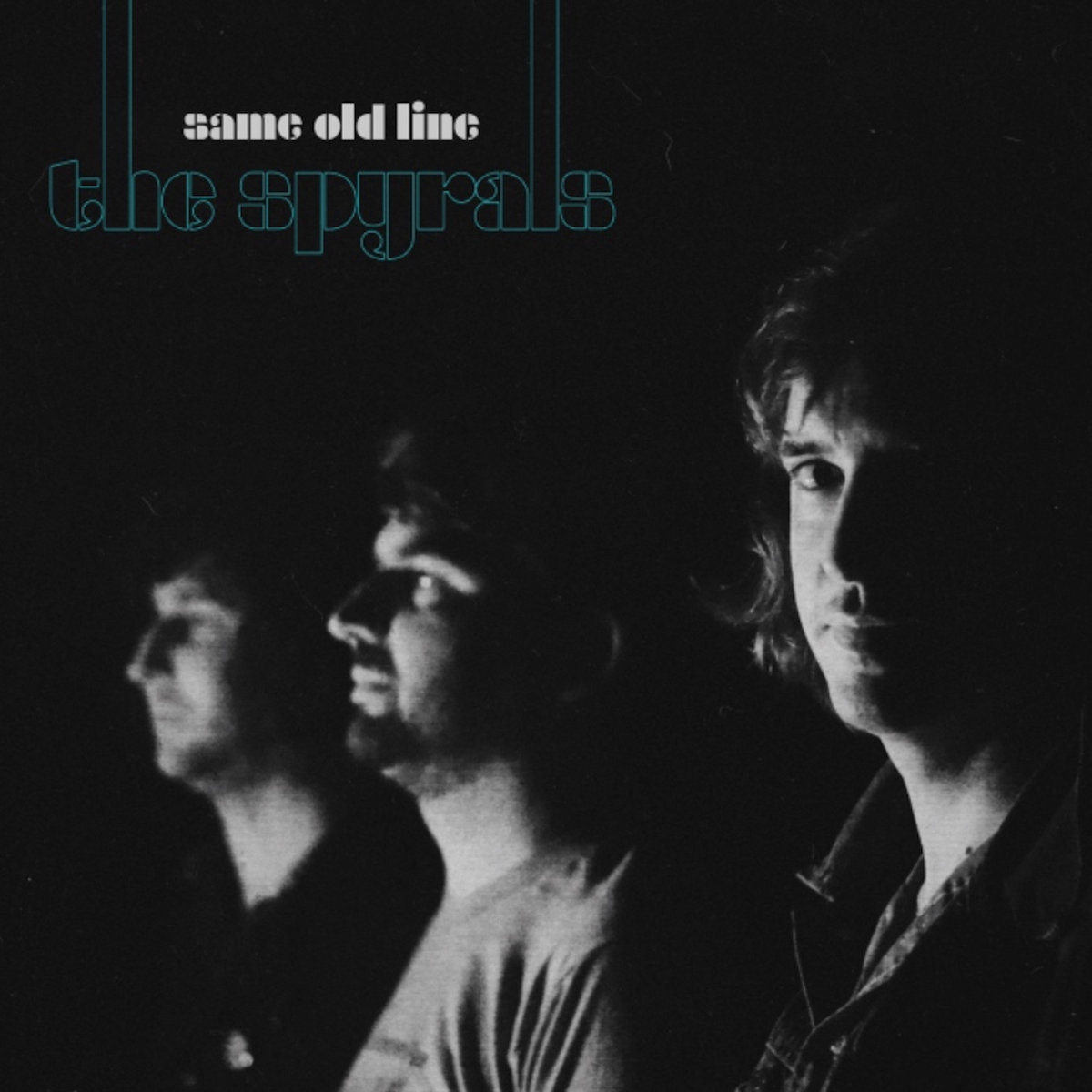
Los Angeles-based group The Spyrals are gearing up to release their new album ‘Same Old Line’ on October 30th. Taking cues from The Velvet Underground, 13th Floor Elevators and The Stooges by way of Neil Young, Bob Dylan and Muddy Waters, the record sees the band carve out eight songs of raw, back-to-basics rock’n’roll that marries white-knuckle garage-blues, psychedelic repetition and sun-baked alt-country to create “something new with an old soul”. The record is their fourth full-length to date and their first since signing to London-based label Fuzz Club.

Armed with a guitar, harmonica and fuzz pedal, band-leader Jeff Lewis formed The Spyrals when he was living in San Francisco in the early 2010s. Now, though, he’s based in Los Angeles and finds himself backed by a new line-up of musicians. ‘Same Old Line’ was cooked up in new drummer Dash’s garage and recorded over the course of a few days and nights straight to a Tascam tape machine. Jeff recalls: “This is the first album recorded with a new line-up after I moved from San Francisco to Los Angeles. At the time of recording we werenʼt sure if this would be a Spyrals album or something under a different name. At some point during the mixing process I decided to keep moving on under the Spyrals name, so to me this album is a real turning point in the band’s history.” The result is a record that’s just as rooted in the sounds of Nashville and the Mississippi Delta as it is the band’s West Coast garage-rock forebears. 

http://

“Same Old Line is a great addition to the blues canon and sits well up against some of the great records of the genre, both by the past masters and their modern acolytes” – Louder Than War

“The latest offering Same Old Line features influences from The Stooges, The Stones and classic era Creedence all distilled through a haze of Crazy Horse smoke and mirrors.” – Shindig Magazine

Nothing like a bluesy thrasher to lift you up and rock your spirits back to life. … The Spyrals are coming in hot with the thrasher blues tunes, their fresh take on a vintage rock ‘n’ roll sound. “ – Backseat Mafia 

released November 14, 2020

Bats %e2%80%93 foothills

The Bats release their 10th full-length album, “Foothills”. Spanning the last 38 years, The Bats have clocked nine incredible albums; each one seeing the band evolve with new material from the prolific songwriting hand of Robert Scott. Add to that tally the extra singles, b-sides, EPs, compilations and tribute songs they’ve recorded, creating a succinct setlist is a nearly impossible task. Foothills was recorded in Spring 2018 at a country retreat pop-up studio. At that time, 15 songs were captured and immortalised in the Canterbury foothills of the Southern Alps, Aotearoa (New Zealand). Only too well, The Bats know the possibilities, potentialities and sonic vistas that arise when one takes the reins for the recording process in a beautiful place that’s on home turf.

The Bats must hold a record in New Zealand (perhaps the whole world, once The Rolling Stones throw in the towel) as a band that has survived with the same line-up for 38 years. No split ups, no reforming for nostalgia’s sake. So far, half the band have spots in The New Zealand Music Hall Of Fame, vocalist/ guitarist Robert Scott (The Clean) and bassist/producer Paul Kean (Toy Love), and it’s only a matter of time before lead guitarist Kaye Woodward and drummer Malcolm Grant find themselves in there too. The four-piece has created twisted wistful folk, psychedelic rock, bouncy twee pop, and everything in between, but whatever the genre, their sound is always distinctively, unmistakably The Bats.