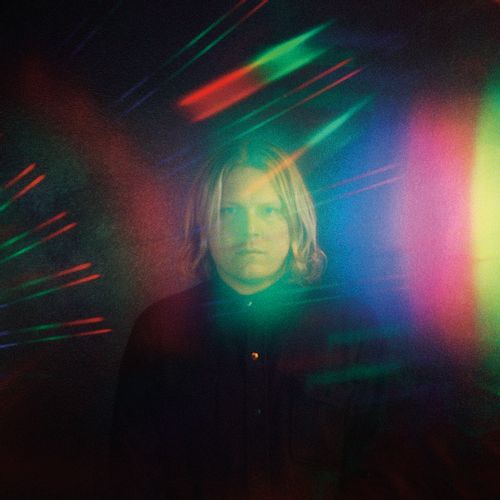
Ty Segall has a new album titled “Harmonizer” that he has just foisted upon the world. The album, his first since 2019’s great “First Taste”, was made at Ty’s new Haronizer studios and co-produced by Cooper Crain. Members of Ty’sFreedom Band — Ben Boye, Mikal Cronin, Emmett Kelly, and Charles Moothart — all appear on the album, as does Ty’s wife, Denée Segall, who co-wrote two of the songs and sings lead on “Feel Good.” She also shot the album’s cover
The surprise new album Harmonizer which he has also released via Drag City Records. The album sees Segall’s sound continue to evolve into a new and unexpected territory. The album sees him lean further into synth production as well as bets, keyboard textures as well as of course guitars. It’s the first recording of Ty’s to be released from Ty’s newly-completed Harmonizer Studios . It’s his first album in forever (two years)! ty glides smoothly into a wild area with a synthtasm of production redesign, dialling up a wealth of new guitar and keyboard settings.
Again, Segall does what HE likes to do. This unexpected album just came out of the blue without any marketing promo. It’s a characteristic Segall record. Some Black Sabbath styled drones, some fuzzing and buzzing stompers, some hazy psycherazza and his partner Denée singing a track called ‘Feel Good’ (she also wrote the lyrics). Yep, it’s Ty by numbers, but his numbers are as usual pretty good.
A seething statement of emotional austerity, harmonizer enraptures the ear, while enabling ty to cut through dense undergrowth, making groove moves for the body, mind and soul. ty glides smoothly into unexpected territory, right where he likes to find himself! responding to the challenge his new songs gave him: a synthtastic production redesign, Ty kicks back with bottom-heavy creativity, dialling up a wealth of guitar and keyboard settings to do the deed. “Harmonizer” is a glossy, barely-precedented sound for him, and truth, it enraptures the ear — but in Ty’s hands, the sound is also a tool that allows him to cut through dense undergrowth, making for some of his cleanest songs and starkest ideas to date. Harmonizer’s production model couches tightly-controlled beats in thick keyboard textures, with direct-input guitar signal whining and buzzing purposefully from left to right. the Freedom band appear all over the record, but often one at a time, their contributions leaving a distinctive footprint on the proceedings wherever they appear.
Operating in this airtight environment with an eye towards precision, feel, and explosive mass, Ty’s crafted a formidable listening encounter — and once you get between the lines, the need to know more grows more compelling with every song. the thing about closed doors is they need opening again, no matter what happens. you open them and then you can pass through them. and there’s light on the other side. that’s what this album is about. the first recording to be released from Ty’s just-completed Harmonizer studios, Harmonizer benefits from a collaboration with Cooper Crain, who co-produced the album with Ty. the venn diagram of these guys unites them in diy/punk dyed-in-the-wooldom; Ty’s propers you know, but cooper’s own unique journey in rhythm, minimalism and diy (as heard on his productions with cave, bitchin bajas and jackie lynn) mines the depths around Ty’s peerless vocal attack and aid in the latest chapter of his never-ending search for unfathomably corrosive guitar sounds. spoiler alert: they found some more! bursting with transcendent energy, harmonizer is an extension of the classic style of emotional mugger and sleeper, revisiting the lonely days and loathsome nights of the alienated, grown-up-wrong soul, to make it all right in the end.
Ty Segall will take The Freedom Band on a USA West Coast tour, and has dates with his proto-metal-inspired trio Fuzz in 2022.
Pentangle are to have three of their first four albums, along with a 1970s compilation, reissued on deluxe heavyweight vinyl.
As a result of new deal with US specialist label Renaissance Records, the band’s 1968 debut album“The Pentangle”, 1969’s ‘breakthrough’ third album “Basket Of Light” and 1970’s fourth album “Cruel Sister”, are all to be reissued, along with the 1973 compilation album “Pentangling“.
The third full length studio album, “Basket Of Light” was released in 1969 and was their most commercially successful. The song Light Flight became a popular hit single after it was placed as the theme song for the television series “TakeThree Girls“. The album reached No. 5 on the UK album charts. the peak of The Pentangle’s long career.
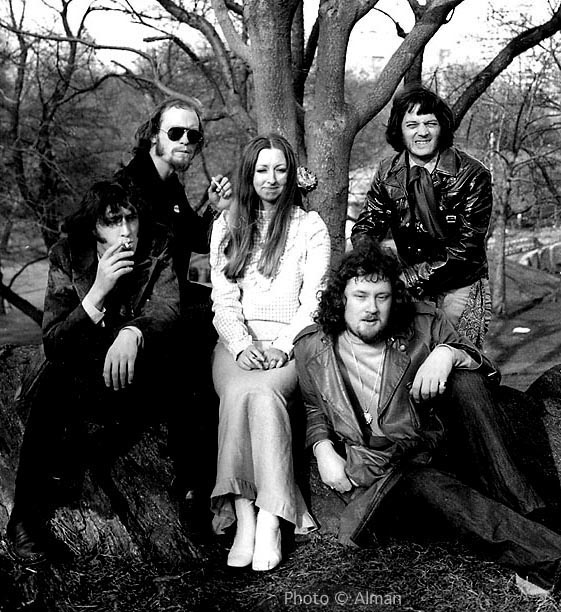
“The Pentangle” was the 1968 debut album of the band featuring John Renbourn, Bert Jansch, Jacqui McShee, DannyThompson and Terry Cox. It brought together their separate influences of folk, jazz, blues, early music and contemporary song writing. Renbourn and Jansch were already popular musicians on the British Folk scene, with several solo albums each and a duet release “Bert And John”. Their use of complex inter-dependent guitar parts, referred to as Folk Baroque, had become a distinctive characteristic of their music. The two also shared a house in St John’s Wood London.
Jacqui McShee had begun as an (unpaid) “floor singer” in several of the London Folk Clubs, and then, by 1965, ran a folk club at the Red Lion in Surrey, establishing a friendship with Jansch and Renbourn when they played there. Thompson and Cox were well known as jazz musicians and had played together in Alexis Korner’s band Although nominally a ‘folk’ group, the members shared catholic tastes and influences. McShee had a grounding in traditional music, Cox and Thompson a love of jazz, Renbourn a growing interest in early music, and Jansch a taste for the blues and contemporaries such as Bob Dylan.
Pentangle started out in 1967 with the original line-up of Jacqui McShee (vocals), John Renbourn (vocals and guitar), Bert Jansch (vocals and guitar), Danny Thompson (double bass), and Terry Cox (drums). The band’s unique sound was an eclectic mix of folk, jazz, blues, and rock influences. “They did bring together these elements, rather like a rock supergroup, like Cream, except they came from folk and jazz backgrounds rather than blues and rock”
Pentangle signed up with Transatlantic Records and their eponymous debut album was released in May 1968. This all-acoustic album was produced by Shel Talmy, who has claimed to have employed an innovative approach to recording acoustic guitars to deliver a very bright “bell-like” sound.
June of that year they performed at Royal Festival Hall in London. Recordings from that concert formed part of their second album, “Sweet Child” (released in November 1968), a double LP comprising live and studio recordings.
“They didn’t have a long time together, but particularly with their first album, They weren’t big on the loud and more rhythmic sense of it, but they did bring together these elements, rather like a rock supergroup, like Cream, except they came from folk and jazz backgrounds rather than blues and rock.
“I think they were important and they were much respected, particularly in America.”
Renaissance Records will start with the release of their debut album, “The Pentangle”, “Basket Of Light” and “Cruel Sister” onto deluxe 180g gram vinyl in late August of 2021. The remaining greatest hits album, “Pentangling” will be released in September of 2021. These albums will include extra incentives such as trading cards of the original band members, lyric sheets, lost photos, and more when you purchase them exclusively with Renaissance Records.
“Basket of Light” is a 1969 album by the folk rock group Pentangle. It reached no. 5 on the UK Albums chart. A single from the album, “Light Flight”, the theme from BBC1’s first colour drama series Take Three Girls, reached no. 43 on the UK Singles chart. Another single from the album, “Once I Had a Sweetheart”, reached no. 46 in the charts. 180 gram deluxe package features gatefold, trading cards, photos, lyric sheets and more. “Basket of Light”, which followed in mid-1969, was their greatest commercial success. By 1970, they were at the peak of their popularity, recording a soundtrack for the film “Tam Lin” making at least 12 television appearances, and undertaking tours of the UK (including the Isle of Wight Festival) and America (including a concert at the Carnegie Hall).
“They had the tag of being folk jazz at the time but in fact their influences were very broad. In a way they were the first super group of unlikely musicians that came from backgrounds not conventionally allied.
“Cruel Sister” was an album recorded in 1970 by folk-rock band The Pentangle. It was the most folk-based of the albums recorded by the band, with all the tracks being versions of traditional songs. Whereas their previous album had been produced by Shel Talmy and featured quite a heavily produced, commercial sound, “Cruel Sister” was produced by Bill Leader, noted for his recordings of folk musicians. 180 gram deluxe gatefold vinyl.
Package features trading cards, lost photos and lyric sheets. Each of the five LPs released during Pentangle’s first and best period is a different shade of brilliant, deceptively showcasing the talents of its instrumentalists (guitarists Bert Jansch and John Renbourn, bassist Danny Thompson and drummer Terry Cox), who gave the perfect framework for vocalist Jacqui McShee to gently break hearts and warm souls. As all good boxed sets do, this new Cherry Red Records collection graciously expands the original albums within. Tacked on to the end of each disc is a smattering of studio outtakes, alternate versions and live material, much of it unreleased until now. The CD of Pentangle’s 1971 LP “Reflection” also includes a few tracks from Renbourn’s solo album “Faro Annie”, which featured Cox and Thompson. All of it provides an essential glimpse for anyone interested in the history of the U.K. folk scene.
How prolific of a songwriter was Stevie Nicks in the ’70s and early ’80s? Not only did she pen multiple Fleetwood Mac hits – “Rhiannon,” “Dreams,” “Sara” and “Gypsy,” to name a few – but she also found time to write and record a hit solo album, 1981’s “Bella Donna”.
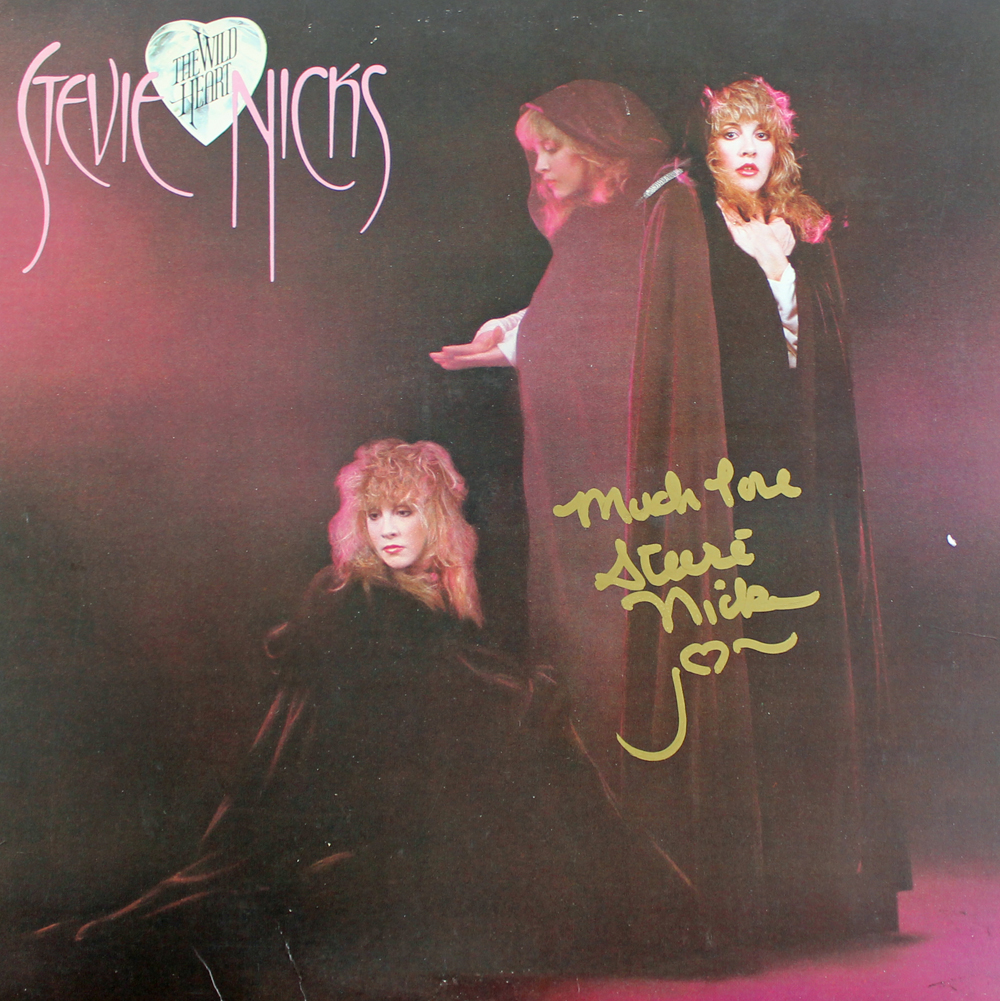
Stevie Nicks’ first two solo albums “Bella Donna” and “The Wild Heart” reissued via Rhino Records. Each deluxe release will feature not only the original LP but rarities and bonus tracks, like the previously unreleased demo of her solo debut’s title track, streaming below. Stripped of its backing vocals as well as the raucous live band and synthesizers featured on the original album version, Nicks’ demo is a tender, intimate take on the song. She sings softly above just the piano track, nearly whispering “Bella donna, my soul” and barely reaching the full-throated belt she unleashes on the 1981 recording.
The Legendary Fleetwood Mac singer-songwriter Stevie Nicks joined producer Jimmy Iovine to begin recording her solo debut, “Bella Donna”, following the release of the Mac’s TUSK and its subsequent tour. Nicks’ 1981 collection was quickly certified platinum thanks to singles like “Stop Draggin’ My Heart Around” (with Tom Petty and the Heartbreakers), “Leather And Lace” (with Don Henley) and “Edge Of Seventeen.” Rhino’s triple-disc deluxe edition of the collection uncovers unreleased versions of the latter two classics as well as soundtrack rarities and a concert from 1981 that features performances of songs from the album along with several Fleetwood Mac favourites.
Ahead of Best Of “24 Karat Gold” solo tour, singer-songwriter talks set lists, “sex, rock & roll and drugs” songs, and more
Later this month and just before releasing the reissues, Nicks will embark on a solo tour with opening act the Pretenders. Nicks‘ tour is in support of her 2014 album 24K Gold, a collection of songs she had cut from her prior solo releases for various reasons. “These are the glory songs,” she told of her reason to follow a multi-year world tour with Fleetwood Mac with the solo dates. “These are the sex, rock & roll and drugs songs that I’m actually not really writing right now, and these are the songs I could never write again.”
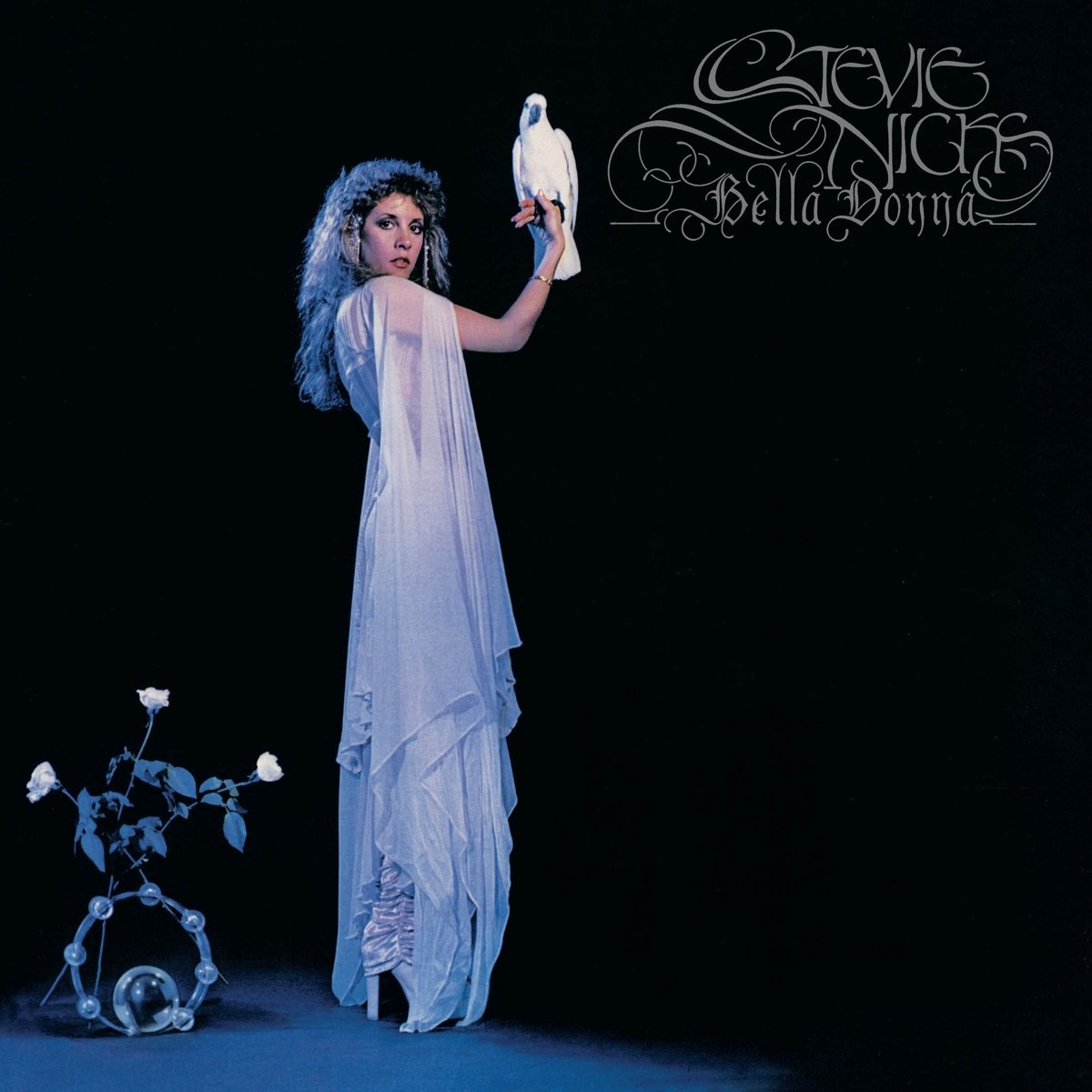
The cover of “Bella Donna,” Stevie Nicks’s first solo album, shows the artist looking slender and wide-eyed, wearing a white gown, a gold bracelet, and a pair of ruched, knee-high platform boots. One arm is bent at an improbable angle; a sizable cockatoo sits on her hand. Behind her, next to a small crystal ball, is a tambourine threaded with three long-stemmed white roses. Nicks did not invent this storefront-psychic aesthetic—it is indebted, in varying degrees, to Hans Christian Andersen’s Thumbelina, de Troyes’s Guinevere, and Cher—but, beginning in the mid-nineteen-seventies, she came to embody it. The image was girlish and delicate, yet inscrutable, as if Nicks were suggesting that the world might not know everything she’s capable of.
While Nicks’s sartorial choices have been widely mimicked, it’s rare to hear echoes of her magnanimity in modern pop songs, which are frequently defensive and embattled, preaching self-sufficiency at any cost. “Bella Donna,” from 1981, and Nicks’s second solo album, “The Wild Heart,” from 1983, are being reissued. Nicks was thirty-three when “Bella Donna” was released. Though its cover might not suggest an excess of reason, in its songs she is a sagacious and measured presence. Her acknowledgment of the heart’s capriciousness is gentle, if not grandmotherly. There’s surely no kinder summation of love’s petulance than the chorus of “Think About It,” a jangling folk song about taking a breath before hurling yourself off a metaphorical cliff. “And the heart says, ‘Danger!’ ” Nicks sings. She pauses briefly. “And the heart says, ‘Whatever.’ ” For anyone busy self-flagellating over an error in judgment, this can feel like a rope ladder thrown from above—an invitation to scramble up and out of despair. It is generous and knowing, and offers a clear-eyed conclusion: some things can’t be helped.
What does it mean to be Stevie Nicks? To understand loss and longing as being merely the cost of doing business? To acknowledge the bottomless nature of certain aches, yet to know, in some instinctive way, that you’ll keep going? Nicks evokes Byron, in spirit and in certitude: “The heart will break, but broken live on.”
Nicks was born in 1948, in Phoenix. Her paternal grandfather, A. J. Nicks, Sr., was a struggling country musician, and he taught Nicks how to sing when she was four years old. She was given an acoustic guitar for her sixteenth birthday, and immediately wrote a song called “I’ve Loved and I’ve Lost and I’m Sad but Not Blue.” The title is a surprisingly succinct encapsulation of Nicks’s lyrical alchemy: a combination of acceptance (I am hurting) and perspective (I will not hurt forever).
In 1966, when Nicks was in her senior year of high school and living in Atherton, California—her father, an executive at a meatpacking company, had been relocated there—she met the guitarist Lindsey Buckingham at a party. He was sitting cross-legged on the floor—bearded, curly-haired, and strumming the Mamas and the Papas’ “California Dreamin’.” Uninvited, she joined him in harmony. (“How brazen!” she later said.) Buckingham asked Nicks to join his band, Fritz. By 1971, the two were romantically involved. They eventually took off for Los Angeles, where they tried to make it as a duo, called Buckingham Nicks, releasing one album, in 1973, to very little acclaim. Not long afterward, Buckingham was asked to join Fleetwood Mac, a British blues band featuring the singer and keyboard player ChristineMcVie, the bassist John McVie, and the drummer Mick Fleetwood; the group was being rebooted as an American soft-rock act. Buckingham insisted that Nicks be invited, too. She ended up writing two of the band’s biggest early hits, “Landslide” and “Rhiannon.”
Extraordinary success often leads to spiritual dissolution, and Fleetwood Mac had its share of psychic turmoil. In 1975, Fleetwood divorced his wife, the model Jenny Boyd, after she had an affair with one of his former bandmates. Nicks and Buckingham broke up the following year. Around the same time, John and Christine McVie’s marriage collapsed. There was an ungodly amount of brandy and cocaine on hand to help nullify the despair. Still, in 1977, Fleetwood Mac now five wild-eyed, newly single people—released “Rumours,” a collection of yearning songs about love and devotion. The record spent thirty-one weeks at the top of the charts, and is one of the best-selling albums in American history.
Nicks’s debt is to Laurel Canyon, and to the sentimental, silky-voiced artists who emerged from L.A. in the late sixties and early seventies. Some of those acts—James Taylor, the Eagles—are now considered, fairly or not, irrelevant to the Zeitgeist: too mellow, too affluent, too sexless, too white. Candles and incense and macramé plant hangers; wistful thoughts about weather. Nicks’s lyrics often worry over domestic or earthly concerns—gardens, mountains, flowers, the seasons—and how they might affect the whims of her heart. “It makes no difference at all / ’Cause I wear boots all summer long,” she sings in “Nightbird.” When compared with the dissonant and provocative music coming out of downtown New York, the California sound could seem limp. But the scene in Laurel Canyon was tumultuous. Many of its artists—including, at various times, Nicks—were wrecked by drug addiction. Nicks’s voice, a strange, quivering contralto, gives her songs unexpected weight.
“Bella Donna” was produced by Jimmy Iovine, a Brooklyn-born audio engineer who worked on Bruce Springsteen’s “Born to Run” and produced the Patti Smith Group’s “Easter” and Tom Petty and the Heartbreakers’ “Damn the Torpedoes.” Iovine spent time in California, but his sensibility was tougher and more plainly that of the East Coast. He later became a co-founder of Interscope Records, where he helped to establish the career of the rapper Tupac Shakur, and, for a period, he oversaw the hip-hop label Death Row Records.
“Bella Donna” reached No. 1 on the Billboard chart, and produced four hit singles: “Stop Draggin’ My Heart Around,” a duet with Petty; “Leather and Lace,” with Don Henley; “Edge of Seventeen”; and “After the Glitter Fades.” The last, a country song about the travails of stardom—Nicks wrote it just after she and Buckingham moved to Los Angeles, long before she had a record deal, showing either hubris or prescience—contains organ, pedal steel, and reassurances. “The dream keeps coming even when you forget to feel,” she sings.
Nicks, like most artists, culls inspiration from disparate sources. She is prone to saying things like “ ‘Edge of Seventeen’ was about Tom Petty and his wife, Jane, my uncle dying, and the assassination of John Lennon.” But her personal life—a tangle of love affairs, often with her collaborators—informs her work in explicit ways. “Heartbreak of the moment isn’t endless,” she sings, in “Think About It.” This might seem like a billowy platitude, but if you are someone who does not think that every flubbed decision is fodder for personal growth, it is comforting to hear someone assert that nearly all mistakes can be neutralized, if not conquered. If “Bella Donna” contains a single directive, it’s to love freely, love fully, and hang on. The songs Stevie Nicks left off her debut solo LP “Bella Donna”, You can hear why “Blue Lamp” didn’t end up on “Bella Donna” The song has a darker, rock-oriented vibe that’s quite different from the rest of the album. However, it’s one of Nicks’ finest solo songs, based on a “dark blue Tiffany lamp” from her mom that “symbolized to me the light that shines through the night,” as she told The Source in 1981.
“When Fleetwood Mac we found them or they found us or whatever you know – it was a definite light at the end of the tunnel for both Lindsey Buckingham and I.” However, Nicks also saw the song represent new beginnings in her solo career. “It was very important that it found a place for itself,”.”I love that song. It was really the beginning of Bella Donna, because it was the first thing I’d ever recorded with other musicians, and it was the first time I’d ever recorded by standing in a room singing at the same time that five guys were playing. Fleetwood Mac doesn’t record that way. They record from a more technical standpoint.” It seemed inevitable Nicks would have had a song on the “Fast Times At Ridgemont High” soundtrack – after all, her manager, Irving Azoff, co-produced the movie. However, “Sleeping Angel” was certainly no tossed-off leftover; in fact, it’s one of Nicks’ most gorgeous and emotional songs from the era.
Driven by elegiac piano from E.Streeter Roy Bittan and lush backing vocals from Lori Perry and Sharon Celani, Nicks defines the respect she needs in and from a relationship: “I need you because you let me breathe / Well, you’ve taken me away / But never take me lightly / Or I could never stay.”
Incredibly enough, Nicks never actually recorded “Gold and Braid” in the studio, although she played it live on early ’80s solo tours. In concert, it’s a barn-burning rocker that serves as a perfect contrast to Bella Donna’s folkier songs and hints at what it might have sounded like had Nicks followed through on her desire to join Tom Petty and the Heartbreakers.
Nicks’ original demo for “24 Karat Gold” is piano-heavy and meditative, with almost stream-of-conscious vocals. The version that surfaced later on “24 Karat Gold” maintains the bones of her demo, the piano especially, but turns into a compact cautionary tale about ill-fated fame and love.
“‘Belle Fleur’ was about not being able to have a relationship because you were a rock ‘n’ roll star,” she said in 2015. Fittingly, one demo for the song is just piano and voice, featuring Nicks and her backing singers – a sisterhood of support that’s always been a through-line in Nicks’ work. “The [lyric] ‘When you come to the door of the long black car’ ,that’s the limousine that’s coming to take you away. Then your boyfriend is standing on the porch waving at you, like, ‘When are you going to be back?’ And you’re like, ‘I don’t know, maybe three months?’ But then we would add shows to a tour, and I could end up not being back for six months. It was difficult for the men in my life. I lived that song so many times.”
In 1981, Iovine flew with Nicks to the Château d’Hérouville, in northern France, where Fleetwood Mac was recording its next album, “Mirage.” Iovine left almost immediately, to escape the interpersonal conflicts that roiled the band. Iovine and Nicks’s relationship foundered. The following fall, while Fleetwood Mac was on tour, Nicks’s childhood friend Robin Anderson died, of leukemia, at the age of thirty-three. “What was left over was just a big, horrible, empty world,” Nicks has said. Days before her death, Anderson had prematurely given birth to a son. Nicks, operating under the savage logic of grief, married her friend’s widower, Kim Anderson, thinking that she would help raise the child. They divorced three months later.
By 1983, Nicks was ready to make another record. Her relationship with Iovine was strained, but Nicks asked him to produce the record anyway. “The Wild Heart” is inspired in part by the unravelling of that relationship, and in part by her mourning for Anderson. Nicks frequently cites as a guiding influence for the recording sessions the 1939 film adaptation of Emily Brontë’s “Wuthering Heights,” which depicts an undying, almost fiendish love. Mostly, the songs are about bucking against the circumstances that separate us from the people we need.
The artist Justin Vernon, of the band Bon Iver, uses a brief sample of “Wild Heart” (a track from “The Wild Heart”) on the group’s new album, “22, A Million.” Nicks’s voice is sped up, pitch-altered, and barely discernible as human—just a high, grousing “wah-wah,” deployed intermittently. Vernon pinched it from a popular YouTube video of Nicks, in which she sits on a stool having her makeup done, wearing a white dress with spaghetti straps. She begins to sing. Soon, someone is messing with a piano; one of her backup singers joins in with a harmony. The makeup artist gamely tries to continue with her work, before giving up. While the studio recording of “Wild Heart” is saturated, almost wet, this version is all air, all joy.
What affects me most about the video is how profoundly Nicks appears to love singing. Her voice has an undulating, galloping quality. It is as if, once it’s started up, there’s no slowing down, no stopping; the car is careering down a mountain, with no brakes. You can see on her face how good it feels just to let go.
“Stand Back,” the first single from “The Wild Heart,” was inspired by Prince’s “Little Red Corvette,” which Nicks heard on the radio while driving with Kim Anderson to San Ysidro Ranch, in Santa Barbara, for their honeymoon. (Prince played keyboards on the track, though he’s not credited in the album’s liner notes.) The song was produced in accordance with the style of the era, with lots of synthesizer and rubbery, overdubbed percussion. The lyrics describe a deliberate seduction followed by an acute betrayal. “First he took my heart, then he ran,” Nicks sings. The chorus is appropriately punchy: “Stand back, stand back,” she warns. Nicks is capable of going fully feral before a microphone, perhaps most famously at the end of “Silver Springs,” a song intended for “Rumours” and one of several that she wrote about Buckingham. (It ends with Nicks hollering, “Was I just a fool?”) On “Stand Back,” she erupts briefly, on the middle verses, but for the rest of the song she is more characteristically sanguine. “It’s all right, it’s all right,” she concedes. “I did not hear from you, it’s all right.”
Nicks has gone on to make six more solo albums, and three more with Fleetwood Mac. Following her divorce from Kim Anderson, she never married again, or had any children, though a rich maternal instinct runs through all her songs. This, more than anything else, may be the reason that Nicks’s work has endured.
After making a triumphant return courtesy of his concert at London’s Rainbow Theatre, an event organized by Pete Townshend and featuring any number of famous friends, Clapton’s confidence was restored and he returned to Miami’s Criteria Studios to begin work on a record that would stand as another milestone in Clapton’s career. “461 Ocean Boulevard” is the second studio solo album by the English musician. The album was released in late July 1974 for RSO Records, shortly after the record company released the hit single “I Shot The Sheriff” in early July the same year. The album topped various international charts and sold more than two million copies.
Eric Clapton was getting his life back together after a crippling heroin addiction, and his second solo album throws in a bunch of different styles to keep him occupied. It’s not all about guitar fireworks, either. There were blues covers, some heartfelt originals and a version of Bob Marley’s“I Shot the Sheriff” that went to No. 1. Eric Clapton had already undergone several transitions in his ever-evolving career by the time his album “461 Ocean Boulevard” was released in late July 1974. Having gained fame as a member of the Yardbirds and, later, John Mayall’s Bluesbreakers.
Perhaps the best way to describe guitar legend Eric Clapton’s in July 1974, as he prepared to unveil his watershed solo LP, “461 Ocean Boulevard”, was as a “wanted man.”
After laying low for the better part of three years while struggling with substance abuse, Clapton was sought after by his fellow musicians, by the countless fans of his prior exploits (the Yardbirds, Mayall’s Bluesbreakers, Blind Faith and Cream plus the short lived period Derek and the Dominoes and by the savvy music industry suits, who knew they were dealing with a golden goose – sure to fill their coffers regardless of what music he put his name to. The impetus for the album was born from the guitarist’s fascination with the blues recordings that had inspired him early on. During his recovery, he found himself renewing his familiarity with those older records and listening to more recent offerings as well. So too, a demo tape given him by Dominos bassist Carl Radle shared songs Radle had written with drummer Jamie Oldaker. As a result, the two musicians became the core of Clapton’s new outfit, which also came to include guitarist George Terry and singer Yvonne Elliman. The album took its title from the house where Clapton and company ensconced, located at “461 Ocean Boulevard” in Golden Beach, Florida,
But rather than re-emerging as the famed blues purist, or even the psychedelic warrior of old, Clapton’s new work trafficked in mellow.
461 Ocean Boulevard was bookended by an urgently paced re-working of the traditional “Motherless Children” and the renewed vigour of “Mainline Florida.” In between, however, the ensuing laid-back fare ranged from the hymn-like “Give Me Strength” to the easy-grooving “Willie and the Hand Jive” to a slippery slide across Elmore James’ “I Can’tHold Out” and an acoustic “Please Be with Me.”
Sprinkled among these were three key tracks in “Get Ready” (a cowrite and duet with Yvonne Elliman); Clapton’s own, earnestly hopeful “Let it Grow” (an emotional reflection of his recent rebirth from the shadows of heroin addiction); and, most striking of all, a relatively straight cover of Bob Marley’s “I Shot the Sheriff” that went to No. 1, pulling the rest of the album right along with it.
Other covers are of similar significance. “Willie and the Hand Jive” tapped into the familiarity factor, a slow-rolling mesh of blues and funk written by singer and composer Johnny Otis. Elmore James’ “I Can’t Hold Out” and Robert Johnson’s “Steady Rollin’ Man” found Clapton going back to the basics of blues.
Throughout the sessions, Clapton was aided and abetted by bassist Carl Radle (late of the Dominos), drummer Jamie Oldaker, keyboardist Dick Sims, guitarist George Terry – and, perhaps most crucial of all, Tom Dowd. Most importantly, 461 Ocean Boulevardis the album that found Clapton renewing his confidence and shoring up his strengths as a bandleader who was no longer in need of simply sharing his efforts with others. In that regard, “461 Ocean Boulevard” can be considered a destination that seemed to serve him best. The album finishes with George Terry’s “Mainline Florida”, which “breaks away from the established tone of the record” and features Clapton’s using talk box during his outgoing solo.
The dean of record producers, he’d worked with Clapton since his Dominos and Cream days, and contributed much to shoring up his shaky confidence.
Together, these players helped Eric Clapton fulfill most of the tall expectations harboured by his previous groups alluded to earlier, once his incomparable talents and this inspired song set were finally captured in the grooves of 461 Ocean Boulevard.
A tribute album featuring Steve Earle, Lucinda Williams and Beachwood Sparks among others was announced yesterday along with details of a new Neal Casal Music Foundation (NCMF) which has been created “to honour the memory of the late great, multi-dimensional artist through an ongoing series of charitable endeavors.” The initial focus of the foundation is to provide instruments and lessons to students in New Jersey and New York state schools where Casal was born and raised, as well as to make donations to mental health organizations that support musicians in need. NCMF is being spearheaded by Neal’s longtime manager Gary Waldman along with a team of Casal’s friends.
A first round of funding for the foundation is being raised through a Kickstarter campaign comprised of two primary packages: a 30-plus song tribute album, ‘Highway Butterfly: The Songs of Neal Casal’ and a coffee table photography book, ‘Tomorrow’s Sky: Photographs by Neal Casal.’
“In a note left behind, Neal told the story of how he got his first guitar when he was 13,” explains Waldman. “As he explained it, ‘I remember the day on one of those drives where dad asked what I wanted for Christmas and I said an Atari, and he said ‘c’mon Neal, you can do better than that. I always see you with your radio playing music, do you want more records? Do you want to play an instrument? Anything but Atari y’know? It’s just going to collect dust after a few months, I want to get you something useful.’ I sheepishly said I like guitar, and his eyes lit up and he said, ‘sure i’ll get you a guitar, at least you’ll be learning something.’ So that was it, my life was set right there. I remember the exact place where we were when he said it. We were passing that reservoir that’s in between Oak Ridge, NJ and route 23 into NY state.’ So with that in mind, the concept for the foundation was born. We will also donate a large portion of proceeds to MusiCares, Backline and other mental health organizations for musicians. This was also a specific wish of Neal’s and we have already donated over $25,000 to MusiCares from our preliminary fundraiser at the Capitol Theatre tribute concert for Neal on September 25, 2019.”
‘Highway Butterfly: The Songs of Neal Casal’ will be a double CD/triple vinyl album celebrating the prolific body of work Casal left behind over the course of 14 studio albums. Recording sessions for the project began in February led by co-producers Dave Schools of Widespread Panic and recording engineer/producer Jim Scott at PLYRZ Studios in Valencia, CA. Over 30 artists have been confirmed to appear, including Lucinda Williams, Jonathan Wilson, Phil Lesh and The Terrapin Family Band, Cass McCombs, Steve Earle, Warren Haynes, Jaime Wyatt, Shooter Jennings and Robert Randolph & The Family Band among numerous others. The first single and video from the recording was captured during those initial sessions in February. It features Billy Strings with Circles Around the Sun performing ‘All The Luck In The World’ which you can watch below.
“It’s been overwhelming to record these talented artists as they put their own spin on Neal’s songs,” says Schools. “It speaks volumes to the high quality of his song writing and to the depth of love and appreciation that his peers had for him.”
The upcoming tribute Highway Butterfly: The Songs of Neal Casal, a 5-LP box set featuring Neal’s friends, colleagues, and admirers paying tribute to the prolific musician’s immense body of work.
Today the “second” single is out – Neal’s dear friends Beachwood Sparks (whom Neal played, toured, and recorded with) and GospelbeacH (of which Neal was a founding member) release their version of “You Don’t See Me Crying,” with Neal’s photographs brought to life by the brilliant Pooley at Woom Studio.
The 41-song box set is available for pre-order now and will be released on November 12th.
One of Neal’s other last wishes left behind was that a book be made of the photographs he had taken while travelling the world over the last 20 years. ‘Tomorrow’s Sky: Photographs by Neal Casal’ is a 240-page, hard cover, coffee table book that presents over 250 of his photos. The book is broken up into six sections entitled Surf, Road, Rooms, Humans, Travel and Music—all subjects near and dear to Casal. Each section is described as “a deep reflection of where Neal was in his life, whether backstage with his band, in a recording studio with Willie Nelson, an empty stretch of highway through a tour bus windshield, or on the beach with a surfboard.” The photographs were carefully curated by Ricki Blakesberg using Neal’s Instagram, Tumblr and photo albums as a guide, while the book’s producer is Neal’s close friend and legendary photographer, Jay Blakesberg.
“‘Tomorrow’s Sky’ is a look at the world seen through the eyes of Neal Casal. Neal was a stealth photographer who always carried his camera and documented the people, places and scenes as they passed before him,” says Jay Blakesberg. “The photos are intimate, beautiful and from the hip. Nothing is set up, it is real life in real time.”
Highway Butterfly: The Songs Of Neal Casal
Confirmed Artists & Track Listing
Aaron Lee Tasjan – “Traveling After Dark”
Beachwood Sparks – “You Don’t See Me Crying”
Billy Strings w/ Circles Around the Sun – “All The Luck In The World”
Britton Buchanan – “Willow Jane”
Cass McCombs – “Miss It When It’s Gone”
Courtney Jaye – “Grand Island”
Dori Freeman & Teddy Thompson – “Sweeten The Distance”
Hannah Cohen & Sam Evian – “Junkyard In The Sun”
Hazeldine – “Today I’m Gonna Bleed”
Hiss Golden Messenger – TBD
Jaime Wyatt – “Need Shelter”
Jason Crosby – “Pray Me Home”
Jesse Aycock – “The Losing End Again”
Jimmy Herring w/ Circles Around the Sun – “Bird With No Name”
Johnathan Rice – “Me & Queen Sylvia”
Jonathan Wilson – TBD
Kenny Roby – “Too Much To Ask”
Lauren Barth – “Lost Satellite”
Leslie Mendelson – “Feel No Pain”
Lucinda Williams – TBD
Mapache – “The Wisest of the Wise”
Marcus King & Eric Krasno – “No One Above You”
Phil Lesh & The Terrapin Family Band – TBD
Robbi Robb – “I Will Weep No More”
Robert Randolph & The Family Band – TBD
Shooter Jennings – “Maybe California”
Steve Earle – “Highway Butterfly”
Todd Sheaffer – “December”
Vetiver – “White Fence, Round House”
Victoria Reed – “Angel & You’re Mine”
Warren Haynes – “Free To Go”
Zephaniah OHora – TBD
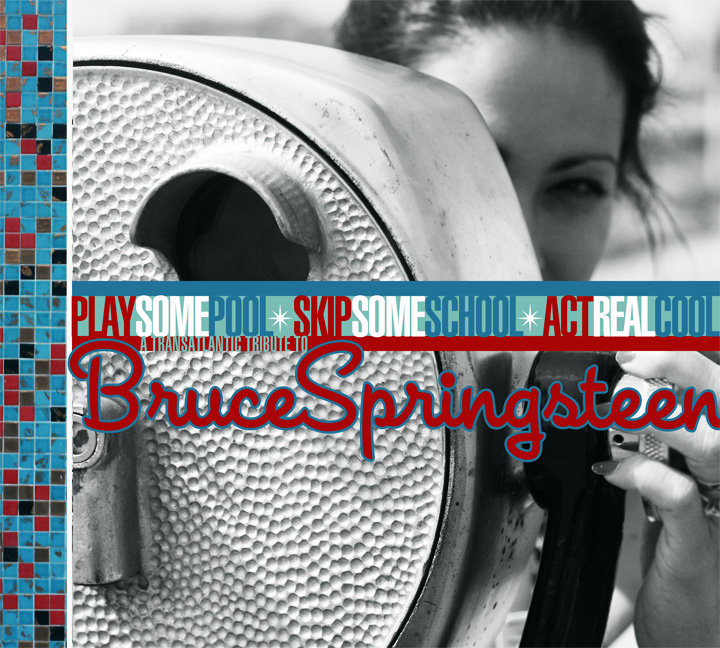
There are a few ups and downs here, like in every Springsteen tribute, but I think that Glory Days as a pub singing song is simply genius!.
It’s a mouthful of a title for a mouthful of an album. At a colossal 38 tracks, Play Some Pool… is more of a Now That’s What We Call Broooce. And helpfully there’s nary a part of the Bruce canon untouched for any long term fan who wishes to be offended/ delighted by the homages contained herein.
Usually found in order of importance to an artist’s reputation beneath live albums and remix compilations, tribute albums are notoriously iffy affairs at the best of times. Lots of phoned-in performances by big(ish) names, or just downright weird-bordering-on-insulting pastiches, as anyone who has sat through one will attest.
Despite no actual presence of recent Bruce torchbearers such as The Hold Steady or The Gaslight Anthem, all manner of semi-known indie herberts line up to doff a cap. Probably the best known acts here concern fans of Art Brut – singer Eddie Argos fronts Glam Chops’ version of “Born In The USA” (done, as you’d imagine, in the style of the Glitter Band fronted by Mark E Smith, all deeply unsober at a kebab house) and ex-Hefner youngster Darren Hayman.
Highlights? The splendid Butcher Boy’s delicate reading of Streets Of Philadelphia; Help Stamp Out Loneliness’ gorgeously electro I’m On Fire; School’s C86-y take on Hungry Heart; ‘Allo Darlin”s rippling indie makeover of Atlantic City and the superbly named Swedish Chef’s glistening weaklingness take on Used Cars. Unfortunately Linda Black Bear’s banjo-assisted version of Born To Run sounds like Neil Young at a music workshop, and The WinterSleep’s half awake meander through Dancing In The Dark doesn’t really add anything to your life, other than sucking away what seems like two hours.
There’s actually nothing completely horrendous on here, although the chances of you wanting to sit through it all again are slim. Instead there’s a good dozen or so tracks here to be selected by everyone, Springsteen fan or not.
With their 3rd album “Under The Big Black Sun”, Los Angeles punk pioneers X had created an album that was every bit as good as their landmark debut. Not an easy feat for any band who started their career which such seminal albums as “Los Angeles” and “Wild Gift”. But where “Wild Gift” largely repeated the winning formula of their debut, the musical growth and emotional depth of “Under The Big Black Sun” was undeniable.
“X’s first album issued on a major label, 1982’s “Under the Big Black Sun”, is arguably their finest record. All 11 songs are exceptional, from both a performance and compositional point of view. The DoorsRay Manzerek’s production is more akin to hard rock bands than their earlier punk works, but the songs still pack quite a punch. Before the recording of the album, singer Exene Cervenka’s sister was killed by a drunk driver, and the band decided to work out their grief in the music, as evidenced by two of the album’s best tracks: the melodic “Riding With Mary” and the vintage ’50s sound of “Come Back to Me.” The highlights don’t stop there, however; also included are the Led Zepplin’esque “The Hungry Wolf” (an early video favorite of MTV), the accelerating “Motel Room in My Bed,” the rocker “Blue Spark,” the spacious title track, and the album closer “The Have Nots.” Again, Cervenka and John Doe supply some great vocal harmonies (perhaps the only punk band to ever do so), while Billy Zoom shows off great rockabilly chops throughout. “Under The Big Black Sun” is one of the quintessential rock records from the ’80s.”
Formed in 1977, X quickly established themselves as one of the best bands in the first wave of LA’s flourishing punk scene; becoming legendary leaders of a punk generation. In 2020 – they released their first new album in 35 years, “ALPHABETLAND”.
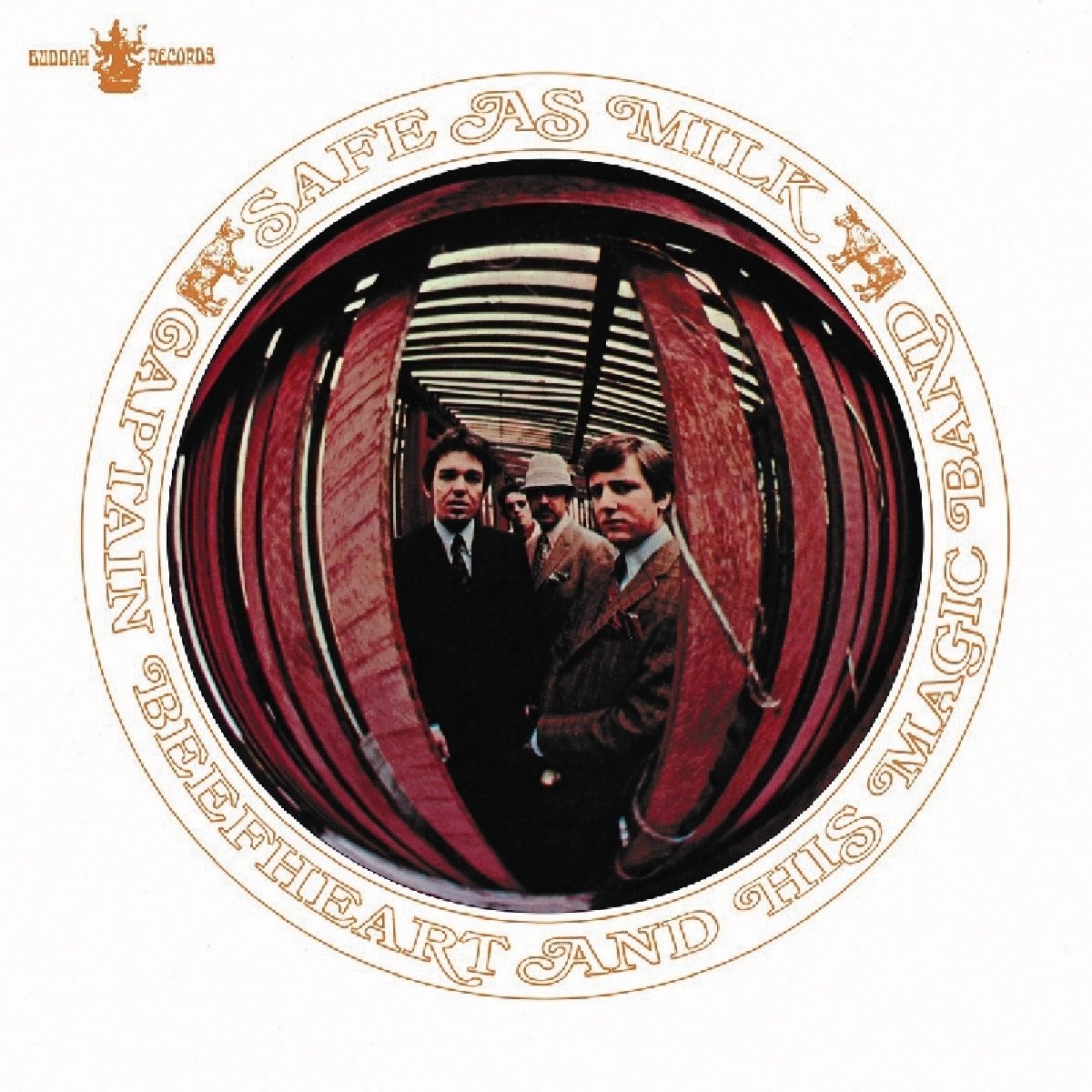
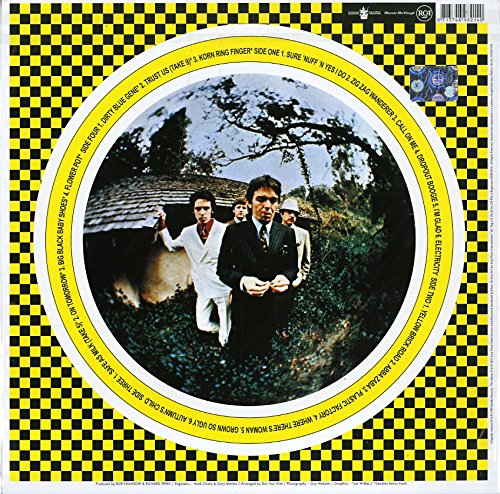
Beefheart’s debut album, originally released in 1967 on Buddah Records, was the most accessible and pop inflected of all the releases from his catalogue. Still ‘Safe As Milk’ is a very strong and heavily blues-influenced work but it also hints on many of the features that would later become the trademarks of Captain Beefheart. Not only did a 20-year old Ry Cooder play bass and guitar on ‘Abba Zaba’ and ‘Grown So Ugly’, he also arranged the latter as well as ‘Sure ‘Nuff ‘N Yes I Do’. Also, Cooder’s role in the recording process was ‘to translate the Captain’s wilder ideas to the rest of the band and generally acts as musical director’. With him as a supervisor the sessions proceeded more or less smoothly and ‘Safe As Milk’ was recorded within a month.
I can’t praise this album enough I loved it when it was first released, having not heard it since the early 70,s, Originally released in 1967, I was taken aback by just how good this record is. It makes you wish that the Captain Van Vliet had done a few more R&B albums before veering off into avant garde territory. The stereo mix on this cd whilst typical polarised sixties style does open up the sound a lot more than the old mono version that was originally released ,The mastering too is great.
I played this 3 times in a row when i opened the package, it’s just flawless as an album Even tracks i was less keen on as a kid such as “I’m Glad” have grown on me. Opener “Sure ‘Nuff ‘N Yes I Do’ bursts out of the speakers compressed to death by the engineers it pulls along with the fabulous meaty Jerry Handley bass that dominates all early Beefheart tracks. “Electricity” still my fav track, shows the direction the band were headed with it’s jagged rhythms and tempo changes.
A brilliant track that, astoundingly, never made it onto any of Beefheart’s albums proper; Korn ring Finger was made around the same time as the ‘Mirror Man’ album, and fits in perfectly with that sound. This is The Sentinel’s favourite era of the tCaptains music, and this piece is just as good as ’25th Century Quaker’,‘Tarotplane’ etc. The sound, like ‘Mirror Man’ is bouncy, expansive, and effortlessly psychedelic.
Lou Reed’s influence has touched each new generation of music fans. These are his best albums, When American rock critic Lester Bangs called Lou Reed “a completely depraved pervert and pathetic death dwarf… a liar, a wasted talent, an artist continually in flux, and a huckster selling pounds of his own flesh”, he was describing his hero.
Lou Reed famously changed his mind, frequently, regarding which of his songs he liked and which he loathed. But listen – he loved every last one of them. Every single second of every last one, OK?” There were many turkeys along the way, as well as many triumphs. Few artists in the history of rock’n’roll are as enigmatic as Lou Reed, and few have created a body of work as influential, erratic and controversial as with Lou Reed’s, first seminal art-rock group The Velvet Underground and then as a solo artist.
Born Lewis Allen Reed in Brooklyn, New York on March 2nd, 1942, he was always an outsider. As a teenager he was subjected to electro-shock therapy intended to ‘cure’ homosexuality. In his early 20s he dropped out of university to work as a staff songwriter at Pickwick Records where he wrote novelty pop songs, completely at odds with his love of experimental jazz. It was at Pickwick that Reed met Welsh classically trained musician John Cale. The pair formed a band called The Warlocks, which by 1965 had mutated into The Velvet Underground, comprising Reed on guitar and vocals, Cale on bass, viola and organ, Sterling Morrison on second guitar and Maureen ‘Moe’ Tucker on drums.
The Velvets were a band ahead of time. Their debut album, released in 1967, was the antithesis of the Summer Of Love’s hippie idealism. Their lo-fi sonics and Reed’s dark lyrics proved too uncompromising for mass consumption, but the Velvets’ influence would carry over generations, from David Bowie to punk rock and beyond. It was Bowie who helped Reed achieve his breakthrough success as a solo artist, co-producing 1972’s “Transformer”, the album that featured two of Reed’s best-loved and biggest songs: “Walk On The Wild Side” and “Perfect Day”. But pop stardom didn’t suit Lou Reed, and in 1975 he attempted career suicide with “Metal Machine Music”, an album comprised entirely of guitar feedback.
This maverick streak runs throughout Reed’s career, as evidenced by his final two albums: the ambient electronica of 2007’s Hudson River Wind Meditations, and the unlikely collaboration with Metallica on 2011’s “Lulu”. But it’s with a guitar in hand that Lou Reed created his definitive work as a classic rock’n’roll anti-hero: the outsider, in black leather and shades, the original poster boy for heroin chic, the straight-talking poet laureate of New York City.
Lou Reed – Lou Reed (RCA 1972)
After leaving the Velvet Underground, Reed debuted as a solo artist with a self-titled album in June ’72, though most of the songs were originally played at Velvet Underground concerts, or were outtakes from “VU” recording sessions. Reed would establish himself as a major artist in his own right soon enough, but the songs just aren’t strong enough here. My favourite always is the taut, very VU-ish “I Can’t Stand It.”
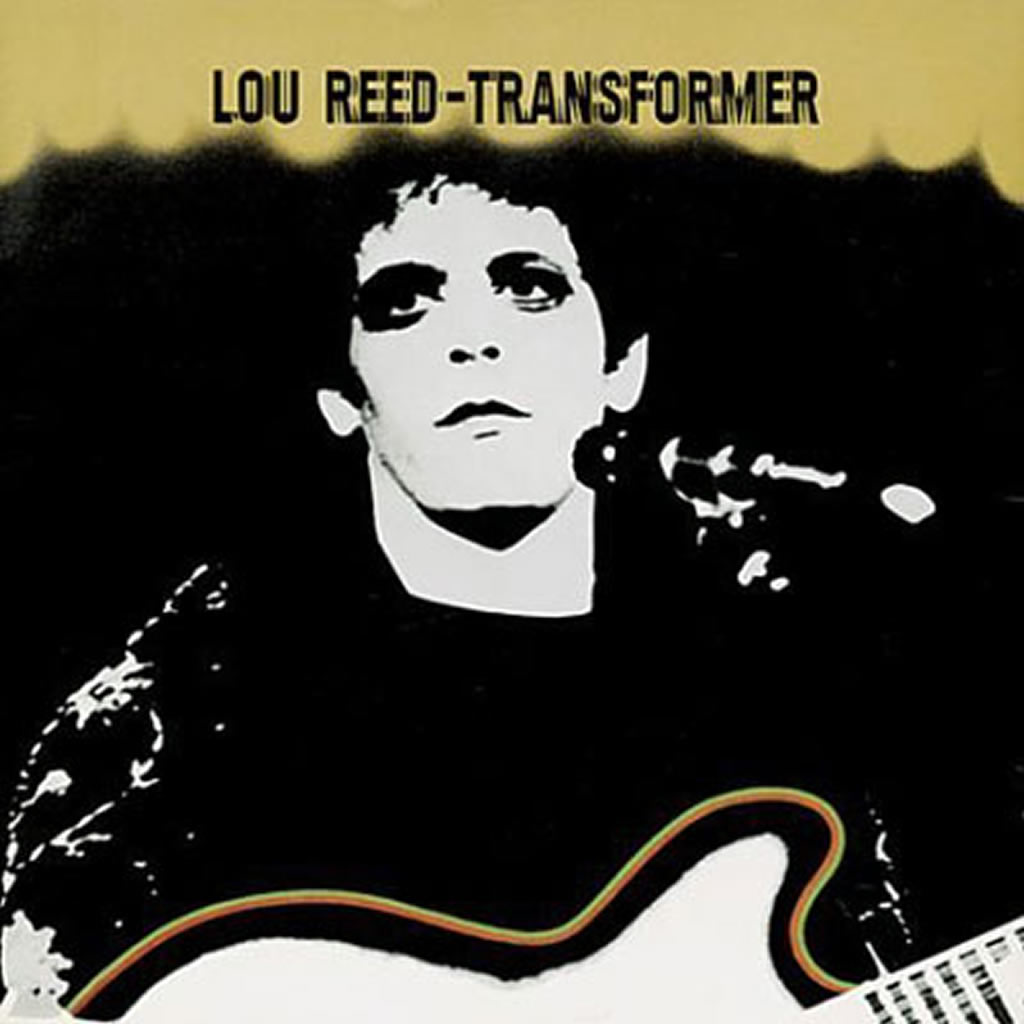
Lou Reed – Transformer (RCA, 1972)
“Transformer” remains a remarkable arranged marriage of gritty, witty words and pop succour. It anointed him the godfather of anti-stars, opening up a career that may otherwise have swiftly gone the way of all flesh.
“I don’t have a personality of my own,” Reed said in 1972. “I just pick up on other people’s.”
He’d come to London for a change of pace, to “get out of the New York thing”, but his first, eponymous, post-Velvets solo album, recorded on the dirty boulevards of Willesden Green in West London, had stuttered rather than strutted. Nobody, least of all him, was sure where a former Velvet Underground frontman should go next.
Lou Reed may not have made much of an impact, but Reed’s second album, “Transformer” co-produced by David Bowie and released just five months later that year was a revelation. Its most famous song is the hit single “Walk on the Wild Side,” and “Perfect Day” has become something of a standard over the years. “Vicious” and “Satellite of Love” are quite well known as well. But I’ll go with “I’m So Free,” a catchy rocker that sounds like it could have been made by The Ramones (though that band didn’t even exist yet).
Reed’s self-titled solo debut included various Velvets leftovers and, most bizarrely musicians, Steve Howe and Rick Wakeman of Yes. Unsurprisingly it sold no better than the Velvets’ albums. His second album, released just six months later, made him a superstar. The first time many of us clapped our eyes on Lou Reed was via Mick Rock’s camera lens. “Transformer’s” haunting, kabukistyle cover image was captured during Lou’s debut London show, at King’s Cross in July ‘72. Reed, hastily dressed to impress in a rhinestone jacket by Angie Bowie, gazes into middle distance, the Velvets in his rear view mirror, on the cusp of solo greatness. It’s the ultimate Lou Reed shot.
There’s the fabulous Rock ‘N’ Roll Heart-era shoot: Reed in shades, a leather jacket so small it could’ve been made for a child, under a see-through plastic jacket from Ian’s of St. Mark’s Place, an NYC boutique that did fetish before McLaren and Westwood, just as Lou did punk before Pistols and Ramones. There’s bleached ‘74 Lou: mean ‘n’ moody, dead-eyed ‘n’ skeletal, magnificent. With lines inspired by Warhol (‘hit me with a flower’) and Mick Ronson restraining himself until the fade, it’s a great “hate song”.
Yes of course this should be number one… but we’re non-mainstream, hardcore obsessive fans here, right? And if you’re not being perverse and contrary, you’re not doing Lou Reed right. Whether Lou liked it or not – and he argued both sides depending on that day’s mood swings – it’s the song which made his post-Velvets name and by which the world at large remembers him. He didn’t even think it was a single. Inspired by Nelson Algren and the colourful characters and pansexual “superstars” he’d met at The Factory, its atmosphere, created by Herbie Flowers’ two-note bass slide, The Thunder Thighs’ “doo da doo”s and baritone sax from Ronnie Ross (Bowie’s sax teacher) is immortal. Its purring sarcasm that transformed his career.
“Satellite Of Love” had been demoed by The Velvets in the “Loaded” era, but not with this level of grace and grandeur. The Bowie-Ronson arrangement is redolent of Drive-In Saturday, with the piano flourishing in all the right places and the backing vocals, finger clicks and handclaps extracting the pop from the pomp.
It’s frequently tricky to deduce whether Lou’s being open-hearted or slyly sneering. Is “Perfect Day” a transcendent, vulnerable love song or a subversive paean to smack? Of course, it’s been taken out of his hands since – not least, insanely, by the likes of Boyzone and Pavarotti on the BBC’s chart-topping 1997 Children In Need interpretation. Yet even upon “Transformer’s” release, most listeners heard genuine romance: sangria in the park, feeding animals in the zoo and catching a movie worked as sincerity incarnate. We thought we were someone else. Someone good.
Produced by David Bowie and his guitarist Mick Ronson, Transformer caught the mood of the glam-rock era with Mick Rock’s cover of an androgynous Reed, and some classic pop songs – notably Satellite Of Love and Perfect Day – that echoed Bowie’s early-70s material. The album even gave Reed a Top 10 hit “Walk On The Wild Side”, despite blasé references to drugs and oral sex.
Lou Reed – New York (Sire, 1989)
New York (1989) is widely regarded as one of Reed’s strongest solo albums, and “Dirty Blvd.” is its principal gem of a song: An unflinching but compassionate tale of a New York boy trapped in a life of squalor and abuse, and yearning to escape. Dion’s aching backing vocals are a perfect touch.
Not for Lou Reed the celebratory swing of Sinatra’s Theme From New York New York, or the romance of Woody Allen’s Manhattan; Reed’s portrait of his home town was drawn from the mean streets he knew so well in his junkie years. New York is essentially a concept album, with instructions by Reed for it to be “listened to in one sitting as though it were a book or a movie”.
Withering satire dominates, with Dirty Blvd. one of many brutally funny vignettes. Dirty Blvd. is also fundamentally a great rock’n’roll song, and New York is an album filled with them. It’s Reed’s late career classic. Recorded in late 1988, Lou Reed’s New York album sounded like he’d spent months glued to six TV sets blaring out a cacophony of bad news. Making sense of noise was always his trick and, given that he liked nothing better than turning observation into fast art, Reed managed to juggle references that ricochet from TV trash talkers like Morton Downey, homicidal killer Bernard Goetz, some bloke called Donald Trump, the Virgin Mary and questionable UN leader Kurt ‘just following orders’ Waldheim.
Despite a bewildering set of references, Lou gave it a universal rock’n’roll thrust, reverting to Velvet Underground aesthetics – two guitars, bass and drums, with occasional glimpses of Moe Tucker on percussion. From the violent click-clack opening of “Romeo Had Juliette” to the sombre investigation into divine versus human doubt of crucifixion epic “Dime Store Mystery”, “New York” demanded close investigation. Once achieved, you could only marvel at how redolent of time and place the sound was. You can smell the stink of the Hudson River and that unique aroma of greasy avenues that characterise the city in heat. Warhol died, Nico died, but Reed somehow pulled himself out of the creative doldrums to deliver his most acclaimed album in many years, “New York” is so good he only named it once. Its “fierce poetic journalism” (Rolling Stone) now called out, instead of wallowing in, urban squalor.
The remastered Deluxe Edition brings clarity to the hit song Dirty Blvd (Dion DiMucci’s vocals providing an appropriate Latino twist) and the stately evisceration of political corruption held like a flaming torch above Strawman.
All the songs get the live treatment from an already available concert recorded in Montreal. Work tapes and a live Sweet Jane and Walk On The Wild Side add heft, but the main work is the thing here.
Lou Reed – Berlin (RCA, 1973)
Rolling Stone magazine billed Lou Reed’s third solo album as “the Sgt. Pepper of the 70s”. Many since have called it The Most Depressing Album Of All Time. The truth is probably somewhere in between.
Berlin is undeniably Reed’s most over-the–top statement. With a lavish production and an all-star cast including Steve Winwood, it’s a concept album-cum-rock opera: the story of a doomed, drug-fuelled romance, told by Reed in the style of a heavily medicated torch singer. He was rewarded with a Top 10 hit in the UK. In the US the album stiffed and Lou went back underground.
Berlin (1973) is, I think, one of Reed’s greatest efforts — an extremely dark song cycle whose characters suffer through addiction, abuse and more. It really has to be heard in its entirety to be fully appreciated but here is “Lady Day,” the album’s second song, which offers a first glimpse at one of the doomed characters, foreshadowing what is to come but not fully descending into tragedy yet. “I said, ‘No, no, no, oh Lady Day,’ ” the narrator sings over and over, as if trying to fend off what is coming.
Berlin – the most gothic thing ever made in Willesden – works best as a whole, especially the slide into unrelenting sorrow of its second half. Yet the great concept albums – “a film for the ears”, producer Bob Ezrin called this – demand a big pay-off finish, and boy does Berlin bring that home. “Sad Song” is bombastic, but Reed’s forlorn, muted voice contrasts perfectly with the sturm und drang. Every time you think his character’s getting soft (‘she looked like Mary Queen of Scots’), he snaps back brutally (‘just goes to show how wrong you can be’). They don’t do mean-spirited melodrama like this any more.
Before Side 2 of “Berlin” gets really dark, Side 1 is merely very dark indeed. This straddles the line between autobiography and fiction (‘speeding and lonely’), with Reed’s phrasing urgent yet studied. Bob Ezrin lets Alice Cooper’s guitarists fully let rip only once the story’s told. A tangible plea for a reprieve from the horrors of existence and making love by proxy. The album’s most upbeat track, then.
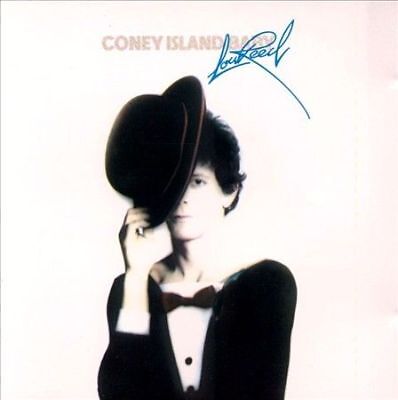
Lou Reed – Coney Island Baby (RCA, 1976)
After the commercial disaster of 1975’s Metal Machine Music, Lou had his back to the wall. “I had no money and no guitars,” he confessed. Reed had to promise his record label that he wouldn’t make ‘Son of Metal Machine Music’, and he was as good as his word. Just five months after releasing Metal Machine Music, Reed went in almost the direct opposite direction on “Coney Island Baby”. Though not without its dark moments, it’s dominated by melodic, straightforward pop and rock music, and Reed has rarely sounded as tender and sincere as he does on the doo wop-flavored title track.
“Coney Island Baby” is classic Lou Reed, described in Rolling Stone as “timeless, terrific rock‘n’roll”. Reed has never written a more beautiful song than this album’s title track. A bitter-sweet lament, reminiscent of Dylan’s best 70s work, it ends with the redemptive mantra: ‘The glory of love might see you through.’ In desperation, Reed had dug deep. It’s emblematic of Reed’s career that as many fans think Coney Island Baby is a flaccid filler as rate it as one of his strongest. Following Metal Machine Music with a tender, vulnerable pastiche of soul and doo-wop had everyone confused. Yet its mellow mood is broken by the incongruous, visceral fusion of words, music, muttering voices and jolting sounds which constitute Kicks. It’s as if Reed’s dark side is banging on the closet door, demanding to be let out. Sex, blood and adrenalin: it’s intense.
His piece de resistance: a loping soul groove, deft doo-wop and Bob Kulick’s glistening guitar interjections knit a backdrop over which wannabe tough guy Reed drops the façade and exposes his youthful dreams and emotions (‘I wanted to play football for the coach’). It’s also a love letter to his transgender muse, Rachel. From the opening monologue’s intimacy through the nod to The Five Keys’ Glory Of Love (one of his favourite oldies), to the redemptive public-declaration-of-commitment punch-line, Coney Island Baby is as sensitive as it is audacious, and, sonically, a glory. Reed’s world was often ‘a funny place, something like a circus or a sewer’, but here his better angels come shining through.
You could argue the case for A Gift as being one of Coney Island Baby’s highlights – “it’s so funny”, said Lou – but this old Velvets draft from 1968 is updated with terrific feel, for which one-off producer Godfrey Diamond never got due credit. An exquisite surge of rhythm and lead guitars mesh with Bowie-influenced call-and-response “la la la”s, and Reed gauges his vocal to build from confident to pleading. Either his most sincere or artificial love song.
Growing Up In Public (1980)
On the witty, intricately arranged “Growing Up In Public”, Reed takes one last long hard look at his various personalities before hitting forty. ‘I’m so damned sane’, he said. This pomp-rock opener, all piano pirouettes and dovetailed dynamics, a capella blurts and handclaps, borders on sounding like Queen. Lou gives it conviction, asking how he’s supposed to talk to pretty girls when his father was “weak” and “simpering”.
“Think It Over,” from Growing Up in Public (1980), is, I think, an overlooked gem in Reed’s catalogue, a sensitively sung grown-up love song that finds the singer proposing marriage but being warned by his partner that they shouldn’t rush into anything: “When you ask for someone’s heart/You must know that you’re smart/Smart enough to care for it, so I’m gonna/Think it over.”
Magic And Loss (Magic And Loss, 1992)
Reed stared into the abyss of death on 1992’s “Magic and Loss”, which also, somehow, included one of his catchiest songs ever: “What’s Good,” in which he explores existential confusion in a playful way (“What good is seeing eye chocolate/What good’s a computerized nose/And what good was cancer in April/Why no good, no good at all”) and concludes, “Life’s good, but not fair at all.”
Lou’s “Magic And Loss” album, which he compared to Beethoven’s Fifth, was a set of buttoned-up ponderings on cancer and death which came dressed as Lofty Art: audiences who came to see him play it were barred from drinking or talking. Some believed his hype: weirdly it’s his highest-charting UK album (no.6). But it was no Berlin, bar this slow-burn finale about passing through fire.
Lou Reed – Rock ’N’ Roll Animal (RCA, 1974)
The best of Reed’s 11 live albums was partly a reaction to the harsh criticism and weak US sales of the ambitious “Berlin”. As its spiky title implied, “Rock ‘N’ Roll Animal” had Reed going back to basics, reprising Velvets songs while reaffirming his popular image as rock’s junkie-in-chief. After releasing his commercial breakthrough Transformer in 1972 and the ambitious Berlin song cycle in 1973, Reed made one of the all-time great live albums, “Rock ‘n’ Roll Animal”, recorded at the Academy of Music in New York in December ’73 and released in 1974. With the exception of “Lady Day,” from Berlin, the songs all dated back to his Velvet Underground years, and benefited from the muscular, polished guitar work of Steve Hunter and Dick Wagner. Hunter also wrote the stunning new extended intro for album opener “Sweet Jane”:
Reed is backed by a slick five-piece band featuring guitarists Dick Wagner (a future Alice Cooper sidekick) and Steve Hunter. Their flashy licks transformed “Sweet Jane” and “Rock ‘N’ Roll” into swaggering arena rock anthems, while the album’s centrepiece, a woozy, 13-minute version of “Heroin”, couldn’t have done more to glamourise Reed’s drug of choice.
Reed’s 1974 live album “Rock ‘n’ Roll Animal” was such a revelation that in 1975, he released more songs from the same 1973 concert as Lou Reed “Live”.“Vicious,” like the best of Rock ‘n’ Roll Animal, got a major boost from the hard-hitting guitar work of bandmates Steve Hunter and Dick Wagner.
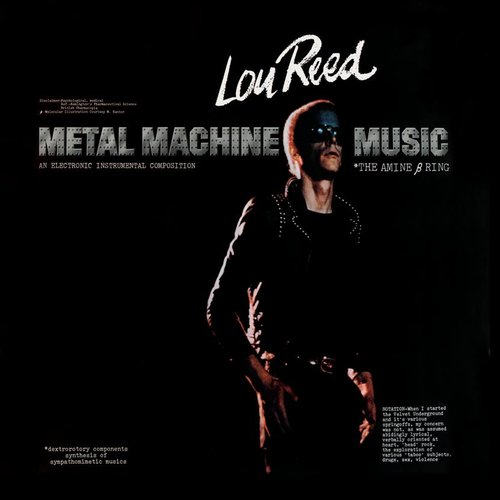
Metal Machine Music (1975)
The double album Metal Machine Music (1975) — almost universally reviled upon its release and rarely played again by anyone, afterwards — is an audacious experiment: Each side of the vinyl release contains 16 minutes of screeching electronic noise. I can hear some music in it, if I try really hard. But I would never listen to more than 30 seconds or so, voluntarily. To endure the whole thing in one sitting would be torture. Yet Reed clearly intended it as a sort of symphony (or anti-symphony) in four parts, so I am sharing, here, the whole thing. Enjoy.
Rock And Roll Heart (1976)
1976’s “Rock and Roll Heart” was all over the place, ranging from plainspoken ballads to moody, Berlin-like art-pop and hard-edged rock, with even some occasional jazz influence working its way in. “Follow the Leader” was written back in the Velvet Underground days and still feels unformed — more like a sketch than a finished song. But Reed’s new band (featuring keyboardist Michael Fonfara, saxophonist Marty Fogel, bassist Bruce Yaw and drummer Michael Suchorsky) helps give it an urgent edge and make it a standout.
“Rock And Roll Heart”, with Reed producing and playing all the guitars, was a confused response to CBGB punk, which he took a while to grasp. “I’m too literate to be into punk rock”. It leaps between fiery riffs and self-parodying neo-jazz. Just when you’re boxing it off, he pulls out this moody, wilfully repetitive showstopper, a love-hate song, possibly to drugs, which feels clammy, grubby – you can smell it in your hair the next day. It’s trashy, it’s melodramatic, it’s Reed in excelsis.
New Sensations (RCA, 1984)
In the early 80s, Reed quit booze and drugs, and regained his credibility with two cult classic albums: The Blue Mask and Legendary Hearts. What followed those was the most accessible work of his entire career. Shockingly, New Sensations was the sound of Reed lightening up.
I Love You, Suzanne, the most upbeat pop song Reed has ever written, set the tone, while the nonchalantly funky title track even had him pledging to ‘eradicate my negative views’. The album wasn’t a hit (No.56 in the US, No.92 in the UK). Perhaps the public just wouldn’t buy a happy Lou Reed. Five years later the bleak New York proved a more effective comeback.
Mistrial, 1986
“Mistrial” (1986) was notable for Reed’s experiment in rap — lead single “The Original Wrapper” as well as “Video Violence,” a bracing protest song about the pervasiveness of violent images in film and television. Horrors have become mundane: “Up in the morning, drinking his coffee/Turns on the TV to some slasher movie,” Reed sings.
“When I was thirty my attitude was bad”. Yes, and your records were good. “Mistrial” is, apart from the hilarious The Original Wrapper, the sound of a forty-something man yelling at the telly from the sofa (Video Violence), and even Reed later bemoaned the production. This closing curveball, where Lou mistakes a film set for a UFO, carried a sly hint of the ghost of Transformer.
The Bells (1979)
Yep, we’re *that* hardcore obsessive. Recorded in Germany, the left-handed jazz-rock of “The Bells” climaxes with this noir nine-minute electronic drone, punctuated with Don Cherry’s wailing tributes to Ornette Coleman and semi-audible whispers and prayers. At the last, Reed’s chipped voice breaks in, spontaneously reciting the story of a Broadway actor falling in ecstasy from a rooftop to his death. “The whole thing is a mood piece, supposed to cause an emotion”, he explained. It does. Not an easy listen, it’s inexplicably profoundly affecting.
“The Bells” is most notable for its daring, haunting title track, which lasts more than nine minutes, most of which is devoted to an ominous, free-form instrumental (featuring co-writer Marty Fogel on saxophone and Don Cherry on trumpet) wrapped around a short song about an actor committing suicide.
“If you can’t play rock and you can’t play jazz”, declared Lou, “put the two together and you’ve really got something”. “The Bells” is a bizarre, bipolar mix of experiments in binaural sound and so-dumb-it’s-smart pop, as if he’d noticed Bowie’s Berlin wall-demolishing and fancied some of that. Hated by punk purists at the time, “proof” to them that Reed had “lost it”, Disco Mystic is white funk if you ran it through a photocopier fifty times then drained its blood then got an inauthenticity expert to triple-check it was fully inauthentic. Pastiche? Homage? It’s stupidly, brilliantly funky.
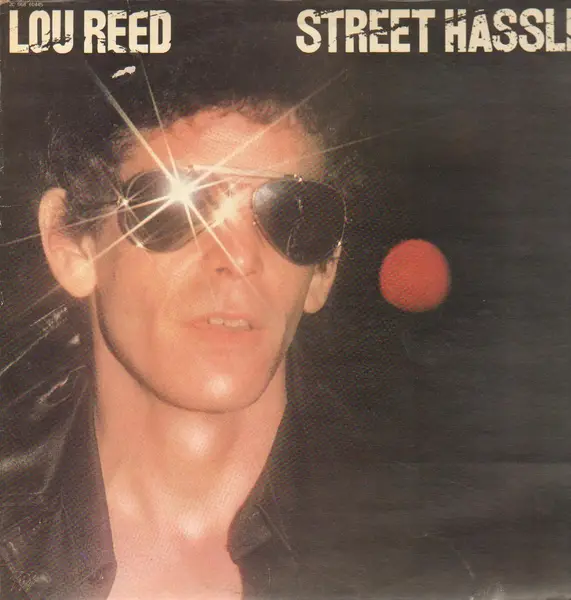
Street Hassle (1978)
The title track of 1978’s Street Hassle and its 11-minute, three-part centerpiece is musically gorgeous and lyrically ambitious, starting with tales of deadpan decadence but building to a heart breaking peak, with a cameo by Bruce Springsteen in the middle. Interesting fact: Reed claimed he wrote the “Tramps like us, we were born to pay” line without consciously thinking about “Born to Run.”
Part seedy punk, part cello-led rock opera, “Street Hassle” was, hoped Reed, a cross between “Burroughs, Selby, Chandler, Dostoevsky and rock’n’roll. Dirty mainstream snot”. The 11-minute, three-movement title track sees those looped cellos circling like vultures as Lou tells a graphic (even by his standards) tale of O.D.s, “little girls” and “bad shit”. And ultimately, “bad luck”. Probably the eeriest thing Bruce Springsteen has ever anonymously guested on.
Take No Prisoners (1978)
The double album Take No Prisoners (1978) was Reed’s third live album of the ’70s, and his fifth if you count Velvet Underground live albums. It was recorded at The Bottom Line in New York — an intimate, hometown venue for him — and finds him frequently talking at length, rambling on about all kinds of stuff, though he sticks to the music on the explosive album closer, “Leave Me Alone.”
Set The Twilight Reeling (1996)
After a run of painfully worthy, hark-at-me I’m-so-profound albums, it was a relief and release to hear Lou crank up the guitars again, even if it meant his interviews became yawnsome drones about amplifiers and studio technology. It’s full of clumsy poetry, but this attempt to echo Dylan Thomas’ “Do not go gentle” does climax with a flare of the old heat.
“Set the Twilight Reeling” (1996) contained some of the strangest songs of Reed’s career (“Egg Cream,” “Sex With Your Parents”), and that’s really saying something. But it also boasts, among its highlights, one of his greatest heart-to-heart ballads, the low-key but musically beguiling “Hang On to Your Emotions.”
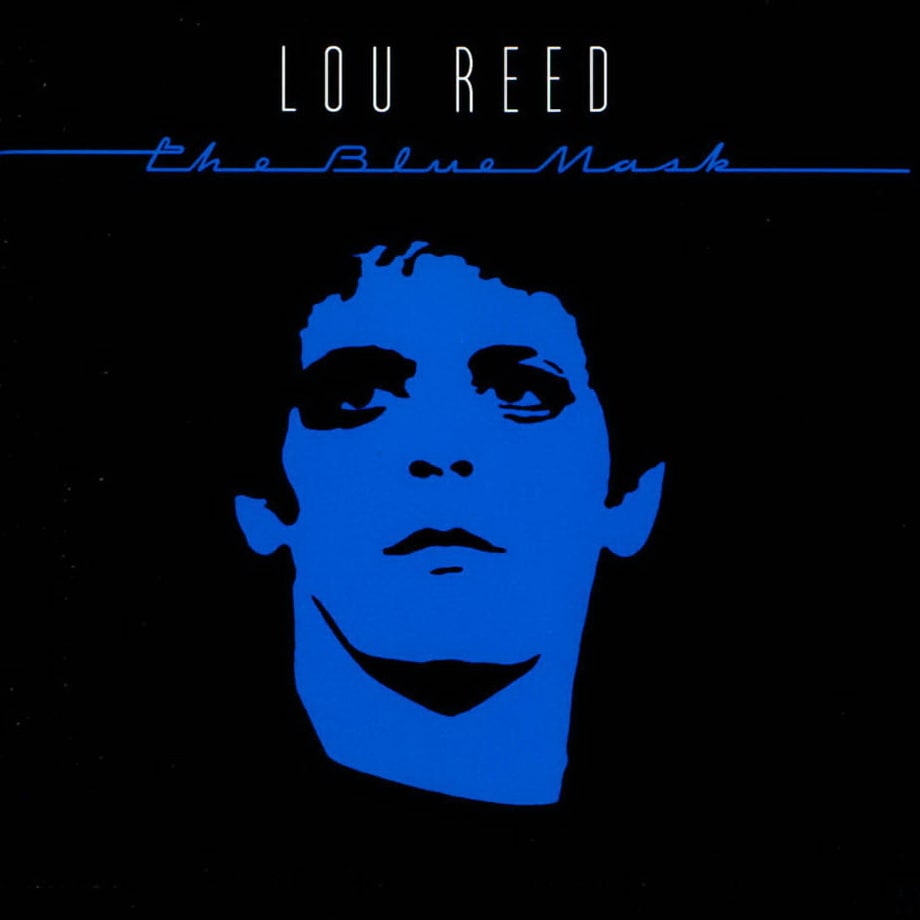
The Blue Mask (1982)
“The Blue Mask” marked a new chapter, with a new, often loud guitar band. But its best moments involve restrained musical subtlety. Stand-out The Gun has that, but also has Reed’s sinister, deadpan narration covering violence, intimidation, home invasion, possibly rape. It’s genuinely scary, reminding us that Reed had the genius to make a track haunt your psyche.
The Blue Mask(1982) was widely hailed as a triumph on its release, featuring sympathetic and dynamic backing by a tight three-piece band (guitarist Robert Quine, bassist Fernando Saunders, drummer Doane Perry) and a strong batch of songs. There’s no camp and no bizarre experiments here, and no hip indifference. Here is the album’s opening song, “My House,” which functions as both a tribute to Reed’s lyrical mentor (the poet and short story writer Delmore Schwartz) and an introduction to the new, mature, contented Reed. “I really got a lucky life/My writing, my motorcycle and my wife/And to top it all off a spirit of pure poetry/Is living in this stone and wood house with me,” he sings.
Sally Can’t Dance (1974)
Reed claimed to hate “Sally Can’t Dance” (his only US top ten album), but it’s rich with wry asides. Ennui, all but hidden away, is one of his frequent accidental not-trying-too-hard flashes of genius. It floats on a sullen mood, his voice so low it rumbles as he, cynical but arch, advises, ‘Pick up the pieces of your life/maybe someday you’ll have a wife’. Then he adds, ‘And alimony’. That punchline’s so unexpected that you laugh as you reel. “It’s the track most people skip, I guess”, said Lou. “It must be; it’s the one I like”.
After three striking albums in a row, Reed ran out of steam on 1974’s “Sally Can’t Dance”, which goes for shock value at times and crass commercialism at others while rarely making much of an impact. The only track I can really recommend is the raw, harrowing “Kill Your Sons,” inspired by Reed’s own family history and his experiences with mental illness.
Legendary Hearts (1984)
When writing about Reed, one tends to focus on his lyrics and his audacious sonic experiments, but the main attraction of “Martial Law” (the standout track from 1983’s Legendary Hearts) is the hypnotic groove Reed creates with the album’s stellar band: guitarist Robert Quine, drummer Fred Maher and bassist Fernando Saunders.
Live in Italy (1984)
The double album Live in Italy (1984) offers a snapshot of Reed’s great early-’80s band (guitarist Robert Quine, bassist Fernando Saunders and drummer Fred Maher) and shows them, here, stretching out on an intense medley of the Velvet Underground songs “Some Kinda Love” and “Sister Ray.”
Songs For Drella
Starting with 1989’s New York, Reed’s stretch on Sire Records saw a robust return to form after years of weak albums, in a period that also saw him pick up his guitar again and finally find personal happiness with partner Laurie Anderson.
Reed reunited with John Cale for the poignantly Warhol-homaging “Songs For Drella”, No one expected Reed and his equally headstrong Velvet Underground partner John Cale ever to make an album together after Cale left the group in 1968. But that’s what happened in 1990, when they reunited to record a tribute to their mentor Andy Warhol, who had died in 1987. Their chemistry was back in full force on much of it, including “Work,” which is about Warhol’s fierce work ethic. Reed sings: “Sometimes when I can’t decide what I should do/I think what would Andy have said/He’d probably say you think too much/That’s ’cause there’s work that you don’t want to do.”
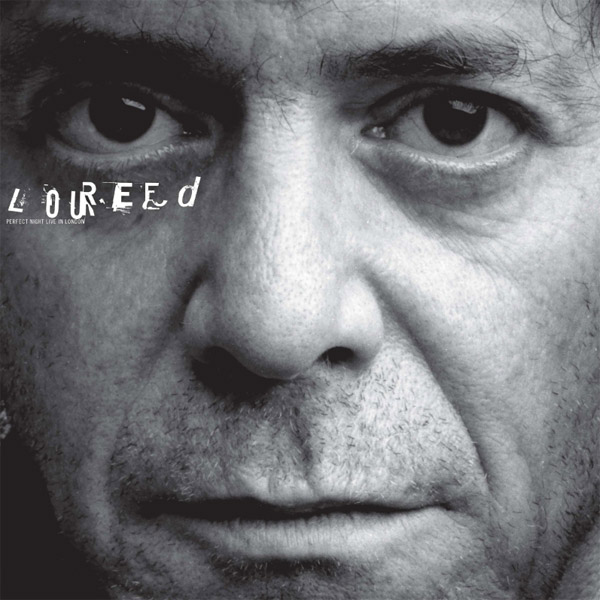
Perfect Night: Live in London(1998)
Perfect Night: Live in London(recorded in ’97, released in ’98) was Reed’s fifth concert album (his eighth if you count the Velvet Underground) and unique among them for its calmness and clarity. This isn’t Lou Reed the showman or Lou Reed the provocateur, just Lou Reed the rock craftsman and a great, sympathetic band (guitarist Mike Rathke, bassist Fernando Saunders, drummer Tony “Thunder” Smith) working their way through his catalogue. Here’s “Busload of Faith,” from Reed’s New York album.
Ecstasy (2000)
In 2000, Reed released his “Ecstasy” album. With a one-of-a-kind video like this, how could I not share “Modern Dance”? (I actually like the song quite a bit, too.)
The Raven (2003)
Lou Reed’s 2003 double album “The Raven” was an ambitious, uneven affair, featuring songs written for “POEtry” — Reed’s 2000 collaboration with director Robert Wilson, an experimental opera based on the works of Edgar Allan Poe — with support from a multitude of guest musicians and actors, including David Bowie, Laurie Anderson, SteveBuscemi and Willem Dafoe. Here’s “Guilty,” featuring one of Reed’s biggest influences, Ornette Coleman, on alto sax.
Animal Serenade
“Animal Serenade”was a live album, recorded in Los Angeles in 2003, featuring a kind of chamber-pop band configuration with Reed and Mike Rathke on guitars, Fernando Saunders on bass and vocals, Jane Scarpantoni on cello, and some guest vocals by Antony Hegarty (of Antony & the Johnsons). Rathke also does an amazing job of re-creating the sound of a piano on a guitar synthesizer: Listen to him do so here on “Vanishing Act,” originally from the then-recent album “The Raven”.
Lulu ( 2011)
LouReed’s last studio album was “Lulu”, recorded with Metallica and released in 2011; he died in 2013. Lulu got mixed reviews, including some very negative ones. I’m not a huge fan of it myself but do offer, here, a track that I think does work pretty well: “Iced Honey.”
The Beatles get a lot of credit for their willingness to experiment with different instrumentation beyond the traditional guitar, bass, and drums rock trifecta, but fellow English rockers Traffic made the Fab Four look positively pedestrian by comparison when it came to infusing different styles of music. Formed in 1967 in Birmingham, Traffic started out as a psychedelic outfit but soon expanded their sound with all sorts of instrumentation, including the Mellotron, harpischord, sitar, as well as brass sections.
The effect of this was the creation of one of the best jazz-rock fusions of the era and it wasn’t just a fad either, as Traffic found a way to bring the two genres together to write catchy hooks and inspired songs. The pinnacle of the band’s experimentation came in their 1970 record “John Barleycorn Must Die” and although they earned the respect of serious music fans, they’ve never been thought of in the same league as other psychedelic groups such as Cream, even though they arguably produced better music.
Meanwhile, on trivia corner: which band’s second album contained the contributions of a member who left, rejoined and left again all within the space of nine months? The answer was Traffic, whose self-titled sophomore release charted exactly 47 years ago, having come together just in time to capture the restless spirit of Dave Mason, during the few months in which he was back in the line-up before departing again (and then rejoining once more, for another short spell a few years later).
Chris Wood, the wonderfully gifted flutist and sax player for Traffic, one of my favourite bands ever. In addition to sax and flute, Wood occasionally played keyboards, bass and added vocals. He also co-wrote several of Traffic’s best-known songs, including “Dear Mr. Fantasy.” Wood introduced the 17th century traditional song “John Barleycorn” to the band after hearing it on The Watersons album Frost and Fire. It became the title song of their 1970 album, “John Barleycorn Must Die.”
Some might argue that Wood was just a supporting player in Winwood’s brilliant orbit, and that there were plenty of others who could have played the same role. But clearly Winwood, who could have had the pick of the litter, chose Wood, and were rewarded by his wonderful flourishes of sound as well as song-writing talents. Wood died in 1983 at age 39.
After the three top ten UK singles of the band’s initial period in 1967 (with ‘Paper Sun,’ ‘Hole In My Shoe’ and ‘Here We Go Round The Mulberry Bush’), Traffic had started their transition to a more mature, album-oriented sound with their first LP at the end of that year, Mr. Fantasy. The new, simply-titled set again had them working with New York producer Jimmy Miller, who was doubling up between these sessions and his initial work with The Rolling Stones, which emerged a few weeks later on the Beggars Banquet album.
Traffic was made during the brief period in which Messrs Winwood, Capaldi and Wood persuaded Mason, who had first left the group early in 1968, to return for these sessions. With his pop sensibilities somewhat at odds with the more jazz-oriented leanings of his bandmates, he was gone again by the time the album started its chart ascent.
Dave left behind four of his own songs, including the enduring ‘Feelin’ Alright,’ and a co-write with Jim Capaldi,‘Vagabond Virgin,’ before departing for the multi-faceted career he had hinted at with his production, that same year, of Family’s first album, “Music In A Doll’s House”.
Traffic entered the UK album chart on 26th October, 1968 at No. 27, but took precisely one more week to become their first top ten LP, jumping to its No. 9 peak. Very surprisingly, it turned out to the band’s only top ten album in their home country.



 In 1981, Iovine flew with Nicks to the Château d’Hérouville, in northern France, where Fleetwood Mac was recording its next album, “Mirage.” Iovine left almost immediately, to escape the interpersonal conflicts that roiled the band. Iovine and Nicks’s relationship foundered. The following fall, while Fleetwood Mac was on tour, Nicks’s childhood friend Robin Anderson died, of leukemia, at the age of thirty-three. “What was left over was just a big, horrible, empty world,” Nicks has said. Days before her death, Anderson had prematurely given birth to a son. Nicks, operating under the savage logic of grief, married her friend’s widower, Kim Anderson, thinking that she would help raise the child. They divorced three months later.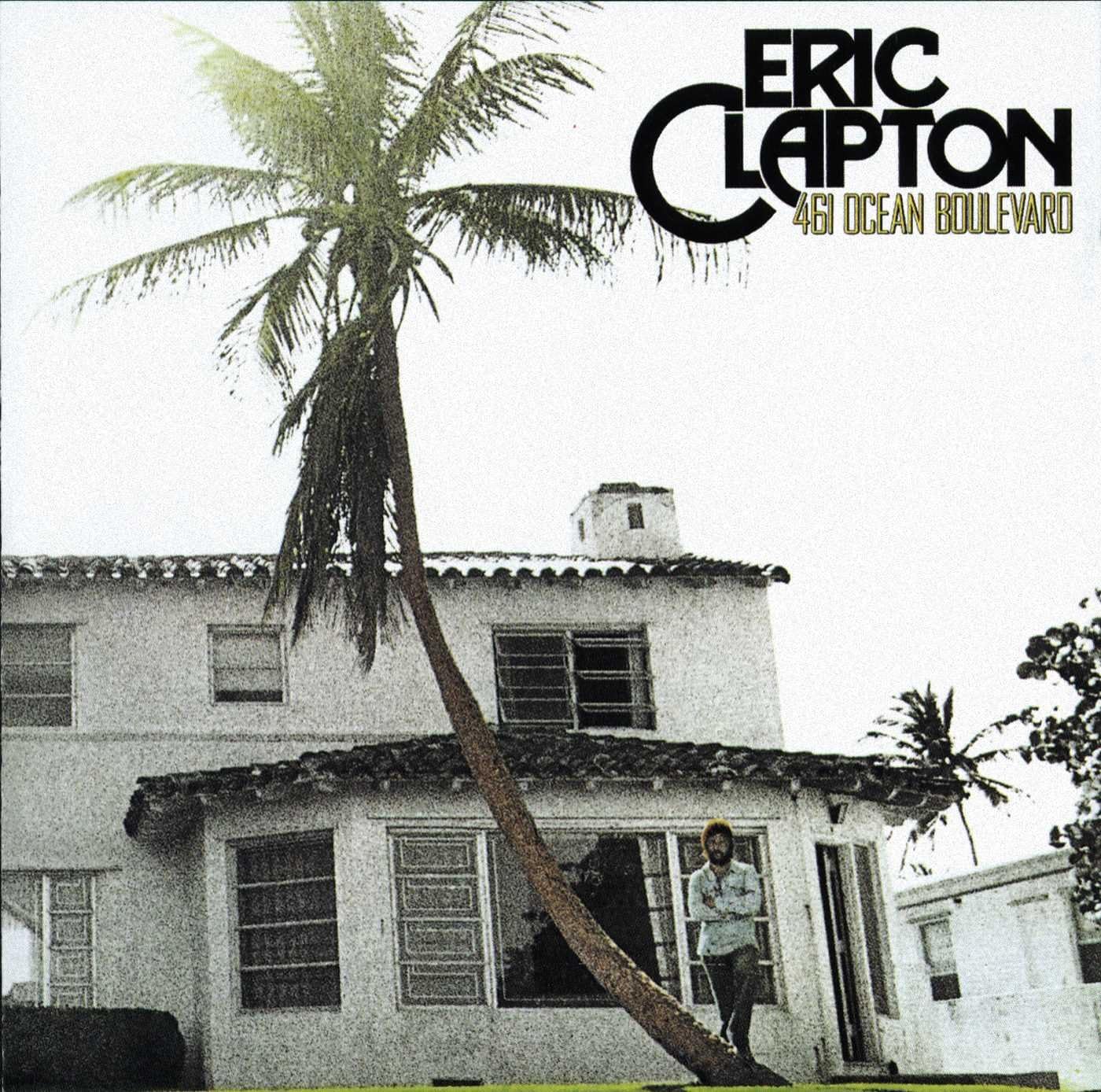



:format(jpeg):mode_rgb():quality(90)/discogs-images/R-5056718-1531584891-8768.jpeg.jpg)
:format(jpeg):mode_rgb():quality(90)/discogs-images/R-844527-1431709769-8514.jpeg.jpg)




:format(jpeg):mode_rgb():quality(90)/discogs-images/R-1893246-1389523796-8356.jpeg.jpg)




:format(jpeg):mode_rgb():quality(90)/discogs-images/R-2747334-1299223432.jpeg.jpg)

:format(jpeg):mode_rgb():quality(90)/discogs-images/R-1280206-1206024978.jpeg.jpg)
:format(jpeg):mode_rgb():quality(90)/discogs-images/R-2745371-1299297610.jpeg.jpg)
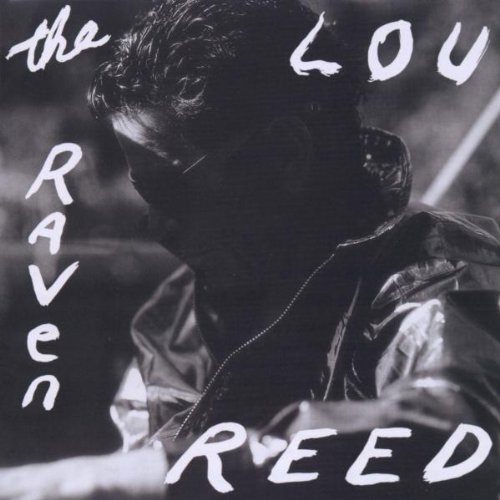
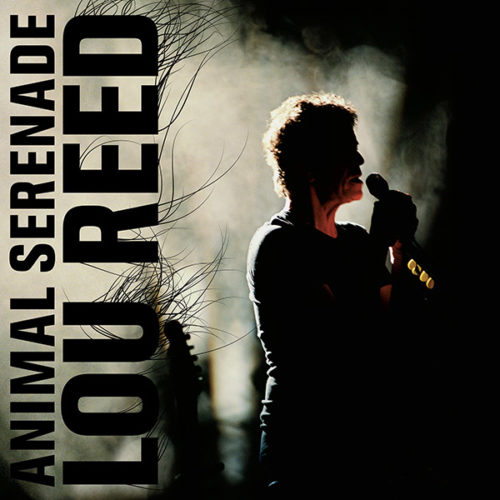

 The Beatles get a lot of credit for their willingness to experiment with different instrumentation beyond the traditional guitar, bass, and drums rock trifecta, but fellow English rockers Traffic made the Fab Four look positively pedestrian by comparison when it came to infusing different styles of music. Formed in 1967 in Birmingham, Traffic started out as a psychedelic outfit but soon expanded their sound with all sorts of instrumentation, including the Mellotron, harpischord, sitar, as well as brass sections.
