Posts Tagged ‘Best Albums Of 2017’

Image result

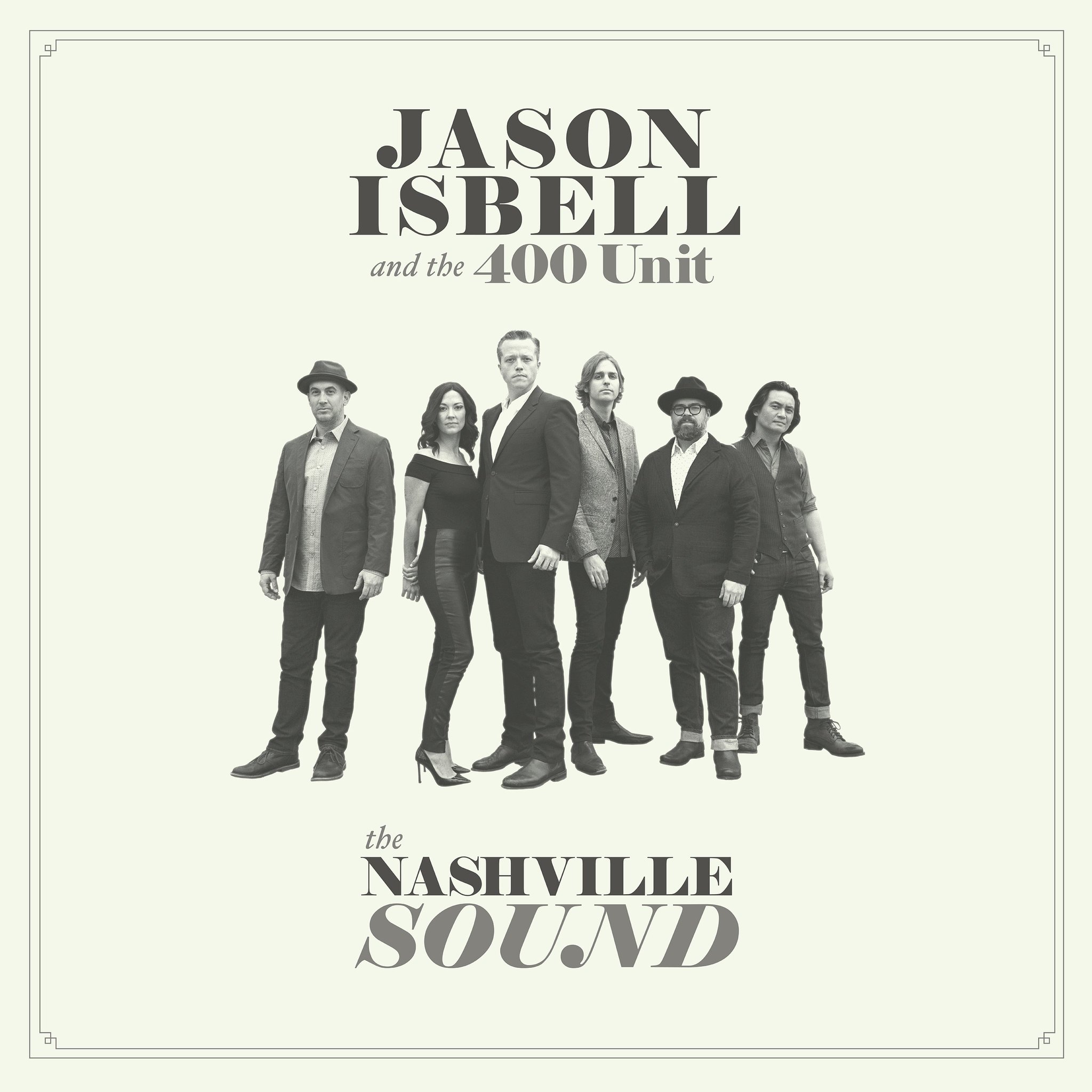
When you’re an artist like Jason Isbell, the bar gets set higher and higher with each and every new album release, creating a tough hurdle for his album The Nashville Sound. Though he has established himself as one of the all-time greats in the world of songwriting during his time with the band Drive-By Truckers and over the course of three solo albums to date, it didn’t seem like a broader fanbase opened up to him until his 2013 LP, Southeastern. Isbell ripped his heart right out of his chest and slapped it on your turntable so you could hear every ounce of pain and sorrow, every ounce of joy and happiness, that he had experienced up until that point. The grooves of his arteries showcased a delicate artist, one who could capture the story of falling in love in a matter of minutes, or highlight the depths of pain that cancer brings to a relationship.

The Nashville Sound finds a recharged Isbell waving the flag for his adopted hometown’s left-of-center roots musicians. The city has changed markedly since his arrival, with exports like Isbell, Sturgill Simpson and Margo Price challenging the public’s perception of what Nashville – a town whose very name remains synonymous with mainstream country music – actually sounds like. His roots sunk deep into the Tennessee ground, Isbell digs in for his biggest, boldest album to date, one that skirts the tired trends of Top 40 twang and, instead, sets a new watermark for accessible, articulate Americana.

Once again, the songs were written at home – this time in a modest place somewhere south of the city limits – with Amanda Shires pulling triple duty as muse, editor and bandmate. Also contributing to the album’s pointed punch are the 400 Unit’s Sadler Vaden, Chad Gamble, Derry DeBorja and Jimbo Hart, all of them whittled into sharp shape after touring in support of Southeastern and its chart-topping follow-up, Something More Than Free. For the first time since 2011’s Here We Rest, Isbell’s backing band receives co-billing on the album – a move that’s well-deserved.

There was something about his songwriting on Southeastern that perhaps felt more accessible than ever before with new and old fans alike, and since 2013, the expectations for Isbell have continued to rise to seemingly unachievable levels. Yet, a couple of years following Southeastern he met and exceeded those expectations with the Grammy-winning album, Something More Than Free. And now, in 2017, Isbell is facing the most anticipation he has likely ever faced in his career with the release of The Nashville Sound.

Isbell is a master storyteller, he’s also a master autobiographer, and opening The Nashville Sound is a pensive look at, potentially, his own career and life. As he sings “Am I the last of my kind?” over and over, he’s asking an honest question, one that could easily be applied to the musical world in which he lives. But it’s also a question that he could be applying vicariously to the working class across the country, those who convinced themselves that they were the forgotten minority leading up to last year’s election cycle. And still, it could simply be an homage to the great John Prine, a living legend whom Isbell (and his wife and member of the 400 Unit, Amanda Shires) has grown closer and closer with over the last few years.

The same interpretive trajectory could be placed on any of the songs found on The Nashville Sound. The flat-out rocker, “Cumberland Gap,” has one of the greatest lines of any Isbell tune—“As soon as the sun goes done / I find my way to the Mustang Lounge / And if you don’t sit facing the window, you could be in any town” — and while one fan might interpret that as a nod to the indistinguishable similarities found in Small Town U.S.A., another may go deeper and look at the overall theme of the song as one that follows the struggles of an alcoholic, something Isbell knows a thing or two about.

That’s the beauty of a Jason Isbell tune, and even more, the beauty of a Jason Isbell album. In a recent interview, he said, “I have learned that the process of trying to figure out what my album is about is better suited to critics and listeners than to me,” and he leaves that door wide open on his latest effort.

The one thing that is not left to interpretation, though, is the completeness of The Nashville Sound. Never has Isbell constructed a more unabridged record than this; though fans and critics may enjoy jumping on one individual track and heralding it as Isbell’s crowning achievement, the real story with The Nashville Sound is simply how perfect it is as one cohesive, full LP.

The opening trio of songs includes the aforementioned “Last of My Kind” and “Cumberland Gap,” neatly wrapped up with “Tupelo,” a track that starts out by continuing the “struggles of an alcoholic” interpretation that preceded it. The most powerful movement on The Nashville Sound is found in the next few tracks, though, as Isbell and company — keyboardist Derry deBorja, drummer Chad Gamble, bassist Jimbo Hart, guitarist Sadler Vaden, and fiddler Amanda Shires — shine on “White Man’s World,” “If We Were Vampires,” and the magnum opus, “Anxiety.”

The former two tracks have been unveiled to fans prior to the album’s release, and both have been examined ever so closely. In “White Man’s World,” Isbell is clearly stating where he’s at in both the current political landscape and the music industry. The title itself beckons the listener to consider the results of the presidential election of 2016, but the lyric, “Momma wants to change that Nashville sound / But they’re never gonna let her,” seems to take aim at Music City.

That song is followed with what many are proclaiming to be one of Isbell’s most beautiful and heartbreaking tunes ever, “If We Were Vampires.” A reflective look at life, death, and love, “Vampires” is an emotional reminder of both Isbell’s and Shires’ staggering talent, being able to shift from a politically- and professionally-motivated track like “White Man’s World” to a crushing song like this, one that reveals more and more poignant depth with every spin.

“Anxiety,” though, is the song that will be discussed and praised by fans and critics a hundred years from now. It is Isbell’s masterpiece, and the most dynamic, well-rounded song on The Nashville Sound, not because it merely showcases the frontman’s talents (though it does), but because it highlights all of the powerful and moving aspects of the 400 Unit. From start to finish, every single instrument and note, every single lyric, joins together to create an achievement that serves as a reminder of the power of Americana music, and Isbell’s place in the genre’s history books.

As that second movement wraps up, the rest of the record flows smoothly into “Molotov,” the quintessential “song of the summer” if Isbell ever wrote one, and “Chaos and Clothes,” a song that we think was inspired by Isbell’s good friend, Ryan Adams. (We’re serious. Spend some time with the lyrics and compare it to the heartbreak that Adams has experienced over the last few years, coupled with the themes in “I See Monsters” from 2004’s Love Is Hell—not to mention the “black metal T-shirt” reference.)

From there, Isbell gives fans the final two tracks, “Hope the High Road” and “Something to Love,” the former highlighting his rock and roll personality and the latter his softer, singer-songwriter edge. That last track takes the thoughts of the opening tune and, though it doesn’t answer the question “Am I the last of my kind?,” it does provide the listener with a bit of guidance as the record comes to a close: “I hope you find something to love / Something to do when you feel like giving up / A song to sing or a tale to tell / Something to love, it’ll serve you well.”

If Isbell ever pondered giving up — if he ever truly questioned whether he is the last of his kind — he has found hope in singing songs and telling tales, and he has never told a more complete tale than that of The Nashville Sound. As the needle runs out on side B, you won’t be putting the record back in its sleeve; you’ll flip it back and start listening all over again as you try to determine what exactly that Nashville sound is, and why it’s so damn important.

“The Last of my Kind”
Opening the album on a mellow note, “The Last of my Kind” spins the sad story of an Arkansas native who loses himself – geographically, emotionally, mentally – within the big city. “Nobody here can dance like me / Everybody clapping on the one and three,” Isbell laments during the initial 30 seconds, delivering the album’s first of many killer lines. Behind him, the 400 Unit fades in and out, waiting until the song’s second half to make a proper entrance.

“Cumberland Gap”
File this pissed-off rocker beside “Decoration Day” and “Go It Alone.” Recasting himself as a boozehound in an Appalachian coal-mining town, Isbell feels angry and spiteful, his horizons filled with mountains whose peaks have been blasted away in search of cheapening coal. He funnels that fury through distorted guitars and an epic chorus, nodding to his days with the Drive-By Truckers along the way.

“Tupelo”
Isbell is on the move once again. This time, he’s driving back home, reeling from a bad breakup and a hard fall off the wagon. His plan? Finish the last of his “plastic cup of real good wine,” sober up and relocate to northern Mississippi, where “the summer is blistering, so there ain’t no one from here that’ll follow me there.” Punctuated by some swooning slide guitar, “Tupelo” is equal parts Southern soul and sad-eyed folk, the soundtrack for slow Sunday afternoons.

“White Man’s World”
Taking a hard look at his place in Trump’s America, Isbell tackles social privilege, gender politics and the desire to shield his daughter from the harsh realities of a country that remains divided along cultural lines. The anger is pointed and palpable here, hitting a high mark during the song’s solo section, where Isbell’s electric guitar and Amanda Shires‘ fiddle chase each other in fuming circles.

“If We Were Vampires”
The Nashville Sound’s stunning standout, “If We Were Vampires” shatters the love song’s familiar mold, focusing not on the never-ending power of Isbell’s affection for Shires, but the pair’s limited time together. “This can’t go on forever / Likely one of us will have to spend some days alone,” the two sing during the song’s chorus, acknowledging their own mortality. The real gut punch arrives during the second verse, though, where Isbell’s voice briefly falters, a sign of an emotional recording session.

“Anxiety”
A mid-tempo pop/rock song at its core, “Anxiety” is bookended by two sections of dramatic, guitar-driven crunch, like the musical manifestations of the unease that gives the song its name. On a track dominated by first-rate lyrics, it’s those instrumental breaks – particularly Sadler Vaden’s chromatic guitar riffs, which could’ve found a home on Tom Petty and the Heartbreaker’s Mojo – that steal the show.

“Molotov”
Caught halfway between Tom Petty’s poppy punch, Bruce Springsteen’s anthemic nostalgia and R.E.M.’s ringing guitars, “Molotov” takes a look backward, setting its scene “in the year of the tiger, 19something.” “I hope you still see fire inside of me,” Isbell sings to a former flame, seconds after rhyming “three wishes” with “being facetious.” Well played.

“Chaos and Clothes”
“Chaos and Clothes” roots itself in the double-tracked vocals and fragile beauty of Elliott Smith’s bedroom recordings. It’s like nothing Isbell has ever made before, with soft, woozy textures replacing the bombast of the two songs that flank it. “You’re in the fight to the death, my friend,” he sings to the song’s narrator, a heartbroken single man struggling to forget the woman who’s left a trail of memories in his mind and the occasional garment in his apartment.

“Hope the High Road”
With a disappointing election behind them and an uncertain future on the horizon, Isbell and the 400 Unit mix politics with benevolence on this optimistic heartland rocker. “Wherever you are, I hope the high road leads you home again to a world you want to live in,” goes the final chorus, addressing the marginalized, the left out and the pissed-off.

“Something to Love”
A close cousin to Something More Than Free opener “If It Takes a Lifetime,” “Something to Love” unfolds like a front-porch folk song, mixing coed harmonies with brushed percussion and understated guitar. Here, Isbell sings to his toddler daughter, willing her the resolve, patience and curiosity needed to survive in modern times. “I don’t quite recognize the world you’ll call home,” he admits, urging her to “find what makes you happy, girl, and do it ’til you’re gone.” That’s good advice.

“Singing Saw”, was the solo album from Los Angeles singer-songwriter (and former Woods bassist) Kevin Morby, was one of the great “growers” of 2016. Dusky and unassuming, it revealed its considerable charms slowly but surely. Morby’s follow up, City Music, mines a similar aesthetic, though its songs in general seem to endear themselves more quickly. Where Singing Saw was inspired in part by Morby’s sleepy neighborhood in the hills northeast of L.A., City Music is about the metropolis: city life, city noise, city people, a city’s pace, and so on.

Morby has said Singing Saw was Bob Dylan and Joni Mitchell, while City Music is Lou Reed and Patti Smith, and the comparison is clear in Morby’s speak-sing deadpan and bulging crescendos from brooding guitar-folk to driving rock. (The barreling “1234” makes a beeline for the Ramones.) City Music doesn’t hustle and bustle. But it won’t let you miss it, either so cool.

Kevin Morby’s title track off his excellent record, “City Music” nearly hits the 7-minute mark and challenges what fans may have come to expect from him. The song builds like a slowly accelerating subway train, as does this deeply impressionistic video.

Kevin Morby “City Music,” from his album, ‘City Music’, out 6/16 on Dead Oceans Records

On her earlier albums, Alynda Segarra (aka Hurray For the Riff Raff) explored the troubadour wanderings and raffish sounds of Americana. On the 29 year old’s visionary new work,  The Navigator she brings it all back home, re-connecting to her buried Puerto Rican roots. In the process, Segarra struck an original mix of roiling bomba rhythms and catchy New York rock. Drawing inspiration from Ziggy Stardust  , she conceived ‘The Navigator’ as a sci-fi tinged concept album, tracing the life of a character named Navita Milagros Negron through a metaphysical world. The lyrics present the story as a play, with allusions to the Latin political group of the ’70s, The Young Lords and verse from Puerto Rican poet Pedro Pietri. Segarra’s catchy songs connect the dots in the long lineage of Latin influences on popular music, from the street-corner harmonies of doo-wop to the romantic hits of the Brill Building to the Latin-rock of acts from Mink DeVille to The Ghetto Brothers. A song like “Living In The City”  sounds like something Lou Reed could have cut in the early ’70s, delivered with righteous fervor by Segarra’s resonant vibrato. Themes of gentrification and cultural appropriation anchor the story. Properly staged, ‘The Navigator’ could become a rock opera for our time.

http://

unnamed 21 e1504217047335 Top 50 Albums of 2017

When David Bowie gives you the seal of approval, you can turn a permanent conclusion into a five-year hiatus and a stellar return album. James Murphy and co. ended all the rumors once and for all with American Dream and did so with a bang. The album feels incredibly present, addressing the pervasive existential loneliness and concern while bringing the family back together.

American Dream retains all of LCD Soundsystem’s ability to fill the dance floor and bring tears to your eyes. There were plenty of fears that they’d lose the goodwill earned by a public exit, but with an honest, powerful record like this, LCD only further cemented their spot .

Post-hiatus records tend to be mediocre attempts to rejuvenate the enthusiasm of the past. Fans probably applied this to James Murphy’s band, wondering how American Dream, the first LCD Soundsystem record in seven years, could live up to 2007’s Sound of Silver or 2010’s This Is Happening. Thankfully, American Dream is a beautiful work of art about aging, regret and an arduous search for meaning, an expansive record that explores a variety of sounds and themes, but it never feels confused or lost. As Murphy’s vocals dreamily weave their way into the intro of opening track “Oh Baby,” you immediately know that this is a different LCD Soundsystem. The frantic energy of hits such as “Get Innocuous!” and “Movement” is gone, but not necessarily missing. Sonically, American Dream is more spacious than its predecessors. This dreamscape suits a record that’s aware of beauty in life, but invariably realizes that what it once thought was beautiful is merely an empty void.

Essential Tracks: “oh baby”, “call the police”, and “i used to”

Yes, it sounds like a U2 song. Yes, they quit and came back in less time than many artists take just to write and record a new record , James Murphy complained about never playing on SNL..  James Murphy asked his fans to give him a number one record. But who really cares when the song is this good? LCD are the rare band that deals in singles and albums. Their long players play well all the way through and their singles are mountain peaks across the horizon of music.

If you wondered if their brief but well-discussed exit robbed them of their excellence – “Call the Police” was the ideal defeat of that worry. The propulsive song never relents from the click track at the top through Mahoney’s constantly locked groove, never straying from perpetual forward motion. The pieces continue to stack until you are in an F-Zero straight race for the goal. The understated lower case titles perfectly represent this song that is so much more compelling than it acts like it is.

Alvvays-Antisocialites-1511897643

On “Antisocialites”, Alvvays haven’t lost their knack for writing concise indie pop songs that rival the best of Camera Obscura or Belle & Sebastian. By adding a warm synth sheen for their sophomore release, the Toronto-based quintet manage to make their jangly guitars seem even lusher. They’ve achieved what every band strives for on a sophomore album but most fail to do—namely, strike the middle ground between making the same record twice, and wanting to evolve and change their sound. By tweaking their songwriting ever so slightly, Alvvays one-up their 2014 breakthrough record. “Plimsoll Punks” plays like a fuller, more tightly wound “Next of Kin;” “Dreams Tonite” is a supercharged, groovier take on “Ones Who Love You.” Molly Rankin & co. have dissected every minute detail from their debut and figured out how to truly improve upon each part, one by one. Those small flourishes—a more pronounced synth line here, an unexpected key change there—don’t distract from what makes Alvvays great; they’ve only made the overall sound better.

Lomelda

If you were to ask Hannah Read what Lomelda means, you’d probably end up with some kind of non-answer and a new topic. It is a guarded secret reserved for those who really pry. It is a high school attempt at describing something vast and powerful yet uniquely quiet and complex. And it is ever-changing. Lomelda is about memory, intimacy, and the tragedies of distance. As a band, it has appeared in several forms over the years, but always, to Hannah, Lomelda has been about discovering friendship and connection. Close collaborators have become closer friends. And when you see Lomelda, when you hear it, it is apparent that Hannah cares deeply about the connection made with the people on stage, the connection with you.

Lomelda’s Thx is an album worthy of a road trip, which is perhaps one of the most enduring compliments you can give to a collection of songs. Hannah Read navigates the feeling of being in-between with a dexterity that doesn’t rely on easy tropes, and the inner thoughts that creep into her lyrics during moments of stasis probably sound a lot like your own. In Read’s universe, small actions lead to big revelations delivered in a whispering half-yodel. Her utterances are quiet enough to creep into your conscience and give you a boost of strength when you need it most

Hannah Read has written and performed as Lomelda for most of her musical life. The project has been her outlet from the slow, shaggy days in her east Texas hometown of Silsbee, through moves to Waco and Austin, and into her wandering present. Her music is textural and spacious. Her words are suggestive snapshots of loosely knitted observations, depicting quiet moments between friends and lovers and half-remembered celestial occurrences. In her songs, the memory of the past and glimpses of future stretch out on either side of you, and the present is unsteady and always shifting.

http://

slowdive slowdive album stream download comeback Top 25 Albums of 2017 (So Far)

After a trio of albums in the ’90s, including the stone-cold classic Souvlaki, the shoegaze icons went dormant for a really long time. Then, in 2014, the five-piece reformed for shows, then tours, and now their first new album in 22 years. The self-titled record doesn’t fall into typical reunion pitfalls and avoids many of the expected narratives for an album of its type, thus transferring Slowdive outside the time and space from which they were previously known and into a timeless ether.

For anyone that saw Slowdive perform over the last few years, it shouldn’t have been too surprising that their reunion album would feel so necessary. But in the greater context of music, this is a huge rarity, that a band could come back with a collection that feels worth every year that fans spent waiting for it. It packs legitimate singles, like tracks “Star Roving” and “Sugar for the Pill”, that stand up to the legends’ greatest hits while other moments, like the breathtaking “Slomo”, dare to defy genre in favor of body-tingling, otherworldly experiences. In other contexts, Slowdive would still be a great album. But considering the expectations that come with such a long hiatus, the context makes it a perfect masterpiece.

 “Slomo” is a euphoric dream-pop workout with lyrics inspired by the Cornwall seaside, and it’s among the band’s best work. The twinkling piano arpeggios that anchor “Falling Ashes” bear a similarity to Radiohead’s “Daydreaming,” from last year’s A Moon Shaped Pool. Maybe that’s a coincidence, or maybe it’s payback: Radiohead famously lifted the melting frequency effect at the end of “Karma Police” from Slowdive’s “Souvlaki Space Station.” It’s heartening to see Slowdive survive long enough to borrow from the bands that got rich off their influence.

https://www.youtube.com/watch?v=jjX2ZKoed1A

Image may contain: 1 person

On 2013’s Sleeper, the prolific Ty Segall turned off his amps to try his hand at an honest folk record. The next year’s Manipulator saw him summoning the ghosts of Bowie and Bolan as a glam-rock mystic.

This time last year, Segall was donning a screaming baby mask during live shows to further heighten the disturbing and chaotic horror punk of the album Emotional Mugger. But perhaps as a welcome sign of clarity, this year’s Ty Segall features no such overarching concepts, themes or consistent styles. Instead, these nine songs (10 only if you count the untitled guitar belch at the end) distill his many talents into his most concise album in years. Along with Charles Moothart reprising his role behind the drumkit, Mikal Cronin returning on bass and Emmett Kelly on guitar, newcomer Ben Boye (Angel Olsen and Bonnie “Prince” Billy) contributes keys. But the album’s secret weapon comes in the not-so-subtle touch of ordained punk saint Steve Albini, who recorded and mixed the record in his Electrical Audio studios in Chicago. This collection of monster riffage (“Break a Guitar”), country waltzes (“Talkin’”) and folk gems (“Orange Color Queen”) is neatly packaged summary of why Segall is a modern rock ‘n’ roll treasure.

While Albini allows the crunching tenacity of “The Only One” and combustible licks of “Freedom” to truly pummel, it’s the openhearted lead single “Orange Color Queen” that really steals the show. Ty Segall provides a neatly packaged summary for why the singer is a modern rock ‘n’ roll treasure.

Image may contain: 1 person, standing and outdoor

It’s hard to believe that the band who came flailing headlong out of the gate with Golem just two short years ago is the same band behind Plum, one of the most thoughtfully dynamic albums to come out in 2017. The creative arch of this Los Angeles band is rooted in the grime-y sonic sludge of the Ty Segall/Meatbodies/Mikal Cronin set. It would have been fine to have regarded Wand as yet another good band living under the punk-y parasol of the neo-psych-garage revolution. But Plum has separated them completely from the fray. Plum runs like a playlist of rock ‘n’ roll offshoots, with experimentations in Led Zep riffage and Spoon-like piano-rock only the tip of the iceberg.

Title track from Wand LP/CS/CD/Digital, released by Drag City Records on September 22nd, 2017.

ryan adams Top 50 Albums of 2017

Ryan Adams drew from some potentially surprising sources while dreaming up the musical landscape for his next solo LP.  The new record, released in November, has evolved beyond Adams’ initial description of an album inspired by the “sonic geography” of classic releases from Bruce Springsteen and the Smiths. In its place stands a set of songs whose recordings absorbed the strains of different artists on Adams’ iPod playlist.
“When I run, I listen to [an iPod] Nano that I have. I put all the AC/DC records on from back to front, or I’ll listen to the best of stuff from the ’80s: Springsteen, or [Bruce] Hornsby, and I’ll listen to what is going on there. I was listening to AC/DC’s Fly on the Wall,” he recalled, “and that’s when I realized what I had to do for the record.”
But if AC/DC inspired a new direction for the album, fans probably shouldn’t expect to hear that band’s stomping, monolithic crunch. In fact, it sounds like there’s a lot more going on in terms of production — including more intricate guitar arrangements inspired by ELO and Bachman-Turner Overdrive. “I was like, ‘Wow! I understand the multicolored guitar tone moments now. You can layer stuff. I really just learned a lot.””

Fueled by the maddening depression that comes from divorce, Ryan Adams did what he does best: He wrote about it. For 12 tracks, the shaggy singer-songwriter wrestles with his worst demons, reeking of pathos and abandon.

Not since Heartbreaker has Ryan Adams sounded this earnest. Every track beams with the kind of fragility you’d want from a denim lothario like Adams, but instead of wallowing in grief, these songs attempt to resolve it. They do.
To help him achieve all this, Adams turned to Grammy-winning producer Don Was, who he referred to in the interview as “Gandalf” and credited with helping him winnow down the “quite literally 80″ songs he had written for the record. Adams described the end result as an album that asks some “cool, big questions” without getting unwieldy.

“I think the challenge for me — the Everest peak, for me — is to tell this story in 11 songs, to tell this part of my life in 11 songs,” he added. “How do I make a real distinct record where anybody listens to it and says, ‘That’s the truth from beginning to end.’ So it’s like exercise. It sucks in the beginning. But then you get into it.”

Christopher Polk, Getty Images

Essential Tracks: “Doomsday”, “Anything I Say to You”, “To Be Without You”, and “Outbound Train”