Hailing originally from Melbourne, Australia, Heligoland have been making oceanic dreampop for over 20 years, forming in 1999 and having released their debut album in 2003. The band’s inspirations are pretty clear, right down from their name (which means “Holy Land” in Dutch), drawing from the gentler side of ’80s/’90s shoegaze and slowcore. Cocteau Twins’ Robin Guthrie produced their third album, 2010’s All Your Ships are White, which tells you a lot but their sound is more in the Slowdive (Mojave 3 )/ Low / Cowboy Junkies style, evoking sun-baked cracked earth and sand as much as the sea.
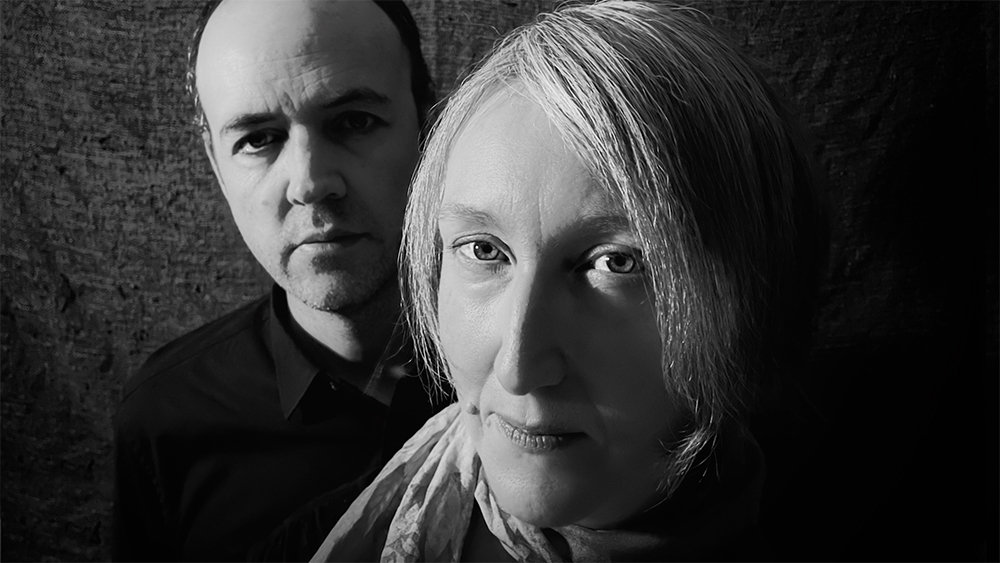
Heligoland went dormant after All Your Ships, though they popped up from time to time with new EPs, all produced by Guthrie. They also left Australia for the suburbs of Paris. Now just the core duo of Karen Vogt (vocals, guitar) and Steve Wheeler (bass, guitar), Heligoland are back with their first album in 11 years. Guthrie is back for this one as well, and in addition to producing the record, he also plays on it — everything but guitar, contributing drums, bass and keyboards. No real surprise, but This Quiet Fire is gorgeous stuff. Vogt is an emotive singer, a quality you don’t usually associate with dreampop like this, sounding closer to Tracy Thorn than Elizabeth Fraser. Her voice elevates stunners like “Hope,” “Running” and “Palomino,” distinguishing This Quiet Fire in a genre that in too many less-skilled hand can play like ethereal wallpaper.
Fourth album from UK trio finds them pivoting again, this time into Big ’80s R&Bish synthpop, trio Virginia Wing made 2018’s fantastic Ecstatic Arrow under idyllic conditions — in Switzerland at the family home of a good friend, surrounded by the country’s alpine beauty. This one was made stuck at home in Manchester, England in their “jogging bottoms.” There’s no doubt this is the same group, but “Private Life feels forcibly contained while anxious to break free.
All the sounds on “Private Life are big, the drum sounds, the thick synthy basslines, the blasts of keyboards — not unlike those early Art of Noise records, hitting like punches in a Shaw Brothers martial arts fantasy or a buzzsaw to the hood of a car. But then they fill the stereo field with wondrous, beautiful organic sounds, from delicate strings, to lilting saxophones and flutes, tinkly windchimes, jazzy piano loops, “nature,” and warm harmonies. It all sort of floats, at times almost anchorless, through the mix. These sounds have also been run through severe digital processing, chopped up, degraded, and warped, giving songs a slightly unmoored feel that, like Merida Richards‘ icy vocals, is distinctly Virginia Wing.
Virginia Wing continue to toy with pop and dance music, but largely keep things at arms length. “I’m Holding Out for Something” flirts with a decidedly R&B beat and synth strings that suggest Prince, while pitched up vocal samples may make some think of Kate Bush. But Richards’ declaring “There will come a time when you have to satisfy the ache face to face” yanks the song in an entirely different direction. (Laurie Anderson may be a more apt ’80s comparison.) Likewise, part of “Moon Turns Tides” wants to be an electro funk jam that will tear the roof off, but before that can happen Richards dryly notes, “Whilst you’re here, it’s important that you don’t touch anything / it’s all very, very expensive.” There’s a distinct look-but-don’t-touch sense of detachment — the kind where you end up having more conversations with yourself than other people — that’s a relatable feeling these days when our lives may be too private. If that’s you, welcome to the party.
Raised in the rolling hills of North Yorkshire on artists such as Nick Drake, Joni Mitchell, Joan Armatrading, and Kate Bush, Billie Marten’s critically acclaimed debut album ‘Writing of Blues and Yellows’, was released in 2016 when she was still just 17, while its follow-up ‘Feeding Seahorses By Hand’ was similarly lauded in 2019.
“Flora Fauna”, was recorded with Rich Cooper in London. Marten’s new material blends those signature hushed, resonant vocals with a rapid pulse and rich instrumentation, her inspirations now stretching from krautrockers Can, to Broadcast, Arthur Russell, and Fiona Apple.
Also completing musical Top Trumps is Guy Garvey from the band Elbow, providing guest vocals on the ‘Walnut’ track.
Built on the minimalist acoustic folk foundations she made a name for herself with, ‘Flora Fauna’ is a more mature, embodied album fostered around a strong backbone of bass and rhythm. Shedding the timidity of previous work in favour of a more urgent sound, the songs mark a period of personal independence for Marten as she learned to nurture herself and break free from toxic relationships – and a big part of that was returning to nature.
“I wasn’t really treating myself very well, it was a bit of a disruptive time. All these songs are about getting myself out of that hole – they’re quite strong affirmations. The name Flora Fauna is like a green bath for my eyes. If the album was a painting, it would look like flora and fauna – it encompasses every organism, every corner of Earth, and a feeling of total abundance.”
I can’t begin to express to you how much I’ve wanted this to be in the world, I am so excited and ready. We started this thing a while back and it’s all stringing together quite beautifully now. A total fresh and untouched slate. Thank you ever so much for your patience and kindness throughout, and in the meantime, here is “Garden of Eden”. It’s about the competition to grow and constantly be better, about how we all desperately need to be fed and watered and given space to thrive, and yet we’re so subscribed to this idea of pushing and evolving that we’re not actually doing the living part. So my message to you is thank you and I hope you can slow down and FEEL again. X
There’s an absolute bombardment of new things to come so stay with me, Billie Marten.
Galdre Visions is a Leaving Records supergroup comprised of Olive Ardizoni (Green-House); South Asian-American sitarist, vocalist, and composer/producer Ami Dang; Diva Dompé (Yialmelic Frequencies, Diva & The Pearly Gates); and harpist/composer Nailah Hunter. These four artists were drawn together during 2020’s pandemic to remotely create collaborative music reflecting this unique and uncertain moment in history. Hunter describes the group’s dynamic: “Each member of the group provides a unique sonic lens with which to view the realms beyond this world. Each member’s music recalls the sound of organic life in a different way.” Collectively inspired by Celtic mysticism, outer space, and New Age both classical and modern, Galdre Visions have crafted a powerful and timely document of the exploratory, healing power of music.
Ardizoni states, “Well, we are going through some extremely difficult times so there is no way that this project has not been influenced by that. I find that with writing music during difficult times you don’t really become aware, sonically, of the impact of that time until you listen to it way down the road. Writing this kind of music has always been a means of transmuting my pain into joy so that the listener can experience that by proxy.” Album-opener “Living Space Station (Bad Dream)” conjures an ominous atmosphere of strife, its lyrics alluding to unusual, unsettling, and nightmare-like events unfolding seemingly every day. Dang reflects, “Even though we’re all stuck at home, the world is ripping itself apart right now, and all of this chaotic activity makes me feel like I’m slowly making my way through a thorny thicket, but I’m only moving in circles. The trees and animals look more menacing at every turn. But the music keeps me going, and it reminds me that there will be a clearing, that the darkness will turn to light, that a crystalline waterfall lies somewhere beyond this cycle of madness. We will only reach this place through continuous movement, change, and protection.” Stunning album-closer “The Sun Will Rise Again” ends on a positively ebullient note of optimism, a transcendent vision of hope and things to come. According to Ardizoni, “It acknowledges and validates this feeling of melancholy that comes from experiencing this seemingly never ending suffering while being able to maintain the awareness that it will be better again some day. We will be together again, building the communities that we need to build with a new sense of purpose.”
The transition from negativity to positivity serves as a central theme of the album. Hunter states, “To me, ‘New Age’ art often illustrates human reconnection to the earth and the ancestors as the portal to a bright new world.” Dompé adds, “I look around and see that the dysfunction and unsustainability of our society is being put under immense pressure and its flaws becoming undeniable. But with this project I have been experiencing collaboration through an awareness of mutual support … I think we have the potential to function more like this on a larger scale in our society if we could heal the issue of worth being tied to productivity.” Ardizoni writes, “For me, another theme of this project is pride. I’m proud to say that I have had the chance to collaborate with these amazing musicians. I’m proud to say that we are a group of people who are oftentimes underrepresented voices in the music industry, and here we are doing an awesome project together.”
Glasgow four-piece Lemon Drink are preparing to release their latest track, following on from the success of last year’s EP. The band released Better Run in 2020, complete with singles in the shape of Manic, Gomez and A Song for You. Lemon Drink are a 4-piece indie outfit exploring the sometimes challenging and often humorous aspects of modern life as a 20-something woman.
And they will be kicking off 2021 with the new song Demon Child, which will be released through Last Night From Glasgow.
“Demon Child” was recorded at La Chunky Studio and mixed by the very lovely Andy Monaghan (Frightened Rabbit). Big love to Last Night From Glasgow for unleashing “Demon Child” into the world, as well as pressing it on a beauty of a 7” vinyl,
Lemon Drink are Kirstie Cunningham, Vocals Lauren Peters Bass Guitar: Drums: Harry Smith Guitar: Sophie Bartholomew Guitar:
The single will be available from Friday, February 12th,
When Bob Marley and the Wailers made their way to the United States in the spring of 1976 to tour behind their eighth studio album, Rastaman Vibration, they were well on their way to becoming one of the world’s biggest bands.
While Robert Nesta Marley was already becoming known as a visionary artist in Jamaican and U.K. music circles, Rastaman Vibration marked the turning point in Bob’s public perception as he went from reggae favourite to global pop sensation, bringing the sounds of Jamaica into the mainstream along with him. It became the first Marley release to crack the top ten of the charts, peaking at number eight.
As Rolling Stone‘s Robert Palmer wrote in his initial review of Rastaman Vibration, “The sensitive, careful listener will learn from Rastaman Vibration something of the pain, rage and determination of Shantytown, Jamaica, and perhaps something of the community’s political and cultural fragmentation as well. Those who don’t care to listen carefully will still get the celebratory, life-affirming message of the sound and the beat. Perhaps that sound and beat are the ‘positive vibration’ Marley talks about at the beginning of the album, and his apparently inconsistent stand halfway between revolution and the Hot 100 masks an underlying unity of feeling and purpose which only the music can express. In any event, as a pop record Rastaman Vibration makes perfect sense.”
Marley took his surging, new-look Wailers (Bunny Wailer and Peter Tosh had split from the group in 1974) on tour that spring for a run that would help catapult him to superstar status and bring his unique mix of positive vibrations and rebel laments to a global, mainstream audience.
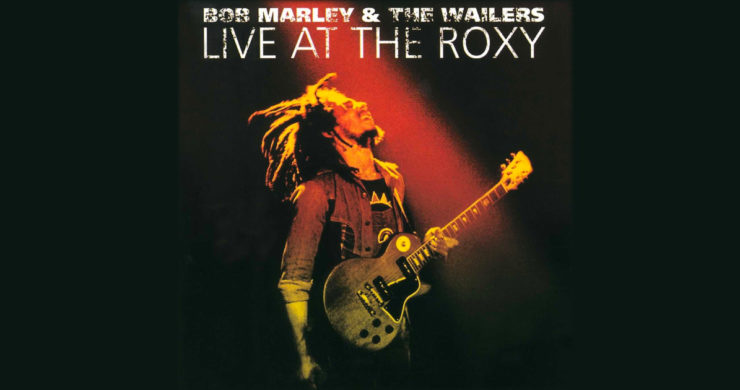
One performance from the Rastaman Vibration tour, at Hollywood, CA’sThe Roxy on May 26th, 1976, was broadcast live on KMET Los Angeles and subsequently made the rounds in growing fan circles by way of bootlegs. The majority of the show was released officially as part of the Rastaman Vibration: Deluxe Edition in 2002, but the full performance—including its remarkable, twenty-eight-minute encore medley of “Positive Vibration” and “Get Up, Stand Up”/”No More Trouble”/”War”—was not officially issued until June of 2003, when Tuff Gong released Live At The Roxy.
Perhaps due to its anachronous release, Live at the Roxy often does not receive the same attention in hindsight as Marley live records like Live!(from London’s Lyceum Theatre, 1975) and Babylon by Bus (recorded over three nights in 1978 and released soon after). When viewed with historical perspective, however, Bob Marley Live at the Roxy captures a pivotal moment for both the man and his music—and the success of the tour it spotlights emerges as the proverbial bridge to Marley’s final act.
Later that same year, Bob Marley planned to perform at a concert in his native Jamaica in an attempt to quell recent political violence in the island country. While Marley officially maintained a neutral stance and agreed to play a single song for the December 5th show so long as it remained unpolitical, public opinion had him pegged as supporting sitting prime minister Michael Manley and his democratic socialist People’s National Party.
Two days before the planned concert, the violence came to his front door, instead. On December 3rd, 1976, seven armed men raided Bob Marley’s home. Marley was shot in the chest and the arm, with three others also sustaining gunshot wounds. Miraculously, none of the shooting victims were killed, and the shooters were later tried and executed. Prior to his execution, one of the shooters even claimed that they had been hired to kill Marley by the CIA in exchange for guns and cocaine.
On December 5th, just two days later, a defiant Bob Marley hit the stage at the Smile Jamaica Concert as planned, performing a full set instead of his planned single song despite the wounds he had sustained in the assassination attempt. More than just a living musical legend, Marley had now become a living political martyr, as well.
Following the attempt on his life, Marley moved away from Jamaica and resettled in London. He went on to release Exodus and Kaya while living in England, but as his political clout and commercial musical success continued to rise, his health began to unravel. In 1977, he was diagnosed with a malignant melanoma under one of his toenails. Citing his Rastafarian belief in keeping the body whole, Bob Marley declined medical advice to have the toe amputated.
The final albums he released during his life, 1979’s Survival and 1980’s Uprising, leaned even further into his increasingly prominent religious and activist beliefs, continuing to elevate him from famous musician to cultural hero. In 1978, Marley returned to Jamaica for the One Love Peace Concert. In a momentous moment of reconciliation, at Marley’s request, Manley and his political rival, Edward Seaga, came onstage to shake hands during Bob’s performance.
By 1980, the cancer had spread throughout his body, prompting him to step away from touring amid a U.S. arena run. By May 1981, five years after the Live at the Roxy show, Bob Marley had died at the age of 36. When he passed, the world mourned a legend, a leader, a revolutionary—and rightly so.
The Live at the Roxy performance serves as a time capsule for a more innocent time—a snapshot of the peak of Bob Marley’s rise to global musical stardom. In the time between that tour and his death five years later, Marley would be thrust into the heart of the conflicts he referenced in his music, shifting his classification in the cultural pantheon from musician to social icon, his image and his words becoming synonymously intertwined with the fight against persecution and the spirit of his homeland.
On Live at the Roxy, we hear the creative, exuberant seeds from which his cultural legend grew—Bob Marley, the observer, the leader, the rebel, the artist, eyes on the future but still largely untarnished by the very unrest and persecution he decried.
It’s only been three or so weeks since she unveiled the brilliant “The Baby Reimagined” a remix version of her album “The Baby” but Samia is already back in our ears by way of “Questions.” Featured on the upcoming Sister James EP I Hate It Here, Pt. 1, it’s a quiet-loud ripper that channels “Where Is My Mind?” if mainlined with millennial malaise.
NY-based multi-instrumentalist Quinn McGovern, aka Sister James, has spent much of his coronavirus lockdown working on new music. He’ll be sharing some of it as a new EP, “I Hate It Here Pt. 1,” due out April 16th via KRO Records, the label founded by Lawrence and Yves Rothman, to which Sister James just signed recently.
The EP’s first single is a collaboration with Samia, a striking track called “Questions.” It begins with a droning, shoegazey swell before descending into a sweet but sluggish acoustic melody, as Quinn sings softly, painting a picturesque image of a dream-like, ethereal countryside. Soon, the drums pick back up, signaling Samia to accompany Quinn on the chorus.
The collaboration between the two NY musicians came to fruition after Samia heard and enjoyed the track when Quinn played it in a Portland backyard while she had been touring with his band. “I was totally blown away,” Samia recalls. “Quinn has influenced so much of my song writing over the past 3 years; we’ve written together and demoed most of my songs together. I feel very lucky to get to be a part of this song three years later, after it’s already inspired so much of my work and feels like such an integral part of our music community.”
“Hearing her music since we met on that tour has given me so much of the inspiration that I have depended on while approaching my own music,” Quinn says of Samia. “I couldn’t imagine an easier artist to work with, and the idea that her voice is gracing one of these silly songs is so special to me.”
Los Angeles duo Girlhouse practice the art of surrender on their latest single “the fatalist.” “I think I’ve learned that the only way to feel control in a shitty situation is to find a way to laugh about how we have no control over anything at all,” explains vocalist Lauren Luiz of the bittersweet chugger, which finds a kind of quiet liberation in letting go.
Rising artist Girlhouse, duly reflected through her latest single “The Fatalist”. Not afraid to explore and emote a dizzying headspace, Girlhouse impeccably captures the intimidation of feeling a lack of control over yourself and the world around you–something particularly relatable in everyone’s own personal current contexts.
Confessional in her lyrical style, Girlhouse’s ability to be unapologetically raw elicits a deep catharsis that feels freeing–it’s as if she’s giving everyone the greenlight to follow in her footsteps and be intrepid enough to be brutally honest too. Unabashed vocals that hold a certain authority meet soft-grunge sounds for an apt pairing that feels like they pull inspiration from the past to present a contemporary artifact.
The track continuously builds momentum, leaving you at the four-minute mark not only completely enraptured in the sonic universe of Girlhouse’s deepest cogitations, but also longing for more. With a tenacity that feels almost tangible, Girlhouse is an artist that proves the worth in being your most sincere self and we can’t wait to hear more.
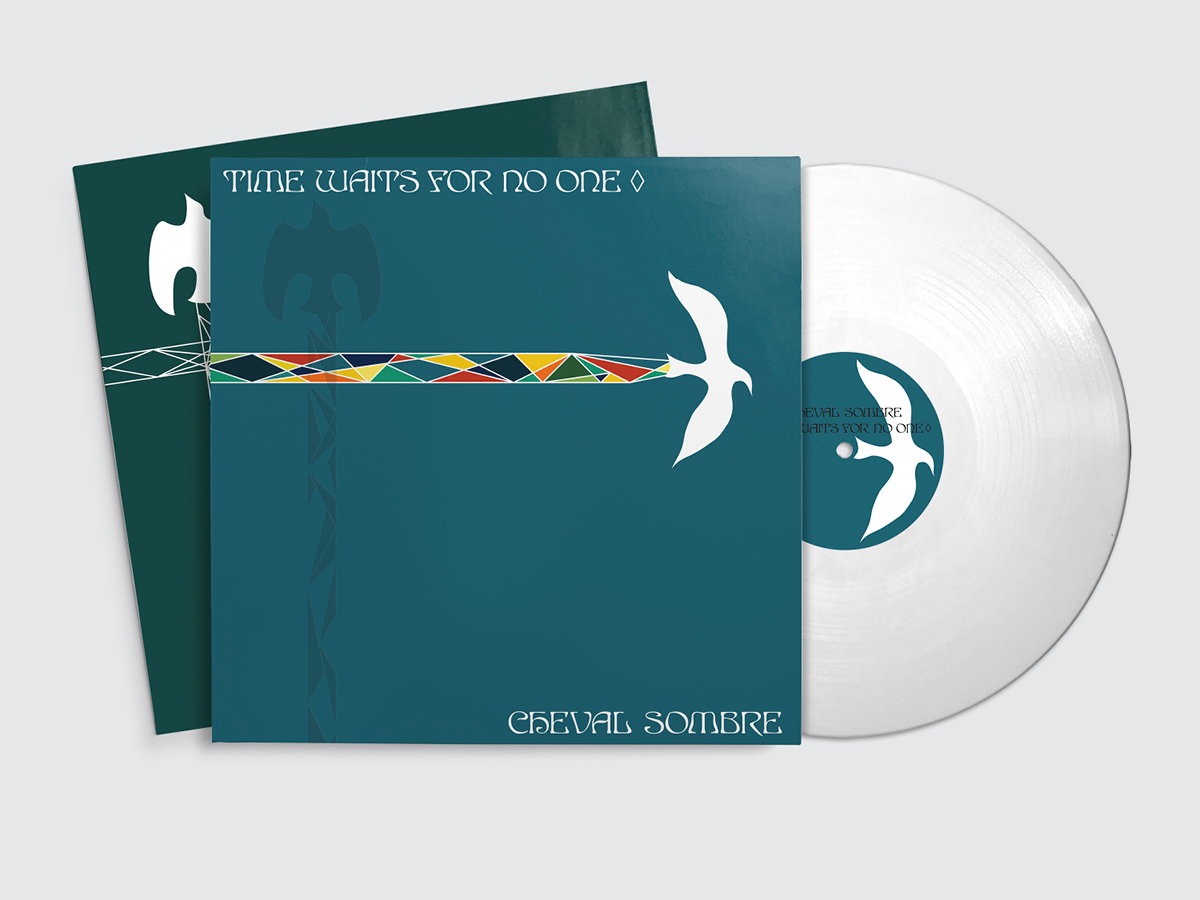
Cheval Sombre’s new single ‘Curtain Grove’ is out today on all digital platforms. The incredible video by Chris Tomsett (Innerstrings) It is taken from Cheval Sombre’s third album, “Time Waits for No One”, which is released on February 26th. Produced and mixed by Sonic Boom and featuring backing vocals by Britta Phillips and strings by Gillian Rivers, it’s a majestic few minutes; a folk melodrama in miniature at the mid-point between Mickey Newbury and Spiritualized.
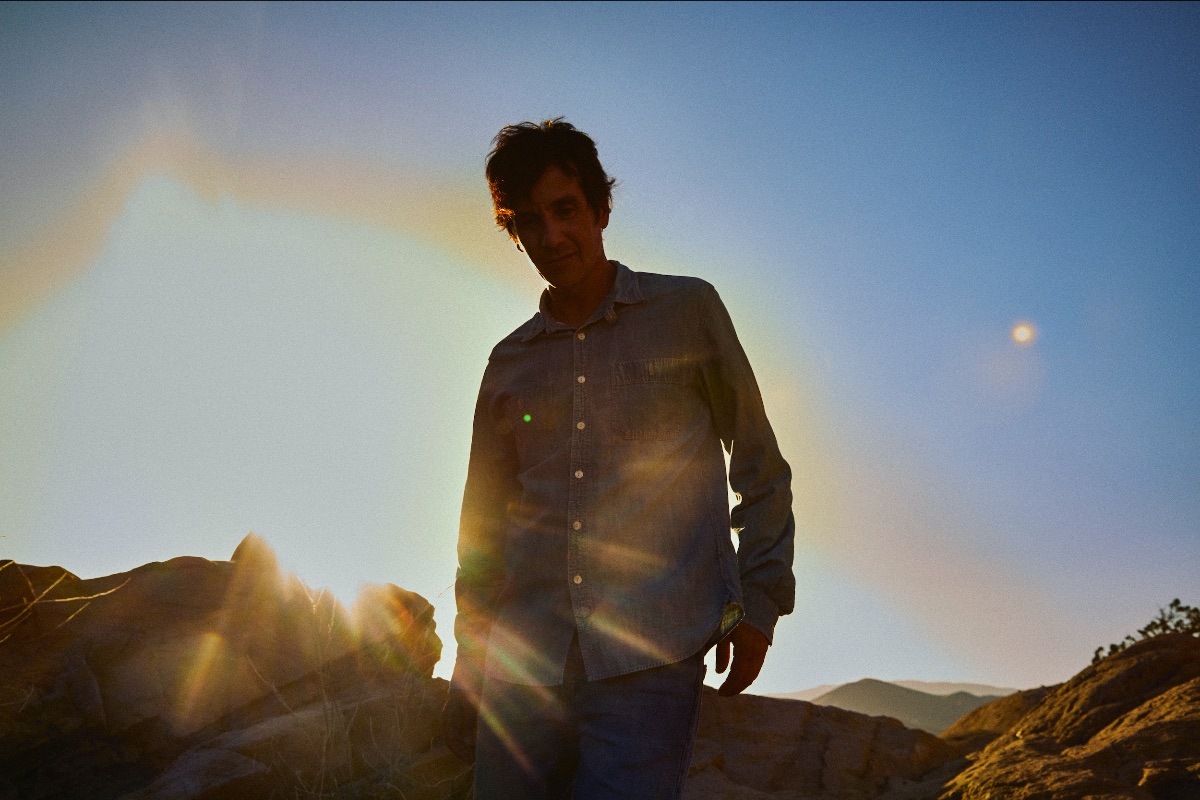
“‘Curtain Grove’ grew out of a strangely productive, fragile month,” says Cheval Sombre, aka Chris Porpora, about how the song came about. “I was down with pneumonia but there was a piano in the house on which all kinds of melodies came to me during those silent afternoons, when everything was still. I then had to translate all to guitar, which took some patience and learning. But after this, it was astonishing – Gillian Rivers brought sweeping, orchestral strings, Pete [Kember] got hold and laced it with elegant melody, Britta whispered these elusive, lovely backing vocals.
“‘Curtain Grove’ reminds me that much beauty can still come together despite difficult days. Innerstrings’ stirring video gracefully handles the play between darkness and light that we each of us inevitably encounter in which wonder ultimately prevails.”
“Time Waits for No One is Cheval Sombre’s first solo release for over eight years, following 2018’s critically acclaimed collaboration with Galaxie 500 and Luna frontman Dean Wareham, and the first of two new albums he has scheduled for 2021. It ushers in his most prolific period, and serendipitously the world has finally slowed down to his pace. This is no lockdown record, but Cheval Sombre’s reclusive, reflective music is its perfect soundtrack.
The new single from Cheval Sombre, produced by Sonic Boom. Backing vocals by Britta Phillips. It’s taken from the new album ‘Time Waits for No One’, which is released on February 26th.
They recently clocked up over half a million streams on their breakthrough single “Fuck You Heather,” and today, Boyish are returning with “Superstar.” “You’re a superstar/I might drown in the way that I feel/But I guess I’m just a fan,” sighs India Shore on the ode to obsession, her vocals reflecting back at us like staring into a melancholic puddle.
Released February 5th via Invertebrate, “Superstar” arrives as Boyish’s first single of 2021 and the follow-up to last February’s spectacular sophomore album, Garden Spider. The duo of India Shore and Claire Altendahl, Boyish was formed “after feeling the need to start over, graduating college, and having no idea what is going on.” Their music is hypnotically contemplative – full of space, lush guitars, and vivid lyricism. Shore’s gorgeous, aching vocals help make every song an enchanting listening experience, but it’s Shore and Altendahl’s stunning chemistry that ultimately makes Boyish’s music so special: They dress their songs in just enough timbres and tonalities to evoke what they want us to feel, and nothing more. Unassuming yet limitless in its expression, Garden Spidertruly is a work of art.
A sweetly seductive indie pop enchantment, Boyish’s new single “Superstar” is just the kind of dreamy indulgence we need to reignite our passions in in 2021.