Image may contain: 2 people, mountain, sky, outdoor, nature and water

Two-piece scuzzy pop band The Gooch Palms are proud Novacastrians – they feature the city a lot in their homespun video clips, and even called their (excellent) debut album Novos.

Now they have taken the next logical step and covered Silverchair’s ‘Tomorrow’ – the dark little song that made young musos around the Newcastle, Australian region believe that anything was possible, as long as you had a few friends, some instruments, and a garage.

As they explain, “We were mucking around in rehearsal one day in LA and Leroy just started playing the beginning of ‘Tomorrow’ out of the blue. We were coming back to Australia for our album tour so we thought it could be cool to pay a ‘Goochies style’ homage to the band that inspired both of us growing up as a couple of ratbags in Newcastle.

“We were both big fans of Silverchair and it was so crazy seeing three kids from our hometown get so big all over the world and definitely lit a fire inside both of us, to give music a crack! So we played it live on that last Aussie tour and it went off so after we got back from Europe we decided to pop into the studio and record it.”

http://

Image may contain: 2 people, people on stage, people playing musical instruments and guitar

The sophomore album from Boston trio Palehound, A Place I’ll Always Go, is a frank look at love and loss, cushioned by indelible hooks and gently propulsive, fuzzed-out rock.

Ellen Kempner, Palehound’s vocalist, guitarist, and songwriter explains, “A lot of it is about loss and learning how to let yourself evolve past the pain and the weird guilt that comes along with grief.”

Kempner’s writing comes from upheavals she experienced in 2015 and 2016 that reframed her worldview. “I lost two people I was really close with,” she recalls. “I lost my friend Lily. I lost my grandmother too, but you expect that at 22. When you lose a friend—a young friend—nothing can prepare you for that. A lot of the record is about going on with your life, while knowing that person is missing what’s happening—they loved music and they’re missing these great records that come out, and they’re missing these shows that they would’ve wanted to go to. It just threw me for a loop to know that life is so fragile.”

Palehound’s first release for Polyvinyl is also about the light that gradually dawns after tragedy, with songs like the bass-heavy “Room” and the gentle dreamy album closer “At Night I’m Alright With You” feeling their way through blossoming love. “The album is also about learning how to find love, honestly, after loss,” says Kempner.

Since forming in 2014, Palehound Kempner, drummer Jesse Weiss (Spook The Herd), and new bassist Larz Brogan (a veteran of Boston DIY who, Kempner posits, “had 13 local bands last year”)—have taken their plainspoken, technique-heavy indie rock from the basements of Boston to festivals around the world. A Place I’ll Always Go was recorded in late 2016 at the Brooklyn complex Thump Studios with the assistance of Gabe Wax, who recorded Dry Food. “I would put my life in his hands,” Kempner asserts. “I trust him so much.”

Palehound in this episode of the Pickathon Slab Series.

A Place I’ll Always Go builds on the promise of Palehound’s critically acclaimed 2015 album Dry Food with songs that are slightly more reserved, but no less powerful. “Flowing Over” rides a sweetly hooky guitar line, with Kempner using the fuzzed-out upper register of her voice as a sort of anxious counterpoint to the riff’s infectious melody. “That song is about anxiety,” says Kempner, “and when you’re sad and you listen to sad music to feed it and feel yourself spinning all these ‘what if’s and ‘I’m terrible’s in your head.”

http://

“This record represents a period of time in my life way more than anything I’ve ever written before,” says Kempner, who notes that the swirling “If You Met Her” and the piano-tinged “At Night I’m Alright With You” could represent the opposing poles of the record. “One of them is about love, and the other one is about death—it was a really healthy experience for me to find my own dialogue within that,” she says. “There’s so much that you learn and read, and other people’s experiences that you internalize, that you try to then base your own on. It was helpful to carve my own path for that.”

Part of what makes A Place I’ll Always Go so striking is the way it channels feelings of anxiety — heart-racing moments both exhilarating and crushing — into songs that feel well-worn and comforting.

The hushed confessionalism of “Carnations” and the fugue state described in the stripped-down “Feeling Fruit” are snapshots of moments marked by big, confusing feelings, but they’re taken with compassion and honesty—two qualities that have defined Palehound’s music from the beginning.

There are few albums in rock ‘n’ roll history as sacred and as legendary as Sgt Pepper’s Lonely Hearts Club Band by the Beatles.

It’s been picked apart and written about to death, with every note of its nearly 40 minutes scrutinized. From the classic double-hit single that began the album’s sessions to the final sustained note that ends the LP, there isn’t much left of the Beatles’ most celebrated record that the group’s most devoted fans don’t know.

Even the countless hours of studio time that went into the making of the album have been documented on many bootlegs and even an official release in the 50 years since Sgt. Pepper‘s release. With the six-disc Sgt. Pepper’s Lonely Hearts Club Band: Anniversary Edition, the Beatles aim to have the final word on the matter.

It’s an impressive set. Maybe not as extensive as a similar collection assembled by one of the Beatles’ main competitors, the Beach Boys, whose own classic “Pet Sounds” sessions box collected hours of alternate takes, studio chatter and false starts, but the breadth of material collected on the four audio CDs (the other two discs contain new surround mixes and video programming) is astounding: a 2017 stereo remix, the original mono mixes of the album and the “Strawberry Fields Forever” and “Penny Lane” and, best of all, more than 30 tracks from the sessions that chart the growth of the album’s songs from near demos to near completion.

The most revealing cuts fall somewhere in between: the five takes of “Strawberry Fields Forever” that chart its evolution; the first stab at “A Day in the Life,” with the famous final chord hummed rather than played on pianos; the earliest take of “Lucy in the Sky With Diamonds”; and an instrumental version of “Within You Without You” featuring various Indian instruments.

At times, the Anniversary Edition drops listeners right into the studio with the group. Hearing songs — particularly “Strawberry Fields Forever” and “A Day in the Life,” but also highlights like “Penny Lane” and “Being for the Benefit of Mr. Kite!” — take shape as the Beatles and producer George Martin work them out is often fascinating, though it does become a bit tedious at times, especially when certain songs didn’t change much from inception to release.

The sessions are the heart of the box, but Giles Martin’s new mixes are eye-opening too. He worked with his father’s original tapes, and the new remix he gives the finished album combines the punchier mono version from 1967 with state-of-the-art tweaking that brings out every rattle and breath buried in the songs. It gives new life to one of the most popular records ever made. (This new mix is also available on single- and double-disc editions.)

Sgt. Pepper fanatics will get more out of all this than casual Beatles listeners. Even so, 50 years after its release, the album remains a landmark recording and document of the era. It’s a timeless cultural marker that hasn’t lost much of its ability to dazzle after all these years. And from the sound of things, Sgt. Pepper will never go out of style.

In 2006, the Beatles coaxed producer George Martin out of retirement to remix and rearrange several of their iconic songs for Cirque du Soleil’s Las Vegas stage production Love. Martin, though, had a worry: At age 80 his hearing had turned difficult, and so he brought in a collaborator: his son Giles. The younger Martin had produced classical music, as well as recordings by Kula Shaker, Jeff Beck, Elvis Costello and Kate Bush. “He’s my ears,” George Martin said. What ears they turned out to be: Giles recombined parts of many of the Beatles‘ songs into a mash-up of the band’s audio history, sometimes encapsulating much of it in a single song. “Get Back” opened with George Harrison’s memorable thrum from “A Hard Day’s Night” and Ringo Starr’s drum prologue from “The End,” caught sight of an overpassing jet from “Back in the U.S.S.R.,” pulled in part of the audience’s expectant murmur from “Sgt. Pepper’s Lonely Hearts Club Band” and borrowed a bit of the orchestral swell from “A Day in the Life,” landing on John Lennon’s “Glass Onion.”

Giles Martin taks us through alternate endings, different instrumentation and studio instructions on massive upcoming set

The results proved radical and revelatory and conveyed how resilient and exciting the band’s music remains – and how beautifully and imaginatively George Martin had produced it all in the first place, working with four-track recorders and inventing new sounds and technology. With Love, Giles Martin did what nobody had ever done successfully before: He reconfigured the Beatles’ sounds into an alternate sound map, making it plain these decades old songs still had revelations and delights for contemporary ears. When Love was over, you didn’t want it to be – much like many viewed the Beatles themselves.

Now, the surviving band members and their legatees have authorized the reconsideration of a major canonical work: Sgt. Pepper’s Lonely Hearts Club Band, originally released 50 years ago on June 1st, 1967, in England, and the following day in the U.S. The new Pepper comes in various packages: single and double CDs, a deluxe box of four CDs and two DVDs (containing videos and 5.1 surround mixes of the original album), as well as a double LP that, like most versions here, includes several of the album’s original developing and alternate tracks. All editions feature a stereo remix by Giles Martin (George Martin died in 2016, at 90) and Abbey Road audio engineer Sam Okell. The ambition might seem a bit of a risk or even redundant. After all, Sgt. Pepper has been considered by many as not just rock’s greatest moment, but also as a central touchstone for the 1960s – an exemplar for a generation that was forging new ideals, and granting themselves new permissions, including the use of psychedelic drugs. The Beatles had already done a lot to make that change possible, but Sgt. Pepper – coming along at a time when many thought the Beatles superfluous, in the face of other new adventurous bands and records .

Additionally, Sgt. Pepper’s groundbreaking sonics – its mix of pioneering textures, complex composition and inventive recording techniques –also won the album standing as a legitimate art form that revised and extended classical music’s archetypes. (This achievement also imbued much of rock itself with a new prestige and aspiration.) In part, the unprecedented acclaim resulted from Paul McCartney’s insistence on the album as a conceptual song cycle that existed as a whole entity: The Beatles, posed in ornate Victorian brass-band military costumery on the cover, were playing a fictional band, singing from perspectives free of any indebtedness to their prior musical sensibility and well-established images. (Ringo Starr later described it as “a bunch of songs and you stick two bits of ‘Pepper’ on it and it’s a concept album. It worked because we said it worked.”)

But that was 50 years ago. A lot changed – including the Beatles, who ended acrimoniously in 1970. What can we learn now from Sgt. Pepper’s new incarnation? As it turns out, Giles Martin reveals considerable new wonders – particularly in his stereo remix of the original album (which appears in all the new editions, and as a standalone disc and digital download). The remix, in fact, provides a long overdue epiphany. Martin observes in his liner notes: “The original Sgt. Pepper’s Lonely Hearts Club Band was primarily mixed as a mono album. All care and attention were applied to the mono LP, with the Beatles present for all the mixes. … Almost as an afterthought, the stereo album was mixed very quickly without the Beatles at the sessions. Yet it is the stereo album that most people listen to today.” In other words, popular music’s most elaborate and intricate creation – and one that helped end the mono era – wasn’t made to be heard in stereo.

Perhaps that’s been Sgt. Pepper’s unlikeliest secret, though for those who compared the original mixes over the years the difference was noteworthy: The mono version hit harder, sounded fuller, whereas the stereo soundstage diffused that force. You hear it from the start: The mono version of the title track jolted full-force, particularly in the collusion of Paul McCartney’s bass and Ringo Starr’s storming drums. Martin has said that in attending to the new album’s mix he was aiming for a “3-D mono” rendition – and he has achieved it. The titular opening track finally jumps out of the speakers in a more centralized stereo: It’s sharp, vivid, forward leaning – the sound of a big band doing very big things and not fucking around about it one bit. Indeed, everything here is more vibrant and forceful; it’s for the ears of today. Ringo’s three-beat drum salvo that launches the chorus in “Lucy in the Sky” now gives new gravity to the song’s hallucinogenic imagery and chimerical whirl; “Getting Better” has an aggression that belies the song’s title claim, making clearer the idea that this is a song about a fucked-up man contending to overcome himself and confessing his flaws and confusion; “Good Morning Good Morning”‘s horns and relentless rhythms propel the distress implicit in John Lennon’s vocal (Lennon later said he was going through a personal hell as the Beatles recorded Sgt. Pepper, and this song reflects that); and “A Day in the Life” acquires even more frighteningly palpable depth. The song has always stood outside of Sgt. Pepper’s phantasmagoria. It was a vision of dreams, death, chaos, revelation, and it held and scared us as it faded into a final oceanic piano chord, reverberating around a room of keyboards. That moment now holds and scares even more; its finality sounds boundless.

Extra discs in the various Pepper packages consist mostly of the album’s tracks in development (the fourth of the six-disc box showcases mono versions). It’s particularly fascinating to hear the simple and spare origins of John Lennon’s “Strawberry Fields Forever” (recorded for the album but released earlier in February 1967 as a single, along with “Penny Lane”) and “A Day in the Life.” Both songs sound abstracted and simple at their outset, then grow otherworldly; they are mesmerizing transfigurations, and they transmute right before our ears. Some songs arguably benefit from their fundamental, pre-effects treatment: “Being for the Benefit of Mr. Kite!” is spookier in its Take 4 version, and much warmer in Take 7, with McCartney’s pumping bass steps and Ringo’s razor-sharp cymbal accents. Similarly, newly released takes of “With a Little Help From My Friends,” “Lucy in the Sky with Diamonds,” “Lovely Rita” and “Fixing a Hole” demonstrate that before curlicues and overdubs were added there was still a quartet sensibility at the heart of most of this music (The Beatles never would have made this music had they kept touring, but contrary any claims, they could have effectively played almost everything here live and stripped.) You especially feel the band as a tight unit in “Getting Better,” “Good Morning Good Morning” and the blazing “Sgt. Pepper’s Lonely Hearts Club Band (Reprise).”

By contrast, “She’s Leaving Home” which featured Paul and John’s voices accompanied by a string nonet but none of the other Beatles. (The song’s writing credit now appears solely as Paul McCartney’s. Several other credits have shifted as well: the title track, along with “Lucy in the Sky with Diamonds,” “When I’m 64,” “Good Morning Good Morning,” “With a Little Help from My Friends,” “Getting Better” and “Being for the Benefit of Mr. Kite!” appear as McCartney-Lennon creations, rather than the more familiar Lennon-McCartney attribution. “A Day in the Life” shows as Lennon composition, while “Lovely Rita,” “Fixing a Hole” and “Sgt. Pepper’s Lonely Hearts Club Band (Reprise)” appear under the original Lennon-McCartney arrangement.) George Harrison’s “Within You Without You” stands outside the Beatles. Harrison set aside his guitar, instead playing sitar and conducting Indian classical musicians while George Martin conducted a conventional classical string section. “Within You Without You” was derided by some as tedious and preachy, but it has weathered beautifully. Sgt. Pepper has often been characterized as a gestalt: a whole that was greater than the sum of its parts. But Harrison’s Hindustani song and Lennon’s “A Day in the Life” proved the exceptions. “Within You Without You”‘s message of transcendence and unity – and of haughty judgement – was, as one critic observed, the conscience of Sgt. Pepper. “A Day in the Life,” the album’s closer, dispelled the whole fantasia that had come before. It was haunted – the ghost that outlasted the dream.

Every band begins with a mission. Some yearn for fame, others for fortune; many are just looking for a way to pay the bills, and a few want to make art for art’s sake. The Seattle band Chastity Belt also grew from a shared purpose; the quartet came together when they were sophomores at Whitman College, in neighboring Walla Walla. The catalyst? An intense desire, fueled largely by pure boredom, to troll Beta Theta Pi, one of four fraternities on campus.

It was 2010, bandleader Julia Shapiro tells me over the phone, and the brothers’ annual “Battle of the Bands”—a bacchanal dominated by Axe, weed, and body odor—was fast approaching. As such, the ladies Shapiro (guitar, vocals), Lydia Lund (guitar), Annie Truscott (bass), and Gretchen Grimm (drums) decided to contest the event.

A short while later, Chastity Belt hit the stage for their first-ever performance, dressed as punks, faces smeared with garish makeup (“I was wearing so much red eyeliner it looked like my eyes were bleeding,” Shapiro recalls). They performed a single song: “Surrender,” a five-minute ode to angst, youth, “stealing your mom’s cigarettes, and wearing dark eyeliner.” To the band’s surprise, the mass of friends gathered to watch the set significantly outnumbered the Betas. Not that Chastity Belt needed to sway anyone; according to Shapiro, some of the group’s friends stole the voting slips intended for partygoers and stuffed the ballot boxes, rigging the competition in the band’s favor. “We didn’t really win anything,” Shapiro says, her deadpan voice dripping with mock disappointment.

Chastity Belt had, in fact, won several things: a serious confidence boost, validation from their peers, and the realization that, beneath all their jangly tomfoolery as underclassmen, there was a rock band waiting to emerge. “When we moved to Seattle,” Shapiro says, “we were like ‘Oh, we can really do this’—and once we felt that, it was kind of like ‘Well, let’s make music that we actually want to make, that’s not just this funny, humorous thing.”.

Chastity Belt

The foursome weren’t ready to grow up just yet, of course, so when it came time to record and promote 2013’s No Regerts and its 2015 follow-up Time to Go Home, they kept things light-hearted, preaching self-love and sex-positive feminism with smirks on their faces on songs like  “Nip Slip,” “Giant (Vagina),” and “Cool Slut.”

Between their nonstop buoyant hooks to garner a reputation as Hardly Art’s goofball darlings, spreading smiles and giggles wherever they went. But eventually, the chortles started to seem like a crutch—especially in the wake of sought-after opening spots for tours with Courtney Barnett and Death Cab For Cutie. “It kind of felt like we were hiding behind humor, in a way,” Truscott says. “It takes a lot more to write genuine songs. It’s just harder.”

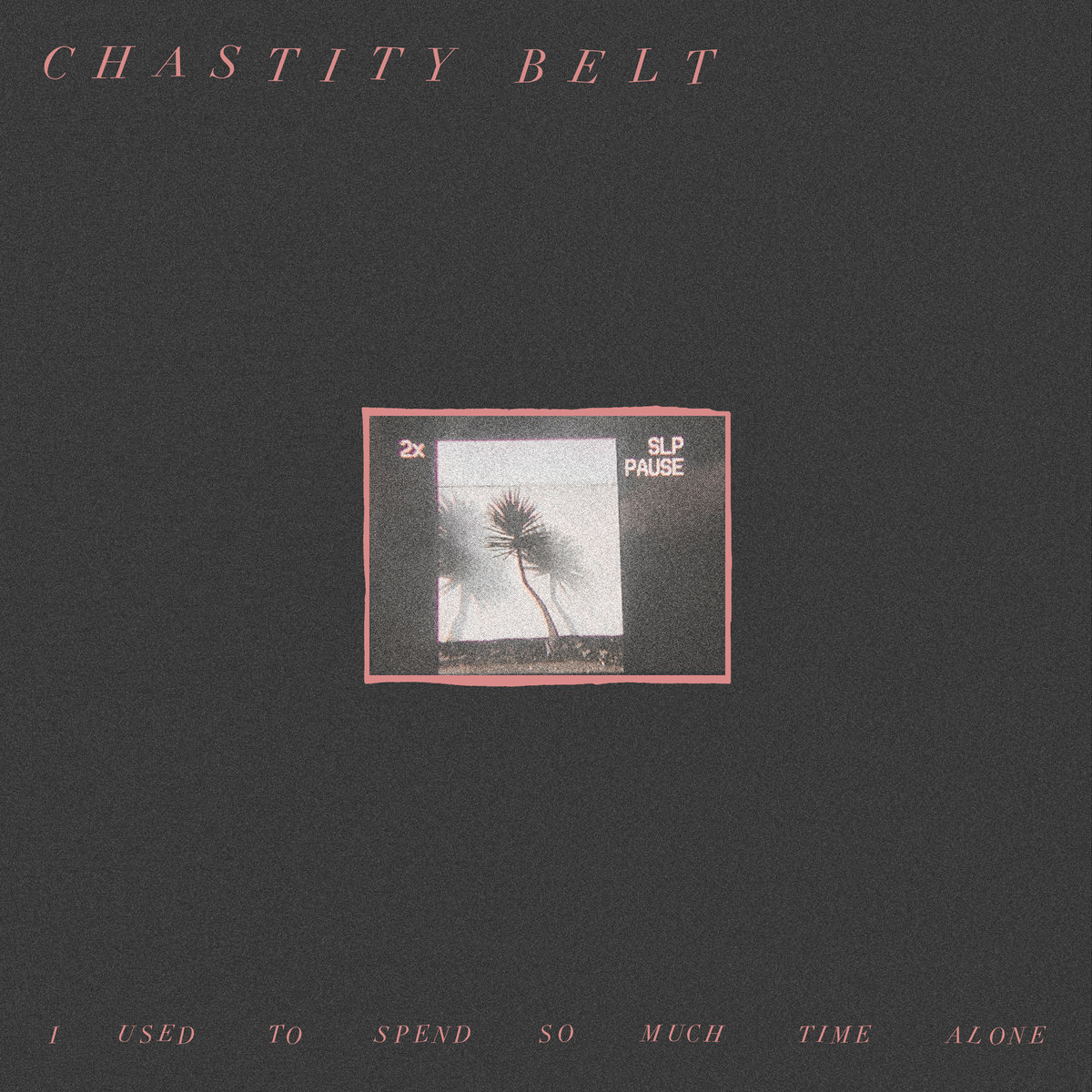
With their third album I Used To Spend So Much Time Alone, Chastity Belt are taking off the jester’s mask and buckling down, subjecting their jangle-pop to a heretofore unseen level of discipline. Where the first two albums derived their momentum from fleeting, flippant bursts of energy, I Used To Spend So Much Time Alone sees the band taking a protracted approach to dynamics, venturing through the reverb-laden fog with tentative, well-measured strides. Its songs deal with depression and heartbreak. On “5am,” Shapiro mulls over the existential consequences of a long night out, seething over the realization that in all those hours of empty, inebriated conversations she and her friends have said absolutely nothing. “It’s 5am, and I’m full of hate,” she grumbles, before getting to the root cause in the slinky chorus (“Immediate urge to get everything all straight / Need to express it but it’s not the time or place”).

This is a real-life observation for Shapiro, whose beer buzzes typically manifest as a crushing dose of ennui. “I’m trying to have meaningful conversations with people, or make something happen so that it feels worthwhile that I’m out of my house,” Shapiro sighs. “Sometimes, it’ll end with me going to bed around 5am”—she drops the deadpan for an exaggerated, anguished whisper, poking fun at her own melodrama—”just because I know there’s more, there’s got to be more.”

chastitybelt_600-2

Nowhere is Chastity Belt’s chemistry more tangible, or their emotional honesty so profound, as on the late-album slow-burner “Something Else,” an ode to the seasonal depression that’s a hallmark of life in the Pacific Northwest. Along with the album’s lead single “Different Now,” the song represents a deviation from the band’s fragmented approach to composition (which typically casts Shapiro’s parts as cornerstones, over which the other members add theirs). Instead, its slack, melancholy arrangement came together organically during a jam session. “It ended up being a train of thought that I was having which I feel like a lot of people, especially in Seattle, can relate to during the winter,” she says, reflecting on the band’s shared headspace. “You’re kind of stuck in a downward spiral of negative thoughts until you leave the house and go for a walk to clear your head, but it’s hard to get out there when the weather’s so shitty.”

http://

They may be more world-weary than they were two years ago, but Shapiro and company haven’t gone full Debbie Downer yet, nor do they intend to. At the end of the day, they just want to be honest. Asked if the band’s sobered sound was a conscious effort, she shrugs, “It’s got more to do with the natural progression of our music, and what kind of music we want to be making at this point. Songs like ‘Giant (Vagina)’ and ‘Pussy Weed Beer’ were written in college, when we weren’t really thinking this band was going anywhere. At the time of writing them, we didn’t have any intention of recording them, or continuing to play music.”

The long-awaited return of Brooklyn’s Beach Fossils, “Somersault” showcases a band in bloom. Augmented with more complex instrumentation, including string arrangements, piano, harpsichord, flute, and sax, the new songs offer multi-layered pop guided by sharp, poignant, and honest lyrics.  These songs pulse and pull, capturing a blend of promise and heartache. It’s beautiful and layered, a refined, sweeping creation that threads together numerous styles, textures, and themes into a refreshing, singular vision. [Limited edition red color vinyl pressing also available.]

Launched in 2009 as the solo project of singer-songwriter Dustin Payseur, Beach Fossils has since expanded to become a full-on rock quartet. On previous albums Clash The Truth, released in 2013, and their self-titled 2010 debut, the band have fleshed out Payseur’s delicate, melodic compositions, amassing a solid catalogue of songs that toe the improbable line between dreamy and anthemic.

On their latest full-length, Somersault, Beach Fossils add even more nuance to their brand of melancholy guitar pop. While the music is bright and playful, the lyrics find Payseur struggling through loneliness, underscoring the impermanence of personal relationships.

http://

The heady, mid-tempo, piano-pop groover “Saint Ivy” combines a bouncy rhythm with dynamic classical strings, as Payseur’s lyrics touch on both cynicism and hopefulness. With its weaving bassline and the chorus’s gently-circling guitar, “Sugar” could be an outtake from a lost 4AD record. Underneath the gauzy instrumentation, Payseur’s vocal refrain—“On the outside, change your mind, feeling nothing”—hints at detachment and alienation.

The album closes with the softly-jangling “That’s All for Now,” which opens with sorrowful lyrics: “It’s new regret / Isn’t it funny how we forget?” Payseur sings. Eventually, the song’s mid-tempo groove gives way to tender, wilting slide guitar, as Payseur advises: “Keep moving on, keep moving on.” It’s a fitting end to an album that reconciles the immediacy of heartbreak with the transitory nature of life and love.

Beach Fossils “Social Jetlag” from their album “Somersault” out June 2, 2017.

It has been announced that three members of beloved Brisbane band The Go-Betweens will reunite for the first time since 1989 to take part in an epic tribute concert for their acclaimed sixth studio album, “16 Lovers Lane”.

Lindy Morrison, Amanda Brown and John Willsteed will pay homage to the 1988 album on which all three played along with co-founders Robert Forster and the late Grant McLennan  — the last Go-Betweens record of the ‘classic’ era — with assistance from Dan Kelly, Danny Widdicombe and Luke Daniel Peacock rounding out the core line-up of the band.

That already-acclaimed ensemble will be joined by a range of incredible other Australian musicians including The Church’s Steve Kilbey, GANGajang’s Mark Callaghan and Died Pretty’s Ron Peno, as well as festival artistic director Katie Noonan and her brother, Tyrone (both also known for their work with george), plus Montaigne, Sam Cromack and Jen Boyce (Ball Park Music), Tim Nelson and Zoe Davis (Cub Sport), Sahara Beck and Kirin J Callinan.

“We will be recreating that amazing album on its 30th anniversary … it’s going to be amazing,” Noonan said . “And Lindy, Amanda and John haven’t played together since Berlin in 1989, I think … so that’s super-special.

“You know, Grant was one of my heroes as a musician, but just as a human being — he was the sweetest man — and I thought, well, you know, it was only the 10-year anniversary of his passing, I think, the year before last [Ed: it was 2016], so, you know, he just influenced and inspired so many musicians in Brisbane, Queensland, and around the world; they were such an example of, ‘Wow, you can be from, y’know, St Lucia and have an international career as a musician’.

“Them and The Saints paved the way for so many other artists, so it’ll be beautiful to celebrate Grant’s and Robert’s incredible songwriting and songbook.”

Led Zep The Destroyer 4LP yel

Audience recording from the Richfield Coliseum in Cleveland Ohio, on April 28th 1977. limited edition of a tape close to being excellent, virtually free of hiss, trebly and overloaded at times. The tape shows wear occasionally and presents cuts and edits almost in its entirety. The band is upfront and the clarity of the instruments is very detailed, the bass is a little indistinct at the end. The cuts and edits eliminate most of Plant’s comments, miss the first few seconds of many songs, cause tape disturbances when the recording resumes and interrupt two tracks in progress. Before Nobody’s Fault the taper curses as he informs he is having problems, a squeal precedes the first cut, when the recording resumes the first few guitar notes are missing.

4-28-77-tkt

In My Time is cut briefly in the final vocal a cappella and joined to the last phrase of You Shook Me. No Quaaludes, as introduced by Plant, is cut during the second vocal theme and joined to a couple of seconds of the wha-ed guitar episode, and finally cuts out. Audience noise is minimal, a wise guy is introducing the songs to his mate! s before Plant, an irreverent yell of “this sucks!” in Over the Top ,and the taper cursing again in Stairway; there’s some mumbling in the quiet moments, but nothing really annoying. This is a superb gig, the pacing and playing, together with the very enjoyable recording, make for a listening treat. Page is precise, concise and powerful; Jonesy is all over the place; Plant’s vocal gymnastics are strong from the beginning to the end and seems genuinely touched by the audience’s response; Bonzo is frightening, he seems to destroy the drum kit in every track, the recording captures particularly well his crushing presence. Collectively is the same story, the enthusiasm does not let up a minute, every piece receives special attention and there are no lazy moments. In My Time features great introductory licks to the guitar leads; No Quarter features amazing interplay and Jonesy’s most inspired piano playing. Ten Years is overloaded by the loud twelve-string and cymbals, Achilles by the drums, even distorting the tape, but both are very clear. Tape wear is evident in Over the Top, Kashmir and Stairway; there’s a little distortion in the encores: Rock and Roll, Trampled. Despite these deficiencies, the performance is not affected at all and allows its enjoyment. This show should restore the faith to detractors of this era. 

Led Zep The Destroyer spine

The tape for Zeppelin’s second night in Cleveland is one of the strangest.  The tapers were located a ways from the stage, they were experiencing problems with their equipment, and he and his friends were not shy about expressing their opinions throughout the entire show.  It is also obvious one of his friends attended the previous evening’s concert and liked to tell the others which song is coming next.  Despite these obstacles this is considered one of, if not the best, audience document outside of the tapes for Los Angeles.  Its reputation is due to it being very clear and powerful.  Zeppelin was the perfect band to use the Richfield Coliseum’s questionable acoustics to their advantage and the result sounds like battery artillery storming the beachhead to the delight of a packed house.

This tape has been known as The Destroyer since it was released shortly after the event [I believe it might have been as much as a year later or more].  It was first released as a vinyl box set on the Smilin’ Ears Records label complete with the famous painting of the warriors huddled on top of one another.” [collectorsmusicreviews.com]

Recorded 28th-Apr-77 Cleveland, The Second Night

Audience recording from the second night at Richfield Coliseum in Cleveland, OH – 28th April 1977 apparently one of the best performances on the whole tour. Released in 1978; originally sold for $22 via the Pied Piper bootleg catalog.

THE DESTROYER
SMILIN’ EARS 77-300
Side 1: The Song Remains The Same – Sick Again (14:11)/ Nobody’s Fault But Mine (5:36)
Side 2: Since I’ve Been Loving You (17:24)
Side 3: Guitar Solo medley incl. The Star Spangled Banner – Achilles Last Stand (18:21)
Side 4: White Summer medley incl. Black Mountain Side – Kashmir (15:31)
Side 5: Ten Years Gone (8:56)/The Battle Of Evermore (5:25)/ Going To California (4:19)
Side 6: Black Country Woman medley incl. Bron-Yr-Aur Stomp (7:00)/ Trampled Underfoot (6:19)/ Rock & Roll (3:54)
Side 7: Kashmir (17:13)
Side 8: Over The Top medley incl. Out On The Tiles/ Moby Dick (16:25)
Recording: Very good mono audience. Taped on platform usually used for television camera for sports broadcasts. “All the cuts exist for two reasons: the taper was trying to save tape, and the recording was done on 60 minute (30mins per side) cassettes. ”  Comments: Deluxe box set. Two different covers. Two audience sources exist for this date.

Master tape in detail:
01. The Song Remains The Same (beginning cut) 03:44
02. Sick Again 07:05
03. Nobody’s Fault But Mine 07:17
04. In My Time Of Dying 11:37
05. Since I’ve Been Loving You 09:43
06. No Quarter (cut at 05:07) 20:45
07. Ten Years Gone 10:05
08. The Battle Of Evermore 06:27
09. Going To California 05:14
10. Black Country Woman 01:42
11. Bron-Y-Aur Stomp 05:42
12. White Summer (cut at 00:29) 03:45
13. Black Mountain Side 01:34
14. Kashmir 09:34
15. Over The Top 17:26
16. Noise Solo (cut at 10:06) 10:10
17. Achilles Last Stand 10:28
18. Stairway To Heaven 11:44
19. Rock And Roll(beginning cut) 04:12
20. Trampled Underfoot 06:59


BETH DITTO – ” Fire “

Posted: June 3, 2017 in MUSIC
Tags: ,

Image may contain: 1 person, standing, horse and outdoor

It’s been five years since Gossip released an album, and its singer Beth Ditto is branching out on her own with her first solo album, Fake Sugar, out on June 16th. Debut single “Fire” brings to mind Adele in defiant day-after-heartbreak mode, while “Oo La La” takes listeners on a Riot Grrl tour of the Moulin Rouge.

‘Fire’ is the first song from Beth Ditto’s new solo album “Fake Sugar”. Available everywhere June 16th!

No automatic alt text available.

It’s hard not to love a bookish band with a name that references both Virginia Woolf and her lover, Vita Sackville-West. So it follows that Philadelphia duo Vita and the Woolf would have a serious fan club, including M83 .

Jennifer Pague’s full-bodied voice inspires frequent comparisons to Florence Welch, but it’s truly its own animal, yelping and blooming over her keyboard melodies and the dynamic drumming of Adam Shumski. On “Super Ranger,” the track that we are premiering today, the band struts its stuff with swerving synth-and-drum melodies that almost defy genre (electro soul? soulful pop?). It’s a tantalizing taste of their forthcoming album, Tunnels, which is out on June 16th.

http://

Band Members
From the mind of Jennifer Pague
Drums/Percussion: Adam Shumski
Live Guitarist: Dane Galloway

Image may contain: one or more people, outdoor and text

Image may contain: 1 person, text

Juliana Hatfield is back with 14 brand new songs, including the instant-classic “Wonder Why.” “I wasn’t planning on making a record,” says Juliana Hatfield of “Pussycat”. In fact, she thought her songwriting career was on hiatus, and that she had nothing left to say in song form; that she had finally said it all after two decades as a recording artist. But then the presidential election happened. “All of these songs just started pouring out of me. And I felt an urgency to record them, to get them down, and get them out there.”

http://

Pussycat is the kind of bluntly political record Hatfield used to be knocked for shying away from. At the height of her 1990s stardom, Hatfield was dismissed in the more activist corners of the music world as a lightweight (never mind that her songs frequently explored the ways society needles and dismisses women). She’s spent her career in an often thankless middle ground, too feminine for the masculine music press, yet not punk enough for the riot grrls. But Pussycat lends to the case for a critical reappraisal. Now would be an ideal time for one, given how the DNA of Hatfield’s hooky, plainspoken alterna-pop has carried through some of indie-rock’s sharpest young songwriters, from artists like Waxahatchee to Bully and Charly Bliss, artists that have demonstrated there’s plenty of substance in this sound. What a treat it would be if, 30 years into their careers, they were all making records as relevant, passionate, and strangely personable as this one.