


Image
—
Posted: April 8, 2018 in FESTIVALS, MUSIC
Tags: Bedfordshire, The Waterboys, Van Morrison, Wrest Park
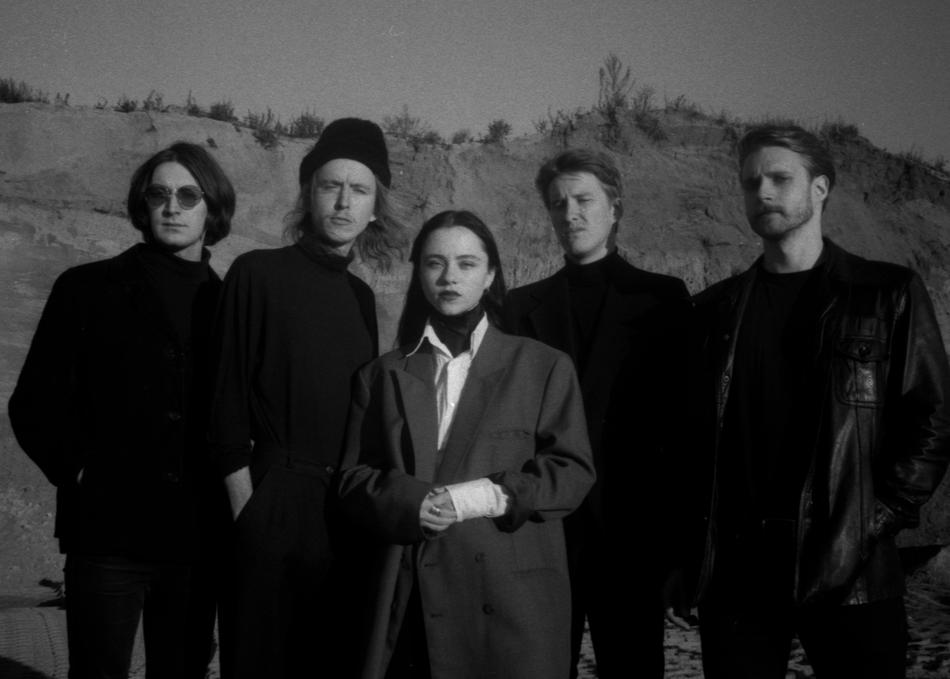
HOLY MOTORS is a Tallinn, Estonia based on dark twang & reverb sound like a band from a nonexistent movie. It bows to engines and echos and film-directors. Cinematic suspension is often more than not what drives the band towards a melody and meaning. It’s “psychedelic rock that hits like a dream despite undoubtedly seeking to soundtrack nightmares”. Thankfully, Slow Sundown, Holy Motors’ debut full length release, finds the Estonian dream catchers utilizing a similar sonic palette ranging from dark psychedelic pop to shoegaze-inflected western music. But much like 2015’s Heavenly Creatures 7”vinyl, provided only a fleeting glimpse into the sounds that their music evokes.
Slow Sundown’s eight tracks offer a more immersive experience for those brave enough to take the ride. While the guitar lines from lonely cowboy ballads like “Honeymooning” could easily serve as the central themes for unwritten Morriccone scores, dystopian anthems like the rhythmically propelled Signs break new ground for the band and demonstrate that Holy Motors are not bound by their influences. Thematically the album is comprised primarily of sad love songs centered around the idea of motion – the motion of a satellite orbiting a planet, the motion of a passenger riding shotgun in a car – as it relates to stellar-scale and existential isolation. Produced by Merchandise’s Carson Cox and recorded at Brooklyn’s Kutch1 Studios when the band was visiting the US on tourist visas, Slow Sundown is a beautiful alien artifact that definitively delivers on everything we have been promised by Holy Motors’ work to date.
In it´s time, Holy Motors have supported Sic Alps, Dirty Fences and Mystery Train. The latter a movie by Jim Jarmusch.


Released 50 years ago, it surely is one of his most controversial albums.. “Embracing” classic Country music & kicking off the “Country Rock” genre. I’ve always liked this album… It’s not a masterpiece, but a solid Dylan album.
Recorded February 12th–21th, 1969 Nashville Skyline was the ninth studio album by American singer-songwriter Bob Dylan, released in April 1969 by Columbia Records.
Dylan looks inscrutable, or at least aloof, on many of his album covers. So it’s disarming to see him with a big grin, mid-tip of the hat, on the front of Nashville Skyline. As much as we’re looking at him, he seems to be looking back at us, and there’s a warmth to his gaze that feels all the more affecting coming from the trailblazer who once sneered, “How does it feeeel?”
He’s worn many hats throughout his career—rock star, folk crooner, musical intellectual and political troubadour—and 50 years ago, he unexpectedly added country singer to that list. Dylan released Nashville Skyline, one of the most noteworthy style deviations in his discography, it ranks high among the best albums of that year. It features the suggestive hit “Lay, Lady, Lay,” Bob Dylan’s finest drawl and a reworked version of his 1963 tune “Girl From The North Country” featuring the country king himself, Johnny Cash.
Building on the rustic style he experimented with on John Wesley Harding, “Nashville Skyline” displayed a complete immersion into country music. Along with the more basic lyrical themes, simple songwriting structures, and charming domestic feel, it introduced audiences to a radically new singing voice from Dylan—a soft, affected country croon. At the time, the album was viewed as yet another new direction for Dylan, whose previous album had been the spare, rustic, lyrically opaque, acoustic guitar-based John Wesley Harding(1967); itself a departure from the mostly electric sound of Highway 61 Revisited (1965) and Blonde on Blonde (1966). Both Blonde on BlondeandJohn Wesley Harding were recorded in Nashville, the latter using three local musicians exclusively, but when he returned to Nashville in February 1969 to record Nashville Skyline(released in April ’69), he embraced country music more than he ever had before—penning simpler, more straightforward lyrics, doing a deeper dive into country instrumentation as accompaniment, and also singing with a much warmer, sweeter tone than he had shown before,
The first track on the album was a retooling of a tune Dylan originally wrote and recorded in 1963 for The Freewheelin’ Bob Dylan (his second album), called “Girl from the North Country.” On Nashville Skyline it was sung as a duet with Johnny Cash, which might sound like an unusual pairing, but the two had actually been friends dating back a few years when both lived in Woodstock, New York. Cash even wrote an evocative liner notes poem for the Nashville Skyline.
When Johnny Cash began his three-year run as host of a popular—and excellent!—summer TV series, The Johnny Cash Show, which was shot at Nashville’s famed Ryman Auditorium and each week featured various country and country-leaning artists. Dylan, who had barely been seen in public since early 1966, agreed to appear on the June 7th episode of Cash’s show, and they sang this version of “Girl from the North Country,” no doubt baffling some of his old fans, while introducing himself to many, many new ones.
Watch Dylan perform the song “Girl From The North Country” live in Oakland, Calif., in 1988
Kris Kristofferson played an important (albeit uncredited) role in the recording of “Lay Lady Lay.” The song’s distinctive percussion features a pair of bongos and a cowbell during the verses, and Kristofferson — then working as a janitor at Columbia Recording Studios — was asked to hold these instruments for percussionist Kenny Buttrey, allowing him to play the drum parts during the chorus. Buttrey moved the drum microphone directly over Kristofferson so it could pick up these sounds more clearly, which had the added effect of making his drumming sound fainter. The first take wound up becoming the master take, and Buttrey would later call it one of his favourite performances.
The result received a generally positive reaction from critics, and was a commercial success. Reaching number 3 in the US, the album also scored Bob Dylan his fourth UK number 1 album.

“Lay Lady Lay” turned out to be one of Dylan’s biggest pop hits, reaching #7 in the US, and giving him his biggest single in three years. “Lay Lady Lay” was originally written for the film Midnight Cowboy, but Dylan did not deliver it in time for it to be included in the score. He was initially reluctant to authorize the single’s release, but eventually approved at the insistence of Columbia president Clive Davis.
In the end, Nashville Skyline is a lovely album but not a heavyweight contender, though its effects were major ones. Country music was despised, hick music when Dylan took it up. People were divided into the hip and the non-hip. The counterculture was in full swing and riddled with its own self-importance and snobbery. Nashville Skyline was a hard pill to swallow: but it did ’em good. Nashville Skyline was a full-fledged country album, complete with steel guitars and brief, direct songs. It’s a warm, friendly album, particularly since Bob Dylan is singing in a previously unheard gentle croon — the sound of his voice is so different it may be disarming upon first listen, but it suits the songs.
So here he is, folks, Homebody Bob, singin’ ten songs for your listenin’ pleasure — well, nine, actually one is a hoedown sort o’ thing. Everyone knows by now, I hope, how intense that pleasure is. But hasn’t anyone noticed something odd? ….. but no one mentioned that by the mere trick of changing his entire vocal style, Dylan had crossed us up again, that “Nashville Skyline” was a bigger switcheroo than “John Wesley Harding.” It is touching that everyone wants to believe Bobby has settled down, but don’t bet on it. All those protestations of easy innocence may be just one more shuck.

Transplanted Kiwi London garage punk miscreants reissue debut LP. For fans of The Stooges, The Gun Club, Eddie Cochran (on speed) and The Cramps. Two weeks before they left the shores of their native New Zealand for the grimy cobblestones of London, garage-punk miscreants The Cavemen attempted a tour in support of their first album.
What went down was equally chaotic as the 19 minutes of puerile degeneracy found distilled on their debut release. Youth halls were desecrated, now-defunct venues were soiled and an ill-fated final show in a graveyard was cancelled when the tour vans engine exploded and a passing motorist collided with bassist Nick Caveman. This first record is a funny, tuneful rampage of hedonistic juvenile delinquency, grave robbing fantasies and substance / self abuse-themed anarchy, from the opening blast of Mentally Ill to the climactic kiss-off Trash Talkin’ Paint Huffin’ Girl. The stand-out tunes include unconventional my girlfriend dumped for the leader of a Nazi biker gang anthem Rides With The Reich (“Gee I, don’t wanna kiss ya, I’m in love with Adolf Hitler”), the shouty Motorhead-name checking alcoholic celebration of At The Pub (“I was born (at the pub), went to school (at the pub), fell in love (at the pub), had my kids (at the pub), had a beer (at the pub), had a fight (at the pub)”) and manic mid-term meltdown School Sucks (“kill the teachers, burn the homework, smash the classroom”).
There’s pretty much a racket to suit every form of deviancy, from the sex, drugs and punk rock self-abasement of Rock N Roll Retard and Glass Breakfast – frontman Paul Caveman giving good Lemmy on the latter – to the necrophilia-based antics of chucklesome, worryingly catchy shock-rocker Fuck For Hate and Stand By Your Ghoul’s ode to cadaver-based love. The whole record clocks in at under 30 minutes, making it the perfect rude ‘n’ crude warm-up music for any imminent crime spree.

The Jimi Hendrix Experience Live In This RARE Close Up Full Concert Filmed In Sweden 1969. Featuring all the songs we All know and love! One of Jimi’s Best Full Concerts Before His Tragic Death. This Hard To Find Live Performance of One of the true still Guitar Heroes Of our time.
“We’re gonna play nothing but oldies-but-baddies tonight, we haven’t played together in about six weeks, so we’re going to jam tonight and see what happens. Hope you don’t mind.”.. and as he steps away from the microphone we can vaguely hear him mumbling something like: “You wouldn’t know the difference, anyway.”
Jimi Hendrix (intro to the concert)
On the whole, I can’t understand how anyone who saw us on this tour could have liked us. There was a lot of filming for Swedish TV and compared to similar films in 1967, we were a different group. Jimi was sullen and removed and actually slagged off the audience during the first set. He rarely bothered to sing. I paced grimly in my corner and turned my back on him. The sparkle was gone, very gone, replaced by exhaustion and boredom which showed in the sloppy repeats of the hits as we stared at the crowd with dead eyes. We hated playing Sweden. Always the same problem–no drugs. We were forced to drink the killer Schnapps, and it brought on Jimi’s mood for the first set.
Noel Redding (Are You Experienced?: The Inside Story Of The Jimi Hendrix Experience
Jimi Hendrix – Guitar Noel Redding – Bass Mitch Mitchell – Drums
Setlist: 01 Killing Floor 02 Spanish Castle Magic 03 Fire 04 Hey Joe 05 Voodoo Child (Slight Return) 06 Red House 07 Sunshine Of Your Love
Live At The Konserthuset, Stockholm, Sweden, January 9th, 1969


‘The Cry of Love’ is a posthumous fourth studio album by Hendrix. Originally part of an ambitious double album project ‘The Cry Of Love’ is a 10 track album compiled and mixed by Eddie Kramer and drummer Mitch Mitchell at Electric Lady Studios.
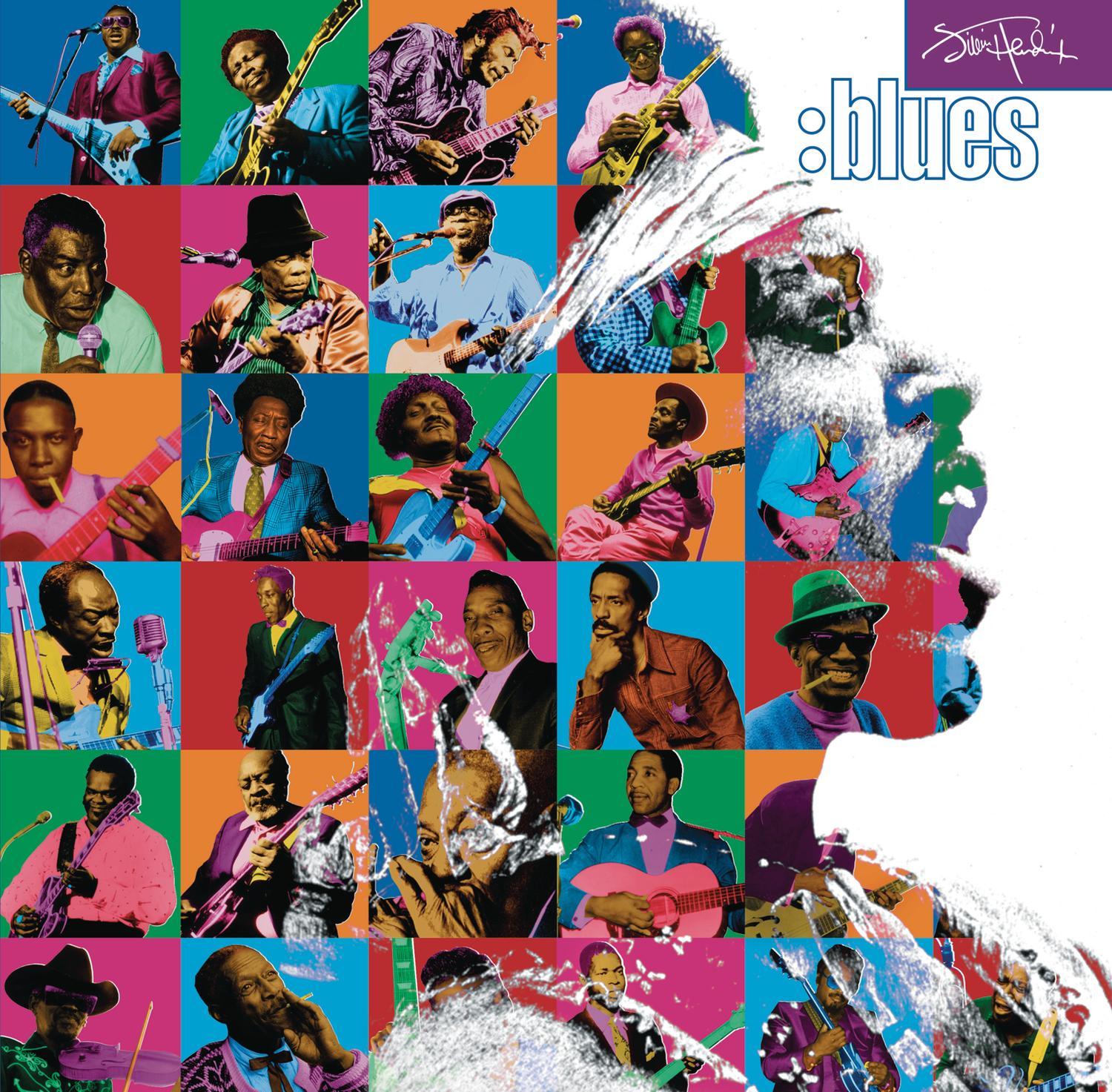
Blues was among the early posthumous release that collected 13 tracks of you guessed it – blues-styled numbers, although for the most part they’re studio outtakes that probably were never intended for release. That said, “Hear My Train a Comin'” is featured twice, the closing number being a recording of an electric version he frequently played live. On the opening number, the keeper, Hendrix lets loose on the 12-string acoustic, showing off his skill as an unplugged player with a song that sounds very much like a timeless blues standard but is in fact an Hendrix original.


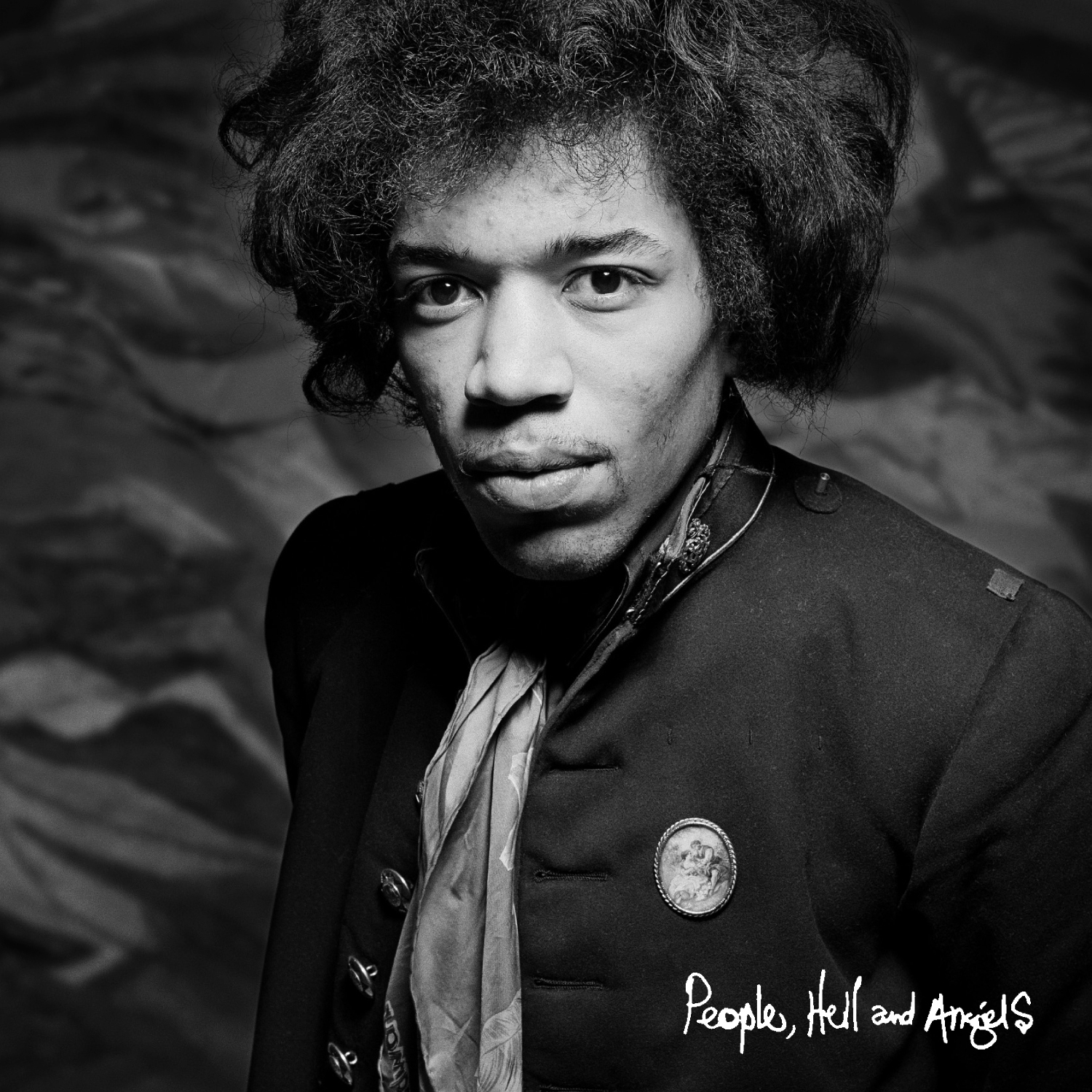
People, Hell & Angels is an album of twelve previously unreleased Jimi Hendrix studio recordings. The album showcases the legendary guitarist working outside of the original Jimi Hendrix Experience trio. Beginning in 1968, Jimi Hendrix grew restless, eager to develop new material with old friends and new ensembles.
Outside the view of a massive audience that had established the Experience as rock’s largest grossing concert act and simultaneously placed two of his albums together in the US Top 10 sales chart, Jimi was busy working behind the scenes to craft his next musical statement.

Legacy Recordings present this dynamic new album of 13 previously unreleased studio recordings, made between January 1968 and February 1970. Notable collaborators include Stephen Stills. This is the third and final volume in a trilogy of previously unreleased material
The previously unissued version of “Lover Man,” which UNCUT deemed “a weaponised piece of funk, with Buddy Miles in particularly thunderous form,” was recorded at the Record Plant in New York on December 15th, 1969 by Hendrix’s then recently assembled new band: Billy Cox on bass, Buddy Miles on drums and, of course, Hendrix on guitar and vocals. The session took place two weeks before the trio introduced itself to the world via four triumphant New Year’s Eve and New Year’s Day concerts at the Fillmore East, which would ultimately yield the live album Band of Gypsys (1970) as well as its, critically acclaimed follow up, 2016’s Machine Gun.
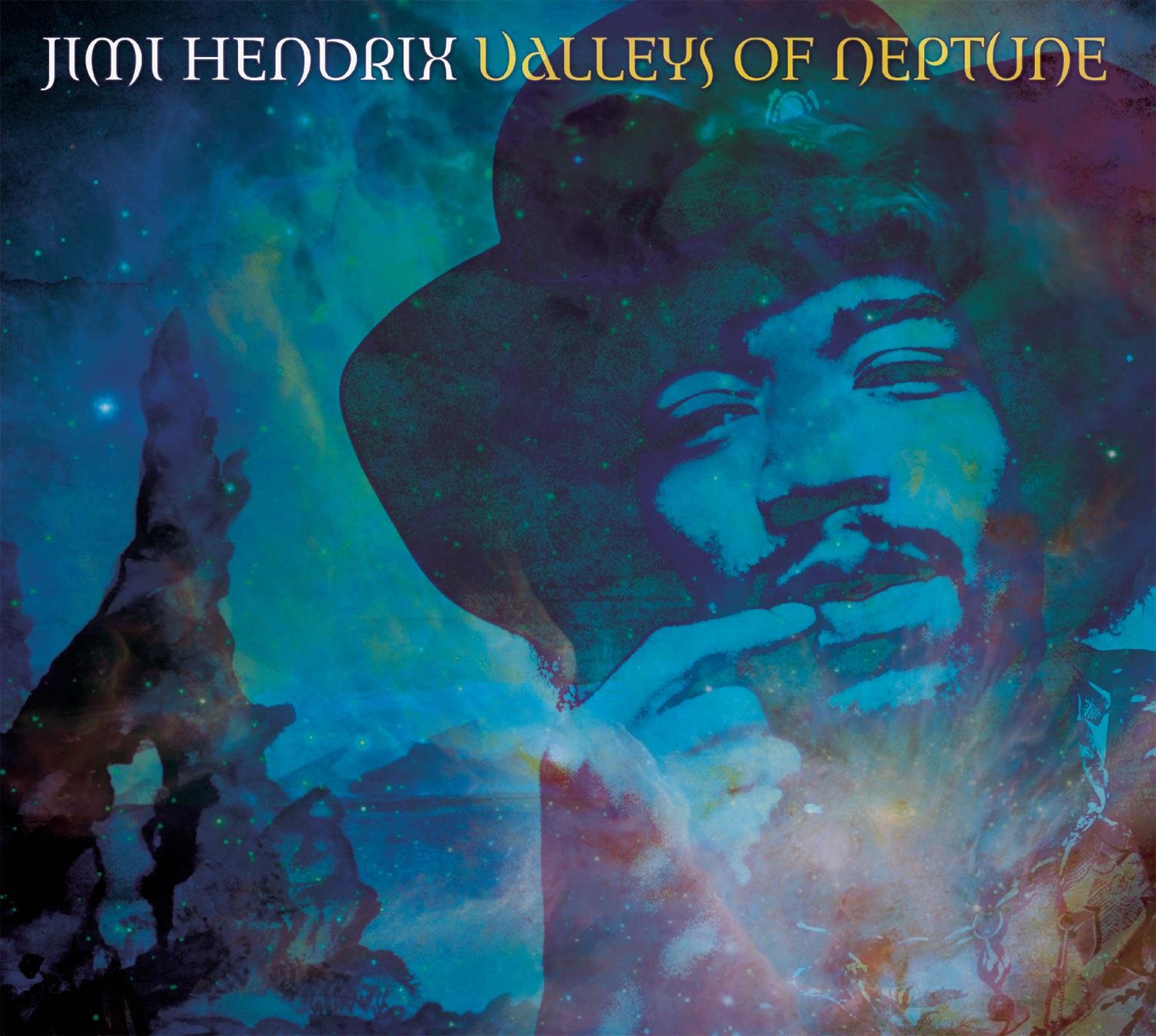
Heralded by Relix as “both a historically valuable document . . . and a treat musically,” Both Sides of the Sky, the album home of “Lover Man,” is the third volume in a trilogy of albums intended to present the best and most significant unissued studio recordings remaining in Jimi Hendrix’s archive. It follows Valleys of Neptune (2010) and People, Hell and Angels (2013), which both achieved top 5 chart ranking on Billboard’s Top 100 album chart. Recorded between January 1968 and February 1970, and featuring guest appearances by Stephen Stills, Johnny Winter and Lonnie Youngblood, Both Sides of the Sky contains 10 unreleased tracks. The project was co-produced by Eddie Kramer, Jimi Hendrix’s recording engineer on all of his albums made during his life,
Muddy Waters’ “Mannish Boy” was reworked by the trio that would come to be known as Band of Gypsys (Jimi Hendrix, bassist Billy Cox, drummer Buddy Miles) during their first ever recording session on April 22nd, 1969 at the Record Plant in New York.

Triptides “Visitors” is their sixth album , This L.A.-by-way-of-Indiana band exhibits no discernable drop in quality, delivering another gloriously trippy slice of bedroom psych-pop. The duo of Glenn Brigman and Josh Menashe hold true to their vision of re-creating the swirling sounds of late-’60s U.K. groups like Tomorrow and Pink Floyd, Instead, there’s a rock-hard toughness under the jangling 12-string guitars, biting six-strings, and wistful voices that gives the album a kick and provides a very solid foundation from which to launch their tuneful flights of fancy. And the songs are quite fanciful, whether the band are in full daydream mode like on songs “Saturday Far Away” or “My Friend” or rollicking gently as on “All My Life,” or kicking up paisley swirls on rockers like “Mary Anne” their melodies are sweet and the hooks are sharp.
This album seems a little more cleaned up than some of their earlier work, but they still show a mastery at crafting echoing, atmospheric sounds that complement their tunes perfectly. The new twist to their approach brings the band a step or two out of the bedroom and lends an air of professionalism to the record. It’s not far from the sound bands like Plasticland or the Rain Parade had in the ’80s, and that’s high praise. Those bands conjured up the sounds of their psychedelic heroes without sounding like slavish imitators, they used modern recording techniques wisely, and they got a full, rich sound most bands in the ’60s couldn’t come close to. Triptides do all those things too, and against the odds, they keep getting better. Visitors is their best-sounding record to date and anyone with even a passing interest in psych-pop should start here, then work back through the rest of the band’s impressive catalog.
Triptides are :
Glenn Brigman : Vocals, guitars, farfisa, mellotron, drums, sitar, electric harpsichord, tambourine
Josh Menashe : Vocals, guitars, bass, farfisa, flute, piano
Modeste Cobián : Flute on Mary Anne and Heavy Cloud
Dylan Sizemore : Backup vocals on Sunday In The Park
Recorded and mixed by Triptides in Los Angeles, CA
From the album Visitors out on 6th of April 2018 on Requiem Pour Un Twister

Birmingham duo Table Scraps made good on the promise after their debut single following on top notch, cacophonous garage-rock with their debut album. Sounding like Marylin Manson fronting The Stooges in place of Iggy Pop. Now imagine if that band was conceived in a garage in Birmingham, central smack in the middle of the U.K instead of Michigan, and that the year is 2015 instead of 1967, you should be pretty close to knowing what the debut album from Brum-based duo Table Scraps sounds like.
Clocking in at under 35 minutes, “More Time for Strangers” rattles and crashes towards its conclusion over the course of 12 tracks. From the unrelenting riffs of Scott Vincent Abbott’s single guitar, to the militant roll of Poppy Twist’s drums, it’s garage rock at its most fuzz-hungry and debased, and after several listens you can’t help but feel dirty in the best way possible.
Those who heard the band’s debut single The Bug will be pleased to know that it’s in good company here, with tracks like Vampyre Bite and Children of the Sky harbouring a similar darkness, stemming from Abbott’s venomous vocal delivery . Highlights include opener and second single “Electricity”.
“More Time For Strangers” was released in the summer of 2015 as a limited edition 12” vinyl and digital download through Table Scraps’ own Hells Teeth imprint in the UK, and on cassette via Burger Records subsidiary Wiener Records in the USA.

This nugget from Chris Isaak has become inescapable, it seems, popping up on commercials, on soundtracks, and set lists and albums of all sorts of different artists through the years. But it’s genuinely cool: so mysterious, moody, sultry, and evocative! More than a few have noted over the years that it sounds like the greatest song Roy Orbison never recorded. “Wicked Game” first turned up on Isaak’s Heart-Shaped World album in 1989, but it was its appearance in the crazy-good 1990 David Lynch film Wild at Heart that turned the song into a worldwide smash hit. After that, the floodgates opened and it’s been covered by such disparate performers as REM, Tangerine Dream, Pink, Maroon 5, Il Divo, the Finnish band HIM, and literally dozens more.
But nobody can sing it quite like Chris Isaak does (still!). Here he is with his crack band on MTV’s Unplugged way back in 1995. Chris and Hershel Yatovitz play a couple of nice Gibson Guitar’s on this one.

If you like dark, gripping guitars swirling into a dream-like inferno, then Jesse Jo Stark has just what you need. Her new song, “Fire of Love” will scorch your eardrums with its smokey rage, as Stark ensures that her full emotion comes across in the song.
“I wanna burn in the fire of love,” she sings on the chorus, reaching upward in her vocal register as the music surges behind her. With an expertly balanced push-and-pull throughout, Stark always keeps the moment engaging, backing off before it’s too overwhelming and adding to the fury when an injection of energy is needed.
“I wanted to write an anthem with a lady stomp,” she explained about the song. “It tells the story of lost, but it’s empowering & fearless. The woman knows just what she wants from it. Musically, it represents the moment everything clicked between myself, Dan, and Tom.
Jesse Jo Stark will be releasing a new EP on June 1st, and plans to release the full-length project later in the fall. Before that time comes, however, strap yourself in and check out “Fire of Love”
Dedicated to all jangly indie/guitar/jangle-pop
Show a little faith there's magic in the night
Horror, Science Fiction, Comic Books and More
IN MEMORY EVERYTHING SEEMS TO HAPPEN TO MUSIC - Tennessee Williams
A Celebration of Thrillers, Noire and Black Comedy by Pamela Lowe Saldana
Join me as I listen to every single #1 single!
Two Guys In Search of Great Music
Hoping to make the world more beautiful
hear ye, hear ye!
Celebrating music craftsmanship
Favorite song lists, reviews, featured indie artists, and music commentary.
A Blog About Music, Vinyl, More Music and (Sometimes) Music...
Eclectic reviews of ambient, psychedelic, post-rock, folk and progressive rock ... etc.!
A transparent attempt to promote a writing career
Quality articles about the golden age of music
Slow molasses drip under a tipped-up crescent moon.
Click Header to Return Home
to Rock, Country, Blues & Jazz
A Glasgow view of Americana and related music and writings.
Rewind the Review
A stroll down memory lane through my music collection
the best music of yesterday today and the tomorrow, every era every genre

