I think everyone knows what to expect from a Slaves album – some banging track, with a lot of silliness involved. “Acts of Fear and Love” is exactly what we’ve come to know and love about the punk-rock duo.
The album promo was hilarious with drummer Isaac Holman “quitting” the band to pursue a career in dancing after “Cut and Run” was released and before guitarist Laurie Vincent advertised for a new drummer. The music video for “Chokehold” has cameos from drummers such as Sam Doyle of The Maccabees, Ben Thatcher from Royal Blood, and Dave Rowntree of Blur. Even the Cadbury’s gorilla drops in for an audition.
The band take a rare opportunity to take their foot off the pedal towards the end of the album starting with “Daddy”, a song about having a midlife crisis. Slaves third album is great fun to listen to throughout, and it’s one that will have a long shelf life with their fan base. Well worth getting a copy of!
Acts of Fear and Love is out on Virgin EMI Records .
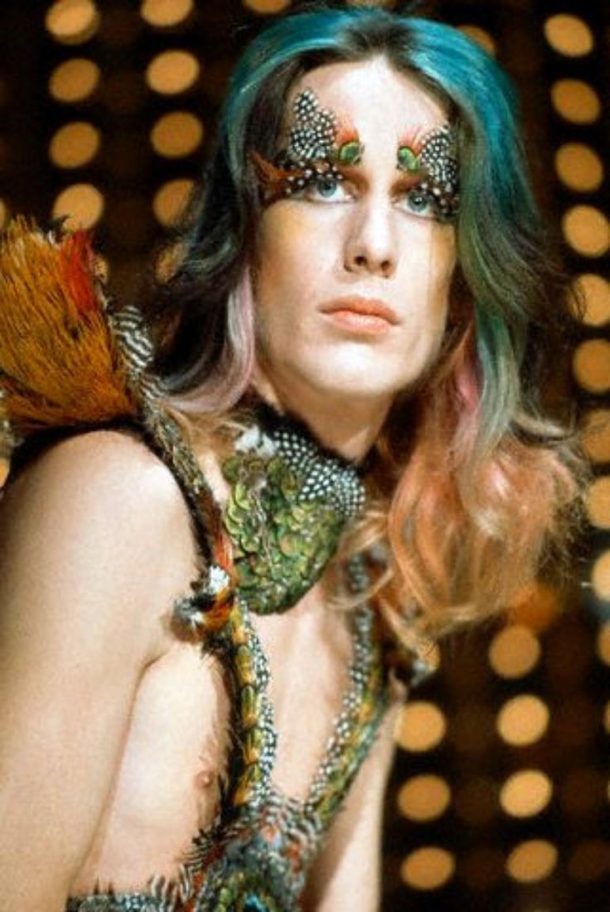
Todd Rundgren was among one of the first artists I discovered through my best friend Johnny Hawker who adored the Nazz. Todd was weird, smart and very talented, In his press he came off like a wunderkind he wrote the songs and played all of the instruments himself and he was always pictured with hot models. Todd Rundgren’s albums were among the first records I bought. Both “Something/Anything” and “Todd” were long double albums that sold for the same price as a single LP,
“Something/Anything” the fourth album by the American musician was released on March 2nd, 1973. Its music was a significant departure from his previous album “Something/Anything?” (1972), which consisted largely of straightforward ballads.
He attributed the idiosyncratic sound of “A Wizard, a True Star” to his experimentation with psychedelic drugs, and said that he “became more aware … [o]f what music and sound were like in my internal environment, and how different that was from the music I had been making up to that point in time.
The album that I bought on the day of release was “A Wizard, A True Star“. I can remember reading a scathingly negative review of that album when it came out. Recently I noticed that Analog Spark had released audiophile SACDs of “Wizard” and the earlier “Something/Anything”.
Todd Rundgren had followed up the success of “Something/Anything?” with a sprawling, genre-hopping odyssey that crammed rock, prog, Broadway pastiche, soul covers, and proto-electronica into one dizzying record.
For some listeners it’s pure self-indulgence – a chaotic, kitchen-sink overload with no restraint. For others it’s dazzling proof of Rundgren’s restless genius, a psychedelic pop kaleidoscope that anticipates everything from Prince to bedroom electronica.
Few albums inspire such devotion and derision in equal measure.
Several of Todd Rundgren’s classic 70s albums were known to sound a bit tinny due to the narrower vinyl grooves resulting from trying to cram so much music on each side. It was something you were even warned about via a “Technical Note” included on the inner sleeve of 1975’s “Initiation:“
“Due to the amount of music on this disc (over one hour), two points must be emphasized. Firstly, if your needle is worn or damaged, it will ruin the disc immediately. Secondly, if the sound does seem not loud enough on your system, try re-recording the music onto tape. By the way, thanks for buying the album.”
The new Analog Spark SACD of “Something/Anything” (mastered like Wizard by Kevin Gray from the original master tapes) It does in fact sound much better than I recall the original LP sounding “A Wizard, A True Star?” floated effortlessly into my list of favourite albums as I listened to it again. I blasted at an ear-splitting volume on my stereo. Seriously, it’s one of the best things I’ve ever heard not just recently, but ever—and started me off on a whole new experience of Todd Rundgren listening. If you are “looking for something new to listen to,” like I was, look no further.
But just don’t take my word for it, here’s what none other than the great Patti Smith wrote of “A Wizard, A True Star” :
“Side one is double dose. It takes the bull by the brain. Another point to be examined. He’s always been eclectic. Why didn’t he care? The evidence is here. Something very magical is happening. The man is magi chef. His influences are homogenizing. Like a coat of many colors. May be someone else’s paintbox but the coat is all his.”
“Each album he vomits like a diary. Each page closer to the stars. Process is the point. A kaleidoscoping view. Blasphemy even the gods smile on. Rock and roll for the skull. A very noble concept. Past present and tomorrow in one glance. Understanding through musical sensation. ToddRundgren is preparing us for a generation of frenzied children who will dream in animation. “
I read that despite having absolutely no idea of what she intended to convey with all of those words, even if I do wholeheartedly agree with her. Had I read Patti’s review back then, I’d have no doubt rushed out and grabbed this album.
Just listen to “A Wizard, A True Star” for yourself and turn it up LOUD please:
Drummer Nick Knox, of the legendary psychobilly band the Cramps, passed away today (June 15th). He was 60 years of age. From the period of 1977-1991, Knox toured with the band and appeared on some of the Cramps’ most crucial recordings.
Nick Knox, drummer with the Cramps from 1977 until 1991. He was the band’s longest-serving drummer and appeared on their first four albums including 1986’s A Date With Elvis.
Knox played in the proto-punk band the Electric Eels before joining Lux Interior and Poison Ivy Rorschach in the Cramps. They were mainstays of New York’s CBGB scene alongside the Ramones, Television and others. A Date With Elvis ,the title a play on Elvis Presley’s 1959 album of the same name – was the band’s most commercially successful album. It followed 1980’s Songs the Lord Taught Us and 1981 follow-upPsychedelic Jungle. Knox appeared on their fourth release, 1990’s Stay Sick! before his departure.
Knox (whose real name was Nicholas Stephanoff) joined the NYC-via Akron, Ohio, outfit in 1977 alongside larger-than-life frontman Lux Interior, tough-chick guitarist Poison Ivy and spooky guitarist Bryan Gregory. Anybody who saw this era of the band knew that Knox’s jet-black hair and the sunglasses (at dark) framing his stoic face was another key of cool in the pioneering psycho/goth/rockabilly outfit’s chain.
In 1991, Knox left the Cramps and the music scene, returning to Garfield Heights, Ohio, and keeping an extremely low profile. In 2013, Knox appeared on Terminal, an album by Cheese Borger And The Cleveland Steamers, playing drums on three tracks. His last live performance was in 2003 with another notorious Cle-punk ensemble, the Pagans, at an event called “Ohio’s Punk Past,” curated and promoted by the Rock And Roll Hall Of Fame. (Pagans’ guitarist Mike Metoff is Knox’s cousin. Metoff also had a brief stint in the Cramps under the name Ike Knox.) Recently, Knox returned to the Cleveland music scene as a “senior adviser” to Archie And The Bunkers, the self-proclaimed “hi-fi organ punk” garage-rock duo. Knox would occasionally DJ at Bunkers shows alongside Miriam Linna, whom he replaced in the Cramps.
Listeners unfamiliar with the Cramps’ classic work should start with the crucial compilations Off The BoneandBad Music For Bad People. But if you want to see the real punks, you punk, here’s the band in one of their finest hours, from the 1980 movie URGH!, A Music War, throwing down “Tear It Up.” (Watch your face on the flying cymbal.)
Among those paying tribute was Miriam Linna, the Cramps’ previous drummer. In a long Facebook post during which she recalled moments from their four-decade friendship, she said she’d recently visited Knox in an intensive care unit in Cleveland. She reported that they’d reconnected in 2017, during her own illness, and made a point of speaking on the phone every day, noting, “I looked forward to the daily check up calls, and I soon realized that he needed the pep talks as well.” She added, “I thank God that Nicky was a friend of mine. He was one of the kindest, funniest, most amazing human beings ever and I was very lucky to have been in his orbit.”
Former guitarist Kid Congo Powers tweeted, “Nick Knox Coolest of the cool. R.I.P. Glad to have played to your boss Beat. Meet you on the mystery plane.”
The latest name on the never-ending conveyor belt from the Brooklyn music scene, Rachel Angel recently released her latest EP, “Not Enough”, on Human Noise Records; a record described as, “the story of what it’s like to be young and tough in 2018.”This week Rachel has shared the new video to the title track, Not Enough, a solo exhibition through New York, spent contemplating complicated relationships and eating bagels (of course).
Not Enough is a stirring example of Rachel’s songwriting, fusing the influences of classic Americana with the laid back nature of slacker-rock and the lo-fi spirit of punk. Lyrically, it’s classic country heartache, from the crushing opening line, “sprawled out on the floor, it’s just another day”, through to the resolution, or lack thereof, that comes later as Rachel sings, “you’re a nice guy, sometimes, but that’s not enough”. Her music might be raw and unpolished, yet with Rachel Angel’s lyrical flair, and classic songwriting, we can’t help but feel this is the start of something very exciting.
The Struts are about to go back out on the road with the Foo Fighters armed with some new music. The glam-influenced band from Derby in the U.K, , Have just released “Body Talks,” the lead single from their upcoming second album.
Frontman Luke Spiller said in a press release that “Body Talks” was “a fully charged blues dance rock anthem that will have you moving across the room and straight onto the dance floor. Complete with some of the best guitars riffs of the past 10 years and guess what? This is only the beginning.” Details on the album, the follow-up to 2016’s Everybody Wants, have yet to be announced, but last month Spiller disclosed that the band was in the process of mixing it.
“I think everyone’s really going to enjoy it,” he said. “We were very much aware that even though the band has lived with the first album and the songs that come with it for quite a while, for everyone else, it’s relatively fresh. So I felt like it was really important to make this second album somewhat depart from the first one. Not a departure musically, I didn’t want to go completely left. I think it’s important to give people more of what they fall in love with.”
The band recently sold out four nights at the Roxy in Los Angeles,
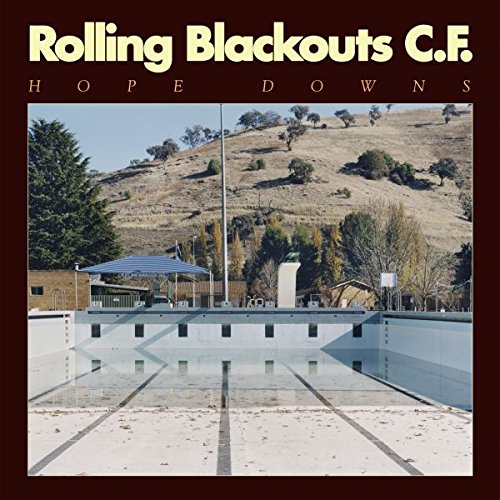
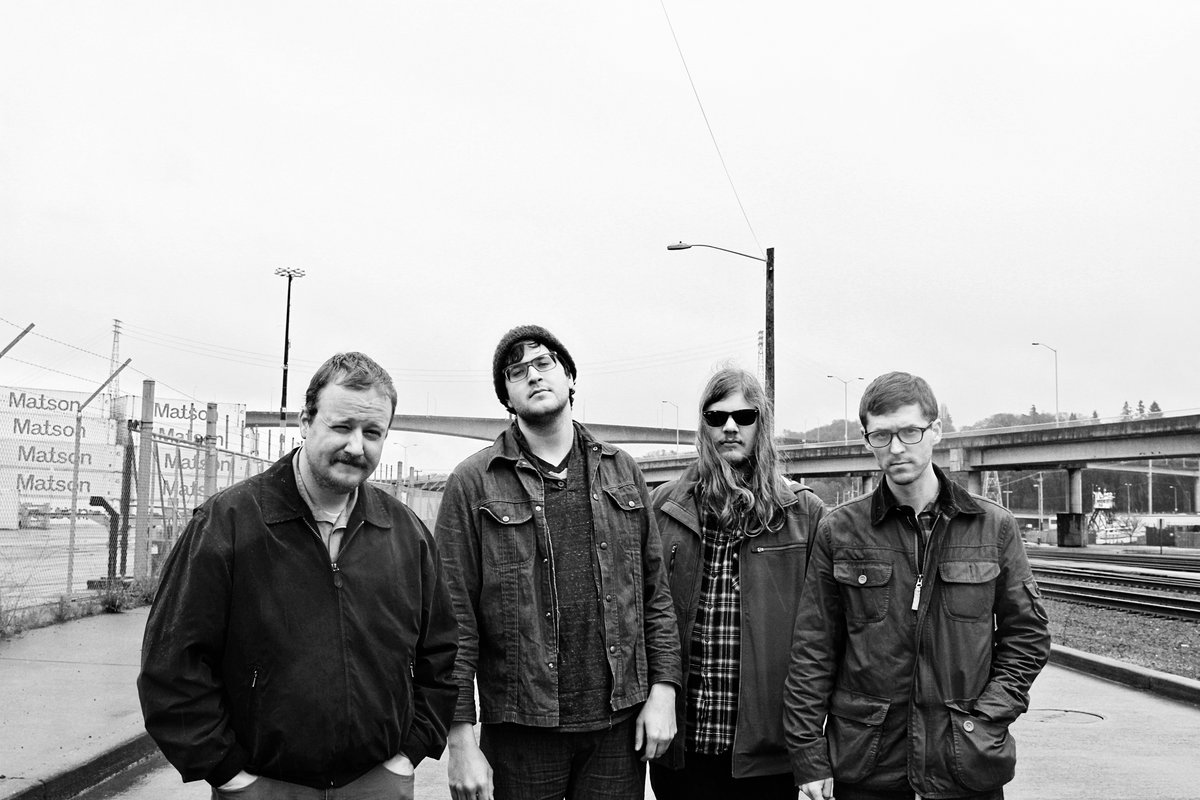
Guitars, so much guitars. So much guitar goodness. At some points it almost feels like I’m listening to guitar riffs of The Mats, REM and Flying Nun laid over each other as Joe Russo (bass) and Marcel Tussie (drums) admirably keep the ship moving forward. But nope, it is Fran Keaney, Tom Russo, and Joe White who in addition to weaving tasty guitar licks are also sharing the vocal duties as well. This seems appropriate for R.B.C.F., an Australian quintet that hit the ground running a few years ago. They released their excellent first EP Talk Tight on the Sydney-based record label Ivy League, then moved to Sub Pop Records for 2017’s The French Press EP. The former is a bit more relaxed and acoustic, while the latter cranks up the volume and pace. Together, they’re a thrilling introduction to a promising young band.
I loved their two EPs so to say I was hyped for the LP is an understatement. And Hope Downs delivers the goods from beginning to end. It is a dizzying and winding 35 minute trek of indie rock delight. The opener, An Air Conditioned Man brilliantly encapsulates my predicament of my day job, and wondering where my youthful dreams went.
Two tunes later, right after the excellent Talking Straight, was inspired by Tom Russo’s voyage to the island of his grandfather’s birth balanced with the struggles of refugees in Australia. Bellarine is an an absolute gem and that is followed by Cappuccino City, a tune that muses about a meandering day in a cafe. Lest I forget, the punchy closer The Hammer which bring the proceedings to a satisfying conclusion.
I love getting lost in these guys tunes and trying to pick out which direction each riff is headed. And as good as their albums are, they are so much better to see live.
Sam Ray’s agony is near blissful on A Whole Fucking Lifetime Of This, his band’s first album under their new name American Pleasure Club. (Their last LP as Teen Suicide came out in 2016.) You can hear it in his voice, the kind of depression you almost enjoy — there’s a murky pleasure in such heavy emotion, especially when the alternative is numbness. The album establishes mood over genre, spanning choked-up Bright Eyes-like vocals and dusty acoustics, hip-hop basslines and a Frank Ocean sample, and spattering electronics and Auto-Tune. Its chronology is similarly unpredictable: Lovesick obsession is interspersed with heartbreak and regret, moments of awe transition into periods of despair. Instead, the album is organized by images, memories, and fantasies. Ray retreats into snapshots of suburban adolescence — “drunk kids fucking in the backseats of cars,” dreaming of moving to Florida, “eating cherries beneath a sycamore tree,” crying in the grocery store — and uncovers their timeless relevance. Woozy, dreamy, hazy summer or sunny winter day music.
all music & lyrics by Sam Ray except –
“this is heaven” & “new years eve” – written & recorded with Sean Mercer.
“seemed like the whole world was lost” – Spencer Radcliffe on horns
“eating cherries” – Kitty’s vocals
“Twinkle” is a pretty uncool name for an indie-rock subgenre, even if it has a certain onomatopoeic honesty: There is perhaps no better word to describe the sound of such guitars. Tiny Moving Parts do this stuff better than anybody else right now, and when they’re tapping the fretboards and jumping between time signatures, these songs are absolutely sparkling. Of course, like fellow Minnesotans the Replacements, Tiny Moving Parts are way above the scene to which they’ve been tied, and also like the ‘Mats, they could just as easily be described as “punk” or “alternative” or just “rock” and the songs would kick ass just as hard. Tiny Moving Parts use their tools in the service of huge-chorus, heart-on-sleeve anthems that would shine in any era. Swell doesn’t just twinkle; this thing is made of future stars. Very rarely does one come across an album in which every single song is thoroughly enjoyable; This is one of those albums.
Protomartyr – “You Always Win (feat. Kelley Deal)” taken from the new ‘Consolation E.P.’ out 15th June 2018 on Domino Record Co.
Following on from last year’s release of the critically acclaimed Domino debut, “Relatives In Descent”, PROTOMARTYR are happy to announce Consolation E.P., an EP of brand new material recorded in collaboration with Kelley Deal (The Breeders) and Mike Montgomery (R. RING, AMPLINE).
Recorded in Montgomery own studio, Candyland, the EP’s four songs capture the breadth of mood and stylistic variety of a full-length Protomartyr album – from the short sharp shock of the opener “Wait”, through the mutant pop of “Same Face In A Different Mirror”, the epic “Wheel of Fortune”, to the beautiful closer “You Always Win”. Add to this Montgomery’s recording skill, and Kelley Deal’s unparalleled vocals, and their arrangements that see the inclusion of Jocelyn Hatch (viola), Evan Ziporyn (bass clarinet), and LoriGoldston (cello), and Consolation E.P. becomes a truly unique prospect in Protomartyr’s discography.
On “Cross My Heart,” the opening track of Melody’s Echo Chamber’s new album, Bon Voyage, the French singer Melody Prochet—in her signature enchanting soprano—makes a promise to herself: “This is a promise to my heart / I can’t keep falling from so high.” These words, sung repeatedly throughout a song that seamlessly moves from psychedelic dream pop, through stoner rock to jazz instrumentation and hip-hop breaks, could encapsulate the tumultuous journey that Prochet went through during the making of this album, a follow-up to her 2012 critically acclaimed self-titled debut. Bon Voyage was announced in 2016, yet failed to materialize due to a serious accident that left Prochet bedridden for months. Before that, there was another album, one that took her two years to complete, but that she ultimately decided to scrap after a painful falling out with a close collaborator. Like the sort of hero’s journey Prochet has gone through, “Cross My Heart” is wide-ranging, tentative at times and harsh in others, and beautiful. It’s also full of moments of surprising whimsy that can turn on a dime, ultimately ending in the combative haze of distorted guitar riffs.
Bon Voyageis Prochet at her most adventurous, emerging out of turmoil with a brand new voice and an intense whirlwind of ideas that make for trippy, compelling music that takes the listener across wildly different worlds. The record, made and produced in Sweden with psychedelic wunderkinds Fredrik Swahn (The Amazing) and Reine Fisk (Dungen), is a product of an exchange of ideas and influences between the three—with Prochet bringing in influences like Broadcast, Stereolab, a love of French chansón, and Brazilian popular music (like Milton Nascimento), and Swahn and Fisk throwing in Turkish musicians like Özdemir Erdoğan, Swedish jazz, experimental turntablism, and Swedish folk music. This expansive palette paves the way for Prochet to communicate her tales of darkness, heartbreak, love, and light through lyrics in three different languages—Swedish, French, and English—and through songs that feel more like movements, with most tracks featuring at least three stylistic changes. One of the most important songs of the record, “Desert Horse” begins with a dark yé-yé/psychedelic groove that suddenly shifts into R&B and beatboxing territory (complete with what sounds like Prochet’s voice passed through a vocoder) and features the singer’s piercing scream.
Bon Voyage is a record that feels as though it is alive—it changes with every listen, giving new perspectives not only on Prochet’s story, but on what happens when musicians let go of genre or stylistic constraints. It’s fitting that Prochet screams throughout the record, purposefully interrupting the flow, signaling that she’s finally able to breathe, physically and creatively.
Songs written by Melody Prochet
Performed by Melody Prochet, Gustav Ejstes, Fredrik Swahn, Reine Fiske, Johan Holmegard, and Nicholas Allbrook