Released in the summer of 1978 a year in which the charts were dominated by the disco pop of the Bee Gees, Boney M., and “You’re the One That I Want” Devo’s mold-breaking debut was already years in the making.

Devo formed initially not as musical group but as an idea ,the concept of the “de-evolution” of the human race—formulated by three art students at Kent State University in response to the fatal shooting of four anti-war protestors by National Guardsmen on May 4th, 1970 (events that also inspired the Crosby, Stills, Nash & Young song “Ohio”).

After making their live musical debut in 1973, by 1976 Devo had settled on a five-piece configuration comprised of two sets of brothers Jerry and Bob Casale, and Mark and Bob Mothersbaugh and drummer Alan Myers. (Bob Lewis, who worked with Jerry and Mark on their earliest “de-evolution” pamphlets and played in an embryonic version of the band, had stepped sideways into a short-lived management role.)

That year, true to their subsequent reputation for cross-media experimentation, they made their debut not with a record but with a short film. Directed by fellow Kent Stater Chuck Statler, The Truth About De-Evolution was part manifesto, part music video, interspersing surrealistic visuals with performances of “Secret Agent Man” (a Sloan/Barri song made famous by Johnny Rivers in the mid-sixties) and Devo’s own jerky “Jocko Homo.”

Statler’s film went on to win first prize at the 1977 Ann Arbor Film Festival in the same week that “Jocko Homo” also appeared as the B-side to the band’s first, self-released single, “Mongoloid.” With its call-and-response chorus of “Are we not men? We are Devo,” the song would become a mission statement of sorts for the band—a disorienting blur of tricky time-signature shifts and thought-provoking lyrics (inspired by the 1932 film Island of Lost Souls) hidden beneath a veneer of throwaway pop-punk whimsy.

Four decades later, of course, they’re legends — distinctly memorable and directly influential both in their performance-art-laced messaging and in the way they actually composed a pop-deconstructing milieu that fit somewhere between NEU! and the Ramones. Their uncanny nature of building indelible hooks in even their most avant-weirdo songs gave them a way in to impressionable listeners, their visual camp was the closest early MTV ever got to embracing a Fluxus-style art sensibility, and for a lot of outsiders they seemed like one of the few signs that maybe things didn’t have to keep on continuing the way they were.

Devo, preferring to keep their options open and corporate interference to a minimum, had not yet signed a long-term record contract, so Eno agreed to finance the record himself in return for a share of any future deal, even paying for their flights to Conny Plank’s studio in Cologne, Germany. (Bowie, keen to maintain his involvement in the record, would visit at weekends during breaks from shooting Just a Gigolo in Berlin.)

If the meeting of arty upstarts and art-rock legends sounded good on paper, the reality was not quite as Devo had anticipated. As Casale recently recalled “Here we were with this brutalist, industrial aesthetic and songs we’d lived with for up to three or four years, and [Eno is] suddenly adding harmonies and very pretty synth string sounds, and we’re like, ‘That’s not Devo. What’s he doing?’” As such, much of the subsequent mixing process involved turning down the faders on Eno’s contributions, although as Mark Mothersbaugh admitted in the same interview, “The stuff that stayed is really amazing.”

Forty years on, that remains the case, from the opening assault of “Uncontrollable Urge” and the band’s Dadaist cover of the Rolling Stones’ “Satisfaction” to the rising arpeggios and trans-European groove of “Gut Feeling” and the short, sharp shock of “(Slap Your Mammy).” Before it could be released into the world, however, the album remained in the can for six months while lawyers for Virgin and Warner Brothers jostled over the rights to it. Though the former had agreed to a worldwide deal with the group, executives at the latter label claimed that they, not Eno, had put up the funds for the sessions, and that as a result they should have it.

In the end, a compromise was agreed, with Virgin releasing the album in the UK and Europe and Warner issuing it in the U.S. and beyond. Though it was only modestly successful from a commercial standpoint, damned with faint praise by critics like Robert Christgau of the Village Voice, who concluded that, “in small doses,” it was “as good as novelty music ever gets,” the album would quickly become an important touchstone of the era.

Part of what makes Devo so important, of course, is that nobody else truly sounds like them. But while precise sonic analogues are few and few between, numerous acts from across a whole spectrum of music styles owe a debt to them, not least for the way they brought uncompromising ideas out into the light. “When we were new, we were shocking and so different—only we owned that aesthetic,” Jerry Casale noted in 2010. “Now a lot of bands cite as Devo as their influence.”

Rolling Stone wrote: “It’s a brittle, small masterpiece of Seventies pop irony, but its shriveling, ice-cold absurdism might not define the Seventies as much as jump the gun on the Eighties.”
Released: 28th August 1978.

A message from Hinds about Leave Me Alone Deluxe:

“hi! we are Ade, Amber, Ana and Carlotta and this is HINDS. Our first ever album is called Leave Me Alone but this is the deluxe edition. So you can listen to songs you might not know we had and demos recorded with a cellphone. about the demos, first of all, they are not demos. but we couldn’t find the correct way to call them. they never were thought to be shown to the world. while we are writing we record ourselves with our cellphones so we can listen to it again on the bus or wherever and we think new ideas and how to make the song better.

ALL OF THE DEMOS we’ve chose happened when the song was just born, so we are making up English (?) words, or hardly reading the notebook while trying to remember the chords and the structure.

but mysteriously, even thou all this shit, we love them. ’cause they take us exactly to the moment we wrote them. like a time machine. and we seriously hope this magic happens to you too and brings you to drink sangria at 1am sitting on a carpet with us”. 

http://

Jethro Tull released their first LP “This Was” in the US on February 3rd, 1969. The record was released in the UK in Oct. of 1968. The album was recorded at a cost of only £1200, and it is the only studio album by Tull to feature guitarist Mick Abrahams. The good reception of the album in the UK permitted the band to perform in the Marquee Club, where other successful British groups started their careers, such as the Rolling Stones and The Who.
“This Was” has the only Jethro Tull lead vocal not performed by Ian Anderson on a studio album, with Mick Abrahams providing the vocals on the track “Move on Alone”.
The song “Dharma for One”, a staple of Tull’s early concerts which usually incorporating an extended drum solo by Clive Bunker, was later covered by Ekseption, Pesky Gee! and The Ides of March.
The record received generally favourable reviews and sold well upon its release. New Musical Express wrote a positive review in 1968, saying that the album “sounds good and has a lot of humour about it”. About their style, the review said, “They play jazz really, in a soft, appealing way, and have a bit of fun on the side with tone patterns and singing”.
Funny, we never have thought of Jethro Tull as a jazz band….
Happy 53rd Birthday to “This Was”!!

Jethro Tull released their first LP “This Was” on the 3rd February 1969 in the USA. The record was released in the UK in Oct. of 1968. The album was recorded at a cost of only £1200, and it is the only studio album by Jethro Tull to feature guitarist Mick Abrahams. The good reception of the album in the UK permitted the band to perform in the Marquee Club, where other successful British groups started their careers, such as the Rolling Stones and The Who.

“This Was” has the only Jethro Tull lead vocal not performed by Ian Anderson on a studio album, with Mick Abrahams providing the vocals on the track “Move on Alone”.

The song “Dharma for One”, a staple of Tull’s early concerts which usually incorporating an extended drum solo by Clive Bunker, was later covered by Ekseption, Pesky Gee! and The Ides of March.

On “My Sunday Feeling,” the song opens with Mick’s guitar on one channel and Ian’s flute across the way on the opposite channel, in a call-and response pattern. When the vocals begin, we have Ian’s voice on one side, his flute on the other and Mick shoved into the background with the rest of the boys.

On the next track, “Some Day the Sun Won’t Shine For You,” Ian harmonizes with himself on opposite channels with no intention whatsoever of coming close to matching the melody note-for note. This is a good thing, because it’s a song with a front-porch blues feel and precision would have only spoiled it. I should note that the song bears more than a passing similarity to Big Bill Broonzy’s “Key to the Highway.” Broonzy’s original features a slightly faster tempo,The record received generally favorable reviews and sold well upon its release. New Musical Express wrote a positive review in 1968, saying that the album “sounds good and has a lot of humour about it”. About their style, the review said, “They play jazz really, in a soft, appealing way, and have a bit of fun on the side with tone patterns and singing”.

Jethro Tull / This Was: The 50th Anniversary Edition

1968 debut album, This Was, will be reissued as a 3CD+DVD deluxe edition in November with stereo and surround mixes by Steven Wilson and rare recordings.
This 50th anniversary package includes the original album and bonus tracks remixed in stereo by Steven Wilson, live BBC sessions from 1968, the original mix of the album in both mono and stereo, a flat transfer of the US 1969 stereo mix and the original album and bonus tracks remixed by Steven Wilson in 4.1 DTS and AC3 Dolby Digital surround and 96/24 LPCM stereo (‘Love Story’ and ‘A Christmas Song’ are actually presented as 5.1 mixes).

The Jethro Tull reissues should be familiar by now, so this will be presented in the usual DVD-sized book package filled with an extensive history of the album, track-by-track annotations by Ian Anderson with rare and unseen photographs.

This Was: The 50th Anniversary Edition will be issued on 9th November 2018.

reDiscover ‘Leon Russell & The Shelter People’

History tends to record the commercial breakthrough of the Oklahoma singer-songwriter, multi-instrumentalist and session man supreme Leon Russell arriving with 1972’s Carney. Less attention is afforded its predecessor of the year before, which was his second solo release Leon Russell & The Shelter People.

The LP, which followed his self-titled Shelter Records debut of 1970, would be memorable if for no other reason than the fact that it contained ‘The Ballad of Mad Dogs and Englishmen.’ A quintessentially reflective and autobiographical Russell ballad, it was an early favourite of a young Englishman who, decades later, would repay Leon’s influence on his career by cutting an album with him, Elton John .

The Shelter People was Russell’s collective name for the distinguished cast of musicians who played on the album, including bassist Carl Radle and drummer Jim Gordon (described in the above song as the “future Dominos” who inhabited Leon’s world and went on to join Eric Clapton in Derek and the Dominoes ). Others in Russell’s inner circle of the time, and on the disc, included Jim Keltner, Jim Price, Jesse Ed Davis and Chris Stainton.

Leon Russell Stranger in a Strange Land

An assured piece of work from start to finish, the Shelter People album was recorded over a period of several months in late 1970 and early 1971 in London, Los Angeles and at Muscle Shoals Studios in Alabama. The latter location only enhanced the soulfulness of Russell’s delivery and his choice of instrumentation with co-producer Denny Cordell.

Six of the original 11 tracks were Russell originals, and two more co-written with one of the guitarists on the disc, Don Preston. There were two visits to the Bob Dylan songbook, for his 1963 landmark ‘A Hard Rain’s A-Gonna Fall’ and the Highway 61 Revisited highlight ‘It Takes A Lot To Laugh, It Takes A Train To Cry.’ The album closed with a version of his friend George Harrison’s All Things Must Pass track ‘Beware Of Darkness.’

One of the contributors to the Muscle Shoals sessions, bassist David Hood, recalled in an interview with Carl Riser: “On the album there were musicians on some tracks from Tulsa – Carl Radle and some of the guys from out there – and tracks by us. And to differentiate, [Leon] wrote down ‘The Muscle Shoals Swampers‘ on the ones we did, and the Tulsa one, I don’t know what he called them, but the Tulsa people on the others. And that just kind of took.”

“Americans are ugly. This music is designed for them,” proclaimed Frank Zappa during the Mothers of Inventions first ever European show, their landmark concert at London s Royal Albert Hall. Yet although Zappa s work may have been designed as a critique of his homeland, he would discover that the Mothers output found its most loyal audience on distant shores. That legendary performance occurred on September 23rd, 1967, and seven days later the band were playing to another packed crowd at The Stockholm Concert Hall. This momentous event, broadcast nationally, is presented in its entirety and in superb quality on Go Ape!,

By the time of the performance Zappa and the first incarnation of the Mothers were at the height of their powers. Their extended residency at New York s Garrick Theatre between April and September, 1967, had given the band a chance to experiment with both their musical repertoire and their unpredictable onstage antics This combination of off-the-wall experimentation and musical dexterity is captured perfectly in the Stockholm performance. With a set-list that includes cover versions of rock and pop standards alongside snippets of Stravinsky and Tchaikovksy, the Mothers run through inimitable versions of Freak Out s You Didn t Try to Call Me and It Can t Happen Here and their classic B-Side Big Leg Emma . The centre-piece of the concert is a remarkable rendition of King Kong , a composition that Zappa would develop and hone for years.

Frank Zappa, live at the Konserthuset, Stockholm, Sweden this remarkable performance, broadcast from the Konserthuset in Stockholm, Sweden on national FM radio, “Big Leg Emma” (which had recently appeared as a 45 in Sweden), and an epic rendition of “King Kong” (in its first known live recording), as well as a couple of Elvis classics Blue Suede Shoes and Hound dog.

A section of it had previously appeared in orchestral form on Lumpy Gravy, and another version would eventually make up an entire side of the double LP Uncle Meat. The live rendition presented here is a unique 18 minute phenomenon, its first section highlighting the remarkable interplay between Bunk Gardener on clarinet, Ian Underwood on alto sax and Don Preston on keyboards, and its second section a Zappa-conducted explosion of improvised sound. For many, the first Mothers of Invention were the greatest group Zappa ever assembled. Go Ape! is a perfect example of what made them such a rare and remarkable beast.

Very interesting early show from the original Mothers. This set seems complete and the sound is top notch, and the performance of King Kong is a blinder! One to add to your collection for sure.

HOVVDY – ” Easy “

Posted: August 28, 2018 in MUSIC
Tags:

Image may contain: one or more people, people standing, sky and outdoor

Austin indie-rock duo Hovvdy have a new song out today, “Easy,” which fits snugly into the soft and quiet sonic landscape songwriters Charlie Martin and Will Taylor have carefully crafted on Taster in 2016 and 2018’s Cranberry. The new track — which is part of indie label Saddle Creek’s Document Series — is a lovely downtempo song that would go well with a cup of coffee while staring out onto a cool and foggy morning. Gentle washes of guitar and and piano are paired with Martin’s warm and crackly vocals, making “Easy” a kind refuge to slip into before settling into the bustle of the day.

“I wrote ‘Easy’ over a long period of time,” Martin writes of the song . “The melody came together on piano and I played the song without words a lot. Eventually, I had a train of thought and the words came along about being in a shared struggle and the give and take; the optimism inherent in listening to other people’s stories; waking up on the ground and feeling safe.”

Hovvdy – Easy From the Easy/Turns Blue 7″ Part of the Saddle Creek Document Series

Image may contain: 8 people, people sitting

Joe Talbot, the frontman of the Bristol-based post-punk band Idles, isn’t interested in appointing himself a spokesperson of the people. The music that he and his band make a tense and explosive form of protest delivered with both absurdist humor and deeply personal vulnerability doesn’t exist to prop up political candidates. Which doesn’t mean that he’s not above taking the piss out of the political right; “The best way to scare a Tory is to read and get rich,” he chants on “Mother,” the standout single from the band’s debut album Brutalism.

For IDLES, the personal is very much political, and vice versa. The self-released Brutalism was a DIY success story, building up a cult fan-base through word of mouth and an accessible balance of aggressive music with wit and vulnerability. It’s an ass-kicker of a record, and one with its share of quotable one-liners—though some genuine grief lies at the heart of it. “Mother,” ostensibly a statement of feminism, was inspired by Talbot’s own mother, who died shortly before the album was released.

‘Great’ from ‘Joy as an Act of Resistance.’ out 31st August 2018 on Partisan Records.

Idles’ new album, Joy as an Act of Resistance., likewise catalyzes lived experiences into occasionally acerbic and often hilarious statements about the world around them. Talbot, guitarists Mark Bowen and Lee Kiernan, bassist Adam Devonshire, and drummer Jon Beavis sound like they’re having the time of their lives, even when taking bigots to task or opening up about heavier, more heartbreaking experiences. The album title itself is a good summary of what drives IDLES—they’re not moralizing, but helping to win people over to a more open-minded way of thinking through compassionate yet furious anthems, spiked with a potent dose of biting humor.

“I just have an interest in life,” Talbot says over the phone from the UK’s Bestival. “I love music and I love playing music, so I’m not going to not have fun doing it. Humour is a very inclusive vehicle to have a discussion about savage issues. I’m not trying to lecture people I’m trying to open dialogues.”

Joy as an Act of Resistance. is as good-natured and warm-hearted as heavy, aggressive music gets, its twelve tracksputting a clever and fun spin on topics ranging from toxic male behavior (“Samaritans”) to immigration (“Danny Nedelko”). And Talbot’s never afraid to let absurdity take over, as when he indulges in a bit of chest-puffery in “Colossus”—“I put homophobes in coffins…I’m like Evel Knievel, I break bones for my people”—or the parade of insults in “Never Fight a Man with a Perm”: “You look like a walking thyroid, you’re not a man you’re a gland, you’re one big neck with sausage hands.”

Just as with the making of Brutalism, however, the shadows of some much heavier life experiences hang heavy over Joy. Both Kiernan and Talbot have been open about their experiences with addiction, with Talbot himself having stopped drinking cold turkey at the beginning of 2018. And during the process of making the album, Talbot and his partner were preparing to be parents. Their daughter died during childbirth, and that anguish is echoed in the heartbreaking track “June”: “Baby shoes for sale / Never worn.”

In order to move forward as a band as well as to become the people that they wanted to be, Idles needed to address their own personal struggles, whether that meant therapy or acknowledging their own addictive behaviors.

IDLES are a political band, but their politics seem to boil down to some pretty simple principles: 1) Self-improvement and 2) advocating to make life better for individuals in order to make life better for everyone. Which would explain why they’re not interested in getting wrapped up in campaigning or endorsing candidates. As Talbot puts it, empathy and compassion are ideas that shouldn’t be taken advantage of by people in power.

No automatic alt text available.

Tony Molina’s, writes classic, accessible pop melodies, and drops them into fun-size songs often clocking in under the minute mark (almost always under two minutes), he also kicks around in local hardcore bands in the West Bay part of the San Francisco Bay Area and isn’t it weird that he does both maybe?.

West Bay native Tony Molina has been following a fascinating trajectory on his recent string of releases. Early entries like the “6 Songs EP” and “Dissed And Dismissed” LP combined the best bits of Weezer/Teenage Fanclub-style power-pop with Tony’s smart, touching songs, shredding guitar pyrotechnics and ironclad DIY HC roots. 2016’s “Confront The Truth” EP flipped the script in a big way, leaving the guitar crunch behind in favor of mostly acoustic arrangements that owe as much to “Horizontal”-era Bee Gees and the Fanclub’s mellower moments as they do to Georges Harrison and Martin. It’s a masterful record, packing more melodic flair and emotional truth into 11 minutes than most bands manage in an hour.

Now Tony is back with his brilliant, long-awaited album “Kill The Lights.” The ten songs on “Kill The Lights” continue in his evolution towards stripping the songs back to reveal each one’s emotional and melodic core. But where “Confront The Truth” was mostly acoustic, “Kill The Lights” adds back some full band arrangements to brilliant effect. Album opener “Nothing I Can Say” is a lovely 12-string pop tune that would sit snugly in The Byrds’ songbook – it’s that good. “Wrong Town” is gentle and subtly wrenching, recalling prime Elliott Smith in its simple truth. “Afraid To Go Outside” expands on some of the pastoral early Bee Gees/Kaleidoscope/Tomorrow flavor revealed on “Confront,” aided by some great organ lines. “Now That She’s Gone” features some gorgeous guitar finger-picking, while “Jasper’s Theme” is a rootsy mid-tempo groover that leans towards Gram-era Byrds.

Everywhere on “Kill The Lights” we hear Tony synthesizing his influences with great skill and intention; these classic folk and pop styles are being employed in the service of stellar songs and universal lyrical truths rather than just as aesthetic filigree. This is why beautiful, elegant songs like “When She Leaves” and “Before You Go” aren’t really so far from Molina’s punk roots — they reflect a dedication to craft combined with an intense commitment to self-expression that transcends simplistic genre boundaries. The sonic palette may be shifting, but the tunes are all Tony and we should all be grateful

http://


Molina’s latest, Kill the Lights, is a cool step forward from his prior work, by the way, largely stripping back the loud guitars of his earlier solo releases in favor of ornate, almost chamber-pop-style arrangements. This isn’t an entirely new move—Molina’s old band Ovens wasn’t afraid of acoustic guitars and mellower arrangements—but he seems to enter the zone this time with more confidence than ever.

Meanwhile, he’s already at work on the next one, and he’s also probably starting another hardcore band as I write this (one of those bands, Healer, just also released a split 7″ with Dank Goblins on the Warthog Speak label this year). If you haven’t kept up with Molina over the last few years, though, don’t worry: Any music writer will be happy to pithily inform you that it won’t take long to get up to speed.

Wub-Fur is an internet radio station. Sadly, on 15th May 2016 we retired our live Shoutcast stream after 17 years online. Fortunately, both new and classic Wub-Fur mixes are free to stream on demand 24/7 right here on the Wub-Blog and on our radio home page at radio.wub-fur.us.

19 cool and breezy contemporary pop psych tunes by 18 of 2018’s hottest acts … Including Mystic Braves, Allah-Las, Tony Molina, Dungen & Woods, Cloud, Send Medicine, The Love-Birds, Doug Tuttle, and ten more of your independent popular psychedelic rock favorites.

http://

Running Time: 1 hour, 4 seconds

TRACKLIST

  1. Under Control (3:17) — Mystic Braves | Los Angeles
  2. Soul Doctors (2:24) — Dragon Rapide | Clermont Ferrand, France
  3. Terra Ignota (3:23) — Allah-Las | Los Angeles †
  4. Smith & 9th (3:27) — The Essex Green | Brooklyn
  5. Love or Solution (3:20) — The Coral | Merseyside, UK
  6. A Message from Your Heart (3:01) — Doug Tuttle | Boston ‡
  7. Nothing I Can Say (1:10) — Tony Molina | California
  8. He’s Back (2:46) — The Valderamas | Rennes, France
  9. Hit My Head (2:47) — The Love-Birds | San Francisco
  10. All The Things That Happen To Me (3:45) — The Molochs | California
  11. Kieff Richards (3:02) — Kieff | Leiden, Netherlands
  12. The Sweet Lie (3:17) — Garcia Peoples | Rutherford, NJ
  13. Just for the Taste (3:47) — Dungen & Woods | Stockholm / Brooklyn
  14. Look Inside Your Mind/Losin’ Touch (2:25) — Tony Molina | California
  15. The Magician (3:51) — The Babe Rainbow | Byron Bay, Australia
  16. Happer’s Laugh (3:32) — Cloud | Los Angeles
  17. Corduroy (3:41) — Send Medicine | Los Angeles
  18. Backseat Driver (3:12) — White Denim | Austin
  19. How Psychedelic of You (3:59) — Kelley Stoltz | San Francisco

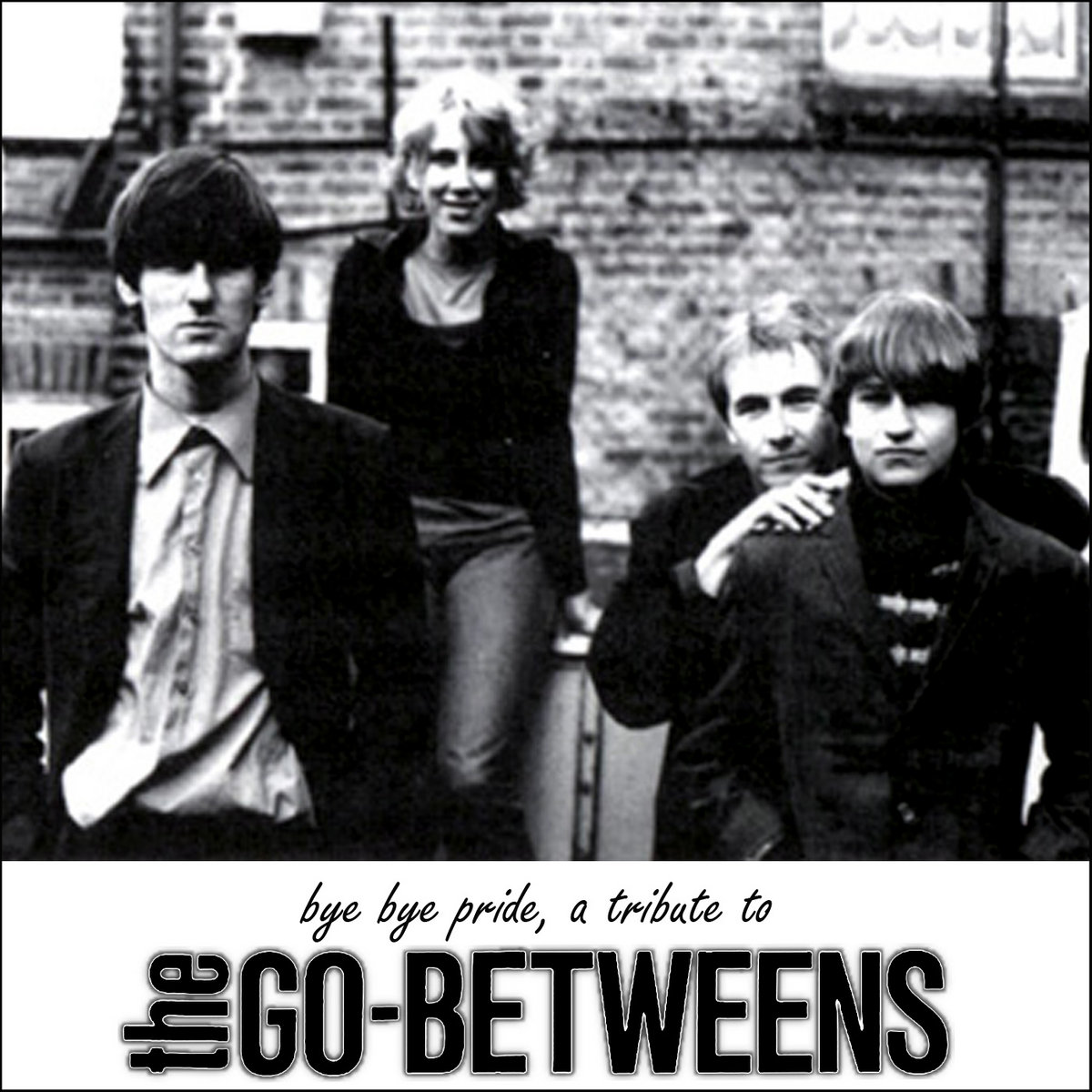
Geniuses will always be geniuses ….. And I could not define in another word what happened in Brisbane, Australia in the distant past of 1977 ….

The reunion of Robert Forster and Grant McLennan generated one of the most beautiful bands that the universe has given us, the name, well everyone knows, or should know, The Go-Betweens.
This project is our small tribute to the magnificent work that these magicians created. My special thanks to all the bands that are part of this project.

And, briefly, the main feeling everyone wants with this project is that…. “Loves Goes On”...anyway.

In memory of the eternal Grant William McLennan.

http://