Lana Del Rey has unveiled a potent new song, “Venice Bitch,” which is expected to appear on her next album, Norman Fucking Rockwell. The album is slated to arrive early next year.
“Venice Bitch” is a sprawling 10-minute cut co-written with Jack Antonoff. The track starts as an tender ballad, with Del Rey unspooling her unique mix of young love and contemporary Americana over an acoustic guitar and subtle strings: “Ice cream, ice queen/ I dream in jeans and leather/ Livestream, I’m sweet for you/ Oh god miss you on my lips/ It’s me your little Venice bitch.” Halfway through, though, “Venice Bitch” transforms into an airy psych-pop jam that coasts to a cerebral, polychrome end.
“Venice Bitch” follows the earlier new track “Mariners Apartment Complex,” another collaboration with Antonoff released last week. Del Rey spoke about working with Antonoff, saying, “We sat down in the studio in New York and he kind of started everything. He would just play chords for hours. He’s so good at piano, some of the stuff he writes just melodically is really kind of classical and in my case it ended up turning more folky. He made it really easy for me to just riff over everything he was doing. In our first week I had two songs I just thought were maybe two of the best songs I had written. He just has a lot of truth in him.”
Elsewhere, Del Rey discussed how she settled on the album title, Norman Fucking Rockwell. “So the title track is called ‘Norman Fucking Rockwell’ and it’s kind of about this guy who is such a genius artist but he thinks he’s the shit and he knows it and he like won’t shut up talking about it,” Del Rey said. “So often I ended up with these creative types or not or whatever and you know they just go on and on about themselves and I’m like yeah, yeah. But there’s a little bit of merit to it also. They are so good. I just like the title track so much that I was like ok, I definitely want the record to also be called that.”
Del Rey also spoke about the numerous other projects she’s working on, including a book of short stories and poems titled,Violet Bent Backwards Over the Grass. Del Rey teased more new music as well, suggesting she might put out another track in October.
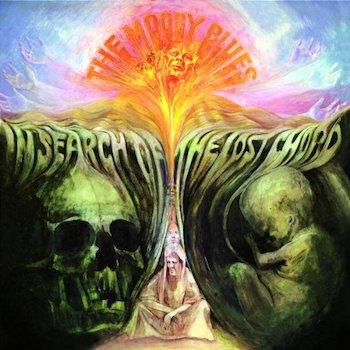
The classic third album by the Moody Blues, 1968’s In Search Of The Lost Chord originally Released date: 26th July 1968,will be released in a 50th anniversary deluxe edition on 2nd November. It will feature bonus and previously unissued material and alternate mixes of this key record in the group’s storied catalogue.
The deluxe edition will comprise a 3CD/2DVD box set with both the original and new stereo mixes of the album. Unreleased material includes a never-before-heard mono version of the Ray Thomas song ‘Legend Of A Mind,’ as well as a live session from influential Radio 1 DJ John Peel’s Top Gearshow and another from Afternoon Pop Show. Mono mixes of the related Deram A and B-sides are also included.
The first DVD in the package contains In Search of the Lost Chordin 96kHz/24-bit 5.1 Surround, as a new stereo mix and the original stereo mix. The second, visual, DVD comprises BBC TV’s Colour Me Pop: In Search of the Lost Chord,broadcast on 14th September 1968, two months after the album’s release; Ce Soir On Danse: The Moody Blues,broadcast by ORTF French TV on 13 July that year, and Carte d’Or’ – ORTF French TV,from 29th October 1968. Both of the French broadcasts are previously unreleased.
The set also includes a 76-page book with extensive sleeve notes by its compiler, Mark Powell, as well as a generous selection of rare photos and memorabilia images.
The album is also being released as a standard vinyl 180-gram facsimile of theLP with the original packaging; D2C limited edition psychedelic coloured vinyl with original packaging, exclusively available from the uDiscover store; and as a single CD containing the new stereo mix plus bonus tracks.
In Search of the Lost Chord,based around the concept of the spiritual and philosophical concerns of the psychedelic era, is seen by many Moody Blues devotees as the group’s masterpiece. It featured the much-loved singles ‘Voices In The Sky,’ written by Justin Hayward, and ‘Ride My See-Saw,’ by fellow frontman John Lodge, among compositions by all five members of the band. The album reached No. 5 in the UK and No. 23 in the US.
The 50th Anniversary Deluxe EditionofIn Search of the Lost Chord is released on 2 November.
Cloud Nothings have released “Leave Him Now,” the second single from their upcoming album Last Building Burning, out October 19th via Carpark Records. The track follows “The Echo of the World” and leans more toward the sunnier pop sound last year’s album release “Life Without Sound”, albeit with more angst and thrash. In the song, frontman Dylan Baldi begging a friend to leave an abusive relationship: “You gotta go right now/Or never at all.”
The band has also announced a fall North American tour starting in October;
“Leave Him Now” is the latest song to be taken from the forthcoming Cloud Nothings album, Last Building Burning, which is due for release on the 19th October 2018 via Wichita Recordings and Carpark Records.
The KVB are gearing up to the release of their sixth album, entitled ‘Only Now Forever’, which will be released October 12th via Invada Records.
The band have now shared new single “On My Skin” which the band describe as “the most openly romantic track on our new album”. They go on to explain “It’s a song that deals with the glowing anticipation of new relationships and the uncertainty and optimism whilst falling in love. How people have a presence even when they are not present, and how memories can linger and infatuate your mind. Treading the lines between euphoria and melancholia, it also recognises that in these delicate beginnings, nothing can last forever.”
After intense touring their 2016 release ‘Of Desire’, The KVB returned to their home to further immerse themselves in sonic experimentation. The resulting Only Now Forever heralds the next chapter in the adopted-Berliners dark, electronic pop development. “On our new album we wanted to take everything we had learned in the studio recording our last album and apply it to self-producing this album,” explains the band. Recorded entirely in their Berlin apartment throughout 2017 the band decided they wanted to take a freer approach to writing and recording. “In the past, we had always tried to restrict ourselves productions wise, to what was possible to play live as a duo, but this time we wanted to expand our compositions and instrumentation, and let the atmosphere dictate the layers of sound.”
Offering poignant lyricism that explores modern anxieties that plague many, the duo manage to imbue feelings of empowerment, fighting such struggles with a deceivingly sanguine sound. This seamless juxtaposition is perhaps their best trait. “For us it is an album of contrasts: light yet dark, uplifting yet melancholic, romantic yet unsettling.”
The ethereal cover ,mirrors dreamy songs such as ‘Live In Fiction’, ‘Cerulean’ and ‘Violet Noon’ – the latter a romantic ode to the apocalypse. In reaction to the anxieties of now, there are more aggressive moments on the album, such as the title track ‘Only Now Forever’ and the single ‘Above Us’, a driving defiance against modern life. Dark and seductive tracks like ‘Afterglow’ & ‘Into Life’ show the influence being in Berlin has had on making the album, a place that has been their home for the past four years.
The duo will take Only Now Forever on the road across the UK and Europe following the October release.
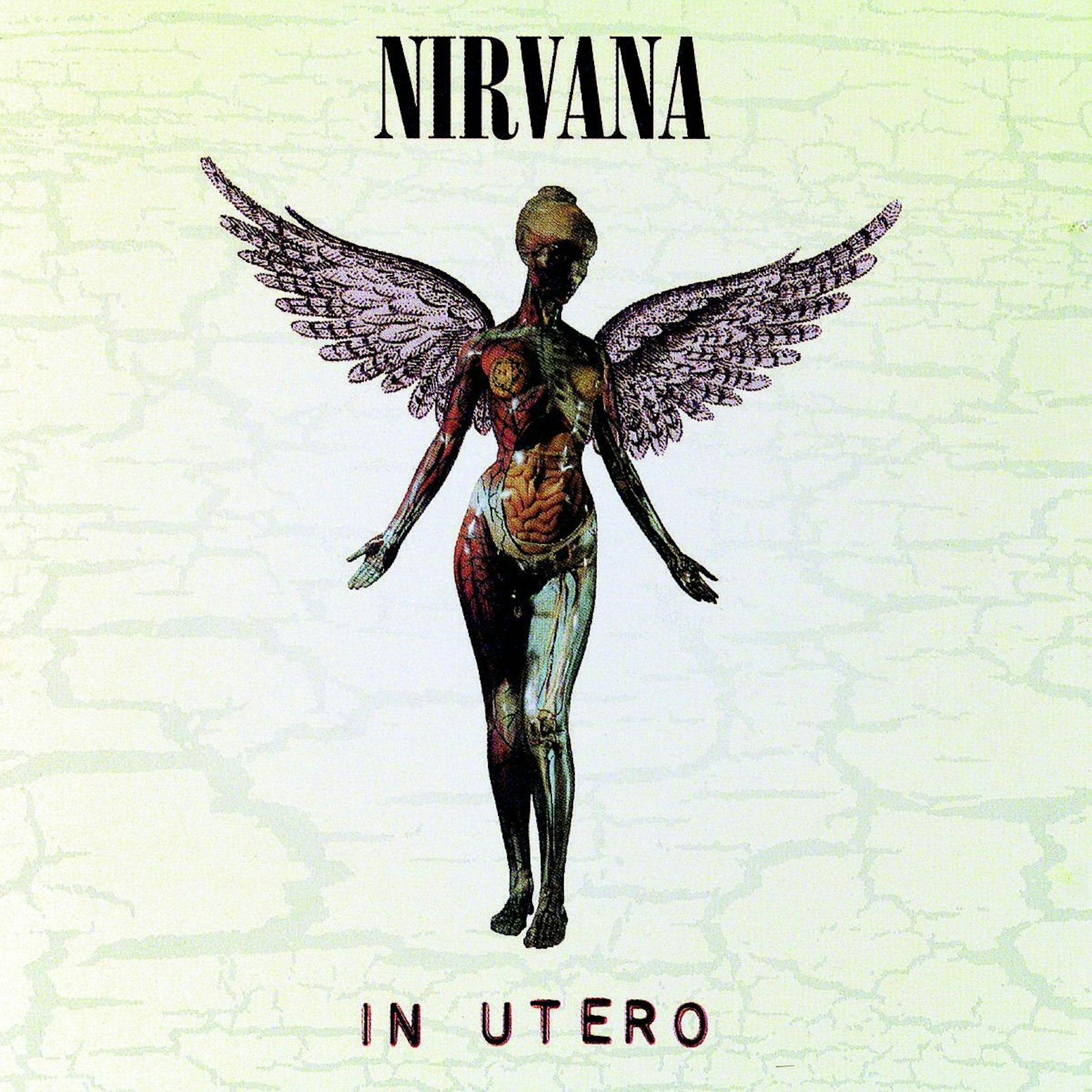
The album “Nevermind” turned Nirvana from unknowns to the biggest musical act in the world and positioned frontman Kurt Cobain as the face of grunge. Although a sensational album, it’s follow-up record “In Utero” that cemented Nirvana’s legacy. Unhappy with the over polished production of Nevermind and concerned with accusations of selling out, Cobain ditched producer Butch Vig for Steve Albini and set about recording an album capturing the harsh, punk influenced sound of their debut Bleach.
In a detailed four-page proposal to the band, Albini laid down his ground rules, the most shocking being his refusal to accept royalties. “I think paying a royalty to a producer or engineer is ethically indefensible. I would like to be paid like a plumber: I do the job and you pay me what it’s worth,” he wrote. “There’s no way I would ever take that much money. I wouldn’t be able to sleep.” He suggested Pachyderm Studios for its isolation in the woods, claiming that recording in a city would cause distractions. He also banned visits from Geffen Records staff members, whom he called “front office bullet heads.”
Albini believed in working fast without over-thinking, so the band cut the album in just two weeks. “If a record takes more than a week to make, somebody’s fucking up,” he wrote in the proposal. The speed at which they recorded, combined with the raw, visceral sound and minimal production, differed greatly from Nevermind, an album that was incredibly clean and streamlined.
In the February 1993, Nirvana made their way to the secluded Pachyderm Studios in Cannon Falls, Minnesota, to begin work on their third album. The last time they had stepped foot in a studio, they were a little known Seattle band that had just left Sub Pop for David Geffen’s DGC. Now, with a multiplatinum album that knocked Michael Jackson off the charts and turned them into one of the biggest rock bands on the planet, they were under immense pressure to follow it up.
“In Utero” achieved this in spades. Draining opener “Serve The Servants” (“Teenage angst has paid off well”), thrash influenced “Very Ape” and cascading hit single” Heart-Shaped Box” were raw sounding tracks exemplifying Cobain’s want of an abrasive sounding record. “Dumb” and the moving finale of “All Apologies” offered lighter moments amongst the chaos, and although Cobain claimed the lyrical content of the album impersonal, it’s hard not to draw parallels between In Utero’s themes and Cobain’s life at that time. It’s 41 minutes of raw, uncompromising rock that was unlike anything else in the pop landscape. Cobain, disenchanted by his overwhelming fame and the widespread media coverage of his personal life, was ready to vent.
Cobain’s bleak worldview was on full display. Many of the songs are best remembered for their gut-wrenching, stripped-back acoustic renditions on MTV Unplugged, but In Utero is treasured among hardcore fans as Nirvana in their purest form. The original title was “I Hate Myself and Want to Die”. “Nothing more than a joke,” Cobain told Rolling Stone. The line, which first appeared in Cobain’s journals in mid-1992, became the working title for the follow-up to Nevermind. “I’m thought of as this pissy, complaining, freaked-out schizophrenic who wants to kill himself all the time. And I thought it was a funny title. But I knew the majority of people wouldn’t understand it.”. Fearing the title would result in the same legal trouble Judas Priest faced three years prior when two fans shot themselves, Krist Novoselic urged Cobain to rethink it. The other working title wasVerse, Chorus, Verse, but Cobain finally settled on In Utero, which he took from a poem of Courtney Love’s.
Cobain had one goal in mind: to bring the band back to their punk-rock roots. Their millions of new fans may have reveredNevermind, but Cobain thought it sounded “candy-ass” and way too commercial. So he recruited esteemed engineer Steve Albini (who had recorded Pixies, the Breeders, the Jesus Lizard and other Cobain faves) and headed for the woods in rural Minnesota
Cobain wrote “Rape Me” to dramatically condemn rape and emphasize his support for women, but the song sparked immediate controversy. “Over the last few years, people have had such a hard time understanding what our message is, what we’re trying to convey, that I just decided to be as bold as possible,” he told Rolling Stone. A huge supporter of the riot grrrl movement and a fan of bands with female members like the Breeders and the Raincoats, Cobain wanted In Utero to pave the way for more female artists. “Maybe it will inspire women to pick up guitars and start bands,” Cobain said in 1993. “Because it’s the only future in rock ‘n’ roll.”
Wal-Mart and Kmart refused to carry “In Utero” because of the song “Rape Me” and the graphic imagery on the back cover. Cobain agreed to change the title of “Rape Me” to “Waif Me,” while the back cover was softened to comply with the demands. “When I was a kid, I could only go to Wal-Mart,” he told his manager Danny Goldberg. “I want the kids to be able to get this record.”
Understandably, “Rape Me” caused other issues for the band, most notably at the 1992 MTV Video Music Awards when network executives told the band that if they played the song they’d immediately cut to commercial. Feeling challenged, Cobain played a bit of the song when they walked out and then went directly into a blazing rendition of “Lithium.”
All three members received credit on “Scentless Apprentice,” an extreme rarity for the group since Cobain normally wrote the songs himself. The raging “Scentless Apprentice,” inspired by Patrick Süskind’s 1985 novel Perfume, is the only track on the studio album co-written by Cobain, Novoselic and Grohl. (On Nevermind, they shared credit on “Smells Like Teen Spirit” and its B side “Aneurysm.”) “Scentless Apprentice” was recorded in just one take. “Nobody said, ‘We should do it again,’” Grohl said “Because that was the fucking take.”
Cobain wrote out a detailed vision for the “Heart-Shaped Box” video with William Burroughs as the star. “William and I sitting across from one another at a table (black and white),” he wrote. “Lots of blinding sun from the windows behind us holding hands staring into each other’s eyes.”
By the time he approached Burroughs, he had decided to cast him as an elderly Jesus, even offering to conceal his identity. “I realize that stories in the press regarding my drug use may make you think that this request comes from a desire to parallel our lives,” he wrote in a letter. “Let me assure you that this is not the case.” Though Burroughs declined the offer, Cobain finally got to meet his beat hero at his home in Kansas that fall.
After Cobain met Courtney Love in 1990, Love gave Dave Grohl a heart-shaped box to give to Cobain. She filled it with items that matched Cobain’s taste — a porcelain doll, dried roses and other tokens — and sprayed some of her perfume on it. As Cobain and Love’s romance blossomed, the item became a symbol of their love. It was also the one item in their home they had in common.
“Pennyroyal Tea” was one of Nirvana’s first songs to showcase the soft-loud-soft formula they became famous for. It was first written and recorded on a four-track with Dave Grohl in Cobain’s house in Olympia, Washington. It went through several permutations before its release on In Utero, including instrumental takes recorded by Jack Endino in 1992. “Pennyroyal Tea” and “Smells Like Teen Spirit” were debuted live the same night, at the O.K. Hotel in Seattle in 1991. “Pennyroyal Tea” was slated to be the third single for In Utero,but was cancelled after Cobain’s suicide in 1994. After Cobain’s death, the label decided to recall copies of the single, which had a B side of “I Hate Myself and Want to Die,” and destroy them. But copies had already been sent overseas and somewhere between 200 and 400 of them reached the fan community.
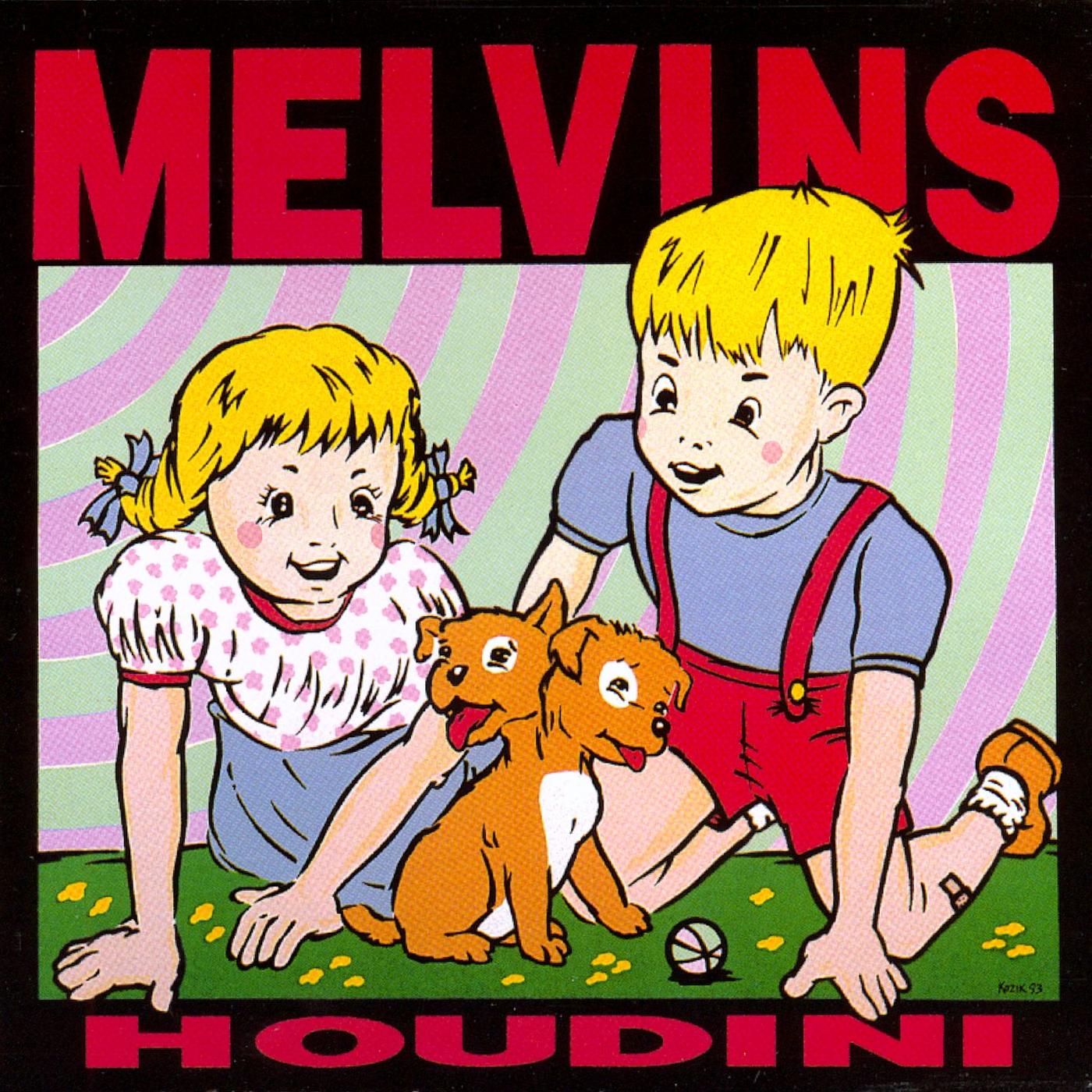
The Melvins had been playing for years before the word “grunge” came into fashion to describe the intense, sludgy alternative rock they helped pioneer, so it’s only fair that when Nirvana hit, the band got offered a major label deal. Released 25 years ago today, HOUDINI, the first Melvins album for Atlantic and their fifth overall, was partially produced by longtime fan Kurt Cobain, who also contributes a bit of guitar to “Sky Pup.” These dozen originals (plus a version of Kiss’ “Going Blind”) are loud, heavy and lumbering, and the massive riffs and weird twists of “Honey Bucket,” “Lizzy” and “Hooch” are still overpowering. Featuring iconic Frank Kozik cover art, HOUDINI is the Melvins‘ most successful album to date, and an ideal introduction to the work of King Buzzo and company.
“Houdini2 is the fifth album by Melvins, which was released in 1993 through Atlantic Records.
Track List : 01 Hooch – 0:00 02 Night Goat – 2:50 03 Lizzy – 7:31 04 Going Blind – 12:15 05 Honey Bucket – 16:48 06 Hag Me – 19:48 07 Set Me Straight – 26:56 08 Sky Pup – 29:22 09 Joan of Arc – 33:12 10 Teet – 36:49 11 Copache – 39:41 12 Pearl Bomb – 41:48 13 Spread Eagle Beagle – 44:34 All rights reserved to The Melvins and Atlantic Records.
Luke Sital-Singh sings songs of love, longing and grief in this stirring performance of “Afterneath” and “Killing Me.” These are the songs I just never tire of hearing and I never tire of writing, because they make me feel less alone,” Sital-Singh says.
I’m not sure if you’ll remember because, you know, there’s a lot of stuff that goes on these days. But back in April of this year I was asked to perform at the TED Global event in Vancouver, and I said yes, obviously. It was an amazing privilege and I’m super excited to tell you that the video of my performance is now live on Ted.com.
I was asked to perform two songs and speak a little about what makes me tick as a songwriter. In my head my talk was entitled ‘Why sad songs are the most important songs’
So go give it a watch, it’s not long. And if you like it maybe share it with someone else you think would enjoy it too.Thank you, Luke x
“Thunder Follows The Light” contemplates the ongoing destruction of the outer world and how it shapes the storms of our inner ones. There are meditations on the environment, collective struggle, death, rebirth, reasons to believe it’s worth the fight.
For nearly a decade, Jordan Lee has crafted pop experiments blending orchestral instrumentation and ambient electronic sounds. “Thunder Follows the Light” is a testament to the power of music as a space for collective processing and emotional response. Like his other releases, it is a highly collaborative document. Its sprawling chamber folk features many returning collaborators—violinist Jake Falby, guitarist Mike Clifford, percussionist Dillon Zahner—as well as first-time players—vocalist Johanne Swanson (of Yohuna), drummer Felix Walworth (of Told Slant), saxophonist Gabriel Birnbaum (of Wilder Maker). Jordan can honestly do no wrong. He is absolutely growing and maturing musically before our very ears, and I for one am honored to be a part of it. Finishing an album is such a huge endeavor that I always feel like it leaves a permanent mark on me. I’m glad for what this process has taught me and am excited to live in this little universe for a while and play these songs around the world!
Lee’s aggressive pursuit of art-making for himself is empathetic and outward-facing, looking both to the past and the future with warmth and hopefulness. “Peace is more than just a season coming ‘round again,” he sings on two different songs—and the emphasis seems intentional: suggesting that harmony of the mind and the heart do not just transpire but must be worked for, growing from deep-rooted foundations. In the world that birthed Thunder Follows the Light, it feels like medicine.
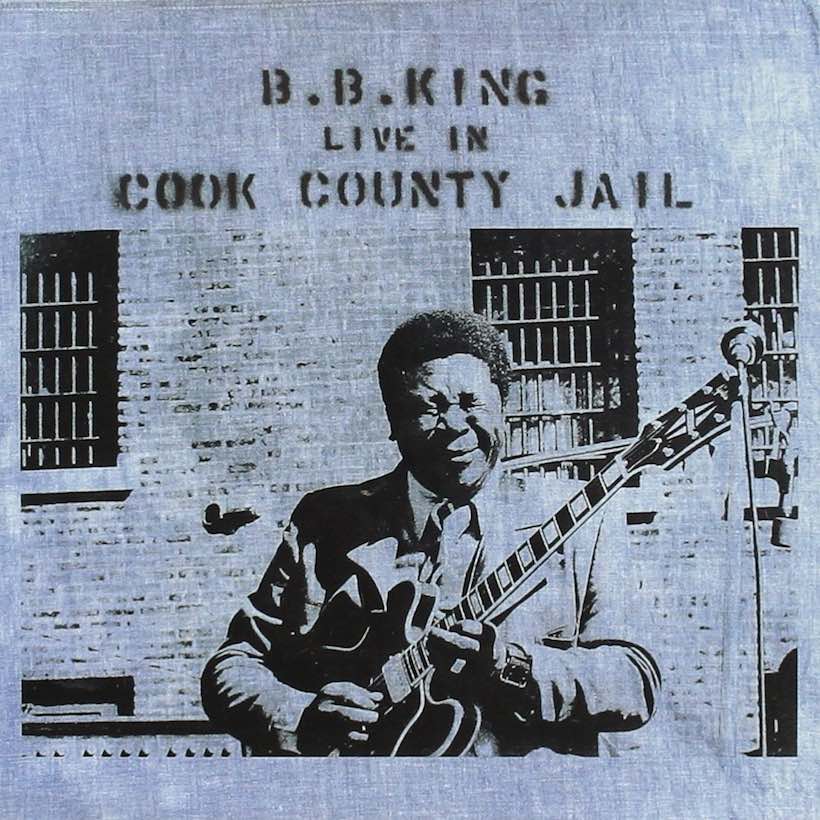
It’s inevitable that this album will be compared to 1965’s Live at the Regal, by the same blues giant and hailed as one of the greatest live albums of all time. And yet Live in Cook County Jail, recorded on 10th September 1970, is an unusual concept, as few artists had followed Johnny Cash’s pioneering example of recording in a prison. In 1968 Cash had recorded in Folsom Prison, which was followed a year later with Cash playing at San Quentin.
There was no greater ambassador for the blues than B.B. King. Unashamedly anchored in the past, B.B. draws deeply upon the familiarity of his audience with classic songs. As testified by countless other live recordings, King uses his skilled banter with the crowd to steer the Cook County Jail repertoire on to timeless favourites, asking their permission to take such a liberty. As if it’s an apology, he explains that it’s a treat for him and the band to revisit old material that they rarely get to play. Well, no excuse necessary. It’s always a treat to hear him playing them, and the versions here are as great as ever. Slightly heavier, with the funkier, driving bass-line of modernity, and the fuller, maturer tone of his faithful Lucille.
There are superb performances of ‘Every Day I Have the Blues,’ ‘How Blue Can You Get?’ and a wonderfully impassioned reading of ‘Worry, Worry.’ ‘How Blue Can You Get? is the great bemoaning of an unfair relationship that B.B. camps up hilariously, building it to a fantastic, forceful crescendo, never failing to excite the crowd on “I gave you seven children, and now you want to give them back!”
He first recorded the song as ‘Downhearted’ for his 1963 album Blues In My Heart, but it goes back to at least the 1950 recording by Chubby Kemp and the Ellingtonians. Although, more likely, it was the version a little later by Louis Jordan and his Orchestra that made its impact on B.B., who from very early on, was one of Jordan’s biggest fans.
B.B. is in such great voice at Cook County Jail, pitching as high as he can go, and following unbelievably beautiful lyrical lines on Lucille. He sustains a soaring, hair-raising note in ‘How Blue Can You Get’ that’s so fine it likely claimed a few scalps on the night.
There’s plenty of old favourites, kicking off ‘3 O’Clock Blues’ that he introduces as “the first tune that made people know about B.B. King” — literally, the first track on his debut album, Singing the Blues. A little more patter and, with the most extraordinary, scintillating, metallic, exquisite discordancy, B.B. segues into ‘Darlin’You Know I Love You’, his hit single from 1952 and only his second to chart. In fact, it hit the No. 1 spot and remained in the charts for a total of 18 weeks. But, what the hell was that surreal chord he hit going into it this time?
The crowd-pleasing, mid-paced ‘Sweet Sixteen,’ which made Billboard’s No. 2 spot in 1960, rounds off this sentimental section. It’s a tune that King wrote with Joe “Josea,” actually one of the Bihari brothers who had first recorded him in the early ‘50s.
Something else had happened in the years between Live at the Regal and this album. For the first time B.B. recorded ‘The Thrill Is Gone’ in June 1969 as a closing cut to the album Completely Well. The album version is a slow rocking 12-bar blues underpinned by lush, swelling strings. People loved it, sending it to No. 3 on the R&B chart and No.15 in the Billboard Hot 100.
The concert version is a little livelier, horns taking the place of strings, and a choppy end section. It’s a fantastic change of direction in the live set towards funky soul, before B.B. does something quite audacious: he addresses his prison audience, ingratiates himself, and then ends the show with the slow ballad, ‘Please Accept My Love,’ performing some exceptional vocal acrobatics.
The band then play B.B. out with an upbeat, anthemic instrumental to rapturous applause. Drummer Sonny Freeman had been with B.B. the longest, since 1960’s B.B. King Wails. So he and his boss were the only ones who had also been at the Regal. Comparative newcomers were trumpeter John Browning, saxophonists Louis Hubert and Booker Walker and pianist Ron Levy, previously with Albert King until 1968.
Live in County Jail made the top of the Billboard R&B albums chart for three weeks running in April of that year, and No. 25 on the Billboard LP chart. Live at the Regal had been a great mid-’60s live set, powerful, and foretelling of the arrival of rock. Live in Cook County Jail was also forward-looking, already using a heavier sound that would culminate in mid-’70s funk. But, both were also retrospective, drawing on some of B.B.’s oldest material. In this light, they make an excellent pair of albums. Essentially inseparable, and insuperably essential.
Near the end of Reagan’s first term, the Western Massachusetts Hardcore scene coughed up an insanely shaped chunk called Dinosaur. Comprised of WMHC vets, the trio was a miasmic tornado of guitar noise, bad attitude and near-subliminal pop-based-shape-shifting. Through their existence, Dinosaur (amended to Dinosaur Jr. for legal reasons) defined a very specific, very aggressive set of oblique song-based responses to what was going on. Their one constant was the scalp-fryingly loud guitar and deeply buried vocals of J Mascis.
A couple of years before they ended their reign, J cut a solo album called Martin + Me. Recorded live and acoustic, the record allowed the bones of J’s songs to be totally visible for the first time. Fans were surprised to hear how melodically elegant these compositions were, even if J still seemed interested in swallowing some of the words that most folks would have sung. Since then, through the reformation of the original Dinosaur Jr lineup in 2005, J has recorded solo albums now and then. And those album, Sings + Chant for AMMA (2005), Several Shades of Why (2011) and Tied to a Star (2014) had all delivered incredible sets of songs presented with a minimum of bombast and a surfeit of cool.
Like its predecessors, Elastic Days was recorded at J’s own Bisquiteen studio. Mascis does almost all his own stunts, although Ken Miauri (who also appeared on Tied to a Star) plays keyboards and there are a few guest vocal spots. These include old mates Pall Jenkins (Black Heart Procession), and Mark Mulcahy (Miracle Legion, etc.), as well as the newly added voice of Zoë Randell (Luluc) among others. But the show is mostly J’s .
He laughs when I tell him I’m surprised by how melodic his vocals seem to have gotten. Asked if that was intentional, he says, “No. I took some singing lessons and do vocal warm-ups now, but that was mostly just to keep from blowing out my vocal cords when Dino started touring again. The biggest difference with this record might have to do with the drums. I’d just got a new drum set I was really excited about. I don’t have too many drum outlets at the moment, so I played a lot more drums than I’d originally planned. I just kept playing. [laughs] I’d play the acoustic guitar parts then head right to the drums.”
There is plenty of drumming on the dozen songs on Elastic Days. But for those expecting the hallucinatory overload of Dinosaur Jr’s live attack, the gentleness of the approach here will draw easy comparisons to Neil Young’s binary approach to working solo versus working with Crazy Horse. This is a lazy man’s shorthand, but it still rings true.
Elastic Days brims with great moments. Epic hooks that snare you in surprisingly subtle ways, guitar textures that slide against each other like old lovers, and structures that range from a neo-power-ballad (“Web So Dense”) to jazzily-canted West Coasty post-psych (“Give It Off”) to a track that subliminally recalls the keyboard approach of Scott Thurston-era Stooges (“Drop Me”). The album plays out with a combination of holism and variety that is certain to set many brains ablaze.
J says he’ll be taking this album on the road later in the year. He’ll be playing by himself, but unlike other solo tours he says he’ll be standing up this time. “I used to just sit down and build a little fort around myself – amps, music stands, drinks stands, all that stuff. But I just realized it sounds better if the amps are higher up because I’m so used to playing with stacks. So I’ll stand this time.” I ask if it’s not pretty weird to stand alone on a big stage. “Yeah,” he says. “But it’s weird sitting down too.” Ha. Good point. One needs to be elastic.