ult

The London band Ultimate Painting were set to release a follow up to 2016’s well-received album “Dusk” via Bella Union but the band split up  the album was cancelled the release of new the record which was entitled Up! may never see the light of day.

“I’m very sad to announce that Ultimate Painting are no longer a band,” the band wrote in a statement on Facebook. “Anyone who has worked with us knows that the partnership at the core of this band has always been a very fragile thing, but due to an irreconcilable breakdown we will no longer be working with each other.

“Obviously if there’s no band, then it’s understandably not really in Bella Union’s interests to put out the previously announced album, therefore I’ve asked them not to release ‘Up!’ at this point in time, which they have agreed to. Thanks to everyone who bought our records and supported us. You know who you are.”

The news also results in a cancellation of tour dates that had previously been announced. Looking back, words from the band’s Jack Cooper last month signalled some disharmony: “If it ends tomorrow,” Cooper said in a press statement previously, “I’d feel really good about the work we’ve done together.

“There’s a cohesion to it but most of all they’re records that we made of music that we wanted to hear. We don’t really have an agenda other than that.”

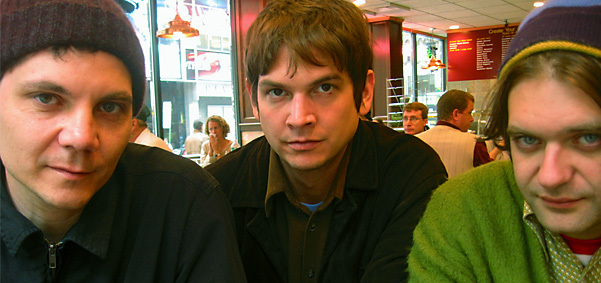
Jack Cooper & James Hoare formed Ultimate Painting. The two had a fast friendship when Jack’s band Mazes were on tour supporting James’ band Veronica Falls, sharing similar tastes in music, art & films. It wasn’t until after returning home that a musical synergy was formed. After numerous demos were exchanged, a few casual jam sessions turned into something more; a partnership. Christening themselves after a piece of art by the Southern Colorado desert community “Drop City Collective”, the lads set to work recording their debut proper.

For the entirety of Ultimate Painting’s now tragically short run, the duo of James Hoare and Jack Cooper were routinely described within the context of their previous bands. Even in posts announcing their abrupt breakup this week, it was still “James Hoare of Veronica Falls” and “Jack Cooper of Mazes”—as if this were the side project, instead of the other way around. As if this was the band that wasn’t meant to be taken as seriously.

Ultimate Painting have been so productive, releasing one solid album every year since forming in 2014, their discography—2014’s “Ultimate Painting”, 2015’s “Green Lanes”,and 2016 “Dusk”, the wonderfully out-of-time third album by this East London’s band, and  then this year’s suddenly doomed “Up!”—represents one of the strongest four-album outputs of a rock group this side of The Velvet Underground. There isn’t a bad track in the bunch, and many of them, unassuming and glacial, are patently stunning. For my money, anyway, “Monday Morning, Somewhere Central” is among the top songs of the decade From their album “Dusk”, out now via Trouble In Mind Records

So what happened,  The new album was in the can, a UK tour was booked, a bio was written, advance promos were sent out. And then just like that, it was scrapped. Due to the usual irreconcilable breakdown,not only has the band broken up, but Up!’s release was completely cancelled as well. (Bella Union, the label set to release it, has confirmed Unfortunately, this doesn’t feel like one of those LCD Soundsystem “let’s make sure we go out with a bang breakups.

For now all we can do is take them at their word that it’s over simply because they can’t work together anymore.  Either way, though, this leaves us as listeners in the precarious spot of having to carry on their legacy retroactively—but that really shouldn’t be a problem, given what’s being left behind.

Looking at it as a whole, Ultimate Painting’s music has that rare quality of being universally appropriate.

Cooper and Hoare worked off of each other so tightly and so subtly, that their interplay often leads you to wonder who’s even taking the lead on any given song. This blending might come off as a boring  and monotonous in lesser hands, but it’s a testament to their strength of their songwriting that Ultimate Painting manage to keep the vibe simultaneously light, wavy and catchy as the best paisley meditations in time and space.

Guitar lines and vocal parts intermix freely throughout, and part of the charm comes from listening to the unified sound of a true duo; on any given track, it’s truly hard to tell which member is playing/singing what—and despite this, it’s all definitively UP. Both members put out albums separately from each other in the past year—Hoare with The Proper Ornaments and Cooper with his recent solo album “Sandgrown” in August of last year and while the projects were both inspired, they felt like they were missing something. It might have been each other.

But in the interest of the band not being forgotten, it’s all but criminal to withhold the release of Up! altogether, whether digitally, physically, or both. To prevent the last recording “Up” from release is frankly bizarre, as well as a tremendous disservice to those who would enjoy it. I can only hope that someone at Bella Union is looking for the fine print in the band’s contract that allows the label to press the record regardless.

Going back to the beginning, much of Ultimate Painting’s music starts abruptly. No count-in, no riff—just straight into the vocals of the verse. It’s a tough trick to pull off, but for songwriters with a gentle touch it’s a wonderful tool to make an otherwise quiet song feel loud and direct. It also makes the song feel like it’s perpetually being performed in the present tense. That’s going to be a big asset going forward now that this catalog has to fight for itself, without press cycles, without touring, without members that even seem to believe in it themselves. Ultimate Painting have gone out with an exclamation mark.

After the autumnal melancholia of 2016’s Dusk, the title of Ultimate Painting’s fourth album suggests a band leaving the past behind and ascending to another level, and to a certain extent that is the story of this record. Now signed to Bella Union, the record is a supremely confident and, at times, a radiant example of their song-writing ability but it also masks a more turbulent story. There were plenty of times when the question was not what it would sound like but would it even exist.

By the end of 2016, Jack Cooper and James Hoare – the band’s two equal but contrasting songwriters – were burned out and unsure of their next move. Releasing three albums in three years had taken its toll and they decided to take some time out to consider their next move. A good idea in theory but as it transpired a bad one in practice, as they immediately started to second-guess what to do next. “We both initially had the idea that we wanted to make a record that had more of an electronic element,” explains James. “We thought we’d try to go slightly more in that direction. Drum machines, synths and so on.” Jack adds: “We started to question what people wanted from us and in the process, I think we briefly lost the idea of what the band was.”

The confused sessions around this time – all of which occurred in the band’s own recording studio in North London – were further hamstrung by Hoare’s ongoing issues with depression. Eventually, an enforced halt was called due to live commitments in the US and it was while they were there, sat on a bench one morning in rural Pennsylvania, that the decision was made to scrap everything. It felt liberating…

Back in the UK in summer 2017, they immediately started over and with rediscovered confidence and momentum recorded a whole new album in just two weeks. The results convey something of that effortless spark as well as a reconnection with the bands’ innate Englishness.

This isn’t the midnight-black interior world of the third Velvets’ album (to which they’ve so often been compared); it’s a record that stretches out in different directions. One minute – on Foul & Fair – drawing from the 60s Brit-folk tradition of Fairport Convention, the next on – I Am Your Gun – channelling the luminous fairground psyche of the Pretty Things or Syd Barrett. It’s also the sound of a band obsessively honing their sound. They joke that it’s the most “Ultimate Paintingy” record they’ve ever made too.

When it was all finally done, though, they both realised all their tough decisions had been vindicated. Their best record to date, albeit the one that caused the most pain and indecision – they hope it will continue their steady ascent. Jack comments: “If it ends tomorrow, I’d feel really good about the work we’ve done together. There’s a cohesion to it but most of all they’re records that we made of music that we wanted to hear. We don’t really have an agenda other than that.”

Up! was to be released 6th April via Bella Union Reords.

thanks FloodMagazine

Image may contain: 3 people, people standing

London alt-rock trio Yak have revealed their much desired follow-up to their debut album, “Alas Salvation”. With new and old members jostled in and of the band during this album’s rocky inception (including Tame Impala’s Jay Watson), a rotated cast eventually ironed out its crinkles, and with the help of former Bjork and Django Django album producer, Marta Salogni, Yak’s difficult second album, in 10 hectic days, was achieved. With both NME and Q magazine’s tipping their nod of approval Yak’s way, the steely, blue-eyed defiance of the trio dismiss any notion of the tired cliche that guitar music is a bygone thing. The freshest second album since Kasabian’s Empire, Tame Impala’s Lonerism and Bloc Party’s A Weekend In The City.

Few albums in rock ‘n’ roll history have seen its creator’s obsession veer so close to self-destruction, as London trio Yak’s The Pursuit Of Momentary Happiness. For singer, guitarist and driving force Oli Burslem, making his band’s second album became about pursuing his artistic vision at the expense of all else, including his own financial security and mental health. Who else these days invests every single penny available to them into recording, to the point where they become homeless?

The result is a rare white-knuckle ride of an album in which his extreme commitment pulsates through every moment – much like Spiritualized’s Ladies And Gentlemen We Are Floating In Space and Tame Impala’s Innerspeaker, both of whose creators had a part to play in its genesis – ranging from the gonzo-fuzz chaos of tracks like “Blinded By The Lies” through to the Roy Orbison-inspired heartbreak of “Words Fail Me”.

Loose Fur - credit: Stefano Giovannini

Jeff never disappoints. Totally dig everything he’s done. This is no different. Great record.  The “supergroup” featuring Jim O’Rourke, Glenn Kotche, and Jeff Tweedy, who all together make Loose Fur ! If you were ever curious, their debut, self-titled record leaves no doubt – these dudes can really fuckin’ play!

Recorded during downtime on “Foxtrot” and refined in the two years since, however, this experiment mostly serves to reinforce what we’re already well aware of: Jeff Tweedy’s formidable strength as a songwriter, the pervasive nuance of O’Rourke’s by-now trademark production, and Glenn Kotche’s unconventional, sometimes overly ambitious approach to percussion.

Oddly, the most predictable elements of Loose Fur are its most “arty” and “experimental”– songs that either follow the laws of entropy and dissolve in a rising swell of dissonance (Like the opener “Laminated Cat”) or defy them entirely, allowing melodies to emerge gradually from the sonic clutter (“So Long”). Despite its relative brevity (six cuts over forty minutes), Loose Fur establishes a familiar pattern early on, and it’s actually the more conventional music– exhibiting Tweedy and O’Rourke’s common soft spot for classic rock– that leaves a more lasting impression.

“Laminated Cat” will be instantly recognizable to Wilco archivists as a more sedate reading of the Foxtrot castoff “Not for the Season”. In its original incarnation the song was a somewhat generic rocker drawn by loops of distorted guitar and gently evocative laptopery into an improbable seven-minute jam. Tweedy’s lyrics are mostly incidental to the tidal pull of the rhythm and O’Rourke’s otherworldly fuzz– a stoner’s recognition of time passing exponentially faster, years spent accumulating piles of books “not worth reading.” Kotche’s percolating thumps grow progressively (and predictably) louder as the tune ambles self-consciously towards the imploding plastic inevitable.

Loose Fur released Domino Recording

A little less than two years on from Wands 2017’s album Plum, Californian scrap polymorphs Wand are prepared to announce their newest, and fifth long playing record, title “Laughing Matter”. By now, Wand is the shifting but unmistakable collaboration between Sofia Arreguin (keys, vocals), Cory Hanson (guitar, vocals), Robert Cody (guitar), Lee Landey (bass) and Evan Burrows (drums).

Laughing Matter is marked by the confidence and fervor of a band that has lived, feuded, thrived and grown together through years of dedicated jamming, touring and recording, across continents and mind-sets. The music of Laughing Matter is distilled and sculpted from an ash heap of collected improvisations, riven with audio-verite; the methods and instrumentation are traditional handmade rock ‘n’ roll. Yet the unorthodox arrangements and exuberant songwriting of the first single, “Scarecrow” push Wand into new territory aimed toward the future sound of the band!Laughing Matter is a record about love in a time of terror; it calls you down from panic room labyrinths, to work the deep tissue of unraveling trauma we all carry so dear. The 15 songs on this record face their energy outward, to take with you through a common world that can’t suffer its human abusers much longer. Laughing Matter encourages you to shake hands with your old demons, to lay your pathologies to rest, to hold your spirit close, and let your body do what’s next.

Listen, watch and take in the new single, Track from “Laughing Matter,” available on 2xLP/CS/CD from Drag City on April 19th, 2019.

Delines imperial 12x12 300dpi %282%29 packshot

Richmond Fontaine‘s renaissance man Willy Vlautin returns with Amy Boone for the second Delines record following a long break from action caused by Boone’s 3 years of recovery following a Texas car accident. This promises more in the vein of 2014’s mesmeric Colfax – late-night, whisky-soaked tales of loss, love and heartbreak fed through a filter of lachrymose alt-country. Expect some magic. Where country meets soul and makes a new sweet golden sound of its own.

The second album from the Delines – it took three years to finish while vocalist Amy Boon (The Damnations, TX) recovered from a bad car accident. The players are keyboard/horn player Cory Gray, pedal steel player Tucker Jackson (The Minus 5) and a bunch of Richmond Fontaine band members namely Sean Oldham, Freddie Trujillo and of course novelist Willy Vlautin. All ten tracks are written by Willy Vlautin, recorded in Portland, Oregon and produced by John Morgan Askew.

A Fender Rhodes kicks in and you know you’re in a safe place. It’s lush resonant tones set the scene, a lap steel slides in to introduce a laconic but oh-so dulcet tune. Crying guitars present tales of broken hearts. Smooth soulful vocals and the sweet golden tones of a brass section complete the mellowest album this year so far.

reissued for Record Store Day 2020.

Image may contain: one or more people

Tackling a slow-burning heartbreaker from Apple’s 1999 LP, the pop newcomer remains faithful to her source material, Fiona Apple has been pretty elusive in the music world for the past seven years, aside from a few live performances and Tumblr posts. Though her contribution is more source material and harmonies here, there’s something satisfying about hearing the venerable singer-songwriter team with young newcomer and fan King Princess for a cover of Apple’s 1999 track “I Know.”

Originally featured as the closing track on Apple’s When the Pawn…, the song is a painful, heart-wrenching tale of being in love with someone who is taken. It’s a simple piano ballad that builds into a lush, jazzy arrangement. King Princess remains faithful to the original in her version, but her Juul-coated throat makes it smokier, and somehow even more exquisitely sullen, than Apple’s original. It’s both bitter and dejected, layered with Apple’s careful, quiet support behind her. The cover also shows off a new aspect of King Princess’ range. Her output thus far has been minimal; she dropped her debut EP “Make My Bed” last year and filled it with rock-leaning, Mark Ronson–assisted pop stunners full of careful details and biting, lovelorn reflections. She teased her trajectory more with the fun, upbeat “Pussy Is God.” To follow such a cheeky turn with a heartbreaking cover and to pull off both with complete sincerity and conviction bodes well for this rising star’s bright future.

The received wisdom is that Harry Styles is responsible for King Princess’s stratospheric rise; the former One Direction superstar tweeted lyrics from the 19-year-old’s debut single, “1950”, to his 33 million followers a few weeks after it came out. But the song, a delicate but supremely confident queer ballad, was one of the best songs of 2018, and would have surely found its audience without him. As the first signing to Mark Ronson’s new label Zelig, King Princess is poised for the kind of left field pop stardom enjoyed by the likes of Years & Years and Hayley Kiyoko.

King Princess performs 1950 on Later… with Jools Holland on BBC Two (25 September 2018)

No photo description available.

Before he played at The Queen Elizabeth Theatre on December 12th, Shakey Graves performed a session for the PEAK Lounge You can listen to the exclusive acoustic performance in concert with Mill Street Brewery.

http://

Shakey Graves Is A Gentleman From Texas.

Live session from 102.7 THE PEAK Vancouver || http://www.thepeak.fm
released February 8th, 2019

Related image

“Rock and roll—it’s the only place you can scream like that without going to jail,” Sonics vocalist-keyboardist Gerry Roslie said a few years ago. That voice—sounding pissed and possessed—lit up the band’s two releases, 1965’s “Here Are The Sonics” and “Boom”, released the following year. The Sonics were uglier, louder and scarier band than anything that had floated this way during the British Invasion. They were also playing what was essentially punk rock in the small town of Tacoma, Washington. one year before bands like The Seeds and the 13th Floor Elevators had done anything, three years before the British gave us The Pretty Things or The Deviants, and almost five years before The Stooges and MC5 blew up Detroit. “Have Love Will Travel” isn’t as in-your-face as “The Witch” or “Strychnine,” but it’s still a primal slab of garage rock (the skronky sax solo rips, too). Some insist that punk rock started in the UK in the ’70s; the Sonics tell us otherwise.

The Sonics represent that raw melodic stuff that came out of garages just every so often. This track is as important as Dave Davies of the Kinks cutting up the speaker on his amp to create that raw gritty guitar sound that you find on tracks like You Really Got Me and All Day and All Of The Night.

In a fertile Pacific Northwest scene, The Sonics stood out for their dark subject matter on songs about poison, mental illness and the occult. One of these, “The Witch,” was enough of a local hit for the Tacoma, Washington., band in 1964 that they made it the opening track on their 1965 debut, Here Are the Sonics. Built around a creepy, lurching guitar riff pinned down by low moaning saxophone, it’s a short jump from “The Witch” to the campy B-movie horror imagery of bands like The Cramps.

One of Tacoma, Washington’s greatest musical exports were these five young men who added the perfect amount of danger and delinquency to their screaming, blasting compositions. Among their best is this short revved-up ode to leader Gerry Rosie’s beverage of choice—a straight shot of strychnine, the cure for what ails you. I’ll have what he’s having.

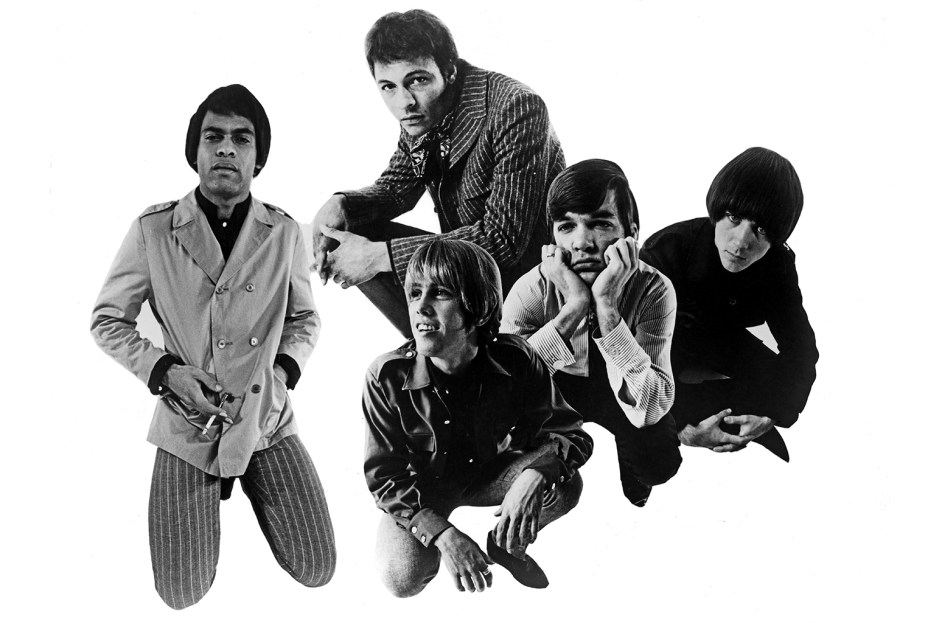
Image result for images of the band love

One of the best West Coast folk-rock/psychedelic bands, Love may have also been the first widely acclaimed cult/underground group. During their brief heyday only lasting all of three albums. They were also one of the first integrated rock groups, led by genius singer/songwriter Arthur Lee, one of the most idiosyncratic and enigmatic talents of the ’60s. They were stars in their native Los Angeles and an early inspiration to the Doors, they perversely refused to tour.

Love was formed by Lee in the mid-’60s in Los Angeles. Although only 20 at the time, Lee had already scuffled around the fringes of the rock and soul business for a couple of years. In addition to recording some flop singles with various bands, he wrote and produced a single for Rosa Lee Brooks that Jimi Hendrix played on as session guitarist. Originally calling his outfit the Grass Roots, Lee changed the name to Love after another Los Angeles group called the Grass Roots began recording for Dunhill. Love’s repertoire would be largely penned by Lee, with a few contributions by guitarist Bryan MacLean.

Inspired by British Invasion bands and local peers the Byrds, Love built up a strong following in hip L.A. clubs. Soon they were signed by Elektra Records, the noted folk label that was just starting to get its feet in rock (it had recorded material by early versions of the Byrds and the Lovin’ Spoonful, and had just released the first LP by Paul Butterfield). Love released three albums with core members Lee, Echols (lead guitar, vocals), Bryan MacLean (guitar, vocals), and Ken Forssi (bass). The drum chair revolved between Alban “Snoopy” Pfisterer (Love, “7 and 7 Is”) and Michael Stuart (all tracks on Da Capo except “7 and 7 Is”, Forever Changes). Pfisterer reportedly found the demanding drum parts on “7 and 7 Is” so exhausting that he and Arthur Lee alternated takes on the first recorded outtakes, but on the final take used for the record, Pfisterer performed the entire track Da Capo also included Tjay Cantrelli, who was added on saxophone and flute while Pfisterer moved to organ and harpsichord. Both were out of the group by the time Forever Changes was recorded

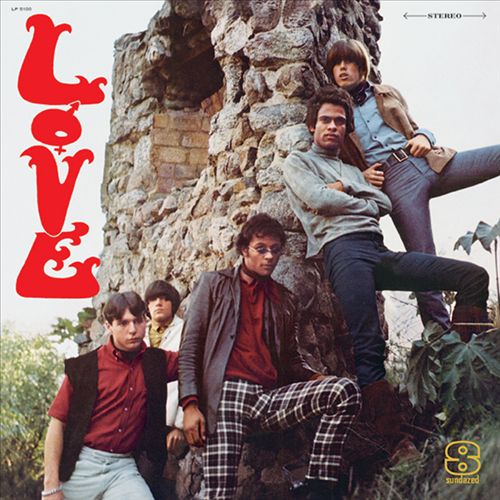
Love  –  Love (1966)

Love’s debut is both their hardest-rocking early album and their most Byrds-influenced. Arthur Lee’s songwriting muse hadn’t fully developed at this stage, and in comparison with their second and third efforts, this is the least striking of the LPs featuring their classic lineup, with some similar-sounding folk-rock compositions and stock riffs.

A few of the tracks are great, though: their punky rendition of Bacharach/David’s “My Little Red Book” was a minor hit, “Signed D.C.” and “Mushroom Clouds” were superbly moody ballads, and Bryan Maclean’s “Softly to Me” proved that Lee wasn’t the only songwriter of note in the band.

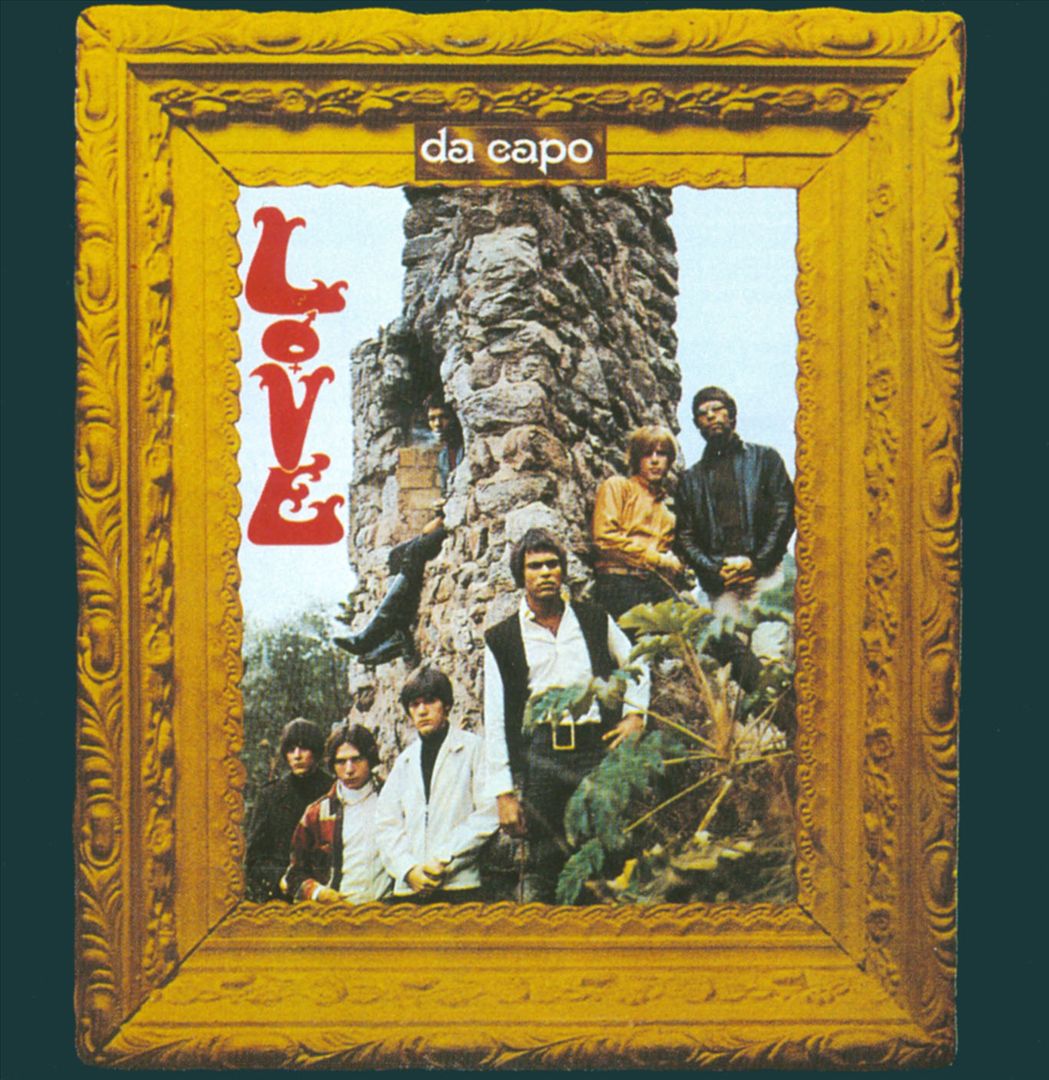
Love   –   Da Capo  (1967)

Love broadened their scope into psychedelia on their second effort, Arthur Lee’s achingly melodic songwriting gifts reaching full flower. The six songs that comprised the first side of this album when it was first issued are a truly classic body of work, highlighted by the atomic blast of pre-punk rock “Seven & Seven Is” (their only hit single), the manic jazz tempos of “Stephanie Knows Who,” and the enchanting “She Comes in Colors,” perhaps Lee’s best composition (and reportedly the inspiration for the Rolling Stones’ “She’s a Rainbow”).

It’s only half a great album, though; the seventh and final track, “Revelation,” is a tedious 19-minute jam that keeps Da Capo from attaining truly classic status.

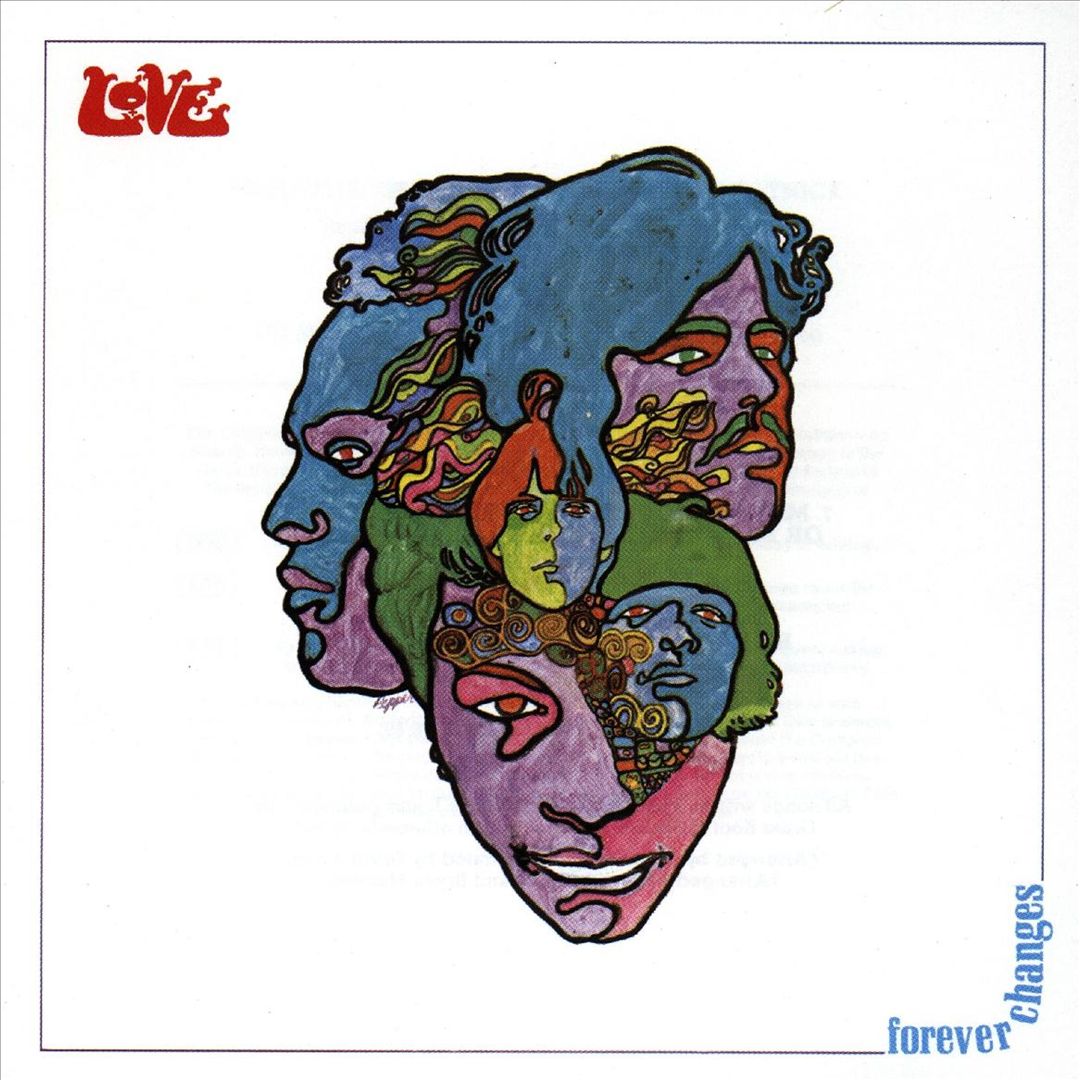
Love  –  Forever Changes (1967)

Love’s “Forever Changes” made only a minor dent on the charts when it was first released in 1967, but years later it became recognized as one of the finest and most haunting albums to come out of the Summer of Love, which doubtless has as much to do with the disc’s themes and tone as the music, beautiful as it is. Sharp electric guitars dominated most of Love’s first two albums, and they make occasional appearances here on tunes like “A House Is Not a Motel” and “Live and Let Live,” but most of Forever Changes is built around interwoven acoustic guitar textures and subtle orchestrations, with strings and horns both reinforcing and punctuating the melodies.

The punky edge of Love’s early work gave way to a more gentle, contemplative, and organic sound on Forever Changes, but while Arthur Lee and Bryan MacLean wrote some of their most enduring songs for the album, with the lovely melodies and inspired arrangements. A certain amount of this reflects the angst of a group undergoing some severe internal strife, but Forever Changes is also an album that heralds the last days of a golden age and anticipates the growing ugliness that would dominate the counterculture in 1968 and 1969; images of violence and war haunt “A House Is Not a Motel,” the street scenes of “Maybe the People Would Be the Times or Between Clark and Hillsdale” reflects a jaded mindset that flower power could not ease, the twin specters of race and international strife rise to the surface of “The Red Telephone,” romance becomes cynicism in “Bummer in the Summer,” the promise of the psychedelic experience decays into hard drug abuse in “Live and Let Live,” and even gentle numbers like “Andmoreagain” and “Old Man” sound elegiac, as if the ghosts of Chicago and Altamont were visible over the horizon as Love looked back to brief moments of warmth. Forever Changes is inarguably Love’s masterpiece and an album of classic enduring beauty.

Image result for images of the band love

Image may contain: one or more people and text

Irish post-punk outfit Fontaines D.C. have announced the details of their highly anticipated debut album, Dogrel, along with the lead single and accompanying video, “Big.” Dogrel will be released on April 12th via Partisan Records.

Following the release of singles like “Too Real” and “Chequeless Reckless,” “Big” is a brisk, snappy post-punk tune with the heart of a lion. You shouldn’t write off frontman Grian Chatten’s speak-sing vocals—he packs just as much gritty ardor into his impassioned, poetic proclamations as throaty punk howlers.

Speaking about the Molly Keane-directed video, the band commented, “We felt that great ambition was a sickness, and we got Grian’s 11-year next-door neighbour to say it to you all because he’s got the presence of a hundred frontmen.” According to the band, Dogrel’s title is an ode to their roots and the album is unapologetically Irish. They wrote on Twitter, “Dogrel is a crude, traditionally Irish working-class form of verse, historically looked down upon by literary critics.”

In addition to their sold-out U.K. tour in April, Fontaines will support Idles in North America in May, and embark on a European and U.K. headlining tour in November. They will also make appearances at festivals like SXSW, End Of The Road and more.

‘Big’ is taken from the forthcoming debut LP ‘Dogrel’ by Fontaines D.C. Out April 12th 2019 via Partisan Records.