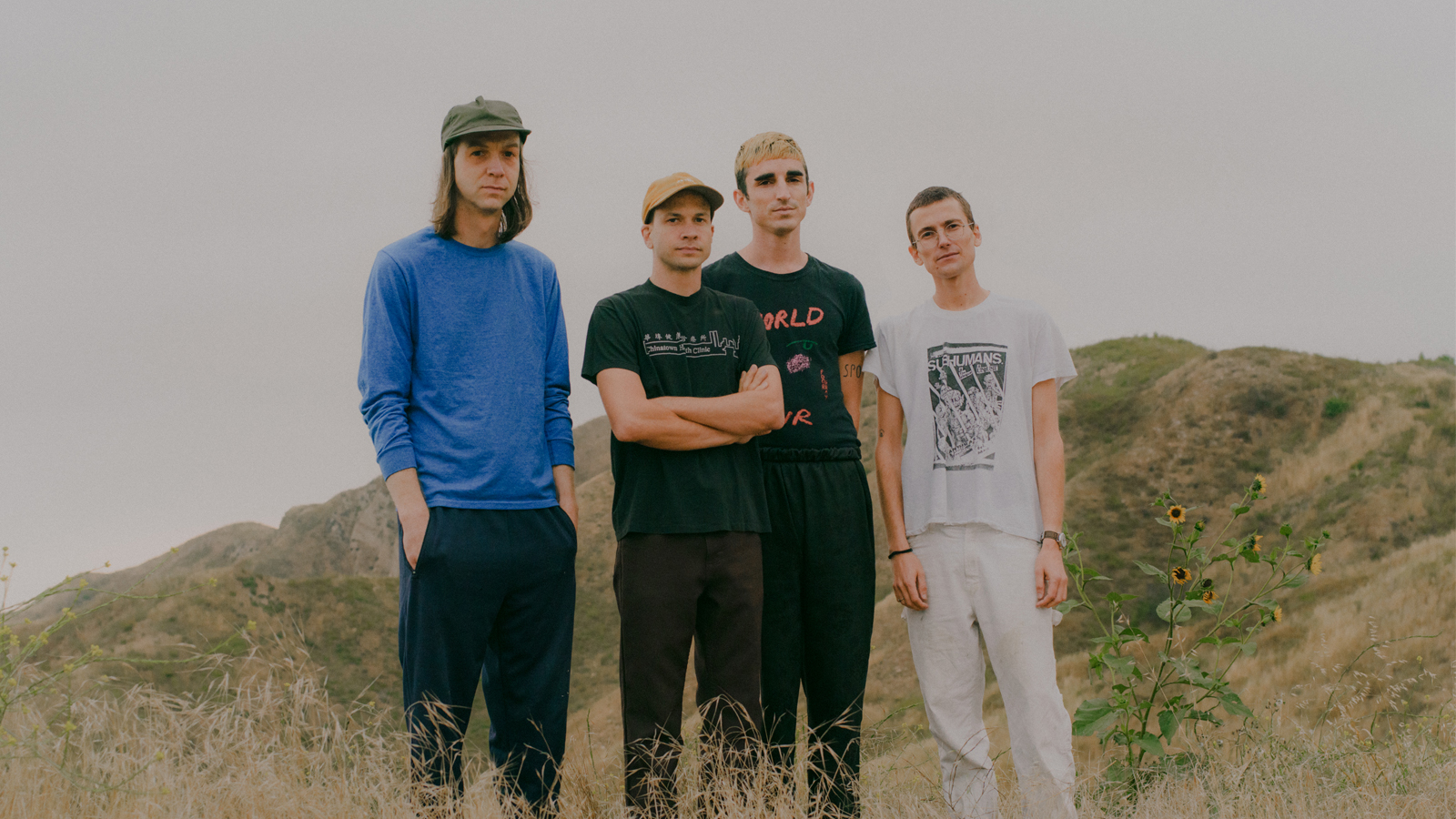
Rebirth takes place when everything falls apart. On DIIV’s forthcoming third full-length album, “Deceiver” – out October 4th – they craft the soundtrack to personal resurrection under the heavy weight of metallic catharsis, upheld by robust guitars and vocal tension that almost snaps, but never quite… Today, the band — Zachary Cole Smith [lead vocals, guitar], Andrew Bailey [guitar], Colin Caulfield [vocals, bass], and Ben Newman [drums] — releases lead single “Skin Game,” which gallops forth on a clean guitar riff before unfolding into a hypnotic hook offset by an off-kilter rhythm and hummable solo.
“It’s an imaginary dialogue between two characters, which could either be myself or people I know,” says Cole of “Skin Game. “I spent six months in several different rehab facilities at the beginning of 2017. I was living with other addicts. Being a recovering addict myself, there are a lot of questions like, ‘Who are we? What is this disease?’ Our last record was about recovery in general, but I truthfully didn’t buy in. I decided to live in my disease instead. ‘Skin Game’ looks at where the pain comes from. I’m looking at the personal, physical, emotional, and broader political experiences feeding into the cycle of addiction for millions of us.” Deceiver was recorded in March, 2019 in Los Angeles. For the first time, the band enlisted an outside producer in the form of Sonny Diperri (Nine Inch Nails, Protomartyr) whose presence dramatically expanded the sonic palette, making it richer and fuller than ever before. The new album is preceded by 2012’s Oshin and 2016’s critical and fan favorite Is the Is Are. Ranked it in the Top 10 among the “Albums of the Year” and Pitchfork’s audience voted Is the Is Are one of the “Top 50 Albums of 2016” as the outlet dubbed it, “gorgeous.”
DIIV – Zachary Cole Smith (lead vocals/guitar), Andrew Bailey (guitar), Colin Caulfield (vocals/bass), and Ben Newman (drums) – craft the soundtrack to personal resurrection under the heavy weight of
Ask most music lovers to name female singer-songwriters of the classic-rock era and the same trilogy of names will come numbingly to the tongue—Carole King, Joni Mitchell, and Carly Simon. It’s a familiar enough group to have inspired a best-selling biography covering all three, “Girls Like Us,” by Sheila Weller.
It’s too bad more people don’t know that there should be a fourth “girl” in that club one of equal talent and reach who sprang from the same era: Laura Nyro. That’s especially unjust given the fact that, in the late ’60s and early ’70s, Nyro penned many more chart hits than Joni did and at least as many as Carly managed. Admittedly, there’s a significant caveat to Nyro’s success: She could only smuggle her genius into the mainstream via cover versions recorded by more accessible artists. Between 1967 and ’71, songs that Nyro wrote, like “Stoney End” “Eli’s Coming and “Wedding Bell Blues”, flew high on the charts and became embedded in the public’s consciousness. But they only did so cut by other artists like Barbra Streisand, Blood Sweat and Tears, Three Dog Night, and The 5th Dimension, respectively.
It was left to the most dedicated fans to savor the quirks and drama of Nyro’s own recordings. They were contained on classic albums like Eli and the Thirteenth Confession , New York Tendaberry , and Christmas And TheBeads Of Sweat, all works which presented Nyro in the raw. Her albums served unsweetned versions of the songs, spiked by complex arrangements, sneaky beats, and vocals that could turn in an instant from shy to stentorian. Given those eccentricities, it’s understandable that Nyro never achieved the exposure of her peers.
This year, however, Nyro’s achievements deserve a fresh view, will mark 50 years since her debut appeared under the apt title More Than A New Discovery (later re-released as ‘The First Songs’). This fall, the star would have turned 70, while April 8th will mark twenty years since her death, exacerbating the silence surrounding her. Even most of the stars who gave Nyro her hits back in the day have fallen from popular, or critical, favor. The exception? Barbra Streisand, who included a herculean version of “Stoney End” on her most recent tour, this past summer.
That song, and others, demonstrate how Nyro brought together elements, and sensibilities, no other writer thought to connect. Her sift of genres put her beyond easy category. Listening to Nyro’s records today, you find yourself thinking: Just what kind of music did she make? Her unconventional keys and startling tempo changes suggest jazz. Her theatrical melodies speak of Broadway, while the introspection of the songs says “singer-songwriter.” Meanwhile, the soulfulness of Nyro’s tunes played straight to the heart of Motown. Everything from art-song to girl group hits had an influence on her sound.
Nyro’s music also boasted a heightened sense of place. Her records spoke the clamorous language of her birth city, New York, in the mid-20th Century. In her recordings, we hear the grandeur of Grand Concourse, the striving of the Lower East Side, the chic of Riverside Drive and the soul of Harlem. It’s a sound of uptown and down, an ideal blend of the sophisticated and the earthy.
The source of this creative nexus was born Laura Nigro on October 18, 1947 in the Bronx. Her parents boasted Russian Jewish and Italian Catholic roots. Her mother, Gilda, toiled as a bookkeeper while her father, Louis, provided her musical genes. Louis earned his living as a piano tuner and jazz trumpeter. Laura taught herself to play piano as a child, absorbing records played by her parents from the worlds of classical music (Debussy) and jazz (Billie Holiday). A clear prodigy, Laura wrote her first composition at the age of 8. In high school, she came to love the best soul songs of the day, from Martha Reeves to Curtis Mayfield to Nina Simone. Reflecting her ambition, she changed her name to Nyro (NEAR-oh) in high school. Her father’s contacts in the music business brought her to Artie Mogull, who became her first manager in 1966, before she turned 19.
It wasn’t long before the newly dubbed Laura Nyro sold her first song: “And When I Die,” a rousing ode to mortality and rebirth, which Peter Paul and Mary snapped up for five thousand dollars. Three years later, the song became a pop smash for the jazz-rock band Blood, Sweat and Tears, augmented by an unusual hoe-down arrangement. Nyro made her own professional debut at the hungry i, the famed boho performance space in San Francisco. Shortly after, Mogull got her a recording contract with Verve Folkways Records, home to Richie Havens, Janis Ian and Tim Hardin. In 1967, Verve issued Nyro’s debut, which barely cracked Billboard’s Top 100 Album chart. Its first single, “Wedding Bell Blues,” never inched above No. 103 on the singles list. Yet, two years later, the song went all the way to No. 1 in a version cut by The 5th Dimension. Nyro’s debut contained a Trojan Horse full of eventual hits, including “And When I Die,” which BS&T finessed to No. 2 in ’69, Blowin’ Away, which The 5th Dimension drove to No. 26 the same year and “Stoney End,” which Barbra Streisand rode to No. 6 in 1970, providing her biggest hit since People in 1964.
Still, Nyro wasn’t happy with the album. She had originally conceived of “Wedding Bell Blues” as a three-act suite. But producer Herb Bernstein made her cut a simpler version, undermining her theatrical reach. She experienced more frustration in the live arena. The singer considered her performance at the breakthrough Monterey Pop Festival in 1967 awkward, making her reluctant to play live. At the same time, the show made an impression on an important observer. A young David Geffen saw her and became smitten. He lobbied to become her manager, easing out her earlier handler, Mogull. Nyro became the budding mogul’s first project. Geffen immediately connected her to Clive Davis, then the pasha of Columbia Records. Davis had been to Monterey as well, inspiring him sign another key female star of the ’60s: Janis Joplin.
The fabled story of Nyro’s audition for Davis underscores the intimacy of her style. In Davis’ first memoir he wrote that, when she played for him, she insisted on turning off every light in the room save one—a beam from a television set positioned next to her piano. Bathed in the cathode ray, Nyro performed songs that would end up on her Columbia debut, Eli and the Thirteenth Confession, in 1968.
The performance epitomized the star’s keen sense of dynamics. In many songs, Nyro’s voice broke the silence like a spotlight falling on a darkened stage. Slowly, and quietly, piano chords would make their way around the voice, as if waiting for guidance. For minutes, vocal and keyboard would amble on until, fitfully, they erupted with spirit. The singing, then, turned exuberant, the piano playing orgasmic until, together, they formed a melody that couldn’t be more winning or true. The result presented a bold irony: Nyro’s songs were at once embraceable and elusive, easy and hard.
Her songs came to full bloom on ‘Eli,’ which appeared in March of 1968, graced by a unusual bit of packaging. Nyro insisted that the lyric sheet be perfumed. The recording found Nyro fully owning her operatic vocals, while the arrangements (co-created with Charlie Callelo) didn’t skimp on eccentric flourishes. Once again, the album yielded hits for others, including “Eli’s Coming,” a Top Ten smash for Three Dog Night, Sweet Blindness, a No. 13 score for the Fifth Dimension and Stone Soul Picnic, which the same group soared to No. 3. While the essential songs had as much pop appeal as compositions of the era by Jimmy Webb or Holland-Dozier-Holland, in the context of Nyro’s album they dove deeper. They coalesced into a full musical, mapping out Nyro’s greatest loves, hopes and fears.
While the album only inched to No. 181 by Billboard’s album tally, it had a profound influence on other artists. A young Todd Rundgren sought Nyro out, impressing her enough for the star to offer him a position as her band leader. He declined, since he had just signed a contract for his band The Nazz, whose first single Hello It’s Me, bears an obvious resemblance to Nyro’s style. Several years later, Elton John introduced a sound that bore its own debt to Nyro’s. Rickie Lee Jones also took influence from her, evident in her unusual approach to pace and her will to let her songs evolve.
The public began to take more notice of Nyro late in ’69, following the publicity identifying her as the writer of so many songs they loved. In the fall, Nyro’s third album, New York Tendaberry, got to No. 32, the finest showing of her career. A more spare recording, the album contained a song she first released the year before, Save The Country, which showcased her political side. “Save The Country” had been written after the assassination of Robert Kennedy. As usual, the piece got a far wider airing in a version by The 5th Dimension, which became a Top Ten hit in 1970.
Ironically, the only time Nyro finessed a single of her own into the Top 100 was a cover version—of the Goffin-King classic Up On The Roof. It appeared on her 1970 album, Christmas And the Beads of Sweat. The recording proved the power of Nyro as a performer, divorced from her role as a songwriter. That secondary aspect received a full airing on her next album, 1971’s Gonna Take A Miracle, a work comprised entirely of covers. Yet, these sounded like no others. To rarify the sound, Nyro made several key hires. For her producers, she chose the creators of Philly-soul, Kenny Gamble and Leon Huff. For her backup group, she selected Labelle. The twist? She didn’t use the group members—Patti Labelle, Nona Hendrix and Sarah Dash—as common backup singers.
Throughout the album, Labelle stands on nearly equal footing with Nyro, creating a thrilling sense of tension, while adding great dimensionality to the sound. Together, their voices created some of the erudite vocal harmonies in the history of soul.
For the material, Nyro drew on the Motown, doo-wop and Brill Building hits that first drew her to pop in the late ’50s and early ’60s. Everything from Spanish Harlem to Monkey Time turned up, along with a version of Marvin Gaye’s The Bells that may be Nyro’s most sensual recording. A 2002 re-issue of the album added four live tracks to the ten original studio cuts, including another nod to Nyro’s peer, Carole King, in Natural Woman.
The lyrics to that song perfectly suited Nyro’s image as an urban Madonna, the bohemian Jewish street poet who had become an heir to the classic American songwriters, from George Gershwin to Irving Berlin. The live cuts dispelled the notion of Nyro as an awkward concert performer, an impression held over from her Monterey appearance. In fact, one of her finest recordings was a concert set, Spread Your Wings and Fly, released in 2004 and cut at The Fillmore East 1971, mere weeks before that storied hall closed.
By the end of ’71—at the height of her songwriting career— Nyro announced her retirement from music. She was 24. Nyro had been newly married and wanted to concentrate on her life away from the stage. Happily for fans, her “retirement” ended five years later, when she divorced her husband and released her first album of original material in over half a decade, Smile. For that album she reunited with her arranger on ‘Eli’, Charlie Calello. The album arrived in the wake of the death of her mother, to ovarian cancer the year before, but it had as many encouraging moments as melancholy ones. Over the next two decades, Nyro continued to periodically record and tour, releasing her final work of original material in 1993, Walk The Dog and Speed The Light. It was produced by Gary Katz, known for his work with Steely Dan, a band whose early, R&B-leaning work bore Nyro’s clear influence.
Three years after her final album, the songwriter herself was diagnosed with ovarian cancer, a disease which took her life in April of 1997. Then 49, Nyro was same age her mother had been when she succumbed to the identical illness. In the years since, Nyro’s recordings have become entirely ghettoized to the writerly sidelines. At the same time, her compositions have enjoyed a life of their own. They stand shoulder-to-shoulder with the repertoires of Leiber-Stoller and Bacharach-David. There’s just one difference in that analogy. Those other catalogues sprang from teams of two. With Nyro, as always, there was only just one.
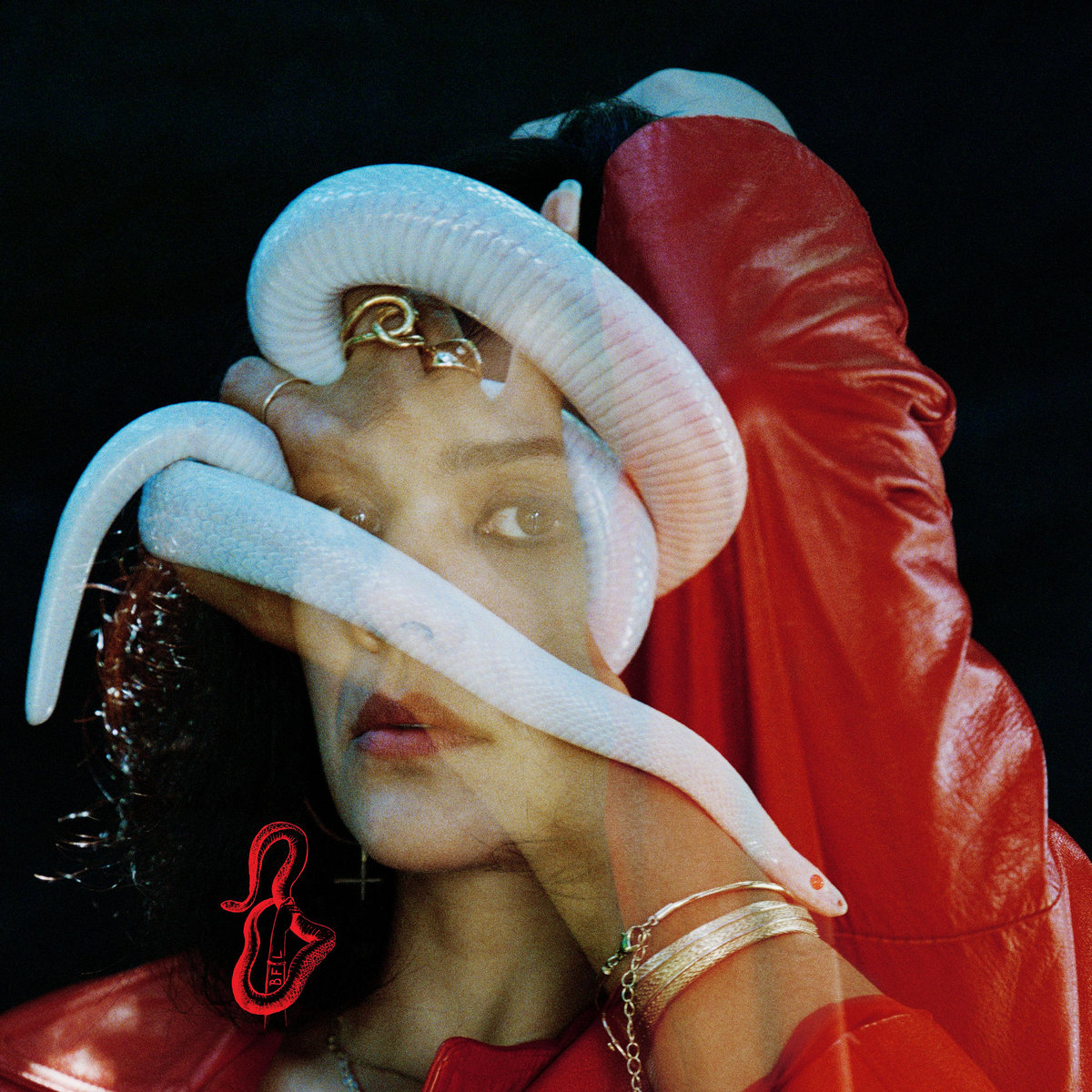
The Londoner plugs in the synths for a journey into the supernatural. Natasha Khan’s latest is a synth-pop love letter to the ’80s sci-fi and fantasy films of her youth. “Lost Girls” is the fifth studio album by Natasha Khan, known professionally as Bat for Lashes. It was released on 6th September 2019 through AWAL Recordings. It is Khan’s first album since 2016’s The Bride. The lead single “Kids in the Dark” was released on 10th June 2019.
Lost Girls is no less fantastical. Loosely centered around a new character (Nikki Pink) and a gang of biker women who roam the sunset streets of an eerie, make-believe vision of LA, it’s essentially a love letter to the ’80s sci-fi and fantasy films of her youth. She wrote the songs while working on a script of her own, and the starry-eyed, big-screen synth-pop of “Kids in the Dark” sounds like the soundtrack to the big romantic clinch in her own coming-of-age flick.
Khan has cited 1980s music and cinema as an inspiration for the record, citing artists such as Bananarama, Cyndi Lauper and The Blue Nile as well as film composer John Williams.
Bat For Lashes rarely makes anything less than a big statement with each of her releases—even the one-off side projects—and Lost Girls is not an exception. In some respects it feels like a paring down; the songs are shorter, the concept a bit less cosmic or emotionally overwhelming, but the final product remains grand, a rich headphone experience as much as it is a backdrop for some particularly elaborate daydreams.
Out today, “Days” is the latest dreamy roller from No Vacation’s upcoming EP, Phasing. The new release’s penultimate track cruises and sways upon a rolling groove of curious, winding bass and No Vacation’s signature guitar twang. Its reverb-soaked vocals call on nostalgia for days long passed, building up to the song’s instrumentally dynamic climax where a dozen layers of strings envelop the arrangement in a shimmering display of the group’s penchant for compositional tension and release. “Days” proves to be a quintessential No Vacation number, dabbling as it does in evocative, shoegazey dream-pop that leaves listeners warm and hopeful.
Avid psych heads have been long awaiting English jangle-pop group Temples’ return to the fray. I am among them and the news that their new LP Hot Motion came out friday is heartily welcomed. ‘You’re Either On Something’ is a fine lead single, awash with fuzzy guitars and shimmering synth arps. Nobody sings like James Bagshaw.
With their third brilliantly crafted and ingeniously intricate album, “Hot Motion”, British band Temples has found new ground and a deeper, darker creative well. A glorious technicolor infuses much of the record but there is a David Lynch-ian undertone that adds a gravity to Hot Motion’s soaring moments. “It felt like there was a darker edge to what we were coming up with and we wanted to make sure that carried through the whole record,” said bassist Thomas Walmsley. “It’s not a ten track, relentless rock record from start to finish, it’s got a lot of light and shade and more tender moments, but that heavier, darker sound is something we wanted to explore further.
As the follow-up to 2017’s rhapsodic Volcano, Hot Motion finds Temples on new ground, and wading into darker, deeper territory in terms of both songwriting and instrumentation. The album’s first single is a bright, brassy return to the band’s distinct psychedelic pomp, but built on a sturdier, stadium-rock backbone. The accompanying video drowns the band in warm hues of orange, red and yellow as they perform the track in a hazy funk.
With Neil Young and Crazy Horse’s new album “Colorado” arriving on October 25th, the reunited rockers have shared “Rainbow of Colors,” the second preview from the upcoming LP. It’s a bright, optimistic tune calling for unity in the age of Trump. Much like the previous Colorado single “Milky Way,” it is quite mellow by the usually loud standards of Crazy Horse.
“The idea of the song is that we all belong together,” Young wrote on his Neil Young Archives website. “Separating us into races and colors is an idea whose time has passed. With the Earth under the direct influence of Climate Chance, we are in crisis together needing to realize we are all one. Our leaders continually fail to make this point. Preoccupied with their own agendas, they don’t see the forest for the trees.”
Colorado is the first Neil Young and Crazy Horse album since 2012’s Psychedelic Pill, and the first since guitarist Frank “Poncho” Sampedro retired from the group. He has been replaced by Nils Lofgren, who has played with Young going all the way back to After The Gold Rush in 1970. This new lineup of the band first played together on a California theater tour in 2018 and they cut Colorado at Studio in the Clouds near Telluride, Colorado earlier this year.
An arena tour was originally booked for later this year, but Young said he was pushing it back so he could focus on a series of archival concert films and documentaries. And in a recent note, Young hinted that he’s already looking ahead to Crazy Horse’s next record. “Another one is coming,” he wrote. “I can feel it. It’s a new generation for the Horse. Long live the Horse!”
Official Audio for “Rainbow of Colors” from ‘Colorado’ the new album from Neil Young with Crazy Horse available on October 25th.
Flyte have recently returned with their lovely new EP “White Roses”, a release that they describe as a good preview of what’s to come for their eventual next album. Over the past few years, we’ve watched indie rockers Flyte admiring their wonderful tunes It took many years but after the release of their terrific debut album The Loved Ones last year they finally announced their first appearance at SXSW in Austin, Texas and ended up following those dates with their debut New York performance, with the promise of some old songs but also, some new ones. This performance featured only half of the band, with Will Taylor and Nicolas Hill playing all the songs totally stripped down and acoustic.
The band hinted that they finished their new album, one that was described as a heavy break-up album. These songs were personal and heartbreaking, but with that whimsical folk charm that the band has been leaning into with precision with every new release. Along with “White Roses” and “I Still Believe In You” from the EP White Roses, four other brand new songs, “Never Gonna Stop Trying To Break Your Heart,” “Never Get To Heaven,” “Everyone’s a Winner” and “Mistress America,” which was played for the very first time ever on their recent festival dates at the Deershed and 110 Above Festival .
These new songs have me really excited for the new album, The band soared as high as ever. They thanked the crowd for sticking with them for the new songs and then rewarded us with lavish performances of “Cathy Come Home” and “Faithless” from their superb debut and one of the best albums of 2017, The Loved Ones.
Her first new music since the ‘Good At Falling’ album, The Japanese House has announced details of her new EP ‘Something Has To Change’, as well as sharing the title track and confirming details of a UK tour at the end of the year. A delightful synthy slapper, the new song is also accompanied by a brand new vid featuring a cameo from Amber’s cute AF dog too. What more could you want from a pop vid, eh?
The new track is the first to emerge from the singer, real name Amber Bain, since the release of her acclaimed album ‘Good At Falling’ earlier this year. It’s also accompanied by a music video directed by photographer Nadira Amrani, which sees her band making their first full performance in one of Bain’s videos. The full EP will arrive in November,
The king of rock, pop, teenage dreams, psych, the new wave and and future genres yet to be defined, Tim Presley is gearing up for sum shows in the East Coast, Chicago and then keeping Austin weird in November! Hot on the heels of “I Have To Feed Larry’s Hawk”, this succinct jaunt will be the first opportunity to see/hear Tim Presley’s WhiteFence in the U.S. following the release of IHTFLH, which is a big fucking deal.
Playing cuts old and new and under various monikers, who knows what this bitches brew will ferment!
Now, dig the official video for I Have To Feed Larry’s Hawk highlight, “Indisposed”:
Song from Tim Presley’s White Fence’s 2LP/CS/CD “I Have to Feed Larry’s Hawk,” released on January 25th, 2019 from Drag City Records.
When the members of the popular Denver indie-pop outfit Wildermiss shot the video for “Paralyzed” earlier this summer, they called on their friends to take photos of themselves around downtown Denver.
But members also approached strangers on the street, and the video soon had a Spanish flight attendant and people visiting from Japan taking part. “It was cool to communicate with them just through trying to get their photo and tell them what it was for without really talking to them,” says vocalist Emma Cole. “It was really cool meeting all these people and kind of hearing a smidgen of their story, but also just catching them at that moment in Denver for a video.”
It’s not the first time Wildermiss has taken to the streets of Denver for a shoot. In the video for “Carry Your Heart,” the four lugged an old couch from location to location.
Thematically, the video ties into a lyric in the song, “Just another look in your eyes and I’m paralyzed.” The imagery comprises a series of black-and-white photographs that have been stitched together and give the appearance that the subjects are sitting still while the background shifts behind them. In a way, the subjects appear frozen in time, or perhaps paralyzed, because of the effect.
“We just thought it would be a fun way to present the lyric video,” guitarist Seth Beamer says. “Our goal was to get as many pairs of eyes as possible.”
Band Members
Emma Cole,
Joshua Hester,
Seth Beamer,
Caleb Thoemke
“Paralyzed” from the new EP “In My Mind” out everywhere 11.01.2019