Imploding the Mirage is out today via Island Records. Imploding the Mirage is The Killers’ sixth studio album, following 2017’s Wonderful Wonderful, and features artists such as WeyesBlood, Adam Granduciel of War On Drugs and Lucius. Recorded in Los Angeles, Las Vegas and Park City, “Imploding the Mirage” also includes previously released singles “Fire in Bone” and “Caution,” which topped both the Alternative and Radio charts. It’s been a long road to the Killers’ Imploding the Mirage, with the title getting revealed in November 2019 and the release date being pushed from May until now due to the pandemic. It’s the first Killers album without founding guitarist Dave Keuning, but it does feature production from Shawn Everett and Foxygen’s Jonathan Rado, as well as contributions from Fleetwood Mac’s Lindsey Buckingham, Weyes Blood, the War on Drugs’ Adam Granduciel, k.d. lang, Blake Mills, and Lucius.
With their May postponed new album ‘Imploding the Mirage’ is finally released today (August 21st), The Killers got in a little promo last night (August 20th) when they appeared as the musical guests on The Late Show with Stephen Colbert.
Watch them perform ‘Blowback’ from the record below.
Taken from their forthcoming sixth album, “Imploding The Mirage”, the Vegas natives performed their recent single on the Ellen DeGeneres show via a live stream from their studio. The studio version featured former Fleetwood Mac guitarist Lindsey Buckingham on guitar, and his solo is omitted from the live version performed here. Still, it’s an uplifting performance full of keys, synths and great 12-strings.
It’s only been a few days since The Killers released their luscious, soaring record, Imploding The Mirage, but the band are already cooking up new material for a new album that may see the light of day next year. In a lengthy feature with NME, the band revealed that they’ve already recorded a brand new album, which they intend to drop in 2021.
“You know when people just say that? Every time someone makes a record they say that they have 50 songs and they’re going to release another record. We really are,” explains frontman Brandon Flowers. “We’re going to release another one in about 10 months. We’ve already gone back into the studio with [producer Jonathon] Rado and Shawn [Everett, producer]. We did a week in Northern California.”
Flowers acknowledged that the lack of touring brought upon by the coronavirus pandemic has left him with “a lot of time on my hands.” Though he’s stressed that the forthcoming record won’t be a quar-album. “I’m not writing a quarantine album or anything like that,” he explained. “You kind of just start hitting your stride when you’re finishing a record. You’re writing lyrics, you’re mixing everything, you’re in it – then you go on tour. It’s interesting to not be going on tour and having any of that stuff taking up my brain. I just went right back to the piano.
“I was already exercising my song writing muscles so a lot of it came very quickly. Something powerful happened when I shut off the part of my brain that runs towards the grind and just started running towards the creative part of my brain.”
Fans can rejoice in the knowledge that the next record will certainly arrive before the bands rescheduled stadium shows, “Oh yeah, there will be another album. I’m excited. It might be better than this one.”
The arrival of Muzz’s self-titled debut LP has been similarly low key, only for its captivating blend of melancholic indie-rock to immediately betray the long game behind its creation.
A meeting of New York minds Interpol vocalist and guitarist Paul Banks, polymath producer Josh Kaufman and drummer Matt Barrick, late of Jonathan Fire Eater and the Walkmen – Muzz have been tooling around for half a decade at this point. Appropriately, their first album together has a lived-in quality, with its intricacies brought to life by the relaxed chemistry of the performances. “In the studio there’s so much leeway,” Kaufman says. “All you’re trying to do is express a moment in music.”
Kaufman and Banks have been friends since they were teenagers attending the same Spanish high school, later reconnecting after moving to New York in separate instalments. Barrick crossed their paths as a key cog in the city’s early 2000s indie-rock machine, eventually playing in Banks + Steelz (Banks’s project with Wu-Tang Clan supremo RZA) and sitting in on Kaufman’s sessions with Craig Finn for the Hold Steady frontman’s 2017 solo LP We All Want The Same Things.
Muzz began to coalesce in 2015 as embryonic arrangements were fleshed out jam-style, but it would take time for the trio to perceive themselves as a band who did conventional things like release records. “I think it was just the fact that we were feeling like there was something there to offer people beyond these sort of intimate conversations between the three of us,” Kaufman says of the decision to break into the open.
Muzz, compounds the immediately recognizable vocals of Interpol frontman Paul Banks and the similarly familiar drumming of The Walkmen’s Matt Barrick, with the additional contribution of guitarist Josh Kaufman from contemporary folk newcomers Bonny Light Horseman. The result is a surprisingly comfortable pastiche of the three artists’ distinct sounds, compounding the uneasiness of Interpol, the playfulness of The Walkmen, and the tranquil twang of BLH.
After spending sections of 2019 working on Finn’s I Need A New War and the riotous guitar blowout of the Hold Steady’s Thrashing Thru The Passion, Muzz offered Kaufman the chance to test his mettle as a composer and performer while also marshalling the troops from the control room. Rather than viewing them as competing disciplines, though, he prefers to zoom out and see them as complementary roles.
“I don’t know that I see a distinction,” he says. “I feel like when you put a bunch of musicians in a room, you’re kinda dealing with a co-production no matter what. If I’m producing a record, and that’s my job, then I’ll do my best to shepherd it, and to give my two cents, and try to advise.
“But, really, I’m just trying to sound good with everyone, sorta walking the walk a little bit. Like, ‘Maybe if I do my best to bring what I love to this, then that’s going to come out in the people around me too, and we’ll end up with something that’s better than the sum of its parts.’ That’s where I’m coming from. When I go in to work with Muzz, or with anyone else, I’m walking in the same way.”
Here, Kaufman was tasked with facilitating the band’s open-hearted approach to collaboration. As a multi-instrumentalist he went from sitting at a blown out upright piano to laying down large swathes of the record’s guitars, while Banks and Barrick also embraced the lack of defined roles. “I don’t think anyone’s afraid of playing anything,” Kaufman says. “Sometimes we’re in a room together and we’re switching. Paul will hop on drums, Matt will hop on guitar, and I’ll play bass. Maybe I’ll sit at the piano, Paul will play guitar, and Matt will play drums.
“You don’t have to have the command over the breadth of the instrument that you would if you were sitting down to be a soloist. I think that’s been really helpful, and there’s not a lot of ego. Everybody’s open to one another’s creative strengths in the moment, however those might alter depending on what we’re working on. It’s always composition-dependent, right? You can get the most technically amazing musician to come and play something and you can be incredibly unmoved by it. I think that looking for the most moving contributions is usually the barometer.”
Muzz strikes gold in its combination of rich melody and desolate grandeur, landing somewhere between the gloom-pop of arch storyteller Bill Callahan and the National’s widescreen emotional inquisitions, the mechanics of which Kaufman knows better than most after collaborating with the Dessner brothers and Scott Devendorf as producer of Grateful Dead legend Bob Weir’s 2016 LP Blue Mountain.
“I think that’s the natural democracy of the three of us,” Kaufman observes. “We all lean in that direction, but it took a little while to find out that we lean that way. It’s funny, you sit in a room and you play something loud and rocking and you’re like, ‘Oh my gosh, that’s so much fun.’ And it is so much fun to have those releases. But then you go into the control room and listen to it back and go, ‘Man, I don’t know if I want to listen to this, though.’ There was a lot of back and forth about whether we were making music that we wanted to listen to. I think that was a big X on the map.”
The album takes a textural approach to its guitars, weaving delicate lead lines and warm ringing chords throughout songs that benefit from swelling strings and the washes of brass that have become something of a Kaufman go-to. “I think all three of us are passionate about the guitar,” he says. “Matt and I are really into older guitars, and more oddball models. I think that it was another voice.
“There are a few songs that we wrote as guitar parts, like Bad Feeling. That was a guitar [line] first and then Paul wrote to that, and Trinidad was a guitar part that Paul had, but for the most part on these songs the guitar was a voice. There’s a few songs where it’s like a strummy thing, but the foundation isn’t always guitar. It just helps with the mood of everything.”
Kaufman’s description of the guitar as a voice is apt but it also raises an issue for a band such as Muzz, who openly toy with the dreaded ‘supergroup’ tag. Banks’s bandmates are operating in tandem with one of indie-rock’s most recognisable and oft-imitated vocalists, adding an extra layer of consideration lest their guitar work stray too close to Interpol territory. “Maybe I have the advantage of understanding intellectually that it’s iconic to people, but then emotionally I’m just connected to my friend,” Kaufman observes.
“I’m sensitive to it, but I’m not afraid of it. We would build a kind of sonic world of tones that we really loved and then put a guitar line on top. Paul would write his vocal melody to that as harmony parts, or as a doubled part. A good example of that is the song Evergreen, where there’s this weird slide guitar that had been living for a couple of years. Paul had been saying he wanted to do something with it. One day we’re in the studio and he added the vocal to it in such a cool way. I had imagined muting that guitar, but he really liked it there as something to sing to. When I say that the guitar functions as a voice in this music, that’s kind of a way that Paul and I can sing together.”
In the studio, Kaufman ran the guitars through a relatively organic setup. He generated the record’s reverb and tremolo effects through a handful of Fender amps – chiefly Princeton and Deluxe models – and daisy chained channels on the console in pursuit of the correct amount of comforting fuzz. They leaned hard on the Guilds in their respective collections – Banks’s jumbo acoustic in open tuning, Kaufman’s Starfire IV and an S-90 fitted with a Bigsby – alongside a 60s-era Gibson 12 string, plus a handful of Telecasters, Silvertones and Danelectros.
“I also have a Strat that I like to play DI,” Kaufman adds. “It’s an old ’71 that I put Lollar pickups in. Man, they are so beautiful. The first time I got them in they were quieter than the stock pickups, and I was a little miffed. But, oh no. When I A/B’d them against older recordings I was like, ‘These are so beautiful.’ You just have to turn up the amp a little bit more and you get all this air.”
Actually, Kaufman devoting time to a new set of pickups and finding buried treasure mirrors Muzz’s slow-burn journey nicely. “Developing the sound of the band over five years or so, to use the parlance of right now ‘in quarantine’, it feels good to finally come out with it,” he says. “Unfortunately, we’re coming out into a vacuum. But I do think there are some benefits to that. People really need music right now, and maybe they are spending time more closely with it. I think there’s a light there.”
The recording of Muzz, the group’s first album together, was a few years in the making, and who better than the group’s three members to walk us through the twelve songs’ inceptions? which dropped on June 5th via Matador Records—and read on for the songwriters’ insight.
1. “Bad Feeling”
Paul: Josh and Matt wrote and recorded this song (without horns) one afternoon when I had left the studio in Woodstock to drive back to NYC. They emailed it to me with the rest of the music we had worked on together in that session. It spoke to me immediately. I felt it was like a song for your pocket. Like Will Oldham’s “I Send My Love to You.” It sounded like a sigh.
I waited until I felt inspired to write the lyrics. That happened at the beach after I visited with a surf bro—an American named Joey—who lives in Central America with his wife and child, and who at that time was preparing to move completely off the grid—deep into the wild—to run a remote surf lodge. And he was ecstatic about it. The opening lyrics and the chorus are directly inspired by Joey, in honor of the monumentality of his hope.
2. “Evergreen”
Josh: “Evergreen” was built around a slide guitar instrumental that I had written and recorded years before we started actively Muzz-ing. It was a tune that Matt and Paul both dug and we had a blast layering onto the recordings I had in the archive. Love the Flutes by Stuart Bogie on this and the sweetness of Annie Nero and Cassandra Jenkin’s chorus harmonies. I had always imagined just muting the melody line and letting Paul construct something new there, but when I heard him sing to the slide melody it really unlocked the whole jam. Amazing rolling groove by Matt here as well…kinda love that it just goes for a while at the end. I am literally singing into the pickups of one of my old guitars for those little background patterns.
3. “Red Western Sky”
Paul: “Red Western” was written and recorded up in Woodstock at The IsOkOn. Fairly early on. We improvised the beginning as part of a jam, and then Josh sat down at the piano and fleshed out the chorus progression, and then I wrote vocals all in the same day. I remember sitting in the control room listening to Matt lay his beat down, and feeling an upswell of excitement—a sudden sense that the song was destined to be dope. Later we added horns, which were such a great addition on this track.
The song had a dusty mood of Americana to my ear, musically. So when I sat down to write vocals I just immediately saw myself as a character on a highway in Nevada—going west with the sunset as a guide. Spirit quest, Jim Morrisson shit. That’s what informed the lyrics. I think there’s some Cormac McCarthy influence as well.
4. “Patchouli”
Josh: This song got me thinking about our band’s ability to spontaneously compose songs together. It’s the first of a few that were concocted through a vibey jam resulting in a tune. I remember this one moving very quickly. I was strumming Paul’s Guild in some alt tuning that I now forget, Paul improvised that guitar arpeggio, and Matt moved the whole groove along with his breezy shaker tom-tom, kick pattern. After that we added an old Crumar which has those sweeping brass filters on it, bass, and a couple other textures, and Paul wrote his vocal line and lyrics to that… “Hey mom, I made it so your light burns / Hey mom, I’ve changed.” Nice one, PB!
5. “Everything Like It Used to Be”
Josh:“Everything Like It Used to Be” is another jam that is based off one of my older demos. In the original version I had all of these strange samples of people sighing on the backbeats going into the choruses. Paul liked those, but after hearing his voice on the track we decided to remove some of those (as he likes to call them) “ice-y modern details” in place of a more classic track—strings by Rob Moose are always really special, and he really built on the emotion here. Matt and I re-cut the rhythm track in the same room to get a sweet and blurry bleed between the instruments. As with a lot of art, while it moves through time, it takes on new meaning. That occured unpredictably fast here with the line, “I want everything like it used to be,” which started to feel like a relatable lifeline at the onset of the current health crisis.
6. “Broken Tambourine”
Josh: Funnily enough, Paul was asleep when Matt and I cracked open “Broken Tambourine.” It was recorded early spring up in Woodstock, NY—hence the babybird songs built into the piano track. Dan Goodwin (our renaissance man engineer/co-producer) brilliantly set up and tracked Matt and I writing this song while we had the porch door open, so it’s a piano, drums, Catskills nature “live-off the floor” kinda sound. PB walked in as we were finishing and loved the feeling of the track, he made a few suggestions and then got to work on the vocal immediately. This track also deals pretty directly with isolation and feels particularly connected to the pandemic moment we’re all going through.
7. “Knuckleduster”
Matt:Josh and I recorded the basics for this song at my practice space in Philly in 2015, a couple years before we would get together with Paul and really start working on the Muzz album. We tried rerecording it a few times, but the original demo had an energy that was hard to beat so we ended up building on that. The vocals for this one were the last thing we recorded for the record, so this one is full circle.
8. “Chubby Checker”
Paul: This was a piano riff I was playing around with in the studio, and Josh said, “Let’s record that!” So we jammed it out with Josh on keyboards, me on piano, and Matt on drums. And we recorded to one mic. Then Josh layered the guitar parts and bass on top. His first bassline reminded Matt of Chubby Checker—hence the name. But we scrapped that bass take anyway and got the current one instead. We kept the nonsense working title because we like a little nonsense here and there.
The piece has a unique atmosphere and tone for the record. But it reminds me of Can for some reason, and that makes me happy. The song lived as an instrumental for, like, a year. The only part I wrote at the time we recorded was “Back on your feet how you planned it.” Then at the last minute I finished the words—maybe the last day of recording. One of my favorite tracks.
9. “How Many Days”
Matt: This was one of the earliest songs to come together for the record. During a Banks and Steelz soundcheck in Phoenix, I was messing around and playing this beat—and Paul started playing a chord progression from a song he had already demoed. There was just one thing missing: a ripping Josh guitar solo.
10. “Summer Love”
Matt: A deep cut but one of my favorites. This one started from one of Josh’s demos. Great fluting by Stuart Bogie. I was trying to mimic the sound of an old Rhythm Ace drum machine with real drums and percussion. I like how this one is relaxed and just rides out on that main vibe and vocal line. Was really fun hearing all of Paul’s vocal ideas on this one.
1. “All Is Dead to Me”
Matt: Most of the album we recorded upstate at the IsOkOn with D. James Goodwin, but this one was done at Silent Partner, a studio Paul and I started in Philly. Josh was on tour and we went to the studio the day after his show. He went straight to the Hammond organ and made good use of the built-in reverb, while I wailed on a strange-sounding cymbal covered in duct tape. When he was gone I got to sneak in a couple guitar licks, but later he put me in my place with a ripping guitar solo. Love the brass on this one by The Westerlies.
12.“Trinidad”
Paul: This track was just a guitar sketch and lyric that I had laying around. We tried to build the song into something longer and more complex structurally, but ultimately settled on the original minimal form. I tracked the guitar and the vocal at the same time, so the recording sounds and feels really live, I think. Then Josh layered guitar and bass; Matt played to it; and then The Westerlies played horns and voila, that’s how the song came to be. Josh says the song is “funereal,” which influenced how he wanted the horns to sound: a little durgey, a little somber. I think it works nicely.
Muzz’s self-titled debut is out now on Matador Records.
A Spotify playlist published by the U.K. outlet Far Out has put every Grateful Dead official live release in chronological order. This mammoth undertaking amounts to a whopping 355 hours and chronologizes the band’s 30 year history of live concerts.
The playlist, titled “The Grateful Dead live:A complete chronological playlist”, was made public earlier this week. The collection features all of the official live releases sanctioned by the band, from Dick’s Picks to Road Trips to the Download Series and everything in between.
Even though the Dead, who had only recently changed their name from The Warlocks, played their first show on December 4th, 1965 at one of Ken Kesey‘s famous Acid Tests, the playlist’s first entry comes from theRare Cuts &Oddities 1966 collection released in 2005. This album delivered what it promised via a hodgepodge of studio outtakes from the band’s self-titled debut album, as well as rough early recordings from gigs at the Fillmore Auditorium in San Francisco, CA and Los Angeles’sDanish Center. From there, “The Grateful Dead live” traverses through the long strange trip that was the Dead’s career. The final entry on the playlist, unsurprisingly, is “So Many Roads” taken from the Dead’s final concert on July 9th, 1995 at Chicago’sSoldier Field. While it wasn’t the final song Jerry Garcia sang at that concert, the pain and exhaustion in his voice perfectly encapsulates the final march of the Grateful Dead. Garcia died of a heart attack a month later on August 9th, 1995, signaling the end of the Grateful Dead.
While “The Grateful Dead live: A complete chronological playlist” doesn’t offer any new material, and obviously is unable to include the thousands more hours of Dead content available via an army of concert tapers, it condenses the band’s career into a neat package. To anyone looking to begin the deep dive into the seemingly-never ending well of the Grateful Dead, this playlist would be an ideal starting point. It could also be useful to any Deadhead looking to kill just under 15 days time.
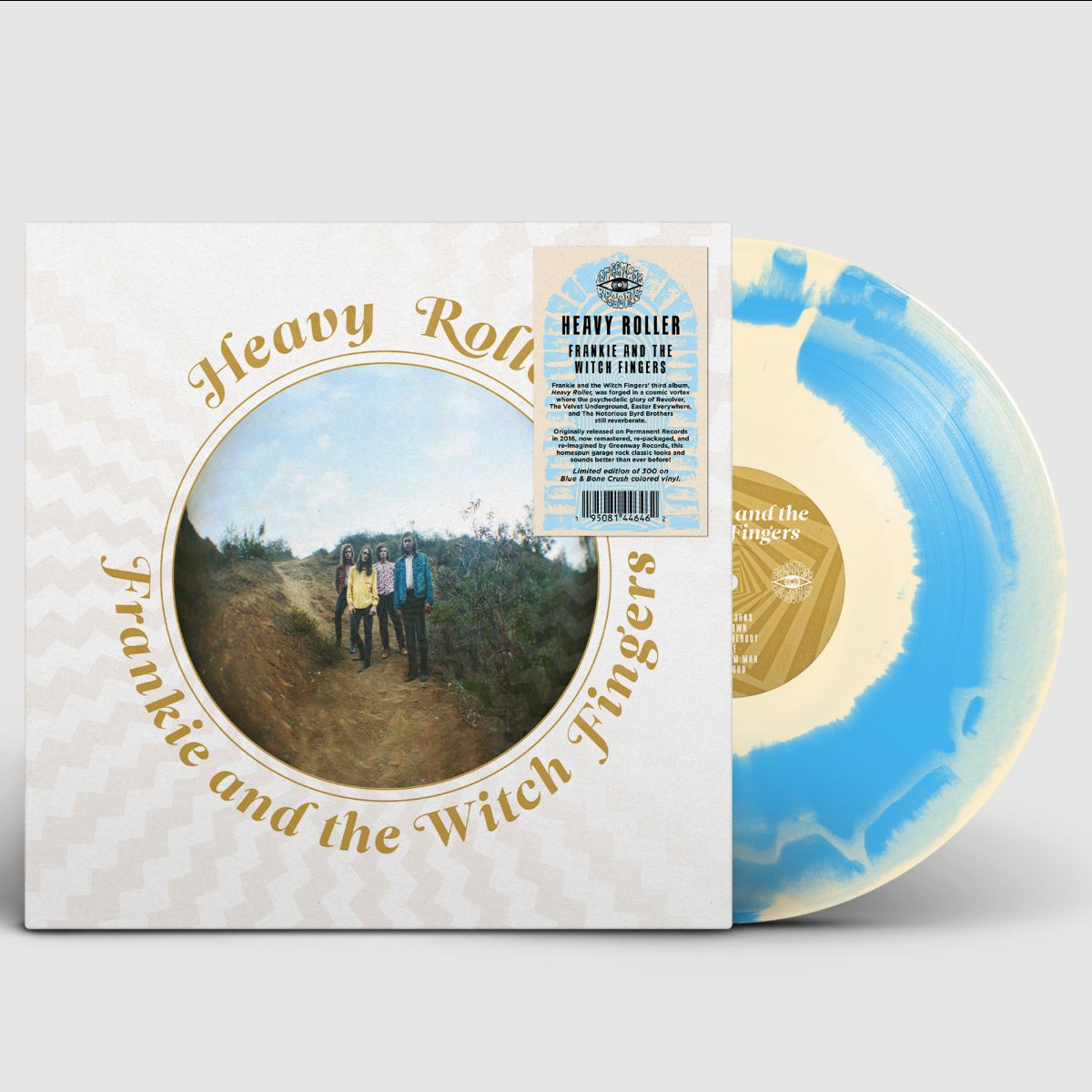
You know them by now. Dylan Sizemore, Shaughnessy Starr, Josh Menashe and Nikki Pickle make up the highly-praised L.A. garage psychedelicists Frankie and the Witch Fingers. Well known for their explosive live performances, the band has grown their fanbase exponentially with every new album. Combining insta-catchy hooks with muddy garage guitar tones while stirring in absurdist lyric treatments on top, encountering a Witch Fingers tune is not unlike slipping into a hefty acid-soaked hallucination. Both are wild and unpredictable, but you can bet they’ll guide you safely to the Garden of Eden with minimal wear and tear.
Frankie and the Witch Fingers are a swift kick in the ass for garage psych. Their hooks are sharper, the production isn’t vintage for the sake of vintage, and the recorded material captures the energy of the band’s eccentric live performances perfectly. That’s exactly what they do on Heavy Roller” – (Consequence of Sound).
For the first time via Greenway Records, the record is newly re-mastered and re-packaged with brand new art, the jacket features a UV-Gloss treatment like we’ve never seen before & comes with a full color inner sleeve. Totally re-imagined, Frankie’s fuzzy dream looks and sounds better than ever!
The first 100 orders come with a brand new & exclusive Heavy Roller iron on patch FREE! Don’t snooze!
Initially released in 2016 on Permanent Records to a quick sellout, Greenway Records has remastered, repackaged and officially respawned Heavy Roller into 2020 to fight back the foggy haze of civil unrest and cabin fever isolation with some tried-and-true out-of-body psychedelic fun and excitement.
After two decades of successfully pursuing simple truths in popular music, Matt Pond has recently begun to take on projectsthat stretch beyond the conventional trajectory of independent rock and roll. Other projects explore artist relationships over mediums and miles, where the aural meets the visual and beyond (-ond -ond -ond).
Adam Schlesinger was a prodigious and prolific songwriter, producer and multi-instrumentalist. He died on April 1 at the age of 52 as the result of complications from COVID-19. Not only was Schlesinger in multiple beloved bands—including the power-pop-leaning Fountains of Wayne and sophisticated electro-pop act Ivy—but he also collaborated on songs for movie soundtracks and the TV show Crazy Ex-Girlfriend.
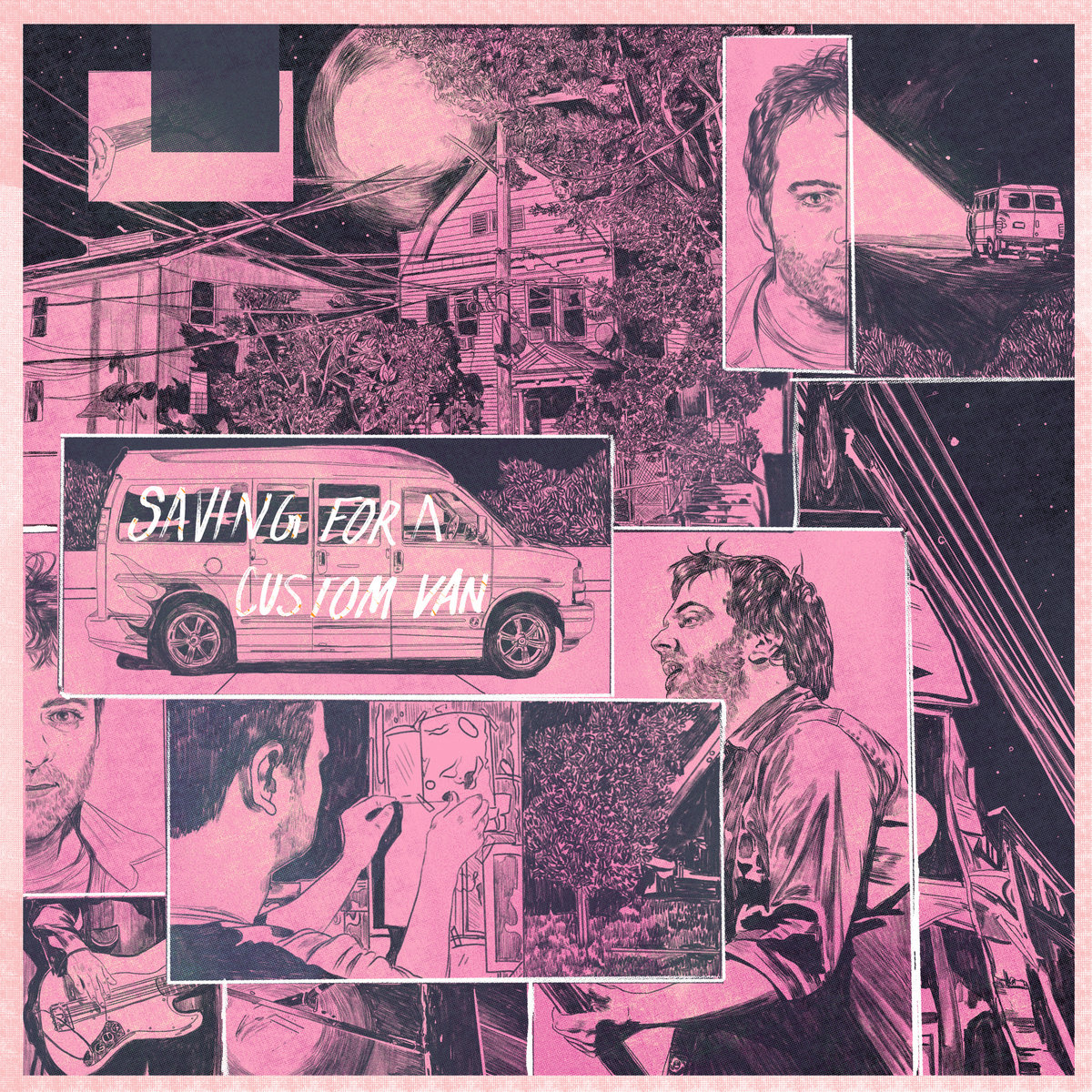
A wide array of artists touched by Schlesinger’s life pay tribute to the many musical projects of which he was a part via the Bandcamp-exclusive benefit compilation, Saving for a Custom Van. The 31-song collection features collaborators, tourmates, friends, and fans putting their own spin on songs spanning his entire career. Saving for a Custom Van, which takes its title from a lyric in Fountains of Wayne’s “Utopia Parkway,” is co-curated and co-released by Father/Daughter Records and Wax Nine.
One-hundred percent of Saving for a Custom Van proceeds will be donated to MusiCares’ COVID-19 Relief Fund, which is dedicated to helping music industry and community members affected by the COVID-19 pandemic.
Deeper know tragedy better than most. While recording their sophomore album Auto-Pain, guitarist Mike Clawson left the band due to deteriorating relationships with the Chicago group’s other three members. Later, after their record was finished and the post-punk act was touring in Europe, they received the news that Clawson had taken his own life. Throughout this catastrophic period, Deeper decided not to let Clawson’s passing derail their tour and release schedule, instead using them as a way to pay tribute to his contributions to the band and speak out about mental health .
As lead singer and guitarist Nic Gohl mentioned in an interview , Auto-Pain was completed prior to Clawson’s death, but the album’s lyrics, written as a stream of consciousness, took on a completely different meaning. And it’s hard to listen to them any other way: Some depict graphic images of self-harm and violence (“Forced to set yourself on fire tonight / You shouldn’t count on the sun” from “Run,” or “I just want you to feel sick / Cause you’re better as you’re lying on the bathroom floor” from “Lake Song”) while others are a bit more abstract (“Is it any wonder / I feel so gray” from “Esoteric”). Auto-Pain is an album built on hues of blacks and grays, depicting a shadowy, sinister world. Clawson’s suicide turns those already gloomy colours into something several shades darker.
Auto-Pain represents the constant wave of depression felt by many in everyday life. Stemmed from Aldous Huxley’s ‘Brave New World’, Auto-Pain is a concept meant to be an inverse to soma, a pill in the book which makes everything numb. The idea of auto-pain is to epitomize the desire to return to a connection with thoughts and clarity, which comes at the expense of feeling everything simultaneously. The album artwork features the now-demolished Prentice Women’s Hospital in Chicago capturing the band’s rounded-off brutalism, and the album title appears in Urdu, a nod to drummer Shiraz Bhatti’s Pakistani heritage.
Released March 27th, 2020
A portion of the proceeds from Auto-Pain will be donated to Hope For The Day an organization that actively works to break the silence surrounding mental health.
Lilly Hiatt’s new album Walking Proof may prove to one of 2020’s most universally relatable thanks to a single line on the chorus of “P-Town”: “Don’t you hate when people say it is what it is?” Unless you’re Joe Pesci in The Irishman and you’re adding in a contraction, there’s never a time when “it is what it is” benefits the person you’re saying it to: You’re better off with either a shrug. They’re useless gestures, but at least they’re transparently useless. Think about the last time you had a shitty day and an acquaintance told you that you were fated to have a shitty day, so you might as well accept the shit; you’ll find yourself wishing “P-Town” had existed at the time so you could shake off that flaccid old bromide with big, swaggering guitar riffs and swelling electric organ.
This is music to liberate yourself to-music that reminds listeners of Americana’s versatility as a genre and the palliative effects a good, expressive rock song can have on the soul. We’ve all taken a road trip that wound up going wrong, whether the kind of wrong where everything goes off the rails or the sort where everyone’s out of sync and nothing’s as fun as it’s supposed to be. That’s the heart of “P-Town” specifically, but the spiritual relief derived from rock ’n’ roll and Americana makes up Walking Proof’s whole. It’s baked into the record from start to finish: “I throw caution to the wind, and don’t give a damn,” Hiatt chimes on the record’s opener “Rae,” a twangy tune about the dual pleasures of pretending to be someone other than who you are and having someone in your life who knows you on a molecular level. There’s a caution to “Rae” in its first 45 or so seconds that belies Walking Proof’s prevailing confidence: Hiatt’s voice rings so quietly, so meekly, that for but a moment it feels like she’s tricking her audience. Walking Proof is, after all, neither quiet nor meek, though it does have its share of hushed tracks.
P-Town released on New West Records, 2020-01-31
Composer: Lilly Hiatt