“If you have a vacancy for another favourite new band on your listening device, Pom Poko would like to apply for the role,” tweeted Tim Burgess last April, as Norway’s finest punk-pop anti-conformists revisited their joyous debut album, “Birthday”, for one of Tim’s mood-lifting twitter listening parties.
Pom Poko pimp their cv on all fronts with their glorious second album, “Cheater”, is due for release via Bella Union in November. between the quartet’s sweet melodies, galvanic punky ructions and wild-at-art-rock eruptions, Cheater is the sound of a band celebrating the binding extremes that make them so uniquely qualified to thrill: and, like Tim’s listening party, to fulfil any need you might have for a pick-you-up. as singer Ragnhild Fangel explains of the leap from “Birthday” to “Cheater”, “I think it’s very accurate to say that we wanted to embrace our extremes a bit more. in the production process I think we aimed more for some sort of contrast between the meticulously written and arranged songs and a more chaotic execution and recording, but also let ourselves explore the less frantic parts of the Pom Poko universe.
I think both in the more extreme and painful way, and in the sweet and lovely way, this album is kind of amplified.” both sonically and thematically, that sense of amplification asserts itself right off the bat with the tearaway title-track. bursting into life on the back of a blast of fractious guitar noise, a thrashing riff and a sweetly sardonic vocal, “Cheater” laces its serotonin rush with tangy lyrics about dreams and, says Ragnhild, the kind of “cheating kid who doesn’t understand why they didn’t get things exactly like they wanted on their first try”: thematic motifs that reverberate throughout the album. from here, Pom Poko court their extremes with firecracker confidence. its lilting melody laced with a critique of gender stereotypes and set to a breeders-style lurch, “like a lady” is sharp and catchy. “Andrew” upholds a facility for simplicity in one of Pom Poko’s loveliest choruses, though a band such as this will never settle for the obvious: Martin Miguel tonne’s jazzy guitars seem to do everything except what you expect them to.
Further evidence arrives in the contrast between the thrilling, think-on-its-feet thrash-pop of “My Candidacy” – made in less than three hours – and the mellifluous “Danger Baby”, a tale of irrational fears with Ragnhild’s vocal and Martin’s guitar merged in unexpected union. That love for surprise synchronicities, slanted sounds and unexpected subject matter propels “Andy Go ToSchool”, where a tempo-tweaked guitar line accompanies a lyric extolling the pleasures of water parks and a free-flowing sonic palette. “Towards the end one of the guitar pedals made a huge bzzz sound in a pause, but we thought it was cool and raw so we just rolled with it,” says Ragnhild. “We like to mix the feeling of a surgically produced piece of music with the random sounds that also happen when you are a band playing together.” after its opening, almost Bolan-esque belches of guitar, “Look” extends that spirit of openness to an invitation to look outside of one’s self, before “Body Level” ends the album on a characteristically generous, unguarded – amplified – note of positivity. “Things Get Better,” sings Fangel, embracing directness with the same readiness as Pom Poko exult in giddy intricacy. The sound of four distinct personalities driving in divergent directions towards one destination, the result is an evolved snapshot of the bracingly contrary chemistry forged when Fangel, Tonne, Jonas Krøvel (bass) and Ola Djupvik (drums) united to play punk during a jazz gig at a literature festival in Trondheim (the band-members studied jazz there.) taking their name and spirit from japanese animation visionaries studio Ghibli’s marvellously out-there film about raccoon-dog rebels with unfeasibly large testicles, Pom Poko showcased that convulsive individuality to exuberant effect on 2019’s Birthday. along the way, they drew praise from NME, interview magazine, DIY, Popmatters, the Line of Best Fit, the Independent and BBC radio 6, where Miranda Sawyer was moved to note that Birthday’s“Crazy Energy Night” seems to contain about 20 songs in one.
Meanwhile, a huge touring schedule included countless sold-out headline shows and a rapturously received uk jaunt with Ezra Furman. Written in the same run that produced interim releases “Leg Day” (with its playful dance-based video) and “Praise”, and recorded/produced in cooperation with Marcus Forsgren (jaga jazzist, broen, arc iris), Cheater does its predecessor proud on every front. bursting with colour and wonky life from its cover art (by close collaborator Erlend Peder Kvam) outwards, it differs from Birthday primarily in that its songs did not have a chance to be road-tested before going into the studio. but you wouldn’t know it. as Ragnhild explains, “that meant we had to practice the songs in a more serious way, but it also meant the songs had more potential to change when we recorded them since we didn’t have such a clear image of what each song should/could be as the last time.” in other words, consider that vacancy for free-thinking punk-pop adventurism in your life filled.
A first album happens the same way that Great Britain acquired an empire, in a fit of absence of mind. You write a song – a sheepish exercise at best, because only songwriters write songs, and you can’t be a songwriter until you’ve written one – and then you write another, and a few more, and pretty soon you have a bunch of them. You play them for your friends at beer parties, but it’s hard to know what else to do with them besides make an album. If you weren’t going to record them, what the hell have you been up to? In the Midwest, where a bent toward art that isn’t immediately financially remunerative is often treated as a type of infirmity, if you aren’t a songwriter working toward an album, you may be just a self-absorbed person with an odd private habit. It’s a fine line.
The second album happens because you made the first one, some people liked it, and now you’re in the terrifying position of having to prove that it wasn’t an accident, which you’re pretty sure it was. So you hire a producer (in this case the fantastic David Goodrich) and book a week to record, lying through your teeth that you have a lot of great new songs, and then spend a couple of fevered weeks drinking multiple pots of coffee a day, desperately trying to fill out the forty-odd minutes of an album.
That’s how “Stripping Cane” went down. I was trying to understand form, taking various types of American music into the shop and putting them up on the lift – country, country blues, gospel, murder-ballad, twelve-bar – to understand how they worked. I’d been a student of songs, but I’d always paid more attention to the the spiritual charisma of the singer, or to the language. You will hear people say that form is content. You should be suspicious of those people.
I didn’t pick up the guitar until I was seventeen, and I was writing, recording, and eventually even touring before I’d acquired the hours I needed for anything like mastery of my instrument, or my voice. So I spent a lot of time after my first album came out (and ever since, really) holed up trying to become a better musician, and a more concise writer.
I still play about half the songs on Stripping Cane – songs like ‘Northbound 35,’ ‘Cross of Flowers,’ ‘4&20 Blues,’ – and they’ve mostly worn well. They’re songs about the polarities of the life I was living at the time: home and away, leaving and left, right and wrong, love and its absence, and I was between 24 and 27 when I wrote them.
This is how I make a living right now, so if you have the wherewithal and these songs have meant something in your life, you can square up for a show via Paypal, Venmo, or the U.S. Mail (assuming we still have it), as you see fit. I don’t have to fly anywhere, and you don’t have to hire a sitter, so whatever seems like a reasonable cover charge ought to be fine.
Crake are an alt-folk four piece from the city of Leeds in northern England who write melodic and (sometimes) hopeful songs about flora, fauna, anxiety and the tough stuff. Formed on the cusp of 2016/17 after a New Year’s Eve pact, Crake spent their first couple of years playing locally with loose-line-up changes, self-releasing two EPs – 2017’s By the Slimemould and 2018’s The Politics of Lonely.
Led by singer/guitarist Rowan Sandle, Crake blend shimmering alt-folk and indie-rock, featuring an increasing density of guitars, tape-loops and synth blankets. Their songs provide a more sonically reassuring but equally intimate bed for Sandle’s poetic lyrics.
In late 2018 the band supported Big Thief’s Buck Meek on the Leeds date of his solo tour, impressing the guitarist so much that he invited them along for Big Thief’s forthcoming tour across the UK and Europe. Those three weeks spent travelling and playing with their musical heroes saw Crake go from a small, beloved act who’d barely left their hometown, to finding themselves with a legitimate fanbase of their own. Their third 3-track EP Dear Natalie was subsequently released in 2019, also marked by the addition of lead guitarist Russell Searle, joining Rob Slater on drums and Sarah Statham on bass. The EP was the sound of Crake finding their feet on a larger stage, both literally and figuratively, with opening track ‘Glycerin’ shining a spotlight on Sandle’s ever-confessional words.
Since the Big Thief tour and the Dear Natalie EP the band have focused solely on writing and demoing new music, assembling in garages, practice rooms and the beloved Greenmount Studios in Leeds (The Cribs, Pulled Apart By Horses) where drummer Rob Slater works.
The first results of this focused time away can be heard on Enough Salt (For All Dogs) b/w Gef, a brand new, two-track single which will be released on 7” vinyl via Saddle Creek’s ongoing Document Series. Their first self-produced effort, the new single is Crake at their most confident. Exploring the depths of their sound while staying rooted in Rowan Sandle’s brilliant songwriting and captivating lyrics.
Justin Townes Earle, an acclaimed US songwriter and son of Steve Earle, has died, in news confirmed on the artist’s Facebook page on Sunday night.
“It is with tremendous sadness that we inform you of the passing of our son, husband, father and friend Justin,” the post read. “So many of you have relied on his music and lyrics over the years and we hope that his music will continue to guide you on your journeys. You will be missed dearly.”
Named for his father’s friend and idol Townes Van Zandt, Earle, 38, battled addiction throughout his life. He released eight albums across the course of his career, which saw him honoured twice at the Americana Music awards including for his best-known song, “Harlem River Blues”.
Many have paid tribute to the artist on Twitter, with the musician Samantha Crain reflecting on their friendship: “Such a tremendous songwriter. He took me on two tours and always treated me so kindly. He understood struggle, he understood joy I saw him at the peaks and valleys of both through the 13 years I knew him.” His friend and collaborator Jason Isbell said: “Had a lot of good times and made a lot of good music with JTE. So sad for his family tonight.”
“When you start with my middle and last names,”said Earle, “how much worse can the expectations be? My father is one of the greatest songwriters who’s ever lived, and I couldn’t write a song like [revered singer-songwriter] Townes Van Zandt if my life depended on it. But you know going through the door you’re gonna be judged based on that, so you better be ready.”
By the time he was 14, Earle was doing residencies in the competitive Nashville songwriter’s scene. It was the mid-1990s, and artists in the so-called alternative country movement, spearheaded by acts such as Uncle Tupelo, BR-549 and Neko Case, were mixing post-punk energy with honky-tonk twang. Earle’s first three records were released by Bloodshot Records, one of the drivers of the scene and inheritors to Steve Earle’s 1980s blue-collar barroom country. Earle was an on-and-off member of the raucous country-rock band the Sadies. As Earle gained confidence, he committed to being a solo artist.
The writer and cultural critic Hanif Abdurraqib praised Earle as “an incredible writer of narrative – stories that flourished beyond the music they were laid over”. the NPR music critic Ann Powers described his last album, “The Saint of Lost Causes”, as “a powerful road map of America … we’ve lost someone with real vision.”
Earle is survived by his mother Carol-Ann Hunter, his wife, Jenn Marie, and their daughter, Etta St. James Earle.
New West Records has created a rad compilation album exclusively benefitting their artists. The album is available today, in conjunction with Bandcamp’s pledge to waive fees for artists. 100% of proceeds go to the artist. The setlist is included below. The album is only available digitally, and only from Bandcamp or at newwestrecords.com. Link to purchase: http://newwst.com/forthecure.
Any collection that kicks off with Nikki Lane channeling Wanda Jackson is worth having by definition. The rest is just fine, too, especially Seratones’ apocalyptic take on State Trooper. New West clearly curated this collection with care.
1. Nikki Lane – Funnel of Love
2. Justin Townes Earle – Rocket 88
3. The Texas Gentlemen – Dream Along (Bonnaroo Haybale Session)
4. Jaime Wyatt – I Miss Drinkin’
5. Ron Gallo – Always Elsewhere (Bonnaroo Haybale Session)
6. Andrew Combs – You’re Like The Country
7. Sammy Brue – Before It Gets Good Again
8. Seratones – State Trooper (Live on WFUV)
9. Robert Ellis – Heartbeat
10. Kacy & Clayton – The Gallery
11. Dan Luke and The Raid – Be Good
12. Caroline Rose – More Of The Same (Bonnaroo Haybale Session)
13. Sam Doores – True To My Luck
14. American Aquarium – Darkness on the Edge of Town (Outlaw Session)
15. Lilly Hiatt – No Good
16. Pokey LaFarge – Oval Room
All proceeds from the sale of this album go to the artists involved.
Ten Million Lights are an indie shoegaze band from Portland, Oregon who tap into something special on their new single “Myanmar.”
The band captures a level of rocking fuzzy goodness that creates a stirring non-stop atmosphere that still finds room for the heavenly floating vocals that mix with the shoegazey guitar work that feels like a mix of bands like Ride and Slowdive. Even better yet is the band’s description of the song:
The lyrics are highly imaginative about looking over the Event Horizon into a black hole to try and meet your maker only to find out its a praying mantis lizard who is turning our sun into a crystal. Have fun with this quick ditty. You just might have to play it twice…It doesn’t get much better than that.
Joe D’Agostino talks about his new solo album and why his former band decided to call it quits, and debuts the album opener “Marian.”
How do you dissolve a beloved band you’ve devoted your life to since the age of 18?. If you are Joe D’Agostino, frontman of Cymbals Eat Guitars, you do so as quietly and tastefully as possible. In late 2017, the New Jersey-bred indie heroes performed three farewell shows, including a raucous gig at Manhattan’s Bowery Ballroom, which was packed with fans who had no idea it was a farewell. They shared the stage with home-state idol Charles Bissell, of elusive Jersey favorites The Wrens fame, and dusted off early-career gems like “Indiana” and “Some Trees.”
And then, without a word, one of the decade’s most rewarding and emotionally searing rock bands simply ceased to exist. There was no announcement. (Consequently, many fans have continued hoping for a new album) “We wanted to quietly deep-six it,” D’Agostino explains two years later. “We could have told everybody that our December 2017 shows were gonna be our final shows, but — I dunno. It just seemed a little gaudy to do so. We were never people to draw attention to ourselves in that way.”
Causes of the breakup included deep exhaustion with touring, bassist Matt Whipple’s decision to return to school for interior design, and a brooding sense that — despite consistent acclaim and a committed cadre of fans — “there was nowhere else for us to go.” During that grueling final year, the band toured with alt-rock legends the Pixies, “which was just crazy — like, dream scenario stuff,” the singer says. “And then we went back to the same cities that we played with Pixies in to headline, three months later. And nobody came.”
It was bleak, the bleakness compounded by brutal summer temperatures and self-destructive patterns that had emerged across lengthy touring cycles. “It was over many years,” D’Agostino says. “And it was like, I had to drink to perform. Especially towards the end.”
Eventually, the band updated its Twitter bio to resemble a tombstone: “2007–2017.” If that suggests an untimely demise, the subsequent years, 2018–2019, signify rebirth. D’Agostino has spent them carving out some semblance of domestic bliss with his wife, Rachel Browne (singer of Philly indie band Field Mouse), in their adopted hometown of Philadelphia and figuring out what it means to make music post-Cymbals. For much of 2018, he was cooped up on the first floor of an old Victorian in West Philly — the couple’s home of two years — writing, arranging, and self-producing an ambitious set of solo songs. (Kyle Gilbride, Swearin’ member and prolific indie engineer, co-produced and engineered.)
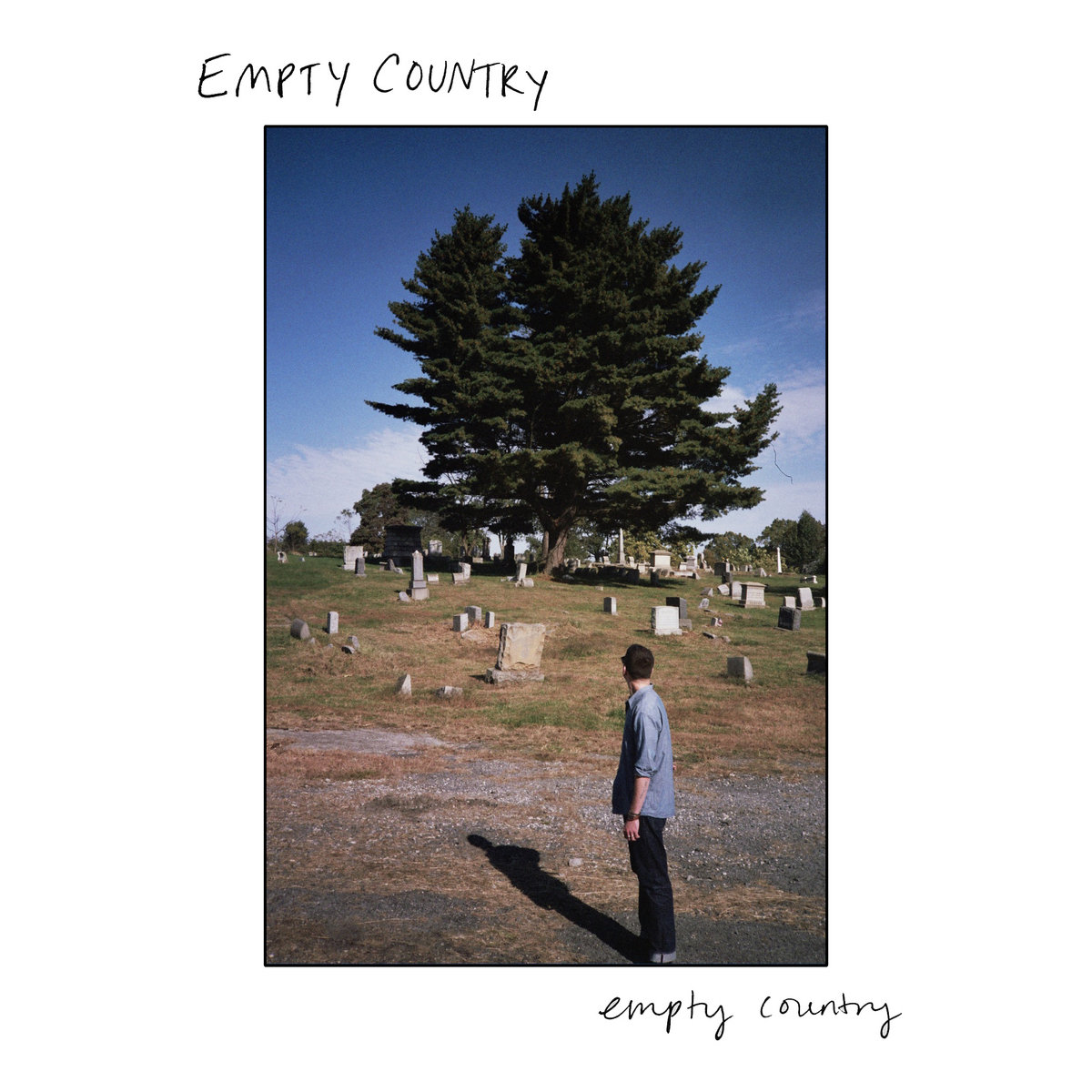
The result is his new project, Empty Country, whose self-titled album will be released by Tiny Engines (The Hotelier, Somos) next February. The title comes from a Cymbals deep cut, “Wavelengths.” (At Browne’s suggestion, D’Agostino scoured his band’s old lyrics when stuck on a name: “For whatever reason, those two words jumped out at me.”) The album combines D’Agostino’s knack for vivid, impressionistic imagery — capable of summoning a romantic LSD trip or a nightmarish cancer scare — with arrangements more ornate than anything from his former band: “Untitled” is a bleary-eyed excursion into acoustic psychedelia, while “Swim” closes the album with a gorgeous reverie of string swells.
Though billed as a solo album, it’s very much a family affair, inhabited by loved ones both alive and dead. Anne Dole, Cymbals’ former drummer, performed drums; her twin brother, Pat, handled bass. Browne and her sister Zoë contributed backing vocals. “Chance,” with its gushing a cappella break, is an affectionate tribute to the sisters’ dad — D’Agostino’s father-in-law — the longtime cartoonist Robert “Chance” Browne. And the opening track, “Marian,” is named after D’Agostino’s grandmother, who was killed by a drunk driver in 1983. It’s an expansive epic that coaxes unexpected sunlight from one of the singer’s most generous falsetto hooks. Lyrically, it’s sung from the perspective of a clairvoyant miner who foresees his own death in 1960s West Virginia: “The mine collapses in spring of ʼ67/ I was a bastard anyway.” .
Meanwhile, the intensity that once landed Cymbals a tour with emo stalwarts Say Anything roars to life on “Ultrasound,” home to the record’s most screamable chorus. The song, with its mortified reference to “a shadow on the ultrasound,” is about a cancer scare. Browne’s sister is a survivor of metastatic breast cancer, so Browne goes in semi-regularly for routine imaging. In early 2018, doctors found “what looked like something that could be very serious,” D’Agostino says. “I was with her at the doctor, and — I mean, the doctor just scared the shit out of us.”
The song describes the nightmarish week that followed: waiting for the biopsy report, collapsing into fits of crying every hour. “I wrote the lyrics over the course of like two or three hours,” the singer says, “and I was just weeping the entire time.” (The health scare, fortunately, turned out to be a false alarm.)
Tragedy struck anew the day “Ultrasound” was issued as Empty Country’s first-ever single: August 7th, 2019. D’Agostino was full of nervous energy about debuting the project. He was also due to open for Purple Mountains — the new project of Silver Jews songwriter and veteran rock cult hero David Berman — in three days, so he went to get a haircut. D’Agostino was to join Purple Mountains for two dates, in Jersey City and Philadelphia. He had extensively rehearsed a six-piece band, which included Browne and her sister, for the occasion. He was leaving the barber when Browne called with news: Berman was dead.
“[It was] just utterly devastating,” D’Agostino says. He gets choked up recalling how much Berman meant to him. As a teenager, he blasted Silver Jews records on roadtrips. A decade later, he met Berman by chance during the LOSE tour in 2015. Cymbals had just played a sparsely attended show at a Nashville dive bar.
“I was loading up a van after that show, kind of dejected but whatever,” D’Agostino recalls. “He walked up to the back of the van. He asked if the music was over. I recognized his voice immediately. I was like, ‘You’re David Berman.’ He was like, ‘Yep.’ And we talked for a long time that night… I left town feeling like, whatever this career is or isn’t, it brought me to this exact moment in time where this person — this idol, this hero of mine — and I could just cross paths in this way.”
A year later, D’Agostino received an email from Berman, which he describes as “long and free-associative and beautiful.” The two began corresponding regularly. Berman told D’Agostino he could be a poet and attend the Iowa Writers’ Workshop on the strength of the LOSE lyrics. Before his death, Berman listened to Empty Country demos and was quick to offer encouragement. “He was just such a brilliant and kind man,” D’Agostino says. “I will forever hold memories and correspondences that I have of him. But I haven’t listened to his music since he passed.”
Ten years ago, D’Agostino was in the eye of the hurricane that was Cymbals Eat Guitars’ sudden ascent. “I was blown out of the cannon at age 19 and 20,” he says, “with all of this praise — the indie-rock bubble, the hype.”
It was 2009, the golden age of “blog rock,” when guitar music still reigned and a few impressive songs on a MySpace page could, and did, earn a band like Cymbals a glowing Pitchfork review and major festival slots seemingly overnight. The band’s debut, the impressively expansive Why There Are Mountains, drew raves despite being self-released: “Are Staten Island’s Cymbals Eat Guitars indie rock’s next big thing?” blared one headline from a local outlet. Suddenly, D’Agostino and his bandmates found themselves in London opening for The Flaming Lips, and being courted by managers and agents.
He’d been a nerd at his Central Jersey high school. Now he reveled in the sudden validation — behaving callously, abusing prescription meds. “It went to my head,” he admits. Now 30, he barely seems to recognize that kid. “I concentrated on one thing for so long. All I wanted from when I was 15 to when I was 20 — and I got it! And I don’t think I knew how to handle it, emotionally or ego-wise or physically. I was always just destroying my body, getting sick on the road.”
Alcohol became a problem. It got worse near the end, when D’Agostino found himself needing three or four drinks just to go onstage — especially in places like Oklahoma City, where only five people would show. How else could he summon the vigour to obliterate the scream in signature anthem “…And the Hazy Sea?” His health became compromised, his blood pressure unusually high. “I was just utterly consumed with anxiety and deep depression, and it was compounded by the lifestyle of touring,” he says. “There’s a bottle of fucking booze and a case of beer in your green room every night.”
Since the band’s breakup, D’Agostino has been in treatment for Bipolar II disorder and on psychiatric medication. (He no longer self-medicates with alcohol, though he does use pot and hesitates to identify as sober.) He has a day job in customer service, which lets him work from home and eases the financial precarity of a career in music. The end of Cymbals seems to have delivered some relief from the nonstop jockeying for status and success. “I didn’t make this [solo] record to be famous or to be a career musician, though that was my ambition as a younger man,” he texts me after our interview. “I made it to document and honor my human experience and that of my family.”
Ten years removed from indie fame is a weird place to be. D’Agostino sometimes jokes that Cymbals will reunite at Riot Fest in 2039 for the 30th anniversary of Mountains. When asked if he feels proud of what Cymbals accomplished, he lets out a long, heavy sigh. “I do,” he says finally. “I feel very proud of the four records we made together. And incredibly proud of a lot of the shows that we did. I have beautiful memories of each of my bandmates and all of us together.”
He is careful not to seem bitter about the fact that none of Cymbals’ other albums matched that level of commercial success. Yet some bitterness might be warranted, especially considering the band’s real masterpiece, LOSE, a sweeping and cathartic excavation of adolescent grief, did not arrive until 2014. That was the album that established D’Agostino’s astonishing eye for lyrical detail, set in a world of failed drug deals and deceased friends’ MySpace pages. Pretty Years, the 2016 follow-up, proved it wasn’t a fluke and even teased out some stadium-ready hooks. But the mercurial engine of hype no longer seemed to be on the band’s side. In retrospect, it seems obvious that the band’s ambition often brushed up against the impatient expectations of the market (or of a manager who pressured them to write “their ‘Two Weeks’”).
Much of the Empty Country album is inspired by D’Agostino’s reckoning with things he’s ashamed of from his past life. You could trace this reflective gene back to 2016’s “Have a Heart,” a song about falling in love and finding a new capacity for empathy. On “Swim,” the new album’s elegiac finale, he sings: “I was a blue-eyed sociopath / Black out, often / Not sure / Think I might have hurt someone.” Though the song describes a fictional character — the singer is neither blue-eyed nor a sociopath, he assures me — who has a 9/11 tattoo, it clearly carries personal resonance.
“Come and live it down with me,” D’Agostino sings at the song’s climax, luxuriating in a mournful string refrain that seems to echo long after the song has faded away. It’s the record’s emotional peak. As for the string players, “I didn’t even have charts for them,” D’Agostino texts me when I ask. “I just sang them the parts five minutes beforehand, and what you hear is what they delivered.” He sobbed when the violin took the lead for the final refrain. “You might actually be able to hear me,” he adds. I can’t hear it, but I trust that it’s there.
Throughout Cymbals’ career, D’Agostino’s songwriting was remarkably adept at capturing dimensions of loss — loss of a friend (“XR”), of youth (“Dancing Days”), even loss of a family dog (“Chambers”). Empty Country retains this talent. Except here, the songwriter also takes profound stock of what he’s gained.
That includes wisdom, and a new sense of purpose in music-making. “It’s not a vehicle for your ego, or so you can get somewhere in life or get tours or get whatever the fuck you want,” he says. “It’s the moment of creation — when you make something that’s true to you and to the people that you love.”
It seemed like a huge loss nearly a year ago when LVL UP, the group behind Double Double Whammy and the presumed heirs to Robert Pollard’s eclectic lo-fi throne, called it quits after only three albums. But in the same way that band heroically rose from the ashes of the also-great Dave Benton–led Spook Houses, its split has led to a slew of promising recordings from several of its four members. On the heels of a stellar 2018 debut from Benton’sTrace Mountains, Am I is the first release from Mike Caridi’s project The Glow, and it doesn’t sound too far removed from the output of his former band. But as a solo endeavor, it’s evident from opener “Am I Good” that the project is an outlet for experimentation with sonic textures left unexplored by Caridi’s previous band—even “Orchard,” the single LVL UP released to announce their breakup, feels totally fresh here, redone with a more prominent drum beat and less tamed guitar riffs, along with the recurring flourish of higher-pitched vocal harmonies.
Despite its brief runtime, Am I feels entirely less claustrophobic than the equally brief Space Brothers, which crammed thirteen songs—not to mention three vocalists—into twenty-four minutes.
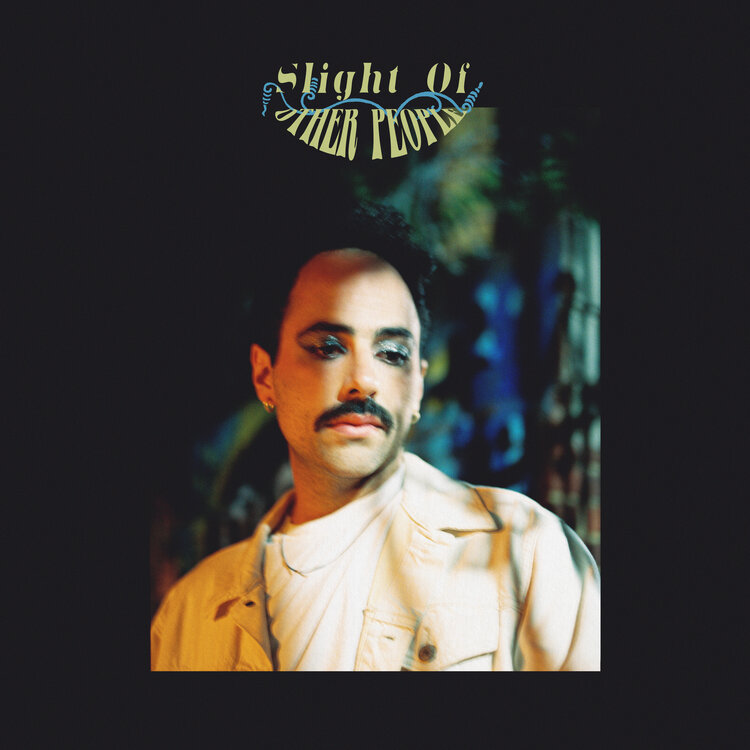
Empathy, often confused with sympathy, requires a little more push, surrendering yourself and embodying other people. On the follow up to Slight Of’s 2017 album Life Like, songwriter Jim Hill brought new depth to his music by looking outward, learning more about himself in the process and creating his most ambitious work to date. The appropriately titled sophomore album “Other People” is an exploration of different perspectives, an anthology of friends and strangers who helped him make sense of an ever-changing world.
Hailing from Rochester, New York, Hill sought to explore the sounds of his past with vintage keyboards, organs, and shimmering guitar licks. “I was listening to a lot of classic rock throughout the process of making this record,” Hill recalls, “stuff that was on the radio when I was forming my first memories.” The songs on Other People paint sonic landscapes of post-industrial cities, townie bars, and the working class. Tracks like “Sage”, “Americana” and “Sweet Caroline” utilize hypnotic harmonies that invoke comfort and familiarity while exploring the difficult space between patriotism and the dark realities of suburbia.
Other People kicks off with energetic synth-driven track “The Sims” — an ode to suburbia reminiscent of 80s pop and The Cars (“When we would shut ourselves in / All night just playing the Sims / The time we’ve wasted on a world / That doesn’t even exist”) From there, the title track follows to display the band’s knack for making the old sound new and epitomizes the graceful fusion of pop and classic rock elements that define the album.
In 2014 Hill left upstate New York to settle in Brooklyn. From there, Hill immersed himself in the DIY community, playing shows and spending time at now-defunct venues Silent Barn and Shea Stadium. The classic influences of his youth began to naturally intertwine with the sounds of his contemporaries. Hill spent years touring the US with Slight Of and other notable bands he joined (Trace Mountains, Painted Zeros, Bethlehem Steel). “On tour, you inevitably find yourself in some pretty strange situations with people you would never meet otherwise.” Hill remembers. “My bandmates started to recognize this pattern where I would attract all of these people who wanted to tell me their life story. There was a guy who cornered me at a house show in Illinois who had just gotten out of prison, a man at a bar in Omaha who told me he was possessed by a ghost, and an ex-Marine who threatened to kill me. We eventually had to come up with a code word so I could signal them to get me out of uncomfortable situations. I started to imagine larger stories for these people as a way to make sense of the pain they were trying to express to me.”
Moments like these incited a transition for Hill as an artist, shifting his focus outward for inspiration, and eventually leaving room for collaboration on his songs. After writing and recording 2017 album Life Like in isolation, Slight Of developed into a more familial and collaborative project. “It was really important to me that my bandmates be more involved with the arrangement and vocal textures of this album.” Hill says. Recorded in friend’s homes, practice spaces and studios in New York, Hill imagines Other People as “a study of American rock styles.” What’s a study without its subjects? It’s the friends, artists, strangers, places, and other people that give it all meaning.
Releases August 28th, 2020
All songs by Jim Hill with arrangements by the players.
Jim Hill: Vocals, Guitars, Bass, Synths, Piano
Alex Northrup: Organs, Electric Piano, Guitars
Jacob Rosse: Vocals, Synths
Bernard Casserly: Guitars
Izzy Rosse: Vocals, Bass
Alberto Casadevall: Vocals, Drums
Leah Beck: Vocals, Organ (track 8)
Erick Perrine: Guitar (track 6)
Brooklyn’s Jeanines specialize in ultra-short bursts of energetic but melancholy minor-key pop. With influences that run deep into the most crucial tributaries of DIY pop — Messthethics, the Television Personalities, Marine Girls, early Pastels, Dolly Mixture — they’ve crafted a style that is as individual as it is just plain pleasurable. Alicia Jeanine’s pure, unaffected voice muses wistfully on the illusions of time, while My Teenage Stride/Mick Trouble mastermind Jed Smith’s frantic Motown-esque drumming and inventive bass playing provide a thrilling rhythmic foundation.
“Winter In The Dark” and a lovely, jaunty cover of The Siddeleys’ “Falling Off Of My Feet Again” provide great insight into what Jeanines are about. 60s-meet-80s melodies combine with timeless guitar jangle in a way that recalls everything from The Aislers Set and Saturday Looks Good To Me to more recent DIY pop groups like Parsnip and Chook Race. Album opener “Either Way,” “Hits The Bone” and “Where We Go” hearken back to some of the most intriguing bands of the C86/C88 era, when bands like Jesse Garon & The Desperadoes crafted perfect pop gems enlivened by the inspiration of punk.
Gorgeous songs like “Where I Stand,” “Too Late” and “In This House” are windows into Alicia’s lyrical style and inspiration. She expands: “I’m kind of obsessed with mortality and how weird the passage of time is so I think my lyrics reflect that. I definitely lean into that kind of melancholy state of mind when trying to think of lyrics, while trying to avoid cliches!” The marriage of the minor-key melodies and melancholic lyrics is powerful and make Alicia’s songs all the more memorable, especially so on songs like “No Home,” with its echoes of girl harmony post-punk groups like Grass Widow and Household.
Clearly, with 16 great songs included, there is a lot at work here on this standout debut album. Jeanines have been compared to such cult pop icons as Dear Nora, Black Tambourine, and more recent acts like Veronica Falls and Girl Ray, but their dark, modal melodies and pensive, philosophical lyrics, along with Smith’s versatile but ever-economical musicality, ensure them a place of their own in today’s crowded but boisterously healthy DIY pop scene.