Even if you don’t know Black Pumas by name, you’ve probably heard “Colors,” the Austin band’s now nearly ubiquitous hit single. “My friends call me and tell me all the time, ‘I can’t get away from you, dude. I can’t even go grocery shopping,’” says singer Eric Burton with a laugh.
Burton wrote the song on his uncle’s rooftop overlooking Alamogordo, New Mexico, years before he ever recorded it. The dynamic frontman went on to busk on street corners up and down the West Coast before ultimately landing in Austin and hooking up with bandmate Adrian Quesada to form Black Pumas in 2017.
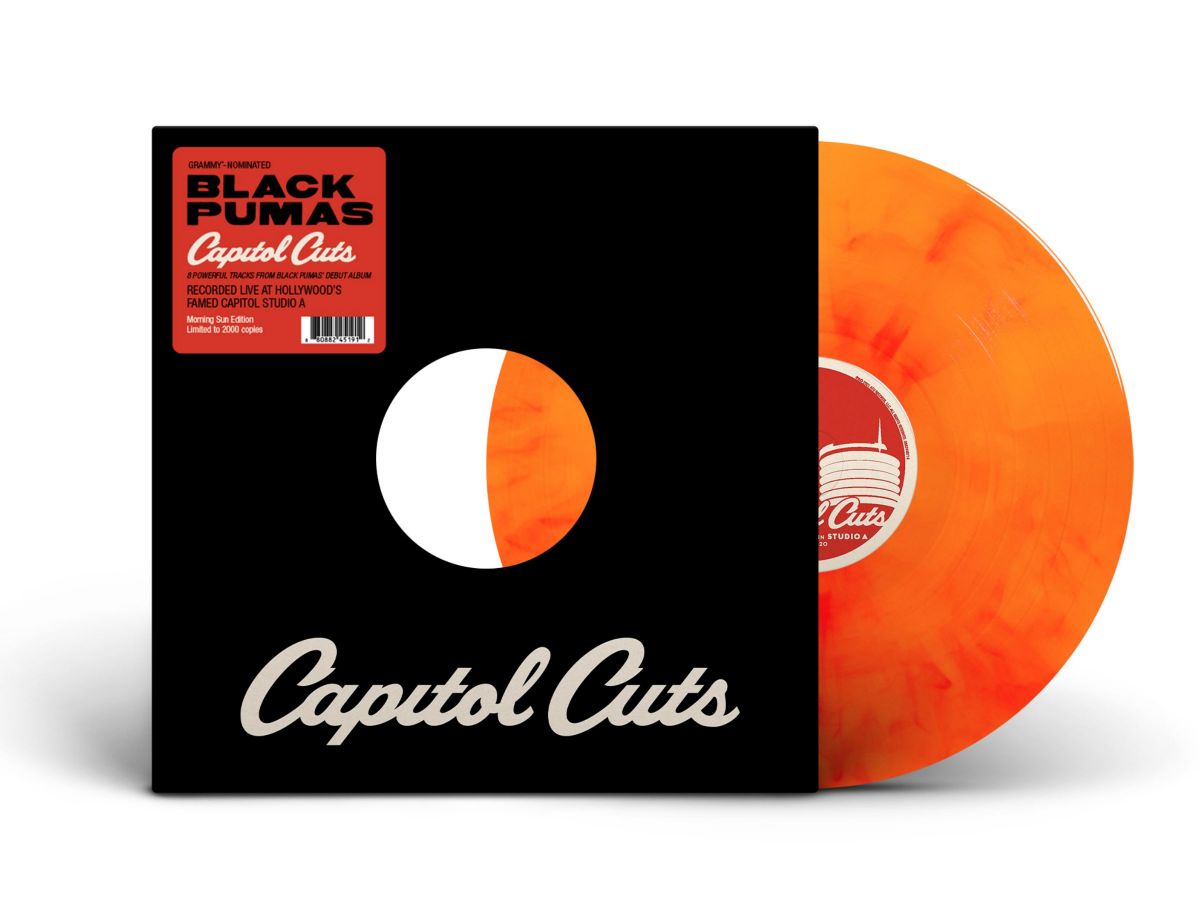
Recorded direct to acetate – all live, no overdubs – “Capitol Cuts – Live from Studio A” captures a powerful moment in time. After months of cancelled shows, Black Pumas went to Los Angeles this past fall and laid down eight explosive tracks at the famed Capitol Studio A. The recording brims with pent-up energy, nearly bursting through the grooves on the expansive and mind-blowing seven-minute rendition of “Colors.” After landing a Grammy nomination for Best New Artist last year, the duo gained even wider exposure with their performance during the inauguration festivities in January, and at this year’s Grammys on March 14th, they’re up for three more nominations—including record of the year and album of the year.
While “Colors” has put the duo on the map, their inventive takes on such numbers as Tracy Chapman’s “Fast Car” or the Beatles’ “Eleanor Rigby” have offered new fans an alternate introduction to the band’s unique sound. Burton’s vocals feel at once familiar and futuristic: He says he was influenced from an early age by greats like Nat King Cole and Frank Sinatra, but you’re just as likely to hear trippy sound effects and distortion as you are soaring high notes. And Quesada’s dexterity on the guitar lends an almost jam-band-like feel to many of the tracks, which beg for a live audience—even if, right now, the pair has had to settle for livestreams and late-night appearances.
A few weeks later the song would receive a Grammy nomination for Record of the Year.
Pre-order the limited edition ‘Morning Sun’ vinyl from the ATO shop, out everywhere physically June 4!
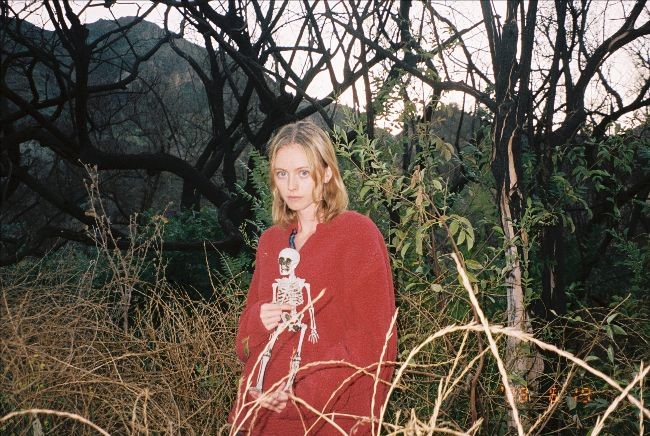
The sound of Helen Ballentine aka Skullcrusher is not nearly as violent as her alias might imply. Instead her gentle and almost fragile ambient-infected songwriter folk might break your heart instead of your bones. The artist who performs as Skullcrusher crafts work that on the surface is hardly as menacing as her moniker. The simmering, acoustic guitar-centered songs on her debut EP will not collapse your noggin with aggressive rage, distorted noise or irrational violence.
Last year’s self-titled debut EP was a blissful testament of beauty and vulnerability and felt like a fitting soundtrack for a more introverted life. And since 2021 doesn’t look quite different for now, the haunting sound of Skullcrusher will most likely comfort us this year as well. A full album is expected over the course of this year and we’re pretty sure it will be wonderful no matter if the pandemic is still raging or not. Ballentine also shared her personal hopes for the year with us:
“You can definitely expect more music from me and perhaps some drawings and visual art. My hopes for this year are to become more comfortable with myself and as a result be able to connect with more people through art.“
Issued by the indie music powerhouse Secretly Canadian Group (home to Angel Olsen, Bon Iver, Moses Sumney, Sharon Van Etten and others), which has an ear and eye for breakout talent, Ballentine’s work aligns with the company’s aesthetic: smart, insightful sounds that draw on classic forms but explore them from inventive new angles.
“Farm” the new song by Skullcrusher, out October 19th on Secretly Canadian.
If you’re in need of some wise words and a healing space, look no further than Esther Rose, How Many Times, out on Father/Daughter Records later this month, is a gorgeous post-breakup album that maturely leans more into growth than into the temptations of bitter revenge. “You kinda only get your heart smashed wide open once. It’s just that bad once,” Esther said, calling from New Mexico. “And then everything after that is how you recover and how you cope and how you learn.”
Esther Rose was in perpetual motion when she wrote “How Many Times”. In the span of two years, she moved three times, navigated the end of a relationship, and began touring more than ever. The New Orleans-based singer-songwriter used that momentum while she penned her third studio album. That’s why, as the album title’s nod to the cyclical nature of life implies, there’s a rush that accompanies How Many Times as if you’re experiencing an awakening, too.
Rose expands her alt-country sound into a blossoming world of folk pop and tender harmonies. A collection of complete takes recorded live to tape with rich instrumentation, soul-tugging hooks, and resonating vocal melodies, How Many Times carries you into the room in which it was made. There to help realize this was co-producer Ross Farbe of synthpop band Video Age, who Rose also credits for bringing a stereo pop glow to these new songs.
Available to buy on CD, clear LP and a very special Dinked Edition (selling out fast!), How Many Times is an album which looks outside of country music, sitting quite comfortably next to contemporaries like The Weather Station and Cassandra Jenkins as well as Joni Mitchell, Neil Young (American Stars and Bars era) and Esther’s beloved Hank Williams.
We’re delighted to let you know that Esther Rose’s new album How Many Times is out now.
“These songs feel lived-in” – BrooklynVegan
“Rose exudes confidence and she’s unafraid to get self-referential” – Rolling Stone
The third studio album from New Orleans-based folk pop singer-songwriter Esther Rose, we have “How Many Times” here on transparent teal vinyl.
Eight years after Stone’s last solo record, Sixty Summers arrives as a powerful rebirth for one of Australia’s most prolific artists. Emerging from the wildernesses of folk and indie-rock, with “Sixty Summers”Stone dives headfirst into the cosmopolitan, hedonistic world of late-night, moonlit pop. The stunning album brings us the grit and glitter of the city, with all its attendant joys, dangers, romances and risks.
It is Stone at her truest, brightest self, a revered icon finally sharing her long, secret love affair with this vibrant and complex genre. Recorded sporadically over five years from 2015 to 2019, Sixty Summers was shaped profoundly by Stone’s key collaborators on the album: Thomas Bartlett, aka Doveman, and Annie Clark, the Grammy-winning singer, songwriter and producer known as St. Vincent. Bartlett and Clark were the symbiotic pair Stone needed to realise her first pop vision.
A wizard of production and song writing, Bartlett helped coax Sixty Summers’ independent, elemental spirit from Stone, writing and recording over 50 demos with her at his studio in New York. Itself a thoroughfare for indie rock luminaries, some of whom, such as The National’s Matt Berninger and Bryce Dessner, ended up on the album, Bartlett’s studio was perfect fertile ground for Stone’s growth.
Julia Stone’s forthcoming album ‘Sixty Summers’, released 30th April:
Last month, Ryley Walker announced a new album, “Course In Fable”, his first proper full-length album since 2018’s Deafman Glance, though there have been quite a few excursions from Walker since that. Its lead single “Rang Dizzy” and today Walker has shared a new track from the album called “Axis Bent.” It has squiggly guitars and a roiling rhythm and Walker’s wondering poetry: “When I wrote the song would breathe/ It was the best I’d ever had/ Jammed up on axis bent/ It was the sidestep of relief.”
Releases April 2nd, 2021
Ryley Walker- Guitar/Vocals Andrew Scott Young – Bass/Piano Bill MacKay – Guitar/Piano Ryan Jewell – Drums/Percussion John McEntire – Engineer/Mixing/Synth/Keys/Vibraphone Douglas Jenkins – String Arrangements/Cello Nancy Ives – Cello
It’s nearly a decade since William Doyle handed a CD-R demo to the Quietus co-founder John Doran at a gig, who loved it so much he set up a label to release Doyle’s debut EP (as East India Youth). Doyle’s debut album, “Total Strife Forever”, followed in 2014, as did a nomination for the Mercury Music Prize. A year later, he was signed to XL, touring the world and about to release his second album – all by the age of 25.After self-releasing four ambient and instrumental albums, Doyle’s third full-length record – and the first under his own name – Your Wilderness Revisited arrived to ecstatic reviews in 2019:
Line of Best Fit described it as “a dazzlingly beautiful triumph of intention” and Metro declared it an album not only of the year, but “of the century”. Just over a year later, as he turns 30, Doyle is back with “Great Spans of Muddy Time”. Born from accident but driven forward by instinct, “Great Spans” was built from the remnants of a catastrophic hard-drive failure. With his work saved only to cassette tape, Doyle was forced to accept the recordings as they were – a sharp departure from his process on Your Wilderness Revisited, which took four long years to craft toward perfection. “Instead of feeling a loss that I could no longer craft these pieces into flawless ‘Works of Art’, I felt intensely liberated that they had been set free from my ceaseless tinkering,” Doyle says.“ The album this turned out to be – and that I’ve wanted to make for ages – is a kind of Englishman-gone-mad, scrambling around the verdancy of the country’s pastures looking for some sense,” says Doyle. “It has its seeds in Robert Wyatt, early Eno, Robyn Hitchcock, and Syd Barrett.” Doyle credits Bowie’s ever-influential Berlin trilogy, but also highlights a much less expected muse: Monty Don, presenter of the BBC programme Gardener’s World, Doyle’s lockdown addiction.
“I became obsessed with Monty Don. I like his manner and there’s something about him I relate to. He once described periods of depression in his life as consisting of ‘nothing but great spans of muddy time’. When I read that quote I knew it would be the title of this record,” Doyle says. “Something about the sludgy mulch of the album’s darker moments, and its feel of perpetual autumnal evening, seemed to fit so well with those words. I would also be lying if I said it didn’t chime with my mental health experiences as well.” Lead single “And Everything Changed (But I Feel Alright)” is representative of the album as a whole: eclectic and unpredictable, but also playful and properly danceable. On top of the gently pulsing electronics, soothing harmonies and glowing melodies, there’s a ripping guitar solo that ricochets around the song like a pinball. “I wanted to get back into the craft of writing individual songs rather than being concerned with overarching concepts,”
Doyle says. Elsewhere there’s the synth pop strut of “Nothing At All”, pulsating static on “Semi-Bionic”, incandescent synths and enveloping soundscapes in “Who Cares”, and the ambient glitch groove of “New Uncertainties”.
Great Spans of Muddy Time is a beautiful ode to the power of accident, instinct and intuition. The result, however, is far from an anomaly: this celebration of the imperfect album is one that required years of honed craft and dedicated focus to achieve, “For the first time in my career, the distance between what I hear and what the listener hears is paper-thin,” Doyle says. “Perhaps therein reveals a deeper truth that the perfectionist brain can often dissolve.”
Taken from the album, “Great Spans of Muddy Time”, out 19th March ’21 on Tough Love Records.
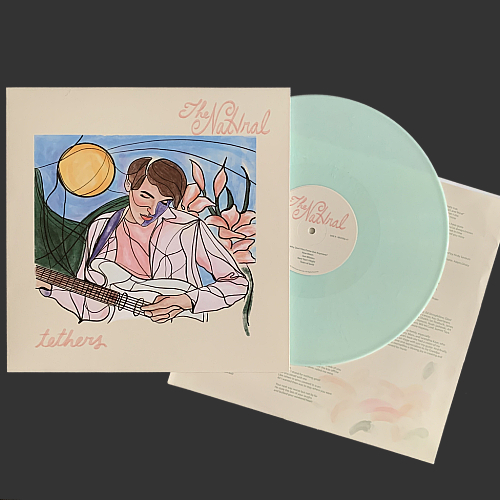
Former Pains of Being Pure at Heart leader Kip Berman will release the album “Tethers”, his solo debut as The Natural, on April 2nd via Kanine Records. Warm and driven by Hammond organ, Kip says, “It’s a song about how you don’t always want what’s for the best– and neither do I.”
As the frontman of The Pains of Being Pure at Heart, Kip Berman wrote songs about the thrills and ills of young adult life with the care and concern of a cool older sibling. The long-standing New York City indie-pop group disbanded soon after releasing their final record, The Echo of Pleasure (2017), and Berman found himself at a creative crossroads. He wanted to keep making music, but the themes and sounds he was interested in had shifted; it felt time for a course correction.
Enter Tethers, Berman’s first solo record as The Natvral, which finds him coming to terms with the changes in his own life by observing those transformations in the people he’s known – a self-portrait in relief. In the time between making his last record with his former band, Berman’s life and location have shifted dramatically, as he welcomed a daughter, then a son, and moved from Brooklyn to Princeton. With his new identity as a parent came a crucial shift in how he approached music. Gone were the months in a cramped tour van and late nights rehearsing with his band in a windowless warehouse space. In its place were amorphous, suburban afternoons playing whimsical songs to two young children, while writing music for himself after their bedtime.
But in this time away from the life of a touring artist, Berman discovered an unvarnished, broken folk rock sound– a marked departure from his previous work. The Natvral, the solo project that sprung up in the final years of Berman’s dearly departed Pains Of Being Pure At Heart, has thus far shared two singles from official debut album Tethers: “Why Don’t You Come Out Anymore?” and “New Moon.” Today he adds a third advance track.
As explained in promo materials for the album, “Sun Blisters” is about the freedom that comes with embracing your fate as a fuckup, and how that counterbalances with the emotional consequences of living in the margins. “In the end maybe I was wrong/ Laughing where only tears belong,” Berman sings. “But love to you’s just a pretty song/ And I’m a sour note.” It surges along with the energy of a Blonde On Blonde classic — not to raise your expectations too high, but think of something like “One Of Us Must Know (Sooner Or Later).” It’s strengthening the case that Berman can write great songs in just about any historical rock milieu you throw at him.
Berman says of “Sun Blisters”: “It’s a song about how you don’t always want what’s for the best– and neither do I.” Stereogum says “I’m loving these Dylan-inspired bangers from Kip Berman!”
“It’s about the in-between moments.” says Hattie Cooke. “Bliss Land” is the new LP from Brighton born artist Hattie Cooke. Her third album and debut release for Castles In Space opens up her sound by managing to find a balance between the introspective and the communal. It is an album that looks forward whilst acknowledging the creators past creating a work full of a nostalgia that also feels vitally current. Initially conceived as a soundtrack album, during its creation, “Bliss Land” morphed into a beautiful set of personal songs born out of anticipation, excitement and anxiety.
Speaking about the themes of the albums, Hattie says: “It wasn’t until the album was finished that I realised what it was about. I had recently graduated from university and people were beginning to take more notice of my music. I was excited about the possibilities of the future, but at the same time the immediate future had been put on hold due to the pandemic, so I was frustrated and anxious. And then whenever I think about the future, I can’t help but think about the past and where I’ve come from and what I’ve been through to get to that point. So in some ways it’s a reflective record and in other ways it’s a record full of anticipation. “One Foot Out The Door” is a track that really resonates with me – it’s about that liminal space between the past and the future when you’re on the threshold of something. I think that’s what the album is about, it’s about the in-between moments. “I grew up on a small council estate on the outskirts of Brighton in a house that was full of music. Both my parents played guitar and my dad also bought and sold records for a living. I taught myself the guitar when I was twelve and made plenty of music throughout my teens. At 17, I won a scholarship to study at the British Institute Of Modern Music and continued writing and playing local shows. I also started to learn how to record and produce my own music on GarageBand as a necessary alternative to going into an expensive recording studio. GarageBand has some fantastic synth and electronic drum sounds and that’s when I became more interested in electronic music and music production. In 2015, Third Kind Records approached me after hearing my songs on a homemade demo CD that a friend had passed on. We released my debut album in 2016 and I’ve been making and releasing music ever since.”
Hattie writes, records and produces all her own albums, however she is keen to express how others have helped shaped parts of “Bliss Land”:“The record isn’t a completely solo effort, I had people along the way to help shape this album into what it became, although I had complete artistic freedom to let the album grow into what it wanted to be. I had invaluable help from DomKeen who helped me mix the album. We spent a good number of nights in his studio drinking gin and trying to get everything just right. He did things to the music that I would never have even considered doing. I had no idea what compression really was until the making of this record, which probably sounds mad considering I’ve produced three records but when you’re self-taught you can miss out learning about so much! Antony Ryan’s mastering added a whole new dimension to the record as well.”
“Bliss Land” is an album soaked in the outer edges of pop music making it a cohesive and beautiful album full of dense textures held together by Hattie’s unique voice. It’s an album that will undoubtedly chime with a cross section of audiences. So where does Hattie see her music in the landscape of the current UK electronic scene? “There’s a lot of instrumental/soundtrack music coming out of the scene, a lot of synthwave music which seems to be a real throwback to the 70s and early 80s. I think that’s because so much of the music coming out of the scene is made by those who grew up during those decades. So I think I’m a bit of an outlier when it comes to the UK electronic scene for two reasons. Firstly, I’m at the lower end of the age range and secondly, I’m a woman in an extremely male dominated scene. “Bliss Land” is intentionally quite poppy, which seems to be less in fashion at the moment whereas my other instrumental stuff is more inspired by classical music than by IDM or ambient music, so I think I’m coming at writing and producing from a slightly different angle. However, I still definitely feel part of the scene. There’s a particularly strong sense of community within the UK electronic scene on Twitter and I’ve been nothing but welcomed and supported by the artists, fans and labels. It’s like being part of a strange and wonderful family.”
You’ve made a video for the track “Youth” with Chris Standley from Rogue Robot which is both funny and shot through with real melancholy. “Youth” is about reflecting on the past. I turned thirty this year and sometimes (more than I’d like to admit) I worry that I’ve gotten more boring as I’ve gotten older. I was pretty wild and unhinged when I was younger and sometimes I miss those mad nights out where it felt like absolutely anything could happen – although saying that I just don’t have the energy to stay up for three days or the stomach to cope with the hangovers anymore. Still, there are days when I miss the way that everything feels new and exciting when you’re in your late teens/early twenties – everything is more intense when you’re younger and the world around you seems bright and buzzing with life. I’ve been thinking about it a lot this past year. I’ve not had much to do for the last twelve months besides walk around on my own and reflect on the past, since the future has basically been put on indefinite hold, so that has almost certainly fed into some of the lyrics and maybe even the feel of the music.”
The album is already garnering a lot of attention and praise. What’s next for Hattie after the album is released? “Who knows what’s next! I have plans to tour the album when the world opens up again. I’d also love to have the chance to score a film or to work with some other artists doing guest vocals or some remixes. And I’d like to get back to doing some music-related charity work again as my family were supported by a number of charities when I was growing up and think it’s important to give back when you can.
In 2020, 4ADRecords turned 40 years old. Never one to be on time for a party, the label is commemorating that landmark this year with the release of “Bills & Aches & Blues”.
The compilation features 18 of its current artists covering a song of their choosing from 4AD’s past: a creative experiment rooted in the spirit of collaboration and a snapshot of 4AD, 41 years after its inception.
“Bills & Aches & Blues” will be released on double LP and double CD on 23rd July. The first 12 months’ profits from Bills & Aches & Blues will be donated to The Harmony Project, a Los Angeles-based after-school programme for children from communities and schools that lack equitable access to studying the arts or music.
Bills & Aches & Blues’ 18 recordings contain fascinating connections between artist and track. The earliest song chosen (by U.S. Girls) is The Birthday Party’s ‘Junkyard’, from 1981; the most recent are the two Grimes covers (‘Genesis’ and ‘Oblivion’, respectively by Spencer. and Dry Cleaning) from 2012. Suitably, for the one band that bridges 4AD past and present, The Breeders are all over Bills And Aches And Blues. They’re covered three times – ‘Cannonball’ by Tune-Yards, ‘Mountain Battles’ by Bradford Cox of Deerhunter and ‘Off You’ by Big Thief, whilst The Breeders cover ‘The Dirt Eaters’ by their ‘90s contemporaries His Name Is Alive.
Landmark songs such as ‘Cannonball’, ‘Song To The Siren’ and Pixies’ ‘Where is My Mind?’, will feel comfortable to casual fans, however by contrast, much joy can be found in the album’s surprise choices, such as Air Miami’s ‘Seabird’ and the Lush B-side ‘Sunbathing’, covered respectively by new signings Maria Somerville and Jenny Hval. Bills & Aches & Blues is named, arguably (as Elizabeth Fraser never published the lyrics) after the opening line of Cocteau Twins ‘Cherry-Coloured Funk’. Perhaps too unique and uncoverable in their own right, their legendary take on Tim Buckley’s ‘Song To The Siren’, under the name This Mortal Coil (along with Buckley’s pre-Starsailor acoustic version) informs SOHN’s cover.
Some tracks unearth hitherto hidden shared DNA, such as Future Islands’ and Colourbox’s ‘The Moon Is Blue’; other tracks are more akin to reinvention. Aldous Harding distils the melodic essence of Deerhunter’s ‘Revival’ and recasts it in her own uncanny image. U.S. Girls’ future-disco ‘Junkyard’ and Bing & Ruth’s neo-classical instrumental ‘Gigantic’ are even more radical interpretations. Leading off the album, Tkay Maidza brings both her Art Rap and R&B game, but also an unexpected ‘80s synth pop template, to Pixies’ ‘Where Is My Mind?’, a perfect title for these chaotic times.
Long-running and influential indie label 4AD have never been ones to care about the usual milestones, instead preferring to commemorate milestones like The 13-Year Itch in 1993. Last year was the label’s 40th anniversary, but they’re celebrating this year with a new compilation titled Bills & Aches & Blues,
The compilation title is taken from Cocteau Twins’ “Cherry Coloured Funk” but no artist dared take on one of their songs for this. The closest anyone comes is SOHN‘s cover of Tim Buckley‘s “Song to the Siren,” which was famously covered by This Mortal Coil featuring Elizabeth Fraser and Robin Guthrie. Elsewhere on the record, there are three Breeders covers (performed by Tune-Yards, Deerhunter’s Bradford Cox and Big Thief), two Pixies covers (Bing & Ruth and Tkay Maidza), two Deerhunter covers (Aldous Harding and Helado Negro) and two Grimes covers (by Spencer and Dry Cleaning), plus Future Islands delivering a soulful rendition of Colourbox‘s “The Moon Is Blue,” Jenny Hval covering Lush‘s “Sunbathing,” and more.
4AD has just shared the first side of the compilation: Tkay Maidza turns Pixies’ “Where Is My Mind?” into a glitchy, stadium-sized anthem; U.S. Girls clean up The Birthday Party’s “Junkyard” with bongos, acoustic guitars and swooning strings; Aldous Harding delivers a tender, bewitching take on Deerhunter’s “Revival”; The Breeders delicately cover His Name is Alive‘s “The Dirt Eaters”; and new signing Maria Somerville transforms Air Miami’s “Seabird” into an even more ethereal creature.
You can listen to those covers, along with the originals, and check out the full “Bills & Aches & Blues”
tracklist below.
Bills & Aches & Blues: 1. Tkay Maidza – Where Is My Mind? (Pixies cover) 02:57 2. U.S. Girls – Junkyard (The Birthday Party cover) 03:00 3. Aldous Harding – Revival (Deerhunter cover) 02:17 4. The Breeders – The Dirt Eaters (His Name Is Alive cover) 03:35 5. Maria Somerville – Seabird (Air Miami cover) 04:37 6. Tune-Yards – Cannonball (The Breeders cover) 03:11 7. Spencer – Genesis (Grimes cover) 04:30 8. Helado Negro – Futurism (Deerhunter cover) 03:10 9. Efterklang – Postal (Piano Magic cover) 04:00 10. Bing & Ruth – Gigantic (Pixies cover) 05:30 11. Future Islands – The Moon Is Blue (Colourbox cover) 04:39 12. Jenny Hval – Sunbathing (Lush cover) 02:46 13. Dry Cleaning – Oblivion (Grimes cover) 03:50 14. Bradford Cox – Mountain Battles (The Breeders cover) 06:25 15. SOHN – Song To The Siren (This Mortal Coil / Tim Buckley cover) 04:46 16. Becky and the Birds – The Wolves (Act I and II) (Bon Iver cover) 04:31 17. Ex:Re – Misery Is a Butterfly (Blonde Redhead cover) 05:09 18. Big Thief – Off You (The Breeders cover)
With their debut EP ‘A Calm Sense Of Surrounding’ arriving on 19th March, Bleach Lab are giving us the final taste of what to expect with a new track ‘Flood’.
“’Flood’ is one long metaphor for being completely overwhelmed and overcome by someone and losing all sense of control within them,” singer Jenna Kyle explains. “I sing ‘I’m in his words, I’m in his mouth, I’m in his mind’ to get across how absorbed I was by them, much like how the sand soaks up a wave.”
The recurring metaphor of the sea, and what lies beneath, is found throughout the upcoming record, used by Jenna and bassist Josh Longman to explore their traumatic experiences of grief, and mirrored in guitarist Frank Wates’ sound. “When you think about it, water has so many different characteristics,” he notes. “It can resemble calm, tranquillity and slowness. Yet it can also be utterly terrifying – waves that dwarf you, ships desperate to stay afloat, dangerous predators unknowingly swimming under your feet. We felt this was similar to the whole mess of emotions which grief exposes you to and it subconsciously seeped into our lyrics and soundscapes.”
Bleach Lab are establishing themselves as a force to be reckoned with, conjuring spaced-out melodies alongside jangly guitars. Taking inspiration from the likes of Mazzy Star and The Smiths, Bleach Lab have fused their own introspective yet emotionally frenetic soundscape.
Bucks born, South London based indie/dream-pop band, formed in late 2018 ‘A Calm Sense of Surrounding’ EP






 The Fat Angel Sings